15 Leg Tattoos For Women: A Real Guide to Design, Placement, and Pain
Nervous about picking leg tattoos for women that you’ll still love five years from now? You’re not alone, and honestly, that hesitation is smart. A leg tattoo is a bigger commitment than a lot of people expect, so let’s talk through this properly instead of just scrolling past pretty pictures.
So what are the best leg tattoos for women? Fine-line florals, blackwork bands, dotwork mandalas, and minimalist line-art designs tend to work best on legs because the flat, spacious skin on the calf, thigh, and shin holds detail well and gives artists room to scale a piece up or down. Smaller ankle and calf placements heal faster and hurt less than thigh or shin pieces closer to bone.
Stick around, because we’re covering placement tradeoffs, honest pain and healing timelines, how to actually brief an artist so you get what you want, and the mistakes that turn a good idea into a regret.
Why Legs Are Such a Good Canvas for Tattoo Art

Legs give artists something most other body parts don’t: space, and a lot of it. The thigh and calf are relatively flat with fewer curves than the ribs or shoulder, which means linework stays cleaner and shading blends more evenly. You’ve also got flexibility in visibility — a thigh piece stays hidden under most work clothes, while an ankle or lower calf design shows year-round if you want it to. That range makes legs a smart choice whether you’re getting your first tattoo or adding to a growing collection. Below are 15 design ideas, each with the technical details, placement logic, and real pain and healing info that most design roundups skip entirely.
Fine-Line Floral Vine on the Calf

A fine-line vine uses thin, consistent needle work — usually a single needle or a small liner — to trace a botanical stem with small leaves or blossoms branching off it. There’s little to no shading, so the piece relies entirely on clean linework and negative space (the untouched skin around the lines) to read clearly. The calf is ideal because the muscle gives a smooth, gently curved surface that lets a vine wrap naturally from the back of the leg toward the shin. Expect 3–5 inches in length for good detail retention over time, since fine lines can blur slightly as skin ages. Healing typically runs 10–14 days. Pain is moderate here since the calf has decent muscle padding compared to bonier spots.
Quick tip: Bring a photo of an actual plant, not just a cartoon reference, so your artist can adapt real botanical structure into the linework.
This same logic — clean lines, natural shapes — carries into our next idea, which trades florals for bold geometry.
Blackwork Thigh Band

A blackwork band is a solid or patterned ring of black ink that wraps around the thigh, often combining geometric shapes, dotwork texture, or ornamental line patterns. Blackwork means heavy, saturated black ink with minimal negative space, which gives it a bold, graphic look that reads clearly even from a distance. The outer or upper thigh works best because the skin is flatter and the muscle doesn’t shift the design much when you move. Sizing usually runs 4–8 inches depending on how much detail is packed in. Because it’s high-saturation ink, healing takes closer to 2–3 weeks and touch-ups are more likely than with fine line work. Pain tends to run moderate to high due to the sustained shading passes.
Quick tip: Ask your artist about “fill consistency” during your consultation — uneven saturation is the most common blackwork flaw to watch for in a portfolio.
If solid black feels like too much commitment, dotwork offers a softer middle ground.
Dotwork Mandala on the Ankle

Dotwork builds an image entirely from small, individual dots instead of continuous lines, creating a textured, almost stippled look with soft gradients. A mandala — a symmetrical, circular pattern — suits this technique well because the repetition of dots naturally creates rhythm and depth without heavy shading. The ankle is a popular spot for this design since the rounded bone structure mimics the mandala’s circular shape, though that same boniness makes it one of the more sensitive placements on the leg. Keep the design under 3 inches for the ankle so the pattern doesn’t stretch oddly with movement. Healing runs about 2 weeks, and touch-ups are common since dotwork can lose crispness faster than solid linework.
Quick tip: Request to see healed photos of an artist’s dotwork, not just fresh ink, since dot spacing sometimes softens more than people expect.
From circular symmetry, let’s shift to something more personal: words on skin.
Single-Needle Script on the Shin

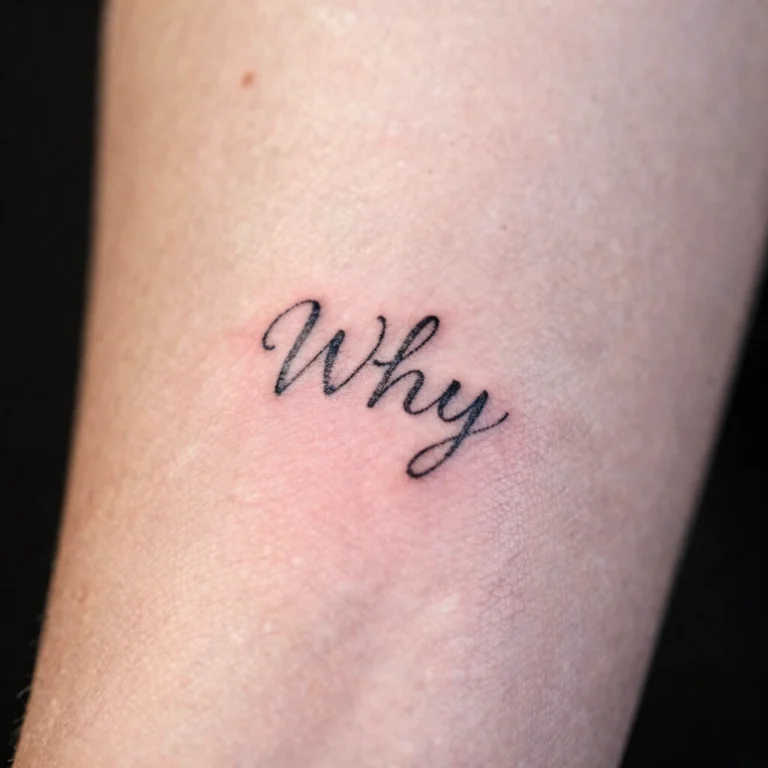
Single-needle tattoos use one small needle point to create extremely thin, delicate lines — perfect for lettering that needs to stay legible without looking heavy. A short quote, name, or date placed vertically along the shin reads cleanly because the bone underneath keeps the skin taut, which helps thin lines hold their shape longer. Keep script tattoos to one or two short lines; cramming in a long quote at small size is one of the fastest ways for lettering to blur within a few years. The shin is a bonier area, so pain runs moderate to high, and healing typically takes 10–14 days.
Quick tip: Write out your text exactly as you want it and confirm the font size in inches, not just “small,” before your artist creates the stencil.
Script work leads naturally into color, which brings us to a very different technique.
Watercolor-Style Butterfly on the Outer Thigh
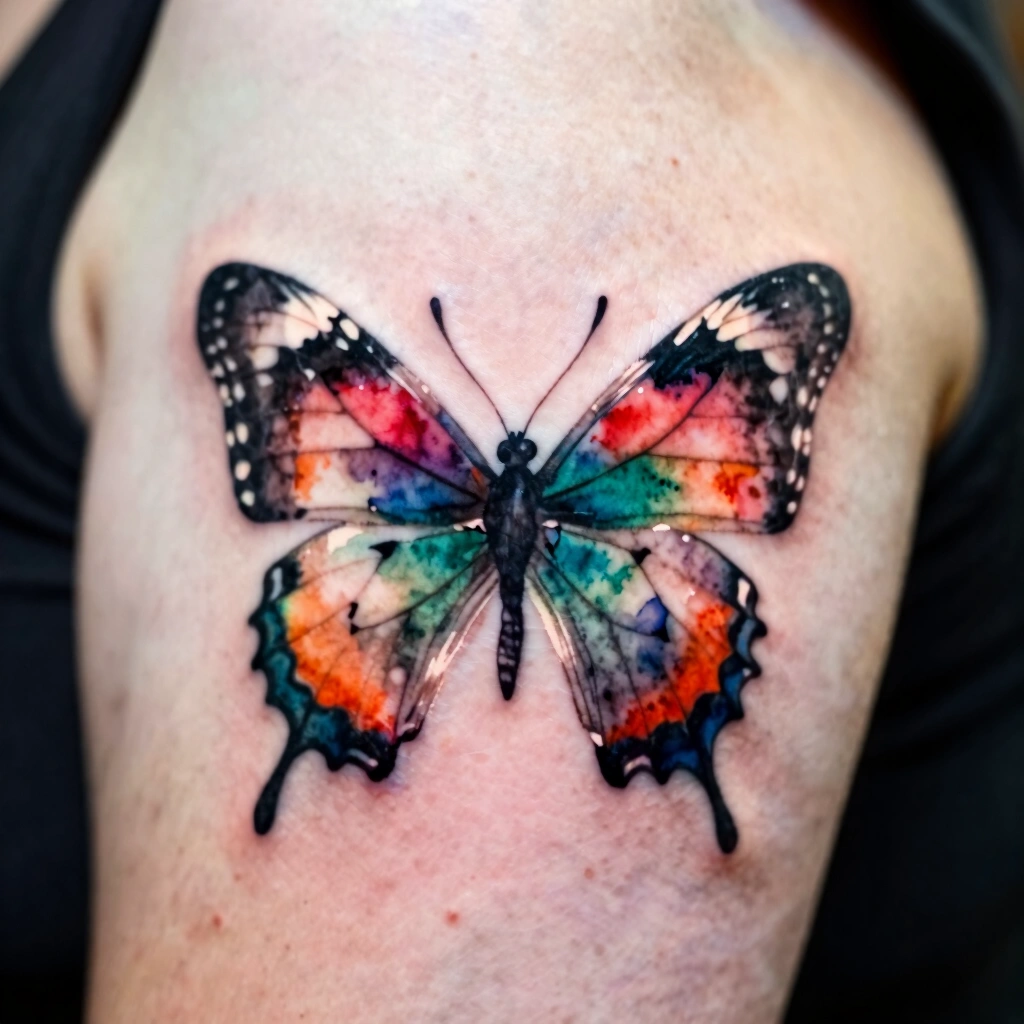
Watercolor-style tattoos mimic loose, blended paint strokes using diluted color saturation and soft edges instead of hard outlines. A butterfly rendered this way often keeps a fine-line black outline for the wings with color washes bleeding outward, giving it a painterly, less rigid feel than traditional color work. The outer thigh is ideal because its size accommodates the color blending without the design feeling cramped, and skin here typically shows color vibrancy well. Realistically, expect 2–3 weeks of healing and know that watercolor pieces fade faster than solid black work, often needing a touch-up within a few years.
Quick tip: Ask specifically for a “colored fine-line” or “watercolor specialist” portfolio — this style requires different technical skill than standard color tattooing.
If fading color feels risky, negative space designs offer a longer-lasting alternative.
Negative Space Geometric Pattern on the Calf

Negative space tattoos use the untouched, natural skin tone as part of the design instead of filling every section with ink. A geometric pattern built this way might use blackwork triangles or lines with intentional gaps that form a secondary shape once viewed as a whole. The calf’s flatter surface makes these gaps read clearly instead of distorting with muscle movement. This style tends to age well since there’s less solid ink to fade or blur. Pain is moderate on the calf, and healing generally takes about 2 weeks.
Quick tip: Discuss your skin tone with your artist directly — negative space contrast shows differently depending on how light or dark your natural skin tone is, and an experienced blackwork artist will adjust spacing accordingly.
Now let’s look at a design built for simplicity over pattern.
Minimalist Line-Art Animal on the Ankle
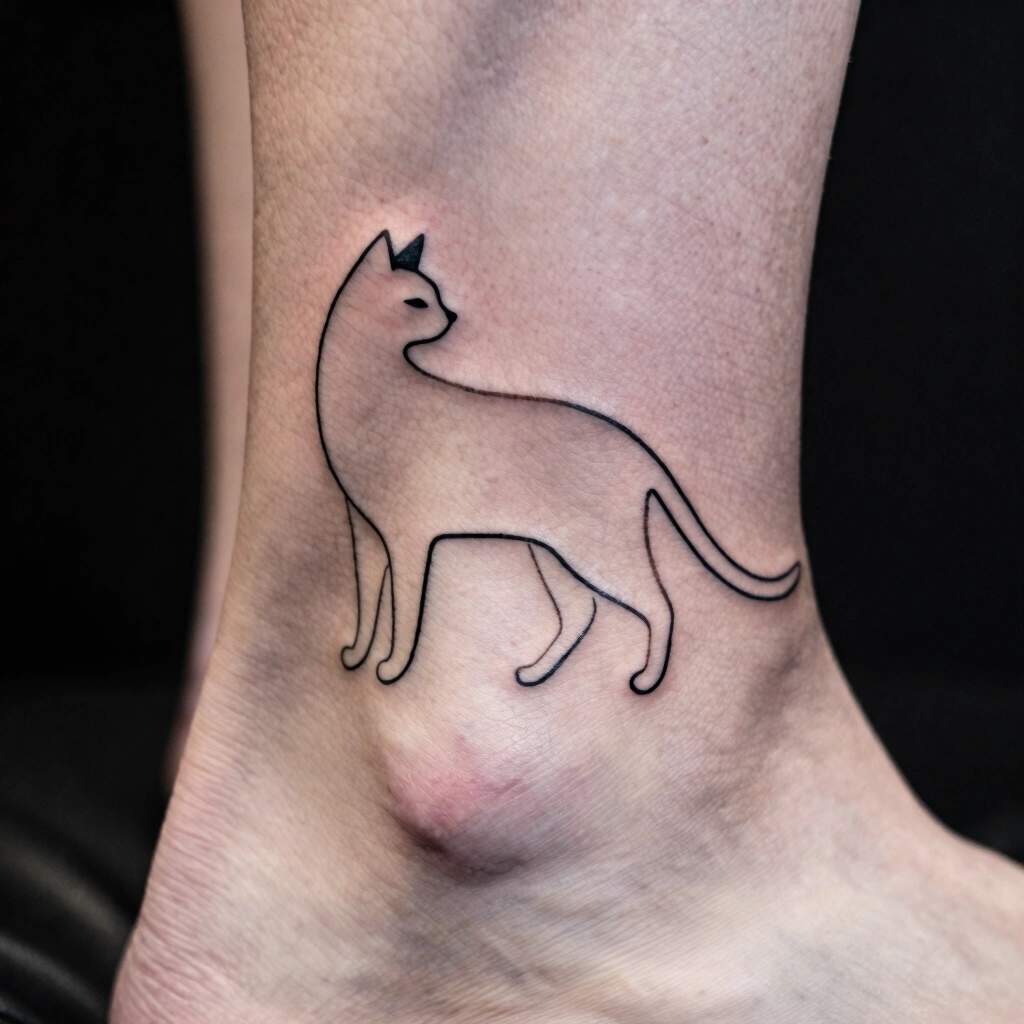
Minimalist line art strips a subject — a cat, bird, or fox, for example — down to a few continuous, unbroken lines with no shading at all. This works well on the ankle because small, simple shapes don’t need much space to read clearly, and the design stays subtle enough for workplaces with visible-tattoo policies. Keep sizing under 2 inches; anything larger starts to need shading to avoid looking flat and empty. Healing runs about 10 days, and pain is moderate to high given the ankle’s bony structure.
Quick tip: Bring a simplified silhouette reference rather than a detailed photo — your artist needs to know which lines matter most before reducing the image further.
For something with more visual weight, bold traditional work takes the opposite approach.
Bold Traditional Rose on the Calf

Traditional tattoo style uses thick, bold outlines, limited but saturated color, and heavy black shading — a look that’s held up in tattoo culture for decades because it ages remarkably well. A rose in this style typically sits around 4–6 inches on the calf, with enough room for the shading gradients that give the petals depth. Because the linework is thick and the ink saturation is high, this style resists fading better than fine line or watercolor work over the long run. Healing takes 2–3 weeks due to the heavier ink saturation, and pain runs moderate on the calf’s muscle.
Quick tip: If longevity matters most to you, ask your artist directly how bold traditional linework compares to fine line for long-term fading — it’s a fair and common consultation question.
Bold color leads naturally into a wrap-style design that plays with movement.
Dotwork Snake Wrap on the Leg

A snake wrapping around the calf or lower thigh uses dotwork shading to create scale texture and gradual depth without solid black fill. This design plays with the leg’s natural curve, following the muscle line so the snake appears to coil realistically rather than sitting flat. Expect this piece to run 6–10 inches depending on how much of the leg it wraps around. Because dotwork requires careful, repeated needle passes, sessions often run longer than linework alone, and pain builds toward moderate-high by the end of a sitting. Healing takes about 2–3 weeks.
Quick tip: Discuss session length upfront — larger dotwork wraps sometimes need two sittings, and knowing that before booking avoids scheduling surprises.
If a full wrap feels like too much, a delicate anklet design offers a much smaller footprint.
Delicate Anklet-Style Tattoo

This design mimics jewelry — a thin fine-line chain or beaded pattern circling the ankle, sometimes with a small charm-like symbol hanging off it. It uses the same single-needle approach as script work, keeping lines light and delicate so it reads like an accessory rather than a bold statement. Because the ankle bends and flexes constantly, thin lines here can blur slightly faster than on flatter areas, so this is a design that may need a touch-up sooner than most. Pain runs moderate to high on the ankle bone, and healing takes about 10–14 days.
Quick tip: Ask your artist about placement slightly above the ankle bone itself — it can reduce both discomfort and long-term line spreading.
For those wanting more personal meaning in a smaller space, symbolic icons are worth considering next.
Symbolic Small Icon Behind the Knee
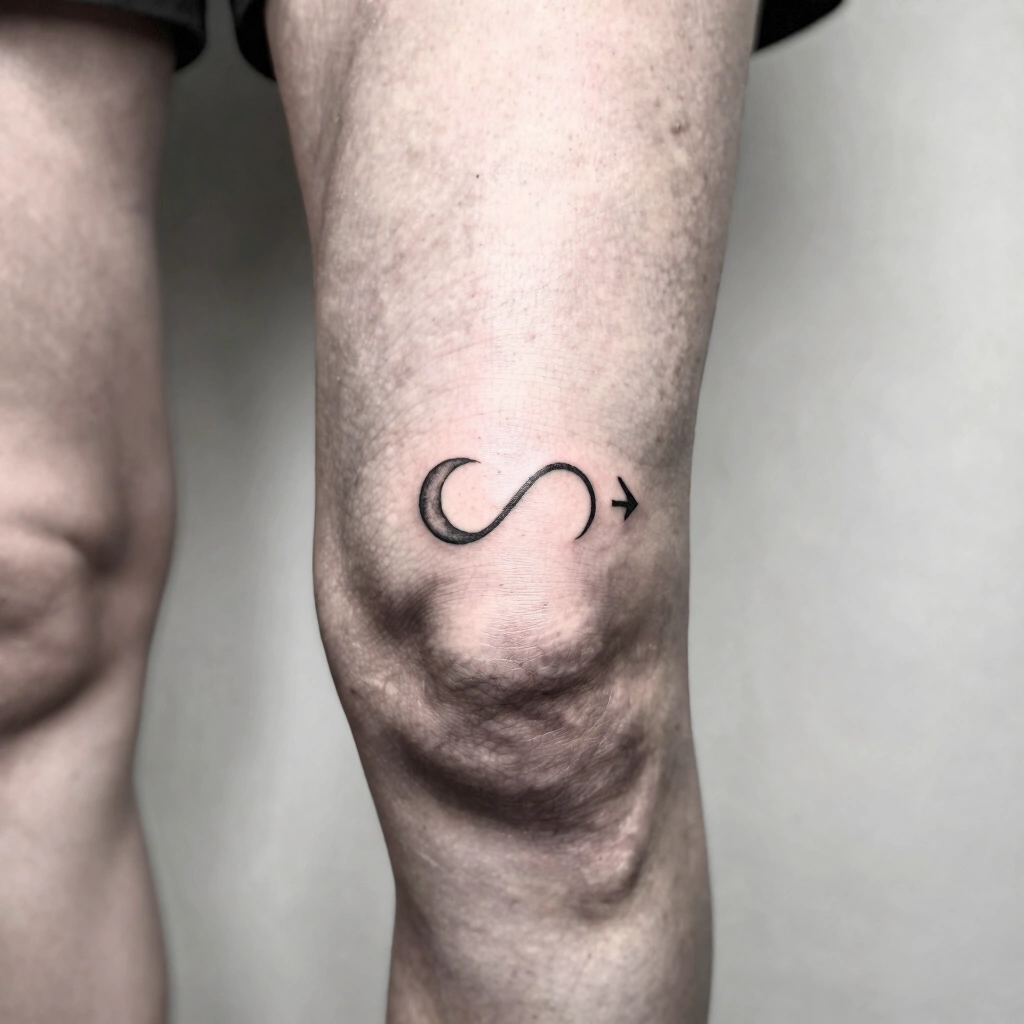
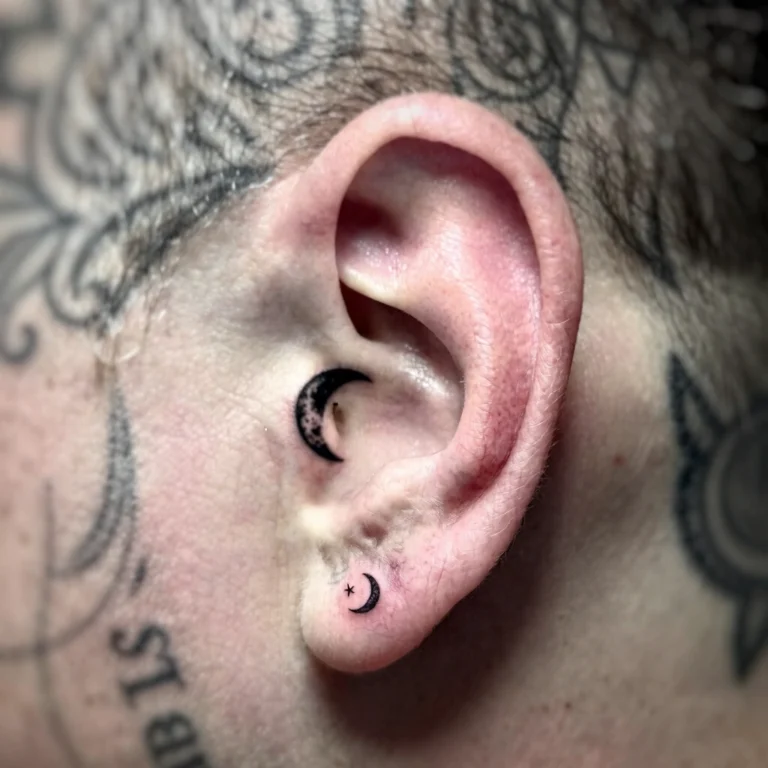
A small symbol — a moon phase, an infinity mark, a tiny arrow — placed behind the knee is one of the most private placements on the leg, mostly hidden unless you’re bending or sitting a certain way. Fine-line or single-needle technique keeps these icons crisp at a small size, usually under 1.5 inches. This spot has thinner skin and more nerve sensitivity, so pain tends to run higher than most other leg placements, and healing can take slightly longer, around 2–3 weeks, due to constant movement in the area.
Quick tip: Because this spot flexes so much, ask your artist about slightly bolder line weight than you’d use elsewhere — it helps the design hold up over time.
If you’d rather go bigger and more artistic, an abstract brushstroke piece is a strong option.
Abstract Brushstroke Blackwork on the Thigh

This design uses bold, sweeping blackwork strokes that mimic ink brush painting — thick in some areas, tapering to thin points in others, without forming a specific recognizable object. The upper thigh gives enough flat space for the sweeping strokes to feel intentional rather than cramped. Because it’s abstract, sizing is flexible, typically 4–7 inches, and the piece ages well since it’s mostly solid black saturation rather than fine detail that can blur. Healing takes about 2–3 weeks, and pain runs moderate on the fleshier upper thigh.
Quick tip: Look through an artist’s portfolio specifically for freehand or abstract blackwork — it requires different confidence and control than tracing a fixed stencil.
For a piece with a wider visual footprint, a half-leg botanical sleeve is the biggest commitment on this list.
Botanical Leg Sleeve (Half-Leg)

A half-leg sleeve typically combines several floral or leaf elements into one connected composition running from the knee to the ankle, or thigh to knee. This usually blends fine-line detail with some blackwork shading for depth, making it a more advanced, multi-session project rather than a single sitting. Given the scale, expect multiple appointments and a healing period that can stretch to 3–4 weeks total as different sections settle. Pain varies by section — expect higher sensitivity near the shin and ankle, more moderate discomfort on the calf and thigh.
Quick tip: Request a full stencil preview of the entire sleeve before the first session, even if it’s completed in parts, so the composition flows as one connected piece.
If a sleeve feels too big to start, constellations offer a scalable version of the same idea.
Fine-Line Constellation on the Thigh

A constellation design connects small dots and thin lines to form star patterns, often personalized to a birth month or meaningful date. Fine-line technique keeps the dots and connecting lines delicate, and the thigh’s flat space allows an artist to map out accurate star positioning without distortion. Sizing is flexible, from a small 2-inch cluster to a spread-out 6-inch design. Healing runs about 10–14 days, and pain is moderate on the thigh compared to bonier leg areas.
Quick tip: Give your artist the actual star chart or coordinates for your chosen constellation instead of a generic reference — accuracy matters more here than in most symbolic designs.
Last on our list is a design built specifically around shared meaning.
Matching Sister/Friend Symbols on the Ankle

Matching tattoos work best when they’re simple enough to hold up at a small size on two different people, which is why fine-line icons — a small shape split in two, matching initials, or a repeated symbol — tend to work better than anything with heavy detail. The ankle keeps both pieces easily visible to each other while staying subtle for work settings. Keep these under 2 inches for clean healing and long-term legibility. Pain runs moderate to high given the ankle’s bone structure, and healing takes roughly 10–14 days for each person.
Quick tip: Book both appointments with the same artist in the same sitting when possible — it keeps line weight and style consistent between both tattoos.
That covers all 15 ideas — now let’s get into the practical side that actually determines whether one of these designs works for you.
Best Placement Ideas

- Ankle — high visibility, moderate-to-high pain due to bone proximity, best for small, simple designs
- Calf — good balance of visibility and flat space, moderate pain, suits fine line, blackwork, and dotwork equally well
- Outer/upper thigh — easiest to conceal for work, more skin padding means lower pain, good for larger or color-heavy pieces
- Shin — high visibility, higher pain due to thin skin over bone, best kept to smaller or simpler linework
- Behind the knee — very concealable, higher sensitivity, best for small symbolic pieces only
Tips for Success

Look for an artist whose portfolio shows the specific technique you want — fine line, blackwork, dotwork, watercolor-style — rather than just general tattooing. Healed photos matter more than fresh ones, since fresh tattoos always look sharper than they will in six months. Bring clear reference images, be upfront about your pain tolerance and any skin sensitivities, and ask directly about needle type, expected session length, and their approach to touch-ups. A good consultation should feel like a two-way conversation, not just you approving a stencil.
Common Mistakes and How to Avoid Them
- Going too small for detailed work — fine detail needs enough space to stay legible as skin changes over years
- Ignoring how the design moves with the body — a design that looks great flat on paper can distort on a bending joint like the ankle or knee
- Skipping aftercare instructions — this affects how well the ink settles and how the final result looks
- Copying a design exactly from a photo — personalizing size, placement, or small details reduces the odds of decision regret
- Choosing a placement based only on trend, not lifestyle — think about work dress codes and how often you want it visible
Similar Variations

Nearly every idea on this list can be adjusted. A fine-line floral vine can shrink to a single stem near the ankle or expand into a half-leg sleeve. A blackwork band can lose the solid fill and become a negative space outline instead. Dotwork mandalas can be recolored with subtle tonal ink rather than pure black. Matching symbols can scale up into a larger shared theme across a full calf piece. Think of these 15 designs as starting points, not fixed templates.
Aftercare Basics

General tattoo aftercare typically includes keeping the area clean, avoiding direct sun exposure, skipping swimming pools and soaking baths during initial healing, and using a fragrance-free moisturizer as recommended by your artist. Healing time and skin response vary from person to person, so always follow the specific aftercare sheet your artist provides rather than general internet advice, and check in with them or a dermatologist if you notice anything that seems off during healing.
Quick FAQ

How much do leg tattoos typically cost?
Cost depends on size, detail, and the artist’s hourly rate, but small designs often start around $80–150, while larger pieces like sleeves can run several hundred to over a thousand dollars across multiple sessions.
Which leg placement hurts the least?
Areas with more muscle and fat padding, like the calf or outer thigh, tend to be reported as less painful than bony spots like the ankle or shin, though pain tolerance varies by individual.
How long does a leg tattoo take to heal?
Most smaller designs heal within 10–14 days on the surface, while larger or more detailed pieces can take 2–4 weeks, according to general tattoo aftercare guidance — always confirm with your artist.
Do leg tattoos fade faster than tattoos elsewhere?
Fading depends more on ink saturation, sun exposure, and skin care than on leg placement specifically, though areas with more friction from clothing can sometimes show wear sooner.
Final Thoughts

Choosing from these leg tattoos for women really comes down to matching the technique to your lifestyle — how much pain you’re comfortable with, how visible you want the piece to be, and how much long-term upkeep you’re willing to commit to. None of these designs are one-size-fits-all, and that’s the point. Take your time, talk honestly with a licensed professional artist about placement and aftercare, and pick something that still makes sense to you years down the line, not just this week.