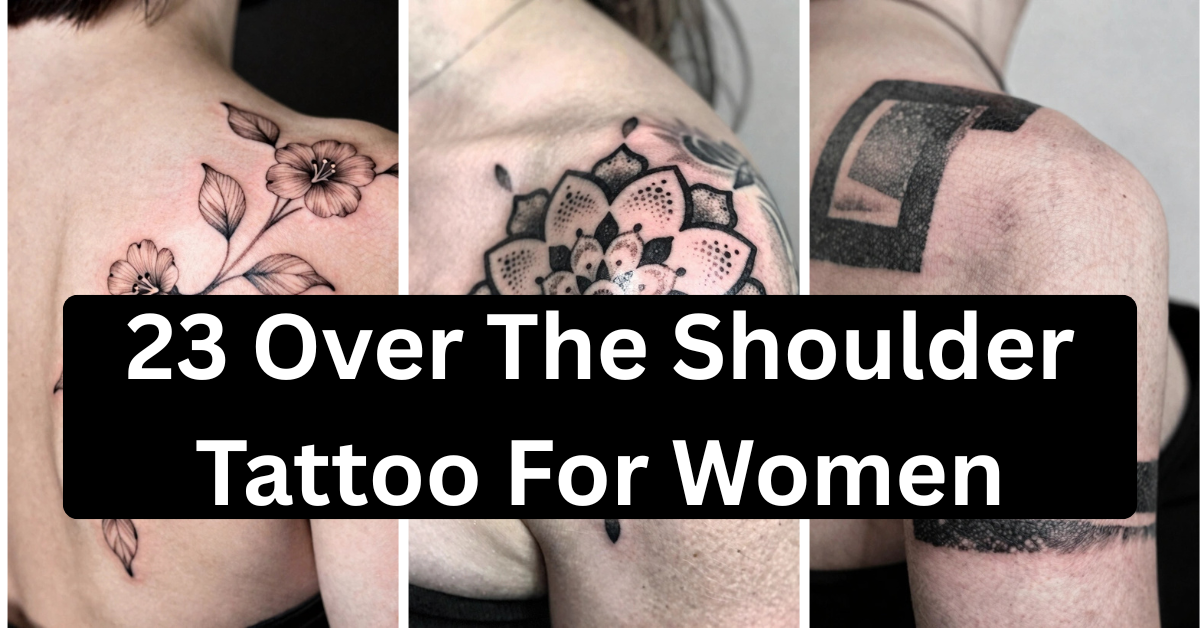
23 Over The Shoulder Tattoo For Women
Nervous about committing to a design that wraps across such a visible, curved part of your body? That’s a fair worry — the shoulder isn’t flat like a forearm, and getting it wrong can mean a design that looks stretched or awkward once it’s healed. I’ve spent enough time in studios watching consultations to know exactly what separates a shoulder piece that ages well from one that ends up looking like a mistake five years later.
So what are the best over the shoulder tattoo ideas for women? Fine-line florals, blackwork sunbursts, dotwork mandalas, and negative space geometric wraps tend to work best because they follow the shoulder’s natural curve instead of fighting it. Designs with clean linework and balanced negative space (the untattooed skin left intentionally blank to frame the art) also hold their shape better over time than dense, heavily shaded pieces.
Stick around, because I’m covering placement tradeoffs, realistic pain levels, healing timelines, rough cost ranges, and exactly how to brief your artist so the final result actually matches what’s in your head.
Why the Shoulder Works So Well for Statement Tattoos
The shoulder is one of the most forgiving canvases on the body for a reason. It’s got a natural slope and curve that lets an artist create movement in a design — think a vine that seems to flow down toward your collarbone or a mandala that wraps like a cap over the joint. It’s also easy to hide under a t-shirt sleeve for work and easy to show off in a tank top on your own time. That flexibility is why so many women choose this spot for their first larger piece or their first custom design instead of a small flash tattoo (a pre-drawn design you pick off a wall instead of designing from scratch).
1. Fine-Line Floral Vine Over the Shoulder

This design uses a single continuous line, usually under 1mm thick, that traces a vine with small leaves and blossoms curling from the collarbone up over the shoulder cap. There’s little to no shading — the detail comes from line variation alone. It suits fair to medium skin tones especially well since fine lines can blur slightly on textured or oilier skin over time. Best kept between 4 and 8 inches long. Healing generally runs 2 to 3 weeks. Bring a photo of an actual vine or botanical illustration, not just another tattoo photo, so your artist can adapt the shape to your specific shoulder curve.
Pain is moderate here since you’re crossing bone near the collarbone. Great for a first tattoo. Next, let’s talk about a bolder, more graphic option.
2. Blackwork Sun Burst Shoulder Cap
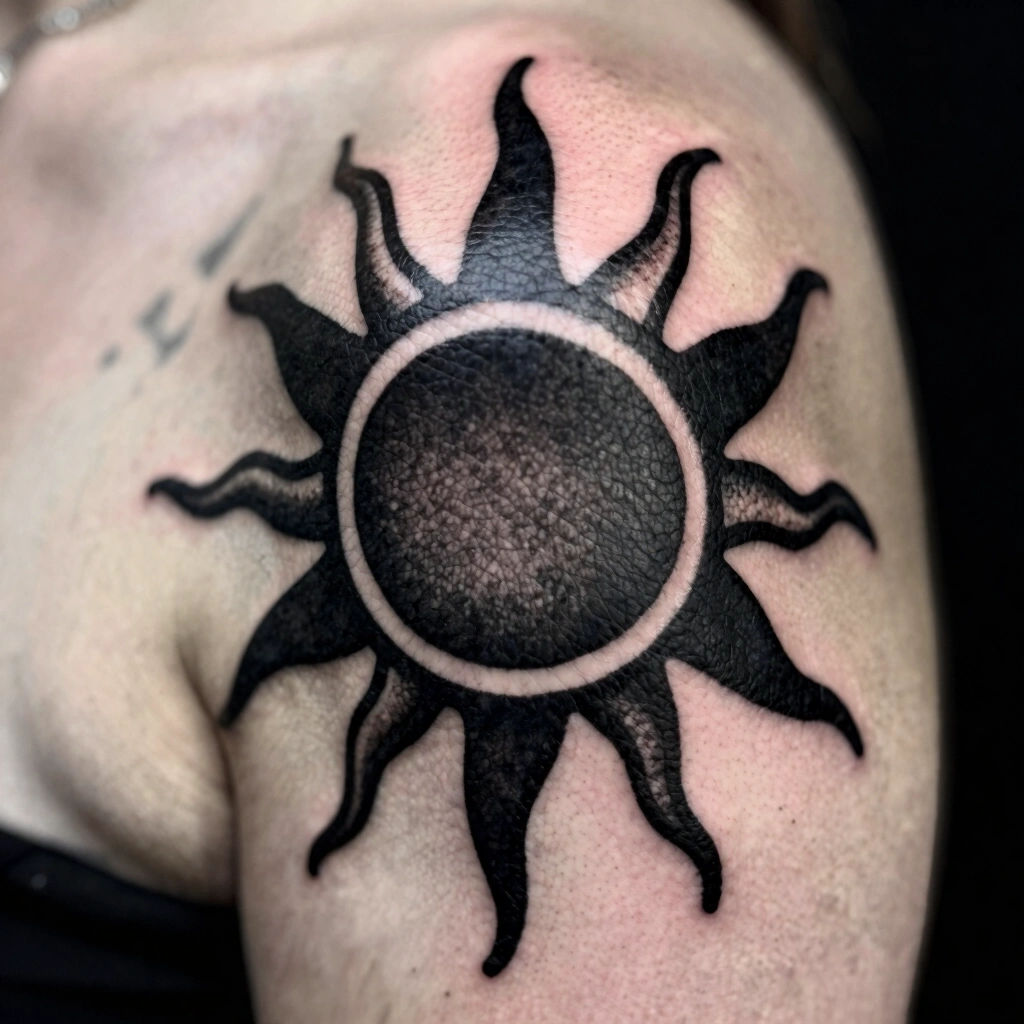
Blackwork uses solid black ink with no shading gradient, relying on bold shapes and clean edges for impact. A sunburst wrapping the shoulder cap in triangular rays reads well from a distance and holds up better long-term than fine detail because solid black doesn’t fade into patchiness the way thin gray shading can. Size-wise, aim for at least 5 inches across so the rays don’t blur together as skin ages. Healing takes about 2 to 4 weeks with more noticeable scabbing than fine-line work. Ask your artist about “solid saturation” — meaning fully packed black with no gaps — during your consult.
Pain runs moderate to high on the shoulder cap itself. This design suits people who want something visible and graphic rather than subtle. Now for something softer and more painterly.
3. Watercolor-Style Botanical Wrap

This style mimics loose paint splashes and soft color blending, typically layered around a black linework floral base so the design doesn’t disappear as color fades. It’s genuinely one of the higher-maintenance styles because color saturation fades faster than black ink, according to general dermatological consensus on how pigment particles break down in skin over time. A shoulder wrap in this style looks best at 6 inches or larger, giving the colors room to blend. Expect 3 to 4 weeks of healing with color touch-ups often needed within a few years. Ask to see healed photos of your artist’s watercolor work, not just fresh ones.
Pain is moderate. Best for someone who’s comfortable with future touch-up appointments. Let’s move to something with more texture and less color.
4. Dotwork Mandala Shoulder Piece

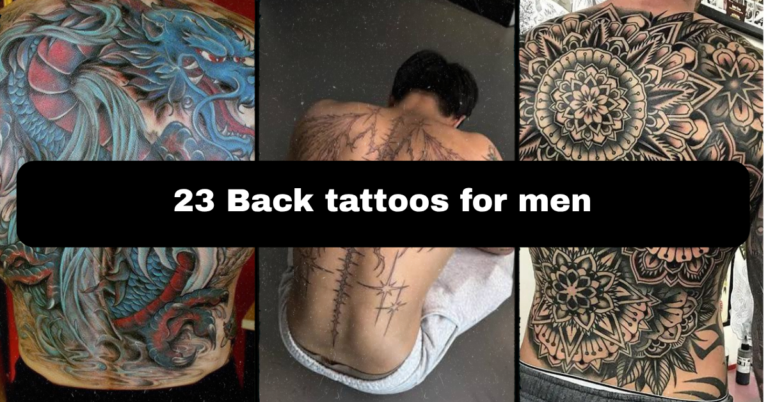
Dotwork builds an image entirely from tiny individual dots rather than solid lines or shading, creating a soft gradient effect and intricate texture. A mandala — a circular, symmetrical pattern — wrapped around the shoulder joint looks striking because the curve of the joint mimics the mandala’s natural roundness. This takes longer to tattoo than linework, often 3 to 5 hours depending on size, so budget accordingly. Best size is 5 to 7 inches in diameter. Healing runs 2 to 3 weeks, and dotwork can look slightly duller if it fades unevenly, so aftercare matters more here. Bring symmetrical reference images and ask specifically for “even dot density” across the piece.
Pain is moderate to high due to the concentrated needle work. This works well for symbolic, meaning-driven tattoos. Next, a more understated wordbased option.
5. Single-Needle Script Quote Along Collarbone to Shoulder
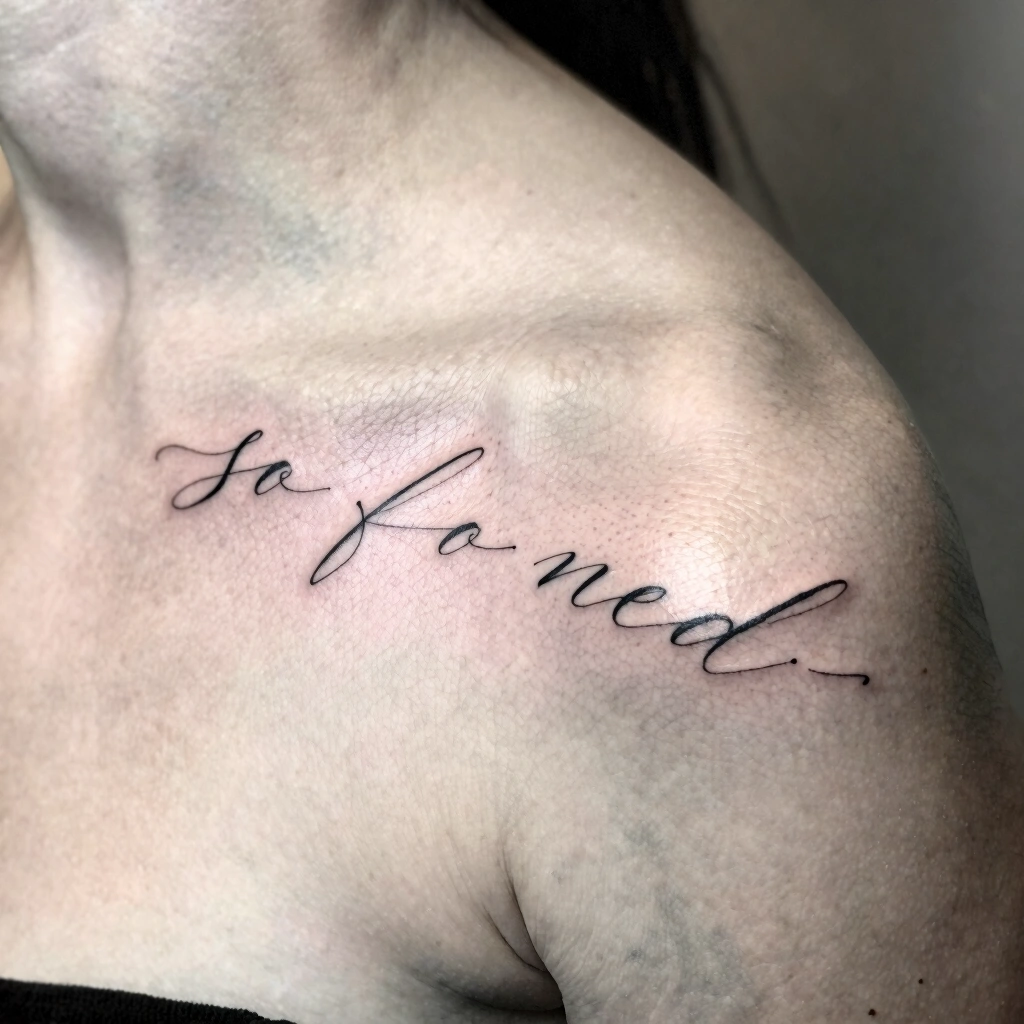
Single-needle work uses one fine needle point instead of a grouped needle cluster, producing extremely thin, delicate lines — ideal for cursive script or small text. A quote running from the collarbone up to the shoulder reads elegantly but requires excellent linework precision since any wobble in thin script is obvious. Keep font size legible; anything under 0.3 inches tall risks blurring within a few years. Healing takes about 2 weeks. Always proofread your text three times before the session — corrections after the fact are expensive and difficult.
Pain is moderate near the collarbone. This is a popular choice for meaningful, low-visibility first tattoos. Now let’s look at a design built around empty space instead of ink.
6. Negative Space Geometric Shoulder Wrap

Negative space design uses the untattooed skin itself as part of the composition, often framed by bold black shapes or line borders. A geometric wrap might use triangles or hexagons with hollow centers left as bare skin, creating a modern, architectural look. This requires a skilled hand since uneven negative space gaps are one of the most common blackwork mistakes. Size should be at least 4 inches per shape to keep the empty sections crisp. Healing takes 2 to 3 weeks. Ask your artist to sketch the stencil directly on your shoulder before tattooing so you can check the spacing in person. Pain is moderate. Great for people wanting something bold but not fully covered in ink. Let’s shift to a classic, richly colored option.
7. Bold Traditional Rose Cluster

Traditional tattoo style uses thick, confident outlines with limited but saturated color — usually red, green, and black — and minimal fine detail. A rose cluster on the shoulder ages remarkably well compared to delicate styles because the bold lines stay legible even decades later. Aim for 5 to 8 inches to leave room for two or three roses with visible depth. Healing takes about 2 to 3 weeks with typical redness and peeling. Ask your artist about “bold line traditional” specifically if you want that classic Americana look rather than a softer neo-traditional blend. Pain is moderate on the shoulder cap. This is a strong choice for anyone wanting a design that photographs well even at a distance. Next, something quieter and celestial.
8. Fine-Line Constellation and Star Map
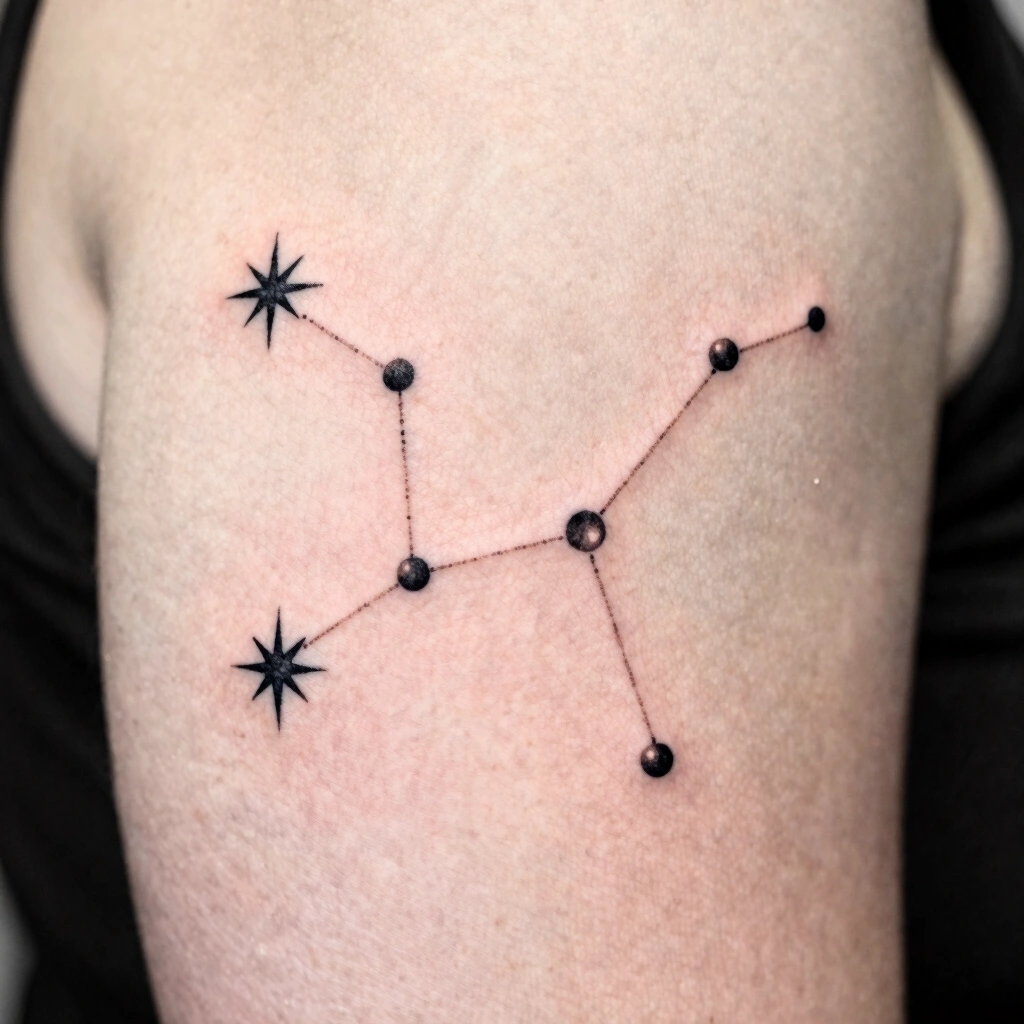
This design plots small dots and thin connecting lines to represent real star positions, often tied to a birth date or meaningful location. Because the lines are so thin, placement matters — smoother, less freckled skin holds crisp results longer. A constellation map fits nicely along the upper shoulder blade extending toward the shoulder joint, typically 3 to 6 inches. Healing takes roughly 2 weeks. Bring the actual star chart or coordinates from a stargazing app so your artist can verify accuracy before drawing the stencil. Pain is mild to moderate. This works well for subtle, sentimental first tattoos that don’t scream for attention. From stars, let’s move to something more fluid.
9. Minimalist Line Art Wave Design

Minimalist linework keeps everything to a single unbroken or lightly broken line, no shading, no color — just clean shape. A wave curling over the shoulder captures movement without needing detail. This style is one of the most forgiving for first-timers since there’s little room for the design to age badly; a clean line stays a clean line. Best kept 3 to 5 inches. Healing runs about 2 weeks. Ask specifically for a “consistent line weight” — meaning the thickness doesn’t taper unintentionally partway through. Pain is mild to moderate. Works well in professional settings since it’s easy to conceal or reveal. Now let’s look at a design with more organic softness.
10. Blackwork Feather Trail

A trail of feathers, each rendered in solid black with fine linework detailing the individual barbs, cascading from the shoulder down the upper arm creates a sense of motion. The mix of solid black sections and thin detail lines gives the piece visual texture without needing any color. Best at 6 to 9 inches to keep feather detail legible. Healing takes 2 to 3 weeks. Ask your artist to vary feather size slightly for a natural, non-symmetrical look — perfectly identical feathers can look stiff. Pain is moderate. This design suits both first tattoos and larger collection pieces you plan to build on later. Next, let’s cover a leafier, more nature-driven option.
11. Botanical Fern and Leaf Wrap

Botanical designs use realistic or slightly stylized plant forms, often in fine-line or light blackwork, layered to create depth without heavy shading. A fern wrap suits the shoulder’s curve since fronds can follow the natural slope outward. Skin with more texture may cause very fine leaf veins to soften slightly over time, so opt for slightly thicker outlines if you have textured skin. Size around 5 to 7 inches works best. Healing takes 2 to 3 weeks. Bring pressed or photographed real ferns rather than cartoon references for a more botanically accurate stencil. Pain is mild to moderate. Suits nature lovers wanting a grounded, earthy symbol. Let’s move to a bolder, more daring design next.
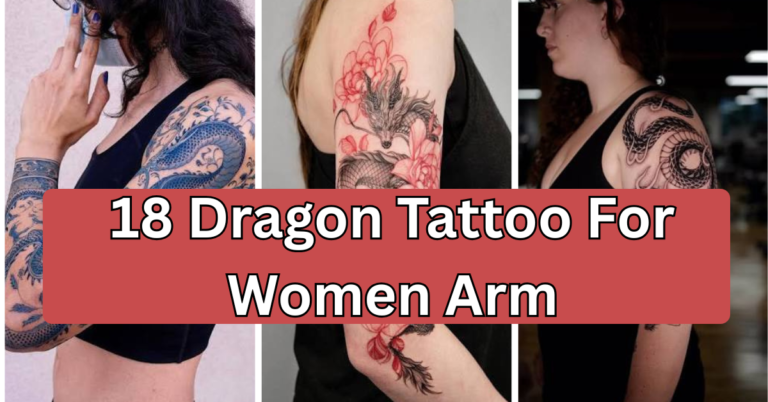
12. Fine-Line Snake Wrap
A snake wrapping around the shoulder and partway down the arm uses fine-line scale detailing and subtle shading to suggest dimension without heavy black fill. This design leans into the shoulder’s natural roundness, making the snake look like it’s genuinely coiling around the body. Size should be at least 6 inches to keep scale detail from blurring later. Healing takes about 2 to 3 weeks. Ask your artist about “directional shading,” which follows the body’s curve to enhance the 3D illusion. Pain is moderate to high given the wrap-around placement. This is a popular symbolic choice representing transformation or rebirth. Now, something more abstract.
13. Abstract Brushstroke Design
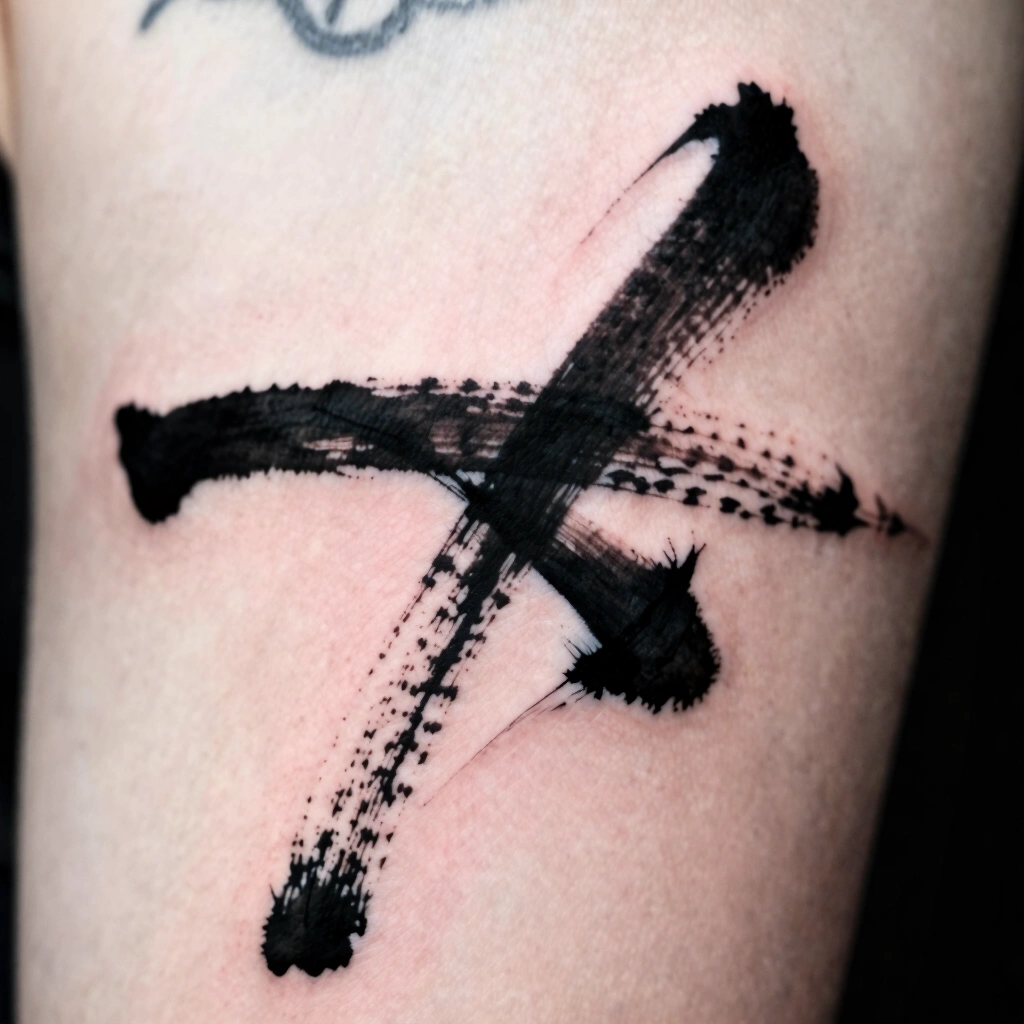
This style borrows from ink painting, using bold, sweeping black strokes of varying thickness to create an abstract, artistic mark rather than a literal image. It photographs beautifully because the strokes catch light and shadow differently depending on angle. Best sized 4 to 6 inches to keep the brushstroke effect from looking scattered. Healing takes roughly 2 weeks. Bring examples of actual ink brush art, not other tattoos, so your artist understands the stroke texture you want. Pain is mild to moderate. Great for people who want something artistic and non-literal. Let’s look at a delicate cluster design next.
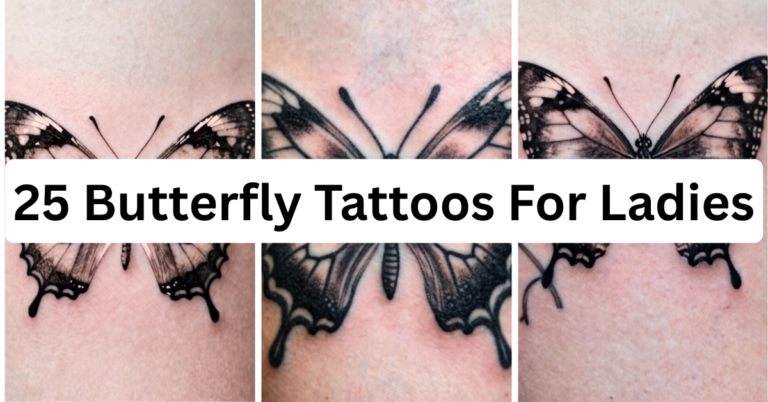
14. Butterfly Cluster Fine-Line

A small cluster of three to five butterflies in fine-line style, varying in size, creates a sense of movement across the shoulder without needing color or heavy shading. This works especially well as a first tattoo since the design is simple enough to heal predictably. Keep individual butterflies under 2 inches each so the cluster doesn’t feel crowded. Healing takes about 2 weeks. Ask for slightly varied wing angles across the cluster for a more natural, fluttering look. Pain is mild to moderate. Suits matching or group tattoos if friends want a shared symbol. Next, a more structured, symmetrical option.
15. Sacred Geometry Shoulder Cap

Sacred geometry designs rely on precise symmetrical shapes — think interlocking circles or triangles — built with a ruler-straight linework technique that requires real technical skill. Any asymmetry is immediately noticeable, so portfolio review matters more here than almost any other style. A shoulder cap version usually runs 5 to 7 inches. Healing takes 2 to 3 weeks. Ask to see stencil proofs before the session, since geometry needs to be checked for symmetry while flat before it’s applied to a curved shoulder. Pain is moderate to high. Great for those wanting a mathematically clean, symbolic design. Let’s shift to something with ornamental flair.
16. Ornamental Lace-Style Shoulder Wrap

This design mimics lace patterns using fine dotwork and thin linework combined, creating a delicate, almost fabric-like texture across the shoulder. It’s technically demanding since the pattern needs consistent spacing to look intentional rather than messy. Best kept under 6 inches to preserve pattern clarity. Healing runs 2 to 3 weeks. Ask your artist about “pattern repetition consistency” during the consult so the lace motif doesn’t look uneven on one side. Pain is moderate. This suits women wanting something feminine and detailed without using literal floral imagery. Now, a looser floral option.
17. Wildflower Bouquet Trailing Design
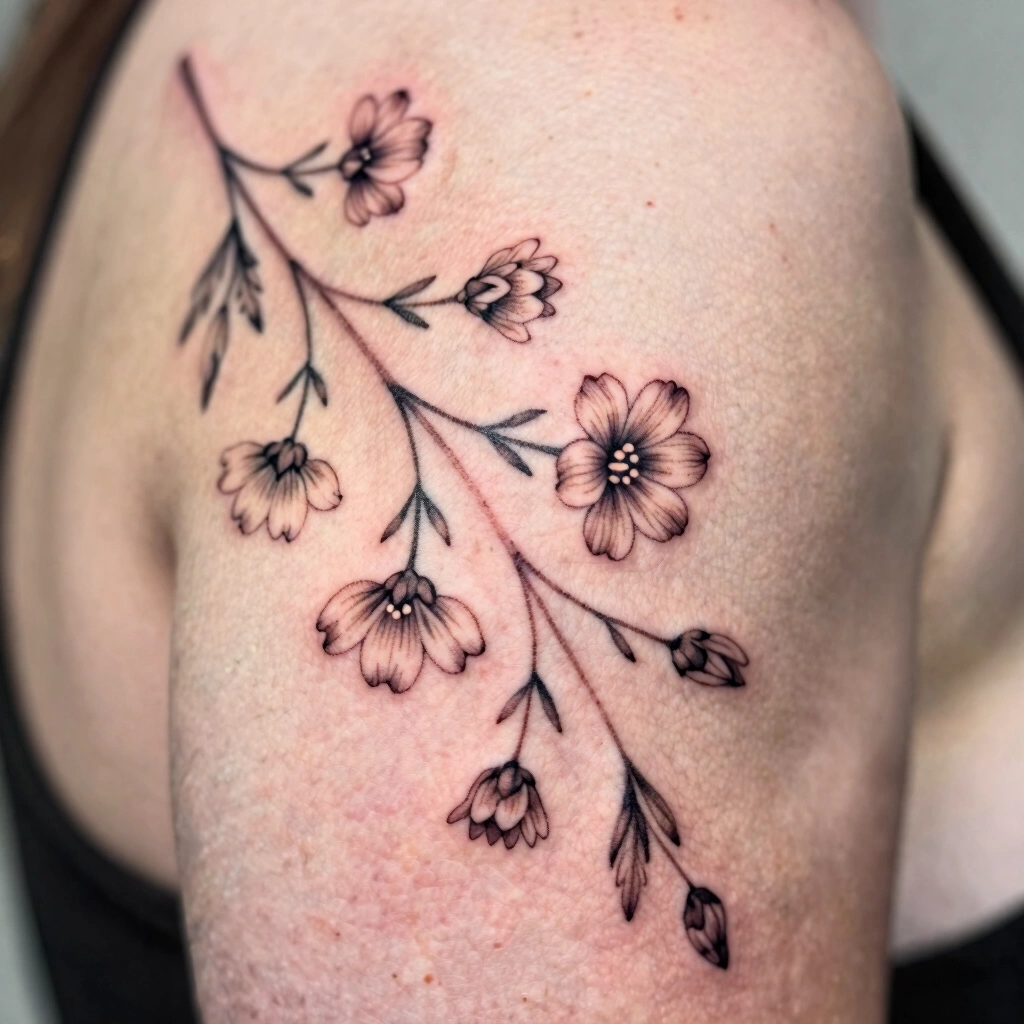
Unlike a structured vine, this design uses a loose, scattered arrangement of small wildflowers in fine-line style trailing from the shoulder toward the back. The asymmetry is intentional and mimics how real bouquets look. Size around 5 to 8 inches gives enough room for variety in flower shapes. Healing takes 2 to 3 weeks. Bring a reference of a real pressed bouquet or botanical photo so your artist can choose a natural, non-repetitive layout. Pain is mild to moderate. This works well for both first tattoos and as an add-on to existing shoulder work. Let’s move to a nighttime sky theme.
18. Celestial Moon Phases Wrap
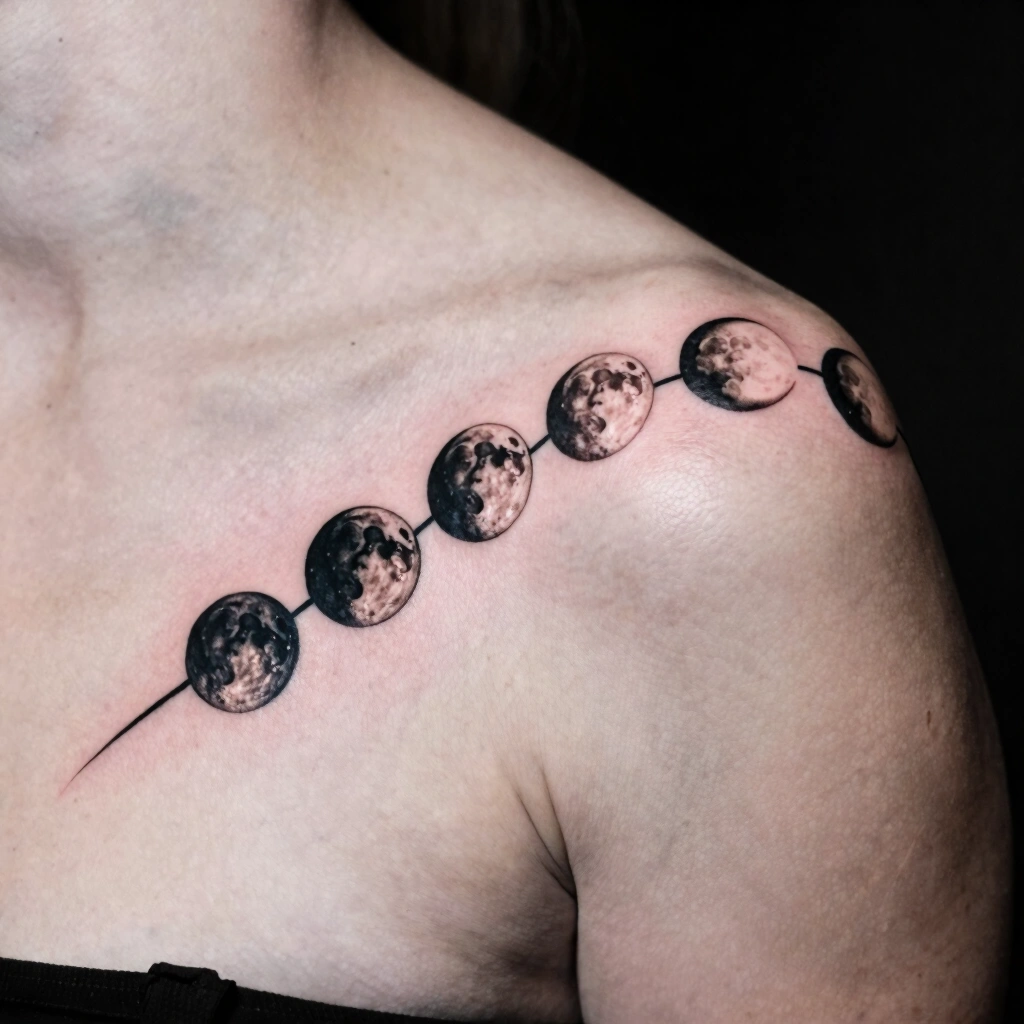
This design lines up several moon phases in a gentle arc across the shoulder, usually in solid blackwork with clean circular edges. The repetition of shapes creates rhythm, and the solid black holds its crispness better over time than shaded gray moons would. Best sized with each moon around 1 inch, spaced evenly across a 5 to 7 inch arc. Healing takes about 2 weeks. Ask for a “consistent circle diameter” across all phases so they read as a matched set. Pain is mild to moderate. Popular as a symbolic, meaningful design tied to personal growth. Next, movement captured mid-flight.
19. Fine-Line Bird in Flight
A single bird rendered in fine-line style, wings spread mid-motion, works beautifully on the shoulder because the wing shape naturally follows the joint’s curve. Minimal shading, if any, keeps the design light and airy rather than heavy. Best kept 3 to 5 inches. Healing takes about 2 weeks. Ask your artist to angle the bird slightly upward toward the neck for a sense of upward motion rather than a flat, static pose. Pain is mild to moderate. Works well as a subtle first tattoo or a meaningful memorial piece. Now, a slightly edgier botanical option.
20. Vine and Thorn Wrap

This design combines the softness of a floral vine with the sharper visual contrast of thorns, done in fine-line or light blackwork. The thorns add graphic punch without needing color, and the overall shape wraps naturally around the shoulder’s curve. Size around 5 to 7 inches keeps thorn detail visible. Healing takes 2 to 3 weeks. Ask for varied thorn spacing rather than a perfectly repeating pattern for a more organic, less mechanical look. Pain is moderate. Suits those wanting a design that reads as both delicate and a little tougher. Let’s look at a splashier color option next.
21. Watercolor Splash Floral

This combines a solid black-line flower with loose, splattered color in the background mimicking a paint splash. It’s a striking style but one of the least predictable long-term since splash-style color has soft edges that can spread slightly as skin ages. Best sized 5 to 7 inches to give the splash effect room to breathe. Healing takes 3 to 4 weeks. Ask to see three-plus-year healed photos of your artist’s splash work specifically, not just fresh photos, before booking. Pain is moderate. Best for people comfortable with eventual touch-ups. Now, back to structured pattern work.
22. Dotwork Geometric Pattern Shoulder

This design uses dotwork shading to build gradient depth within geometric shapes like triangles or hexagons, creating a soft 3D effect without any solid black fill. It’s a slower, more meticulous process than solid blackwork geometry. Best at 5 to 7 inches so the gradient has room to transition smoothly. Healing takes 2 to 3 weeks. Ask your artist about “dot spacing gradient,” which controls how the shading fades from dark to light. Pain is moderate to high. Suits those wanting geometric structure with more visual softness than solid black. Finally, let’s talk about going fully custom.
23. Custom Symbolic Cluster Design

Rather than one image, this approach combines two or three small symbols — maybe a flower, a date, and a simple line shape — arranged as a cluster across the shoulder. It’s entirely custom, meaning your artist designs it from scratch based on your input rather than working from an existing flash sheet. This demands a longer consultation but results in something genuinely one-of-a-kind. Size varies, but 4 to 6 inches usually fits well. Healing takes 2 to 3 weeks. Bring a written list of your symbols’ meanings, not just images, so your artist can balance the composition intentionally. Pain varies by exact placement. This suits anyone wanting a deeply personal, non-repeatable piece.
Best Placement Ideas
- Full shoulder cap — highly visible, moderate pain, easy to show or cover with sleeves
- Collarbone-to-shoulder trail — more visible in certain necklines, generally moderate pain near the bone
- Shoulder blade extension — lower visibility, good for workplace concealment, slightly less painful on fleshier areas
- Upper arm wrap-around — versatile visibility, moderate pain, great for larger wrap designs
- Back of shoulder only — very concealable, mild to moderate pain, easiest to keep private
Tips for Success
Look for an artist whose portfolio shows healed photos, not just fresh ink — fresh tattoos always look sharp, but healed results tell you how their linework actually holds up. Ask specifically about their experience with the technique you want, whether that’s fine-line, dotwork, or blackwork, since not every artist specializes in every style. Bring reference images that show composition and line weight rather than just subject matter, and be upfront about your budget and pain tolerance during the consultation. A good artist will also talk you through stencil placement on your actual body before picking up a needle.
Common Mistakes and How to Avoid Them
- Going too small for detailed work — fine dotwork or intricate botanical detail needs enough space to stay legible for years
- Ignoring the body’s curve — a design drawn flat on paper won’t automatically wrap correctly around a shoulder joint
- Skipping aftercare instructions — this affects how crisp the final healed result looks
- Copying a design exactly — personalizing even small elements avoids getting an identical tattoo to someone else’s
- Choosing an artist based on price alone — cheaper isn’t always a savings if the linework doesn’t hold up
Similar Variations
Almost every idea on this list can be resized down for a more subtle look or scaled up into a half-sleeve extension later. Black linework designs can often be recolored with muted tones for a softer finish, while color pieces can be converted to blackwork for a bolder, lower-maintenance option. Combining two smaller ideas — say, a constellation paired with a single wildflower — is also a common way to personalize a design without starting from scratch.
Aftercare Basics
General aftercare guidance includes keeping the area clean, avoiding direct sun exposure while healing, and steering clear of tight clothing that might rub against fresh ink. Avoid swimming pools and prolonged soaking until the skin has fully healed. Always follow the specific aftercare sheet your artist provides, since products and timelines can vary between studios, and check with a licensed dermatologist if you notice anything that concerns you.
Quick FAQ
How much does an over-the-shoulder tattoo cost?
Cost varies widely by size, detail, and studio location, but expect a range from around $150 for a small single-session piece to $800 or more for a large, detailed custom wrap.
How painful is a shoulder tattoo?
Pain tolerance differs for everyone, but the shoulder cap itself tends to be moderate, while areas closer to the collarbone or bone can feel more sensitive.
How long does healing take?
Most shoulder tattoos take about 2 to 4 weeks to heal on the surface, though full settling under the skin can take a bit longer.
Will the design fade over time?
All tattoos fade gradually with sun exposure and skin aging; bold blackwork tends to hold its shape longer than fine color work, and occasional touch-ups can help maintain sharpness.
Picking the right over the shoulder tattoo for women really comes down to matching the technique to your lifestyle — how visible you want it, how much detail you’re willing to maintain, and how much pain and cost you’re comfortable with going in. Take your time, talk through the details with a licensed professional, and you’ll walk out with something that still looks intentional years from now.