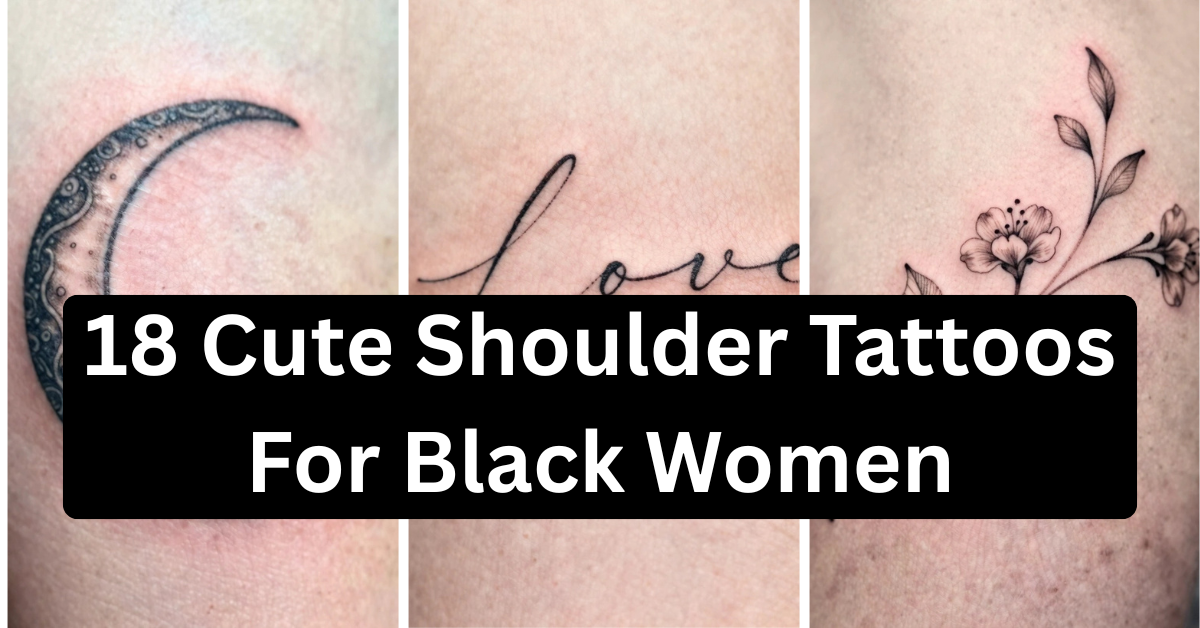
18 Cute Shoulder Tattoos For Black Women
Nervous about picking a shoulder design you’ll actually still love in ten years? You’re not alone — the shoulder is one of the most requested spots for a reason, but it’s also one people rush into without thinking about placement, skin prep, or how a design ages. I’ve spent a lot of time talking to artists and watching consultations happen, and this guide pulls together the details most lists skip: pain level, healing time, sizing logic, and how to actually brief an artist so you get what you pictured.
So what are the best cute shoulder tattoos for Black women? Fine-line florals, small blackwork symbols, dotwork shading, and negative-space crescent designs tend to work best, since the shoulder’s flatter surface holds detail well and shows contrast beautifully against deeper skin tones. Placement near the cap or shoulder blade also allows for easy sizing up later without a full redesign.
Below, I’ll walk through eighteen specific design directions, the actual technique behind each one, where to place it, what it might cost, how much it might hurt, and the small mistakes that turn a great idea into a regretted one.
Why Shoulder Placement Works So Well For These Designs
The shoulder gives an artist a lot to work with. It’s got a soft curve at the cap, a flatter plane toward the deltoid, and enough surface area to scale a design up or down without cramping the linework. On deeper skin tones, high-contrast techniques like bold blackwork and dotwork (a shading method built from small dots instead of solid fill) tend to read more clearly than very light gray-wash shading, which can lose definition. That’s not a hard rule — a skilled fine-line specialist can absolutely make delicate work pop on any skin tone — but it’s worth discussing with your artist during the consultation. The shoulder is also relatively easy to keep visible for touch-ups and easy to cover with a sleeve or strap when you need to.
Fine-Line Floral Vine Wrap

This design uses a single continuous line, usually 0.3mm or thinner, to trace a vine with small leaves and blossoms curling around the upper arm toward the shoulder cap. There’s little to no shading — the detail comes entirely from line variation and spacing. It looks best sized at 4 to 6 inches long so the leaves don’t blur together as the tattoo settles into the skin over the years. Place it starting at the shoulder seam and trailing down the outer arm; this follows the body’s natural line instead of fighting it. Bring your artist a reference photo of the vine shape you like, not just a finished tattoo photo, so they can adjust the linework to your own arm’s curve.
Pain here is mild to moderate since the outer arm has more muscle and less bone. It’s a solid first-tattoo choice and reads professionally in most workplaces.
Blackwork Sun Motif
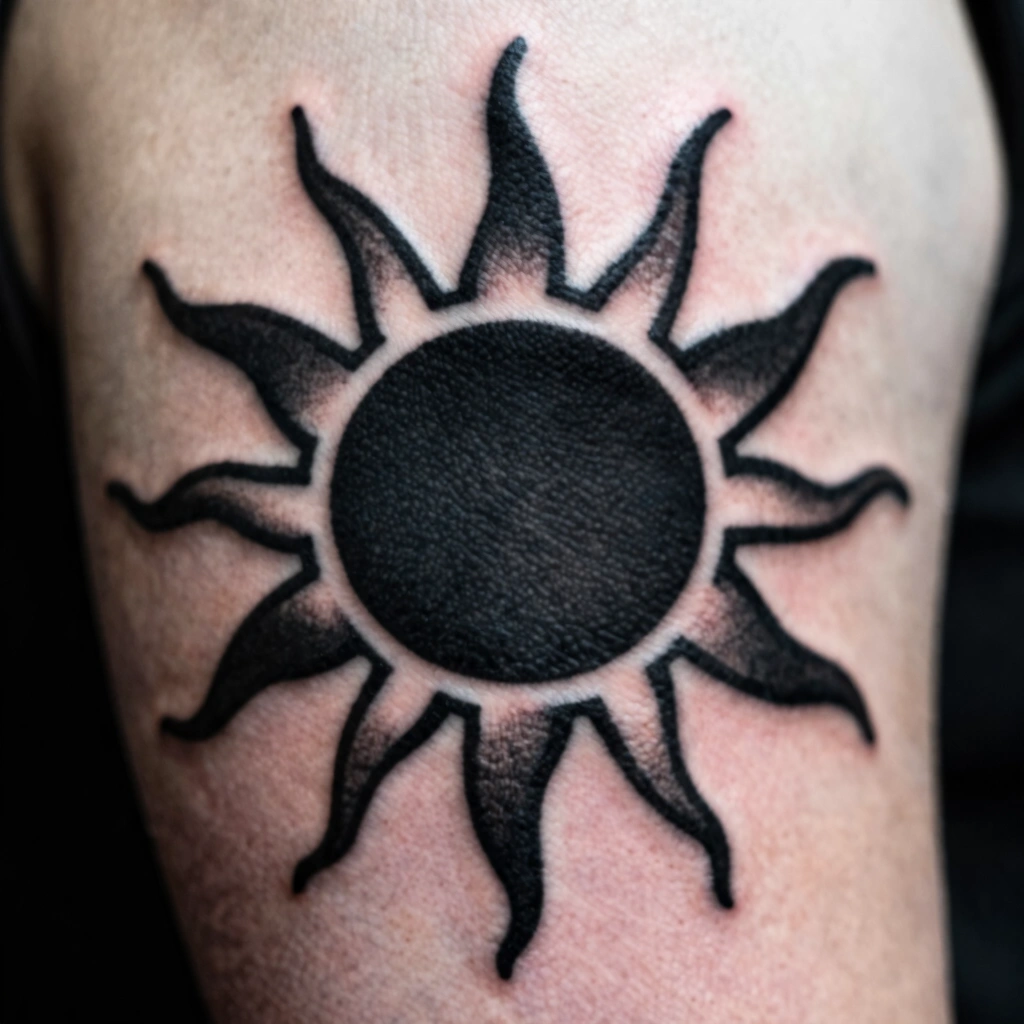
A blackwork sun uses solid black fill and sharp geometric rays instead of gradient shading, which gives it a graphic, high-contrast look that holds up extremely well over time. Because the ink is saturated rather than shaded, it resists fading longer than soft gray-wash work. A 3-inch sun centered on the shoulder cap looks balanced without overwhelming the area. Ask your artist about their line weight — thicker outer rays with slightly thinner inner details keep the design from turning into a blob as it heals.
Expect moderate pain on the shoulder cap itself, since it sits closer to bone than the outer arm. This one’s bold enough for someone wanting a statement piece but still small enough to hide under a sleeve for work.
Dotwork Mandala Cap
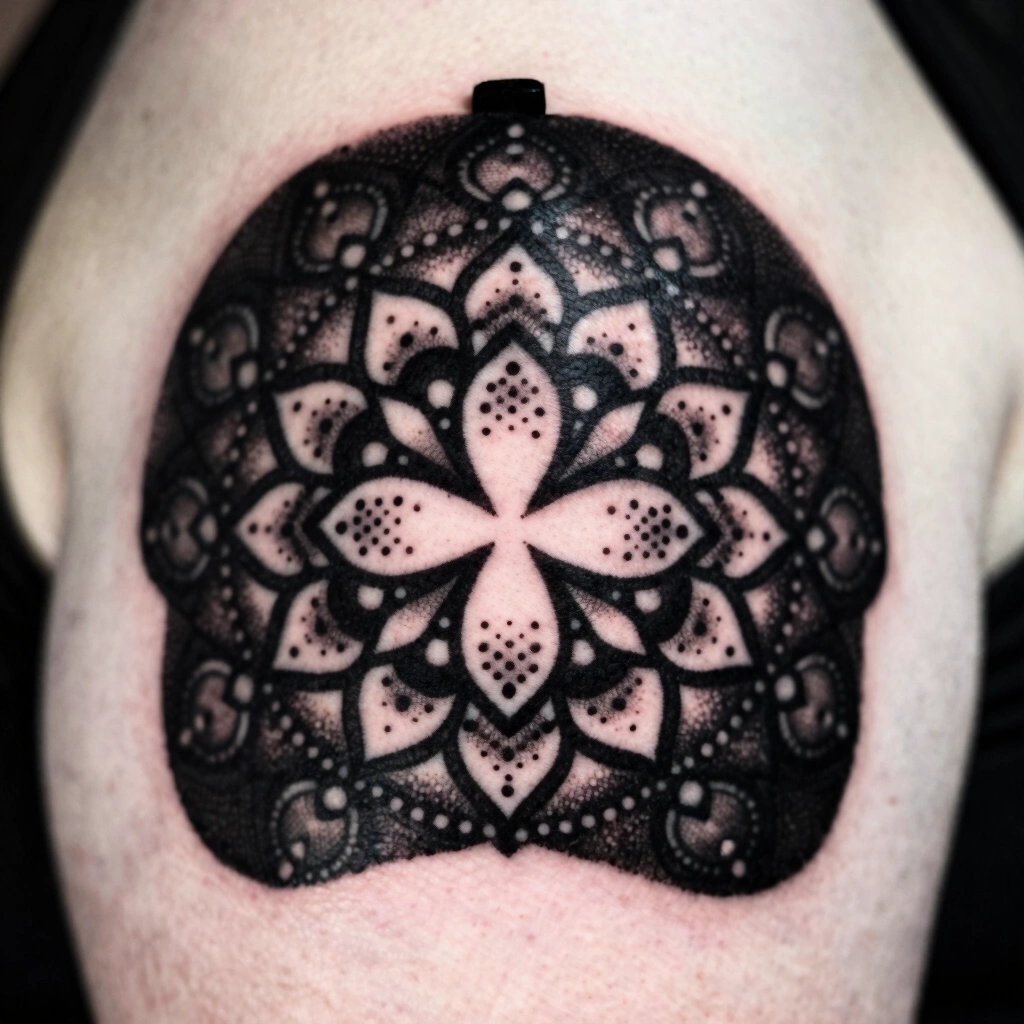
Dotwork mandalas are built entirely from tiny dots placed in careful patterns to create shading, texture, and depth without a single solid fill line. It’s slow, detailed work — expect a longer session than a comparable line-only piece. A 3 to 4-inch mandala fits neatly over the shoulder cap and takes advantage of the curve to make the pattern look like it’s wrapping the joint. Ask to see healed (not just fresh) photos in the artist’s portfolio, since dotwork can blur if the dots are spaced too tightly or the needle depth is inconsistent.
Pain tends to run moderate to high here because of the repetitive needle work over bone. This style ages beautifully and rarely needs heavy touch-ups if it’s done well the first time.
Single-Needle Butterfly

Single-needle work uses one fine needle to create extremely thin, almost thread-like lines, which gives butterfly wings a delicate, almost sketch-like quality. There’s usually minimal shading, just outline and a few interior detail lines. Keep it under 2 inches — single-needle designs that go too large can start looking sparse instead of intentional. The back of the shoulder or just above the collarbone both work well for visibility control. Bring reference images of wing vein patterns, not just butterfly silhouettes, so your artist has something specific to translate.
Pain is generally mild in fleshier areas. Single-needle tattoos also tend to soften and spread slightly faster than bold linework over the years, so this is worth discussing with your artist if longevity matters to you.
Negative Space Crescent Moon

Negative space tattoos use the untouched skin itself as part of the design, letting a shape emerge from what’s left unshaded rather than what’s inked. A crescent moon done this way might have a solid blackwork background with the moon shape “cut out” in bare skin, or vice versa. This technique reads most clearly on medium to large sizes — at least 2.5 inches — since too small and the negative space gets lost. It works well on the upper shoulder blade area where skin is relatively flat. Ask your artist directly how negative space tattoos typically look after a few years, since skin tone and healing can affect crisp edges over time.
Pain is moderate on the blade due to thinner tissue over bone. This design has a striking, modern look that stands apart from typical linework pieces.
Minimalist Script Lettering

Small script tattoos rely entirely on line weight and letter spacing to look clean rather than cramped. A short word or initials in a fine-line script, around 2 to 3 inches, sits nicely along the top of the shoulder or angled slightly toward the collarbone. Font choice matters more than people expect — a script that looks great on paper can blur once it’s tattooed small, especially with thin serifs. Ask your artist to test the design at actual size on a printed stencil before it goes on skin.
Pain is mild in this area. Lettering is one of the more workplace-friendly options and ages fairly well if the line weight was thick enough from the start — thin script is the most common victim of fading and blurring after five-plus years.
Small Constellation Cluster

A constellation tattoo uses small dots connected by fine straight lines to mimic star patterns, sometimes with a few extra dotwork “stars” scattered around for depth. This design is inherently small-scale friendly, usually 1.5 to 2.5 inches, and looks natural following the curve of the shoulder toward the upper arm. Because the design relies on precise dot placement, ask to see close-up healed photos in the artist’s portfolio — shaky dot spacing is a common issue with less experienced hands.
Pain is generally mild given the light touch required. This is a popular choice for meaningful or symbolic pieces, like marking a birth month or a specific date, and it works well as a matching tattoo between siblings or close friends.
Bold Traditional Rose
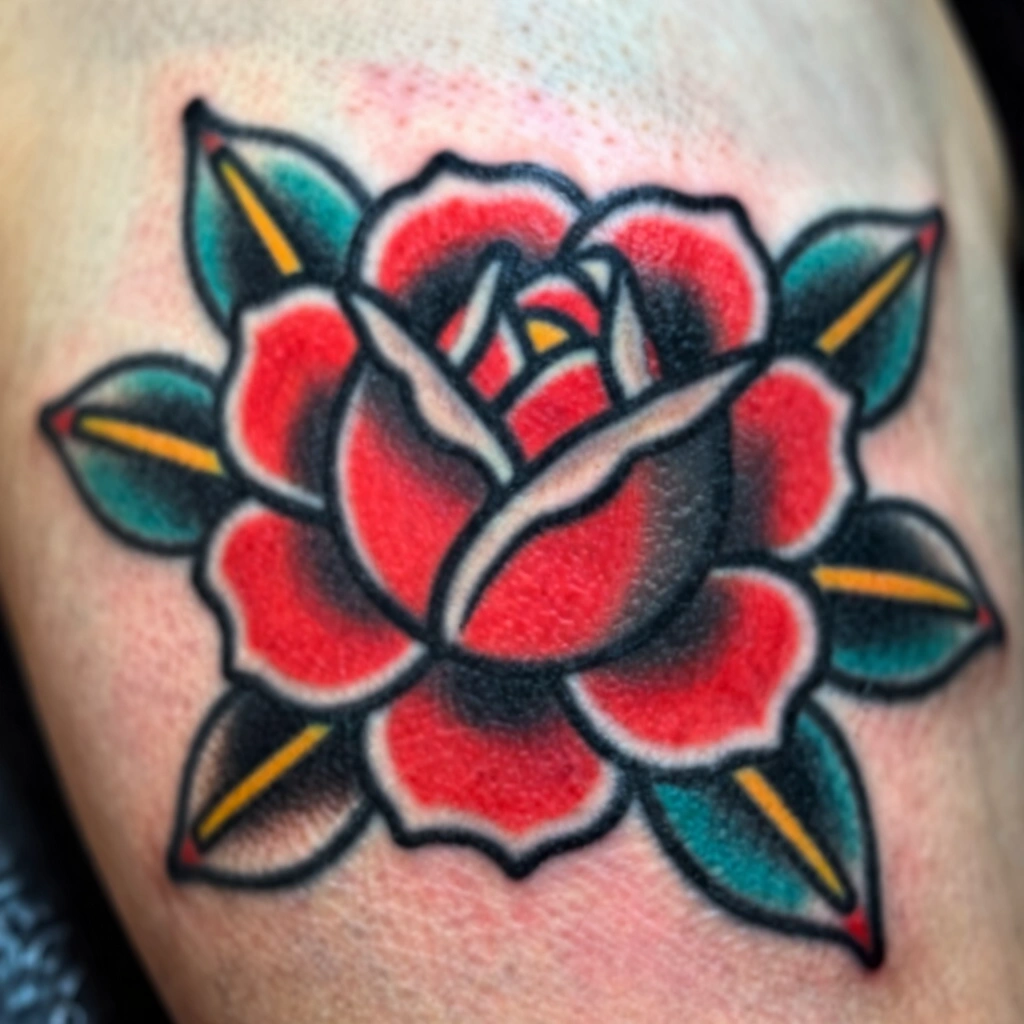
Traditional-style tattoos use thick, confident outlines and solid color or black-and-gray fill, giving the design a graphic, slightly retro look that’s built to last. A bold rose at 3 to 5 inches on the shoulder cap or upper arm holds detail well over decades because the linework is thick enough to resist the natural blurring that happens as skin ages. This is a good option if you want visible color saturation — reds and greens read well against most skin tones when the artist uses enough ink density.
Expect moderate pain due to the shading and color passes required. Traditional work is a strong choice if you want something bold enough to be a standalone piece rather than a subtle accent.
Fine-Line Leaf Trail

This design mirrors the vine wrap but strips it down further — just a simple trail of leaf shapes without flowers, using consistent thin linework and no shading at all. It’s an easy way to add a botanical feel without much visual weight. Best placed running from the shoulder seam down 3 to 4 inches along the arm. Because there’s no shading to hide inconsistencies, ask specifically about the artist’s freehand versus stencil process, since freehand leaf trails often look more organic.
Pain is mild to moderate. It’s an excellent first-tattoo option because it’s simple enough to heal predictably and small enough to build on later if you want to add more botanical elements.
Geometric Triangle Cluster

A cluster of small triangles, sometimes overlapping or layered with fine internal lines, creates a modern, architectural look that contrasts nicely with the shoulder’s rounded shape. Line weight needs to stay consistent across all triangles for the design to look intentional rather than sketchy — this is worth mentioning directly to your artist. Keep the cluster around 2 to 3 inches for balance. This works well on the shoulder cap or angled toward the back. Pain is mild to moderate. Geometric designs like this age relatively well since straight lines are easier to keep crisp over time compared to curved detail work, making it a practical pick if longevity is a priority for you.
Watercolor-Style Floral Splash

Watercolor tattoos use diluted-looking color blended without hard outlines, mimicking a paint splash effect around a more defined central image, like a flower. This is a more advanced technique, so portfolio research matters more here than with linework styles — ask to see three-plus-year-old healed photos, since color saturation and edge softness change the most with this method over time. A 3 to 4-inch design on the shoulder cap gives enough room for the color to spread convincingly. Pain is moderate given the multiple color passes. This is a bold, artistic option, but go in accepting that touch-ups are more likely down the road compared to solid blackwork.
Symbolic Adinkra Symbol

Adinkra symbols, originating from Ghanaian visual tradition, carry specific meanings and are often rendered in bold blackwork with clean geometric lines. A 2 to 3-inch symbol on the shoulder blade or cap keeps the shape crisp and legible. If you’re choosing this design, research the specific symbol’s meaning and bring that context to your consultation — a knowledgeable artist can help you keep proportions accurate to the original form. Pain is moderate on the blade. This is a meaningful option for anyone wanting a piece connected to heritage rather than pure decoration, and bold blackwork like this tends to age with strong retention.
Delicate Chain/Bracelet-Style Band

This design wraps a thin, jewelry-like line — resembling a chain or beaded bracelet — around the top of the shoulder like a strap. It’s done in fine-line work with small repeating shapes (links, beads, or small charms) for texture. Keep the band width under half an inch so it doesn’t read as a solid stripe once healed. This placement has mild to moderate pain since it often sits close to the collarbone. It’s a great low-commitment option for someone wanting something delicate and a little unexpected rather than a centered focal image.
Abstract Linework Wave
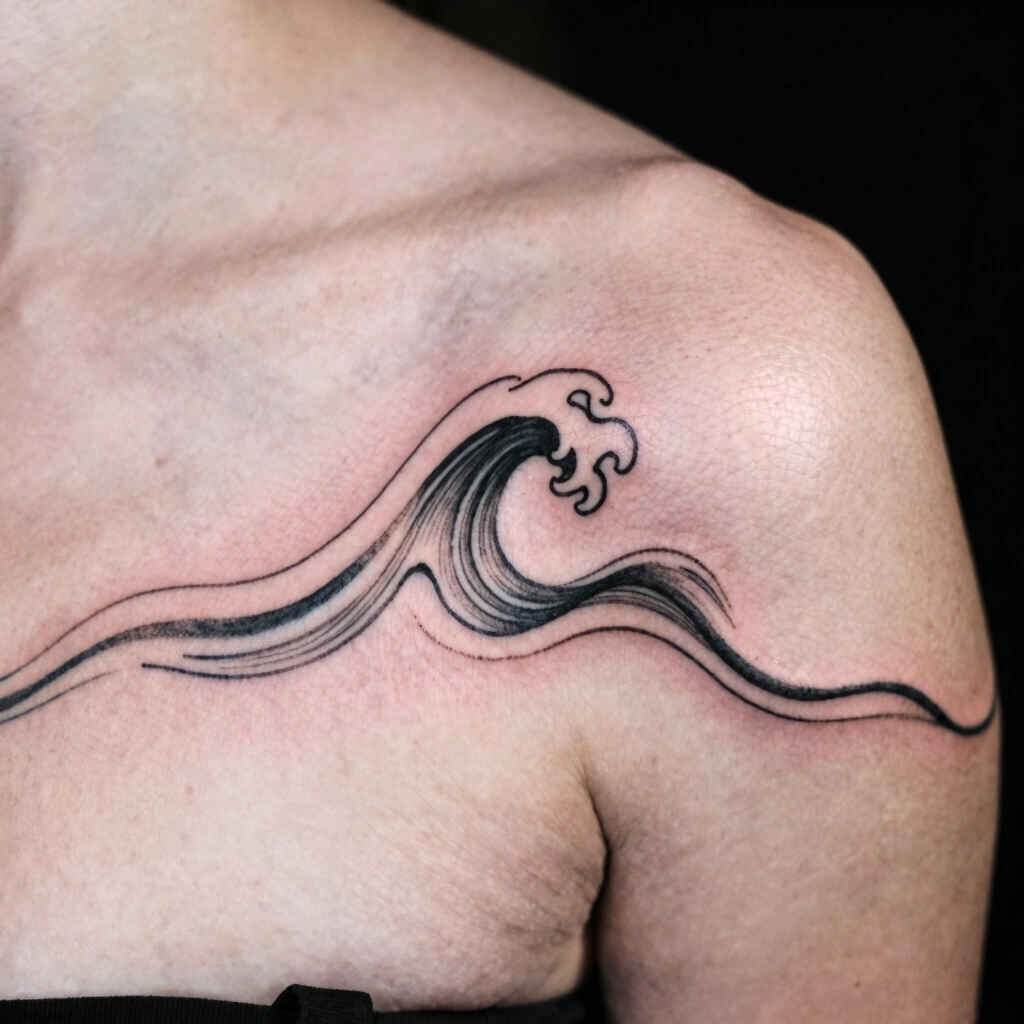
A single fluid, curving line — sometimes doubled or layered — creates an abstract wave shape that follows the shoulder’s natural slope. This is fine-line or single-needle work with no shading, relying entirely on the curve itself for visual interest. A 3 to 5-inch wave placed diagonally across the shoulder cap uses the body’s shape as part of the composition. Ask your artist to sketch the line directly on your skin before tattooing so you can check the flow in person. Pain is mild. This design suits people who want something abstract and modern without symbolism attached to it.
Tiny Star Cluster

A simple scatter of small solid stars, usually in blackwork with no shading, works as a subtle accent piece near the shoulder or collarbone edge. Keep individual stars under half an inch — larger stars in a cluster can start looking disconnected. This is one of the lowest-pain options on this list given the light needle work involved. It’s a popular pick for a first tattoo or as an add-on to an existing piece, and it holds up well over time since the shapes are simple and forgiving as ink settles.
Custom Name/Initial Script

Similar to the minimalist script idea but built around a name, date, or initials with personal meaning. Fine-line work in the 2 to 3-inch range along the shoulder or upper back keeps it legible without overwhelming the area. Cursive scripts with thin connecting strokes are the most prone to blurring over the years, so ask your artist about slightly thickening connector lines for better long-term retention. Pain is mild. This is one of the more common matching-tattoo choices between family members, since initials or dates carry meaning without requiring identical imagery.
Blackwork Sunflower

A sunflower rendered in solid blackwork rather than color relies on line weight and negative space within the petals to create dimension instead of shading. This gives it a bolder, more graphic look than a realistic floral piece. A 3 to 4-inch sunflower on the shoulder cap holds detail well. Pain is moderate. This design ages notably well since solid black holds saturation longer than lighter color work, making it a smart pick if you want a floral design without frequent touch-ups.
Fine-Line Bird in Flight

A small bird captured mid-flight in fine-line work, usually with minimal detail — a suggestion of wings and a simple body outline rather than realistic feather work. Sized around 2 inches, it fits neatly near the shoulder edge or collarbone. Ask your artist about needle size here specifically, since very thin lines on a small bird shape can lose crispness faster than bolder linework. Pain is mild. It’s a popular symbolic choice representing freedom or a life transition, and works well as a subtle, first-tattoo-friendly piece.
Best Placement Ideas
- Shoulder cap (top of the shoulder): High visibility, moderate pain due to proximity to bone, easy to show off or cover with sleeves.
- Shoulder blade area (back): Good for larger designs, slightly less visible day-to-day, moderate to high pain depending on exact spot.
- Outer upper arm blending into shoulder: Lower pain, great for flowing designs like vines or waves, very easy to conceal for work.
- Near the collarbone edge: Higher pain due to thin skin over bone, best for small, delicate pieces rather than bold work.
Tips for Success
Choosing the right artist matters more than choosing the perfect reference photo. Look through a prospective artist’s portfolio for healed photos specifically, not just fresh ink — fresh tattoos almost always look sharper than they will in six months. Book a consultation before committing, bring two or three reference images instead of one (so the artist can pull the best elements from each), and ask direct questions about their experience with your specific style, whether that’s dotwork, fine line, or bold blackwork. Custom bookings generally give you more control over sizing and placement than walk-in flash options, though flash designs are a fine choice if you love a pre-drawn piece exactly as it is.
Common Mistakes and How to Avoid Them
- Sizing too small for the detail level. Intricate dotwork or mandala patterns need enough surface area to stay legible after healing — talk sizing through with your artist before the stencil goes on.
- Picking a placement that fights the design’s shape. A long vine looks awkward crammed into a tiny circular space; match the design’s natural direction to the body’s lines.
- Skipping aftercare instructions. Even simple fine-line work needs proper care in the first few weeks to heal cleanly.
- Copying a design exactly without personalizing it. A generic copy-paste tattoo often looks less intentional than one adjusted slightly for your skin tone, size preference, or personal meaning.
Similar Variations
Most of these ideas scale in more than one direction. A fine-line vine can be resized down to a wrist piece or up into a full sleeve later. A blackwork sun or sunflower can be recolored into a traditional-style piece with added shading and pigment. Constellation clusters and tiny stars combine easily into a larger custom piece down the road. Script and lettering pieces can be layered with small symbols for a more personal combination design.
Aftercare Basics
General dermatological consensus recommends keeping a new tattoo clean, moisturized, and out of direct sun or soaking water (pools, baths, oceans) during the initial healing window. Avoid picking at any peeling or flaking skin, and stick with the specific aftercare product your artist recommends rather than switching products mid-heal. Every studio has slightly different preferences, so always follow the printed aftercare sheet given at your appointment over generic advice found online. If you notice anything that seems unusual during healing, check in with your artist or a licensed dermatologist rather than guessing.
Quick FAQ
How much do shoulder tattoos usually cost?
Cost varies widely by size, detail, and artist experience, but small pieces (2–3 inches) often start in the $80–$200 range, while larger or more detailed work can run several hundred dollars. Always get a quote during a consultation rather than assuming a flat rate.
How painful is a shoulder tattoo?
Pain tolerance is personal, but generally the shoulder cap and areas closer to bone or the collarbone feel more sensitive than the fleshier outer arm. Most people describe it as manageable rather than severe.
How long does healing typically take?
Surface healing usually takes around two to three weeks, though full settling under the skin can take longer. Healing time varies by individual and design size, so follow your artist’s specific aftercare guidance.
Do shoulder tattoos fade faster than other placements?
Sun exposure and friction from clothing can affect fading over time, similar to other visible placements. Bold linework and solid blackwork tend to hold saturation longer than very fine or light shading work.
Finding the right cute shoulder tattoo really comes down to matching the design’s technique to the placement and being honest with yourself about long-term care. Whether you land on a delicate fine-line vine or a bold blackwork sun, take the time to find an experienced artist, ask real questions, and treat the healing process seriously — that’s what makes a shoulder tattoo look just as good five years from now as it does the day you walk out of the studio.