25 Sun and Moon Tattoo Ideas for Best Friends
Nervous about picking a matching tattoo you and your best friend will actually love in ten years, not just this month? That’s a fair worry, and it’s exactly why this guide exists. I’ve spent a good amount of time in tattoo studios watching consultations happen, listening to artists explain why one design ages well and another turns into a blob, and this article pulls from that real-world context instead of just recycling pretty pictures.
So what are the best sun and moon tattoo ideas for best friends? The strongest options are fine-line celestial pairs, matching blackwork crescents, dotwork mandala suns, and single-needle minimalist symbols placed on mirrored body parts like both wrists or behind each ear. These designs work because they split one image into two halves that only feel complete when your friend is nearby, and simple linework holds up better over decades than heavily shaded pieces.
Keep reading and you’ll get placement advice for each design, honest pain-level comparisons, realistic healing timelines, cost context, and the exact questions to ask your artist before you sit in the chair.
Why Sun and Moon Designs Work So Well for Friendship Tattoos
Sun and moon tattoos work for best friends because they’re built on contrast that still makes sense as a pair. One person is loud, one is quiet. One’s a morning person, one thrives at midnight. The imagery does the emotional heavy lifting without needing text or matching quotes, which honestly tend to age worse anyway. Because the sun and moon are simple shapes at their core — a circle with rays, a curved crescent — they translate well into almost any tattoo style, from delicate fine line to bold blackwork. That flexibility is the real reason this theme keeps showing up in portfolios year after year.
1. Fine-Line Sun and Crescent Moon Wrist Set

This is the most requested version for a reason. A thin, single-needle line traces a basic sun burst on one wrist and a crescent moon on the other, no shading, no fill. The line weight typically sits around 0.3–0.5mm, which keeps detail crisp on smaller placements. Wrists are visible but small, so expect a 1–1.5 inch design. Healing runs about two weeks for the surface, though full settling under the skin takes closer to a month.
The wrist is a thin-skinned, bony area, so discomfort tends to run moderate. Bring a reference image with clean, closed linework so your artist can build an accurate stencil.
2. Matching Blackwork Sun and Moon Behind the Ear

Blackwork uses solid, saturated black fill instead of thin outlines, giving these a heavier, more graphic look. Behind the ear is discreet for workplaces but the skin there is thin and close to bone, so sensitivity is on the higher end. Keep the design under an inch to avoid it blurring together over the years — solid black ages better small than large linework does in tight spaces. Ask your artist about their smallest needle grouping for fine detail in this spot.
3. Dotwork Sun Mandala Paired with a Simple Moon

Dotwork builds shading and texture from tiny individual dots instead of solid fill or line shading. A mandala-style sun with radiating dotwork patterns pairs nicely against a plain crescent moon for your friend, creating visual balance between “detailed” and “minimal.” This works best on flatter areas like the forearm or upper back where the artist has room to keep dot spacing even.
Healing takes slightly longer than basic linework, often three weeks, since dotwork can scab more than expected.
4. Negative Space Moon Phases with a Solid Sun

Negative space tattooing uses the untouched skin itself as part of the design, rather than filling every shape with ink. Here, the moon phases are outlined in black with the phase shapes left as bare skin, while the sun sits nearby as a solid black disc. This contrast reads well on the inner forearm or calf. It’s a striking option for friends who want something bolder without going full blackwork sleeve territory.
5. Tiny Single-Needle Sun and Moon Behind the Collarbone

Single-needle tattooing is essentially the finest line width available, often used for text or micro-symbols. At under half an inch, this pairing sits quietly along the collarbone, easy to hide with a shirt collar. Because the design is so small, ask specifically for a single-needle specialist — general artists sometimes size micro-tattoos down inaccurately, which causes lines to bleed together during healing.
6. Bold Traditional Sun with Moon Silhouette

Traditional American tattoo style uses thick, bold outlines and limited color saturation — think classic flash sheet aesthetics. A sun with thick rays paired with a simple filled moon silhouette holds up remarkably well over 15–20 years because heavy linework resists fading better than fine detail.
This is a solid pick for a first tattoo since the style is forgiving of minor healing imperfections.
7. Watercolor-Style Sun Burst with Moon Outline

Watercolor tattoos mimic paint bleeding on paper using soft color gradients with minimal or no black outline. This style looks gorgeous fresh but fades faster and needs touch-ups sooner than blackwork or linework, according to general artist consensus. If you want this look, place it somewhere with less friction, like the upper arm, and understand it’s a higher-maintenance choice.
8. Matching Ankle Sun and Moon in Fine Line

Ankles are a popular spot for subtle matching pieces, though the constant motion and sock friction there can accelerate fading. A small fine-line sun and moon at 1 inch each work well here for friends who want something easy to cover for job interviews but easy to show off in sandals season.
9. Sun and Moon Combined Into One Circular Symbol
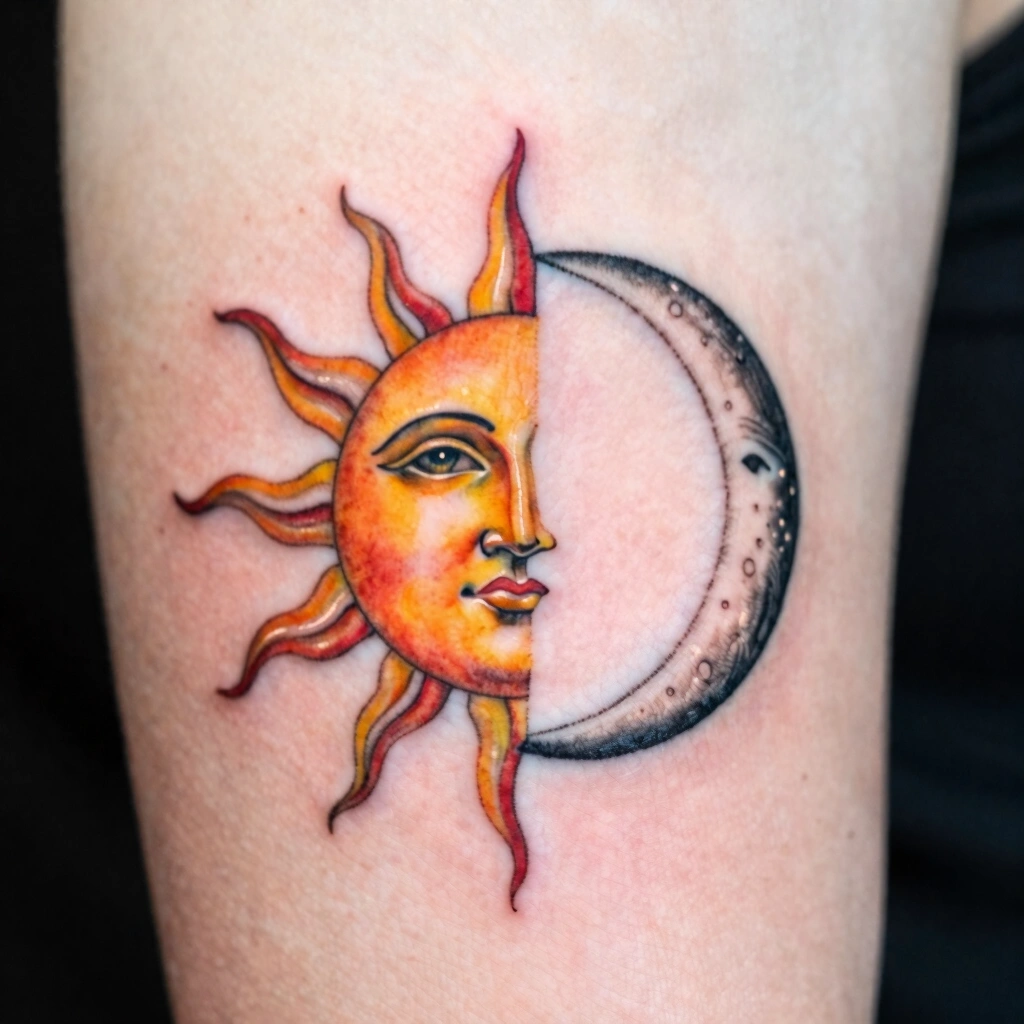
Instead of splitting the imagery between two people, some best friends choose the same combined sun-moon circle — half rays, half crescent — worn identically by both. This single-symbol approach uses moderate linework, usually 2 inches, and works nicely on the outer forearm where the circular shape has room to sit unbroken.
10. Dainty Sun and Moon Constellation Line Art

This design connects small dot “stars” with a thin single line, forming a sun on one side and moon on the other within a subtle constellation pattern. It suits the upper back or side ribs. Rib placement is known to be one of the more painful spots due to thin skin over bone, so pace your session expectations accordingly.
11. Bold Blackwork Sun with Dotwork Moon Shading

Combining two techniques in one piece — solid blackwork for the sun, dotwork shading for the moon — creates depth without full color. This hybrid works best on larger canvases like the shoulder or thigh where there’s room for both textures to read clearly.
12. Minimalist Line Moon Tucked Behind a Tiny Sun

A very small, almost geometric sun (just a circle with four short rays) paired with a thin crescent works beautifully as a first tattoo. Low detail means low risk of the design blurring as it settles, which makes it forgiving for tattoo beginners nervous about long-term looks.
13. Sun and Moon Faces in Fine-Line Illustrative Style

Illustrative style adds a bit of character — subtle facial features on the sun and moon done in delicate single-needle work. This is more custom than a flash design, so expect a higher price and a longer consultation, since the artist is essentially drawing a mini portrait rather than tracing a symbol.
14. Matching Rib Cage Sun and Moon with Shading Gradient
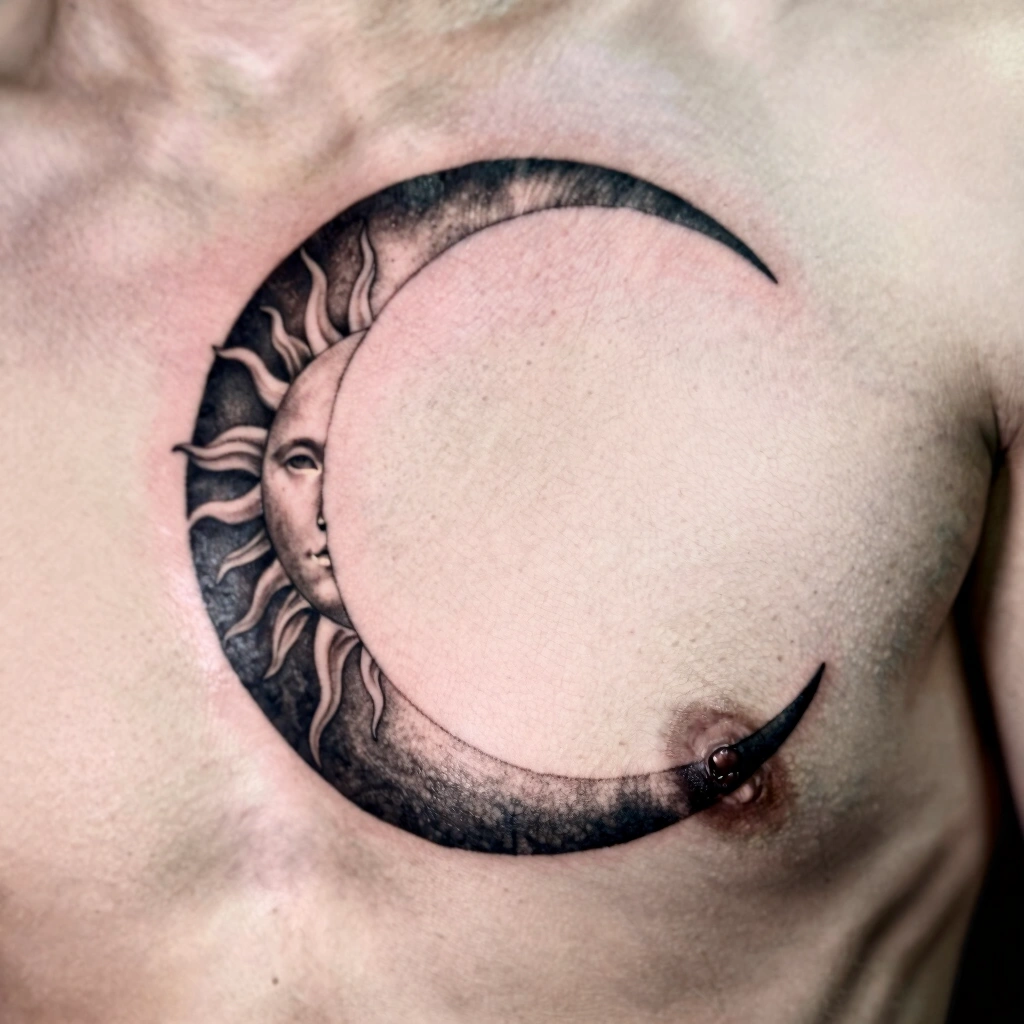
For friends wanting a larger, more artistic piece, a 3–4 inch design with soft black-and-grey shading gradients (not solid fill) gives dimension to the sun’s rays and the moon’s craters. Rib placement demands a longer healing window, often four weeks, due to skin movement from breathing and clothing friction.
15. Sun and Moon Wrapped Around the Upper Arm

Placing the design so it wraps slightly around the arm gives it a three-dimensional feel when viewed from different angles. This spot has more fat and muscle coverage than wrists or ribs, generally making it a less painful placement for most people.
16. Tiny Matching Fingers Sun and Moon

Finger tattoos are trendy but come with a practical downside: frequent hand-washing and constant friction cause faster fading and more frequent touch-ups than almost any other spot. If you and your friend still want this, keep expectations realistic and budget for a refresh within the first year.
17. Sun and Moon Split Across Two Ankles
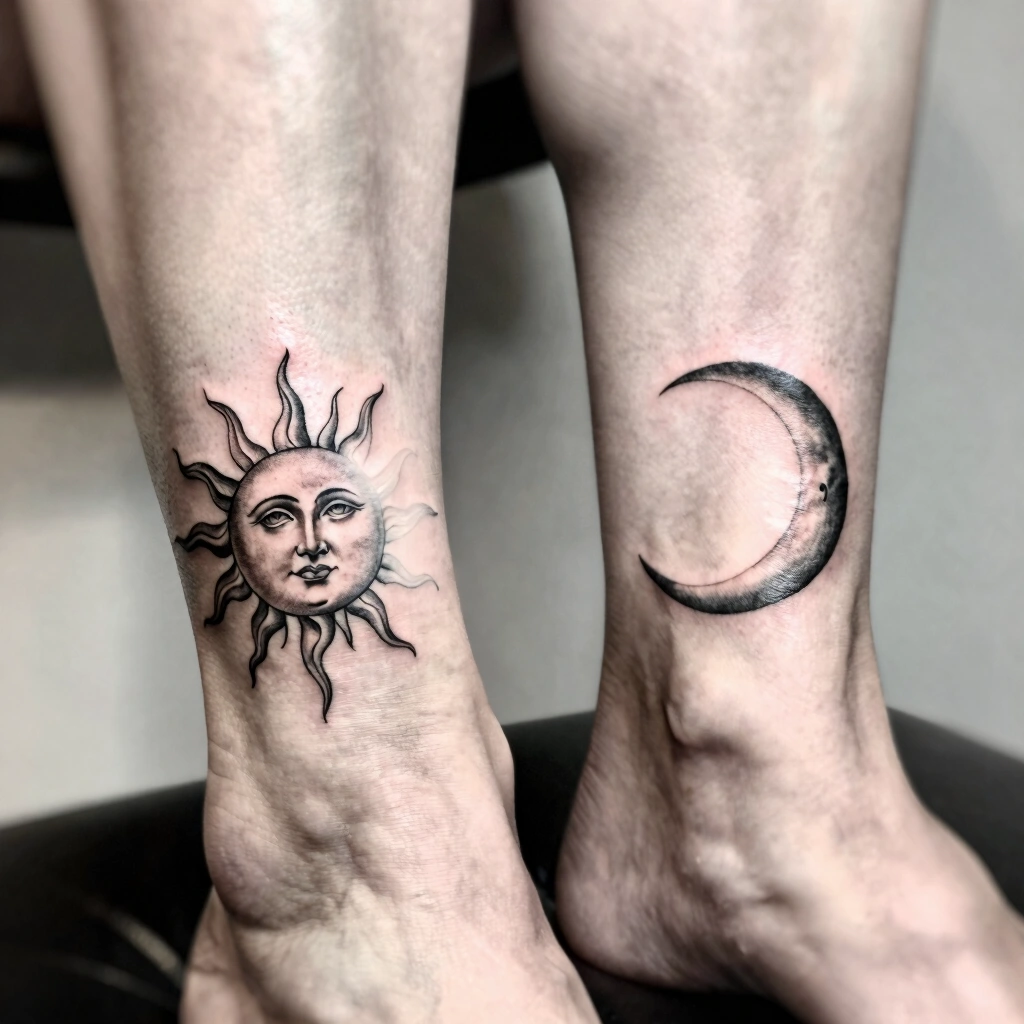
Rather than one design per wrist, some pairs choose ankles instead, with the sun sitting on the outer ankle bone and the moon mirrored on the friend’s other foot. Bony areas like the ankle tend to rank moderately high on the discomfort scale.
18. Custom Hand-Drawn Sun and Moon with Personal Symbols

Rather than a flash design pulled straight from a sheet, a custom piece incorporates small personal details — initials tucked into the moon’s crescent, a birth month flower woven into the sun’s rays. Custom work costs more and takes a longer consultation, but it avoids the “everyone has this” feeling that comes with popular flash designs.
19. Sun and Moon Matching Nape Tattoos

The nape of the neck, right at the hairline, is an intimate placement that’s easily hidden with hair down and easily shown with hair up. Fine-line work suits this spot well since there’s limited space for anything bulkier.
20. Bold Sun Half-Sleeve Paired with a Simple Wrist Moon

For one friend wanting something bigger and one wanting something small, an asymmetrical approach works: a detailed blackwork sun as a half-sleeve piece for one, and a minimal moon for the other. It’s a good compromise when best friends have different pain tolerances or budgets.
21. Sun and Moon in Warm vs. Cool Color Saturation

For friends open to color, a subtly tinted approach uses warm orange-yellow saturation on the sun and cool blue-grey tones on the moon, kept light rather than fully saturated so the color doesn’t overpower fine linework. Color tends to need more touch-ups over time than pure black ink.
22. Sun and Moon Anklet-Style Band
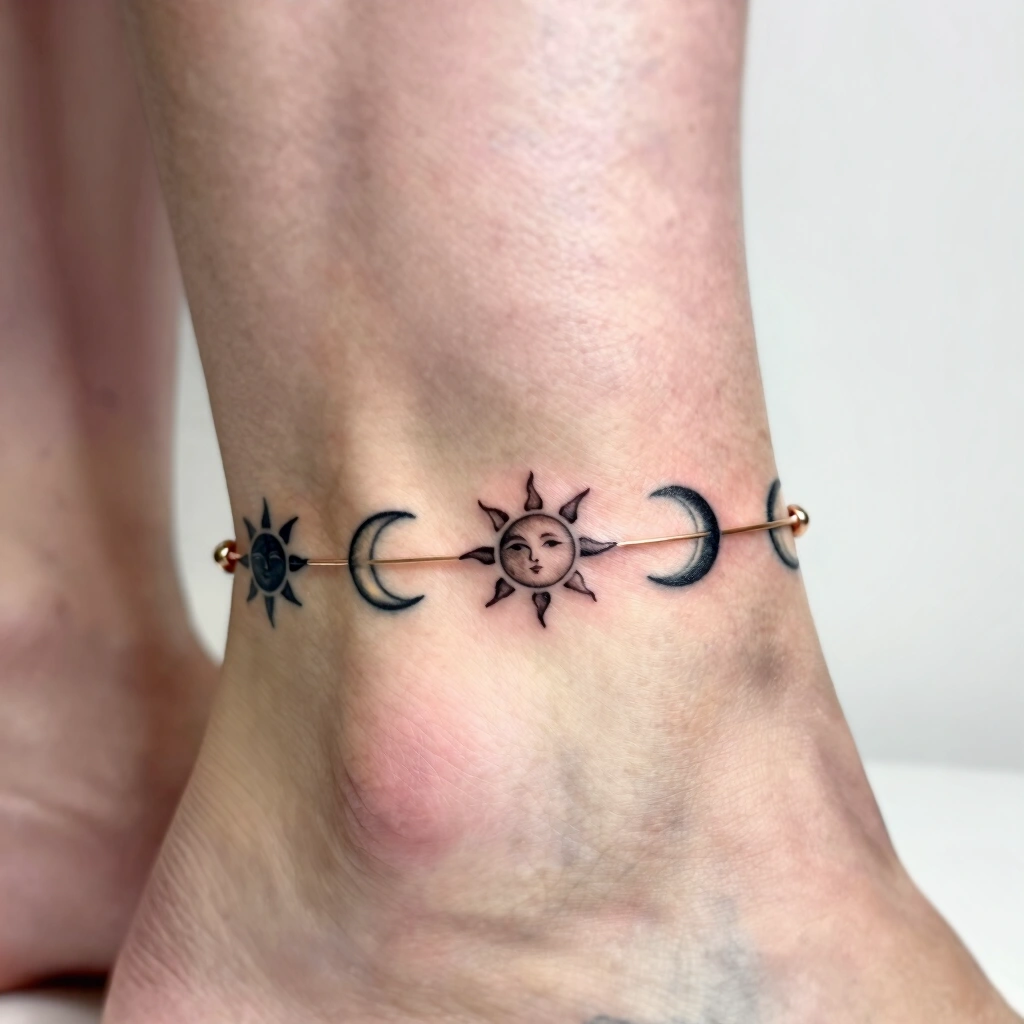
Instead of standalone symbols, the sun and moon are worked into a thin band design circling the ankle, alternating small sun and moon icons. This is a fun matching option for friends who want something that reads as jewelry-inspired rather than purely symbolic.
23. Sun and Moon on the Back of the Neck, Stacked Vertically

A stacked, vertical version — sun above moon — fits neatly along the spine at the neck’s base. This placement is easy to keep private under a collar but still has decent visibility for showing off intentionally.
24. Sun and Moon in a Linked Chain Design

Here, the sun and moon are connected by a thin chain-link line, symbolizing the ongoing connection between friends regardless of distance. This works well as a forearm piece where the linear chain has room to stretch out.
25. Oversized Sun and Moon Back Piece for Committed Best Friends
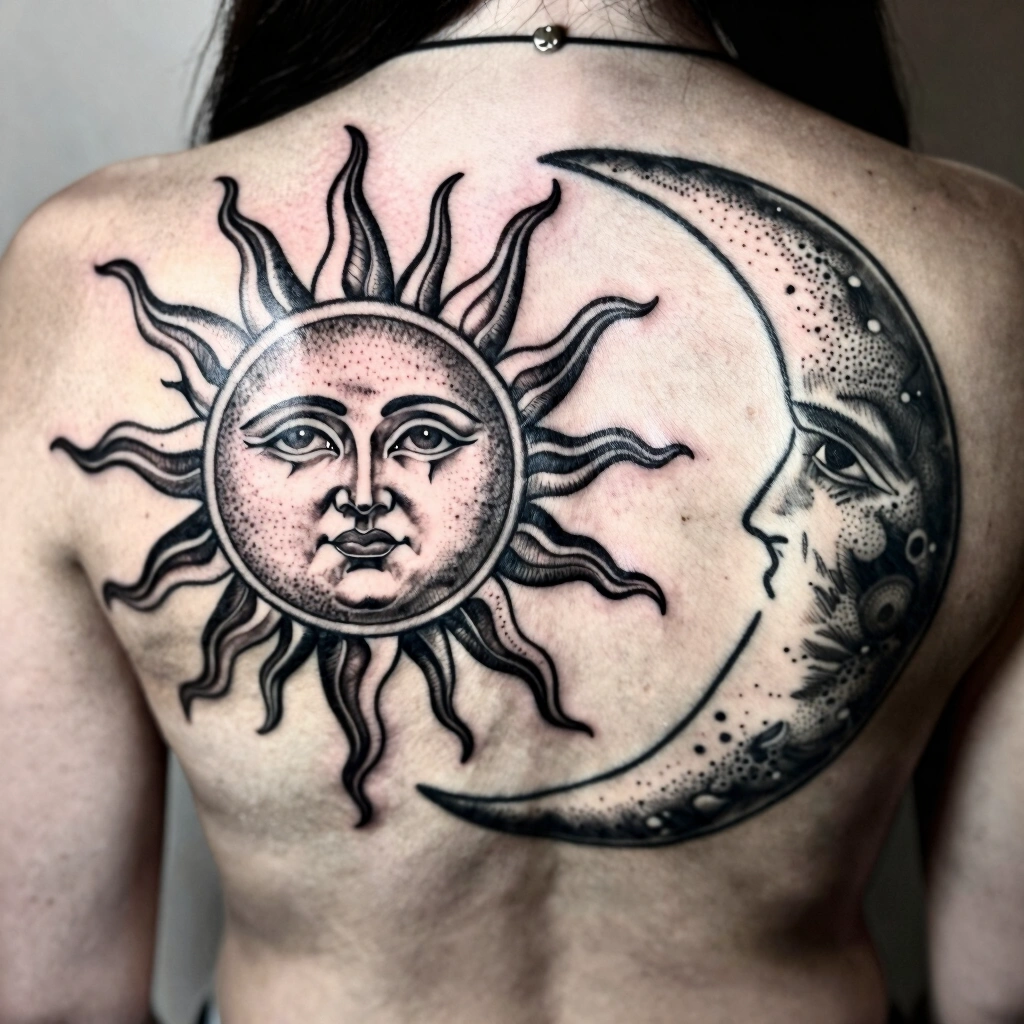
For friends ready for a bigger commitment, a large-scale back piece combining bold blackwork, fine detail, and dotwork shading creates a genuinely custom art piece. This is a significant financial and time investment, usually requiring multiple sessions, so it’s worth discussing a payment and scheduling plan with your artist upfront.
Best Placement Ideas
- Wrist — highly visible, moderate pain due to thin skin over bone, moderate upkeep from sun exposure and washing
- Behind the ear — easy to hide, higher sensitivity, low visibility unless hair is styled up
- Ribs — great for larger detailed pieces, higher pain level, longer healing due to clothing friction
- Ankle — good for matching pairs, moderate pain, faster fading from socks and shoes
- Upper arm — lower pain due to more tissue, easy to conceal or reveal, holds detail well long-term
- Fingers — high visibility, frequent touch-ups needed, not ideal for detailed designs
Tips for Success
Look for an artist whose portfolio shows consistent line weight and clean healed photos, not just fresh ink shots — healed work tells you how the design actually holds up. Bring at least two or three reference images and be clear about size in inches, not vague comparisons. Ask directly what needle configuration they’d use for fine detail work, and don’t be afraid to ask about their experience with the specific technique you want, whether that’s dotwork, blackwork, or fine line. A good consultation should feel like a two-way conversation, not a rushed sales pitch.
Common Mistakes and How to Avoid Them
- Sizing a detailed design too small, causing lines to blur together as it heals
- Choosing a delicate fine-line design for a high-friction placement like the palm or foot
- Skipping the aftercare instructions given by the artist in favor of generic internet advice
- Copying a design exactly from an image search instead of personalizing it slightly for meaning
- Booking a walk-in slot for a complex custom piece that really needed a planned consultation
Similar Variations
Almost every idea above can be resized up for a statement piece or down for something subtle. Swap solid blackwork for dotwork shading to soften the look, or add light color saturation to an otherwise black-and-grey design for a different mood. Combining two techniques, like fine line with small dotwork accents, is an easy way to make a common design feel more custom without starting from scratch.
Aftercare Basics
General aftercare guidance includes keeping the tattoo clean, avoiding direct sun exposure while healing, avoiding swimming or soaking, and not picking at scabbing skin. Healing time and reaction can vary from person to person, so always follow the specific sheet your artist gives you rather than generic advice found online, and check in with them or a dermatologist if you notice anything that seems off.
Quick FAQ
How much does a sun and moon tattoo usually cost?
Small fine-line versions often start around $80–$150 depending on the studio’s minimum, while larger custom or shaded pieces can run several hundred dollars or more.
Does it hurt to get a sun and moon tattoo?
Pain varies by person and placement — bony, thin-skin areas like wrists, ribs, and ankles tend to feel more intense than fleshier spots like the upper arm.
How long does healing take?
Surface healing is typically two to three weeks, though full healing beneath the skin can take up to a month depending on placement and aftercare.
Will the design fade over time?
All tattoos fade somewhat with age and sun exposure; bold linework and blackwork tend to hold their shape longer than fine detail or light color saturation.
Finding the right sun and moon tattoo for you and your best friend really comes down to matching the design’s technical style to how you actually live — your job, your pain tolerance, your budget, and how much upkeep you’re willing to do. None of that has to be complicated once you know the right questions to ask. Take your time, talk to a licensed professional artist about what’s realistic for your skin and placement, and you’ll end up with a sun and moon tattoo that still feels right years from now.