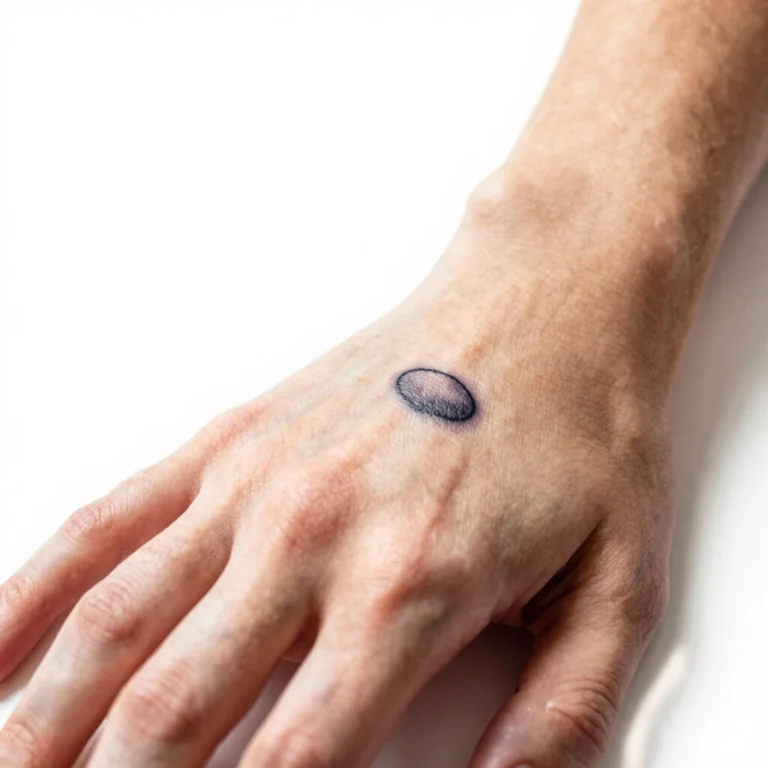
18 Blue Butterfly Tattoos for Women: The Complete Design Guide (With Placement, Pain, and Aftercare Tips)
Nervous about picking a butterfly tattoo that feels too trendy or won’t age well? You’re not alone. Blue butterfly tattoos for women are one of the most requested designs in studios worldwide, but most online guides skip the practical details you actually need before booking.
So what makes a blue butterfly tattoo work long-term? The best designs use fine line, dotwork, or watercolor techniques with careful placement on low-movement areas like the wrist, shoulder, or ankle. They stay subtle enough for workplace visibility but hold detail well over time. Simple linework and high-contrast blues age better than heavy shading or tiny details.
Stick around—I’ll walk you through 18 specific design ideas, plus the pain level, healing time, cost range, and exactly how to brief your artist so you walk out with something you’ll love for years.
Fine Line Blue Butterfly Tattoos
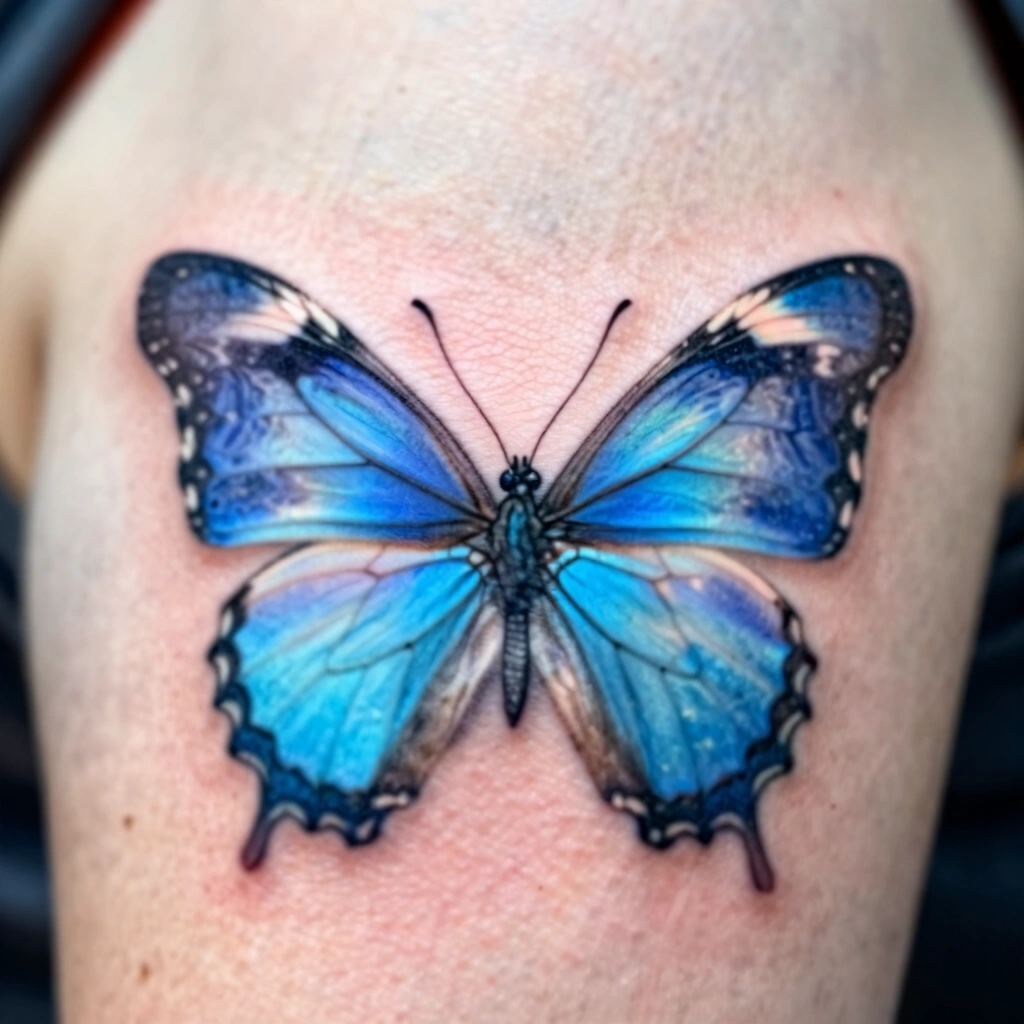
Fine line tattoos use single needles or very thin groupings to create delicate, almost sketch-like designs. They work beautifully for blue butterflies because the thin lines let the color breathe without overwhelming the skin. A fine-line blue butterfly sits best on the wrist, behind the ear, or along the collarbone—places where the design can peek out naturally. For first-timers, this technique hurts less than bold shading because the needle doesn’t penetrate as deeply. Healing takes about two weeks, but the lines may soften slightly over time, so go a touch bolder than you think you want. When briefing your artist, say “single-needle fine line with soft blue wash” and bring a reference photo of a butterfly with open wings. This style suits workplace-friendly placements and matches well with other minimalist tattoos. Next, let’s look at watercolor blue butterflies for a dreamier feel.
Watercolor Blue Butterfly Tattoos

Watercolor tattoos mimic paint strokes with soft, blended edges and no harsh outlines. A watercolor blue butterfly uses layered blues—from pale sky to deep navy—to create depth without traditional linework. This style works best on larger areas like the shoulder blade, thigh, or forearm because the color needs space to spread. The pain is moderate; the artist uses multiple passes to build saturation, which can feel like a cat scratch over already sensitive skin. Healing takes three to four weeks, and you’ll need to avoid direct sunlight and heavy sweating during that time. One catch: watercolor tattoos fade faster than line-based designs, so plan for a touch-up every few years. Tell your artist you want “a watercolor wash with no outline” and ask to see healed photos of their watercolor work—many artists struggle with saturation. This design suits creative workplaces and people who want a softer, artistic look. Now let’s explore dotwork blue butterflies for texture lovers.
Dotwork Blue Butterfly Tattoos

Dotwork (or stippling) builds images from thousands of tiny dots instead of solid lines. A dotwork blue butterfly uses varying dot density to create shading, giving the wings a textured, almost three-dimensional look. This technique works brilliantly on the ankle, shoulder, or inner forearm—areas with enough skin to show the dot gradient. Pain is similar to fine line, but the process takes longer because each dot is placed individually. Healing takes two to three weeks, and the dots may blur slightly over time, so keep the design at least three inches wide. When briefing your artist, say “dotwork shading with blue ink in the dots” and ask if they use a machine or hand-poke method. Dotwork ages well because the dots settle into the skin rather than expanding like solid lines. It’s a great first tattoo if you want something subtle and artistic. Next up: blackwork blue butterflies with bold contrast.
Blackwork with Blue Accents

Blackwork tattoos use solid black lines and shading, often with a single pop of color for contrast. A blackwork blue butterfly keeps the body and wing structure in black, then adds blue highlights in key areas like wing tips or the abdomen. This style works on almost any placement—ribs, forearm, calf, or thigh—because the black holds shape while the blue adds personality. Pain is higher on bony areas like ribs or collarbone, but the blackwork process is straightforward. Healing takes two to three weeks; black ink heals slightly faster than color because it requires fewer passes. Tell your artist you want “bold black linework with blue accent shading” and ask about their experience with color saturation over black. This design ages beautifully because the black stays crisp while the blue gradually softens. It’s a strong choice for people who want a visible but not loud tattoo. Now let’s look at minimalist outline blue butterflies.
Minimalist Outline Blue Butterfly

Minimalist outline tattoos use a single continuous line to trace the butterfly’s shape, with no shading or fill. The blue comes from the ink itself—a thin, clean line in a medium blue shade. This design works best on the wrist, finger, or behind the ear—tiny placements where a full butterfly would look crowded. Pain is minimal because the line is thin and the needle doesn’t go deep. Healing takes one to two weeks, and the line may spread slightly over years, so keep the design simple. When briefing your artist, say “one continuous line, no breaks, in a soft blue ink” and ask to see their fine-line portfolio. This is the lowest commitment option—easy to cover or modify later—and perfect for first-timers. Next, realistic blue butterflies for a lifelike look.
Realistic Blue Butterfly Tattoo
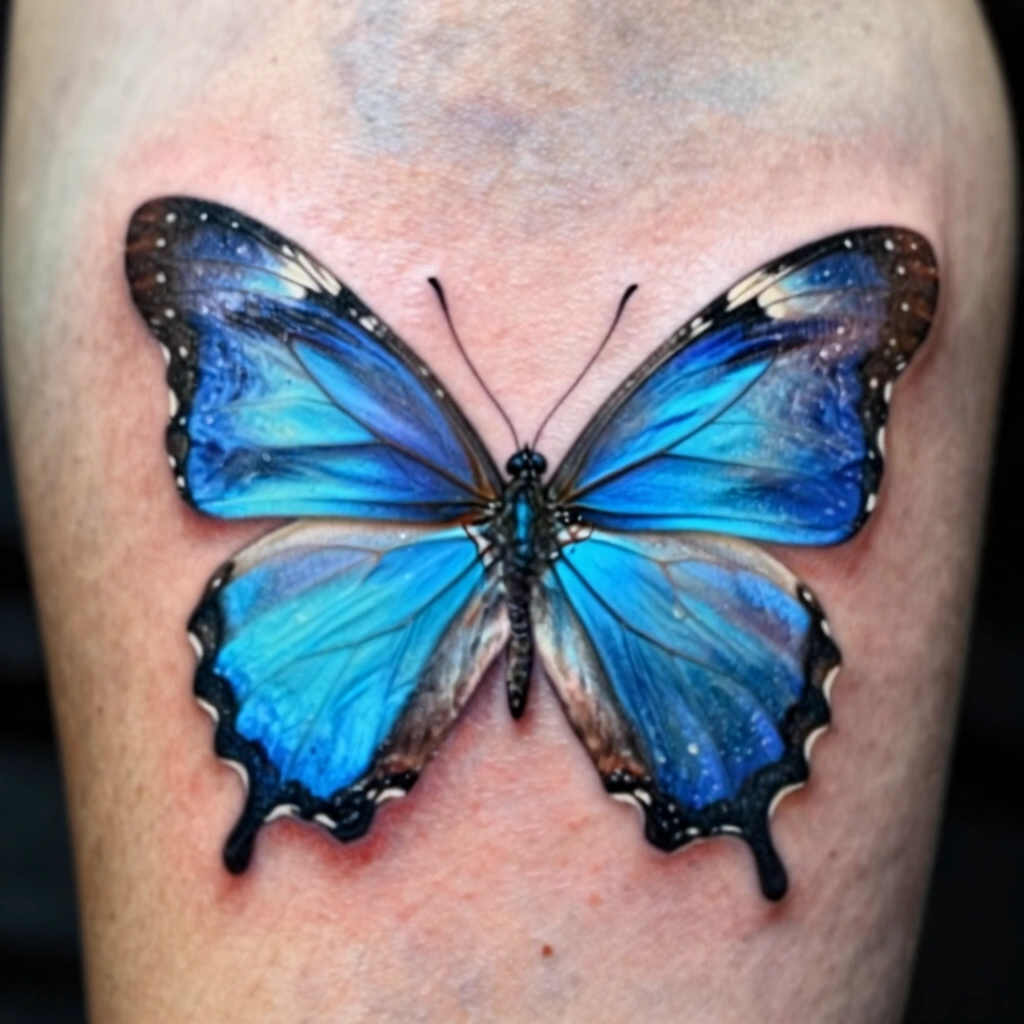
Realistic butterfly tattoos aim to look like a photograph, with detailed wing veins, color gradients, and shadowing. A realistic blue butterfly uses multiple shades of blue, white highlights, and black outlines to mimic the insect’s natural iridescence. This style needs space—at least four to six inches—so the shoulder, thigh, or upper arm works best. Pain is moderate to high because the artist layers many passes for depth. Healing takes three to four weeks, and you must keep the area moisturized to prevent cracking. Tell your artist you want “hyper-realistic with blue shading and white highlights” and bring a clear photo of the butterfly species you like. Realistic tattoos fade faster than stylized ones, so expect touch-ups every few years. This design suits people who want a statement piece and are willing to invest in maintenance. Now let’s cover geometric blue butterflies.
Geometric Blue Butterfly Tattoo

Geometric tattoos use shapes like triangles, circles, and lines to create the butterfly’s form. A geometric blue butterfly might have wings made of overlapping polygons, with blue ink filling some sections and negative space in others. This style works on the forearm, calf, or shoulder blade—areas with flat skin for precise lines. Pain is moderate; geometric work requires steady pressure and sharp lines. Healing takes two to three weeks, and the lines must be kept clean to avoid infection. When briefing your artist, say “geometric with blue fill in select polygons” and ask about their experience with straight lines and symmetry. Geometric designs age well because the shapes remain distinct even if lines soften slightly. It’s a great choice for people who want a modern, structured look. Next, abstract blue butterflies for a unique twist.
Abstract Blue Butterfly Tattoo

Abstract blue butterflies break the traditional shape into flowing lines, splashes of color, or asymmetrical forms. Think of a butterfly that looks like it’s dissolving into blue water or morphing into a wave. This style needs a larger canvas—ribs, thigh, or back—to let the abstraction breathe. Pain varies by placement; ribs are more sensitive than thighs. Healing takes three to four weeks, and the design may require multiple sessions for full saturation. Tell your artist you want “abstract with blue wash and negative space” and bring references of abstract art you like. Abstract tattoos are one-of-a-kind and suit people who want something deeply personal. Now let’s look at blue butterflies with floral elements.
Blue Butterfly with Floral Elements

Combining a blue butterfly with flowers like lavender, forget-me-nots, or delphiniums creates a cohesive nature theme. The butterfly sits above or among the flowers, with blue ink tying the piece together. This design works on the forearm, shoulder, or thigh—areas where the composition can flow naturally. Pain is moderate; the artist will outline the flowers first, then shade. Healing takes two to three weeks, and the colors may need a touch-up after a year. When briefing your artist, say “blue butterfly with floral elements in complementary colors” and ask about their experience with botanical designs. This tattoo suits people who want a larger piece that tells a story. Next, blue butterfly with moon or stars.
Blue Butterfly with Moon and Stars
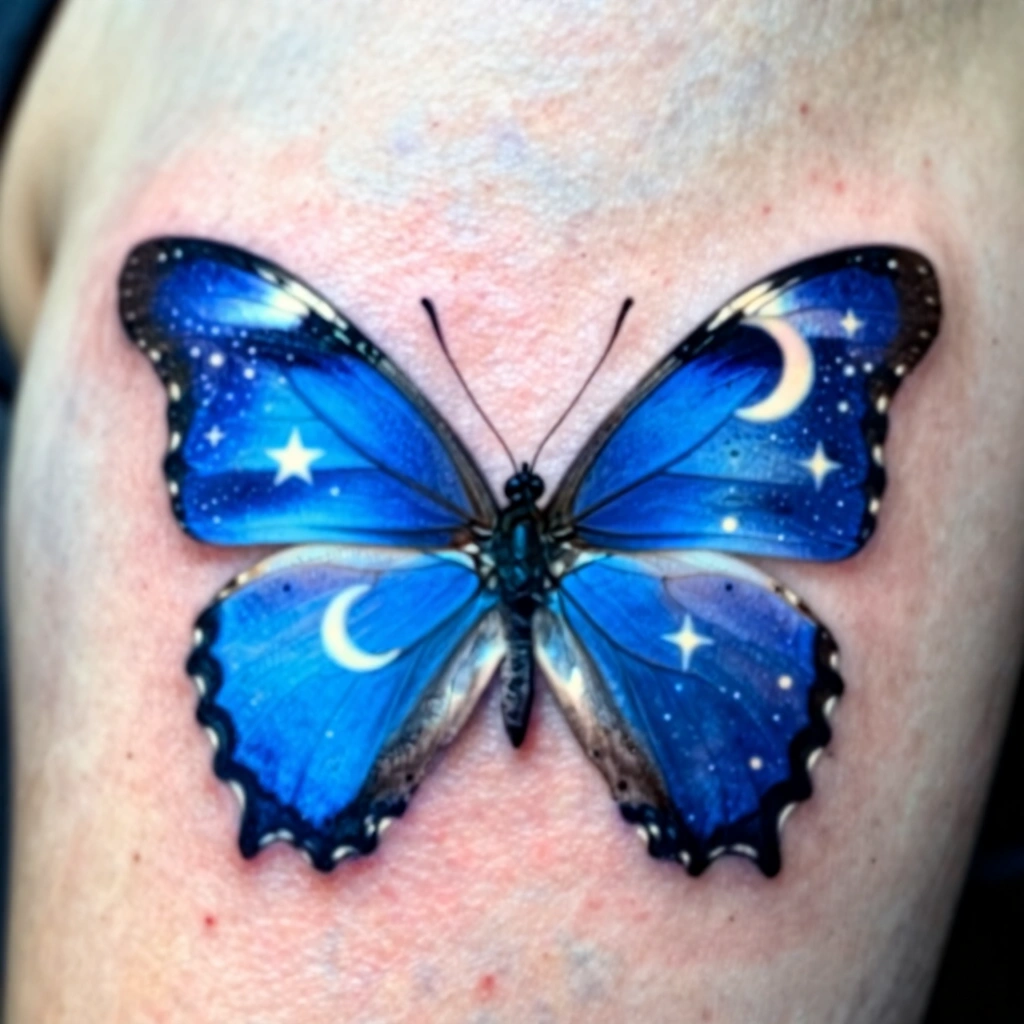
A celestial blue butterfly adds crescent moons, stars, or constellations to the wings or background. The blue ink contrasts nicely with white or gold accents. This style works on the wrist, ankle, or behind the ear—small placements for a dreamy look. Pain is low on softer skin, higher on bony areas. Healing takes one to two weeks. Tell your artist you want “a celestial butterfly with blue ink and white highlights” and ask about fine-line options. This design is popular among people who love astronomy or symbolism. Now let’s talk about matching blue butterfly tattoos.
Matching Blue Butterfly Tattoos

Matching tattoos for friends, siblings, or partners often use the same blue butterfly design on the same placement—like both people getting a small blue butterfly on the inner wrist. The key is choosing a design that works for both body types and skin tones. Fine line or minimalist outline works best for matching because it’s subtle and easy to replicate. Pain and healing are the same for both people. When briefing your artist, say “we want identical fine-line blue butterflies on the wrist” and book both appointments together. Matching tattoos are a sweet commitment but remember that designs may age differently on different skin. Next, small blue butterfly behind the ear.
Small Blue Butterfly Behind the Ear
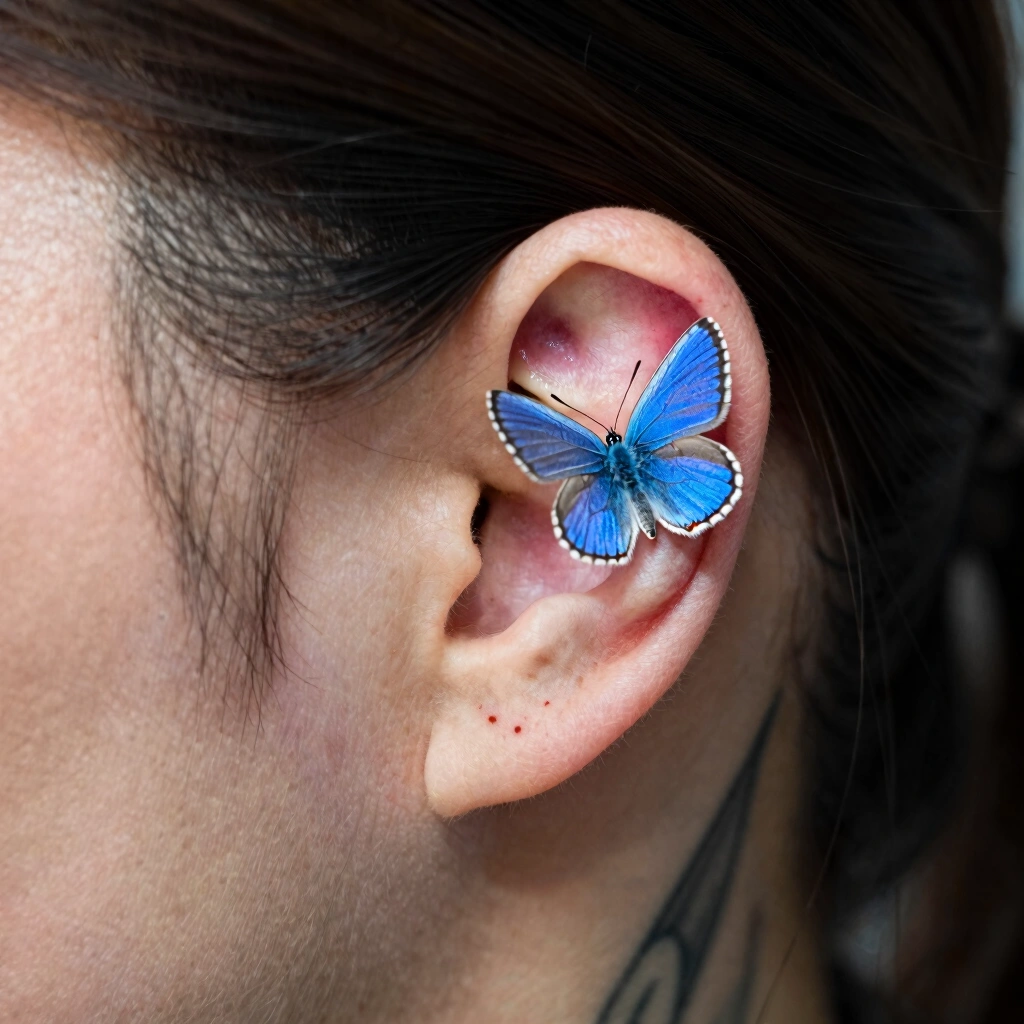
A tiny blue butterfly behind the ear is a classic choice for first-timers. The placement is hidden by hair, so it’s easy to cover for work. Design must be under an inch to fit the space. Fine line or dotwork works best because bold lines can look harsh. Pain is moderate—the skin behind the ear is thin and close to bone. Healing takes one to two weeks, and you’ll need to keep hair products away from the area. Tell your artist you want “a small fine-line blue butterfly behind the ear” and ask about stencil placement. This is a low-commitment, high-reward spot. Now let’s look at blue butterfly on the wrist.
Blue Butterfly on the Wrist

The wrist is one of the most popular placements for blue butterfly tattoos. A design here can be small (one to two inches) and visible or hidden with a watch. Fine line or minimalist outline works best because the wrist has thin skin that shows every detail. Pain is moderate—it’s a bony area with lots of nerve endings. Healing takes one to two weeks, and you’ll need to avoid hand washing directly on the tattoo. When briefing your artist, say “a blue butterfly on the inner wrist with fine lines” and ask about sizing for the space. This placement is great for first-timers and people who want a daily reminder. Next, blue butterfly on the ankle.
Blue Butterfly on the Ankle
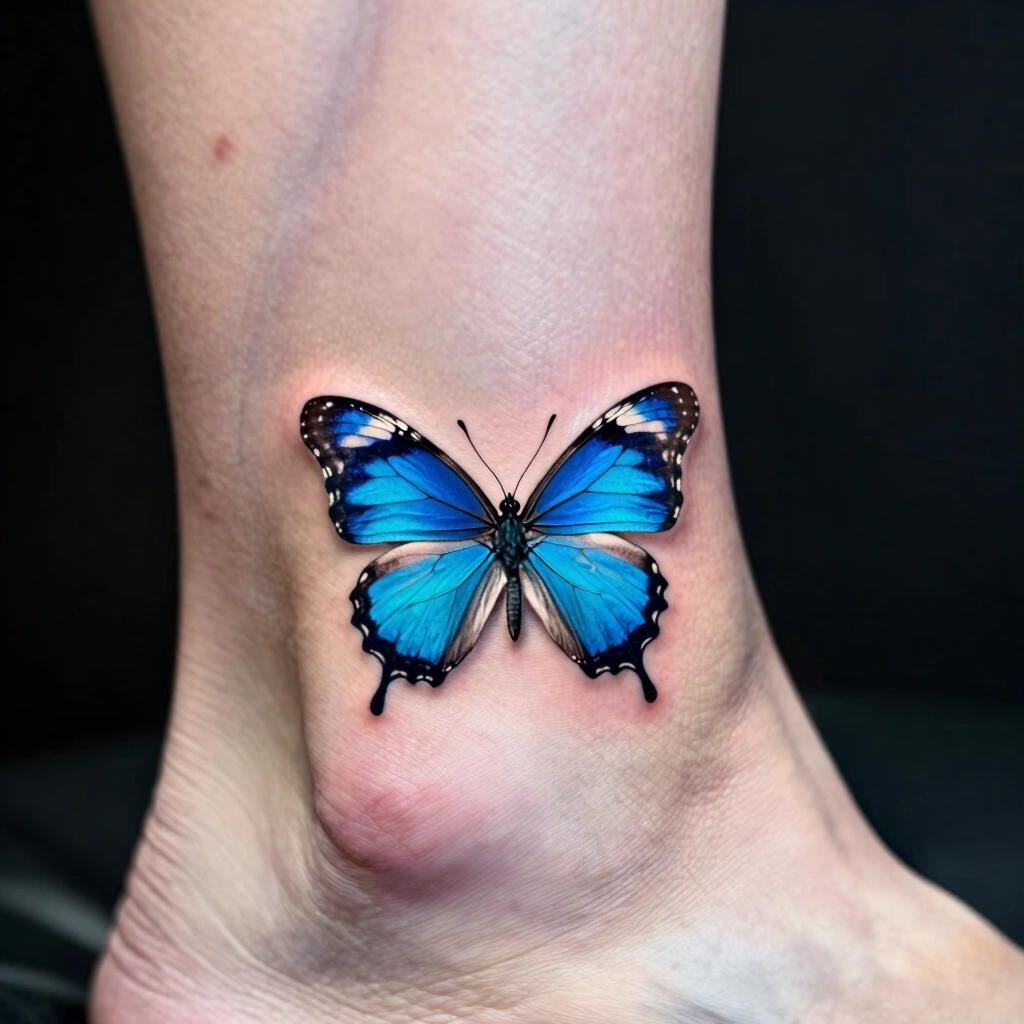
An ankle blue butterfly sits on the outer or inner ankle bone. The design should be small (one to two inches) and simple because the skin here is tight and moves a lot. Dotwork or fine line works best. Pain is moderate to high—the ankle bone is sensitive. Healing takes two to three weeks, and you’ll need to avoid tight shoes that rub the area. Tell your artist you want “a blue butterfly on the ankle with dotwork shading” and ask about placement that avoids high-friction areas. This placement suits people who want a subtle, personal tattoo. Now let’s cover blue butterfly on the shoulder.
Blue Butterfly on the Shoulder

The shoulder offers a larger canvas for a blue butterfly, from two to four inches. You can use watercolor, realistic, or geometric styles here. Pain is low to moderate because the skin is thicker. Healing takes two to three weeks. This placement is easy to show off or cover with sleeves. When briefing your artist, say “a blue butterfly on the shoulder with [your chosen technique]” and ask about how the design will sit with your natural shoulder curve. This is a versatile spot for any style. Next, blue butterfly with negative space.
Blue Butterfly with Negative Space

Negative space designs use the skin’s own color as part of the image. A blue butterfly might have wings outlined in blue, with the body and wing veins showing through as bare skin. This technique works on the forearm, back, or thigh—areas where the skin tone contrasts well. Pain is moderate; the artist draws the outline first, then fills around it. Healing takes two to three weeks, and the negative space areas require careful aftercare to avoid infection. Tell your artist you want “negative space butterfly with blue outline” and ask about their experience with this technique. Negative space tattoos age well because the skin maintains its natural color. Now let’s look at traditional blue butterfly tattoos.
Traditional Blue Butterfly Tattoo

Traditional (or “old school”) blue butterflies use bold black outlines, solid blue fill, and minimal shading. This style is durable and ages beautifully. It works on the forearm, calf, or shoulder—anywhere that can handle a two- to three-inch design. Pain is moderate; bold lines require deeper needle penetration. Healing takes two to three weeks. Tell your artist you want “a traditional blue butterfly with thick black outline and solid blue fill” and ask about their flash sheets. Traditional tattoos are a classic choice for people who want something that lasts. Finally, blue butterfly with script.
Blue Butterfly with Script

Combine a blue butterfly with a name, date, or meaningful word. The butterfly sits above or beside the text, with blue ink tying them together. This works on the forearm, ribs, or thigh. Pain varies by placement; ribs are more sensitive. Healing takes two to three weeks. When briefing your artist, say “a blue butterfly with script in a clean font” and ask about spacing so the text remains legible. This design suits people who want a personal tribute.
Best Placement Ideas for Blue Butterfly Tattoos

- Wrist: High visibility, moderate pain, easy to cover with a watch. Best for fine line or minimalist designs.
- Behind the ear: Hidden by hair, moderate pain, small size only. Best for tiny fine line or dotwork.
- Ankle: Subtle, moderate to high pain, high friction area. Best for simple designs.
- Shoulder: Low pain, easy to show or hide, larger canvas. Best for watercolor or realistic styles.
- Forearm: Moderate pain, visible, good for geometric or traditional designs.
- Ribs: High pain, hidden, requires larger design. Best for abstract or script combinations.
- Thigh: Low pain, large canvas, easy to cover. Best for watercolor or negative space.
Tips for Success When Booking a Blue Butterfly Tattoo

- Choose the right artist: Look for a portfolio with healed photos of blue tattoos. Blue ink can fade differently on skin tones, so find someone experienced with color.
- Bring reference photos: Show the butterfly species you like (e.g., blue morpho) and a style example (fine line, watercolor, etc.).
- Ask about stencil placement: The artist will draw the stencil on your skin. Move around to see how it looks in different positions.
- Discuss size: A blue butterfly under two inches may lose detail, especially with shading. Go larger if you want longevity.
- Check aftercare instructions: Every studio has a specific sheet. Follow it exactly.
Common Mistakes and How to Avoid Them

- Sizing too small: Tiny butterflies with lots of detail will blur into a blue blob over time. Keep it at least two inches for fine line, three inches for shaded designs.
- Poor placement: Avoid high-friction areas like the palm, bottom of the foot, or inner elbow for detailed work. The skin moves too much.
- Skipping aftercare: Not moisturizing or exposing the tattoo to sun can cause fading and scarring. Use sunscreen once healed.
- Copying a design exactly: Tattoos should be personal. Modify a flash design by changing the wing shape or adding a personal element.
- Choosing the wrong technique for your skin: Watercolor fades faster on oily skin. Fine line works on all skin types but may spread on thin skin.
Similar Variations

- Resize: A fine-line blue butterfly can be scaled down for behind the ear or up for a shoulder piece.
- Recolor: Swap blue for purple, teal, or black for a different vibe.
- Combine: Add a second butterfly, flowers, or celestial elements for a larger composition.
- Style shift: Turn a realistic butterfly into a geometric one by replacing curves with straight lines.
Aftercare Basics for Blue Butterfly Tattoos

- Keep the tattoo clean with mild soap and water.
- Apply a thin layer of unscented moisturizer after washing.
- Avoid direct sunlight, swimming, and heavy sweating for at least two weeks.
- Don’t pick at scabs; let them fall off naturally.
- Follow your artist’s specific aftercare sheet—different techniques may require different products.
Disclaimer: Pain tolerance and healing times vary by individual. Always consult a licensed professional tattoo artist before booking.
Quick FAQ

Q: How much does a blue butterfly tattoo cost?
A: Small designs (under 2 inches) typically range from $50–$150, while larger pieces (4–6 inches) can cost $200–$500 or more, depending on the artist’s hourly rate and complexity.
Q: How painful is a blue butterfly tattoo?
A: Pain depends on placement. Bony areas like the wrist or ankle are more sensitive; fleshy areas like the thigh are less painful. Most people describe it as a scratching sensation.
Q: How long does healing take?
A: Surface healing takes about 2–3 weeks, but full healing (including deeper layers) can take 2–3 months. Keep it moisturized and avoid sun exposure.
Q: Will my blue butterfly tattoo fade?
A: All tattoos fade over time, but blue ink tends to hold well compared to lighter colors. Fine line and watercolor fade faster than bold traditional. Touch-ups every 3–5 years can keep it fresh.
Final Thoughts

Blue butterfly tattoos for women offer endless variety, from delicate fine line to bold traditional. The key is choosing a design that fits your body, lifestyle, and pain tolerance. Don’t rush—spend time finding an artist who specializes in your chosen style, and always prioritize aftercare. Whether you go for a tiny wrist butterfly or a watercolor shoulder piece, you’ll walk away with something uniquely yours. Ready to book? Start by researching local artists and scheduling a consultation. Your perfect blue butterfly is waiting.