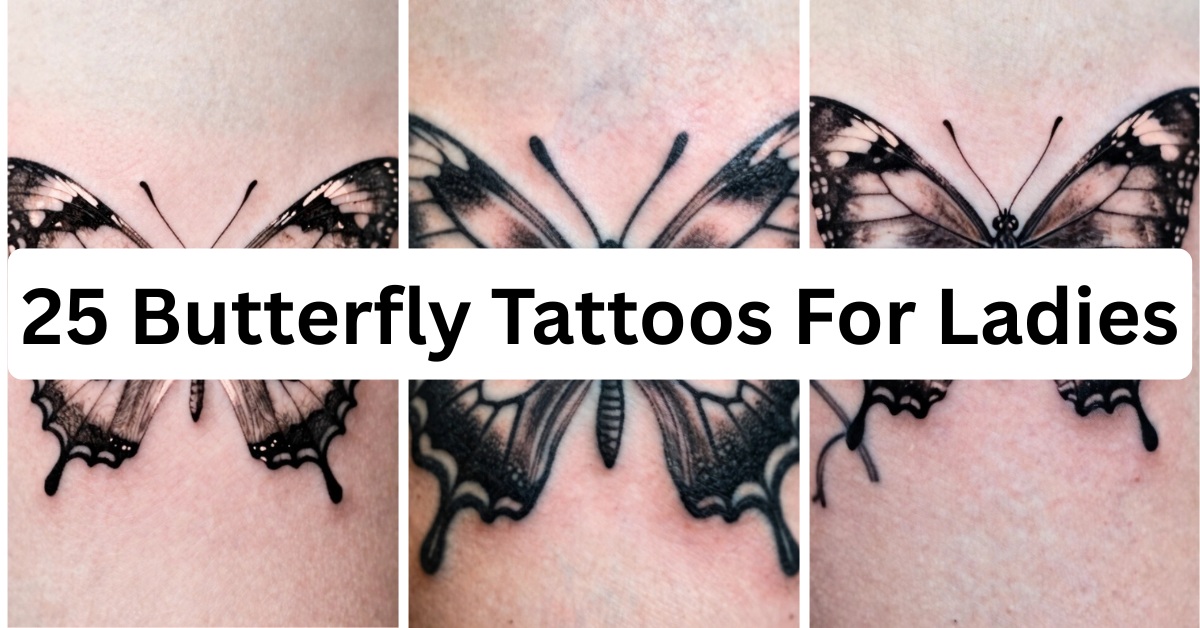
25 Butterfly Tattoos For Ladies
Nervous about picking a butterfly tattoo design you might regret down the road? You’re not alone, and honestly, that worry means you’re doing this the right way. A butterfly tattoo is one of the most requested designs in tattoo studios today, and getting it right takes more than scrolling through pretty pictures — it takes understanding placement, technique, and how the design will actually look on your skin in ten years.
So what makes a great butterfly tattoo? The best butterfly tattoos use clean, deliberate line work matched to a placement that fits both your pain tolerance and your lifestyle — fine line designs on the wrist or ankle for subtlety, bold blackwork or traditional style on the shoulder or thigh for something that reads clearly from across a room. Size and skin texture also matter more than most people realize when it comes to how the wings hold their shape over time.
Below, I’ll walk you through 25 real design directions, plus the practical stuff most articles skip entirely — placement tradeoffs, pain levels, how to actually brief your artist, what it costs, and how to avoid the mistakes that lead to blurry, regretful ink five years down the line.
Why Butterfly Tattoos Keep Working As A Design Choice
Butterflies aren’t just pretty — they’re structurally good tattoo subjects. Symmetrical wings give an artist a natural framework for balance, and the shape scales well, meaning a butterfly can work as a half-inch accent behind your ear or a full-back statement piece. The design also tolerates a huge range of techniques, from delicate fine line (thin, single-needle strokes with little to no shading) to bold blackwork (solid black fill with heavy contrast) to dotwork (shading built from small dots instead of solid lines or gradients). That flexibility is exactly why it shows up so often in portfolios — it’s not laziness on the artist’s part, it’s a genuinely adaptable canvas.
Fine-Line Single Butterfly Tattoo
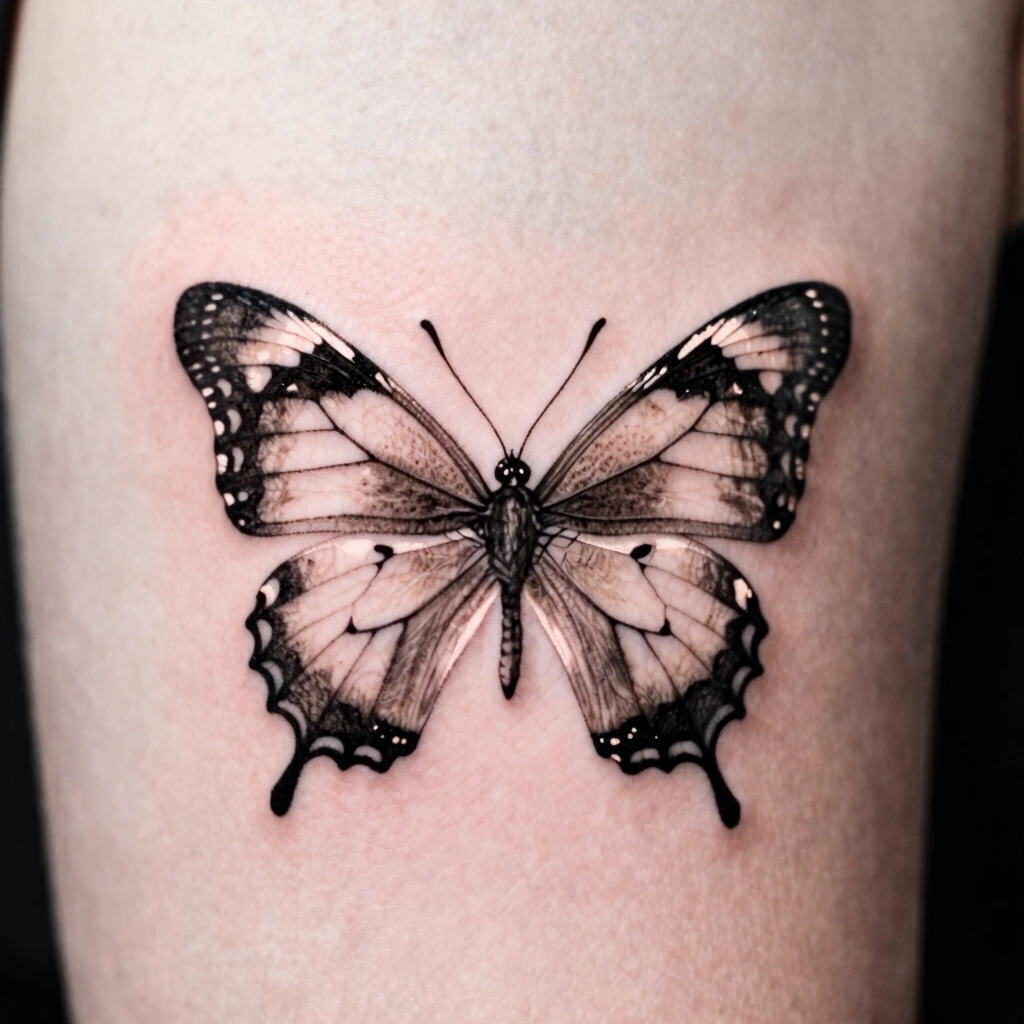
This is the design most first-timers gravitate toward, and for good reason. A fine-line butterfly uses thin, consistent linework — usually done with a single needle — to outline the wings with little or no shading, sometimes with a few delicate interior lines to suggest wing veins. It reads as understated and works beautifully in black or deep gray ink. Best placed on the wrist, inner forearm, ankle, or collarbone, sized between 1.5 and 3 inches so the linework doesn’t blur together as it heals. Bony areas like the wrist and ankle tend to feel sharper during the session, but sessions here are usually quick.
Bring a reference image with simple, uncluttered wing shapes — busy detail doesn’t survive well at this scale. It’s an easy yes for workplace visibility and ages reasonably well if the linework was clean to begin with.
Blackwork Bold Butterfly Tattoo
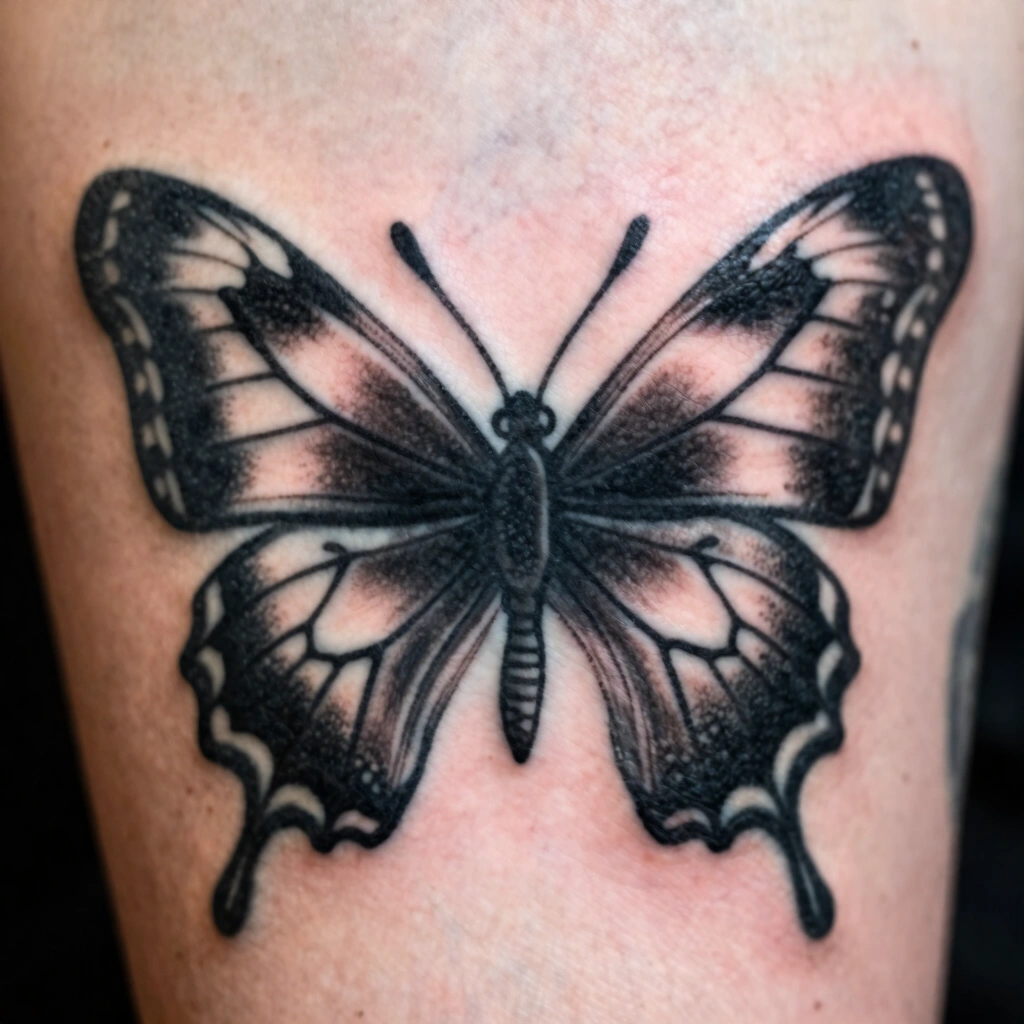
Where fine line whispers, blackwork shouts. This style uses solid black fill and thick, confident outlines with almost no gradient, creating a high-contrast silhouette that stays legible even from a distance or after years of fading. It suits shoulders, upper arms, or the outer thigh, where there’s enough flat surface for the solid fill to sit evenly. Go bigger here — 4 inches or more — since solid black work loses definition if it’s too cramped. Ask your artist about their saturation technique, since uneven fill is one of the more common blackwork mistakes.
Expect more discomfort on fleshier areas that require repeated passes for solid coverage, but the payoff is a design that barely needs touch-ups even a decade later.
Dotwork Shaded Butterfly Tattoo
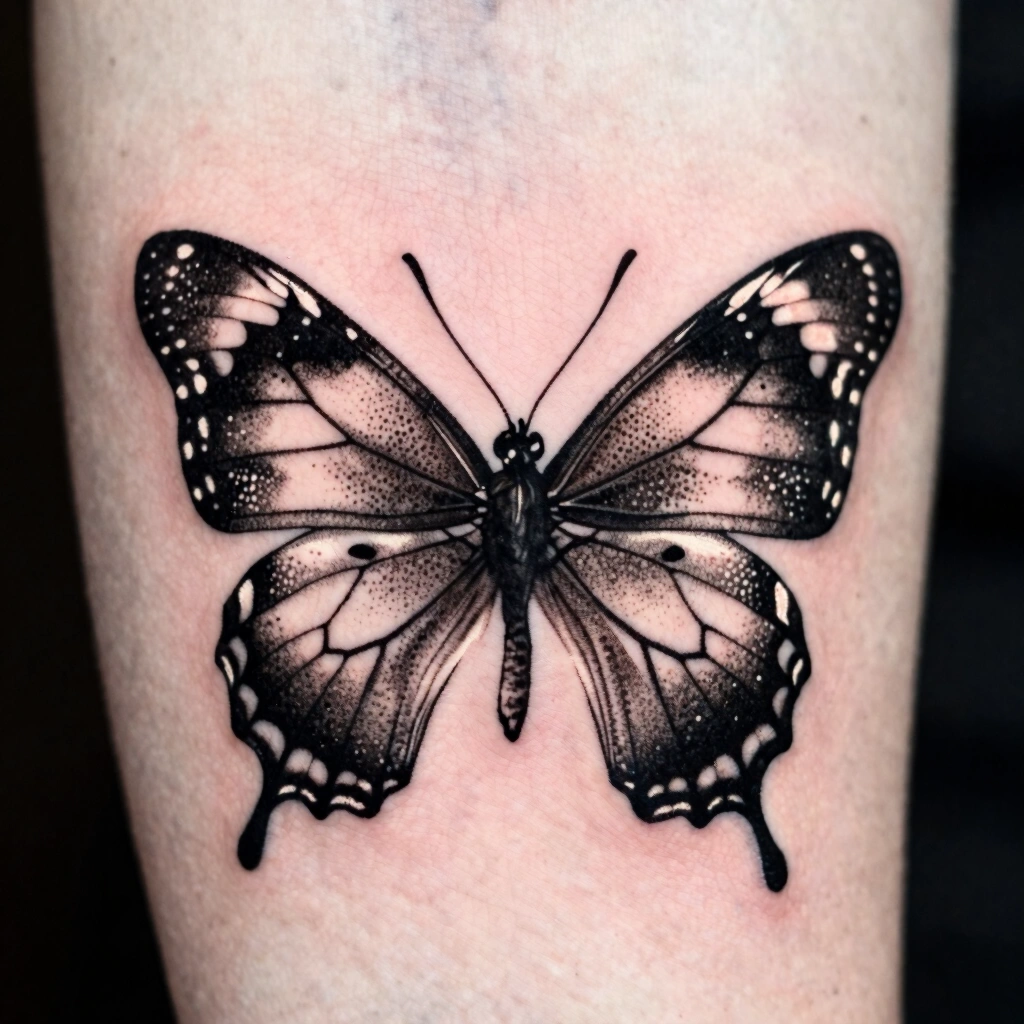
Dotwork builds shading and texture from tiny individual dots rather than continuous lines or solid fill, giving the wings a soft, almost powdery gradient effect. It’s a slower, more technical process, so look specifically for an artist with dotwork samples in their portfolio — not every line-work artist can execute this cleanly. This style shines on the shoulder blade, upper back, or ribs, where a bit more space lets the dot gradient breathe. Size around 3 to 5 inches is typical.
Pain-wise, ribs and shoulder blades are known to be more sensitive due to less padding over bone, so plan for a longer, more careful session. Dotwork ages gracefully because the dot pattern hides minor fading better than a smooth gradient would.
Watercolor Butterfly Tattoo
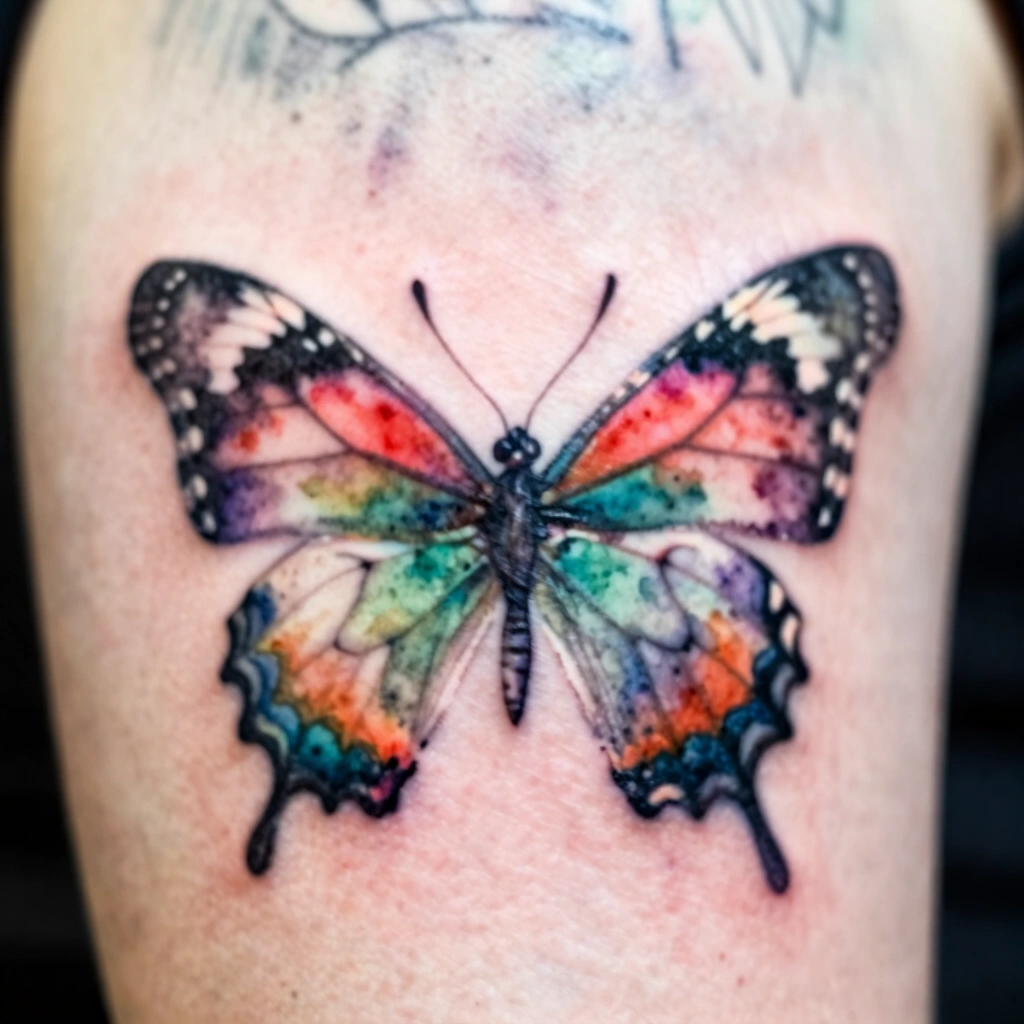
Watercolor-style butterfly tattoos use soft color washes and blurred edges to mimic the look of a painted brushstroke, often layered behind or around a solid black outline for structure. This is genuinely one of the harder styles to execute well, and it’s also one that fades faster than solid black or fine line work, according to general dermatological consensus on how skin holds pigment over time — so go in with realistic expectations about touch-ups.
Best on flatter areas like the shoulder, upper back, or thigh, sized 3 inches or larger so the color transitions have room to spread. Ask to see healed photos of your artist’s past watercolor work, not just fresh ink, since that’s the real test of how the color holds.
Negative Space Butterfly Tattoo
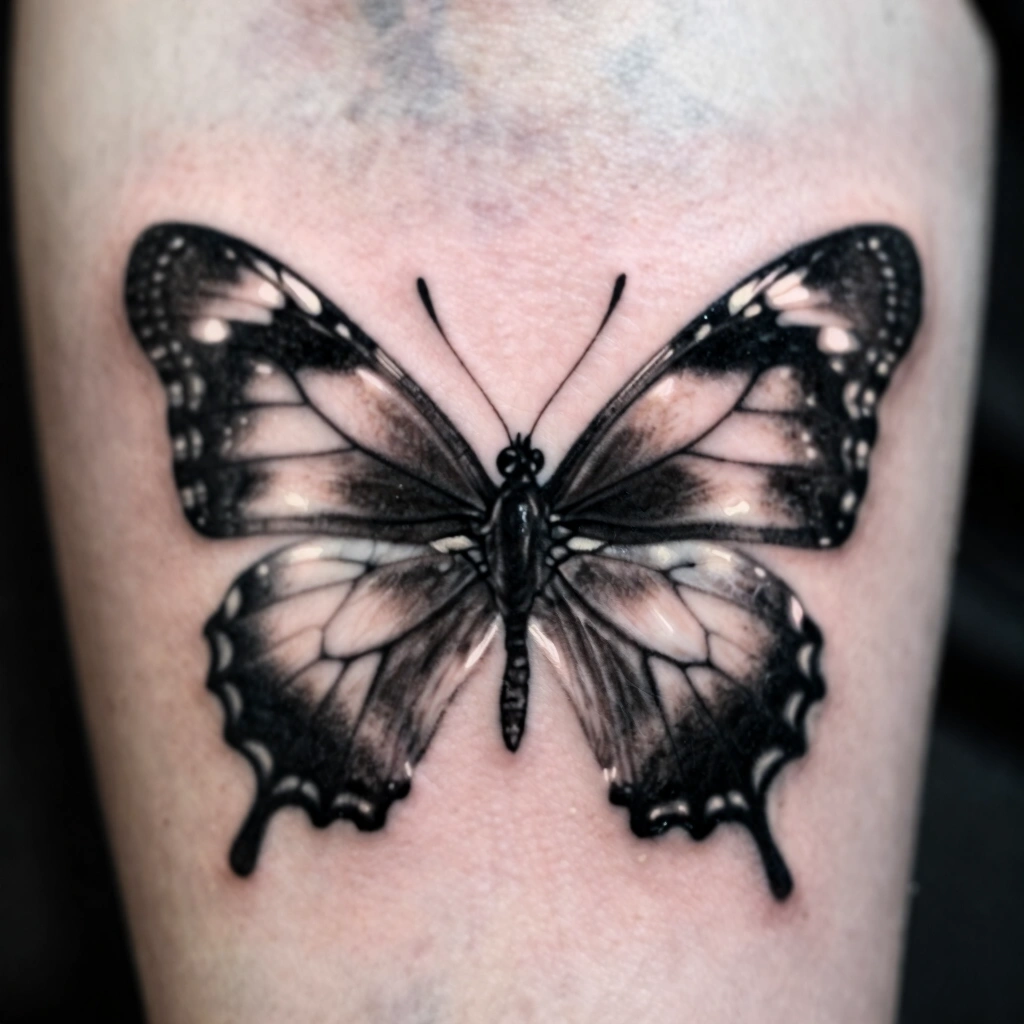
Negative space tattoos use the untouched skin itself as part of the design, often outlining a butterfly with black shading around it so the wings appear as a lighter shape carved out of a darker background. It’s a striking, modern technique that photographs well and reads as more artistic than a standard outline. This works best on lighter or medium skin tones, where the contrast between ink and open skin stays crisp, and it needs a confident, experienced artist since precision is everything here.
Best suited to the forearm or upper arm, sized 3 to 4 inches minimum. Mistakes in negative space designs are hard to fix, so this isn’t the spot to save money on an inexperienced artist.
Minimalist Single-Needle Butterfly Tattoo
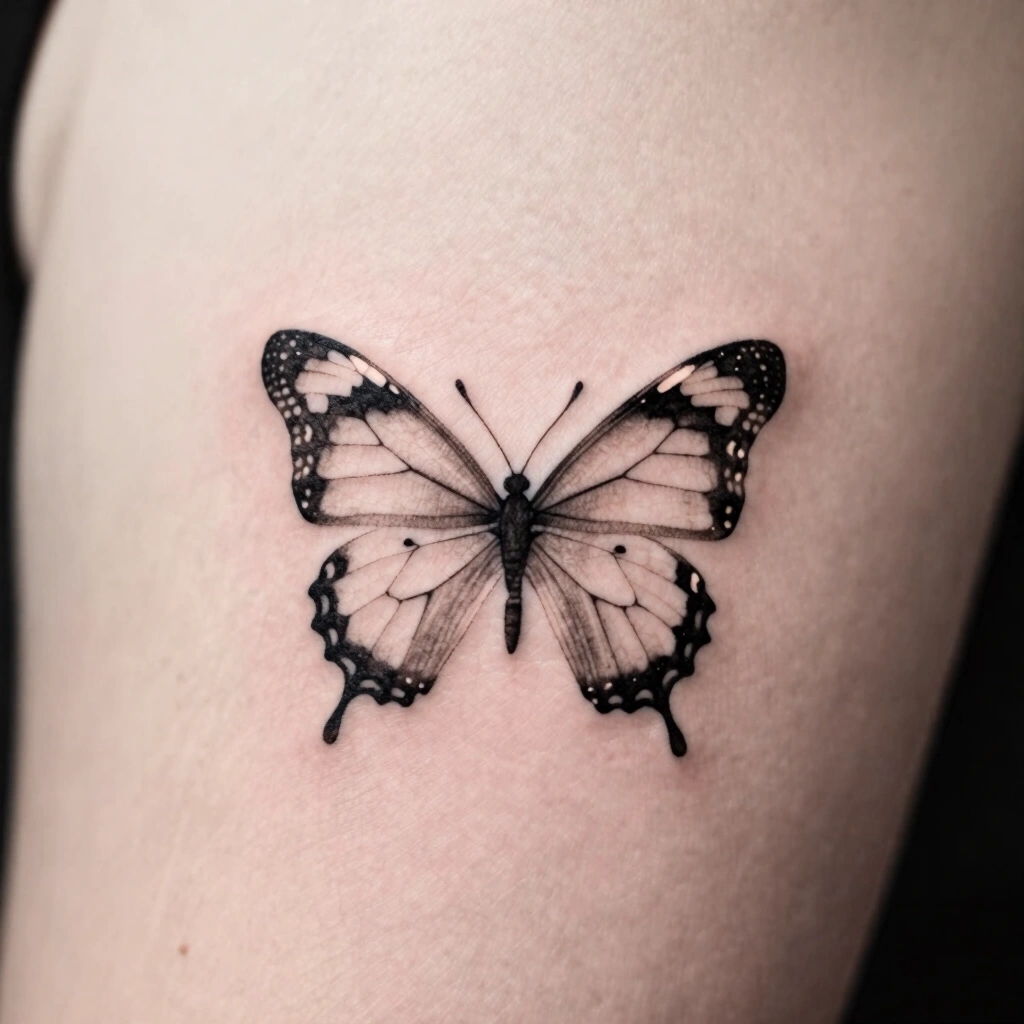
Think of this as fine line’s even quieter cousin — a tiny butterfly outline, sometimes under an inch, done with a single needle and almost no shading at all. It’s the go-to for a first tattoo or for anyone who wants something meaningful but barely visible. Great spots include behind the ear, the nape of the neck, or the inner wrist. Because the design is so small, ask your artist to simplify the wing detail rather than cramming in fine lines that will blur together within a few years.
Pain is generally lower here compared to bonier spots, though placement still plays a role. It’s an easy, low-commitment entry point into tattoos.
Butterfly And Flower Combination Tattoo
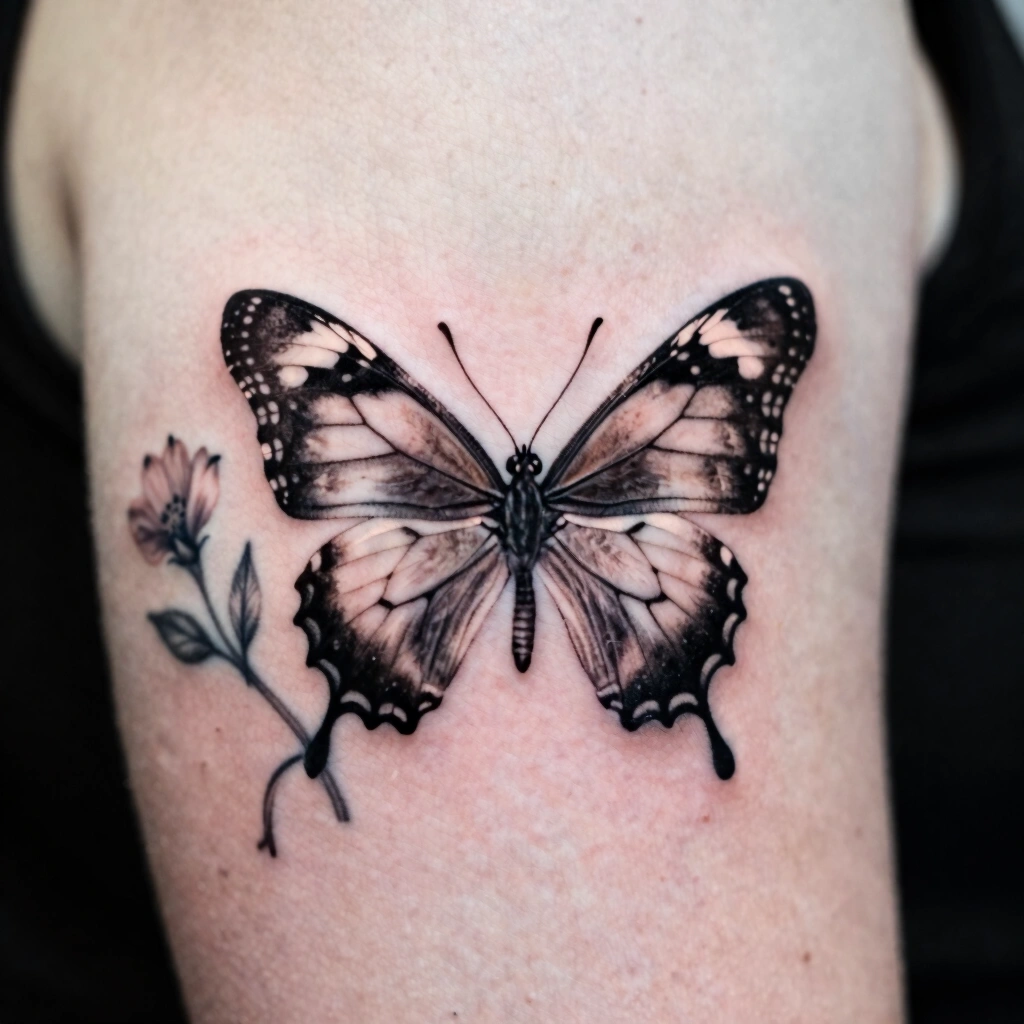
Pairing a butterfly with botanical elements — a small vine, a single blossom, a few leaves — adds narrative depth without overcomplicating the composition. Typically done in fine line or light blackwork, this combination works well as a wraparound piece on the forearm, ribs, or ankle. Keep the floral element secondary in size so the butterfly stays the visual anchor; a common mistake is letting the flowers overpower the wings until the piece reads as “floral tattoo with a bug in it.”
Size around 3 to 5 inches gives both elements room. This is a popular choice for meaningful, symbolic pieces tied to a memory or personal milestone.
Butterfly Spine Tattoo
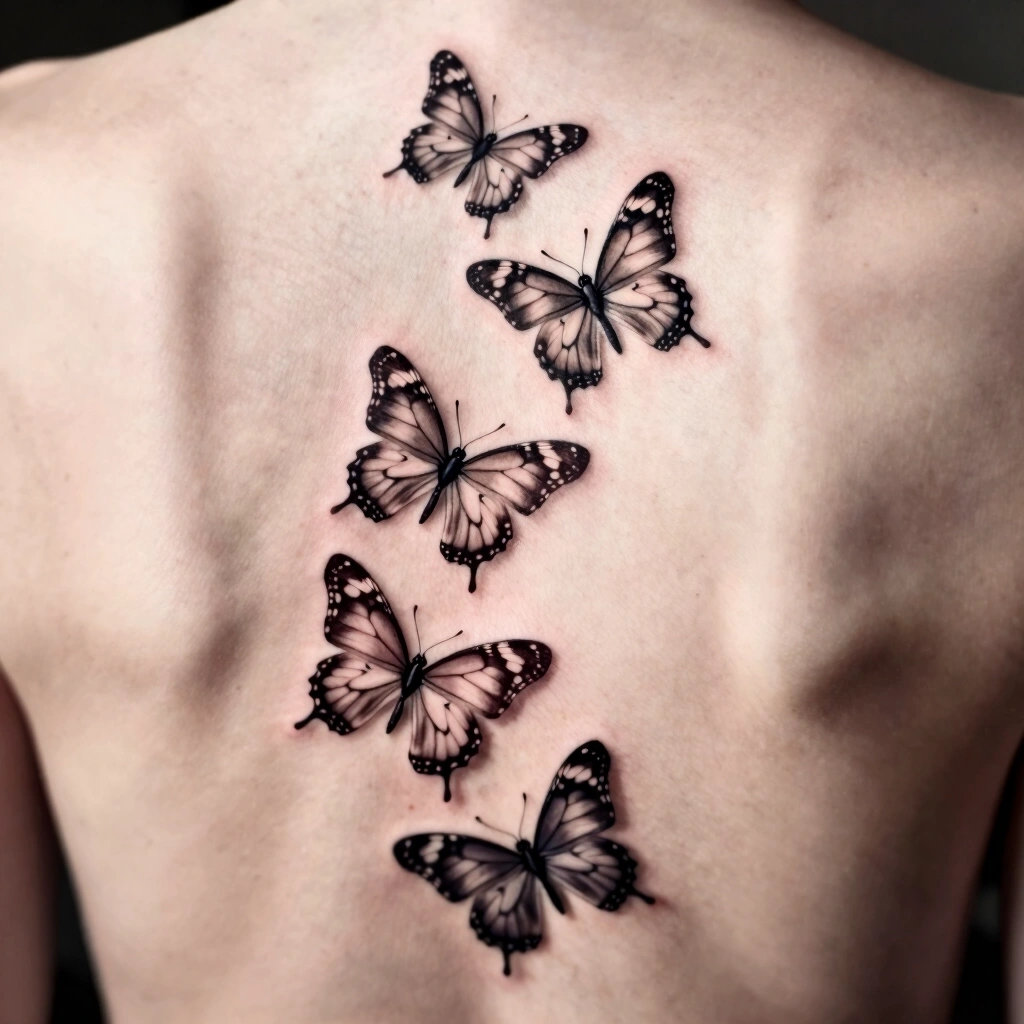
A vertical chain of small butterflies running down the spine creates a sense of movement, as if they’re taking flight up the back. Each butterfly is usually kept small — under 2 inches — and rendered in consistent fine line or light dotwork so the chain reads as one cohesive piece rather than scattered stickers. The spine is one of the more sensitive placements due to thin skin and close proximity to bone, so be honest with yourself about pain tolerance before booking a long session here.
It’s a striking choice for anyone comfortable with a longer, multi-hour appointment and a design that’s easily hidden or revealed depending on outfit.
Butterfly Behind-The-Ear Tattoo
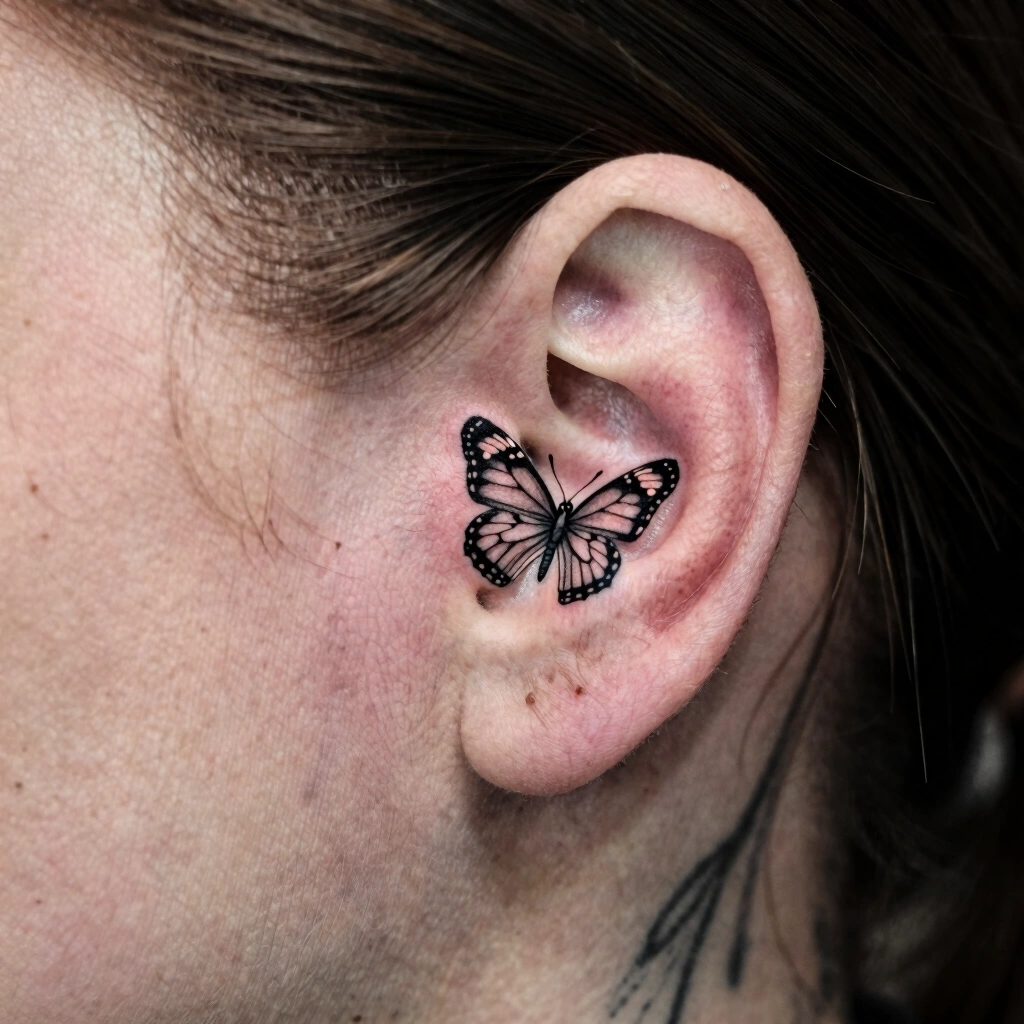
Small, discreet, and easy to conceal with hair, a behind-the-ear butterfly is usually done in fine line or minimal single-needle work, typically under an inch. The skin here is thin and close to cartilage, so most people find it more uncomfortable than fleshier spots, though sessions are short given the size.
This placement is ideal for a first tattoo or for workplaces with strict visibility policies. Bring a simple design — this is not the spot for intricate shading, since detail this small tends to fade into a blur within a few years.
Butterfly Rib Cage Tattoo
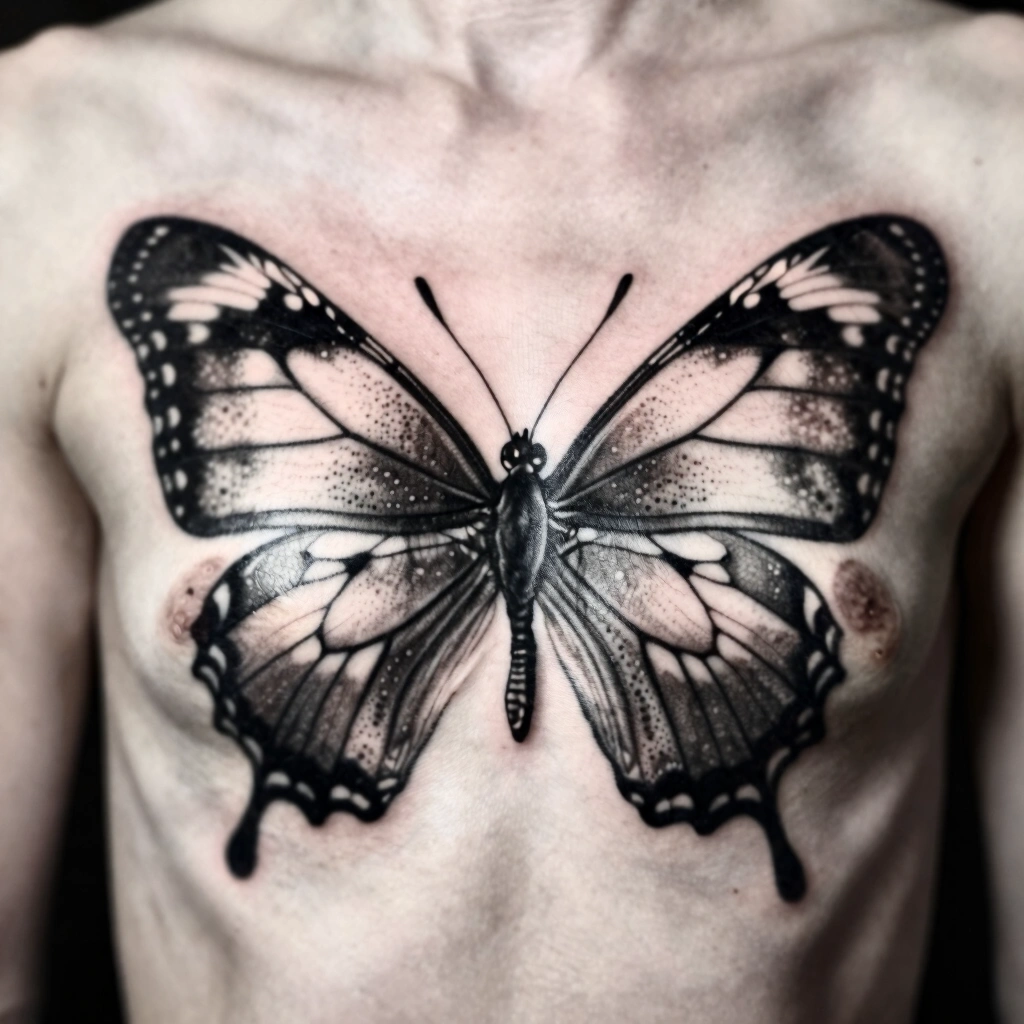
The rib cage offers a longer, curved canvas that suits a mid-sized butterfly with either fine line detail or soft dotwork shading, often 3 to 5 inches. It’s widely known as one of the more painful placements because of thin skin over bone and limited fat padding, so pace expectations around session length and possible breaks. The upside is a placement that’s fully concealable for work but easy to show off when you want to. Ask your artist about stencil placement carefully here, since the rib’s curve can distort proportions if it’s not mapped out before the needle starts.
Matching Butterfly Tattoos For Friends Or Sisters
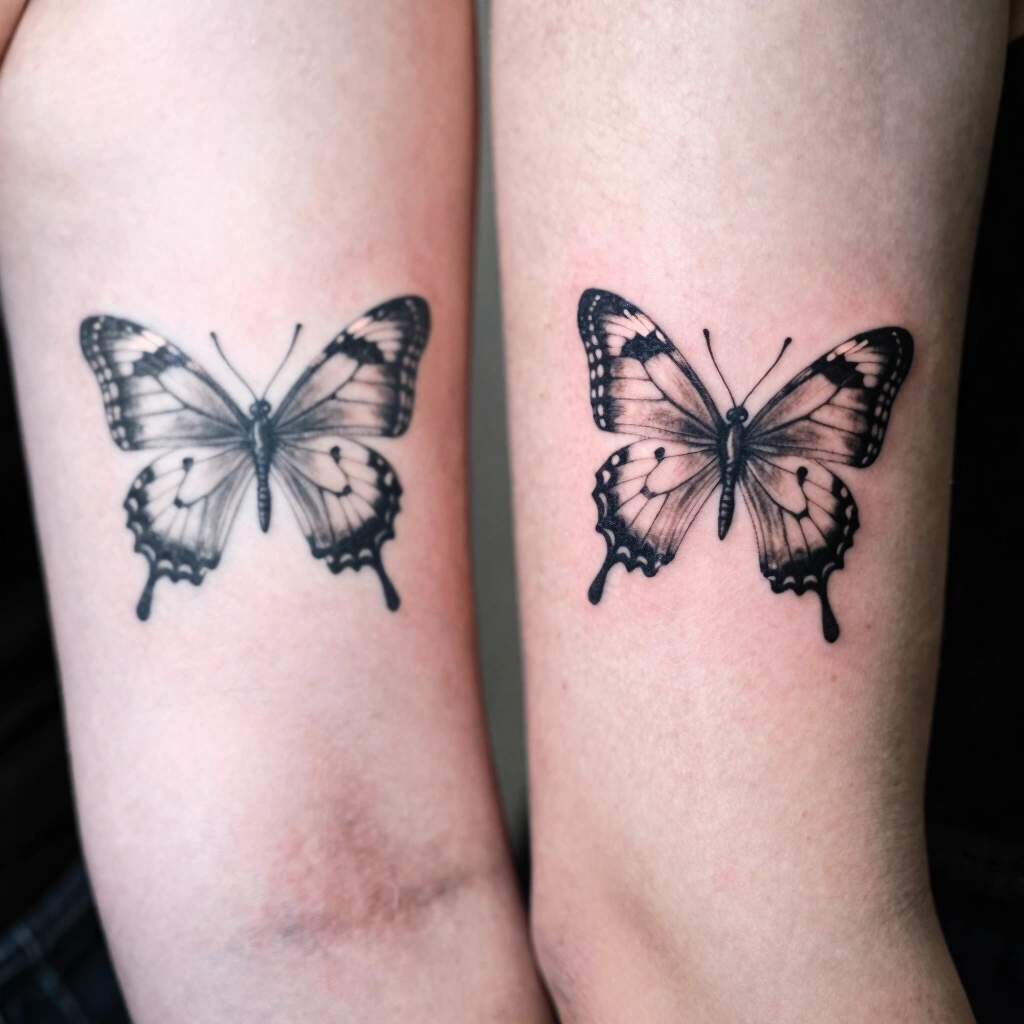
Matching designs work best when they’re simple enough to stay identical across different skin tones and body shapes — think small fine-line butterflies, under 2 inches, placed on the same spot on each person (both wrists, both ankles). Resist the urge to make them overly detailed; the more intricate the linework, the more the design’s appearance will vary person to person as it heals. A shared consultation with the same artist, if possible, helps keep the two pieces visually consistent. This is a strong low-commitment option for a shared, meaningful moment without a huge financial or pain commitment.
Butterfly With Script Or Quote Tattoo
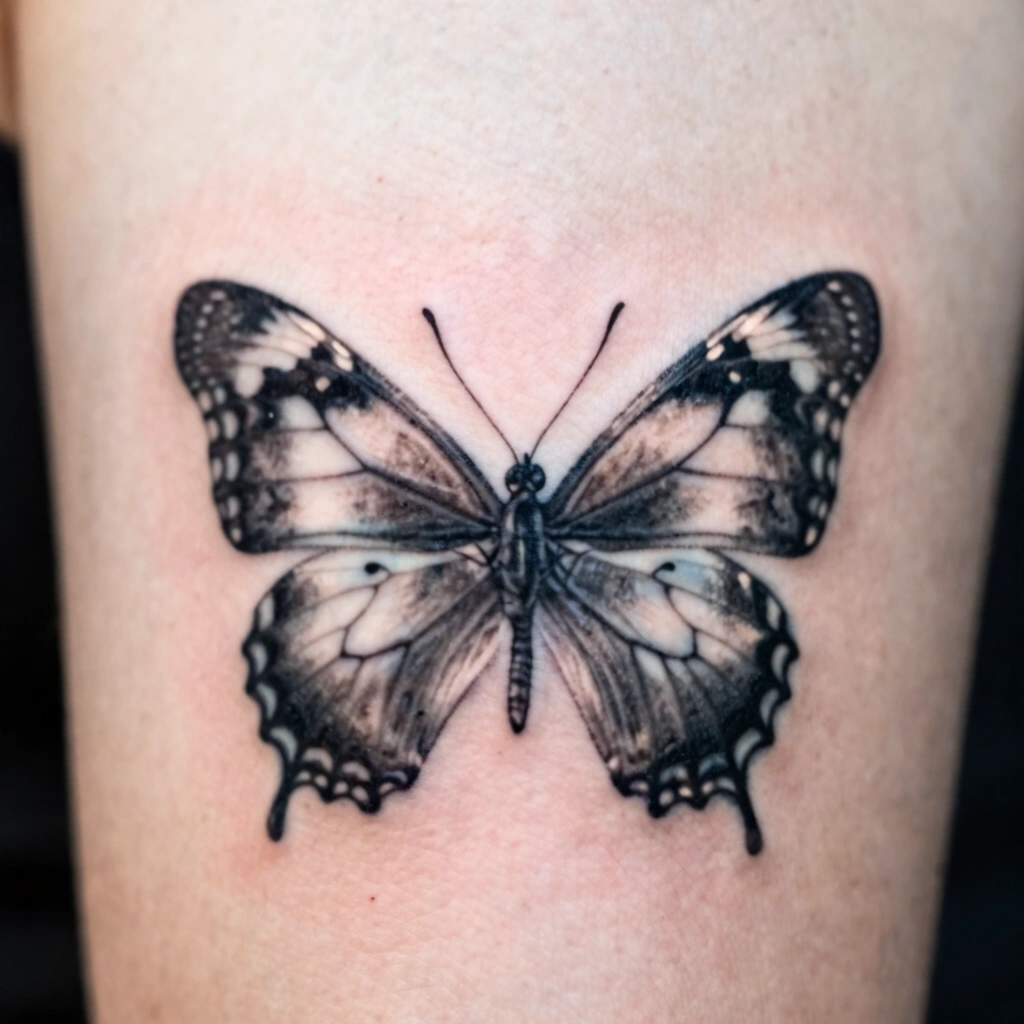
Combining a butterfly with a short word or phrase in fine-line script adds personal meaning but requires careful spacing — an overcrowded design is one of the most common regrets people report. Keep the script small and the butterfly as the dominant visual element, placed along the forearm, collarbone, or ribs where there’s a long, straight line to work with. Ask your artist to mock up the full composition on a stencil before starting, so you can check the balance between text and image. This works well for meaningful, symbolic tattoos tied to a person, date, or personal mantra.
Realistic Illustrative Butterfly Tattoo
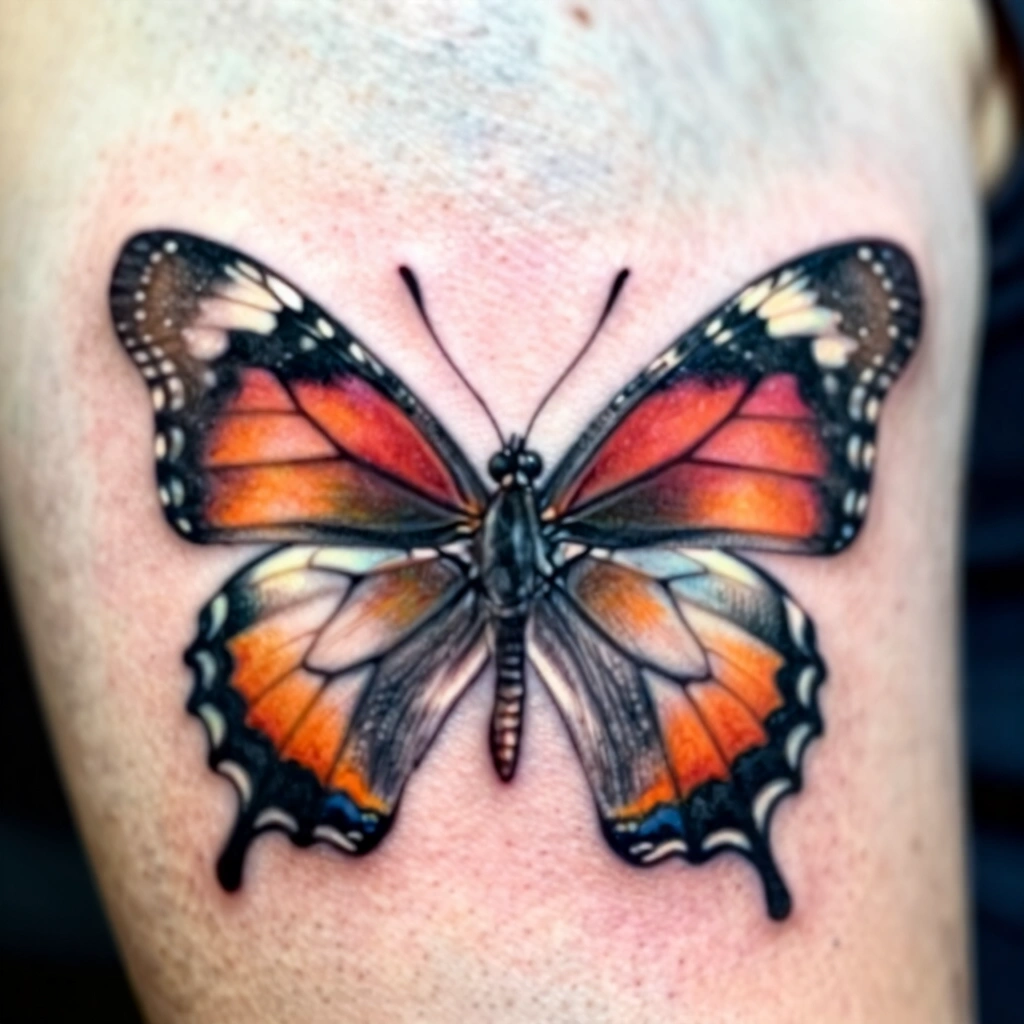
This style leans into fine detail and dimensional shading — vein patterns, gradient coloring, even a slightly three-dimensional look to the wings — closer to a detailed illustration than a simple icon. It demands a larger canvas, typically 4 inches or more, and an artist experienced specifically in realism, since this style shows technical shortcomings more than any other. Best placed on the shoulder, thigh, or upper arm. Because of the fine detail, healing takes patience, and any scabbing or peeling during recovery can temporarily distort the fine shading before it settles.
Butterfly Ankle Tattoo
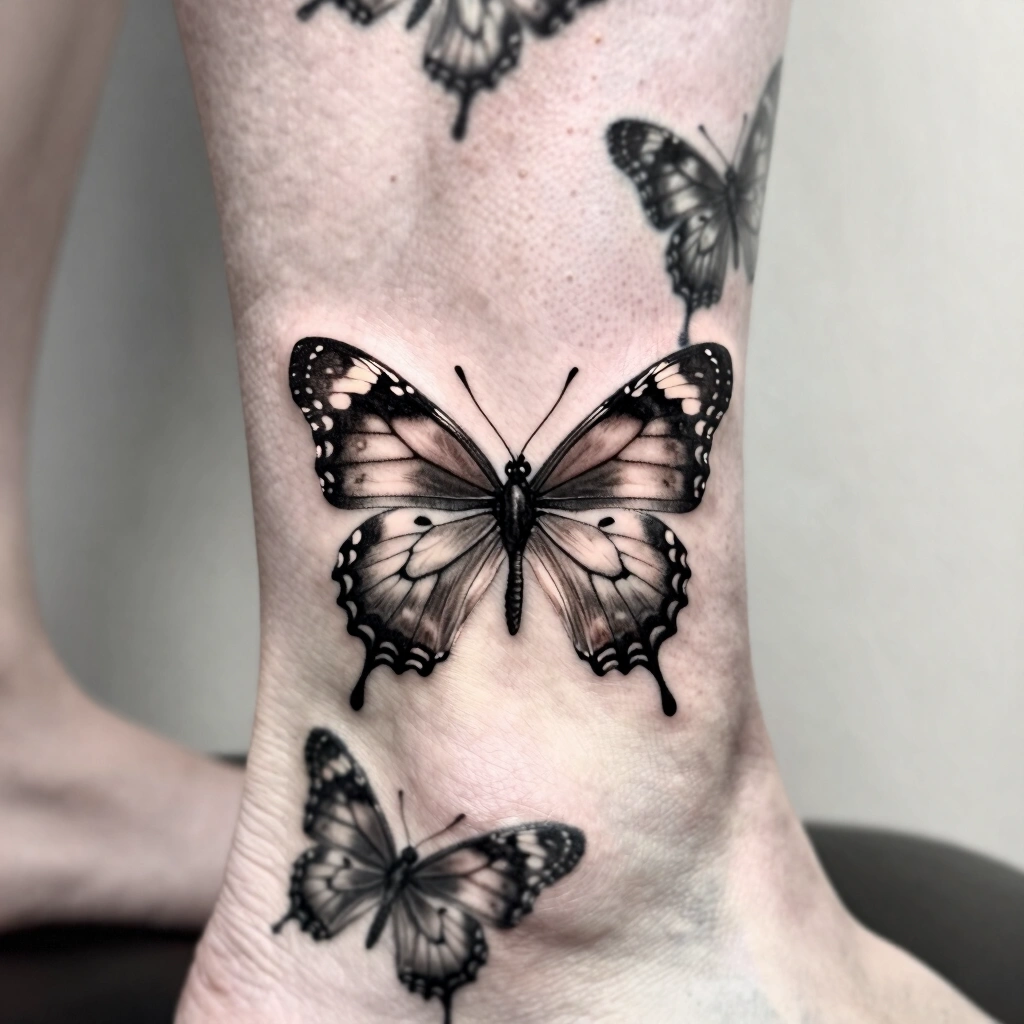
A classic, easy-to-conceal placement, the ankle suits smaller fine-line or single-needle butterflies around 1 to 2.5 inches. Skin here shifts and moves with footwear and walking, so extremely fine detail can blur faster than on flatter areas like the forearm — a good reason to keep the line weight slightly thicker than you might elsewhere. Pain is generally moderate given the boniness of the ankle. It’s a solid choice for a first tattoo that’s easy to hide for job interviews or formal settings.
Colorful Traditional Butterfly Tattoo
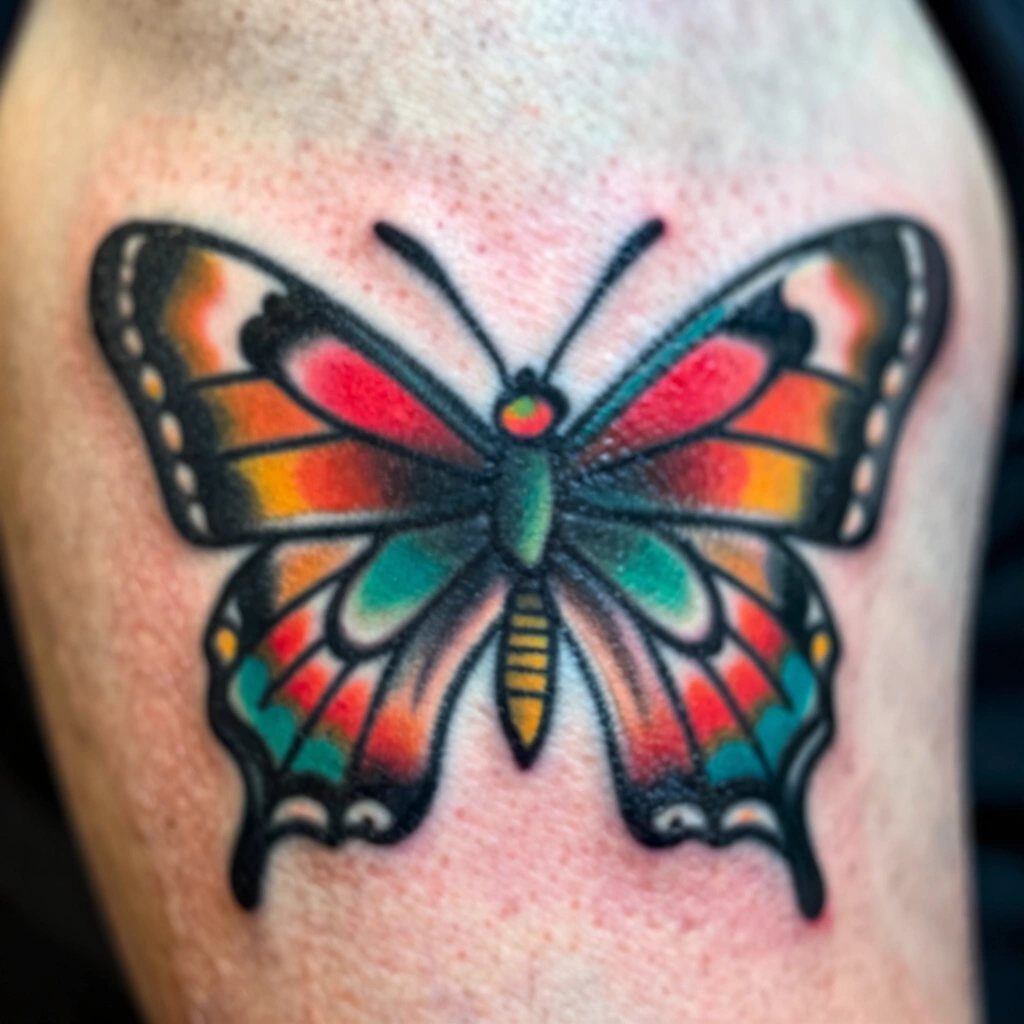
Rooted in American traditional style, this design uses bold black outlines, limited but highly saturated color (often red, yellow, or blue), and minimal shading beyond basic contrast. It’s built to last — thick lines and solid color blocks hold up better over decades than fine detail does. Best on the upper arm, shoulder, or calf, sized 3 to 5 inches so the bold lines have room to breathe. If you want longevity over intricate detail, this is genuinely the safest long-term bet of every style listed here.
Best Placement Ideas
- Wrist or ankle — highly visible, moderate pain, best for fine-line or minimalist designs
- Behind the ear or nape of neck — easy to conceal, more sensitive skin, ideal for tiny single-needle pieces
- Shoulder or upper arm — lower pain, larger surface, great for blackwork, dotwork, or traditional color
- Ribs or spine — higher pain due to thin skin over bone, best reserved for designs you’re emotionally committed to
- Collarbone — moderate pain, good for horizontal script-and-butterfly combinations
- Thigh or calf — lower pain, large flat canvas, suits realistic or watercolor styles
Tips For Success
Start by reviewing an artist’s portfolio for consistency, not just one great photo — look for multiple healed (not just fresh) examples of the exact style you want. A fine-line specialist and a bold blackwork artist are different skill sets; don’t assume one artist does both well. Bring at least two or three reference images to your consultation, and be specific about line weight, size, and placement rather than saying “something like this but different.” Ask directly about their sterilization process, needle types, and estimated session length. A good consultation feels like a conversation, not a rushed sales pitch — if you feel dismissed or rushed, that’s worth noticing before you book.
Common Mistakes And How To Avoid Them
- Going too small for detailed linework — fine detail under an inch often blurs within a few years; simplify the design instead
- Choosing a placement that fights the design’s shape — a wide horizontal butterfly doesn’t sit well on a narrow vertical space like the spine without adjustment
- Skipping aftercare instructions — even minor neglect can affect how crisp the final healed result looks
- Copying a design exactly from an image — personalizing size, color, or small details helps it feel like yours and avoids an identical piece to someone else’s
- Booking a walk-in for a highly custom design — complex custom work usually deserves a dedicated consultation, not a same-day walk-in slot
Similar Variations
Almost every idea above can shift dramatically with small changes. A fine-line butterfly can become a matching design shared between friends. A blackwork piece can be resized down for a subtler wrist placement or scaled up into a full shoulder piece. Watercolor techniques can be layered behind a negative space outline for a hybrid look. Traditional color palettes can swap in muted tones for a softer, less saturated finish. Think of these 15 core concepts as a starting toolkit — mixing placement, size, and technique is how you land on something that feels genuinely custom rather than copied straight from a flash sheet.
Aftercare Basics
Aftercare routines vary by studio, so always follow the specific sheet your artist gives you — this is general guidance, not a replacement for their instructions. Most artists recommend keeping the area clean, avoiding direct sun and swimming during the initial healing window, and steering clear of tight clothing that rubs against fresh ink. Healing time generally runs two to three weeks for the surface to close, though full settling underneath can take longer. If you notice anything that seems unusual during healing, check in with your artist or a licensed dermatologist rather than guessing.
Quick FAQ
How much does a butterfly tattoo cost?
Cost depends on size, detail, and your artist’s hourly rate, but small fine-line pieces often start in the low hundreds, while larger custom color or realism pieces can run several hundred dollars or more. Always ask for a quote during your consultation.
Does a butterfly tattoo hurt a lot?
Pain varies by person and placement — bony areas like the ribs, spine, or ankle tend to feel more intense than fleshier spots like the upper arm or thigh. Everyone’s tolerance is different, so talk to your artist about pacing if you’re nervous.
How long does healing take?
Surface healing generally takes two to three weeks, with full settling taking a bit longer. Follow your artist’s specific aftercare sheet for the most accurate timeline for your piece.
Will my butterfly tattoo fade over time?
Some fading is normal for every tattoo style, though bold linework and solid color tend to hold up longer than fine detail or watercolor shading. Touch-ups every several years can help keep the design sharp.
At the end of the day, a butterfly tattoo works because it’s flexible — small or bold, colorful or blackwork, tucked behind your ear or spread across your shoulder. The real key is matching the technique and placement to how you actually live, not just what looks good in a saved photo. Take your time with the consultation, ask the questions that matter, and you’ll end up with a butterfly tattoo you’re still glad you chose years from now.