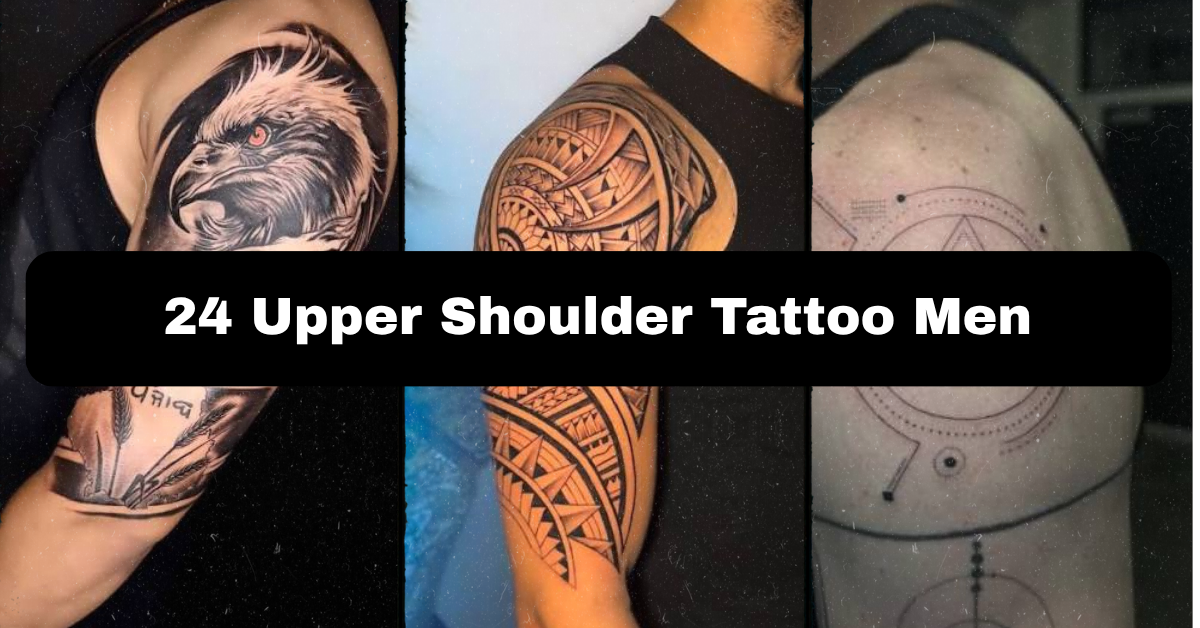
24 Upper Shoulder Tattoo Men Will Actually Love in the Long Run
Nervous about picking an upper shoulder tattoo design you’ll regret once the excitement wears off? You’re not alone — this is one of the most requested placements in any studio, and for good reason, but that doesn’t mean every design idea floating around online actually holds up on skin, ages well, or fits your lifestyle.
So what are the best upper shoulder tattoo ideas for men? Blackwork, fine-line geometric, bold traditional, and dotwork designs work especially well here because the upper shoulder offers a broad, relatively flat canvas with fewer bony interruptions, which means cleaner linework, better shading retention, and less distortion as skin ages.
Stick around, because I’m going to walk you through 24 specific design directions, plus the placement tradeoffs, realistic pain expectations, healing timelines, and the exact things to say to your artist so you don’t end up with a stencil that looked great on paper but falls apart on your actual body.
Why the Upper Shoulder Is One of the Smartest Placements for Men’s Tattoos
I’ve spent enough time hanging around studios to notice a pattern: the upper shoulder consistently produces some of the cleanest-healing, longest-lasting work on the body. Here’s why. The skin across the upper shoulder and shoulder cap is generally thicker and less mobile than areas like the ribs or inner arm, which means the needle sits more consistently during the session and the ink settles evenly. It’s also a placement that gives you control — sleeve-length shirts hide it instantly, tank tops show it off. For guys who want something bold without committing to a full sleeve, this spot hits a sweet spot between visibility and versatility.
A Quick Definition List: Know Your Techniques Before You Book
Before we get into specific designs, it helps to actually understand what you’re asking for when you sit down with an artist. Here’s a plain-language breakdown:
- Fine line / single needle — Uses a single needle configuration to create thin, delicate lines with minimal shading. Best for detailed, subtle work but tends to soften faster over the years than bolder styles.
- Bold traditional — Thick, confident outlines paired with limited, saturated color palettes (deep reds, greens, black). Built to age well because heavy linework holds up under skin changes.
- Blackwork — Solid black ink used in large, deliberate sections, often with sharp negative space (areas left untouched by ink to form the design’s contrast). Reads dramatically from a distance.
- Dotwork — Shading and texture built entirely from tiny dots rather than solid fill or line shading. Creates a soft, almost stippled gradient effect, common in mandala and geometric pieces.
1. Blackwork Tribal-Inspired Shoulder Cap
This design wraps solid black shapes around the curve of the shoulder, using sharp negative space to create contrast rather than relying on shading. The visual weight sits heaviest at the shoulder cap and tapers as it moves toward the upper arm, which flatters the natural muscle contour. Best size runs 4–6 inches across for the design to read clearly from a few feet away. Healing typically takes 2–3 weeks for the surface, though full settling can take longer — this varies person to person, so always follow your artist’s aftercare sheet. Pain here is moderate; the shoulder cap has decent muscle padding, so it’s more tolerable than bonier spots. Bring reference images showing the specific negative-space pattern you want, not just “tribal tattoo” — vague references lead to generic stencils. This works well for a first tattoo since it’s bold but contained.
2. Fine-Line Geometric Shoulder Piece
Fine-line geometric designs use thin, single-needle linework to build interlocking triangles, hexagons, or sacred geometry patterns without heavy shading. The appeal is precision — every angle needs to be crisp, so this style demands an artist with a strong geometric portfolio, not just general experience. Ideal size is 3–5 inches; going smaller risks the lines blurring together as the tattoo settles over the years. Pain level is on the lower-to-moderate side since fine lines involve less repeated passing over the same skin. This ages differently than bold work — expect some softening of thin lines after a decade, so ask your artist about slightly thicker line weight if longevity matters more to you than delicacy. Great for workplace-conscious guys who want something sharp but easy to cover.
3. Bold Traditional Eagle
A bold traditional eagle uses thick black outlines with a limited, saturated color palette — usually deep reds, golds, and blacks — spread across the wingspan to fill the shoulder’s natural width. The heavy outlines are the whole point here; they’re what keeps this style legible even decades later, unlike thinner linework that fades into a blur. This piece typically needs 5–7 inches of space to let the wing detail breathe. Healing takes about 2–3 weeks on the surface. Pain is moderate given the shoulder’s muscle coverage. Ask your artist about color saturation levels during the consultation — traditional work relies on flat, confident color blocks rather than gradients. This is a strong choice for men wanting a design with obvious visual weight and a classic American tattoo aesthetic.
4. Dotwork Mandala Accent
Dotwork mandalas build intricate circular patterns entirely from small dots rather than solid shading, creating a soft, almost textured gradient effect. This technique takes noticeably longer in the chair than linework alone, since every shaded area is built dot by dot. A 3–4 inch mandala sits nicely on the upper shoulder without overwhelming the area, though larger 6-inch versions read more dramatically from a distance. Pain tends to run moderate to higher here because dotwork involves repeated, concentrated needle contact in small areas. Bring a reference that shows dot density you like — sparse versus tightly packed dotwork looks completely different once healed. This design suits guys who want intricate detail without full color, and it photographs exceptionally well against most skin tones.
5. Japanese-Inspired Hannya Mask
This design borrows from traditional Japanese irezumi styling — bold outlines, dramatic shading, and often a background element like clouds or waves worked in around the mask itself. It’s a technically demanding piece that benefits from an artist experienced specifically in Japanese-style work, since proportion and flow matter more here than in most Western styles. Expect to dedicate 6–8 inches of shoulder space minimum for the detail to hold up. Healing runs the standard 2–3 week surface window. Pain is moderate to high given the shading density. This isn’t a great first-tattoo choice if you’re unsure about commitment, since the size and detail level represent a real investment — but it ages beautifully because of the bold underlying linework.
6. Negative Space Wave Design
Negative space work flips the usual approach — instead of ink forming the subject, untouched skin does the work while surrounding blackwork or dotwork creates the contrast. A wave design done this way looks like the crest is “cut” from a solid black background, giving it a striking, almost sculptural look. This requires precise planning since the untouched skin needs to stay clean and crisp; ask your artist directly about their experience with negative space specifically, as it’s less forgiving than standard blackwork. Size around 4–5 inches works best. Pain sits in the moderate range. This design tends to age well on lighter skin tones where the contrast stays sharp, though it’s worth discussing directly with your artist how it’ll read on your specific skin tone before booking.
7. Single-Needle Compass
A single-needle compass uses thin, precise linework to render compass details — the rose, cardinal points, sometimes a subtle banner — without heavy shading. It’s a popular choice because it’s meaningful without being loud. Best kept to 3–4 inches; going too small sacrifices the fine details that make a compass recognizable. Healing takes the usual 2–3 weeks. Pain is on the lower end for this placement given the minimal needle passes. A useful tip: bring both a compass reference and a font sample if you want lettering incorporated, since combining fine-line text with fine-line imagery requires careful spacing planning beforehand. Great first-tattoo option and easy to keep workplace-appropriate.
8. Realistic Lion Portrait
Realistic portrait work relies on smooth shading gradients rather than hard outlines, built through careful needle work that mimics fur texture and light direction. This is genuinely one of the more difficult styles to execute well, so portfolio-checking matters more here than almost anywhere else — look specifically for other realistic animal portraits, not just realism in general. A lion portrait needs at least 5–6 inches to hold facial detail. Pain runs moderate to high due to shading density. Healing can take slightly longer to fully settle given the amount of ink saturation involved. This isn’t ideal as a first tattoo because of the skill and sitting time required, but it delivers serious visual payoff for guys ready to commit.
9. Blackwork Wolf Silhouette
A wolf silhouette rendered in solid blackwork skips fine detail entirely, relying instead on a strong, recognizable outline filled with flat black ink. The appeal is simplicity — from across a room, the shape reads instantly. This design works at almost any size from 3 to 6 inches, making it flexible for guys unsure how bold they want to go. Pain is moderate; solid fill work involves more repeated passes than pure linework. Ask your artist about outline thickness during your consultation, since thinner outlines on solid blackwork can blur together faster than thicker ones as the tattoo ages. This is a solid matching-tattoo option too, since simple silhouettes translate well across different skin tones and sizes.
10. Sacred Geometry Linework
Sacred geometry designs layer circles, triangles, and symmetrical patterns into a single cohesive piece, usually in fine-line or medium-weight linework. Precision is everything — even slight asymmetry becomes obvious in geometric work, so ask specifically about stencil accuracy and whether your artist double-checks symmetry before starting. A 4–5 inch design gives enough room for the pattern to stay crisp. Pain is low to moderate. This style ages moderately well; the geometric shapes hold their form better than freehand curves tend to. Good for first-timers who want something visually striking but not overly aggressive or masculine-coded in the traditional sense — it reads clean and modern.
11. Script Lettering With Small Icon
Combining a short script phrase with a small accompanying icon — an anchor, a star, a simple line drawing — creates a personal, meaningful design without demanding a large canvas. Line weight matters enormously in script work; thin fine-line script looks elegant initially but can blur into illegibility over 10–15 years, so many experienced artists recommend a slightly heavier line weight for lettering specifically. Keep the piece to 3–4 inches for legibility. Pain is generally lower given the minimal shading involved. Healing is standard. This is one of the most popular first-tattoo choices because it’s personal, relatively low-commitment, and easy to keep private or visible as needed.
12. Tribal Polynesian Band
Polynesian-style bands use bold, symmetrical blackwork patterns that wrap around the shoulder’s natural curve, often incorporating symbolic elements tied to family, strength, or personal history. This style has deep cultural roots, so it’s worth having an honest conversation with your artist about which elements are appropriate to use versus which carry specific cultural meaning you may not want to borrow without understanding. A well-executed band typically needs 4–6 inches of coverage. Pain is moderate to high due to the density of solid black fill. This design ages exceptionally well because of its bold, simple shapes — one of the most durable styles for shoulder placement long-term.
13. Skull and Roses Traditional
This classic combines bold outlines, saturated color, and a mix of hard (skull) and soft (rose petals) textures in one composition — a good test of an artist’s range. The rose petals typically use soft shading transitions while the skull relies on harder linework, so ask your artist how they’ll differentiate the two textures during the stencil review. Size around 5 inches lets both elements stay detailed. Pain is moderate. This piece has serious staying power thanks to the bold traditional foundation, making it a smart choice if you want something that’ll still look sharp at 60.
14. Minimalist Mountain Range
A minimalist mountain silhouette uses simple, clean linework — often single needle — to create a subtle horizon-style design across the upper shoulder. It’s understated, which makes it a favorite for guys who want meaning (adventure, resilience, a specific place) without visual noise. Keep it to 2–4 inches; oversized minimalist work tends to look empty rather than bold. Pain is low. This is an excellent first-tattoo pick and stays easy to hide under any collar. Over time, expect very gradual softening of the thin lines — something to discuss with your artist if you want a slightly bolder version instead.
15. Biomechanical Shoulder Accent
Biomechanical designs blend organic shapes with mechanical or gear-like elements, usually rendered in heavy shading with sharp contrast between light and dark areas. This style demands real technical skill, so review portfolios closely for shading gradient quality and consistent line control. A 5–6 inch piece gives enough room for the layered detail to read properly. Pain runs moderate to high due to the shading density. This isn’t a first-tattoo-friendly style given its complexity, but for guys who already have some ink and want something more advanced, it delivers a genuinely unique visual.
16. Norse and Viking Symbol Cluster
Clustering symbols like the Vegvisir, Mjolnir, or runes into one cohesive upper shoulder piece works well in either fine-line or bold blackwork, depending on how prominent you want it. Spacing matters here — ask your artist to mock up the arrangement digitally before tattooing so the symbols don’t feel randomly scattered. A 4-inch cluster keeps things tight and legible. Pain is moderate. This design works well for matching or group tattoos among friends who share the same interest, since individual symbols can be resized or rearranged for each person while keeping a shared theme.
17. Neo-Traditional Snake
Neo-traditional work updates classic bold outlines with richer color palettes and more illustrative shading than old-school traditional. A coiled snake design fits the shoulder’s curve naturally and allows for dynamic movement in the composition. Aim for 5 inches minimum to keep scale details crisp. Pain is moderate. Ask specifically about color saturation — neo-traditional often uses deeper, layered tones rather than flat traditional color blocks, and that requires more passes during the session. This style ages reasonably well thanks to its bold underlying structure, even with the added color complexity.
18. Watercolor-Style Phoenix
Watercolor-style tattoos mimic paint splashes and soft color bleeds rather than hard outlines. It’s a beautiful effect initially, but it’s worth being upfront: color-heavy designs without strong black linework underneath tend to fade and blur faster than bold or blackwork styles, according to general dermatological consensus on how skin ages with ink over time. If you love the look, ask your artist about anchoring the design with subtle black linework beneath the color splashes for better longevity. Size around 5–6 inches. Pain is moderate. This is a style choice best made with realistic expectations about touch-ups down the road.
19. Anchor and Rope Nautical Design
A classic anchor-and-rope piece in bold traditional style uses thick black outlines with minimal color, keeping the design legible and durable. This is a low-complexity, high-payoff option — 3–4 inches is plenty for the design to read clearly. Pain is low to moderate. It’s an easy design to personalize by adding a small banner with initials or coordinates, which is worth mentioning during your consultation rather than after the stencil is drawn. Great first-tattoo option with strong long-term durability.
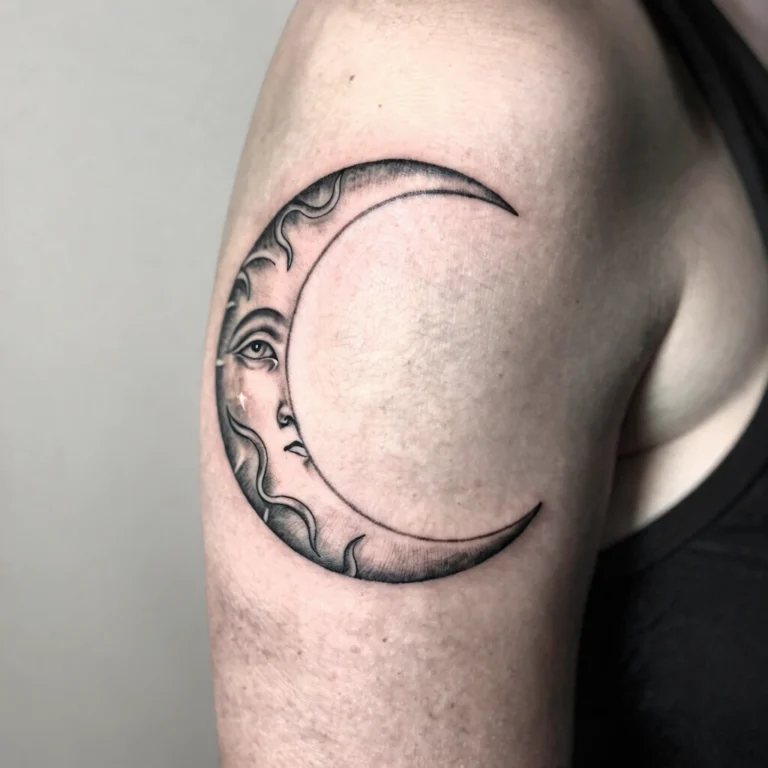
20. Dotwork Sun and Moon Duo
Placing a sun and moon side by side, rendered entirely in dotwork shading, creates a soft, balanced design with built-in symbolism (duality, balance, cycles). Keep each element to around 2–3 inches so the dot density stays fine enough to read as shading rather than solid fill. Pain is moderate given the repetitive dot application. This is a strong matching-tattoo concept for two people who want complementary rather than identical designs.
21. Abstract Blackwork Panther
An abstracted panther design breaks the animal into angular, almost fractured blackwork shapes rather than a realistic silhouette. It’s a more modern, editorial take that works well for guys who want boldness without a literal, traditional look. 5 inches gives the abstraction room to stay recognizable. Pain is moderate to high due to solid fill sections. This design ages well thanks to its bold shape-based structure.
22. Religious Cross With Shading
A cross combined with subtle background shading — clouds, light rays, or simple gradient work — creates depth without overwhelming the symbol itself. Keep shading subtle; over-shading can muddy the cross’s clean lines over time. 4 inches is a solid standard size. Pain is low to moderate. This remains one of the most requested meaningful designs precisely because it’s simple to personalize with small additions like a date or name.
23. Feather Transforming Into Birds
This design uses a single feather that gradually breaks apart into a small flock of birds, blending fine-line detail (the feather) with simpler silhouette work (the birds). It’s visually dynamic and reads well vertically along the shoulder’s slope. 4–5 inches keeps both elements distinct. Pain is low to moderate. A helpful tip: ask your artist to sketch the transition point directly on your skin before tattooing, since that’s the trickiest part to get proportionally right.
24. Custom Family Crest
A custom crest design combines linework, small symbolic elements, and sometimes lettering into one cohesive, personal piece. Because it’s custom rather than flash (pre-drawn, ready-to-use designs), expect a longer consultation and design process — a good sign of a thorough artist, not a delay to worry about. Size runs 4–6 inches depending on detail level. Pain is moderate. This is a meaningful, low-regret choice specifically because it’s built around your own story rather than a repeated design.
Best Placement Ideas
- Shoulder cap (top of shoulder) — highest visibility, easiest to show off in tank tops, moderate pain due to some bone proximity
- Rear shoulder blend (into upper back) — great for larger designs, low visibility, easier to keep private for work
- Front shoulder blend (into upper chest) — good for symmetrical or flowing designs, slightly more sensitive skin
- Wrapping toward the upper arm — ideal for bands or sleeves-in-progress, moderate maintenance as it may need touch-ups where skin folds
Tips for Success
Choosing the right artist matters more than choosing the “perfect” design. Look through portfolios for consistency — not just one great photo, but multiple pieces in the style you want, with clean line work and even shading across different clients. Book a consultation before committing, bring 2–3 reference images (not twenty conflicting ones), and ask directly about their experience with your chosen technique, whether that’s dotwork, blackwork, or fine line. A confident, licensed professional will happily talk through placement, sizing, and realistic aging expectations before you ever sit in the chair.
Common Mistakes and How to Avoid Them
- Sizing too small for detail — intricate designs need enough space to hold their detail as they heal and age
- Poor placement for the linework — heavily curved designs need a placement that matches the body’s natural contour
- Skipping aftercare — ignoring your artist’s instructions increases the risk of poor healing and premature fading
- Copying a design exactly — a personalized detail (color, size adjustment, small addition) makes the piece genuinely yours and avoids the “stock photo” look
Similar Variations
Almost every design above can be resized down for a subtler statement or scaled up into a half-sleeve extension later. Blackwork pieces can be softened with dotwork shading for texture, while fine-line designs can be bolded up if you want more longevity. Combining two smaller designs from this list — like a compass with a mountain range — is also a common custom request.
Aftercare Basics
Keep the area clean and follow the specific aftercare sheet your artist provides — this is the single most important factor in how your tattoo heals and looks long-term. General, non-medical guidance typically includes gentle washing, avoiding direct sun exposure, and avoiding tight clothing rubbing against the area while it heals. Healing time and pain tolerance vary by individual, so consult a licensed professional artist or dermatologist with any specific concerns.
Quick FAQ
How much does an upper shoulder tattoo cost?
Costs vary widely by size, detail, and artist experience, but expect anywhere from $150 for a small flash piece to $800+ for a large, detailed custom design.
How painful is the upper shoulder placement?
Generally moderate — the area has decent muscle padding compared to bonier spots, though pain tolerance varies by individual.
How long does healing take?
Surface healing typically takes 2–3 weeks, though full settling underneath can take longer; this varies person to person.
Will the design fade over time?
Bold linework and solid blackwork tend to hold up better long-term than fine-line or watercolor-style work, which may need touch-ups sooner.
Finding the right upper shoulder tattoo design isn’t about picking whatever looks coolest in a photo — it’s about matching technique, placement, and size to something that’ll actually still look sharp in twenty years. Take your time, talk honestly with a licensed artist about your skin, your pain tolerance, and your long-term expectations, and you’ll walk away with a piece you’re proud of instead of one you’re just tolerating.
Whatever direction you land on, the best upper shoulder tattoo men can get is the one chosen with real research, not just a quick scroll — and now you’ve got the tools to do exactly that.