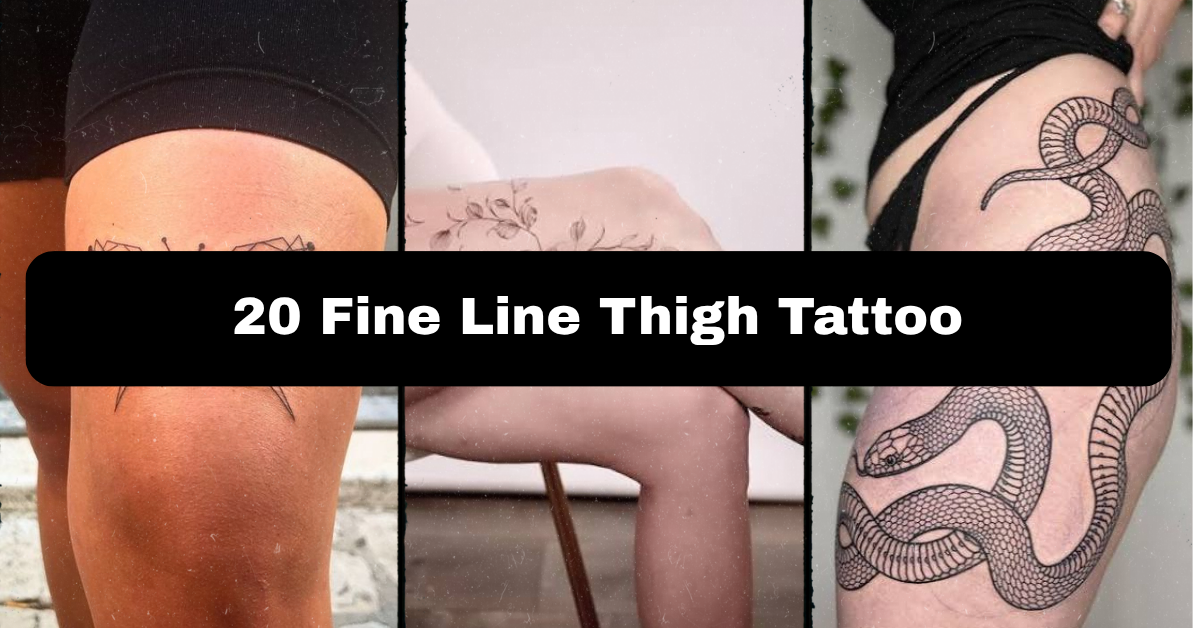
20 Fine Line Thigh Tattoo Ideas Worth Bringing to Your Consultation
Nervous about picking a fine line thigh tattoo design you’ll actually still love in five years? That’s a fair worry, and it’s exactly why this guide exists — not to sell you on “cute” pictures, but to walk you through the real decisions: placement, pain, healing, cost, and how to talk to an artist so the tattoo turns out the way you pictured it.
So what’s the best approach to a fine line thigh tattoo? Choose a design with clean, thin linework (usually done with a single needle or small needle grouping), place it where the skin is relatively flat and stable, and size it so the detail doesn’t blur as it heals. Thighs offer more room than wrists or ankles, so delicate work actually holds up better here over time.
Stick around, because I’m also going to cover pain levels by exact thigh zone, what fine line designs cost compared to bold traditional work, how to brief an artist so you don’t end up with a generic flash-sheet copy, and the aftercare habits that actually affect how crisp your linework stays years down the road.
Why Fine Line Works So Well on the Thigh
The thigh is one of the most forgiving canvases on the body for delicate work, and there’s a real reason for that. It’s got a large, mostly flat surface area with fewer joints or creases than the wrist, ankle, or elbow — which means less distortion of the lines as you move. Fine line tattooing relies on thin, precise strokes (often single-needle or small round liners) rather than thick, saturated outlines, so the design needs stable skin to age well. Thighs also let you scale a piece up or down without cramping the detail, and you get the flexibility to keep it fully private under clothing or show it off in shorts and swimwear. That combination — space, stability, and visibility control — is why so many first-timers and collectors alike land on the thigh for detailed, linear work.
1. Fine-Line Floral Vine Tattoo
A trailing vine done in fine line work uses a single continuous stroke of thin, even-weight linework — usually around 0.8mm to 1mm needle groupings — to suggest stems, leaves, and small blossoms without heavy shading. The look stays airy because negative space (the untouched skin left intentionally blank) does a lot of the visual work instead of solid fill. This design suits the outer or front thigh, where the vine can run vertically for six to ten inches. Skin with visible texture or stretch marks can still take the design fine, but ask your artist about slightly bolder linework if your skin has more texture, since ultra-thin lines can blur faster there. Healing typically runs two to three weeks. Pain is moderate — fleshier thigh areas are usually more tolerable than bonier spots. Bring a close-up reference photo of vine spacing, not just a full-body inspiration pic, so your artist nails the scale.
2. Single-Needle Wildflower Bouquet

Single-needle tattooing is essentially the finest version of fine line work — one needle point creates ultra-thin, almost sketch-like strokes. A wildflower bouquet in this style looks hand-drawn, with tiny stamens and petal veins rendered in hairline detail rather than filled blocks of color. This works best on the upper front thigh or just above the knee, sized around four to six inches so the small details don’t collapse into each other as the tattoo settles. Because single-needle work is so delicate, it’s more prone to fading faster than bolder styles, so plan on a touch-up appointment around the one-year mark. Pain here tends to be low to moderate. If you want this for a first tattoo, it’s a solid pick — the design reads as intentional and detailed without demanding a big time or pain commitment. Next up, a bolder linear option if florals aren’t your thing.
3. Minimalist Butterfly Trio

Three small butterflies in ascending or scattered formation is a classic fine line composition because it uses repetition and spacing instead of shading to create visual interest. Each butterfly is outlined in a consistent thin line weight, sometimes with a few short interior strokes to suggest wing texture, but no solid black fill. Place this along the outer thigh or hip-to-thigh diagonal for a natural flow with the body’s line. Keep each butterfly between one and two inches — smaller than that and the wing details risk merging together once healed. This placement sits in a lower-pain zone for most people since it avoids bone and major nerve clusters. It’s a popular matching-tattoo choice for friends or sisters, since each person can get a different butterfly size or angle while keeping the same line weight. Now let’s look at a design that wraps rather than scatters.
4. Fine-Line Snake Wrap Tattoo
A snake wrapping partially around the thigh uses the body’s natural curve as part of the composition — this is placement geometry doing real work, not just decoration. The scales are usually suggested with short, repeated fine lines rather than heavy cross-hatching, keeping the piece light instead of dense and blackwork-heavy. This design needs a bigger canvas, generally eight inches or more, so it reads clearly instead of turning into a blurry squiggle. The front-to-side thigh transition is ideal because the wrap follows the muscle’s contour. Expect moderate pain, especially near the inner thigh if the wrap extends that far — inner skin is thinner and more sensitive for most people. Ask your artist whether they’ll use a slightly heavier line at the snake’s outline with thinner interior scale detail; that contrast keeps the shape legible after healing. It’s a strong option for someone who’s already got one tattoo and wants something more visually complex next.
5. Celestial Constellation Map Tattoo
Constellation tattoos rely on dotwork — a technique using small, tightly clustered dots instead of continuous lines to build shape and shading — combined with thin connecting lines between “stars.” The result feels delicate and technical rather than cartoonish. This design fits well on the side or back of the thigh, where a taller, narrower composition can run from hip to mid-thigh. Size matters here: go smaller than five inches and the dot spacing gets cramped, which can cause the dots to blur into solid patches as they heal. Pain is generally low to moderate since dotwork doesn’t require the same repeated pass-overs as heavy shading. This is a strong pick for anyone who wants a design with personal meaning (a birth chart, a shared constellation with a partner) without going bold or graphic. From stars, let’s move to their phases.
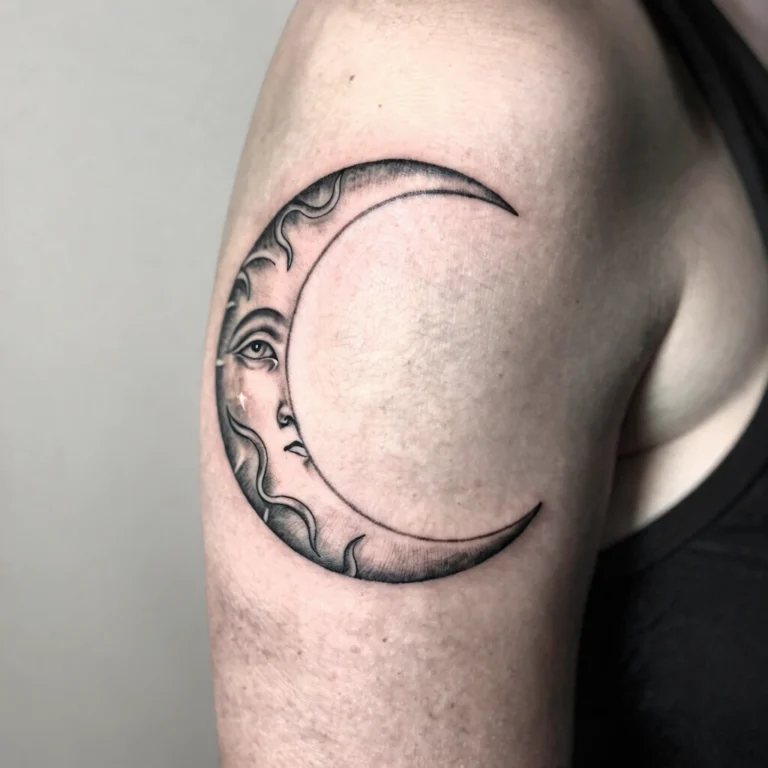
6. Negative Space Moon Phase Arc
This design uses negative space — meaning parts of the design are defined by what’s left unt attooed rather than what’s inked — to create a curved row of moon phases along the thigh. Thin outlines mark each moon’s edge, while the “shaded” portions are often small dot clusters or light cross-hatching rather than solid black. Because the visual impact depends on clean contrast between skin and ink, this design ages best on lighter and medium skin tones with even texture; ask your artist how they’d adjust line thickness for deeper skin tones so the contrast still reads clearly at a distance. Place it along the front or outer thigh in an arc four to seven inches wide. Pain runs low to moderate. This is an easy design to keep workplace-appropriate since it sits high enough to stay covered by shorts or a skirt hem.
7. Fine-Line Script Quote Tattoo
Lettering tattoos live or die on line consistency, which is why script needs a genuinely experienced fine-line artist rather than a general practice piece. Thin, even strokes with slightly tapered ends mimic handwriting, and there’s no shading at all — just clean linework. The upper thigh, positioned diagonally, gives enough length for a short phrase (four to six words) without cramming letters. Go too small and the ink will spread slightly during healing, turning delicate script into a smudgy mess — this is one of the most common regret-inducing mistakes with lettering. Pain is generally low to moderate on this fleshier area. Bring a printed mock-up of your exact phrase in the font style you want, not just a description — fonts translate very differently onto skin than on a screen. Script is a common choice for meaningful dates, names, or short mantras.
8. Dotwork Mandala Medallion
A mandala done in dotwork uses thousands of tiny dots at varying density to build a symmetrical, almost lace-like circular pattern. Unlike fine line work, which relies on continuous strokes, dotwork achieves its shading and texture purely through dot spacing — tighter dots read darker, spaced-out dots read lighter. This is genuinely time-intensive, so expect a longer sitting for anything over four inches. The front or side thigh is ideal since a mandala needs a stable, symmetrical base. Pain can climb toward moderate-to-higher on this one simply because of the repeated needle passes over a concentrated area. This design ages exceptionally well when done at the right density, since dotwork tends to hold its shape longer than very thin single lines. It’s a strong option if you want something with real visual weight without going full blackwork.
9. Blackwork Geometric Band Tattoo
Blackwork uses solid black ink and bold fill rather than thin outlines, so pairing it with fine line accents creates contrast — a geometric band around the thigh might use heavy black triangles alongside delicate connecting lines. This hybrid approach is worth discussing directly with your artist, since blending two techniques requires someone comfortable in both. Place a geometric band around the mid-thigh where the circumference is fairly even, sizing it as a continuous wrap for the cleanest look. Because solid blackwork saturates the skin more heavily, healing runs slightly longer than a pure fine line piece — often closer to three weeks. Pain tends to be moderate to higher on the areas with dense solid fill. This design works well for someone who wants a bolder statement piece but still wants some delicate detail mixed in, rather than going all-in on heavy blackwork.
10. Fine-Line Portrait Silhouette
A silhouette portrait — a profile or figure outlined in thin, uninterrupted line work with no interior detail — is deceptively hard to get right. The whole design depends on the artist’s ability to capture a recognizable shape using only an outline, so portfolio research matters more here than almost any other design on this list. Place it on the front thigh where the outline has room to sit clean and centered, at a size no smaller than three inches tall so the silhouette doesn’t lose its shape. Pain is low to moderate. This design suits meaningful tributes — a pet, a loved one, a self-portrait — without the emotional weight of a fully shaded realistic portrait. Ask to see healed (not just fresh) portfolio photos of silhouette work specifically, since fresh ink always looks crisper than settled ink.
11. Delicate Feather Trail Tattoo
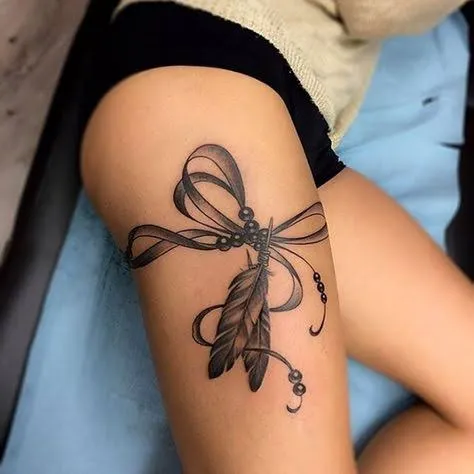
A feather trail uses graduated line weight — thicker near the quill, tapering to hair-thin strokes at the tip — to create a sense of movement and lightness. No shading is needed; the linework variation alone creates depth. This design flows naturally along the outer thigh, following the leg’s downward line for four to eight inches. Because the tapered tips are the thinnest part of the design, they’re also the first to soften with age, so ask your artist about slightly reinforcing those tip lines for longevity. Pain is generally low here. This is a popular choice for a first tattoo because it’s visually soft, low-commitment in size, and easy to keep private or visible depending on your outfit. From feathers, let’s move into botanical line trails.
12. Fine-Line Botanical Leaf Trail

Unlike the floral vine’s blossoms, a leaf trail keeps things simpler — repeated leaf shapes in consistent thin outlines, sometimes with a single interior vein line, running in a diagonal or vertical path. The repetition of near-identical leaf shapes is what makes this design read as intentional rather than random. It suits the side thigh especially well, following the natural taper of the leg. Sizing between five and nine inches keeps each leaf legible. Pain is low to moderate. This design ages gracefully because the shapes are simple and the linework is minimal — fewer thin details means fewer spots prone to blurring. It’s a solid pick if you want something botanical but less ornate than a full floral bouquet, and it pairs well as a “starter” piece before adding more elements later.
13. Abstract Sun Ray Burst Tattoo

An abstract sun done in fine line uses radiating straight or slightly curved lines from a central point, sometimes combined with small dotwork accents at the tips for texture. It’s a graphic, symmetrical design that reads well from a distance despite its thin lines. The front thigh, positioned centrally, gives the radiating lines room to spread evenly. A four-to-six-inch diameter keeps the rays distinct instead of crowding together. Pain sits in the low-to-moderate range. This design works particularly well for someone who wants a symbolic piece (new beginnings, energy, positivity) without literal imagery like flowers or words. Symmetry is unforgiving in linework, so this is a good moment to ask your artist how they plan the stencil — a well-placed stencil check before tattooing catches uneven spacing before it’s permanent.
14. Fine-Line Bird in Flight Tattoo
A bird mid-flight, rendered in thin continuous linework with minimal interior detail, captures motion through wing angle rather than shading. Some artists add a few short strokes to suggest feather texture, but heavy shading isn’t necessary and actually works against the lightweight feel. This piece suits the upper outer thigh, sized three to five inches so the wingspan doesn’t get lost. Pain is low to moderate. Birds in flight are common symbols for freedom, transition, or a lost loved one, making this a meaningful choice without needing an oversized or highly detailed design. It also works well as a small accompaniment piece if you’re planning to build a larger thigh composition over time — ask your artist how much space to leave around it for future additions.
15. Ornamental Lace Garter Design
A lace-inspired band wrapping around the upper thigh uses fine, intricate linework to mimic lace patterning — delicate loops, small florets, and thin connecting threads. This is one of the more technically demanding designs on this list because the pattern needs to stay symmetrical while wrapping around a curved, non-flat surface. It’s best suited to the upper thigh, close to where a garter would naturally sit, sized as a continuous band four to six inches tall. Pain can run moderate given the inner-thigh proximity for some people, where skin is thinner. This is a striking option for someone wanting something bold in detail but still soft in tone — not a design for a first-timer nervous about longer sessions, since the intricacy usually requires more sitting time.
16. Single-Line Continuous Portrait (One-Line Tattoo)
A one-line tattoo is drawn without ever lifting the “pen” conceptually — the entire image, whether a face, a figure, or an object, is one unbroken line. It’s a minimalist technique that depends entirely on the artist’s control, since there’s no shading or secondary linework to hide small mistakes. This style works well centered on the front thigh, sized four to seven inches so the single line doesn’t get too fine to follow. Pain is low to moderate. It’s an excellent option if you want something conceptually interesting and minimal — the “no shading, no color, one continuous stroke” concept is easy to explain to an artist and easy for viewers to appreciate even without knowing the technique’s name.
17. Fine-Line Insect Accent Tattoo
A small bee, dragonfly, or moth in fine line style uses thin, symmetrical wing outlines with light interior line detail — vein patterns on a dragonfly wing, for example — without solid color fill. These work well as standalone pieces or scattered in twos and threes across the thigh. Because insects have delicate features, keep the size at two to three inches minimum so wing and leg details don’t blur together during healing. Placement on the front or outer thigh keeps the detail visible and unlikely to distort with movement. Pain is generally low. This is a great low-commitment design for someone testing out fine line work for the first time, or for building a small collection of accent pieces around a larger central design over future sessions.
18. Watercolor-Fine-Line Hybrid Floral
This design pairs thin structural linework — the flower’s outline and stem detail — with soft, diffused color washes in the background to mimic a watercolor painting effect. It’s worth noting that watercolor-style color tends to fade and shift faster than solid black linework over the years, so this design typically needs more frequent touch-ups to keep the color vibrant. Best suited to the front or side thigh where there’s enough flat space for the color bleed to sit evenly. Size should be at least five inches to give the color wash room to breathe. Pain is moderate, partly due to the additional passes needed for color saturation. This is a good pick for someone who wants softness and color without going into a fully saturated, traditional-style tattoo.
19. Fine-Line Matching Sister/Friend Symbols
Small matching symbols — a shared shape, initial, or simple icon — done in identical thin line weight are a popular choice for sisters, best friends, or partners. The key technical detail here is consistency: both tattoos should use the same needle size and line weight so they visually match even if placed on different people with different skin tones. Placement on the same spot on each person’s thigh (say, upper outer thigh) reinforces the “matching” concept. Keep these small, generally one to three inches, since the symbolism matters more than intricate detail. Pain is low. This is a strong first-tattoo option for a pair or group, and because the design is simple, it tends to age cleanly with minimal blurring over the years.
20. Fine-Line Mountain Range Silhouette
A mountain range in thin, angular linework — sometimes with small dotwork shading to suggest depth on one side of each peak — makes for a striking horizontal piece along the thigh. The angular, geometric peaks contrast nicely with the softer floral and botanical options on this list, appealing to readers who want something nature-inspired but not delicate-looking. Place it horizontally on the outer or front thigh, sized six to nine inches to keep the peaks distinct. Pain is low to moderate. This design is a favorite for travel lovers, hikers, or anyone marking a specific place or memory, and it holds up well over time since the geometric shapes are more resistant to blurring than fine curved details.
Best Placement Ideas for a Fine Line Thigh Tattoo
Placement affects visibility, pain, and how easily you can keep the area clean during healing. Here’s how the main thigh zones stack up:
- Front thigh — high visibility when wearing shorts or swimwear, relatively low pain, and a stable flat surface that’s ideal for symmetrical designs like mandalas or sun bursts.
- Outer thigh — moderate visibility, low to moderate pain, and great for vertical or diagonal designs like vines, feathers, and leaf trails.
- Inner thigh — easy to conceal, but generally more sensitive due to thinner skin, and slightly harder to keep clean during healing since it can rub against clothing.
- Upper thigh (near hip) — good for band or wrap designs like lace patterns, moderate pain, easy to conceal with most clothing.
- Back of thigh — fully concealable, moderate pain, but harder to see for touch-up checks or aftercare monitoring since you can’t easily view it yourself.
Tips for Success
Start by reviewing an artist’s portfolio specifically for fine line and single-needle work — not just their overall style. Bold traditional or blackwork specialists don’t always have the steady hand or fine-tip equipment experience needed for hairline detail. Look for healed photos, not just fresh ink, since fine line work changes the most during the healing process. At your consultation, bring reference images that show line weight and composition clearly, describe the exact size in inches (not vague terms like “medium”), and ask directly what needle configuration they plan to use. A good fine-line specialist should be able to explain their approach in plain terms and shouldn’t be dismissive if you ask about longevity or touch-up plans.
Common Mistakes and How to Avoid Them
- Going too small for the detail level. Intricate linework, lace patterns, or dense dotwork need enough space to stay legible after healing — cramming detail into a tiny area is one of the most common regrets.
- Choosing a placement that fights the design’s geometry. A wrap-style design needs a curved, even surface; a straight linear design needs a flatter zone. Mismatching the two causes visual distortion over time.
- Skipping aftercare instructions. Fine lines are more vulnerable to blurring if the healing process isn’t handled carefully, since the ink sits closer to the surface.
- Copying a design exactly from Pinterest or Instagram without personalizing it. Beyond the ethical issue of copying another artist’s or client’s exact custom piece, an un-personalized flash design won’t necessarily fit your body’s proportions the way a custom stencil would.
Similar Variations
Almost every idea on this list can be resized or recombined. A single wildflower bouquet can shrink into a small accent piece near the knee or expand into a full thigh-to-hip composition. Script quotes can be recolored subtly with a single muted tone instead of pure black for a softer look. Geometric bands and mandalas can be combined into one continuous piece, or a feather trail and a bird in flight can be linked into a single narrative composition. If you like the idea of a design but not its exact size or angle, say so directly — a custom stencil built around your specific proportions will always fit and age better than a flash sheet applied as-is.
Aftercare Basics
Aftercare requirements vary by studio, so always follow the specific sheet your artist gives you over generic internet advice. In general, keep the area clean, avoid soaking it in water (pools, baths, long showers) during the initial healing window, avoid direct sun exposure on fresh ink, and don’t pick at any peeling skin. Wearing loose clothing over the area helps reduce friction, which matters more on inner-thigh or upper-thigh placements. If you notice anything that seems unusual during healing, contact your artist or a licensed dermatologist rather than guessing — healing time and reactions vary by individual, and general aftercare tips aren’t a substitute for professional advice.
Quick FAQ
How much does a fine line thigh tattoo cost?
Cost depends heavily on size, detail, and your artist’s rate, but small accent pieces often start in the low hundreds while larger, more intricate designs (mandalas, wraps, lace bands) can run several hundred dollars or more. Always get a direct quote during your consultation rather than assuming based on online estimates.
Does a fine line thigh tattoo hurt more than other styles?
Not typically — the thigh is generally considered a lower-to-moderate pain zone since it’s fleshy and has fewer nerve-dense or bony spots compared to areas like the ribs or ankle. That said, pain tolerance varies by individual, and inner-thigh placements tend to feel more sensitive than outer or front thigh.
How long does a fine line tattoo take to heal?
Most fine line thigh tattoos take roughly two to three weeks for surface healing, though full settling under the skin can take longer. Healing time varies by individual and design size, so follow your artist’s specific aftercare guidance rather than a fixed timeline.
Will a fine line tattoo fade faster than bold linework?
Generally, yes — thinner lines and lighter saturation are more prone to visible fading or blurring over the years compared to bold, heavily saturated blackwork. Many fine line pieces benefit from an occasional touch-up to keep details crisp long-term.
Fine Line vs. Bold Traditional vs. Dotwork: Know the Difference
- Fine line tattoo — Thin, precise strokes, typically using a single needle or small needle grouping, with little to no shading. Best for delicate, detailed designs but more prone to fading over time.
- Bold traditional tattoo — Thick, heavily saturated outlines with solid color fill, designed for maximum visibility and longevity. Less detail-dependent but visually louder.
- Dotwork tattoo — Shading and texture built entirely from small dots rather than continuous lines, often used for shading depth in mandalas or geometric pieces.
- Blackwork tattoo — Solid black ink used for bold shapes or dense pattern fill, often bolder and higher-contrast than fine line or dotwork alone.