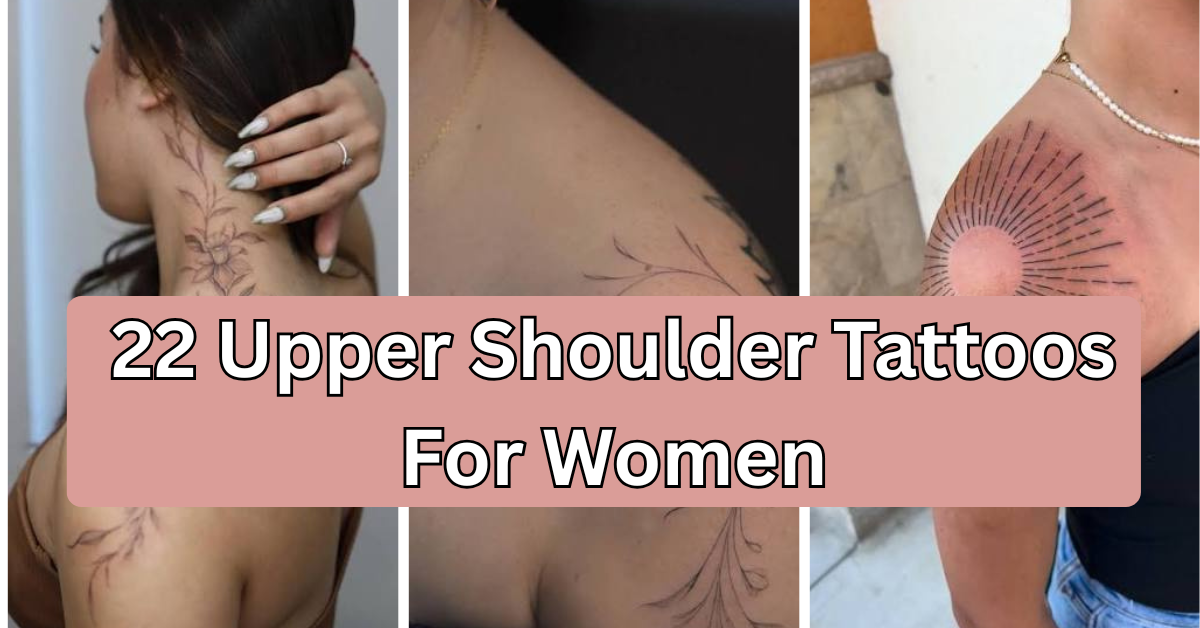
22 Upper Shoulder Tattoos For Women
Nervous about picking an upper shoulder tattoo you’ll still love in ten years? That’s a fair worry, and honestly, it’s one every good artist takes seriously too.
So what are the best upper shoulder tattoos for women? Fine-line florals, blackwork geometric shapes, dotwork mandalas, and small symbolic clusters tend to work best because the upper shoulder offers flat, stable skin that holds detail well and stays visible or hidden depending on what you wear. Curved placement also lets designs wrap naturally with the body instead of fighting it.
I’ve spent enough time hanging around studios watching consultations to know that the difference between a tattoo you love and one you regret usually comes down to placement, sizing, and how well you brief your artist — not just the design itself. Keep reading, and I’ll walk you through 22 real design ideas plus the placement, pain, cost, and aftercare details most lists skip entirely.
Why the Upper Shoulder Is Such a Smart Placement Choice
The upper shoulder sits at an interesting crossroads of visibility and control. You can cover it with a sleeve or strap top for work, then show it off with a tank top on the weekend. Skin here is generally less bony than the wrist or collarbone, which means the tattooing process tends to be more tolerable for most people, though pain tolerance genuinely varies person to person. The muscle and fat coverage also means linework and shading age a bit more evenly over the years compared to thinner-skinned areas like the ribs or ankle. It’s a forgiving canvas for everything from a tiny single-needle symbol to a full shoulder cap.
Before we get into the 22 designs, it helps to know the difference between a few core techniques you’ll hear artists mention.
Fine Line vs. Bold Traditional vs. Blackwork vs. Dotwork
Fine Line
: Uses a thin needle configuration to create delicate, low-saturation lines. Great for script, small botanicals, and minimalist shapes. Tends to fade faster than bold work over many years.
Bold Traditional
: Thick, confident outlines paired with heavy black shading and solid color fills. Ages slower because the ink saturation is denser, but it demands more visible space.
Blackwork
: Solid black shapes, heavy shading, or graphic patterns with little to no color. Reads well from a distance and holds up strongly over decades.
Dotwork
: Shading and texture built entirely from small dots instead of solid lines. Creates a soft, stippled gradient effect often used in mandalas and geometric pieces.
Fine-Line Floral Vine
A fine-line vine that curves along the top of the shoulder and toward the collarbone uses thin, consistent linework with minimal shading — sometimes just a touch of gray dot shading for depth on petals. It looks delicate without feeling fussy. This works best sized between 3 and 6 inches to keep individual leaves and flowers distinguishable once healing settles. Bring a reference photo of an actual vine or botanical illustration, not just a Pinterest tattoo, so your artist can adapt the linework to your shoulder’s curve. Pain here is generally moderate since the area has decent muscle coverage. It’s an easy first tattoo and hides well under a t-shirt sleeve for workplaces with visible-tattoo policies.
Blackwork Sun Rays
A blackwork sun uses solid black triangular rays radiating from a circular center, no shading gradient needed since the technique relies on flat, saturated black for contrast. This design reads well from a distance, which makes it a strong choice if you want something noticeable but still contained to one shoulder. Four to five inches across is typical. Ask your artist about line weight consistency across the rays — uneven thickness is the most common flaw in amateur blackwork. Expect moderate discomfort, similar to most shoulder placements. It suits people wanting a bold statement piece without committing to a full sleeve, and it holds its shape remarkably well over time since blackwork resists fading better than thin fine-line work.
Dotwork Mandala Shoulder Cap
This design wraps a circular, symmetrical pattern over the curve of the shoulder cap itself, built entirely from tiny dots that create gradient shading without any solid fill. The stippling technique gives it a soft, almost textured look up close. Because mandalas rely on symmetry, this placement genuinely benefits from the shoulder’s rounded shape — the curve enhances the radial design instead of distorting it. Size should be at least 4 inches to keep dot spacing legible as it heals. Dotwork sessions can run long, so ask about numbing options and expect the sensation to feel like a persistent buzzing rather than sharp pain. This is a striking choice for a first larger piece or a statement tattoo for special occasions.
Single-Needle Script Quote
Single-needle work uses one very fine needle to produce thin, almost hair-width lines, which makes it ideal for lettering that needs to stay legible without turning into a blob after a few years. A short quote or word curved slightly along the shoulder’s natural line looks intentional rather than slapped on. Keep script under 4 inches wide and choose a font your artist confirms will hold up — thin serif fonts sometimes blur faster than clean sans-serif styles. This is genuinely one of the less painful shoulder placements. It works great as a subtle, professional-friendly tattoo, though be aware single-needle lettering typically needs a touch-up sooner than bolder styles.
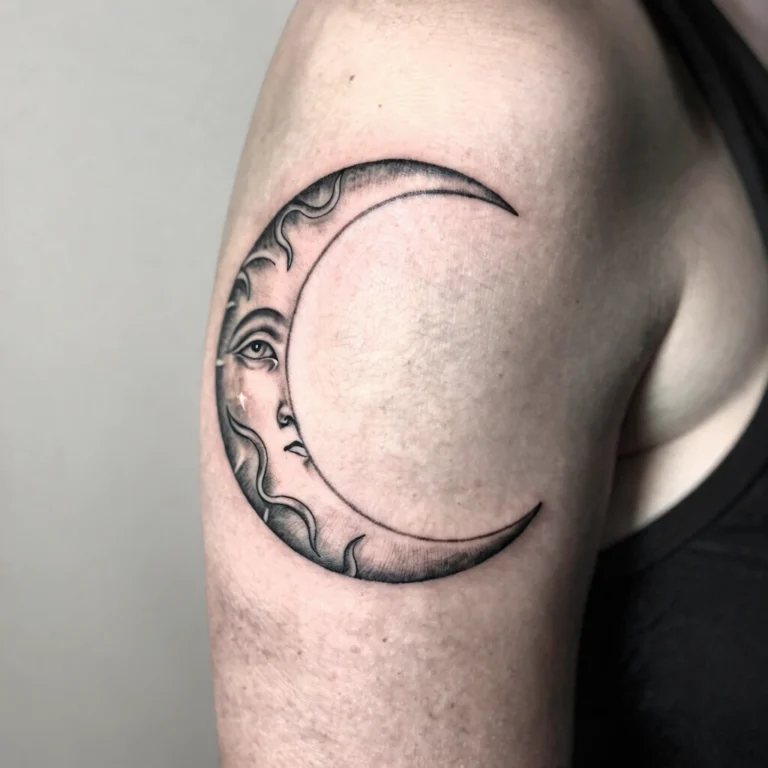
Negative Space Crescent Moon
Negative space tattooing uses the untouched skin itself as part of the design, letting a black shape wrap around an unshaded moon-like sliver to create contrast. Here, a crescent shape sits against a small blackwork circle, with the moon “carved out” by the skin showing through. It’s a clever technique that photographs beautifully but requires a genuinely skilled linework artist, since the surrounding black has to stay crisp for the negative space to read clearly years later. Keep it compact, around 2 to 3 inches. Discomfort is moderate. This design suits people who want something symbolic and understated for everyday visibility, and it transitions nicely into a matching tattoo idea for close friends or sisters.
Soft Watercolor Wildflower Cluster
Watercolor-style tattoos use diluted color saturation and soft edges to mimic paint bleeding on paper, often layered over or beside fine-line flower outlines for structure. A small wildflower cluster near the top of the shoulder gets color without looking like a cartoon. Because color pigment tends to fade faster than black ink, ask your artist about which pigments hold saturation longest in their experience, and plan on more frequent touch-ups than a blackwork piece. Size around 3 to 5 inches works well. Expect moderate pain, slightly more if color passes are layered repeatedly. This is a good pick if you want softness and color without full realism.
Minimalist Geometric Triangle Trio
Three simple triangles, varying slightly in size, arranged in a diagonal line across the shoulder use clean, even linework with sharp corners and zero shading. The appeal here is restraint — no clutter, no unnecessary detail, just geometry. Keep the largest triangle under 2 inches so the trio doesn’t overwhelm the shoulder’s curve. A good actionable tip: ask your artist to draw the stencil directly on your skin before tattooing so you can check the spacing looks balanced from multiple angles. Pain is generally mild to moderate. This design ages exceptionally well since there’s little fine detail to blur, making it a smart low-maintenance choice for a first tattoo.
Fine-Line Fern Branch
A single fern branch, rendered in fine line with small leaflets branching off a central stem, follows the natural downward slope of the shoulder toward the arm. The leaflets get progressively smaller near the tip, which requires a steady hand to keep proportions believable. This design works at 3 to 5 inches. Bring your artist a botanical reference rather than a stylized cartoon fern — real plant structure translates better into tattoo form. Discomfort is typically moderate. It’s a quiet, nature-inspired option that works well in professional settings and pairs nicely with other botanical pieces if you plan to build out a larger collection over time.
Bold Traditional Rose
Traditional-style roses use thick black outlines, bold red or black shading, and minimal fine detail, favoring graphic impact over realism. A single rose sized 4 to 6 inches on the upper shoulder gives the shading room to breathe. This style has been around for decades because it holds up so well on skin — thick lines and heavy saturation resist the blurring that fine detail suffers from. Ask to see healed photos in your artist’s portfolio, not just fresh ink, since traditional work looks different once it settles. Expect moderate to firm pressure sensations throughout. It’s a confident, classic choice for anyone wanting a statement piece that won’t look dated after a decade.
Fine-Line Star Constellation
A scattering of small dots connected by delicate lines to form a constellation shape uses fine-line technique for both the connecting lines and the tiny star points. This design plays with the natural spread of the shoulder area, letting stars trail toward the collarbone or upper arm. Keep individual stars small, under a quarter inch, but let the overall spread reach 4 to 6 inches for visual interest. A useful tip: pick a real constellation meaningful to you rather than a random pattern, and share the exact star coordinates with your artist for accuracy. Pain is generally mild. This is a popular matching tattoo option for friends who want personal but coordinated symbolism.
Abstract Linework Ocean Wave
A single continuous line curling into a wave shape, done in consistent fine-line or medium-weight linework, captures motion without needing shading or color. The technique relies entirely on line flow — where it thickens, thins, and curves — to suggest movement. This works well following the shoulder’s slope, sized 3 to 5 inches. Ask your artist about “line confidence,” meaning how steady and unbroken the stroke stays; wavy or shaky linework is the biggest risk with this minimalist style. Expect mild to moderate discomfort. This design is subtle enough for daily visibility at work and symbolic for anyone connected to the ocean, travel, or change.
Delicate Butterfly Silhouette
@tattoo_rana_bnd
A butterfly rendered as a solid black silhouette, rather than detailed wing patterns, uses blackwork’s flat saturation to keep the shape clean and graphic. Some versions add a few fine-line accent details inside the wings for texture without breaking the solid silhouette look. Sized around 2 to 4 inches, it sits nicely on the curve near the shoulder’s edge. A practical tip: request a slightly asymmetrical wing position rather than a perfectly mirrored one — it reads as more natural and less like clip art. Pain runs mild to moderate. This design is a common first-tattoo choice because it’s simple, quick to complete, and ages cleanly thanks to the solid black fill.
Bold Blackwork Geometric Band
A geometric band wrapping partially around the shoulder combines straight linework with solid black triangular or diamond fills, creating a graphic pattern with real visual weight. This design leans into the shoulder’s natural curve, using the body’s shape as part of the composition instead of fighting it. Plan for a band at least 2 inches wide and long enough to wrap comfortably, usually 5 to 8 inches. Discuss symmetry carefully with your artist since any tilt becomes obvious once it wraps around a curved surface. Expect moderate discomfort, more where the band crosses over muscle. This is a strong option for anyone wanting a bold, sleeve-adjacent piece without going further down the arm.
Dotwork Feather with Shading
A feather built through dotwork shading creates a soft gradient along each barb without a single solid line, giving it a textured, almost hand-drawn look. This technique takes longer than linework because of the density of dots needed for smooth shading transitions. A feather sized 4 to 6 inches, angled diagonally along the shoulder, gives enough length for the gradient to show properly. Ask your artist to show you close-up healed photos of prior dotwork, since this technique can look patchy if spacing is inconsistent. Expect a buzzing, repetitive sensation rather than sharp pain. It’s a thoughtful, textured alternative to the more common fine-line feather design.
Fine-Line Snake Wrap Design
A slim snake, rendered in fine line with small scale details near the head, wraps diagonally across the top of the shoulder, using the body’s curve to suggest natural movement. This design needs a longer canvas, so 5 to 7 inches works better than a cramped smaller version. A helpful tip: ask your artist to sketch the snake directly on your skin first, since the wrap angle changes how the design reads depending on arm position. Pain runs moderate along the length. Snake designs carry symbolic weight around transformation and renewal for many people, and the elongated shape ages well since the linework stays relatively simple throughout.
Matching Symbol Cluster
A small cluster of two or three meaningful symbols — maybe an icon, an initial, and a tiny shape — grouped closely together in consistent fine-line or single-needle style works well for matching tattoos between friends or sisters. Keeping every element under an inch keeps the composition tight and readable. A smart approach: agree on one shared design element (like line weight or a single symbol) rather than copying the exact same tattoo, so each person’s version still feels personal. Pain is generally mild given the small scale. This is one of the most requested upper shoulder concepts for group or friendship tattoos because it’s low-commitment and easy to schedule together.
Sacred Geometry Linework Pattern
Sacred geometry designs use precise, symmetrical linework — think interlocking circles, triangles, or hexagonal patterns — requiring careful measurement rather than freehand style. This precision makes stencil accuracy critical, so double-check proportions with your artist before the needle touches skin. A 4 to 6 inch pattern gives enough room for the geometry to stay crisp. Expect moderate discomfort, particularly where lines cross repeatedly over the same skin area. This design suits people drawn to symbolism and balance rather than pure decoration, and because it relies on clean lines rather than fine detail, it tends to age more gracefully than delicate botanical work.
Fine-Line Name or Date Script
A meaningful name, date, or short phrase in fine-line script sits cleanly along the collarbone-facing side of the shoulder, where skin stays relatively flat for legible lettering. Cursive fonts look elegant but can blur faster over time than simple block lettering, so ask your artist directly which style holds up better long term based on their experience. Keep it under 4 inches for the cleanest healing result. Pain is typically mild to moderate. This is a common memorial or milestone tattoo, and because lettering shows wear more visibly than shapes, plan on a touch-up appointment within a few years to keep it sharp.
Custom Floral Shoulder Cap
For something larger, a custom floral cap covers the rounded top of the shoulder with a mix of fine-line outlines and soft dot or gray-wash shading for depth. This is a genuine custom design project, not a flash piece off the wall, so expect at least one consultation to map out flower placement around your specific shoulder shape. Sizing typically runs 6 inches or more. Multiple sessions may be needed depending on detail density. Discomfort builds as sessions get longer, so ask about breaks during the appointment. This is a strong option for someone ready to commit to a larger, statement-level piece rather than a small accent tattoo.
Minimalist Bird in Flight
A single bird sketched in a few clean fine lines, wings mid-motion, uses negative space and line economy rather than feather detail to suggest flight. The whole point of this style is restraint — fewer lines, more impact. Sized 2 to 4 inches, it fits neatly without overwhelming the shoulder. A good tip: ask for a slightly off-center wing angle instead of a symmetrical pose, since real flight rarely looks perfectly balanced. Pain stays mild given the small scale and light linework. It’s a popular, low-commitment symbolic tattoo for freedom or new beginnings, and its simplicity means it barely changes in appearance even a decade later.
Fine-Line Sun and Moon Duo
A small sun and moon placed side by side, connected by a thin line or slight overlap, uses fine-line detailing for the sun’s rays and simple shading for the moon’s curve. This design plays with contrast and balance, a popular symbolic pairing. Keep the pair under 3 inches total so the detail doesn’t get lost. A practical tip: request slightly different line weights between the two elements so they read as distinct symbols rather than blending into one shape. Pain is mild to moderate. It works well as a matching design for couples or friends who want complementary rather than identical tattoos.
Blackwork Silhouette Figure
A solid black silhouette — a dancer’s pose, a simple figure, or an abstract human shape — uses flat blackwork fill to create striking contrast against skin tone. Because the shape relies entirely on outline and fill rather than internal detail, proportion and posture matter enormously; a stiff or awkward silhouette will look off no matter how clean the black fill is. Bring multiple reference angles to your consultation so your artist can adjust the pose before stenciling. Sized 3 to 5 inches, expect moderate pain from the solid fill work. This design suits anyone wanting bold, graphic symbolism without literal detail, and it ages remarkably well thanks to blackwork’s strong ink retention.
Best Placement Ideas
- Top of shoulder curve — highly visible in tank tops, moderate pain, easiest to keep clean during healing
- Shoulder blade edge blending toward the back — easier to hide at work, slightly harder to see for touch-up checks
- Front shoulder near collarbone — great for lettering and symmetry, more visible in most clothing
- Wrapping toward the upper arm — good for larger or elongated designs, longer healing surface to manage
- Directly on the shoulder cap — ideal for circular or radial designs like mandalas, moderate skin movement during healing
Tips for Success
Look for an artist whose portfolio shows consistent line weight and clean healed photos, not just fresh, glossy ink shots. Healed photos tell you how the work actually settles into skin. Book a consultation and bring reference images, a rough size range, and any placement concerns you have — a good artist will adjust the design to fit your body rather than just copying a flash sheet. Ask direct questions: What needle configuration will you use? How many sessions will this realistically take? Walk-in flash designs work fine for small, simple pieces, but anything with custom lettering, wrapping composition, or specific symbolism deserves a proper custom booking instead.
Common Mistakes and How to Avoid Them
- Going too small for detailed designs — fine botanical or mandala work needs enough space for lines to stay separated as they heal
- Ignoring how the design wraps the curve — a design drawn flat on paper can look distorted once it follows the shoulder’s natural roundness
- Skipping aftercare instructions — every artist gives a specific sheet; follow theirs over generic internet advice
- Copying a design exactly from a photo — personalizing even one small element makes the piece feel like yours instead of a duplicate
- Not asking about touch-ups upfront — fine-line and color work in particular often need a follow-up session within a couple of years
Similar Variations
Nearly every design above can shift with the details. A fine-line floral vine can go blackwork for more graphic contrast, or shrink down to a single-needle version for subtlety. A bold traditional rose can lose the color and become a solid black silhouette instead. Dotwork mandalas can scale up into a full shoulder cap or down into a coin-sized accent piece. Matching symbol clusters can swap shared elements for each friend while keeping the overall composition style consistent. The technique and placement principles stay the same — it’s the size, saturation, and color choices that flex to match your personal style.
Aftercare Basics
General dermatological consensus recommends keeping a new tattoo clean, moisturized, and protected from direct sun exposure during healing. Most healing timelines run two to four weeks for the surface to settle, though full healing underneath can take longer, and this varies by individual and by design size. Avoid soaking the area in pools or baths early on, and skip tight clothing that rubs against fresh ink. Always follow the specific aftercare sheet your artist provides, since products and instructions can differ between studios, and consult a licensed professional or dermatologist if you notice anything that concerns you.
Quick FAQ
How much does an upper shoulder tattoo typically cost?
Small fine-line or single-needle pieces often start in the low hundreds, while larger custom shoulder caps or detailed blackwork pieces can run several hundred dollars or more, depending on your artist’s hourly rate and session count.
How painful is the upper shoulder compared to other placements?
Most people describe it as moderate — less intense than bony areas like the ribs or ankle, though individual pain tolerance varies quite a bit.
How long does healing usually take?
Surface healing generally takes two to four weeks, with full settling underneath sometimes taking a bit longer depending on size and aftercare consistency.
Do these designs fade or need touch-ups?
Fine-line and color work tend to soften over time and may need a touch-up within a few years, while blackwork and bold traditional styles generally hold their saturation longer.
Choosing from these 22 upper shoulder tattoos really comes down to matching the technique to what you actually want long-term — subtlety, symbolism, boldness, or something you can share with a friend. Take your time, ask real questions in your consultation, and remember that a good upper shoulder tattoo should feel like it was made for your body, not just picked off a wall.