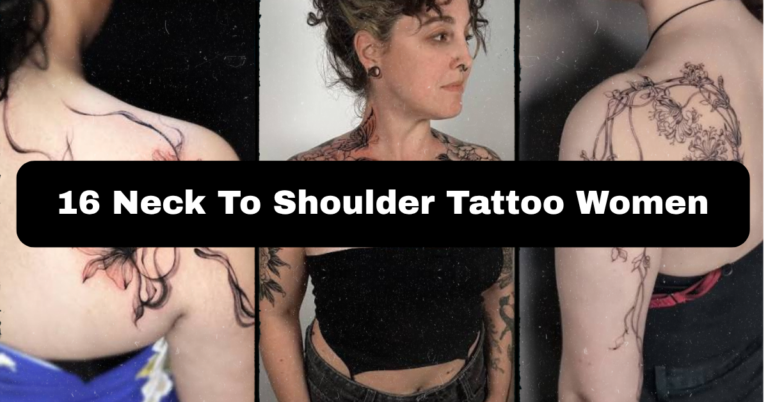
21 Goth Chest Tattoo Ideas That Actually Hold Up Over Time
Thinking about a goth chest tattoo but worried you’ll end up with something that looks muddy in five years or hurts way more than you expected? I get it — chest skin is unpredictable, and a lot of “inspiration” articles just show pretty pictures without telling you what actually happens once the needle touches skin. This one’s different. I’ve spent enough time around studios watching consultations, healing check-ins, and touch-up appointments to know what separates a goth chest piece that ages well from one that turns into a blurry regret.
So what are the best goth chest tattoo ideas? The strongest options use blackwork, dotwork, or fine-line linework built around gothic motifs — crosses, roses, skulls, moths, cathedral arches, and ornamental script — sized large enough to hold detail as skin stretches and ages. Bold, saturated black ink and clean negative space (areas left bare to create contrast) tend to outperform delicate designs on the chest specifically, since this area sees more movement and sun exposure over a lifetime than most.
Stick around, because I’m also covering pain levels by placement, realistic healing timelines, what to actually say to your artist during a consultation, and the mistakes that turn a great goth design into a faded mess.
Why Gothic Chest Designs Work So Well as a Category
Gothic imagery — think cathedral architecture, Victorian mourning symbols, ornamental crosses, and dark florals — has always leaned on strong contrast and symmetry. That makes it a natural fit for the chest, which is a wide, mostly flat canvas that rewards bold composition. Unlike a forearm or calf, the chest doesn’t curve sharply, so an artist can build a piece that reads as one cohesive image instead of something broken up by anatomy. The trade-off is that chest skin can be thinner over the sternum and more padded near the pecs and underarm, which affects both pain and how ink settles. Let’s get into the specific designs.
Blackwork Gothic Cross Chest Piece
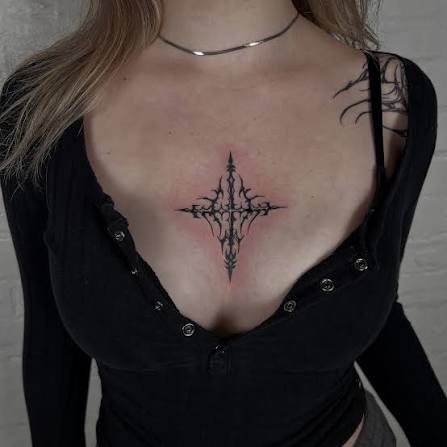
A blackwork cross uses solid black fill rather than shading gradients, which means the artist packs the outline and interior with dense, saturated ink instead of blending gray tones. This gives you a piece that reads clearly from across a room and resists fading better than fine gray-wash shading, since solid black holds up longer under UV exposure and skin turnover. Best placed centered on the sternum or slightly offset over one pec, sized at least 4-5 inches so the crossbar detail doesn’t clog up as it heals. Bring a reference photo showing the exact line thickness you want — thin lines on a large blackwork piece can look inconsistent once swelling goes down. Expect moderate-to-high discomfort directly over the sternum bone. Not the most work-friendly placement if you wear low necklines often, but it ages remarkably well long-term.
Fine-Line Gothic Rose Chest Tattoo
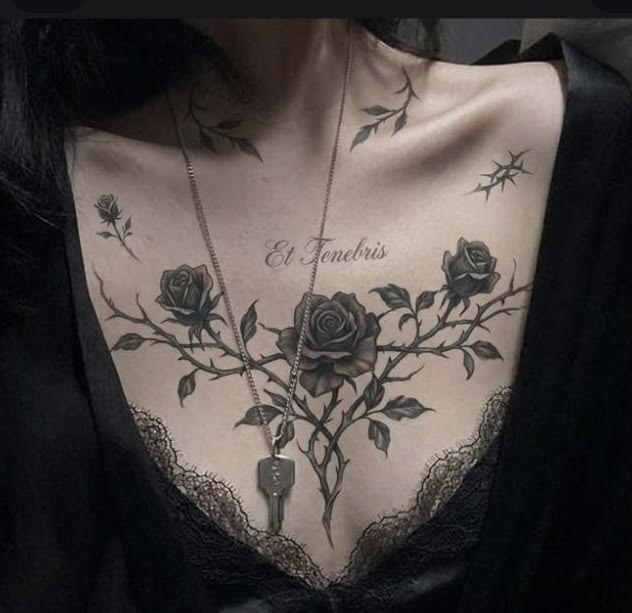
Fine-line work uses a smaller needle configuration to create thin, precise strokes, giving roses a delicate, almost etched look instead of the bold traditional style most people picture. For a goth aesthetic, artists often darken the rose with deep shading and add thorny, angular stems rather than the classic rounded traditional version. This works best on the upper chest near the collarbone, sized 3-4 inches, because too small and the petal linework fuses together after a few years as skin ages. Ask your artist about single needle configurations for the finest details and confirm they’ve done fine-line healing before, since thin lines fade faster than bold linework if aftercare slips. Pain here tends to be sharp but brief near the collarbone. Great first-tattoo option if you want something subtle enough for most workplaces.
Dotwork Skull Chest Mandala

Dotwork builds shading and texture entirely from small dots instead of solid lines or gradients, creating a stippled, almost engraved look that suits a skull surrounded by mandala-style geometric framing. It’s slower to tattoo than blackwork or linework, so budget extra session time and expect the artist to work in sections. Centered on the sternum with radial symmetry, this piece typically needs 5-6 inches minimum to keep dot spacing readable instead of looking like a gray smudge. A good tip: ask to see healed dotwork photos in your artist’s portfolio specifically, not just fresh photos, since dotwork is notorious for losing crispness if the artist doesn’t space dots correctly. Sternum pain is real here — many people rate it among the more intense chest spots. This design suits people who want something meaningful and slow-built rather than quick and simple.
Gothic Lettering Chest Tattoo
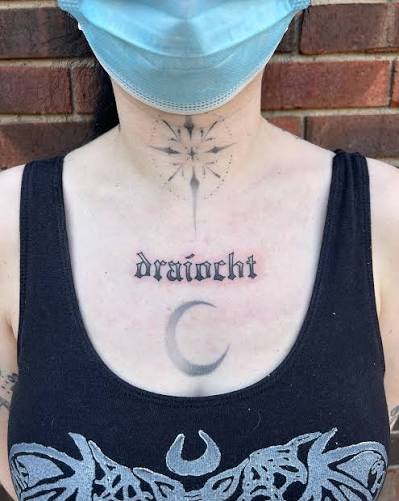
Old English or blackletter script across the collarbone or upper chest turns a phrase, name, or single word into a bold visual statement. The technique matters a lot here — thick blackwork lettering holds up far better over time than thin script, which tends to blur at the edges within a decade. Placement along the collarbone works well for a horizontal read, sized so each letter is at least half an inch tall. Bring a printed version of your exact wording and double-check spelling before the stencil goes on skin — lettering mistakes are the single most common regret in tattoo shops. Collarbone placement is bony and tends to rank as more painful than the soft chest area beside it. This one transitions easily into a group or matching tattoo if a few people want the same phrase in different sizes.
Negative Space Bat Chest Design
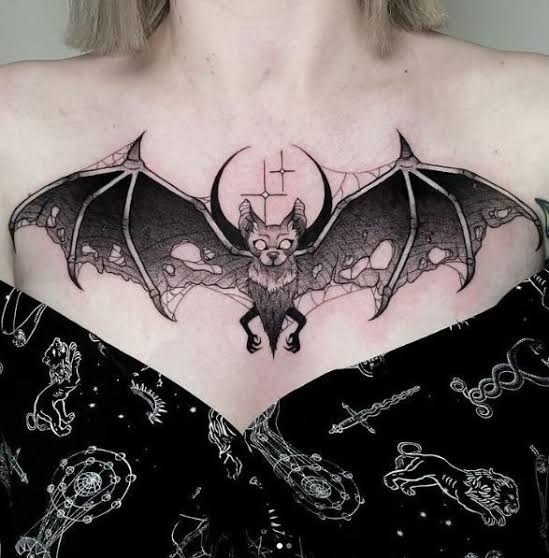
Negative space tattooing uses the untouched skin itself as part of the image, so instead of outlining a bat with black lines, the artist tattoos the background dark and leaves the bat shape as bare skin. It’s a striking, less common technique that reads as almost sculptural against a solid black backdrop. This needs a confident, experienced blackwork artist, since precision matters more here than in a standard outline — any wobble in the negative shape is very visible. Chest placement over one pec works well, sized 4-5 inches, and it holds up nicely on lighter and medium skin tones since the contrast comes from the surrounding black, not the linework itself. Solid black fill on this scale means longer sessions and more discomfort overall. This design leans bold, so it’s a poor fit if you need to keep ink hidden at work.
Blackwork Spider Web Chest Piece
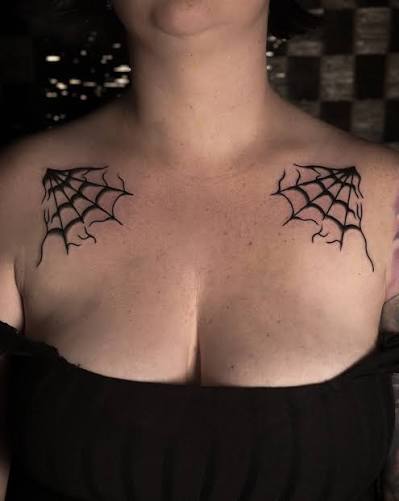
A spider web design uses radiating straight lines and connecting curved threads, usually anchored at the collarbone or shoulder and spreading across the upper chest. Bold blackwork lines work better than fine-line here because the geometric repetition needs consistent weight to look intentional rather than sketchy. Size it to cover at least a hand’s width of space so the web pattern doesn’t collapse into a tangle as it heals. A practical tip: ask your artist to slightly vary line thickness between the anchor threads and the connecting strands, which adds depth without needing gray shading. Upper chest and collarbone rank higher on the pain scale due to thin skin over bone. Popular as a first larger goth piece since the linework is graphic and reads well even at a moderate size.
Single Needle Gothic Cathedral Tattoo
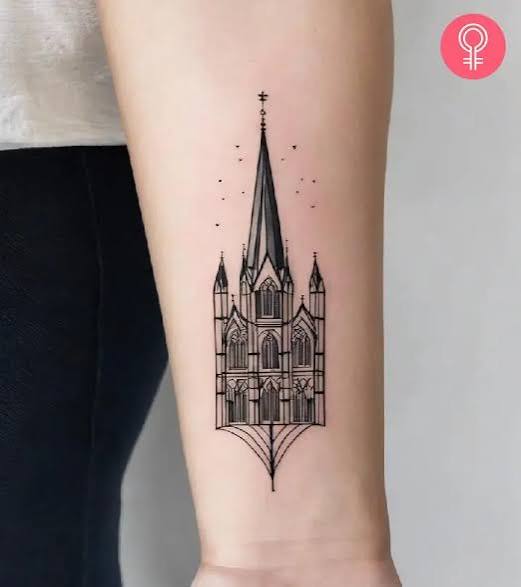
Single needle technique is essentially an extreme version of fine-line work, using one needle point to create ultra-thin, almost pen-drawn lines. Applied to gothic cathedral architecture — arched windows, spires, ornate doorways — it creates an etching-like quality that mimics old engravings. This detail level needs real estate, so plan on at least 5 inches of chest space, ideally centered vertically from the collarbone down toward the sternum. Because the lines are so thin, ask specifically about touch-up policy before booking, since single needle work statistically fades faster and may need a refresh within a few years. Sternum pain is significant with this placement given the bone proximity. This style suits people drawn to detailed, almost illustrative goth art rather than bold graphic shapes.
Ornamental Dagger Chest Tattoo
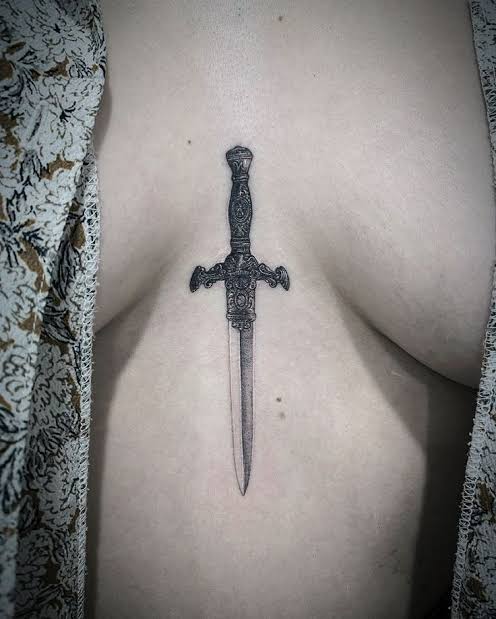
A dagger piece combines bold blackwork for the blade and hilt with ornamental filigree — decorative swirling linework — wrapped around the handle or blooming out from the crossguard. The contrast between heavy black fill and delicate surrounding line detail is what gives this design its goth-traditional feel. Diagonal placement across one pec, angled toward the sternum, tends to look more dynamic than a straight vertical dagger. Size it at 4-6 inches to keep the filigree from crowding. Bring reference images of both traditional dagger tattoos and Victorian ornamental patterns so your artist can blend the two styles intentionally instead of guessing your taste. Pec placement is generally more tolerable than sternum or collarbone. Works well as a statement piece for someone who already has other chest or arm tattoos to tie into.
Gothic Moth Chest Piece
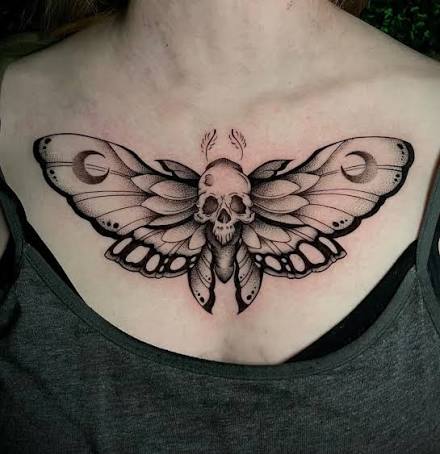
Moths have become a goth tattoo staple because their wing patterns naturally support intricate shading and symmetry without needing added ornamentation. Artists typically use a mix of fine-line detailing on the wing veins and heavier blackwork or dotwork shading for the darker wing sections, creating visual depth in one image. Centered on the sternum with wings spreading toward each pec, this design needs 5+ inches to keep the wing texture from muddying. A solid tip: ask whether your artist prefers dotwork or traditional shading for the wing gradients, since this changes both the healing texture and long-term fading pattern. Sternum-centered pieces sit in the higher pain range. Moths photograph well and suit people who want symbolism (transformation, mortality, drawn to darkness) without an overtly “scary” image.
Bold Traditional Gargoyle Chest Tattoo
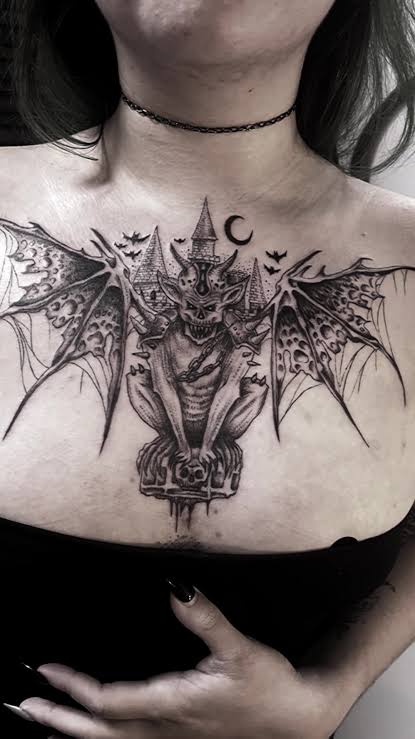
Bold traditional style uses thick black outlines, limited shading, and often a bit of muted color, which gives a gargoyle chest piece a classic tattoo-parlor look rather than a delicate illustrative one. This is one of the more forgiving styles for long-term aging, since thick lines and solid fill resist the blurring that thinner styles experience over decades. Best placed on one pec or centered on the sternum, sized 4-5 inches minimum to keep the gargoyle’s facial detail from closing up. Bring flash-style reference art (pre-drawn traditional designs) if you want a faster walk-in booking rather than a fully custom piece. Pec placement tends to be more bearable than direct sternum work. This is a strong pick for a first larger tattoo since bold traditional heals predictably and holds detail well.
Fine-Line Rosary Chest Tattoo
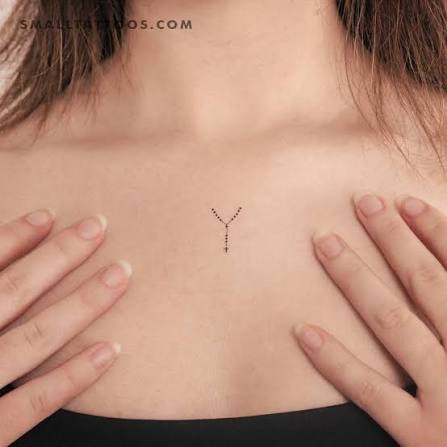
A rosary draped across the collarbone or down the sternum uses fine-line beadwork and a small cross or crucifix pendant, blending religious and gothic aesthetics. The challenge with this design is bead spacing — too tight and the beads blur together after healing, too loose and the chain looks disconnected. A vertical placement down the center of the sternum, roughly 6-8 inches long, gives enough room for each bead to stay distinct. Ask your artist about slightly increasing bead size compared to the reference photo, since fine details shrink visually once swelling subsides. Sternum placement here ranks moderately painful. This design works nicely as a subtle statement piece that reads as elegant rather than heavy, good for people who want goth aesthetics without full blackwork coverage.
Blackwork Ouija Planchette Chest Design
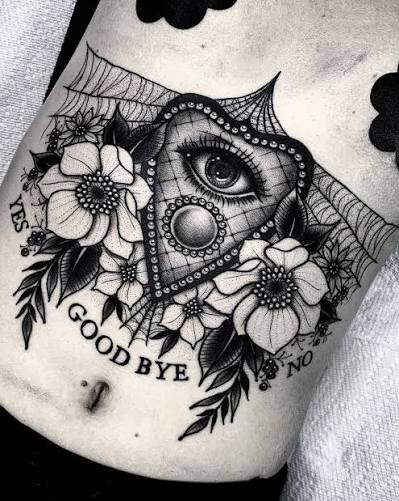
The ouija planchette (the pointer piece used on a spirit board) makes for an unusual, graphic-shaped tattoo when rendered in bold blackwork with a small negative-space eye or star cutout in the center. It’s a strong choice for someone who wants a genuinely uncommon design rather than a repeated Pinterest favorite. Placement works best angled across one pec, sized around 4 inches, since the pointed shape needs room to stay crisp. A useful booking tip: request a custom stencil rather than a generic flash version, since planchette proportions vary a lot and a slightly-off angle changes the whole read of the design. Pec placement is moderately painful compared to sternum or collarbone. This design suits people who already know their symbolism and don’t need it explained — it’s a quieter, insider kind of goth reference.
Dotwork Raven Chest Tattoo
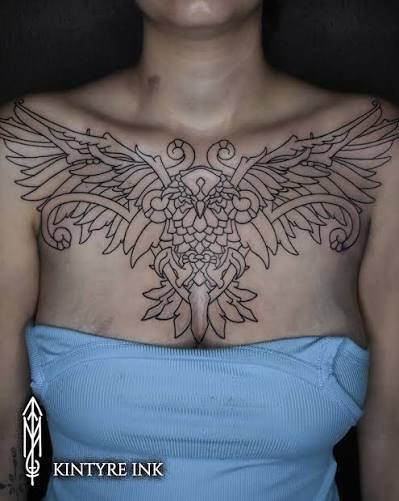
Ravens rendered in dotwork get a textured, almost feathered look built entirely from dot density — heavier dot clusters create shadow, sparser dots create lighter feather sections. This technique takes patience from both artist and client since dotwork sessions run long, but the payoff is a piece with genuine depth instead of flat shading. Placement over one pec with the wings angled toward the shoulder gives the design room to breathe, ideally 4-5 inches across. Confirm with your artist how they handle dot spacing on curved pec muscle, since dotwork can distort slightly on rounded areas if not planned carefully. Pec placement tends to be moderately tolerable. This design ages into something almost illustrative and suits people wanting a nature-meets-goth combination rather than pure ornamental imagery.
Gothic Ornamental Filigree Chest Frame
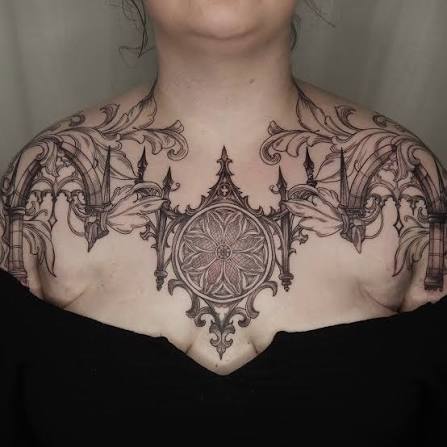
Instead of one central image, a filigree frame uses swirling blackwork linework to outline the chest area, almost like an ornate picture frame that other tattoos (or bare skin) sit inside. This is a strong option if you’re planning future chest pieces and want a cohesive structure to build around later. Line weight should stay moderately thick throughout — thin filigree lines are notorious for fading unevenly and looking patchy after several years. Placement spans the upper chest, following the collarbone curve on both sides, and works on nearly any chest size since the pattern scales. Ask your artist to sketch the frame directly on your skin before finalizing so the proportions match your actual chest shape, not just a flat reference photo. Collarbone-adjacent placement runs moderate to high on pain. Great planning tool for a larger goth chest piece built over multiple sessions.
Skeletal Hand Chest Tattoo
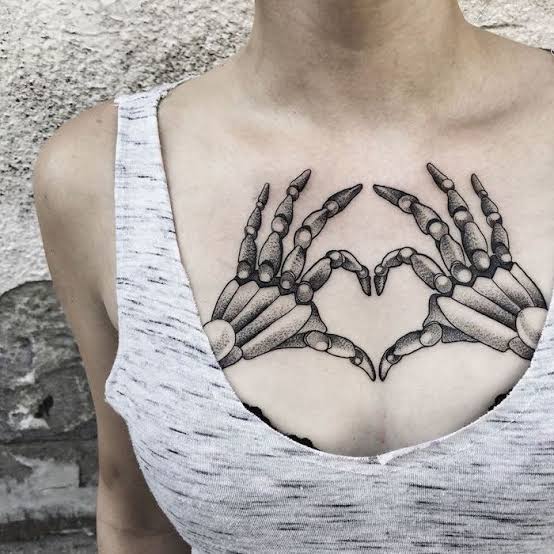
A skeletal hand, sometimes shown gripping a rose, chain, or dagger, combines bold blackwork bone structure with fine-line detailing for finger joints and small cracks. This mix of techniques within one piece is what gives it visual complexity without needing color. Best placed on the upper pec or angled across the sternum, sized 4-5 inches so joint details don’t blur together during healing. A solid tip: ask specifically about bone shading technique, since some artists use dotwork stippling for a more textured bone look while others prefer smooth gradient shading — both look different once healed. Sternum placement is more painful than pec placement for most people. This design carries strong memento mori (a reminder of mortality) symbolism, making it a good fit for someone drawn to reflective rather than purely decorative goth imagery.
Gothic Snake and Dagger Chest Piece
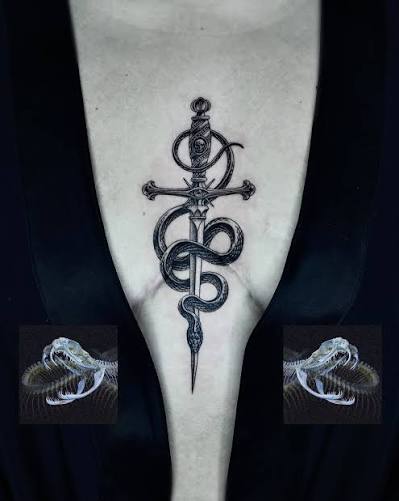
Combining a coiled snake with a dagger creates a dynamic diagonal composition that fills chest space naturally, using bold blackwork for the dagger and either fine-line scales or dotwork shading for the snake’s texture. The visual tension between the straight dagger lines and curved snake body is what makes this design feel balanced rather than cluttered. Diagonal placement across one pec toward the sternum works best, sized 5-6 inches to keep scale detail from disappearing. Bring two separate reference images — one for the dagger style, one for snake texture — so your artist can merge them into one custom stencil instead of copying an existing design exactly. Pec-to-sternum placement varies from moderate to high pain depending on how much crosses bone. This piece suits people wanting a bold, slightly aggressive goth statement rather than something quiet or symbolic.
Gothic Candelabra Chest Tattoo

A candelabra with dripping wax and small flames gives a Victorian, almost gothic-horror feel, rendered using bold blackwork for the metal structure and softer fine-line or light dotwork shading for the wax drips and flame glow. Vertical placement down the center of the chest, from collarbone toward the sternum, mirrors the natural shape of a standing candelabra. Size it at least 5 inches tall so the flame and wax detailing stay legible. A practical tip: ask your artist to add subtle shading gradients rather than solid black wax drips, since flat black wax can look more like a blob than a candle once healed. Collarbone-to-sternum placement ranks high on discomfort since it crosses bony areas. This design pairs well with other Victorian or mourning-themed pieces if you’re planning a larger connected goth chest collection.
Gothic Stained-Glass Style Chest Tattoo
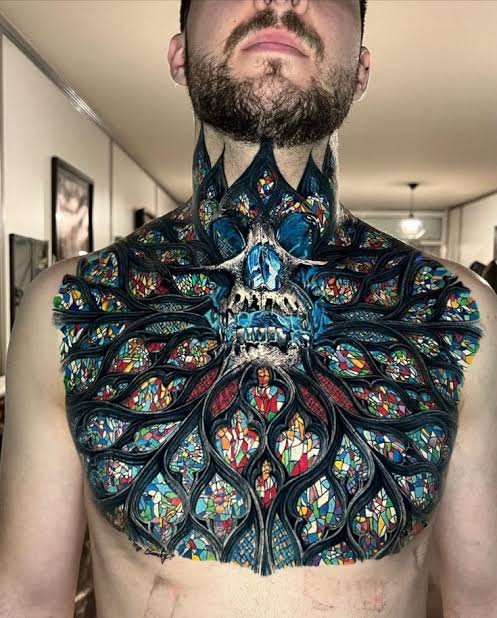
This design mimics stained-glass window paneling using bold black linework to create segmented “panels,” sometimes with light gray or muted color washes inside each section rather than full saturation. It’s one of the more structurally complex goth designs because the panel lines need to stay evenly spaced for the illusion to work. Full chest placement, spanning collarbone to lower sternum, needs serious size — think 7+ inches — to keep each panel section from collapsing into noise. Ask your artist about using a slightly desaturated color palette instead of bold color if you want the piece to read as gothic rather than decorative stained glass. This is one of the most painful chest tattoo options simply due to size and bone coverage. Best suited for someone who has already sat through smaller pieces and knows their pain tolerance.
Memento Mori Chest Tattoo
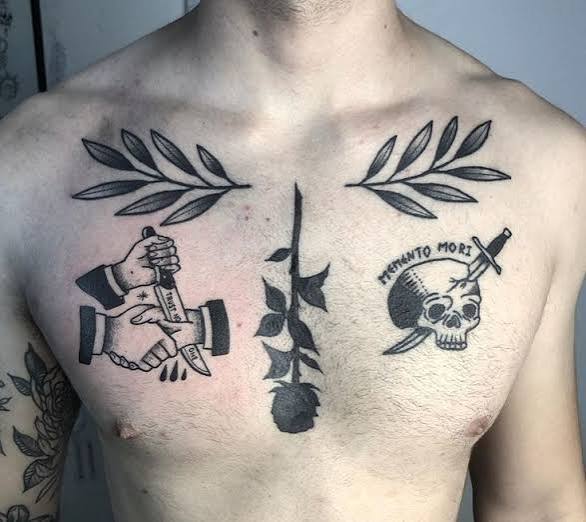
Combining a skull with an hourglass, wilting flower, or extinguished candle, memento mori pieces lean on symbolism over decoration — the phrase itself means “remember you must die,” a classic gothic and Victorian mourning theme. Artists typically render this in bold blackwork with selective fine-line detailing for the hourglass sand or flower petals, keeping the palette entirely black and gray. Sternum-centered placement at 4-5 inches works well since the imagery reads best straight-on rather than angled. A helpful tip: discuss which secondary symbol (hourglass vs. flower vs. candle) actually matches your personal meaning before the appointment, since swapping elements mid-design gets expensive and time-consuming. Sternum placement is consistently rated as one of the more painful chest spots. This design suits people wanting genuine symbolic weight rather than a purely aesthetic goth piece.
Sternum Vine and Thorn Chest Tattoo
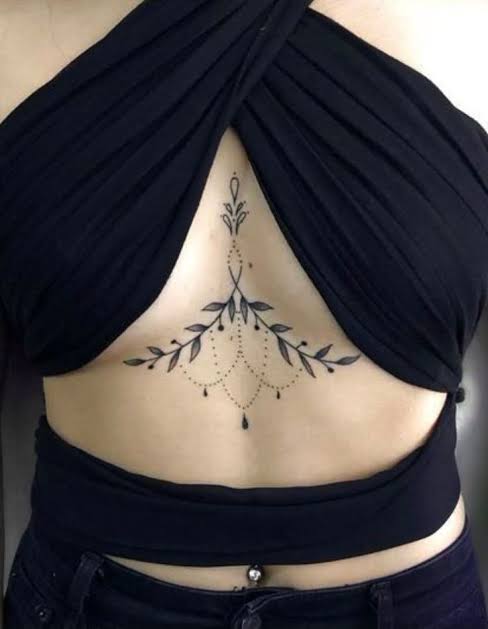
A vertical line of thorny vines running down the sternum, sometimes connecting to a rose, cross, or bat at the base, uses fine-line or light blackwork depending on desired boldness. The vertical orientation works with the body’s natural centerline instead of fighting it, which is part of why this placement reads so well on a range of body types. Keep the vine width consistent — around a quarter inch — so thorns stay sharp and don’t fuse into the main line as it heals. Length can run anywhere from 4 inches to a full sternum piece depending on commitment level. Ask your artist about thinner needle work for the thorns specifically, since these small details fade fastest if the artist doesn’t adjust needle depth. Sternum line placement is a consistently sensitive area. This design works as either a standalone minimal piece or an anchor line for a larger connected goth chest tattoo down the road.
Best Placement Ideas
Chest tattoos aren’t one-size-fits-all when it comes to visibility, pain, and upkeep. Here’s how the main placement zones stack up:
- Sternum (center chest): Most visually striking for symmetrical designs, but consistently rated as one of the more painful spots due to thin skin over bone and minimal padding.
- Pec (over the chest muscle): More padding means generally more tolerable pain, and this area holds detail well for medium-to-large pieces.
- Collarbone area: Great for lettering or thin design elements that need a clean horizontal line, but bony proximity makes it a higher-pain zone.
- Underboob/lower ribcage into chest: Offers a private placement option, easy to keep hidden, though healing can be trickier due to friction from clothing.
- Upper chest near shoulder: Easier to keep work-appropriate with higher necklines, and moderate pain compared to sternum-centered work.
Tips for Success
Picking the right artist matters more than picking the “perfect” design. Look through a potential artist’s portfolio specifically for healed photos, not just fresh ink — fresh tattoos look dramatic under studio lighting, but healed photos tell you the truth about line crispness and color retention. If you want fine-line or dotwork, find someone who specializes in it; a bold-traditional artist and a fine-line specialist have genuinely different hand techniques, and asking one to do the other’s style often disappoints.
Bring more than one reference image to your consultation — one for the main subject, one for the linework style, and one for size scale on a body similar to yours. A good artist will sketch a custom stencil rather than tracing a flash design exactly, especially for a placement as unique as the chest. Don’t be afraid to ask direct questions: What needle configuration are you using? How many sessions do you expect this to take? What’s your touch-up policy in the first year?
Common Mistakes and How to Avoid Them
A few patterns show up again and again with chest tattoos specifically:
- Sizing too small for the detail level. Intricate dotwork or fine-line pieces need real space. Cramming detailed linework into a small area almost guarantees blurring within a few years.
- Ignoring how the design sits on curved muscle. Pecs aren’t flat — a design that looks perfect on paper can distort slightly once placed. Ask your artist to sketch directly on your skin before finalizing.
- Skipping proper aftercare. Chest skin gets more friction from clothing and movement than a lot of other placements, which affects how well the tattoo settles if aftercare isn’t followed closely.
- Copying a design exactly with no personalization. A generic search-result image tattooed exactly as-is often looks disconnected from the person wearing it. Small custom tweaks — a different flower, a personal symbol swapped in — make a huge difference.
- Underestimating pain and stopping mid-session. Sternum and collarbone work can be intense. Going in mentally prepared (and maybe scheduling breaks for larger pieces) helps you get through a full session without regretting an unfinished piece.
Similar Variations
Almost every design above scales. A blackwork cross can shrink to a 2-inch minimalist version or expand into a full chest panel with added ornamental framing. Fine-line roses can gain color saturation (deep reds, muted purples) for a less strictly monochrome goth look, or stay black and gray for a starker feel. Dotwork pieces can combine with blackwork sections for contrast — dense dot shadow next to solid black fill reads as more dynamic than either technique alone. Several designs here (the vine, the filigree frame, the candelabra) work well as connecting elements if you’re planning a larger chest piece built over multiple appointments rather than one big session.
Aftercare Basics
General dermatological consensus supports keeping a fresh tattoo clean, moisturized, and out of direct sun while it heals, though healing time and sensitivity vary by individual. Most people see initial surface healing within two to three weeks, with full settling under the skin taking a couple of months, though this varies based on placement, aftercare, and individual skin. Chest placements can be trickier than others simply because clothing rubs against the area throughout the day. Loose, breathable fabric during the first couple weeks helps reduce irritation. Always follow the specific aftercare instructions your artist provides, and check in with them (or a dermatologist) if you notice anything that seems outside normal healing.
Quick FAQ
How much does a goth chest tattoo cost?
Costs vary widely by size, detail, and artist experience, but a detailed chest piece often falls into the multi-hour or multi-session range, which typically costs more than a small single-session tattoo. Get a quote directly from your artist after a consultation rather than relying on general estimates.
How painful is a chest tattoo compared to other placements?
Pain tolerance is individual, but chest placements — especially over the sternum and collarbone — are generally reported as more sensitive than fleshier areas like the outer arm or thigh, due to thinner skin and bone proximity.
How long does a chest tattoo take to heal?
Surface healing typically takes a few weeks, with full healing underneath taking longer, though timelines vary by person and by how well aftercare instructions are followed.
Will a goth chest tattoo fade or need touch-ups?
All tattoos fade somewhat over decades due to sun exposure and skin aging. Bold blackwork tends to hold up longer than fine-line or single-needle work, which may need a touch-up sooner to keep details sharp.
Fine Line vs. Blackwork vs. Dotwork: Quick Definitions
- Fine line: Thin, precise lines created with a smaller needle setup, giving a delicate, sketch-like appearance. Tends to fade faster than bold linework over many years.
- Blackwork: Solid, saturated black fill and bold outlines. Holds up well over time and reads clearly from a distance, but requires more skin coverage during healing.
- Dotwork: Shading and texture built from small individual dots rather than lines or gradients, creating a stippled, textured look. Slower to tattoo and requires careful spacing to stay crisp as it heals.
Final Thoughts
A goth chest tattoo can be one of the most striking pieces you’ll ever get inked, but it only works long-term if the technique, size, and placement actually match the design you’re picturing. Bold blackwork holds its shape for decades, fine-line adds delicate detail but fades faster, and dotwork brings texture that takes patience from both you and your artist. None of that matters as much as finding someone whose portfolio proves they can execute your specific style well.
Take your time picking both the design and the artist — this is chest skin we’re talking about, front and center, worn for the rest of your life. Do the research, ask the direct questions, and any of these 21 goth chest tattoo ideas can turn into a piece you’re genuinely proud to wear.