18 Wave Tattoo Ideas With Deep Meaning
If you’re scrolling through wave tattoo ideas at midnight, trying to find something that actually means something instead of just looking trendy for a season, you’re in the right place. I’ve spent enough time in tattoo studios watching consultations happen to know what separates a design that ages well from one that turns into a blurry smudge by year three.
So what are the best wave tattoo ideas with real meaning? Fine-line ocean waves, Japanese-style crashing waves, and minimalist single-line waves top the list, since they pair symbolism — change, resilience, calm after chaos — with linework that holds up on skin over time better than heavily detailed designs.
Stick around, though, because a good design idea is only half the story. I’m also going to walk you through placement tradeoffs, realistic pain levels, healing timelines, rough cost ranges, and exactly how to brief an artist so you don’t end up with a stencil that doesn’t fit your body or your intent.
Why Wave Tattoos Carry So Much Meaning
Waves aren’t just pretty ocean imagery — they’re one of the oldest visual shorthand symbols for change, emotional resilience, and the push-and-pull of life. A wave rises, breaks, and reforms. That cycle resonates with people going through transitions: grief, recovery, a move, a breakup, a new chapter. It’s also just a genuinely flexible shape for tattoo artists to work with — a wave can be rendered as a single confident line, a dense blackwork panel, or a soft dotted gradient, and it reads clearly at almost any size. That flexibility is exactly why it shows up across so many tattoo styles, from delicate single-needle work to bold traditional Japanese pieces.
Fine-Line Single Wave Tattoo

This is the wave tattoo most first-timers gravitate toward, and for good reason. A fine-line single wave uses a thin, consistent line — usually done with a single needle — to trace one continuous curl, almost like a signature. There’s no shading, no color, just clean contour work. It reads well on the wrist, inner forearm, or ankle at a size of about 1.5 to 3 inches. Healing typically runs 10–14 days for linework this size, though individual healing varies and you should always follow your artist’s aftercare sheet. Bony placements like the wrist or ankle tend to feel more sensitive than fleshier areas like the outer arm.
Bring a reference photo of an actual wave shape you like — not just another tattoo — so your artist can adapt the line weight to your skin. It’s a low-commitment option that still reads as intentional, not like flash off a wall.
Japanese Traditional Wave Tattoo

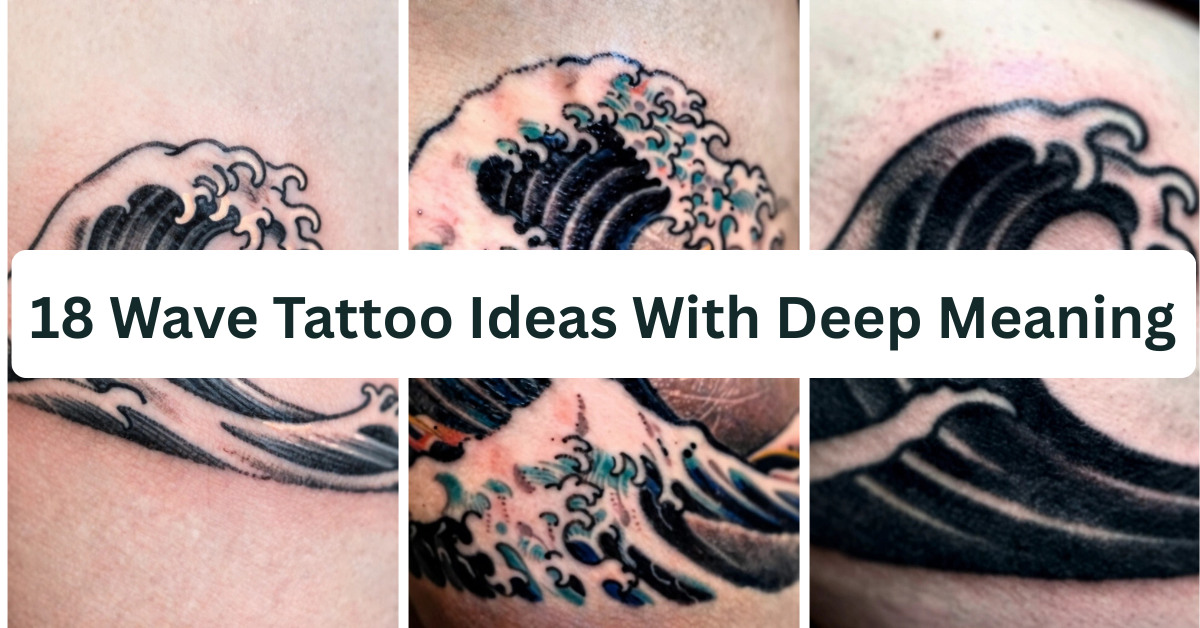
Modeled after the woodblock-style waves seen in classical Japanese art, this design uses bold black outlines, negative space (areas left uninked to let skin show through as part of the design), and structured curling foam details. It’s a heavier, more graphic style than fine line — thick, confident strokes rather than delicate ones. This works best on larger canvases: the calf, thigh, upper arm, or back, generally 4 inches and up, since the interior details need room to breathe. Expect a longer session, sometimes multiple sittings, and more discomfort over fleshy areas versus quick single-pass linework.
Ask your artist specifically about their experience with Japanese-influenced blackwork before booking — this isn’t a style every generalist artist handles well. It’s a strong choice if you want something that reads as deliberate and substantial rather than subtle.
Blackwork Ocean Wave Tattoo

Blackwork uses solid, saturated black ink to fill in shapes rather than relying on line contours alone. A blackwork wave often looks like a silhouette — a solid black wave cresting against bare skin, with the negative space doing the work of suggesting foam or spray. It’s graphic, high-contrast, and tends to age better than fine gray-wash shading because solid black holds its saturation longer. Good placement options include the forearm, shoulder, or calf, at 3 inches or larger so the solid fill doesn’t clog into a blob. Healing runs slightly longer than simple linework — closer to 2–3 weeks — since more skin is worked on.
Ask your artist about “packing” technique (how they build even black saturation) to make sure the fill won’t look patchy once healed. This suits people who want boldness over subtlety.
Dotwork Wave Tattoo

Dotwork builds an image entirely from small dots instead of continuous lines or solid fill, creating a soft, textured, almost stippled look. Applied to a wave design, dotwork can create a beautiful gradient effect — dense dots at the wave’s crest fading to sparse dots near the tips, mimicking sea spray. It’s a slower, more meticulous technique, so sessions tend to run longer than linework of the same size. Best placements are flatter areas with fewer natural skin folds — the shoulder blade, upper arm, or ribcage — at 3 inches or more so the dot gradient has room to show its transition.
Rib placement is known to be more painful due to thin skin over bone, so factor that into your decision. Bring high-resolution reference images since fine dot spacing needs to be planned carefully before the stencil goes on.
Minimalist Wave Line Tattoo
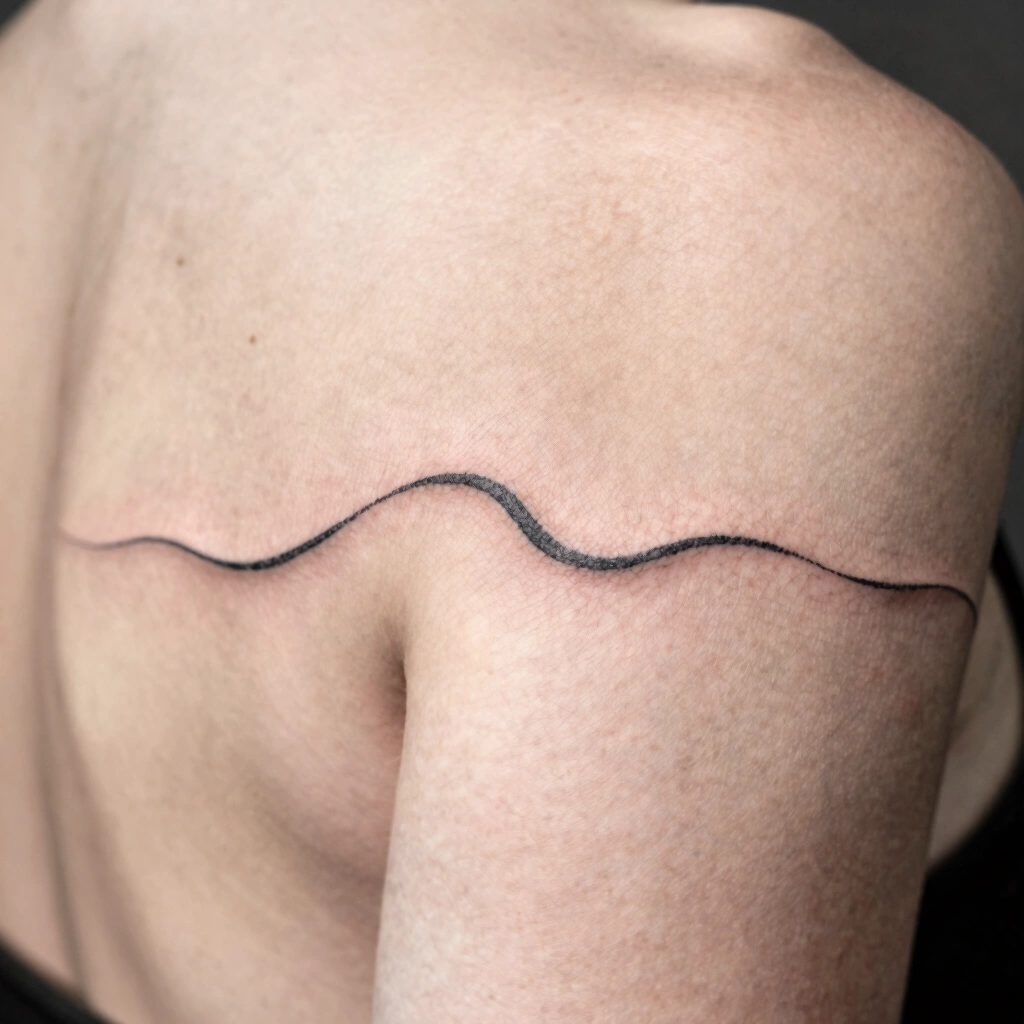
Think of this as the fine-line wave’s more abstract cousin — a single, unbroken squiggle that just barely suggests a wave rather than depicting one literally. It’s often no more than one continuous stroke, sometimes combined with a straight horizontal line to imply a horizon. This tiny-scale approach (often under 2 inches) works well behind the ear, on the collarbone, or along the side of the finger. Healing is quick, generally under two weeks, since the tattooed surface area is small. The main risk here is sizing it too small for the artist’s needle gauge — ask specifically what needle size they’ll use for thin linework so it doesn’t blur together as it settles into skin over the following years. It’s an easy, versatile pick for anyone easing into their first tattoo.
Wave and Moon Tattoo

Combining a wave with a crescent or full moon plays on the real relationship between lunar cycles and tides — a literal and symbolic link between emotional ebbs and celestial rhythm. Most versions use fine-line or single-needle work for the moon’s outline paired with a slightly bolder wave beneath it, sometimes with light dot-shading to suggest lunar texture. This composition suits vertical placements like the spine, side ribs, or upper arm, generally 3–4 inches to give both elements clear definition. It carries a bit more detail than a solo wave, so expect slightly longer sessions. When briefing your artist, specify whether you want the moon phase to hold personal meaning (like a birth date moon) — that detail changes the whole composition. It’s a popular matching-tattoo option for close friends who want complementary, not identical, designs.
Wave and Mountain Silhouette Tattoo

This design pairs a cresting wave with a simple mountain range outline, usually rendered in matching line weight so the two elements feel unified rather than layered on top of each other. It symbolizes balance — high and low, calm and turbulence — and works especially well as a small forearm or ankle piece where the horizon line can run naturally with the wrist or leg curve. Because both shapes are simple outlines, this heals fast, typically within two weeks, and doesn’t demand heavy touch-up work later. Sensitivity is moderate on the forearm and higher on the ankle due to thinner skin near the bone. A useful tip: ask your artist to sketch the mountain-to-wave ratio a few different ways before finalizing the stencil, since proportion makes or breaks this composition. It reads as thoughtful without being overly literal.
Watercolor Wave Tattoo

Watercolor tattoos use diluted, blended color application to mimic the soft bleed of a watercolor painting, often layered over or around a solid black linework wave for structure. Blues, teals, and purples are common choices, with color saturation fading intentionally at the edges to create that “painted” look. This style needs a larger canvas — think 4 inches or more — usually on the shoulder, upper arm, or calf, since fine color gradients get lost at small sizes. It’s worth knowing upfront that colored ink, especially lighter shades, tends to fade faster over the years than black linework, so touch-ups every few years are realistic to expect. Ask to see healed (not just fresh) photos in your artist’s portfolio before booking, since watercolor work looks dramatically different once it settles. This is a strong pick if you want your wave design to feel more like art than symbol.
Geometric Wave Tattoo
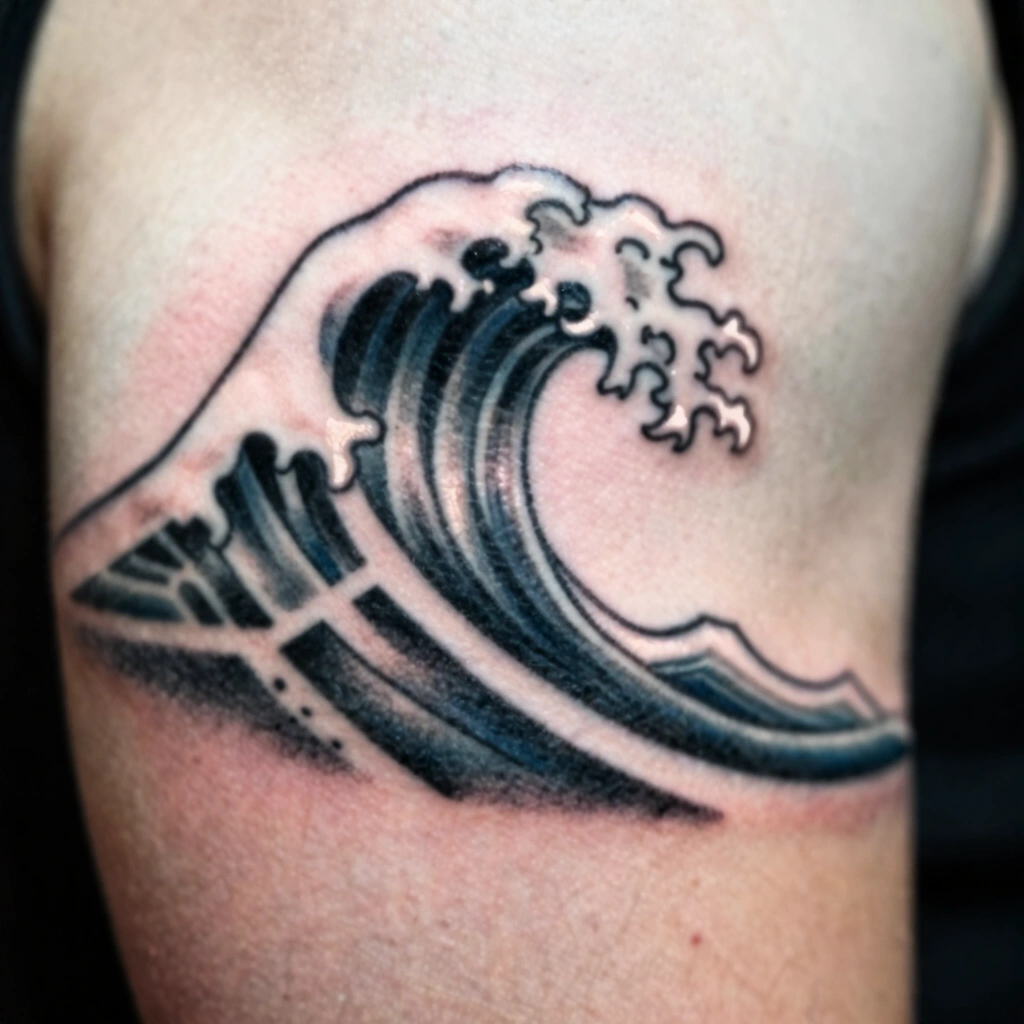
Here, a wave is broken down into clean geometric segments — triangles, straight angled lines, or a faceted pattern — instead of an organic curl. It’s a structured, modern take that pairs well with fine-line or thin blackwork technique. Because precision matters so much in geometric work, straight-skinned areas like the forearm, shin, or upper back tend to hold the design’s sharp angles better than curved areas like the ribs. Sizing around 3 inches keeps the angles crisp; going too small risks the lines merging as the tattoo settles into skin over time. Healing runs about 10–14 days for line-only versions. When briefing your artist, ask if they use a ruler or grid stencil for geometric accuracy — it matters more here than in almost any other style. This suits people who like symbolism but want something that feels architectural rather than painterly.
Wave and Lotus Tattoo

This pairing merges a wave’s motion with a lotus flower’s stillness, often symbolizing growth through hardship since lotus flowers famously bloom out of murky water. Most versions use fine-line petal detail combined with a slightly bolder wave base, sometimes finished with light dotwork shading inside the petals for dimension. It suits vertical body real estate — the spine, side of the ribs, or thigh — at roughly 4 inches so the petal detail doesn’t collapse into a blur. Rib and spine placements are generally more sensitive due to thinner skin and less muscle padding underneath. A practical tip: ask your artist to slightly stylize the lotus rather than copying a stock image exactly, since fully generic lotus-wave designs are common flash options and won’t feel personal. Good for anyone wanting layered symbolism in one composition.
Double Wave Matching Tattoo
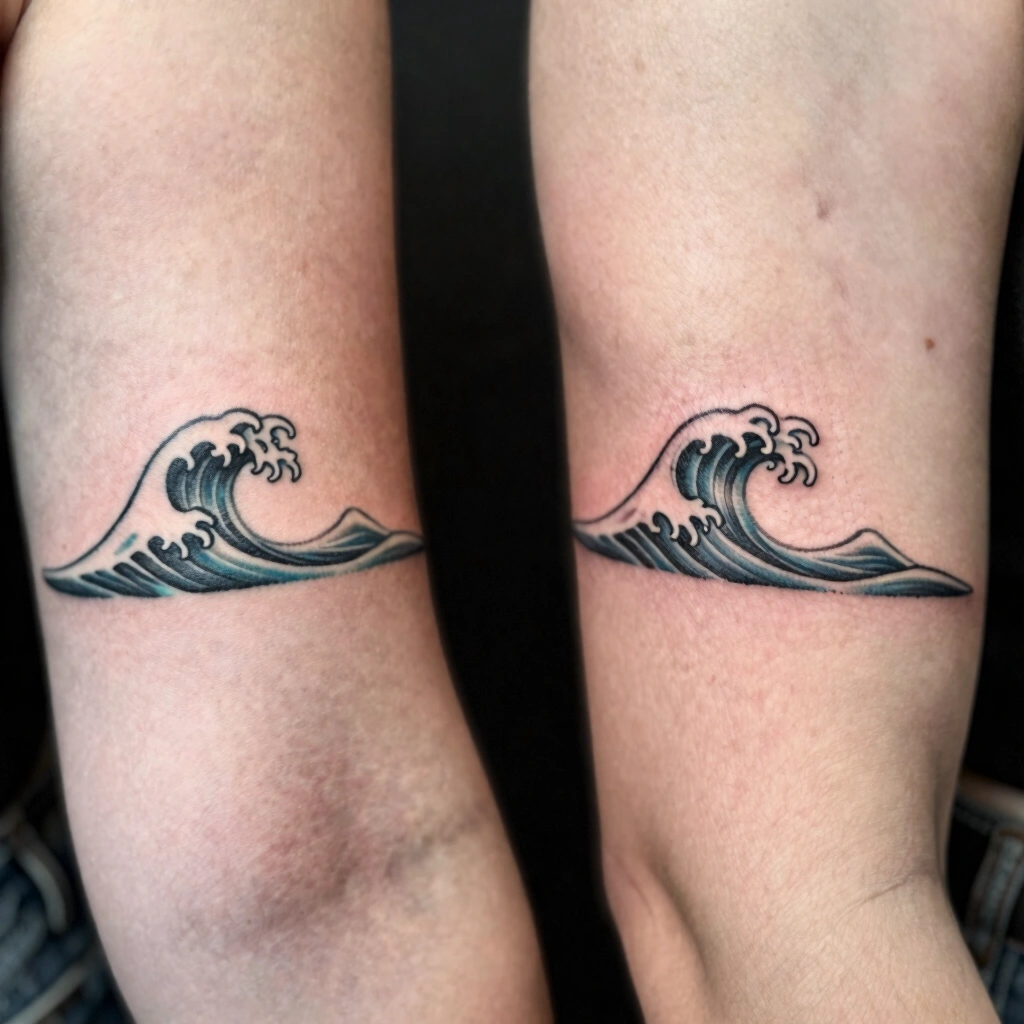
A matching-tattoo favorite: two small waves, often mirrored or slightly varied, inked on two different people — friends, siblings, partners. The linework is usually simple and fine, kept under 2 inches so it stays subtle and affordable for both people. Wrist, ankle, or behind-the-ear placements are the most common because they’re easy to show off or hide depending on the setting. Since the design is small and simple, healing is quick and pain is generally lower than bigger pieces, though wrist and ankle bone proximity can still make it feel sharper than fleshier spots. A good way to personalize matching waves without losing the “matching” concept is to vary the wave’s height or curl direction slightly between the two tattoos. It’s a low-cost, low-commitment way to mark a shared memory or relationship.
Wave and Compass Tattoo

This design blends a wave with a compass rose, symbolizing being guided through emotional change rather than lost in it. It usually leans on fine-line detailing for the compass points and a slightly heavier line for the wave curling beneath or around it. Because the compass needs room for its directional details to stay legible, this works best at 3–4 inches on the forearm, calf, or upper arm. Expect a moderate healing window of about two weeks, and moderate pain on padded areas like the outer arm. When talking to your artist, specify how many compass points and how ornate you want the design — overly detailed compass roses can lose clarity if shrunk too small later. It’s a solid pick for anyone whose “change” symbolism is tied to travel, career shifts, or personal direction.
Negative Space Wave Tattoo

Negative space tattoos use bare, uninked skin as part of the actual design instead of just background. A negative space wave might show a solid black ocean background with a pale, un-tattooed wave shape cutting through it — essentially inverting the usual approach. This creates striking contrast but requires precise technique, since the surrounding blackwork has to be evenly saturated for the negative shape to read clearly. Best placement is flatter skin with fewer natural lines, like the upper arm, calf, or back, at 3 inches or larger. This style can be more painful than simple outline work since more skin surface receives ink. Ask specifically to see healed examples of an artist’s negative space work, since this technique is unforgiving of uneven shading and doesn’t hide mistakes well. It’s a bold option for someone who’s already comfortable with tattoos and wants something visually unusual.
Wraparound Wave Tattoo

A wraparound wave curls fully or partially around a wrist, ankle, or bicep, using the natural curve of the limb to make the design feel like it’s actually moving. This usually uses fine-line or medium-weight linework, sometimes with small dot-shading accents to suggest foam along the crest. Wrist and ankle wraps generally stay small — 1–2 inches in height — while bicep wraps can go larger, up to 4–5 inches. Because it wraps around a joint or narrow limb, expect a bit more sensitivity than flat placements, and slightly trickier healing since clothing and movement rub against it more. A useful tip: ask your artist to test the design on tracing paper wrapped around your actual limb before tattooing, so the proportions curve naturally instead of stretching awkwardly. It’s a great option if you want a design that feels dynamic even when you’re standing still.
Wave and Bird Tattoo

Pairing a wave with a small flying bird — often a few simple V-shaped strokes above the curl — adds a sense of freedom or moving forward to the wave’s change symbolism. This is almost always done in fine-line or single-needle technique, keeping the bird minimal so it doesn’t compete visually with the wave. It suits the collarbone, side ribs, or forearm at around 2–3 inches. Since both elements are simple linework, healing is typically straightforward, in the 10–14 day range, though rib placement carries more discomfort due to thin skin over bone. Ask your artist to angle the bird’s flight path so it visually leads the eye away from the wave rather than crowding it — composition spacing matters more here than people expect. This works well as a first tattoo since it’s detailed enough to feel meaningful but not overly complex.
Sound Wave or Heartbeat Wave Tattoo

This isn’t an ocean wave at all — it’s a literal sound wave or heartbeat monitor line, styled to look like rolling ocean swells. It’s popular for memorial tattoos or tattoos referencing a specific meaningful sound (a loved one’s voice, a heartbeat recording, a favorite song’s waveform). The linework is precise and technical, usually fine-line, and works well as a horizontal band on the forearm, ribcage, or ankle at 2–4 inches long. Because the line needs to stay crisp and evenly spaced, ask your artist about digitizing an actual soundwave file if you have one — many studios can trace real audio data into a stencil. Healing and pain levels mirror standard fine-line work. This is a deeply personal variation for readers who want their wave tattoo tied to a specific memory rather than a general symbol.
Wave and Sun Tattoo

Combining a rising sun with a wave beneath it symbolizes renewal — a new day breaking after a hard stretch. Sun rays are typically kept as simple straight or slightly curved fine lines radiating outward, while the wave below can be either linework-only or lightly shaded with dotwork for dimension. This composition suits the upper arm, shoulder, or shin at 3–4 inches, giving both the rays and wave curl enough space to stay distinct from each other. Shoulder and upper arm placements tend to be more tolerable than shin, where skin sits closer to bone. A quick tip: ask your artist to vary ray length slightly rather than making them perfectly uniform — it reads as more hand-drawn and less like a generic flash design. Great for anyone marking a recovery, new start, or milestone.
Abstract Fluid Wave Tattoo

This is the loosest, most sketch-like take on the wave concept — flowing, slightly irregular lines that suggest movement and water without forming a literal wave shape. Done in fine-line or light single-needle work, it often looks like a few confident brush strokes rather than a structured drawing. It’s incredibly versatile for placement since its abstract shape can adapt to curves on the ribs, hip, spine, or forearm, typically sized 2–4 inches depending on the area. Because there’s no rigid symmetry to protect, small hand-drawn irregularities actually help it age well and look intentional rather than like a mistake. Ask your artist to freehand a few line variations directly on your skin with a marker before tattooing, so the flow matches your body’s natural curve. It’s a favorite for people who want the meaning of a wave without a literal, recognizable ocean image.
Best Placement Ideas
Placement changes everything about how a wave tattoo looks, ages, and feels to get done. Here’s a quick breakdown to match your priorities:
- Wrist or ankle — highly visible, great for small fine-line waves, but bony areas tend to be more sensitive during the session.
- Forearm — good balance of visibility and lower sensitivity, works for both small and mid-size designs.
- Ribs or spine — lower visibility (easy to keep private for work settings), but generally more uncomfortable due to thin skin over bone.
- Upper arm or shoulder — moderate sensitivity, forgiving for larger blackwork or watercolor pieces since there’s more flesh to work with.
- Behind the ear or collarbone — very subtle, best for minimalist or tiny single-line designs, limited space for detail.
- Calf or thigh — lower sensitivity overall, ideal for bigger Japanese-style or dotwork pieces needing more surface area.
Tips for Success
Start by building a shortlist of artists whose portfolios show consistent line weight and clean saturation — not just one great photo buried in a feed of inconsistent work. Look specifically for healed photos, not just fresh ink, since that’s what actually shows you how a style ages. At your consultation, bring reference images that capture the linework or shading style you want, not just other people’s finished wave tattoos to copy outright. Ask direct questions: what needle size will they use, how many sessions they expect, and what their touch-up policy looks like within the first year. A good artist will talk through placement and sizing tradeoffs with you honestly rather than just agreeing to whatever you request. If something feels rushed or unclear, it’s fine to book a consultation elsewhere before committing.
Common Mistakes and How to Avoid Them
- Sizing too small for the detail level. Intricate dotwork or geometric waves need enough surface area, or they blur together as the tattoo settles.
- Choosing a placement that fights the design’s shape. A wraparound wave needs a curved limb; a flat panel design needs flatter skin.
- Skipping personalization. Copying a design exactly from a photo often results in a generic look — small tweaks to proportion or angle make it yours.
- Ignoring aftercare instructions. Not following your artist’s specific aftercare sheet can affect how the final healed result looks.
- Booking based on price alone. A cheaper walk-in slot might mean less time spent on your specific design’s proportions and placement fit.
Similar Variations
Almost every idea on this list can be resized or restyled to fit a different vibe. A bold Japanese wave can be shrunk into a fine-line version for a subtler look, while a minimalist single-line wave can be scaled up and combined with a lotus or moon for more symbolic weight. Blackwork waves can shift into negative space versions for higher contrast, and a plain wave outline can gain watercolor shading later as an add-on session once it’s fully healed. Matching double-wave tattoos can also be adapted into a larger solo piece down the line by adding elements like a compass or mountain silhouette around the original design.
Aftercare Basics

Aftercare directly affects how your finished tattoo looks once it settles, so don’t skip it. In general, keep the area clean, avoid direct sun exposure and soaking (pools, baths) while it heals, and avoid picking at any peeling skin. Use the specific ointment or lotion your artist recommends rather than guessing, since studios often have preferences based on the ink and technique used. Healing timelines vary by design size and individual skin, but most simple linework settles within two weeks, while larger or heavily shaded pieces can take three to four. Always follow the exact aftercare sheet given by your artist, and reach out to a licensed dermatologist if you notice anything that seems unusual during healing.
Quick FAQ
How much does a wave tattoo cost?
Small fine-line waves often start around $80–$150 depending on the studio and region, while larger blackwork, Japanese-style, or watercolor pieces can run several hundred dollars due to added detail and session time.
Do wave tattoos hurt a lot?
Pain depends heavily on placement and individual tolerance — bony areas like the ankle, wrist, or ribs tend to feel sharper than fleshier spots like the upper arm or calf.
How long does a wave tattoo take to heal?
Simple linework generally settles within about two weeks, while larger shaded or colored designs can take three to four weeks, though healing time varies by person.
Will a wave tattoo fade or need touch-ups?
Solid black linework tends to hold up well over the years, while lighter colors or fine dotwork gradients may need occasional touch-ups to stay crisp, especially in sun-exposed areas.
Choosing from this list of wave tattoo ideas really comes down to matching the symbolism you want with a technique that fits your skin, your pain tolerance, and how visible you want the piece to be. Take your time picking an artist whose portfolio backs up the style you’re after, ask the questions we covered above, and don’t be afraid to personalize a design instead of copying it exactly. Whichever direction you go, a well-planned wave tattoo can end up being one of the most meaningful pieces you carry with you.