20 Goth Back Tattoo Ideas That Actually Hold Up on Skin
Nervous about committing to a goth back tattoo you might regret once the excitement fades? That’s a fair worry, and it’s exactly why this guide exists.
So what are the best goth back tattoo ideas? Blackwork cathedral spines, dotwork skull mandalas, fine-line gothic script, and negative space moon phases work best on the back because the flat, expansive canvas supports large-scale linework and heavy shading without distortion over time. Bold traditional pieces also age well here since the skin sees less friction than on hands or feet.
Stick around, because I’m also breaking down placement tradeoffs, pain levels by back zone, realistic healing timelines, what a fair price range actually looks like, and how to brief an artist so the final piece matches what’s in your head — not just what’s on their flash sheet.
Why the Back Works So Well for Goth Tattoo Designs
The back is basically the best real estate on the body for dark, detailed work. You’ve got a big, mostly flat surface, minimal joint movement, and enough space to let a design breathe — which matters a lot for gothic themes that lean on symmetry, ornamental detail, and dramatic scale. Spine pieces get to use the natural centerline of your body as a built-in composition guide. Shoulder blades give you two matching canvases if you want a mirrored design. And full-back pieces let an artist build something that reads as one cohesive image instead of a scattered collection of symbols. The tradeoff is visibility and cost — back pieces take longer, cost more, and usually need multiple sessions. Worth knowing upfront.
1. Blackwork Gothic Cathedral Spine Piece
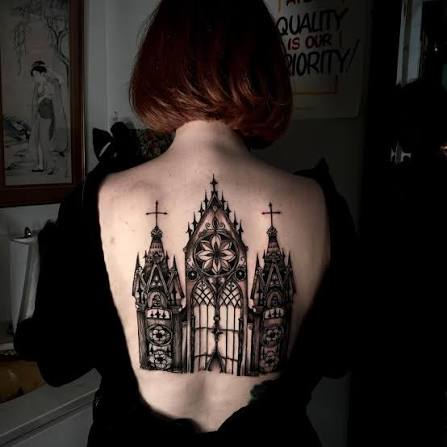
This design runs a tall, narrow cathedral silhouette straight down the spine, built from solid black fills and crisp architectural linework. Blackwork means the artist uses saturated black ink packed densely into the skin rather than gray shading, so the contrast stays sharp for years. Best placement is directly along the spine from the nape to mid-back, sized around 10–14 inches tall and 3–4 inches wide. Skin over the spine is thin with little cushioning, so expect a sharper, more consistent pain level than fleshier back areas. Healing typically runs 2–3 weeks for surface peeling, longer for full ink settling. Bring a reference image of actual cathedral architecture, not just other tattoos, so your artist can source real structural details. Great for a first big-statement piece if you already have smaller tattoos and want to level up.
2. Dotwork Mandala Full-Back Centerpiece
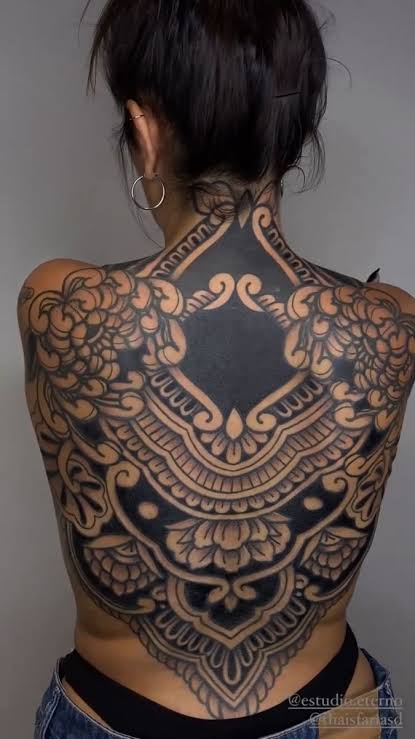
Dotwork builds an image entirely from tiny individual dots instead of continuous lines, creating soft gradients and texture that look almost like fine fabric from a distance. A goth-leaning mandala might swap floral motifs for skulls, thorns, or occult geometry radiating from a central point between the shoulder blades. This technique demands a steady, experienced hand because uneven dot spacing shows immediately. Size-wise, go big — mandalas lose their symmetry impact if cramped under 8 inches across. Pain tends to run moderate and repetitive rather than sharp, since the needle works in short, consistent taps. Healing takes 2–4 weeks, and touch-ups are common on dotwork because dot density can fade unevenly. Ask your artist for a stencil preview mapped directly onto your back before the session starts — mandala symmetry is nearly impossible to fix freehand mid-tattoo.
3. Fine-Line Gothic Script Along the Spine
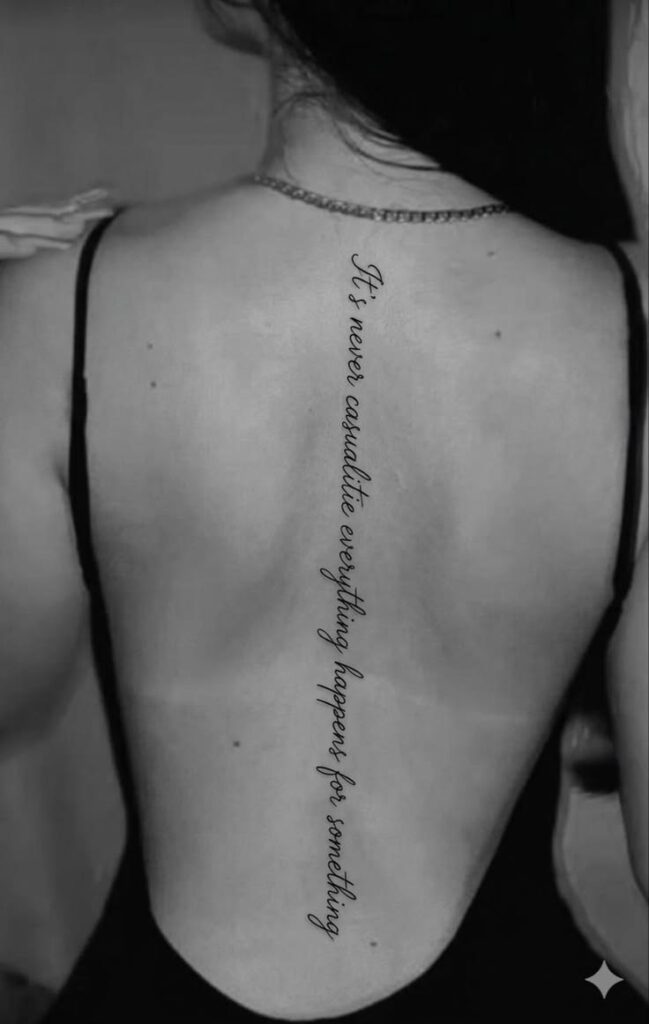
Fine-line work uses a single, thin needle configuration to produce delicate, low-saturation lines — think handwriting rather than bold block lettering. A vertical script piece running down the spine, maybe a Latin phrase or a line from gothic literature, reads as understated rather than heavy-handed. Keep it to one or two lines of text, sized so letters stay at least a quarter-inch tall — smaller than that, and fine lines blur together as the tattoo ages. Spine placement means moderate-to-high discomfort due to thin skin over bone. Healing runs about 2 weeks on the surface. Bring your exact wording typed out, specify the font style (blackletter versus a slimmer serif), and ask specifically for a single-needle setup rather than a shader. This is a solid option if you want something meaningful but still workplace-coverable under most shirts.
4. Bold Traditional Skull and Roses Back Piece
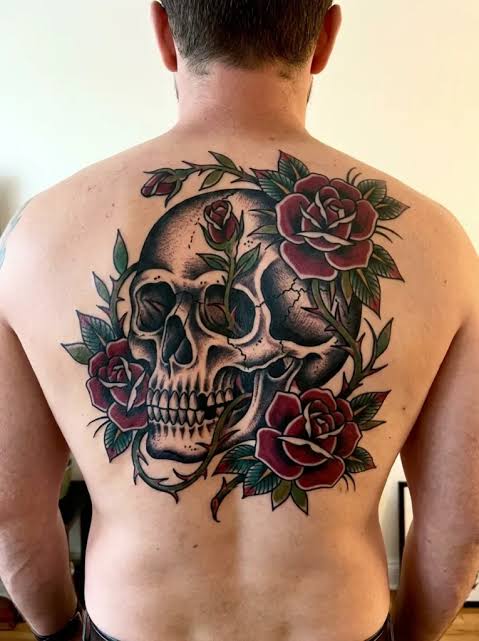
Bold traditional leans on thick, uniform outlines, limited color saturation, and heavy black shading — the classic American traditional look, just tilted goth with a skull-and-roses combo instead of pin-up imagery. The heavy linework here actually ages better than fine detail on a large back canvas, since bold lines resist the natural blurring that happens to skin over decades. Center it on one shoulder blade or scale it across the full upper back for a chest-piece-adjacent statement. Pain sits in the moderate range across fleshier upper back muscle. Expect 2–3 weeks of visible healing. Ask your artist about color saturation levels if you want deep red roses instead of black-and-gray — saturated color needs more passes and slightly longer healing. This style suits people who want a design that still looks sharp at 40, not just at 25.
5. Negative Space Moon Phases Back Tattoo
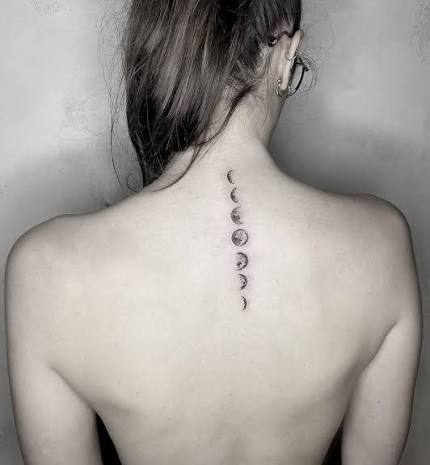
Negative space tattooing uses the untouched skin itself as part of the image, letting black ink define shape by contrast rather than filling every surface. A moon phase sequence — crescent to full to crescent again — works beautifully across the upper back or shoulder line, with each phase rendered as a solid black crescent broken by the bare skin gap. This only works well on evenly toned skin without much scarring or heavy texture, since the “empty” areas need to read cleanly. Size each moon around 1.5–2 inches, spaced evenly. Pain is generally mild-to-moderate depending on exact placement. Healing takes about 2 weeks. Tell your artist you want true negative space, not just light shading, so they know to leave specific areas untouched rather than filled in lightly. It’s a great subtle option for a first goth tattoo.
6. Ornamental Dagger and Serpent Blackwork
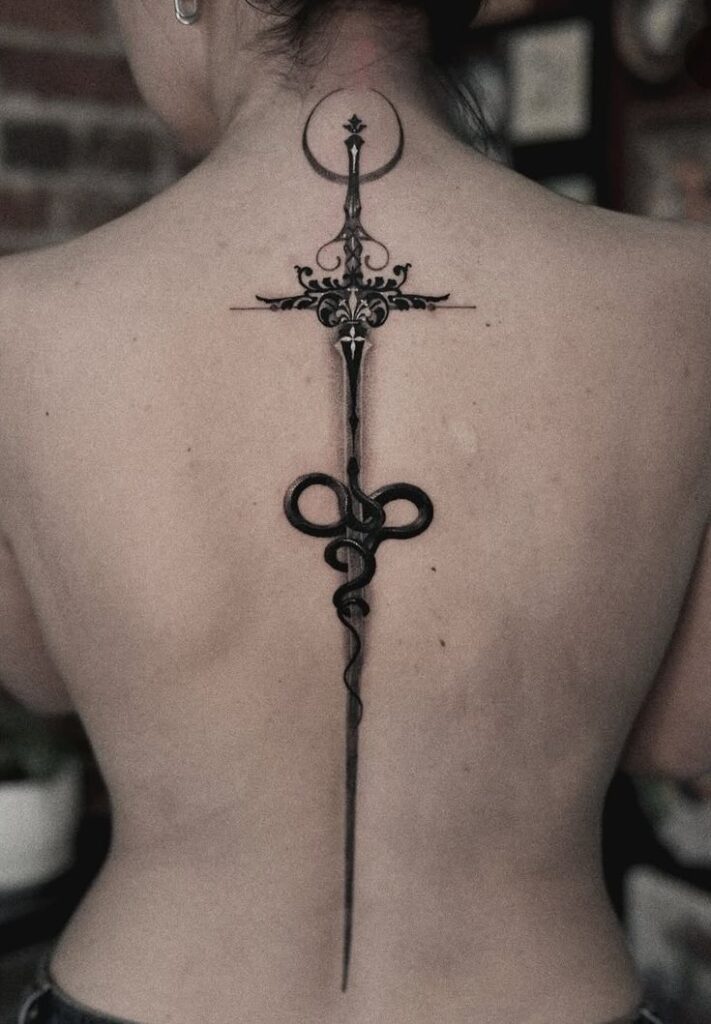
This one combines a vertical dagger motif wrapped by a coiling serpent, done in solid blackwork with fine linework detailing on the scales and hilt. The composition naturally suits a long, narrow space — between the shoulder blades or along one side of the spine. Contrast is everything here: solid black serpent body against negative space scales creates visual texture without needing gray shading at all. Go at least 8 inches tall so the scale detail doesn’t muddy together as it heals. Expect moderate pain along the ribs-adjacent back area, more if the design wraps toward the side. Healing runs 2–3 weeks. Request a stencil test placement photo before committing — asymmetrical designs like this shift dramatically depending on exact positioning. Works well as a second or third tattoo once you’re comfortable with a longer sitting.
7. Gothic Blackletter Name or Phrase Tattoo
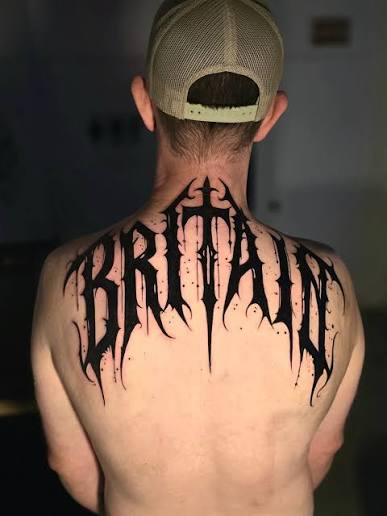
Blackletter — that dense, medieval-style lettering you see on old manuscripts — reads instantly as gothic without needing any imagery at all. A short name, date, or phrase in blackletter across the upper back or shoulder blade carries weight through font choice alone. Line weight needs to stay thick and consistent, since blackletter’s tight curves and serifs blur fast if done too thin. Keep letters at least an inch tall for legibility down the line. Pain is moderate on fleshier shoulder areas. Healing takes about 2 weeks. Bring a printed font sample, not just a description — blackletter has dozens of variations and “gothic font” means something different to every artist. This is one of the more forgiving goth designs for touch-ups later since solid black holds up well over years.
8. Single-Needle Grim Reaper Silhouette
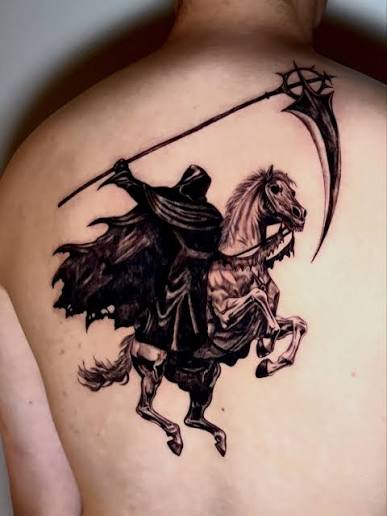
Single-needle tattooing is essentially fine-line work taken to its most minimal — one needle point creating thin, precise lines with little to no shading. A grim reaper rendered this way looks more like an ink illustration than a heavy tattoo, with a slim robed silhouette and a scythe outlined rather than filled solid. This suits a smaller placement, like one shoulder blade, sized around 4–6 inches. Detail this fine needs a skilled hand — ask specifically about your artist’s single-needle portfolio before booking, since not every shop offers it. Pain runs mild-to-moderate. Healing is typically quicker than blackwork, around 10–14 days, since less ink saturates the skin. Fine lines like this do soften over 10+ years, so factor in a touch-up eventually. A strong pick if you want gothic imagery without a heavy, saturated look.
9. Large-Scale Blackwork Raven and Thorns
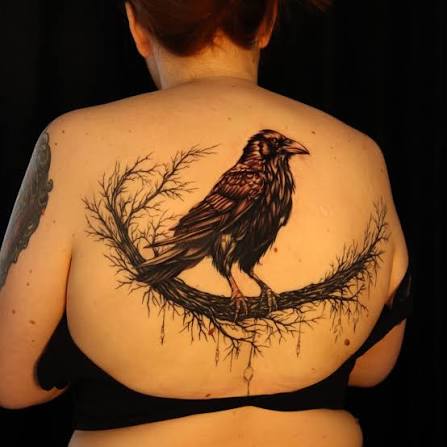
Ravens show up constantly in goth tattoo culture, and for good reason — the bird’s shape lends itself to strong blackwork silhouettes with dramatic wing spread. Combine it with a thorn vine wrapping across the shoulder or down toward the lower back for a piece that uses the whole canvas. Feather detail comes from fine linework layered inside a mostly solid black body, creating texture without switching techniques entirely. Placement across one full shoulder blade, sized 8–10 inches wingtip to wingtip, gives the design room to feel dynamic rather than cramped. Pain is moderate across the shoulder blade, sharper if thorns extend toward the spine. Healing takes 2–3 weeks. Bring reference photos of actual raven wing anatomy — stylized versions from other tattoos tend to get copied inaccurately. Solid choice for anyone wanting symbolism (death, transformation) alongside strong visual impact.
10. Dotwork Skull Mandala Shoulder Blade Piece
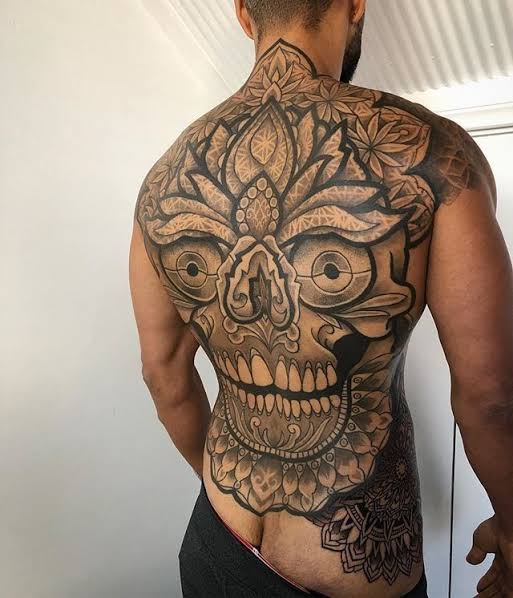
A hybrid of dotwork shading and a centered skull motif, this design frames a skull within a circular mandala pattern built entirely from stippled dots rather than solid fills. The gradient effect dotwork creates around the skull’s edges gives it a soft, almost smoky look that solid blackwork can’t replicate. One shoulder blade is the ideal spot, sized 5–7 inches so the mandala’s radiating pattern stays legible. Pain is moderate and steady rather than sharp — dotwork tends to feel different from linework, more like consistent pressure. Healing runs 2–4 weeks with dot density evening out over the following months. Ask your artist how many passes the dot shading will need; denser gradients sometimes require a follow-up session. A great matching option if you and a friend both want death-related symbolism without identical imagery.
11. Gothic Cross with Filigree Detailing
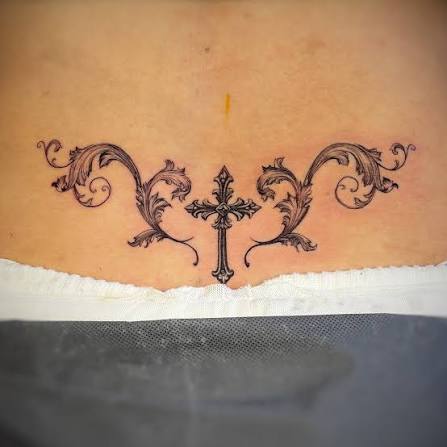
A cross rendered with ornate filigree — those swirling, lace-like linework flourishes — turns a simple religious symbol into something more architectural and gothic-coded. Line weight varies deliberately here: the cross’s main structure stays bold while the filigree branches out in progressively thinner lines. Center back placement between the shoulder blades works well, sized 6–8 inches tall to keep the fine branches from crowding. Pain sits in the moderate range over the central back. Healing takes about 2–3 weeks. Specify to your artist whether you want symmetrical filigree on both sides or an asymmetrical flow — small compositional choice, big visual difference. Because it reads as somewhat traditional, this design tends to be more workplace-neutral than overtly dark imagery, making it a flexible pick for people who need to keep ink covered at work.
12. Bat and Crescent Moon Blackwork Cluster
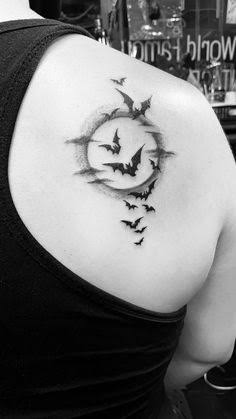
A small cluster placement — bat silhouette paired with a crescent moon, maybe a star or two — works as a low-commitment goth design without needing a full-back canvas. Rendered in solid blackwork with clean, simple outlines, this cluster style is genuinely one of the more forgiving options for first-timers testing whether they like larger back work at all. Placement on the upper shoulder blade, sized 3–5 inches, keeps healing straightforward. Pain runs mild-to-moderate. Healing takes about 10–14 days. Bring a simple line sketch rather than an overly detailed reference — this style thrives on simplicity, and overcomplicating it usually just muddies the shape as it ages. Great option if you want to dip into goth-themed ink before committing to something spine-length or full-back.
13. Fine-Line Spider Web Shoulder Blade Tattoo
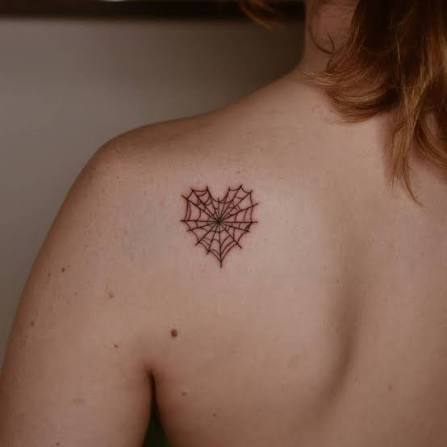
A spider web rendered in single-needle fine line captures a classic goth motif without heavy visual weight. Thin, precise lines radiate out from a shoulder blade corner, sometimes extending toward the shoulder or upper arm for movement. The appeal here is subtlety — from a distance it barely reads as a “big” tattoo, but up close the linework detail holds up. Keep the web sized around 4–6 inches so the radiating strands don’t crowd together as skin naturally shifts over years. Pain is mild-to-moderate on the shoulder blade. Healing runs about 10 days to 2 weeks. Ask specifically for consistent line spacing — uneven web strands are one of the most common complaints with this design done poorly. Good pick for anyone wanting something goth-adjacent that still reads as delicate rather than heavy.
14. Gothic Rose and Thorn Vine Spine Piece
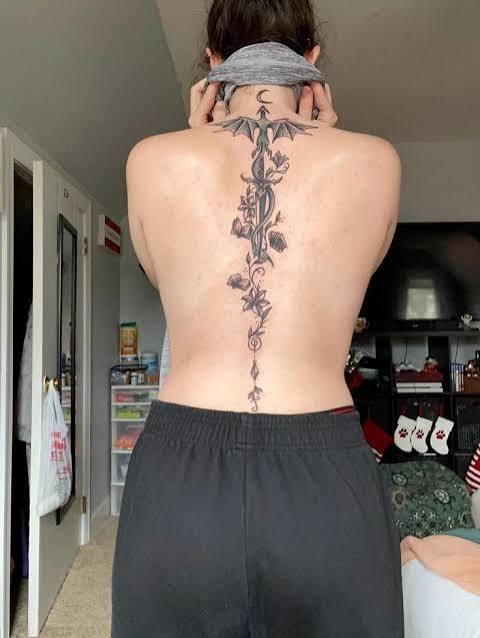
Roses show up in almost every tattoo style, but a gothic take strips away bright saturation and leans into dark shading, sharp thorns, and slightly wilted petal detailing instead of the traditional bold, cheerful version. A vine of these roses running down the spine creates a continuous visual line that suits the body’s natural shape. Shading here typically uses gray-black gradients rather than flat color, giving the petals depth without needing full color saturation. Spine placement means sharper discomfort due to thin skin over bone. Healing takes 2–3 weeks. Ask your artist whether they’re using a whip shading technique for the gradient — it creates smoother transitions than solid packed shading. This design ages gracefully since the dark, muted palette doesn’t rely on color vibrancy that fades over time.
15. Blackwork Occult Symbol Back Panel
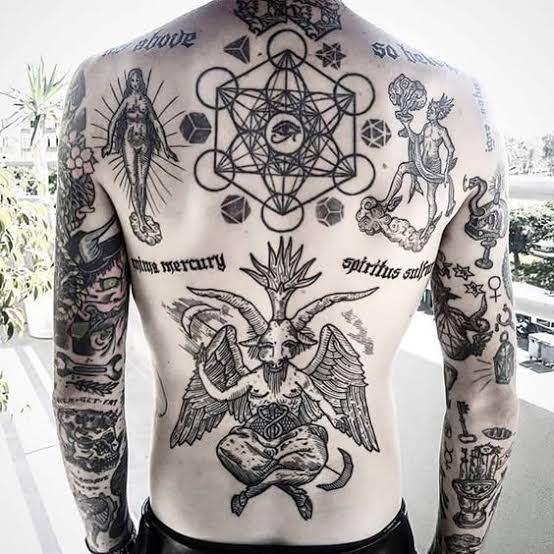
For readers drawn to specific occult or esoteric symbolism — sigils, alchemical marks, or geometric symbols — a clean blackwork panel across the upper or lower back keeps the focus entirely on the symbol’s shape rather than surrounding imagery. Precision matters enormously here, since symbolic accuracy is often the whole point. Size it generously, at least 5 inches, so fine geometric lines don’t blur together over the years. Placement across the lower back or centered upper back both work, with pain levels varying by exact spot — lower back tends to be moderately sensitive. Healing takes about 2–3 weeks. Verify your symbol’s actual meaning and correct proportions before your appointment; a rushed Google image search often leads to inaccurate versions getting tattooed. This is a deeply personal design category, so a custom booking rather than a walk-in flash choice is worth the extra planning time.
16. Victorian Gothic Frame with Portrait
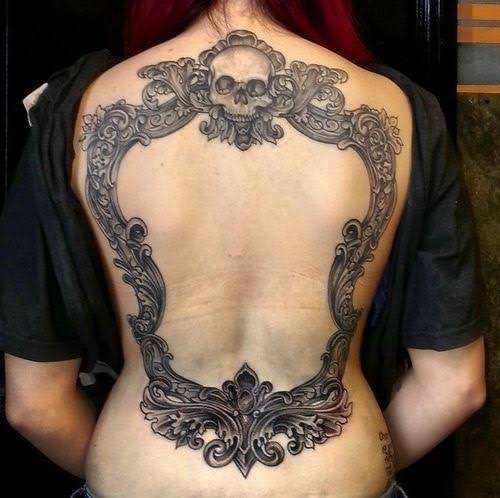
An ornate Victorian-style frame — think antique mirror or picture frame detailing — surrounding a small portrait or symbolic image adds narrative depth to a back piece. This combines bold framing linework with finer detail inside the frame itself, often blending blackwork borders with fine-line or single-needle interior work. Center back or one full shoulder blade placement works, sized 6–9 inches to give the interior detail room. Pain is moderate given the piece’s size and detail density. Healing runs 2–3 weeks, sometimes longer if shading is heavy. This is a technically demanding piece, so review your artist’s portfolio specifically for framework and portraiture, not just their general blackwork. A strong choice for anyone wanting a design with a personal story built in, rather than pure symbolism.
17. Dark Fairy or Gothic Angel Wings
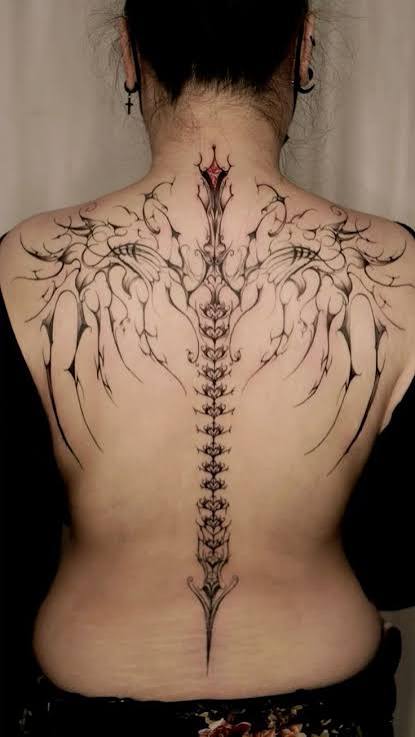
Wings spread across the upper back remain one of the most requested large-scale designs, and the goth version trades soft, feathery realism for sharper feather tips, heavier shadow work, and asymmetrical, slightly tattered detailing. This is a genuinely large commitment — full wingspan pieces often run 12+ inches across and require multiple sessions. Pain across the shoulder blades and upper back is moderate, though sessions this long mean cumulative fatigue matters more than sharp pain. Healing takes 3–4 weeks for a piece this size. Discuss session breakdown with your artist upfront — big pieces like this typically split into outline, shading, and detail passes across separate appointments. Expect the total cost to reflect that multi-session structure rather than a single flat rate.
18. Coffin and Candle Still-Life Blackwork
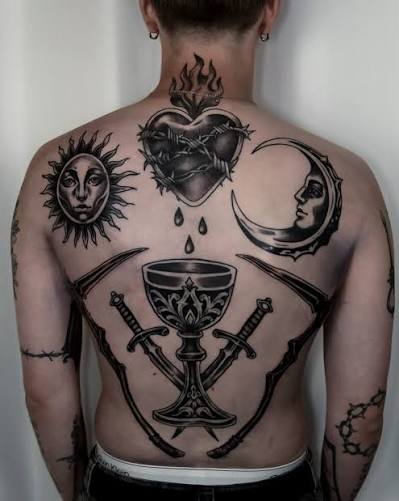
A small still-life scene — a coffin, a melting candle, maybe a wilting flower — rendered in blackwork creates a quietly dramatic composition without needing much surface area. This works well as a lower shoulder blade or side-of-spine piece, sized 4–6 inches. The still-life format lets an artist play with varied line weights across objects, keeping the eye moving through the scene. Pain is mild-to-moderate depending on exact placement. Healing takes about 2 weeks. Bring reference objects individually rather than an existing tattoo photo — asking for “a coffin like the one in this photo” gives an artist more room to adjust proportions than copying a full scene outright, which also avoids directly duplicating someone else’s custom design.
19. Gothic Snake Wrapped Spine Tattoo
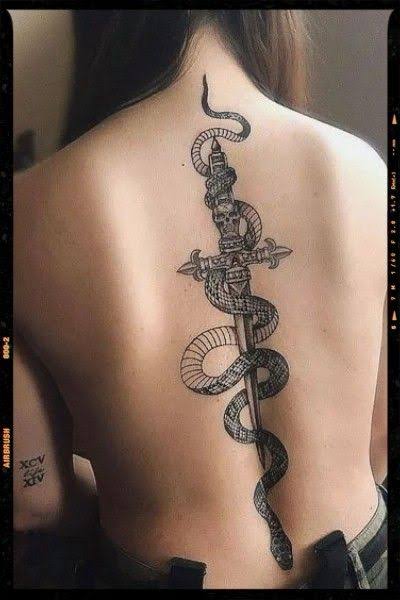
A snake coiling down or around the spine uses the body’s natural centerline the same way the cathedral spine piece does, but with more fluid, curving linework instead of straight architectural lines. Scale detail can be rendered through fine linework or light dotwork shading depending on the look you want — ask your artist which technique fits your skin tone and desired contrast level best. Spine placement brings sharper discomfort due to thin skin over bone, especially near the lower back curve. Healing takes 2–3 weeks. Size it long, at least 12 inches, to let the coiling movement actually read as motion rather than a cramped shape. This design pairs well with small additions later — a dagger, an apple, a moon — since the snake’s body offers natural space to extend the composition down the road.
20. Full Back Blackwork Tapestry (Large-Scale Custom)
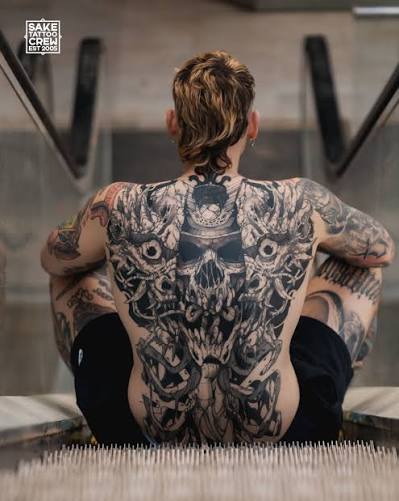
For readers ready for a serious commitment, a full-back tapestry piece combines several gothic motifs — architecture, florals, symbolism, lettering — into one cohesive custom design filling most or all of the back. This is exclusively a custom booking, never a flash or walk-in choice, and typically requires multiple sessions spread across months. Pain accumulates across session length more than any single sharp point, though spine-adjacent areas stay more sensitive throughout. Healing after each session runs 2–3 weeks, with the full piece needing months before it’s fully settled. Expect a genuinely significant cost range given the time investment — this is the most expensive category on this list by a wide margin. Work with your artist over multiple consultations to build the composition in stages, and expect at least one full sketch revision before the first session begins.
Fine Line vs. Blackwork vs. Dotwork: Know the Difference Before You Book
Fine line / single needle — Thin, precise lines made with a single needle point, low ink saturation, minimal shading. Best for delicate, detailed imagery that stays subtle. Fades a bit softer over 10+ years than heavier styles.
Blackwork — Solid, densely packed black ink filling shapes completely, often paired with bold outlines. Extremely high contrast, ages well, but requires more healing time per square inch than lighter techniques.
Dotwork — Images built entirely from small dots rather than continuous lines, creating gradient and texture effects. Requires a steady, experienced hand and tends to need more touch-up attention as dot density settles unevenly over time.
Best Placement Ideas for Goth Back Tattoos
- Spine (center back) — High visibility when shirtless, moderate-to-sharp pain due to thin skin over bone, easy to keep covered day-to-day.
- Shoulder blade (one or both) — Moderate pain, good muscle padding, easy to hide under most clothing, ideal for matching designs.
- Upper back / trapezius area — More visible in low-cut or backless clothing, moderate pain, good for medium-to-large pieces.
- Lower back — Moderate sensitivity, easy to conceal, works well for smaller symbolic pieces.
- Full back — Longest healing and highest cost, but offers the most compositional freedom for large custom work.
Tips for Success
Start by reviewing an artist’s portfolio for the exact technique you want — don’t just look at “cool tattoos,” look specifically for blackwork density, dotwork gradient consistency, or fine-line precision depending on your chosen design. Book a consultation before committing to a date, and bring multiple reference images rather than one single photo you want copied exactly. Ask direct questions: what needle configuration will they use, how many sessions does this realistically need, and what’s their approach to touch-ups. A good artist will talk through placement tradeoffs with you honestly rather than just agreeing to whatever you first suggest.
Common Mistakes and How to Avoid Them
- Sizing too small for the detail level — intricate linework or dotwork shrinks and blurs over time if placed too small originally.
- Choosing a placement that fights the design’s natural shape — a long spine piece cramped into a small square space loses its visual flow.
- Skipping aftercare instructions — improper care can affect how a tattoo settles and heals.
- Copying a design exactly from a photo — reputable artists generally prefer adapting a reference into something original rather than duplicating another artist’s custom work stroke for stroke.
- Booking a walk-in slot for a large custom piece — big back pieces need consultation time, not a same-day walk-in appointment.
Similar Variations
Nearly every design above can shift dramatically with small changes. A blackwork raven can shrink to a single-needle version for a smaller, quieter statement. A dotwork mandala can lose the skull center and become a purely geometric piece. Gothic script can move from blackletter to a slimmer serif for a softer look. Spine pieces can extend downward over future sessions, and shoulder blade designs can mirror onto both sides for symmetry. Talk to your artist about which of these adjustments fit your skin, your pain tolerance, and your long-term plans before finalizing anything.
Aftercare Basics
General aftercare typically involves keeping the area clean, avoiding direct sun exposure, and following whatever specific product recommendations your artist provides — this varies by studio and by individual skin, so always follow the aftercare sheet you’re given rather than generic internet advice. Avoid swimming or soaking the area during the initial healing window, and keep tight clothing off freshly tattooed skin where possible. If you notice anything that seems unusual during healing, contact your artist or a licensed dermatologist rather than guessing. Healing time and reaction can vary significantly from person to person.
Quick FAQ
How much does a goth back tattoo cost?
Cost varies widely by size, detail, and session count, ranging from a couple hundred dollars for a small cluster design to several thousand for a full-back custom tapestry spread across multiple sessions. Always get a quote directly from your chosen artist based on your specific design.
How painful are back tattoos?
Pain varies by individual and by exact placement — spine areas over bone tend to feel sharper, while fleshier shoulder blade or upper back areas feel more moderate. Pain tolerance differs significantly from person to person, so treat any pain estimate as a general guide only.
How long does a back tattoo take to heal?
Surface healing typically runs 2–3 weeks, though larger or heavily shaded pieces can take longer, and full ink settling can take several months. Always follow your artist’s specific aftercare guidance for your piece.
Will a fine-line or dotwork design still look good in ten years?
Bold blackwork tends to hold contrast longer than very fine, low-saturation linework, which can soften over time. Skin type, sun exposure, and aftercare all affect this, so ask your artist about realistic long-term expectations for your specific design.
Every one of these designs works because it matches technique to intention — bold blackwork for lasting contrast, fine line for subtlety, dotwork for texture, negative space for restraint. Pain, cost, and healing all vary by person and by placement, so treat everything here as a starting point for a real conversation with a licensed, experienced artist, not a final decision made alone at 1 a.m. scrolling reference photos.
Take your time picking the right studio, ask the questions this guide walked through, and don’t rush a piece this size. A well-planned goth back tattoo is one of the most rewarding pieces you can commit to — as long as you go in prepared.