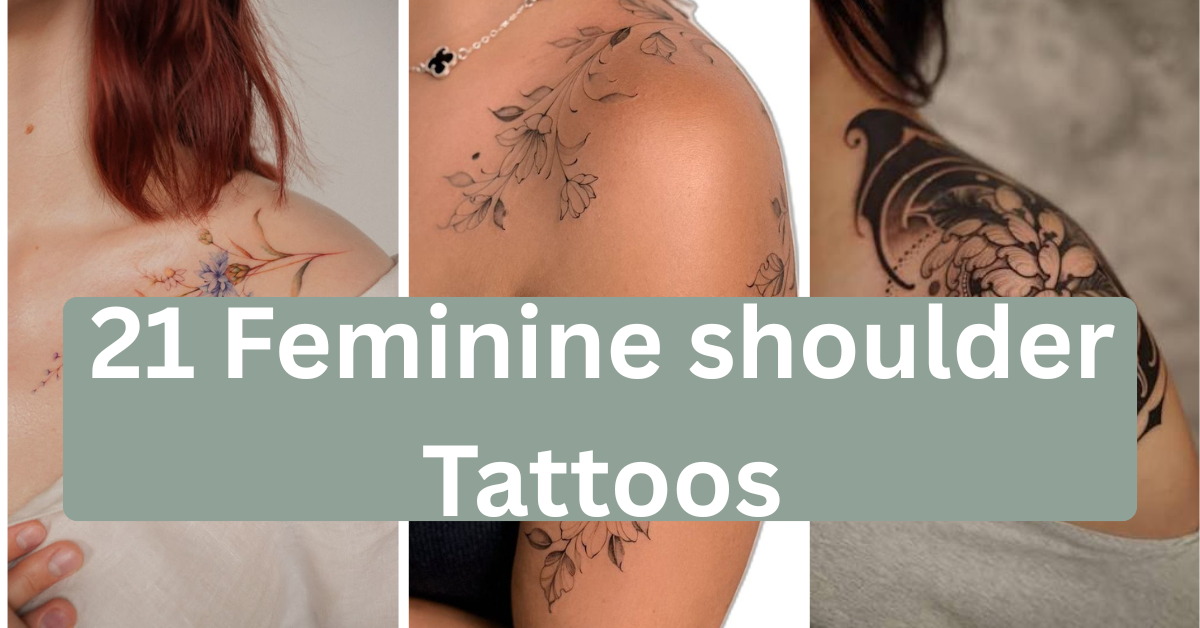
21 Feminine Shoulder Tattoos: A Real Guide to Design, Placement, and What to Expect
Nervous about picking a shoulder tattoo you’ll actually love in ten years, not just ten days? You’re not alone, and you’re in the right place. This guide pulls together real technique knowledge, placement logic, and honest pain and healing info — not just pretty pictures with no context.
So what are the best feminine shoulder tattoos? The strongest options are fine-line florals, delicate blackwork silhouettes, dotwork mandalas, and small symbolic clusters placed along the cap, back, or front of the shoulder. These styles hold detail well on curved skin, age gracefully, and range from barely-there to statement-making depending on size and shading.
Keep reading and you’ll get placement breakdowns, a pain-level comparison chart in plain English, cost ranges, aftercare basics, and the mistakes I see people make over and over before they even sit down in the chair.
Why the Shoulder Works So Well for Feminine Designs
The shoulder is one of the most forgiving canvases on the body. It’s got a natural curve that flatters botanical and flowing linework, enough flat space near the cap for larger pieces, and it’s easy to cover or show off depending on your outfit. Fat and muscle coverage here also tends to be more even than on bonier spots like the wrist or ankle, which matters for how a tattoo settles and ages. That’s part of why so many fine-line and blackwork artists love working on this spot — the skin cooperates with the technique instead of fighting it.
Fine-Line Floral Vine Shoulder Tattoo
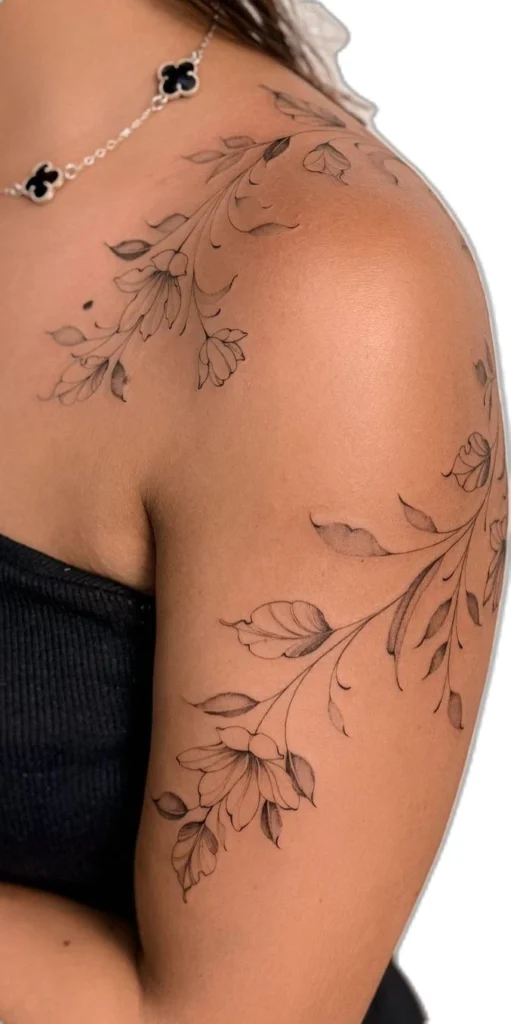
This design uses a single continuous line, usually done with a fine-line or single-needle technique, to trace a vine with small leaves and blossoms curling around the front of the shoulder or down toward the upper arm. The line weight stays thin and consistent throughout, with no heavy shading — just clean linework that relies on composition instead of contrast. It works best sized between 4 and 7 inches to keep detail crisp without crowding. Bring a reference photo of an actual vine or botanical illustration, not just a Pinterest tattoo, so your artist can adapt the linework to your skin’s curve. Pain here is generally mild to moderate since the shoulder cap has decent muscle padding. It’s an easy first-tattoo choice and reads as polished in professional settings since it’s easy to cover with a sleeve.
Single-Needle Rose Cluster
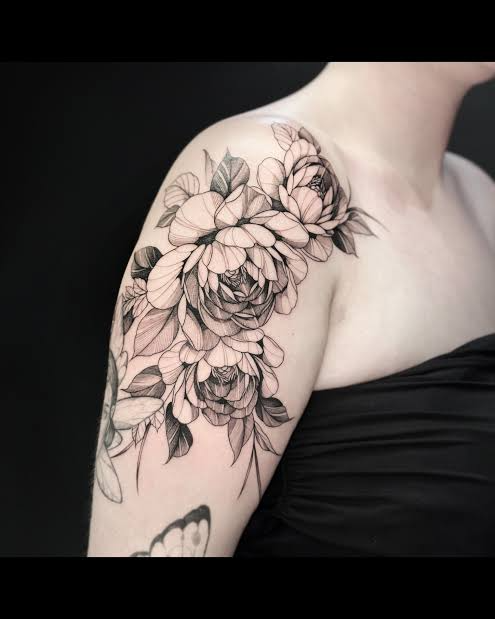
A cluster of two or three roses done in single-needle style — meaning the artist uses one fine needle instead of a grouped needle configuration — creates a soft, almost sketch-like look rather than bold traditional shading. Petals are outlined thin, with light stippling (small dots) used sparingly for shadow instead of solid black fill. This suits the back or front of the shoulder equally well, sized around 3 to 5 inches. Ask your artist specifically about “single-needle” versus “fine-line” during booking, since the two terms get used loosely and the needle choice affects how the linework ages. Expect mild discomfort. This design holds up well for matching tattoos between friends since small variations in petal count don’t disrupt the overall symmetry.
Watercolor-Style Wildflower Bouquet
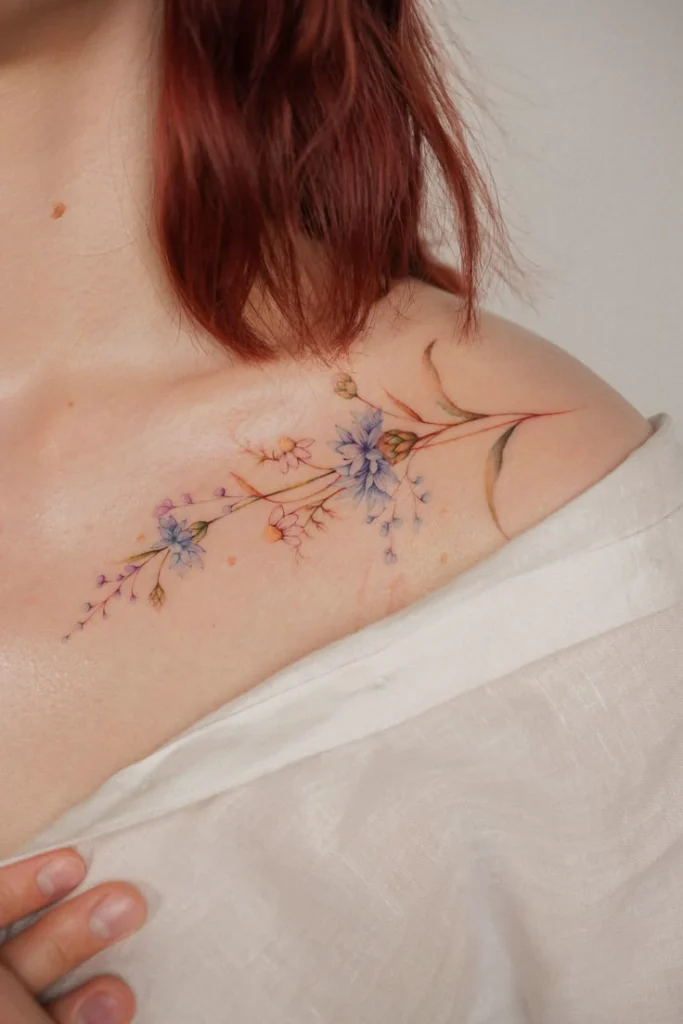
Watercolor tattoos use color saturation and soft, bleeding edges to mimic paint strokes, layered over a light structural outline so the design doesn’t lose shape over time. A wildflower bouquet in this style works nicely angled diagonally across the shoulder cap, roughly 5 to 8 inches. Because color-heavy work fades faster than pure blackwork, plan on a touch-up within 2 to 4 years to keep saturation looking fresh. Bring color swatches, not just black-and-white sketches, so your artist can plan pigment layering in advance. Pain is moderate, slightly higher than linework-only pieces because of the additional passes needed for shading. This is a bolder, more visible option — better suited to people comfortable with tattoos that read clearly even under a t-shirt sleeve.
Blackwork Botanical Silhouette
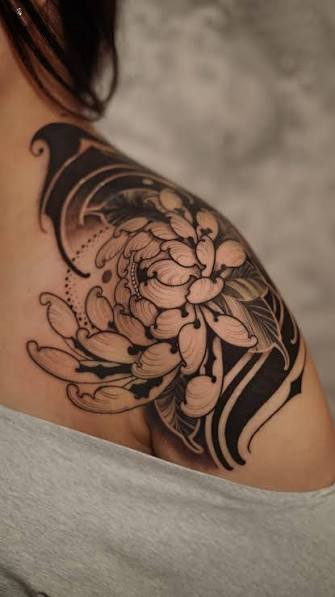
Blackwork relies on solid black fill and confident, high-contrast shapes rather than fine detail or color. A botanical silhouette — think a solid-black fern, palm leaf, or floral shape — reads more graphic and bold than fine-line florals. This design suits the shoulder cap or the back of the shoulder blade, ideally 4 to 6 inches so the negative space (the untattooed skin used intentionally as part of the design) stays clean and legible. Ask your artist how they plan to keep edges crisp, since solid black fill blurs faster than linework if the technique is rushed. Expect moderate-to-firm pressure sensation since solid fill requires more passes. It ages exceptionally well compared to fine detail work, making it a strong long-term choice.
Dotwork Mandala Shoulder Cap
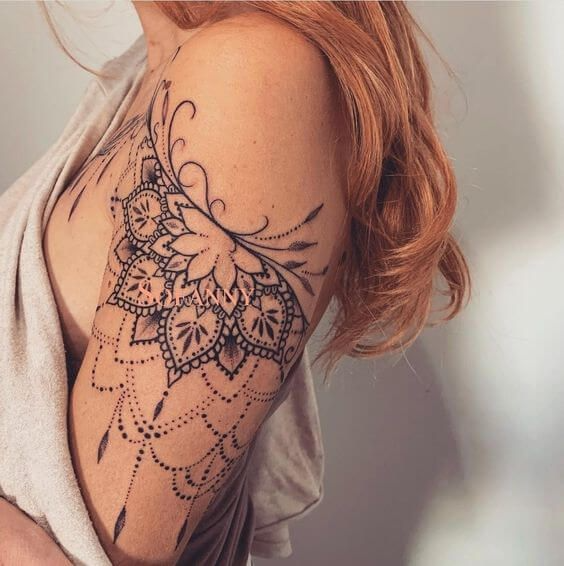
Dotwork builds an image entirely from small dots instead of continuous lines, creating gradient and texture through dot density rather than shading strokes. A mandala — a symmetrical, geometric pattern — done in dotwork looks intricate and textured, almost like fabric, and drapes naturally over the rounded shoulder cap. This works best at 4 inches or larger since tiny dotwork patterns can blur together at smaller scales. Request a stencil preview before your session so you can check the symmetry lines up with your shoulder’s natural curve. Dotwork tends to feel more repetitive but not necessarily more painful than linework. It’s a strong choice for someone wanting something detailed but not overtly floral or “cute.”
Minimalist Constellation Line Tattoo
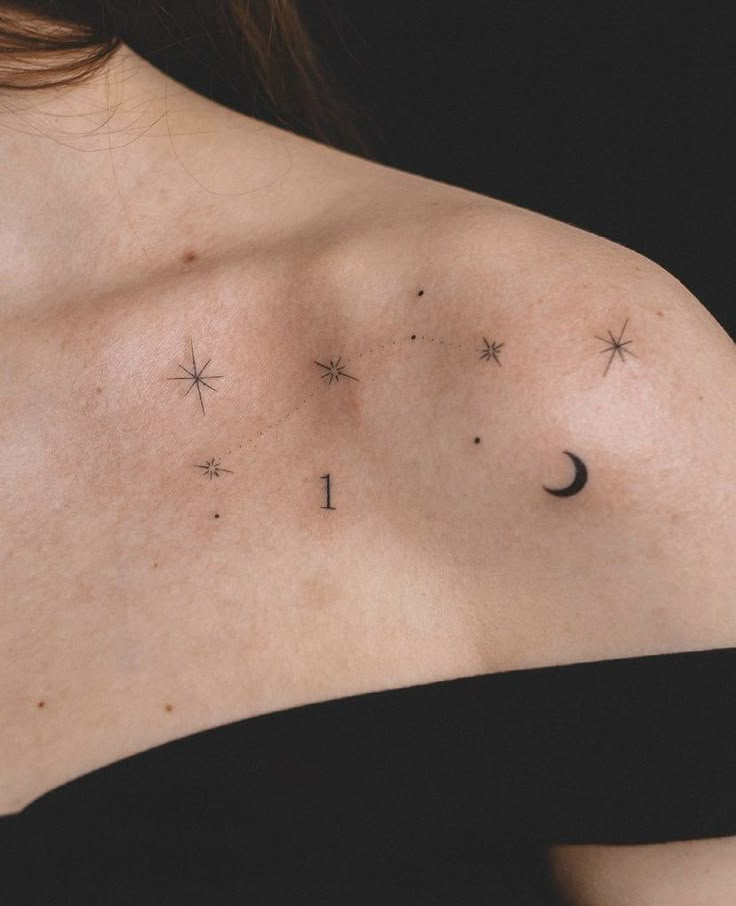
Small dots connected by thin straight lines represent a constellation, often personalized to a birth month or meaningful date. This is about as low-commitment as shoulder tattoos get — sized under 3 inches, done in fine-line style with zero shading. Placement toward the front of the shoulder or collarbone area keeps it visible in off-shoulder tops but easy to hide otherwise. Bring the exact star pattern you want, since generic “constellation flash” designs online often aren’t astronomically accurate. Pain is mild given the small scale and short session time. It’s a popular first-tattoo pick and translates well into matching designs between family members or partners.
Negative Space Crescent Moon
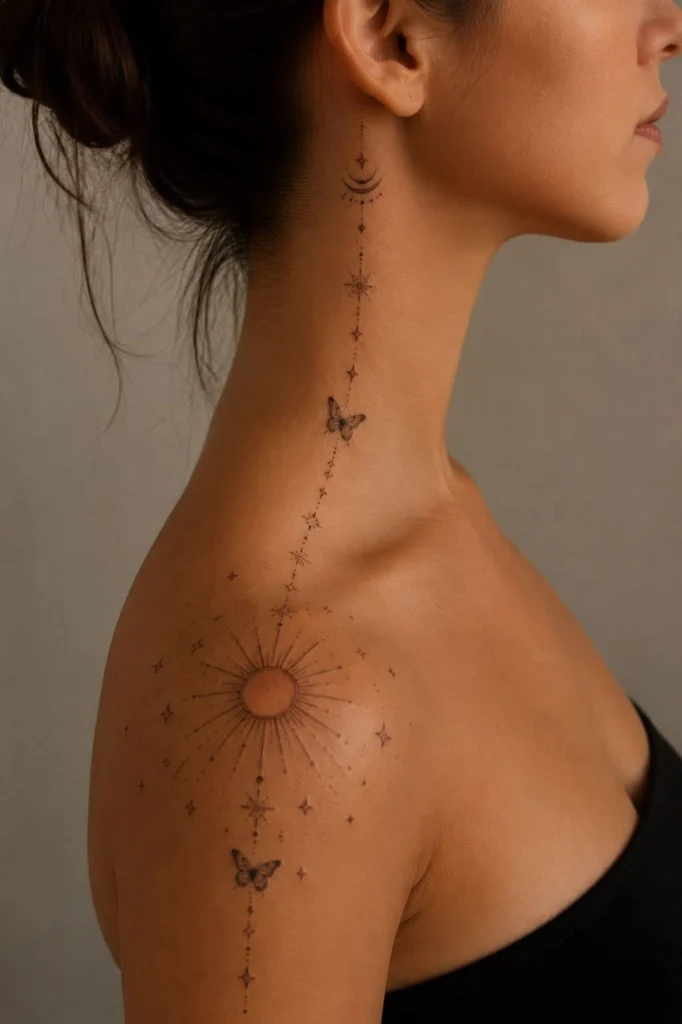
Negative space design uses the untattooed skin itself as part of the image — here, a solid black crescent shape with the “missing” sliver left bare to form the moon’s curve. It’s graphic, clean, and reads well even at a small size, around 2 to 4 inches. This suits the upper shoulder or the meaty part near the deltoid. Ask your artist to sketch the negative space boundary directly on your skin before tattooing so you can confirm the proportions look right on your specific curve, since negative space designs can look different on paper versus skin. Pain is mild to moderate. It ages well because solid black holds its edge better than fine detail.
Delicate Butterfly Fine-Line Tattoo
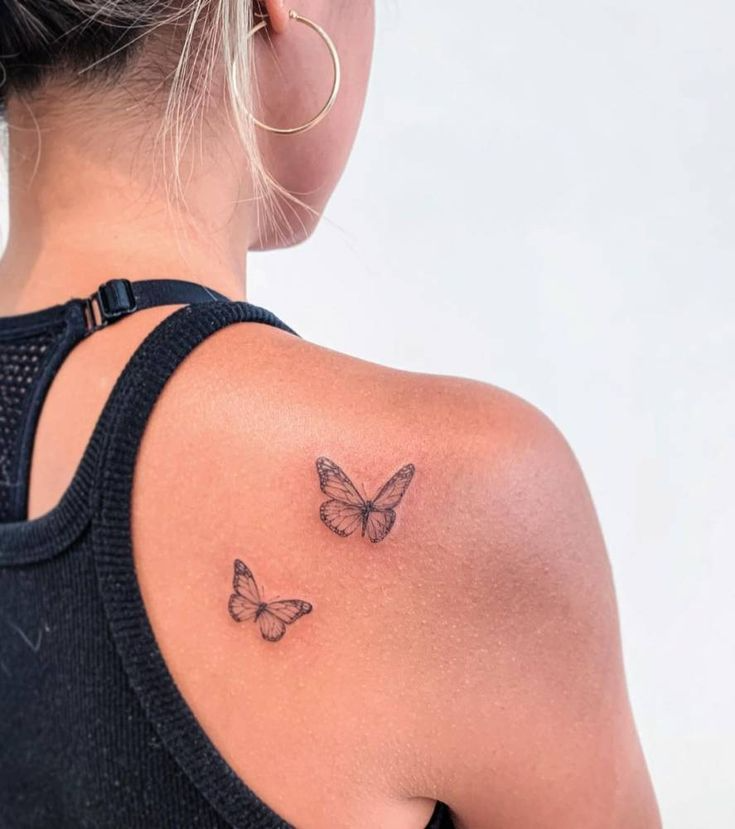
A butterfly rendered in fine-line work, with thin symmetrical wings and minimal internal detail, avoids the dated look of bold traditional butterfly flash from decades past. Wing veining is suggested with a few delicate lines rather than full shading. This sits nicely on the back of the shoulder, sized 2 to 4 inches. If you want it to look modern rather than retro, specifically ask your artist to avoid heavy black wing outlines and lean into thin, broken linework instead. Pain is mild. It works for nearly any context — visible in a tank top, hidden under a blazer — and ages gracefully since there’s minimal solid fill to blur.
Script Quote Along the Shoulder Line
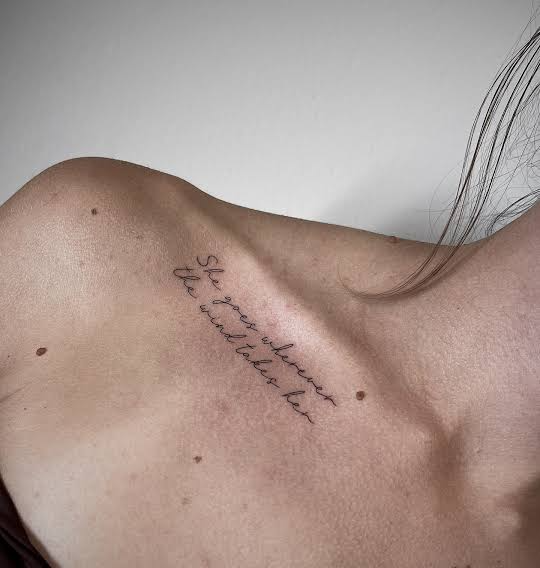
Script tattoos follow the natural curve from the collarbone toward the shoulder, using a single needle for thin, legible lettering. Font choice matters enormously here — cursive scripts with too much flourish blur into illegibility within a few years, so simpler, slightly spaced-out lettering ages far better. Keep it to a short phrase, one line, roughly 4 to 6 inches long. Bring a printed mock-up of the exact font and spacing you want; don’t just say “elegant cursive” and hope for the best. This placement is moderately sensitive since it follows bone. It’s a common choice for meaningful dates or short mantras, and it reads as professional and low-key in most work settings.
Floral Shoulder Cap (Full Cap Design)
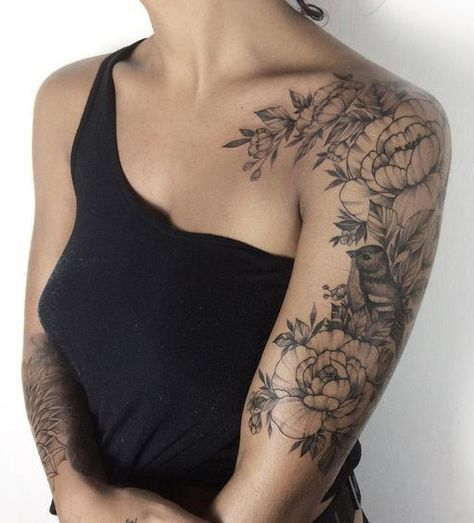
This is a larger, more committed piece that wraps fully over the curve of the shoulder, blending multiple flowers, leaves, and linework into one cohesive composition. It typically combines fine-line outlines with selective dotwork or light shading for depth, sized 6 inches or more. Because of the size, expect two sessions for larger versions. Bring reference images from multiple angles since your artist needs to plan how the design wraps around the curve, not just how it looks flat. Pain is moderate to firm given session length. This is a strong statement piece for someone who’s tattoo-experienced already and wants something more visible and dramatic than a small accent piece.
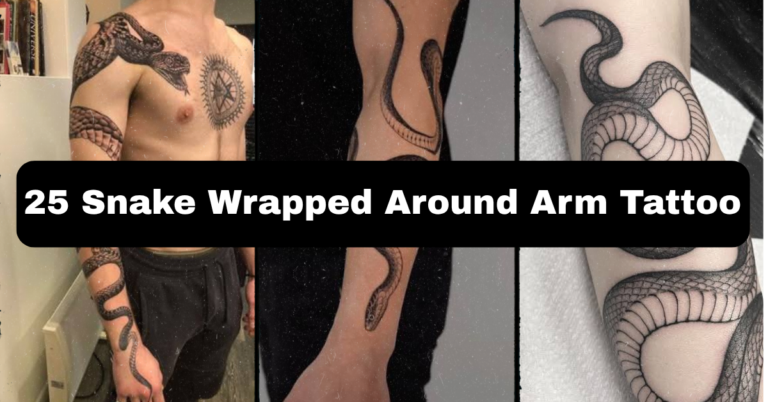
Fine-Line Snake Wrapped Around Shoulder
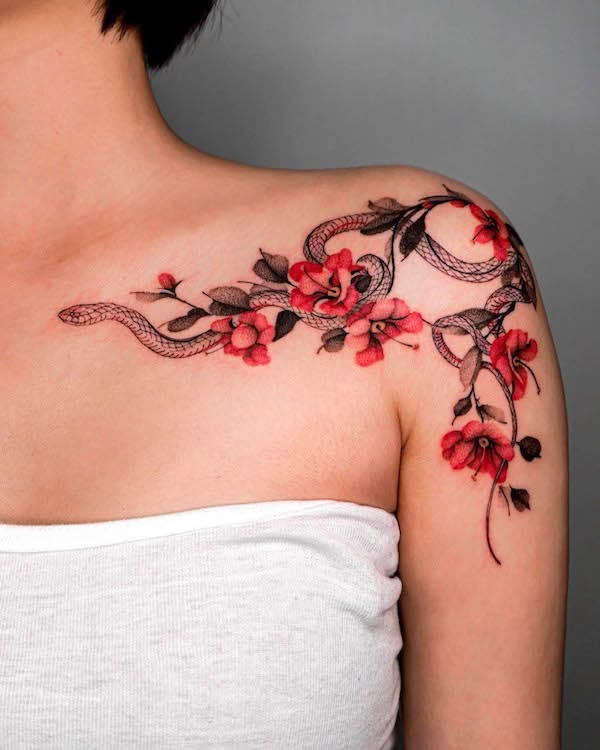
A slim snake, rendered in continuous fine-line work, wraps partially around the shoulder curve, using the body’s natural shape to make the design feel three-dimensional. Scale texture is suggested with light hatching rather than solid fill, keeping the linework consistent with a delicate aesthetic instead of bold traditional snake tattoos. Best sized 5 to 7 inches to let the wrap read clearly. Ask your artist to draw the stencil directly on your shoulder first so the wrap angle looks natural in motion, not just static. Pain is moderate. It suits people wanting symbolic meaning (transformation, rebirth) without going full bold-traditional in style.
Abstract Linework Wave Design
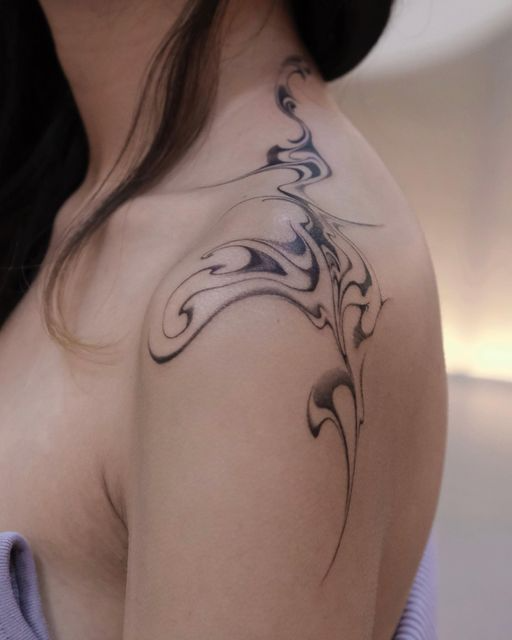
Thin, flowing lines that mimic water movement or wind create an abstract pattern rather than a literal image. This style relies entirely on line weight variation — thicker in some spots, thinner in others — to create visual rhythm without any shading or color. Placement along the top of the shoulder or angled toward the back works best, around 3 to 5 inches. Specifically discuss line weight variation with your artist during consultation, since flat, uniform lines can look stiff on this kind of abstract composition. Pain is mild. This is a good pick for someone who wants something modern and non-literal rather than symbolic or floral.
Cherry Blossom Branch
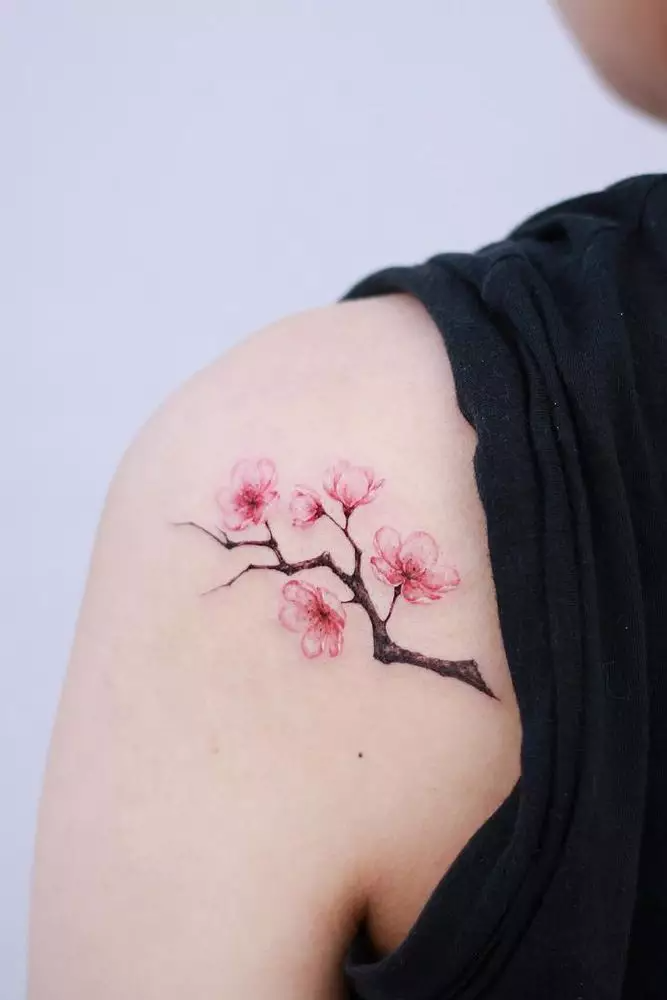
A branch with small five-petaled blossoms, done in fine-line style with tiny dotwork centers, drapes diagonally across the shoulder toward the collarbone or down the upper arm. Petals are usually left uncolored or given the faintest pink wash if color is wanted. Size range of 4 to 7 inches keeps individual blossoms distinct rather than muddy. If you want the pink wash, ask specifically about “light saturation” so the artist doesn’t over-pigment the petals into a solid block of color. Pain is mild to moderate. This design carries symbolic weight (renewal, transience) and works equally well as a solo piece or part of a matching set.
Delicate Bird in Flight
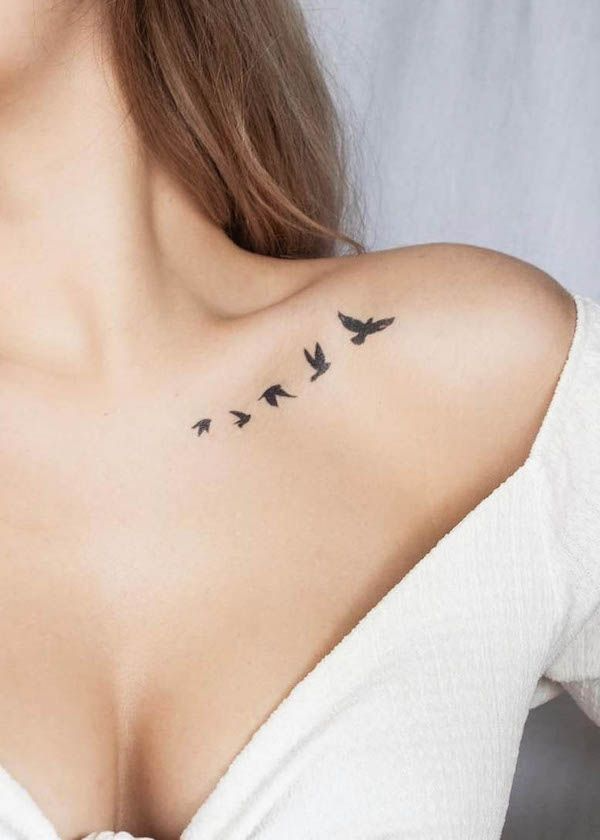
A small bird, wings mid-motion, done in fine-line work with minimal shading — usually just a few short strokes to suggest feather direction rather than full detail. Sized 2 to 3 inches, it fits neatly on the front or back of the shoulder without overwhelming the space. Ask for a “single continuous line” approach if you want the most minimalist version, versus a slightly more detailed multi-line rendering. Pain is mild given the small scale. It’s a common symbol for freedom or moving on from something, and it’s small enough to stay professional-looking in most workplaces.
Sun and Moon Duo
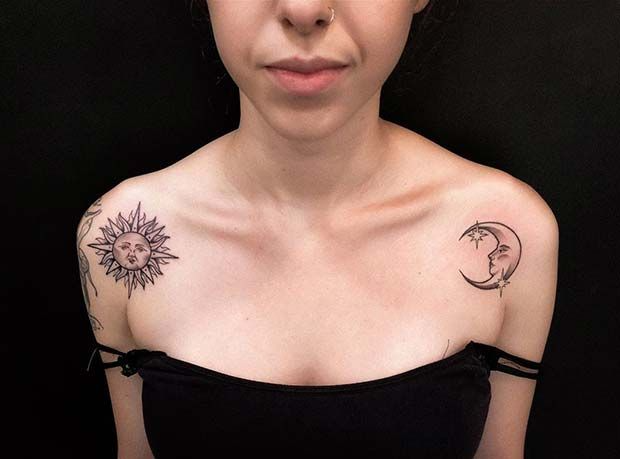
Two small symbols — a sun and a crescent moon — placed close together, usually in matching fine-line or blackwork style, represent balance or duality. Each element stays under 2 inches, positioned side by side or slightly offset on the shoulder. Bring examples of both a “solid” sun style and a “linework only” sun style to your consultation, since this single choice changes the whole design’s weight and visibility. Pain is mild. This pairing works particularly well as a matching tattoo between sisters, best friends, or partners since each person can take one symbol.
Fine-Line Feather Tattoo
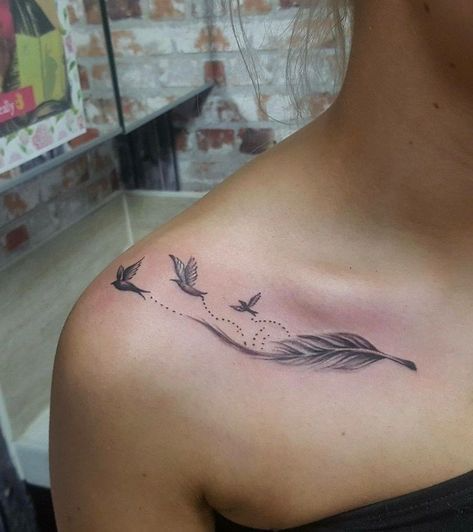
A single feather rendered with a thin central line and delicate barb strokes branching outward reads as soft and simple compared to bold traditional feather tattoos with heavy shading. Best kept vertical along the shoulder line, sized 3 to 5 inches. Specify “thin barb lines with gaps” to your artist if you want the airy, incomplete look that makes fine-line feathers feel light rather than dense. Pain is mild. It’s a low-commitment, classic option that ages reasonably well since there’s little solid fill to blur over time.
Vine and Leaf Trail Down the Arm
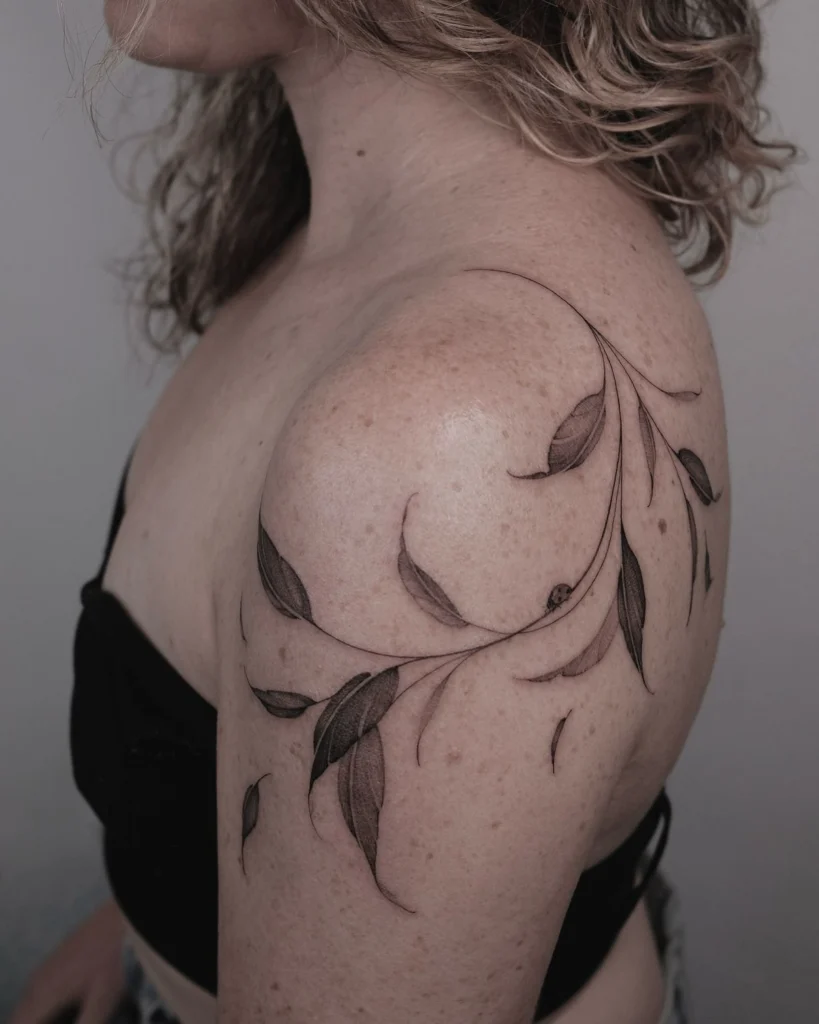
Starting at the shoulder cap and trailing down toward the bicep, this design uses continuous fine-line work to connect small leaves along a thin stem. It’s essentially an extended version of the floral vine idea but designed to flow with arm movement rather than stay contained to one spot. Length varies from 6 to 10 inches depending on how far down you want it to travel. Discuss “flow with muscle movement” specifically with your artist, since a design that looks great static can distort awkwardly when the arm bends if it’s not planned around anatomy. Pain increases slightly as it moves down toward the inner arm, which is more sensitive. This suits people wanting a larger piece without going full sleeve.
Small Symbolic Icon Cluster
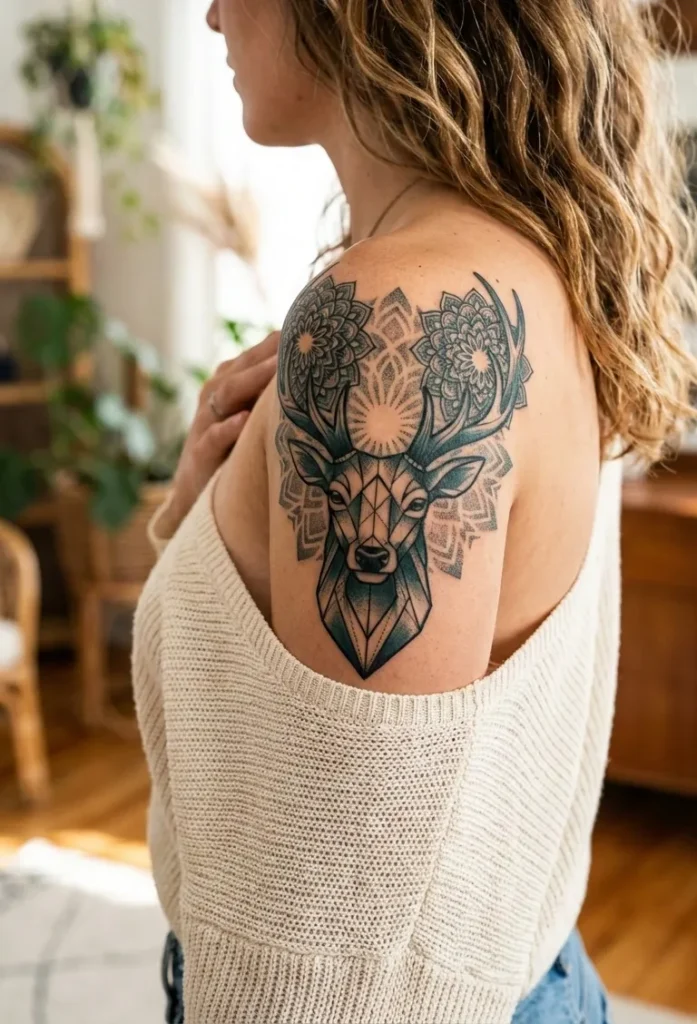
A grouping of two or three tiny meaningful icons — maybe an arrow, a small heart outline, and an initial — clustered together in matching fine-line style. Each icon stays under an inch, arranged in a loose triangle or vertical line on the shoulder. Bring a list of your icons ranked by importance so your artist can arrange the composition around the most meaningful piece first. Pain is mild given the tiny scale, though sessions with multiple small elements sometimes take longer than one bigger design due to repositioning. This is a favorite for people wanting personal symbolism without committing to one large statement piece.
Watercolor Splash Floral Accent
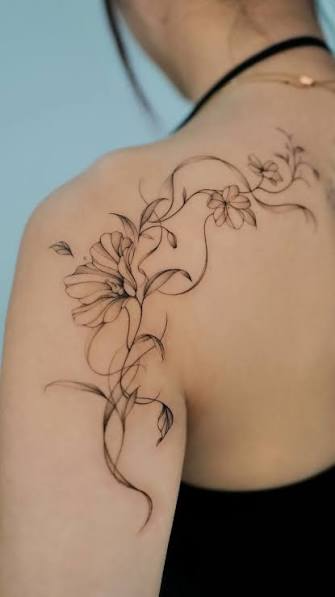
A small flower or two with a soft, unstructured color splash behind them mimics a paint spatter effect, blending fine-line floral outlines with loose watercolor-style shading. Keep it to 3 to 5 inches so the splash doesn’t overwhelm the floral focal point. Ask your artist how they’ll seal the color edges, since unbounded watercolor splashes fade unevenly faster than contained color work. Pain is moderate due to the extra shading passes. This is a good option for someone who wants a pop of color without a large, heavily saturated piece.
Ornamental Lace-Style Shoulder Tattoo
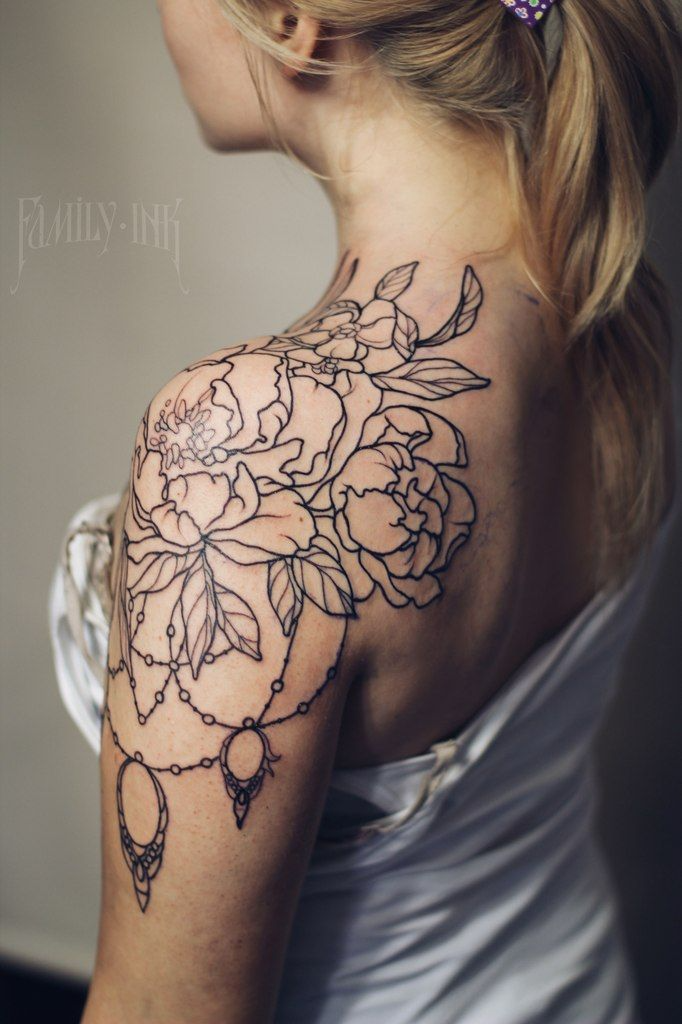
This design mimics lace patterns using fine, symmetrical linework and small dotwork accents to suggest fabric texture, wrapping partially around the shoulder cap. It’s detailed and requires a steady, experienced hand since symmetry mistakes are obvious in lace-style patterns. Best sized 4 to 6 inches minimum to preserve pattern clarity. Ask specifically to see portfolio examples of lace or textile-pattern work, since this is a more specialized skill than general florals. Pain is moderate to firm given the density of linework. It reads as elegant and detailed, a strong choice for someone wanting something ornamental rather than purely botanical.
Fine-Line Geometric Flower
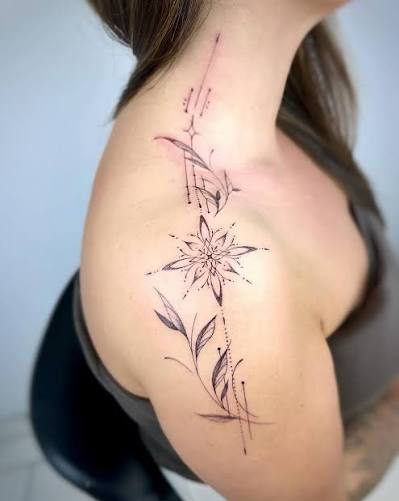
A flower built from clean geometric shapes — triangles, straight petal edges, circles — rather than organic curves, blending botanical subject matter with a modern, structured line style. Sized 3 to 5 inches, it sits well on the front or cap of the shoulder. Bring graph-paper-style reference sketches if you want strict symmetry, since freehand geometric work can look slightly off without careful stencil planning. Pain is mild to moderate. This design bridges the gap between soft feminine florals and a more modern, minimalist aesthetic, and it ages cleanly since there’s little shading to blur.
Best Placement Ideas
- Front of the shoulder (near collarbone): highly visible, moderate pain, easiest to show off in off-shoulder or tank tops
- Shoulder cap (top curve): great for wraparound designs, moderate pain, easy to cover with regular sleeves
- Back of the shoulder: more private, slightly harder to see yourself, similar pain level to the cap
- Down toward the upper arm/bicep: good for extended designs like vines, slightly more sensitive as you move inward
- Behind the shoulder toward the shoulder blade: more discreet, good for larger symbolic pieces, moderate pain
Tips for Success
Look through several years of an artist’s actual healed work, not just fresh-ink photos, since healed results tell you how a style ages on real skin. Fine-line and single-needle specialists should have a portfolio full of consistent thin, clean lines — inconsistency there is a red flag. For blackwork or dotwork, check that solid fills look even and edges look crisp, not patchy. Bring multiple reference images, be honest about your pain tolerance and skin type, and ask directly about their approach to touch-ups and stencil placement before you book. A short consultation is worth far more than rushing into a walk-in appointment for anything with real detail.
Common Mistakes and How to Avoid Them
- Choosing a design too small for the amount of detail it contains, causing lines to blur together as it heals
- Picking a placement that fights the design’s natural shape instead of following the shoulder’s curve
- Skipping the aftercare instructions because “it’s just a small tattoo”
- Copying a design exactly from a photo without adjusting proportions for your own body and skin tone
- Booking a walk-in for a highly detailed custom piece that really needed a dedicated consultation first
Similar Variations
Nearly every design above can be resized smaller for a subtler look or larger for a statement piece. Fine-line pieces can be recolored with light watercolor washes for more visual interest, while blackwork and dotwork designs can be combined into a single composition for added texture. Symbolic icon clusters can be turned into matching tattoos by splitting elements between two or more people, and floral pieces can be extended into a larger cap or trail design later as an add-on session.
Aftercare Basics
General dermatological consensus recommends keeping a new tattoo clean, moisturized, and out of direct sun while it heals, and avoiding swimming pools or soaking the area until it’s fully closed. Healing time for most shoulder tattoos runs around two to three weeks on the surface, though full settling under the skin can take longer. Always follow the specific aftercare sheet your artist gives you, since products and timelines can vary, and check in with them or a dermatologist if you notice anything that seems unusual.
Quick FAQ
How much does a feminine shoulder tattoo cost?
Small fine-line pieces often run $80–$200, while larger cap designs or color work can range from $300–$800 or more depending on the artist’s rate and session length.
How painful is a shoulder tattoo?
Most people describe it as mild to moderate, since the shoulder has decent muscle coverage. Pain tolerance varies by individual, so ask your artist about your specific placement before booking.
How long does healing take?
Surface healing generally takes two to three weeks, though this varies by design size and individual skin. Deeper healing continues for a few more weeks after that.
Will a fine-line tattoo fade faster than a bold one?
Thin fine-line work can soften slightly faster over many years compared to bold blackwork, which is why occasional touch-ups are common for detailed pieces.
Wrapping It Up
Choosing among feminine shoulder tattoos really comes down to matching the technique — fine-line, blackwork, dotwork, or watercolor — to how visible, bold, or subtle you want the result to be, and being honest with yourself about placement, pain, and long-term care. The shoulder is genuinely one of the most flattering and versatile spots on the body for this kind of work, and with the right artist and a little homework, you’ll end up with something that still feels like “you” years down the road. Take your time, ask good questions, and trust that the right feminine shoulder tattoo is worth the wait.