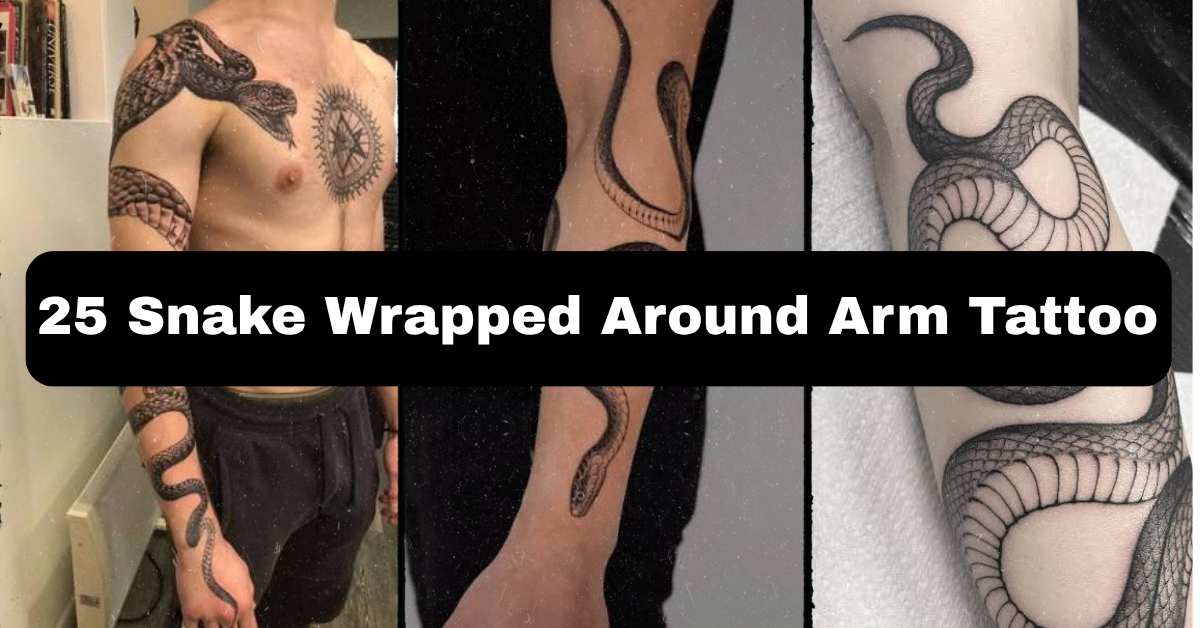
25 Snake Wrapped Around Arm Tattoo Ideas: Placement, Pain, and What to Know Before You Book
Nervous about picking a snake wrapped around arm tattoo you’ll regret once it’s actually settled into your skin? That’s a smart thing to think through first, since this design lives or dies on how well the artist handles the wraparound geometry.
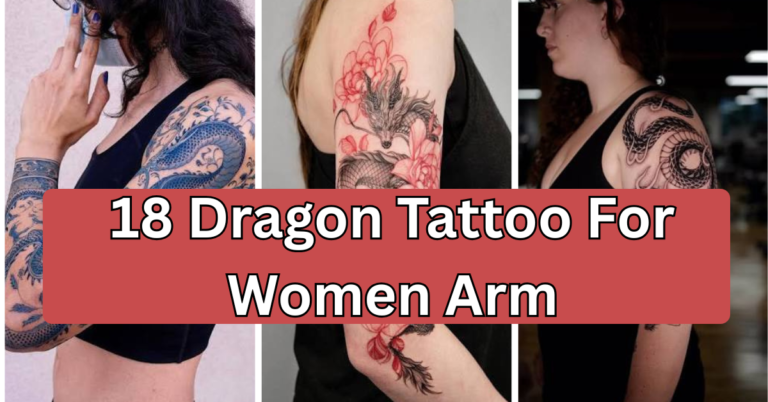
So what makes a great snake wrapped around arm tattoo? Fine line and blackwork snakes that follow the arm’s natural taper, wider near the shoulder and narrowing toward the wrist, hold their shape best over time, since the body’s curve is already built into the design instead of fighting it. Detailed scale texture and directional shading also help the snake read as wrapping around rather than just sitting flat on top of the skin.
Stick with me, because we’ll cover placement tradeoffs, realistic pain levels, healing time, how to brief an artist on a wraparound design specifically, and the mistakes that make a snake tattoo look flat instead of dimensional.
Why the Snake Wrap Works So Well on the Arm
A snake wrapped around the arm is one of the most naturally suited tattoo concepts for this part of the body, because the arm is already a long, tapering cylinder, and a snake’s body is basically a long, tapering line. That shared geometry is what makes this design feel so intentional compared to a lot of other wraparound concepts. Done well, the snake appears to genuinely coil around the limb, using the arm’s real curve instead of a flat illustration stretched over it. That’s also why technique matters so much here, scale texture, shading direction, and how the head and tail are positioned all affect whether the final piece reads as three-dimensional or just looks like a snake-shaped outline. Let’s get into the specific design directions that pull this off well.
1. Fine-Line Snake Spiraling the Forearm
This design uses thin, single needle linework to trace a snake’s body spiraling from wrist to elbow, with minimal shading and simple scale outlines rather than heavy texture. Single needle just means the artist uses one very fine needle tip, which allows for delicate detail without heavy black fill. Best placed on the outer forearm where the natural taper helps the spiral read clearly. Keep the body width consistent as it spirals, roughly a quarter inch, so it doesn’t blur into a shapeless line over time. Pain is generally mild to moderate on the fleshier parts of the forearm. Bring your artist a reference photo of a real snake’s coiling pattern, not just a cartoon version, so the spiral looks anatomically believable. This suits a subtler, more understated take on the theme. Bold blackwork versions go in the opposite direction.
2. Bold Blackwork Snake Coil
Blackwork means solid, heavily saturated black fill rather than fine outlines or light shading, which gives this version serious visual weight and contrast against the skin. A snake rendered mostly in solid black, with negative space defining scale texture, reads as bold and graphic rather than delicate. This needs a decent amount of space, generally three inches wide or more at the thickest point, so the solid sections stay clean. Best on the outer forearm or upper arm. Pain runs moderate to higher given the dense saturation and longer session time. Ask your artist about their solid fill technique specifically, uneven black saturation is one of the most common issues with this style. It ages well since solid black holds its depth longer than fine detail. Dotwork scale texture adds a different kind of dimension.
3. Dotwork Snake with Textured Scales
Dotwork means the entire shading and texture effect is built from tiny individual dots rather than solid lines or flat fill, which creates a soft, layered look especially effective for scale detail. This technique needs real precision, since uneven dot spacing shows up clearly across a long, winding body. Best on the outer forearm or upper arm with three to five inches of width at the widest point. Pain is moderate, and sessions can run long given the repetitive dot placement across the whole length of the snake. Ask your artist how they plan to vary dot density to suggest scale texture and shadow, a gradual shift reads more naturally than uniform dot spacing throughout. This suits people wanting more visual depth than flat linework without moving into full blackwork. Full sleeve wraparound designs take the concept much bigger.
4. Full Sleeve Wraparound Snake
This extends the snake’s body the full length of the arm, from wrist to shoulder, often as a standalone sleeve concept or combined with other elements like flowers or skulls. This is a serious, multi-session commitment given the size and detail involved. Best planned with your artist from the very first consultation, including where the head and tail land, since the proportions need to work across the entire limb, not just one section. Pain runs on the higher end given total session length. Ask your artist for a full sketch mapped directly onto your arm using a marker or stencil before the first session, this lets you assess proportion while it’s still adjustable. This suits people ready for a bold, highly visible statement piece. Smaller wrist-only coils offer a lower-commitment alternative.
5. Small Snake Coiled Around the Wrist

This scales the concept down to just the wrist, with the snake’s body coiling once or twice around like a bracelet rather than extending up the arm. Fine line keeps the design delicate at this smaller scale, usually under two inches in total coverage. Best placed right at the wrist joint, though this is a more sensitive area due to thinner skin and less padding. Pain runs moderate to higher here compared to the fleshier forearm. This is a strong low-commitment option since it’s quicker to complete and easier to keep subtle for work settings. Ask your artist to keep the head and tail slightly overlapping rather than meeting edge to edge, this reads as more naturally coiled. Watercolor-style snake designs bring color into the mix.
6. Watercolor-Style Snake with Color Wash
This layers soft, translucent color washes around a fine line snake outline, mimicking the loose, blended look of watercolor paint rather than solid, saturated fill. Saturation stays lighter here than in traditional color work, which creates a softer gradient effect around the crisp linework. Best suited to the outer forearm or upper arm where there’s room for the color to spread. Because pigment can fade faster than black ink over time, this style may need a touch-up down the line to keep the color vibrant, though this varies by skin and sun exposure. Pain is moderate, and color sessions typically run longer than black-only work. Ask your artist about their color retention experience specifically, this technique is more demanding than standard blackwork. Negative space snakes take a more minimal approach to the same idea.
7. Negative Space Snake Outline
Negative space tattooing uses untouched skin as part of the actual design, so instead of the snake’s body being solid black, sections are defined by what’s left unshaded around black fill or outline work. A snake using this technique creates a striking, almost sculptural look with real visual depth. This requires an experienced hand, since the artist has to plan the blank sections as carefully as the inked ones. Best on the outer forearm with three inches or more of width. Pain is comparable to standard blackwork in the shaded sections. Ask specifically to see portfolio pieces showing negative space work before booking, this technique separates skilled artists from beginners quickly. Realistic shaded snake designs go in a more detailed direction.
8. Realistic Black and Grey Shaded Snake
This uses black and grey shading, built through fine gradients rather than flat black fill, to create a lifelike rendering of scale texture, light reflection, and body shadow. This is a technically demanding style, since realistic shading requires smooth transitions to avoid looking patchy or flat. Best sized four inches wide or larger at the thickest point on the upper arm or forearm to give the shading room to develop properly. Pain runs moderate to higher given the extended shading work. Ask to see portfolio pieces specifically showing black and grey realism, not just linework, before booking, this style separates experienced artists from beginners quickly. It’s a serious commitment in both session length and cost. Snake and dagger combinations bring in classic imagery.
9. Traditional Snake and Dagger Wrap
Traditional tattoo style uses bold, thick outlines with limited but saturated color fill, a look that’s held up for decades specifically because the heavy linework ages so well. Pairing a coiling snake with a dagger it’s wrapped around is one of the most recognizable combinations in this style. Best placed on the outer forearm or upper arm with four inches or more of space for both elements. Pain runs moderate given the saturated color work and session length. This is a great walk-in option if you want a quicker, less custom booking process, most street shops keep flash sheets on hand for this exact combination. It’s a highly visible, bold placement choice, so consider your comfort with a colorful, statement piece. Minimalist single-line snakes simplify things dramatically.
10. Minimalist Single-Line Snake

This strips the snake down to one continuous, unbroken line forming the coiled body, without any shading or scale texture. The appeal is in the restraint, a design that looks like it was drawn in one motion. Best kept small to medium, two to three inches, on the wrist or forearm. Pain is generally mild given the minimal linework. This is an excellent first-tattoo choice since it’s quick, low in detail, and heals fast. Ask your artist to keep the line thickness slightly bolder than typical fine line work, since extremely thin single-line designs can soften noticeably within a few years. Snake and flower combinations bring in softer, contrasting elements.
11. Snake Wrapped Through Floral Elements
This weaves the snake’s body through small flowers or leaves along its coiled path, contrasting the sharp, angular snake shape against softer, more organic floral detail. The two elements need consistent line weight relative to each other so neither looks like an afterthought. Best on the outer forearm or upper arm with four inches or more of space. Pain is moderate given the combined detail. Ask your artist to plan the full composition together rather than adding florals as a separate step, spacing between the snake and the flowers matters for visual balance. This suits people wanting a snake design with a softer, more decorative edge. Snake eating its own tail brings in symbolic meaning.
12. Ouroboros Style Snake Eating Its Tail

The ouroboros is a snake or dragon shown biting its own tail, forming a complete circle, a classic symbol representing cycles, renewal, or infinity. This composition needs precise circular planning, since the head and tail meeting point is the most visually important part of the whole design. Best placed as a coiled loop around the upper arm or wrist, generally three to five inches depending on placement. Pain varies by exact spot chosen. Ask your artist to sketch the head and tail connection point first and build the rest of the coil outward from there, this keeps the meeting point clean rather than looking like an afterthought. This design carries more symbolic weight than a purely decorative snake wrap. Snake with skull accents bring darker imagery into the composition.
13. Snake Coiled Around a Small Skull
This pairs a coiling snake with a small skull element, often positioned near the head of the snake or at one end of the wrap, a combination with deep roots in traditional tattoo iconography. Shading on the skull should stay distinct from the snake’s scale texture so the two elements read as separate but connected. Best on the outer forearm or upper arm with four inches or more of space. Pain is moderate to higher given the combined detail and session length. Ask your artist how they plan to balance the two focal points, skull and snake head, so one doesn’t overpower the other visually. This suits people wanting a bolder, more traditional statement piece. Two-tone black and grey snakes add depth without full color.
14. Two-Tone Black and Grey Snake Wrap
Rather than solid black or full color, this uses varying shades of grey alongside black to build depth and dimension in the scale texture, achieved through diluted ink or shading technique rather than actual color pigment. This creates a more three-dimensional look than flat black alone. Best on the outer forearm or upper arm with three inches or more of width. Pain is moderate given the shading work involved. Ask your artist about their grey wash technique specifically, since inconsistent dilution can lead to patchy healing over the coiled sections. This suits people wanting more depth than blackwork alone without moving into full color. Snake head focal point designs shift the emphasis toward one section.
15. Snake Head as the Focal Point
This concentrates most of the detail, shading, scale texture, fangs, eyes, into the snake’s head, while the body trailing around the arm stays simpler and less detailed. This composition choice draws the eye directly to the head first, which works well if that’s the part of the design you care most about visually. Best with the head placed on the outer forearm or shoulder area where there’s room for facial detail to read clearly. Pain is moderate given the concentrated shading work in that section. Ask your artist to spend extra consultation time on the head reference specifically, since this is the section viewers will focus on most. This suits people wanting a striking focal point rather than uniform detail throughout. American traditional color snakes bring saturated color into the mix.
16. American Traditional Color Snake
This uses the bold outlines and limited, saturated color palette, often greens, reds, and yellows, associated with classic American traditional tattooing. The thick black outlines are what make this style age so well over decades, since they hold their shape better than thin linework as skin changes over time. Best on the outer forearm or upper arm with four inches or more of space. Pain runs moderate given the color saturation and session length. This is a great walk-in option for a quicker booking process, since most traditional-style shops keep flash sheets with snake designs ready to go. Ask your artist about color longevity specifically, brighter colors sometimes need a touch-up sooner than black ink alone. Snake wrapped around a rose adds classic romantic symbolism.
17. Snake Coiled Around a Rose
This pairs the snake with a rose along its coiled path, a combination that balances something sharp and dangerous against something soft and classically romantic. The rose petals should use distinct shading from the snake’s scales so the two textures stay visually separate. Best on the outer forearm or upper arm with four inches or more of space for both elements. Pain is moderate given the combined detail. Ask your artist to plan the rose placement relative to the snake’s head, positioning it near the head usually creates a stronger focal point than placing it mid-body. This suits people wanting a design with more classic tattoo symbolism. Micro snake accents offer a much smaller alternative.
18. Micro Snake Wrapped Around a Finger or Wrist

This shrinks the entire concept down to a tiny scale, wrapping just once or twice around a finger or the narrowest part of the wrist. Fine line is the only realistic option at this size, since any shading or texture would blur together almost immediately. Keep the design under an inch in total length. Pain runs moderate to higher here given how close this placement is to bone. Healing also takes a bit more care at this size since fingers see constant movement and washing. This is a popular low-commitment or matching tattoo option. Ask your artist about ink retention at this scale specifically, extremely fine detail on fingers sometimes needs an early touch-up. Snake with lightning or storm elements bring in more dynamic energy.
19. Snake Wrapped Around Lightning or Storm Clouds

This combines the coiling snake with jagged lightning bolts or storm cloud shading, creating a more aggressive, high-energy visual tone than florals or classic symbolism would. Lightning elements should stay sharp and angular in contrast to the snake’s smooth, curving body. Best on the outer forearm or upper arm with four inches or more of space. Pain is moderate to higher given the combined detail. Ask your artist how they plan to layer the lightning behind or around the snake’s coils, proper layering keeps the composition from looking flat or cluttered. This suits people wanting a bolder, more intense visual statement. Snake with tribal-inspired patterning brings a different stylistic influence.
20. Snake Combined with Geometric Pattern Work
This weaves the snake’s coiled body through or alongside sharp geometric shapes, triangles, straight radiating lines, blending organic and structured elements into one composition. Precision matters a lot on the geometric sections specifically, since straight lines and angles show imperfections more obviously than the snake’s naturally curving body. Best on the outer forearm with four inches or more of space. Pain is moderate given the total linework. Ask your artist whether they use a ruler or stencil guide for the geometric sections, this genuinely affects how clean the final result looks. This design suits people wanting a more modern, structured take on the traditional snake wrap. Snake bicep wrap designs focus on the upper arm specifically.
21. Snake Coiled Tightly Around the Bicep
This concentrates the entire coil within the upper arm rather than extending down the forearm, wrapping tightly around the bicep in two or three visible loops. This placement actually benefits from muscle definition, since the coils can be planned to follow natural contours when the arm is flexed. Best sized three to five inches depending on your arm’s natural width. Pain is moderate to higher given the muscle-heavy area and total session length. Ask your artist to plan the coil spacing based on your arm at rest, not flexed, since tattoos are applied to relaxed skin and need to look correct in both states. This suits people wanting a more concentrated, muscular presentation of the design. Snake with cracked skin or scale peeling brings a more surreal element into play.
22. Snake with Cracked Scale or Peeling Texture Effect
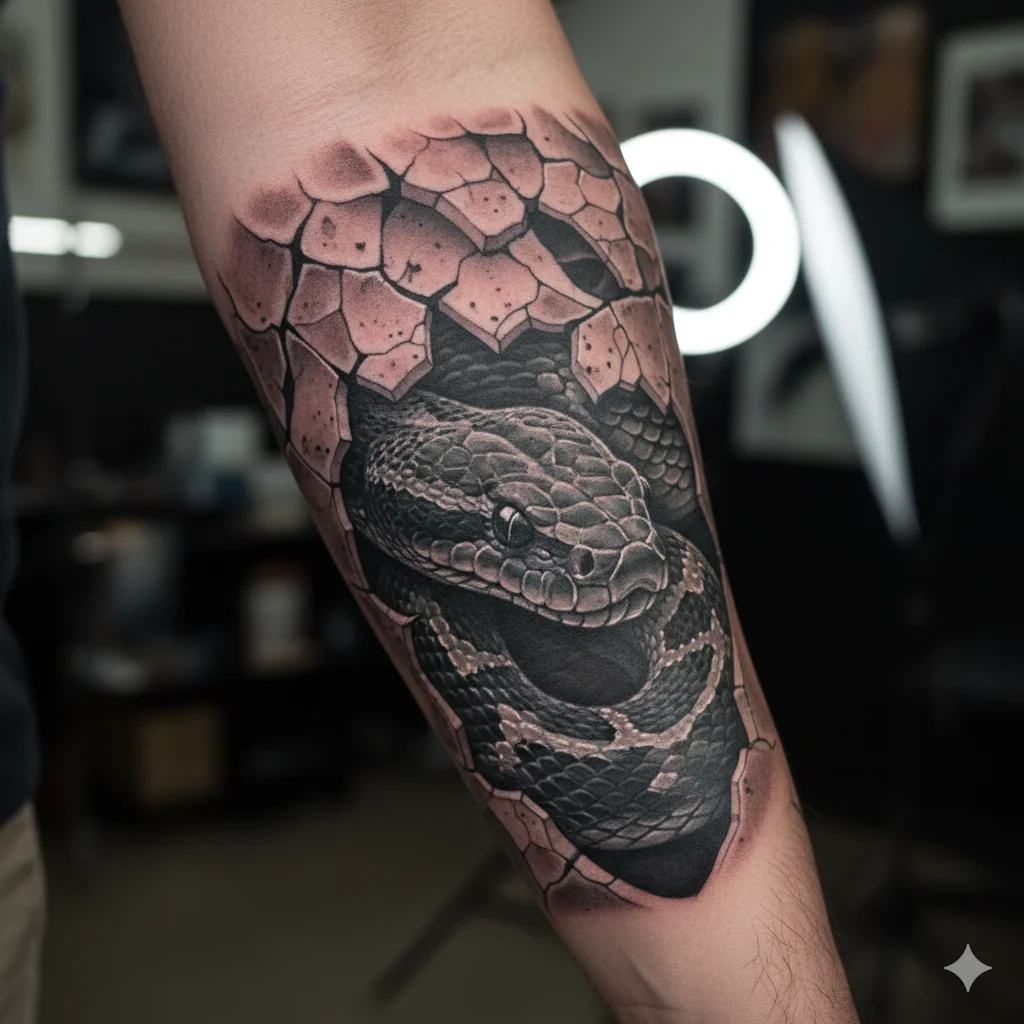
This adds a stylized cracking or peeling detail to sections of the snake’s body, as though the scales are shedding or fragmenting, for a more surreal, artistic take on the traditional wraparound concept. This effect relies heavily on shading skill, since it needs to look intentional rather than like a rendering mistake. Best on the outer forearm or upper arm with four inches or more of space to let the effect read clearly. Pain is moderate to higher given the detailed shading work. Ask to see portfolio examples of this specific effect before booking, it’s a more advanced technique that not every artist executes well. This suits people wanting something more unusual and artistically distinct. Snake paired with a compass or map element adds a different symbolic layer.
23. Snake Wrapped Around a Compass
This combines the coiling snake with a compass rose, a classic symbol for direction, guidance, or journey, positioned at one end of the wrap, often near the wrist. The compass needs precise, symmetrical linework, since any unevenness in the points is noticeable in this kind of structured design. Best on the outer forearm with four inches or more of space for both elements. Pain is moderate given the combined detail. Ask your artist to finalize the compass proportions first before working the snake’s coil around it, this keeps the geometry from getting thrown off partway through. This suits people wanting a design with a stronger sense of personal narrative or meaning. Half-sleeve snake and nature scenes bring in a broader composition.
24. Half-Sleeve Snake Through a Nature Scene
This extends the snake through a larger backdrop, ferns, mountains, or a forest scene, covering the lower or upper half of the arm as part of a broader composition rather than the snake standing alone. This is a significant undertaking requiring multiple sessions and careful planning around how the snake interacts with the background elements. Best planned entirely with your artist before the first session, including exact placement of the head and tail within the larger scene. Pain runs on the higher end given total session length. Ask your artist for a complete stencil preview covering the whole composition, adjusting a piece this large is much easier before the first line goes in. This suits people ready for a serious, highly visible commitment. Our final idea brings the concept full circle with a complete sleeve piece.
25. Full Sleeve Snake with Layered Detail

This combines several of the techniques covered so far, fine line detail near the head, dotwork or shaded texture through the body, and bold blackwork sections for contrast, into one comprehensive full sleeve design. This is the most involved option on this list and typically requires several sessions spaced out over weeks or months to complete properly. Best planned from the very first consultation with a full sketch mapped directly onto your arm. Pain runs on the higher end given the extended total session time across multiple technique changes. Ask your artist how they’ll sequence the different techniques across sessions, most start with linework and structural elements before layering in shading and texture. That wraps our full list of twenty-five snake wrapped around arm tattoo ideas.
Best Placement Ideas
- Outer forearm: flat, stable surface with a natural taper, ideal for spiraling or coiled snake designs
- Wrist: high visibility, more sensitive due to thin skin and bone proximity, best for small coiled accents
- Upper arm and bicep: benefits from muscle contour, good for concentrated coils or larger compositions
- Full arm wraparound: most visible and highest commitment, best for experienced clients wanting a bold statement
- Finger or narrow wrist point: very small scale only, more sensitive, best for micro fine line designs
Tips for Success
Choosing the right artist matters a lot with this design specifically, since a snake wrap lives or dies on how well the artist handles the body’s natural curve. Look through an artist’s portfolio for other wraparound or coiled designs, not just snakes generally, since this composition style takes real spatial planning skill. Check that scale texture and shading look consistent across multiple portfolio pieces, not just their single best photo. Bring reference images of real snake anatomy and coiling patterns to your consultation, and ask how they plan to handle the transition where the design wraps from the front of your arm to the back. Confirm licensing and sterilization practices as well, a reputable studio will answer this without hesitation.
Common Mistakes and How to Avoid Them
- Sizing a detailed snake too small: scale texture and shading need enough space to stay legible as the tattoo ages
- Choosing a design that doesn’t follow the arm’s natural taper: a snake that ignores your arm’s shape reads as flat rather than wrapped
- Skipping proper aftercare: shaded or dotwork wraparound pieces especially need consistent care through the full healing window
- Copying a reference design exactly without personalizing it: small adjustments in coil count, head placement, or added elements help avoid looking identical to a stock image
- Booking a large wraparound piece without a full stencil preview: this design needs to be seen mapped onto your actual arm before the first line goes in
Similar Variations
Most of these ideas can be resized larger for a bolder full sleeve statement or smaller for a subtler wrist or finger accent. A blackwork snake can be softened into a dotwork or fine line version, a black and grey realistic piece can later incorporate a color accent as a touch-up, and a small coiled wrist snake can be extended up the forearm later if you want to start smaller and build toward something bigger. Traditional color versions can also be planned as the first section of a larger themed sleeve down the line.
Aftercare Basics
General aftercare typically involves keeping the area clean, avoiding direct sun exposure, and avoiding soaking the tattoo in water such as pools or baths during the initial healing window. Avoid picking at any peeling skin, since this can affect how the ink settles. Every studio provides its own specific aftercare sheet, and you should always follow your individual artist’s instructions over generic advice, since techniques and products vary by studio. If you notice unusual redness, swelling, or irritation beyond normal healing, consult a licensed dermatologist or your artist promptly. Pain tolerance and healing experiences vary significantly by individual, and this article isn’t a substitute for professional medical guidance.
Quick FAQ
How much does a snake wrapped around arm tattoo typically cost? Cost varies widely based on size and detail level, but a small wrist coil in fine line often starts in the low hundreds, while a full sleeve wraparound piece with shading and color can run considerably higher across multiple sessions. Always get a direct quote from your chosen artist rather than relying on general estimates.
Are wraparound snake tattoos more painful than other arm designs? Pain depends heavily on placement and technique, with bonier areas like the wrist tending to be more sensitive than the fleshier forearm or bicep. Larger pieces with extended shading or dotwork also tend to feel more intense simply due to longer session times.
How long does a snake wraparound design take to heal? Smaller fine line coils often heal on the surface within about two weeks, while larger shaded or dotwork wraps can take three to four weeks to fully settle, especially across joint areas like the wrist or elbow. Full sleeve pieces completed across multiple sessions need each section to heal individually before the next appointment.
Will the design fade or lose its shape over time? Like any tattoo, fine detail and shading can soften somewhat over the years, especially with sun exposure. Bolder linework and solid black sections tend to hold their shape longer, and many people schedule an occasional touch-up to keep the scale texture and outline looking crisp.
Final Thoughts
Finding the right snake wrapped around arm tattoo really comes down to matching the technique, fine line, blackwork, dotwork, or realistic shading, to how much of your arm you actually want covered and how bold a statement you’re ready to make. None of these twenty-five ideas are one-size-fits-all, and that’s really the point, the best version of this design is the one that actually follows your arm’s shape and fits the level of detail you’re genuinely ready to commit to.
Take your time finding an artist whose portfolio shows real skill with wraparound composition specifically, ask the questions we covered, and trust that a little extra planning now is what turns a good snake tattoo into one that looks like it was always meant to be there.