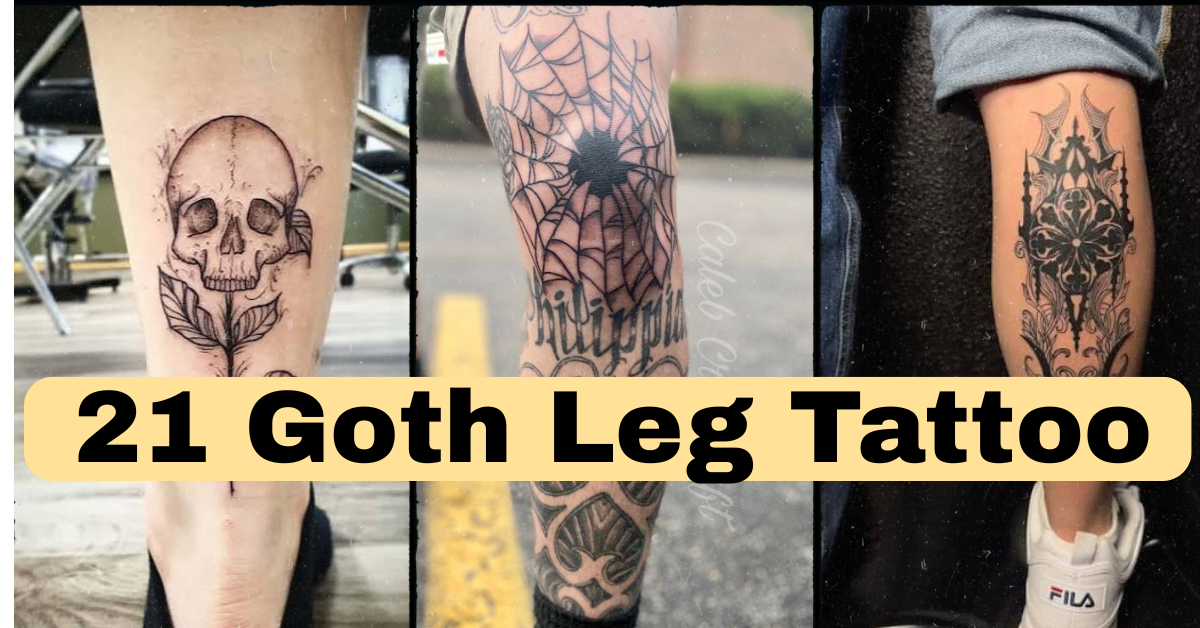
21 Goth Leg Tattoo Ideas: A Real Guide Before You Book
Nervous about committing to a goth leg tattoo you’ll actually still love in ten years? That’s a fair worry, and it’s exactly why this guide exists — I’ve spent a lot of time in studios watching consultations go right (and wrong), and I’m putting that into something more useful than a mood board.
So what actually makes a goth leg tattoo work? The strongest designs lean on high-contrast blackwork (solid black ink applied in bold, dense shapes), sharp fine-line detail, or stippled dotwork shading to build dramatic imagery that follows the leg’s natural curve, from ankle wraps to full thigh panels, and holds its crisp edges for years rather than blurring into a smudge.
Stick around, because I’m also covering placement tradeoffs, honest pain expectations, rough cost ranges, how to brief an artist so you don’t get a generic flash-sheet copy, and what these designs actually look like on skin five years down the road.
Why the Leg Works So Well for Goth Tattoo Themes
The leg is one of the most forgiving canvases in tattooing, and that matters a lot for dark, detailed goth work. You’ve got long, flat stretches on the shin and thigh that behave like a canvas for symmetrical ornamental pieces, plus curved areas around the calf and ankle that are great for wraparound designs like vines, chains, or snakes. Because the leg has more consistent skin thickness than areas like the ribs or inner arm, fine-line and dotwork tend to heal more evenly here, and blackwork holds its saturation (how solid and deep the black actually reads) longer without needing early touch-ups. It’s also easy to cover for work environments and just as easy to show off when you want to. That flexibility is a big reason goth leg pieces stay one of the most requested categories in dark-style tattooing.
1. Blackwork Spider Web Knee Wrap
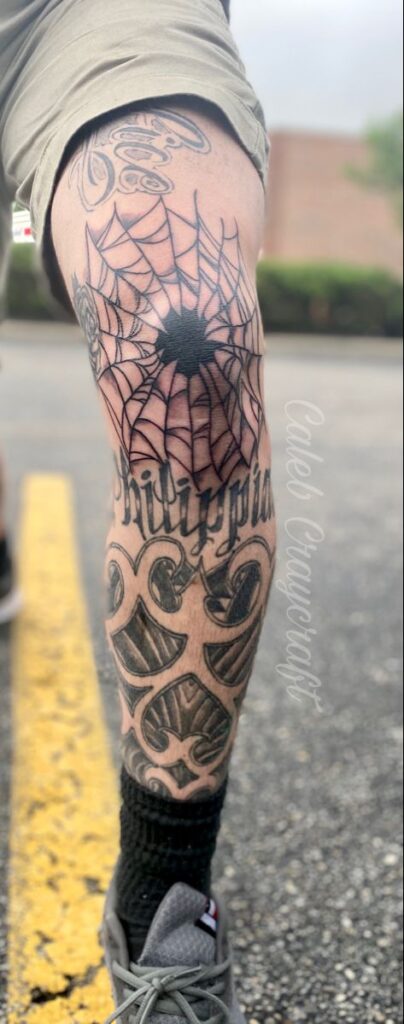
A spider web wrapping around the kneecap uses the joint’s natural creases to make the web look like it’s actually stretched across the skin. Artists typically use bold, saturated blackwork lines with slightly varied thickness to create depth, then leave the center of the web as negative space (bare, un-inked skin used deliberately as part of the design) for contrast. The knee is a bony, high-movement area, so expect a sharper pain sensation and a slightly longer healing time, often three to four weeks, because clothing and movement irritate it. Bring a photo of your actual knee to the consultation so the artist can custom-fit the web rather than using a flat stencil that won’t sit right on the curve.
2. Fine-Line Gothic Lettering Down the Shin
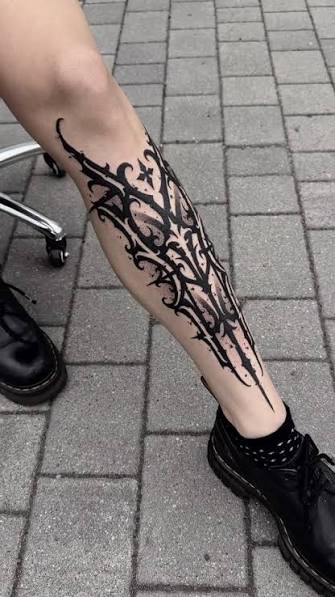
Vertical gothic script running down the shin bone reads like an old manuscript inked into skin. Fine-line technique (thin, single-pass needle work with minimal shading) keeps the blackletter-style font crisp without the ink spreading into blobs over time. Size matters here — letters under half an inch tall tend to blur within a few years, so aim for at least three-quarters of an inch per character. The shin is bony and thin-skinned, so it’s a more sensitive placement, and shading-free line work like this usually heals in about two weeks. This one’s great for a first tattoo since it’s low-commitment in size but still visually striking, and it reads clearly whether you’re wearing shorts or jeans.
3. Dotwork Moth Thigh Piece
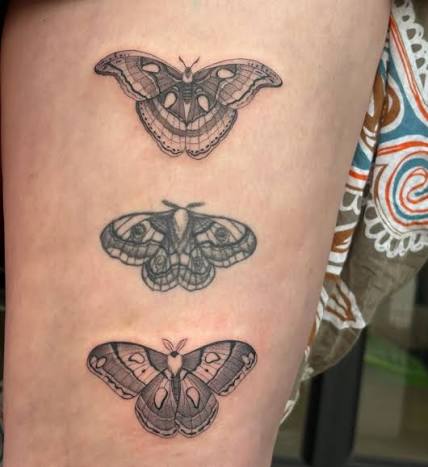
A moth rendered entirely in dotwork — thousands of tiny dots layered to build gradual shading — creates a soft, almost powdery texture that fine lines alone can’t replicate. This works best on the outer thigh, where there’s enough flat space for the wingspan to sit symmetrically. Expect a mid-size piece, roughly four to six inches, to keep the dot density readable instead of looking like a gray smudge. The thigh is one of the less painful leg placements thanks to more muscle and fat coverage. Ask your artist about single-needle configurations for the finer dot clusters versus larger needle groupings for the denser wing shading — that distinction affects how long the detail holds up.
4. Bold Traditional Skull and Roses Calf

If you want something that reads clearly from across a room, this pairs a bold-line skull with thick, saturated rose petals in the American traditional style, just rendered in a darker, gothic palette. Line weight here is intentionally heavy — thick outlines and minimal fine detail — which is exactly why bold traditional tattoos age better than delicate linework; thick black lines simply spread less over decades of skin change. The calf muscle offers a fairly comfortable placement pain-wise, and healing typically runs two to three weeks. This is a strong pick for anyone wanting a statement piece that won’t need heavy touch-up work later.
5. Negative Space Bat Silhouette Ankle
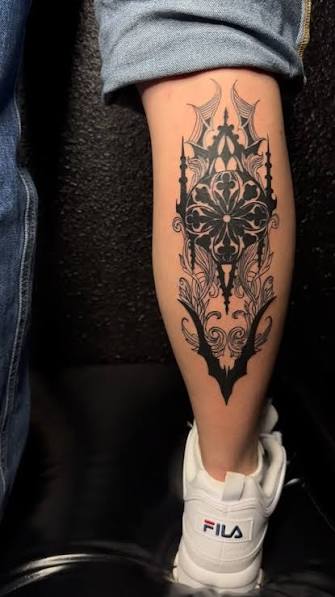
Instead of inking a bat directly, this design blacks out the surrounding shape and lets the bat’s silhouette appear as untouched skin, a classic negative space technique. It’s a compact idea, usually two to three inches, ideal for the outer ankle bone. Because the ankle has thin skin and less padding, this placement tends toward the more sensitive end, and swelling from footwear friction can extend healing to nearly a month. Bring a clear, simple bat outline reference — overly detailed wings don’t translate well to negative space at small sizes. This design works especially well as a subtle, easily hidden option for workplaces with visible-tattoo restrictions.
6. Single-Needle Gothic Cross Thigh
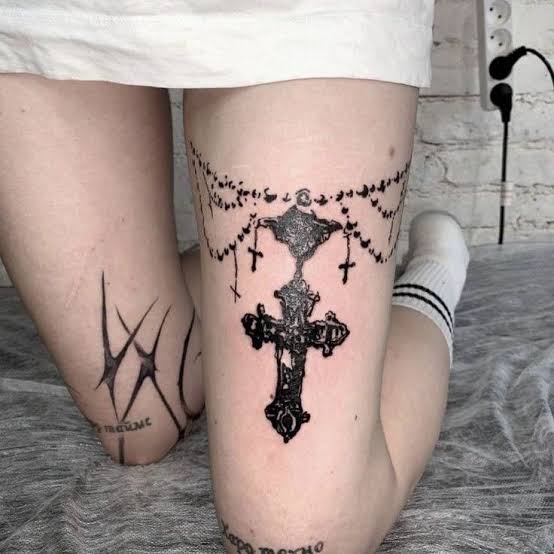
Single-needle work uses one fine needle for extremely thin, delicate lines, and it’s a great fit for a minimalist gothic cross on the upper thigh. The thinness of the line means less ink is deposited, so the design fades faster than bold blackwork — expect some softening within five to seven years, which your artist should mention upfront. Size-wise, keep it under three inches; single-needle detail smaller than that risks becoming an unreadable blur. The thigh’s fuller tissue makes this a relatively mild placement pain-wise, and it’s a popular matching-tattoo choice for friends who want something spiritual but understated.
7. Blackwork Thorned Vine Leg Wrap

A thorn-covered vine spiraling from ankle to knee is one of the most requested wraparound goth designs because it uses the leg’s shape instead of fighting it. Artists typically build the vine with medium-weight blackwork lines and add small triangular thorns at intervals for visual rhythm. This is a bigger commitment — plan for multiple sessions if it spans the full lower leg — and healing happens in stages as different sections settle, often three to five weeks total. Ask about “flow guides,” reference marks the artist draws directly on your skin before tattooing, to make sure the vine follows your actual leg contour rather than a flat stencil.
8. Dark Ornamental Mandala Knee
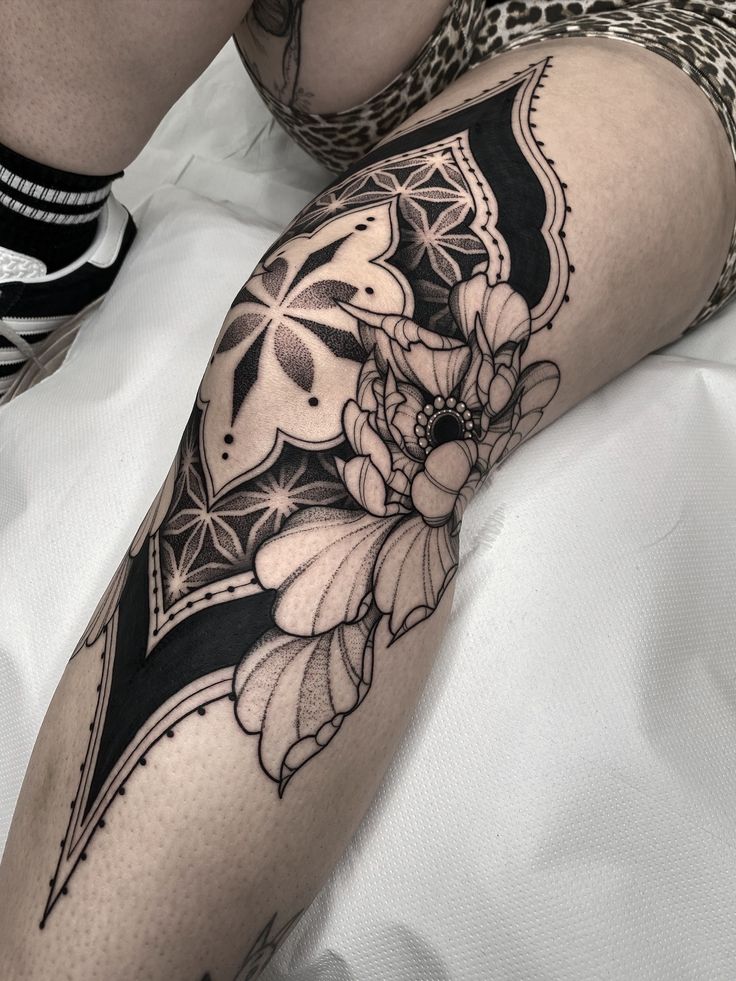
A mandala centered on the kneecap uses radial symmetry — repeating patterns around a central point — built from fine geometric linework and occasional dotwork shading for depth. This placement is unforgiving of mistakes since any asymmetry is highly visible when the leg is bent or straight, so a precise stencil and a steady-handed artist matter more here than almost anywhere else on the body. Expect noticeable discomfort since the knee sits directly over bone with little cushioning. Healing runs three to four weeks minimum. This is not typically recommended as a first tattoo because of both the pain level and the technical precision required.
9. Fine-Line Raven Perched on Bone Calf
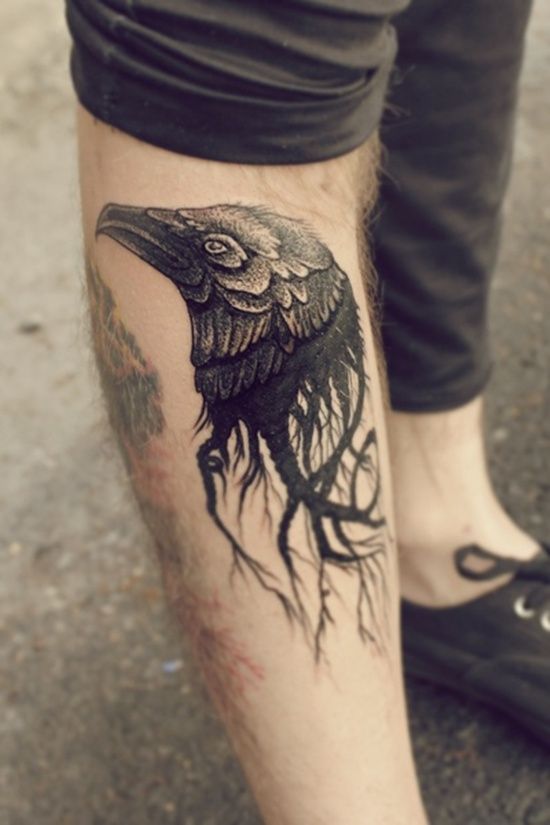
A raven perched on a small bone or branch, rendered in fine-line detail with light dotwork shading on the feathers, gives a storybook-gothic feel without heavy black saturation. The calf’s flatter upper section is ideal for keeping the bird’s proportions accurate. Aim for four to five inches so feather detail doesn’t collapse into solid gray after healing. Calves generally rank as a low-to-moderate pain placement. One practical tip: ask to see the artist’s portfolio specifically for birds, not just fine-line work generally, since feather shading is its own skill separate from lettering or florals.
10. Gothic Cathedral Window Thigh Panel
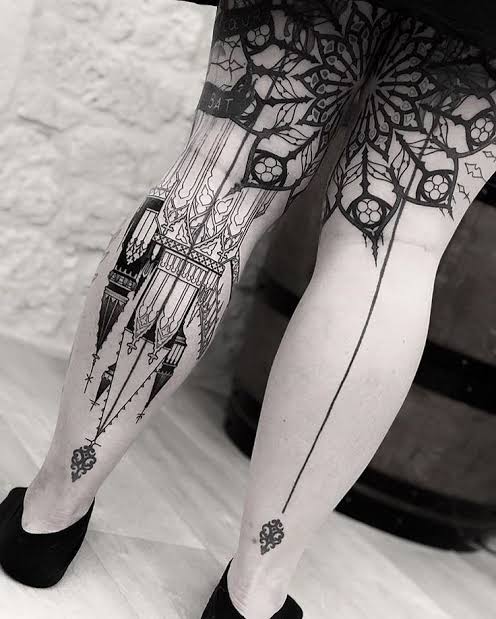
This design translates a stained-glass cathedral window into ink, using thick blackwork outlines to mimic leadwork and either negative space or light gray shading to suggest colored glass panels without actually adding color. It needs real space to breathe, so the outer or front thigh works best at six inches or larger. Because of its architectural detail, this is a strong candidate for a custom-drawn stencil rather than a walk-in flash design — ask your artist to sketch a rough digital mockup first so you can approve proportions before the needle touches skin. Thigh placement keeps pain moderate and manageable for a longer sitting.
11. Dotwork Skull Shading on Shin

A skull built almost entirely from dotwork shading, with minimal outline, creates a soft, textured look that reads differently depending on lighting — flatter under bright light, more dimensional in shadow. The shin’s flat surface suits the symmetry a skull needs. Because dotwork depends on consistent dot spacing, ask specifically whether your artist free-hands the shading or uses a stencil grid; grid-based dotwork tends to age more evenly. This placement is on the more sensitive side due to thin skin over bone. It’s a solid pick if you want a design that looks less “inked” and more like a soft charcoal drawing.
12. Blackout Band with Negative Space Roses (Calf)
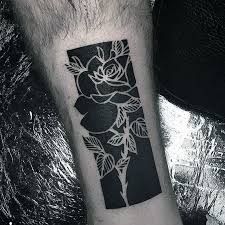
A solid blackout band — a fully saturated black ring of ink — wrapped around the calf, with rose outlines left as negative space within it, creates striking contrast between total darkness and clean linework. This is a heavier commitment since blackout sections require more passes to reach full, even saturation, sometimes needing a touch-up session a few weeks after initial healing. Expect a longer healing window, up to a month, because solid black areas can take longer to settle than line-only work. This design suits people who already have some tattoos and know what sustained shading sessions feel like.
13. Fine-Line Snake Wrapping the Ankle
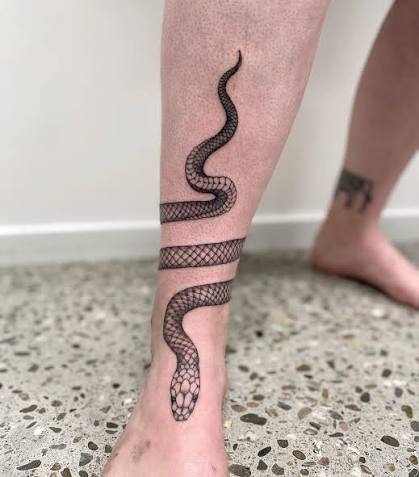
A slim snake coiling twice around the ankle uses fine-line technique to keep scales suggested rather than fully rendered, which keeps the design from looking cluttered at a small scale. Two to three inches in length is usually enough for one full wrap. The ankle’s thin skin makes this a moderately sensitive spot, and friction from socks or shoes during healing calls for loose footwear for the first couple weeks. This is an easy one for matching tattoos between friends or partners, since the coil count and snake style can vary slightly between each person’s version while still looking connected.
14. Bold Gothic Script Quote Down Thigh
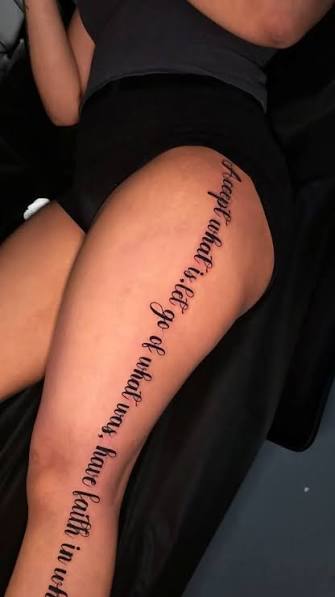
A short, meaningful phrase in bold blackletter script running vertically down the thigh gives you both readability and staying power, since thicker line weights resist the natural softening that happens to skin ink over decades. Keep quotes short — four to six words max — because longer phrases forced into a narrow thigh strip often end up cramped and harder to read once healed. Thigh placement is fairly tolerable pain-wise, making this a common choice for a first larger tattoo. Bring a printed mockup of the exact wording and spacing you want, since script layout errors are one of the most common regret-driven touch-up requests.
15. Witchy Moon Phase Chain Calf
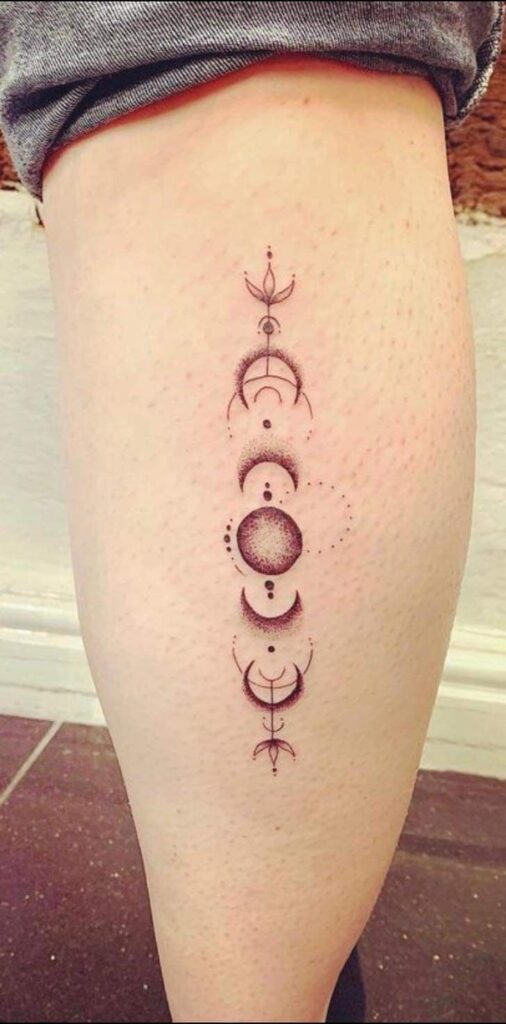
A chain of moon phases — full, crescent, and new moon symbols linked in a row — wrapping horizontally around the calf blends astronomical imagery with gothic minimalism. Each moon is usually kept small, under an inch, and rendered in clean fine-line work with light solid-fill shading on the darker phases. This design ages well because the shapes are simple and geometric, resisting the blurring that complex detail suffers over time. Calf placement keeps pain moderate. It’s a favorite for matching or friend-group tattoos since each person can choose a different starting phase while keeping the same overall style.
16. Blackwork Gargoyle Thigh Piece
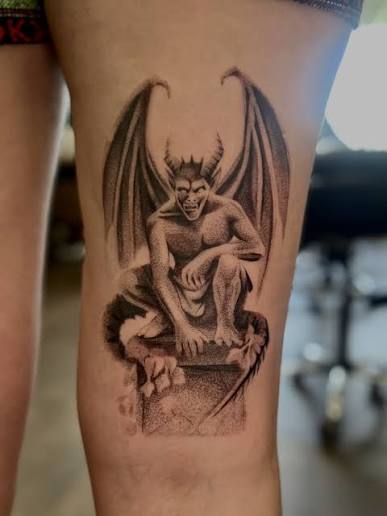
A crouched gargoil figure in heavy blackwork, built from confident black shapes with minimal fine detail, works as a bold single-session statement piece on the outer thigh. Because gargoyle anatomy has a lot of small features — wings, claws, facial detail — going too small causes these elements to merge into an unreadable blob after healing, so five inches or larger is recommended. Thigh placement is one of the more comfortable options for a longer, detailed sitting. Ask your artist whether they’ll simplify smaller features intentionally; a skilled blackwork artist knows which details to drop for the design to still read clearly at a glance.
17. Dotwork Ouija Planchette Ankle

A small planchette (the pointer piece from a Ouija board) rendered in fine dotwork shading gives a subtle nod to occult imagery without needing large-scale placement. This design works well small, around two inches, tucked on the inner or outer ankle. Because dotwork at this size depends on tight, even needle spacing, ask about single-needle configurations to avoid the dots merging into solid patches as they heal. Ankle placement runs moderately sensitive. This is a good “test the waters” goth tattoo for someone unsure about committing to a larger, more visible design right away.
18. Fine-Line Coffin and Candles Shin
A small coffin flanked by simple candle outlines, done in clean fine-line work with no shading, keeps this design crisp and legible even at a compact two-to-three-inch size. The shin’s flat surface is ideal for keeping the coffin’s proportions symmetrical. Because there’s no shading to hide small linework errors, precision matters more here — check that your artist’s portfolio includes similarly clean, unshaded line pieces before booking. Shin placement tends to be on the more sensitive end due to bone proximity. This design suits people who want gothic symbolism that still looks intentional and tidy rather than heavily illustrated.
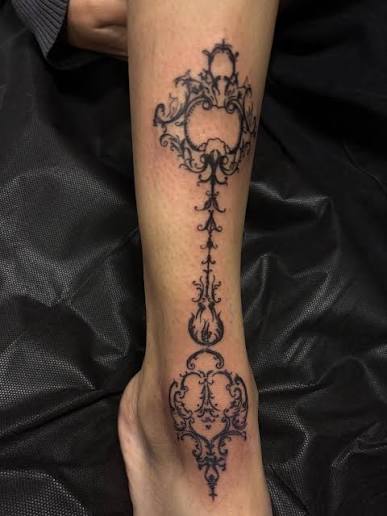
19. Dark Baroque Filigree Knee Piece
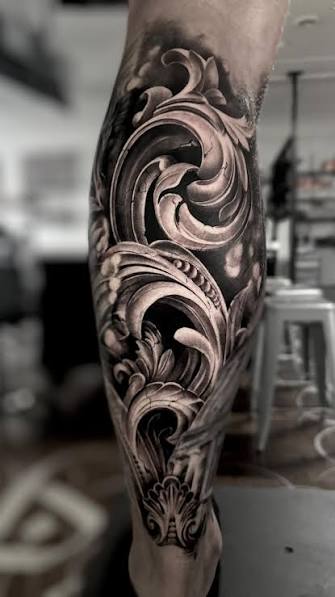
Ornamental filigree — swirling, symmetrical decorative linework often seen in old ironwork or jewelry — wrapped around the knee combines fine lines with small solid-black accents for contrast. This is a technically demanding placement because the design has to bend correctly around the joint whether the leg is straight or bent. A longer consultation is worth it here; ask the artist to map the design directly onto your skin before finalizing the stencil. Knee placement runs on the more painful side. This piece tends to age gracefully if the linework stays a consistent medium weight rather than going ultra-thin.
20. Blackwork Grim Reaper Thigh
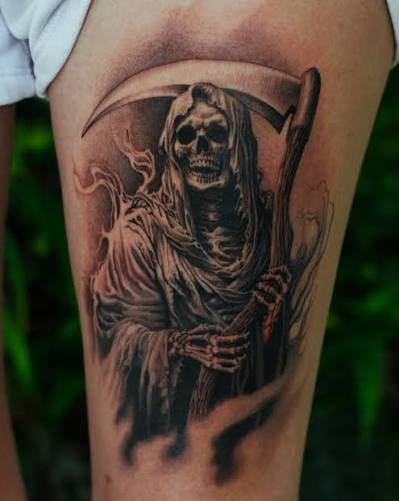
A hooded reaper figure in heavy blackwork, with a scythe rendered in confident, thick outlines, makes for one of the boldest and most recognizable goth leg tattoo choices. This needs real size to hold detail — eight inches or more on the thigh is typical — since smaller versions lose the folds and shadow in the robe that make the figure look three-dimensional. Thigh placement keeps this a manageable sitting for the multiple hours a piece this size usually takes. It’s a strong choice for someone with prior tattoo experience who wants a centerpiece design rather than a subtle accent.
21. Gothic Rosary Chain Leg Wrap
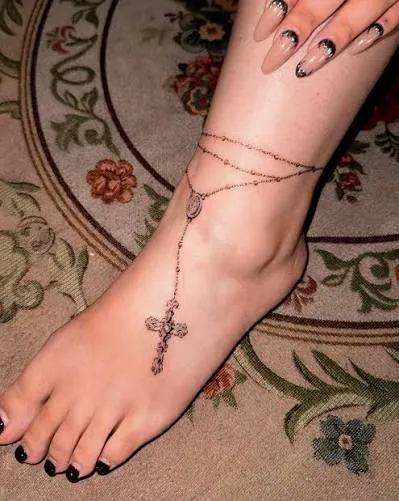
A rosary chain spiraling from the upper thigh down to the calf, alternating small beads with a cross pendant, uses fine-line beadwork and slightly bolder linework on the cross for visual hierarchy. This is a multi-session piece for most people, given the length involved. Pain varies significantly across the piece since it crosses several different skin types, from fleshier thigh to boniergical calf and knee sections. Ask your artist to plan session breaks around those transition points rather than pushing through in one sitting. This design works beautifully as a long-term project piece rather than a single-appointment tattoo.
Best Placement Ideas
Where you put a goth leg tattoo changes almost everything about how it looks, feels, and holds up.
- Ankle — highly visible, easy to show off, but thinner skin means more sensitivity and slightly longer healing due to shoe and sock friction.
- Shin — flat and great for symmetrical or lettering designs, but bone proximity makes this one of the more sensitive spots on the leg.
- Calf — a good middle-ground pick: moderate pain, flat and curved space for both wraparound and standalone designs, and generally reliable healing.
- Knee — visually striking for symmetrical pieces but one of the most painful and technically tricky placements due to constant movement and bone.
- Thigh — the most comfortable placement pain-wise, with the most open space, making it ideal for larger, detailed custom designs.
Tips for Success
Start by looking at portfolios, not just Instagram highlight reels. You want to see healed photos, not just fresh ink, because fresh tattoos always look sharper than they will in six months. Look specifically for consistency in line weight and even, non-blotchy shading across multiple pieces in the style you want — fine-line, blackwork, or dotwork specialists tend to have distinctly different strengths, so pick an artist whose focus matches your idea. Bring reference images, but also be upfront about what you don’t like, since a good artist will adjust the design rather than copy a photo directly onto your skin. Ask directly about needle configuration, expected session length, and their aftercare recommendations before you book anything. A short consultation is normal and expected, not an inconvenience.
Common Mistakes and How to Avoid Them
- Going too small for the detail level. Dense blackwork or dotwork pieces need enough surface area to hold their shading, or they blur into a gray smudge after healing.
- Choosing a placement that fights the design’s shape. A design meant for a flat panel won’t wrap around a knee or ankle cleanly without redrawing.
- Skipping aftercare instructions. Aftercare affects how crisp the final healed result looks; skipping it risks patchy fading or scabbing that pulls out ink unevenly.
- Copying a design exactly from a photo. A direct copy often doesn’t account for your specific skin tone, texture, or body shape, and can look flat compared to a custom-fitted version.
- Not asking about touch-ups. Fine lines and dotwork especially may need a touch-up session within the first year — assuming otherwise leads to disappointment.
Similar Variations
Almost every idea above can shift dramatically with small changes. A fine-line design can be scaled up and given light dotwork shading for more depth. A bold blackwork piece can be redone in negative space, flipping which parts are inked and which are left bare skin. Two smaller designs, like the moon phase chain and the rosary wrap, can be combined into one longer leg piece for people who want a continuous story down the limb instead of standalone sections. Color is rarely traditional in goth tattooing, but small deep red or violet accents are sometimes added to blackwork pieces for a subtle gothic-romantic touch without losing the dark palette.
Aftercare Basics
Aftercare needs vary by individual and by artist, so always follow the specific sheet your artist gives you over generic internet advice. In general terms, most artists recommend keeping the area clean, avoiding direct sun and soaking (pools, baths) during the first few weeks, and using a fragrance-free moisturizer once the tattoo has started to flake. Avoid picking at scabbing, since that can pull out ink unevenly and affect how the design looks once fully healed. If you notice anything that seems unusual, like excessive redness or swelling beyond normal healing, consult a licensed dermatologist or your tattoo artist rather than guessing. Pain tolerance and healing speed vary a lot between individuals, so treat any timeline mentioned here as a general estimate, not a guarantee.
Quick FAQ
How much does a goth leg tattoo cost?
Cost depends heavily on size and detail, but small fine-line pieces often start in the $80–$150 range, while larger blackwork or multi-session pieces can run several hundred dollars or more. Always ask for a quote during consultation rather than assuming a flat rate.
How painful are leg tattoos compared to other body parts?
Fleshier areas like the thigh and calf tend to be more comfortable, while bony spots like the knee, shin, and ankle are usually more sensitive. Pain tolerance is different for everyone, so treat this as a general guide, not a promise.
How long does healing usually take?
Most leg tattoos heal on the surface within two to three weeks, though larger or heavily shaded pieces can take a month or more to fully settle. Full healing underneath the surface generally takes longer than it looks from the outside.
Will a fine-line goth tattoo fade faster than a bold one?
Generally, yes — thinner lines hold less ink and can soften sooner than thick, saturated blackwork. This isn’t a defect, just a tradeoff of the style, and it’s worth discussing touch-up expectations with your artist ahead of time.
Final Thoughts
A goth leg tattoo works best when you treat it as a real design decision, not just a cool image saved on your phone. Line weight, shading style, and placement all affect how the finished piece looks, how much it hurts, and how well it ages — and now you’ve got a real framework for weighing all three instead of guessing.
Whatever direction you land on, take your time finding an artist whose portfolio actually matches the technique you want, ask the questions this guide walked through, and trust that a well-planned goth leg tattoo is one of those design choices that only gets better as it settles into your skin.