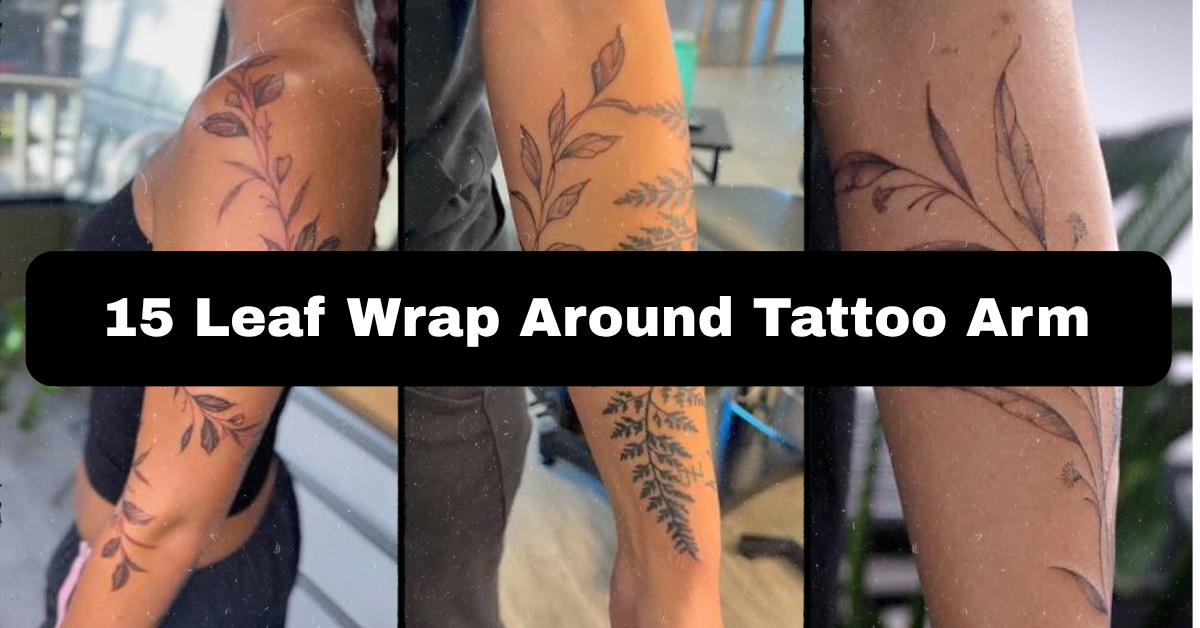
15 Leaf Wrap Around Tattoo Arm Ideas That Actually Hold Up Over Time
Searching for a leaf wrap around tattoo arm design that won’t feel dated in a few years? You’re in the right spot, and I’ve put together 15 ideas based on what actually works on skin — not just what looks nice in a flat digital mockup.
So what are the best leaf wrap around tattoo arm ideas? Fine-line botanicals, blackwork ferns, dotwork eucalyptus, and negative-space vine trails top the list because they follow the arm’s natural shape and hold their linework well as skin ages. Simple, well-spaced leaf clusters also heal cleaner than dense, overlapping designs.
Stick around, because I’m also covering pain levels by placement, realistic healing windows, how much you should expect to pay, and exactly what to say to your artist so you don’t end up with a design that looks great on paper but muddy on your arm two years from now.
Why Leaf Wrap Designs Work So Well On The Arm
Leaves are one of the smartest choices for a wraparound arm piece because they’re already asymmetrical and organic. Your arm isn’t a flat canvas — it curves, bends at the elbow, and has muscle that shifts when you move. A leaf’s natural taper and vein structure can follow that curve instead of fighting it, which is why leaf wraps tend to look intentional rather than stretched or distorted. This category also gives you flexibility. You can go tiny and minimal or commit to a full sleeve, and you can lean into realism, blackwork (solid black shapes with no shading gradient), or fine line (thin, single-pass needle work) depending on how bold you want to read from across a room.
Fine-Line Botanical Leaf Wrap
This is the most requested style for good reason. A fine-line leaf wrap uses a single thin needle line, usually a .1 to .3mm liner, to trace realistic leaf outlines with light vein detail inside instead of solid fill. There’s no heavy shading here — the visual interest comes from spacing, scale, and how the leaves overlap slightly as they travel around the forearm or upper arm. It reads as delicate and almost drawn-on. Best placement is the forearm or upper arm where there’s a long, even surface for the wrap to travel; avoid heavy wraps directly over the elbow crease since fine lines can blur there over time. Pain is generally moderate — thin skin over the inner forearm tends to be more sensitive than the outer arm. Bring a botanical reference photo (not a tattoo photo) so your artist can adapt real leaf shapes instead of copying someone else’s flash design. This works well as a first tattoo since it’s low commitment and easy to extend later.
Blackwork Fern Spiral Wrap
Blackwork means solid, saturated black fill with no gradient or dot shading — just clean, confident shapes. A fern spiral wrap uses this technique to create a bold, almost silhouette-like leaf pattern curling around the bicep or forearm. Because the fill is solid, this style reads clearly from a distance and doesn’t rely on fine detail to look finished, which matters if you want something visible in a work setting or something that still looks sharp after a decade. Best placement is the upper arm where there’s enough flat space for the spiral to curl without warping around the elbow. Solid black areas can feel more intense during the session since the needle passes over the same section repeatedly for saturation — expect more discomfort than a comparable fine-line piece. Ask your artist about linework density before they start; too-thin gaps between black sections can blur together as skin ages.
Dotwork Shaded Eucalyptus Wrap
Dotwork builds shading and texture using tiny individual dots instead of solid lines or fill, which gives leaves a soft, almost powdery gradient. A eucalyptus wrap done in dotwork looks textured and slightly muted, almost like a botanical illustration rather than a photograph. This technique takes noticeably longer per square inch than blackwork or fine line, so budget extra session time. It suits the outer forearm or shoulder cap best, where skin is flatter and the dot pattern won’t distort around joints. Healing takes a bit longer to settle visually since dotwork can look slightly uneven in the first few weeks before the skin fully closes over each point. If you want subtlety with texture — not too bold, not too plain — this is the middle ground. Ask to see healed dotwork photos in your artist’s portfolio, not just fresh ones, since dotwork changes appearance more between fresh and healed than other styles.
Negative Space Leaf Trail
Negative space tattooing uses the untouched skin itself as part of the design — instead of leaves drawn in black, the leaf shapes are formed by the gaps left between black background sections. This creates a striking, high-contrast wrap where the “invisible” leaves almost float against darker surrounding ink. It’s a more advanced technique and not every studio offers it well, so portfolio-checking matters more here than with other styles. Best on lighter, more even skin tone areas of the upper arm where contrast reads clearly; it’s harder to pull off on already-textured or heavily freckled skin. Pain is comparable to blackwork since there’s still solid ink coverage involved, just arranged differently. This is a strong option if you already have a solid-black tattoo nearby and want the new piece to visually connect with it.
Single-Needle Ivy Vine Wrap
Single-needle work is technically similar to fine line but pushed to its thinnest, most delicate extreme — often used for tiny, precise detail like individual ivy leaves and thin curling vines. This wrap style hugs the arm tightly, almost like a bracelet that keeps climbing upward. It’s subtle enough to keep low-profile in professional settings but detailed enough to reward a closer look. Best placement is wrist to mid-forearm, since single-needle work on high-motion or high-friction areas (like the inner elbow) tends to blur faster over the years. Pain around the wrist bone can be sharper due to less cushioning there. One practical tip: ask your artist whether they recommend a slightly heavier line weight for parts of the design that will see friction from clothing or bags, since ultra-thin lines are more prone to fading in those spots.
Bold Traditional Banana Leaf Wrap
Traditional tattooing uses thick, confident outlines with limited color saturation — usually black, red, green, or yellow — and minimal shading gradients. A banana leaf wrap in this style leans tropical and graphic rather than realistic, with bold black borders holding solid color fill. This is one of the most durable styles over time because thick lines and solid color blocks hold their shape far better than fine detail as skin naturally changes with age. Best on the upper arm or shoulder where there’s room for the leaf’s wide shape to sit without cramming. Color work generally involves more passes than black-only work, so expect a longer session and slightly more soreness afterward. This style is a great option if you’ve had thin, faded tattoos before and want something that reads clearly for the long haul.
Watercolor-Style Maple Leaf Wrap
Watercolor tattoos mimic paint bleeding and blending, usually built around a black or fine-line leaf outline with soft color washes layered around it rather than solid fill. A maple leaf wrap done this way looks painterly, with color that feels loose and organic instead of contained inside hard borders. It’s visually striking but worth knowing upfront: colored ink historically fades faster than black ink, so touch-ups every few years are common with this style, not a sign something went wrong. Best placement is a flatter section of the upper arm or shoulder where the “bleed” effect has room to spread convincingly. Bring multiple color reference images so your artist can match a palette to your actual skin tone, since some colors read differently on different undertones.
Geometric Leaf Pattern Wrap
This design overlays leaf shapes with clean geometric lines — triangles, hexagons, or straight banding — for a modern, structured look that still nods to nature. Line weight is usually consistent throughout, often medium-thickness, so the geometric grid doesn’t visually compete with the organic leaf shapes layered inside it. It’s a strong choice if you want something that reads as “designed” rather than purely botanical. Best on the forearm where straight lines can travel predictably; geometric patterns wrapping around a curved bicep require more planning to avoid visual warping. This is a good match for someone who wants symbolism (growth, structure, balance) without a purely literal leaf illustration. Ask your artist to sketch the geometric grid on your actual arm with a marker before tattooing, so you can check the proportions in 3D, not just on paper.
Tropical Monstera Leaf Wrap
Monstera leaves — the ones with the dramatic natural cutouts — make for a bold, recognizable wrap thanks to their large scale and unique silhouette. This design usually combines solid blackwork outlines with either soft shading or negative-space cutouts to represent the leaf’s natural holes. Because the leaf shape itself is large, this works best as a bigger piece — think full forearm or a large upper-arm placement — rather than something squeezed into a small space. Detail gets lost if you go too small, since the recognizable cutout shapes need enough room to read clearly. Healing on larger, denser pieces can take a bit longer simply because more skin surface is involved. This is a satisfying option if you want one striking leaf as a focal point rather than a scattered cluster.
Minimalist Olive Branch Wrap
A minimalist olive branch wrap strips things down to their simplest form — thin, consistent linework, small leaf shapes, and generous open space between elements. It’s quiet by design, often barely noticeable until someone’s close enough to see it clearly. This suits the wrist, lower forearm, or ankle equally well since the design doesn’t rely on a large canvas. Minimal designs also tend to age gracefully because there’s less fine detail to blur over the years. Pain here tends to be lower simply because sessions are shorter and less repetitive needlework is involved. This is one of the most beginner-friendly options on this list if you’re nervous about commitment, cost, or your pain tolerance for a first tattoo.
Layered Shadow Leaf Wrap
This design uses realistic shading — soft gradients built through techniques like whip shading or light stippling — to give leaves visible depth and dimension, almost like they’re catching light from one direction. It reads more like a botanical drawing than a simple outline. Best placement is a broader, flatter area like the outer upper arm, since shading gradients need consistent space to transition smoothly. This style takes longer in the chair than pure linework because shading requires multiple passes for even saturation. Ask to see close-up healed photos of shaded work specifically, since shading is more prone to uneven fading if not applied with proper saturation from the start. This is a solid pick if you want your leaf wrap to look more like fine art than a simple icon.
Bracelet-Style Leaf Band Wrap
Instead of a long wrap up the whole arm, this version stays contained to a narrow band — usually wrist to lower forearm — circling completely around like a permanent bracelet. It’s compact, which makes it faster to complete and easier to keep low-profile if needed. Line weight is usually kept fine to medium so the band doesn’t look chunky at a small scale. This placement does see more friction from watches, sleeves, and daily wrist movement, so ask your artist about slightly bolder linework if you want it to hold up visually longer. This is a favorite for matching or group tattoos since the compact size keeps cost and time reasonable for everyone involved.
Full Sleeve Leaf and Vine Wrap
This is the biggest commitment on the list — a continuous leaf and vine composition running from shoulder to wrist, usually built over multiple sessions rather than one sitting. It typically combines several elements from this list: bold outlines, some shading, maybe a section of dotwork texture for variety. Because of the scale, this is rarely a walk-in tattoo; it needs custom design work and a planning consultation first. Expect noticeably more soreness across multiple sessions, plus a longer overall healing timeline since different sections heal on different schedules. This isn’t a first-tattoo pick for most people, but if you already have some ink and know your pain tolerance, it’s one of the most visually complete leaf wrap options available.
Matching Couple Leaf Wrap
Matching tattoos work best when they’re simple enough to look intentional on two different arms, two different skin tones, and two different body shapes. A matching leaf wrap usually uses a smaller single-leaf motif — same style, same size, placed on the same general area on each person. Keep the linework simple; fine line or light blackwork holds up better for matching sets since there’s less room for one version to age differently than the other. Best placement is the wrist or lower forearm for easy comparison and lower cost per person. Discuss with your artist whether they’ll draw both stencils by hand at the same time, which helps keep proportions consistent between two different arms.
Autumn Leaves Scatter Wrap
This design breaks from a continuous vine and instead scatters individual leaves — often in warm color saturation like deep red, rust orange, or golden yellow — loosely around the arm rather than connected by a single stem. It feels more casual and less symmetrical than other wraps on this list, which some people prefer. Because it uses color, expect a longer session and a slightly more noticeable fading timeline on the color portions compared to the black outlines holding each leaf together. Best on the upper arm where scattered spacing has room to breathe without looking cluttered. This is a nice option if you want a leaf wrap that feels a little more free-form and less rigidly “wrapped.”
Best Placement Ideas
Placement affects pain, visibility, and how well the design ages — here’s how the main arm zones stack up:
- Wrist: Highly visible, moderate-to-higher pain due to less cushioning, higher friction from watches and sleeves
- Lower forearm: Good visibility, moderate pain, easy to cover for work if needed
- Upper forearm: Lower pain than wrist, still visible, good flat space for detailed linework
- Bicep/upper arm: Generally lower pain, easy to hide with short or long sleeves, great for bolder or larger designs
- Elbow area: Higher pain and faster fading risk due to constant movement and stretching — best avoided for fine detail
- Full sleeve (shoulder to wrist): Highest overall time and cost commitment, pain varies significantly by section
Tips for Success
Start by looking for an artist whose portfolio already includes leaf or botanical work in the specific technique you want — fine line, blackwork, dotwork, whatever caught your eye above. A strong portfolio should show multiple healed photos, not just fresh ink, since fresh tattoos almost always look sharper than they will in six months. Book a consultation before committing to a date, and bring reference photos of real leaves or botanical illustrations rather than other people’s tattoos, since that gives your artist room to create a custom design instead of a direct copy. Ask about their stencil process, roughly how many sessions your design will need, and get a straightforward cost range in writing before you book. If something feels rushed or the artist can’t answer basic technique questions clearly, that’s worth taking seriously.
Common Mistakes and How to Avoid Them
- Going too small for the detail level: Fine linework and shading both need enough space to stay clear as they heal and age — don’t shrink a detailed design to fit a tiny area.
- Wrapping fine detail directly over joints: The elbow and wrist crease stretch constantly, which can distort thin lines faster than flatter areas.
- Copying a design exactly: A leaf wrap traced directly from someone else’s tattoo often doesn’t fit your arm’s shape or size the same way — ask for a custom adaptation instead.
- Skipping aftercare instructions: Every artist’s aftercare sheet differs slightly based on their products and your skin; follow theirs specifically rather than generic advice from a forum.
- Choosing color without asking about fading: Color saturation fades differently than black ink — ask upfront what touch-up schedule is realistic.
Similar Variations
Almost every design on this list can shift with a few tweaks. A fine-line fern can become bolder by thickening the outline into traditional-style linework. A black-and-grey shaded leaf can be recolored into warm autumn tones for a completely different mood. Small single-leaf pieces can later be extended into a fuller wrap if you decide you want more coverage down the road — just mention that possibility to your artist upfront so they leave room in the composition. Negative space and blackwork elements also combine well together if you want a piece with more visual contrast than either style offers alone.
Aftercare Basics
Aftercare varies by studio, so always follow the specific sheet your artist gives you over anything you read online, including this. Generally speaking, most artists recommend keeping the area clean, avoiding direct sun and soaking (pools, baths) during the initial healing window, and avoiding tight clothing that rubs against fresh ink. Healing time for most leaf wrap styles runs roughly two to three weeks on the surface, though full skin settling can take longer depending on placement and individual healing. If you notice anything that seems unusual beyond normal healing, check with your artist or a licensed dermatologist rather than guessing.
Quick FAQ
How much does a leaf wrap around tattoo arm cost?
Cost varies widely by studio, location, and size, but expect anywhere from a few hundred dollars for a small single-leaf piece up to well over a thousand for a detailed full-arm wrap done across multiple sessions.
How painful is a leaf wrap tattoo?
Pain depends on placement and technique — bony or thin-skin areas like the wrist tend to feel more sensitive than fleshier areas like the outer upper arm, and solid blackwork generally feels more intense than light fine-line work.
How long does healing take?
Surface healing typically takes two to three weeks, though this varies by individual, and full settling underneath the skin can take longer.
Will a fine-line leaf wrap fade faster than blackwork?
Generally, thinner lines and lighter saturation can lose crispness sooner than bold, solid blackwork, though results vary by skin type, aftercare, and sun exposure — a touch-up every several years is common for detailed styles.
Final Thoughts
A good leaf wrap tattoo comes down to matching the right technique to the right spot on your arm, and being honest with yourself about pain tolerance, budget, and how much detail you actually want to maintain over time. Whether you land on something as quiet as a minimalist olive branch or as bold as a full sleeve of vines, the design will look better and age better if it’s built specifically for your arm rather than copied straight off someone else’s. Take the time to find an artist whose portfolio matches the technique you’re after, ask direct questions before booking, and you’ll end up with a leaf wrap around tattoo arm design that still looks right on you years from now.