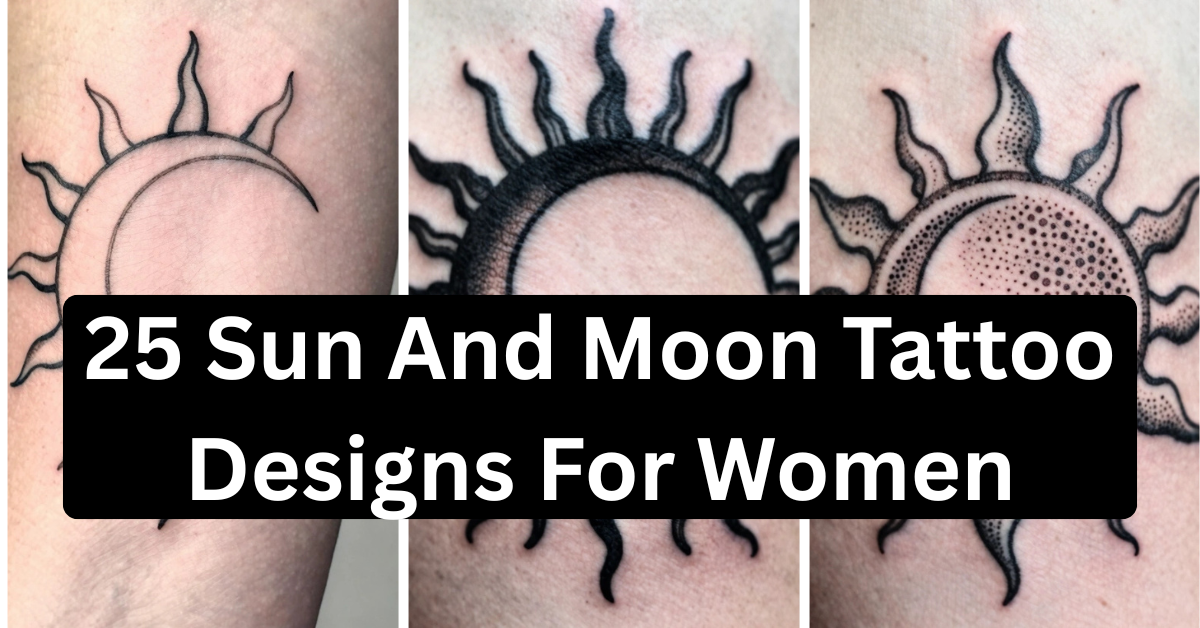
25 Sun and Moon Tattoo Designs For Women
Nervous about picking a sun and moon tattoo design you’ll actually love years from now? You’re not alone — this is one of the most requested tattoo themes at studios right now, and for good reason. I’ve spent enough time talking to artists and clients to know which versions of this design actually age well on skin, and which ones look muddy after a couple of years.
So what are the best sun and moon tattoo designs for women? Fine-line crescent moons paired with dotted sun rays, blackwork sun faces, and small matching wrist pieces tend to work best because they balance detail with simplicity, heal cleanly, and hold their shape as skin changes over time. Placement on flatter areas like the forearm or shoulder blade also helps linework stay crisp longer.
Stick around, because I’m also going to walk you through pain levels by placement, realistic healing timelines, what these designs cost depending on size and detail, and exactly how to brief an artist so you don’t end up with a stencil that looks nothing like what you pictured.
Why Sun and Moon Tattoos Work So Well as a Design Theme
Sun and moon tattoos hit a sweet spot that a lot of other symbolic designs miss — they’re visually balanced. You’ve got a bold, radiating shape (the sun) paired with a soft, curved one (the moon), and that contrast gives artists a lot of room to play with line weight, shading, and composition. It’s also a theme that carries real meaning without forcing you to explain it every time someone asks — duality, balance, cycles, day and night, masculine and feminine energy. Because the shapes themselves are simple, this design translates well across almost every tattoo style, from delicate single-needle work to bold blackwork. That flexibility is exactly why it shows up so often in both walk-in flash books and fully custom commissions.
1. Fine-Line Sun and Moon Wrist Tattoo

This is the design most first-timers gravitate toward. It uses thin, single-needle line work — meaning the artist uses one fine needle instead of a grouped needle, producing a delicate, almost pen-drawn look — to render a small crescent moon tucked beside a simple sun outline. There’s no shading, just clean contour lines, which keeps the piece looking sharp even as it ages. Best kept under two inches on the inner or outer wrist. Skin here is thin and close to bone, so expect a sharper, more noticeable sensation during the session compared to fleshier spots. Bring a reference image with exact line thickness you like — “thin as a mechanical pencil line” is a useful phrase for your artist.
Great for office settings since it’s easy to cover, and a solid first-tattoo choice. This leads naturally into a bolder alternative if wrist placement feels too exposed for you.
2. Blackwork Crescent Moon with Sun Rays
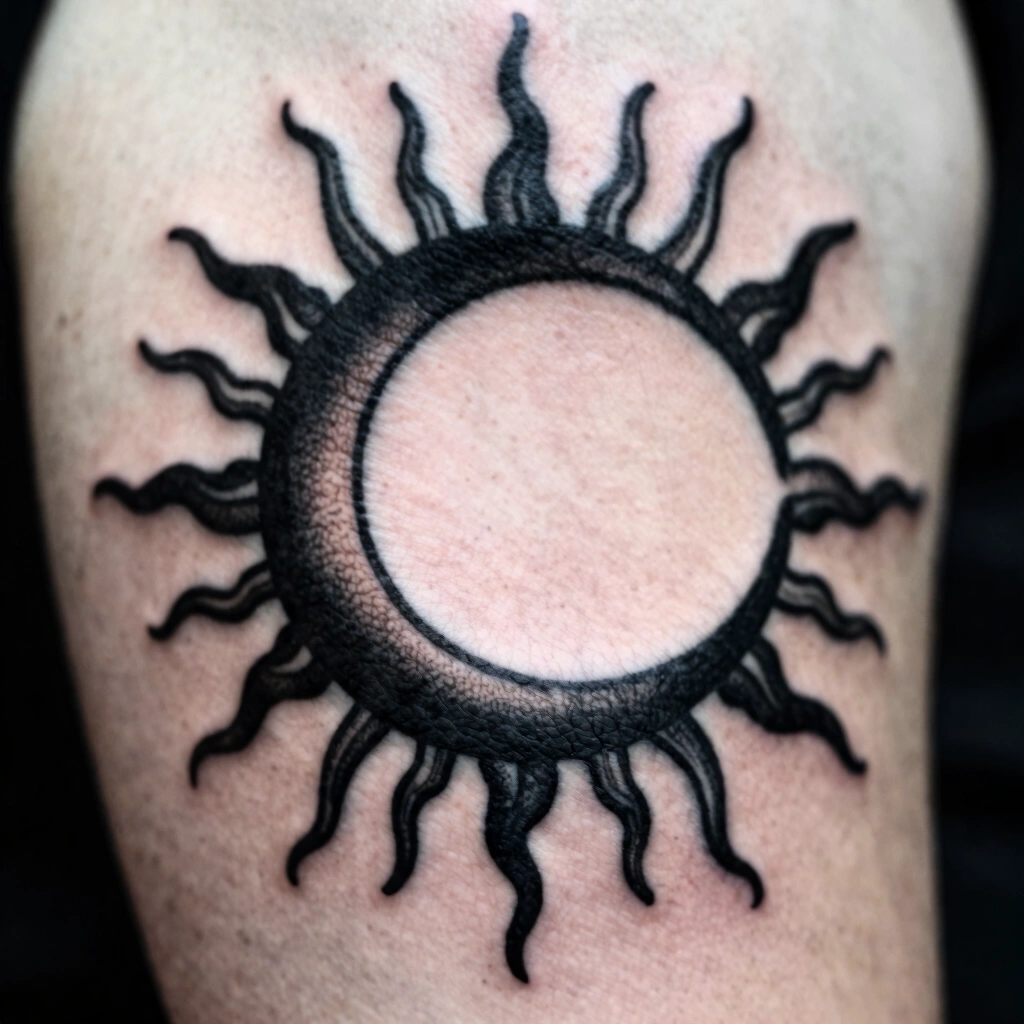
Blackwork uses solid black ink filled in completely, creating strong contrast and graphic impact rather than fine detail. Here, a thick crescent moon anchors the design while short, triangular sun rays fan out from behind it, almost like a sunrise breaking through night. The saturation is high — solid black, no gradients — so it reads clearly from a distance, unlike fine-line work. This suits the upper arm, calf, or shoulder blade where there’s enough flat space for the rays to sit evenly. Healing takes slightly longer than fine-line pieces because of the ink density, often two to three weeks before it settles fully.
Ask your artist about “solid black saturation” versus “packed dotwork” so you get the flat look you want, not a stippled texture. This is a strong pick if you want something visible and confident rather than dainty.
3. Dotwork Celestial Sun and Moon Mandala

Dotwork builds an image entirely from small dots instead of continuous lines, creating soft gradients and a textured, almost embroidered look. A dotwork sun and moon mandala usually centers the moon phase in the middle with a radiating sun pattern built from dot density — tighter dots for shadow, looser spacing for highlights. This technique takes real patience from the artist, so expect a longer session than a comparable line piece. It works beautifully on the upper back, sternum, or thigh, where there’s room for the pattern to breathe. Dotwork tends to feel like a persistent buzzing rather than sharp pain, though this varies by person and pain tolerance.
Bring high-resolution reference images since dot spacing is hard to eyeball from a small phone photo. This design ages gracefully because the gradient effect hides minor fading better than solid black fills.
4. Minimalist Single-Needle Sun Face

A simple circular sun with a basic face — a few line strokes for eyes and a soft curve for a smile — done in single-needle style. It’s playful without being cartoonish, since the linework stays thin and understated rather than cartoon-bold. Small versions (under 1.5 inches) work well behind the ear, on the ankle, or along the collarbone. Because the design is mostly negative space (the untattooed skin doing visual work between the lines) rather than solid fill, it holds up well even if lines soften slightly with age. Pain is generally mild to moderate depending on placement — ankle and collarbone tend to be more sensitive than the upper arm.
Ask your artist to keep the facial features asymmetrical and hand-drawn rather than perfectly symmetrical for a more natural, less “sticker-like” finish. This is an easy one to personalize slightly so it doesn’t look identical to everyone else’s.
5. Matching Sun and Moon Best Friend Tattoos
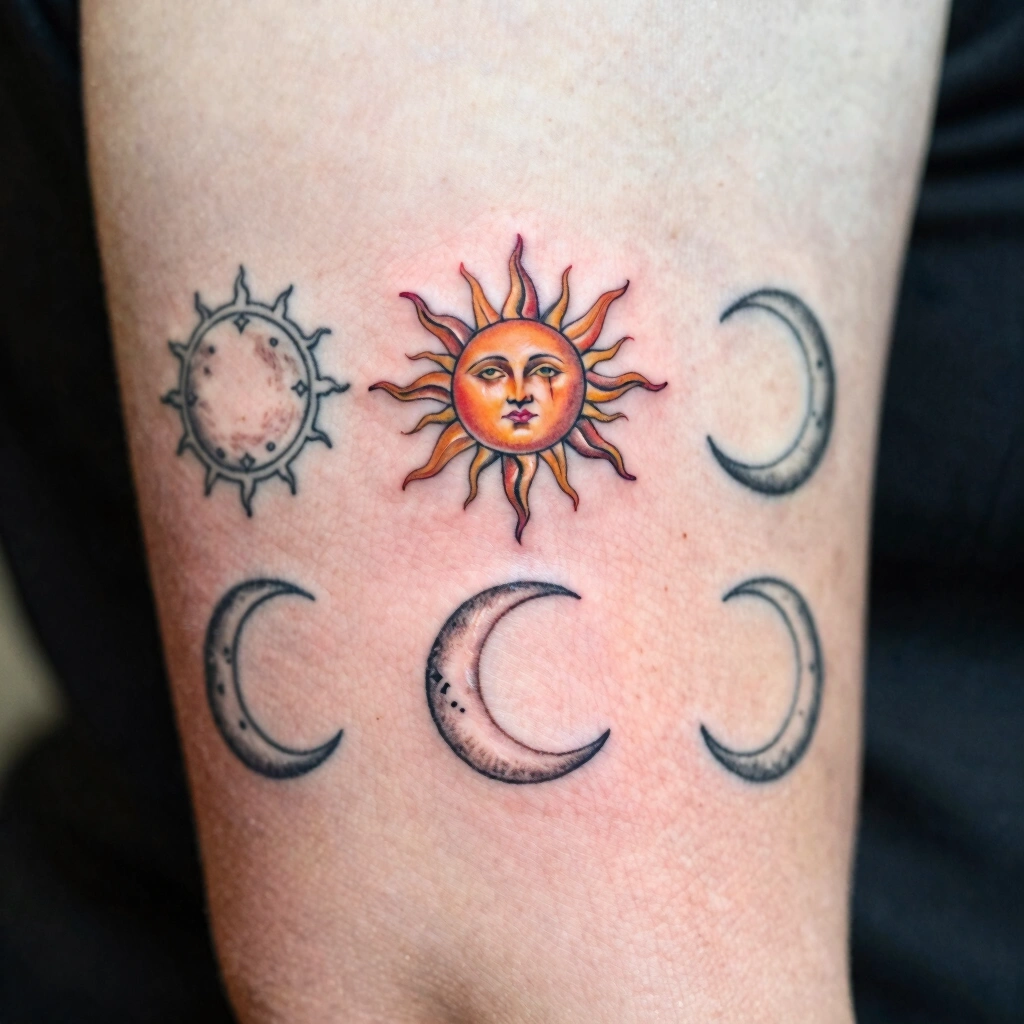
This is less about a specific technique and more about composition — one friend gets the sun, the other gets the moon, usually in matching line weight and size so they read as a pair. Fine-line or simple blackwork both work here, but consistency matters more than the specific style: if one person gets thick blackwork and the other gets thin fine-line, they’ll stop looking like a set within a year or two. Wrist, ankle, or inner arm placements work best for visibility when you want to show them off together.
Book both appointments with the same artist in the same session if possible, so line weight and scale match exactly. This solves the “matching without being identical” problem a lot of friend pairs want solved.
6. Watercolor-Style Sun and Moon Behind the Ear

Watercolor tattoos mimic the soft bleed and color blending of a painted watercolor piece, using diluted pigment and soft edges instead of hard outlines. Behind the ear, a small sun and moon rendered in muted oranges, purples, or blues can look like a soft wash of color rather than a defined graphic. Keep this design small — under an inch — since detail gets lost fast in tight spaces. Be upfront with your artist that watercolor pieces typically need more touch-ups over time than solid blackwork, since color saturation fades faster than black ink.
This placement is easy to hide with hair, making it a good option if you need to keep tattoos out of view for work.
7. Negative Space Moon Phases Forearm Design
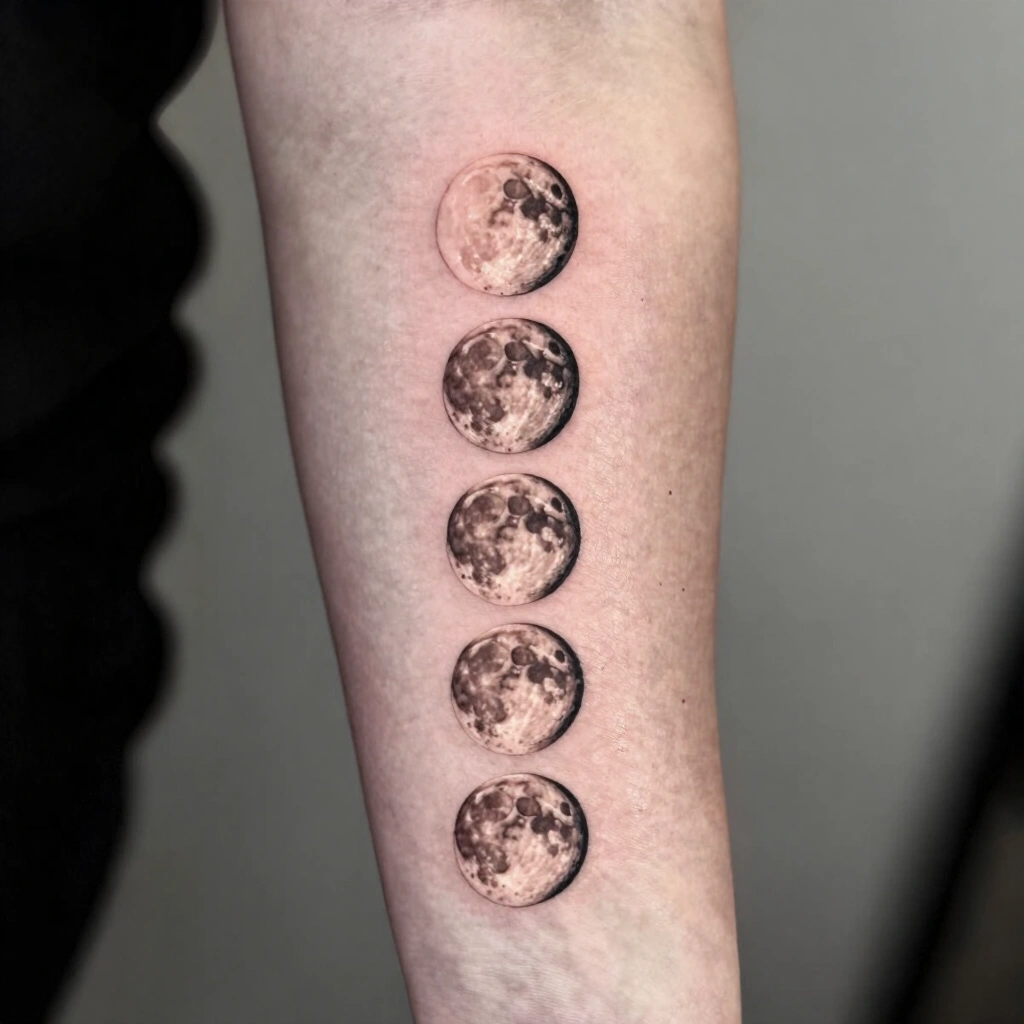
Negative space tattooing uses the untattooed skin itself as part of the image, letting shapes emerge from what’s left blank rather than what’s inked. A moon phase sequence — new moon to full moon — rendered this way often uses a solid black background with pale crescent shapes cut out of it, or vice versa. This works well as a forearm band, giving a wraparound effect. It’s a striking choice for someone who already has surrounding blackwork and wants the moons to pop instead of blending in. Because there’s a lot of solid black involved, expect a longer sitting and a slightly more intense healing process than pure line work.
This is a good next step for someone who already has one tattoo and wants something more advanced for a second piece.
8. Bold Traditional Sun Tattoo

Traditional American tattoo style uses thick, bold outlines, a limited but saturated color palette (often red, yellow, black), and simplified shapes rather than fine detail. A traditional sun here looks like the sun you’d draw as a kid, but rendered with confident, thick linework and solid color fill. This style is genuinely built to last — the bold lines and heavy saturation resist blurring better over decades than delicate fine-line work does. Best on the shoulder, upper arm, or calf where the design has room to sit at three inches or larger. Smaller than that, the color fill starts to look cramped.
If you want a tattoo that still reads clearly at 60, this is a stronger long-term bet than fine-line alternatives.
9. Geometric Sun and Moon Sternum Tattoo

Geometric tattoos break the sun and moon into clean triangles, circles, and straight lines rather than organic curves, often layered so the moon sits inside or behind a triangular sun burst. The sternum (the flat area between the collarbones and chest) gives enough vertical space for a design like this to run three to five inches long. This is a genuinely more painful placement — thin skin over bone, close to nerve-dense areas — so go into it expecting more discomfort than a fleshier spot like the thigh or upper arm. Ask your artist for a “geometric linear” stencil test on paper first, since symmetry errors are more obvious in this style than in loose, hand-drawn line work. This design tends to look striking in swimwear or low-cut tops, so think about visibility before booking.
10. Celestial Sun and Moon Rib Tattoo

Rib tattoos wrap slightly with the body’s curve, which actually suits circular sun and moon shapes nicely since the design can follow the natural line of the ribcage. This spot is known for being one of the more painful placements because of thin skin and close bone, plus the stretching sensation from breathing during the session. Fine-line or light dotwork both work well here, kept around two to four inches. Because ribs see a lot of natural movement, ask your artist about slightly thicker line weight than you’d use on the wrist — it holds up better against the skin’s flexing over time. This placement is easy to conceal, making it popular for people who want meaningful ink without daily visibility.
11. Tiny Sun and Moon Ankle Tattoo

A stripped-down version — just a small outline sun and crescent moon side by side, under an inch total. Ankle skin moves a lot and sees friction from shoes and socks, so tiny, simple line work holds up better here than heavily detailed designs, which tend to blur faster in this spot. Healing can take a bit longer than average because of constant movement and friction during the day. This is a solid low-commitment option if you’re unsure about tattoos generally — it’s small, relatively quick to do, and easy to size up later if you decide you want more detail added around it.
12. Sun and Moon Yin Yang Tattoo
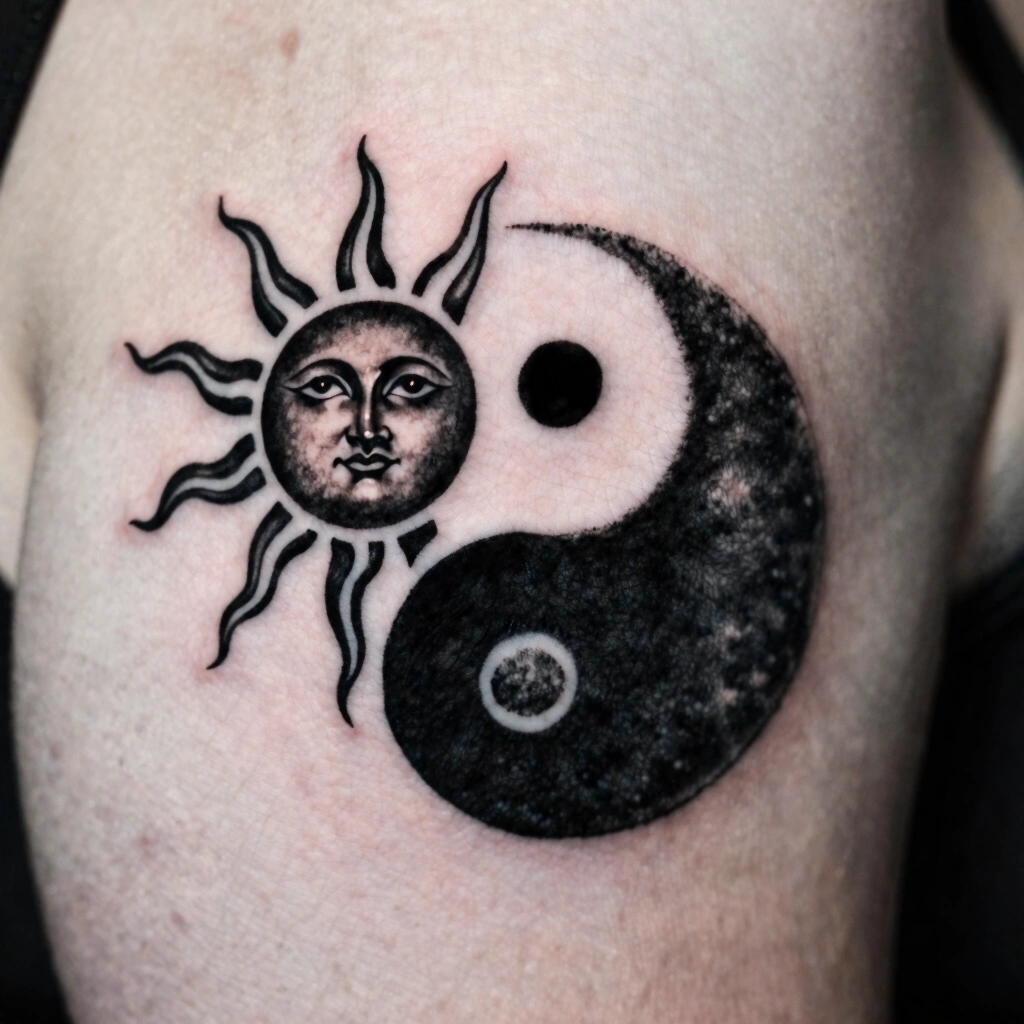
This design merges the classic yin yang circle with a sun on one half and a moon on the other, usually in solid blackwork with a thin dividing line. The symmetry here is unforgiving — any wobble in the circle or uneven halves stands out immediately, so portfolio-checking for an artist’s precision with circular shapes matters more than usual. Two to three inches works well on the shoulder or upper back. This design leans more symbolic than decorative, appealing to people drawn to the balance concept specifically rather than just the visual of a sun and moon together.
13. Linework Moon Goddess with Sun Halo
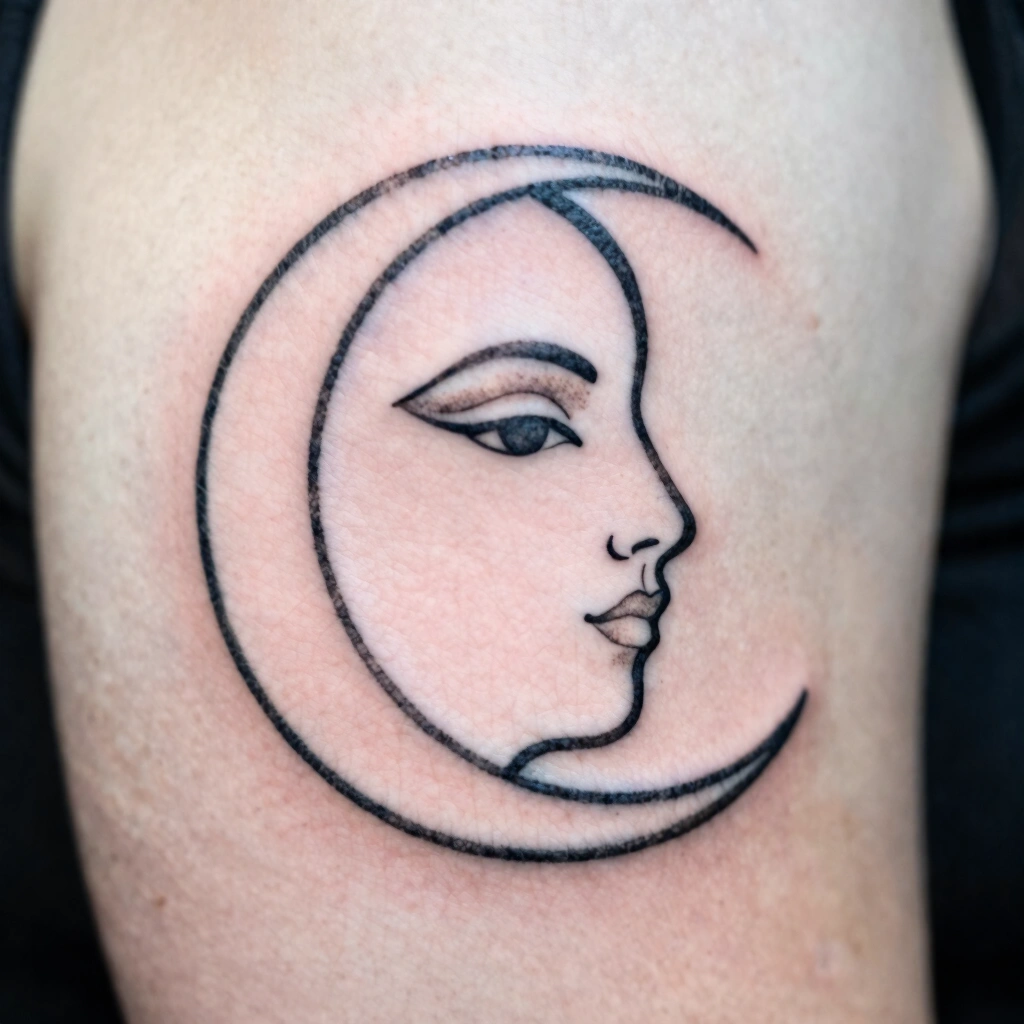
A more illustrative option: a simple linear face or silhouette (often abstract, not a detailed portrait) with a crescent moon as a headpiece and a sun-ray halo behind it. This uses continuous, unbroken linework — meaning the artist draws it as one flowing line where possible — which gives it a hand-sketched quality. Best suited to the upper arm, thigh, or back where there’s enough space for the halo rays to spread out clearly, ideally four inches or larger. Smaller versions lose the facial detail entirely. This is a strong option for someone who wants a slightly more artistic, illustrative piece rather than a purely symbolic icon.
14. Dotwork-Shaded Crescent Moon Thigh Tattoo
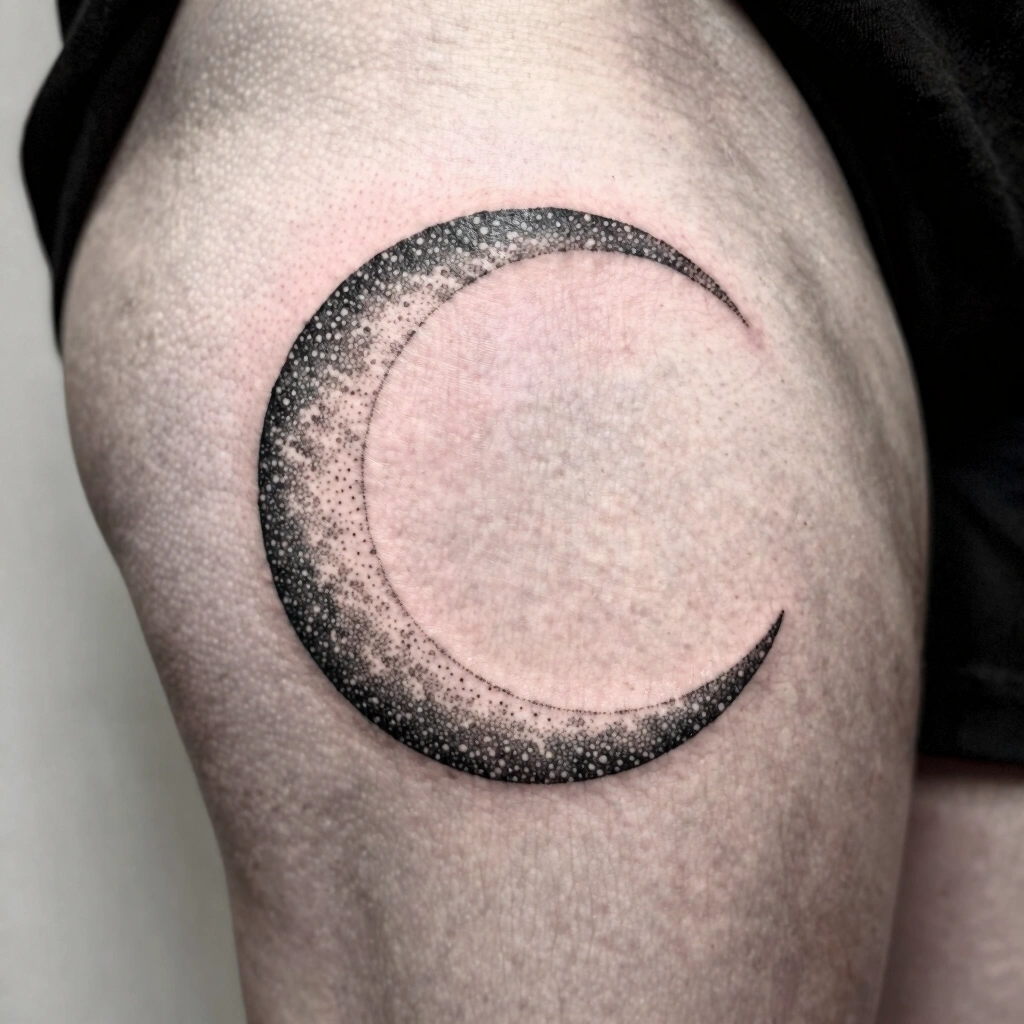
A larger crescent moon, three to five inches, shaded entirely through dotwork gradients rather than smooth ink washes. The thigh gives enough flat, fleshy space for the dot gradient to build up smoothly without warping around joints or bone. This placement is generally more comfortable than wrist or rib work, since there’s more muscle and fat cushioning the area. Expect a longer session because dotwork shading takes real time to build up gradually, dot by dot. This works well as a standalone piece or as an anchor for a larger celestial sleeve added to later.
15. Micro Sun and Moon Finger Tattoos

Tiny sun and moon outlines placed on adjacent fingers, usually under half an inch each. Finger tattoos are known to fade and blur faster than tattoos elsewhere on the body because of constant hand-washing, friction, and skin cell turnover in that area — something a licensed artist should walk you through honestly before you book. If you go this route, expect more frequent touch-ups than almost any other placement on this list. It’s a bold, visible choice, so think about workplace norms before committing. Good for someone who’s already tattoo-experienced and understands the maintenance tradeoff going in.
16. Sun and Moon Collarbone Tattoo
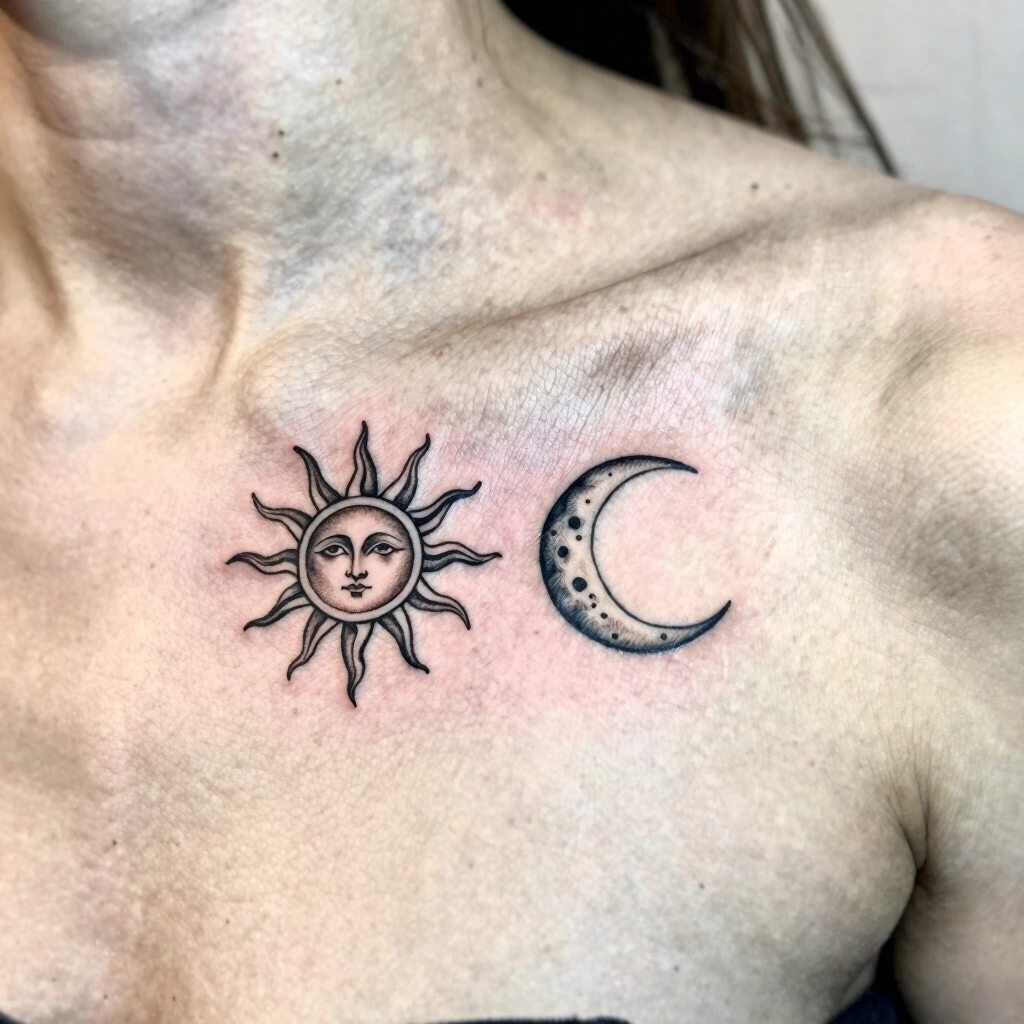
A horizontal design running along the collarbone, sun on one side, moon on the other, usually in fine-line or light blackwork around two to four inches wide total. The collarbone is a thin-skinned, bony area, so discomfort here tends to run moderate to high compared to the outer arm or thigh. This placement is highly visible in tank tops and off-shoulder clothing but easy to cover with a crew neck, giving good flexibility for work settings. Ask your artist to slightly curve the design to follow your specific collarbone shape rather than using a flat, generic stencil — bodies vary more here than people expect.
17. Blackout Sun Silhouette Tattoo

“Blackout” refers to a technique using dense, fully saturated black ink to create a bold silhouette with zero interior detail — just a solid sun shape with defined rays. This is one of the more committed options on this list since there’s no way to add fine detail inside a blackout piece later. It suits the upper arm or shoulder blade at three inches or more. Saturation this heavy means a longer, more intense session, and aftercare matters more here since dense black ink sits deeper in the skin. This is the right choice if you want maximum visual impact and don’t mind the boldness reading from across a room.
18. Floral Sun and Moon Forearm Tattoo

Small botanical elements — thin vines, tiny leaves, or single-line flowers — wrapped around a fine-line sun and moon pairing. This softens the celestial theme with an organic touch, and the mixed linework (thin florals against a slightly bolder sun outline) creates visual hierarchy so the eye knows where to land first. The forearm gives a long, flat canvas that suits this layout at three to five inches. Moderate pain level overall, less intense than wrist or rib placements. Bring two separate references — one for the sun/moon shapes, one for the floral style you like — since combining two motifs well takes a bit more planning from your artist.
19. Sun and Moon Spine Tattoo

A vertical design running down the upper spine, sun near the neck, moon lower, connected by a thin line or small stars. Spine placements are known for being among the more sensitive areas on the body due to nerve density along the vertebrae, so this is a placement worth mentally preparing for. Keep width narrow, around one to two inches, to match the natural curve of the spine. This design ages well because it’s rarely exposed to sun or friction, helping the linework stay crisp for years. A striking option for formal or backless outfits, easily hidden the rest of the time.
20. Abstract Line Sun and Moon Hip Tattoo
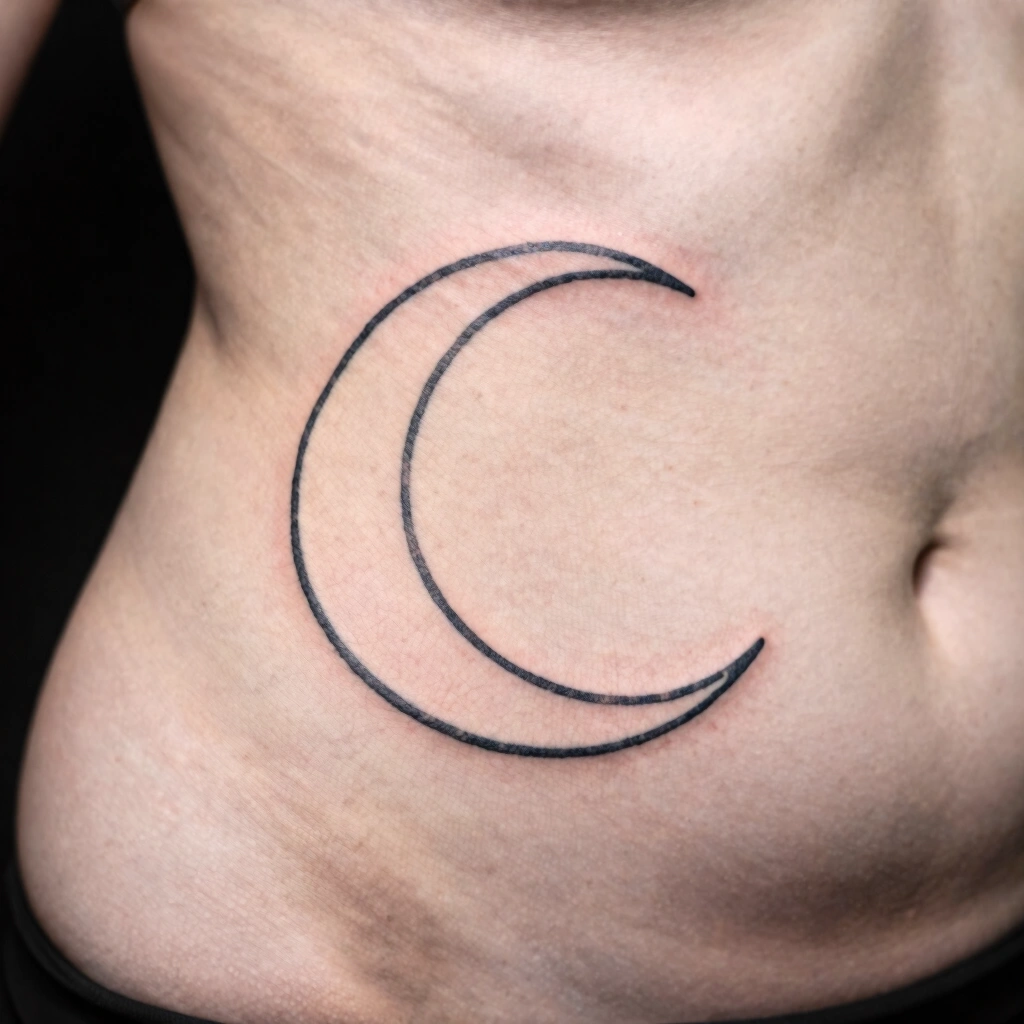
Loose, abstract line work — think a single continuous line looping to suggest a sun and moon shape without fully outlining either — placed on the hip bone or just above it. This style relies on the viewer’s eye filling in the gaps, a technique closely related to negative space work. Hip skin is bony and can be sensitive, similar to rib and collarbone placements. Keep this under three inches so the abstraction doesn’t get lost in translation. This suits someone who wants a subtle, artistic nod to the theme rather than a literal depiction.
21. Moon Phases Bracelet Tattoo with Sun Accent
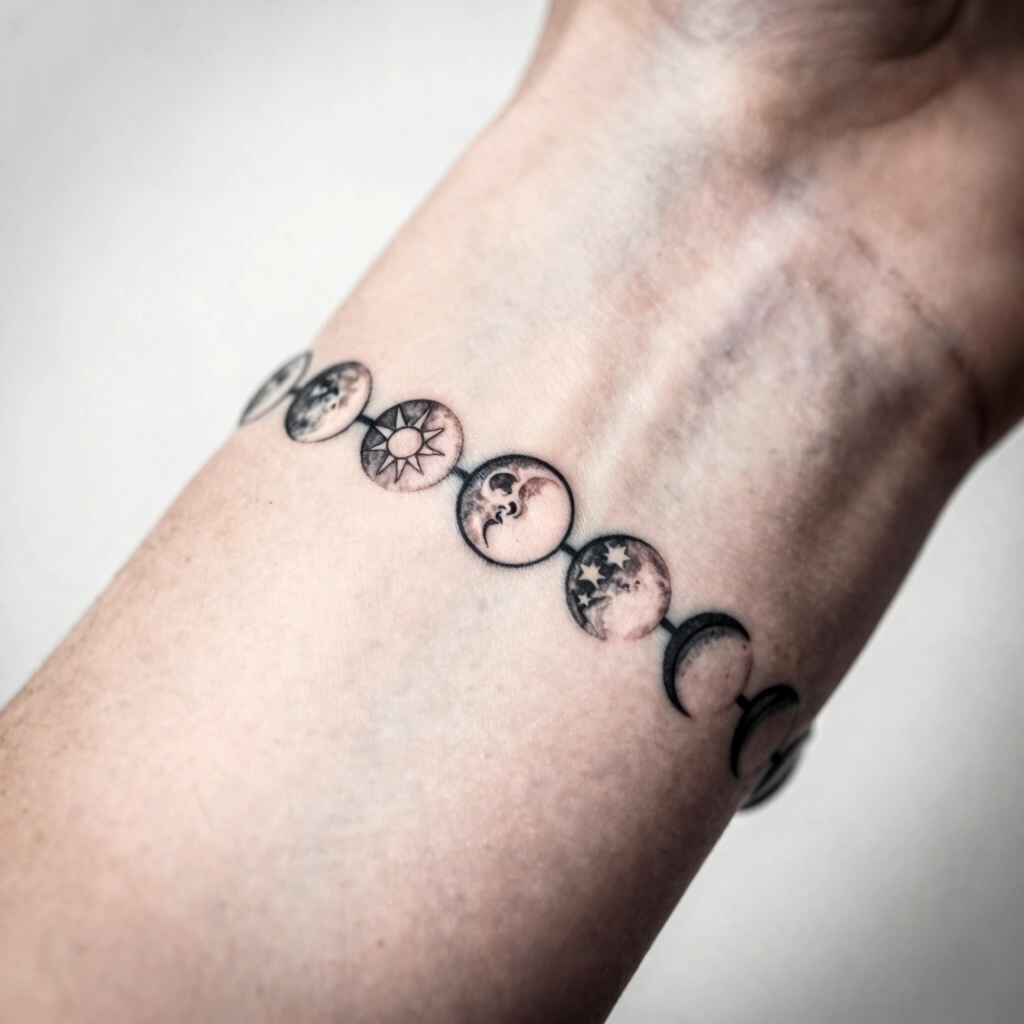
A wraparound wrist design showing the full moon cycle in small crescents circling the wrist like a bracelet, with one small sun accent breaking up the sequence. Fine-line work suits this best since the crescents need to stay small and evenly spaced. This placement sees a lot of visibility and a lot of daily wear from watches, sleeves, and hand-washing, so touch-ups are more likely here than on the upper arm or back. A fun, low-commitment option for a first tattoo if you like the idea of something that wraps rather than sits flat.
22. Sun and Moon Face Portrait Tattoo

A more traditional flash-style design giving both the sun and moon simple human faces, rendered in bold outline with minimal shading, closer to classic tattoo flash art than fine-line illustration. This works at almost any size but looks best at two inches or larger so the facial features don’t get muddy. Upper arm or calf placement gives the best results. This is a great option if you want something that leans nostalgic and graphic rather than delicate or minimalist.
23. Celestial Sun and Moon Shoulder Blade Tattoo

A larger composition — sun and moon surrounded by small stars or clouds — spread across the shoulder blade, often four to six inches. This area has more fat and muscle coverage, generally making it a moderately comfortable placement compared to bony spots like the rib or spine. It’s also naturally hidden by most clothing, which makes it a popular choice for people who want a bigger, more detailed piece without daily visibility. Dotwork shading or soft blackwork gradients both work well here given the space available.
24. Sun and Moon Couple Tattoo

Similar in concept to the best-friend version but designed for partners — often with small personal details worked in, like initials hidden in the rays or a shared date near the moon. Keep the core sun and moon shapes matching in style and line weight, then personalize the small details separately so each piece still feels individual. Wrist, forearm, or behind the ear all work depending on how visible you want it. Booking with the same artist for both pieces keeps proportions and style consistent.
25. Sacred Sun and Moon Chest Tattoo

A centered, symmetrical design placed on the upper chest, often combining thin blackwork linework with small dotwork shading for texture. This is a larger commitment piece, usually four inches or more, and the chest is a moderately sensitive area due to thinner skin over the sternum. This placement suits someone ready for a statement piece rather than a first tattoo, and it pairs well with a loose top or blouse worn open to show it off on your own terms.
Best Placement Ideas
- Wrist or ankle — high visibility, quick healing, moderate pain, best for small fine-line designs
- Forearm or upper arm — good balance of visibility and space, moderate pain, suits medium to large pieces
- Ribs, spine, or hip — higher pain level due to bone proximity, easy to conceal, best for people who already have one or two tattoos
- Shoulder blade or back — low visibility, more comfortable placement, ideal for larger detailed designs
- Behind the ear or collarbone — easy to hide or show depending on hairstyle/clothing, moderate pain, best for small to medium pieces
- Fingers — high visibility but higher maintenance, expect faster fading than other placements
Tips for Success
Look through an artist’s portfolio for consistency, not just one great photo — you want to see several pieces in the exact style you’re after, whether that’s fine-line, dotwork, or bold blackwork. Ask specifically about line weight, healing time based on their own client feedback, and whether they do a custom stencil or work from flash. Bring at least two or three reference images and be clear about what you don’t want changed versus what you’re open to adjusting. A good consultation should feel collaborative, not rushed.
Common Mistakes and How to Avoid Them
- Sizing too small for the detail level — dotwork and shaded pieces need more room than fine-line to avoid looking blotchy over time
- Choosing a bony placement for a design that needs a steady hand and long session — talk through pain expectations honestly with your artist first
- Skipping personalization — copying a reference exactly often looks identical to thousands of other tattoos; ask for one small tweak to make it yours
- Ignoring aftercare instructions — this affects how crisp the final healed result looks
- Booking a walk-in slot for a highly custom design — complex custom work usually needs a dedicated consultation, not a same-day walk-in
Similar Variations
Almost every design above can be resized up for a bolder statement or down for subtlety. Fine-line pieces can be recolored with subtle single-tone shading for more depth, while blackwork designs can be softened into dotwork for a gentler texture. Matching designs can be combined with birth flowers, initials, or small symbols to make a shared design feel more personal without losing the sun-and-moon core concept.
Aftercare Basics
Aftercare affects how sharp your finished tattoo looks once it’s fully settled. General, non-medical guidance includes keeping the area clean, avoiding direct sun exposure and swimming while it heals, and avoiding tight clothing over fresh ink. Healing time varies by placement and individual skin, generally running one to three weeks for surface healing, though full settling can take longer. Always follow the specific aftercare sheet your artist gives you, and check in with them or a dermatologist if anything looks unusual.
Quick FAQ
How much does a sun and moon tattoo cost?
Small fine-line pieces often start around $60–$150, while larger, more detailed designs with shading or color can run $300–$800 or more depending on size, studio rates, and location.
Do sun and moon tattoos hurt a lot?
Pain depends heavily on placement and personal tolerance — fleshier areas like the upper arm or thigh tend to feel more comfortable than bony spots like the ribs, spine, or collarbone.
How long does healing take?
Surface healing generally takes one to three weeks, though this varies by placement, size, and individual skin — fingers and areas with lots of movement often take longer.
Will the design still look good in ten years?
Simple, well-sized line work and solid blackwork tend to age better than tiny, overly detailed pieces, since fine detail is the first thing to blur as skin naturally changes over time.
A well-chosen sun and moon tattoo can genuinely hold its shape and meaning for decades, but only if you match the style to the right placement and size from the start. Take your time picking an artist, ask direct questions about technique, and don’t be afraid to personalize a design so it’s truly yours — that’s really the whole point of getting a sun and moon tattoo in the first place.