15 Unique American Traditional Tattoo Designs That Actually Hold Up Over Time
Nervous about picking a design you’ll regret in five years? That worry is exactly why American traditional tattoos have stuck around for almost a century — they’re built to age well, not just look good on day one. This guide breaks down real design ideas with the placement advice, pain context, and booking tips most articles skip entirely.
So what are the best American traditional tattoo designs? Bold anchors, roses, eagles, panthers, and pin-up figures with thick black outlines and flat, saturated color work best, since the heavy line weight resists blurring and the limited color palette (red, green, yellow, black) holds up for decades. Simple, iconic imagery ages better than intricate detail in this style.
Stick around, because I’ll walk you through pain levels by placement, what things actually cost, how to talk to an artist without sounding clueless, and the mistakes that turn a great design into a blurry mess ten years down the road.
Why American Traditional Tattoos Still Work After 100 Years
I’ve spent enough time around shops to notice a pattern: the tattoos that still look sharp after 15-20 years are almost always old-school American traditional pieces. There’s a reason for that. This style relies on bold, uniform linework — usually done with a larger needle grouping — thick black outlines, and solid color fills instead of realistic shading or gradients. That simplicity isn’t a limitation. It’s the whole point. Less detail means less for your skin to distort as it stretches and ages. The style was born on sailors and soldiers in the early 1900s, refined by artists like Sailor Jerry Collins, and it’s designed for maximum visual punch with minimal fine detail that could fade into mush. If you want a tattoo that reads clearly from across a room in 2045, this is the family of designs to consider.
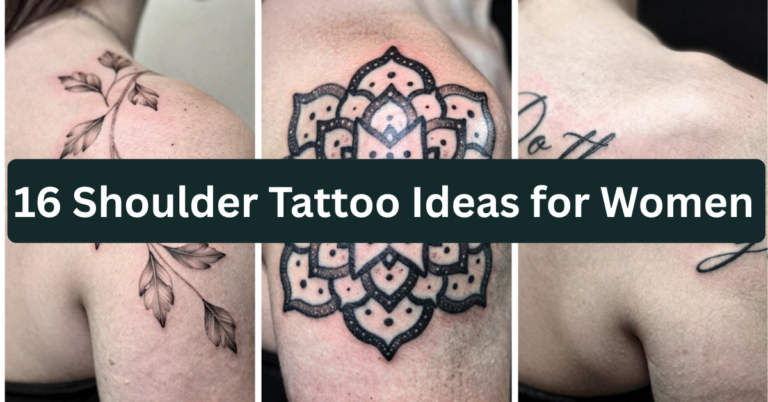
Classic Anchor Tattoo
The anchor is the anchor of this entire style — literally and symbolically. Traditional versions use a heavy black outline (often 3-4mm wide), a solid red or blue rope wrapped around the shaft, and minimal internal shading beyond a few bold lines to suggest metal shine. Best placed on the forearm, upper arm, or calf where there’s enough flat space for the rope and fluke details to sit without warping. A 3-4 inch size keeps the linework crisp; anything smaller and the rope detail turns to mud within a few years. Forearm placement means moderate discomfort — nothing like ribs or feet — and healing typically runs 2-3 weeks before the surface fully settles. Bring a flash reference (a pre-drawn traditional design) rather than asking for a freehand anchor; specificity here really helps. This one works great for a first tattoo since it’s visible enough to feel meaningful but simple enough to heal predictably. From here, let’s look at a design that carries similar boldness but leans into color instead of line.
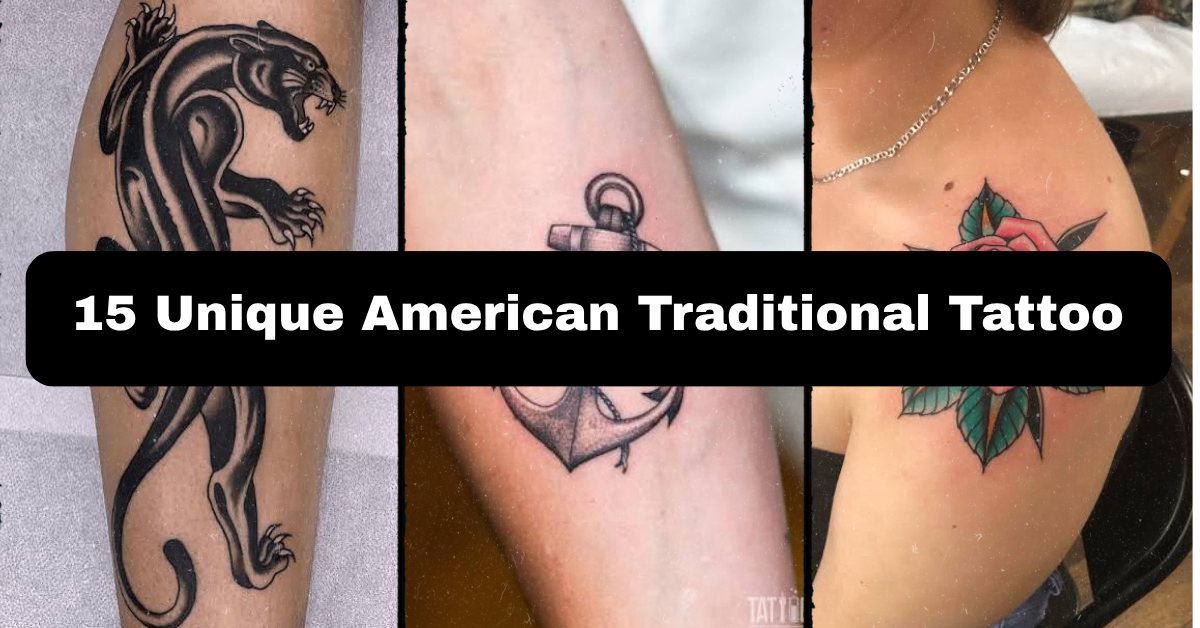
American Traditional Rose
Roses in this style skip realism entirely. Instead you get a bold outline, 2-3 tonal layers of red or pink at most, and simple curved shading lines to suggest petal folds — no blending, no gradients. That flat saturation is actually the strength here; it means the color stays vibrant longer than soft watercolor-style roses, which tend to fade fast. Good placement options include the shoulder, thigh, or side of the calf, somewhere with a slight curve that flatters the petal shape. A rose alone can be small, around 2-3 inches, but if you’re adding a banner or leaves, budget for 4-5 inches minimum. Shoulder and thigh placement sit on the milder end of the pain scale compared to ribs or ankle. Ask your artist about “clean line saturation” versus “soft shading” so they know you want the punchy, traditional look and not a modern watercolor hybrid.
Bold Eagle Chest or Back Piece
The eagle is a traditional cornerstone — wings spread, talons out, usually rendered with thick black linework and a mix of solid black, yellow, and red fill. This is a larger-format design, best suited to the chest, upper back, or shoulder blade where the wingspan has room to breathe. I’d recommend at least 6-8 inches across for the detail in the feathers to read clearly; cramming an eagle into 3 inches on the forearm usually turns the feather lines into a solid black blob within a decade. Chest and back placement varies in pain depending on proximity to bone — sternum and shoulder blade tend to be more sensitive than the meatier parts of the back. Healing on larger pieces like this can take 3-4 weeks for the surface, though the deeper skin settling continues for a couple months. This isn’t typically a first-tattoo pick given the size and commitment, but it’s a strong statement piece for someone already comfortable in the chair.
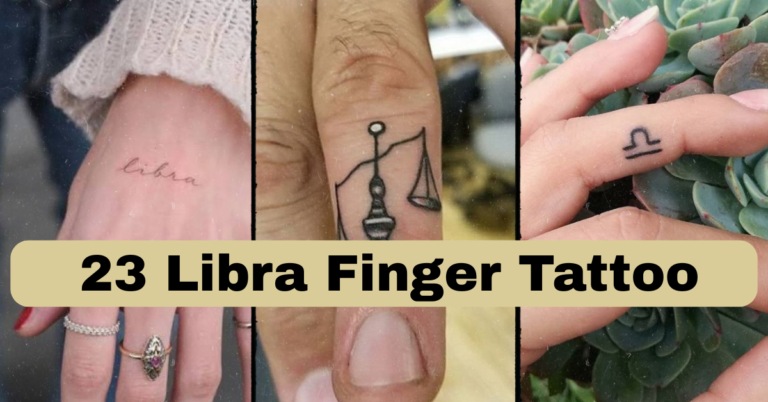
Traditional Panther Tattoo
The crawling panther is one of the most recognizable traditional motifs, usually shown mid-stride with a sleek black body, minimal internal linework, and maybe a small pop of red for the mouth or eyes. Because the body is mostly solid black, this design relies heavily on silhouette and negative space — the un-inked skin around the panther — to define the shape rather than internal detail. That makes it incredibly durable over time since there’s very little fine line to blur. Great for the thigh, calf, or forearm where the elongated shape can stretch naturally with the limb. Aim for at least 5 inches in length so the legs and tail don’t crowd together. Ask your artist to keep the black fill “solid saturation” rather than shaded gray tones — that’s what gives it the classic flat traditional look instead of a modern blackwork feel. Next up, a design that flips the palette entirely toward warm tones.
Nautical Swallow Tattoo
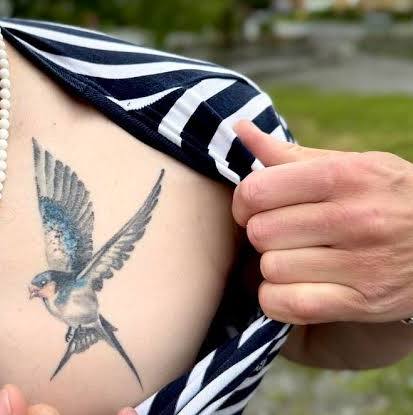
Swallows carry old sailor symbolism (a safe return home) and translate beautifully into small-to-medium traditional pieces. The design typically features bold black wing outlines, a solid or lightly shaded body, and clean negative space between the wings and tail feathers. Because swallows are often placed in pairs — one on each side of the chest or collarbone — symmetry matters here more than most designs. A single swallow works well on the wrist or hand, though those bony areas tend to rank higher on the pain scale and may need more frequent touch-ups since hands see constant friction and sun exposure. Chest placement is gentler on pain but less visible day-to-day. Bring reference photos showing wing angle preference (upswept versus downswept) since that small detail changes the whole composition. This is a solid matching-tattoo option for siblings or friends who want something symbolic without matching text.
Snake and Dagger Tattoo
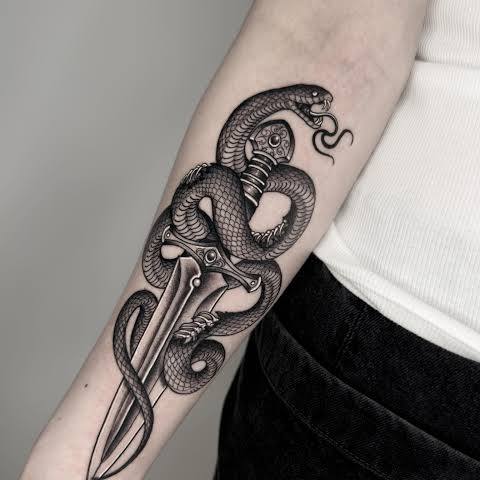
This combo design pairs a coiled snake with a dagger or knife, usually rendered with bold linework, solid black or green scale shading, and a sharp metallic-look blade using minimal gray tones (traditional palettes mostly avoid true gray, so artists fake shine with thin white negative space lines instead). It’s a busier composition, so it needs real size to hold up — 4 inches minimum, ideally more if the snake wraps fully around the dagger. Forearm and calf placement give the linear shape room to flow naturally with the limb’s curve. Expect moderate pain on fleshier parts of the calf, more on the inner forearm near the elbow crease. This design ages best when the artist keeps scale detail simple rather than trying to render every individual scale — too much fine detail here is actually the biggest long-term risk, since it blurs first. It’s not the easiest first tattoo due to complexity, but it’s a favorite for a second or third piece once you know your pain tolerance.
Pin-Up Girl Tattoo
The classic pin-up figure uses bold outlines for the figure and clothing, flat color blocking for hair and clothing, and very little shading beyond simple contour lines. This design demands a larger canvas — thigh, upper arm, or back — since the facial features and figure proportions need space to stay legible. Anything under 4-5 inches tends to lose the facial detail within a few years as skin ages and stretches. Thigh and upper arm placement are relatively moderate on the pain scale. A key booking tip: ask to see the artist’s portfolio specifically for figure work, since proportion and facial expression are where skill really shows. This design isn’t the most workplace-discreet option given size and subject matter, so think about visibility needs before committing to placement.
Traditional Dagger Through Heart
A simpler, punchier alternative to the snake-and-dagger combo, this design pairs a heart (often with a banner) and a straight dagger piercing through it, done in bold red, black, and yellow. It’s compact enough for smaller placements like the forearm, calf, or even behind the ear if scaled down to 2 inches. Behind-the-ear placement is thin-skinned and closer to cartilage, so expect a sharper, quicker pain sensation, though it’s a short session given the size. This is a great candidate for a banner add-on with a name or date, but keep lettering bold and blocky to match the traditional aesthetic rather than switching to fine-line script, which clashes stylistically and ages differently than the surrounding bold work.
American Traditional Wolf Head
Wolf heads in this style favor a front-facing or side-profile bust, thick black outlines defining the fur texture in clean directional lines (not realistic fur rendering), and minimal color beyond black, gray-blue, and white negative space for highlights. Chest, shoulder, or upper arm placement gives enough width for the head shape to sit proportionally. I’d suggest 4-5 inches minimum so the eye and snout detail doesn’t compress. Shoulder placement tends to be one of the more tolerable spots pain-wise. One useful tip: ask the artist to limit fur line count — too many thin directional lines is a common rookie mistake that looks fine fresh but muddies within five years as those fine lines spread slightly under skin.
Traditional Ship Tattoo
Full sailing ships are a traditional showpiece, often combined with waves, clouds, or a compass. Given the amount of contained detail — sails, rigging, hull — this needs serious space, ideally 6+ inches on the back, thigh, or ribs. Rib placement is consistently rated as one of the more uncomfortable spots due to thin skin over bone and the stretching/breathing movement during the session. If you want a ship without the rib pain, consider the outer thigh or upper back instead. Ask your artist how they plan to simplify rigging lines — a ship with every rope rendered in fine detail will not hold up the same way a simplified traditional version does.
Classic Skull Tattoo
Traditional skulls skip photorealism for a stylized bone structure with bold black outlines, minimal cross-hatch shading, and often a decorative element like a rose, dagger, or bandana wrapped around it. Forearm, calf, or shoulder work well at a 3-4 inch minimum size. This is a fairly beginner-friendly design in terms of complexity and a popular first-tattoo choice because the imagery reads clearly even at smaller sizes compared to something like a full ship or pin-up figure.
Traditional Tiger Tattoo
Similar in spirit to the panther but rendered in orange, black, and white with bold stripe patterning, the traditional tiger usually appears mid-roar or crawling. Because stripes rely on clean negative space between black lines, this design needs at least 5 inches to keep stripe spacing legible over time. Thigh and back placement give the best proportional space. This design pairs well as a larger back piece alongside other jungle-themed traditional flash.
Sailor Jerry-Style Hula Girl
A close cousin to the pin-up, the hula girl design incorporates palm leaves, flowers, and a grass skirt rendered in the same flat color-block style. Upper arm or thigh placement at 4+ inches keeps the floral details from crowding the figure. This is a fun matching or solo statement piece for anyone drawn to mid-century Americana themes specifically.
Traditional Compass Rose
A compass design combines geometric linework with decorative flourishes, usually in black with red accent points. Forearm or calf placement at 3-4 inches works well, and the geometric symmetry actually makes this one of the more forgiving traditional designs to keep looking sharp over time, since straight lines and even spacing distort less dramatically than organic curves as skin changes.
Traditional Flash Sheet Collage
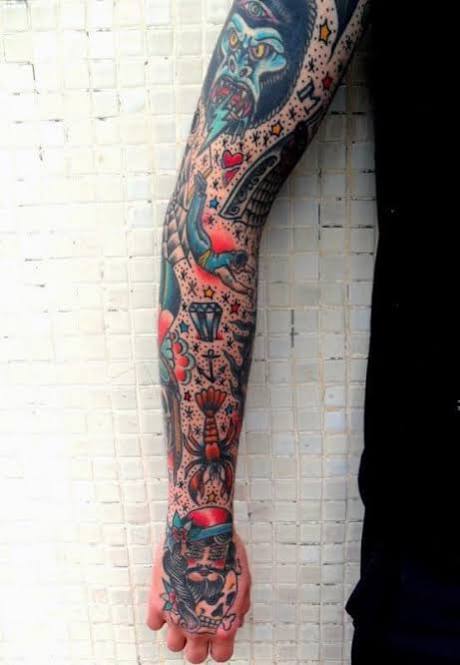
Rather than one image, some collectors go with a curated cluster of smaller traditional flash pieces (a rose, a small dagger, a swallow) arranged together on the forearm or calf. This approach lets you build a story piece by piece over multiple sessions instead of committing to one large tattoo upfront, which is a great option if budget or pain tolerance means you want to space sessions out.
Definition List: Know Your Traditional Terms
Bold Traditional (American Traditional): Thick black outlines, flat and limited color palette, minimal shading — built for longevity and visual clarity over decades.
Fine Line: Thin, delicate outlines with little to no bold shading — visually different from traditional and generally fades/blurs faster on skin over time.
Dotwork: Shading and texture built from small dots instead of solid fill or line shading — not typically used in classic American traditional pieces.
Blackwork: Heavy use of solid black fill, sometimes covering large areas — traditional designs use black selectively as an outline and accent, not usually as full-coverage fill.
Best Placement Ideas
- Forearm — highly visible, moderate pain, easy to show off or cover with sleeves for work
- Calf — good curve for animal and figure designs, low-to-moderate pain, easy healing access
- Upper arm/shoulder — great for larger pieces, generally more tolerable pain-wise, easy to conceal
- Ribs — higher pain due to thin skin and bone proximity, best for those with prior tattoo experience
- Chest/back — ideal for large-format pieces, pain varies by exact spot, low visibility for work settings
- Behind the ear/wrist — good for small accent pieces, sharper pain due to thin skin, higher touch-up needs from friction
Tips for Success
Look for an artist whose portfolio specifically shows traditional work — bold linework and flat color saturation are a different skill set than fine-line or realism. Ask to see healed photos, not just fresh ink, since that tells you how their line weight and color choices actually hold up. Bring reference images but stay open to their input on sizing; a good traditional artist will often push back on a design being too small because they know what survives on skin long-term. Discuss needle groupings briefly if you’re curious — traditional work often uses larger liners for that signature bold outline.
Common Mistakes and How to Avoid Them
- Going too small for the detail level — a detailed eagle or ship needs real size; shrinking it below recommended dimensions leads to blurred, illegible linework within years
- Choosing bony, high-movement placement for large pieces — ribs and joints stretch and move more, affecting how linework settles
- Skipping aftercare instructions — this affects how cleanly the piece heals and how vibrant the color remains
- Copying a flash design exactly without personal tweaks — small color or size adjustments make a classic design feel more like yours without losing the traditional integrity
- Ignoring skin tone in color selection — some color combinations show up more vibrantly on different skin tones; a knowledgeable artist can advise on adjusting saturation accordingly
Similar Variations
Almost every design above can be resized down for a first tattoo or scaled up into a larger back or chest piece. Colors can shift too — a red rose becomes a traditional black-and-gray piece for a more subdued look, or a swallow pair becomes a full flock for a back piece. Combining smaller flash designs (a dagger, a rose, a banner) into one cohesive arm piece is a popular way to build a custom traditional sleeve over time rather than committing to one massive session.
Aftercare Basics
Keep the tattoo clean and follow the specific aftercare sheet your artist provides — this is the single best source since it’s tailored to their techniques and products. Generally, avoid direct sun exposure and soaking (pools, baths) during the initial healing window, and keep the area moisturized with a fragrance-free product as recommended. Avoid picking at any peeling skin, since that can affect how the color and linework settle. If you notice anything unusual during healing, consult a licensed professional or dermatologist rather than guessing.
Quick FAQ
How much does an American traditional tattoo cost?
Costs vary widely by region, artist experience, and size, but small pieces (2-3 inches) often start in the $80-150 range, while larger pieces like chest or back designs can run several hundred to over a thousand dollars. Always ask for a direct quote during consultation.
How painful are these tattoos compared to other styles?
Pain depends heavily on placement and individual tolerance rather than style itself, though bold traditional work often involves more passes for solid color fill, which some people find slightly more intense than single-pass fine-line work.
How long does healing take?
Surface healing generally takes 2-3 weeks, with full skin settling continuing for a couple of months, though this varies by size, placement, and individual healing response.
Do American traditional tattoos fade faster than other styles?
Generally no — the bold linework and flat color saturation are specifically why this style tends to hold up better over decades compared to fine-line or heavily detailed realism, though touch-ups over the years are still common for any tattoo.
Finding the right American traditional tattoo really comes down to matching bold, simple imagery to a placement that gives it room to breathe over the decades ahead. Take your time picking an artist whose portfolio proves they understand this specific style, ask the questions this guide walked through, and you’ll end up with a piece that looks just as sharp at year twenty as it did on day one.