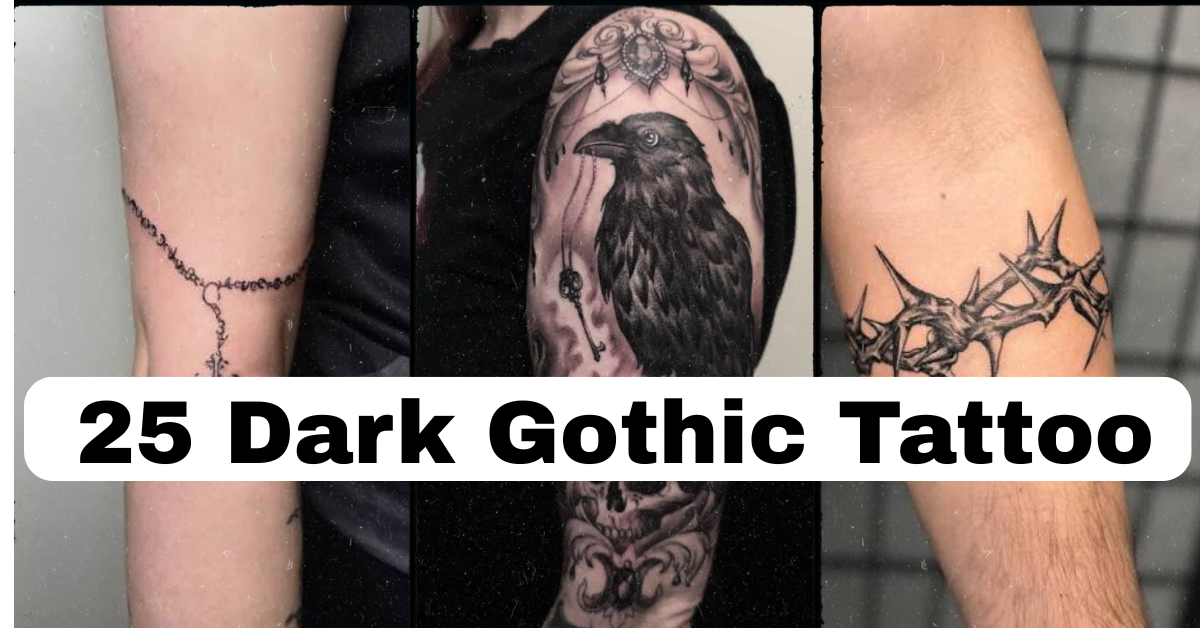
25 Dark Gothic Tattoo Ideas: A Practical Guide to Style, Placement, and Booking
Nervous about picking a dark gothic tattoo you’ll still connect with years from now? That’s a reasonable thing to sit with, especially since gothic imagery carries so much symbolic weight.
So what are the best dark gothic tattoo ideas? Blackwork skeletal hands, fine-line rosaries, and dotwork crows or moths work best for most people, since they lean on strong contrast and clean symbolism that holds up visually even as the piece ages. Bold traditional pieces like daggers or dark angels work well too, but they need more space and a longer session commitment.
Keep scrolling and I’ll walk you through 25 specific dark gothic designs, where each one sits best on your body, what kind of pain and healing to expect, rough cost ranges, and how to brief your artist so the final piece actually matches what’s in your head.
Why Dark Gothic Tattoos Carry Such Staying Power
Dark gothic tattoo art draws from centuries of religious iconography, memento mori symbolism (art centered on the reminder that life is finite), and folklore figures like witches, ravens, and shadow spirits. That deep well of imagery is part of why gothic tattoos rarely feel like a passing trend. The visual language, thick black contrast, sharp linework, symbolic objects, tends to age well on skin because it was never built around softness or trendiness in the first place. Below, each design names the specific technique and shading approach, so you’ll know exactly what to request at your consultation.
Blackwork Skeletal Hand Holding Rose
A skeletal hand gripping a single rose, done in solid blackwork, pairs stark bone linework with softer bokashi shading (a gradual black-to-skin gradient) on the rose petals for contrast. The bones stay outlined with confident, thick lines while the rose gets more delicate gradient work, creating visual tension between hard and soft elements. This works well on the forearm or upper arm at 4 to 6 inches. Ask your artist to keep finger joints anatomically accurate rather than stylized, since slightly-off hand anatomy is one of the more noticeable mistakes in this design. Forearm placement is generally more tolerable than the wrist. It’s a bold second-tattoo piece, not typically office-discreet, and it ages well thanks to the strong black-white contrast. Next, a piece built around quiet reverence.
Fine-Line Gothic Rosary
A rosary with small beads and a hanging cross, done in fine line with thin, consistent needle work and no shading, wraps naturally around the wrist or ankle like the real object would sit. This suits a 3 to 5 inch length depending on how many beads you want represented. Ask your artist to vary bead size slightly rather than making them perfectly uniform, since real rosary beads have a subtle handmade irregularity. Wrist and ankle placements tend to be more sensitive due to bone proximity. It’s an accessible first tattoo and a meaningful matching option for people who share a specific faith background or personal loss. Let’s move to something with real motion.
Dotwork Crow in Flight
A crow captured mid-flight, wings spread, built entirely through dotwork rather than continuous outlines, uses dot density to suggest feather texture and a natural gradient from dark wingtips to lighter body. This works well on the shoulder or upper back at 5 to 7 inches, giving the wingspan room to stay dynamic. Ask to see healed dotwork pieces specifically before booking, since loose dot spacing tends to look patchy once the skin settles. Shoulder placement runs more comfortable than bonier spots like the collarbone. It’s a striking mid-sized piece and suits someone past their first tattoo who wants texture over flat color. Now, a bolder winged figure.
Bold Traditional Dark Angel
A dark angel with heavy, shadowed wings, rendered in bold traditional style with thick black outlines and deep gray-black shading throughout the feathers and robe, brings real visual weight to a gothic piece. This needs space, ideally the back or thigh at 7 to 10 inches, so the wing detail doesn’t compress into a blur. Ask your artist how they plan to handle the face, since a partially shadowed or turned-away face often reads more haunting than a fully detailed one. Back and thigh sessions vary in sensitivity by exact spot, generally more tolerable on fleshier areas. It’s a bold, larger-scale piece best suited to someone already comfortable with longer sits, not a first tattoo. Let’s shift to a graphic occult symbol.
Negative Space Pentagram
A pentagram left as bare, untattooed skin surrounded by dense blackwork or fine crosshatching defines the shape entirely through what’s left blank rather than through outline. This negative space technique is genuinely difficult to execute cleanly and works best on a flat section of the forearm or upper back at 3 to 5 inches. Ask specifically to see the artist’s negative space portfolio, since uneven surrounding fill can make the star shape look muddy rather than crisp. Expect more pressure sensation given the density of surrounding black fill. It’s a bold, symbolic piece, less discreet for conservative workplaces, and best suited to a second or third tattoo. Now, something quieter and more playful in tone.
Fine-Line Black Cat Silhouette
A simple black cat silhouette, arched back or sitting upright, done in fine line with a solid but thin outline and zero interior detail, keeps this piece minimal and easy to place almost anywhere. This works at 2 to 3 inches on the wrist, ankle, or behind the ear. Ask your artist to keep the tail curve slightly asymmetrical rather than perfectly smooth, since a touch of irregularity reads more like a real cat’s posture. Wrist and ankle placements tend to be more sensitive. It’s an excellent first tattoo and a popular matching design between friends who share a witchy or gothic aesthetic without wanting anything too intense. Let’s move to something structural and symbolic.
Blackwork Thorn Crown
A crown of thorns, rendered in solid blackwork with sharp negative space defining individual thorn points, works as a standalone piece or as a base for a larger composition layered in later. This suits the forearm or upper arm at 4 to 6 inches. Ask your artist to keep thorn spacing irregular rather than evenly distributed, since a mechanically even thorn pattern looks less convincing than natural, uneven spacing. Forearm placement runs moderate on the sensitivity scale. It’s a meaningful piece tied to themes of sacrifice or resilience, and it works well for a second tattoo once you’re past smaller starter pieces. Now, a bolder combination piece.
Bold Traditional Dagger Through Heart
A dagger piercing a heart, done in bold traditional style with thick outlines, warm red shading on the heart, and cool gray highlights along the blade, is a classic gothic motif with real graphic punch. This works on the forearm or chest at 4 to 6 inches. Ask your artist to keep the blade angle consistent with the heart’s natural curve, since a mismatched angle is a common composition mistake in this specific design. Chest placement runs more sensitive than the forearm due to thin skin. It’s a bold, less office-discreet piece and a strong pick for someone processing heartbreak or resilience through their ink. Let’s soften the tone with a personal keepsake design.
Fine-Line Gothic Locket
A small open locket shape, rendered in fine line with delicate hinge detail and a tiny space inside for an initial or symbol, works well as a personal, sentimental gothic piece. This suits the wrist, collarbone, or behind the ear at 2 to 3 inches. Ask your artist to keep interior detail minimal, since packing too much inside a small locket outline tends to blur together over time. Collarbone placement tends to run more sensitive due to thin skin over bone. It’s an easy first tattoo and a strong matching option for people honoring a specific relationship or memory. Now, a nocturnal insect motif.
Dotwork Moth with Skull Markings
A moth with a small skull pattern naturally worked into its wing markings, built through dotwork shading, blends insect symbolism with classic memento mori imagery in one cohesive piece. This works well on the upper back or forearm at 4 to 6 inches, giving the wing detail room to stay legible. Ask your artist to keep the skull marking subtle within the wing pattern rather than oversized, since an oversized skull can make the piece read as two separate ideas instead of one. Upper back placement is generally more comfortable than the wrist. It’s a distinctive mid-sleeve or standalone piece for someone who wants layered symbolism without going fully bold traditional. Let’s look at a witchy figure next.
Blackwork Witch’s Hand and Candle
A hand rendered in solid blackwork, holding a lit candle with fine-line smoke trailing upward, combines two textures, dense black fill and delicate linework, in one composition. This suits the forearm or shoulder at 4 to 6 inches. Ask your artist to keep the candle flame and smoke in a lighter line weight than the hand itself, since matching weights everywhere can make the piece feel flat. Shoulder placement runs more tolerable than the wrist. It’s a strong second-tattoo pick for anyone drawn to witchy, ritual-adjacent gothic imagery. Now, something reflective and symbolic.
Negative Space Gothic Mirror
An ornate hand mirror, its reflective surface left as bare skin while the ornate frame is filled in solid blackwork, plays with the idea of absence and reflection through negative space technique. This works well on the forearm or upper back at 5 to 7 inches, since the frame detail needs enough room to stay ornate rather than cramped. Ask to see prior negative space work in the artist’s portfolio specifically, since this piece depends on clean, confident linework around the blank “mirror” area. Expect more pressure sensation given the solid fill involved. It’s a conceptually rich piece best suited to a second or third tattoo rather than a first. Let’s shift to something more organic.
Fine-Line Weeping Willow
A weeping willow tree, its drooping branches rendered in thin, flowing fine lines with no shading, brings a softer, more melancholic gothic element into the mix. This suits the spine, ribs, or forearm at 5 to 7 inches, giving the drooping branch lines room to trail naturally. Ask your artist to vary branch length slightly rather than making them symmetrical, since real willow branches droop unevenly. Spine and rib placements tend to run more sensitive due to thinner skin over bone. It’s a quietly meaningful piece often chosen to honor loss or change, and it works well as a first larger piece for someone moving past small starter tattoos. Now, a shadowy figure with real presence.
Bold Traditional Shadow Reaper Figure
A partially obscured reaper figure, mostly shadow and outline with minimal facial detail, done in bold traditional style with thick black contours and heavy gray shading, leans into suggestion rather than full detail. This needs space, ideally the thigh or back at 7 to 9 inches. Ask your artist to keep the face mostly obscured in shadow rather than fully rendered, since ambiguity tends to read as more unsettling than an overly detailed face. Thigh placement is generally more tolerable than bony spots like the shin. It’s a bold, larger-scale statement piece, not typically a first tattoo or workplace-visible choice. Let’s move to a sharper object-based design.
Blackwork Obsidian Dagger
A dagger with a faceted, obsidian-style blade, rendered in solid blackwork with sharp geometric facet lines catching negative space as “light,” makes for a clean, graphic standalone piece. This works on the forearm or calf at 4 to 6 inches. Ask your artist to keep facet lines crisp and geometric rather than organic, since that precision is what sells the obsidian, glass-like effect. Calf placement tends to be more comfortable than the shin. It’s a strong secondary piece once you already have a softer or more detailed gothic tattoo elsewhere, adding graphic contrast to a growing collection. Now, a piece combining structure and softness.
Dotwork Spiderweb Heart
A heart shape woven from spiderweb strands, built through dotwork shading rather than solid lines, merges a classically soft symbol with a darker, more textured technique. This works well on the ribs or upper arm at 3 to 5 inches. Ask your artist to keep the web strands radiating naturally from a central point within the heart shape, since a randomly placed web pattern can look cluttered rather than intentional. Rib placement tends to run more sensitive than the upper arm. It’s a meaningful piece for someone processing complicated feelings around love or loss, and it works well as a smaller standalone piece or matching design. Let’s shift to a fantastical figure.
Fine-Line Dark Fairy Silhouette
A fairy figure with slightly tattered wings, rendered in fine line with thin, delicate outlines and no shading, brings a darker twist to a traditionally softer subject. This suits the shoulder or forearm at 3 to 5 inches. Ask your artist to keep the wing edges slightly jagged rather than smooth, since that detail is what shifts the piece from whimsical to gothic. Shoulder placement runs more comfortable than the wrist. It’s a solid first or second tattoo choice for someone who wants gothic tone without heavy black saturation. Now, an architectural silhouette.
Blackwork Gothic Castle Silhouette
A castle silhouette against a solid black sky, rendered with the castle left as clean negative space against dense blackwork fill, captures a moody, atmospheric scene in one composition. This works well on the forearm or upper back at 4 to 6 inches. Ask your artist to keep the castle’s spires simple and graphic rather than overly detailed, since fine architectural detail tends to blur at this scale over time. Upper back placement is generally more tolerable than the wrist. It’s a striking standalone piece and a strong pairing with the gothic mirror or thorn crown designs for anyone building a larger gothic collection. Let’s return to a bold combination piece.
Bold Traditional Serpent and Skull Crown
A skull wearing a small crown, with a serpent coiling through the crown’s points, done in bold traditional style with thick outlines and rich gray-black shading, blends royalty and mortality into one graphic image. This needs real space, ideally the upper arm or back at 6 to 8 inches. Ask your artist to plan the serpent’s path through the crown before finalizing the stencil, since a poorly routed serpent can make the crown read as cluttered rather than intentional. Upper arm placement tends to be more comfortable than the wrist or hand. It’s a bold centerpiece for someone already collecting larger gothic pieces, not a first-tattoo choice. Now, something quieter and more symbolic.
Fine-Line Memento Mori Eye
A single eye with a small skull reflected in the iris, rendered in fine line with thin, precise detail and minimal shading, captures the memento mori theme (a reminder that life is temporary) in a compact, symbolic image. This works at 2 to 4 inches on the forearm, behind the ear, or ankle. Ask your artist to keep the reflected skull small and subtle within the iris, since an oversized reflection can make the eye read as busy rather than clean. Ankle and behind-the-ear placements tend to run more sensitive. It’s an excellent first tattoo for anyone drawn to quiet, symbolic gothic imagery rather than bold visuals. Let’s move to a floral arrangement with darker tones.
Dotwork Black Rose Bouquet
A small bouquet of roses, shaded entirely through dotwork rather than solid fill or traditional bokashi gradient, creates a textured, slightly muted look that reads as darker than a typical color rose piece. This works well on the shoulder or ribs at 4 to 6 inches. Ask your artist to vary dot density between individual roses so the bouquet has visual depth rather than uniform flatness. Rib placement tends to run more sensitive than the shoulder. It’s a strong matching option for people who want floral symbolism with a heavier, more gothic feel than a typical rose tattoo. Now, an architectural gateway motif.
Blackwork Gothic Gate and Vines
An ornate iron gate, partially overgrown with thorned vines, rendered in solid blackwork with the gate’s ironwork left as clean negative space against the surrounding fill, tells a small visual story about time and decay. This works well on the forearm or upper back at 5 to 7 inches. Ask your artist to balance the vine growth so it looks like it’s reclaiming the gate naturally rather than randomly scattered across it. Upper back placement is generally more comfortable than the forearm’s bonier sections. It’s a strong standalone piece or sleeve anchor for someone drawn to abandoned, atmospheric gothic imagery. Let’s shift to a classic nocturnal creature.
Bold Traditional Vampire Bat
A bat with exaggerated wing detail and sharp fangs, done in bold traditional style with thick outlines and deep gray shading through the wing membrane, brings dramatic, high-contrast energy to a gothic piece. This works on the forearm or shoulder at 4 to 6 inches. Ask your artist for a reference showing wing position (folded versus fully spread), since the two versions change the piece’s overall composition significantly. Shoulder placement tends to run more tolerable than the wrist. It’s a bold, graphic piece well suited to a second or third tattoo, and it pairs naturally with other nocturnal gothic imagery like the crow or moth designs above. Now, a piece about breaking free.
Fine-Line Broken Chain
A chain link with one link visibly broken or open, rendered in fine line with thin, consistent outlines and no shading, symbolizes breaking free from something difficult. This works well on the wrist, ankle, or forearm at 2 to 4 inches. Ask your artist to keep the broken link’s gap clean and deliberate rather than jagged, since a clean break reads more intentional than an accidental-looking one. Wrist and ankle placements tend to run more sensitive. It’s an excellent first tattoo tied to a specific personal milestone, and it works well as a subtle, workplace-friendly piece depending on exact placement. Finally, let’s look at how several of these ideas can come together.
Full Dark Gothic Composition (Combined Elements)
This is the most ambitious option on the list: a larger piece combining several elements above (commonly a skeletal hand, thorn crown, and a smaller symbolic detail like the broken chain or memento mori eye) into one cohesive composition on the back, thigh, or full arm. Because it spans multiple large and small elements, a full composition like this is typically planned across several sessions over many months. Ask your artist for a complete sketch or digital mockup before starting, since adjusting the layout mid-piece is far more difficult than planning the composition up front. Larger composition work covers a range of sensitivity zones depending on exact placement, generally more tolerable on fleshier areas than bony ones. This isn’t a first-tattoo or office-discreet choice, but for someone genuinely committed to the dark gothic aesthetic, it represents the fullest expression of the style in one piece.
Best Placement Ideas
Different spots on your body trade off visibility, pain, and long-term maintenance differently. Here’s a quick placement guide:
- Forearm: High visibility, moderate pain, holds both fine-line and bold traditional work equally well, easy to touch up.
- Ribs and spine: Low visibility (easy to cover), higher pain due to thin skin over bone, good for larger pieces like the willow or spiderweb heart.
- Wrist and ankle: High visibility, higher pain due to bone proximity, best suited to small fine-line pieces like the locket or broken chain.
- Shoulder and upper back: Easy to cover, moderate to lower pain on fleshier spots, ideal for medium and larger pieces like the crow, castle, or gate designs.
- Behind the ear: High visibility if hair is up, more sensitive skin, works only for very small designs like the memento mori eye or black cat.
- Chest and sternum: Low to moderate visibility depending on clothing, consistently more sensitive, best for smaller, meaningful pieces like the dagger and heart.
- Thigh and back: Coverable, sensitivity varies by exact spot, the standard choice for full traditional or larger composition pieces.
Tips for Success
Choosing the right artist matters as much as choosing the right design. Look specifically for a portfolio with multiple gothic or dark-themed pieces, not just one standout surrounded by unrelated work, since this style has its own specific shading and composition logic. At a consultation, ask to see healed photos, not just fresh sessions, since fresh tattoos always look sharper than they will months later. Bring reference images that show the specific technique you want, fine line, blackwork, or dotwork, not just the subject matter. It’s completely fine to ask direct questions about needle configuration, expected session count for larger pieces, and touch-up policy before booking.
Common Mistakes and How to Avoid Them
- Sizing too small for the detail level: Dense linework and dotwork shading both need enough space to stay legible as skin ages. If your reference is packed with detail, size up.
- Choosing a placement that fights the design’s natural shape: A design built for a flat back doesn’t always wrap cleanly around a curved calf or wrist. Ask your artist to mock up placement on your actual body first.
- Skipping aftercare instructions: This is one of the leading causes of blotchy healing and premature fading, especially on detailed blackwork pieces.
- Copying a design exactly without personalizing it: Gothic imagery carries personal symbolism for a lot of people. A direct copy from someone else’s tattoo often doesn’t fit your body or your specific meaning the same way.
Similar Variations
Almost every design above can be resized or recombined. A large bold traditional dark angel can be simplified into a smaller fine-line version for a first larger piece. A single black rose from the bouquet can be duplicated and mirrored for a matching set between two people. Smaller detail pieces, like the broken chain or memento mori eye, can be layered onto a larger composition later as a sleeve or back piece grows. Blackwork elements like the obsidian dagger can also be redone in dotwork for a softer, more textured alternative that reads less stark.
Aftercare Basics
Aftercare details vary by studio and by design size, so always follow the specific sheet your artist gives you rather than generic internet advice. In general, most artists recommend keeping the area clean, avoiding direct sun and swimming during initial healing, and avoiding picking at any scabbing or peeling, especially on detailed blackwork pieces where scabbing can pull at fine negative-space lines. Healing timelines vary by individual and by placement, with smaller fine-line pieces often settling faster than large blackwork or dotwork sessions. If anything seems off during healing, such as unusual redness or swelling that doesn’t improve, check in with your artist or a licensed dermatologist rather than guessing.
Fine Line vs. Blackwork Dark Gothic Tattoos
- Fine line: Thin, consistent needle work, little to no shading, best for delicate symbolic pieces like a locket or rosary, tends to soften slightly over many years.
- Blackwork: Solid black fill with deliberate negative space, high contrast, best for graphic focal points like a skeletal hand or castle silhouette, holds shape well for decades.
- Dotwork: Shapes and gradients built from individual dots rather than continuous lines or flat fill, gives a textured, engraved look well suited to moths, crows, and web patterns.
- Bold traditional: Thick black outlines with heavy gray-black shading, best for larger statement pieces like a dark angel or reaper figure, holds contrast the longest of all four techniques.
Quick FAQ
How much does a dark gothic tattoo cost? Small fine-line or single-symbol pieces often start around $100 to $250, while larger bold traditional or blackwork pieces can run several hundred to a few thousand dollars depending on size and session count.
Does a dark gothic tattoo hurt more than other styles? Not inherently. Pain depends far more on placement (bony areas like the ribs, spine, and wrist tend to be more sensitive) and how much solid black fill is involved than on the gothic theme itself.
How long does healing take? Small fine-line pieces often settle within two to three weeks, while larger blackwork or bold traditional pieces can take four to six weeks to fully heal. Individual healing varies, so always follow your artist’s specific aftercare sheet.
Will a dark gothic tattoo still look sharp in ten years? Blackwork and bold traditional pieces tend to hold their contrast longest. Fine-line and dotwork pieces can soften slightly over time, so occasional touch-ups help maintain crispness.
Final Thoughts
A dark gothic tattoo gives you a genuinely rich set of imagery to draw from, whether you’re drawn to the quiet symbolism of a memento mori eye or the bold weight of a shadow reaper figure. The key is matching the technique (fine line, blackwork, dotwork, or bold traditional) to your placement, pain tolerance, and how visible you want the piece to be day to day. None of this replaces an actual consultation, and pain, healing, and pricing will always vary by individual, so talk to a licensed, professional artist before you book anything.
Whatever design speaks to you, take the time to get both the symbolism and the artist right. A well-planned dark gothic tattoo is something you’ll still connect with decades from now.