23 Black Leg Tattoo Ideas for Men: Design, Placement, and Pain Guide
Black leg tattoo ideas for men give you more usable space than almost any other placement, and this guide comes from real time spent around studios watching those exact consultations happen, not from a stock photo roundup. Every idea below comes with the technical detail that actually decides whether a leg piece looks sharp in year one and still looks sharp a decade later.
So what makes a great black leg tattoo? Bold blackwork and traditional linework hold up best on the thigh and calf’s larger, curved surface, while fine-line and single-needle designs suit the shin and ankle where the skin sits closer to bone. Sticking to solid black also means fewer touch-ups long term than color work, since black ink resists fading better over time.
Keep reading for placement-specific pain notes, a realistic healing timeline, rough cost ranges, and exactly what to bring to your consultation so the finished piece matches what’s in your head, not just what looked good on a screen.
Why the Leg Works So Well for Bigger Black Designs
The leg gives an artist real room to work with, especially the thigh and calf, which is exactly why bold traditional and blackwork pieces have used the leg for decades as a canvas for detailed, high-contrast designs. Sticking with black ink instead of color simplifies a lot of the long-term planning too, no color matching on touch-ups, no worrying about which shades fade fastest, just clean linework or solid fill that ages in a predictable way. The leg also offers real flexibility on visibility. A thigh piece disappears under most pants, while a calf or shin design shows in shorts and rolled-up jeans. Below are 23 ways to use that space, ranging from small and simple to full leg-wrap pieces.
Bold Blackwork Tribal Band on the Calf
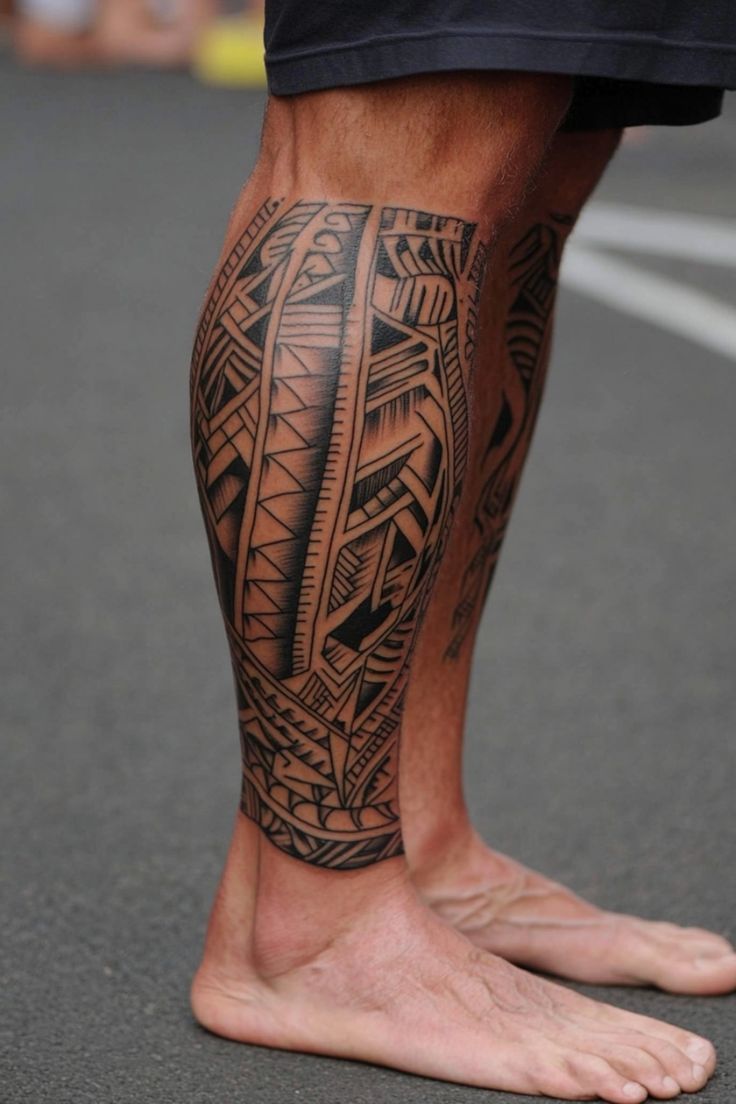
A tribal-inspired band wrapping the calf uses thick, solid black linework in interlocking geometric shapes, a style that’s held up as a classic leg tattoo choice because the bold contrast reads clearly even from a distance. Keep the band consistent in width around the whole calf, roughly 3 to 5 inches, so the pattern doesn’t look lopsided from different angles. Ask your artist to sketch the band directly on your leg while standing, since the calf’s shape changes noticeably between sitting and standing positions. Solid black fill takes longer under the needle than simple linework, so expect steady, moderate discomfort, though the calf generally has decent muscle padding. This design suits someone wanting a bold, highly visible piece in shorts, and it ages well since solid black holds its edges longer than shaded or colored work.
Fine-Line Black Script on the Shin

Fine line uses a single thin needle to build delicate, low-opacity lines instead of thick, saturated linework, which suits a short phrase or word running vertically along the shin. Keep the wording brief, longer phrases at this width blur together within a few years as fine lines soften with age. The shin sits directly over bone with very little muscle padding, so this ranks among the more sensitive leg placements, expect a sharper, more concentrated sensation than the calf or thigh. Ask your artist to test the lettering size on paper first, since script that reads fine on a screen can crowd at actual tattoo scale. This placement is easy to cover with pants for workplace settings, making it a solid choice for a first tattoo with personal meaning built in.
Blackwork Skull on the Outer Calf
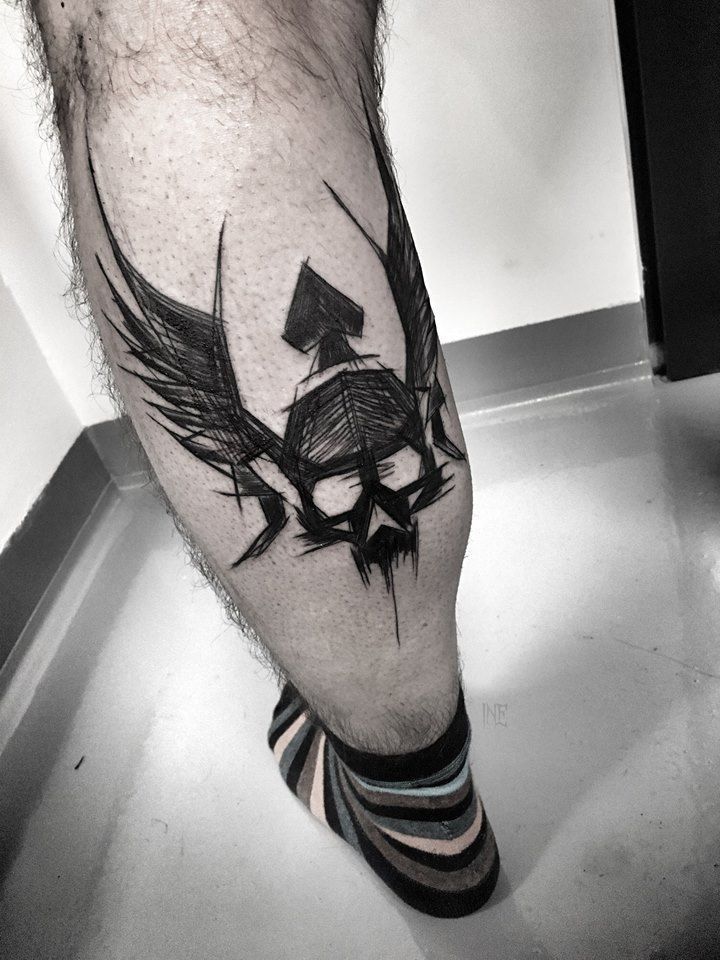
A skull rendered in bold blackwork, with thick outlines and solid shading rather than fine detail, makes a strong graphic statement on the outer calf. Detail here comes from shape and contrast rather than intricate linework, keeping the design legible even at a glance from across a room. This needs real space to look intentional, 4 to 6 inches works well on the outer calf’s flatter surface. Ask your artist about keeping the eye sockets and jaw proportions balanced, since uneven proportions are one of the more common issues with skull designs. Pain is comparable to standard blackwork on a fleshier placement like the calf, generally moderate. This design suits someone wanting a bold, classic leg tattoo, and it pairs well with additional dark-themed pieces layered in around it over time.
Dotwork Black Geometric Pattern on the Thigh

Dotwork builds shading and texture from clusters of tiny dots instead of solid lines or color blocks, which works especially well for a geometric pattern where dot density controls how dark or light each section of the design appears. Denser clusters create solid-looking shapes, while sparser dotting fades gently toward bare skin, giving the whole piece a gradient effect without any actual color. The outer thigh gives a flat, generous canvas at 4 to 6 inches for the geometric shapes to sit evenly. Check a portfolio specifically for dotwork shading, not just linework, since the two require different technical skill. Pain is generally steady and moderate rather than sharp on the thigh’s fleshier surface. This design suits someone wanting a modern, textured take on geometric tattooing rather than a purely bold blackwork approach.
Single-Needle Minimalist Symbol on the Ankle

Single needle is the most minimal end of fine line, using one needle point to create thread-thin lines with almost no shading, which suits a small, simple symbol well on the ankle. Keep the design under 2 inches, larger pieces here start to look sparse without more linework to fill the space around the ankle’s narrower profile. The ankle sits directly over bone with little padding, so expect a sharper, more concentrated sensation than most leg placements. Ask your artist to keep line weight consistent throughout the symbol, since inconsistent thickness is more noticeable at this small scale. This is a lower-pain option overall given the tattoo’s small size and quick completion time. This placement suits a first tattoo or a matching design with a friend, since it stays simple and low commitment.
Blackwork Lion on the Outer Thigh

A lion’s head or full profile rendered in solid blackwork, with a mane built from thick, flowing lines, is a classic bold choice for the outer thigh’s generous flat space. Keep the mane’s linework varied in thickness so it reads as texture rather than a solid, flat shape. This design needs real room, 5 to 7 inches works well for the detail to hold up clearly over time. Ask your artist about their approach to mane texture specifically, since flat, uniform lines here tend to blur together within a few years. Pain stays moderate given the thigh’s decent muscle padding, though sessions run longer given the detail involved. This design suits someone ready for a serious statement piece rather than a first tattoo, and it ages well thanks to the solid black fill’s resistance to fading.
Black Snake Wrapping the Calf
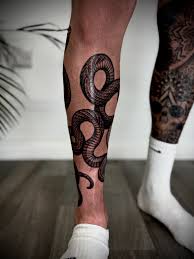
A snake coiling around the calf, rendered in bold blackwork with scales suggested through overlapping shapes rather than fully detailed individually, creates a dynamic, flowing composition that suits the calf’s natural curve. This needs enough length to wrap convincingly, 5 to 7 inches from just below the knee toward the ankle works well. Ask your artist to plan the coil direction with you standing, since calf shape shifts noticeably between sitting and standing. Expect a longer session given the wraparound length, with steady, moderate discomfort typical of larger calf pieces. This design suits someone wanting a bold, highly visible leg tattoo in shorts, and it works well as an anchor piece for a broader leg sleeve built out over time.
Negative-Space Black Geometric Shin Piece
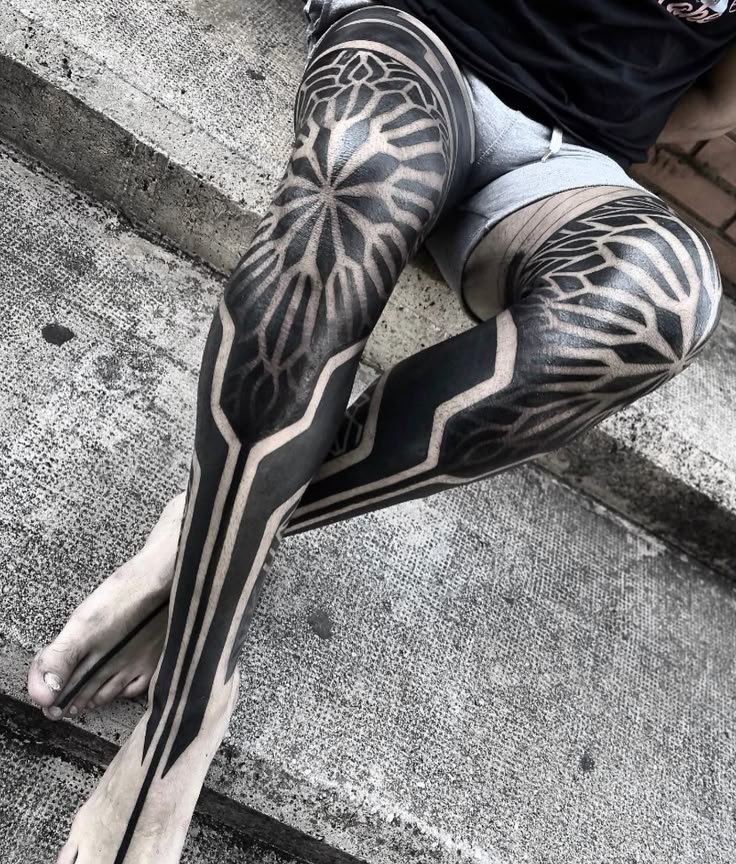
Negative space tattooing uses untouched skin as part of the design, so parts of a geometric shape are defined by what’s left blank against solid black fill rather than by outline alone. On the shin, a common approach shades a triangle or diamond solid, leaving a thin geometric line pattern inside as bare skin. This only works well on evenly toned, unblemished skin, since any scarring or discoloration inside the blank shape shows clearly. Keep the design to 3 to 4 inches given the shin’s narrower, bonier surface. This placement ranks among the more sensitive leg spots given the thin skin over bone. This design ages best out of direct sun, since solid black and negative-space contrast both fade unevenly with prolonged UV exposure.
Black Compass and Map Line on the Calf

A compass paired with a thin line suggesting a map route or coordinate trail works well on the calf, combining bold blackwork for the compass itself with finer linework for the trailing route detail. Keep the compass as the visual anchor at 2 to 3 inches, with the map line extending outward at a thinner weight so it doesn’t compete for attention. Ask your artist to keep the compass’s cardinal points evenly spaced, since a lopsided compass is a common and noticeable flaw. Pain stays moderate given the calf’s decent muscle padding. This design suits someone wanting symbolic meaning tied to travel or direction, and it works well as a personal first tattoo or as an anchor for additional small details added around it later.
Blackwork Wolf Portrait on the Thigh
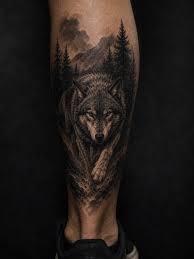
A wolf’s head rendered in bold black and grey style, using layered shading rather than flat blackwork fill, gives real dimension and depth to this classic design. This is more technically demanding than a flat silhouette and needs an artist experienced specifically in black and grey shading work. The outer thigh gives enough flat space at 5 to 7 inches for the shading to properly develop across the fur texture and facial features. Ask to see healed photos of prior black and grey portrait work specifically, since shaded pieces can look noticeably different a year out than fresh off the needle. Pain builds cumulatively given the longer shading session involved. This design suits someone ready for a serious, detailed statement piece rather than a quick, simple design.
Dotwork Black Mandala on the Knee
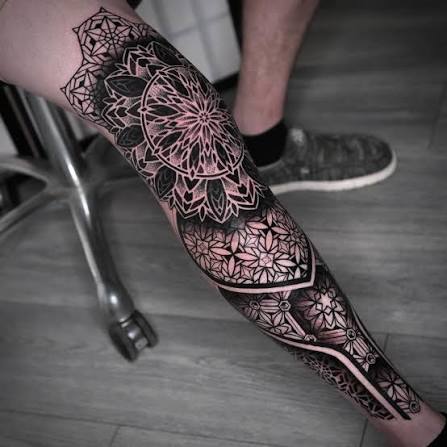
A mandala placed on or around the knee uses dotwork’s radiating dot pattern to create a symmetrical, textured design that follows the knee’s natural circular shape. Denser dot clusters near the center build depth, while sparser dotting toward the edges fades gently into skin. Keep the mandala under 3 inches given the knee’s curved, uneven surface, larger designs here distort once the knee bends. The knee is one of the more sensitive spots on the leg given its proximity to bone and constant movement, so budget for a slower, more careful session. Ask your artist to sketch the mandala directly on your bent knee, not just while straight, to preview how it’ll look during normal movement. This design suits someone wanting a distinctive, less common placement choice.
Black Anchor Tattoo on the Calf
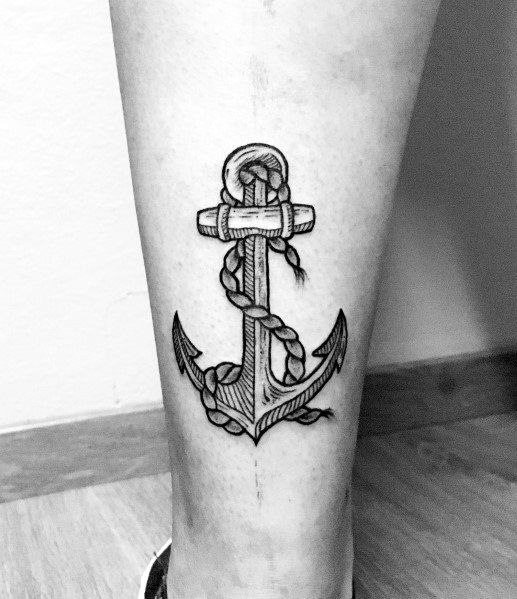
A classic anchor design, rendered in solid blackwork with clean, thick outlines, remains one of the more straightforward and enduring choices for the calf. Keep the proportions balanced between the anchor’s crossbar and main shaft, roughly 3 to 4 inches tall, so the design doesn’t look top heavy or stretched. Ask your artist about line weight consistency throughout, since an anchor’s straight edges make any unevenness more noticeable than in a more organic design. Pain stays moderate given the calf’s decent muscle padding. This design suits a first tattoo particularly well given its simplicity and long tattooing history, and it holds up well over time since solid black fill resists fading better than shaded or colored alternatives.
Blackwork Samurai or Warrior Figure on the Thigh

A samurai or warrior figure, rendered in bold traditional blackwork style with thick outlines and solid color blocking, is one of the more detailed and demanding designs on this list. This composition typically includes armor detail, a weapon, and sometimes a background element like clouds or wind lines, all requiring real space to read clearly. The outer thigh at 6 to 8 inches gives enough room for the full figure and its supporting details. Ask your artist specifically about their experience with traditional Japanese-influenced tattooing, since this style has its own established conventions around line weight and composition. Expect a longer session or multiple sittings given the detail involved. This design suits someone ready for a serious, long-term leg piece rather than a first tattoo.
Black Barbed Wire Band Around the Calf
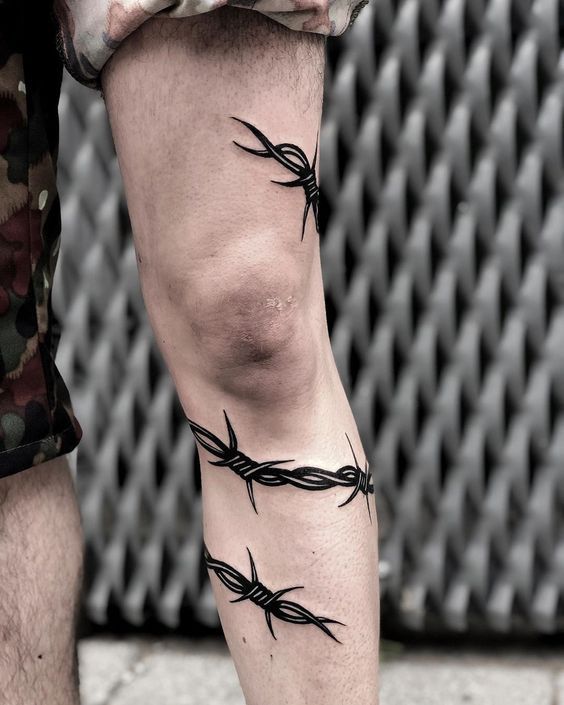
A barbed wire band wrapping the upper calf, just below the knee, is a straightforward, bold design that uses thin, consistent linework for the wire itself with small triangular barbs spaced evenly along its length. Keep the band to 1 to 2 inches in height, wrapping most of the way around the leg. Ask your artist to sketch the barb spacing directly on your skin before tattooing, since barbs that are too dense can look cluttered rather than deliberate. Pain is comparable to standard fine-line or blackwork work on the calf’s fleshier surface. This design suits someone wanting a simple, recognizable leg tattoo without much shading or color, and it works well as a standalone piece or a border marking the start of a larger leg sleeve.
Fine-Line Black Mountain Range on the Shin
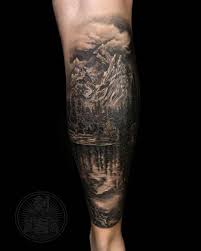
A simple mountain range silhouette, rendered in thin, clean fine-line work, suits the shin’s long, narrow surface well when kept as a horizontal band rather than a large, detailed scene. Keep the peaks varied in height for a natural look, but limit the overall design to 3 to 4 inches so the linework doesn’t blur together over time. The shin sits directly over bone, so expect a sharper, more concentrated sensation than fleshier leg placements. Ask your artist to keep line thickness completely even across all the peaks, since fine-line work is especially prone to showing any inconsistency in pressure. This minimalist design suits a first tattoo well, given its simplicity, and it’s a popular choice for anyone wanting a subtle, meaningful piece without heavy visual weight.
Black Clock Design on the Calf

A clock face, rendered in bold blackwork with clean numerals and hands set to a specific meaningful time, works well on the calf’s flatter outer surface. Keep the clock face proportional and symmetrical, roughly 3 to 4 inches in diameter, since an off-center or lopsided clock is one of the more noticeable flaws in this design. Ask your artist to confirm numeral spacing and hand placement carefully before starting, since this detail carries the design’s personal meaning. Pain stays moderate given the calf’s decent muscle padding. This design suits someone wanting a symbolic, meaningful piece tied to a specific date or moment, and it pairs well with additional elements like roses or script added around it later for a fuller composition.
Blackwork Reaper or Skeleton Figure on the Thigh
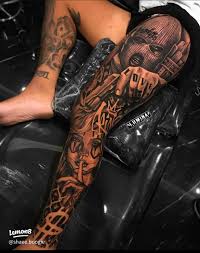
A hooded reaper or skeleton figure, rendered in bold blackwork silhouette rather than detailed realism, makes a striking, moody statement on the outer thigh without leaning into graphic or explicit imagery. Keep the figure’s robe or cloak simplified with flowing, thick linework rather than heavily textured shading. This composition needs real length, 5 to 7 inches, to let the figure’s proportions read clearly. Ask your artist to keep the design stylized and simplified rather than aiming for hyper-realistic detail, which tends to look better at this scale and ages more predictably. Pain builds steadily given the session length required for a piece this size. This design suits someone wanting a bold, darker themed leg tattoo rather than a first, simple piece.
Black Chain Link Band Around the Ankle
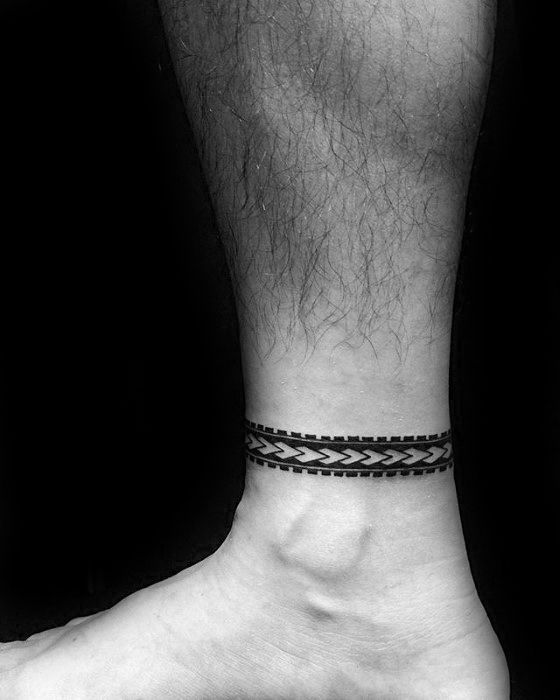
A simple chain link pattern wrapping the ankle like a bracelet is a classic, low-commitment black tattoo choice, using clean, evenly spaced linework for each link. Keep the band to about 1 inch in height, larger link sizes here look disproportionate against the ankle’s narrower profile. The ankle sits directly over bone with little padding, so expect a sharper sensation than most calf or thigh placements. Ask your artist to keep each link uniform in size and spacing, since uneven links are one of the more common small flaws in this design. This placement is easy to show off in shorts or hide under socks and pants depending on the setting, making it a flexible first-tattoo option for someone easing into the process.
Dotwork Black Feather on the Calf

A feather rendered in dotwork uses dot density to build a soft, textured gradient along each barb rather than the harder edges of solid blackwork fill. Denser dotting near the central shaft deepens the shadow, while lighter dotting toward the feather’s edges fades gently into skin. Keep the design to 3 to 5 inches along the calf’s length. This technique rewards a patient, steady hand, so check a portfolio specifically for dotwork shading examples rather than just linework. Pain builds steadily but stays fairly consistent given the calf’s decent padding. This design suits someone wanting a naturally flowing, slightly more textured piece than a flat blackwork silhouette, and it works well as a standalone design or paired with other nature-themed elements.
Black Religious Cross on the Calf
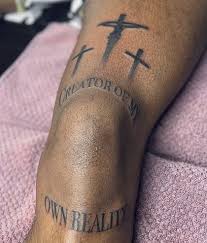
A simple cross, rendered in solid blackwork with clean, minimal detailing, remains one of the more enduring and straightforward leg tattoo choices for personal or symbolic reasons. Keep the proportions balanced, roughly 3 to 4 inches tall, with the horizontal bar positioned about a third of the way down from the top for a classic look. Ask your artist about line weight consistency across both the vertical and horizontal sections, since uneven thickness is one of the more common small flaws in simple geometric designs like this. Pain stays moderate given the calf’s decent muscle padding. This design suits a first tattoo particularly well given its simplicity and personal meaning, and it holds up well over time thanks to solid black ink’s resistance to fading.
Blackwork Full Sleeve-Style Leg Piece
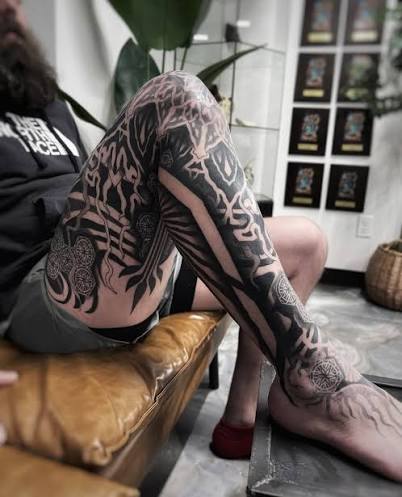
A full leg sleeve treats the entire leg like an arm sleeve, combining several smaller elements, a wolf, a geometric band, script, into one cohesive composition running from thigh to ankle. This requires careful planning during the consultation, since the design has to flow naturally around the leg’s changing shape and read correctly from every angle. Expect multiple sessions given the scale, generally spanning 12 inches or more in total length. Pain builds cumulatively across a longer sitting, with the shin and ankle areas typically more sensitive than the thigh and calf muscle itself. This is a serious, long-term commitment best suited to someone with prior tattoo experience, since adjustments become difficult once a design this size is underway.
Black Minimalist Line Art Animal on the Shin
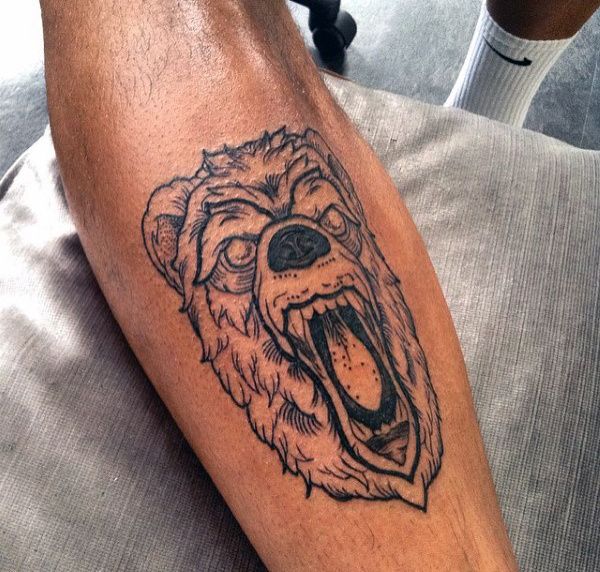
A single continuous line forming a simplified animal shape, a wolf, a bird, or a fox, works well on the shin when kept clean and uncomplicated, using one unbroken fine line rather than multiple overlapping strokes. Keep the design under 3 inches so the single line stays legible without needing to double back on itself too many times. The shin sits directly over bone, so expect a sharper, more concentrated sensation than fleshier leg spots. Ask your artist to practice the line’s flow on paper first, since a continuous line design leaves no room to hide a shaky section. This minimalist style suits a first tattoo well, given its simplicity and low visual weight, and it’s a popular choice for anyone wanting something modern and understated on the leg.
Large Blackwork Thigh-to-Calf Piece
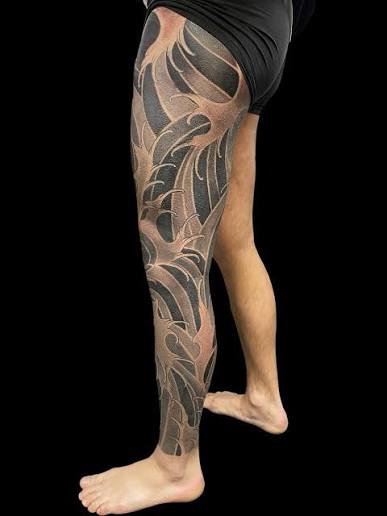
For those ready for a serious, larger commitment, extending a blackwork design from the thigh down across the knee and onto the calf creates one continuous, dramatic composition rather than isolated pieces. This spans 12 inches or more and typically requires several separate sessions rather than one sitting. Expect a noticeably higher total cost given the scale and time involved, and insist on a full sketch or stencil preview across the whole leg before the first session, since adjustments become far harder once a piece this size is underway. Pain varies by exact zone, with the knee generally more sensitive than the thigh or calf muscle itself. This is a serious, long-term commitment best suited to someone with prior tattoo experience who understands the time, cost, and multi-session planning involved.
Bold Blackwork vs. Black and Grey: Knowing the Difference
Bold blackwork — Uses solid, saturated black ink with thick outlines and minimal shading gradient. Best for designs meant to stay high-contrast and legible from a distance, and ages well with fewer touch-ups.
Black and grey — Uses diluted black ink to build soft grey shading alongside solid black linework, giving designs like portraits or wildlife real depth and dimension. Best for detailed, realistic pieces that need gradient shading.
Dotwork — Builds shading and texture from clusters of small dots rather than solid fill or continuous lines. Best for soft gradients and textured effects without full color saturation.
Fine line — Uses a single thin needle to create delicate, low-opacity lines with little to no shading. Best for smaller, subtler designs on tighter areas like the shin or ankle.
Best Placement Ideas
- Ankle — high visibility, sharper pain due to thin skin over bone, best for small chain, symbol, or single-needle designs
- Shin — moderate to high visibility, sharper pain given the lack of muscle padding, ideal for fine line or minimalist line art
- Calf — flexible visibility depending on pant length, moderate pain, strong canvas for bold blackwork or dotwork
- Knee — less common placement, more sensitive given proximity to bone and movement, best kept to smaller designs
- Outer thigh — easy to hide under pants, moderate pain, ideal for larger detailed or shaded pieces
- Full leg sleeve — least pain per square inch relative to size, but requires multiple sessions and a bigger budget
Tips for Success
Look for an artist whose portfolio shows real examples in the specific technique you want, bold blackwork, black and grey realism, dotwork, and fine line are different skill sets, and a strong blackwork portfolio doesn’t guarantee strong shading work. Check healed photos, not just fresh out-of-the-chair shots, since that’s the only honest preview of how solid black fill or detailed shading actually settles into skin months later. Bring at least two or three reference images and be specific about line weight, size, and placement rather than handing over a single generic image and hoping for the best. During your consultation, ask directly about their experience with large-scale leg work and how many sessions a piece your size typically needs. A good consultation should feel like a real conversation about your specific design, not a rushed sales pitch.
Common Mistakes and How to Avoid Them
Sizing a detailed design too small is one of the most common regrets, fine linework or shading that looks crisp on a stencil often blurs into a muddy shape within a few years if the piece is under 2 inches in a detailed spot like the shin or ankle. Choosing a placement that fights the design’s natural shape, like cramming a wide composition onto the narrow shin instead of the more generous calf or thigh, is another frequent issue. Skipping the artist’s specific aftercare instructions in favor of generic internet advice can affect how solid black ink settles, especially on a high-movement area like the knee or ankle. Copying a reference image exactly without adjusting proportions to fit your leg’s actual shape often looks noticeably different once inked than it did as a flat photo. Rushing the artist search and booking the first available appointment instead of checking portfolio consistency is a mistake that’s hard to undo once ink is under the skin.
Similar Variations
Any of the designs above can shift with a few adjustments. Swap a solid blackwork silhouette for black and grey shading to add depth without full color. Resize a larger thigh piece down into a simplified single-element accent for the calf or ankle. Add a second, smaller design nearby, like a chain link band paired with an existing symbol, to build a cohesive leg piece over time. Turn a straight fine-line design into a slightly bolder statement by thickening the outline and adding basic shading. Combine any of the smaller designs with script or a meaningful date for added personal weight.
Aftercare Basics
General aftercare guidance includes keeping the tattoo clean and moisturized, avoiding direct sun exposure and swimming while it heals, and not picking at scabbing or peeling skin. Loose, breathable clothing over the leg reduces friction during the first one to two weeks, which matters more on the calf and thigh given how much they move during normal activity. Every studio provides a specific aftercare sheet tailored to their preferred products and your particular piece, and that sheet should always take priority over generic advice found online. If you notice unusual redness, swelling, or discharge beyond normal healing, check with a licensed dermatologist rather than waiting it out. Pain tolerance and healing speed vary by individual, so the timelines here are general estimates rather than guarantees.
Quick FAQ
How much does a black leg tattoo cost? Smaller fine-line or single-needle designs often start in the $80 to $200 range depending on your area, while larger blackwork, black and grey, or full leg-sleeve pieces can run several hundred to over a thousand dollars across multiple sessions. Always get a direct quote from your chosen artist rather than relying on general estimates.
Does a leg tattoo hurt more than other placements? It depends heavily on the exact spot. The shin, ankle, and knee tend to be more sensitive given thin skin and bone proximity, while the calf and outer thigh generally rank as more moderate given their muscle padding.
How long does a black leg tattoo take to heal? Most designs heal on the surface within 10 to 14 days, though full healing beneath the skin can take up to a month. Larger or more detailed pieces, especially those spanning multiple leg zones, may take longer given the amount of ink involved.
Will a black leg tattoo fade faster than one in a less exposed spot? Leg tattoos, especially on the calf and shin, see more sun exposure and clothing friction than more covered areas, which can soften solid black ink saturation over time if aftercare and sunscreen aren’t kept up. Following your artist’s aftercare guidance helps maintain contrast and crispness longer.
Black leg tattoo ideas for men offer a wide enough range that there’s a fitting option for nearly any comfort level, from a small single-needle symbol on the ankle to a full blackwork leg sleeve running from thigh to calf. The right choice comes down to matching the technique to your desired placement, your pain tolerance, and the time and budget you’re realistically ready to invest. Take the placement and pain notes above into your consultation, ask the questions that matter, and let a licensed professional help turn the idea into a black leg tattoo that still looks right on your skin years from now.