16 Shoulder Tattoo Ideas for Women
Nervous about picking a shoulder design you’ll still love in ten years? You’re not alone. The shoulder is one of the most requested placements in every studio I’ve spent time in, and for good reason — it’s visible when you want it to be, easy to cover when you don’t, and it has enough surface area to hold real detail without needing a huge piece.
So what are the best shoulder tattoo ideas for women? Fine-line florals, blackwork sun and moon motifs, dotwork mandalas, and minimalist single-needle symbols all work exceptionally well on the shoulder because the skin here is relatively flat and slow to stretch, which helps linework and shading hold their shape for years.
Stick around, because I’m also going to walk you through pain levels by exact spot on the shoulder, what a design like this actually costs, how to brief your artist so you don’t end up with a stencil that doesn’t fit your body, and the mistakes I see people make over and over before they even sit in the chair.
Why the Shoulder Works So Well for Tattoo Placement
The shoulder is basically a tattoo artist’s dream canvas. You’ve got the deltoid (the rounded muscle cap), the upper arm blending into it, and the shoulder blade area on the back — three connected zones that can each hold a standalone design or flow into one bigger piece. Because the skin here doesn’t crease or fold the way skin on the stomach or inner arm does, fine linework tends to stay crisp longer, and shading doesn’t blur as fast. It’s also one of the few spots where you get a real choice: wear a tank top and show it off, or throw on a t-shirt and nobody knows it’s there. That flexibility is a big reason it’s such a popular first-tattoo location.
Fine-Line Floral Vine Shoulder Tattoo
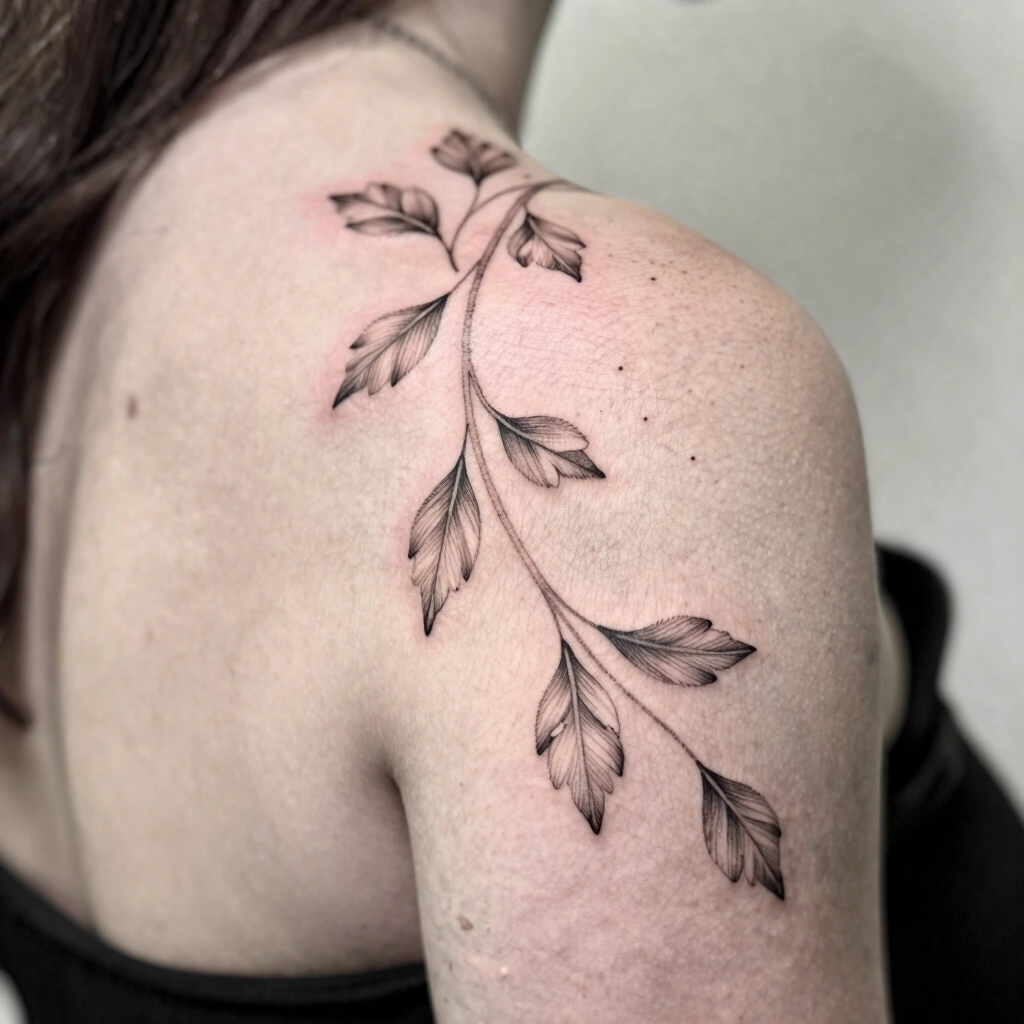
This is a thin, single-needle vine that trails from the top of the shoulder down toward the upper arm, usually dotted with small flowers, leaves, or buds along the way. The line weight stays consistent — no shading, no bold fill, just clean single-needle work that reads as delicate from a few feet away. Best placement is along the natural curve of the deltoid, following your arm’s line rather than fighting it. Keep it under five inches if this is a first tattoo; smaller fine-line work heals faster and is easier to touch up if a section fades. Bring your artist a photo of an actual vine or plant you like, not just other tattoos — real botanical reference makes the linework look natural instead of copied.
Pain here is moderate since the outer shoulder has decent muscle padding. This style works great for workplaces with visible-tattoo policies since it reads as understated.
Blackwork Sun Shoulder Tattoo
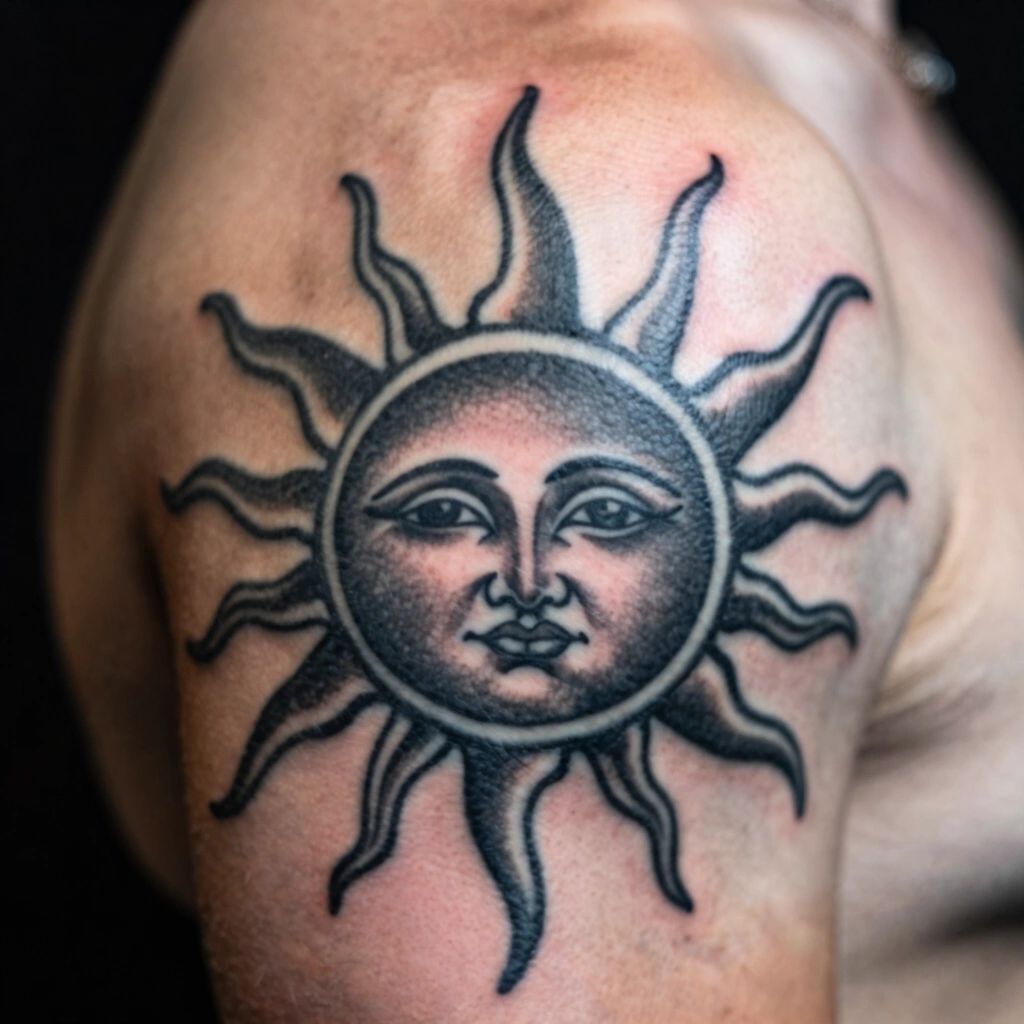
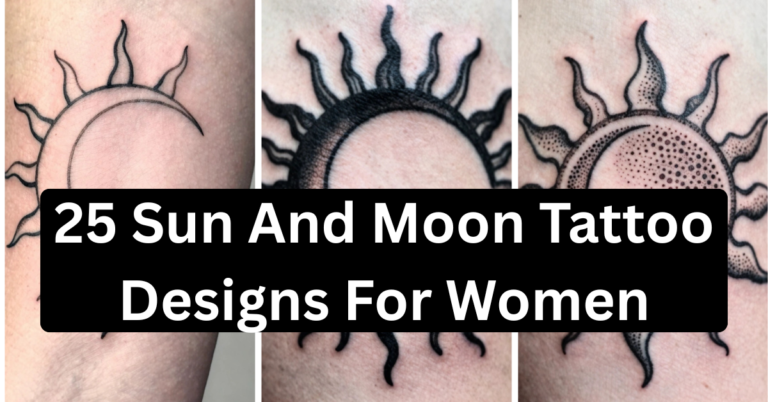
Blackwork means solid black ink with no gradients or shading — just bold, saturated linework and fill. A sun design in this style usually has thick rays radiating out from a circular center, sometimes with geometric patterning inside the circle instead of a plain fill. This holds up remarkably well over time because solid black doesn’t fade into patchy gray the way lighter shading sometimes can. Size it at three to four inches for the shoulder cap itself, letting the rays follow the curve of the muscle. Ask your artist about line thickness before they start — thicker lines age better on skin that stretches or ages over decades.
Pain is moderate to high near the collarbone edge of the shoulder where bone sits closer to skin. This design suits people who want something bold and symbolic without needing tons of little details that can blur later.
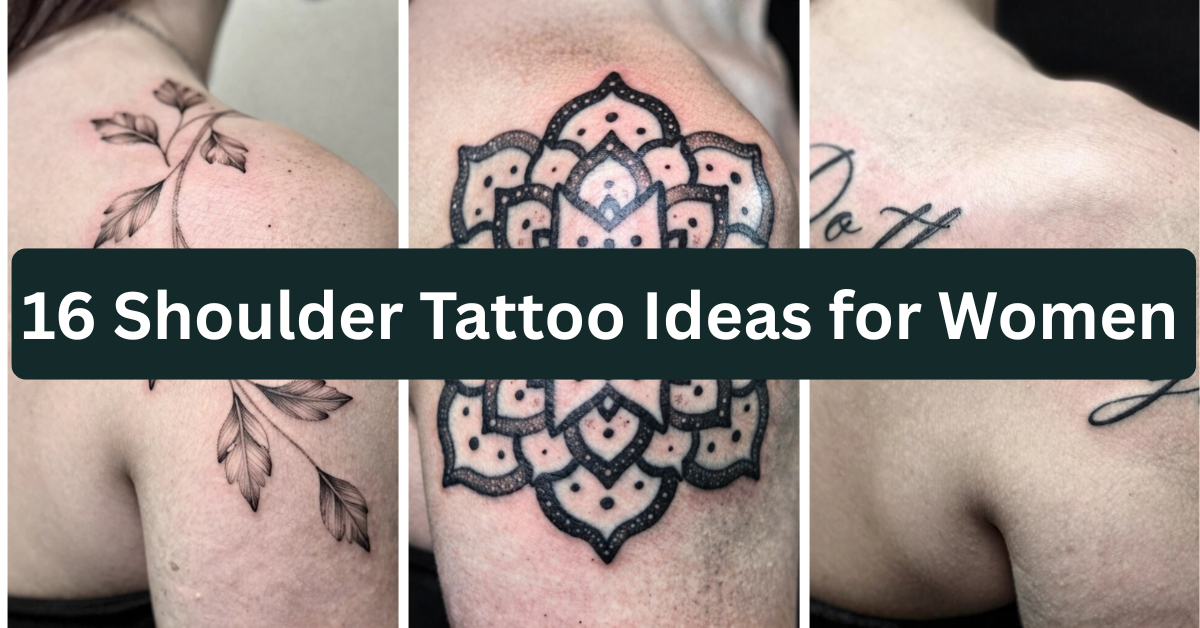
Dotwork Mandala Shoulder Cap
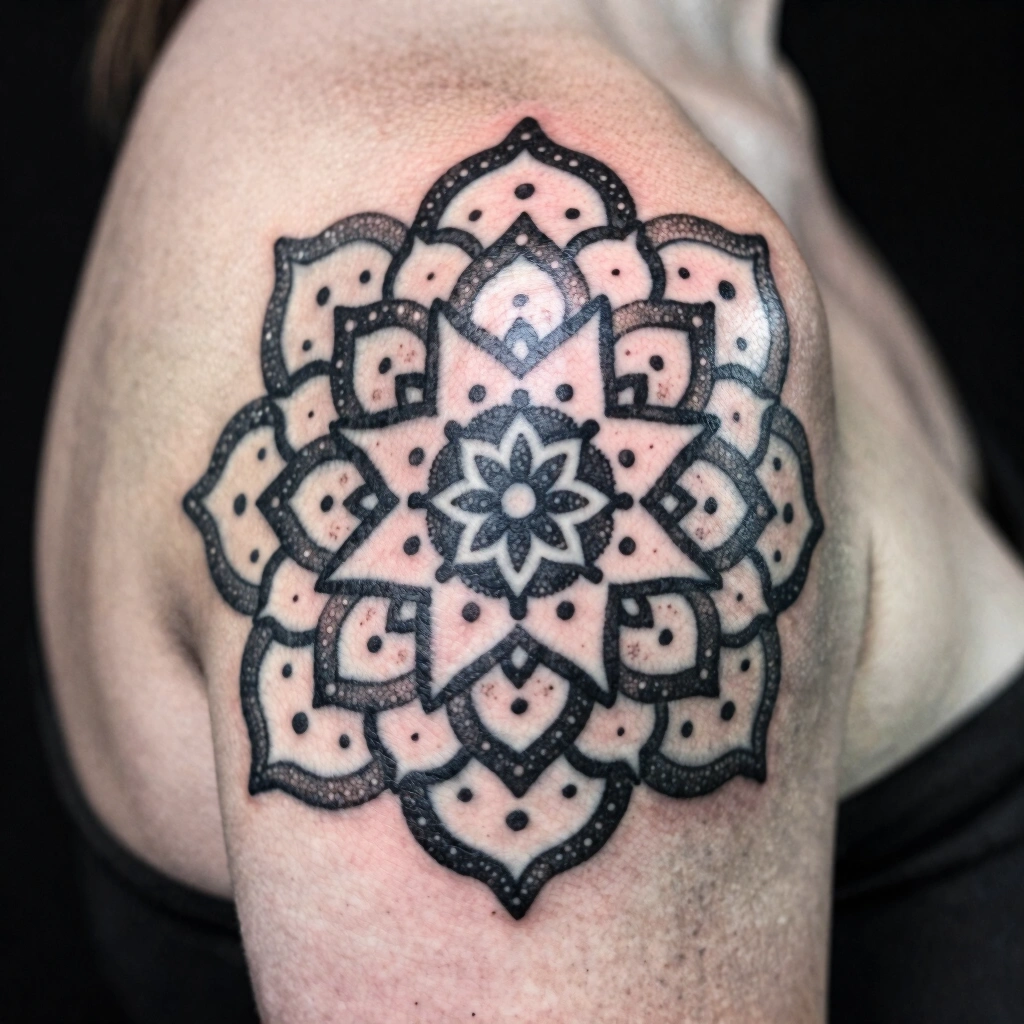
Dotwork is exactly what it sounds like — the entire image is built from thousands of tiny dots instead of solid lines, creating texture and shading through density. A mandala (a circular, symmetrical pattern) in dotwork style looks intricate up close but reads as a soft, textured circle from a distance. This takes considerably longer in the chair than linework because of how many individual dots go into the shading. Place it centered on the shoulder cap where the curve helps the circular symmetry look balanced instead of stretched. Expect four to six inches for real detail to show. Tell your artist upfront if you want heavier dot density for a darker overall look, or lighter density for a softer gray effect — this changes the whole feel.
Healing takes a bit longer than simple linework since more skin surface is worked. Pain tends to run moderate and steady rather than sharp.
Single-Needle Constellation Shoulder Tattoo
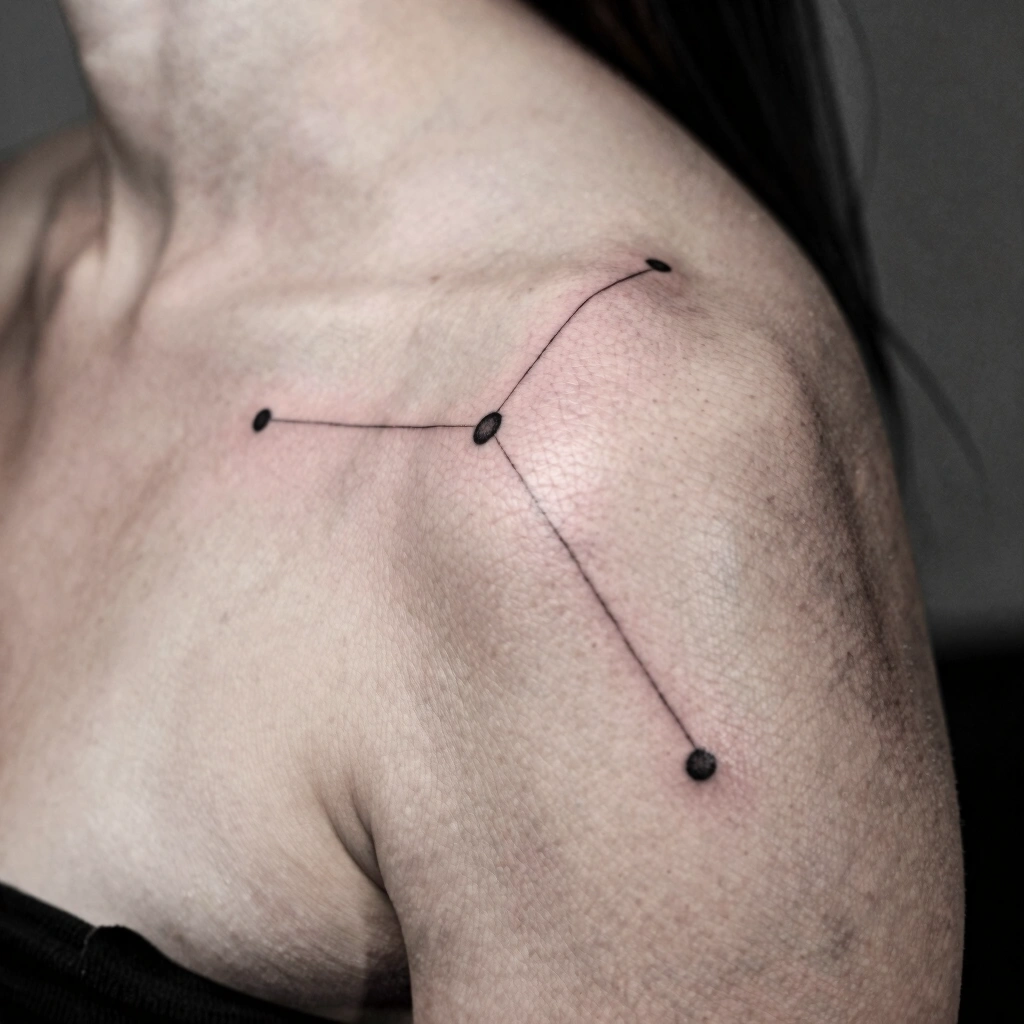
Single-needle work uses the smallest needle configuration, producing extremely thin, precise lines — think of it as the finest pen you can draw with, versus a marker. A constellation design connects small dots (representing stars) with these hairline lines to form a shape or pattern. This looks best scattered across the top of the shoulder and upper arm rather than confined to one tight spot, since real constellations spread out. Keep individual star dots small; oversized dots can look more like polka dots than stars. Because the lines are so thin, this style is prone to fading faster than bold blackwork over many years, so mention to your artist that you may want a touch-up appointment scheduled for a year or two out.
Pain is generally lower here since the needle barely touches deep layers. This is a solid choice for a first tattoo or for matching designs with a sibling or close friend.
Negative Space Moon Phase Tattoo
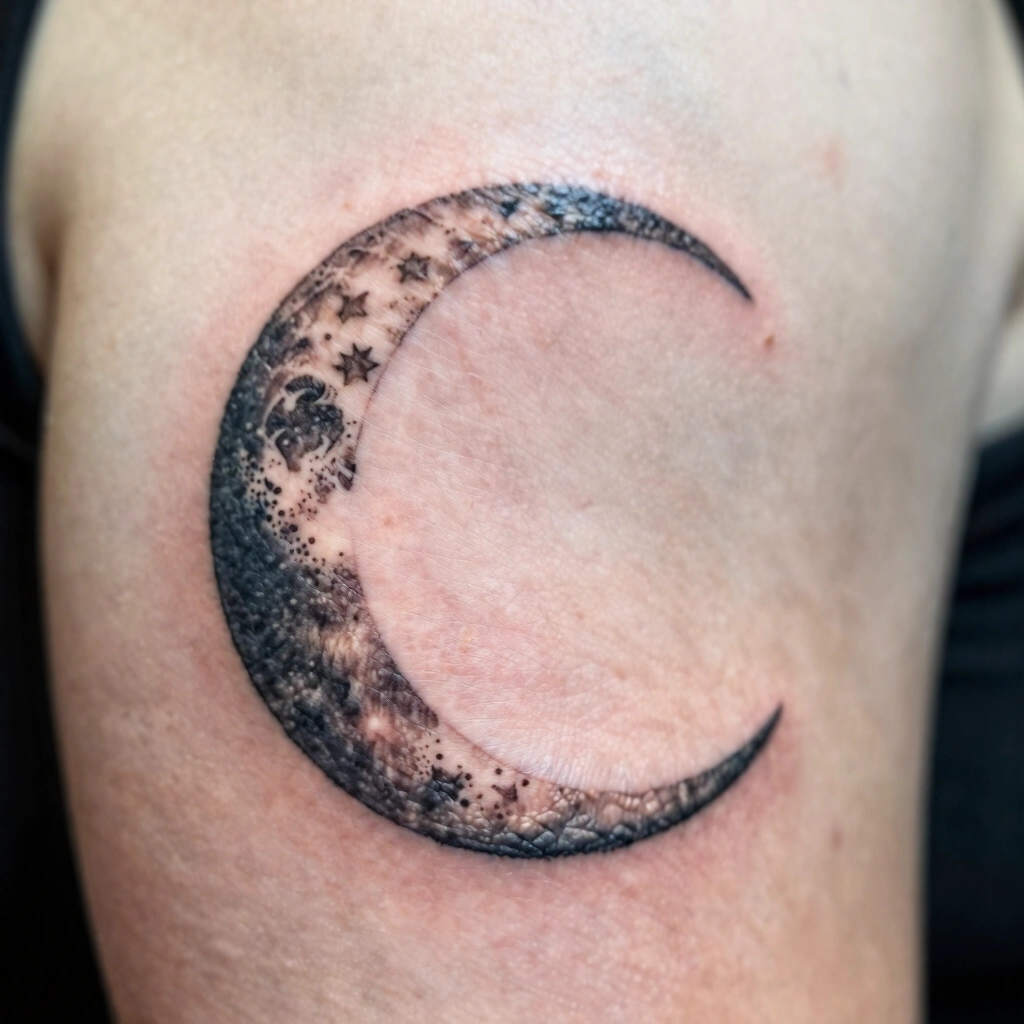
Negative space tattooing uses the untouched, natural skin as part of the design instead of filling every area with ink. A moon phase tattoo in this style might show the moon as an outlined circle with a solid black crescent shadow, letting your actual skin tone form the “light” part of the moon. This creates a striking contrast, especially in a row of phases wrapping partway around the shoulder. Placement along the outer shoulder curve, where the design can follow the arm’s natural line, works better than a flat area. Because this relies on the contrast between ink and bare skin, ask your artist how it might look on your specific skin tone — negative space effects read differently depending on natural pigmentation.
Pain is comparable to standard blackwork since portions still involve solid black fill. This is a favorite for people who want something symbolic but not overly literal.
Watercolor-Style Botanical Shoulder Piece
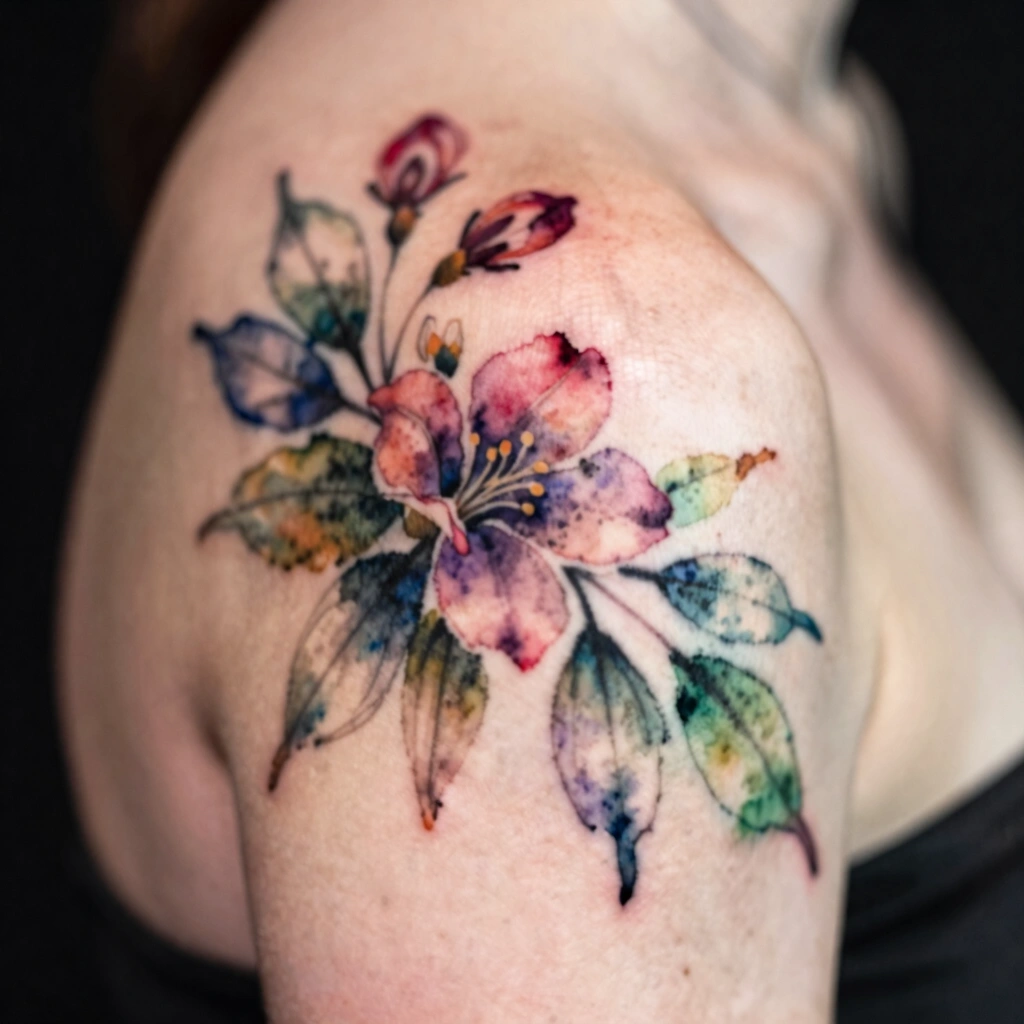
Watercolor-style tattoos use diluted ink and soft color blending to mimic the look of a painted watercolor piece, often without heavy black outlines. A botanical version might show a flower or leaf cluster with color that fades outward like a paint bleed. This technique looks beautiful fresh, but be honest with yourself: color ink typically fades and softens faster than black linework, especially in sun-exposed areas like the shoulder. Ask your artist about which pigments they use and how saturated they can realistically keep the color over time — this matters more here than with any other style on this list. Size it at least four inches so the color blending has room to actually blend. Pain level is similar to other shading techniques. This works well for someone who wants a soft, artistic piece and doesn’t mind scheduling color touch-ups every several years.
Script Quote Wrapping the Shoulder
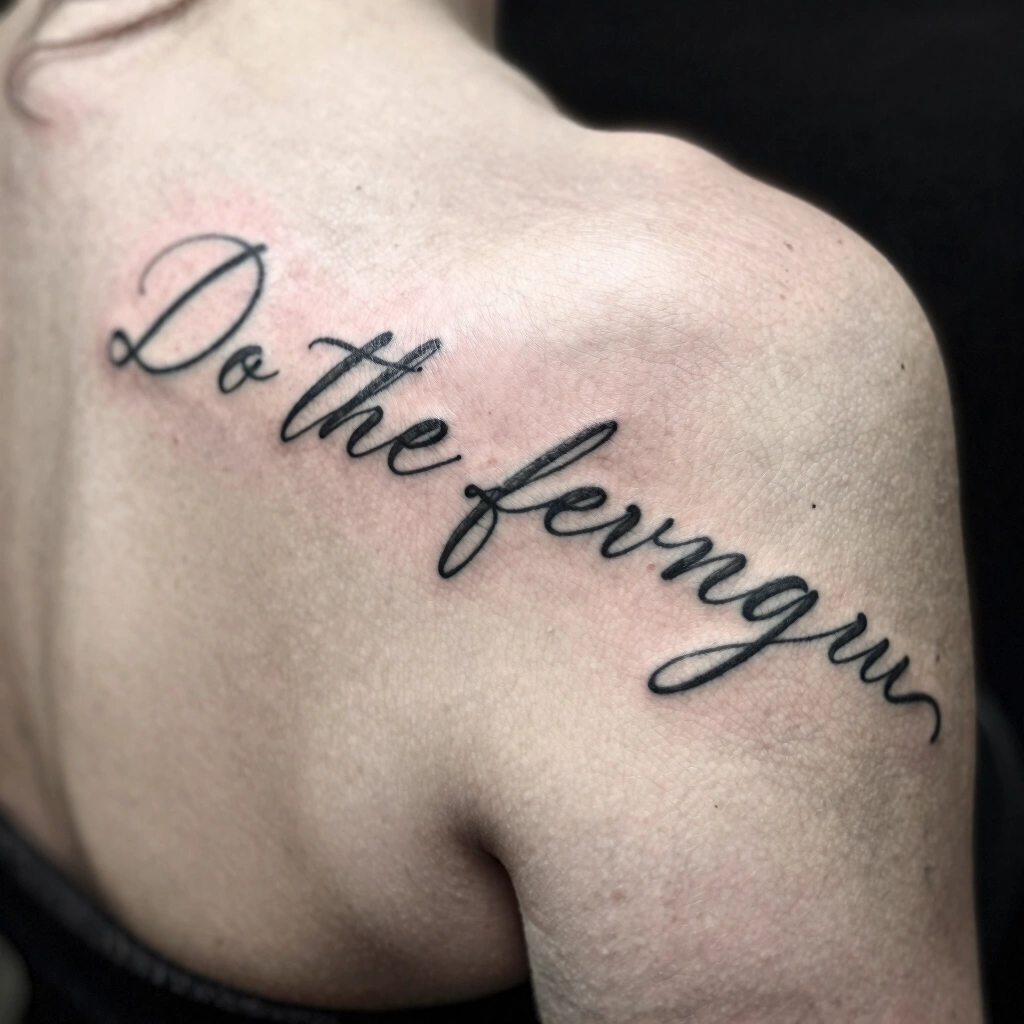
A script tattoo uses handwriting-style lettering, either cursive or a clean custom font, arranged in a line or curve. On the shoulder, this often wraps partially around the deltoid, following the curve of the muscle like a sentence written on a globe. Line weight matters a lot here — too thin and it blurs into illegibility within a few years, too thick and it loses that elegant, handwritten look. Ask your artist to test the exact wording at actual size on a printed stencil before tattooing; words that look fine on paper can look cramped or stretched once wrapped around a curved body part. Keep the phrase short. Long quotes lose readability fast on skin that isn’t flat. Pain is moderate, and healing is usually quick since it’s linework only. This suits people who want a deeply personal, meaningful piece without heavy visual symbolism.
Bold Traditional Rose Shoulder Tattoo
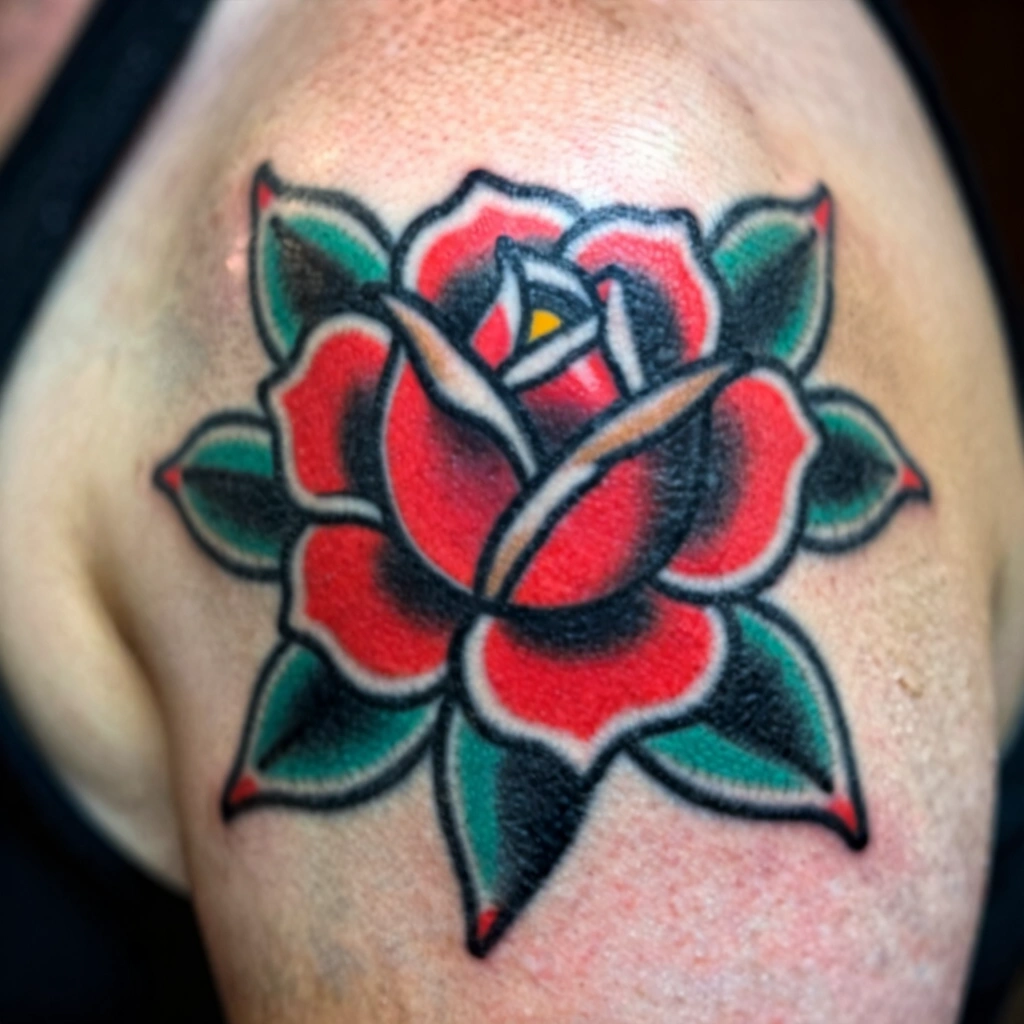
Traditional tattoo style (sometimes called American traditional) uses thick black outlines, a limited bold color palette, and minimal shading gradients — it’s the classic look you picture when you think “old-school tattoo.” A rose in this style has heavy black outlines, solid red or black petals, and maybe a few thorn details on the stem. This style is famous for aging well because the thick lines and bold color blocks hold their shape even decades later, unlike finer styles that blur sooner. Center it on the shoulder cap at four to five inches minimum — traditional work loses its punch if shrunk too small. Pain runs moderate to high given the amount of solid fill work involved. This is a great option if you want something with real vintage tattoo history behind it, or if you’re worried about a delicate design fading fast.
Geometric Line Shoulder Tattoo
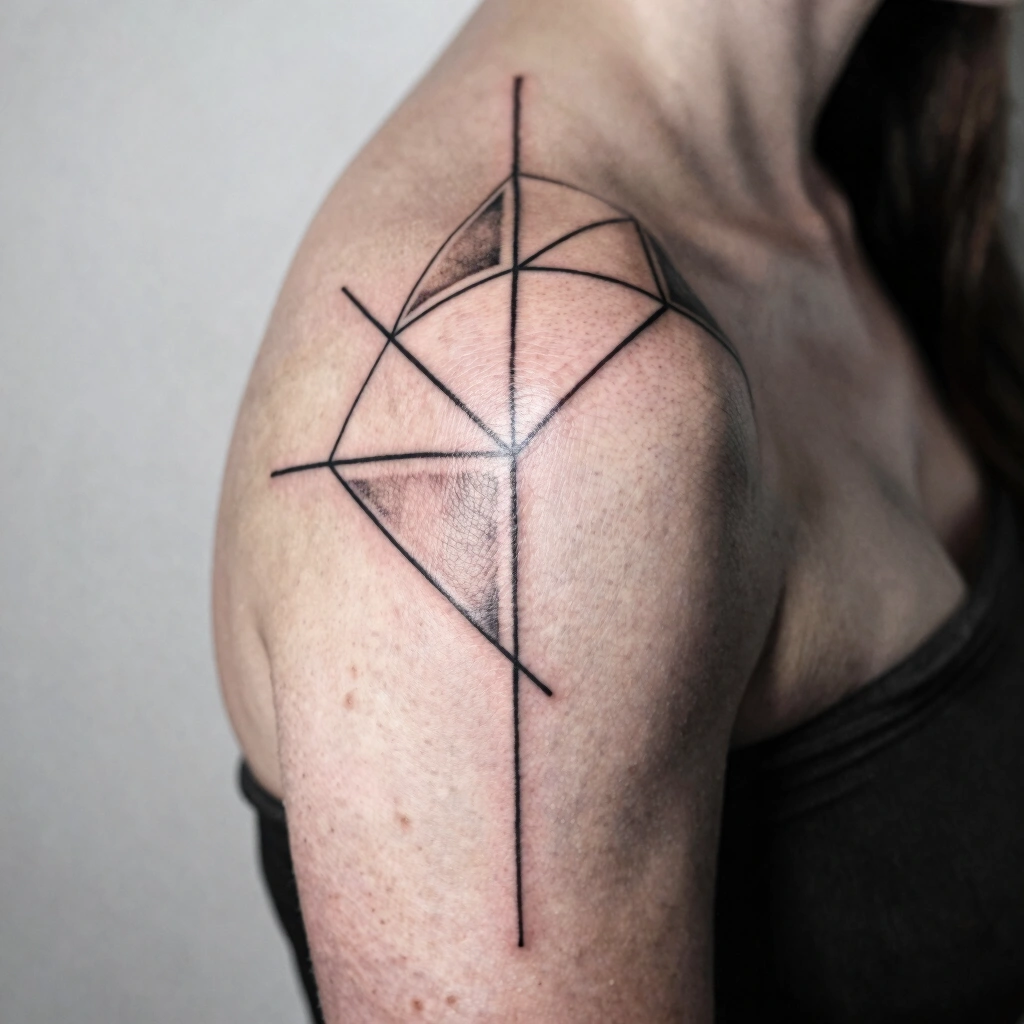
Geometric tattoos rely on precise straight lines, triangles, and repeating shapes rather than organic curves. On the shoulder, this often takes the form of interlocking triangles, a hexagon pattern, or a geometric animal outline built entirely from angular lines. Because precision is everything in this style, ask to see examples in your artist’s portfolio specifically of geometric work — steady, straight lines under a moving tattoo machine are harder than they look, and shaky geometry ruins the whole effect. Size around three to five inches, placed flat on the shoulder cap where the design won’t warp around a curve. Pain is comparable to standard linework. This design ages fairly well since it’s usually solid black with no gradient shading to fade unevenly.
Blackwork Feather Shoulder Tattoo
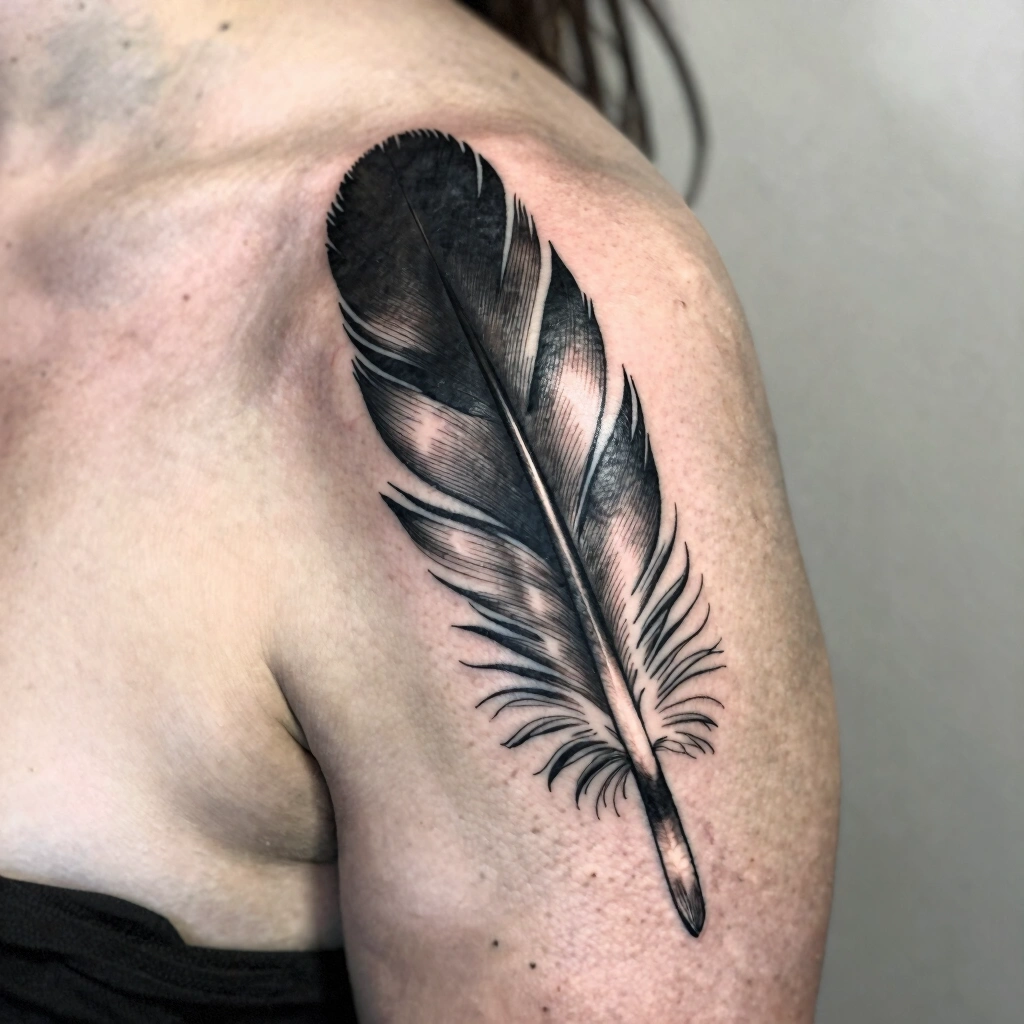
A feather in blackwork style uses solid black fill for the central quill and shaft, with fine individual lines fanning out to represent the barbs (the soft strands of a real feather). The contrast between the solid black spine and the delicate surrounding lines is what makes this design visually interesting rather than flat. Placement along the top of the shoulder, angled to follow the natural slope down toward the arm, mimics how a feather would actually fall. Four to six inches gives enough length for the linework detail to read clearly. Mention to your artist if you want the barb lines tighter together (denser, darker look) or more spread out (lighter, airier look) — this single choice changes the entire mood of the piece. Pain is moderate. This works well for a meaningful, symbolic tattoo that doesn’t feel overly ornate.
Fine-Line Butterfly Cluster
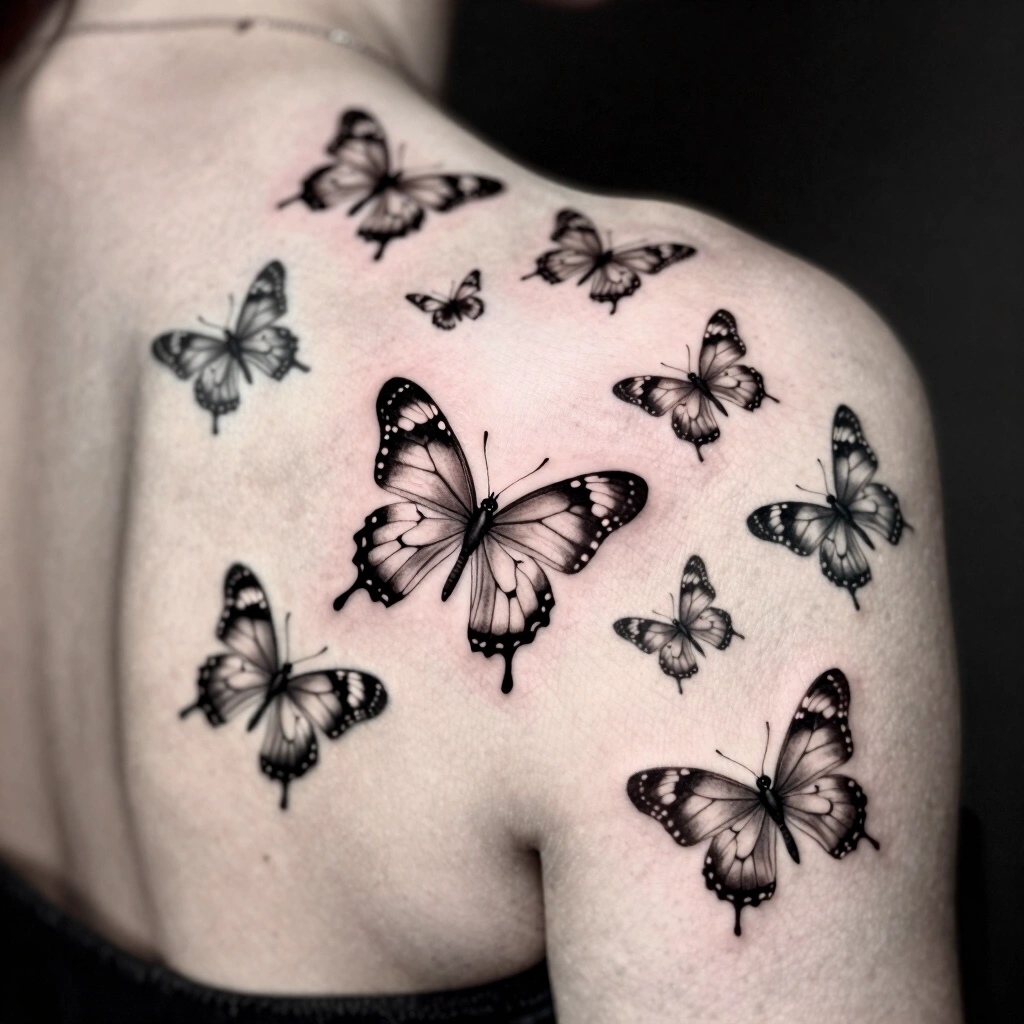
Instead of one large butterfly, this design scatters several small single-needle butterflies across the shoulder and upper arm in varying sizes, as though they’re mid-flight. The thin, consistent line weight keeps the whole cluster looking cohesive rather than busy. Placement should follow a loose diagonal or scattered pattern rather than a rigid grid — nature doesn’t line things up perfectly, and neither should this. Keep individual butterflies under two inches each; smaller fine-line details can blur together if packed too tight. Ask your artist about spacing between each one during the stencil placement, since a shoulder’s curve can make things look more crowded once the design wraps around than it did on paper. Pain is on the lower end given the shallow needle depth. This is popular for a soft, feminine first tattoo or a growing collection you add to over time.
Shoulder Cap Wing Tattoo
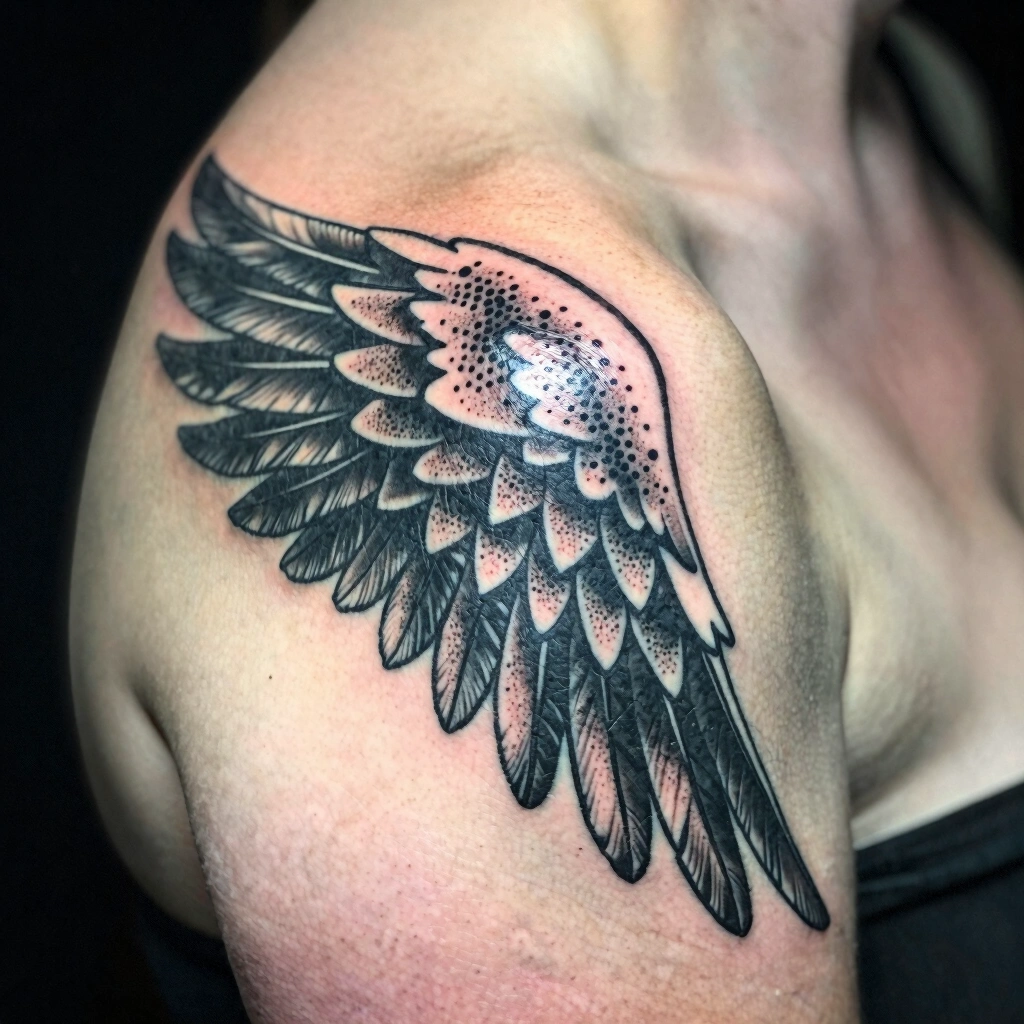
A wing design covering the shoulder cap often blends blackwork and dotwork techniques — solid black feather bases with dotted shading toward the tips for a fading, textured effect. This hybrid approach gives the wing depth without relying on gray-wash shading, which can look muddy on some skin tones over time. This is a larger commitment, typically five to seven inches, and should wrap naturally with the shoulder’s curve rather than sit flat. Because it’s a bigger, more detailed piece, expect multiple sessions for a truly custom design versus a single sitting for a flash (pre-drawn, walk-in-ready) version. Pain runs moderate to high simply due to session length and coverage area. This suits someone ready for a statement piece rather than a subtle first tattoo.
Minimalist Symbol Shoulder Tattoo
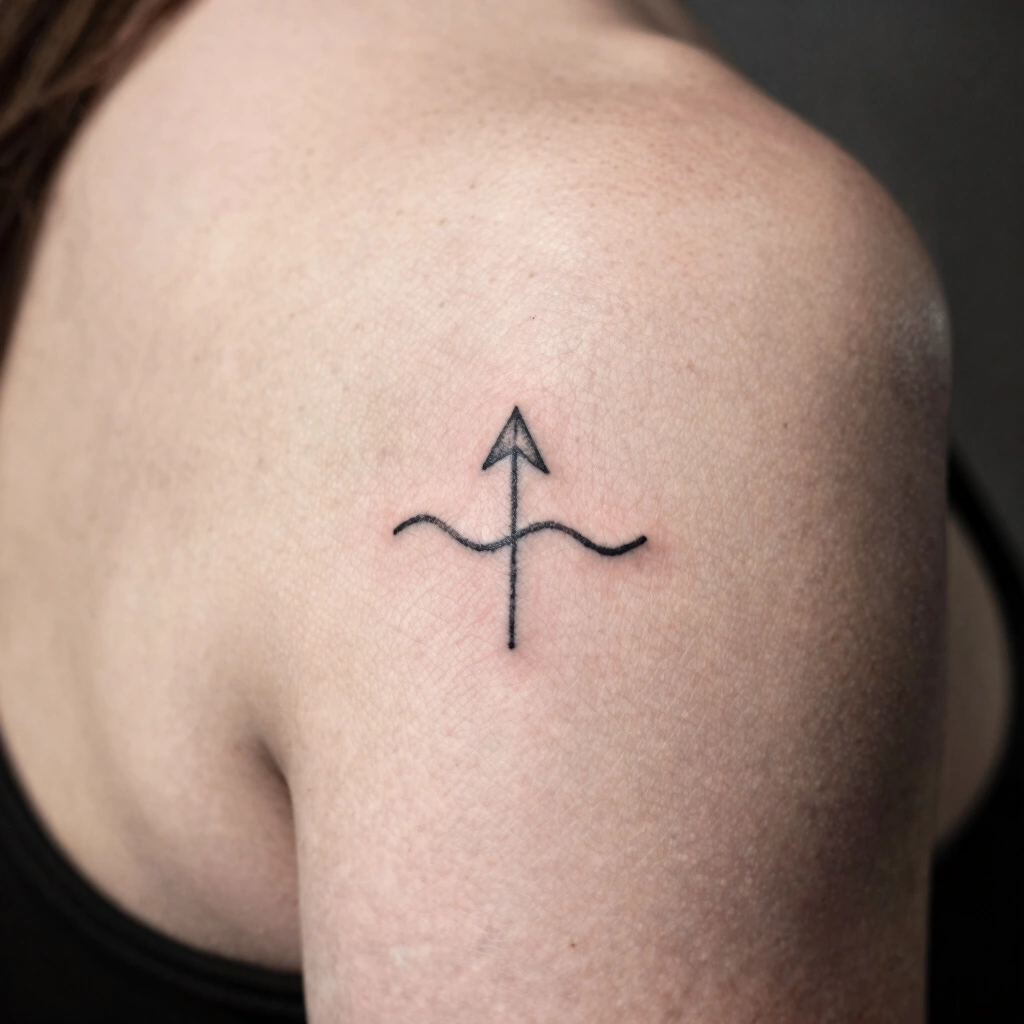
This is about as simple as tattooing gets — a small single-needle symbol like an arrow, wave, or geometric shape, usually under two inches, placed on the outer edge of the shoulder or just below the collarbone-adjacent area. The appeal here is restraint: no shading, no color, just a clean, confident line. Because it’s so small, ask your artist about slightly thicker line weight than you might think you need — very thin lines on very small designs are the most likely to blur or fade unevenly over the years. This is genuinely one of the least painful options on this list given the minimal needle time. It’s an easy choice for a first tattoo, a matching design with friends, or as an add-on piece next to a larger existing tattoo.
Snake Wrap Shoulder Tattoo
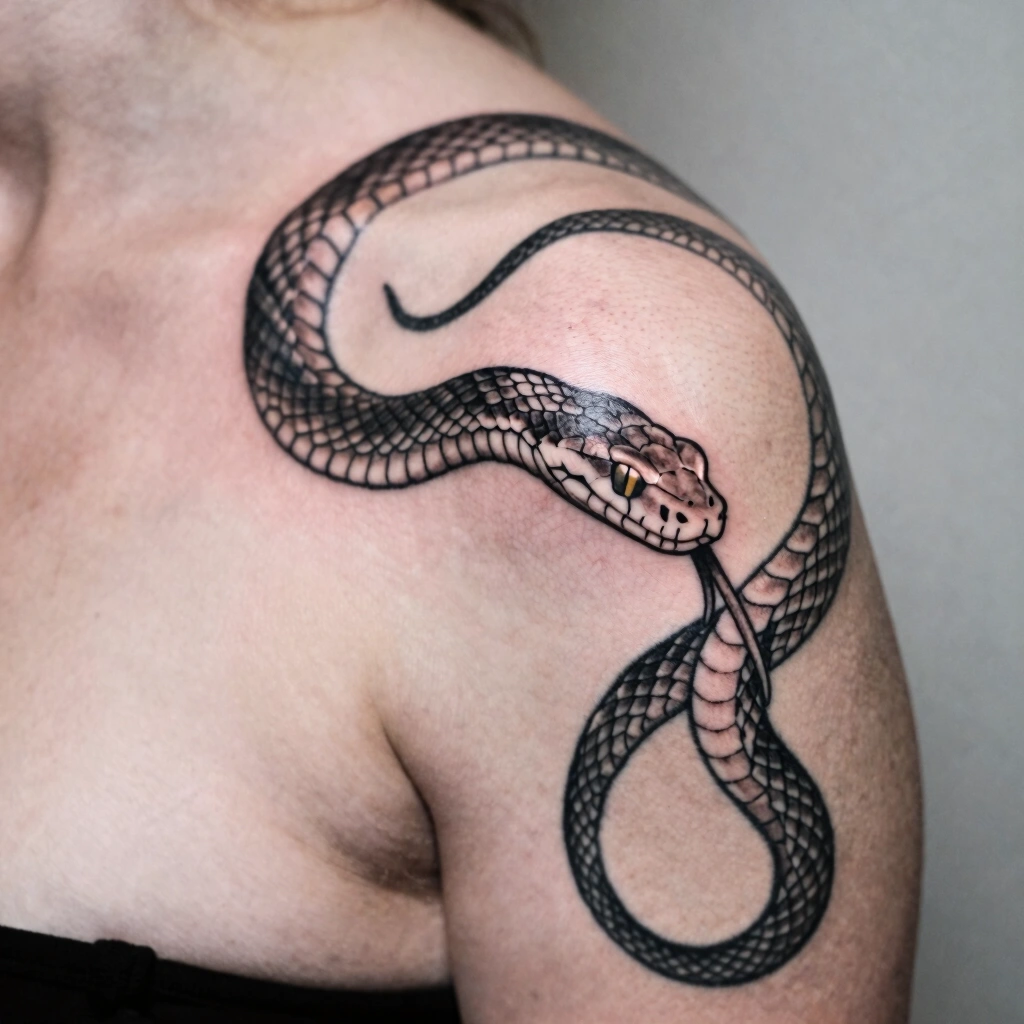
A snake design wrapping partially around the shoulder or upper arm uses the body’s natural curve to make the snake look like it’s actually coiling around the limb, which is a striking use of placement geometry. This can be done in bold traditional style with thick outlines and solid color, or in blackwork with scale texture built from small repeated line patterns. Either way, size matters — a snake under four inches often loses the sense of movement that makes this design work. Bring reference photos showing the exact head and tail direction you want, since a snake facing the wrong way around your arm changes the whole visual story. Pain is moderate to high depending on how much of the shoulder and arm is covered. This is a bold option for someone wanting a statement piece with obvious placement logic.
Abstract Linework Shoulder Piece
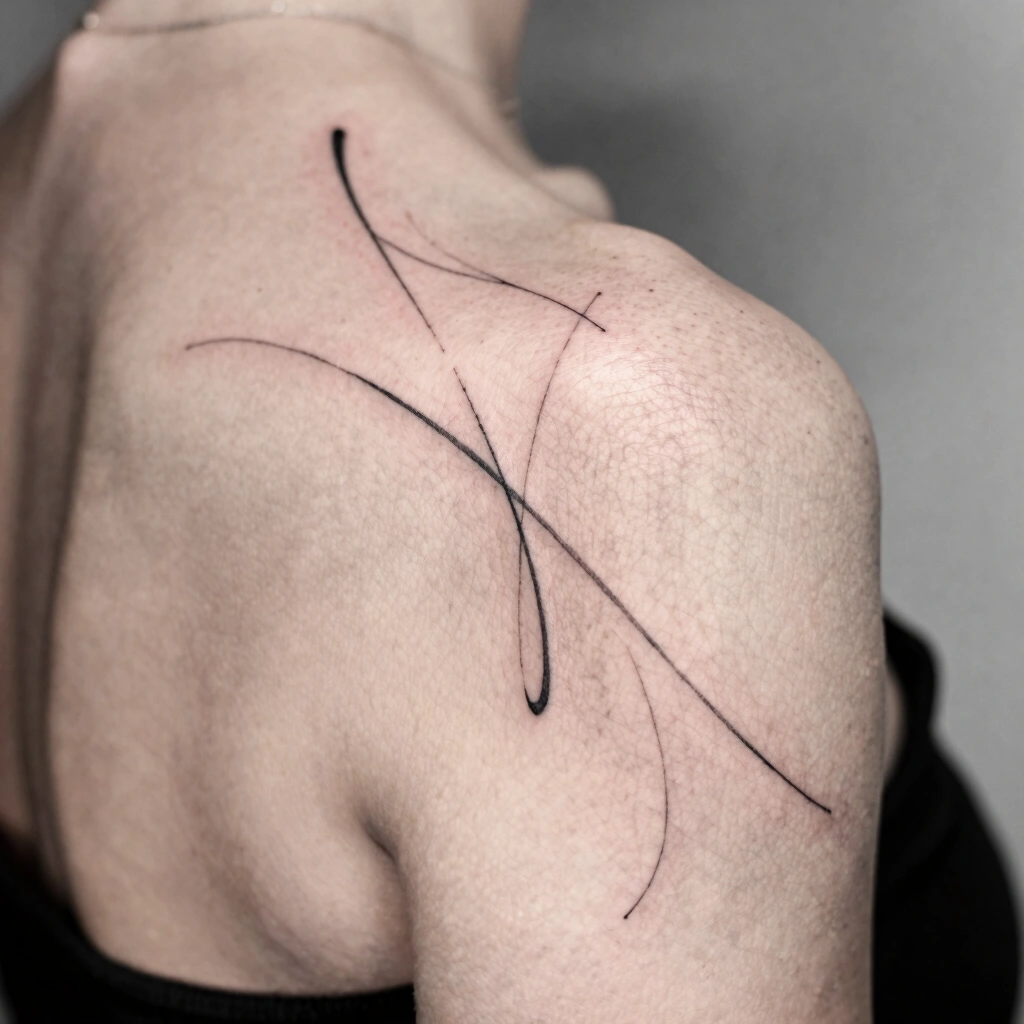
Abstract linework skips recognizable shapes entirely in favor of flowing, intersecting lines that create movement and visual interest without representing anything literal. This can be a single continuous line looping across the shoulder or several overlapping curved lines of varying thickness. Because there’s no “wrong” way for an abstract piece to look, this is one of the more forgiving designs if you’re nervous about symmetry or realism. Placement across the top of the shoulder, following its natural slope, tends to look most intentional. Ask your artist to sketch a couple of variations freehand during your consultation rather than settling for the first draft — abstract work benefits enormously from an artist’s personal linework style. Pain is generally moderate. This appeals to people who want something artistic and unique without deep symbolic meaning attached.
Animal Portrait Shoulder Tattoo
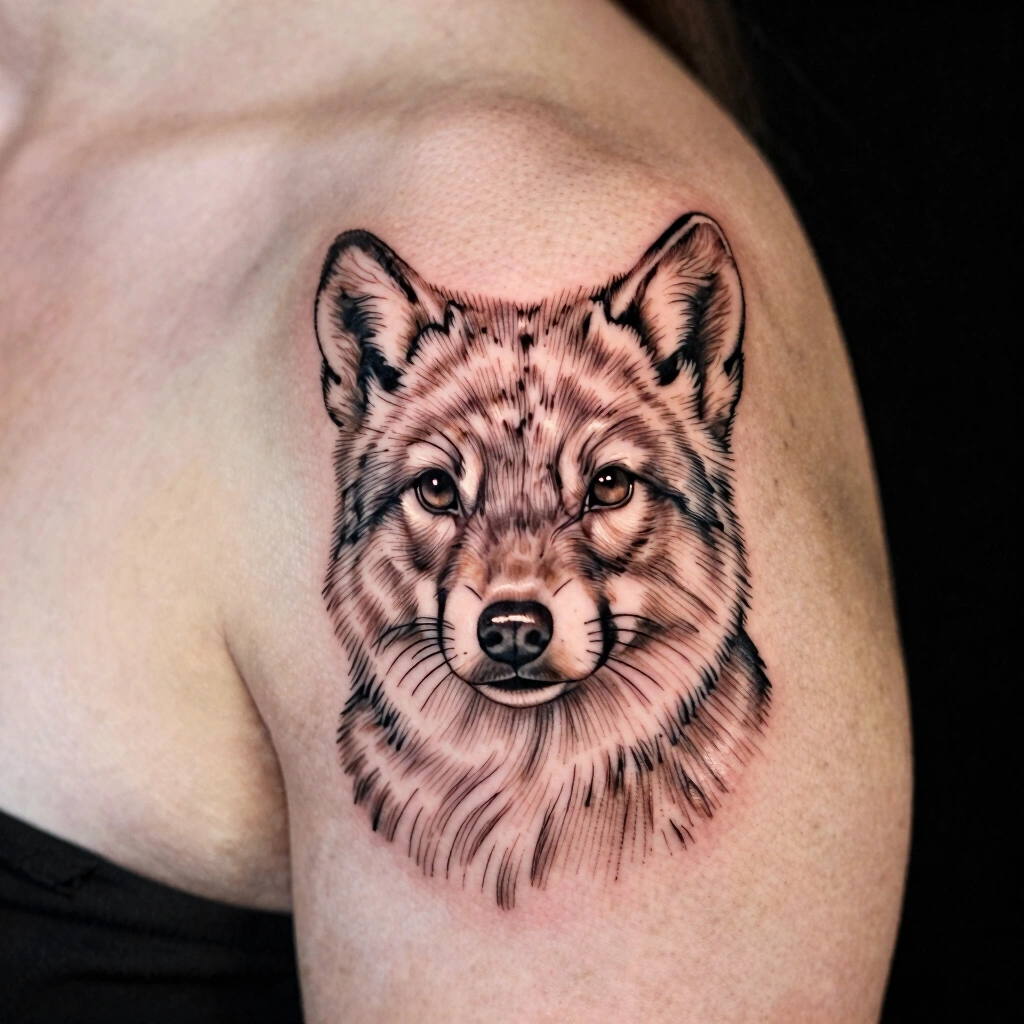
A small animal portrait, done in fine-line or light realism style, uses thin controlled lines and minimal soft shading to capture the essence of an animal’s face or silhouette rather than a full-color realistic image. This is more detailed than most designs on this list and benefits from a slightly larger size — three to four inches minimum — so facial features don’t blur together as the tattoo settles into the skin over the following weeks. Bring multiple reference photos of the actual animal from different angles, since a single photo often doesn’t give your artist enough information about fur direction or facial proportion. Placement on the flatter part of the upper shoulder, away from the curve, keeps proportions from distorting. Pain is moderate. This works well as a meaningful memorial piece or personal symbol, though it’s a bigger commitment than simple linework.
Best Placement Ideas
Where exactly on the shoulder you go changes visibility, pain, and how easy the piece is to maintain over time.
- Top of the shoulder cap — highly visible in tank tops, moderate pain, great for symmetrical designs like mandalas or suns.
- Back of the shoulder near the blade — easy to cover with regular clothing, slightly harder for you to see your own healing progress, good for larger wrap pieces.
- Front shoulder near the collarbone edge — more visible in everyday wear, tends to be more sensitive due to thinner skin near bone.
- Outer arm blending into shoulder — flexible visibility depending on sleeve length, ideal for vine, feather, or snake designs that benefit from following the arm’s curve.
- Shoulder cap wrapping toward the back — best for bigger statement pieces, longer healing due to larger surface area worked.
Tips for Success
Start by looking through an artist’s portfolio for the specific style you want — a fantastic traditional artist isn’t automatically great at fine-line work, and vice versa. Book a real consultation instead of just walking in blind; bring reference photos, discuss size honestly, and ask how many sessions your design realistically needs. A good artist will tell you if your idea is too small for the detail you want, or if a placement will distort your design over time. Don’t be afraid to ask about their needle setup or how they handle touch-ups if the linework fades sooner than expected — a confident, experienced artist won’t mind these questions at all.
Common Mistakes and How to Avoid Them
- Sizing detailed designs too small. Intricate linework or shading needs enough space to stay legible for years — cramming a mandala into two inches guarantees it’ll blur.
- Choosing a placement that fights the design’s shape. A snake or vine that’s meant to wrap looks awkward crammed onto a flat section instead of following the arm’s curve.
- Skipping aftercare instructions. Following your artist’s specific aftercare sheet matters more than any general advice online — every studio has slightly different recommendations.
- Copying a design exactly from a photo. Personalizing even a small detail — a different flower, a slight size change — avoids the disappointment of seeing your exact tattoo on someone else later.
Similar Variations
Almost every idea above can shift with size and color. A fine-line floral vine can become a bold traditional rose cluster with color added. A minimalist symbol can be resized larger and combined with script for a more layered piece. Dotwork mandalas can shrink down into a simpler geometric version for a subtler first tattoo. Mixing techniques — like combining blackwork solid fill with dotwork shading — is also increasingly common and gives a design more depth without needing full color.
Aftercare Basics
General dermatological consensus recommends keeping a fresh tattoo clean, moisturized, and protected from direct sun exposure while it heals, which typically takes a couple of weeks on the surface and longer beneath the skin. Avoid soaking it in pools or baths early on, and always follow the specific aftercare sheet your artist gives you, since products and timelines can vary slightly by studio. If you notice anything that seems unusual during healing, consult a licensed dermatologist or your tattoo artist rather than guessing based on internet advice.
Quick FAQ
How much does a shoulder tattoo typically cost?
Cost varies widely by artist experience, size, and detail level, but small minimalist pieces often start in the low hundreds while larger custom shoulder caps can run several hundred dollars or more. Always get a quote during your consultation rather than assuming a flat rate.
How painful is a shoulder tattoo?
Pain tolerance varies by individual, but generally the outer, fleshier part of the shoulder is more tolerable than areas closer to the collarbone or bone. Larger, longer sessions also tend to feel more tiring rather than sharply painful.
How long does a shoulder tattoo take to heal?
Surface healing usually takes around two to three weeks, though full healing beneath the skin can take longer. Healing time can vary based on size, placement, and individual skin, so following your artist’s aftercare guidance closely matters.
Do shoulder tattoos fade faster than other placements?
Sun exposure plays a big role, since the shoulder is often uncovered in warm weather. Using sun protection over healed tattoos and scheduling occasional touch-ups can help maintain sharper linework and color over the years.
Choosing from these shoulder tattoo ideas for women really comes down to matching the technique to how bold, subtle, or symbolic you want the result to be — and then finding an artist whose portfolio proves they can actually execute that specific style well. Take your time with the consultation, ask the questions that matter, and you’ll walk out with a piece that still looks intentional years down the road.