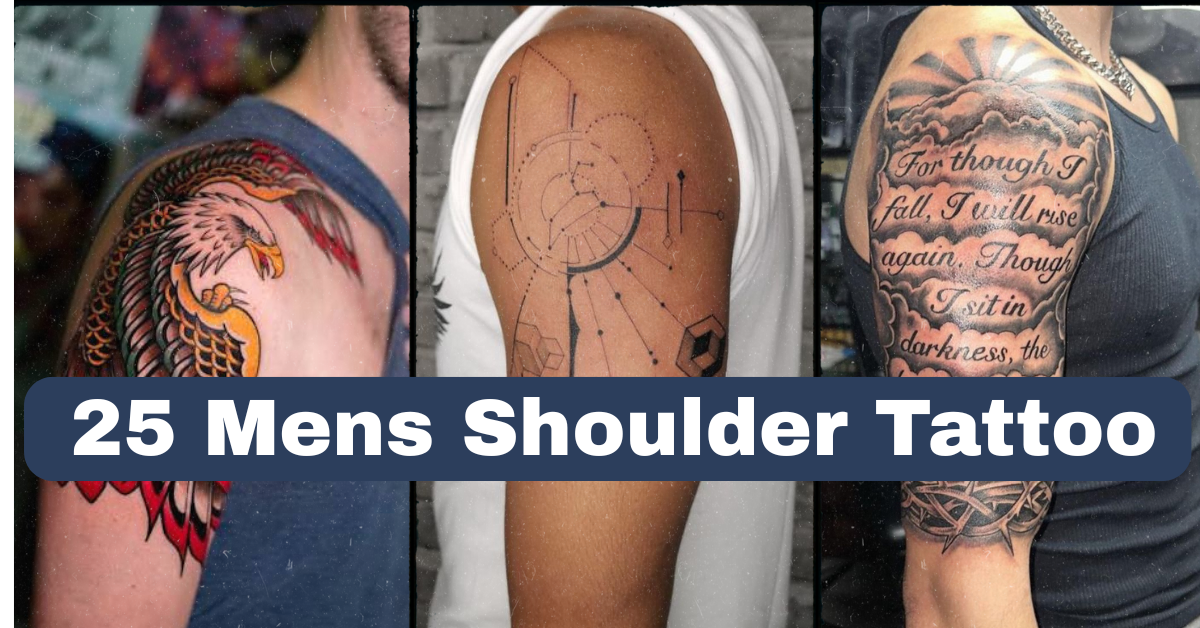
25 Mens Shoulder Tattoo Ideas: A Real Guide Before You Book
Nervous about picking a shoulder design you’ll regret in five years? You’re not alone, and honestly, that hesitation is smart. This guide pulls together 25 mens shoulder tattoo ideas with the kind of detail most lists skip — placement advice, pain honesty, healing timelines, and how to actually talk to your artist so you walk out with something that ages well.
So what are the best mens shoulder tattoo ideas? Bold traditional pieces, blackwork geometric caps, fine-line botanical wraps, and dotwork mandalas tend to work best on the shoulder because the muscle curve supports both large bold shapes and detailed linework without warping over time. Placement, sizing, and technique matter more than the image itself.
Stick around, because I’m also breaking down pain levels by placement, realistic cost ranges, how to brief an artist so your idea doesn’t get lost in translation, and the mistakes that turn a good concept into a blurry regret a decade later.
Why the Shoulder Works So Well for Men’s Tattoo Designs
The shoulder is one of the most forgiving canvases on the body. It’s got a natural curve that flatters circular and radial designs, plenty of flat surface area for bold traditional work, and enough muscle coverage that swelling and stretching during healing are usually minimal compared to areas like the ribs or feet. It’s also easy to hide under a t-shirt for work, which matters if your job has a dress code. Before we get into specific designs, here’s a quick breakdown of terms you’ll hear at almost every consultation.
Fine line vs. bold traditional: Fine line uses a thin, single needle to create delicate, low-contrast designs with minimal shading — think botanical outlines or script. Bold traditional uses thick, heavy outlines (often 0.35mm or larger needle groupings) filled with solid, saturated color or black, built to stay legible even after decades of fading.
Blackwork vs. dotwork: Blackwork relies on solid black fill and confident linework to create high-contrast shapes and negative space (the untouched skin that forms part of the design). Dotwork builds the entire image out of tiny individual dots, creating soft gradients and texture without a single solid line — it reads as more delicate but takes noticeably longer in the chair.
1. Blackwork Tribal Shoulder Cap
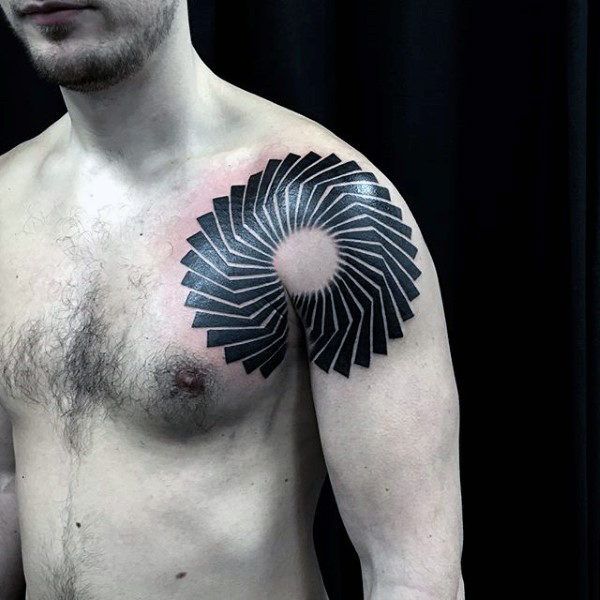
This design wraps solid black shapes directly over the curve of the deltoid, using confident, unbroken linework and almost no shading — the contrast comes entirely from negative space against your natural skin tone. It sits best sized at 4-6 inches to keep the geometry from looking cramped. Healing typically runs 2-3 weeks since the solid black areas scab more visibly than thin lines. Bring reference images showing the exact curvature you want followed, not just a flat design, so your artist can map it to your muscle shape. Pain here runs moderate — the outer deltoid has decent padding. It’s workplace-friendly under short sleeves in most offices and ages remarkably well since solid black holds saturation longer than fine details.
2. Fine-Line Geometric Shoulder Piece
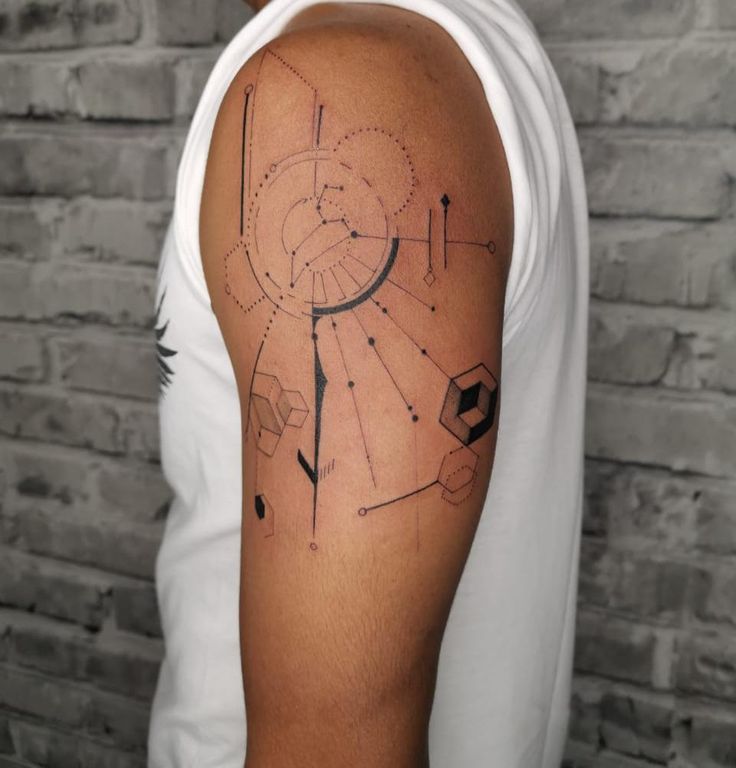
Fine-line geometric work uses a single needle to create crisp, thin outlines forming triangles, hexagons, or interlocking shapes without any shading fill. The appeal is precision — every angle needs to be exact, so line weight stays consistent throughout, usually under 0.3mm. This suits a smaller placement, around 3-4 inches, sitting on the upper outer shoulder where skin stays relatively flat. Healing runs quick, about 10-14 days, since there’s no dense ink saturation. Ask your artist about stencil accuracy before you sit down — geometric symmetry is unforgiving if the transfer shifts. Pain is on the milder side for shoulder placements. It’s a strong first-tattoo option and translates well into matching designs with a friend or sibling.
3. Traditional Bold Eagle Shoulder Tattoo
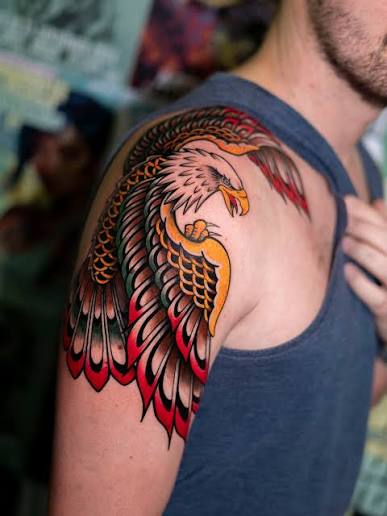
American traditional eagles rely on thick black outlines, limited color palettes (usually red, yellow, and green), and minimal shading beyond basic contour lines. The bold outline is the whole point — it’s what keeps this style legible for thirty-plus years. Size-wise, you need at least 5-6 inches to let the wing detail breathe; cramming it smaller loses the linework entirely. Healing takes around 3 weeks given the color saturation involved. Request a stencil preview and ask specifically about color retention expectations during your consultation. Pain sits moderate-to-firm depending on how close the design sits to the collarbone. This one’s a classic first-major-piece choice and holds up visually for decades.
4. Dotwork Mandala Shoulder Design
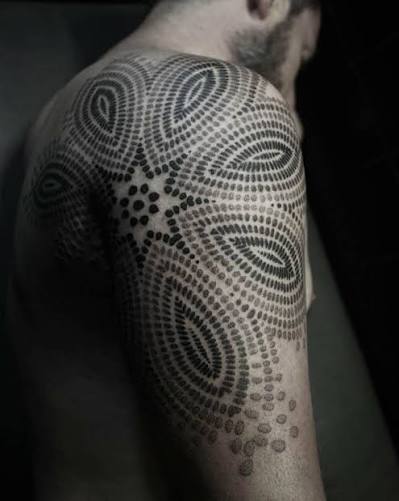
Dotwork mandalas are built entirely from thousands of individually placed dots, creating soft gradients and intricate radial symmetry without a single solid line filling the space. This technique takes patience — sessions run longer than linework of the same size — but the payoff is a soft, almost textile-like appearance. A 4-5 inch mandala centered on the shoulder cap shows the pattern best. Healing runs about 2-3 weeks; expect some initial texture as dotted areas scab lightly. Bring high-resolution reference art since dot spacing needs to be visible in your brief. Pain is moderate and fairly consistent since it’s spread evenly rather than concentrated in heavy fill. Great for guys wanting intricate detail without going fully bold.
5. Japanese-Style Dragon Shoulder Wrap
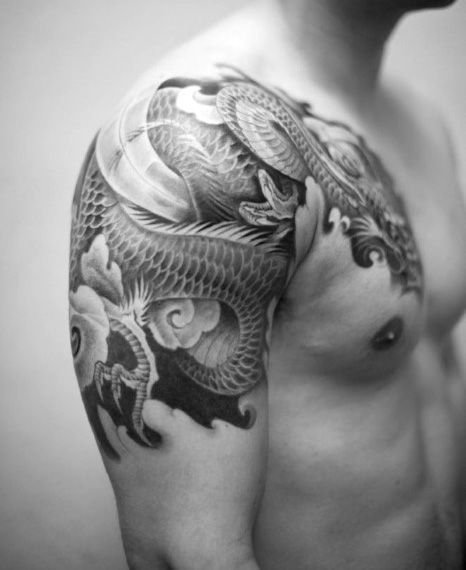
This style, rooted in Japanese irezumi tradition, uses bold black outlines combined with detailed scale shading and often wind bars or cloud fillers (kumo) to frame the dragon’s body. Line weight varies deliberately — thick on the outline, thinner inside for scale texture. This design needs real space, typically wrapping from the shoulder cap toward the upper arm, around 6-8 inches minimum. Healing runs 3-4 weeks due to shading density. Ask your artist whether they specialize in Japanese-style work specifically, since scale shading technique varies a lot between studios. Pain runs moderate to firm given the shading passes. It’s less workplace-subtle but ages beautifully if color saturation is done right.
6. Negative Space Compass Tattoo
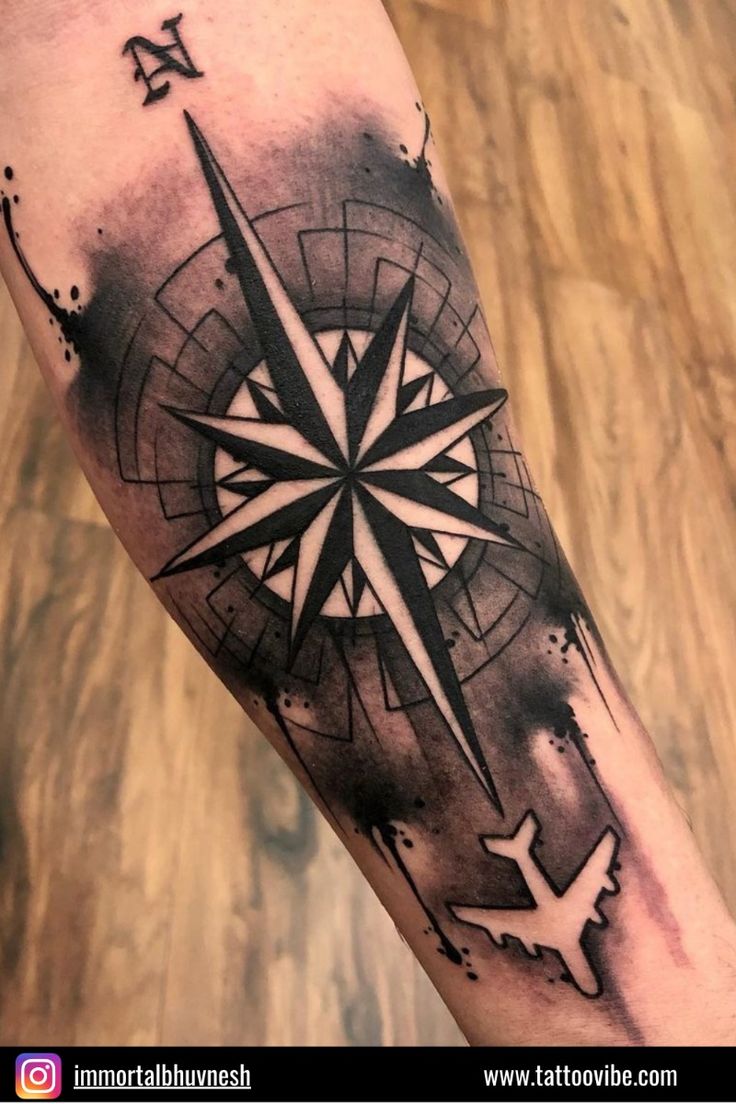
Negative space designs use untouched skin as part of the image itself — here, the compass face is defined by black surrounding shapes rather than drawn lines. It’s a clever technique because it relies on contrast, not detail density, which means it photographs and ages cleanly. A 3-4 inch placement on the front of the shoulder works well. Healing takes about 2 weeks. Bring a clear example of how much negative space you want preserved — this is easy to misjudge without a visual reference. Pain is mild to moderate. This design suits guys who want something bold but not overly busy, and it works fine for first tattoos too.
7. Realism Lion Portrait Shoulder Tattoo
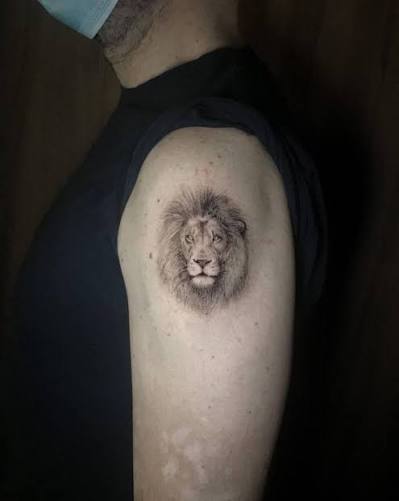
Realism relies on soft shading gradients, often using a mix of needle sizes to blend light and shadow smoothly, mimicking photographic depth rather than flat linework. A lion portrait needs real size to hold detail — 6 inches minimum, ideally covering the full shoulder cap. Healing runs 3-4 weeks since shading-heavy pieces scab more and need gentler care. Ask your artist about their realism portfolio specifically, since this style separates skilled artists from average ones quickly. Pain runs moderate to firm due to extended shading time. It’s a strong statement piece, less office-subtle, and requires touch-ups more often than bold traditional work to maintain contrast over the years.
8. Script Quote Shoulder Tattoo
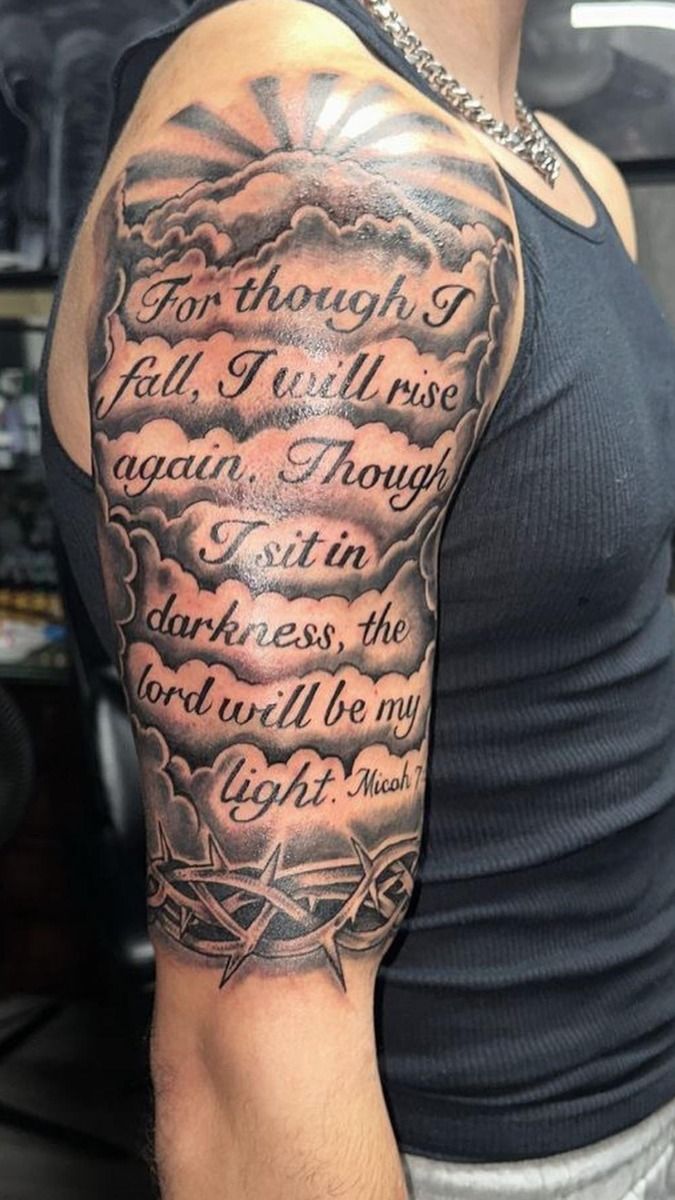
Script tattoos use fine-line or single-needle technique to render handwriting-style text, where line weight consistency is everything — shaky or uneven strokes are the most common flaw in lettering work. Curved shoulder placement actually helps script wrap naturally along the muscle line. Keep it to a short phrase; long quotes lose legibility fast at small sizes. Healing takes about 2 weeks. Bring your text in the exact font or handwriting style you want — don’t just describe it verbally. Pain is mild here compared to other shoulder spots. Script ages fine if line weight was bold enough at the start, though very thin lettering tends to blur over 10+ years.
9. Blackwork Sun Shoulder Tattoo
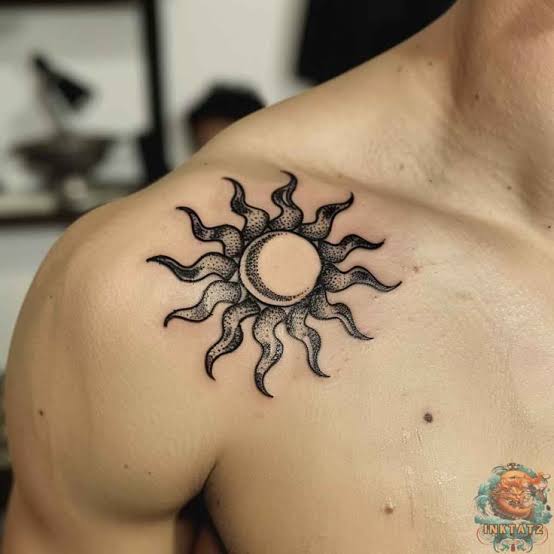
A blackwork sun uses solid black rays radiating from a circular center, relying on symmetry and clean linework rather than shading for its visual punch. This design reads well at almost any size, though 4-5 inches keeps the rays proportionate. Healing runs about 2-3 weeks given the solid fill. Ask your artist to sketch ray spacing freehand before stenciling — perfect symmetry sometimes looks stiffer than slightly organic spacing. Pain is moderate. It’s a solid matching-tattoo option for friend groups since the design scales easily larger or smaller without losing its shape, and bold black holds up well against fading for years.
10. Fine-Line Botanical Shoulder Sleeve Start
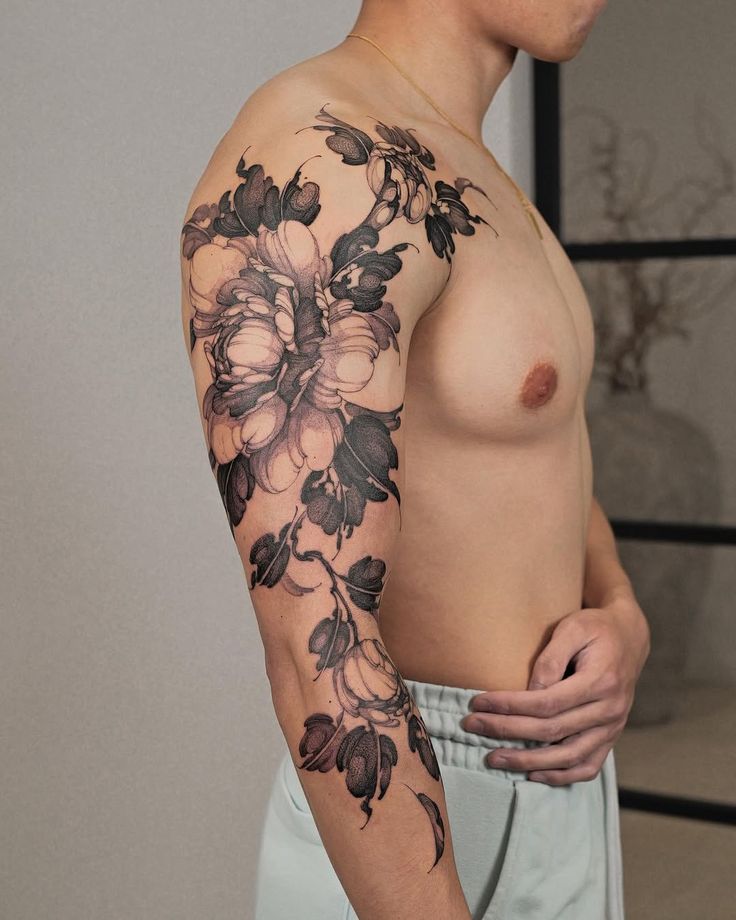
Botanical fine-line work uses thin, single-needle strokes to render leaves, stems, and small flowers with minimal shading, letting the natural white space of your skin act as highlight. This design works great as the starting point for a future half-sleeve, draping from the shoulder cap downward. Start around 4-5 inches. Healing takes 10-14 days. Bring specific plant references — botanical accuracy matters more here than people expect. Pain is mild to moderate. It’s an excellent first-tattoo choice and ages gracefully since fine botanical lines, when done at appropriate thickness, resist blurring better than overly delicate line weights.
11. Bold Traditional Anchor Shoulder Tattoo
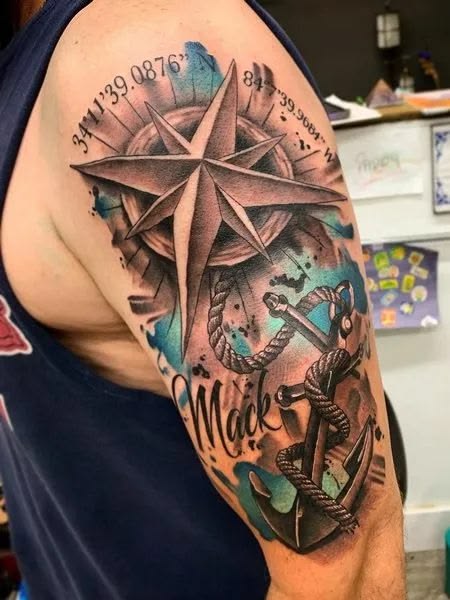
Anchors in bold traditional style use thick, confident outlines and flat color fill with almost no gradient — the style prioritizes clarity over realism. A 4-5 inch anchor sits well on the front shoulder or upper arm transition. Healing runs about 2-3 weeks. Ask about rope detail thickness during your consult since thin rope lines fade faster than the anchor’s main body. Pain is moderate. This is a dependable, classic choice for guys wanting something meaningful but simple, and it remains one of the most fade-resistant styles thanks to its heavy outline weight.
12. Dotwork Skull Shoulder Piece
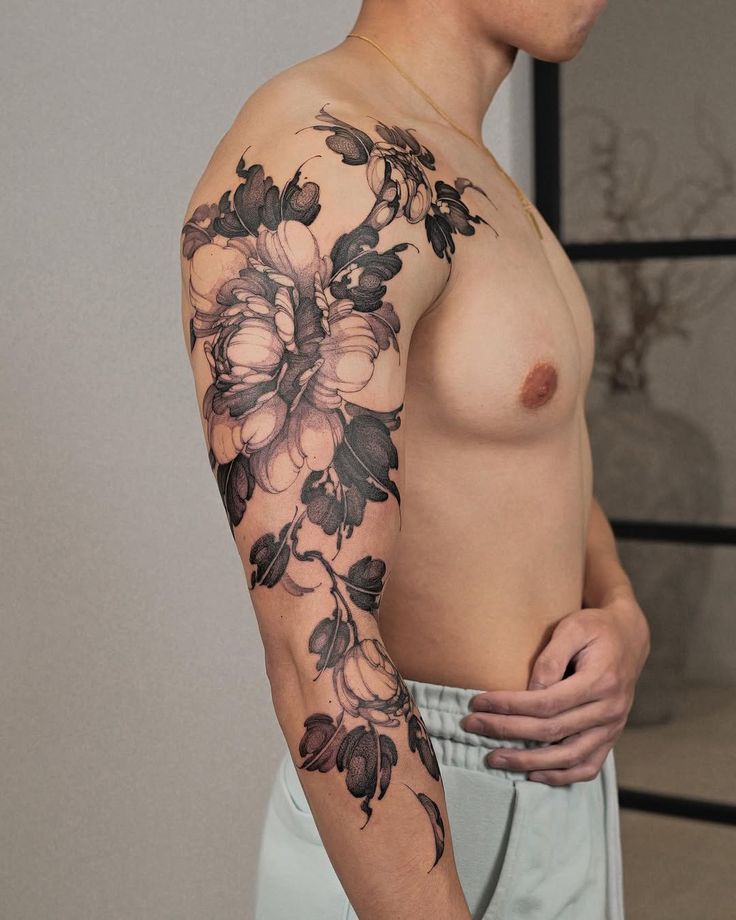
Dotwork skulls use dot density variation to build shadow and dimension instead of solid shading — denser dot clusters create darker areas, sparse dots create highlights. This technique demands precise, evenly-spaced needlework, so portfolio review matters a lot here. Size around 5 inches to preserve detail. Healing takes 2-3 weeks. Request close-up photos of healed (not fresh) dotwork pieces in your artist’s portfolio — fresh photos can hide inconsistent spacing. Pain runs moderate. It’s a striking, non-traditional take on a classic symbol and holds detail well long-term if the dot spacing was tight from the start.
13. Geometric Wolf Shoulder Tattoo
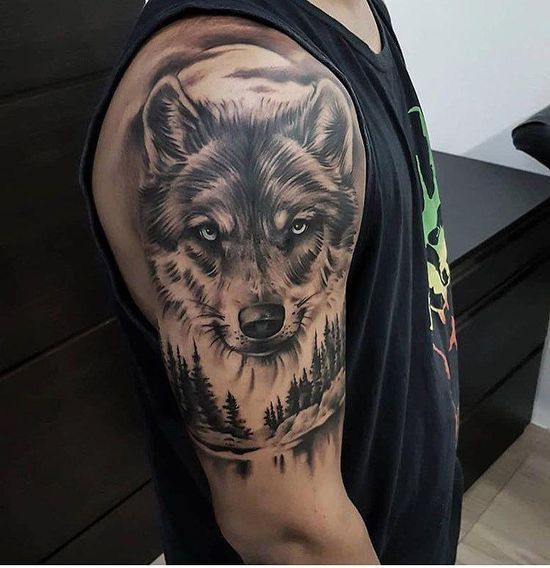
This style blends realistic animal linework with overlaid geometric shapes — triangles or polygon lines cutting through the wolf’s silhouette — combining fine-line detail with bolder geometric edges. Balance matters: too much geometry can bury the animal’s expression. A 5-6 inch size gives both elements room. Healing runs about 3 weeks. Bring two references — one realistic wolf image, one geometric pattern — so your artist can merge them intentionally rather than guessing your vision. Pain is moderate to firm. It works well as a bold statement piece and photographs strikingly in both black-and-grey and full color versions.
14. Single-Needle Map Outline Shoulder Tattoo
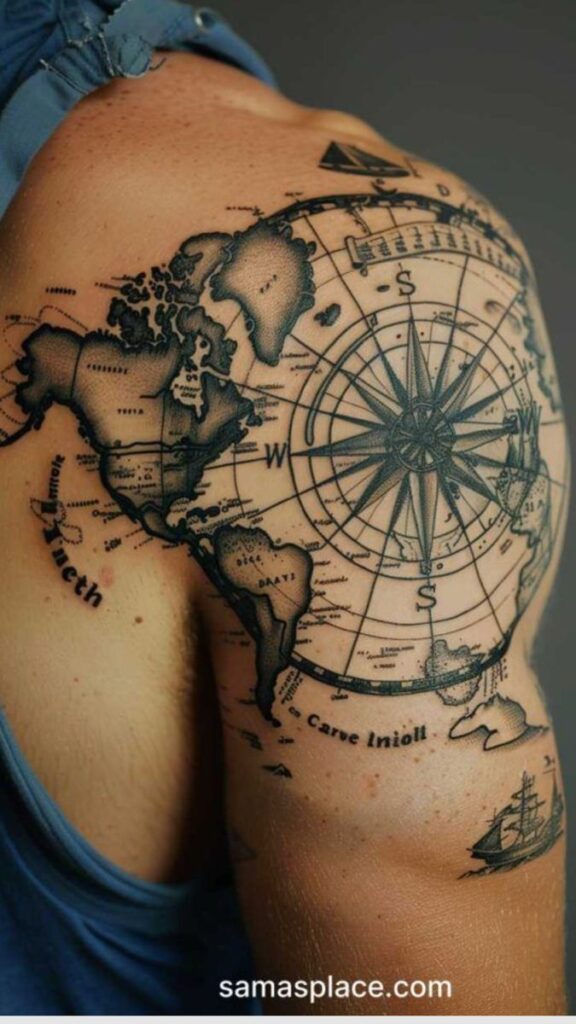
Single-needle work is about as thin and precise as linework gets, ideal for map outlines, coastlines, or geographic shapes with minimal filler detail. A meaningful location outline sits nicely at 3-4 inches. Healing takes about 10 days given the minimal ink density. Bring an actual map screenshot with the coastline or border clearly visible — freehand map memory rarely translates accurately. Pain is mild. This is one of the more subtle, workplace-safe shoulder options, though very thin single-needle lines can soften noticeably after 8-10 years and may need a light touch-up to stay crisp.
15. Blackwork Phoenix Shoulder Tattoo
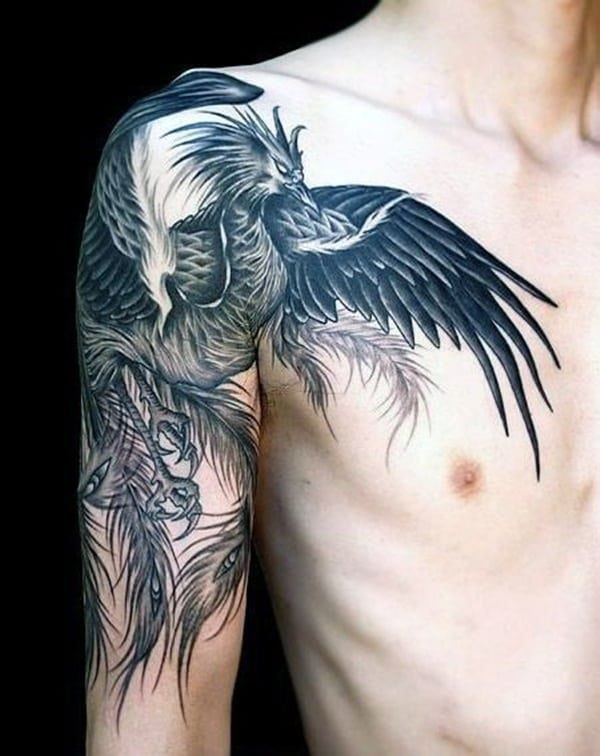
Blackwork phoenix designs use bold silhouette shapes with feather detail carved out through negative space rather than added shading — the black fill and untouched skin do all the visual work together. This needs real size to let feather layering read clearly, around 6 inches across the shoulder cap. Healing runs 3 weeks. Ask your artist how they handle feather layering specifically, since overlapping black shapes can blur into each other if spacing isn’t planned. Pain is moderate to firm. It’s a bold, symbolic piece that reads well from a distance and holds its contrast for a long time thanks to the solid black base.
16. Minimalist Mountain Range Shoulder Tattoo
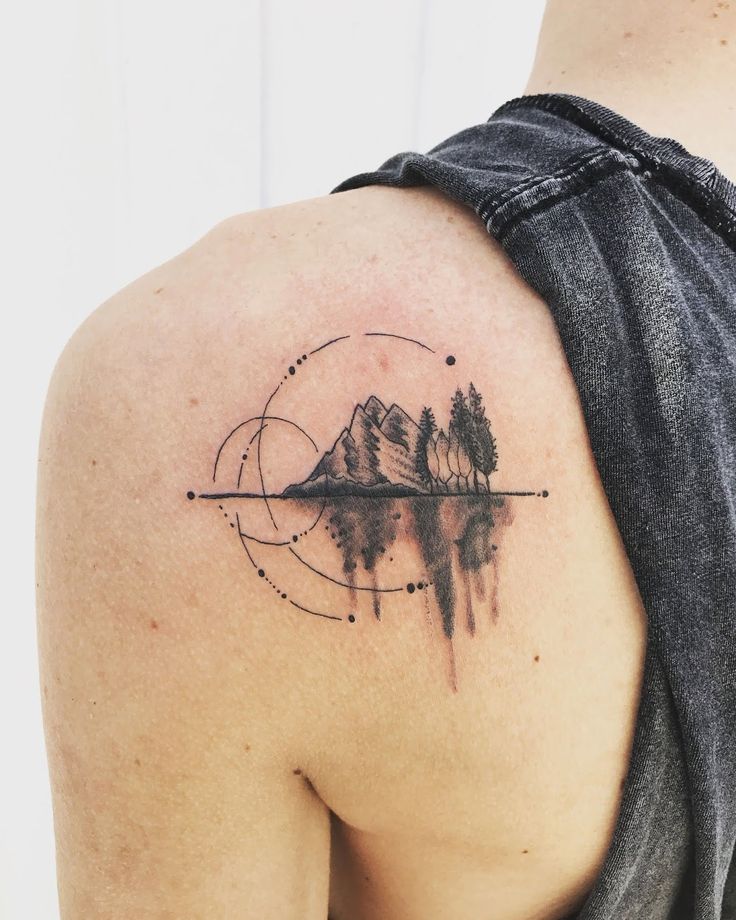
Minimalist linework here uses simple, unshaded outlines to suggest mountain peaks, often with a single thin line for added elements like a sun or bird. The appeal is restraint — clean geometry over detail. Keep it small, 2-3 inches, positioned toward the front shoulder. Healing takes about 10 days. Bring a simplified sketch rather than a photo-realistic mountain image, since overly detailed references can push your artist toward adding unwanted shading. Pain is mild. It’s a great low-commitment, first-tattoo-friendly option that stays subtle enough for most workplaces.
17. Japanese Wave Shoulder Cap
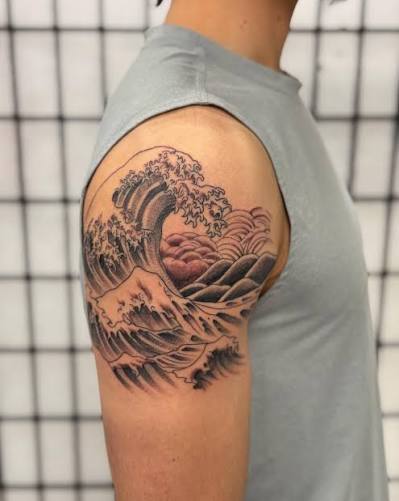
Inspired by traditional irezumi wave motifs, this design uses bold curved outlines with detailed foam shading, often in black and grey or blue tones, wrapping naturally around the shoulder’s curve. Size matters — 5-6 inches lets the wave crest read clearly. Healing runs 3 weeks given shading density. Ask specifically about wave crest shading technique in your consultation, since this detail separates strong Japanese-style artists from generalists. Pain is moderate. This design ages well when color saturation is applied correctly, and it suits guys wanting a bold, artistic piece with cultural design roots.
18. Realistic Clock Shoulder Tattoo
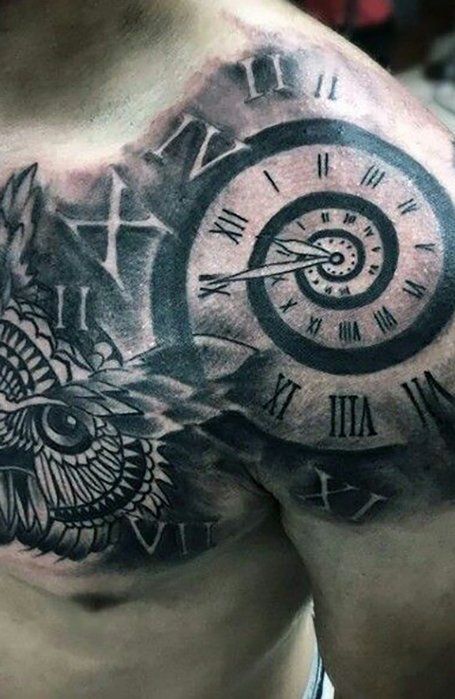
Realism clocks use layered shading to mimic metal texture, glass reflection, and depth — this is shading-heavy work requiring careful needle transition between tones. A 5-6 inch clock face fits the shoulder curve well. Healing takes 3-4 weeks. Bring a specific time reference if the piece holds personal meaning, and confirm your artist’s realism portfolio includes similar object work, not just portraits. Pain runs moderate to firm. It’s a meaningful, detailed statement piece, though realism shading does require more frequent touch-ups over the years compared to bold linework styles.
19. Tribal-Inspired Shoulder Band
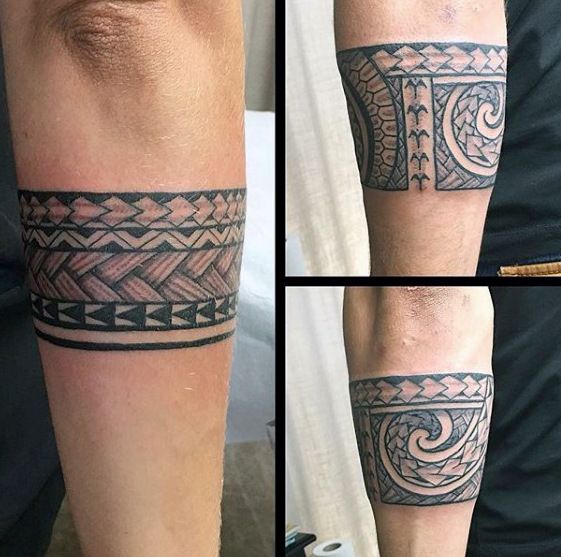
This design uses continuous bold black curves wrapping around the upper shoulder and arm like a band, relying entirely on shape flow and negative space rather than shading. It’s one of the more size-flexible designs, working from 3 inches up to a full wraparound. Healing runs 2-3 weeks. Ask your artist to draw the band directly on your skin before stenciling so the flow matches your specific muscle shape. Pain is moderate. It’s a solid matching or solo option and, because it’s solid black, tends to resist fading better than detailed color work.
20. Fine-Line Constellation Shoulder Tattoo
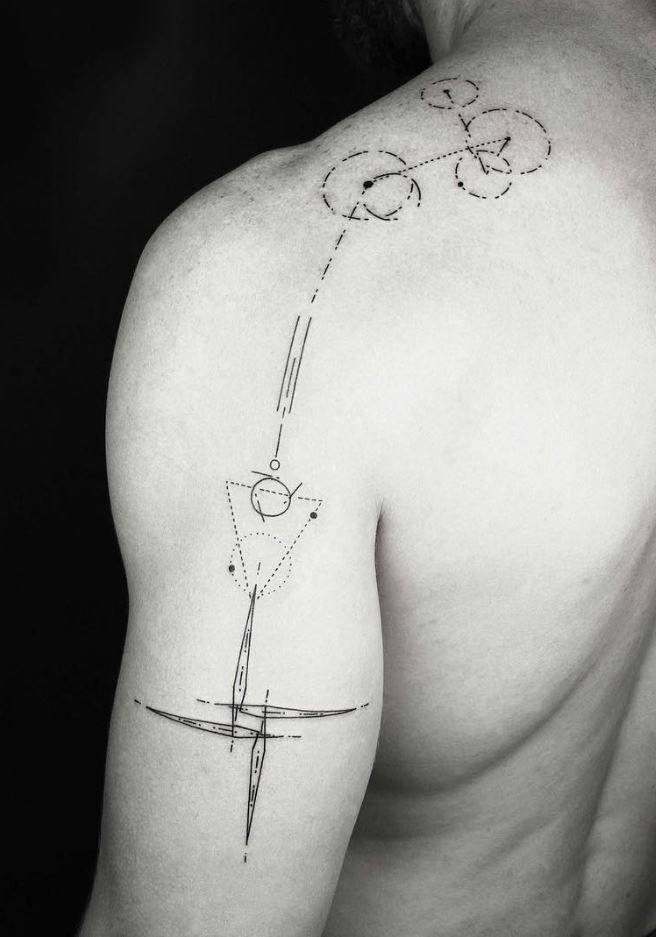
Constellation tattoos use tiny single-needle dots and thin connecting lines to map star patterns, often personalized to a birth date or meaningful night sky. Keep this one small and precise, 2-3 inches, positioned on flatter upper shoulder skin. Healing takes about 10 days. Bring the exact star pattern from a star-map app rather than a generic constellation image — accuracy matters for personal meaning. Pain is mild. It’s an excellent subtle, low-commitment first tattoo, though very fine dots may need a touch-up after several years to stay visible.
21. Bold Snake Shoulder Wrap
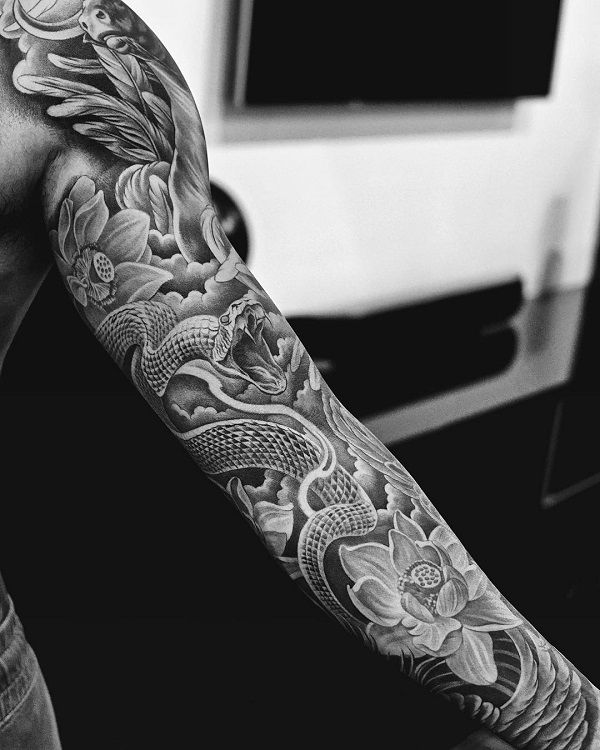
Bold traditional snakes use thick black outlines with limited color shading, coiling naturally around the shoulder’s curve for a dynamic, flowing composition. Size needs to be generous, 6+ inches, to let the coiling pattern read properly. Healing runs about 3 weeks. Ask about scale shading style during consultation — some artists use solid color blocks, others use fine cross-hatching, and the look differs a lot. Pain is moderate to firm given the wraparound placement near the collarbone edge. It’s a bold, eye-catching piece that ages well thanks to the heavy outline weight typical of traditional style.
22. Blackwork Deity or Warrior Shoulder Piece
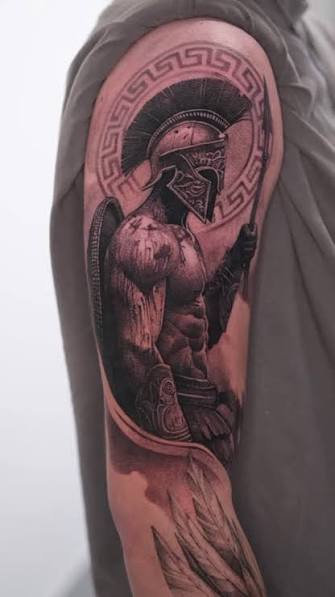
This design uses bold black silhouette work combined with fine interior linework to depict a mythological or warrior figure, balancing solid mass with intricate detail in armor or facial features. It needs size to work, 6-7 inches minimum. Healing takes 3 weeks. Bring cultural or mythological reference material if the figure holds specific meaning — accuracy matters to a lot of guys choosing this design. Pain is moderate to firm. It’s a strong, symbolic statement piece, less workplace-subtle, but holds visual impact for decades due to the solid black foundation.
23. Sacred Geometry Shoulder Tattoo
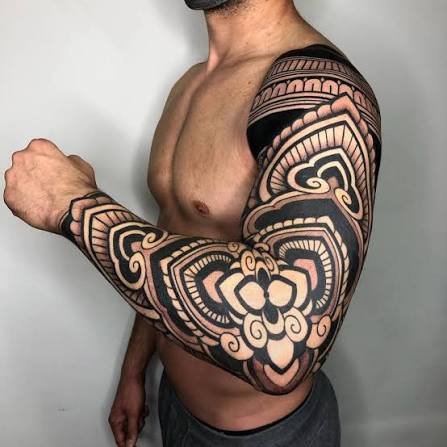
Sacred geometry designs use precise, symmetrical linework — often circles intersecting circles or layered polygons — executed in fine line or slightly bolder single-needle weight for durability. Precision is everything, so stencil accuracy checks matter more here than almost any other style. Size around 4-5 inches keeps proportions intact. Healing runs about 2 weeks. Ask your artist to verify symmetry with measurements before tattooing, not just by eye. Pain is mild to moderate. It’s a clean, meaningful option that works well solo or as a matching design among friends who share the same symbolic reference.
24. Watercolor-Accent Shoulder Piece
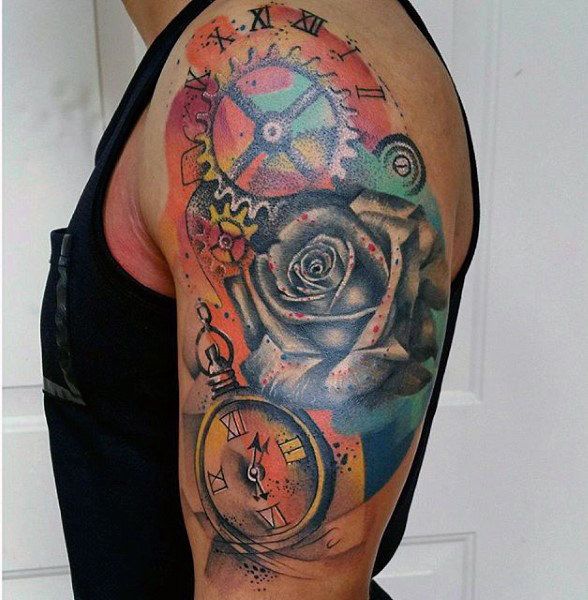
This style pairs a solid blackwork outline or base shape with soft, splattered color accents that mimic watercolor bleeding, without a hard outline containing the color. It’s a technique that depends heavily on artist skill — poorly done watercolor fades unevenly. A 4-5 inch size works best. Healing takes about 3 weeks given the varied ink density. Ask specifically to see healed (not fresh) watercolor work in the portfolio, since color retention is the biggest long-term concern with this style. Pain is moderate. It’s a distinctive, less common choice, though it does require more attentive touch-ups over time than solid blackwork.
25. Custom Family Crest Shoulder Tattoo
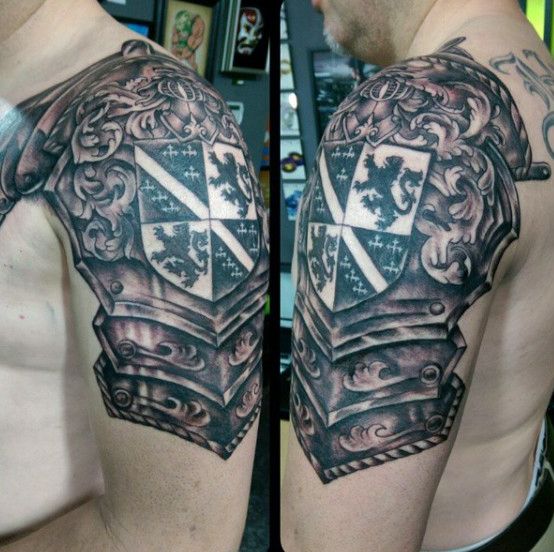
Custom crest work typically combines bold outline work with fine interior detail — mottos, small symbols, shields — requiring an artist comfortable switching needle weights within a single piece. Size needs to be generous enough to keep text legible, usually 5-6 inches. Healing runs about 3 weeks. Bring your actual family crest reference or work with your artist to design one from scratch, and confirm text legibility at final size before the stencil goes on. Pain is moderate. This is a deeply personal, meaningful piece and tends to age well since crest designs typically rely on bold linework rather than delicate detail.
Best Placement Ideas for Shoulder Tattoos
- Front shoulder cap (deltoid front): high visibility, moderate pain, good for symmetrical or radial designs like mandalas and suns
- Outer shoulder curve: most visible when wearing short sleeves, moderate pain, ideal for bold traditional and blackwork pieces
- Shoulder-to-upper-arm wrap: great for larger pieces like dragons or snakes, slightly more pain near the collarbone edge, higher aftercare attention needed due to movement
- Back of shoulder (near shoulder blade transition): easier to hide, generally milder pain, works well for script or fine-line botanical designs
- Full shoulder cap coverage: best for realism or detailed dotwork needing maximum surface area, longer healing time, firmer pain due to sustained needlework
Tips for Success
Choosing the right artist matters more than choosing the right design. Look through portfolios for healed photos, not just fresh ink shots — healed work tells you how lines and shading actually hold up. Ask directly about their specialty; a fine-line specialist and a bold traditional artist are not interchangeable, even if both are talented. Bring multiple reference images rather than one, since this gives your artist room to interpret proportions and placement correctly instead of guessing. Also ask about walk-in availability versus custom booking — custom designs typically need a deposit and a longer lead time, while flash designs (pre-drawn, ready-to-ink pieces) can often be done same-day.
Common Mistakes and How to Avoid Them
- Sizing detailed designs (realism, dotwork, sacred geometry) too small — fine detail needs enough surface area or it blurs within a few years
- Choosing a placement that fights the design’s natural flow, like forcing a wraparound piece onto a flat area instead of the curve it was meant for
- Skipping the aftercare instructions your artist gives you, assuming general internet advice is enough
- Copying a design exactly from a photo without personalizing size, orientation, or small details to fit your own body and story
- Not asking about touch-up policy before booking — some studios include one free touch-up within a set window, others don’t
Similar Variations
Almost every design on this list can shift in scale or tone. A bold traditional eagle can shrink into a fine-line minimalist version for guys wanting subtlety instead of a statement. Blackwork mandalas can gain color accents for a more decorative feel, or lose color entirely for a cleaner, more permanent-looking result. Geometric and dotwork pieces combine well together, letting you blend soft dot shading with crisp geometric edges in one custom design. If you’re unsure, ask your artist to sketch two or three size and style variations before committing to a final stencil.
Aftercare Basics
Aftercare directly affects how sharp your linework and color saturation look years down the road. General guidance includes keeping the area clean, avoiding direct sun exposure while healing, and steering clear of swimming pools or prolonged soaking during the first couple weeks. Avoid picking at scabbing skin, since this can pull ink unevenly. That said, aftercare routines vary by studio and by design size, so always follow the specific sheet your artist gives you rather than generic advice found online, and reach out to them directly if anything looks unusual during healing.
Quick FAQ
How much does a men’s shoulder tattoo cost?
Cost varies widely by size, detail, and studio location, but simple fine-line pieces often start in the low hundreds, while larger blackwork or realism shoulder pieces can run into the high hundreds or more. Always ask for a quote during consultation rather than assuming a flat rate.
How painful is a shoulder tattoo?
Pain tolerance varies by individual, but the outer shoulder and deltoid area is generally considered moderate compared to bonier spots like the collarbone or ribs. Denser shading and longer sessions tend to feel more intense than quick linework.
How long does a shoulder tattoo take to heal?
Most shoulder tattoos take roughly 2 to 4 weeks to heal on the surface, though full settling under the skin can take longer. Healing time depends on design size, ink density, and how well aftercare instructions are followed.
Do shoulder tattoos age well over time?
Bold linework and solid blackwork tend to hold their shape and saturation longer than very fine or delicate detail, which can soften after many years. A touch-up every several years is common for keeping detailed pieces sharp.
Picking from these 25 mens shoulder tattoo ideas is really just the starting point — the real work happens in the consultation, where placement, size, and technique get locked in