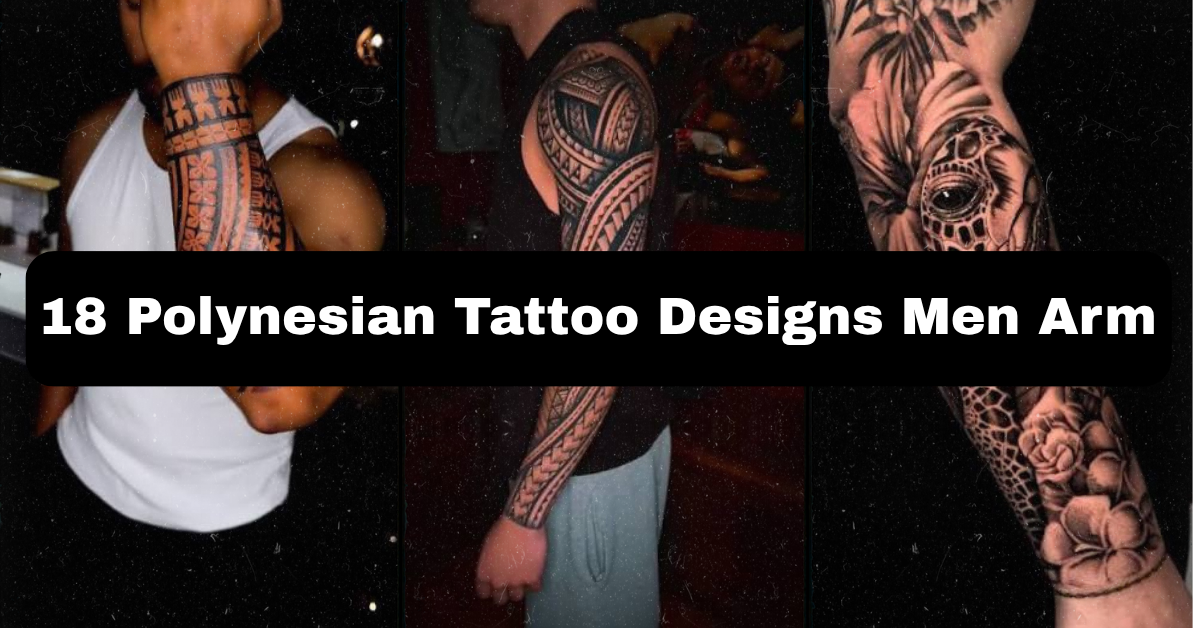
18 Polynesian Tattoo Designs Men Arm: A Real Guide Before You Book
Nervous about picking a Polynesian tattoo design you’ll regret in five years? You’re not alone, and you’re smart to slow down before committing to something this permanent. I’ve spent a lot of time talking to tattoo artists and watching consultations play out, and I want to walk you through this the right way — not just show you pretty pictures.
So what are the best Polynesian tattoo designs for men’s arms? The strongest options are enata figures, shark teeth bands, turtle motifs, and full or half sleeve tribal combinations, since these translate well to the arm’s natural curve and hold up over decades of skin aging. Bold blackwork linework with consistent saturation ages better on arms than fine, delicate patterns that fade unevenly over time.
Stick around, because I’m also going to cover placement tradeoffs, realistic pain levels, how to brief an artist so you don’t end up with a generic stencil, and what this style of tattoo actually costs depending on size and detail.
Why Polynesian Designs Work So Well on the Arm
Polynesian tattooing is one of the oldest continuous tattoo traditions on earth, and the arm happens to be the best canvas for it. Here’s why: these designs rely on bold blackwork (solid black ink applied in thick, deliberate lines and filled shapes) and repeating geometric patterns that need room to breathe. The arm’s cylindrical shape lets a skilled artist wrap a pattern so it flows naturally when you move, rather than looking flat like it would on a flat area like the chest. Polynesian work is also symbol-based, meaning each shape can carry personal meaning — family, strength, the ocean, protection — which makes it feel less like decoration and more like a statement you’re choosing on purpose.
1. Traditional Enata Figure Sleeve
The enata is a stick-figure-like human shape used throughout Polynesian tattooing to represent people, ancestors, or gods, depending on how it’s oriented. In sleeve form, artists repeat and mirror enata figures in rows, using thick blackwork outlines with minimal shading to keep the symbols legible from a distance. Line weight here matters a lot — thin lines blur together over years, so an experienced blackwork artist will use bold, consistent strokes.
This works best as a half or full sleeve since the repeating pattern needs length to read clearly. Expect moderate to high discomfort on the inner arm where skin is thinner, and less on the outer bicep. Healing typically runs two to three weeks. Bring a reference photo showing figure spacing you like, and ask your artist how they’ll adjust the pattern to your specific arm length.
2. Shark Teeth (Niho Mano) Band
Niho mano, or shark teeth, is a triangular pattern historically linked to protection and strength. As an arm band, it’s rendered in solid blackwork triangles alternating with negative space (the untouched skin left visible between shapes to create contrast). This design is one of the more forgiving Polynesian options for first-timers because the shapes are simple and the band format keeps the size manageable.
Ideal placement is upper arm or bicep, wrapping fully around for a cohesive look. A band 2 to 4 inches wide reads clearly without overwhelming smaller frames. Pain is generally moderate on the outer bicep, more noticeable near the armpit. This ages well because solid black holds saturation longer than fine detail. It’s also easy to conceal under a t-shirt sleeve for workplace settings, which makes it a solid low-commitment entry into the style.
3. Turtle (Honu) Forearm Design
The honu, or turtle, symbolizes longevity, navigation, and family in many Polynesian cultures. On the forearm, artists typically combine a bold turtle outline with internal tribal patterning — spirals, waves, or enata figures filling the shell. This mixed-technique approach uses thick outer lines and finer internal linework, so ask your artist about needle size for the detail areas versus the bold border.
The forearm is a great spot because the turtle’s shape naturally fits the elongated space, and it stays visible when you roll up your sleeves, which some guys want and others don’t. A 4 to 6 inch design in the mid-forearm balances detail with healing simplicity. Pain runs low to moderate here since forearm skin is less bony than wrist or elbow. Healing takes roughly two weeks. This design transitions nicely into our next idea, spearhead patterns, which often border turtle designs.
4. Spearhead Pattern Cuff
Spearhead motifs represent agility and direction, and they’re commonly used as border elements or standalone cuffs around the wrist or lower forearm. The pattern is pure blackwork geometry — repeating triangular points with sharp, clean edges. Precision matters more than shading here, so line consistency is the technical detail to watch for in an artist’s portfolio.
Cuffs sit well just above the wrist bone, though that area is bonier and tends to hurt more than the mid-forearm. A width of 1.5 to 3 inches keeps it proportional without looking like a slapped-on bracelet. This is a great matching-tattoo idea for brothers or close friends since the simple geometry is easy to replicate consistently across different arm sizes. Healing is quick, typically 10 to 14 days, because there’s minimal shading to complicate the surface.
5. Ocean Wave (Nalu) Motif
Nalu patterns use flowing, curved blackwork lines to represent ocean waves, often symbolizing change or life’s movement. Unlike the sharp geometry of spearheads, this design relies on smooth curves and sometimes gradient shading (a gradual transition from solid black to lighter density) to suggest motion and depth.
This one looks especially good running along the outer forearm or wrapping the bicep, where the natural curve of the muscle enhances the wave’s flow. Because shading is involved, healing takes slightly longer — closer to three weeks — and touch-ups are more common with gradient work than solid blackwork. Ask your artist about their shading technique specifically; dotwork shading (built from tiny dots) heals differently than smooth gradient shading. Pain is moderate. This design pairs beautifully with turtle or shark tooth elements in a combination sleeve.
6. Sun (Ra) Symbol Shoulder Cap
The sun symbol, often centered with radiating triangular or spiral points, works as a shoulder cap because the round shape mirrors the natural curve of the deltoid. This is bold blackwork with a strong focal center, meaning the artist builds outward from a solid core, so symmetry is critical — bring a front-facing reference photo and discuss stencil placement before any ink goes down.
Shoulder caps are more painful than forearm placement because you’re closer to bone and thinner skin near the collarbone. A diameter of 4 to 6 inches suits most builds. This is a strong choice if you want visibility during summer but full coverage in work clothes the rest of the year. It also anchors a full sleeve nicely, acting as the “starting point” pattern that flows down into the rest of the design.
7. Polynesian Cross Tribal Band
This design blends a bold cross shape with surrounding tribal spirals and triangles, often chosen for its dual meaning — faith alongside traditional symbolism. Technically, it’s still blackwork, but the cross’s straight lines require careful proportion work so it doesn’t look disconnected from the curved tribal elements around it.
Best placed on the outer bicep or upper forearm where there’s enough width for the cross and its surrounding pattern to sit together without crowding. Expect low-to-moderate pain in this fleshier area. This is a popular choice for a first tattoo because the symbolism is easy to explain to family members who might ask, and the design ages well thanks to consistent line weight throughout.
8. Lizard or Gecko (Moko) Design
The moko, or gecko, represents change and adaptability in several Polynesian traditions. Artists render it using bold outline work with tribal patterning filling the body, similar to the turtle design but smaller and more angular. Because geckos have thin limbs, this design demands a steady hand — thin blackwork lines on narrow shapes are more prone to blurring over time if the artist doesn’t use appropriate needle grouping.
This works well as a smaller accent piece on the outer forearm or upper arm, sized around 3 to 5 inches. Pain is generally mild to moderate. It’s a good design if you want something symbolic but don’t want a full sleeve commitment — a nice stepping stone before deciding on a bigger project.
9. Half Sleeve Combination Piece
Rather than one symbol, a half sleeve blends multiple elements — waves, spearheads, enata figures — into one continuous composition from shoulder to elbow. This requires real planning. A good artist will sketch a custom design (built specifically for your arm) rather than reusing a flash tattoo (a pre-made design pulled from a book or wall display) stretched to fit.
Half sleeves take multiple sessions, sometimes two or three depending on detail density. Pain accumulates with session length, so expect more fatigue by the end of a three-hour sitting than the actual sharpness of pain increasing. This is ideal for guys who want serious visual impact but aren’t ready for a full sleeve’s cost and time commitment.
10. Full Sleeve Polynesian Tribal
A full sleeve extends the combination approach from shoulder to wrist, telling a more complete visual story. This is the most involved option on this list, technically and financially. Expect four or more sessions with a specialist, heavy use of solid blackwork balanced by negative space to prevent the design from looking like one solid black mass.
Full sleeves need careful pacing — most artists won’t do this in one sitting, and you shouldn’t want them to. Healing happens in stages between sessions, so total completion can take two to four months. This is a serious, permanent commitment best suited to guys who’ve already tested their pain tolerance with smaller pieces first.
11. Bicep Band Wrap
A simpler alternative to a full sleeve, the bicep wrap circles the upper arm with a moderate-width tribal band, usually 3 to 5 inches. This uses clean blackwork with repeating geometric units, similar to the shark teeth band but often more angular and abstract.
This placement is fairly low-pain since the bicep has more muscle and fat coverage than bonier spots. It’s an easy design to keep hidden under short sleeves for work while still being visible when you want it seen. Great option for a first tattoo or a matching design among friends since the band shape is easy to standardize.
12. Forearm Spiral Pattern
Spirals in Polynesian tattooing often represent growth or a journey. As a standalone forearm piece, the spiral uses tight, consistent blackwork curves, and precision is everything — uneven spacing between spiral lines is one of the most common flaws in lower-quality work, so scrutinize an artist’s portfolio for spiral consistency specifically.
This design sits nicely on the inner or outer forearm, sized 3 to 5 inches. Pain is mild to moderate. It ages well long-term because the bold, simple curves don’t rely on fine detail that blurs with time.
13. Shoulder-to-Elbow Tribal Flow
This design connects a shoulder cap into a flowing pattern that tapers down toward the elbow, using gradually narrowing blackwork bands. The technical challenge is transition — the pattern needs to shrink proportionally without looking abruptly cut off.
Best for guys who already have a shoulder piece and want to extend it. Pain increases slightly near the elbow crease, which is a bonier, more sensitive area. This works as a natural bridge toward a future half or full sleeve if you want to build gradually.
14. Geometric Tribal Cuff
A more modern take, this cuff uses sharp geometric shapes — triangles, diamonds, straight bands — instead of traditional curved motifs. It’s still blackwork at its core but reads as more contemporary. This suits guys who like the cultural aesthetic but want a cleaner, more minimal visual style.
Wrist or lower forearm placement works well here, sized 2 to 3 inches. Wrist placement tends to be more painful due to thin skin over bone. This design is easy to personalize by adjusting shape density, making it a good option if you want something inspired by Polynesian tradition without a direct symbolic replica.
15. Warrior Mask Accent
A bold facial mask design, often stylized and abstract rather than literal, symbolizing protection or strength. This uses heavier blackwork with some negative space to define facial features without over-detailing them.
Best placed on the outer shoulder or upper arm where there’s enough flat space for facial proportions to read clearly. This is a more advanced piece — ask specifically to see healed examples of facial or mask work in an artist’s portfolio, since proportion mistakes are more noticeable in figurative designs than pure pattern work.
16. Compass or Star Tribal Fusion
Blending a compass or star shape with tribal linework is a popular fusion for guys who want a travel or direction symbol alongside Polynesian aesthetics. This combines a defined central shape with radiating blackwork lines or triangles.
Outer forearm or upper arm placement works best, sized around 3 to 4 inches. Pain is mild to moderate. This is a strong custom design option if you want something with dual meaning rather than a purely traditional symbol.
17. Wrist-to-Elbow Linear Band
This design uses a continuous, moderately narrow band running the length of the forearm, filled with repeating small tribal units. It’s a good choice if you want length without the visual weight of a full sleeve.
Because it runs close to the wrist, expect more sensitivity at that end and comparatively less discomfort near the elbow. This is a solid matching-tattoo option for pairs who want a coordinated but not identical look, since the repeating units can be adjusted slightly between people.
18. Custom Family Symbol Sleeve
Rather than borrowing traditional symbols wholesale, some men work with an artist to build a custom design that incorporates personal or family-specific shapes alongside traditional Polynesian elements. This requires real collaboration — bring family history, meaningful shapes, or existing reference tattoos to your consultation so the artist can weave them into the traditional framework respectfully and cohesively.
This is best done as a half or full sleeve given the amount of personal detail involved. Pain and healing mirror the combination sleeve described earlier. This is the most meaningful but also most time-intensive option on this list, and it’s worth the extra planning sessions to get right.
Best Placement Ideas
- Bicep/outer shoulder — lower pain, easy to conceal, good for bands and caps
- Forearm (outer) — moderate pain, high visibility, great for turtles, spirals, waves
- Forearm (inner) — more sensitive, better for smaller or less detailed pieces
- Wrist/lower forearm cuff — more painful due to bone proximity, but high visual impact for cuffs and bands
- Full arm (shoulder to wrist) — highest time and cost commitment, best reserved for guys who’ve already gotten smaller tattoos before
Tips for Success
Look for an artist who specializes in blackwork or Polynesian-specific tribal work — not just a generalist. Scroll through their portfolio for healed photos, not just fresh ink, since healed results show you how their line weight actually holds up. Bring reference images, but also be open to letting them adjust proportions for your specific arm shape. A good consultation should include a discussion of size, placement, and a rough stencil preview before the appointment day.
Common Mistakes and How to Avoid Them
- Sizing a detailed pattern too small, causing lines to blur together as it heals and ages
- Choosing a bony placement (wrist, elbow) for a first tattoo without understanding the added discomfort
- Skipping the aftercare instructions given by your artist, which can affect how ink settles
- Copying someone else’s exact design without adjusting it for personal meaning or your own arm proportions
- Booking a walk-in slot for a complex custom piece when it really needed a planned custom design session
Similar Variations
Most of these designs scale easily. A shark teeth band can shrink into a small ankle piece. A turtle motif can expand from forearm-sized into a full half sleeve centerpiece. Spearhead patterns work as standalone accents or as border elements framing a larger custom design. If you want something bolder later, most of these can be extended or combined rather than starting over from scratch.
Aftercare Basics
Keep the tattoo clean and follow the specific aftercare sheet your artist provides — this generally includes gentle washing, appropriate moisturizing, and avoiding sun exposure or swimming while it heals. Healing time varies by individual and by how much shading or solid black coverage is involved, so don’t rely on someone else’s timeline as your own. If you notice anything unusual during healing, consult a licensed professional or dermatologist rather than guessing.
Quick FAQ
How much does a Polynesian arm tattoo cost?
Smaller pieces like bands or accents typically range from $150 to $400, while half sleeves and full sleeves can run well into the thousands depending on session count and artist rate.
Does a Polynesian tattoo hurt a lot?
Pain varies by individual and placement — fleshier areas like the outer bicep tend to hurt less than bony spots like the wrist or elbow.
How long does healing take?
Simple blackwork bands often heal in about two weeks, while larger or shaded pieces can take three weeks or longer, according to general dermatological consensus on tattoo healing.
Will the design fade or blur over time?
Bold, solid blackwork tends to hold its shape better over the years compared to fine, thin linework, though touch-ups are common for any tattoo after a decade or more.
Final Thoughts
Polynesian tattoo designs for men’s arms carry real weight — culturally, visually, and permanently. Whether you’re drawn to a simple shark teeth band or a full sleeve years in the making, the key is slowing down, finding an artist who genuinely understands the style, and picking a design that means something to you personally rather than just something that looked good on someone else’s feed. Take your time, ask the hard questions during your consultation, and you’ll end up with Polynesian tattoo designs for men’s arms that you’re still proud of decades from now.