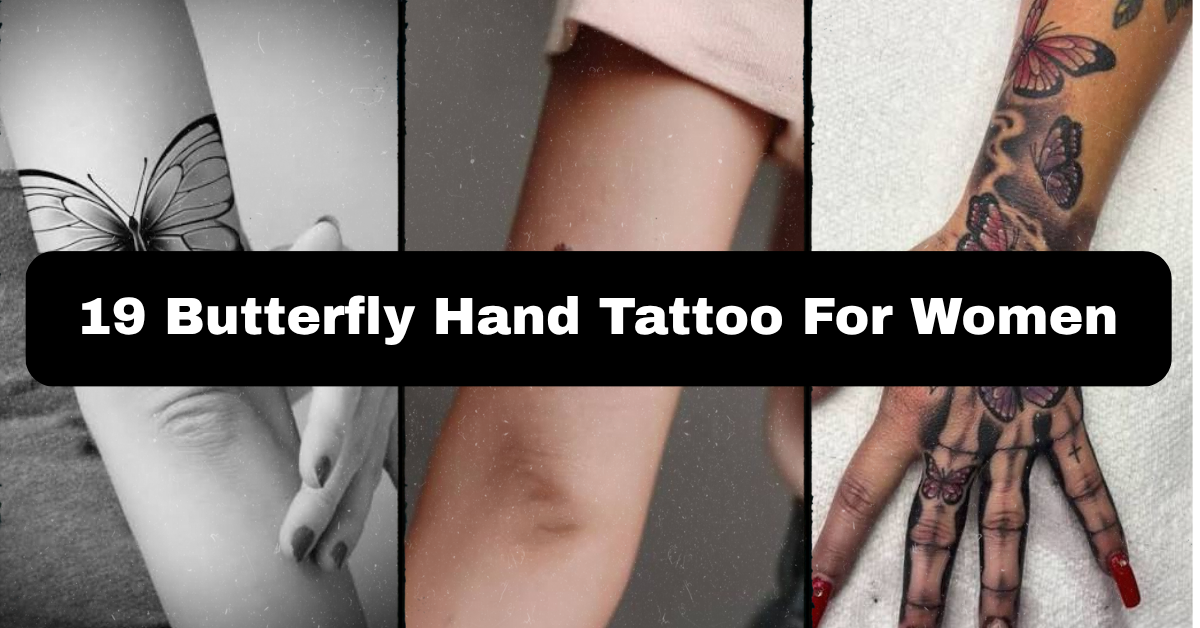
19 Butterfly Hand Tattoo Ideas For Women (Placement, Pain, and Aftercare Guide)
Nervous about picking a butterfly hand tattoo you’ll actually love in five years, not just five months? You’re not alone, and you’re asking the right question before booking anything.
So what are the best butterfly hand tattoo ideas for women? Fine-line single butterflies on the wrist, small dotwork clusters on the fingers, and negative space designs on the outer hand work best, since hand skin ages linework differently than other body parts and needs simpler compositions to hold up over time. Bold blackwork butterflies suit those wanting visibility and don’t fade as quickly in this high-contact zone.
Stick around, because I’ll walk you through placement tradeoffs specific to hands, honest pain talk, what these designs actually cost, how to brief your artist so you don’t end up with a blob after year two, and the aftercare mistakes that ruin hand tattoos faster than almost anywhere else on the body.
Why Butterfly Hand Tattoos Work as a Design Category
Hands are tricky canvases. The skin here stretches, wrinkles, and takes more sun and soap exposure than your ribs or thigh ever will. Butterflies happen to be one of the few motifs that actually work well on hands because their wing symmetry gives artists a natural structure to follow around knuckles, tendons, and the curve of the wrist. I’ve watched artists use the butterfly’s own shape to disguise the awkward transition points on hands, something a straight-line design or lettering just can’t do as gracefully. That’s not hype, that’s just how the anatomy lines up.
Below are 19 specific approaches, each with real placement and technique guidance so you walk into a consultation knowing exactly what to ask for.
1. Fine-Line Single Butterfly on the Wrist
This is the classic starting point for a reason. A fine-line butterfly uses a thin, consistent line weight, typically a single needle or a small liner needle grouping — to create delicate wing outlines without heavy shading. The visual distinction comes from negative space: the artist leaves parts of the wing unfilled, letting your actual skin tone show through as “color.” Best placement is the inner or outer wrist, sized around 1.5 to 2.5 inches. Healing typically runs 2 to 3 weeks on this area since wrist skin doesn’t crease as much as fingers. Bring a reference photo that shows wing vein detail, not just a silhouette, so the artist can decide what to simplify.
Wrist skin over bone tends to read as more sensitive than fleshier spots. This design works for first tattoos and offices with casual dress codes since it’s easy to cover with a watch or sleeve.
2. Dotwork Butterfly on the Back of the Hand
Dotwork builds an image entirely from small individual dots instead of solid lines, creating texture and shading through density rather than continuous strokes. On the back of the hand, this technique creates a soft, almost stippled look on the wings that mimics real butterfly scale texture. Size should stay compact, around 2 inches, because dense dot patterns can blur together if placed too small on a highly mobile surface. This spot experiences more friction from daily hand use, so expect healing closer to 3 to 4 weeks with more noticeable peeling. Ask your artist about dot spacing before booking, tighter spacing reads darker, looser spacing looks more like light shading.
Pain here tends to run higher than the forearm because there’s less fat cushioning the bone. This works well for someone wanting texture without going full blackwork.
3. Blackwork Butterfly Silhouette on the Hand
Blackwork means solid, saturated black ink filling most or all of the design, with little to no shading gradient, just bold, confident shapes. A blackwork butterfly on the hand reads clearly from a distance, which some women want and others actively avoid for workplace reasons. The visual weight comes from unbroken black fill contrasted against negative space cutouts for wing detail. Place it on the back of the hand or across the web between thumb and index finger for a striking effect, sized 2 to 3 inches. Expect a bolder pain sensation since solid fill requires more passes over the same skin. Healing runs about 3 weeks. Tell your artist you want “high saturation, minimal gradient” so they don’t default to a softer traditional shading style.
4. Single-Needle Micro Butterfly on the Finger
Single-needle work uses one fine needle point to create extremely thin, delicate lines — the thinnest linework available in tattooing. On fingers, this technique is popular but comes with a real tradeoff: finger skin regenerates faster than most body areas, which means fine details can blur or fade within a couple of years. Keep this design under an inch, placed on the side of the finger rather than across a joint crease, since joints crack ink faster with movement. Ask your artist directly about their finger tattoo touch-up policy before booking, since fading here is common even with excellent aftercare.
Pain on fingers is often described as sharp and quick rather than a dull ache. This is a low-commitment option if you’re testing whether you can handle visible ink at work.
5. Watercolor-Style Butterfly on the Wrist

Watercolor tattoos use diluted ink application and soft color blending to mimic the look of a painted watercolor artwork, often without traditional black outlines holding the shape together. This creates a dreamy, soft-edged butterfly with color that seems to bleed slightly at the wing tips. Because there’s no bold outline, placement matters a lot — the inner wrist or forearm gives enough flat space for color to sit evenly. Size should be at least 2.5 inches since smaller watercolor pieces lose their gradient effect fast. Colored ink can fade unevenly compared to black ink over the years, so ask your artist about which pigments they trust for longevity. Pain level is comparable to standard color work. This suits someone who wants something soft and painterly rather than graphic.
6. Negative Space Butterfly Between the Fingers
Negative space design flips the usual approach — instead of ink forming the shape, the untouched skin itself becomes the butterfly, surrounded by solid black or patterned ink. Placed in the webbing between the thumb and index finger, this creates a subtle, almost hidden effect that only shows fully when the hand stretches. Keep the surrounding ink simple so the negative shape stays legible; overly busy black work around it muddies the effect. This spot heals in about 2 to 3 weeks but experiences more stretching-related ink migration risk than flatter areas. Bring a clear line drawing to your consultation, not a photo, since the artist needs to know exactly where skin stays bare. Pain here runs moderate to high due to thin skin and nerve density. Great for anyone wanting a tattoo that’s easy to hide in professional settings.
7. Bold Traditional Butterfly on the Back of the Hand
Bold traditional style uses thick black outlines, limited but saturated color fills, and minimal fine detail — think classic American tattoo flash. On the hand, this style holds up better over decades than fine line because thicker lines resist the natural blurring that comes with skin aging and sun exposure. Go for 2 to 3 inches to give the bold linework room to breathe. Ask your artist to keep the color palette limited to two or three tones for the most authentic traditional look. Healing takes roughly 3 weeks. This is a solid choice if you want something that visibly reads as “tattoo art” rather than a delicate accent, and it ages more predictably than fine detail work in this zone.
8. Tiny Butterfly Trio on the Fingers
Instead of one design, this places three small butterflies across different fingers, usually in ascending or matching sizes. Each butterfly uses simple single-needle or fine-line technique, kept under half an inch each. The visual appeal comes from repetition and rhythm rather than individual detail. Because fingers are high-movement, high-exposure areas, expect faster fading than almost any other hand placement — this is worth discussing honestly with your artist before booking. Space them evenly and avoid joint creases. Pain compounds slightly since you’re tattooing multiple sensitive spots in one session. This works well as a matching tattoo idea among friends or sisters, with each person getting a different wing pattern.
9. Butterfly Wrapped Around the Wrist
This design uses the butterfly’s wings to wrap partially around the wrist’s circumference, following the natural curve of the joint. The linework needs to account for perspective — wings on the underside will appear foreshortened compared to the top. A skilled artist will adjust wing proportions to look balanced from the primary viewing angle, usually looking down at your own wrist. Size runs 2 to 3 inches to wrap comfortably. Healing takes about 3 weeks, and this area sees more friction from long sleeves and watches, so early aftercare matters more here. Ask to see your artist’s stencil placement on your actual skin before the needle touches down. Pain is moderate given the boniness of the wrist.
10. Butterfly and Vine Combo on the Hand
Combining a butterfly with a thin vine or floral line adds movement and can help disguise the transition between hand and forearm if that’s a concern. The vine uses consistent fine-line work while the butterfly itself might get slightly bolder linework as a focal point. This contrast in line weight is a deliberate technique choice — ask your artist to vary thickness intentionally rather than keep everything uniform. Placement along the side of the hand toward the wrist works best, sized 3 to 4 inches for the full combo. Healing takes 3 to 4 weeks given the larger surface area. This suits someone wanting a more custom, personalized piece rather than a standalone flash design.
11. Small Blackwork Butterfly on the Side of the Hand
The side of the hand, sometimes called the “karate chop” area, offers a relatively flat, less bony surface compared to the back of the hand. A compact blackwork butterfly here, around 1.5 inches, holds ink well and tends to age better than similar designs on more mobile spots. This placement is easy to hide by simply turning your hand, which makes it popular for workplace-conscious clients. Expect moderate pain since this area still sits close to the wrist bone. Healing runs about 2 to 3 weeks. Ask your artist about slightly thicker outlines here since thinner lines can blur faster on this particular skin texture.
12. Butterfly with Dotwork Shading Accents

This hybrid approach uses solid linework for the wing outline and dotwork for subtle internal shading, giving depth without full blackwork saturation. It’s a good middle ground for someone who wants dimension but not a heavy, solid look. Best placement is the back of the hand or forearm-to-hand transition, sized 2 to 3 inches to give the dot shading room to read clearly. Bring reference images showing gradient direction — where you want the shading darkest versus lightest. Healing takes roughly 3 weeks. Pain is comparable to standard linework with slightly more time under the needle due to the shading pass.
13. Butterfly Outline Only (No Fill)
A pure outline butterfly skips shading and fill entirely, relying on clean, confident linework to define the shape. This minimalist approach ages surprisingly well on hands because there’s no gradient or fill to blur or fade unevenly — just line, which either holds crisp or needs a simple touch-up later. Ideal size is 2 inches, placed on the back of the hand or wrist. This is one of the most first-tattoo-friendly options on this list since it’s quick, relatively low-cost, and easy for an artist to execute cleanly. Pain and healing time run on the lower end for hand placements. Ask specifically for “clean line, no shading” in your consultation notes.
14. Butterfly with Script Name or Word
Pairing a small butterfly with a name, date, or single word adds personal meaning but requires careful spacing planning. The script typically uses fine-line technique to match the butterfly’s delicacy, though bolder script can work if paired with a bolder butterfly style. Place this along the side of the hand or wrist where there’s enough linear space for both elements without crowding. Total size usually runs 2.5 to 3.5 inches combined. This is a common choice for tattoos with sentimental meaning, though I’d gently suggest testing how a word looks in stencil form on your actual hand shape before committing, since curved skin can distort straight script.
15. Symmetrical Butterfly Pair on Both Hands
Some women choose matching or mirrored butterflies on each hand, creating a symmetrical statement when hands are placed together or spread apart. Each side uses identical or mirrored linework, which requires precise stencil placement to look intentional rather than mismatched. Size stays consistent between both, typically 1.5 to 2.5 inches each. This effectively doubles your session time and healing considerations since you’re managing aftercare on both hands simultaneously — worth planning around your work schedule. Pain accumulates since you’re tattooing two sensitive areas in one sitting or across two appointments.
16. Geometric Butterfly with Straight-Line Wings
This modern take replaces natural, curved wing shapes with angular, geometric linework, often incorporating straight lines or simple triangular patterns within the wing structure. It reads as more graphic and contemporary than a traditional butterfly silhouette. Placement on the flat back of the hand works best since geometric precision shows better on flatter surfaces than curved ones like the wrist. Size around 2 inches keeps the geometry crisp. Ask your artist about their ruler or stencil precision for straight lines, since freehand geometric work can look slightly uneven if the artist isn’t experienced with this specific style.
17. Butterfly with Negative Space Wing Patterns
Rather than making the whole butterfly negative space, this design fills most of the wing with black or color but leaves small negative space shapes within — dots, lines, or small geometric cutouts — creating a stained-glass-like effect. This requires more precise technique than a solid fill since the artist has to plan the unfilled shapes before starting. Best on the back of the hand for a flatter canvas, sized 2 to 3 inches. This is a more advanced request, so review your artist’s portfolio specifically for negative space work, not just general blackwork, before booking.
18. Tiny Butterfly Behind the Thumb Joint
A small, subtle butterfly placed just behind the thumb’s first joint offers a semi-hidden placement that shows only when the hand moves naturally. Keep this under an inch using single-needle or fine-line technique. This spot experiences significant flexing, so discuss realistic fading expectations with your artist upfront — this is one of the more honest conversations to have before booking a joint-adjacent tattoo. Healing can run slightly longer here, around 3 to 4 weeks, due to constant movement disrupting the healing surface.
19. Custom Butterfly Combining Multiple Techniques
For a truly one-of-a-kind piece, some women commission a custom design blending fine-line detail, small blackwork sections, and negative space accents all in one butterfly. This requires a longer consultation and likely a custom stencil rather than a flash design pulled from a book. Size typically runs larger, 3 to 4 inches, to give each technique room to read clearly. Expect a higher cost given the added design time. This route suits someone who’s had tattoos before and wants something specifically theirs rather than a repeatable flash design.
Best Placement Ideas
- Back of the hand — high visibility, moderate pain, faster fading from daily friction
- Wrist — easy to cover, moderate pain over bone, holds detail reasonably well
- Between fingers — very hideable, higher pain due to thin skin, higher touch-up likelihood
- Side of hand — good balance of visibility control and ink retention
- Fingers — lowest hideability commitment option, but fastest fading of any hand zone
Tips for Success
Look for an artist whose portfolio shows actual healed photos of hand tattoos, not just fresh ink. Healed work tells you how their linework ages, which matters more here than almost anywhere else on the body. Ask about their experience specifically with hand placements, since technique that works on a thigh doesn’t always translate to smaller, bonier hand anatomy. Bring at least two or three reference images showing line weight and style, not just subject matter. A good consultation includes an honest conversation about how your specific design might fade or need touch-ups given the placement you’ve chosen.
Common Mistakes and How to Avoid Them
- Choosing a design that’s too small for the detail level requested — fine detail needs a minimum size to stay legible
- Picking a joint or knuckle placement without discussing fading realities first
- Skipping the artist’s aftercare sheet in favor of generic internet advice
- Copying an exact reference photo without adjusting proportions for your specific hand shape
- Booking a walk-in flash design when the placement really calls for a custom stencil fitted to your hand
Similar Variations
Nearly every design above can shift in size, color saturation, or technique. A fine-line butterfly can gain dotwork shading for more depth. A bold blackwork piece can shrink into a smaller single-needle version for a subtler statement. Combining two or three butterflies from this list — say, a wrist piece and a finger accent — creates a cohesive multi-part hand tattoo without needing an entirely new consultation.
Aftercare Basics
Hand tattoos face more daily wear than most placements, so follow your artist’s specific aftercare sheet closely, especially around hand washing frequency and product use. General non-medical guidance includes keeping the area clean, avoiding excessive soaking during the initial healing window, and avoiding direct sun exposure while it heals. Since pain tolerance and healing speed vary by individual, consult your artist or a licensed dermatologist with any specific concerns rather than relying solely on general online advice.
Quick FAQ
How much does a butterfly hand tattoo cost?
Small single-needle or fine-line designs often start around $80 to $150, while larger blackwork or custom multi-technique pieces can run $200 to $400 or more depending on the artist’s rate and design complexity.
Do butterfly hand tattoos hurt more than other placements?
Generally yes — hands have less fat padding and more nerve endings near the surface, so most people report more sensitivity here than on fleshier areas like the upper arm or thigh.
How long do hand tattoos take to heal?
Most hand placements heal in 2 to 4 weeks, though fingers and joints often take longer due to constant movement and friction disrupting the healing surface.
Will a butterfly hand tattoo fade quickly?
Hand tattoos, especially on fingers and joints, tend to fade faster than tattoos on the torso or upper arms due to sun exposure and frequent washing, so touch-ups are more common here.
Choosing a butterfly hand tattoo really comes down to matching the technique to the specific spot on your hand you’re considering — fine line for subtlety, blackwork for staying power, dotwork for texture, negative space for something that only reveals itself on closer look. Take your time, talk honestly with a licensed artist about pain and fading before you commit, and remember that the right butterfly hand tattoo is the one that still feels like you years down the road, not just the one that looked good in a photo today.