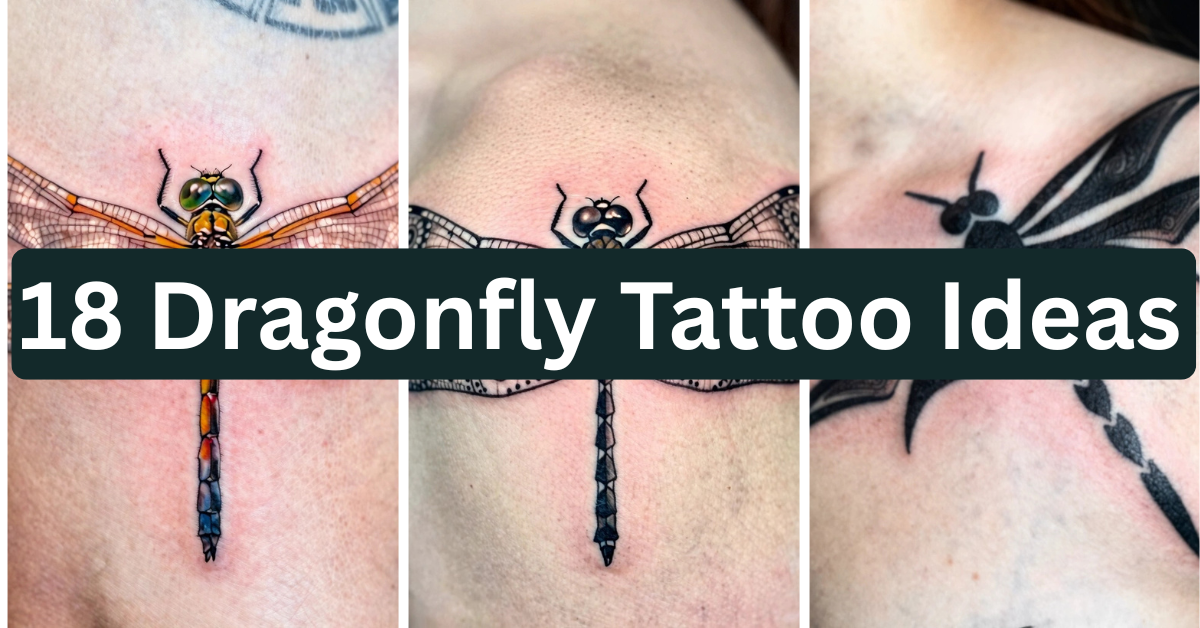
18 Dragonfly Tattoo Ideas: A Real Guide Before You Book
Nervous about walking into a shop and pointing at a random dragonfly tattoo on Pinterest, only to regret the size or placement in a year? You’re not alone, and honestly, that hesitation is smart. This guide was put together the way an experienced artist would actually talk you through options — with real detail on technique, pain, healing, and cost, not just pretty pictures.
So what are the best dragonfly tattoo ideas? Fine-line single needle designs, dotwork silhouettes, and small blackwork pieces on the wrist, ankle, or behind the ear tend to work best, since dragonfly wings hold detail well in delicate linework and heal cleanly at smaller sizes. Bigger, bolder pieces work too, but they ask more of your skin and your budget.
Stick around, because we’re also covering how much these designs typically cost, how painful each placement actually is, how to brief an artist so you don’t end up with a muddy stencil, and how these designs tend to age on skin over the years.
Why Dragonfly Designs Work So Well as Tattoos
Dragonflies are one of those rare tattoo subjects that look good almost regardless of style. The wings give an artist natural negative space to play with — meaning the untattooed skin itself becomes part of the design instead of just background. The body is slender and elongated, which fits nicely on long placements like the spine, forearm, or ribs. And symbolically, people associate dragonflies with change, self-discovery, and adaptability, which makes them a popular choice for meaningful first tattoos or pieces marking a life transition. Below, I’ll walk through 18 specific ways to approach this design, each with real guidance on placement, pain, and how to talk to your artist about it.
1. Fine-Line Single Needle Dragonfly
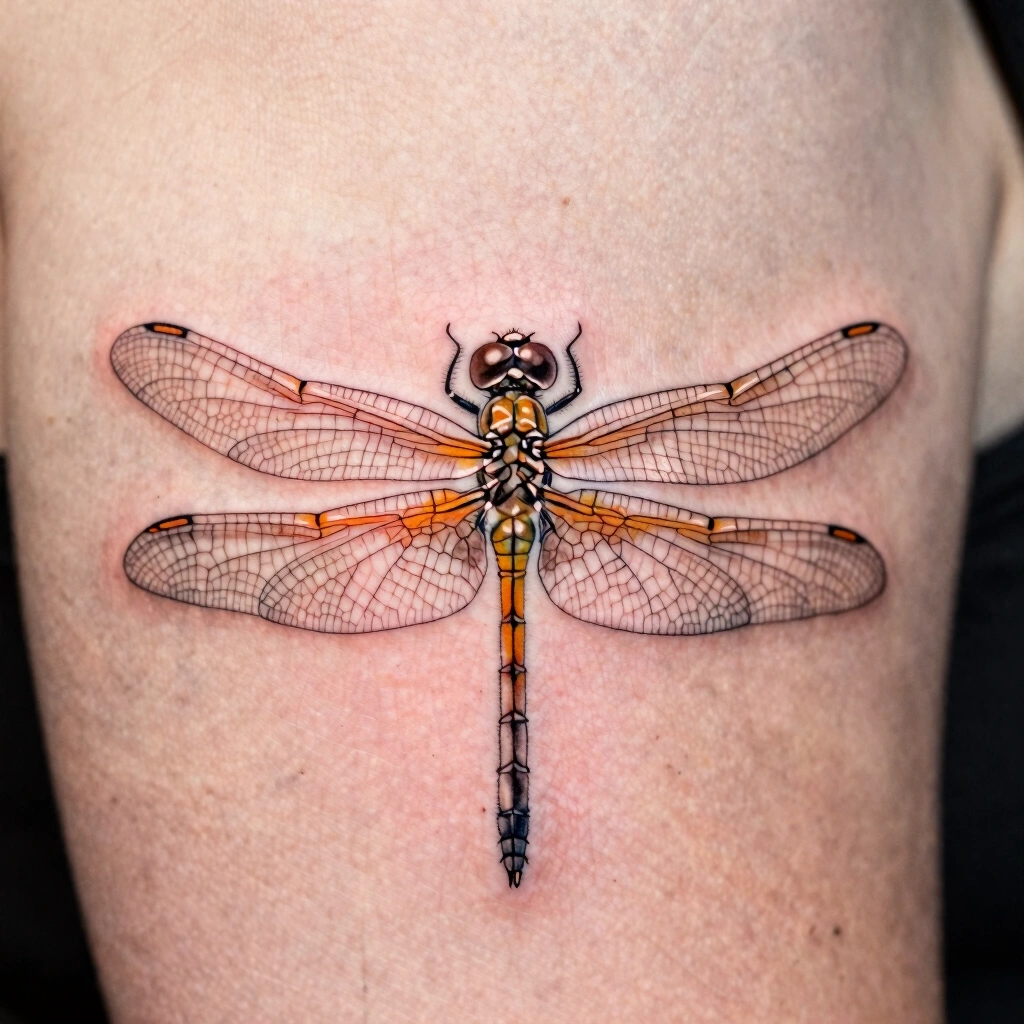
This is the most requested version for a reason. A single needle creates a thin, consistent line — thinner than a standard tattoo needle grouping — which gives the dragonfly a delicate, almost sketched look. There’s little to no shading, just clean outlines defining the body segments and vein patterns in the wings. This works beautifully on the wrist, ankle, or behind the ear at 2–3 inches. Fair to medium skin tones hold the fine lines crisper long-term; on textured or oilier skin, lines can soften slightly faster. Healing typically runs 10–14 days for a piece this size.
Tip: bring a clear reference photo of a real dragonfly’s wing structure, not just a cartoon, so the artist can trace accurate vein detail into the stencil. Pain is generally mild to moderate on fleshier wrist areas, more noticeable directly over ankle bone. It’s an easy, workplace-friendly first tattoo.
2. Blackwork Dragonfly Silhouette
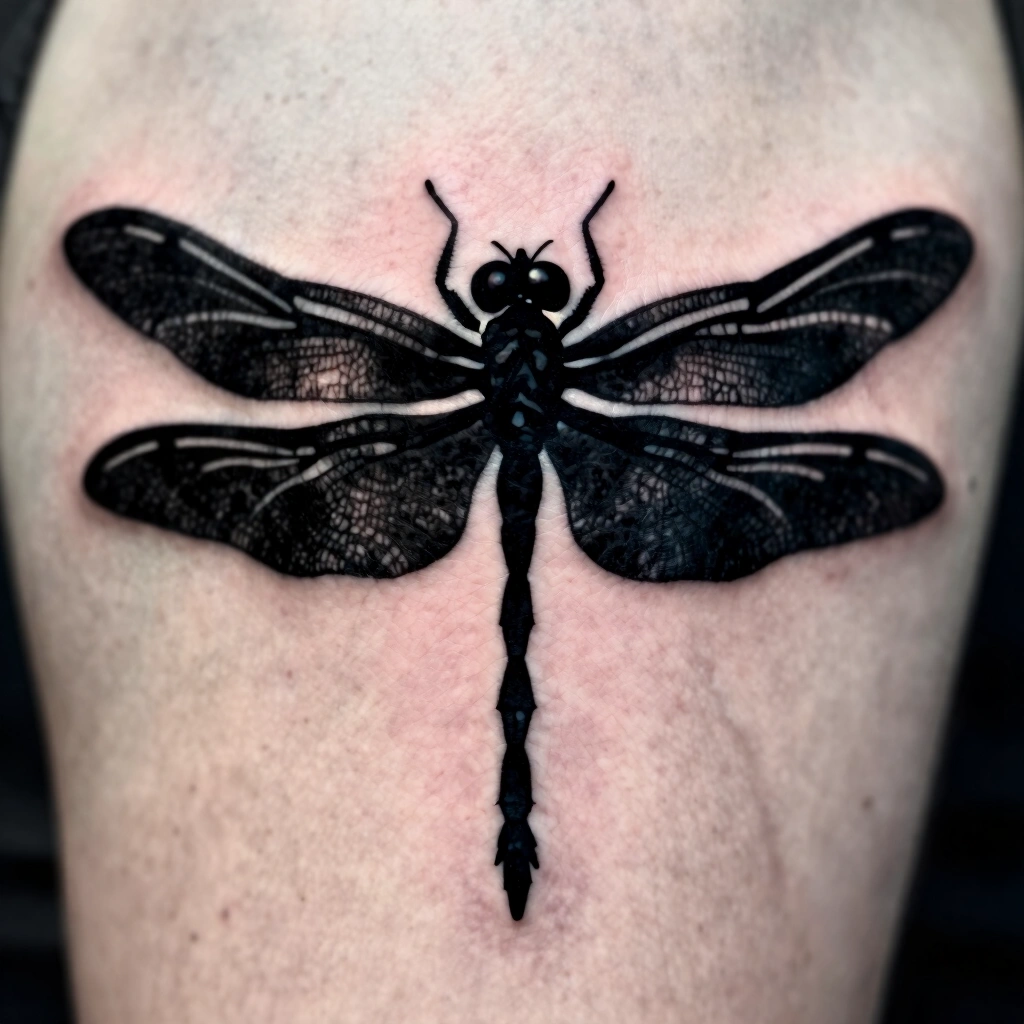
Blackwork means solid, saturated black ink filling most or all of the design, rather than outlines alone. Here, the dragonfly’s body and wings are rendered as a bold, flat silhouette, sometimes with small negative-space slits left unfilled to suggest wing veins. It reads well from a distance and holds up visually for decades since solid black saturation resists fading better than light gray shading. Best placed on the shoulder, upper arm, or calf at 3–5 inches, where there’s enough flat skin for even ink saturation. Ask your artist about packing technique — how they layer the black to avoid patchiness. Healing takes about 2–3 weeks since more skin is worked.
Expect more discomfort than fine line, especially over muscle-thin areas like the ankle. This style suits people who want a graphic, high-contrast piece rather than something subtle.
3. Dotwork Dragonfly with Stippled Wings
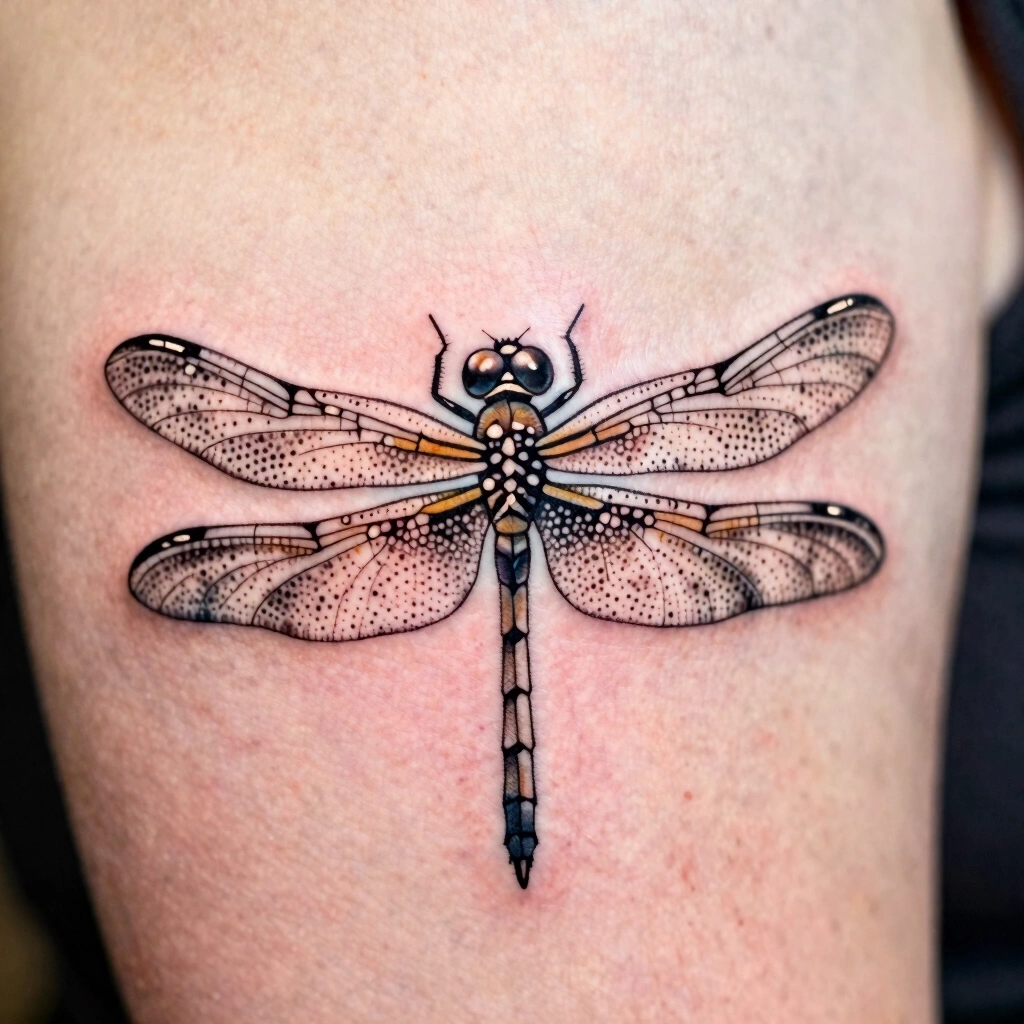
Dotwork builds an image entirely out of small dots instead of solid lines or fill, creating a textured, almost engraved look. On a dragonfly, this technique shines in the wings — dot density can be increased near the wing edges and thinned toward the center, mimicking natural translucency without a single line. It’s a slower technique, so expect a longer session than a comparable fine-line piece. Best on flatter areas like the forearm, shoulder blade, or thigh, sized 3–4 inches so the dot pattern has room to breathe. Skin with visible texture or scarring can slightly distort dot spacing, so mention any skin concerns during consultation. Healing runs close to 2 weeks.
Pain tends to feel like a persistent buzzing rather than sharp — bearable for most, but the repetition can make longer sessions feel tedious rather than acutely painful. Great for people who want texture over color.
4. Watercolor-Style Dragonfly
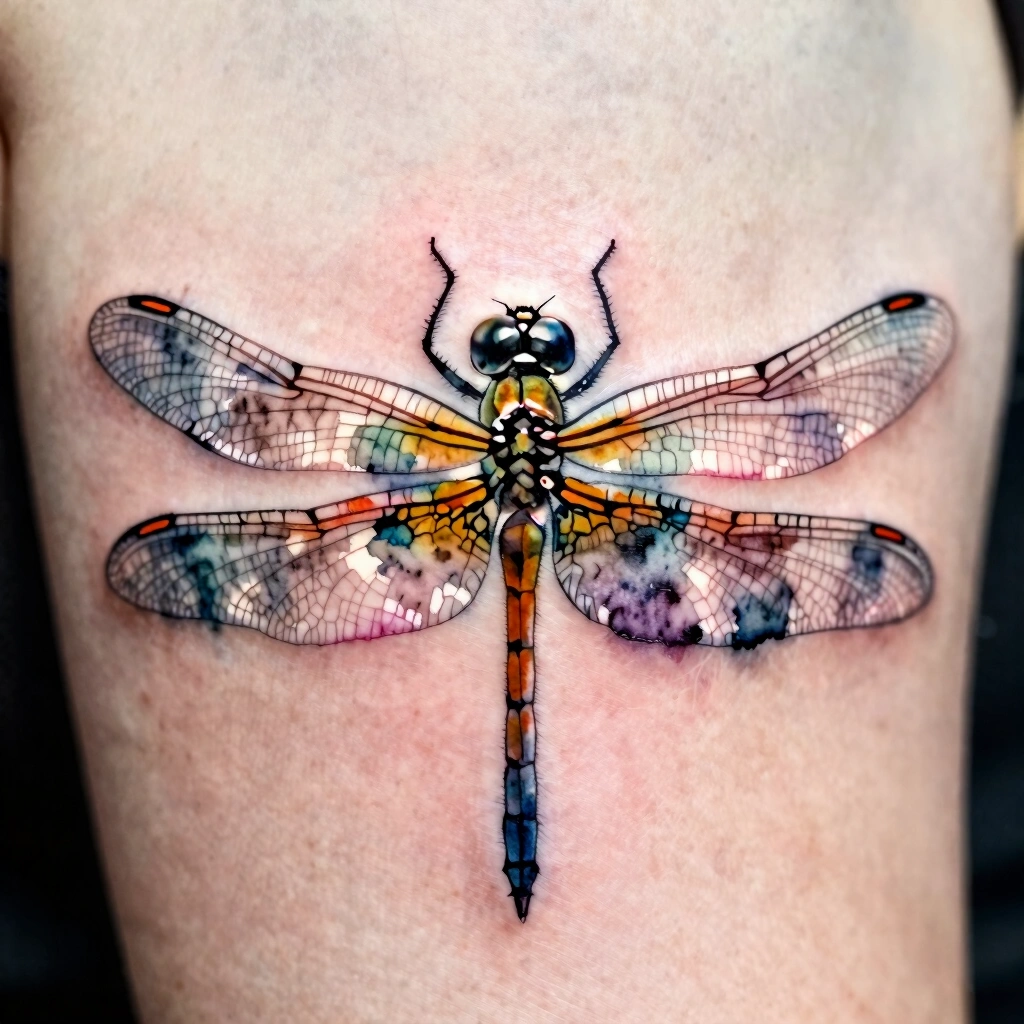
This style uses diluted ink application and color blending to mimic a painted, brushstroke effect around a solid black or fine-line dragonfly outline. Saturation is intentionally uneven — soft gradients of blue, purple, or teal seem to “bleed” outward from the body. Because color pigment fades faster than black ink under general dermatological consensus, this style needs more realistic expectations: touch-ups every few years keep it vibrant. Best on the upper arm, shoulder, or back at 4–6 inches, giving the color room to gradient properly. Ask your artist which specific pigments they use and how they’ve seen them age on past clients — a strong portfolio should show 2+ year-old healed photos, not just fresh work.
Pain is comparable to blackwork due to color packing. This is a bold, statement option rather than a subtle one, and less workplace-discreet.
5. Geometric Dragonfly with Sacred Geometry Wings
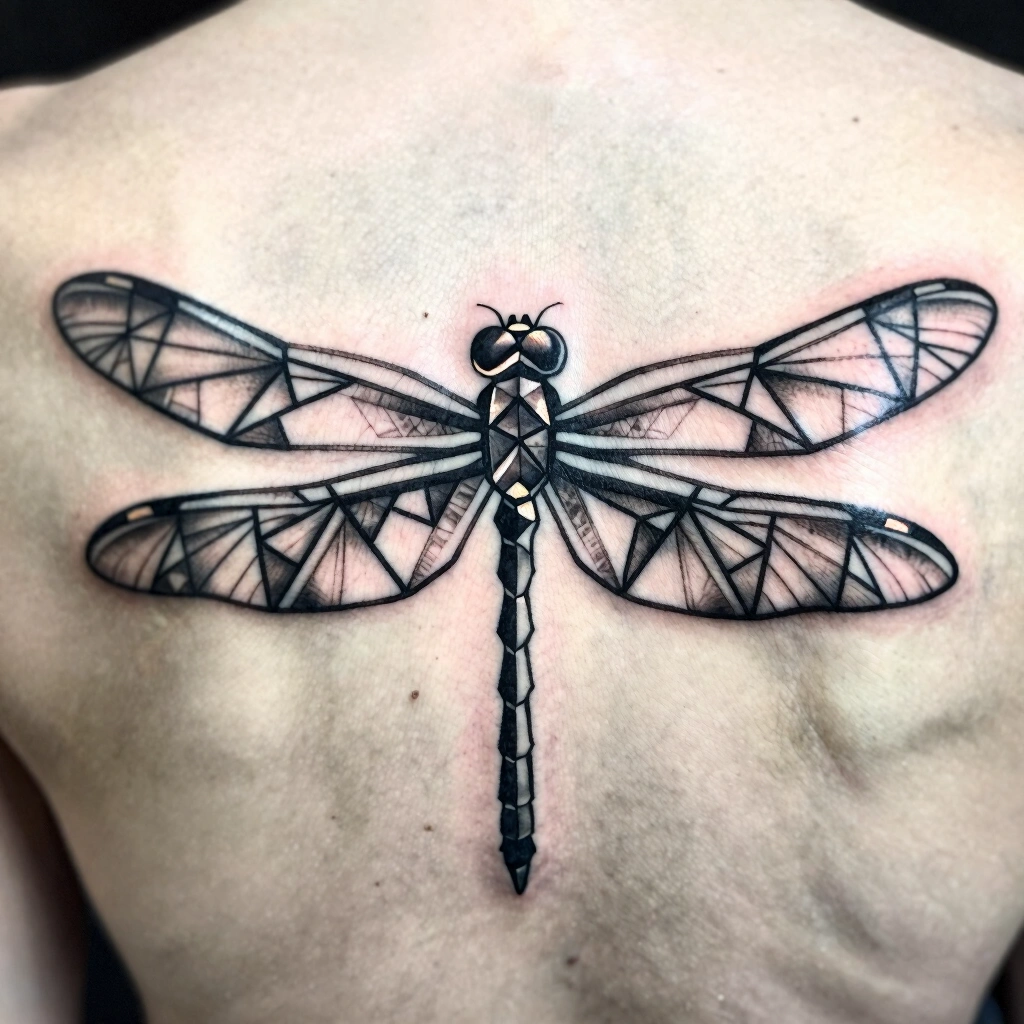
Here the wings are replaced or overlaid with geometric shapes — triangles, hexagons, or line-symmetry patterns — instead of natural vein detail. Line weight stays consistent and precise, often drawn with a ruler-guided stencil to keep angles sharp. This style reads as more modern and abstract than a realistic dragonfly. It suits the forearm, sternum, or back at 3–5 inches where symmetry is easier to center. Precision is everything here, so review your artist’s portfolio specifically for straight-line and symmetry work, not just their freehand pieces. Healing time sits around 2 weeks. Pain on the sternum tends to run higher due to thin skin over bone. This design ages well since geometric lines are usually bolder and more resistant to blurring than fine detail.
6. Negative Space Dragonfly
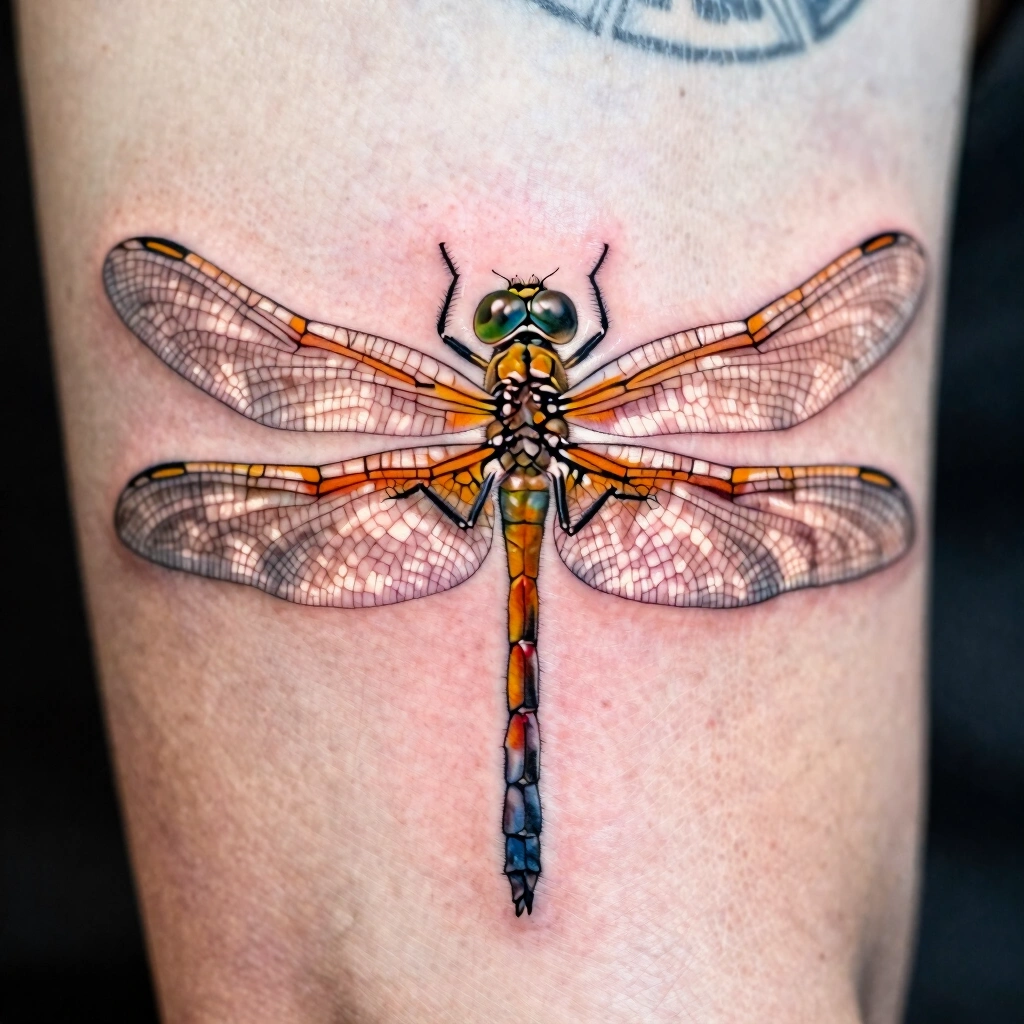
Negative space tattooing uses the untattooed skin as part of the image, rather than filling every shape with ink. A negative space dragonfly might have a solid black background with the dragonfly’s body left as bare skin, or vice versa. It’s a striking, high-contrast technique that photographs well but requires a genuinely skilled artist to keep edges crisp. Best on the upper arm or calf at 3–4 inches. Talk to your artist about how this design might look after 10+ years, since skin does change texture with age and negative space relies on sharp boundaries. Healing takes about 2 weeks given the solid black portions. Pain is on the higher end due to ink density. This isn’t the best pick for a first tattoo — it’s better suited to someone who already understands their pain tolerance.
7. Mandala Dragonfly
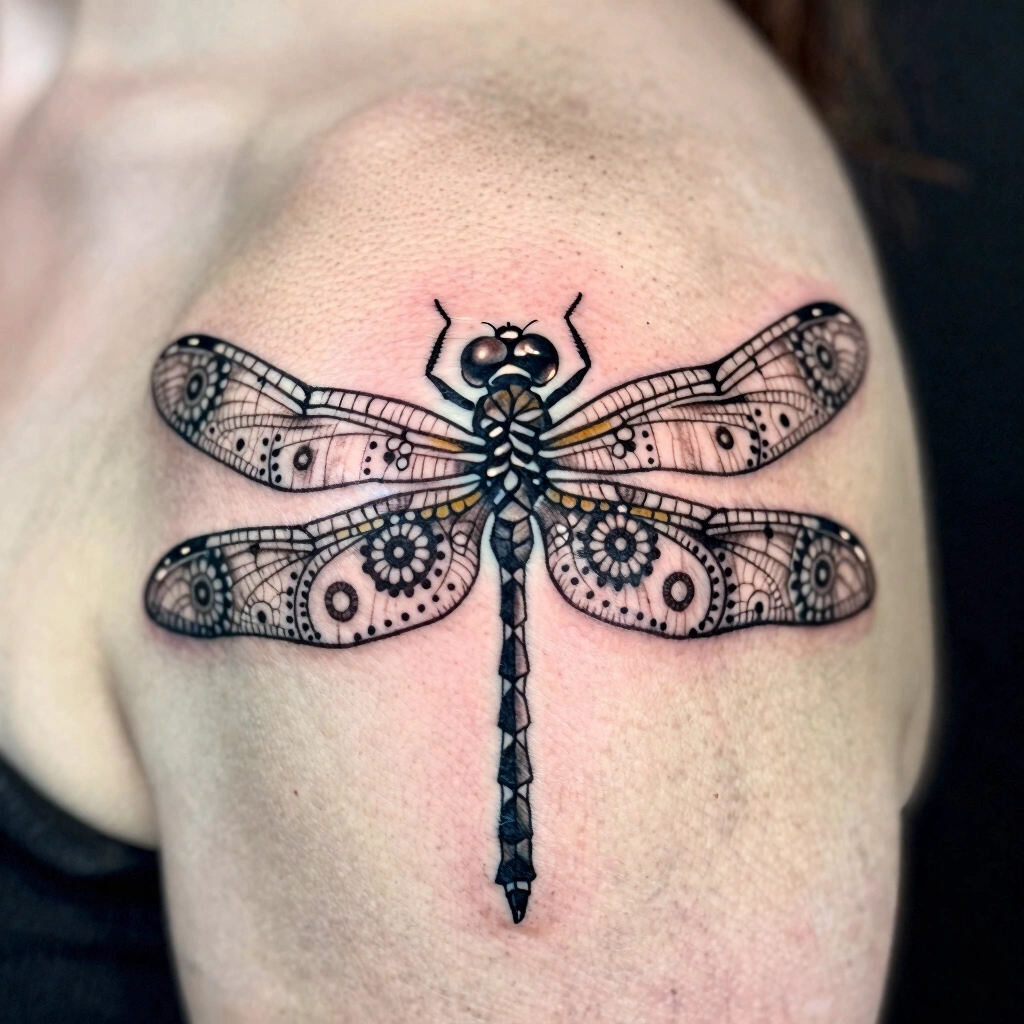
This combines the dragonfly’s silhouette with a circular mandala pattern layered into or around the wings, often in dotwork or fine line. The symmetry of a mandala takes real drafting skill, so this is a custom design territory rather than a walk-in flash tattoo pick. Placed well on the upper back, sternum, or thigh at 4–6 inches to give the pattern room. Ask specifically to see the stencil before it goes on skin, and check the symmetry yourself in a mirror — small asymmetries are easy to miss under studio lighting. Healing runs 2–3 weeks depending on density. Pain varies with placement, but expect moderate-to-high given the intricate detail requiring repeated needle passes. This piece ages beautifully if line weight is bold enough, though very fine mandala lines can blur over decades.
8. Minimalist Dragonfly Outline
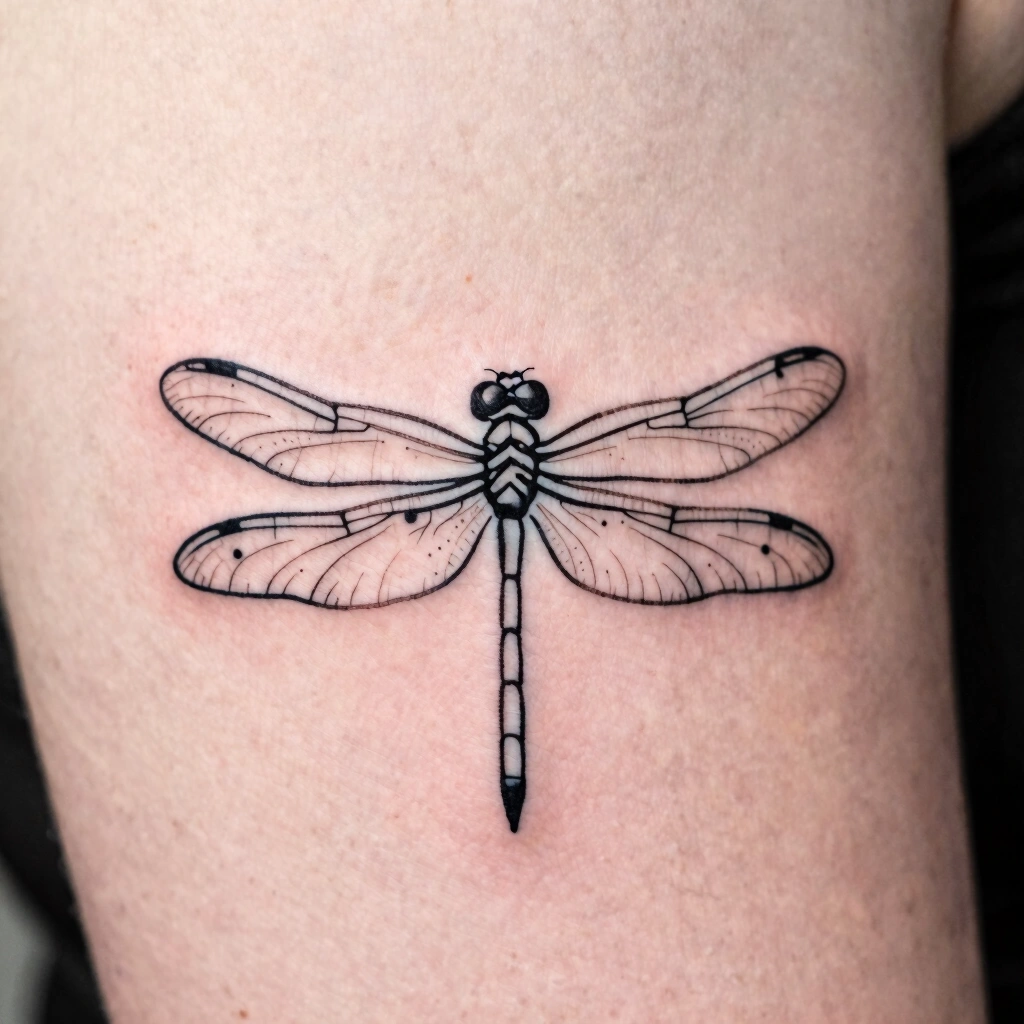
Just the essential shape: a simple line tracing the body and two wing outlines, no shading, no dots, no color. It’s the tattoo equivalent of a single confident pencil stroke. This is the most forgiving option for small placements — behind the ear, on a finger, or the side of the wrist at under 2 inches. Because there’s so little detail, any wobble in the line is more noticeable, so this is not the design to get from an inexperienced artist just because it “looks simple.” Healing is quick, often under 10 days. Pain is generally low to moderate depending on placement. This is arguably the best first-tattoo option on this whole list, and it works well for matching tattoos between friends or family since it’s easy to keep proportions consistent across different people’s skin.
9. Tribal-Inspired Blackwork Dragonfly
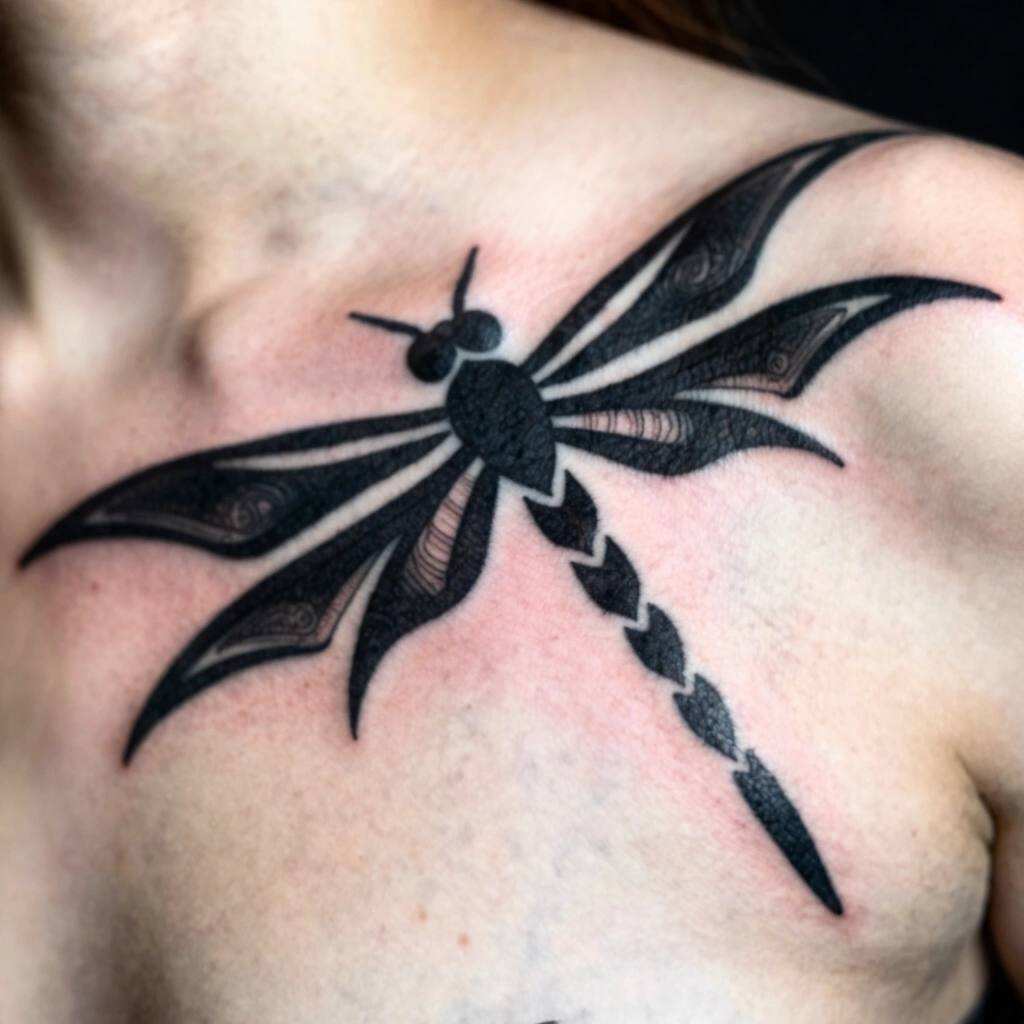
Bold, thick black lines with sharp angular flares define this style, drawing from traditional tribal tattooing’s use of dramatic negative space and heavy contrast. The wings are often exaggerated and pointed rather than naturalistic. This reads as aggressive and graphic from across a room, which some people want and others don’t. Best on the shoulder, upper arm, or calf at 4–6 inches to let the flares extend properly. Because this style relies on heavy black saturation, expect a longer healing window, close to 3 weeks, with visible peeling. Pain is moderate to high due to ink density. It’s a poor choice for anyone wanting subtlety or a workplace-hidden tattoo, but it ages well since bold black lines resist blurring longer than fine detail.
10. Illustrative Realistic Dragonfly
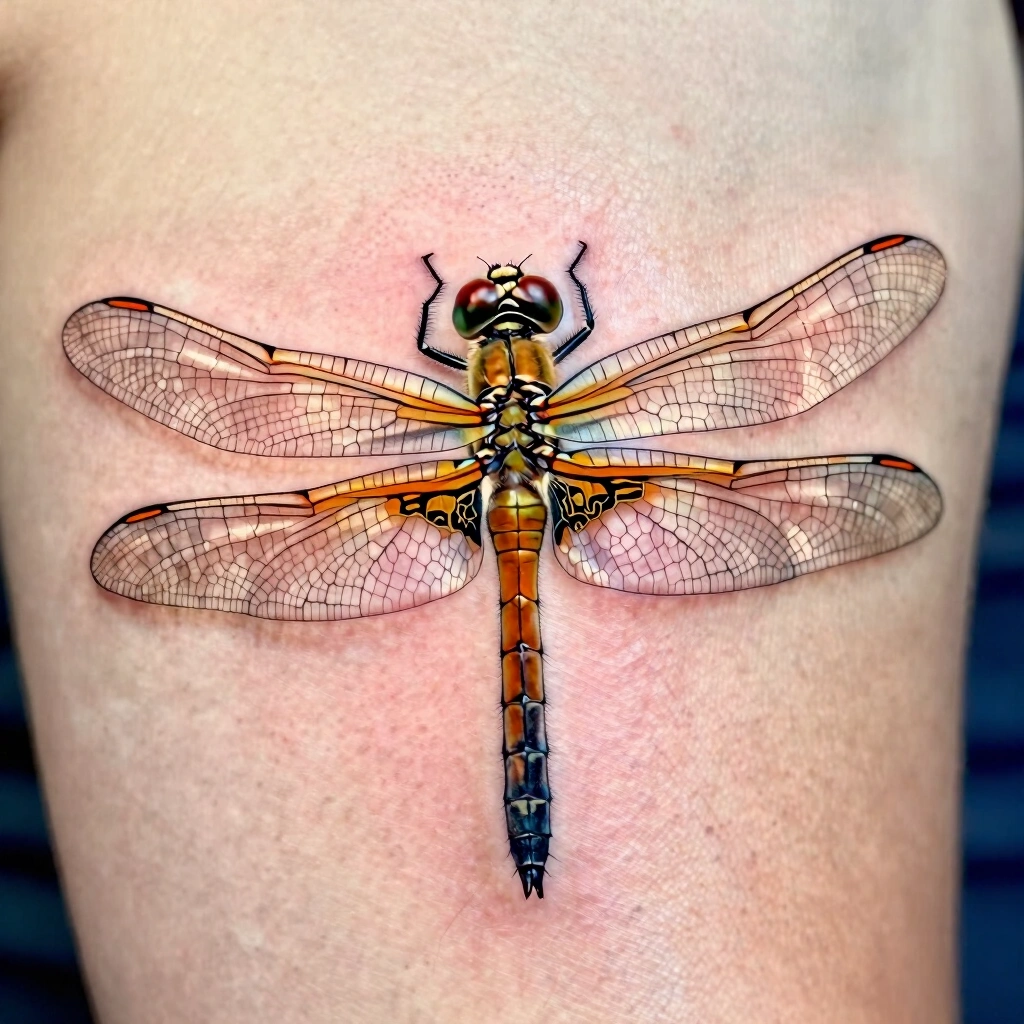
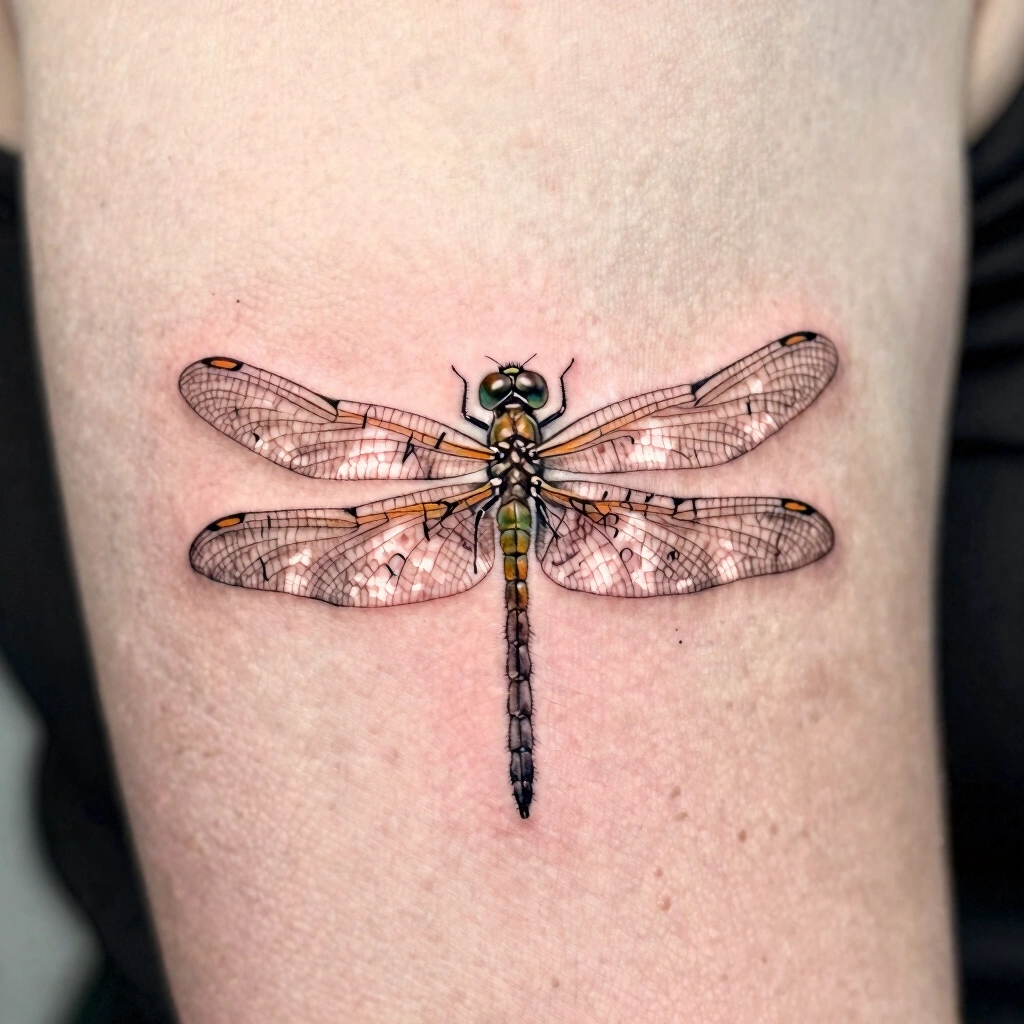
This aims for near-photographic accuracy — individual wing veins, textured body segments, subtle color gradients mimicking iridescence. It requires genuine fine art skill, so review the artist’s portfolio for prior realistic insect or nature work specifically, not just their general style range. Best on the forearm, thigh, or shoulder at 4–6 inches, since fine realistic detail needs room to avoid looking cramped. Skin with a lot of natural texture (freckles, visible pores) can slightly affect how crisp fine shading appears. Healing takes 2–3 weeks. Pain runs moderate to high given the extended shading time. This is a slow-fading style over 10+ years — expect a touch-up eventually to refresh fine gradients. It’s a strong choice for someone who wants a nature-inspired centerpiece rather than a quick, simple symbol.
11. Dragonfly with Floral Accents
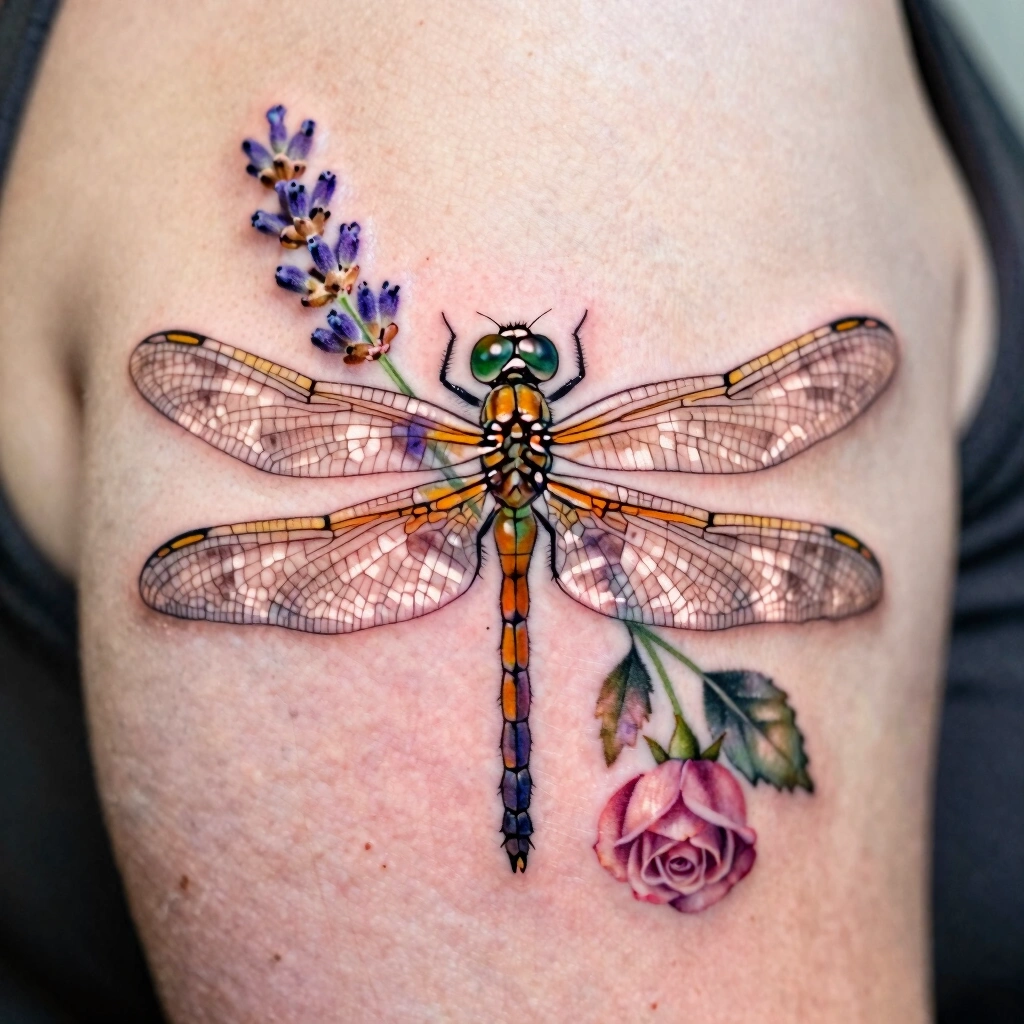
Pairing a dragonfly with small botanical elements — a sprig of lavender, a single rose, or delicate leaves — adds narrative without overcrowding the design. Line weight for the flowers usually stays lighter than the dragonfly itself, keeping visual hierarchy clear. This combination placement works well along the collarbone, ribs, or down the spine at 4–7 inches, following the body’s natural curve. Ask your artist to sketch a custom composition rather than combining two separate flash designs, since proportion between the insect and flowers needs balancing. Healing runs about 2 weeks. Ribs and spine placements are notably more painful due to thin skin over bone — worth mentioning if it’s your first tattoo. This design ages gracefully and suits people wanting personal symbolism (a birth flower, a memorial bloom) tied to the dragonfly’s meaning.
12. Matching Dragonfly Tattoos for Friends or Family
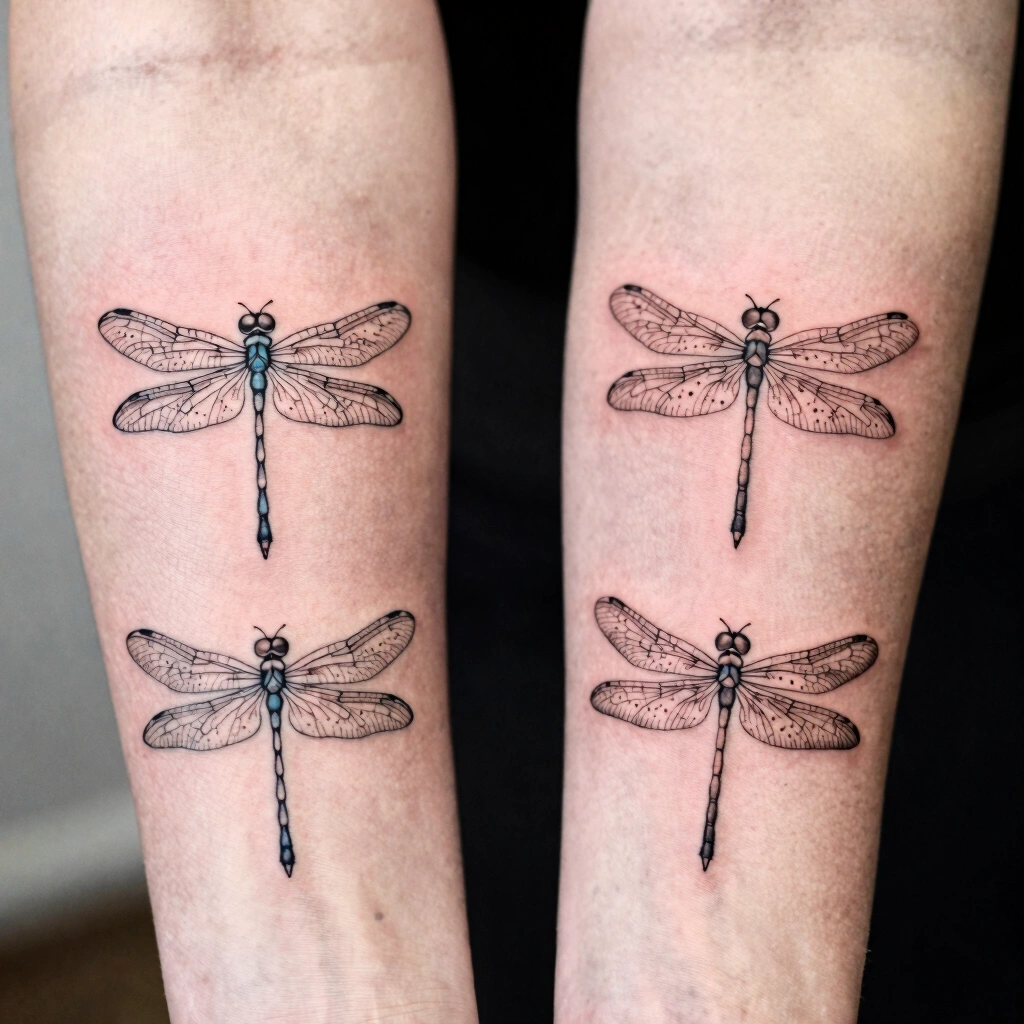
For group or matching tattoos, simplicity wins. A minimalist line-art dragonfly or small dotwork version, kept under 2 inches, is easiest to replicate consistently across different people’s skin tones and body shapes. Popular placements include the inner wrist, ankle, or behind the ear. Before booking, agree on one reference sketch as a group so everyone gets the same proportions rather than slightly different interpretations. Healing is quick given the small size, typically under 10 days. Pain is generally mild on fleshier placements. This is one of the most forgiving matching-tattoo choices because a simple dragonfly silhouette looks intentional even if sized slightly differently person to person — unlike text, where size differences are more obvious.
13. Dragonfly and Moon Combination
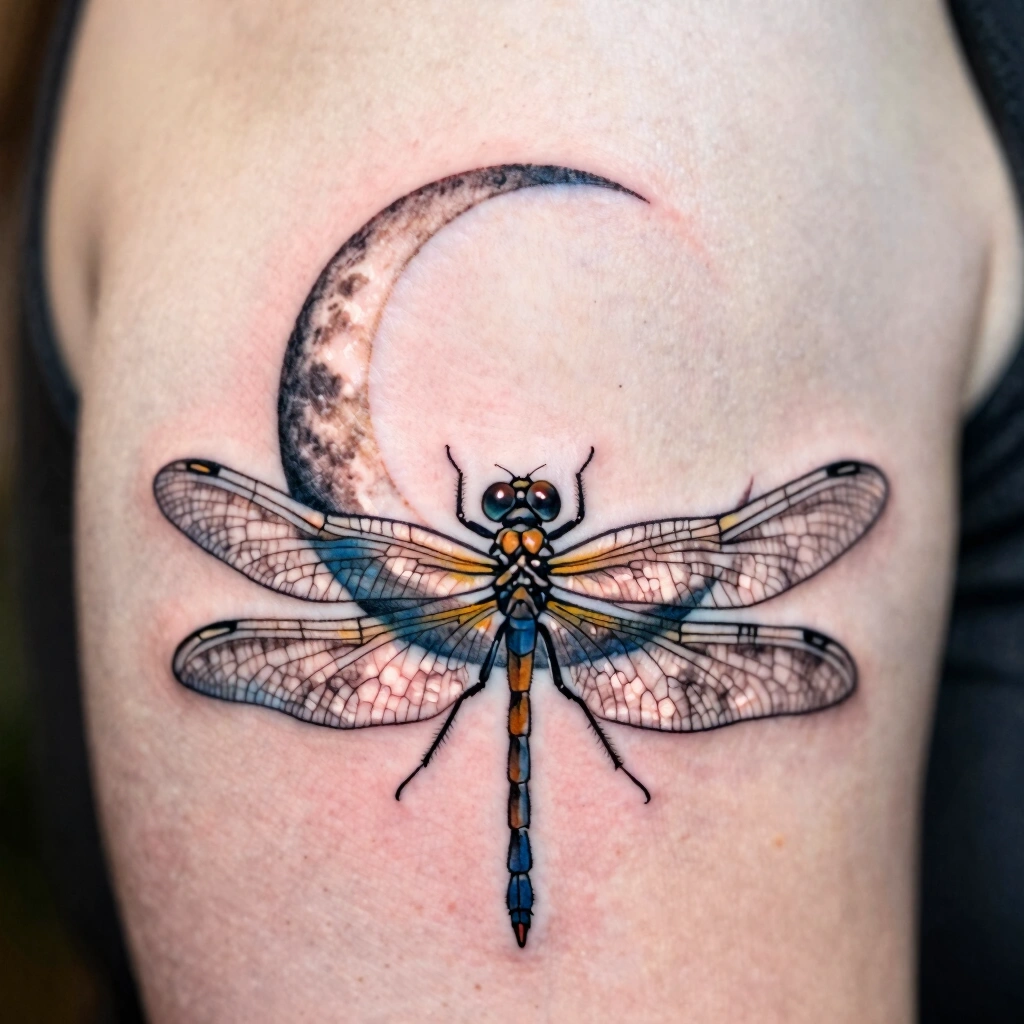
Pairing a dragonfly with a crescent or full moon creates a night-sky, symbolic feel often tied to themes of transformation or intuition. The moon is usually rendered in solid blackwork or fine dotwork shading to suggest craters, while the dragonfly stays lighter in line weight to keep visual balance. Good placements include the shoulder blade, forearm, or side of the calf at 3–5 inches. Bring reference images of both elements separately so your artist can custom-merge the composition rather than forcing a stock flash design. Healing takes about 2 weeks. Pain level depends heavily on the moon’s shading density — heavier fill means more discomfort. This combo works well as a meaningful transition-in-life tattoo and ages reasonably well if the moon’s shading uses solid black rather than gray gradients.
14. Bold Traditional American Dragonfly
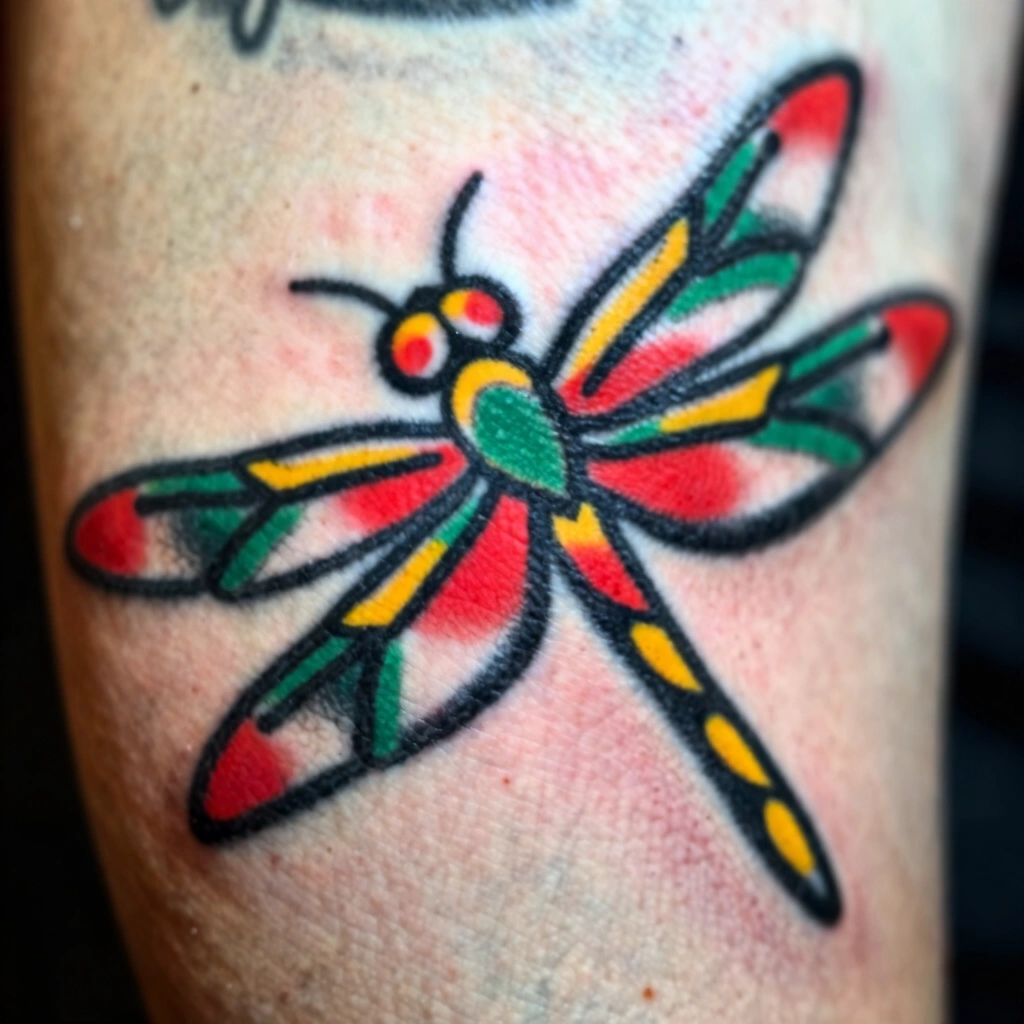
Traditional American tattooing uses thick black outlines, limited but saturated color palettes (often red, yellow, green), and minimal shading — built for longevity over subtlety. A dragonfly in this style looks more like a graphic emblem than a realistic insect. Best on the upper arm or calf at 4–6 inches, giving the bold lines room. This is genuinely one of the best-aging styles on this list because thick lines and solid color blocks resist blurring far longer than fine detail. Healing runs about 2–3 weeks. Pain is moderate given color packing. It’s a solid pick for someone who’s tired of fine-line trends and wants something with more visual weight and proven staying power over decades.
15. Vertical Spine Dragonfly
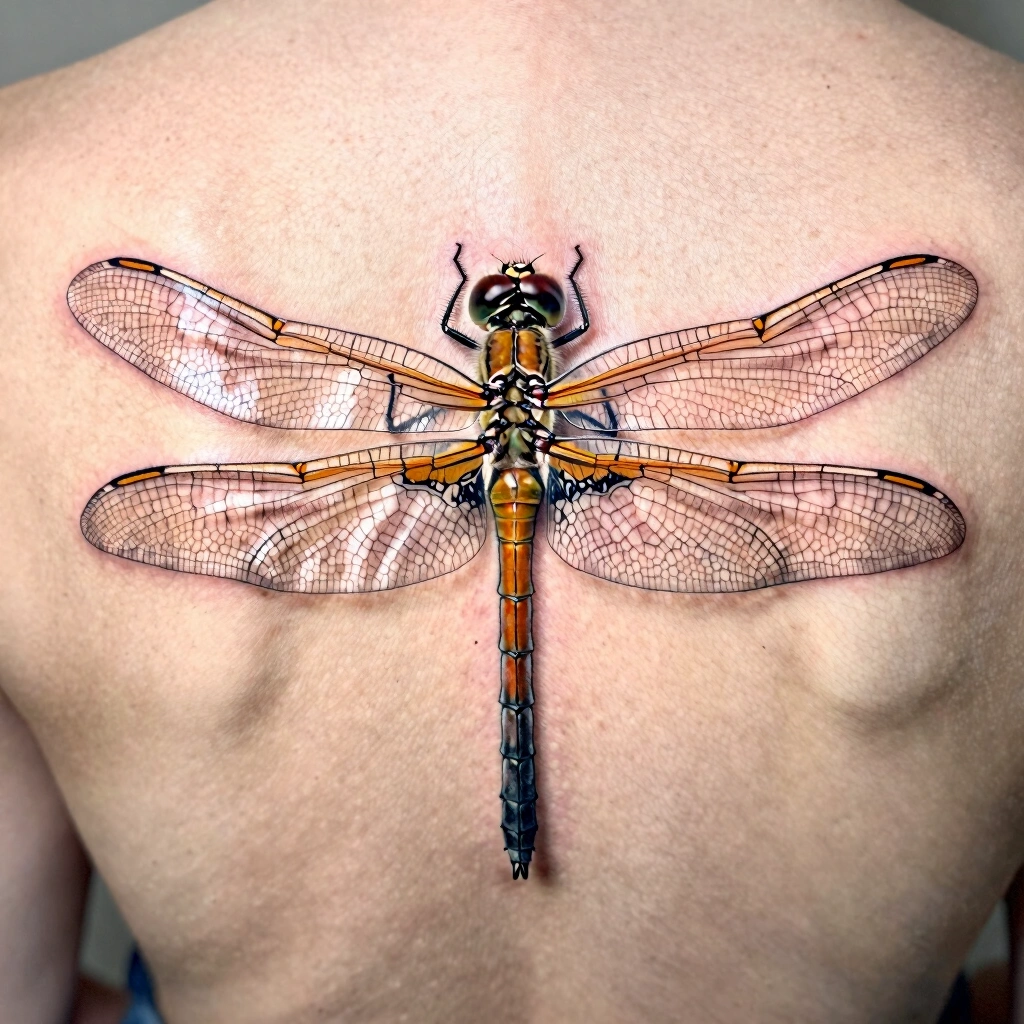
The dragonfly’s elongated body follows the spine naturally, wings spreading outward at the shoulder blades. This placement is visually striking but genuinely one of the more painful spots on the body, since it sits directly over the spine’s bone and nerve-dense skin. Size typically runs 6–10 inches for full visual impact. Discuss with your artist whether they recommend doing it in one long session or splitting it into two, since sitting still for extended spine work is physically taxing. Healing takes 2–3 weeks, and clothing friction against the area needs extra care during that window. This design isn’t ideal for a first tattoo given the pain factor, but it’s a striking choice for a second or third piece once you know your tolerance.
16. Micro Dragonfly Behind the Ear
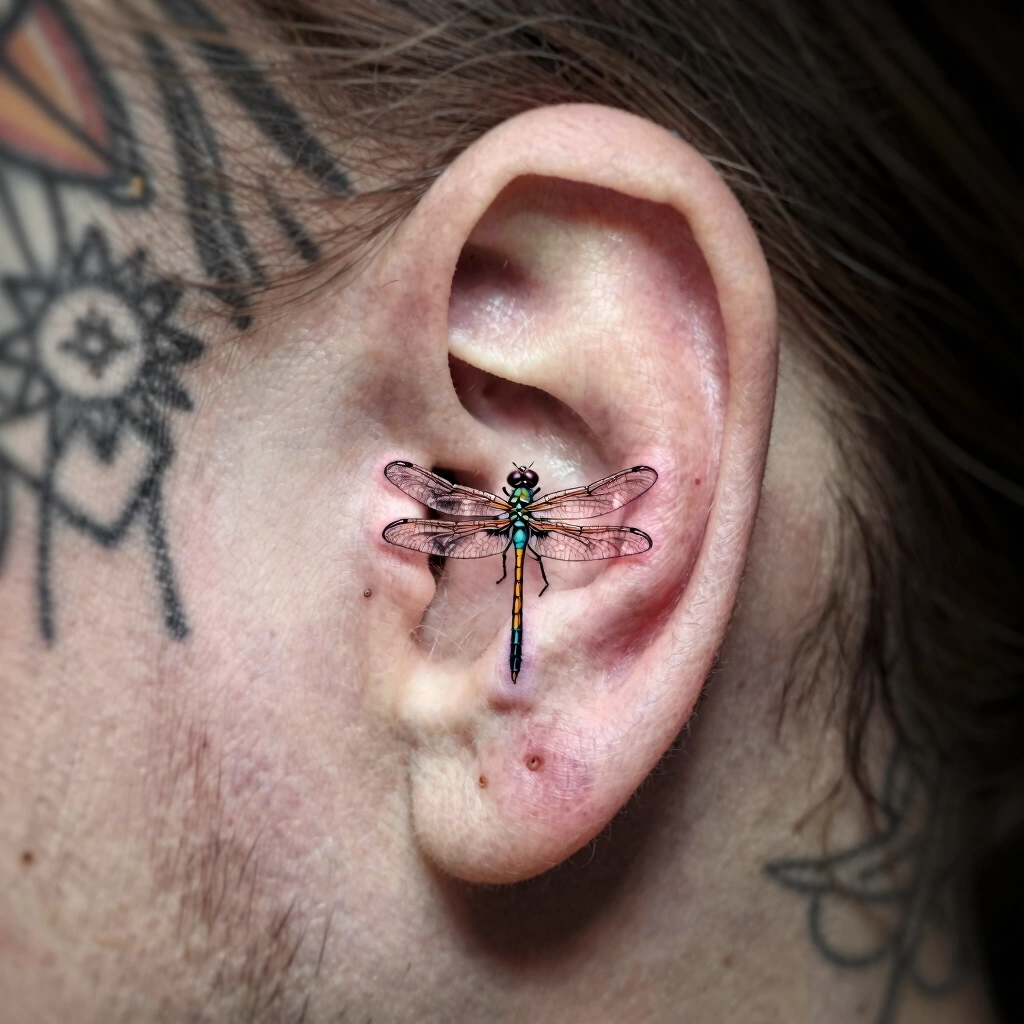
At under 1.5 inches, this tiny placement demands extremely fine, single-needle linework since there’s no room for shading or dense detail. It’s one of the more painful spots on this list, since skin is thin and close to bone, but sessions are short given the small size — often under 30 minutes. This is a popular discreet choice for workplaces with strict tattoo policies, easily hidden by hair. Ask your artist about using a smaller needle grouping specifically suited to tiny detail work, and expect some touch-up need within the first year since small tattoos in high-friction areas (glasses, ponytails) can fade faster than tattoos on flatter skin.
17. Large-Scale Dragonfly Sleeve Piece
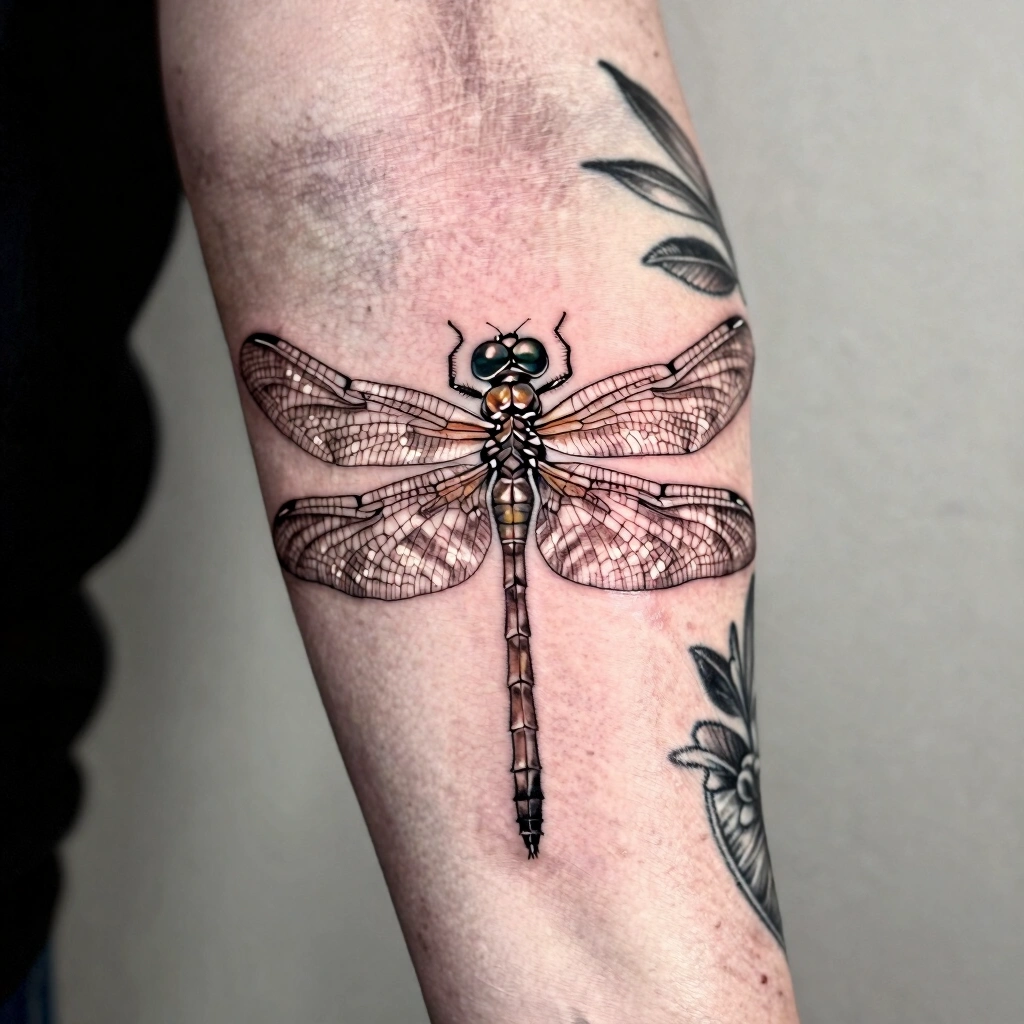
For a bigger commitment, a dragonfly can anchor an entire forearm or full sleeve, often surrounded by botanical or geometric filler elements to complete the composition. This is custom-design territory exclusively — no flash sheet covers this scale well. Expect multiple sessions over several weeks, with each session focused on different sections (linework first, then shading, then color if applicable). Pain accumulates with session length more than placement alone at this size. Healing is tracked per session, generally 2 weeks per area worked. This is a serious, well-thought-out choice best suited to someone with prior tattoo experience who understands the time and financial commitment multi-session custom work requires.
18. Dragonfly Paired with Script or Quote
Combining a small dragonfly with a short word or quote adds explicit meaning rather than relying on symbolism alone. Keep the script in a clean, legible font — overly decorative script can blur into illegibility as fine lines soften over the years. Good placements include the forearm, ribs, or collarbone at 3–5 inches, giving both elements breathing room. Ask your artist to mock up the text size relative to the dragonfly before finalizing the stencil, since text that’s too small tends to lose legibility faster than image-only designs. Healing takes about 2 weeks. This pairing works well for memorial tattoos or personal mantras, and reads clearly even in professional settings if placed somewhere easily covered.
Fine Line vs. Blackwork vs. Dotwork: Know the Difference
Since these three techniques show up repeatedly above, here’s a quick, plain-language breakdown before you talk to an artist:
- Fine line / single needle: Thin, delicate outlines made with a smaller needle grouping. Minimal shading. Best for subtle, detailed small designs. Can soften faster over decades than bolder work.
- Blackwork: Solid, heavily saturated black ink filling large portions of the design. Bold, high-contrast, and generally the most fade-resistant style long-term.
- Dotwork: Images built from clusters of small dots rather than solid lines, creating texture and gradient effects. Slower to tattoo, often used for shading or wing detail.
Best Placement Ideas
- Wrist or ankle — highly visible, easy to show off, but more exposed to sun and friction, which can accelerate fading over time
- Behind the ear — easy to hide for work, but a more sensitive, bony area
- Forearm — good balance of visibility and pain tolerance, plenty of room for detail
- Ribs or spine — excellent for larger, flowing designs, but consistently rated among the more painful placement zones
- Shoulder blade or upper back — great for bigger pieces, relatively low-maintenance long-term, easy to cover for work
- Behind the calf or ankle — good mid-visibility option, moderate pain, some fading risk from sock friction
Tips for Success
Look at an artist’s portfolio for healed photos, not just fresh ink — fresh tattoos always look sharp, but healed results tell you how their linework and shading actually hold up. Ask specifically about their experience with the technique you want (fine line, dotwork, blackwork are genuinely different skill sets). Bring 2–3 reference images rather than one, so the artist understands your general direction without feeling boxed into copying a single photo exactly. Discuss whether this is a walk-in flash design or a fully custom piece, since custom work typically costs more and takes longer to schedule. Always confirm they’re licensed and working in a studio that follows standard hygiene practices.
Common Mistakes and How to Avoid Them
- Going too small for the detail you want. Intricate wing veining or dotwork shading needs at least 3 inches of space to read clearly over time.
- Picking a placement that fights the design’s shape. A long, vertical dragonfly looks awkward crammed onto a round shoulder cap; elongated placements like the spine or forearm suit it better.
- Skipping aftercare instructions. Even a small tattoo needs proper care in the first few weeks to heal cleanly.
- Copying a reference image exactly. Personalizing size, angle, or small details makes the piece genuinely yours and avoids an identical match to strangers online.
- Not asking about touch-ups upfront. Fine line and color work especially may need a refresh down the line — ask if that’s included or separately priced.
Similar Variations
Nearly every idea above can be resized up or down, recolored, or combined with another element. A fine-line dragonfly can be scaled down to a micro version behind the ear, or scaled up and filled with dotwork shading for a totally different look. A blackwork silhouette can gain negative-space wing veins for more visual interest. Mixing a minimalist outline with a small floral accent turns a simple design into something more personal without adding much size or cost.
Aftercare Basics
General aftercare typically involves keeping the area clean, avoiding direct sun exposure, and avoiding swimming or soaking for the first couple of weeks while the skin heals. Most artists recommend a fragrance-free moisturizer once the tattoo starts to peel. Always follow the specific aftercare sheet your artist gives you, since products and timelines can vary studio to studio — and check with a licensed professional or dermatologist if you notice anything that seems unusual during healing.
Quick FAQ
How much does a dragonfly tattoo typically cost?
Small, simple designs under 2 inches often start around $60–150 at many studios, while larger custom or color pieces can run several hundred dollars depending on size, detail, and the artist’s hourly rate.
How painful is a dragonfly tattoo?
It depends heavily on placement and individual pain tolerance. Bony or thin-skin areas like the spine, ribs, or behind the ear tend to feel more intense than fleshier spots like the upper arm or calf.
How long does healing take?
Small fine-line pieces often heal within 10–14 days, while larger or heavily shaded designs can take 2–3 weeks. Full healing underneath the surface can take longer, so patience matters.
Will the design fade over time?
All tattoos fade somewhat with age and sun exposure. Bold blackwork and traditional styles tend to hold their shape longer than very fine, light linework, which is worth considering for long-term placement choices.
Finding the right dragonfly tattoo really comes down to matching the technique to the meaning and placement you actually want — not just picking the first design that catches your eye. Take your time researching artists, ask real questions during your consultation, and remember that pain, healing, and aging all vary from person to person. With the right prep, a well-chosen dragonfly tattoo can be a piece you’re just as happy with ten years from now as the day you got it.