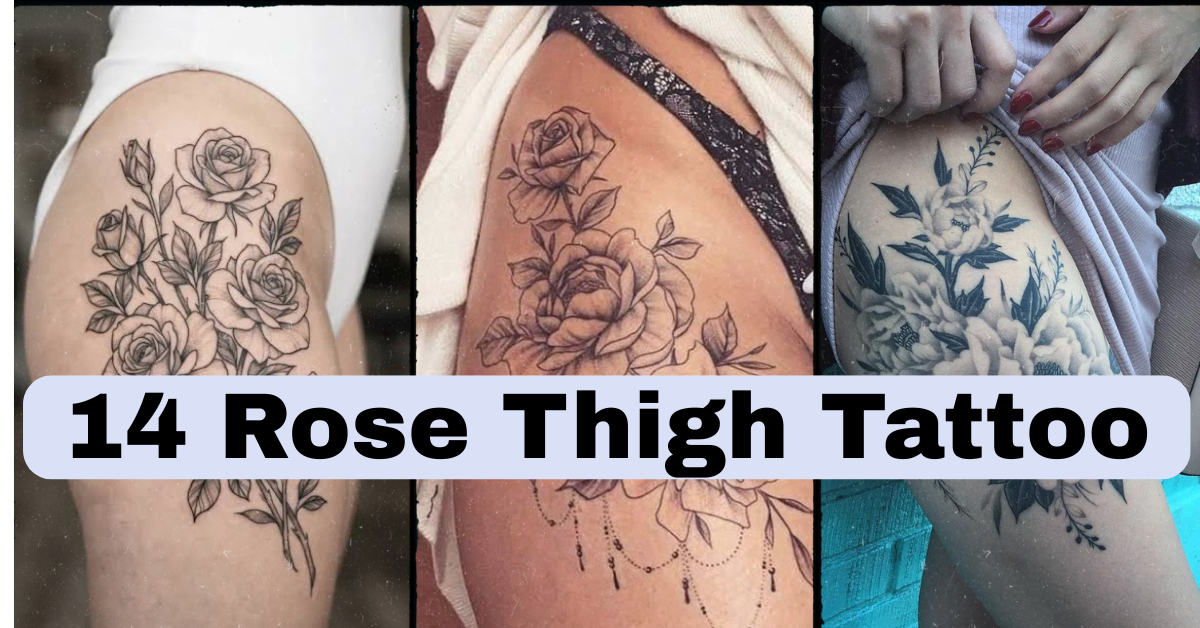
14 Rose Thigh Tattoo Ideas: A Real Guide Before You Book
Nervous about picking a rose thigh tattoo you’ll still love in ten years? You’re not alone, and honestly, that hesitation is a good sign — it means you’re thinking this through instead of just picking the first design that pops up on your feed.
So what are the best rose thigh tattoo ideas? Fine-line single roses, blackwork clusters, dotwork shading, and traditional bold roses all work well on the thigh because the flat, wide surface gives artists room to scale detail up or down without distorting the design. The thigh also heals faster than joints since it doesn’t bend constantly, which matters more than people realize.
Stick around, because I’m going to walk you through placement tradeoffs, pain levels, what things actually cost, and how to talk to your artist so you don’t end up with a design that looked great as a sketch but falls apart on skin.
Why the Thigh Works So Well for Rose Designs
The thigh is one of the most forgiving canvases in tattooing, and I say that as someone who’s spent a fair amount of time watching artists size up pieces on clients. It’s a large, mostly flat muscle group with minimal joint movement, so linework holds its shape over time instead of stretching or warping the way ankle or wrist tattoos sometimes do. You also get options — front thigh for visibility, outer thigh for a more private placement, or a wrap-around design that follows the natural curve of the leg. Roses specifically benefit from this because the flower’s layered petals need consistent spacing to read clearly, and a stable surface makes that easier to achieve and maintain.
Fine-Line Single Rose Outline
This is the most common starting point for people who want something delicate rather than bold. The technique uses a single thin needle to create clean, uniform outlines with almost no shading — just the petal structure and maybe a stem line. It reads as elegant rather than decorative, and it photographs well because the contrast between the thin black line and skin tone stays crisp. Best placed on the outer or front thigh, sized around 3 to 5 inches, this design suits people who want visible ink without it screaming for attention. Pain is generally moderate here since the outer thigh has more muscle padding than bone. Bring a clear reference image and ask your artist about needle grouping (a single needle vs. a small round liner) since that affects how thin the final line looks. It works well as a first tattoo and ages decently if line weight isn’t too thin to begin with.
Blackwork Rose Cluster
Blackwork uses solid black ink with heavier saturation, and a cluster of two or three roses gives an artist room to play with negative space — meaning some areas are left uninked so the surrounding shapes visually “pop” against the skin. This style has more visual weight than fine line and tends to age better long-term because thicker linework and solid fill resist fading more evenly than delicate strokes. Ideal placement is the front or side thigh, sized 5 to 8 inches to let the cluster breathe. Pain runs moderate to high depending on how much solid black fill is involved, since dense shading means more repeated passes. Ask your artist to sketch the negative space areas before tattooing so you can approve the balance. This design suits people wanting a bolder, more graphic statement rather than something subtle.
Dotwork Shaded Rose
Dotwork builds shading and texture using small, individual dots instead of continuous lines or solid fill. Applied to a rose, it creates a soft, almost stippled gradient across the petals that gives real dimension without the heaviness of full blackwork. It’s a slower technique to tattoo, which usually means a higher hourly cost, but the visual payoff is a rose that looks textured rather than flat. Best on the outer thigh where there’s more surface area for gradient work, sized 4 to 6 inches. Healing typically takes two to three weeks since dense dot patterns can scab more visibly than simple linework. Pain level sits in the moderate range but can feel more “buzzy” due to the repetitive needle contact. Request a stencil preview so you can see dot density before the needle touches skin.
Traditional Bold Rose
This is the classic American traditional style: thick, confident outlines, limited color palette (usually red, green, black), and minimal fine detail. The bold linework is intentional — it’s designed to stay legible for decades, which is part of why this style has stuck around since the early tattoo shops of the 20th century. Front thigh placement works great here because the design benefits from being seen, and sizing between 4 and 7 inches keeps proportions accurate. Expect moderate pain, slightly higher where colored ink requires more passes. This is a strong pick for a first tattoo since bold traditional work is proven to hold up well over time, unlike overly intricate designs that can blur as skin ages.
Rose and Thorn Vine Wrap
A wrap-around design follows the natural curve of the thigh, with a vine and thorns spiraling upward and roses placed at intervals along the length. This uses continuous linework with varying thickness — thicker at the vine, thinner at the thorns — to create visual movement. It’s a bigger commitment, both in session time and cost, since wrap pieces often need multiple sittings. Best suited to the outer or full thigh, sized anywhere from 8 to 14 inches depending on how much wrap you want. Pain increases toward the inner thigh due to thinner skin and more nerve density there, so most people opt for outer or front placement instead. Bring photos of the exact vine path you want, not just the roses, since composition matters as much as the flowers themselves.
Negative Space Rose

Negative space designs use the untattooed skin itself as part of the image, letting the rose’s shape emerge from black background work rather than being outlined directly. It’s a more advanced technique that requires precise planning, since the artist has to think in reverse — deciding what NOT to ink is just as important as what gets inked. This works best on lighter areas of the front thigh where contrast is easiest to see, sized around 4 to 6 inches. Healing tends to run typical for blackwork, two to three weeks. Pain is moderate to high given the surrounding solid black fill. Ask to see the artist’s prior negative space work specifically, not just general portfolio pieces, since this technique separates skilled artists from beginners quickly.
Rose with Skull Memorial Piece
Combining a rose with a skull is a classic symbolic pairing — beauty and mortality side by side — often chosen for memorial tattoos honoring someone who’s passed. The skull is usually rendered in black and grey realism or bold traditional style, while the rose softens the composition with organic curves. This piece needs real size to do both elements justice, typically 6 to 10 inches, placed on the front or outer thigh. Healing takes around two to three weeks given the density of shading involved. Pain runs moderate to high. If personalizing this for someone specific, bring meaningful details (a birth flower, initials integrated subtly) so the piece feels custom rather than copied from a flash sheet.
Rose Bouquet Thigh Piece
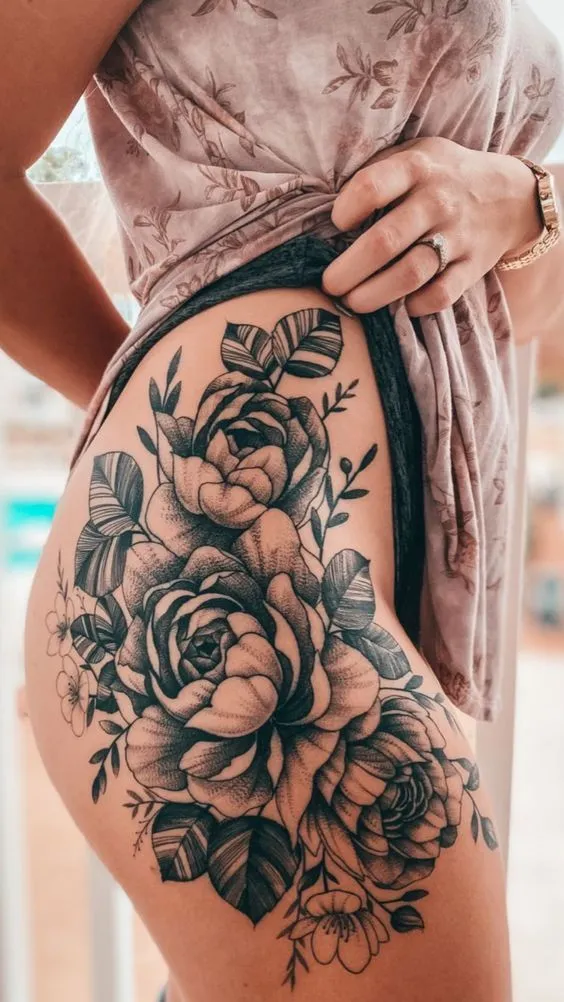
A bouquet groups multiple roses together, often varying in size and angle, to create a fuller, more layered composition than a single flower allows. This can be done in fine line, dotwork, or a light black and grey shading approach depending on how much dimension you want. It’s a great choice for larger thigh space, sized 6 to 9 inches, and works well as a single-session piece if kept to linework only. Pain and healing are consistent with other mid-size thigh pieces — moderate discomfort, roughly two weeks of visible healing. This design suits people wanting a “statement” tattoo without needing symbolism attached to it; sometimes a bouquet is just a beautiful arrangement, and that’s a fine reason on its own.
Single Needle Micro Rose
For people who want something genuinely small and subtle, a single needle micro rose keeps the design under 2 inches with extremely fine detail. This is a specialty technique — not every artist does micro work well, so portfolio-checking matters more here than with larger pieces. Best placed on the upper outer thigh where it’s easy to keep discreet, or lower thigh near the knee for a peekaboo effect. Pain is generally lower simply because the tattooing time is short. Healing wraps up within about two weeks. This is a strong low-commitment option if you’re unsure about bigger thigh work and want to test how your skin takes ink before going larger.
Geometric Rose
This design fuses the organic curves of a rose with straight-edged geometric shapes — think a rose contained within a triangle, hexagon, or a set of clean linear frames. The contrast between organic petal lines and rigid geometric borders creates a distinct, modern look that reads differently than a purely botanical rose. Best on the front thigh where symmetry is easiest for the artist to execute evenly, sized 4 to 7 inches. Pain sits in the moderate range. Ask your artist about stencil symmetry specifically — geometric elements are unforgiving if lines aren’t perfectly even, so this is one design where a paper stencil check beforehand really pays off.
Rose with Script Banner

A banner or script element running through or beneath a rose gives room for a name, date, or short phrase. Lettering requires careful line weight consistency, so this pairing depends heavily on the artist’s hand-lettering skill, not just their botanical work. Best sized 5 to 8 inches to keep script legible without cramming, placed front or outer thigh. Healing runs typical, two to three weeks. Pain is moderate. Bring the exact wording and preferred font style to your consultation — script tattoos age worse than simple linework if letters are too thin or spaced too tightly, so this is worth discussing directly with your artist before the stencil is finalized.
Black and Grey Realistic Rose
Realism uses detailed shading gradients to make the rose look almost photographic, with soft transitions between light and dark rather than the flat fill of blackwork or the stippling of dotwork. It’s one of the more technically demanding rose styles and generally costs more per hour due to the shading time involved. Best placed on the front thigh with good flat surface area, sized 5 to 8 inches for detail to actually register. Pain runs moderate to high given the extended shading passes. Healing takes closer to three weeks because of the ink saturation. This suits people who want their tattoo to look less like a graphic design and more like a rendered image.
Rose Mandala Fusion
Blending a rose with mandala patterning — the symmetrical, repeating geometric designs often associated with meditation art — creates a piece that’s part floral, part ornamental. This typically uses fine to medium line weight with dotwork shading filling in the mandala sections around the rose’s center. It requires precise symmetry, so it’s a good test of an artist’s steady hand. Best on the front thigh for the flattest symmetrical surface, sized 6 to 9 inches. Pain and healing match other dotwork-heavy pieces — moderate discomfort, about two to three weeks. This design fits people drawn to spiritual or meditative symbolism layered with floral imagery rather than a rose standing alone.
Sketch-Style Rose
Sketch-style tattoos mimic pencil or ink sketch marks — intentionally loose linework, cross-hatching, and visible “construction lines” left in rather than cleaned up. It’s a stylistic choice that reads as artistic and modern rather than polished. Best on the outer thigh, sized 4 to 6 inches, since the loose style benefits from open space around it. Pain is moderate, similar to standard linework. Healing takes about two weeks. This is a great option if you want something that looks intentionally unfinished or “artsy” rather than a clean botanical illustration — just be clear with your artist that the rough look is deliberate, not a mistake in execution.
Fine Line vs. Blackwork vs. Dotwork: Know the Difference
Fine line — Uses a single needle or small needle grouping to create thin, delicate outlines with little to no shading. Best for subtle, detailed work that stays legible at smaller sizes.
Blackwork — Relies on solid black ink fill and bold outlines, often incorporating negative space. Reads as graphic and high-contrast, and tends to age more evenly than delicate linework.
Dotwork — Builds shading and texture through clusters of small dots rather than continuous lines or solid fill. Creates soft gradients and texture, but takes longer to tattoo than either fine line or blackwork.
Best Placement Ideas
- Front thigh — High visibility, flat surface, good for symmetrical or larger pieces; moderate pain, easy to maintain.
- Outer thigh — More private, still a stable flat area; good for wrap or bouquet designs; moderate pain.
- Inner thigh — More discreet but generally more sensitive due to thinner skin; better suited to smaller pieces.
- Upper thigh near hip — Good for larger statement pieces; easy to conceal with most clothing.
- Lower thigh near knee — Works for smaller or micro designs; slightly more noticeable movement during healing.
Tips for Success
Look for an artist whose portfolio shows consistent line weight and clean healed-photo examples, not just fresh ink photos (fresh tattoos always look sharper than they will after healing, so healed shots tell you more about long-term quality). Bring reference images, but also be open to your artist adjusting proportions for your specific leg shape — a design that works on someone else’s thigh won’t automatically scale the same way on yours. Ask about their experience with the specific technique you want; a fine-line specialist and a bold traditional artist often have genuinely different skill sets, even within the same studio. Whether you go with a walk-in flash design or a fully custom booking, always ask to see the stencil before it goes on skin.
Common Mistakes and How to Avoid Them
- Sizing too small for detail — Intricate shading or dotwork needs enough space to actually read clearly; going too small often causes the design to blur together within a few years.
- Ignoring placement geometry — A design meant to wrap a curve won’t sit right on a flat area, and vice versa. Discuss this with your artist before finalizing the stencil.
- Skipping aftercare instructions — Every artist’s aftercare sheet varies slightly based on ink and technique; following it closely matters more than people expect.
- Copying a design exactly — Adding one personal detail (a date, initial, or slight compositional change) keeps the piece meaningful and avoids an exact duplicate of someone else’s tattoo.
Similar Variations
Most of these designs can be resized down for a first tattoo or scaled up into a larger thigh piece later through what’s called a touch-up or extension session. Color saturation can shift a traditional bold rose into something closer to neo-traditional with a wider palette. Combining two ideas — say, a fine-line rose with a small script banner, or a dotwork rose folded into a mandala — is common and gives you a design that’s technically unique even if the individual elements are familiar.
Aftercare Basics
General dermatological consensus points to keeping a fresh tattoo clean, moisturized with a fragrance-free product, and out of direct sun or swimming pools for the first couple of weeks. Avoid picking at scabbing, and don’t over-apply ointment, since skin still needs to breathe. Every studio provides its own written aftercare sheet, and following that specific guidance takes priority over general advice you find online. If you notice unusual redness, swelling, or discharge beyond normal healing, consult a licensed dermatologist rather than guessing.
Quick FAQ
How much does a rose thigh tattoo cost?
Pricing varies widely by size, detail, and studio location, but small linework pieces often start in the low hundreds, while larger detailed pieces like bouquets or realism work can run into four figures across multiple sessions. Always get a direct quote from your artist during consultation.
How painful is a thigh tattoo?
Pain tolerance varies by individual, but the thigh is generally considered a moderate-pain area due to its muscle padding, with inner thigh spots being more sensitive than outer or front placement.
How long does healing take?
Most thigh tattoos take about two to three weeks for visible surface healing, though full skin settling can take longer. Following your artist’s aftercare sheet closely affects how smoothly this goes.
Will a rose tattoo fade or blur over time?
All tattoos fade somewhat with age and sun exposure; bolder linework and solid fill tend to hold their shape longer than very fine or thin detail. Touch-ups down the line are common and normal, not a sign of a bad tattoo.
At the end of the day, a rose thigh tattoo works because the placement gives artists room to do the design justice, whether that’s a tiny single-needle bloom or a full wrap-around piece with vines and thorns. Take your time picking a technique that matches what you actually want long-term, not just what looks good in a reference photo, and talk through placement and sizing honestly with a licensed professional before you book. Get that groundwork right, and your rose thigh tattoo idea has a real shot at aging as well on your skin as it looked on paper.