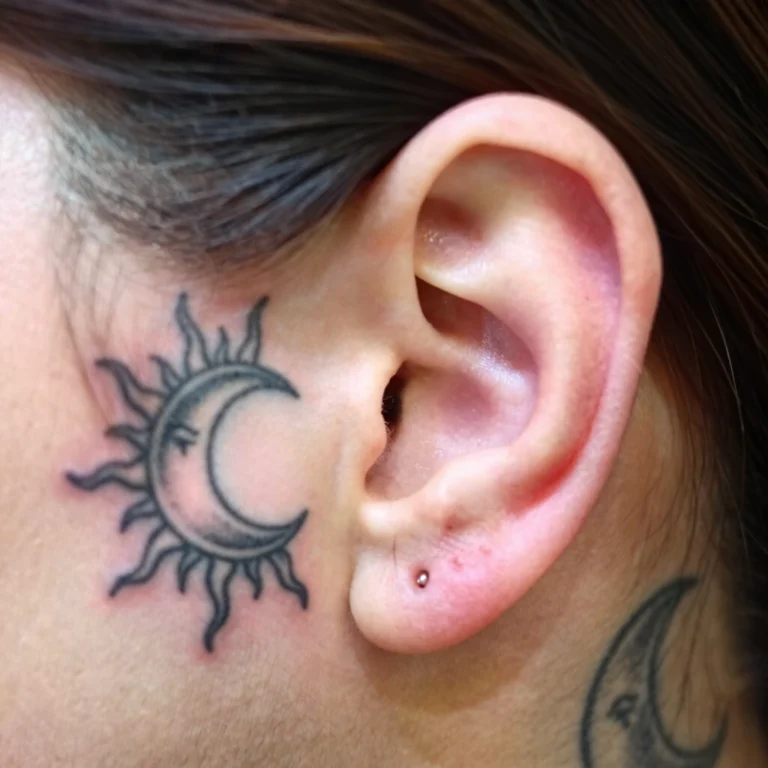
24 Sun and Moon Matching Tattoos: A Real Guide Before You Book
Nervous about picking sun and moon matching tattoos you’ll actually still love in ten years? You’re not alone, and that hesitation is smart. This guide was built by looking at real placement outcomes, healing patterns, and technique tradeoffs — not just pretty reference photos — so you can walk into a studio with a clear plan instead of a vague Pinterest screenshot.
So what are the best sun and moon matching tattoos? Fine-line crescents paired with simple sun bursts on the wrist, forearm, or behind the ear work best because they hold their shape well over time and stay easy to read even as skin changes. Bold blackwork versions age the slowest overall, while delicate single-needle designs need more careful placement to avoid blurring.
Stick around, because I’m also going to cover pain levels by placement, realistic healing windows, how to actually brief an artist so you don’t get a generic flash design, and the mistakes that make people regret their sun and moon tattoo within the first year.
Why Sun and Moon Designs Work So Well as Matching Tattoos

Sun and moon tattoos have stuck around in tattoo culture for a reason that goes beyond looking nice together. The pairing works compositionally — a sun and a crescent moon create natural visual balance, one rounded and radiating, the other curved and negative-spaced. That contrast makes the pairing easy to split between two people, two wrists, or even two different tattoo styles, without either half looking incomplete on its own. It also carries flexible meaning: light and dark, day and night, two people who balance each other out. Because the imagery is simple at its core, it translates well across techniques — from fine line to bold blackwork — which is part of why it remains one of the most requested matching tattoo themes among walk-in and custom clients alike.
Quick Technique Definitions You’ll Need

Before you pick a design, it helps to actually know what these style names mean. Artists use this language in consultations, and knowing it helps you brief them accurately.
Fine line
: Thin, precise strokes made with a single needle or small needle grouping. Best for delicate sun rays or slim crescent outlines, but details can soften faster on thin or frequently-stretched skin.
Blackwork
: Solid black fill or heavy bold outlines with high contrast. Holds up longest over time because there’s more ink saturation for the artist to work with during touch-ups.
Dotwork
: Shading and texture built from tiny individual dots instead of solid fill, often used for moon craters or sun gradients. Requires a steady-handed, experienced artist since spacing errors are hard to fix later.
Single needle
: A specific fine-line technique using one needle point, common for tiny finger or ankle sun and moon designs. Extremely delicate-looking but prone to more noticeable fading if not sized appropriately.
1. Fine-Line Sun and Moon Wrist Tattoos
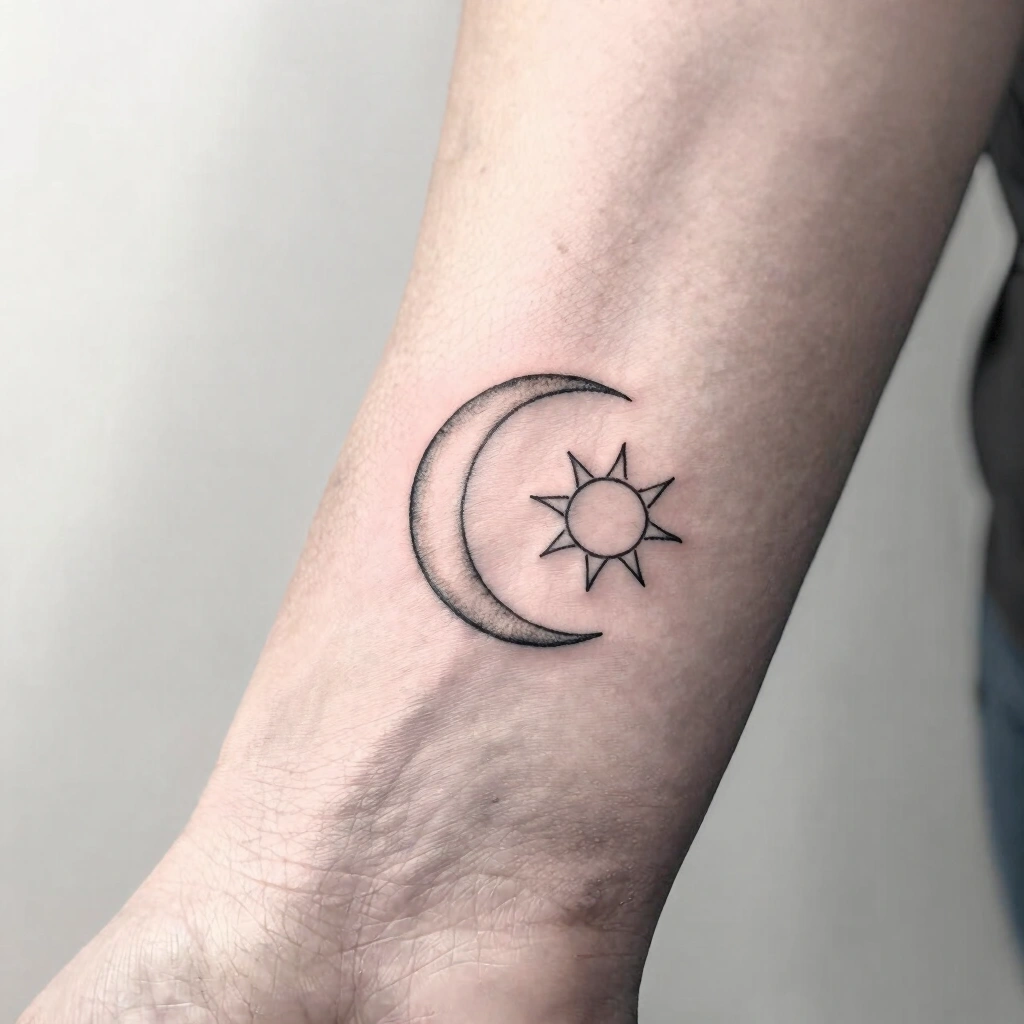
This is the classic starting point for a reason. A thin crescent moon on one wrist and a small sun with simple triangular rays on the other creates a clean, matching look without overwhelming detail. Line weight typically stays under 1mm, with no shading — just clean linework. Best size is around 1 to 1.5 inches; smaller than that and the rays tend to blur together within a few years. Wrist skin moves a lot, so ask your artist about slightly thicker outlines than you’d use elsewhere. Healing typically runs 10–14 days. Pain is moderate here since the wrist sits close to bone. It’s a solid first-tattoo choice and reads as professional-workplace-friendly since it’s easy to cover with a sleeve or watch. From here, some people scale this exact linework down even further for other spots.
2. Bold Blackwork Sun and Moon Forearm Tattoos

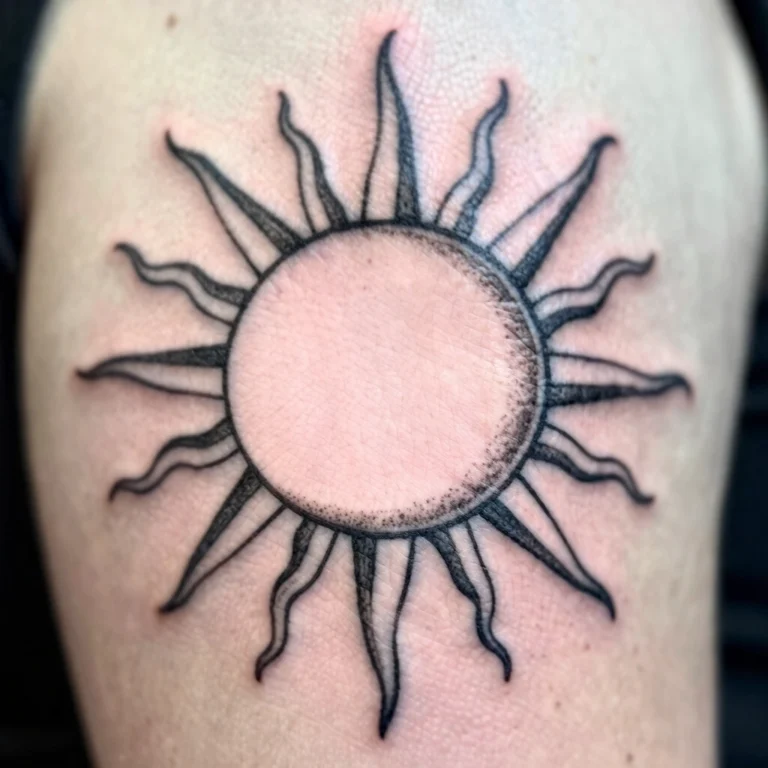
If you want something that reads clearly from across a room, blackwork is the move. This version uses solid black fill for the moon’s crescent shape and thick, evenly spaced triangle rays around a filled-in sun circle. The heavier saturation means less fading risk long-term compared to fine line. Forearms give you 3–5 inches of usable space, which lets the design hold real presence without looking cramped. Pain is generally moderate to low on the outer forearm since there’s more muscle padding than bone. Healing takes about 2–3 weeks given the ink density. This works well for people who don’t mind visibility at work and want a matching design that still looks intentional from a distance, not just up close.
3. Dotwork Shaded Crescent Moon and Sun Tattoos

Dotwork brings texture without hard shading lines, which gives sun and moon designs a soft, almost dusty look. Here, the moon’s shadowed side is built from graduated dot density instead of solid black, and the sun’s center gets a subtle dot gradient instead of a flat fill. This technique demands precision, so review an artist’s dotwork portfolio specifically — not just their general work — before booking. Ideal placement is the upper arm or shoulder blade, where there’s enough flat space for consistent dot spacing. Expect a longer session than fine line, and healing around 2–3 weeks since dotwork can scab slightly more than pure linework. This suits people wanting depth and dimension without full color or heavy blackwork saturation.
4. Tiny Single-Needle Sun and Moon Finger Tattoos

Finger tattoos are trendy, but they come with real tradeoffs worth knowing upfront. A single-needle sun on one friend’s finger and a matching tiny moon on the other’s is undeniably cute in photos, but finger skin sheds and regenerates faster than most other body areas, so touch-ups are common — sometimes within the first year, based on general dermatological consensus on skin turnover. Keep the design under half an inch and skip fine shading entirely; it won’t hold. Pain here tends to run higher since fingers have little padding over bone. This is better suited to people who are okay with maintenance than someone wanting a one-and-done tattoo.
5. Matching Sun and Moon Behind-the-Ear Tattoos

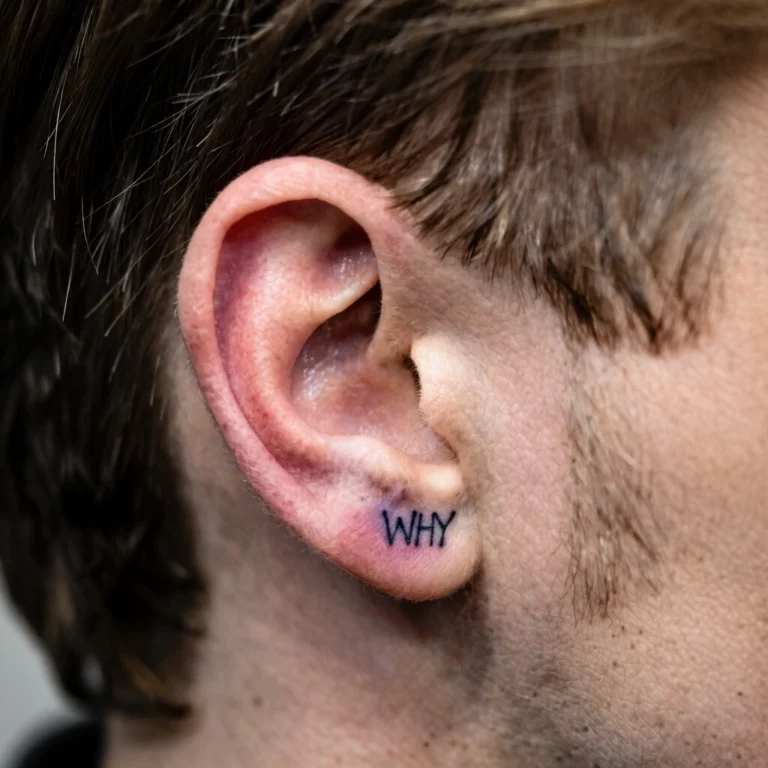
This placement is popular for a reason — it’s easy to hide or show depending on how you wear your hair. A small crescent moon behind one ear and a tiny sun behind the other keeps things subtle and personal. Stick to simple linework here; behind-the-ear skin is thin and doesn’t hold heavy shading well over time. Size should stay small, around half an inch to an inch. Pain is often rated higher than average because of thin skin and cartilage proximity. Healing takes roughly 2 weeks, and you’ll want to sleep carefully to avoid friction on the area. It’s a great low-visibility option for workplaces with strict appearance policies.
6. Negative Space Moon with Radiating Sun Tattoos

Negative space tattooing uses the untouched skin itself as part of the design — instead of outlining a full moon, the artist tattoos the darkness around it, letting the moon’s shape emerge from bare skin. Paired with a solid sun on the matching partner’s arm, this creates a striking visual contrast between “empty” and “full.” This technique needs an experienced blackwork artist because spacing mistakes are unforgiving. Best on the upper arm or calf where skin is flatter. Healing follows typical blackwork timelines, about 2–3 weeks. It reads as more artistic and less “typical flash design,” appealing to people who want something less commonly seen at every studio.
7. Traditional Bold-Line Sun and Moon Flash Tattoos

Traditional American-style tattooing uses thick black outlines and limited, saturated color — think classic red, yellow, and black. A traditional sun with a smiling face and thick rays, matched with a similarly styled crescent moon, taps into old-school flash tattoo aesthetics. This style ages the best of almost any option on this list because the bold lines and solid color blocks resist blurring. Best placed on the upper arm, calf, or shoulder for enough flat space. Pain is moderate given the amount of linework and shading time needed in one sitting. This suits people who like a nostalgic, illustrative look rather than something minimalist.
8. Celestial Face Sun and Moon Tattoos

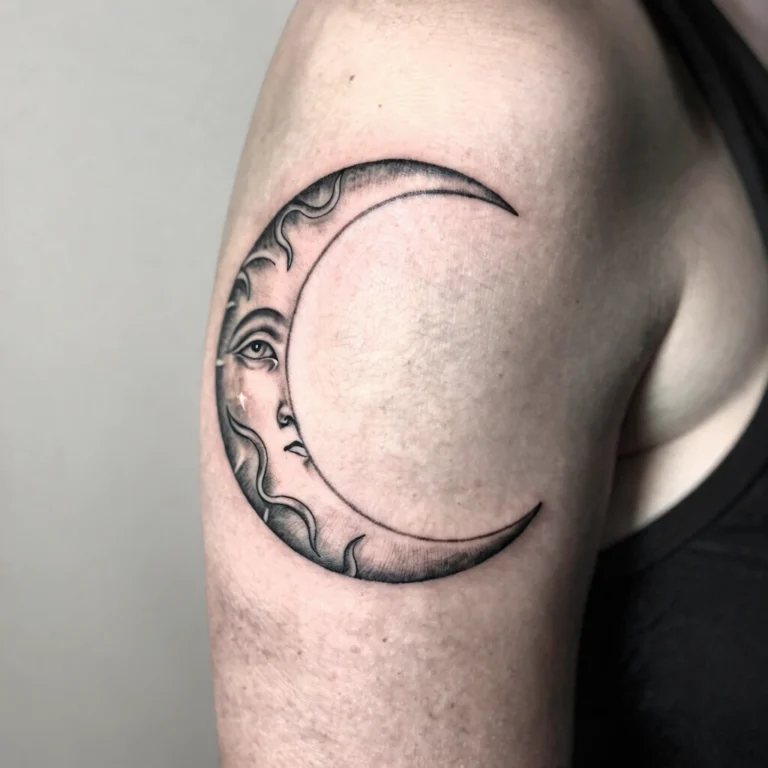
Giving your sun and moon actual facial features — closed eyes, a small nose, a subtle smile — adds personality and softens the design. This is usually done in a semi-bold linework style with light shading around the eyes for dimension. It works well at a small-to-medium size, roughly 1.5 to 2 inches, on the calf, upper arm, or ribs. Rib placement will be more painful due to thin skin over bone; the calf is comparably milder. Healing runs 2–3 weeks depending on shading depth. Bring a clear reference photo of the exact facial expression you want — “peaceful,” “sleepy,” and “mysterious” all look different in linework, so don’t leave it to interpretation.
9. Geometric Linework Sun and Moon Tattoos

For a more modern, structured look, geometric versions build the sun and moon out of straight lines, triangles, and clean angles instead of organic curves. This style photographs sharply and tends to age well since there’s no fine shading to blur. A good size range is 2–3 inches to keep the geometric lines from crowding each other. Best placement is the forearm, outer shoulder, or shin, where flat skin keeps angles crisp. Pain is generally low to moderate on these areas. This design suits people drawn to a minimalist, almost architectural aesthetic rather than something soft or whimsical.
10. Sun and Moon Ankle Tattoos with Fine Detail

Ankle tattoos are a popular matching choice because they’re easy to hide with socks or show off in sandals. Fine-line detail works here, but keep the design compact — 1 to 1.5 inches — since ankle skin has less flat surface area than the wrist. Expect moderate-to-high pain due to bone proximity, and slightly longer healing (up to 3 weeks) because ankles see more friction from shoes and movement. This is a solid choice for people who want something personal but don’t need daily visibility, and it works fine as a first tattoo if you’re prepared for the healing quirks of that spot.
11. Mandala-Inspired Dotwork Sun and Moon Tattoos

Combining mandala patterns with sun and moon imagery turns a simple symbol into something more intricate. Dotwork or fine linework builds concentric patterns radiating from the sun’s center or wrapping around the moon’s crescent edge. This requires real precision, so ask to see healed (not just fresh) photos in the artist’s portfolio — dotwork can look great immediately after but blur if spacing was inconsistent. Best on the shoulder blade or upper thigh, where there’s room for the pattern to breathe. Size should be at least 3 inches to keep the fine details legible. This suits people wanting a spiritual or symbolic layer added to the design.
12. Matching Sun and Moon Collarbone Tattoos

The collarbone offers a curved canvas that works surprisingly well for a crescent moon shape, with the sun mirrored on the other side or on a partner’s matching collarbone. Keep linework thin and size small, under 1.5 inches, since this area doesn’t have much flat space. Pain tends to run high here due to thin skin directly over bone — worth being honest with yourself about tolerance before booking. Healing takes about 2 weeks, and clothing friction from straps or collars can be irritating early on. This placement is stylish for visibility in off-shoulder or collared outfits but easy to keep hidden otherwise.
13. Abstract Line Sun and Moon Rib Tattoos

Rib placement lets you go bigger and more abstract — think a single continuous line forming both the sun’s rays and the moon’s curve in one connected design. This works well as a fine-line or single-needle piece, though the rib area is widely considered one of the more painful spots due to thin skin and bone/nerve density. Healing typically takes 3 weeks minimum given the movement from breathing and clothing friction. This design suits people who already have some tattoo experience rather than absolute first-timers, and it’s a good choice if you want something private and less about daily visibility.
14. Sun and Moon Constellation Tattoos

Adding small star dots or constellation lines around the sun and moon design connects it to a broader night-sky theme. Typically done in fine line with tiny dotwork stars, this version works best at 2–3 inches to leave room for both the main image and the surrounding detail. Good placement options include the shoulder, upper back, or outer arm. Pain is moderate depending on exact spot. Healing runs the standard 2–3 weeks for fine line and light dotwork combined. This variation suits people who want to fold in additional personal symbolism, like a specific star sign or meaningful date, without overcrowding the core design.
15. Yin-Yang Style Sun and Moon Tattoos

This version leans into the balance symbolism directly, styling the sun and moon like a yin-yang — each shape curving into the other, sometimes on a single tattoo rather than split between two people. Blackwork with clean negative space works best to keep the curved boundary between sun and moon crisp. Ideal size is 2–2.5 inches minimum so the curve doesn’t collapse into a blob over time. Best on the forearm or calf for flat, stable skin. Pain and healing follow standard blackwork expectations, moderate discomfort and about 2–3 weeks. This design suits couples or friends who want one unified image instead of two separate matching pieces.
16. Moon Phases with Sun Accent Tattoos

Instead of just a single crescent, this design shows the moon’s full phase cycle in a row, small circles fading from full to new moon, with a small sun accent at one end representing the day/night cycle. Fine line or single needle works well here because the phases are small and simple. This needs horizontal space, so the forearm, ribs, or side of the calf work best, sized at least 3–4 inches wide so each phase stays distinct. Pain and healing depend on the chosen placement. This design fits people who like a storytelling element — time passing, cycles repeating — layered into the sun and moon theme.
17. Watercolor Sun and Moon Tattoos

Watercolor-style tattoos mimic paint bleeding on paper, using soft color gradients without hard outlines. It’s a striking look, but it’s worth knowing upfront that watercolor pieces are generally understood within the tattoo community to fade and blur faster than linework or blackwork, since there’s no bold outline holding the color in place as skin ages. If you love the look, ask your artist about combining a thin black outline with the watercolor wash for better longevity. Best on the upper arm or shoulder blade, sized 2–3 inches. This suits people prioritizing initial visual impact who are comfortable with more frequent touch-ups down the line.
18. Sun and Moon Spine Tattoos

Running a slim sun and moon design vertically along the upper spine creates a striking centered piece, often shown as a moon near the neck fading into a sun lower down, or vice versa. This placement is consistently rated as one of the more painful spots because of thin skin directly over the spine and limited muscle padding. Fine line works best given the narrow canvas. Healing takes about 3 weeks, and back placement means you’ll likely need help applying aftercare products. This is a striking choice for people wanting a statement piece that’s easily hidden by clothing but dramatic when shown.
19. Matching Sun and Moon Thigh Tattoos

Thighs offer generous flat space, which makes them ideal for larger, more detailed sun and moon designs — think added shading, dotwork texture, or a bigger geometric pattern. Pain here is generally lower than bony areas like the wrist or ribs, since there’s more muscle and fat padding. Size can comfortably run 3–5 inches. Healing takes 2–3 weeks, with clothing friction being the main irritation risk early on. This placement works well for a first larger tattoo since the pain is more manageable, and it’s easy to keep private for workplace settings.
20. Bold Sun and Moon Chest Tattoos

Placing a sun and moon design across the upper chest, sometimes as one combined piece rather than split, gives a strong, symmetrical statement look. Blackwork or bold traditional style holds up best here given the larger scale. Pain varies by exact chest location — areas closer to the sternum tend to be more sensitive. Healing takes around 3 weeks due to chest movement and clothing contact. This is generally not a first-tattoo recommendation given the size and sensitivity involved, but it suits people with some tattoo experience wanting a bigger, bolder matching statement.
21. Sun and Moon Hand Tattoos

Hand tattoos, including the back of the hand or between the thumb and index finger, are increasingly popular but come with the same faster-fading tendency as finger tattoos due to constant skin exposure and washing. Fine line or single needle in a small size, under an inch, works best, but go in expecting a touch-up may be needed within a year or two. Pain tends to run high given thin skin over bone and tendons. This is a bold visibility choice — not workplace-friendly in more conservative settings — better suited to people who’ve already got some tattoos and know their pain tolerance.
22. Sacred Geometry Sun and Moon Tattoos

This variation wraps the sun and moon in sacred geometry elements — triangles, circles, and symmetrical line patterns radiating outward. Fine line or thin blackwork both work, depending on how bold you want the geometric frame to look. Because of the intricate linework, sizing matters a lot here — under 2 inches and the pattern often blurs together within a few years. Best on the forearm, shoulder, or upper back for flat space. Healing and pain follow standard fine-line or blackwork expectations for those areas. This suits people drawn to symbolism and pattern work rather than a purely illustrative sun and moon image.
23. Sun and Moon Anklet-Style Tattoos

Instead of a standalone design, this wraps a slim sun and moon motif around the ankle like a delicate anklet, alternating small suns and crescents in a repeating band. Fine line or single needle keeps it delicate-looking. Because it wraps around a curved, moving joint, ask your artist about slightly thicker linework than you’d use on a flat placement to help it hold up better over time. Pain and healing follow standard ankle tattoo expectations — moderate to high discomfort, roughly 3 weeks healing. This is a fun, low-commitment-feeling option for friend groups doing a matching set of three or more.
24. Personalized Sun and Moon Tattoos with Names or Dates

Adding a small personalized element — an initial tucked into the moon’s crescent, a meaningful date along the sun’s rays — turns a common design into something more specific to your relationship or memory. Fine line works best for incorporating small text cleanly. Keep added text minimal; cramming too much in shrinks the readability of both the symbol and the words. Placement flexibility is high since size can adjust from tiny (finger, behind the ear) to larger (forearm, thigh). This variation directly solves the “I want this to mean something specific to us” desire, rather than using a generic pre-made design.
Best Placement Ideas

- Wrist — high visibility, moderate pain, moderate maintenance since it’s frequently exposed to sun and friction
- Forearm — good visibility control (easy to cover), lower pain, holds detail well long-term
- Behind the ear — low visibility, higher pain due to thin skin, best for small minimal designs
- Ribs — private placement, higher pain, longer healing due to movement
- Ankle — moderate visibility, higher pain, more touch-up likelihood due to shoe friction
- Thigh — private, lower pain, great for larger or more detailed designs
- Fingers/hands — high visibility, higher pain, higher fading risk requiring more frequent touch-ups
Tips for Success

Start by looking for an artist whose portfolio shows healed photos, not just fresh ink — healed work tells you how their linework and shading actually hold up. If you want fine line or single needle, look specifically for an artist who specializes in that, since bold traditional artists don’t always have the steady, slow technique fine line demands. Bring reference photos, but also be ready to explain what you don’t want — artists appreciate specifics like “thinner rays than this” or “no facial features.” Ask about their stencil process, whether they offer a custom design adjustment before the session, and what aftercare products they recommend. A good consultation should feel like a two-way conversation, not just you approving a flash sheet.
Common Mistakes and How to Avoid Them
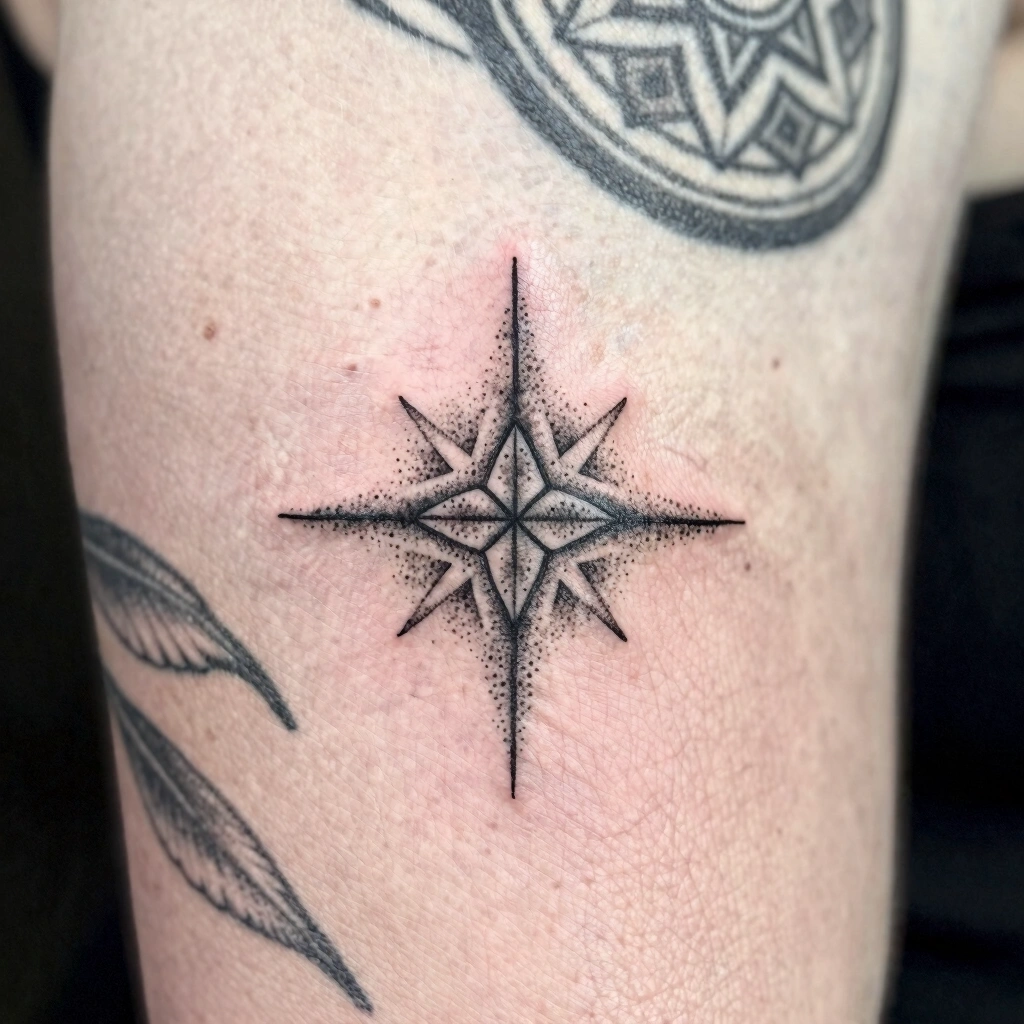
- Going too small for the detail level — intricate dotwork or geometric patterns need enough surface area to stay legible for years, not just look good on day one
- Picking a placement that fights the design’s shape — a straight geometric sun doesn’t sit naturally on a heavily curved joint like the ankle without adjustment
- Skipping the aftercare instructions — general fading and dulling happen faster without proper care, based on general dermatological consensus on skin healing
- Copying a design exactly with zero personalization — a slight tweak in ray count, line weight, or added detail keeps a common theme like this from feeling generic
- Not asking about touch-up policy — many studios include one free touch-up within a set window; always ask before booking
Similar Variations

Nearly every idea above can be resized down for a subtler look or scaled up with added shading for more impact. A fine-line wrist design can become a forearm piece with dotwork shading added later. A blackwork traditional sun can be recolored with muted, single-tone shading instead of full color for a softer feel. Matching sets also don’t have to be identical — some friend groups choose the same sun and moon motif but let each person pick their own placement and size, which keeps the meaning intact without looking too matchy in a way that reads as costume-like rather than intentional.
Aftercare Basics

Aftercare instructions vary slightly by studio, so always follow the specific sheet your artist gives you over anything you read online. In general, keep the area clean, avoid direct sun exposure and swimming while it’s healing, and avoid picking at any peeling or scabbing that occurs during the normal healing process. Most fine-line and blackwork tattoos are considered mostly healed within 2 to 3 weeks, though full settling under the skin can take longer. If you notice unusual redness, swelling, or discharge beyond what your artist described as normal, general dermatological consensus recommends checking in with a licensed professional or dermatologist rather than guessing.
Quick FAQ

How much do sun and moon matching tattoos cost?
Cost depends heavily on size, detail, and studio location, but small fine-line pieces often start in the $80–$150 range per person, while larger or more detailed blackwork and dotwork designs can run $200–$500 or more. Always ask for a quote during consultation rather than assuming a flash-sheet price applies to a custom version.
Do sun and moon tattoos hurt a lot?
Pain varies by placement and by individual pain tolerance. Bony, thin-skin areas like the ribs, spine, and ankle tend to rate higher on discomfort, while padded areas like the thigh or outer arm tend to be more manageable.
How long does healing take?
Most fine-line or blackwork sun and moon tattoos are visually healed within 2 to 3 weeks, though the skin continues settling for a few months. Areas with more movement or friction, like ankles and ribs, sometimes take longer.
Will the design fade or blur over time?
Bold blackwork and traditional styles tend to hold their shape the longest, while very fine single-needle work and watercolor styles are more prone to blurring or fading sooner, based on general tattoo industry consensus on ink saturation and skin aging.
Final Thoughts

Sun and moon matching tattoos work because the symbolism is flexible and the visual pairing is naturally balanced, but the right choice for you depends on real factors — placement, pain tolerance, technique, and how much upkeep you’re willing to commit to. Take the design ideas here as a starting point, not a final answer, and bring your own personal touch to whichever version speaks to you.
Whatever style or placement you land on, talk it through with a licensed, experienced artist before booking, since they can tell you what will actually hold up on your specific skin. Do that groundwork now, and your sun and moon matching tattoos will still look intentional and meaningful years down the road.