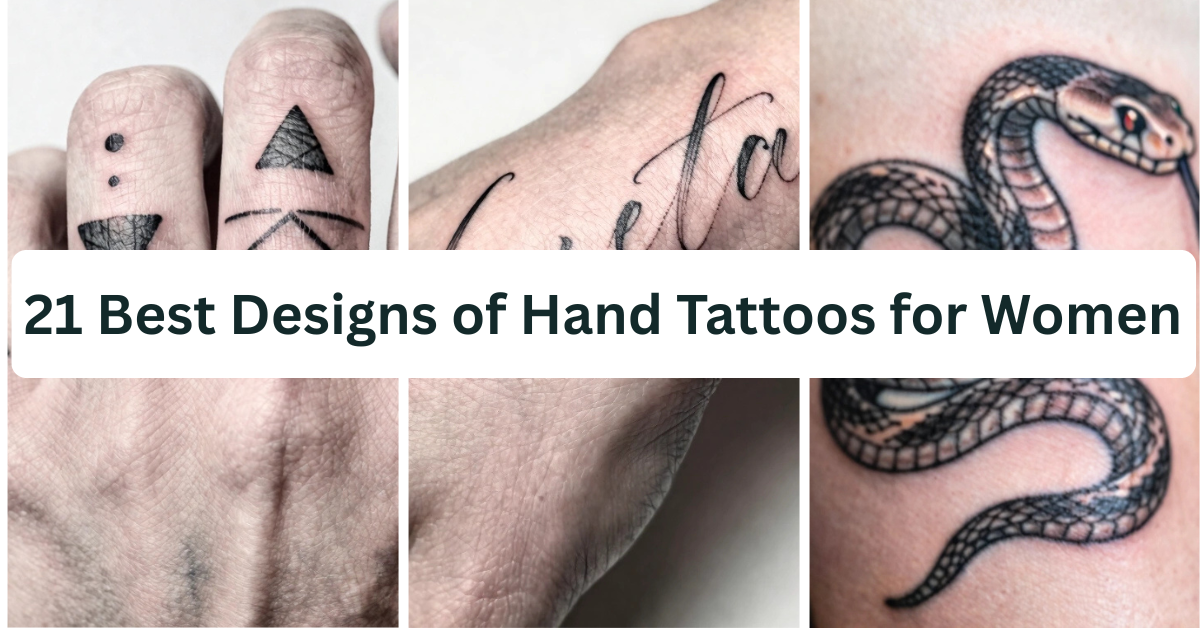
21 Best Designs of Hand Tattoos for Women
Nervous about picking a design you’ll regret in five years? You’re not alone — hand tattoos are permanent in a way that’s hard to ignore, since your hands are almost always visible. This guide pulls together the most researched, technically sound hand tattoo designs for women, with real advice on placement, pain, healing, and how to actually talk to your artist so you get what you want the first time.
So what are the best hand tattoo designs for women? Fine-line florals, minimalist geometric shapes, dotwork patterns, and small blackwork symbols tend to work best on hands because they hold their shape as skin ages and stretches. Simpler line weight and smaller scale outperform heavily shaded or highly detailed designs in this location, since hand skin sheds and regenerates faster than most other areas, which can blur fine detail over time.
Stick around, because I’m not just showing you pretty pictures. I’ll walk you through placement tradeoffs, realistic pain levels, healing windows, rough cost ranges, and the exact language to use when briefing your artist — the stuff most “top tattoo ideas” lists skip entirely.
Why Hand Tattoos Are Having a Moment
Hands used to be considered a “last” tattoo spot — something you got after you already had a sleeve or a back piece. That’s changed. More women are choosing hands first because the placement is personal, visible when they want it to be, and easy to dress up or tone down depending on the design. The tradeoff is real, though: hand tattoos fade faster and need more touch-ups than tattoos on your back or thigh, because hand skin is thinner, gets more sun and friction, and regenerates constantly from everyday use. Knowing that upfront helps you pick a design that’ll actually look good in year three, not just week one.
1. Fine-Line Floral Wrist Wrap

This design uses thin, consistent linework — usually done with a single needle — to trace a small cluster of flowers or a single stem wrapping around the wrist bone. There’s little to no shading, which keeps the look clean and prevents the ink from spreading into a blob as it settles into the skin. Best placement is the inner or outer wrist, sized around 2 to 4 inches. Because wrist skin is thin and close to bone, expect a sharper, more noticeable pain level during the session. Healing typically takes 2 to 3 weeks.
Bring a reference photo with a specific flower type and ask your artist to keep the stem width under 1mm for crisp aging. It’s a strong first-tattoo option and reads as professional enough for most workplaces.
Moving from the wrist, let’s look at a design that plays with negative space instead of solid lines.
2. Negative Space Snake Wrap

Negative space tattoos use the untouched skin itself as part of the design, rather than filling every section with ink. A snake wrapping around the hand or fingers, done in blackwork (solid black ink with defined edges), often leaves gaps that mimic scales or highlights without adding extra linework. This technique demands a steady-handed artist, since spacing mistakes are obvious on healed skin. Ideal placement is across the back of the hand or curling around a finger, sized 3 to 5 inches. Pain is moderate to high here because knuckles and finger joints have little cushioning.
Ask to see healed (not fresh) photos of your artist’s negative space work specifically — fresh photos always look sharper than they’ll end up. This design suits people who want something bold but still artistically unusual.
Next up is a technique built entirely from small dots instead of continuous lines.
3. Dotwork Moon Phases

Dotwork is exactly what it sounds like — the entire image is built from tiny individual dots rather than solid lines or shading. A moon phase sequence (new moon to full moon) rendered in dotwork gives a soft, stippled texture that reads as delicate from a distance but reveals intricate detail up close. This works well along the side of the hand or across the base of the fingers, kept small at 1 to 3 inches. Dotwork sessions tend to take longer than linework of the same size, so expect a slightly longer sitting and a comparable pain level to fine line.
Ask your artist about dot spacing — tighter spacing reads darker, looser spacing looks more like shading. It’s a popular choice for meaningful, symbolic tattoos without going bold.
Let’s shift to something more architectural: geometric blackwork.
4. Blackwork Geometric Knuckle Design

Small geometric shapes — triangles, dots, or simple line patterns — placed on one or more knuckles create a graphic, almost jewelry-like effect. This uses solid blackwork with clean edges, no shading, and no gradient. Because knuckles flex constantly, artists usually recommend simpler shapes here; anything too intricate risks distorting when your hand moves. Size stays tiny, typically under an inch per knuckle. Pain-wise, knuckles are among the more sensitive hand spots due to thin skin over bone and joints.
Healing runs 2 to 4 weeks and often needs a touch-up sooner than other hand areas because of constant hand-washing and flexing. This is a strong matching-tattoo option for friends who want something subtle but not identical.
From knuckles, let’s move to a softer, more traditional technique: bold linework roses.
5. Bold Traditional Rose on Back of Hand

Traditional tattoo style uses thicker, bold outlines paired with solid color or heavy black shading — the opposite approach from fine line. A rose done this way on the back of the hand holds up better over time than a fine-line version, since thicker lines resist the natural blurring that happens as hand skin regenerates. Expect a size range of 2 to 4 inches, with moderate to high pain since the back of the hand has minimal fat padding. Ask your artist about line weight in millimeters — traditional work typically starts around 2 to 3mm for outlines.
This design suits people who want a hand tattoo that photographs well and stays legible for decades, even if it’s more visible at work than a subtler design.
If bold and colorful sounds too permanent for your comfort level, here’s a quieter alternative.
6. Delicate Script Lettering on Side of Hand
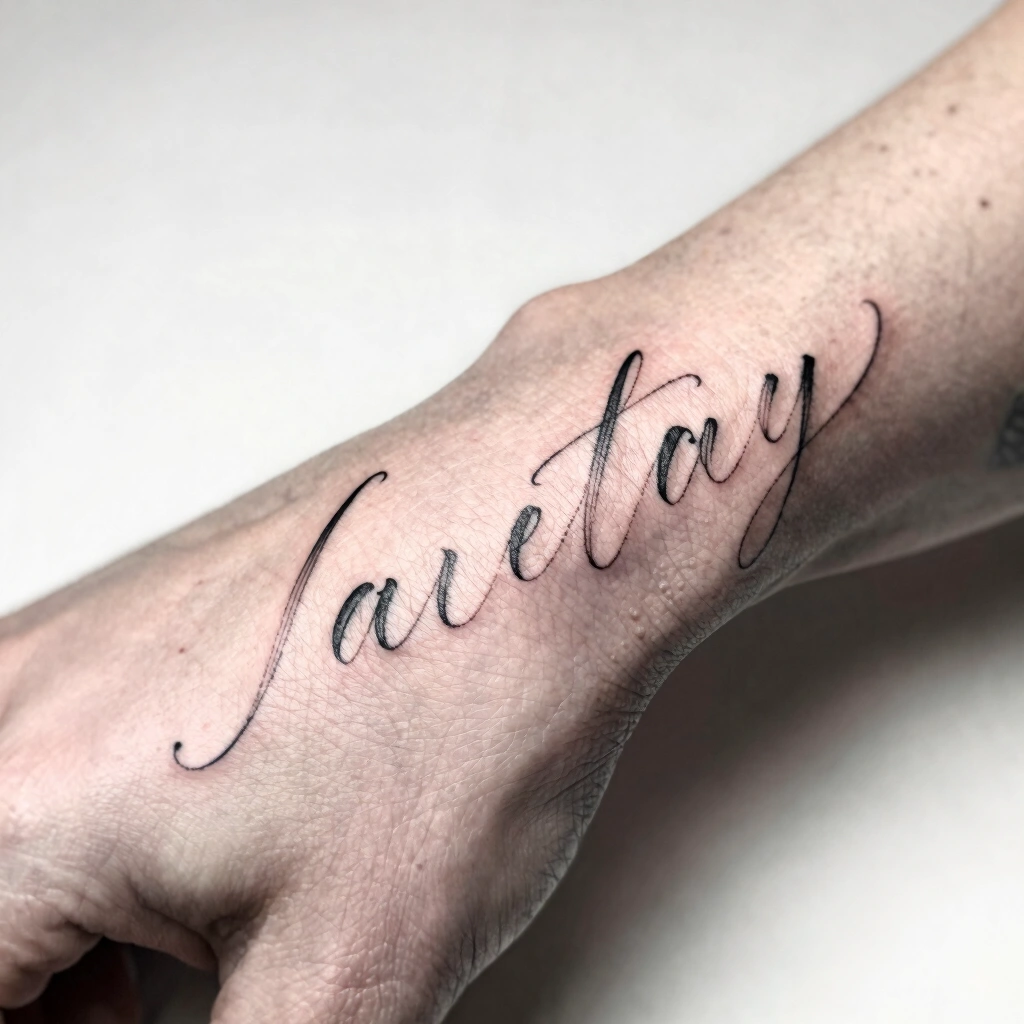
Script tattoos spell out a word, name, or short phrase in a handwriting-style font, usually done in fine line with light, even pressure. The side of the hand — between the thumb and wrist or along the pinky edge — is a common spot because it curves naturally with cursive letterforms. Keep it short: three to seven words max, sized to fit within 3 inches, since longer script tends to blur into illegibility as it ages. This area has moderate sensitivity. A useful tip: request your artist hand-letter a custom stencil rather than using a stock font, since custom lettering adjusts better to your hand’s natural curve.
Healing takes about 2 to 3 weeks, and this design ages best when line weight stays consistent throughout — thin serif fonts fade faster than clean sans-serif style.
Next, we’ll look at a design built around insect symmetry.
7. Fine-Line Butterfly on Back of Hand

A fine-line butterfly uses thin, single-needle outlines with minimal or no shading, relying on symmetry and negative space within the wings for visual interest. This works well centered on the back of the hand, sized 2 to 3 inches so the wing detail doesn’t collapse into a smudge over time. Because the back of the hand sees a lot of sun and washing, pick a slightly bolder line weight than you’d use elsewhere on the body — ask your artist to size up from ultra-thin to a slightly heavier fine line for longevity. Pain runs moderate here.
This is a popular first-tattoo choice because it’s recognizable, symbolic (change, transformation), and easy to resize smaller or larger depending on confidence level.
Now let’s cover a spot many people overlook entirely: behind the thumb.
8. Small Symbolic Tattoo Behind the Thumb

The webbed skin behind the thumb is a discreet, low-visibility spot — perfect for a tiny symbol, initial, or icon under an inch. This area typically uses fine-line or single-needle work since detail beyond a simple shape won’t hold at this size. Pain tends to be sharp but brief, since the area is small and fleshy rather than bony. Healing usually wraps up in about 2 weeks. Because this spot gets constant friction from gripping and thumb movement, ask your artist about touch-up policy before booking — many hand tattoos in flex zones need a refresh within a year or two.
This placement works great for anyone who wants meaning without visibility, since it’s easy to hide with a loose fist or by simply turning your hand.
From subtle to soft-colored, here’s a design that borrows from a painterly technique.
9. Watercolor-Accent Floral Design

Watercolor-style tattoos mimic the soft bleed and color blending of an actual watercolor painting, typically pairing a fine-line floral outline with translucent color washes instead of solid saturation. On hands, this style is riskier long-term — the soft color edges that look great on fresh skin tend to fade unevenly faster than solid color or blackwork, especially with sun exposure and hand-washing. If you love the look, keep the color portion small and pair it with solid black linework for the flower’s structure, so the design still reads clearly once the color softens.
Best placed on the back of the hand or upper wrist, sized 2 to 3 inches. Expect moderate pain and be prepared for a color touch-up within 1 to 2 years.
Let’s move to something with more graphic weight: a dotwork mandala.
10. Dotwork Mandala on Back of Hand

A mandala is a symmetrical, circular pattern often rooted in geometric and spiritual design traditions. Done in dotwork, it builds shading and texture from thousands of tiny dots rather than solid fill, giving it a soft, almost lace-like finish. This is a more time-intensive tattoo, often requiring 2+ hours even at a moderate size of 3 to 4 inches on the back of the hand. Pain builds with session length, so ask about numbing options your artist allows (many won’t permit certain topical products before the first session — always ask directly rather than assume). This design ages well because dotwork’s soft gradient hides minor fading better than sharp linework does.
Next, let’s look at a constellation design that spans multiple fingers.
11. Fine-Line Star Constellation Across Fingers
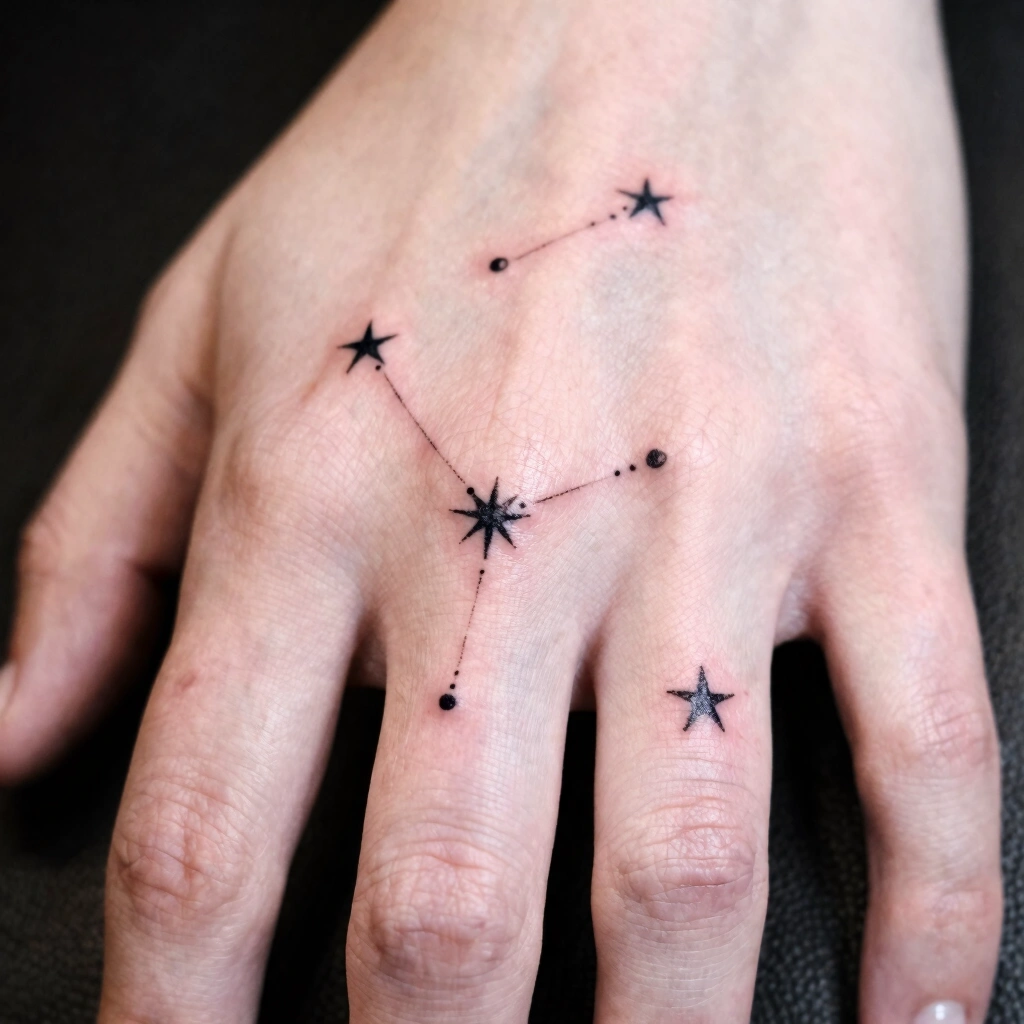
This design places small dots and thin connecting lines across two or more fingers to mimic a star constellation, often one tied to a birth month or meaningful date. Because fingers flex constantly and shed skin faster than most body areas, constellations here fade and blur faster than almost any other design on this list — dermatologists and tattoo artists generally agree finger tattoos need touch-ups more frequently than any other hand placement. If you love the idea, ask your artist to slightly thicken the connecting lines versus a standard fine-line approach, which helps the design stay legible longer. Expect sharp, noticeable pain on finger placements. This works best as a meaningful, low-visibility choice rather than a statement piece.
From fingers, let’s move back to the wrist for a wraparound vine design.
12. Linework Vine Wrapping Around Wrist
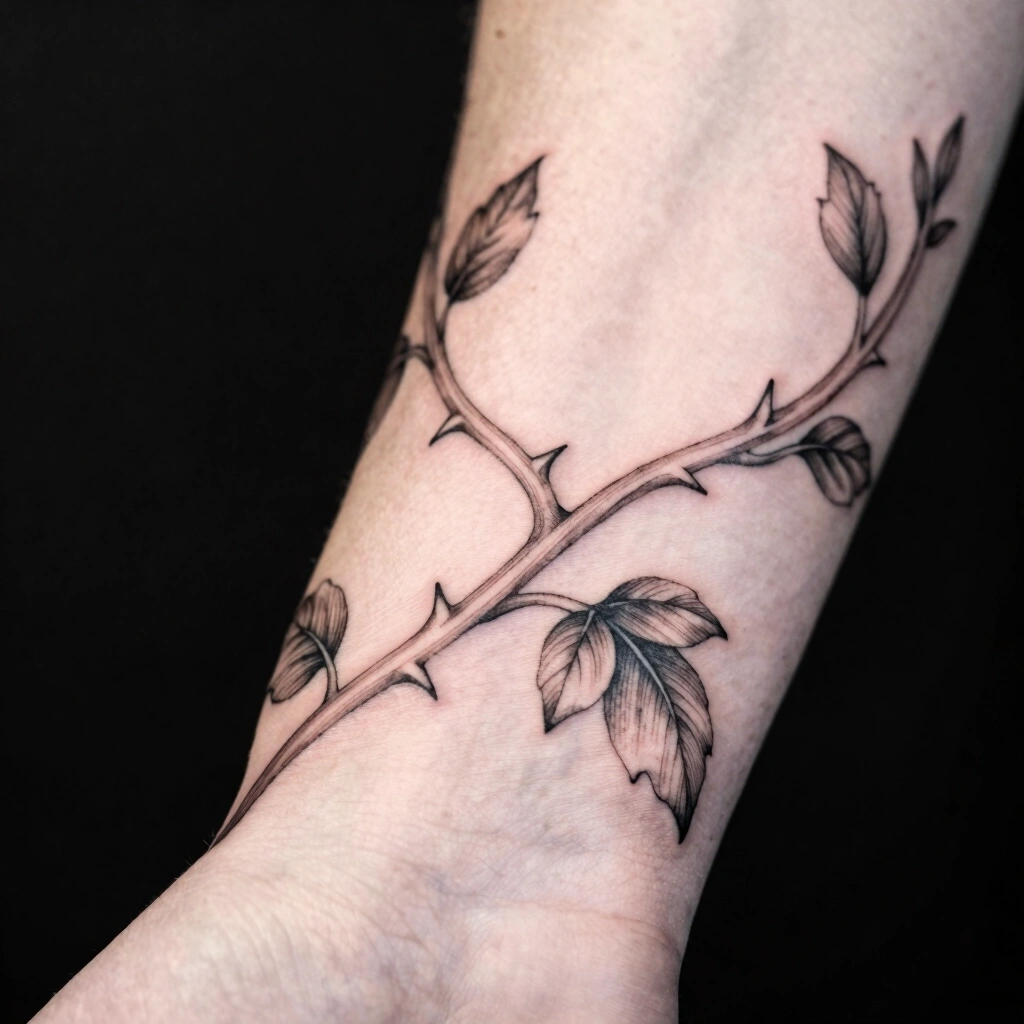
A single continuous vine, sometimes with small leaves or thorns, wraps fully or partially around the wrist using consistent-width linework. This composition uses the wrist’s natural circumference to create movement, and it’s a great way to disguise a scar or add visual flow without shading. Keep line weight even throughout — inconsistent thickness is one of the most common issues with wraparound designs done by less experienced artists, so review portfolio photos specifically of wrist wraps before booking. Sized 3 to 6 inches depending on how far it wraps, this design carries moderate pain and about 2 to 3 weeks of healing. It’s workplace-friendly since it can be fully covered by a long sleeve or watch.
Now let’s simplify things with a minimalist outline shape.
13. Minimalist Heart Outline on Finger Side

A simple heart outline, done in thin single-needle linework with no fill, placed along the side of a finger, is about as low-commitment as hand tattoos get. Size stays under half an inch, which means detail must stay extremely simple — anything more complex than a basic outline will blur within a year or two on skin this small and this exposed to friction. Pain is sharp but quick given the tiny surface area. This is a favorite for matching tattoos between sisters, best friends, or partners, since it’s affordable, quick to book (often available as a walk-in flash design rather than requiring a custom consultation), and easy to place identically on two people.
Let’s contrast that simplicity with a more symbolic split design.
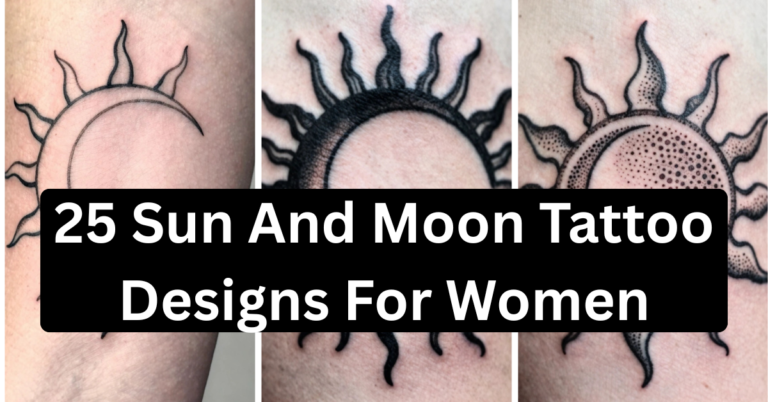
14. Blackwork Sun and Moon Split Design
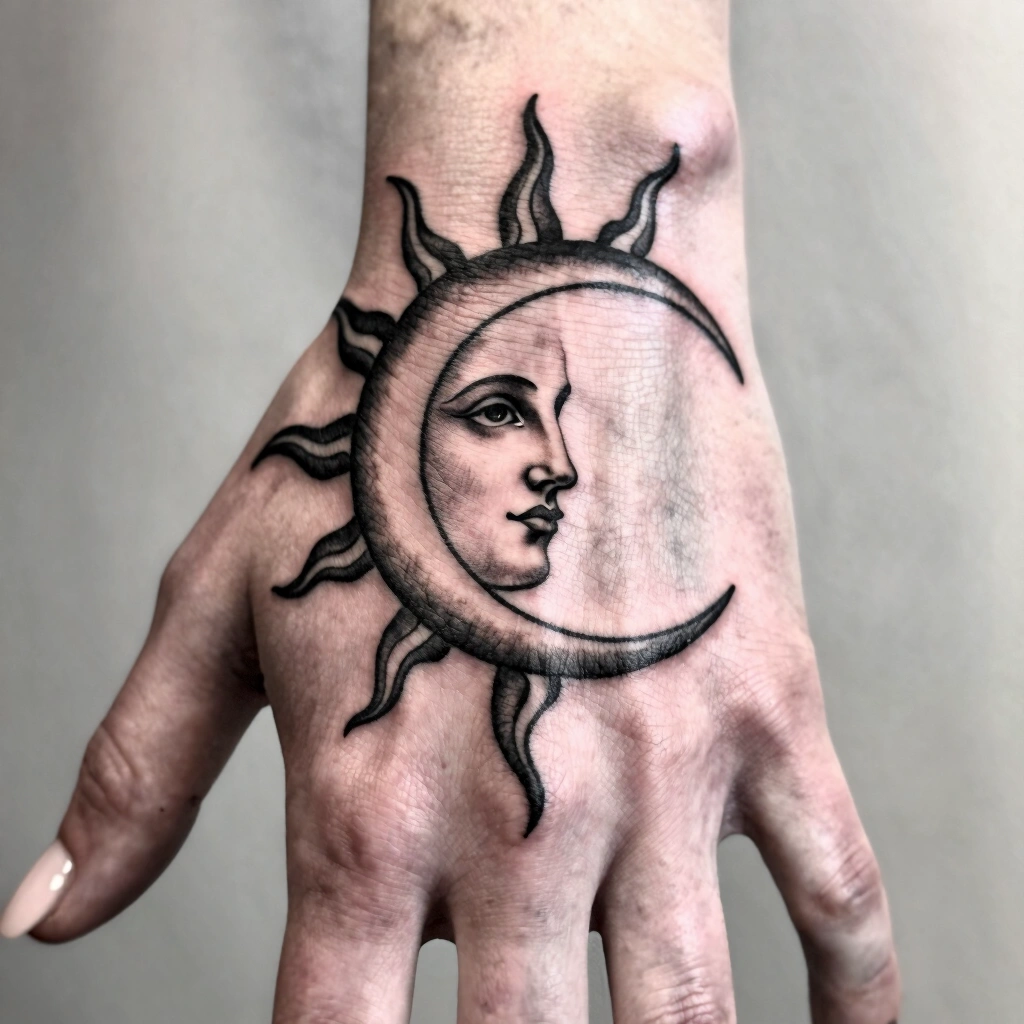
This design splits a sun and moon across two hands, or sometimes across two fingers on the same hand, using solid blackwork with clean, bold edges. The appeal is symbolic — balance, duality, day and night — and the bold solid fill actually ages better on hands than fine detail does, since solid black holds its edge longer than intricate shading. Size runs 1 to 2 inches per symbol. Moderate to high pain should be expected given typical placement on the back of the hand or fingers. A good briefing tip: bring reference images showing solid fill (not gradient or dot-shaded) versions, since “sun and moon” searches return wildly different shading styles online.
Next, a design built for people who love texture: fine-line feathers.
15. Fine-Line Feather Along Side of Hand

A feather rendered in fine line, running diagonally along the side of the hand from wrist toward the thumb, uses thin parallel strokes to suggest texture without heavy shading. This is a technically demanding design — uneven strokes are obvious once healed — so review your artist’s portfolio specifically for feather or fur-texture work, not just their general fine-line style. Size typically runs 2 to 4 inches. Pain is moderate on this fleshier side panel of the hand. Healing takes roughly 2 to 3 weeks. This design suits people wanting something with texture and movement but not full coverage or bold color.
Let’s now cover the simplest, lowest-commitment option on this whole list.
16. Single Dot or Line Matching Friendship Tattoo

Sometimes the most meaningful hand tattoo is also the smallest — a single dot, tally mark, or short line shared between friends or family. Done in single-needle work at under a quarter inch, this design has almost no room for shading or color, so its impact comes entirely from meaning rather than visual complexity. Pain is brief and minor given the tiny scale, though exact sensation still depends on individual pain tolerance. Healing wraps up in about a week to ten days. This is genuinely one of the best first-tattoo options because it’s affordable, quick, and low-risk if you’re still building confidence in permanent ink.
From minimal to intricate, let’s talk about lace-inspired blackwork.
17. Ornamental Lace-Style Blackwork on Wrist

This design mimics the look of lace fabric using fine blackwork linework arranged in repeating geometric or floral patterns. It’s more technically demanding than a basic wrist wrap because pattern symmetry has to hold up across a curved, moving surface. Best placed fully or partially around the wrist, sized 2 to 4 inches. Ask your artist whether they hand-draw custom lace patterns or use a repeatable stencil — custom work tends to fit the wrist’s curve more naturally. Pain runs moderate given the wrist’s bony structure. This design photographs beautifully for formal occasions and works well if you want something ornamental without going full sleeve.
Next, a nature-inspired option using simple animal silhouettes.
18. Small Animal Silhouette in Fine Line

A single-line silhouette of an animal — a fox, bird, or cat, for example — kept small and simple, works well on the back of the hand or wrist. The key technical detail here is keeping the silhouette simple enough to read clearly at 1 to 2 inches; overly detailed animal designs lose clarity fast at this size. Pain and healing mirror other fine-line designs in the same placement — moderate discomfort, roughly 2 to 3 weeks to heal. A practical tip: ask your artist to simplify a reference photo into a clean silhouette rather than trying to replicate a fully detailed illustration, which won’t hold up at hand-tattoo scale.
Let’s move into more abstract territory with a wave design.
19. Abstract Linework Wave Design
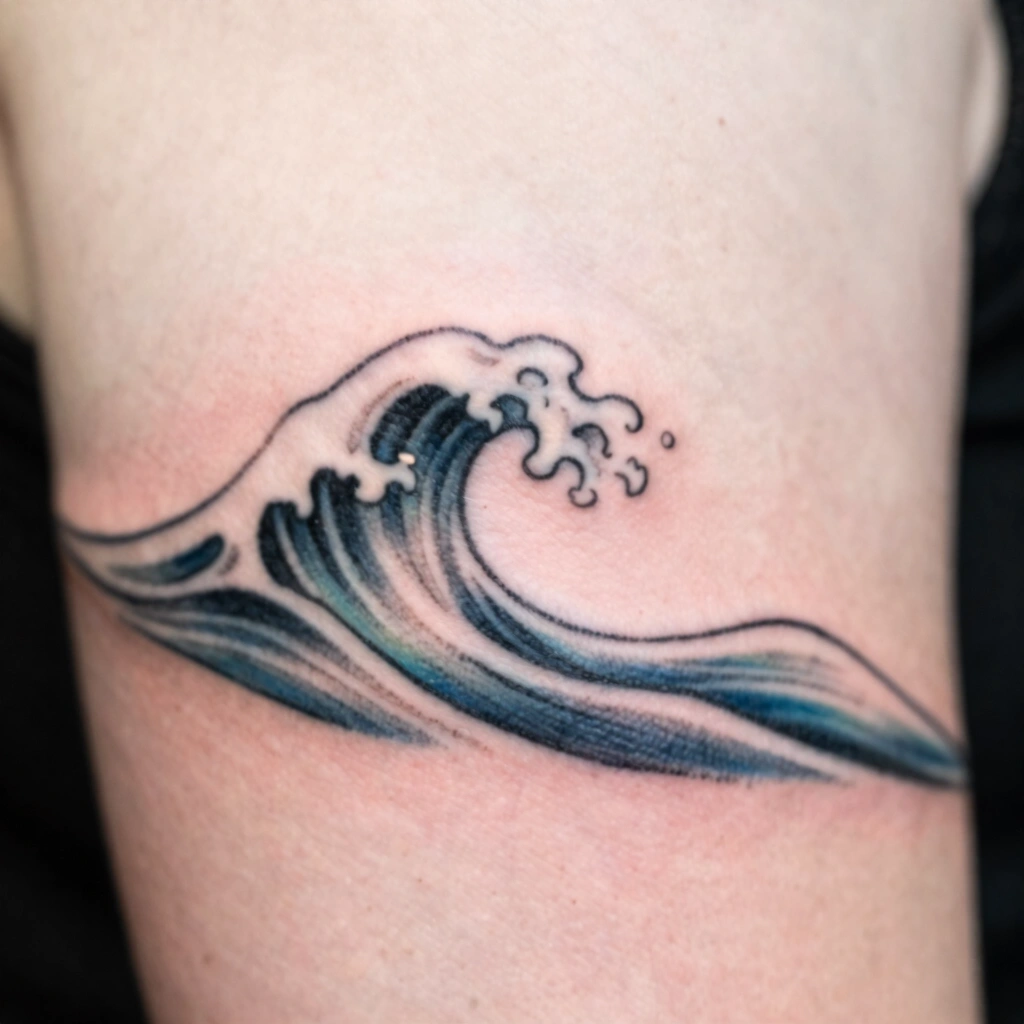
An abstract wave, made from a few flowing curved lines rather than a literal ocean image, works as a subtle nod to water, calm, or movement. This design relies entirely on line confidence — a shaky or uneven curve is much more noticeable in a minimalist design than in a busy, detailed one, so portfolio review matters a lot here. Best suited to the wrist or side of hand, sized 2 to 3 inches. Pain and healing align with standard fine-line expectations for these placements. This design works particularly well as a personalized alternative to more common symbols, since it can be adjusted in curve and angle to feel unique rather than generic.
Finally, let’s close the list with one of the most personal options available.
20. Personalized Initial or Symbol on Finger
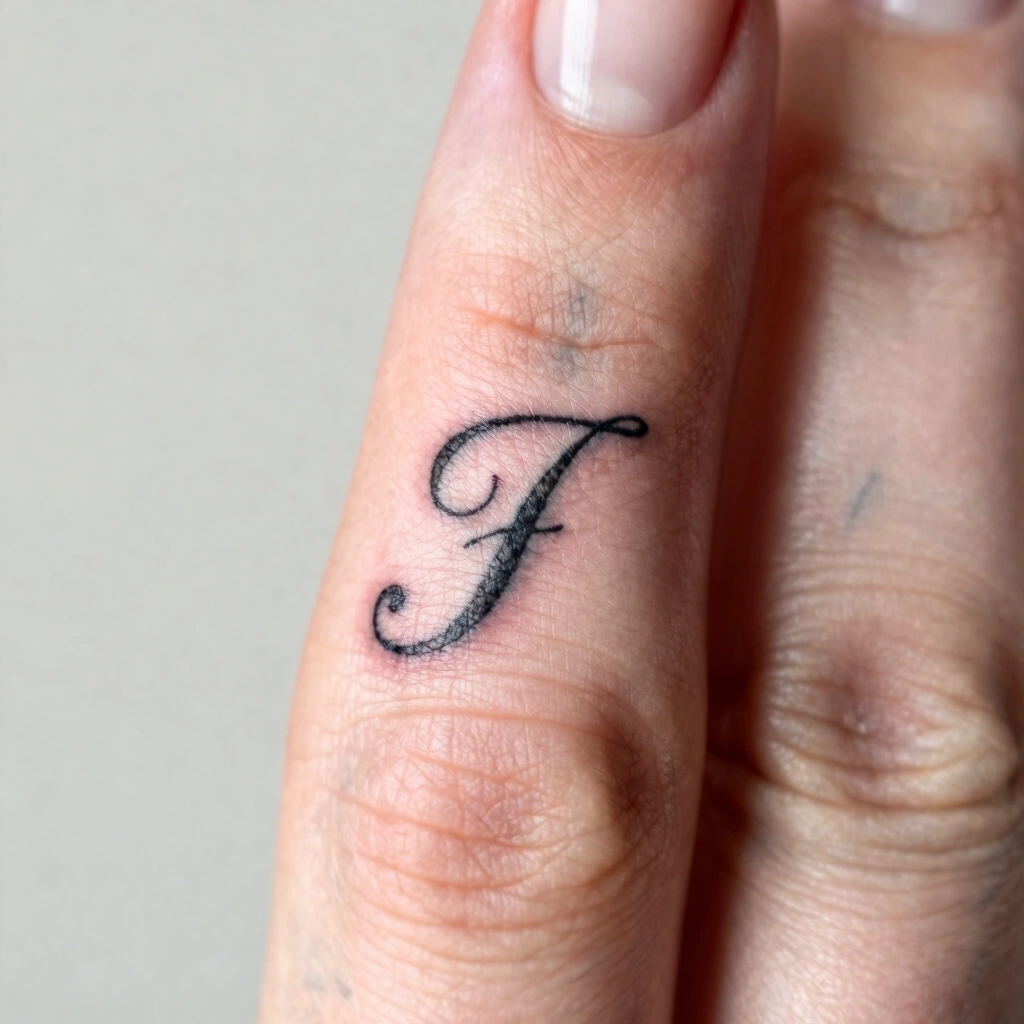
A single initial or small custom symbol on the side or back of a finger is about as personal as hand tattoos get. Because finger skin regenerates quickly, general dermatological consensus suggests finger tattoos fade and blur faster than tattoos almost anywhere else on the body — this is worth discussing honestly with your artist before booking. Keep the design extremely simple: a single letter or basic shape only. Pain here tends to be sharp given the lack of cushioning over finger bones. If longevity matters more to you than the finger placement itself, ask your artist whether the same symbol would hold up better on the wrist or back of hand instead.
21. Fine-Line Sunflower or Botanical Study on Wrist
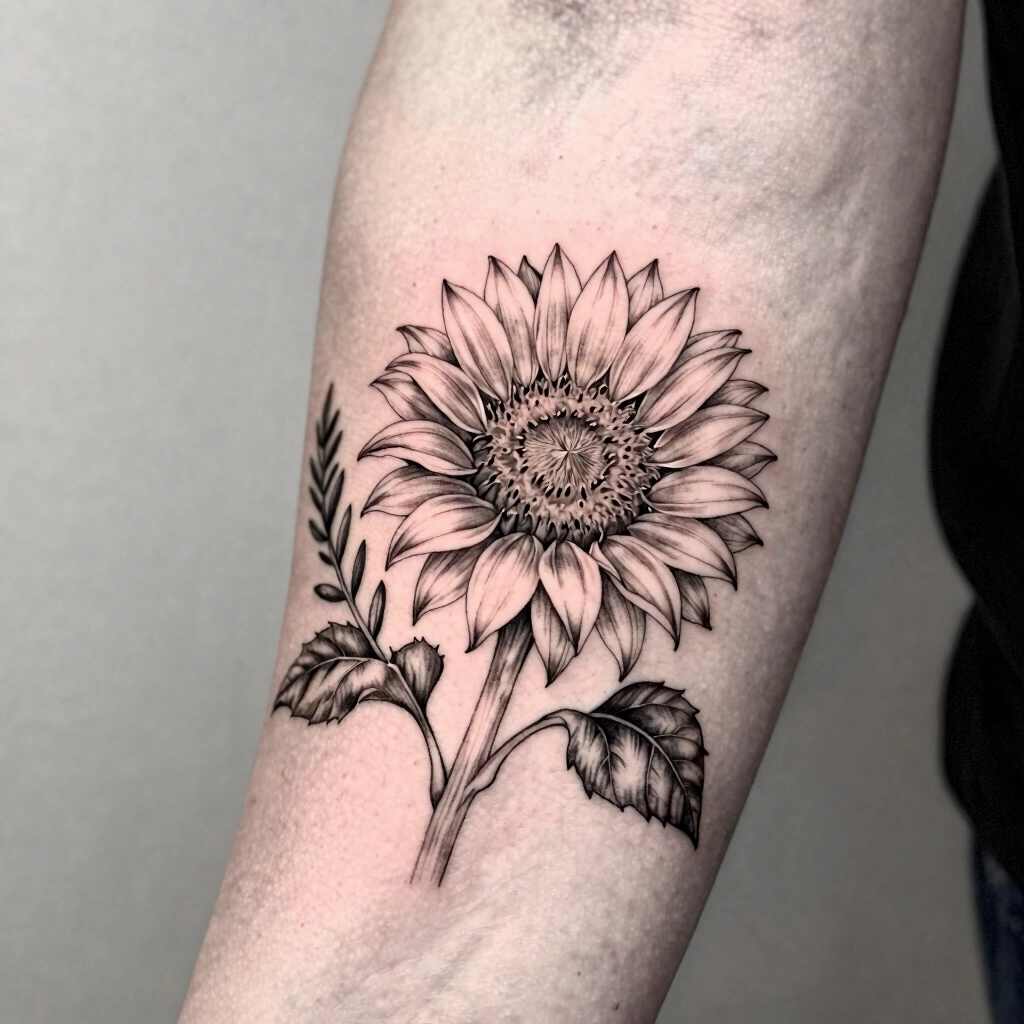
Rounding out the list, a fine-line botanical study — a single sunflower, herb sprig, or leaf rendered with delicate outlines and minimal shading — offers a nature-inspired option that’s a bit more unique than a generic rose or vine. This works best sized around 2 to 3 inches on the wrist or back of hand, using single-needle technique for crisp petal or leaf outlines. Pain is moderate given typical bony wrist placement. A solid briefing tip: bring a real photo of the specific plant you want, not just a generic “flower tattoo” reference, so your artist can adapt actual petal count and leaf shape into clean, simplified linework that holds up over time.
Best Placement Ideas
Different spots on the hand come with real tradeoffs. Here’s how they generally compare:
- Wrist (inner or outer): Easy to cover with a sleeve or watch, moderate pain, good healing track record, works for most design styles.
- Back of hand: High visibility, moderate to high pain, best for bold linework or blackwork that resists fading better than fine detail.
- Fingers: Highest visibility when hands are in use, sharpest pain due to minimal padding over bone, fastest fading — expect more frequent touch-ups.
- Side of hand: Semi-discreet depending on hand position, moderate pain, good for script or feather-style designs.
- Behind the thumb or between fingers: Very low visibility, sharp but brief pain, ideal for symbolic tattoos you want to keep private.
- Knuckles: Visible and graphic, higher pain due to joint movement and thin skin, needs simple shapes to avoid distortion.
Tips for Success
Choosing the right artist matters more for hand tattoos than almost any other placement, because mistakes are hard to hide and touch-ups on hands are trickier than on flatter body areas. Look for an artist whose portfolio shows multiple healed photos of hand tattoos, not just fresh ink — healed results tell you how their line weight and shading actually hold up. Ask directly about their experience with your specific technique, whether that’s fine line, dotwork, or blackwork, since these require different needle setups and hand speed. Bring reference photos, but also be open to your artist adjusting the design for your hand’s specific shape, skin tone, and movement range. A good consultation should include an honest conversation about placement tradeoffs, not just enthusiasm for the idea.
Common Mistakes and How to Avoid Them
- Going too small for the detail level. Intricate mandalas or detailed animals need more space than people expect; shrink the complexity, not just the size.
- Ignoring how the design will age on hand skin. Fine detail fades faster here than almost anywhere else on the body — ask your artist for their honest opinion on longevity before committing.
- Skipping the aftercare instructions. Hands touch everything, all day, which makes proper aftercare more important here than on covered body parts.
- Copying a design exactly from social media. A design that worked on someone else’s hand shape, skin tone, and finger length may not translate directly to yours — ask your artist to personalize proportions.
- Choosing placement based on trend rather than lifestyle. If your job has a visible-tattoo policy, consider that before booking a back-of-hand piece.
Similar Variations
Almost every design above can be adapted. A fine-line floral wrist wrap can shrink into a single-stem finger tattoo, or expand into a fuller forearm-to-hand piece for a bolder statement. Dotwork mandalas can be recolored with subtle single-tone shading for a softer look. Blackwork geometric knuckle designs can be combined into a connected pattern across multiple fingers for a more cohesive “hand jewelry” effect. If you like an idea on this list but want it to feel more like you, ask your artist how to resize, recolor, or combine it with a second smaller design elsewhere on the hand or wrist.
Aftercare Basics
Aftercare for hand tattoos generally follows the same core principles as tattoos anywhere else, though hands see more friction and washing than most body parts. Keep the area clean, avoid soaking it in water for extended periods early on, and avoid direct sun exposure while it’s healing. Don’t pick at any peeling skin. Always follow the specific aftercare sheet your artist gives you, since products and timelines can vary by studio, and check in with a licensed professional or dermatologist if you notice anything that seems unusual rather than guessing based on general internet advice.
Quick FAQ
How much do hand tattoos usually cost?
Small designs under 2 inches often fall in a lower hourly or flat-rate range, while larger or more detailed hand pieces cost more due to time and skill required. Exact pricing varies widely by studio, location, and artist experience, so always get a quote during consultation.
Do hand tattoos hurt more than other placements?
Many people report more sensitivity on hands compared to fleshier areas like the outer arm or thigh, since there’s less padding over bone and joints. Pain tolerance is individual, though, so your experience may differ from someone else’s.
How long do hand tattoos take to heal?
Most hand tattoos take roughly 2 to 3 weeks to heal on the surface, though full settling underneath can take longer. Healing time varies by individual and by how well aftercare instructions are followed.
Do hand tattoos fade faster than tattoos elsewhere?
Generally, yes — hand skin regenerates and sheds faster than skin on the back, thigh, or upper arm, so fine detail can soften sooner. Many hand tattoos need a touch-up within a couple of years to stay crisp.
A Quick Note on Technique Differences
- Fine line: Thin, single-needle strokes with little to no shading; ages best when kept slightly bolder on hands.
- Blackwork: Solid black fill with clean edges; holds its shape longer on hands than detailed shading.
- Dotwork: Built from small dots to create texture or shading; softens gracefully as it ages.
- Negative space: Uses bare, untouched skin as part of the design itself; requires precise spacing and an experienced hand.
Picking from this many hand tattoo designs for women can feel overwhelming, but the real decision comes down to three things: how visible you want it, how much detail your chosen placement can actually hold onto over time, and how comfortable you are with the touch-up schedule that comes with hand skin. None of that should scare you off — it just means going in informed instead of guessing.
Whatever you land on, take your time finding an artist whose healed work matches the technique you want, and have an honest conversation about placement and longevity before you sit down in the chair. That’s really the whole trick to loving your hand tattoo years down the line, not just on day one.