16 Feminine Lion Tattoo Ideas for Women’s Arms (With Placement, Pain, and Booking Advice)
Nervous about picking a feminine lion tattoo for your arm that you’ll actually still love in ten years? You’re not alone — this is one of the most requested designs at studios right now, and there’s a good reason it keeps trending instead of fading out like a lot of quick internet fads.
So what makes a feminine lion tattoo for women’s arms work well? The strongest designs combine soft linework or floral detailing with the lion’s natural strength — think fine-line manes, negative space shading, or botanical accents — placed on the forearm or upper arm where the design has room to breathe and age gracefully over the years.
Stick around, because I’m going to walk you through 16 real design directions, plus the stuff most articles skip entirely — how much these actually hurt, what they cost, how to talk to your artist so you don’t end up with a stencil that doesn’t fit your arm, and how each style holds up on skin five or ten years down the line.
Why Lion Designs Translate So Well Into Feminine Arm Art

Lions carry a lot of built-in meaning — courage, protection, family loyalty, quiet confidence — without needing a caption to explain it. That symbolic weight is exactly why artists have so much room to soften the imagery without losing its impact. A mane can become a floral crown. A stare can become a delicate profile shaded with a single needle instead of heavy black fill. The arm itself helps too — it’s got enough surface area for detail, it’s easy for the artist to work on without awkward stretching, and you get to decide how visible you want it, from a peek under a sleeve to a full standout piece.
1. Fine-Line Lioness Portrait
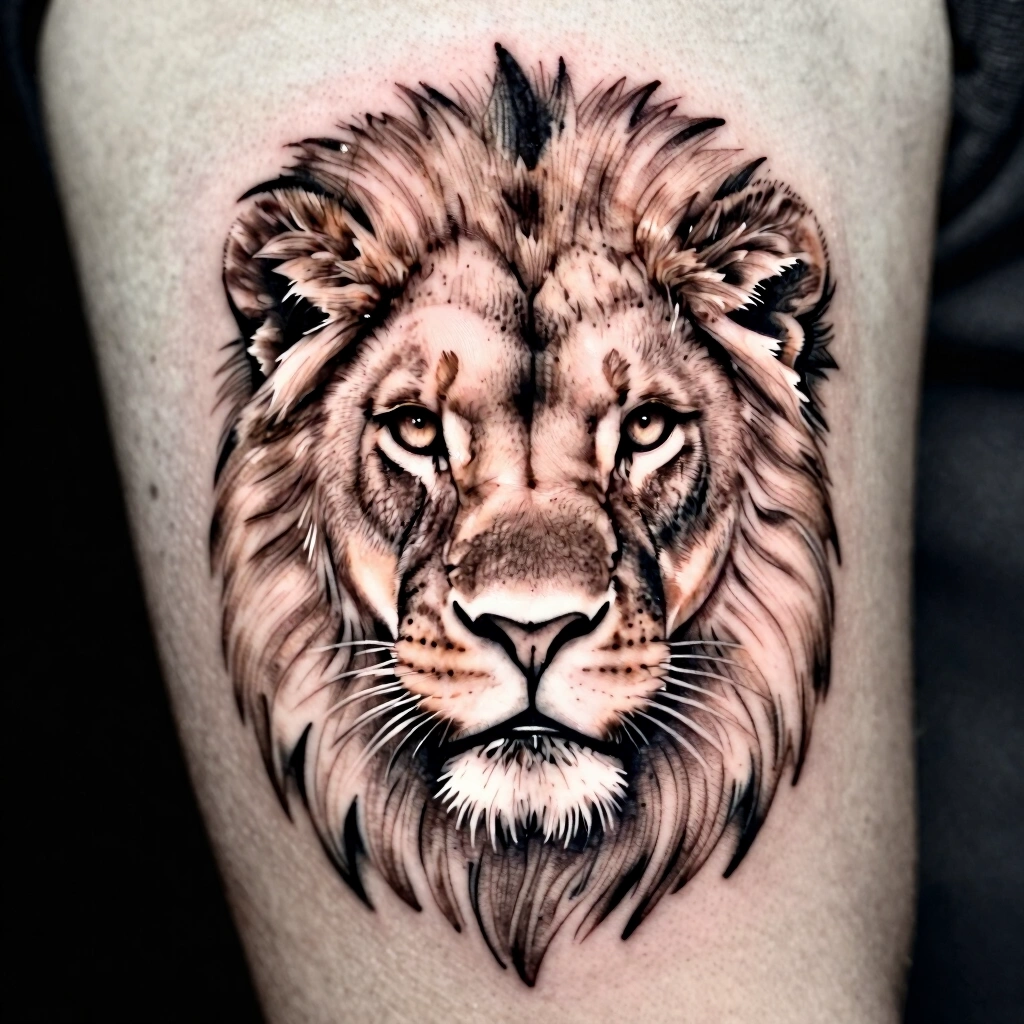
This is probably the most requested feminine lion style right now. The artist uses a fine-line technique — thin, consistent needle strokes instead of thick bold outlines — to render the lioness’s face with soft realism, usually without heavy black shading. Detail sits in the eyes and whisker lines rather than in solid fill.
Best placed on the outer forearm or upper arm where there’s a flat surface for the artist to keep lines steady. A 3–4 inch size keeps facial detail readable as it ages. Pain tends to sit in the low-to-moderate range on fleshier parts of the arm, more noticeable near the elbow crease. Bring a clear front-facing reference photo of a lioness (not a male lion) so your artist can adjust proportions properly. This design reads well in professional settings since it’s easy to cover, and it ages into a soft, slightly faded look that many people like rather than looking blown-out.
2. Watercolor Lion with Floral Splash

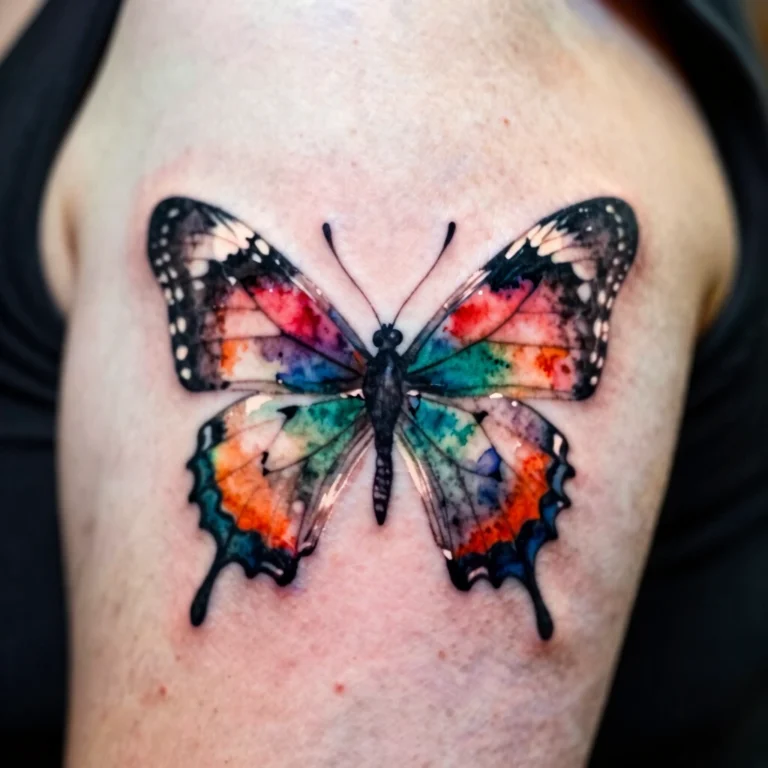
Here the lion’s outline is done in solid or fine-line black, then the background gets loose, blended color — usually warm oranges, pinks, or purples — meant to mimic paint bleeding on paper. It’s not a subtle tattoo, but it is a distinctly feminine take on a traditionally bold animal.
This works best on the outer upper arm where there’s enough space for the color splash to spread without looking cramped. Size-wise, give it at least 5 inches so the color doesn’t muddy together. Saturation fades faster than solid blackwork, so expect a touch-up in 5–8 years depending on sun exposure. Ask your artist directly whether they specialize in color saturation techniques — not every line-work artist is comfortable with watercolor blending. It’s a great “statement piece” option if you’re not worried about full coverage for work.
3. Geometric Lion with Mandala Patterns

This design overlays the lion’s face or mane with clean geometric shapes — triangles, dot clusters, or a mandala pattern (a symmetrical, circular design) worked into the mane itself. Linework is typically bold and even, with the geometric elements adding structure rather than realism.
The upper arm or shoulder cap works best here because the circular mandala elements need a rounded surface to sit naturally. Aim for 4–6 inches minimum — geometric precision gets lost at smaller sizes. Pain is moderate, fairly consistent across the upper arm. Bring both a lion reference and a mandala reference separately; ask your artist to sketch a custom merge rather than trying to combine two flash designs yourself. This style tends to age exceptionally well since geometric linework holds its shape better than soft shading over time.
4. Minimalist Single-Needle Lion Outline
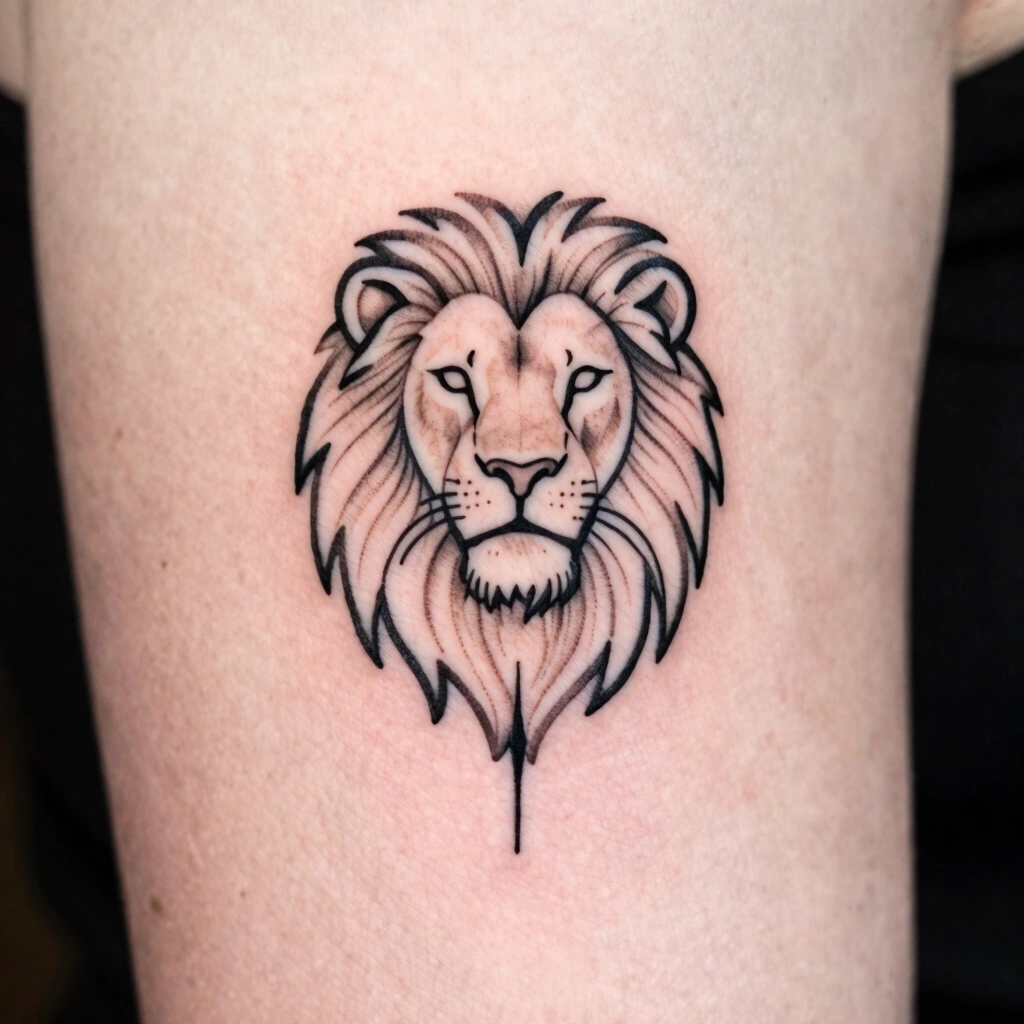
A single-needle tattoo uses one fine needle point instead of a needle cluster, producing extremely thin, delicate lines. Here, the entire lion is reduced to a simple outline — no shading, no fill, just the silhouette and a few defining features like the mane’s edge or the eye.
This is one of the best first-tattoo options on this list. Wrist-adjacent forearm placement or the inner arm works well for a subtler look. Keep it small — 2–3 inches — since that’s the whole point of the minimalist approach. Pain is generally lower since there’s less needle time overall. Ask specifically for a “single needle” or “micro line” artist, since not every studio offers this specialty. The tradeoff: these lines can soften and blur slightly faster than bold work, so touch-ups every few years keep it crisp.
5. Blackwork Lion with Botanical Mane
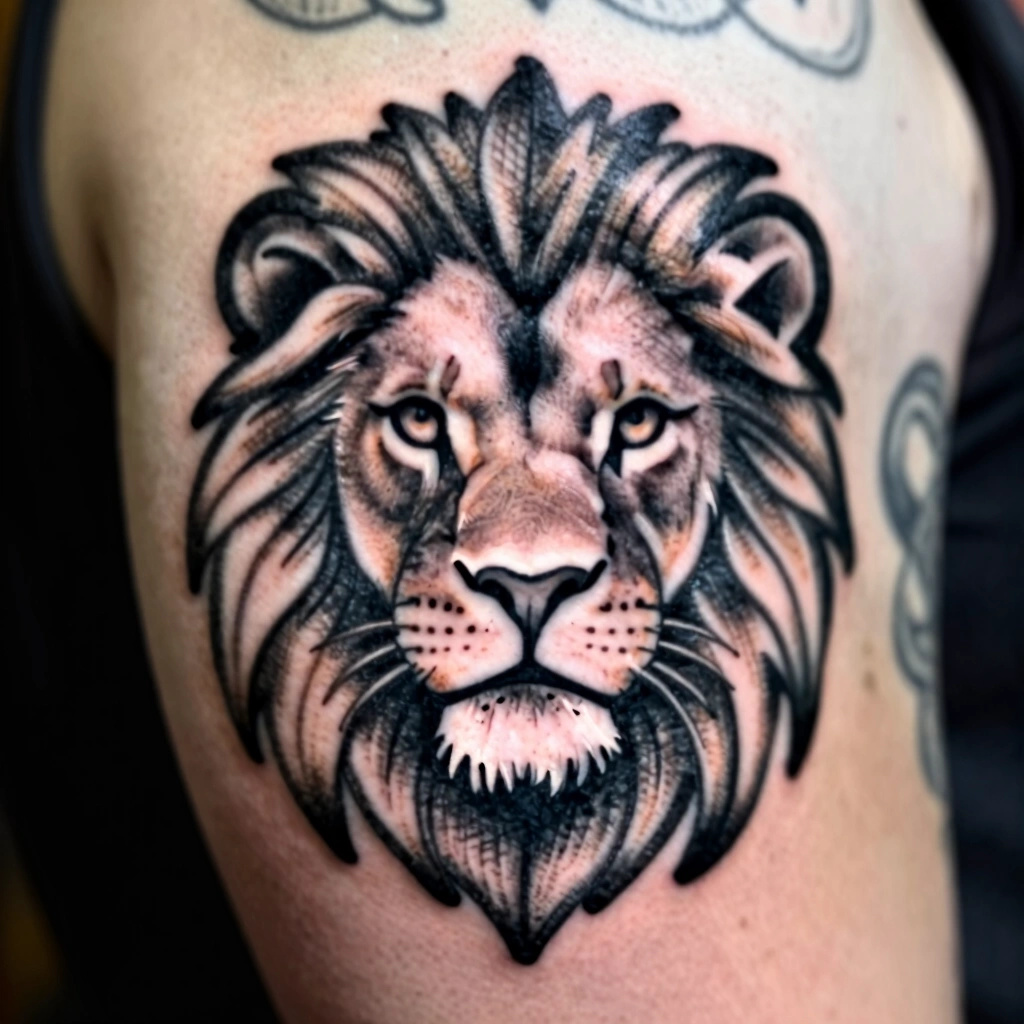
Blackwork uses solid black ink and heavy shading to create bold contrast, and here it’s used to render the lion’s face while the mane is reimagined as flowing botanical linework — vines, leaves, or small blossoms replacing traditional fur texture.
The outer forearm gives this design the vertical space it needs for the botanical mane to trail naturally. Go with 5+ inches to keep both the blackwork face and the floral linework legible. Solid black areas tend to hurt more than fine line work since the needle passes over the same skin repeatedly — expect moderate-to-higher discomfort here. Tell your artist you want “negative space” left around the flowers so the design doesn’t read as one solid block. This piece holds up remarkably well over decades since dense black ink resists fading better than lighter grey-wash shading.
6. Dotwork Lion Silhouette

Dotwork builds an image entirely from small dots instead of continuous lines, creating a stippled, textured look. A dotwork lion silhouette usually keeps the shape simple — a profile or head shape — filled entirely with varying dot density to suggest shading and depth.
This technique is slow to apply, so budget extra studio time. Best placed on the upper arm or shoulder where a flatter canvas helps keep dot spacing even. A 4-inch minimum size keeps the stippling from looking like a smudge. Pain level runs moderate, similar to fine shading work, though session length can make it feel longer overall. Ask your artist for a sample of dotwork healing on their own portfolio — this style is more dependent on artist skill than most others. It ages into a soft, almost charcoal-sketch look that a lot of people find more interesting than flat black fill.
7. Lion and Cub Bond Tattoo
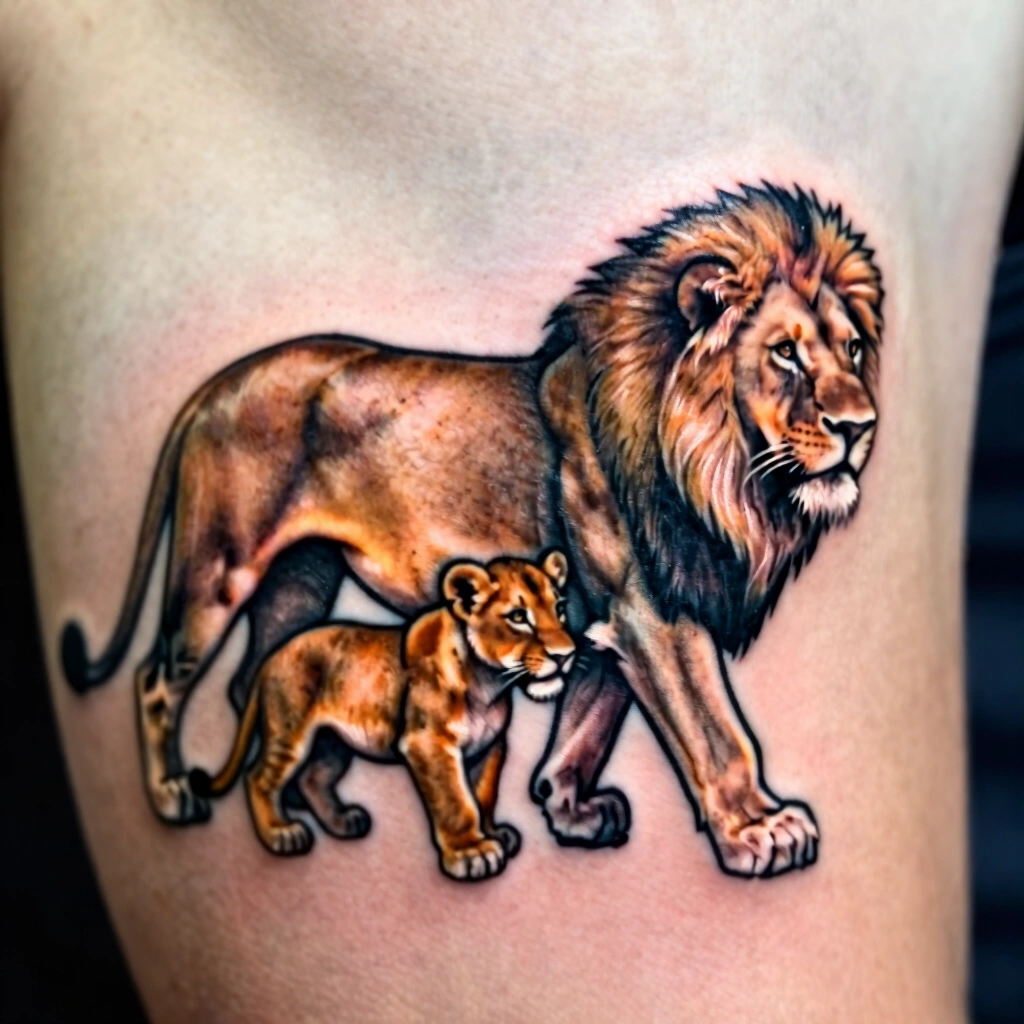
This design pairs an adult lioness with a smaller cub, usually in a walking or nuzzling pose, symbolizing motherhood or protection. Linework is typically fine-to-medium weight with light shading to separate the two figures without looking cluttered.
Place this on the upper arm or the outer forearm where there’s enough width to show both figures without cramming them together — 4–5 inches is the realistic minimum. Pain sits in the low-to-moderate range depending on exact placement. When briefing your artist, be specific about the emotional tone you want — nuzzling reads softer, walking side-by-side reads more like partnership. This design works well for meaningful, low-key tattoos that don’t need to be flashy to matter, and it’s a popular choice for moms wanting something personal but not overly literal like a portrait.
8. Regal Lion with Crown

A crown sitting atop or replacing part of the mane turns this into a straightforward strength-and-sovereignty symbol. It’s usually done in fine line or light blackwork, with the crown rendered in clean geometric strokes rather than ornate detail.
Upper arm or shoulder placement gives the crown room to sit above the lion’s head without looking squeezed. 4 inches is a comfortable minimum for legibility. Pain is moderate on the shoulder cap due to thinner skin over bone in that area. If you want the crown to stand out, ask your artist about slightly bolder linework just for that element while keeping the lion itself fine-line — mixing weights within one piece is a common technique. This design tends to read clearly even from a distance, so factor that into your decision if workplace visibility is a concern.
9. Negative Space Lion Design

Negative space tattooing uses the untouched skin itself as part of the image, rather than filling every area with ink. A negative space lion might have a solid black background with the lion’s mane “carved out” in the skin’s natural tone, creating a striking reverse effect.
This works best on the outer forearm where flat skin shows the contrast clearly. Because the surrounding black areas take longer to fill, expect moderate-to-higher discomfort and a longer session. Size should be generous — under 4 inches and the negative space detail gets lost. Bring high-contrast reference images so your artist understands exactly which parts stay unshaded. This is a bold, modern option, but it’s less forgiving if you gain or lose skin elasticity over time, so ask your artist how they expect it to age on your specific skin tone and texture.
10. Lion with Rose Accents
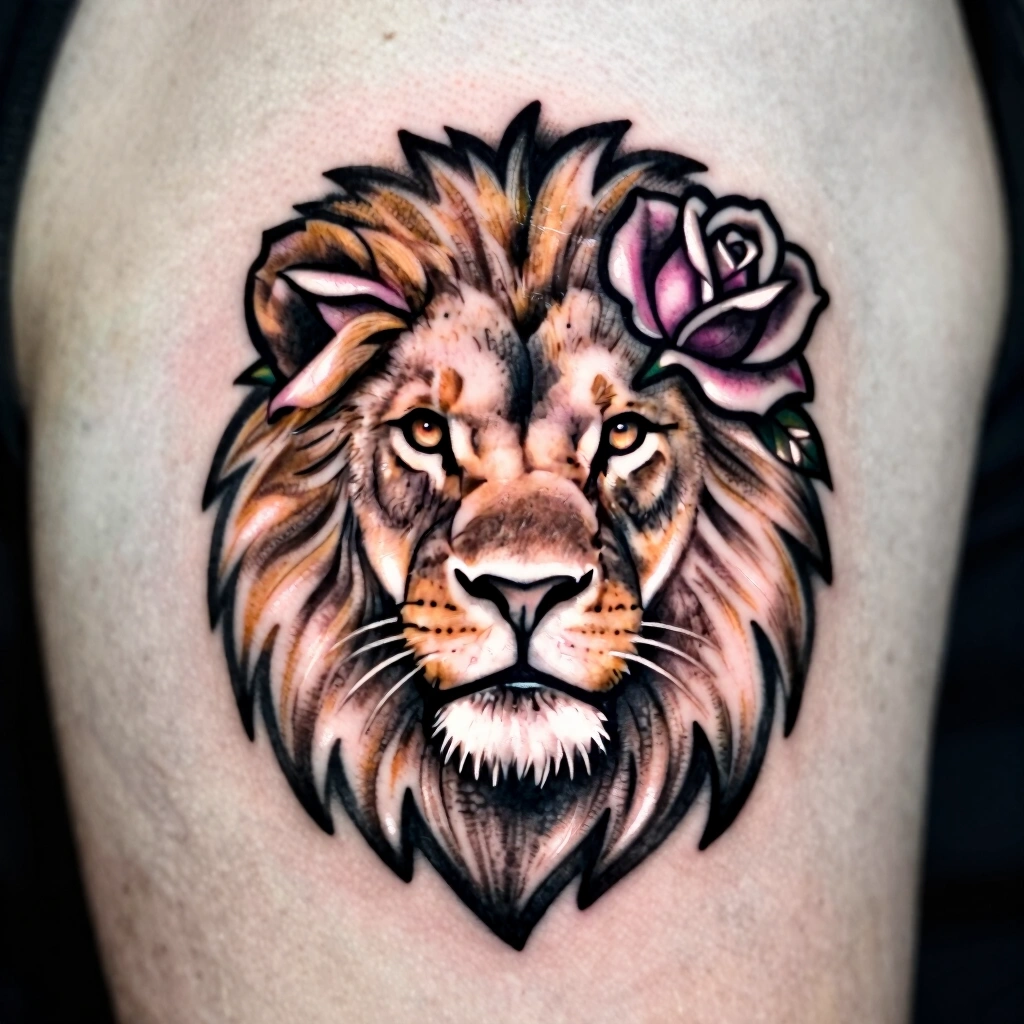
Combining a lion’s face with one or two roses is a classic pairing, softened here through lighter shading and smaller, more delicate rose renderings rather than bold traditional roses. Linework stays fine to medium, with shading limited to petal folds and mane texture.
The forearm suits this well, giving enough length for the lion and roses to sit in a natural flow rather than stacked awkwardly. 4–5 inches keeps both elements clear. Pain is low-to-moderate. When briefing your artist, specify rose placement — trailing down from the mane reads differently than roses framing the face. This combination is popular for matching or complementary tattoos among friends, since the rose element can be adjusted per person while the lion stays consistent.
11. Sketch-Style Lion (Pencil Effect)

This style deliberately mimics loose pencil sketching — visible “construction lines,” intentional crosshatching, and an unfinished look on the edges. It’s a fine-line technique but leans into imperfection rather than polished realism.
Upper arm or forearm placement both work, though a longer canvas suits the sketchy line trails better. 4 inches is a solid minimum. Pain sits low-to-moderate since shading stays light throughout. Ask your artist for “sketch-style” or “trash polka lite” references so they understand you want the rough-edge aesthetic on purpose, not a mistake. This design ages into a slightly softer, more artistic look over time, since the sketch lines were never meant to be perfectly crisp anyway.
12. Leo Zodiac Lion Tattoo
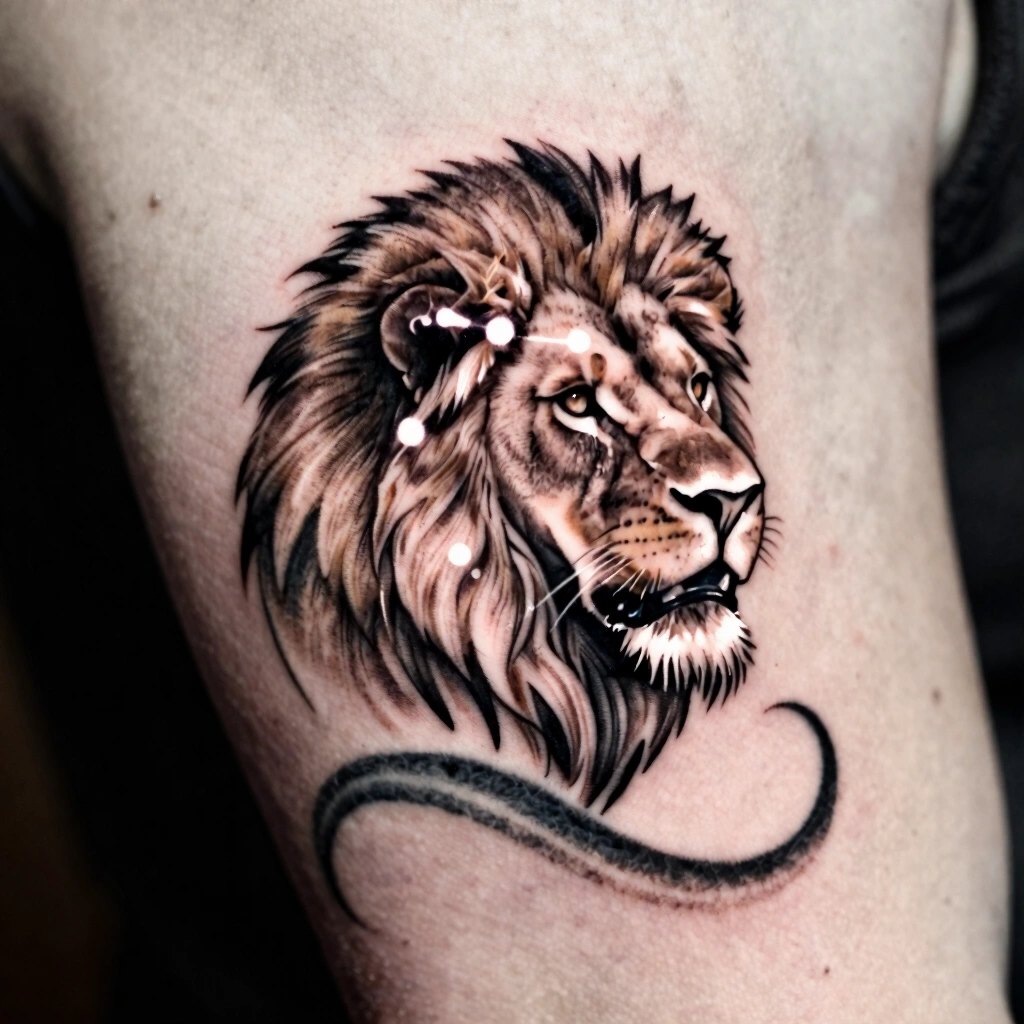
Built specifically around astrology, this design merges lion imagery with the Leo symbol or constellation dots. Often it’s a small lion face with the zodiac glyph worked into the mane, or a lion silhouette connected by fine constellation linework.
Smaller sizes work here — 2–3 inches on the wrist-facing forearm or inner arm. Pain is generally low given the smaller scale and lighter ink density. This is a strong first-tattoo option if you want personal meaning without long-term commitment to a large piece. Ask your artist to keep the constellation dots evenly spaced using a stencil rather than freehand, since uneven dot spacing is one of the more common complaints with this style. It’s also easy to personalize by adding your actual birth constellation instead of a generic Leo pattern.
13. Lion with Sunflower Mane

Instead of traditional fur texture, the mane is reimagined as a ring of sunflower petals, blending botanical and animal imagery into one cohesive piece. Linework is typically fine, with light shading used just to define petal layers.
This needs real space to work — the upper arm or a wraparound forearm placement suits it best, at 5+ inches. Pain is low-to-moderate depending on exact positioning. When talking to your artist, ask whether they’ll do the petals in pure line art or add light color for warmth — both look good, but they age differently, with colored petals needing earlier touch-ups than black linework. This is a favorite for people wanting something clearly feminine and cheerful without dropping the lion imagery altogether.
14. Lion Paw Print Combo
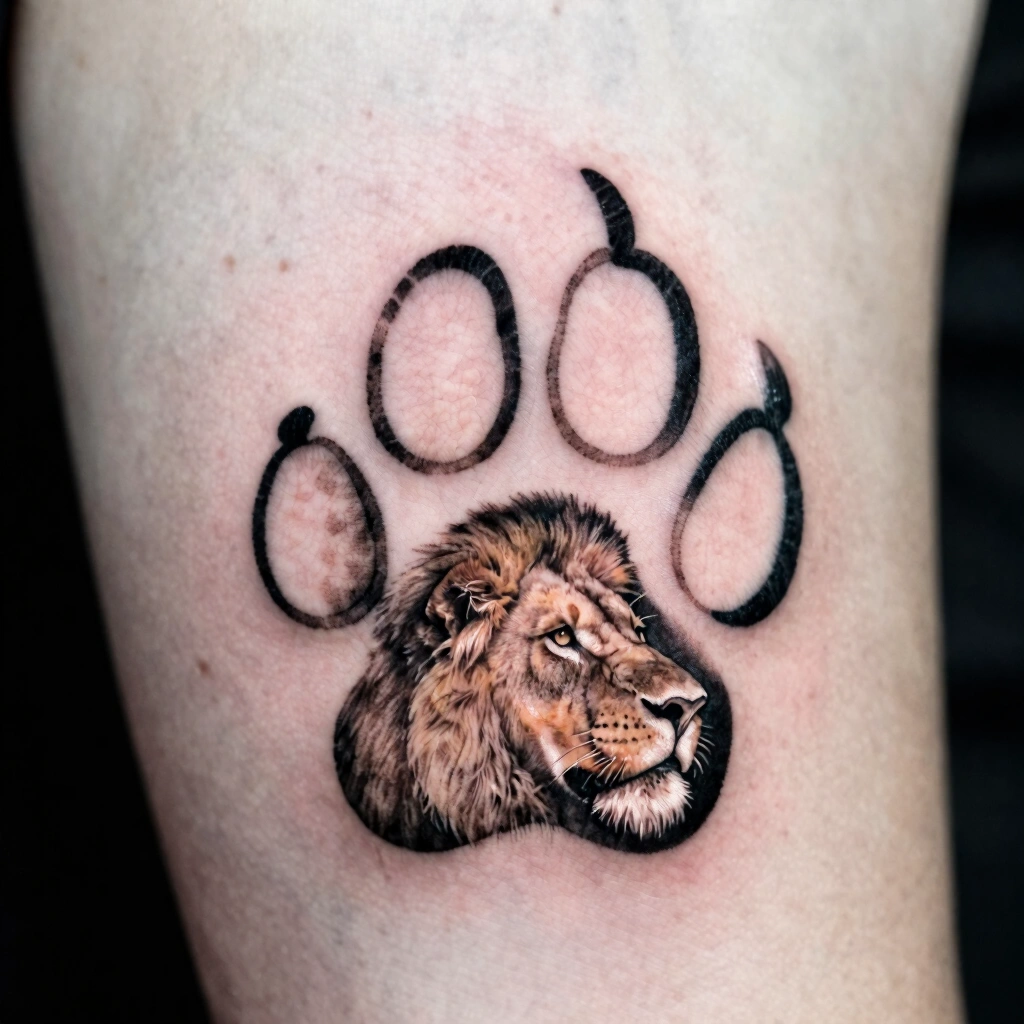
A smaller, simpler option pairing a lion’s face with a paw print, either connected by a fine line or placed separately along the forearm. This is less detailed than the portrait-style options, making it more budget-friendly and faster to complete.
Great for the wrist area or inner forearm, sized at 2–3 inches. Pain runs low given the minimal shading involved. This is a solid pick for a first tattoo or for anyone wanting a smaller, quieter nod to the lion theme rather than a full statement piece. Ask your artist to slightly vary the paw print’s texture lines so it doesn’t read as a flat stamp. It’s also an easy design to get matched with a family member using different paw sizes.
15. Realistic Lion Portrait (Fine Shading)

This is the most technically demanding option on the list — a detailed, photo-realistic lion face using fine-line work combined with soft greyscale shading to mimic fur texture, light, and shadow. It requires real skill to pull off without looking muddy.
This needs real canvas space — 5–6 inches minimum on the outer upper arm or forearm. Pain runs moderate-to-higher simply due to the longer shading sessions involved. Definitely ask to see healed (not just fresh) photos of realism work in the artist’s portfolio — this style is the most dependent on artist skill of anything on this list. It also requires the most touch-up maintenance long-term, since fine greyscale shading is the first thing to soften as skin ages.
16. Lion with Script Quote Wrap

A lion image paired with a short quote or word wrapping partially around the arm, usually in a clean, thin script font that echoes the fine-line style of the lion itself.
Best suited to the forearm, where the wraparound placement follows the arm’s natural curve. Keep the lion portion around 3–4 inches and the script proportionate — cramped lettering is one of the most common regrets with this style. Pain is low-to-moderate depending on total coverage area. Bring a printed version of your exact wording, spelled out, to your consultation, and ask your artist to mock up spacing on a stencil before the needle touches skin. This combination works well when you want the symbolism of the lion paired with something explicitly personal.
Best Placement Ideas

- Outer forearm — high visibility, moderate pain, great for detailed linework since the surface is flat
- Upper arm/shoulder cap — easier to cover for work, slightly more pain over the bone, good for rounded designs like mandalas
- Inner forearm — more private placement, softer skin can mean more sensitivity for some people
- Wrist-adjacent forearm — best for small, minimalist designs, tends to fade faster due to frequent sun and friction exposure
- Full forearm wrap — best for script or sunflower-mane designs that benefit from following the arm’s natural curve
Tips for Success

Look through an artist’s portfolio for consistency, not just one great photo. You want to see multiple healed examples of the specific technique you’re after — fine line, blackwork, dotwork — not just fresh, glossy ink shots. Ask direct questions in your consultation: what needle configuration they plan to use, how they handle touch-ups, and whether they’ve done this particular style before. A confident, experienced artist won’t mind explaining their process. Bring reference images, but stay open to their adjustments — a good artist will tell you if a design won’t age well at your requested size or placement, and that feedback is worth listening to.
Common Mistakes and How to Avoid Them
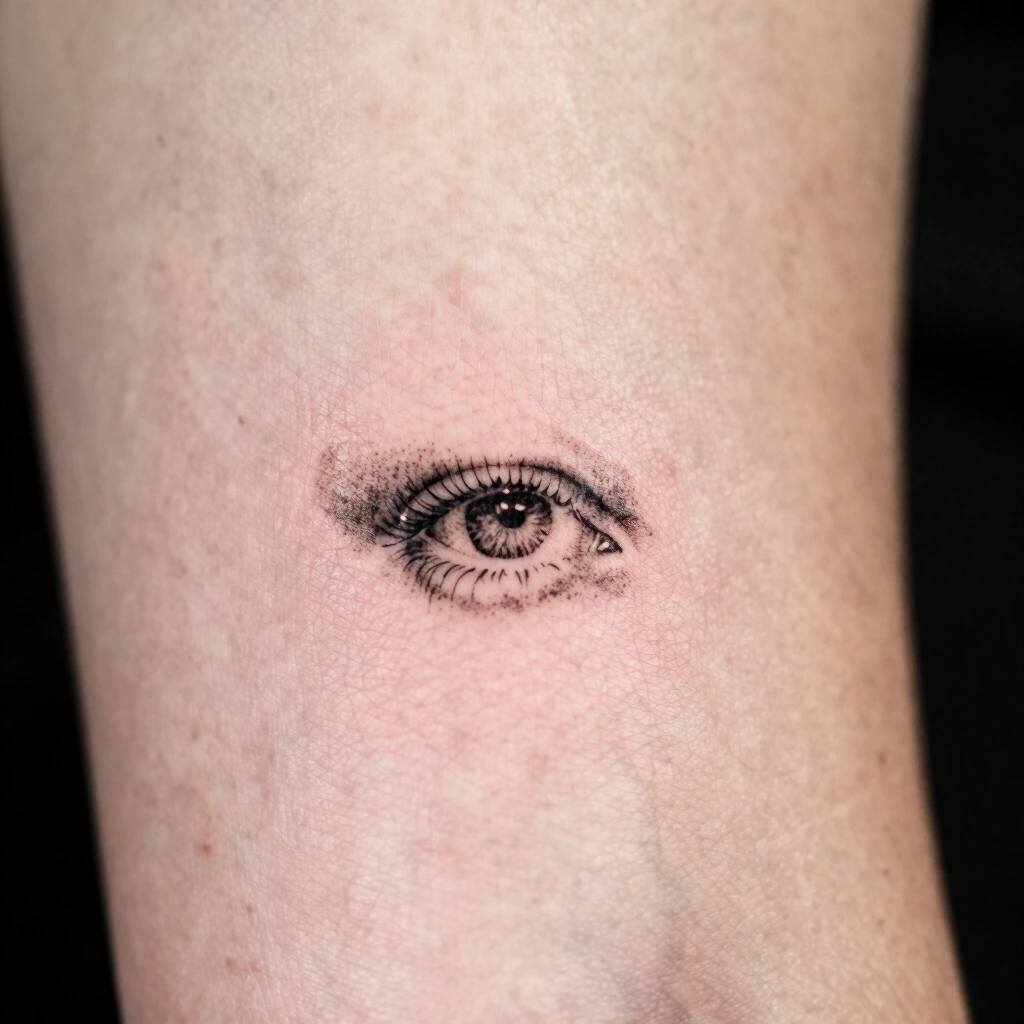
- Going too small for the detail level — fine shading and portrait-style work need real space, or they blur into a dark smudge within a few years
- Picking a placement that fights the design’s shape — a wraparound script needs a wraparound placement, not a flat square patch of skin
- Skipping the aftercare instructions — even minor neglect can affect how crisp the linework looks once healed
- Copying a design exactly from social media — personalizing even one small element (a color choice, an added flower, a name) keeps your tattoo from looking like a template
Similar Variations

Nearly every design above can be resized down for a subtler statement or scaled up into a half-sleeve if you want more visual weight later. Color can be added to originally black-and-grey designs, though this usually means a touch-up session down the line to keep saturation even. Several of these — the paw print combo, the Leo zodiac design, and the fine-line portrait — work particularly well as matching tattoos, since they can be adjusted slightly in size or detail per person while keeping the core image recognizable.
Aftercare Basics
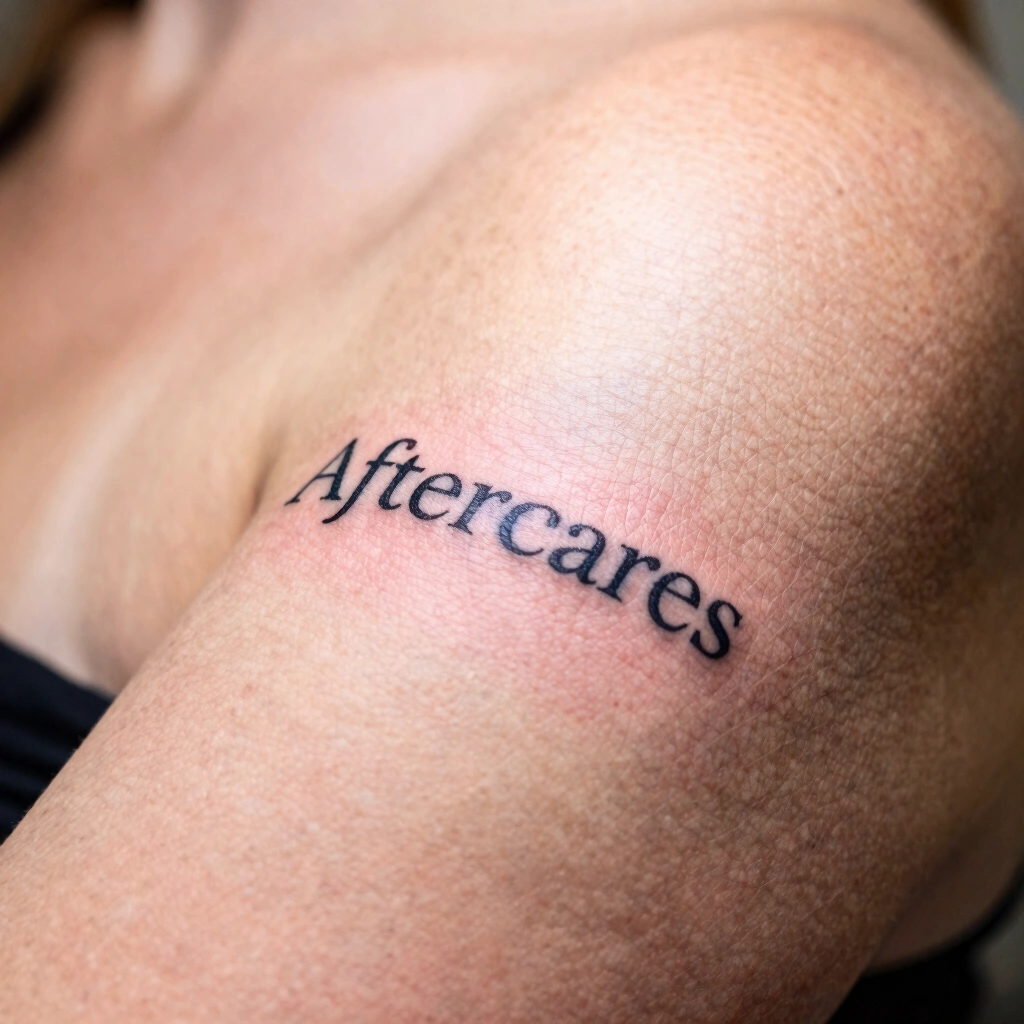
General aftercare consensus among professional artists includes keeping the area clean, avoiding direct sun exposure while healing, and avoiding tight clothing or friction over the fresh tattoo. Healing time varies by individual and by design size, but most people see the surface heal within two to three weeks, though deeper layers of skin continue settling for longer. Always follow the specific aftercare sheet your artist gives you, since products and timelines can vary studio to studio, and check in with them directly if anything looks unusual during healing.
Quick FAQ

How much does a feminine lion tattoo for the arm typically cost?
Cost depends heavily on size, detail, and your artist’s hourly rate, but smaller minimalist designs often start in the low hundreds while larger detailed pieces like realistic portraits can run into several hundred dollars or more across multiple sessions.
How painful is a lion tattoo on the arm?
Pain varies by individual and by exact placement — fleshier areas of the upper arm tend to be more tolerable than bony spots near the elbow or wrist. Fine-line and dotwork designs generally feel less intense than dense blackwork fill.
How long does healing take?
Surface healing typically takes two to three weeks, though this varies by person and by how well aftercare instructions are followed. Deeper skin layers can take longer to fully settle.
Will these designs need touch-ups over time?
Yes, most tattoos soften somewhat over years due to sun exposure and natural skin aging. Bold blackwork tends to hold up longest, while fine-line and watercolor-style pieces are more likely to need a refresh sooner.
This article only offers general guidance — pain tolerance, healing speed, and how a design ages will vary from person to person, so talk to a licensed, experienced tattoo artist or a dermatologist about your specific skin and health considerations before booking.
Finding the right feminine lion tattoo for your arm really comes down to matching the technique to the meaning you want it to carry — bold blackwork for permanence, fine line for subtlety, watercolor for softness. Take your time picking an artist whose healed work you actually admire, ask the questions that matter, and the design you land on will be one you’re still proud of years down the road.