25 Mother Daughter Tattoos: A Real Guide Before You Book
Nervous about picking mother daughter tattoos you’ll actually love in ten years, not just today? You’re not alone, and honestly, that hesitation is smart. A tattoo you share with your mom or your daughter carries more weight than a random flash piece, so it deserves more research than a five-minute scroll through Pinterest.
So what are the best mother daughter tattoos? Fine-line florals, matching symbols like moons or infinity loops, and split-design pieces (like a bird that only looks complete when both tattoos are together) work best. They stay meaningful without feeling matchy-matchy, and simple linework ages more predictably than heavy shading.
Stick around, because I’m also going to walk you through placement tradeoffs, pain levels, what these designs actually cost, and how to brief an artist so you don’t end up with a stencil that looks nothing like what you pictured.
Why Matching (But Not Identical) Designs Work Best for Moms and Daughters
Here’s something most articles skip: matching doesn’t have to mean identical. The strongest mother-daughter tattoo pairs I’ve seen in studios use the same concept but scale it differently — a bigger bold moon for mom, a smaller crescent for her daughter, same linework style, different size. This keeps the tattoos personal to each woman’s body and life stage while still reading as a set. It also ages better, because identical tiny tattoos in the same spot can start to look like a “kit” rather than two individual pieces of art.
Before you pick a design, it helps to actually understand the techniques being thrown around in consultations. Here’s a quick breakdown:
- Fine line / single needle: Uses a very thin needle configuration to create delicate, low-opacity lines. Best for minimalist florals, script, and small symbols. Fades slightly faster than bold work over many years.
- Bold traditional: Thick, confident outlines with solid color fill. Reads clearly from a distance and holds up longer on skin, but needs more surface area to look right.
- Blackwork: Solid black ink used for graphic shapes, silhouettes, or geometric patterns. High contrast, very striking, and tends to age well because there’s no fine detail to blur.
- Dotwork: Shading and texture built from tiny individual dots instead of solid fill or line shading. Creates a soft, almost textured look — common in mandalas and lotus designs.
Knowing these terms means you can actually describe what you want instead of pointing at a photo and hoping.
Fine-Line Matching Heart Tattoos

This is the design most people picture first, but the good versions aren’t just a heart outline. A skilled fine-line artist will vary the line weight slightly — thinner at the top curves, a touch heavier at the base — so it doesn’t look stamped-on. Best placed on the inner wrist or behind the ear, sized around half an inch to an inch. Wrist skin is thin over bone, so expect a sharper, more noticeable sensation than fleshier spots. Healing typically runs 10–14 days for surface peeling, though full settling takes longer. Bring a reference photo of the exact line thickness you like — “thin” means different things to different artists. This works great as a first tattoo since it’s quick, visible when you want it, and easy to cover for work.
Single-Needle Infinity Symbol Duo
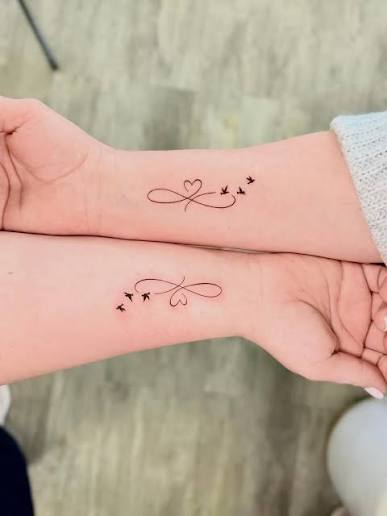
The infinity loop done in single-needle work looks almost like it was drawn with a fine pen rather than tattooed. Mother and daughter versions often differ slightly — one loop slightly wider, or a tiny star tucked into one side. Ankle or collarbone placement suits this design because the shape reads well along a horizontal line. Keep it under 1.5 inches; going smaller than that risks the linework blurring together after a few years. Collarbone tattoos tend to sting more due to thin skin over bone, while ankle placement is milder for most people but experiences more friction from socks and shoes during healing. Ask your artist about single-needle versus standard fine-line needles, since single-needle holds crisper detail at very small sizes.
Blackwork Sun and Moon Set

This pairing works symbolically — mom as the sun, daughter as the moon, or vice versa — and visually, because the solid black shapes create strong contrast against skin tone. Blackwork holds its shape well over decades since there’s no gradient to fade unevenly. A forearm or upper arm placement gives enough room for clean geometry; going smaller than 2 inches on a sun with rays gets risky because the lines merge as the tattoo settles. This is a moderate pain zone — meaty parts of the arm are usually more tolerable than bony spots. If you want visible symbolism but with career flexibility, request the design angled so it’s easy to cover with a sleeve or watch.
Dotwork Mandala Fragments
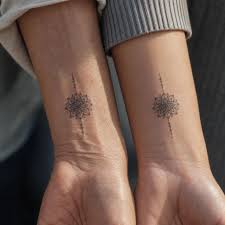
Here’s a clever idea most lists don’t mention: instead of matching mandalas, get complementary fragments of one mandala, split across two people. Dotwork shading builds the pattern from small dots rather than solid black, giving it a soft, textured look instead of a flat one. Upper arm or shoulder blade placement works well because the dots need room to breathe. Size matters a lot here — under 2 inches, individual dots can blur into blotches instead of a crisp pattern. Shoulder blade skin is generally easier to tattoo than bony areas, though sitting still for detailed dotwork sessions takes patience. Bring a photo of the full mandala so your artist can accurately divide it into two balanced halves.
Script Tattoos with a Shared Quote
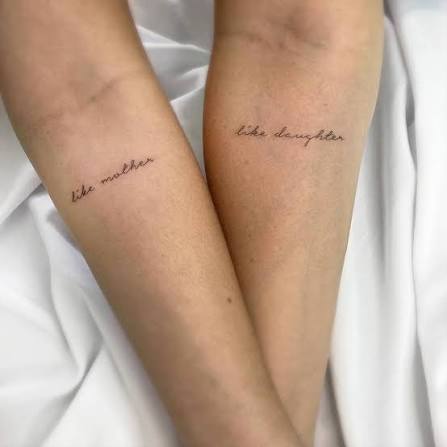
Splitting one meaningful sentence across two tattoos — half on mom, half on daughter — is one of the most personal options on this list. Fine-line script in a consistent font keeps both halves visually connected. Ribs, forearm, or the side of the wrist all work, though ribs are widely considered one of the more sensitive placements due to thin skin and less padding. Keep letter height above a quarter-inch; smaller script tends to blur into illegible smudges after some years. Practical tip: have your artist hand-letter a custom version rather than a generic font, since standard fonts often stretch oddly on curved body parts.
Matching Wildflower Botanical Line Art
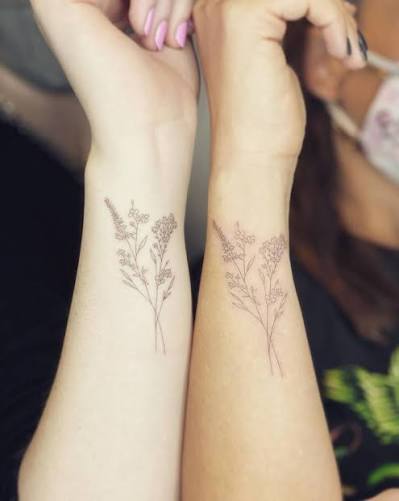
Botanical fine-line work suits people who want something delicate but not overly symbolic. Think a single stem with two or three small blossoms, drawn with consistent thin lines and little to no shading. Forearm, ankle, or shoulder placements all showcase the natural curve of a stem nicely. A good size range is 2–4 inches to keep petal detail crisp. This design ages gracefully because there’s minimal solid color to fade unevenly — just clean linework. It also works well as a “starter” tattoo for someone nervous about commitment, since botanical line art tends to look intentional even years later without a touch-up.
Negative-Space Crescent Moon Duo

Negative space tattooing uses the untouched skin itself as part of the design — so instead of a solid black moon, the crescent shape is formed by the black ink around it. This creates a striking, almost glowing effect. It works best on evenly toned skin without a lot of scarring or texture in the area, since the untouched skin needs to read cleanly. Upper arm or calf placement gives enough surrounding space. This is a more advanced technique, so ask specifically to see healed (not fresh) examples of negative-space work in an artist’s portfolio — it’s one of the trickier styles to execute well long-term.
Fine-Line Birds in Flight
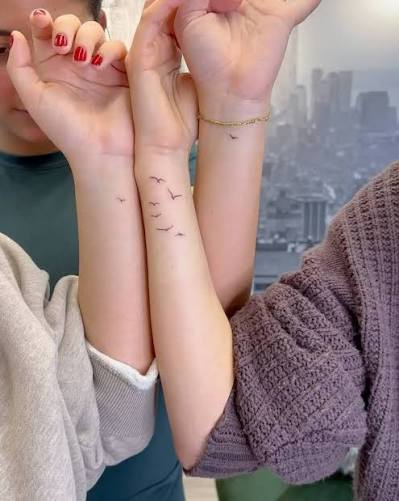
A larger bird for mom, a smaller one for the daughter, flying in the same direction — this is a classic “split but connected” concept. Fine-line feather detail requires a steady hand and thin needles, so the linework stays delicate instead of clumping. Shoulder or upper back placement gives the wings room to spread naturally. Anything under 2 inches risks losing the feather texture entirely. Shoulder blade areas are usually moderate on the pain scale. This design transitions well into a larger back piece later if either person wants to build onto it, which is worth mentioning to your artist upfront.
Watercolor-Style Floral Accent Tattoos
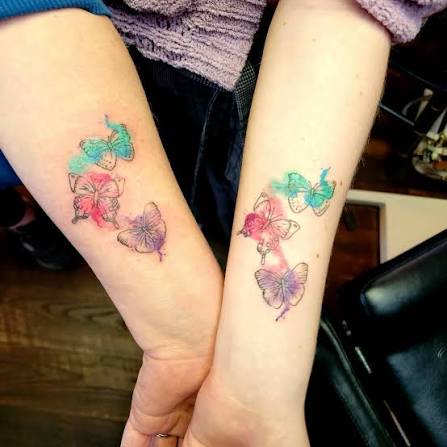
Watercolor tattoos use soft color blending with little to no black outline, mimicking a painted look. They’re visually striking but worth a serious conversation with your artist about saturation and long-term fading, since color ink historically fades faster than black ink and touch-ups are more likely down the road. Best placed on the upper arm, thigh, or shoulder where there’s enough space for the color to blend without looking muddy. This is not the easiest first-tattoo option because it requires a specialist, so look specifically for portfolio work labeled watercolor, not just colored traditional tattoos.
Matching Fingerprint Tattoos
An actual scanned fingerprint, tattooed in fine black linework, is one of the most literal ways to represent a mother-daughter bond. The technique requires converting a real print into clean tattoo-ready line art — ask your artist whether they can do this digitally before your appointment. Wrist or behind the ear are common spots since the design is usually small, around half an inch. Because the print has tiny ridges, this design is more prone to blurring at very small sizes, so don’t go below 0.5 inches if you want the ridges to stay visible after healing.
Bold Traditional Rose Duo
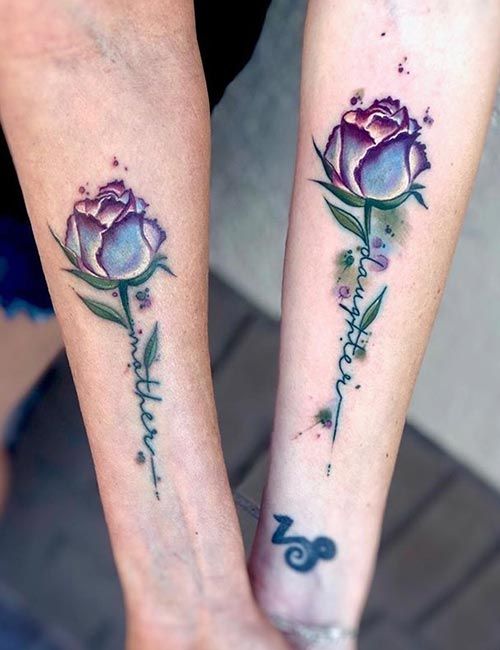
If you want something with more visual weight, a bold traditional rose — thick black outlines, solid red or black fill, minimal fine detail — reads clearly from across a room and tends to age better than delicate designs because there’s less fine detail to lose. Forearm or calf placement suits the bold linework. Give it at least 3 inches to keep the petal layers distinct. This is a great option for someone who already has other tattoos and wants this one to hold its own visually rather than blend in.
Dotwork Tree of Life with Two Birds

The tree-of-life motif, rendered in dotwork shading, gives a soft gradient look to the trunk and canopy without flat black fill. Adding two small birds — one for each person — personalizes a fairly common design. Upper back or thigh placement gives enough canvas for the branching detail. This piece typically needs 4+ inches to keep the dot gradient readable; smaller versions often lose the shading entirely. Expect a longer session than simpler linework, since dotwork is time-intensive.
Fine-Line Constellation Tattoos
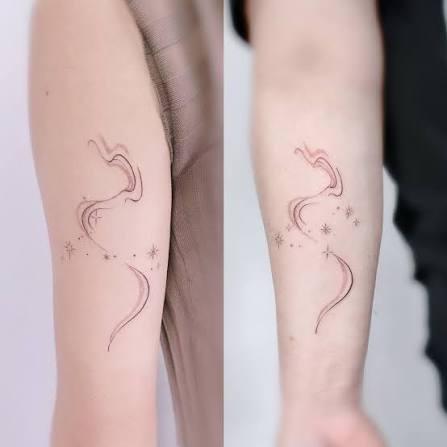
Using each person’s zodiac constellation, connected by thin dot-to-dot lines, is a subtle way to represent both individuals without needing an identical shared symbol. Collarbone, forearm, or ribs all work, though rib placement tends to rank higher on most people’s pain scale. Keep star spacing accurate — ask your artist to reference an actual star chart rather than a stylized version, so the constellation stays recognizable rather than becoming abstract dots.
Linework Wave or Ocean Motif
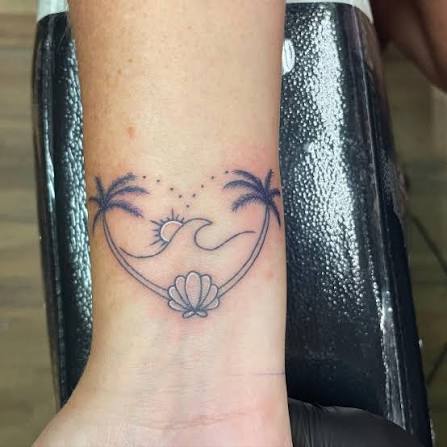
A single continuous wave line, done in consistent fine-line work, works well as a subtle nod to a shared memory (beach trips, a coastal hometown) without literal imagery. Wrist, ankle, or side-ribcage placement follows the natural curve of the design. This holds up well over time because it’s just line, no shading to fade unevenly.
Matching Compass Rose Tattoos
A compass symbolizes guidance, which fits the mother-daughter relationship well. Blackwork or fine-line versions both work — blackwork gives a bolder, more graphic compass, while fine-line keeps it delicate. Forearm or upper arm placement gives room for the compass points. Go bold and simple rather than overly detailed if you’re placing it under 2 inches.
Blackwork Geometric Triangle Set
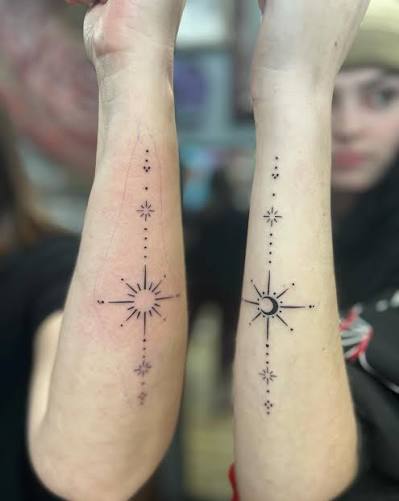
Simple geometric shapes — nested triangles, for example — done in solid blackwork create a modern, minimalist look that ages exceptionally well since there’s no shading gradient to worry about. Wrist or ankle placement suits the small, clean shapes. This is a genuinely good “low commitment” option for someone unsure about a first tattoo, since the design reads as intentional and abstract rather than overtly symbolic.
Script Initial Tattoos with Fine Line
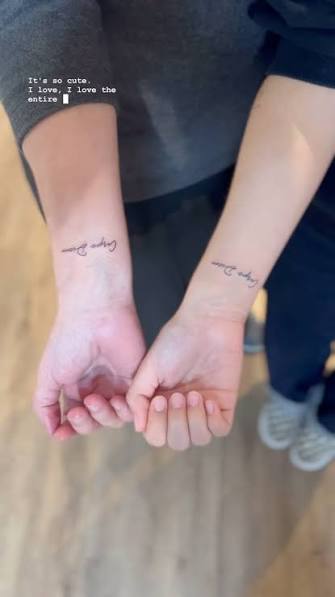
Instead of full names, small initials in matching fine-line script keep things subtle. Behind the ear, inner finger, or ankle are common spots. Finger tattoos deserve an honest note: they fade faster than almost any other placement due to constant hand-washing and skin regeneration, so ask your artist directly about touch-up expectations before choosing this spot.
Butterfly Duo, One Bold, One Fine-Line

Two butterflies, same pose, but rendered in two different techniques — one bold traditional with solid fill, one fine-line with just an outline — visually represents two personalities within one shared symbol. Shoulder or upper arm placement gives room for wing detail in both styles.
Matching Puzzle Piece Fine-Line Tattoos
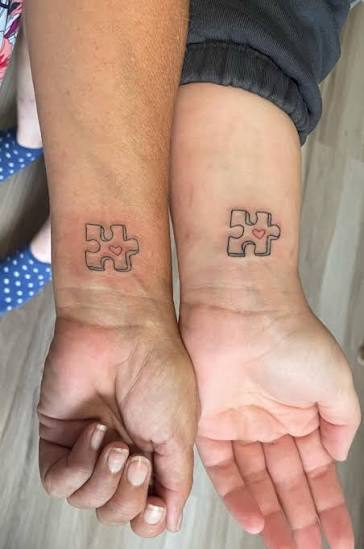
Two interlocking puzzle pieces, done in simple fine-line work, is a straightforward way to show connection. Wrist or ankle placement at around 1 inch keeps the interlocking notches crisp. Avoid going too small, since the connecting tabs are the detail that sells the concept.
Sun Ray Fine-Line Tattoos

A small sun with simple straight or wavy rays, in fine-line work, suits the back of the neck or behind the ear nicely. These spots are typically moderate on the pain scale and heal in about two weeks with normal peeling.
Floral Vine Wrap
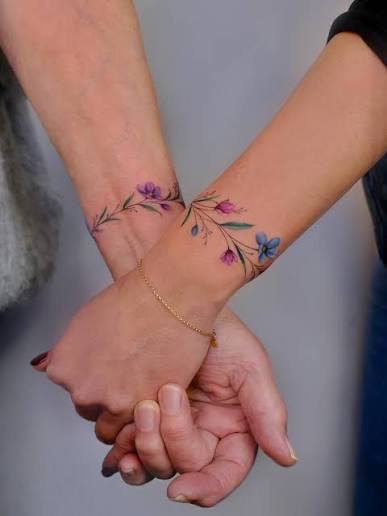
A thin vine with small leaves, wrapping partially around the wrist or ankle, gives a botanical feel without a large flower centerpiece. This design works well as a matching set since the vine length and leaf count can differ slightly between mother and daughter while still looking connected.
Fine-Line Feather Duo
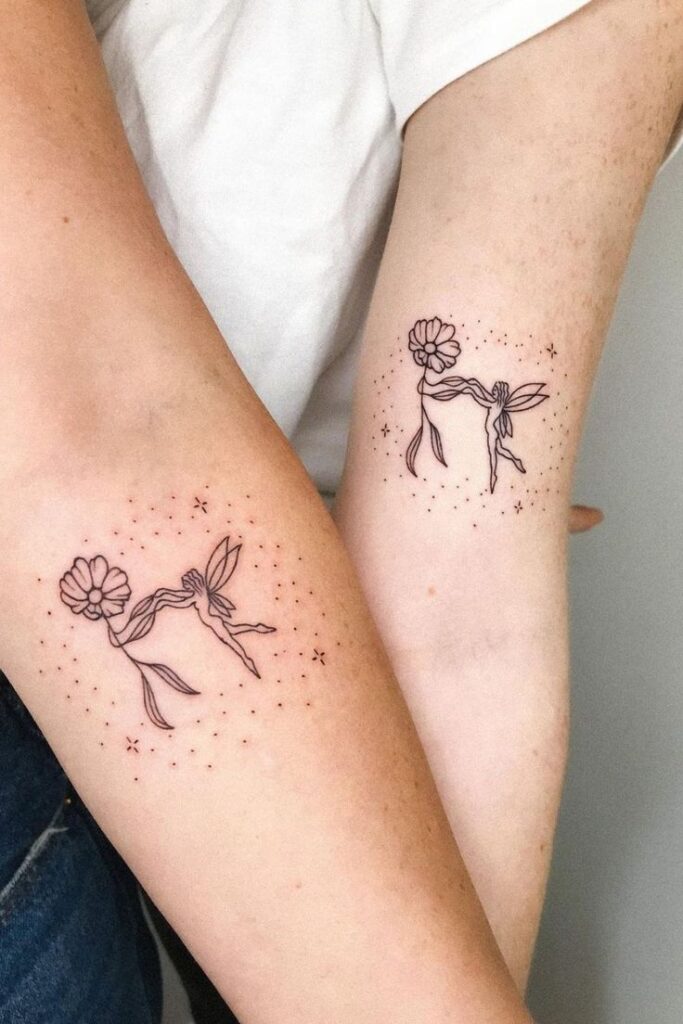
Two feathers, one slightly larger, done in delicate single-needle work, is a softer alternative to the bird-in-flight idea. Behind the shoulder or along the spine are popular spots, though spine placement is generally considered more sensitive due to thin skin over bone.
Dotwork Lotus Flower Set
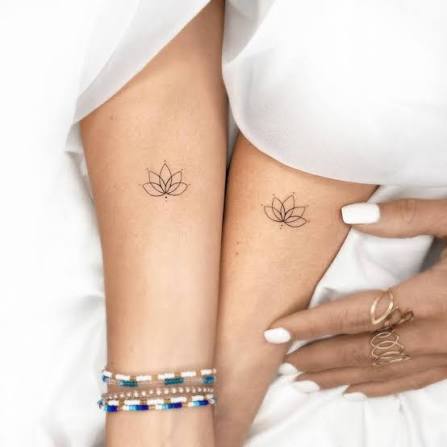
A lotus rendered in dotwork shading gives a gentle, textured petal gradient instead of flat color. Upper arm or thigh placement gives enough space for the layered petals to stay distinct at a readable size, ideally 3 inches or more.
Custom Handwriting Tattoo
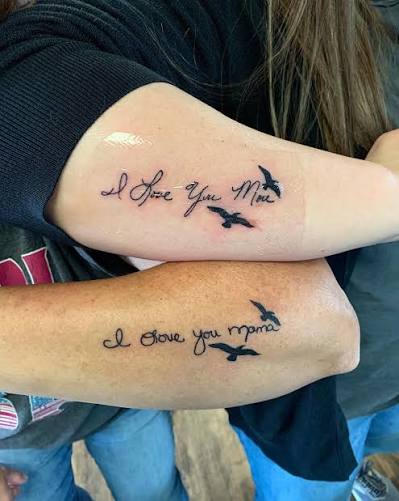
Using an actual scan of a handwritten word — “always,” a nickname, anything short — turns real penmanship into a tattoo. This requires converting handwriting into clean stencil lines, so bring a high-resolution photo of the original writing on plain paper. Wrist or collarbone placement suits short words well.
Best Placement Ideas
- Wrist or ankle — highly visible, moderate pain due to thin skin over bone, easy to show off but also easy to bump during healing.
- Behind the ear — low visibility when hair is down, generally moderate discomfort, small designs only.
- Forearm or upper arm — great for bigger, bolder designs, easier healing due to more cushioning, higher visibility for short sleeves.
- Ribs or collarbone — considered by most people to be a more sensitive area, best for those with some tattoo experience already.
- Shoulder blade or upper back — good for larger detailed pieces, less visible day-to-day, easier to cover for work.
- Finger — very visible but fades faster than almost anywhere else on the body; expect touch-ups.
Tips for Success
Look for an artist whose portfolio shows healed photos, not just fresh ink — fresh tattoos always look sharp, but healed results tell you how their linework and shading actually hold up. If you want fine-line work, look specifically for a fine-line specialist rather than a generalist, since thin, consistent lines take a different hand technique than bold traditional work. Bring reference photos, but also bring a written description of exactly what you want changed about them — artists appreciate specifics like “thinner lines than this” or “less shading than this example.” Ask about walk-in availability versus custom booking; matching mother-daughter designs are usually worth booking as a custom consultation rather than a same-day walk-in, since sizing needs to be planned for two different bodies.
Common Mistakes and How to Avoid Them
- Going too small for the detail level. Dotwork, mandalas, and fine feather textures need enough space to actually show the technique — shrinking them below the artist’s recommended size often causes blurring within a few years.
- Picking a placement that fights the design’s shape. A wide, horizontal design crammed onto a narrow finger rarely looks right.
- Skipping the aftercare instructions your specific artist gives you. Generic internet advice doesn’t always match the products or method your artist used.
- Copying a design exactly with zero personalization. Even a small size or angle change makes the tattoo feel like yours rather than a template.
- Not asking about touch-ups upfront. Fine-line and finger placements especially may need a touch-up appointment within the first year — ask if that’s included.
Similar Variations
Almost every design on this list can be resized. A wrist-sized fine-line heart can become a 3-inch shoulder piece with added shading. Blackwork designs can be softened into dotwork versions for a gentler texture, or bold traditional pieces can be simplified into fine-line outlines for a more subtle first-tattoo option. Color can also be added later in most cases — start with black linework, then decide after a year of living with it whether you want a colored fill added in a follow-up session.
Aftercare Basics
Aftercare recommendations vary by studio and by placement, so always follow the specific sheet your artist gives you over anything you read online, including this article. In general, most artists recommend keeping the area clean, avoiding direct sun and soaking (pools, baths) during the initial healing period, and using a fragrance-free moisturizer as directed. Healing time and sensitivity vary from person to person, so if you notice anything that seems unusual, it’s worth checking in with your artist or a licensed dermatologist rather than guessing.
Quick FAQ
How much do mother daughter tattoos usually cost?
Small fine-line designs often start around $80–$150 per person depending on region and studio minimums, while larger detailed pieces (blackwork sleeves, big dotwork mandalas) can run several hundred dollars. Always ask for a quote during consultation since pricing varies widely by studio and city.
Do matching tattoos hurt more than solo tattoos?
Not inherently — pain depends on placement and individual tolerance, not on whether it’s a matching design. Bony areas like the wrist, ankle, and ribs tend to rank higher on most people’s discomfort scale than fleshier spots like the upper arm.
How long does healing take?
Surface healing for most small to mid-sized tattoos runs about 2 weeks, with full settling under the skin taking longer. This varies by placement and individual skin, so always follow your artist’s specific timeline.
Will the design still look good in 10+ years?
Simple linework and blackwork tend to age more predictably than heavily detailed or watercolor pieces, since there’s less fine detail or color gradient to blur. Sun exposure and skin changes over time affect every tattoo to some degree, so realistic expectations matter more than any single style choice.
Choosing among these mother daughter tattoos really comes down to matching the design’s technical demands — the linework, the shading style, the size it actually needs — with a placement that fits both your lifestyle and your pain tolerance. None of that has to be guesswork if you ask the right questions during a consultation and look at healed portfolio work instead of just fresh photos.
At the end of the day, the best mother daughter tattoos are the ones that still feel true to both of you years down the road, so take your time, talk to a licensed professional, and pick something that means more than just a trend.