17 Arm Tattoo Men Will Actually Be Happy With Years Later
Nervous about picking an arm tattoo you’ll regret in five years? You’re not alone, and honestly, that hesitation is a good sign — it means you’re thinking this through instead of just pointing at the first cool design you saw online. This guide pulls together real studio knowledge, not just pretty pictures, so you can walk into a consultation knowing exactly what to ask for.
So what are the best arm tattoo ideas for men? Fine-line geometric patterns, bold traditional pieces, blackwork bands, and dotwork mandalas top the list because they translate well onto the arm’s curved, muscular surface and age predictably over a decade of skin changes. The right choice depends on your pain tolerance, how visible you want it at work, and whether you’re going custom or picking from flash.
Stick around, because I’m also breaking down pain levels by placement, realistic healing timelines, what a session actually costs, and how to brief an artist so you don’t end up with a stencil that doesn’t fit your arm’s shape.
Why the Arm Works So Well for Tattoos
The arm is one of the most forgiving canvases in tattooing, and that’s not just an opinion — it’s about anatomy. The bicep and forearm have more muscle and fat coverage than bony spots like the ribs or shins, which generally means less discomfort during the session. The natural curve of the arm also gives artists something to work with; a design can wrap, taper, or flow with the muscle instead of fighting against a flat surface. Plus, sleeves and half-sleeves let you build a tattoo over time, adding pieces as your budget and confidence grow, rather than committing to one massive session.
Fine-Line Geometric Sleeve Accent
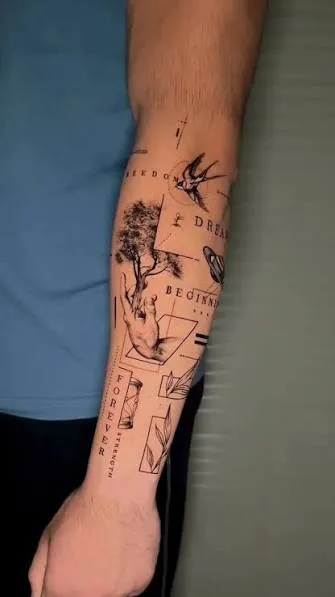
This style uses a thin, consistent line weight — usually done with a single needle configuration — to create angular shapes, triangles, or interlocking patterns that sit close to the skin without heavy shading. There’s no color saturation to worry about since it’s typically pure black linework, which keeps it looking sharp for years. Best placed on the outer forearm or upper arm where the skin is flatter, sized between 3 and 6 inches so the lines don’t blur together over time. Bring a reference photo of the exact geometry you want — vague requests like “something geometric” lead to generic results. Pain is moderate; thin lines on the forearm feel more like consistent scratching than deep pressure. It’s a strong first-tattoo option and reads as professional in most workplaces.
Bold Traditional Eagle
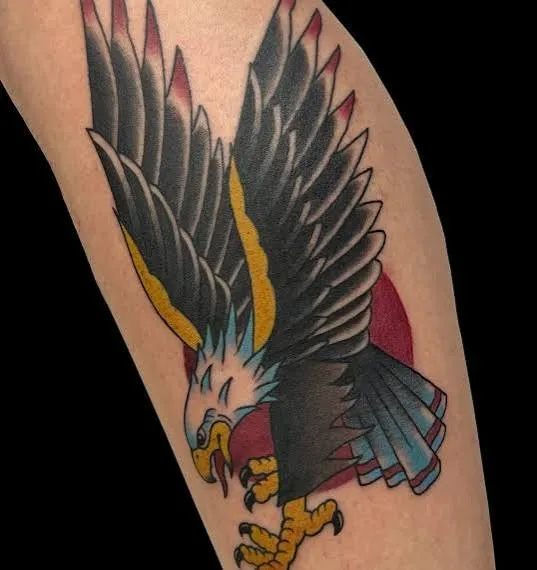
Traditional American tattooing relies on thick, confident outlines and a limited, saturated color palette — think deep reds, greens, and black — applied in flat sections rather than gradients. An eagle in this style holds up remarkably well because the bold linework resists fading better than fine detail does. This piece works best on the upper arm or shoulder cap where there’s enough space for wingspan without cramming, ideally 5 to 8 inches. Ask your artist about their thick-line technique specifically; not every shop specializes in traditional flash. Expect noticeable pressure since this area often involves longer sessions, but discomfort stays manageable. It’s a classic choice for guys who want something that reads clearly from across a room, and it transitions nicely into a larger sleeve later.
Blackwork Tribal-Inspired Band
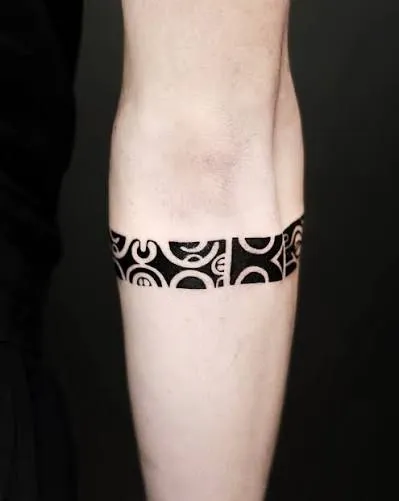
Blackwork means solid black ink applied in bold, deliberate shapes with almost no shading gradient — it’s about contrast and negative space (the untouched skin that forms part of the design) rather than detail. A tribal-inspired band wraps around the bicep or forearm, using the arm’s natural cylinder shape to make the pattern feel continuous. Size depends on band width, but 2 to 4 inches tall is standard. When briefing your artist, ask to see their blackwork saturation technique up close in their portfolio — solid black should look genuinely solid, not patchy. This placement is more sensitive than flatter areas since banding often crosses over muscle and tendon lines. It’s a great option if you want boldness without needing to commit to a full sleeve concept.
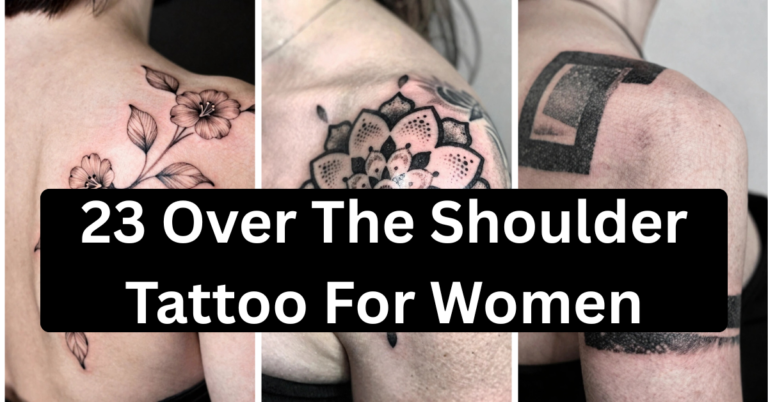
Dotwork Mandala on Shoulder

Dotwork builds an image entirely from tiny individual dots, creating soft shading and texture without any solid black fill. A mandala — a circular, symmetrical pattern — suits this technique because the repetitive dot pattern echoes the design’s natural rhythm. The shoulder cap is ideal since the curve helps the circular symmetry sit correctly, and 4 to 6 inches gives enough room for intricate detail to actually read once healed. Request a stencil test placement before the needle touches skin; mandalas are unforgiving if centered even slightly off. Dotwork tends to feel like a buzzing sensation rather than sharp pain, though sessions run long due to the density of dots required. This design ages gracefully because the soft gradient hides minor fading better than solid color would.
Negative Space Wave Design

Negative space tattoos use the untouched skin itself as part of the image, letting black ink outline a shape so the “empty” areas form waves, mountains, or abstract curves. This works exceptionally well on the forearm’s inner or outer edge, where the ink can frame the natural skin tone as the highlight. Keep it between 3 and 5 inches; too small and the negative space collapses into a blob. Bring high-contrast reference images so your artist understands exactly where black ink stops and skin begins. Pain is on the lower end for this placement since the linework is usually clean and quick. It’s a smart pick if you want something visually distinct without heavy ink coverage, and it photographs beautifully against most skin tones.
Single-Needle Script Quote
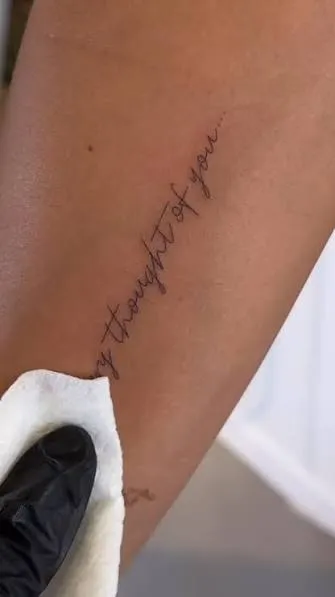
Single-needle tattoos use one fine needle point to create extremely thin, delicate lines — perfect for lettering that needs to stay legible without looking heavy. A short quote or word works best on the inner forearm or wrist-adjacent area, sized to match the natural line of the arm rather than curving unnaturally. Keep it under 4 inches long; overly long scripts on a curved surface distort as the arm bends. Ask specifically for a “single needle” or “fine line” setup, since standard needles will make lettering look thicker than intended. This placement has moderate sensitivity near the wrist and lighter discomfort higher up the forearm. Word tattoos are workplace-friendly when kept small, but be aware fine lines can soften slightly faster than bold work over 10+ years.
Realistic Portrait in Black and Grey
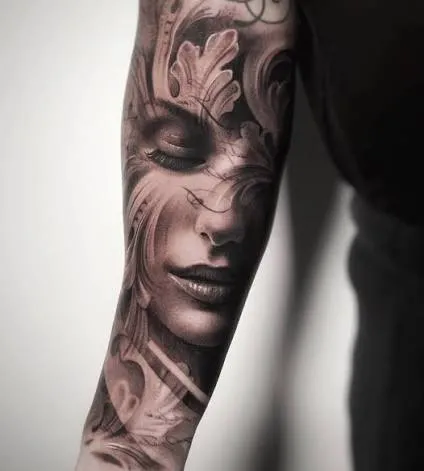
Black and grey realism uses shading gradients — built through techniques like whip shading or soft stippling — to mimic photographic depth without any color. A portrait, whether of a person, pet, or symbolic figure, demands significant surface area to hold detail, so the outer bicep or full forearm works better than a small patch. Plan for at least 6 to 8 inches; cramming a face into 3 inches usually loses the details that made you want it in the first place. Bring a high-resolution photo, not a blurry phone screenshot — your artist needs to see shadows and highlights clearly. This is a longer, more intensive session, so expect more cumulative discomfort. Realism ages well initially but benefits from a touch-up around the five-year mark as fine shading naturally softens.
Japanese-Style Dragon Half-Sleeve
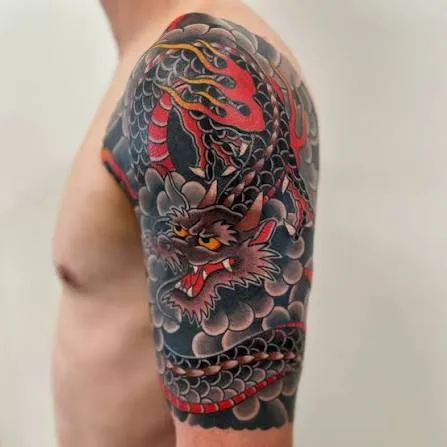
Traditional Japanese tattooing (sometimes called irezumi-influenced work) combines bold outlines, wind bars, water elements, and often color washes to tell a visual story across a large area. A dragon design specifically benefits from the half-sleeve format because its body can wind naturally around the arm’s shape, using the muscle contour to suggest movement. This isn’t a single-session tattoo — expect multiple sittings over weeks or months. Discuss composition with your artist before any ink goes down; dragons need to flow with your specific arm length and width, not just a generic stencil. Pain accumulates with session length, though no single moment is worse than other bold work. This is a serious commitment piece, better suited to guys ready for long-term visible ink rather than a first tattoo.
Minimalist Line Animal Design

Minimalist line work strips an animal — a wolf, fox, or bird, for example — down to its essential outline, usually in a single unbroken or near-unbroken line with zero shading. This suits smaller placements like the outer forearm or upper arm, staying between 2 and 4 inches so the simplicity doesn’t get lost in unnecessary bulk. When briefing your artist, ask them to simplify the reference image further if it still has textured shading — minimalist only works if the linework stays clean. Pain is generally lower here since sessions are quick and lines are thin. This is one of the most forgiving first-tattoo choices because it’s discreet, quick to heal, and easy to build around later with additional small pieces.
Biomechanical Forearm Design

Biomechanical tattoos blend organic and mechanical imagery — think muscle tissue giving way to gears or cables — using heavy black shading combined with sharp linework to create a 3D illusion under the skin. This style demands the forearm specifically, since the design is meant to look like it’s revealing what’s “underneath,” and the natural tendon lines of the arm help sell the illusion. Size should be substantial, 6 inches or more, because small biomechanical work loses its dimensional effect. Ask to see healed photos of your artist’s biomechanical work, not just fresh ink — the shading needs to hold up over time. Expect above-average discomfort due to dense shading work. It’s a bold statement piece, not ideal if you need to keep tattoos low-key for your job.
Religious Cross With Dotwork Shading

A cross tattoo combines a simple, recognizable outline with dotwork shading along the edges or center to add texture without heavy black fill. This hybrid approach keeps the design meaningful and understated rather than overly bold. The inner or outer forearm both work well, with 3 to 5 inches giving enough room for the dot gradient to read properly. Specify to your artist whether you want a thin or medium outline before the dotwork begins, since the outline weight changes the whole tone of the piece. Pain sits in the moderate range given the shading involved. This design works across almost any context — subtle enough for conservative workplaces, personal enough to carry real meaning.
Compass and Map Tattoo
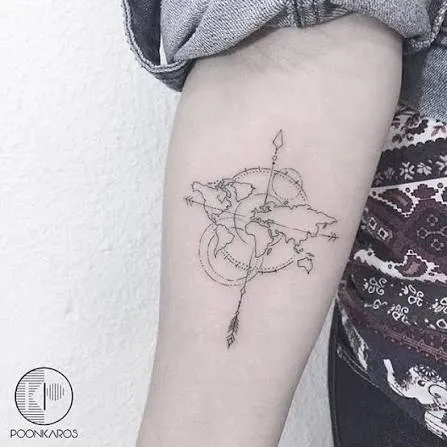
Compass designs typically combine bold outlines for the compass body with fine-line detail for directional markers, sometimes paired with a faint map or coastline in the background. The forearm or upper arm both suit this well, sized around 4 to 6 inches so the compass face doesn’t look cramped. If you’re adding a map element, bring the actual coordinates or location outline you want included — artists can’t guess personal meaning. Sensation is moderate, with the compass’s finer needle points feeling slightly different from the bolder outer ring. This design pairs meaning with visual structure, making it a favorite for guys who want symbolism without going abstract.
Watercolor-Style Floral Accent
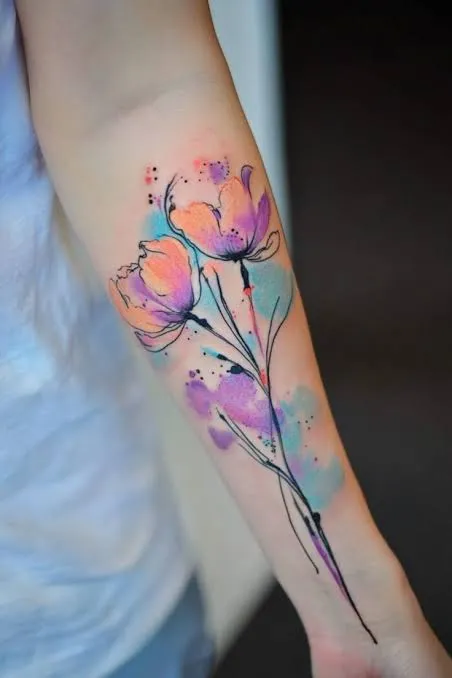
Watercolor tattoos mimic paint bleeding across paper, using soft color transitions and blurred edges instead of hard outlines. A floral accent in this style works on the upper arm or shoulder, where there’s room for color to spread visually without looking cramped, generally 4 to 6 inches. Because color saturation fades faster than black ink under general dermatological consensus, ask your artist about which pigments they use for longevity and expect a touch-up sooner than you would with pure blackwork. Pain is comparable to standard color tattoos in this area — moderate, without sharp spikes. This is a good option if you want something that stands out visually but doesn’t lean traditional or bold.
Skull With Bold Blackwork Shading
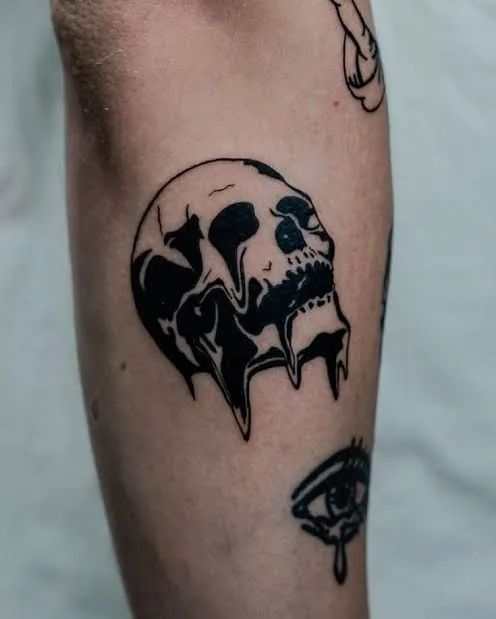
A skull design using thick outlines and heavy solid-black shading creates high contrast that reads clearly even at a distance. This works best on the upper arm or shoulder, where there’s enough flat space for the solid black areas to sit evenly, ideally 4 to 7 inches. Ask your artist how they handle saturation consistency — solid black should look uniform, not streaky, once healed. Expect more discomfort than lighter linework since dense black fill involves repeated passes over the same skin. This design leans bold and visible, better suited to guys comfortable with a strong visual statement than those wanting something subtle for work settings.
Nature Scene Forearm Design

A nature scene — mountains, pine trees, or a horizon line — usually combines solid black silhouette work with fine-line detail for texture like tree bark or rock faces. The forearm’s long, relatively flat surface is ideal for this horizontal composition, typically 4 to 6 inches wide. Bring reference photos of an actual landscape that means something to you rather than a generic stock image; personal reference photos generally produce more distinctive final designs. Pain stays moderate given the mix of solid fill and fine detail. This design suits first-timers well since it’s meaningful without being flashy, and it ages nicely because the silhouette style tolerates minor softening over time.
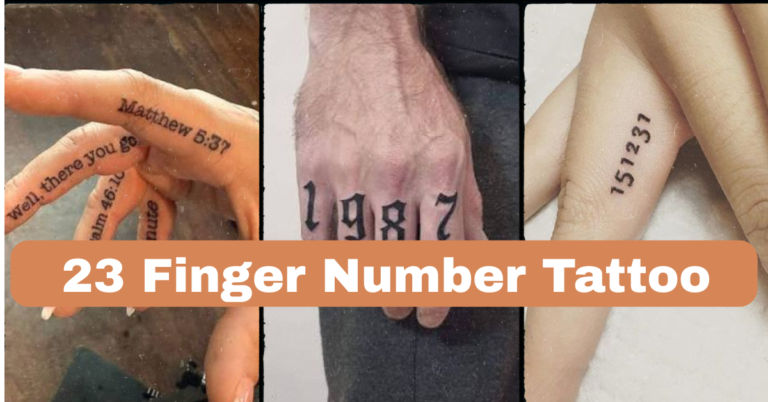
Lettering Sleeve With Names or Dates
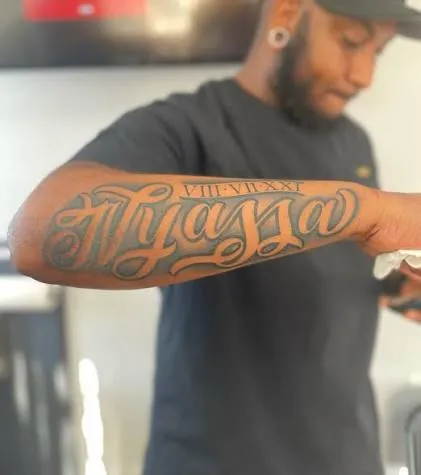
Lettering sleeves use consistent line weight and spacing to arrange names, dates, or short phrases along the arm’s natural length, often in a serif or script font. This requires careful planning since curved surfaces distort straight lettering if not mapped out properly beforehand. Plan for the inner or outer forearm, with total length depending on how much text you’re including — discuss exact placement geometry with your artist using a printed mock-up first. Pain is generally lower than shaded designs since it’s primarily outline work. This is a meaningful, workplace-adjustable option, since sleeve length can be adjusted to stay hidden under a rolled-up shirt if needed.
Abstract Linework Pattern
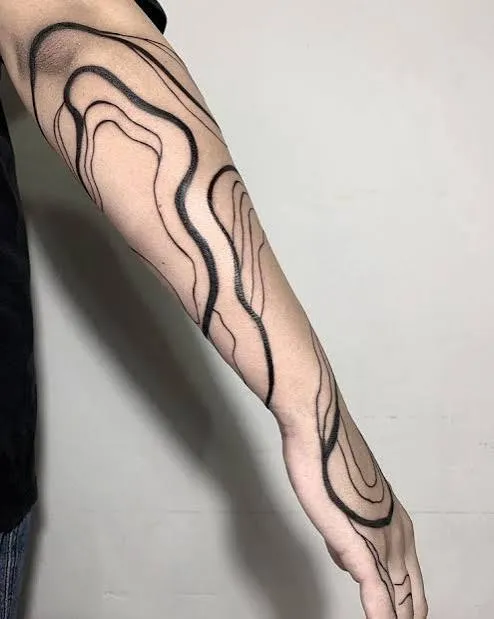
Abstract linework uses flowing, non-representational lines — no clear animal, object, or symbol — to create visual movement purely through line weight variation and spacing. This works almost anywhere on the arm since it doesn’t need to align with anatomical landmarks, but the outer forearm or bicep gives the cleanest presentation, sized 3 to 6 inches. Ask your artist to sketch a few line-flow options directly on your skin before tattooing — abstract work benefits enormously from seeing it on your actual arm shape first. Pain is generally light to moderate given the thin, quick linework. This is a solid choice for guys who want something artistic and unique without needing to explain a deeper meaning to everyone who asks.
Best Placement Ideas
Different spots on the arm come with real tradeoffs. Here’s how they generally compare:
- Outer forearm — highly visible, moderate pain, easy to show off or cover with a sleeve
- Inner forearm — more sensitive skin, slightly higher discomfort, easier to hide with long sleeves
- Upper arm/bicep — lower pain due to more muscle coverage, good for bold or larger pieces
- Shoulder cap — works well for circular or symmetrical designs, moderate pain
- Wrist-adjacent areas — bonier, generally more sensitive, best for small linework only
Tips for Success
Choosing the right artist matters more than choosing the “perfect” design off a search engine. Look through several years of an artist’s portfolio, not just their best five posts — consistency matters more than a single great photo. Pay attention to healed photos specifically, since fresh tattoos always look sharper than they will in six months. At your consultation, bring reference images, be upfront about your budget, and ask direct questions about their experience with the specific technique you want, whether that’s dotwork, blackwork, or fine line. A good artist will also tell you honestly if your idea needs resizing or repositioning to actually work on your arm.
Common Mistakes and How to Avoid Them
- Going too small for detailed work — fine details need enough space to stay legible as the tattoo ages
- Ignoring how the design will curve on your arm — flat reference designs don’t always wrap correctly around muscle
- Skipping aftercare instructions — this affects how the final result actually looks once healed
- Copying a design exactly — personalizing even small elements makes the piece genuinely yours and avoids an identical match to someone else’s ink
- Choosing placement based on trends rather than lifestyle — think about your job, gym habits, and sun exposure before finalizing
Similar Variations
Nearly every idea on this list can be adjusted. A bold traditional eagle can shrink into a smaller, single-color version for less commitment. A dotwork mandala can convert into a fine-line version for a softer look. Blackwork bands can incorporate small negative-space cutouts for added contrast. Lettering can be resized into a minimalist single word instead of a full sleeve. Talk to your artist about scaling any concept up or down based on your comfort level and budget.
Aftercare Basics
Proper aftercare affects how your finished tattoo looks over time, though specifics vary by studio and individual skin. Generally, keep the area clean, avoid direct sun exposure while healing, and don’t pick at any peeling skin. Avoid soaking the tattoo in pools or baths until it’s fully healed. Always follow the specific aftercare sheet your artist provides, since products and timelines can differ slightly between studios. If you notice anything unusual during healing, consult a licensed dermatologist or your tattoo artist directly rather than guessing.
Quick FAQ
How much does an arm tattoo cost?
Costs vary widely by size, detail, and artist experience, but small pieces often start around $80–$150, while larger custom sleeves can run into the thousands across multiple sessions. Always get a direct quote during your consultation.
How painful is an arm tattoo?
Pain tolerance varies by individual, but generally the outer forearm and bicep are less sensitive than bony wrist areas. Bold shading and dense dotwork tend to feel more intense than simple linework.
How long does healing take?
Most arm tattoos take about two to three weeks to heal on the surface, though full skin settling can take longer. Following your artist’s aftercare sheet closely supports a smoother healing process.
Do arm tattoos fade over time?
All tattoos change gradually with age and sun exposure. Bold linework and solid blackwork tend to hold their shape longer than fine detail or light color saturation, based on general tattoo industry experience.
Finding the right arm tattoo really comes down to matching the technique to your personality, your pain tolerance, and how visible you want the piece to be day to day. Whether you lean toward bold traditional work or something quiet and fine-line, the goal is a design that still makes sense to you a decade from now. Talk to a licensed, experienced artist, ask real questions, and take your time — a well-planned arm tattoo for men is one you’ll never feel the need to explain away.