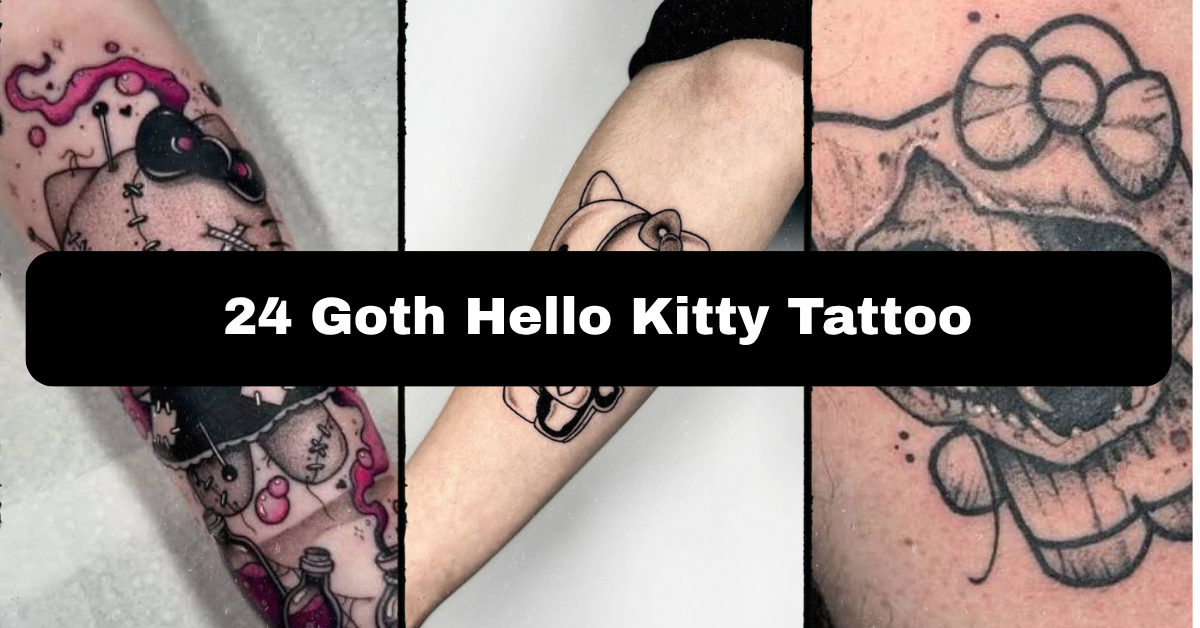
24 Goth Hello Kitty Tattoo Ideas: Design, Placement, and Pain Guide
Goth Hello Kitty tattoo ideas blend a soft, familiar cartoon silhouette with darker gothic elements, and this guide comes from real time spent around studios watching that exact kind of consultation happen, not from a stock photo roundup. Every idea below comes with the technical detail that actually decides whether a design like this looks sharp in year one and still looks sharp a decade later.
So what makes a great goth Hello Kitty tattoo? Blackwork and fine-line techniques work best for combining the character’s simple, rounded shape with gothic elements like a spiderweb, a gothic rose, or a cracked bow, since clean linework keeps both halves of the design readable. Smaller pieces under 3 inches hold detail best on the wrist or forearm, while larger combos need the ribs, thigh, or back to stay legible.
Keep reading for placement-specific pain notes, a realistic healing timeline, rough cost ranges, and exactly what to bring to your consultation so your artist’s custom take on the design actually matches what’s in your head.
Why the Goth and Cute Combo Works So Well as a Tattoo Style
Pairing a soft, rounded cartoon shape with darker gothic imagery works because the contrast does most of the visual heavy lifting. A cute character on its own can look flat or generic in tattoo form, but adding a cracked heart, a spiderweb, or gothic lettering gives it edge and personality without losing the charm that made the character appealing in the first place. This pairing also gives an artist a lot of room to make the piece genuinely yours rather than a direct copy of existing artwork, which matters both stylistically and for avoiding a tattoo that’s just a straight reproduction of someone else’s copyrighted design. Below are 24 ways artists commonly approach this combo, each with its own technique, placement logic, and practical considerations.
Blackwork Goth Hello Kitty Silhouette
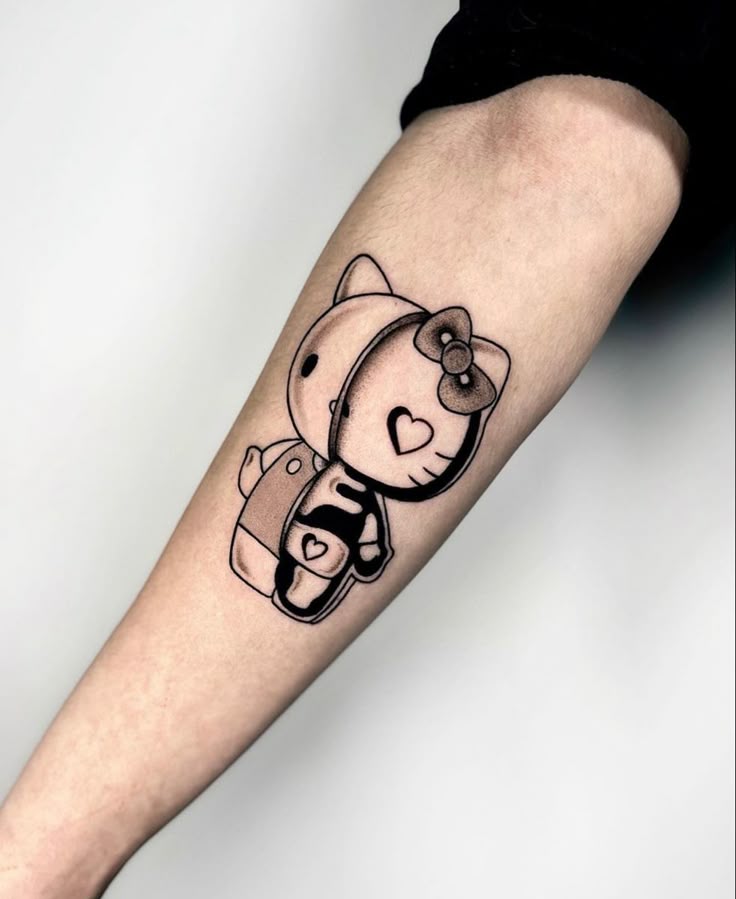
Blackwork uses solid black ink to build the character’s shape as a bold silhouette rather than a fully detailed, colored illustration. The rounded head and bow stay recognizable through shape alone, while all detail comes from thickness and negative space instead of interior linework. This reads clearly even at a smaller scale, so 2 to 3 inches works well on the forearm or upper arm. Ask your artist to vary the outline thickness slightly around the ears and bow so the silhouette doesn’t look flat or clip-art like. Solid black fill takes longer under the needle than simple linework, so expect steady, moderate discomfort, especially on thinner-skinned spots like the wrist. This style holds up well over time since solid black resists fading better than color, making it a low-maintenance option for a first tattoo in this theme.
Fine-Line Hello Kitty with Gothic Bow
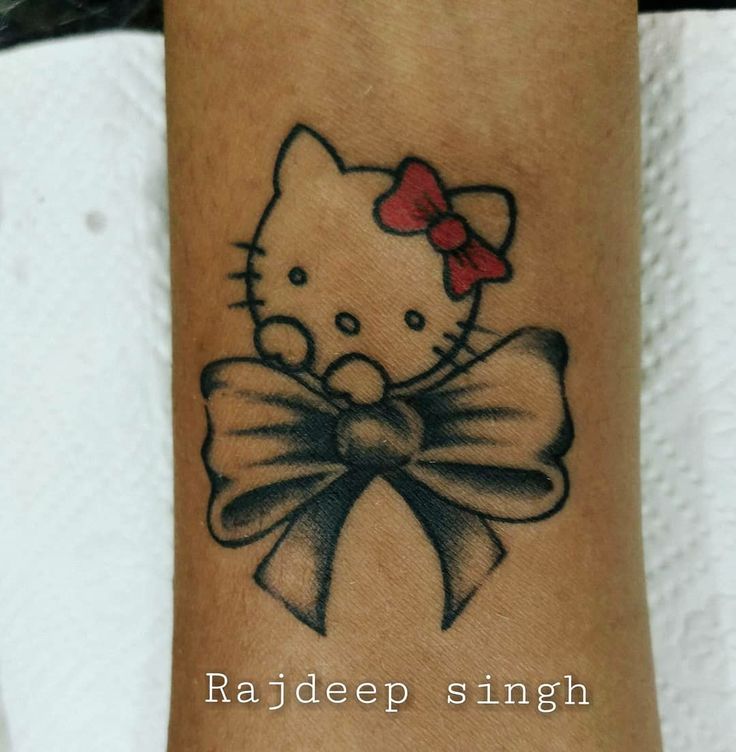
Fine line uses a single thin needle to create delicate, low-opacity lines instead of thick, saturated outlines, which suits a smaller, subtler take on the character. Here the bow gets a gothic twist, cross-stitched detailing or a slightly torn edge, rendered in the same thin linework as the rest of the design so nothing feels bolted on. Keep the whole piece under 2 inches for the wrist or behind the ear, since fine detail crowds and blurs at larger sizes over time. Bring a reference sketch showing exactly how torn or stitched you want the bow, vague direction here leads to a generic result. Bony areas like the wrist tend to be more sensitive, so expect a sharper pinch than fleshier spots. This is a popular first-tattoo option since it stays simple, subtle, and easy to keep private if needed.
Hello Kitty with Skull Face Overlay
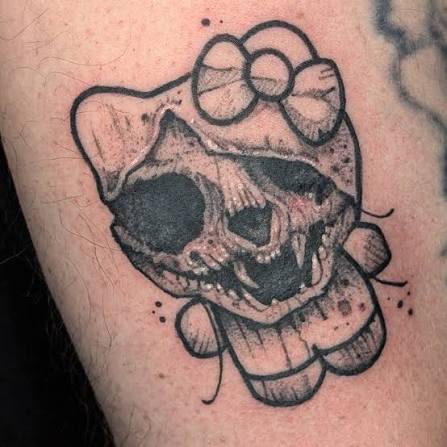
This design swaps the character’s usual face for a simplified skull shape while keeping the recognizable ears and bow intact, creating an immediate visual contrast between cute and macabre. Line weight should stay consistent between the skull’s features and the rest of the silhouette so one half doesn’t visually overpower the other. This composition needs a bit more space to read clearly, 3 to 4 inches on the outer forearm or calf works well. Ask your artist about keeping the skull simplified rather than hyper-detailed, since an overly realistic skull next to a cartoon silhouette can look mismatched in style. Pain depends on the exact placement chosen. This design suits someone who wants a clear goth statement rather than a subtle accent, and it transitions well into a themed sleeve down the line.
Dotwork Shaded Goth Hello Kitty

Dotwork builds shading and texture from clusters of tiny dots rather than solid lines or color blocks, giving the character’s silhouette a soft, textured gradient instead of a flat black fill. This works especially well for a moody, shadowed background around the character, like a cracked wall or foggy silhouette effect. Denser dot clusters create darker shadow areas, while sparser dotting fades toward bare skin. The upper arm or shoulder gives enough flat space for even dot placement, generally 3 to 5 inches. Check a portfolio specifically for dotwork shading, not just linework, since the two require different technical skill. Pain is generally steady and moderate rather than sharp. Healing takes close to two weeks, and uneven-looking scabbing during that window is normal, not a sign the shading didn’t take.
Hello Kitty and Barbed Wire Combo
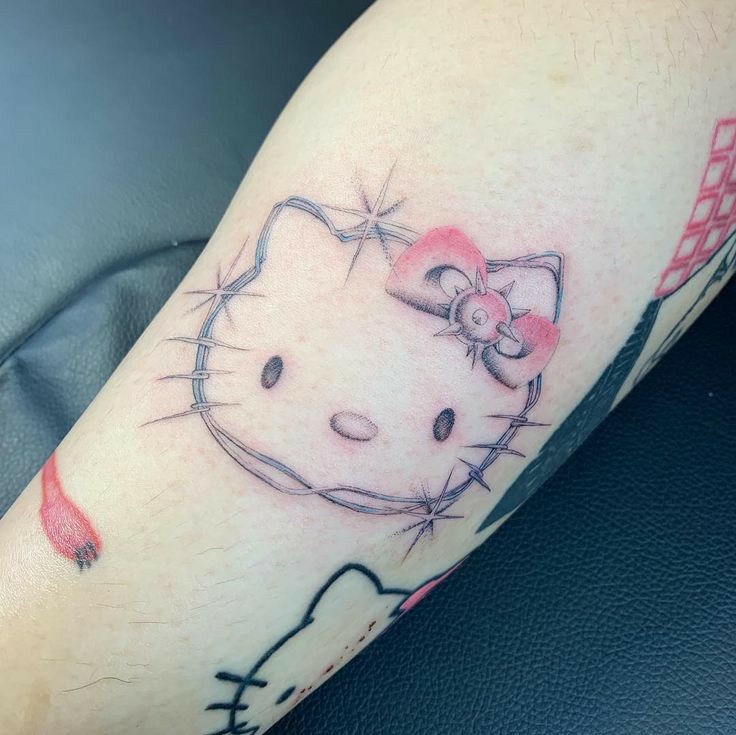
Wrapping a simplified barbed wire line around the character’s silhouette, along an arm band or as a border, adds an aggressive, punk-adjacent edge to an otherwise soft shape. Keep the wire linework thin and consistent so it reads as a deliberate design choice rather than clutter around the main figure. This works well as an armband at 1 to 2 inches in height, wrapping most of the way around the forearm or bicep. Ask your artist to sketch the wire’s spacing directly on your skin before tattooing, since barbed wire that’s too dense can crowd out the character entirely. Pain is comparable to standard fine-line or blackwork on the same placement. This combo suits someone wanting a punk or grunge-leaning take on the theme rather than a purely dark or spooky one.
Hello Kitty with Cross and Rosary Accent

Adding a simplified cross or rosary bead detail near the character introduces religious gothic imagery without needing a large or complex composition. The cross is typically rendered in the same line weight as the rest of the piece, either as a small pendant near the bow or as a background element behind the figure. This combo works well at a modest 2 to 3 inches on the wrist, ankle, or collarbone. Ask your artist to keep the cross proportionate rather than oversized, since a cross larger than the character itself shifts the whole visual balance. Pain notes follow standard guidance for whichever placement you choose, bony areas like the wrist or collarbone tend to be more sensitive than fleshier spots. This design suits a first tattoo with personal or symbolic meaning layered into a lighter, character-based piece.
Punk Hello Kitty with Safety Pins

This variation adds small safety pin details, through an ear, along the bow, or as a border accent, borrowing directly from punk and DIY aesthetic cues. Each pin should be rendered with clean, simple linework so it doesn’t compete visually with the character’s shape. This works well at 2 to 3 inches on the forearm or ankle, small enough to keep the pins legible without needing color. Ask your artist about pin placement specifically, since pins clustered too closely can start to look like clutter rather than intentional detail. Pain and healing follow standard fine-line guidance for the chosen placement. This design suits someone leaning into a specific punk or alt subculture look rather than a more traditional gothic theme, and it pairs well with other DIY-style flash pieces nearby.
Hello Kitty with Dark Ink Drip Bow
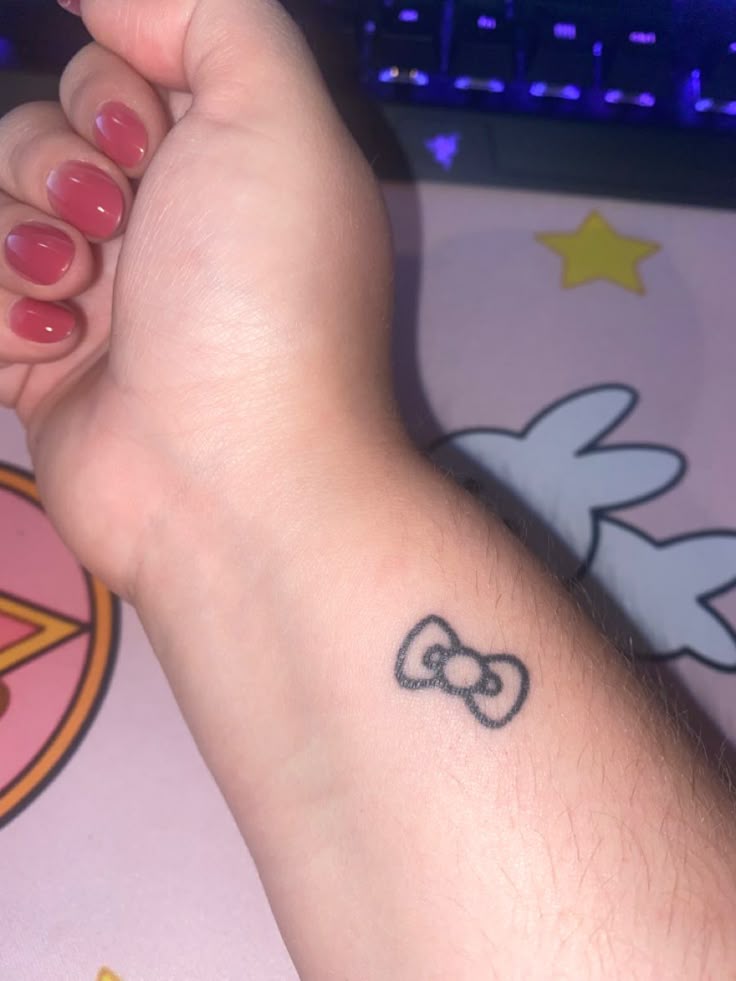
Instead of the usual clean bow shape, this design renders the bow with dripping, uneven edges, like dark ink running down from the shape, giving the piece a slightly unsettling, melted quality. This works especially well in blackwork or dotwork, since the drips need clean gradient control to look intentional rather than sloppy. Keep the piece around 2 to 3 inches on the shoulder or upper arm, enough room for the drips to extend naturally below the bow. Ask your artist to reference an actual wax-drip or ink-drip photo rather than describing it verbally, since drip shapes are easy to miscommunicate. Pain is moderate and steady, typical of shaded work on fleshier placements. This design suits someone wanting a slightly eerie twist without going into heavier or more literal horror imagery.
Hello Kitty with Spider Web Background
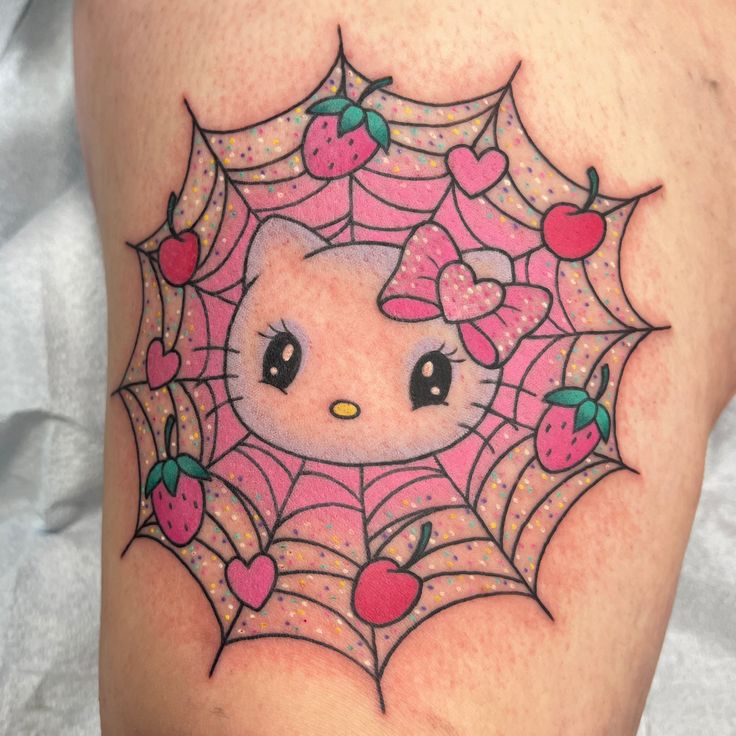
A spiderweb rendered behind or around the character adds classic gothic texture without needing additional color or shading. The web is usually done in thin, consistent linework radiating outward, with the character sitting in one corner or centered within it. This composition needs a bit of width to read clearly, 3 to 4 inches on the shoulder blade or outer thigh works well. Ask your artist to keep the web’s spacing even, since a lopsided web is one of the more common mistakes in this style. Pain depends on the placement, the shoulder blade tends to be more sensitive than the outer thigh. This design is a straightforward, recognizable way to add gothic texture, and it works well as a standalone piece or as an anchor for additional small details layered in later.
Hello Kitty with Bats Flying Overhead

Adding one or two simplified bats in flight above or beside the character introduces movement and a classic Halloween-adjacent gothic motif. The bats are usually kept in solid blackwork silhouette to match the character’s own simplified shape, keeping the whole piece visually consistent. This combo works well at 2 to 4 inches on the upper arm or calf, giving enough room for the bats to sit clearly apart from the main figure. Ask your artist about bat wing shape specifically, since overly detailed, realistic bat wings can clash with a simplified cartoon character. Pain and healing follow standard blackwork guidance for the chosen placement. This design suits a first tattoo in this theme since it stays simple and recognizable without needing shading or color.
Hello Kitty with Chains Wrapped Around
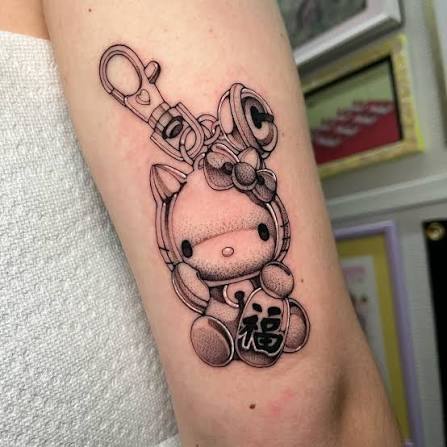
Simplified chain linework wrapped around the character’s body or as a border adds a heavier, more restrained visual weight compared to a plain silhouette. Chain links should stay evenly spaced and consistently sized so the pattern reads as intentional rather than sketchy. This design works well as an armband or ankle piece at 1 to 2 inches in height. Ask your artist to keep link size proportional to the character’s overall size, oversized chain links can overwhelm a small design. Pain is comparable to standard linework on the same placement, with the ankle generally more sensitive than the upper arm due to thinner skin over bone. This combo suits someone wanting a heavier, more brooding take on the theme rather than a purely cute or whimsical one.
Negative-Space Goth Hello Kitty
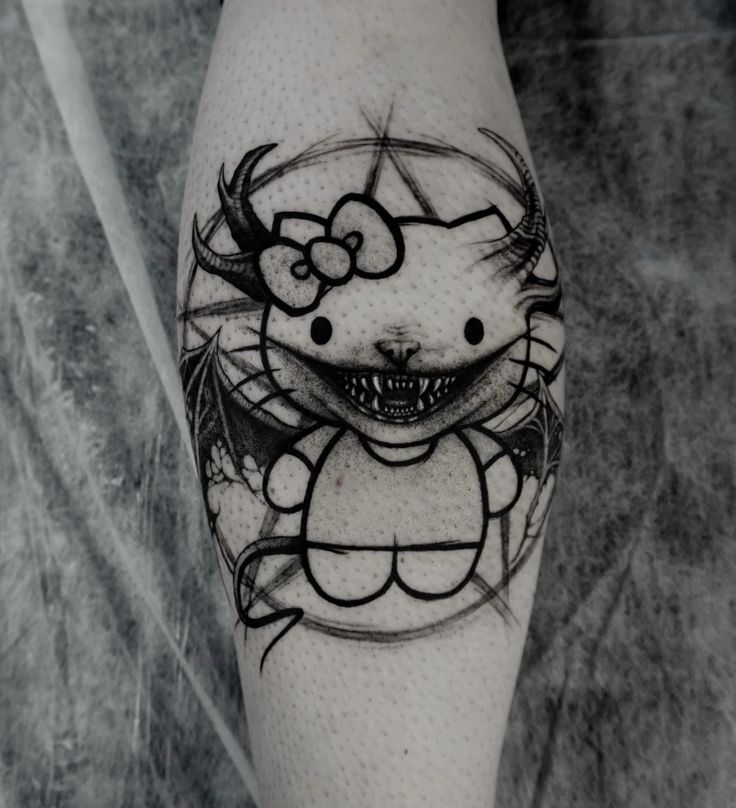
Negative space tattooing uses untouched skin as part of the image, so the character’s shape is defined by what’s left blank against a solid dark background rather than by its own outline. A common approach shades the entire background solid black, leaving the character’s silhouette as bare skin, essentially reversing a normal design. This only works well on evenly toned, unblemished skin, since any scarring or discoloration inside the blank shape will show clearly. The forearm or calf gives a flat enough canvas for the contrast to read properly at 3 to 4 inches. Ask your artist to sketch the piece directly on your skin before tattooing so you can preview how the negative space sits against your tone. This design ages best out of direct sun, since solid black fill and negative space contrast both fade unevenly with UV exposure.
Hello Kitty with Gothic Rose

Pairing the character with a single gothic rose, typically rendered darker and slightly wilted compared to a traditional bright rose, adds a classic dark-romantic element to the design. The rose usually carries more shading detail than the character’s flat silhouette, creating a nice visual balance between the two. This combo works well at 3 to 4 inches on the forearm, thigh, or shoulder. Bring a specific reference for the rose’s wilt level and shading style, since “gothic rose” can mean anything from slightly darkened petals to a fully decayed, drooping bloom. Pain depends on the base placement chosen. This design suits someone wanting a softer, more romantic gothic tone rather than a harder punk or horror-leaning one, and it pairs well with additional florals layered in later.
Hello Kitty Sitting on a Tombstone

This composition places the character seated or standing on a simplified tombstone shape, giving the piece a clear graveyard, Halloween-adjacent narrative. The tombstone is usually rendered in solid blackwork or light dotwork shading, kept simple enough not to compete with the character’s own detail. This needs a bit more vertical space to look balanced, 3 to 5 inches on the calf or outer thigh works well. Ask your artist to keep the tombstone’s engraving detail minimal, like a simple cross or blank shape, rather than adding text that could blur at smaller scale. Pain and healing follow standard guidance for the chosen placement. This design suits someone wanting a clear, narrative gothic scene rather than a purely symbolic accent.
Hello Kitty with Devil Horns and Tail
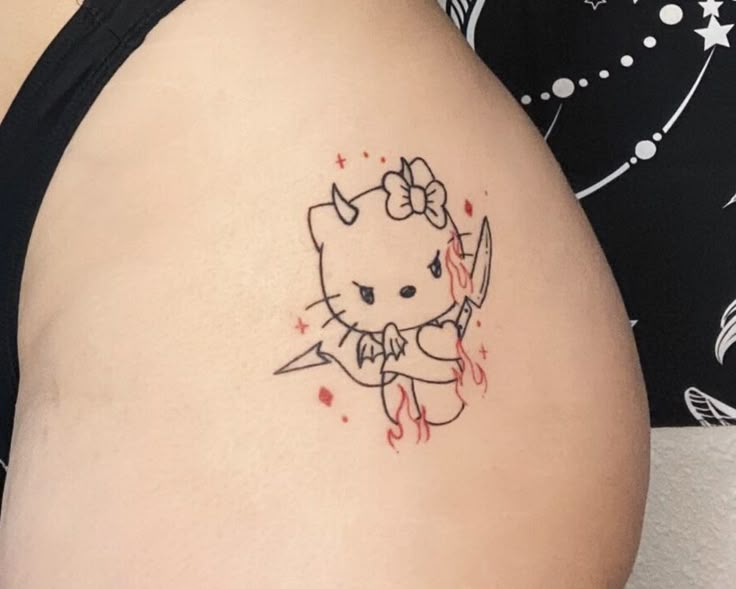
Adding small devil horns and a simplified tail to the character’s silhouette is one of the more playful, less heavy gothic twists on this list, leaning into a mischievous rather than dark tone. Keep the horns and tail proportionate to the character’s original shape so the design doesn’t tip into looking like a completely different figure. This works well at 2 to 3 inches on the wrist, ankle, or shoulder. Ask your artist to reference the character’s original proportions closely so the horns and tail read as an addition rather than a replacement of the recognizable shape. Pain follows standard guidance for whichever placement you choose. This design suits someone wanting a lighter, more playful gothic tone, and it works well as a matching or paired design with a friend.
Hello Kitty with Stitched Seams
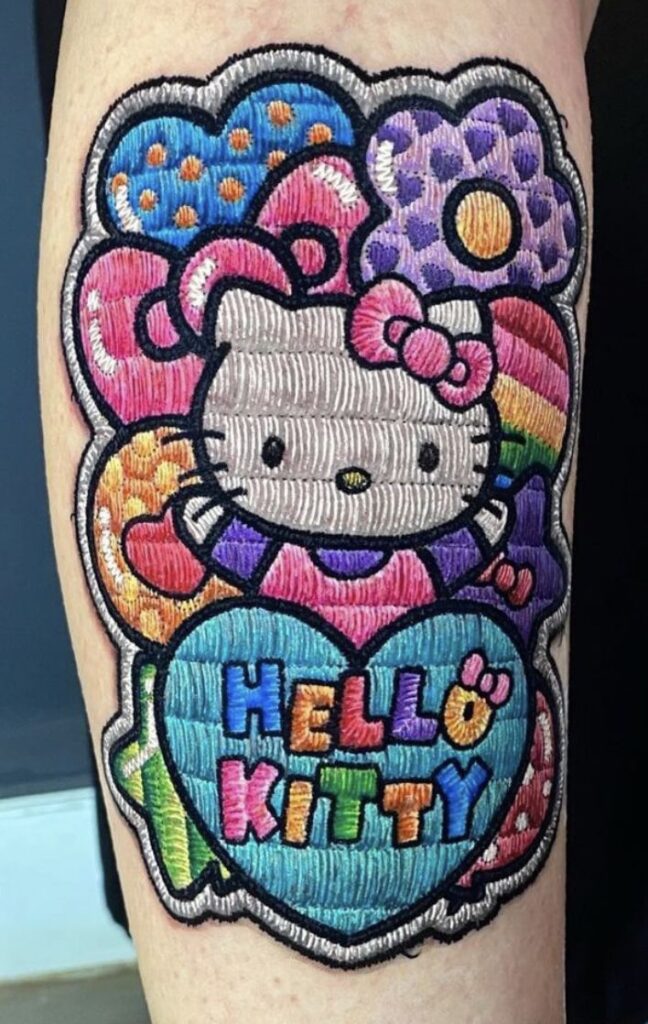
This design adds visible stitch marks across the character’s silhouette, echoing a patched-together, Frankenstein-adjacent look. The stitches are usually simple X-shaped or straight-line marks placed along the ear, bow, or body outline, done in the same thin linework as the rest of the piece. This works well at 2 to 3 inches on the forearm or ankle. Ask your artist about stitch placement specifically, evenly spaced stitches along one seam line read cleaner than scattered marks across the whole design. Pain and healing follow standard fine-line guidance. This design suits someone wanting a slightly eerie, patchwork aesthetic without needing heavier shading or additional gothic elements layered in, and it pairs well with other simplified horror-adjacent motifs.
Hello Kitty with Melting Wax Design
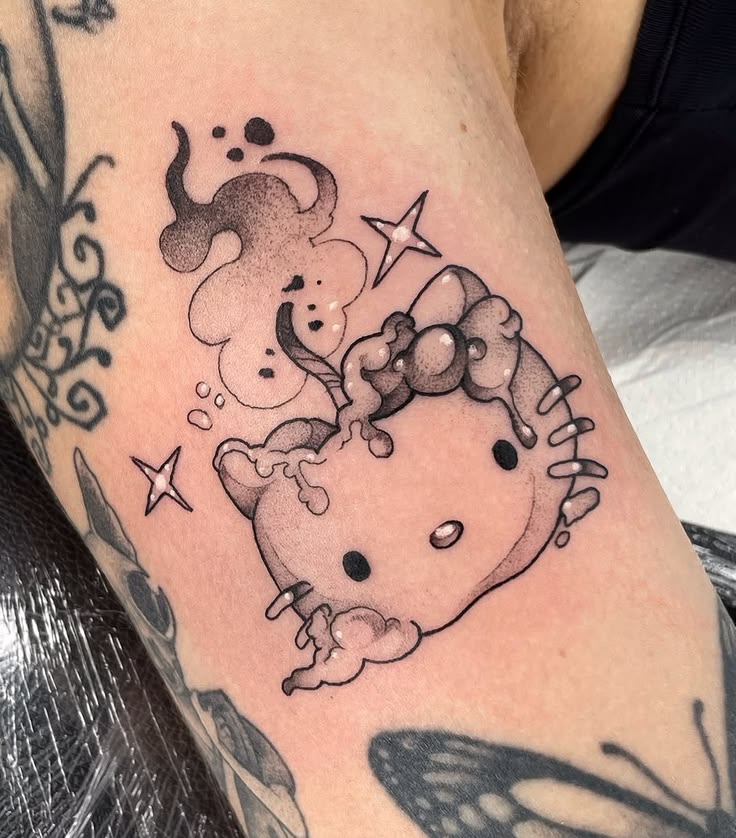
Here the character’s shape appears to be partially melting, with dripping edges rendered in soft shading or dotwork rather than clean, straight linework. This gives the piece a surreal, slightly unsettling quality without relying on any explicit or graphic imagery. It needs a bit more vertical room for the drips to read clearly, 3 to 4 inches on the shoulder or calf works well. Ask your artist to reference candle wax drips specifically as a visual guide, since melting effects are easy to miscommunicate verbally. Pain is moderate given the shading involved. This design suits someone wanting a more artistic, surreal take on the theme rather than a straightforward silhouette, and it works well as a standalone statement piece.
Hello Kitty in Victorian Gothic Lace Collar
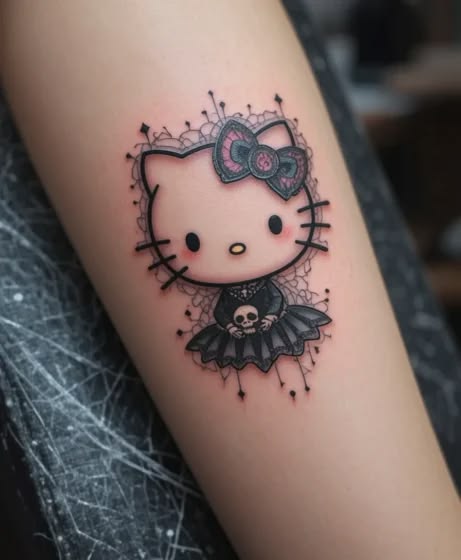
Adding a detailed lace collar around the character’s neck brings in a Victorian gothic aesthetic, contrasting delicate, ornate linework against the character’s usually simple shape. The lace pattern needs a steady, practiced hand, since uneven scalloping or spacing is one of the more noticeable mistakes in this style. This works well at 3 to 4 inches on the upper arm or shoulder, giving the collar enough room to show its detail. Ask to see examples of lace or filigree work specifically in your artist’s portfolio before booking. Pain and healing follow standard fine-line guidance for the chosen placement. This design suits someone wanting an elegant, Victorian-leaning gothic tone rather than a punk or horror-adjacent one, and it pairs well with additional lace or filigree accents nearby.
Hello Kitty with Crying Tears

This design adds simplified tear marks below the character’s eyes, a classic gothic and pop-punk motif that adds emotional weight without needing a complex composition. The tears are usually rendered as small, teardrop-shaped shading in black or dark grey, kept minimal so they don’t overwhelm the character’s face. This works well at 1 to 2 inches on the wrist, behind the ear, or ankle. Ask your artist to keep tear placement symmetrical unless you specifically want an asymmetrical look. Bony areas like the wrist and ankle tend to be more sensitive than fleshier spots. This design suits a smaller, more personal piece, and it’s a popular choice for a first tattoo in this theme given its simplicity.
Hello Kitty with Pentagram Background
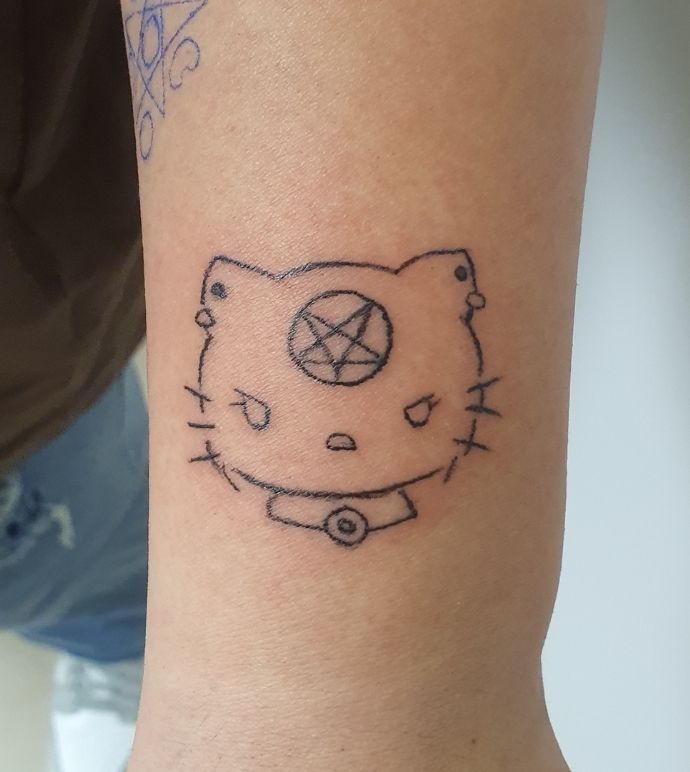
A simplified pentagram placed behind or around the character adds clear occult-adjacent gothic symbolism. The pentagram is usually rendered in thin, even linework, sized to frame the character without overwhelming it. This composition needs a bit of width, 3 to 4 inches on the shoulder blade or outer thigh works well. Ask your artist to keep the pentagram’s proportions accurate and evenly spaced, since an uneven star shape is a noticeable and common mistake in this kind of design. Pain depends on the exact placement, the shoulder blade tends to be more sensitive than the outer thigh. This design suits someone wanting a clear, symbolic gothic statement, and it works well as a centerpiece for a larger themed back or thigh piece down the line.
Realistic Shaded Goth Hello Kitty
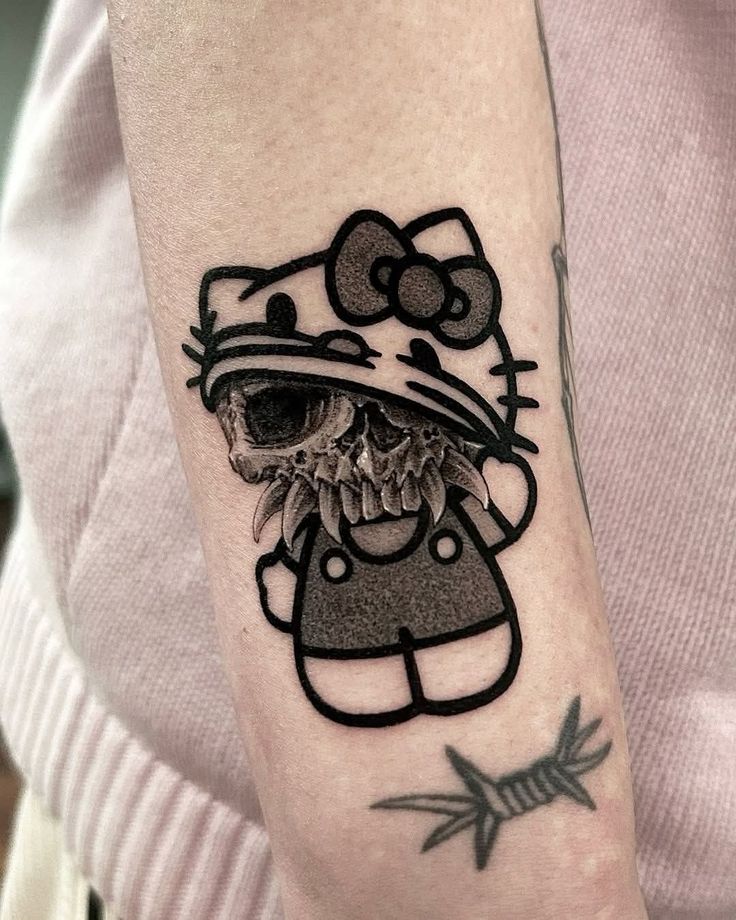
A more realistic rendering uses layered black and grey shading to give the character actual dimension and depth rather than a flat silhouette, often combined with a moodier background element like fog or shadow. This is one of the more technically demanding designs on this list and needs an artist experienced specifically in black and grey realism, not just simple linework. The outer thigh or upper arm gives enough flat space at 4 to 6 inches for the shading to develop properly. Ask to see healed photos of prior black and grey realism work specifically, since shaded pieces can look noticeably different a year out than fresh off the needle. Pain builds cumulatively given the longer shading session. This design suits someone ready for a serious statement piece rather than a quick, simple one.
Hello Kitty and Skeleton Hand Combo
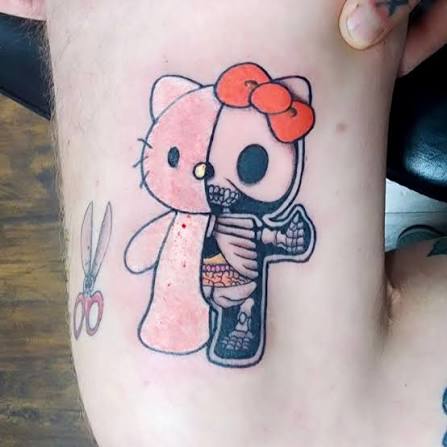
Pairing the character with a simplified skeleton hand, either reaching toward it or holding it, creates a striking contrast between soft and macabre imagery. The hand is usually rendered in clean blackwork or light dotwork shading to keep it visually consistent with the character’s own simplified style. This combo needs more length than width, so the forearm or calf works well at 4 to 5 inches. Ask your artist to keep the hand’s proportions realistic rather than cartoonish, since a mismatched art style between the two elements can look disjointed. Pain and healing follow standard guidance for the chosen placement. This design suits someone wanting a bolder, more explicitly macabre take on the theme rather than a subtler gothic accent.
Matching Goth Hello Kitty Tattoos for Friends
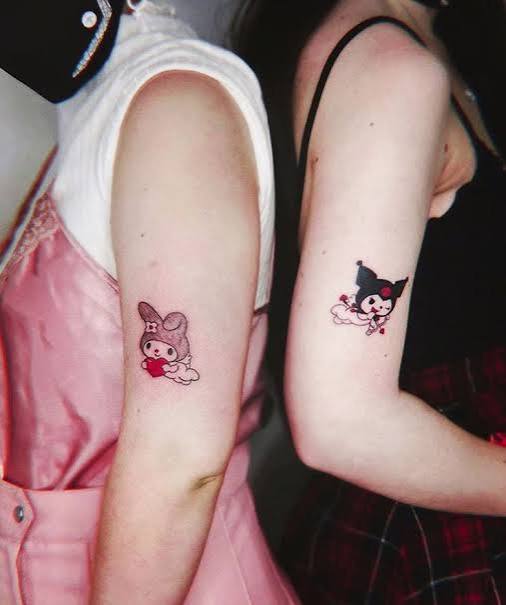
Matching designs in this theme work best when each person gets a slightly different gothic element paired with the same base character, one friend with a spiderweb background, the other with a gothic rose, tied together by a shared bow style or line weight. This avoids the identical-copy look while still reading clearly as a matching set. Discuss placement separately since pain tolerance and visibility preferences differ between people, one friend might want it hidden while the other wants it visible. Book appointments back to back with the same artist when possible, so linework style stays consistent across both pieces even though the gothic elements differ. This concept works well for a first tattoo for both people, since each design can stay simple while still carrying shared meaning.
Large Goth Hello Kitty Back Piece
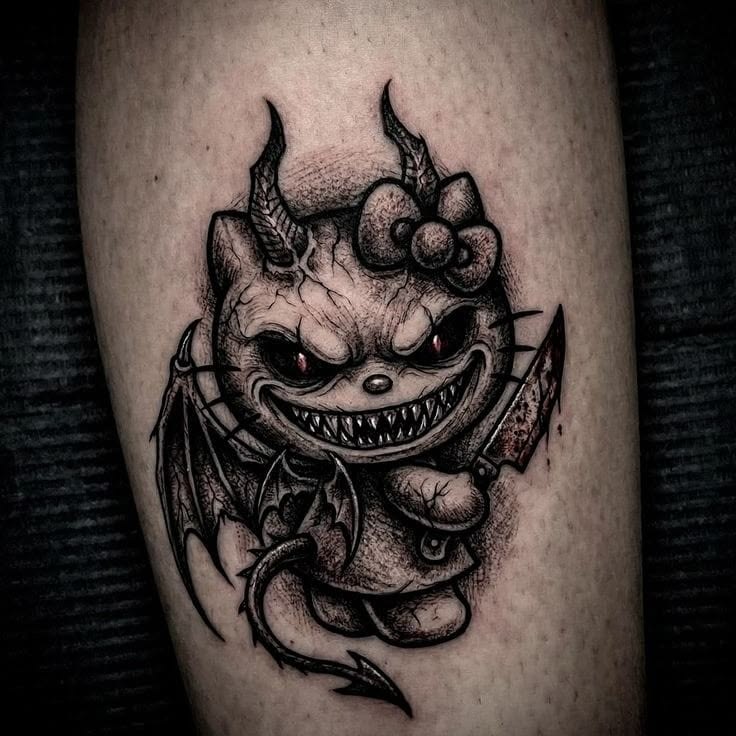
For those ready for a bigger, more detailed piece, combining several of the elements above, a spiderweb, a gothic rose, tombstone imagery, into one full back or thigh composition creates a genuinely custom, statement-level tattoo. This spans 8 inches or more and typically requires multiple sessions rather than one sitting. Expect a noticeably higher total cost given the scale and time involved, and insist on a full sketch or stencil preview before the first session, since adjustments become far harder once a piece this size is underway. Pain varies by exact zone within the piece, areas closer to the spine or shoulder blade tend to be more sensitive than fleshier sections. This is a serious, long-term commitment best suited to someone with prior tattoo experience who understands the time, cost, and multi-session planning involved.
Blackwork vs. Fine Line: Knowing the Difference
Blackwork — Uses solid, saturated black ink to build bold shapes and silhouettes with minimal interior detail. Best for designs meant to read clearly from a distance and hold up well over decades.
Fine line — Uses a single thin needle to create delicate, low-opacity lines with little to no shading. Best for smaller, subtler designs that prioritize detail over boldness.
Dotwork — Builds shading and texture from clusters of small dots rather than solid fill or continuous lines. Best for soft gradients, moody backgrounds, and textured effects without full color saturation.
Black and grey — Uses diluted black ink to build grey shading alongside solid black linework, adding dimension without introducing color. Best for more realistic or dimensional takes on a design.
Best Placement Ideas
- Wrist or ankle — high visibility, more sensitive due to thin skin over bone, best for smaller fine-line pieces
- Behind the ear — easy to hide, sharper pain due to thin skin, keep designs under 2 inches
- Forearm or upper arm — moderate pain, good muscle padding, ideal for combos with backgrounds or extra elements
- Shoulder blade or upper back — more sensitive placement, good width for wider compositions like webs or pentagrams
- Outer thigh or calf — flexible visibility, solid canvas for larger, more detailed pieces
- Full back or thigh piece — least pain per square inch relative to size, but requires multiple sessions and a bigger budget
Tips for Success
Look for an artist whose portfolio shows real examples in the technique you want, blackwork, fine line, dotwork, and black and grey realism are different skill sets, and a strong blackwork portfolio doesn’t guarantee strong shading work. Check healed photos, not just fresh out-of-the-chair shots, since that’s the only honest preview of how the piece actually settles into skin months later. Bring at least two or three reference images and be specific about which gothic elements you want combined and how much detail each should carry, rather than handing over a single vague description and hoping for the best. During your consultation, ask directly about their experience with custom character-based designs, and be upfront that you want a personalized take rather than a direct copy of existing artwork. A good consultation should feel like a real conversation about your specific vision, not a rushed sales pitch.
Common Mistakes and How to Avoid Them
Sizing a detailed combo design too small is one of the most common regrets, gothic elements like lace, webs, or stitching that look crisp on a stencil often blur into a muddy shape within a few years if the piece is under 2 inches. Choosing a placement that fights the design’s natural proportions, like cramming a wide composition onto a narrow finger or ankle band, is another frequent issue. Skipping the artist’s specific aftercare instructions in favor of generic internet advice can affect how the final linework and shading settle. Asking for an exact, uncredited copy of existing artwork instead of a personalized reinterpretation is a common mistake, both from a design-uniqueness standpoint and out of respect for the original artist’s or brand’s intellectual property, a good tattoo artist will usually push back on a direct copy request and suggest a custom variation instead. Rushing the artist search and booking the first available appointment instead of checking portfolio consistency is a mistake that’s hard to undo once ink is under the skin.
Similar Variations
Any of the designs above can shift with a few adjustments. Swap a spiderweb background for a pentagram or set of bats for a different gothic flavor. Resize a larger back-piece composition down into a simplified single-element accent for the wrist. Add a second smaller detail, like tears or a stitched seam, to an existing simple silhouette for extra personality. Recolor a blackwork silhouette with black and grey shading instead of solid fill for a softer, more dimensional finish. Combine any of the smaller designs with script or a meaningful date for added personal weight.
Aftercare Basics
General aftercare guidance includes keeping the tattoo clean and moisturized, avoiding direct sun exposure and swimming while it heals, and not picking at scabbing or peeling skin. Loose, breathable clothing over the area reduces friction during the first one to two weeks. Every studio provides a specific aftercare sheet tailored to their preferred products and your particular piece, and that sheet should always take priority over generic advice found online. If you notice unusual redness, swelling, or discharge beyond normal healing, check with a licensed dermatologist rather than waiting it out. Pain tolerance and healing speed vary by individual, so the timelines here are general estimates rather than guarantees.
Quick FAQ
How much does a goth Hello Kitty tattoo cost? Smaller fine-line or single-element designs often start in the $80 to $200 range depending on your area, while larger combo pieces or full back and thigh compositions can run several hundred dollars or more across multiple sessions. Always get a direct quote from your chosen artist rather than relying on general estimates.
Does this style of tattoo hurt more than a plain cartoon design? The gothic elements themselves don’t change the pain level, placement and technique matter far more. Bony, thin-skinned areas like the wrist, ankle, and behind the ear tend to be more sensitive regardless of the specific design details layered in.
How long does a goth-style tattoo take to heal? Most designs heal on the surface within 10 to 14 days, though full healing beneath the skin can take up to a month. Larger, more detailed combo pieces may take longer given the amount of ink involved.
Will a design like this fade faster than a simple black outline? Shaded or dotwork elements can soften slightly faster over the years than a clean, solid blackwork outline, particularly with sun exposure, though individual results vary by skin type and aftercare. Following your artist’s aftercare guidance and using sunscreen over healed tattoos helps maintain contrast longer.
Goth Hello Kitty tattoo ideas work because they take something familiar and give it real edge, and there’s a version here for nearly any comfort level, from a small fine-line accent behind the ear to a full custom back piece. The right choice comes down to matching the gothic elements you actually connect with to a placement and technique that’ll hold up over time. Take the placement and pain notes above into your consultation, ask the questions that matter, and let a licensed professional help you turn the idea into a genuinely personal goth Hello Kitty tattoo rather than a copy of someone else’s art.