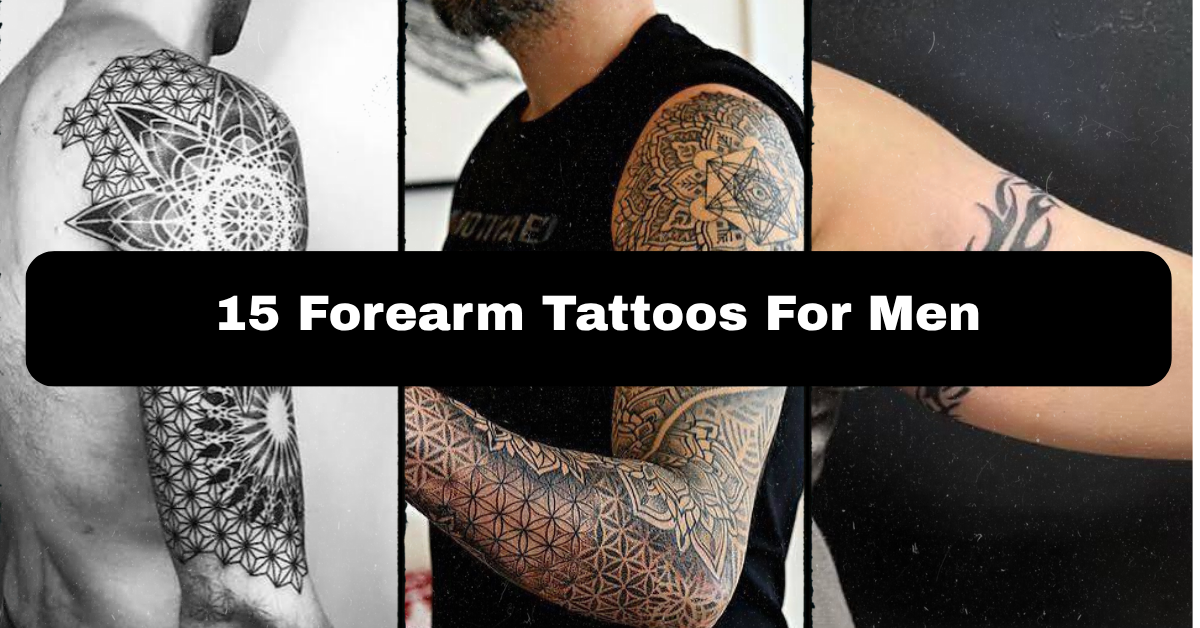
15 Forearm Tattoos For Men: Real Design Ideas With Placement, Pain, and Cost Guidance
Nervous about picking a design you’ll regret in five years? You’re not alone — the forearm is one of the most visible spots on the body, so getting it right matters more than most people admit before they sit in the chair. I’ve spent enough time in tattoo studios watching consultations go well (and go sideways) to know what separates a forearm piece that ages well from one that turns into a blurry regret by year three.
So what are the best forearm tattoos for men? The strongest options are fine-line geometric patterns, bold blackwork bands, dotwork mandalas, and neo-traditional pieces with clean linework, since the forearm’s flat, muscular surface holds detail well and heals faster than joints or bony areas. Placement, size, and line weight matter more than the specific image you pick.
Stick around, because I’m covering pain levels for each design, realistic healing windows, what to actually say to your artist during a consultation, and the mistakes that turn a good idea into a muddy mess ten years down the line.
Why the Forearm Works So Well for Men’s Tattoos
The forearm is basically a tattoo artist’s dream canvas. It’s flat, it doesn’t have a ton of curves to distort a design, and there’s enough surface area to go big or stay small depending on your nerve. It’s also one of the few spots where you get real control over visibility — roll your sleeves down for work, roll them up for everything else. That flexibility is a big reason this placement keeps showing up as one of the most requested for first-timers and collectors alike. Below are fifteen design directions, broken down with the kind of practical detail I wish more articles actually included.
Fine-Line Geometric Sleeve Segment
Fine-line work uses a thin, consistent needle line — usually a single needle or a small liner — to create sharp geometric shapes like triangles, hexagons, or interlocking patterns without heavy shading. The appeal is precision: no fuzzy edges, no shading to fade unevenly over time. This design sits best on the outer forearm where the flat plane keeps the geometry from warping. A 3–5 inch panel is a good starting size; smaller than that and the lines risk merging as skin ages. Pain-wise, the outer forearm is one of the more tolerable spots since it’s mostly muscle, not bone. Bring your artist a clean vector image or hand-drawn sketch rather than a blurry screenshot — precision work needs a precise reference. It’s a great low-commitment first tattoo and reads as professional enough for most workplaces. From here, let’s look at something with more visual weight.
Bold Traditional Eagle
This is the opposite approach — thick, confident outlines (often 2–4 needle groupings) filled with saturated color or solid black, in the American traditional style popularized by old-school flash sheets. The bold linework is what makes this style survive decades on skin without turning into a smudge; thin details fade first, so traditional artists intentionally avoid them. Best placed on the inner or outer forearm with at least 4–6 inches of space to let the wings spread naturally. Expect moderate discomfort, slightly more if it wraps toward the wrist. Ask your artist about color saturation upfront — solid reds and yellows need more passes and heal differently than black. This design ages remarkably well and suits guys who want something that reads clearly from across a room.
Blackwork Tribal-Inspired Band
Blackwork means solid black ink applied in bold shapes, sometimes covering large sections of skin entirely. A tribal-inspired band wraps around the forearm’s circumference using sharp, angular patterns with heavy negative space — the untouched skin — used deliberately to create contrast and movement. This works best as a continuous band 2–4 inches wide, placed mid-forearm where the wrap-around effect looks intentional rather than accidental. Solid black areas tend to hurt more than linework because the needle passes over the same area repeatedly. Tell your artist if you want sharp geometric edges versus softer organic curves — that single detail changes the whole feel. It’s bold, doesn’t rely on trends, and holds its shape for decades better than delicate work in the same spot.
Dotwork Mandala Panel
Dotwork builds an image entirely from small individual dots instead of continuous lines, creating gradients and texture through density rather than shading strokes. A mandala — a symmetrical, radial pattern — translates beautifully into this technique because the dot spacing can mimic soft shadow without ever blurring. This piece needs a flat, wide area, making the inner forearm ideal for a 4-inch circular panel. Dotwork takes noticeably longer to complete than linework of the same size, so budget for a longer session or a follow-up appointment. Pain tends to run moderate — steady, but rarely sharp. Bring high-resolution reference images since dot density is hard to eyeball from a rough sketch. This style ages gracefully because there’s no solid fill to crack or fade unevenly.
Script Quote Along the Forearm

Lettering tattoos rely entirely on line consistency — a wobbly script is far more noticeable than a wobbly geometric shape. A single line of text running along the forearm’s length, in a fine-line cursive or clean block font, is one of the most requested designs for men wanting something personal without a big image. Keep it under 4 words if you’re going for readability at a small size; longer phrases need more forearm real estate or smaller lettering that risks blurring after a decade. This placement runs along muscle, so pain is manageable for most people. Ask your artist to hand-letter a stencil rather than tracing a printed font — it reads more natural on curved skin. Great for first tattoos, meaningful dates, or matching designs with a sibling or close friend.
Japanese Hanya Mask (Neo-Traditional)
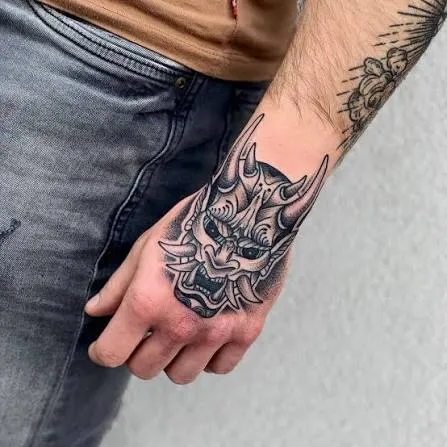
Neo-traditional blends the bold outlines of classic tattooing with more illustrative detail and expanded color palettes. A hanya mask — a traditional Japanese theatrical face — is a popular choice here because its exaggerated features work well within thick black outlines and layered shading. This design needs real space, at least 5–6 inches, and looks best on the outer forearm where the face can sit upright. Shading depth is the key technical detail to discuss with your artist: soft gradients versus hard black-to-skin transitions change the mood entirely. Expect moderate-to-higher discomfort given the shading passes involved. This isn’t the best first-tattoo choice if you’re unsure about commitment, but it ages beautifully thanks to the heavy outline work holding everything in place.
Realistic Black-and-Grey Portrait
Realism demands the most technical skill of any style on this list — soft shading transitions, careful highlight placement, and a needle technique (often a mix of magnum and round needles) that mimics photographic depth. A black-and-grey portrait, whether of a person, animal, or object, needs a minimum 4-inch flat canvas, making the upper inner forearm a strong choice. Skin tone affects contrast here more than in bold styles, so an experienced artist will adjust shading intensity accordingly. Pain runs moderate to high due to repeated shading passes. Bring multiple reference photos from different angles — a single flat image won’t give your artist enough information to build depth. This style requires touch-ups more often than linework as fine shading gradients soften over years.
Negative Space Wave Design
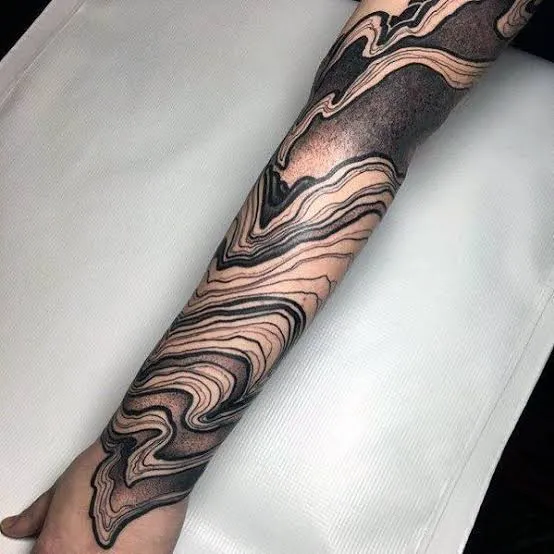
Negative space tattooing uses the untouched skin itself as part of the image, letting black ink define the edges of a shape rather than fill it completely. A wave pattern using this technique looks like the water is carved out of solid black, creating strong visual contrast without heavy shading. This works well on the outer forearm’s flatter section, sized around 3–5 inches for clarity. Pain is generally lower than solid blackwork since there’s less repeated needle passing. Ask your artist specifically about “reverse shading” techniques so the negative space reads clearly rather than looking like an unfinished tattoo. It’s a distinctive option for guys who want something that doesn’t look like everyone else’s blackwork piece.
Single Needle Nature Scene
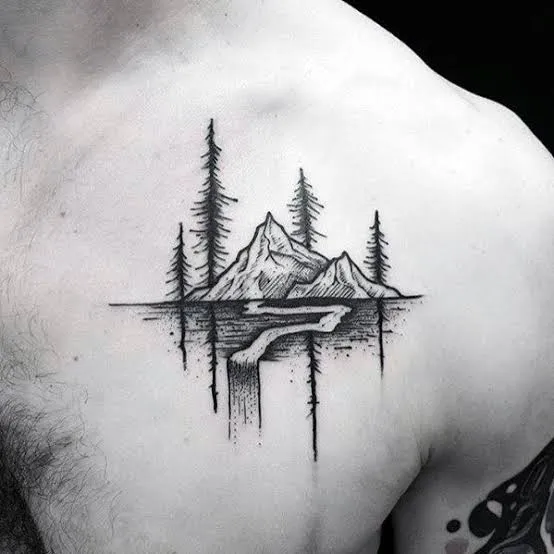
Single needle tattoos use one fine point to create extremely thin, delicate lines — think tiny mountain ranges, botanical sprigs, or a small scene like a cabin in the woods. Because the lines are so thin, this style is best kept under 3 inches; anything bigger starts looking sparse. The inner forearm’s smoother skin holds single-needle detail better than textured areas. This is genuinely one of the lower-pain options on this list since there’s minimal repeated trauma to the same skin area. Bring a simple, high-contrast reference image — overly detailed photos don’t translate well at this scale. Keep in mind single-needle work tends to soften faster than bold linework, so occasional touch-ups keep it crisp.
Biomechanical Forearm Piece
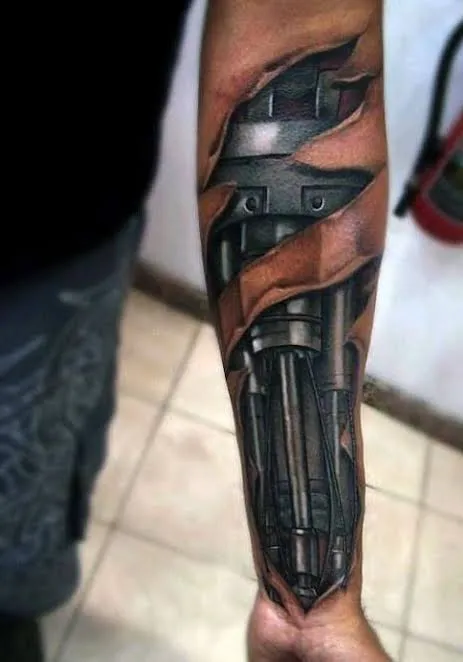
Biomechanical designs blend mechanical or alien-looking structures with the natural muscle lines of the arm, often using heavy shading and sharp linework to create the illusion of machinery under the skin. This style demands a larger canvas — think 6+ inches — and works best when an artist maps the design directly onto your specific forearm shape rather than using a flat stencil. Expect higher pain levels given the dense shading and detail work involved. A crucial tip: bring reference photos of biomechanical art you like, but let your artist customize the flow to your actual muscle structure — a copy-pasted design rarely fits right. This isn’t ideal for conservative workplaces, but it’s a striking option for a second or third tattoo.
Compass and Map Fragment
This design pairs a compass rose with fragments of map linework, usually done in fine-line or light blackwork style with minimal shading. It reads as clean and purposeful rather than busy. A 3–4 inch placement on the outer forearm keeps the compass legible without overcrowding the map details. Pain is on the lower-to-moderate end since shading stays minimal. When briefing your artist, specify whether you want the compass needle pointing toward something symbolic (a hometown coordinate, for example) — small custom touches like this make a flash-style design feel personal instead of generic. Solid for first tattoos, and it ages well since the linework carries the whole piece.
Animal Portrait in Blackwork
A single-animal portrait — wolf, lion, bear — rendered entirely in solid black with sharp contrast rather than gradual shading gives a graphic, poster-like effect. This differs from realism because there’s no attempt at photographic depth; it’s about bold shapes and confident contrast instead. A 4-inch placement on the inner or outer forearm works well. Pain runs moderate given the solid black fill sections. Ask your artist about “negative space eyes” — leaving the eyes as untouched skin — since it’s a small detail that adds a lot of visual punch. This style holds up exceptionally well over decades because solid black doesn’t fade into patchiness the way fine gradients can.
Religious or Symbolic Cross With Script
Combining a simple linework cross with a short script phrase is one of the most requested symbolic designs for men, and it works because the two elements balance each other — one bold, one delicate. Keep the cross under 3 inches with lettering beneath it kept short and legible. This placement suits the inner forearm, where pain is generally moderate. A useful tip: decide on font weight before your appointment, since a script that’s too thin can blur into the cross’s linework over time. This design suits nearly any workplace and remains one of the more timeless, non-trendy choices on this list.
Watercolor-Style Abstract Splash
Watercolor tattoos mimic paint bleeding across paper using soft color gradients and no hard outlines, often layered behind a small anchoring image like a bird or geometric shape. This is a genuinely difficult style to execute well — ask specifically to see an artist’s healed watercolor work, not just fresh photos, since color saturation shifts noticeably as it settles. A 4-inch placement on the outer forearm gives enough room for the color bleed effect. Pain varies depending on how much solid color fill is involved. Because pigment can fade unevenly without hard outlines to anchor it, this style typically needs more frequent touch-ups than linework-based designs.
Minimalist Line Art Icons Set
A small collection of simple icons — a mountain, a star, an arrow — arranged in a vertical or scattered line uses thin, consistent linework with zero shading. This is about as low-commitment as forearm tattoos get, with each icon typically under 2 inches. The flat plane of the inner forearm keeps small icons crisp. Pain is low given the minimal needle work involved. A smart booking tip: ask if the icons can be done as a walk-in flash design if you’re not ready for a full custom consultation — minimalist sets are often available as ready-made stencils. Great for first tattoos, matching sets with friends, or building toward a larger piece later.
Best Placement Ideas
- Outer forearm — most visible, moderate pain, easiest to show off or cover with a sleeve
- Inner forearm — softer skin, slightly more sensitive near the elbow crease, better for detailed or delicate work
- Wrist-to-forearm transition — higher pain due to bone proximity, best for smaller accent pieces
- Full forearm wrap — highest time and cost commitment, best suited to bold linework that won’t distort around the curve
Tips for Success
Look through an artist’s portfolio for healed photos, not just fresh ink — fresh tattoos always look sharp, but healed results show you how their line weight and shading actually hold up. Book a consultation before committing to anything custom, and bring reference images along with a rough idea of size and placement. Ask directly about needle type if you’re after fine detail, and don’t be afraid to ask how many sessions a larger piece will realistically take.
Common Mistakes and How to Avoid Them
- Sizing a detailed design too small, causing lines to blur together as skin ages
- Choosing a placement that distorts the design’s geometry (curves near the wrist can warp straight lines)
- Skipping the aftercare instructions your artist gives you
- Copying a design exactly from Pinterest without adjusting it to fit your skin tone, arm shape, or personal meaning
Similar Variations
Most of these designs scale up or down easily. A fine-line geometric panel can shrink into a small wrist accent or expand into a half-sleeve. Blackwork bands can incorporate script for a more personal touch. Dotwork mandalas pair well combined with negative space wave elements for a hybrid piece. Talk through combinations with your artist during the consultation phase rather than deciding everything beforehand.
Aftercare Basics
General dermatological consensus suggests keeping a fresh tattoo clean, moisturized, and out of direct sun during healing, which typically spans two to four weeks depending on size and placement. Avoid soaking the area in pools or baths early on, and don’t pick at peeling skin. Always follow the specific aftercare sheet your artist provides, since products and timelines can vary by studio, and consult a licensed professional or dermatologist if you notice unusual irritation.
Quick FAQ
How much do forearm tattoos for men typically cost?
Cost varies widely by size, detail, and artist experience, but small linework pieces often start in the low hundreds while larger custom designs with shading or color can run well into the thousands. Always get a quote during consultation.
How painful are forearm tattoos?
Pain tolerance varies by individual, but generally the fleshier parts of the forearm are more tolerable than areas near the wrist or elbow bone. Solid black fill and heavy shading tend to feel more intense than simple linework.
How long does healing take?
Most forearm tattoos heal on the surface within two to three weeks, though full healing beneath the skin can take longer. Healing time depends on size, ink saturation, and how well aftercare instructions are followed.
Do forearm tattoos age well?
Bold linework and solid blackwork tend to hold their shape longer than fine gradients or thin single-needle detail. Touch-ups every several years can keep any style looking sharp.
Fine-Line vs. Bold Traditional: Know the Difference
- Fine-line — Thin, delicate lines created with a single needle or small liner, minimal shading, ages best in small-to-medium sizes, softens gradually over years
- Bold traditional — Thick outlines, solid color or black fill, built specifically to resist fading and blurring over decades, more visually dominant at a distance
Choosing between the two often comes down to how much visual weight you want and how the design will hold up twenty years from now, not just how it looks fresh out of the chair.
Finding the right forearm tattoo really comes down to matching the technique to your lifestyle, pain tolerance, and how much visibility you’re comfortable with at work or in daily life. Take your time picking an artist whose healed portfolio actually backs up their style, and don’t rush the consultation — a good forearm piece is one you’ll still be glad you got in another decade. Whatever direction you choose, the best forearm tattoos for men start with a clear plan, not just a cool picture.