16 Small Tattoos For Men
Nervous about picking a design you’ll regret in five years? You’re not alone — most guys second-guess their first tattoo more than they’d ever admit to their buddies. This guide skips the hype and gives you the real details: placement advice, pain levels, healing timelines, and what to actually say to your artist so you walk out with something you’ll still like at 40.
So what are the best small tattoos for men? Fine-line geometric shapes, single-needle minimalist icons, and small blackwork symbols under two inches work best because they hold their shape over time, heal faster than large pieces, and stay versatile for work settings. Simple linework also ages better on skin than heavy shading at this size.
Beyond the designs themselves, I’ll walk you through where each one hurts most, what it’ll likely cost, how to brief your artist so the stencil actually matches what’s in your head, and the mistakes that turn a good idea into a blurry regret five years down the line.
Why Small Tattoos Work So Well for a First Piece
Small tattoos aren’t just “less commitment.” They’re a different technical challenge entirely. Line weight — how thick or thin the tattoo needle’s line is — has to be dialed in perfectly, because there’s no room for shading to hide mistakes. A good small tattoo relies on clean linework, smart negative space (the untattooed skin that becomes part of the design), and placement that won’t distort the shape as skin ages or stretches. That’s why the designs below all lean on precision techniques like fine line, single needle, dotwork, and blackwork rather than heavy color saturation or complex shading.
Fine-Line Minimalist Wave
A single continuous wave line, done in fine-line technique with a thin single needle, reads as calm and understated without looking like a beach-vacation cliché. The line weight should stay consistent — no tapering — which is actually harder for an artist to execute cleanly than it looks. Best placement is the forearm, inner bicep, or ankle, sized between 1.5 and 2.5 inches. Skin with visible hair follicles (like the forearm) can slightly soften fine lines over time, so ask your artist about that during consultation. Healing typically runs 10–14 days for a piece this size. Pain is moderate on the inner arm, low on the outer forearm. It’s workplace-friendly and ages reasonably well if the line stays thin. Bring a photo of ocean waves, not a cartoon wave, so your artist understands the linework you actually want. Next up: a design that plays with the same restraint but adds dimension through spacing instead of curves.
Single-Needle Mountain Range
This design uses a single-needle technique — literally one fine needle instead of a grouped needle cluster — to create a jagged, low-detail mountain silhouette. The lack of shading is intentional; it keeps the design crisp for years instead of turning into a gray smudge. Forearm and calf placements work best at 2–3 inches wide. Bony areas like the wrist or ankle will hurt more than fleshier spots like the outer forearm. Healing takes about two weeks. This one’s popular for matching tattoos among hiking buddies or brothers, and it stays legible even as skin loosens with age since there’s minimal fine detail to lose. Ask your artist specifically about needle grouping — single needle vs. a 3-needle liner changes how crisp the peaks look. From sharp peaks, let’s move to sharp angles with a geometric design that leans harder into structure.
Blackwork Geometric Triangle
Blackwork means solid, saturated black ink with no color and minimal white space inside the shape — it’s bold, high-contrast, and reads clearly from a distance even at small sizes. A simple triangle, sometimes layered with a thin line through the center, works well on the upper arm, chest, or behind the ear. Keep it under 2 inches; smaller than that and the solid black can start to look like a blob rather than a clean shape after healing. This placement and technique combo heals in about 2–3 weeks since solid black areas take slightly longer to settle than linework. Pain behind the ear is notably higher due to thin skin over bone — worth knowing before you commit to that spot for your first tattoo. It’s a solid low-key choice for professional settings if placed on the ribs or upper arm under a sleeve. Let’s shift from solid black to a technique built entirely from tiny dots.
Dotwork Compass
Dotwork builds an image from hundreds or thousands of small individual dots instead of continuous lines, creating texture and subtle shading without solid black fill. A small compass rendered this way looks intricate up close but reads as a simple symbol from a distance. This technique demands more sitting time than linework, so budget for a longer session even at a small size — around 2 to 2.5 inches on the forearm or upper arm. Dotwork holds detail well initially, but very fine dot spacing can blur slightly over 10+ years, so ask your artist about dot density for longevity. Pain level is comparable to fine line, maybe slightly more due to repeated needle contact in the same area. This design suits guys who want something that looks more custom and less like flash art (pre-drawn designs artists keep on file). Speaking of meaningful symbols, here’s one that’s about as personal as it gets.
Small Roman Numeral Date
Roman numerals marking a birthdate, anniversary, or meaningful year are usually done in fine-line or single-needle style along the ribs, forearm, or collarbone. Keep letters at least a quarter-inch tall — smaller than that and numerals blur together within a few years as skin cells turn over and ink settles deeper into the dermis. Rib placement hurts more than most spots due to thin skin and bone proximity — be honest with yourself about pain tolerance here. Healing runs 2–3 weeks on the ribs specifically because clothing friction slows things down. This is a common matching-tattoo choice for siblings or couples. Bring your artist the exact numerals written out, not just the date, since Roman numeral formatting has small variations artists need clarified upfront. From dates, let’s move into something with more visual movement.
Negative Space Crescent Moon
Negative space tattoos use untattooed skin as part of the image — here, a crescent moon shape is formed by a thick blackwork outline with the “empty” curve left bare. This creates visual contrast that’s more striking than a simple solid moon. It works best on lighter skin tones where the contrast reads clearly; on deeper skin tones, ask your artist about line thickness adjustments to keep the negative space visible. Best placement is the forearm or bicep, around 2 inches. Healing is standard, 10–14 days. Pain is moderate. This design ages fairly well since it relies on outline thickness rather than fine detail. It’s a strong pick if you want something that looks a little more artistic than a standard flash design. Next, a nautical classic redone with modern restraint.
Fine-Line Anchor
The anchor tattoo is a classic, but fine-line execution modernizes it — thin, consistent lines, no bold traditional shading, no color fill. This keeps it small and subtle rather than looking like a vintage sailor piece. Wrist, forearm, or behind the calf work well at 1.5–2 inches. Wrist placement is one of the more sensitive spots on the body due to thin skin and bone, so expect a sharper sensation than fleshier areas. Healing takes about 10 days. This design works for first-timers because it’s simple enough that minor linework imperfections during healing (like slight ink loss) won’t ruin the shape. Ask about “single-pass” vs. “double-pass” lining — double pass adds durability for thin lines like this. From something classic, here’s a bolder alternative for guys who want more visual weight.
Bold Traditional Dagger
Unlike the fine-line pieces above, this design uses bold traditional technique — thick outlines, solid black shading, sometimes a small red accent. It’s a heavier look, more visible from a distance, and holds up better over decades because thick lines fade more gracefully than thin ones. Best on the upper arm or calf at 2.5–3 inches. This is genuinely more painful over calf and shin due to bone proximity. Healing takes closer to 3 weeks because of the solid ink saturation. This is a good option if you’re worried about a fine-line piece fading into illegibility after 15–20 years — boldness has real staying power. Bring reference images specifically labeled “American traditional” so your artist understands the shading style you want, not just the subject matter. Now, back to something minimal and directional.
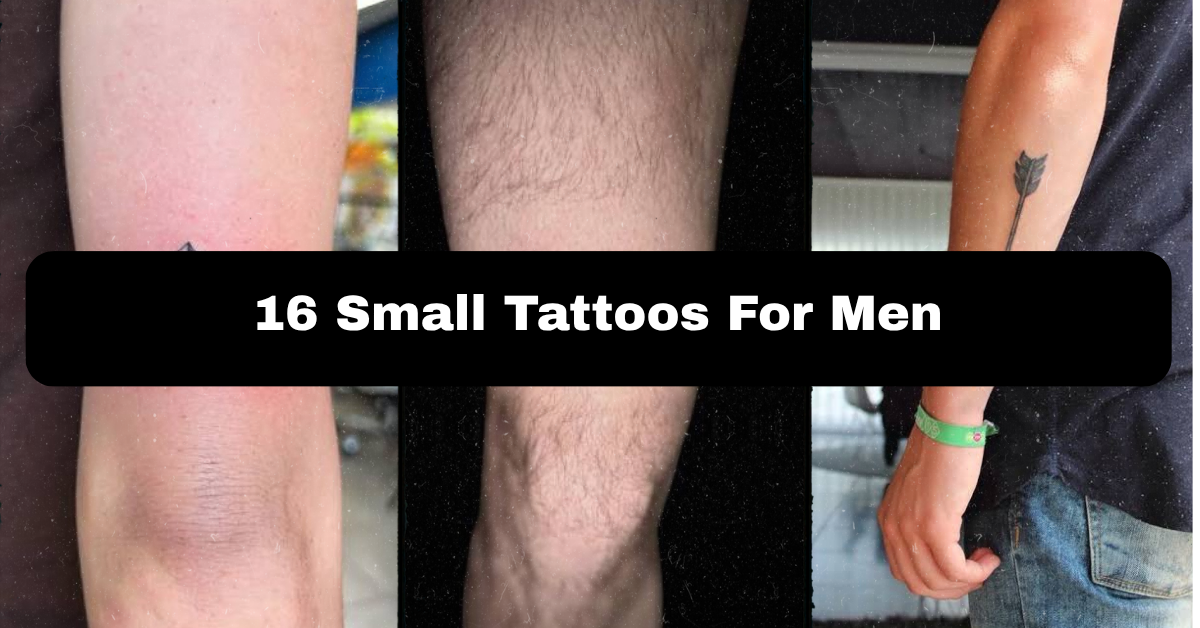
Minimalist Arrow
A single-line arrow, done fine-line style, symbolizes moving forward — it’s simple enough to explain in one sentence to an artist and simple enough to heal cleanly in about 10 days. Forearm, wrist, or ankle placements all work at 1–2 inches. Ankle skin can be trickier for linework due to less fat padding and more movement, so ask your artist if this affects line crispness during healing. Pain is low to moderate depending on placement. This is one of the most common “walk-in” tattoo choices — meaning you can often get it done same-day without a custom consultation, though custom sizing still matters. It’s an easy matching-tattoo option for friend groups. Let’s move to something with more shading depth.
Single-Needle Portrait Silhouette
A small silhouette — a person, an animal, a scene — done in single-needle style keeps the image simple: pure outline, no interior detail, no shading. This avoids the biggest risk with tiny portrait tattoos, which is losing detail as the piece ages. Chest, forearm, or upper arm placement at 2 inches or larger is ideal; going smaller risks losing the recognizable shape. Healing is standard at 2 weeks. Pain on the chest varies by exact spot — closer to the sternum hurts more. This suits guys wanting a personal or memorial piece without heavy visual weight. Bring a high-contrast reference photo; artists need clear light-versus-dark separation to trace an accurate silhouette. Next, a fragment-style design borrowing from tribal linework traditions.
Blackwork Tribal Band Fragment
Instead of a full tribal sleeve, this design takes a small fragment — a curved blackwork line segment — and places it discreetly on the bicep or forearm edge. It references tribal linework’s bold curves without the commitment of a full traditional piece. Keep it under 2 inches to maintain crisp curve edges. Bicep placement heals in about 2 weeks; pain is low to moderate on fleshier upper-arm skin. This works well as a subtle nod to heritage or personal meaning without an oversized design. Ask your artist about curve consistency — uneven blackwork curves are one of the most common “bad tattoo” complaints, so portfolio review matters here more than most designs.
Small Script Word or Quote
Script tattoos use cursive-style lettering, typically fine-line, to spell out a word or short phrase. Font choice matters enormously — thin, looping scripts blur faster than blocky ones. Ribs, forearm, and collarbone are common spots, sized to fit the word length, usually 2–4 inches wide. Rib placement is notably painful due to bone and thin skin. Healing takes 2–3 weeks. This is a popular but risky choice for longevity — ask your artist about minimum line thickness for text, since script that’s too delicate can turn illegible within a decade. Avoid cursive fonts smaller than half an inch tall.
Fine-Line Animal Outline
A wolf, lion, or bird rendered as a simple outline (no internal shading) in fine-line style keeps the image graphic and clean rather than photo-realistic. Upper arm or calf placement at 2.5–3 inches preserves enough detail in the outline to stay recognizable for decades. Healing runs about 2 weeks. Pain is moderate on the calf, lower on the outer upper arm. This suits guys wanting symbolic meaning (strength, loyalty, freedom) without a large, detailed piece. Bring a simplified line-art reference, not a photorealistic image — your artist needs to know you want outline only, not shading.
Dotwork Skull
A small skull done in dotwork style trades solid black shading for stippled texture, giving it a softer, more artistic look than bold traditional skull designs. Best at 2 inches minimum on the forearm or upper arm; smaller risks the dots merging into a blurry gray patch. Healing takes 2–3 weeks. Pain is moderate. This works for guys who like symbolic mortality themes but want something more subtle than bold blackwork. Confirm dot density with your artist — tighter dot spacing looks darker but may blur faster than looser spacing.
Geometric Line Sun
A sun made of straight or slightly curved fine lines radiating from a center point, done without shading, creates a clean geometric look that reads well small. Wrist, back of the neck, or forearm at 1.5–2 inches works well. Neck placement is genuinely more painful and harder to keep discreet at work, so weigh visibility tradeoffs honestly. Healing takes about 10–14 days. This is a strong minimalist choice for first tattoos since the linework is forgiving of small imperfections.
Small Religious Symbol
A simple cross or other symbol, done in fine-line or thin blackwork, works well on the forearm, wrist, or behind the ear at under 1.5 inches. Behind-the-ear placement is more painful due to thin skin over bone, and healing there takes slightly longer, around 2–3 weeks, due to friction from hair and glasses. This is a common first-tattoo choice for its simplicity and personal meaning. Ask your artist about line thickness — too thin, and small crosses can lose shape within 10–15 years.
Best Placement Ideas
- Forearm — high visibility, moderate pain, easy healing access, good for detailed linework
- Wrist — very visible, higher pain due to bone proximity, faster fading risk on fine lines
- Upper arm/bicep — easy to cover for work, lower pain, good for bold or blackwork pieces
- Ribs — high pain, longer healing due to clothing friction, best for guys prioritizing discretion
- Behind the ear — very discreet, notably painful, higher touch-up likelihood over time
- Ankle/calf — moderate pain, decent for linework, visible in shorts/summer months
Tips for Success
Choose an artist whose portfolio shows consistent line weight and clean healed photos, not just fresh ink shots — healed work tells you how their linework actually holds up. Bring reference images, not just words, and be specific about size in inches, not vague terms like “small.” Ask directly about their experience with the specific technique you want — fine line, dotwork, and blackwork each require different skill sets, and not every artist specializes in all three. A good consultation should include a conversation about placement tradeoffs, not just a stencil printout.
Common Mistakes and How to Avoid Them
- Going too small for detail — intricate designs under 1.5 inches often blur within a decade
- Ignoring how skin ages at that placement — joints and high-movement areas distort linework faster
- Skipping aftercare instructions — this affects how crisp the final healed result looks
- Copying a design exactly from Pinterest — personalizing even slightly avoids an identical, uninspired result
- Not asking about touch-up policy — many studios offer one free touch-up within a set window
Similar Variations
Nearly every design above can shift in scale or style. A fine-line wave can become a dotwork wave for more texture. A blackwork triangle can shrink into a cluster of three tiny triangles for a matching-tattoo set. Script quotes can switch fonts entirely and still keep the same meaning. Single-needle animal outlines can gain minimal shading later as a touch-up if you want more depth down the road.
Aftercare Basics
General aftercare typically involves keeping the tattoo clean, avoiding direct sun exposure while healing, and avoiding swimming or soaking for at least two weeks. Avoid picking at peeling skin, since that can pull ink out unevenly. Every studio provides a specific aftercare sheet — follow that exact guidance over generic internet advice, and check in with your artist or a dermatologist if you notice unusual redness or irritation beyond normal healing.
Quick FAQ
How much does a small tattoo cost?
Most small tattoos run $80–$250 depending on detail, location, and the studio’s hourly or per-piece rate. Blackwork and dotwork pieces sometimes cost more due to longer sitting time.
How painful are small tattoos?
Pain varies by individual and placement — bony areas like ribs, wrists, and behind the ear tend to be more sensitive than fleshier spots like the upper arm. Always ask your artist for realistic expectations based on your specific design.
How long does healing take?
Most small tattoos heal within 10–21 days on the surface, though full healing beneath the skin can take longer. Healing time varies by placement, aftercare, and individual skin.
Do small tattoos fade faster than large ones?
Fine, thin lines generally show more visible aging over 10–20 years than bold or thick lines, since less ink saturation means less staying power. Discuss line weight with your artist if longevity matters to you.
Small tattoos for men reward good planning more than big pieces do — there’s less room to hide a rushed decision. Take your time picking the design, the placement, and especially the artist, and you’ll end up with something that still looks sharp a decade from now.