15 Hello Kitty Tattoo Design Ideas That Actually Work on Skin
Nervous about picking a Hello Kitty tattoo you’ll still love in ten years? You’re not alone — this is one of the most requested nostalgic designs at studios right now, and getting it right takes more thought than just screenshotting a cartoon.
So what are the best Hello Kitty tattoo ideas? Fine-line portraits, minimalist bow outlines, and small blackwork silhouettes work best, since they hold detail at tiny sizes and age cleanly on skin. Dotwork shading and negative-space versions add texture without the risk of looking muddy after a few years.
Stick around, because I’m also going to walk you through placement tradeoffs, realistic pain levels, what these designs cost, and exactly how to brief an artist so you don’t end up with a blob where a bow used to be.
Why Hello Kitty Tattoos Are Having a Real Moment
I’ve watched a lot of trend cycles come through tattoo studios, and Hello Kitty isn’t just a nostalgia play — it’s genuinely a good tattoo subject. The character’s design is simple: rounded shapes, minimal facial detail, high contrast. That simplicity translates well into linework, which means it doesn’t rely on heavy shading to read clearly, and it doesn’t need a huge canvas of skin to look intentional. It also carries real sentimental weight for a lot of people — first cartoon crush, comfort character, a symbol of softness in a world that doesn’t always feel soft. That emotional pull matters when you’re picking something permanent. Below are fifteen ways artists are actually interpreting this design right now, from tiny single-needle dots to full collage-style pieces.
Fine-Line Hello Kitty Portrait
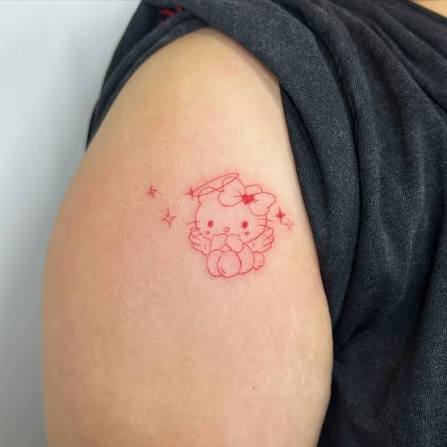
This is the most requested version for a reason. A fine-line portrait uses thin, consistent line weight — usually done with a single needle configuration — to render Hello Kitty’s face, bow, and whiskers without any shading fill. The line stays crisp instead of bold, which keeps the design looking delicate rather than cartoonish. It works best on the inner forearm, ankle, or upper arm at around 2 to 3 inches, since anything smaller risks the whiskers blurring together as the tattoo settles. Fine line does soften slightly over the years, so a touch-up around the five-year mark keeps it sharp. Bring a clean, high-resolution reference image and ask your artist about needle grouping before booking. Pain is moderate on fleshy areas, mild-to-moderate on bonier ones like the wrist. It’s a solid first-tattoo choice and reads as professional enough for most workplaces.
Minimalist Single-Needle Silhouette

Instead of full facial detail, this version reduces Hello Kitty to her recognizable outline — ears, bow, and head shape — using a single needle for an ultra-thin, almost sketch-like line. There’s no shading, no color, just clean geometry. It’s the most subtle option on this list and the least likely to blur or spread with age, since there’s so little linework to distort in the first place. It suits the wrist, collarbone, or behind the ear beautifully at 1 to 1.5 inches. Skin with more texture (stretch marks, visible pores) can slightly affect how crisp the line looks initially, so ask your artist if a slightly heavier line weight would hold better on your specific skin. This is a great “testing the water” tattoo if you’ve never been inked before, and it’s discreet enough to hide under a sleeve for interviews or events.
Blackwork Hello Kitty Bow

Blackwork uses solid, saturated black ink filled in completely rather than left as outline, giving the bow a bold, graphic look instead of a delicate one. This version usually isolates just the bow — Hello Kitty’s most iconic accessory — as a standalone symbol, which works well for people who want something recognizable without needing the whole face. Solid black holds up remarkably well over time compared to fine line, since there’s more ink density for the fading process to work through. Good placement options include the ankle, upper arm, or ribcage, sized around 1.5 to 2 inches. Expect the ribcage to be noticeably more uncomfortable than the ankle or arm because of thinner skin over bone and less padding. Ask your artist about their saturation technique during consultation — a poorly packed blackwork piece can look patchy once healed.
Dotwork Shaded Hello Kitty
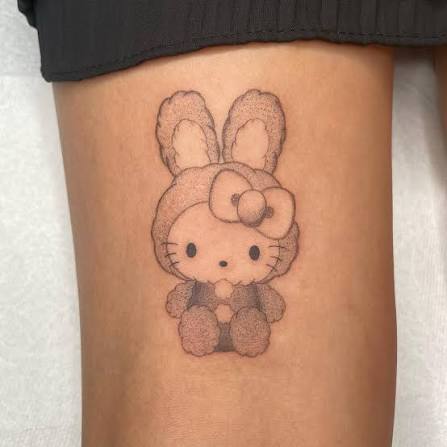
Dotwork builds shading and texture using tiny individual dots instead of solid fill or line gradients, creating a soft, almost stippled look. Applied to Hello Kitty, this technique is often used to add gentle shadow around the face or bow without making the design feel heavy. It reads more artistic and less “sticker-like” than a flat fine-line version. This works best at a slightly larger size — 2.5 to 3.5 inches — since dotwork needs room to breathe or the dots merge into a blur. The forearm, thigh, or shoulder blade are strong placement choices. Dotwork tends to take a bit longer to heal evenly because of the sheer number of individual punctures, so budget extra patience during the peeling stage. This style is less common, so it’s a great option if you want a design that’s recognizably Hello Kitty but visually distinct from the standard fine-line version everyone else is getting.
Watercolor-Style Hello Kitty

This approach layers soft, diluted color washes — usually pink, red, or pastel tones — behind or around a fine-line Hello Kitty outline, mimicking the look of a watercolor painting bleeding across paper. It’s visually striking but comes with real tradeoffs: color ink fades faster than black ink under general dermatological consensus, and watercolor-style work specifically tends to lose vibrancy noticeably within 3 to 5 years. If you want this look, plan on touch-ups as a built-in cost, not an exception. Best placed on the shoulder, upper back, or thigh where there’s more surface area for the color bleed to look intentional rather than cramped. Ask your artist directly about the pigments they use and their experience with color retention on your skin tone, since darker skin tones may need adjusted color choices to keep the design visible long-term.
Negative Space Hello Kitty Design

Negative space tattooing uses the untouched, natural skin as part of the image instead of filling every shape with ink — so Hello Kitty’s face might be defined by a black background around her, with her features left as bare skin. It’s a striking, modern technique that photographs incredibly well but requires a genuinely skilled artist, since uneven negative space edges look sloppy fast. This works best as a slightly bolder piece, around 3 inches, placed on the upper arm or calf where the skin is flatter and less prone to shifting the design’s geometry. Healing takes a little longer to judge accurately because the black areas can look uneven until fully settled, sometimes 3 to 4 weeks out. This is not a great first-tattoo pick — save it until you’ve seen an artist’s negative space portfolio specifically, not just their general work.
Bold Traditional Hello Kitty
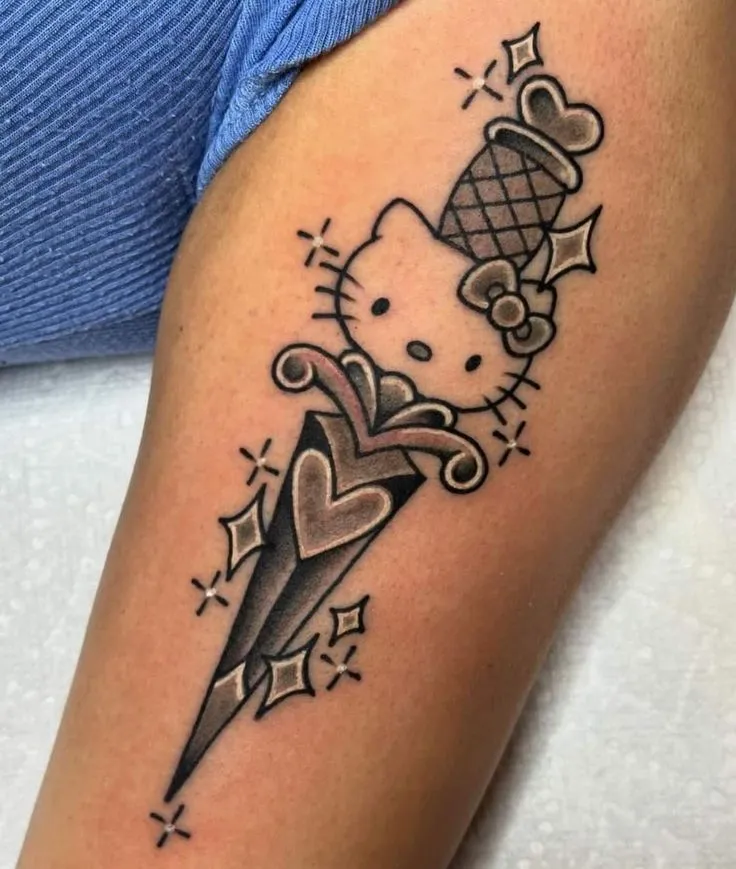
Styled after American traditional tattooing, this version uses thick, bold outlines, limited but saturated color (usually red, black, and cream), and minimal shading gradients. It’s the opposite philosophy of fine line — designed to stay bold and legible even decades from now, which is exactly why traditional tattooing has lasted as a style for over a century. This suits the upper arm, calf, or thigh at 2.5 to 4 inches. Because the outlines are thick, this style is more forgiving on textured or looser skin than fine line is. Pain is moderate, similar to most solid-color work. If longevity matters more to you than subtlety, this is arguably the smartest technical choice on this entire list, since bold lines and solid color are proven to hold their shape longer than delicate detail work.
Matching Best Friend Hello Kitty Tattoos
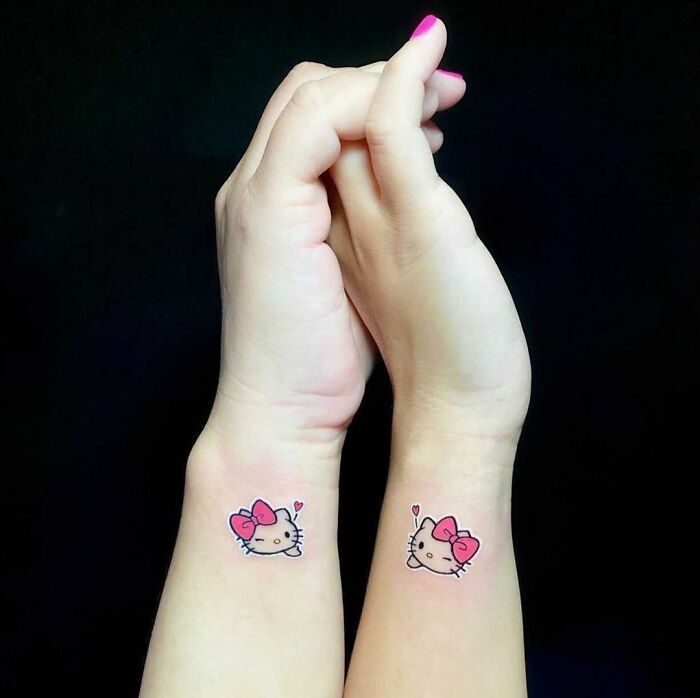
Matching tattoos work best when they’re simple enough that two different bodies, skin tones, and healing patterns won’t throw off the design’s consistency. A minimalist Hello Kitty face split into two halves, or two small matching bows, are popular choices for this reason — the simpler the linework, the more consistently it’ll look “matching” years later even if one person’s tattoo ages slightly differently. Wrist, ankle, or behind the ear are common spots for this kind of pairing. Bring your friend to the same consultation if possible, and ask the artist to tattoo you back-to-back so line weight and ink batch stay consistent between both pieces. This is a low-commitment way to mark a friendship without needing a large or highly detailed design.
Hello Kitty With Floral Accents
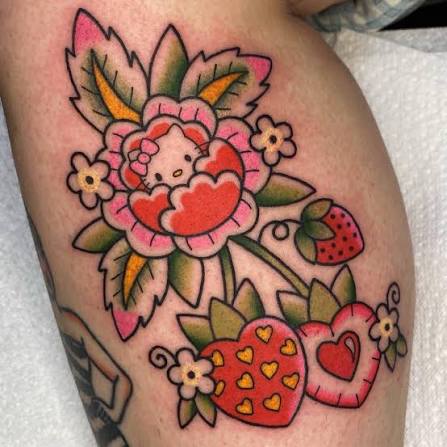
Combining Hello Kitty’s face or silhouette with small botanical elements — cherry blossoms, daisies, or simple leaf linework — softens the design and gives it more visual movement than the character alone. The flowers are usually kept in the same line weight as the portrait so the piece feels unified rather than like two designs awkwardly combined. This works well at 3 to 4 inches on the shoulder, thigh, or forearm, giving enough room for both elements to stay legible. Ask your artist to sketch a custom layout rather than copying a flash design directly — floral placement around a face needs to be adjusted to your specific body curve. This is a strong option if you want the design to feel a little more grown-up or personalized rather than a straight character tattoo.
Chibi Full-Body Hello Kitty
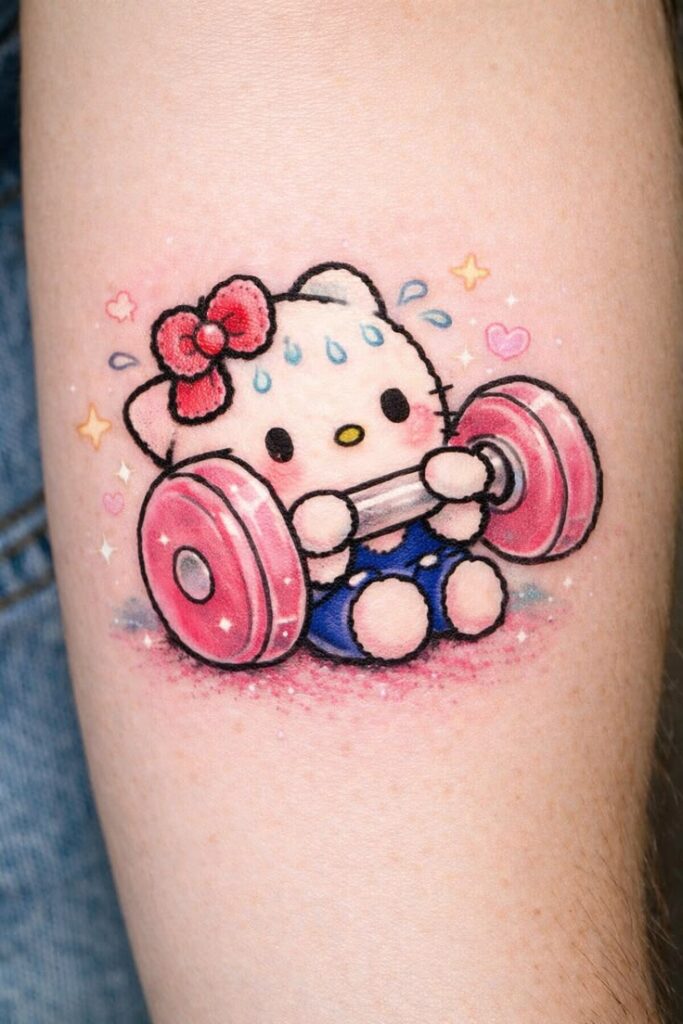
Chibi style renders the entire character in a small, rounded, exaggerated-proportion form — big head, tiny body — which is how most people picture Hello Kitty from the original merchandise line. This version usually stays fine-line with light color fill or none at all. It suits the ankle, wrist, or upper arm at a compact 1.5 to 2 inches, since the proportions are already simplified and don’t need extra size to stay readable. This is one of the more “fun” and less serious options on the list, and it tends to read as playful and casual, which some workplaces may view differently than a more minimalist design. Good for first tattoos and for anyone who wants the design instantly recognizable at a glance.
Sanrio Friends Group Tattoo

Instead of Hello Kitty alone, this concept places her alongside one or two other small Sanrio-style characters in a horizontal or clustered line arrangement. Each character is usually kept small — under an inch each — with matching fine-line weight so the group reads as one cohesive tattoo rather than a scattered collection. This works well along the forearm, collarbone, or spine where a horizontal line composition has room to stretch. Ask your artist to mock up a digital stencil placement before tattooing so you can check the spacing looks intentional on your specific body shape. This is a good option for people who want a “collection” feeling without committing to a full sleeve.
Micro Bow-Only Tattoo

At under half an inch, this is the smallest and most discreet version on this list — just Hello Kitty’s bow, rendered in minimal single-needle linework with no shading. Because it’s so tiny, detail has to be kept extremely simple, or the lines merge together once healed. Popular spots include the inner finger, behind the ear, or the side of the wrist. Pain on the finger tends to be sharper and more noticeable than fleshier areas because there’s very little padding over bone there. This is the tattoo to get if you want something meaningful but nearly invisible, though be aware ultra-tiny tattoos are also the first to blur if your artist doesn’t have strong fine-line experience specifically.
Behind-the-Ear Peeking Hello Kitty
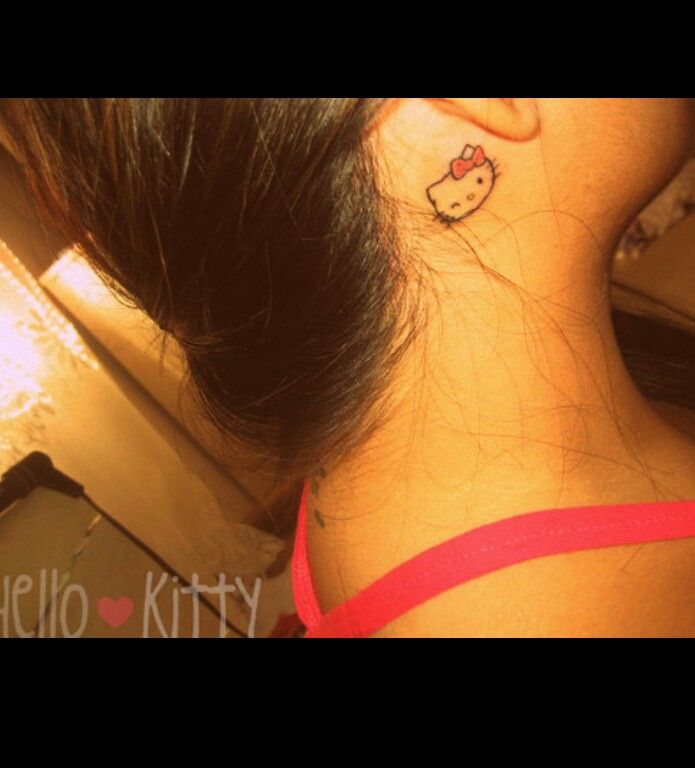
This design places a small Hello Kitty face or silhouette just behind the ear, angled so it looks like she’s peeking out — a popular placement choice for people who want something personal that isn’t visible unless hair is pulled back. Kept under 1.5 inches in fine line, this spot has thin skin and less fat padding, which generally makes it a more sensitive placement than the arm or thigh. Healing takes a bit of extra care since hair and hats can rub against the area. Ask your artist about aftercare specific to hairline placement before booking, since it differs slightly from body placements. This is a favorite for people balancing a professional environment with wanting a design they can still show off easily.
Collage-Style Hello Kitty Piece
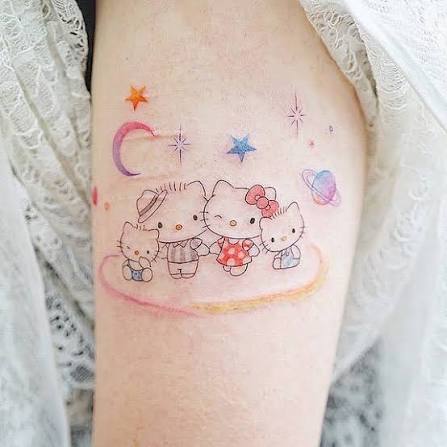
For people wanting more than one small tattoo’s worth of impact, a collage arrangement combines multiple Hello Kitty elements — face, bow, paw print, a small heart — scattered across a section of the arm or leg in a loosely connected composition. This isn’t a full sleeve, but it’s more visually dense than a single motif. Line weight should stay consistent across all elements so the collage doesn’t look like separate tattoos randomly placed together. This works best on the outer forearm or calf at a total spread of 4 to 6 inches. Bring a mood board, not just one reference image, so your artist can help design the composition rather than just copying pieces individually.
Custom Script-and-Icon Combo
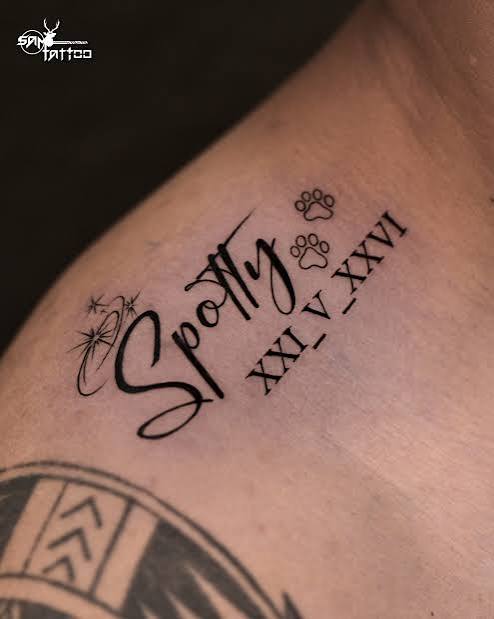
This pairs a small Hello Kitty icon — usually just the face or bow — with a short word, name, or date in fine-line script. The two elements are usually balanced so neither overpowers the other; a common mistake is making the script too large, which throws off the whole composition. This suits the forearm, ribcage, or ankle at around 2 to 3 inches total. Ask your artist to draft the script and icon together as one stencil rather than combining two separate flash designs, since spacing and alignment matter a lot here. This is a meaningful option for marking a specific date, person, or personal phrase alongside the character.
Best Placement Ideas
- Wrist or ankle — high visibility, moderate pain due to thin skin over bone, easy to show off or cover with clothing
- Inner forearm — great for fine-line detail, low-to-moderate pain, easy for touch-ups later
- Behind the ear — discreet, more sensitive placement, requires extra care around hair and hats during healing
- Ribcage — good for larger blackwork or negative space pieces, notably more painful, longer healing due to movement and clothing friction
- Upper arm or shoulder — flexible for size, moderate pain, easy to keep hidden or visible depending on sleeve length
- Calf or thigh — best for larger collage or floral combos, generally lower pain, plenty of room for detail
Tips for Success
Look for an artist whose portfolio shows multiple examples of the specific style you want — not just one lucky photo. If you want fine line, scroll through at least ten of their healed (not just fresh) fine-line pieces, since fresh tattoos always look sharper than they will in six months. Book a consultation before committing, bring reference images saved to your phone (not just described verbally), and ask directly about their needle configuration, ink brand, and how they handle touch-ups. A confident, experienced artist won’t get defensive about these questions.
Common Mistakes and How to Avoid Them
- Sizing a detailed design too small, causing lines to blur together once healed
- Choosing a bony, high-friction placement for a delicate fine-line design that needs stable skin
- Skipping the aftercare instructions in favor of “winging it,” which raises the risk of poor healing and faded lines
- Copying a design directly from Pinterest without personalizing size, placement, or small details for your own body
- Booking a walk-in slot for a complex custom piece instead of scheduling a proper consultation first
Similar Variations
Nearly every design above can be resized down for a micro version or scaled up for a bolder statement piece. Fine-line pieces can gain color accents without switching to full watercolor. Blackwork bows can be combined with dotwork shading for added texture. A single motif, like the bow or face, can be repeated in a small pattern across a placement like the spine or ribs for a more custom, less “flash-off-the-wall” feeling.
Aftercare Basics
General aftercare for any of these designs typically includes keeping the area clean, avoiding direct sun exposure while healing, and avoiding tight clothing or friction over the tattoo during the first couple of weeks. Healing time varies by individual and by placement, but most small tattoos on this list settle within 2 to 3 weeks, with full color and line settling sometimes taking a bit longer. Always follow the specific aftercare sheet your artist gives you, and consult a licensed professional or dermatologist if you notice anything that seems outside normal healing.
Quick FAQ
How much does a Hello Kitty tattoo usually cost?
Small fine-line or single-needle designs typically range from $80 to $200 depending on the studio and location, while larger blackwork, dotwork, or collage pieces can run $200 to $500 or more.
Does a Hello Kitty tattoo hurt a lot?
Pain varies by individual and placement — fleshier areas like the outer arm or calf tend to be more tolerable, while bony spots like the wrist, ankle, or ribs are generally reported as more sensitive.
How long does healing take?
Most small tattoos in this style heal within 2 to 3 weeks, though individual healing time depends on aftercare, skin type, and placement.
Will the design fade or blur over time?
Bold blackwork and traditional-style tattoos tend to hold their shape longer than fine-line or watercolor pieces, which may need a touch-up after several years to stay crisp.
Picking the right Hello Kitty tattoo really comes down to matching the technique to how you actually want it to look in ten years, not just tomorrow. Fine line and minimalist bows stay subtle and age gracefully, while bold blackwork and traditional styles trade a little delicacy for serious longevity. Whichever direction you go, talk it through honestly with a licensed artist, ask the questions this article covered, and you’ll walk out with a Hello Kitty tattoo you’re genuinely glad you booked.