21 Behind The Ear Tattoos: A Real Guide to Placement, Pain, and Design Choices
Nervous about picking a behind the ear tattoo you’ll regret in five years? You’re not alone, and honestly, that hesitation is a good sign — it means you’re thinking this through instead of just pointing at a Pinterest board.
So what are the best behind the ear tattoo designs? Fine-line florals, tiny symbols, dotwork geometric shapes, and single-needle script tend to work best here, since the area is small, curved, and best suited to simple, low-saturation linework that won’t blur over time. Bold, heavily shaded pieces usually don’t age well in this exact spot.
Stick around, because I’m also going to walk you through pain levels, realistic healing timelines, how to actually brief an artist so you don’t end up with a stencil that looks nothing like what you pictured, and the mistakes I see people make over and over with this placement.
Why Behind The Ear Works So Well For Certain Designs
This spot has become one of the most requested “discreet but visible” placements in the tattoo world, and there’s a real reason behind that beyond trend cycles. The skin behind the ear is thin, close to the skull, and curves in a way that actually flatters small, clean linework — think fine line, single needle, or light dotwork rather than heavy blackwork or anything needing big color fields. Because the canvas is small, this placement rewards simplicity. A design that’s trying to cram in too much detail will lose clarity within a few years as skin naturally shifts and ink softens slightly. Let’s get into the specific designs that actually hold up.
Fine-Line Floral Vine
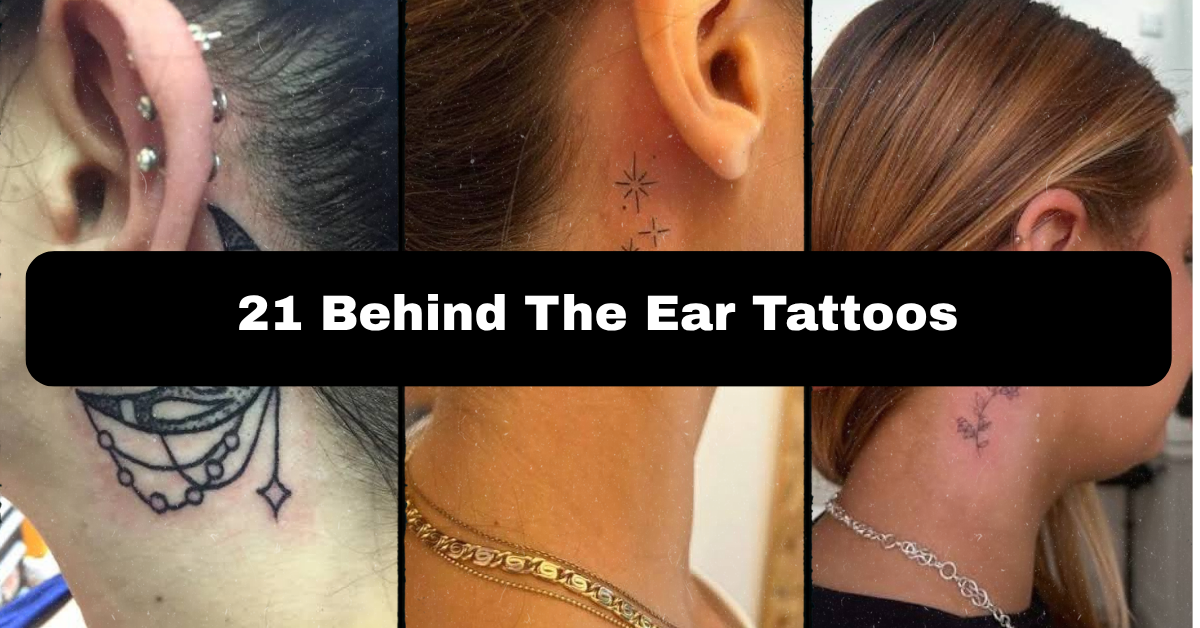
A slim vine with two or three small leaves, done in fine-line technique (thin, consistent needle strokes with no shading), curves naturally along the hairline behind the ear. Keep it under two inches so the linework doesn’t crowd. This placement heals in roughly two to three weeks, though individual healing time varies. Bony, thin-skinned areas like this tend to register higher on the sensitivity scale than fleshier spots, so expect a sharper sensation than, say, a forearm. Bring a reference photo with exact leaf spacing — vague requests like “something floral” leave too much up to interpretation. It’s a solid first-tattoo option since it’s small, quiet, and easy to cover with hair when needed. Next up, a design that trades botanical softness for pure minimalism.
Minimalist Single-Needle Star Cluster
Three to five tiny stars, spaced asymmetrically, done with a single needle for the thinnest possible line — this technique uses one needle point instead of a grouped needle configuration, which keeps dots and lines extremely fine. Size should stay small, around one inch total spread, since single-needle work loses definition if stretched too large. Expect mild-to-moderate discomfort given the thin skin and proximity to bone. Ask your artist specifically about single-needle versus standard fine-line needles at your consultation, since not every studio defaults to single-needle for small work. This design ages gracefully because there’s minimal ink saturation to fade unevenly. It also works well as a matching tattoo among friends who want something subtle rather than a full symbol.
Blackwork Crescent Moon
Unlike fine-line work, blackwork uses solid black fill with crisp edges rather than thin outlines — this crescent moon design leans on that saturated black for contrast against the skin. A half-inch to one-inch crescent tucked right behind the earlobe reads clearly even from a few feet away. Healing typically runs two to four weeks since solid black fill sits slightly deeper than pure outline work. This placement and design combo tends to hurt a bit more than florals because of the denser needle work required for solid fill. Request a stencil preview before the artist starts — solid shapes are unforgiving if the proportions are off. It’s a good pick for people who want something bolder without going oversized, and it photographs well for those comfortable with visibility.
Dotwork Mandala Fragment
Dotwork builds an image entirely from small dots rather than continuous lines, creating a stippled, textured look. A quarter-mandala or fragment design — rather than a full circular mandala — fits the curved space behind the ear much better. Keep it around one inch to preserve dot spacing and prevent the pattern from muddying. This technique typically takes longer per session than linework, so expect a longer sitting even for a small piece. Sensitivity here runs moderate to high since dotwork involves repeated puncturing in a small zone. Ask to see healed photos of your artist’s dotwork specifically, not just fresh ink, since dot spacing can spread slightly as skin settles. This suits people who want texture and pattern without solid color.
Script Lettering Behind The Ear
A short word, initial, or single line of text in fine-line script sits naturally along the curve of this area. Keep lettering small — under an inch and a half — and avoid intricate cursive with thin connecting strokes, since those tend to blur first as ink settles. Healing runs about two to three weeks. Pain is moderate; the constant angle changes needed for lettering can make sessions feel longer than the design’s size suggests. Bring a printed font sample rather than describing a “cursive style” verbally — fonts vary enormously and your idea of elegant script may not match the artist’s. This works well for workplace settings since hair covers it easily, and it ages best when kept simple rather than ornate.
Tiny Symbolic Icon
Arrows, infinity symbols, small hearts — these single-symbol designs are popular precisely because they carry meaning without needing explanation. Executed in fine-line or light single-needle work, they should stay under an inch to keep the linework crisp. Healing time sits around two weeks for a design this size. Pain level is moderate given the thin skin, though sessions are usually quick since there’s little surface area to cover. A useful tip: ask your artist to slightly adjust line thickness based on your skin tone, since very thin lines can appear softer or grayer on some skin tones after healing. Great for first tattoos, matching pieces with a partner or friend, and anyone wanting symbolism without a bold statement.
Negative Space Geometric Triangle
Negative space tattooing uses the untouched skin itself as part of the design, rather than filling every shape with ink. A triangle outline with one shaded side and one open, skin-colored side creates a striking geometric contrast in a small area. Keep the whole shape under an inch and a half so the negative space reads clearly rather than looking incomplete. This design tends to hold up better on lighter skin tones, where the contrast between ink and open skin stays sharp; ask your artist directly how the effect will look on your specific skin tone before committing. Pain is moderate. It’s a strong pick for people who’ve had a tattoo before and want something more conceptual than a simple outline.
Botanical Leaf Sprig
A single fern leaf or eucalyptus sprig, rendered in fine-line with light shading at the base to suggest depth, sits nicely along the natural curve behind the ear. Size should stay modest, around one to one and a half inches. Healing generally takes two to three weeks. The area’s thin skin means moderate discomfort, slightly more if shading is added since shading passes go over the same skin repeatedly. Bring a real photo of the specific plant, not a generic “leaf tattoo” search result — botanical accuracy is something a detail-oriented artist can actually deliver on if given a clear reference. This design suits people wanting something nature-inspired but not overly literal or busy.
Fine-Line Snake Wrap
A slim snake curving around the edge of the ear or trailing down behind it uses fine-line technique with minimal shading — maybe just a few scale suggestions rather than full detail. This one needs a slightly steadier hand due to the curve-following linework, so portfolio-checking matters more here than with straight-line designs. Expect moderate-to-higher pain since the design often extends closer to the ear’s cartilage edge. Healing runs two to four weeks depending on total size. Ask your artist how they plan to handle the transition where the design meets the hairline, since that’s often the trickiest part of this specific placement. It’s a bolder symbolic choice, often tied to transformation or protection themes, and suits repeat tattoo clients more than first-timers.
Bold Traditional Mini Flash Design

Traditional tattooing uses thick, confident outlines with solid color fill and heavy black shading — a mini flash piece (a small, pre-drawn design rather than a fully custom one) like a tiny anchor or star fits this style well behind the ear. Keep it small, under an inch, since traditional’s thick lines need less room than fine-line to read clearly. Healing takes about two to three weeks. This is a good walk-in option if you’re not looking to commission a custom piece — most street shops keep a flash sheet on hand. Pain runs moderate. It’s a solid, low-commitment choice for someone who wants classic tattoo style without a large design.
Delicate Butterfly Silhouette
A simple butterfly outline, either fully fine-line or with light dotwork shading on the wings, tucks neatly into this small canvas. Stay under one and a half inches to keep wing detail from collapsing into a blur. Healing takes roughly two to three weeks. Pain is moderate given the thin skin and the need for the artist to work close to the hairline. A practical tip: ask whether the wings will be symmetrical or asymmetrical before the stencil goes on, since small deviations are hard to fix later without altering the whole shape. This design works for nearly any age group and reads as approachable rather than edgy, making it workplace-friendly when hair is down.
Constellation Star Map
A specific set of stars connected by thin lines — maybe a birth constellation — uses fine-line work with small dot “stars” and connecting linework. This is one of the more meaningful custom options on this list since it’s tied to a specific date or person. Size should stay around one inch to preserve dot spacing. Pain is moderate to high due to the dotted, stop-start needle pattern. Bring your exact star chart printout to the consultation rather than asking the artist to “look one up,” since constellation accuracy really does vary by source. Healing takes about two to three weeks. This suits people wanting sentimental meaning in a design that still looks minimal from a distance.
Wave Line Tattoo
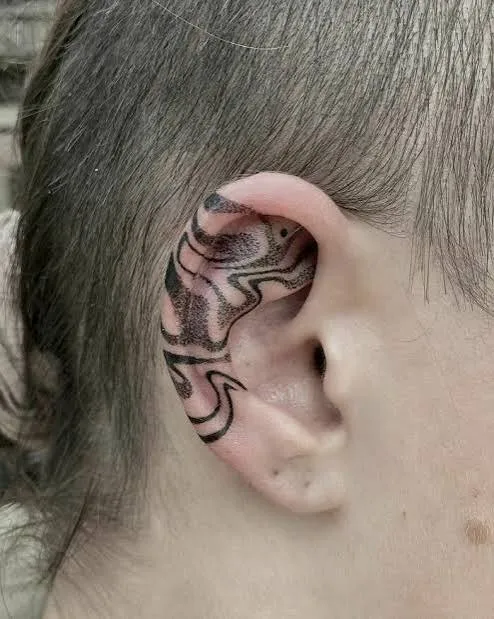
A single continuous wavy line, sometimes representing water or calm, uses fine-line or single-needle technique with zero shading — the whole design lives in the confidence of one smooth stroke. Keep it under an inch and a half, following the natural curve of the skin. Healing runs about two weeks since there’s minimal ink density. Pain is moderate. Ask your artist to draw the line freehand on your skin first with a marker before tattooing, since a wave’s rhythm needs to match your specific ear shape rather than a generic stencil. This is one of the simplest, lowest-commitment designs on this list and a genuinely good first-tattoo pick.
Sun and Moon Duo
Two small symbols — a sun with simple linear rays and a crescent moon — placed close together in fine-line or light blackwork style represent balance or duality. Total size should stay under two inches combined so both symbols stay legible without crowding the small space. Healing takes two to three weeks. Pain runs moderate to high since the design covers more surface area than single-symbol options. A good tip: ask the artist to slightly vary the ray lengths on the sun for a more organic, less clip-art look. This design works nicely as a matching tattoo split between two people, with one person getting the sun and the other the moon.
Small Animal Silhouette
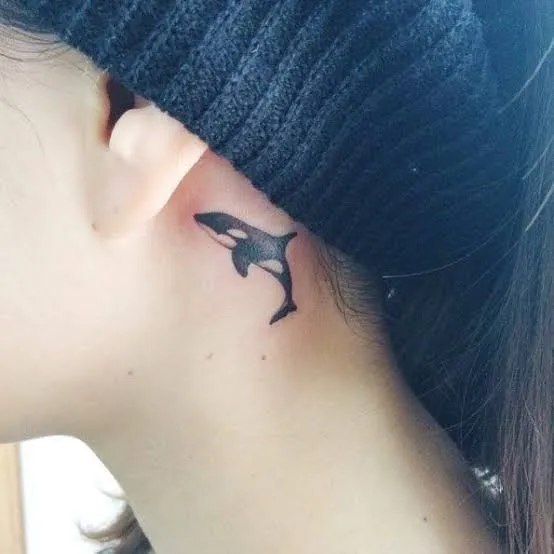
A fox, bird, or cat outline in fine-line with minimal or no shading captures a personal or symbolic connection without overcomplicating the design. Keep the silhouette simple — detailed fur texture or feather lines rarely survive at this size once healing softens the edges. Stay under one and a half inches. Pain is moderate. Healing takes roughly two to three weeks. Request a solid black outline rather than fine internal detailing if you want this design to still look crisp a decade from now — that’s a durability trade-off worth discussing with your artist upfront. This works well for both first tattoos and as an add-on to an existing small-tattoo collection.
Musical Note or Symbol
A simple treble clef, note, or short musical phrase in fine-line work suits musicians or music lovers who want something quietly personal. Keep any note clusters small and evenly spaced, under one inch, so the linework doesn’t blur together. Pain is moderate. Healing takes about two weeks. If you’re getting an actual musical phrase, bring sheet music with the exact notation — asking an artist to “draw a melody” without a reference invites guesswork. This is a strong first-tattoo option and works well for workplace settings since it reads as abstract to anyone unfamiliar with musical notation.
Matching Symbol For Friends Or Partners
Whether it’s a shared symbol, complementary shapes, or split imagery (like two halves of a moon), matching behind-the-ear tattoos in fine-line or single-needle work are popular for friend groups and couples. Keep each half under an inch so the design stays proportionate on different ear shapes and sizes. Pain and healing time are consistent with other fine-line designs in this spot — moderate discomfort, two to three weeks healing. Book both appointments with the same artist in the same session when possible, so line weight and style stay consistent between both tattoos. This is a meaningful, low-visibility way to mark a relationship without committing to matching large pieces.
Abstract Linework Design
An intentionally non-representational shape — a few intersecting lines or an organic squiggle — done in fine-line technique appeals to people who want something artistic rather than symbolic. Size should stay under an inch and a half. Pain is moderate. Healing takes two to three weeks. Since there’s no “correct” reference image for abstract work, describe the feeling or mood you want rather than a specific shape, and let an experienced fine-line artist sketch a few options during your consultation. This suits people who’ve already got more literal tattoos elsewhere and want a piece that’s more about form than meaning.
Feather Tattoo
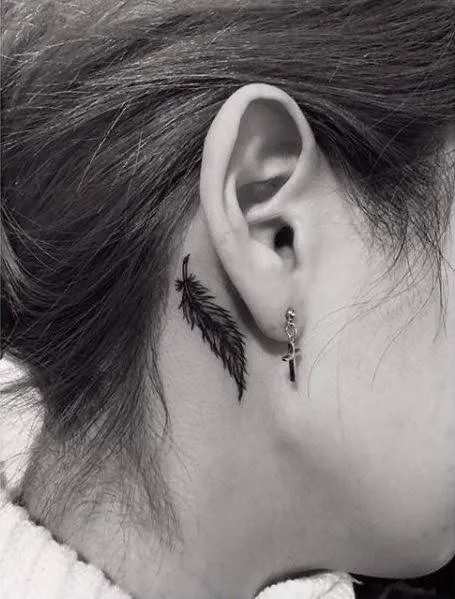
A single feather with fine linework and light dotwork shading along the spine of the feather adds subtle texture without heavy ink saturation. Stay around one to one and a half inches to keep the feather’s individual barbs from blending together as it heals. Pain runs moderate. Healing takes roughly two to three weeks. Ask your artist about dot density along the feather’s edge — too dense and it reads as a solid shape, too sparse and it looks unfinished. This design carries loose associations with freedom or remembrance and suits people wanting light symbolism without an obvious literal image.
Tiny Rose Bud
Rather than a full bloomed rose, a small closed bud with two tiny leaves in fine-line style fits the limited space far better and keeps shading minimal. Stay under one inch. Pain is moderate to high given the shading needed to suggest the bud’s layered petals. Healing takes about two to three weeks. Bring a reference showing the bud from the side angle you want, since front-facing rose references often don’t translate well to this curved, narrow placement. This is a classic, timeless choice that tends to age better than fully bloomed rose designs, which need more space to stay legible.
Geometric Dotwork Triangle Cluster
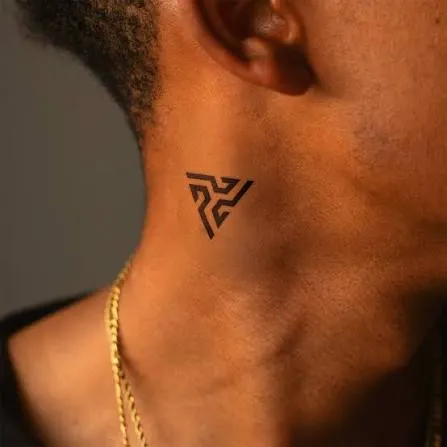
Three small triangles, each filled with varying dot densities rather than solid black, create a soft gradient effect using dotwork technique. Keep the cluster under one and a half inches total. This is one of the more time-intensive small designs since dot placement requires precision. Pain runs moderate to high. Healing takes two to four weeks. Ask to see close-up healed photos of your artist’s dot-gradient work specifically — this technique separates skilled dotwork artists from those who only do solid blackwork. This design suits people who like geometric minimalism with a bit more visual complexity than a plain outline.
Best Placement Ideas
Placement inside the “behind the ear” zone still varies more than people expect. Here’s how the sub-locations trade off:
- Directly behind the earlobe — highly visible when hair is tied back, moderate pain, easiest for touch-ups since it’s accessible
- Upper curve near the hairline — easily hidden by hair, slightly higher pain due to thinner skin, harder for the artist to reach at first but heals well
- Along the ear’s natural fold — most discreet option, higher pain due to cartilage proximity, best reserved for very small, simple designs
- Lower area blending into the neck — more visible, moderate pain, good for slightly larger designs like vines or snakes
Tips For Success
Look for an artist whose portfolio shows multiple healed photos, not just fresh ink — healed results tell you far more about how lines hold up. If you want fine-line or single-needle work, specifically search for a fine-line specialist, since not every artist trains heavily in that finer needle work. Bring at least two reference images and be upfront about placement quirks, like hair growth patterns or ear shape asymmetry. A good consultation should include a conversation about long-term fading expectations, not just what the design will look like on day one.
Common Mistakes And How To Avoid Them
- Choosing a design with too much fine detail for the size — simplify before shrinking
- Picking bold traditional style for a spot that suits fine-line better, or vice versa
- Skipping the aftercare sheet because the tattoo is small and feels “low stakes”
- Copying someone else’s exact design without adjusting proportions for your own ear shape
- Not asking about needle type when the whole point of the design is thin, precise lines
Similar Variations
Nearly every design above can shift with size, color, or combination changes. A fine-line vine can become a dotwork version with texture instead of solid lines. A single star can multiply into a small cluster. Matching designs can be split into complementary halves instead of identical copies. Blackwork shapes can be swapped for negative space versions of the same outline for a lighter, more open look.
Aftercare Basics
General aftercare guidance includes keeping the area clean, avoiding unnecessary touching, and steering clear of tight headwear or hair products directly on the fresh tattoo during initial healing. Avoid soaking the area and follow the specific aftercare instructions your artist provides, since products and routines can vary by studio. Always consult your artist or a licensed dermatologist with specific healing concerns rather than relying on general online advice alone.
Quick FAQ
How much does a behind the ear tattoo cost?
Small designs in this spot typically fall into a shop’s minimum price range, often somewhere between $50 and $150, though pricing varies by studio, city, and whether the design is custom or flash.
Does a behind the ear tattoo hurt a lot?
Pain tolerance varies by individual, but this area is generally considered more sensitive than fleshier spots due to thin skin and bone proximity — expect moderate to higher discomfort compared to places like the outer arm.
How long does healing take?
Most small designs in this placement heal within two to four weeks, though individual healing time depends on aftercare, skin type, and design complexity.
Do behind the ear tattoos fade faster?
Fading rates depend on ink saturation, sun exposure, and skin type rather than placement alone, though very thin fine-line work can soften slightly sooner than bold blackwork simply due to lower ink density.
Finding the right behind-the-ear tattoo really comes down to matching a simple, well-suited technique to a small, curved canvas — and being honest with yourself about pain, upkeep, and how the design will read years from now. Talk through your options with a licensed professional artist, ask direct questions, and you’ll walk into that chair with realistic expectations instead of guesswork. Whichever of these behind the ear tattoos you land on, the right amount of research now means you’ll actually love how it looks long after it’s healed.