16 Goth Face Tattoo Ideas: A Real Guide Before You Book
Thinking about a goth face tattoo and wondering if it’s actually a good idea, not just a cool one? I’ve spent enough time around tattoo studios watching consultations happen to know the difference between a design that photographs well and one that actually holds up on skin for years. This guide skips the hype and gets into what matters: placement, pain, healing, and how to talk to an artist so you get something you won’t regret.
So what are the best goth face tattoo ideas? Fine-line spiderwebs, small blackwork teardrops, dotwork moths, and minimal gothic script placed near the temple, cheekbone, or behind the ear tend to work best, since facial skin heals differently than the body and fine detail holds up better in small, simple designs than in large shaded pieces.
Stick around, because I’m also going to walk you through pain levels by placement, realistic healing timelines, how to brief an artist so the stencil actually matches your vision, and the mistakes I see people make when they rush into face ink without asking enough questions first.
Why Goth-Style Face Tattoos Are Having a Moment
Goth tattoo style leans on strong contrast, moody symbolism, and a graphic quality that reads clearly even at small sizes. That’s actually a practical advantage for face placement, where space is limited and skin texture around the eyes, temples, and jaw behaves differently than skin on the arm or thigh. Designs built around clean linework, deliberate negative space (the untattooed skin used intentionally as part of the design), or small dotwork clusters tend to age more gracefully on the face than heavily saturated, large-scale pieces. I’ll be upfront here: face tattoos are still one of the most permanent, visible decisions you can make in tattooing, and they carry real professional and social tradeoffs. A licensed, experienced artist should always talk you through this before any needle touches skin.
Fine-Line Spiderweb Corner Tattoo

This one uses thin, single-needle linework to create a small web radiating from the outer corner of the eye or temple. The technique relies on consistent line weight, meaning every stroke stays the same thickness, which gives the web a delicate, almost lace-like look instead of a heavy graphic one. Best placed at the temple or outer eye corner, kept under an inch and a half so the web doesn’t stretch into areas with more movement, like the cheek when smiling. Healing on facial skin typically runs two to three weeks, though this varies by individual and aftercare routine. Bring a reference photo of an actual spiderweb, not just another tattoo, so your artist can adapt the geometry to your face shape. Pain here tends to run moderate, since skin near the eye is thin and close to bone. It suits people wanting a subtle goth signature rather than a bold statement, though it’s genuinely difficult to hide, so think hard about workplace visibility first. That subtlety question leads right into our next idea.
Blackwork Teardrop Under-Eye Tattoo
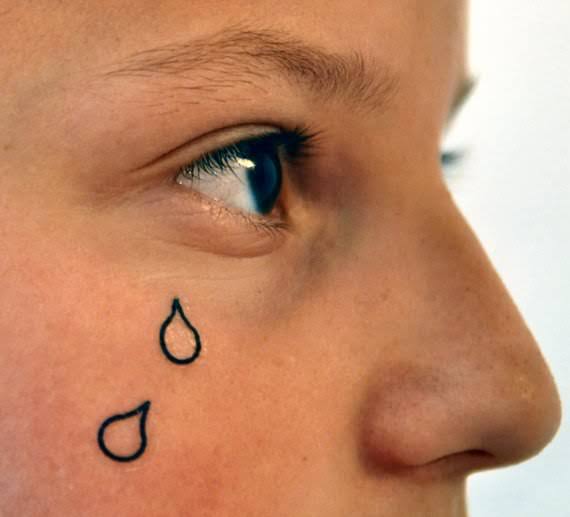
A single solid teardrop, done in blackwork (solid black ink fully saturating the shape rather than outlined), placed just below the outer eye. The appeal is its graphic simplicity: one shape, fully saturated, no shading gradient to fade unevenly over time. Because saturation is high, this design tends to hold its shape better long-term than dotwork or fine-line pieces in the same spot. Keep it small, generally under half an inch, since under-eye skin is thin and a larger shape can distort with facial movement. This is a bony, thin-skinned area, so expect a more sensitive session than most body placements. Healing takes patience because blinking and facial expression constantly move the skin. Ask your artist about using a smaller needle grouping to keep the edges crisp rather than blown out. This design carries strong cultural symbolism in some communities, so it’s worth researching that meaning before committing, which naturally brings us to script-based alternatives.
Dotwork Moth Cheekbone Tattoo
Dotwork builds an image entirely from small dots instead of continuous lines, creating soft shading and texture without solid black fill. A moth rendered this way on the cheekbone gets a hazy, almost powdery look that mimics real moth wing texture better than solid blackwork could. This technique demands real skill and patience from the artist, so portfolio review matters more here than almost any other style on this list. Ideal size sits around one to two inches, big enough to let the dot pattern read clearly instead of blurring into a smudge. Cheekbone placement means moderate visibility and moderate pain, since there’s more soft tissue here than near the eye or temple. Healing typically runs three weeks; dotwork can look slightly duller once fully healed compared to fresh ink, which is normal and expected. Ask to see healed photos of the artist’s past dotwork, not just fresh session shots, before booking. This detail-heavy approach pairs well with a simpler companion piece, like the script style below.
Single-Needle Gothic Script Tattoo

Small lettering done with a single needle produces thin, precise lines that read almost like handwriting rather than bold tattoo lettering. Placed along the temple, jawline, or behind the ear, a short word or phrase in a gothic blackletter font carries strong visual weight without needing much space. Keep phrases short, three to five words maximum, since tiny script tends to blur together as skin ages and collagen changes shape slightly over decades. Bring a printed sample of the exact font you want; verbal descriptions of fonts get lost in translation constantly. Jawline placement tends to hurt less than temple or under-eye spots, making it a reasonable starting point if this is your first face tattoo. Employers in conservative industries may view visible script harshly, so weigh that before choosing this placement over a hidden one. This idea works particularly well for people wanting quiet symbolism instead of an obvious graphic image, which sets up nicely against the bolder bat silhouette next.
Small Bat Silhouette Behind the Ear
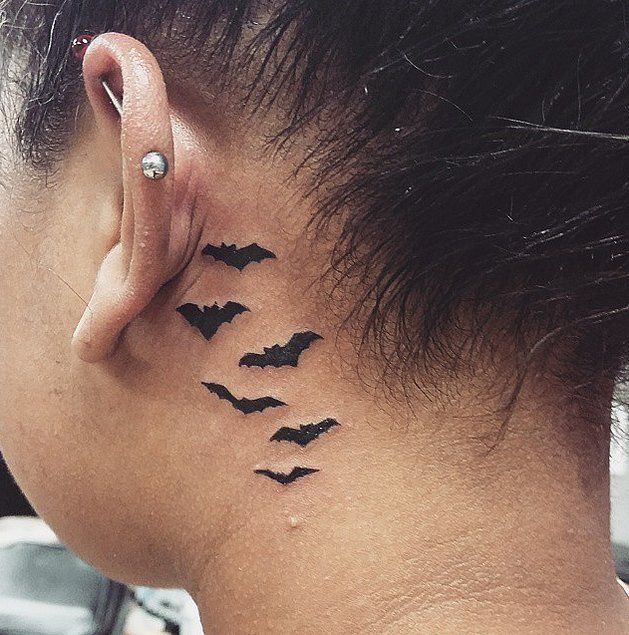
A solid black bat shape, wings spread, kept compact and simple, works well behind the ear where skin is smoother and slightly more forgiving for linework. This placement offers something rare on this list: real concealability, since hair covers it easily. The design itself uses solid blackwork fill with clean, geometric wing edges rather than realistic feather-like detail, which keeps it legible at a small size. An inch or under is plenty; going bigger risks the shape warping around the ear’s curve. Pain here is generally milder than temple or under-eye placement, making it a solid low-commitment entry point into face tattoos. Healing runs about two weeks given the smaller surface area. Ask your artist to trace the stencil directly onto your skin first so you can check the angle before it’s permanent. This is a strong first-tattoo option for the face precisely because it’s small, hideable, and simple, setting up a nice contrast with visible temple pieces like our next design.
Fine-Line Crescent Moon and Stars
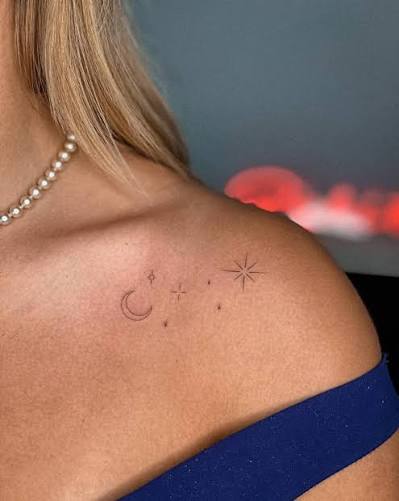
A thin crescent moon with two or three small stars, rendered in fine-line technique, sits nicely along the temple or upper cheekbone. Fine-line work here means thin, consistent strokes with no shading, giving the design a delicate, almost drawn-in-pen quality. Size should stay modest, around one inch total span, since bigger crescent shapes can look clunky rather than elegant at this scale. Pain runs moderate at the temple, given the thin skin and proximity to bone. Healing typically takes two to three weeks. Bring reference images showing the exact moon phase and star spacing you want; small compositional choices like this change the whole feel of the piece. This design ages reasonably well since there’s no shading to blur, though fine lines can thin out slightly over many years, and occasional touch-ups may be worth discussing with your artist down the line. It reads as gentle rather than aggressive, a nice contrast to the cross design coming up next.
Blackwork Cross Tattoo
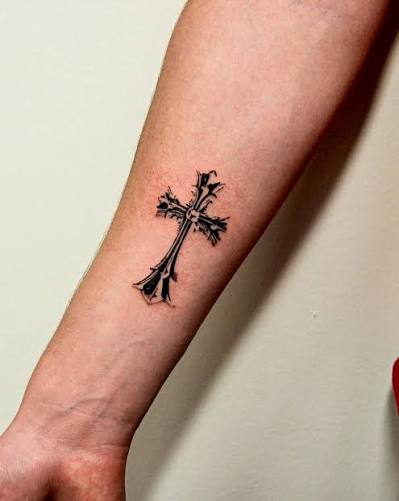
A simple cross, solid black, placed on the cheekbone or temple, is one of the most recognizable goth-adjacent symbols in tattoo history. The blackwork technique fully saturates the shape, giving it bold contrast and a graphic quality that holds up well over decades since there’s no gradient to fade unevenly. Keep proportions balanced, roughly one to one and a half inches, so the cross doesn’t look stretched or lopsided on curved facial skin. This placement tends toward moderate-to-higher pain given the bone proximity. Ask your artist about line cleanup on the cross edges since crisp corners matter more here than in curvier designs. Healing runs about two to three weeks. This symbol carries religious and cultural weight for many people, so it’s worth having an honest conversation with yourself about intent before booking. It also pairs surprisingly well as a smaller companion to a skull design, which brings us to our next idea.
Dotwork Skull Miniature
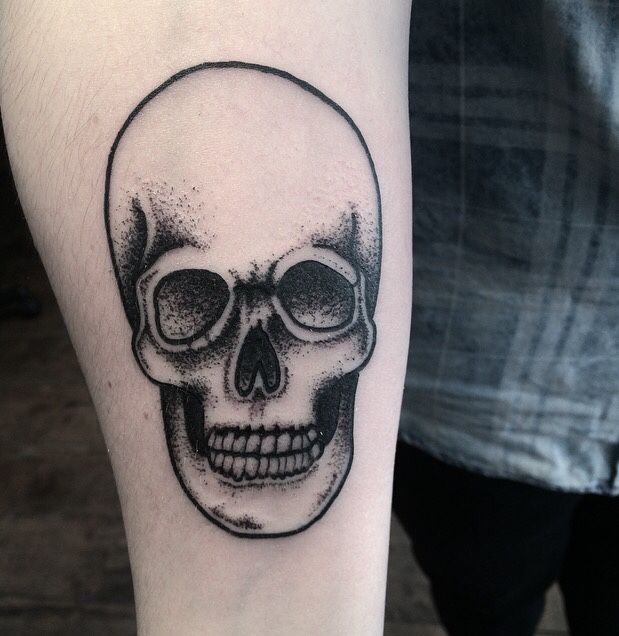
A small skull rendered entirely in dotwork carries a softer, almost sketched appearance compared to bold blackwork skull tattoos you’d see on the arm or chest. The dot-based shading gives dimension to the eye sockets and cheekbones of the skull image without heavy black fill, keeping the overall piece lighter and less visually aggressive. This works well at the temple, kept small, under an inch and a half, since too much dot density in a tiny space can blur into a gray smudge rather than a defined image. Pain here runs moderate to high given temple placement. Healing takes roughly three weeks, and dotwork specifically can look a touch softer once fully healed than it did fresh, which is expected. Ask to see the artist’s stippling technique up close in their portfolio; not everyone does dotwork with equal precision. This design fits people wanting classic goth iconography without a heavy, solid-black aesthetic, which contrasts nicely with our next negative-space idea.
Negative-Space Spider Tattoo

Negative space design uses the untattooed skin itself as part of the image, rather than filling every line with ink. A spider rendered this way might have a solid black body but legs formed by empty skin outlined in thin black borders, creating a striking push-pull effect. This technique demands a skilled hand, since the composition only works if spacing and line placement are exact. Cheekbone or temple placement suits this well, kept around one inch so the negative space doesn’t get lost. Pain runs moderate. Healing takes two to three weeks, and it’s worth knowing that negative-space designs can look slightly different once fully healed compared to fresh, since minor swelling during healing affects how the empty space reads. Ask your artist for a mock-up on paper first, since negative space is hard to picture from description alone. This is a genuinely advanced technique choice, and portfolio research matters enormously here, leading into our next simpler alternative.
Fine-Line Thorned Rose Along the Jawline

A single rose stem with thorns, done in fine-line technique, traces nicely along the jawline’s natural curve. Thin, consistent linework with minimal or no shading keeps this design elegant rather than heavy, and the jaw’s curve actually flatters the stem’s natural shape. Length typically runs two to three inches along the jaw. Pain along the jawline tends to be more moderate than temple or under-eye placement, since there’s more muscle and less direct bone contact in most spots. Healing runs about two to three weeks. Ask your artist to sketch the stem directly on your jaw before tattooing so the curve matches your specific bone structure. This design ages well since fine, unshaded lines are less prone to visible blurring than heavily shaded rose designs. It works for people wanting something feminine within the goth aesthetic rather than strictly dark or aggressive imagery, which sets up a contrast with the bat wing fragments next.
Small Bat Wing Fragments at the Temple
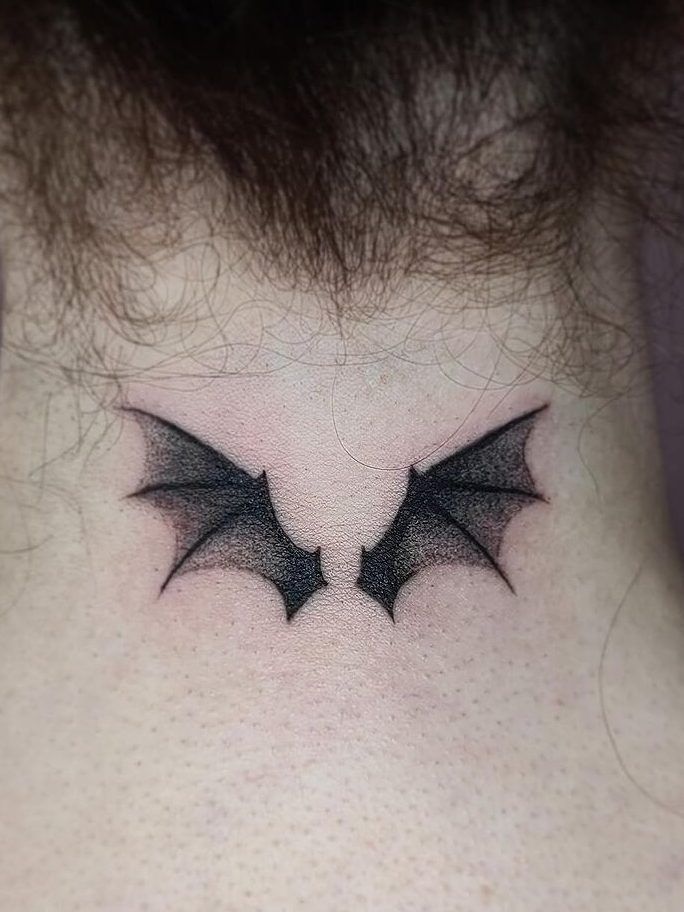
Rather than a full bat, this design uses two or three fragmented wing shapes in solid blackwork, scattered slightly along the temple like the bat just flew past. It’s a more abstract, modern take on classic goth bat imagery. Keep individual fragments small, around a quarter to half inch each, so the scattered effect reads as intentional rather than accidental. Temple placement means moderate-to-higher pain given thin skin over bone. Healing takes two to three weeks. Ask your artist about spacing consistency between fragments; even small gaps look off if they’re uneven. This design suits people who want goth symbolism without a literal, recognizable shape, giving it a slight edge in professional settings where an obvious bat might raise more questions. It also pairs naturally with the ornamental filigree design coming up.
Gothic Ornamental Filigree

Filigree tattoos use thin, swirling linework inspired by wrought-iron and lace patterns, common in gothic architecture and jewelry design. On the temple or cheekbone, a small filigree fragment creates an intricate, almost decorative accent rather than a literal image. This demands precise fine-line work, since swirls that aren’t evenly weighted look sloppy rather than elegant. Keep the design under two inches; filigree loses its delicate quality when scaled up too much on small facial areas. Pain runs moderate. Healing takes about three weeks given the linework density. Bring a clear line drawing reference, since filigree patterns are hard to describe verbally. This design suits people wanting ornamental beauty over dark symbolism, broadening the definition of “goth” beyond skulls and spiders. It contrasts nicely with the more literal teardrop chain design next.
Small Dot and Teardrop Chain Under the Eye

Instead of one solid teardrop, this design uses a small chain of dots and tiny teardrop shapes trailing from the outer eye downward. It’s a dotwork-blackwork hybrid, mixing solid small shapes with stippled dots between them for texture. Keep the total chain under an inch, since under-eye skin is thin and prone to shifting with expression. This placement runs on the more sensitive side given bone proximity and thin skin. Healing takes patience, generally two to three weeks, with more careful attention needed near the eye. Ask your artist about dot spacing consistency, since uneven gaps disrupt the chain’s visual rhythm. This design carries similar symbolic weight to the classic teardrop, so the same self-reflection applies before booking. It offers more visual complexity than a single teardrop, appealing to people wanting a slightly more detailed take on a classic goth motif, which leads into our final two ideas.
Fine-Line Snake Wrap From Temple to Cheek
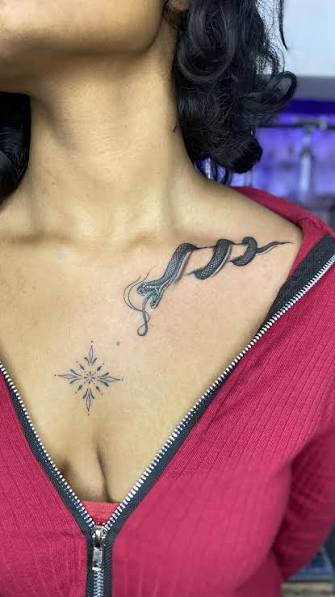
A thin snake, rendered in fine-line technique, appears to wrap partially around the temple and down toward the upper cheek. The linework stays thin and consistent throughout, with small hatching or dotwork used sparingly for scale texture rather than heavy shading. This is a longer design, often three to four inches total, so it needs more open skin space than most entries on this list. Pain varies along the path, running higher near the temple and easing slightly toward the cheek. Healing takes about three weeks given the design’s length. Ask your artist to plan the snake’s curve around your specific bone structure during a paper mock-up first. This design suits people comfortable with more visible, larger face tattoos rather than subtle accents, and it ages reasonably well thanks to minimal shading.
Blackwork Web Fragment With Spider Behind the Ear

Our final design combines a small solid spider with a partial web fragment, done in blackwork, tucked behind the ear for easy concealment. The web uses thin connecting lines while the spider body stays solid black for contrast, creating visual depth in a small space. Keep the whole piece under one and a half inches so the web doesn’t lose definition behind the ear’s curve. Pain here runs milder than most face placements on this list, since skin behind the ear has less direct bone contact. Healing takes about two weeks. Ask your artist about line thickness for the web strands, since strands too thin can fade faster over decades than the bolder spider body. This design offers goth symbolism with real-world practicality, since hair conceals it whenever needed, making it one of the more versatile choices on this whole list.
Best Placement Ideas
- Temple — highly visible, moderate-to-high pain, thin skin over bone, best for small fine-line or dotwork pieces
- Under-eye — very visible, higher pain due to thinness of skin, requires careful sizing and an experienced artist
- Cheekbone — moderate visibility, moderate pain, good surface for dotwork shading and blackwork fill
- Jawline — moderate visibility, moderate pain, flatters longer linear designs like vines or script
- Behind the ear — easily concealed, generally milder pain, ideal for a first face tattoo or a workplace-conscious choice
Tips for Success
Choosing the right artist matters more for face tattoos than almost any other placement on the body. Look specifically for a fine-line specialist or an experienced blackwork artist depending on your chosen style, and ask to see healed photos, not just fresh ink, since healing changes how linework and dotwork actually look. During a consultation, bring reference images, discuss exact placement with a mirror in hand, and ask direct questions about needle type, expected touch-up timeline, and how the studio handles stencil adjustments. A strong portfolio shows consistency across many pieces, clean line edges, and even, deliberate shading rather than blotchy fill. If an artist seems rushed or dismissive of your questions, that’s worth taking seriously.
Common Mistakes and How to Avoid Them
- Going too small for detailed designs — intricate dotwork or filigree needs enough space to read clearly; shrink it too far and it turns into a blur within a few years
- Picking a placement that fights the design’s linework — a long snake or vine needs a curve to follow; cramming it into a small flat area distorts the composition
- Skipping aftercare instructions — face skin behaves differently than body skin, and ignoring your artist’s specific aftercare sheet increases the risk of poor healing
- Copying a design exactly without personalizing it — a design that worked on someone else’s bone structure may not sit the same way on yours; ask your artist to adapt it
- Booking a walk-in slot for a highly detailed custom piece — complex work usually deserves a proper custom consultation rather than a rushed walk-in session
Similar Variations
Nearly every design above can shift with size, color, or combination changes. A dotwork moth can shrink into a minimalist single-needle outline for a subtler look, or scale up slightly and gain fine-line antenna detail for more realism. Blackwork crosses and bats can be combined into a small cluster rather than standing alone, creating a personalized composition instead of a single flash tattoo (a pre-drawn, ready-to-use design rather than a custom one). Most of these ideas stay black and gray by tradition within goth style, but small red or deep purple accent details are sometimes added by artists comfortable with color saturation work on the face, though this adds healing complexity worth discussing directly with your artist.
Aftercare Basics
General aftercare for facial tattoos typically includes gentle cleaning with mild, fragrance-free products, avoiding direct sun exposure on the healing area, and keeping hands away from the site to reduce irritation risk. Avoid makeup or skincare products directly on the tattoo until your artist confirms it’s fully healed. Every studio provides a specific aftercare sheet, and following that document exactly matters more than any generic advice found online. Healing time and sensitivity vary by individual, so if you notice anything that concerns you, contact your artist or a licensed dermatologist rather than guessing.
Quick FAQ
How much does a goth face tattoo cost?
Small pieces like a fine-line spiderweb or single teardrop often fall in the range of one to three hundred dollars depending on the studio and region, while larger or more detailed dotwork pieces can run higher. Always ask for a direct quote during consultation rather than relying on general estimates.
Do face tattoos hurt more than body tattoos?
Many people report that bony, thin-skinned areas like the temple and under-eye feel more sensitive than fleshier body placements, though pain tolerance varies significantly by individual. A licensed artist can walk you through what to expect for your specific placement.
How long does healing take?
Most small face tattoos heal within two to three weeks, though this depends on design size, placement, and personal healing patterns. Following your artist’s specific aftercare instructions matters more than any fixed timeline.
Do face tattoos fade or need touch-ups?
Fine lines and dotwork can soften slightly over many years, similar to tattoos anywhere else on the body, and occasional touch-ups are common practice. Solid blackwork tends to hold its shape a bit longer than heavily detailed shading styles.
Final Thoughts
A goth face tattoo is one of the more permanent, visible choices you can make in tattooing, and it deserves more research than a quick scroll through inspiration photos. Whether you land on a fine-line spiderweb, a small blackwork cross, or a dotwork moth, the real difference between a design you love for decades and one you regret comes down to placement, sizing, and finding an artist whose portfolio actually matches the technique you want. Talk to a licensed professional, ask direct questions, and give yourself time to sit with the decision before booking. Get those pieces right, and a well-chosen goth face tattoo can genuinely become a design you’re proud to wear for the rest of your life.