19 Goth Spine Tattoo Ideas: A Real Guide Before You Book
Thinking about a goth spine tattoo but not sure where to even start? You’re not alone — the spine is one of the most requested (and most misunderstood) placements in the tattoo world, and getting it right takes more than picking a cool image off Pinterest.
So what are the best goth spine tattoo ideas? Blackwork crosses, dotwork ouija symbols, fine-line lace, and serpent motifs work best on the spine, since the vertical canvas suits tall, narrow linework that follows the body’s natural curve without warping or stretching over time.
Stick around, because I’m also going to walk you through realistic pain levels, healing timelines, what this actually costs, and how to brief an artist so you don’t end up with a design that looked great as a sketch but falls apart on skin.
Why the Spine Works So Well for Goth Design
The spine is basically a built-in frame. It’s long, narrow, and symmetrical, which means designs that rely on vertical flow — chains, vines, lettering, serpents — sit naturally without an artist having to force the composition. Goth aesthetics lean on drama, symbolism, and contrast (think heavy blacks, sharp linework, religious or occult imagery), and a spine tattoo gives that drama room to breathe from the nape of the neck down to the lower back. It’s also a placement you can control. Wear a low-back shirt and it’s hidden; wear something backless and it’s the whole show. That flexibility is a big reason this category keeps showing up in consultation requests, not just search trends.
1. Fine-Line Gothic Cross Spine Tattoo
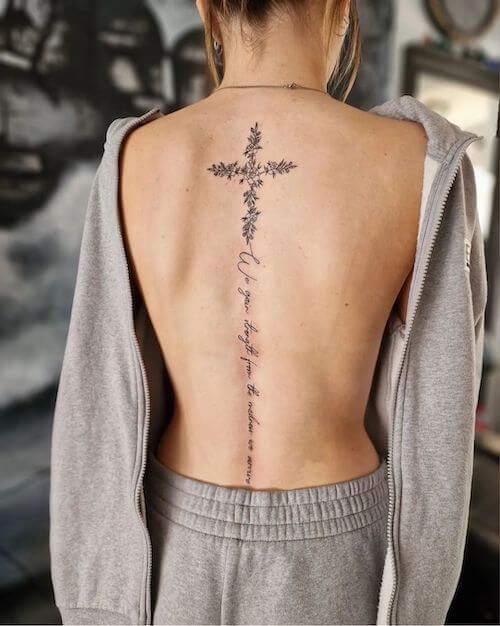
A single vertical cross rendered in fine line — meaning thin, needle-precise strokes instead of thick bold outlines — works beautifully down the upper spine. Artists typically use a single needle configuration for this level of detail, keeping the shading minimal or nonexistent so the linework stays crisp. This design suits a length of 4 to 8 inches, starting near the base of the neck. Fine line ages best on skin with fewer stretch-prone areas, so the upper spine holds up longer than the lower back. Healing typically runs 10 to 14 days for surface closure, with full settling taking a few weeks longer. Bring a reference image showing exact line thickness — “thin as a pencil line” is a helpful phrase for your artist. Expect moderate discomfort since you’re tattooing directly over bone. This is a solid first-tattoo option because it’s subtle enough for most workplaces.
2. Blackwork Rosary Spine Tattoo
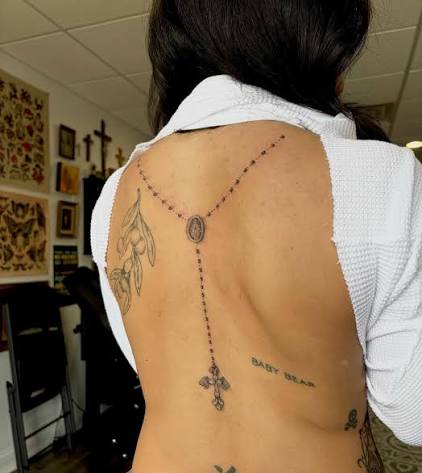
Blackwork uses solid, saturated black ink with minimal negative space (the untouched skin left bare to create contrast), and a rosary running down the spine is a classic application of that technique. The beads are usually small circles connected by a continuous line, ending in a cross near the lower back or tailbone. This design reads well at 10 to 14 inches and holds its shape for years because heavy black saturation resists fading better than light gray-wash shading. Ask your artist about “dot consistency” so the beads stay evenly spaced. Pain tends to spike near the tailbone, where nerve density increases. This piece is bold and less office-friendly, making it a better fit for people comfortable with visible ink or who plan to keep it covered at work.
3. Dotwork Ouija Planchette Spine Tattoo
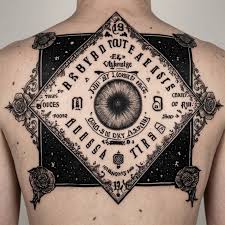
Dotwork builds an image entirely from small dots instead of continuous lines, creating soft shading and texture without solid black fill. A planchette (the pointer piece from a spirit board) rendered in dotwork looks almost engraved, with gradual shading that mimics old woodcut illustrations. This works well as a smaller focal piece, around 3 to 5 inches, placed mid-spine between the shoulder blades. Dotwork takes longer to tattoo than linework because of the repetitive needle contact, so expect a longer single sitting. Healing runs similarly to fine line, about two weeks for surface peeling. Request a matte, non-glossy reference photo so your artist can see the dot density clearly. This placement is more sensitive than the upper spine but less than the lower back — a fair middle ground for first-timers wanting texture over flat black.
4. Vertical Gothic Script Spine Tattoo

Lettering down the spine, styled in a blackletter or gothic script font, is one of the most requested spine layouts because words naturally read top to bottom on this placement. Line weight matters a lot here — too thin and it blurs within a few years, too thick and it loses the elegant gothic font shape. A skilled letterer will usually recommend a slightly bolder line than standard fine-line script specifically because spine skin sees more movement than flatter areas like the forearm. Keep the phrase short; four to six words fits most spines without cramping. Sizing between 6 and 10 inches tall gives enough room for legible spacing. Healing takes about two weeks. Pain is steady but manageable across most of the spine, aside from the tailbone. This design works for meaningful phrases, memorial text, or a single word carrying personal weight.
5. Blackwork Serpent Spine Tattoo
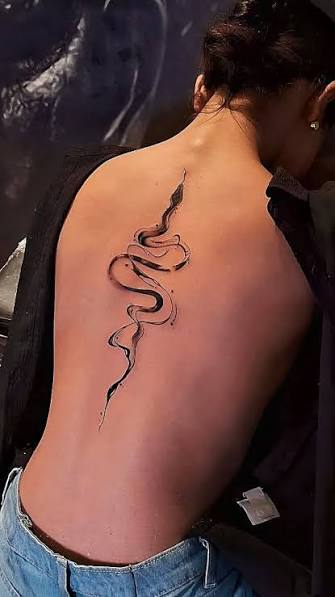
A serpent winding down the spine plays directly into the body’s natural curve, which is part of why this design has stayed popular in goth and traditional blackwork circles for years. The technique relies on varying line weight — thicker along the body of the snake, thinner near the tail and head — to create a sense of movement without any color. Scales are often suggested with small repeated linework rather than full shading, keeping the piece from looking heavy. This design suits a longer canvas, ideally 12 inches or more, running from the neck to the lower back. Because it covers more surface area, sessions may be split into two sittings. Ask your artist about scale texture options before booking. Expect the discomfort to build as the design reaches the lower spine. This is a strong choice for someone wanting a large, singular statement piece rather than a small symbol.
6. Thorned Vine Spine Tattoo
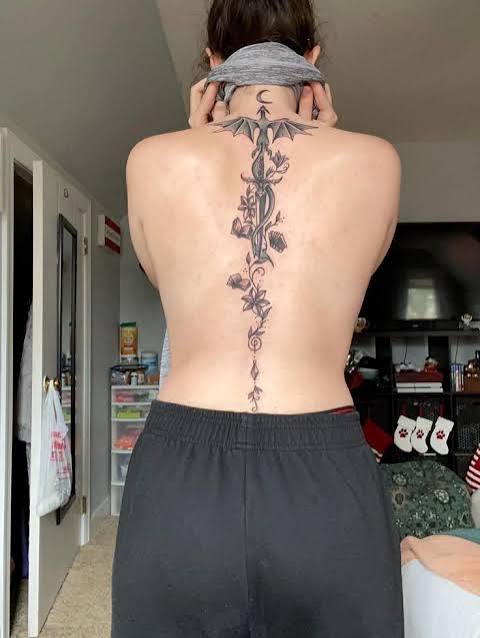
Thorn and vine motifs use continuous linework with small angular breaks for the thorns, creating a design that feels organic rather than rigid. Some artists add light dotwork shading along the vine’s shadow side to give it subtle dimension without introducing color. This design is flexible in size, working as a delicate 5-inch accent or a full 14-inch spine piece. It reads well on most skin tones, though very fine thorn details may soften slightly over time on textured or sun-exposed skin. Healing takes the standard two weeks, with itching common as the surface layer sheds. A useful tip: ask for “varied thorn spacing” rather than a perfectly even pattern, since uniform thorns can look stamped instead of hand-drawn. Pain is moderate throughout, with the sharpest sensation near bony vertebrae bumps. This design transitions especially well into a matching tattoo, which brings us to a design built for exactly that.
7. Matching Bat Wing Spine Tattoos
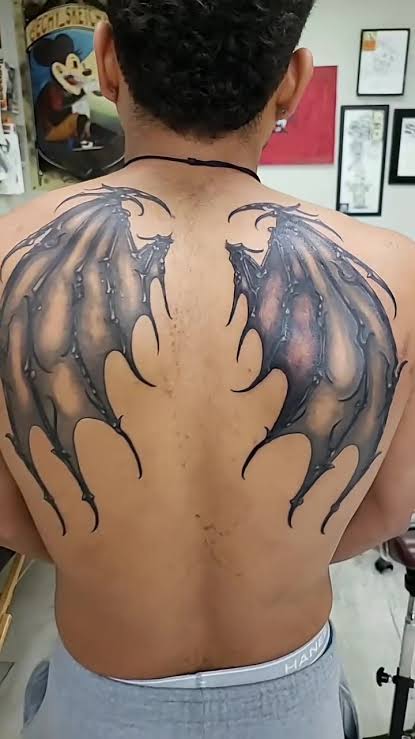
Bat wings spread across the upper back with the spine as the centerline are a popular matching or symbolic choice, often done in solid blackwork with sharp, angular tips. The wingspan typically extends from shoulder blade to shoulder blade, roughly 8 to 12 inches wide, while the spine itself carries just a thin connecting line. This is a case where negative space — the bare skin left untouched inside the wing shape — does a lot of visual work, keeping the piece from feeling like a solid black mass. It reads clearly at a distance, which matters if the goal is visibility. Healing takes slightly longer than smaller designs, often close to three weeks for full settling, since more skin is involved. Pain is more noticeable across the shoulder blades than along the spine centerline. This design suits people who want a bold back statement rather than something office-discreet.
8. Gothic Cathedral Window Spine Tattoo
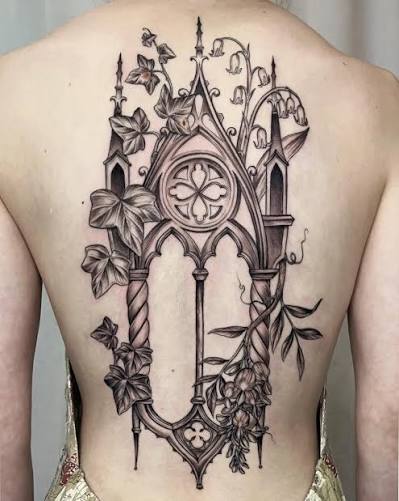
A narrow cathedral or rose window shape, rendered in fine line with small blackwork accents, translates surprisingly well to the spine’s vertical shape. The pointed arch naturally fits between the shoulder blades, while smaller geometric segments below can continue partway down the back. Detail work like this requires precise linework, so single-needle configurations are common for the finer segments. Size-wise, 6 to 9 inches captures the architectural detail without cramping. This design tends to age better on smoother skin, since intricate line intersections can blur slightly on more textured or oilier skin over the years. A touch-up at the one-year mark is common for this level of detail. Pain sits in the moderate range for the upper spine section. This is a strong pick for someone drawn to religious or architectural symbolism without wanting overtly dark imagery.
9. Anatomical Vertebrae Overlay Tattoo
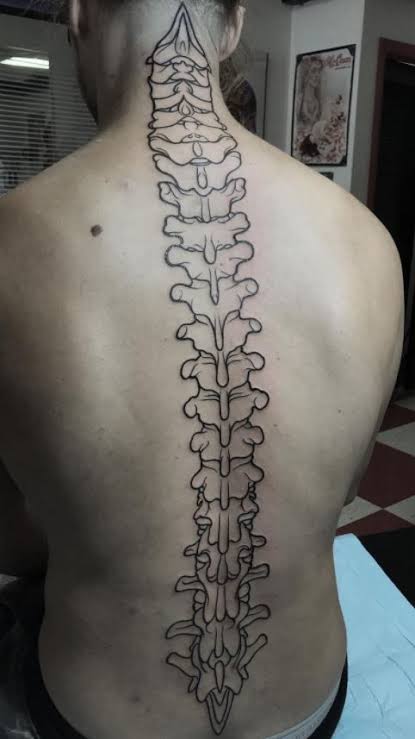
This design tattoos a stylized version of the actual vertebrae bones directly over the spine’s real location, usually in blackwork or dotwork shading for a subtle three-dimensional look. It’s a favorite in goth and medical-art crossover circles because it treats the body itself as the reference. Artists typically keep line weight consistent and moderate, avoiding overly thick outlines that would make the bones look cartoonish. Length depends entirely on how much of the spine you want mapped — a partial upper section runs 6 to 8 inches, a full spine piece can exceed 16. Because this design sits directly over bone the entire time, pain is consistently higher than most other entries on this list. Healing follows the standard two-week timeline. Bring an actual anatomical reference photo, not an illustrated one, so your artist can match proportions accurately. This works well as a bold, conversation-starting piece rather than a subtle one.
10. Dark Moth Spine Tattoo
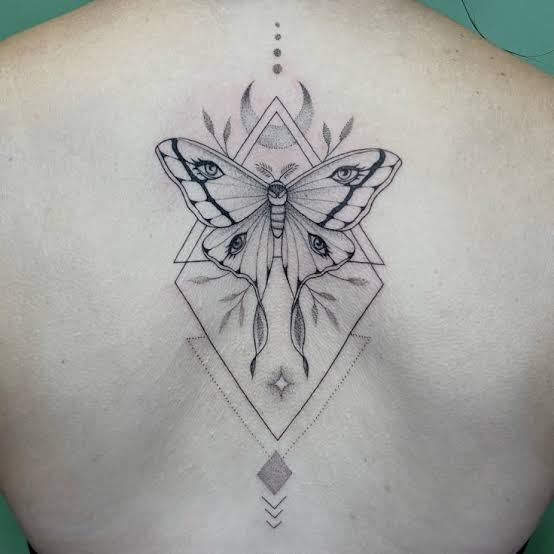
A large moth positioned so its body runs along the spine and its wings spread across the upper back combines dotwork shading with fine-line wing detailing for texture without heavy black fill. The wing patterns often use a mix of small dots and thin lines to suggest the natural fuzzy texture of moth wings, which is a specific technique worth mentioning to your artist by name. This design works best sized between 8 and 12 inches to keep wing detail legible. Skin with a lot of natural texture or freckling can slightly obscure the finest dot shading, so ask your artist how they’d adjust dot spacing for your skin. Healing runs the typical two weeks. Pain is more concentrated across the shoulder blades than the spine centerline itself. This is a strong choice for anyone who wants symbolism tied to transformation or nocturnal themes without leaning on obviously “dark” imagery like skulls or daggers.
11. Chain Link Spine Tattoo
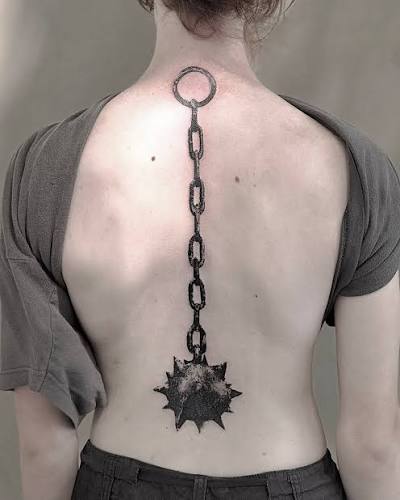
A chain running down the spine, sometimes broken partway through, is done almost entirely in blackwork with clean, geometric linework. Each link needs consistent spacing, so this design benefits from a stencil rather than freehand work to keep proportions even across the whole spine length. Sizing runs anywhere from a short 5-inch accent near the neck to a full 14-inch piece. Because the linework is simple, this design tends to age well even on skin that stretches or changes over the years — simple geometry holds up better than fine detail. Healing takes about two weeks. Ask your artist about link thickness relative to your torso length so the proportions don’t look stretched or squeezed. Pain is fairly consistent along the spine, with the usual increase near the tailbone. A broken chain link adds symbolic weight around freedom or release, which is worth discussing with your artist before finalizing placement of the break.
12. Gothic Lace Spine Tattoo
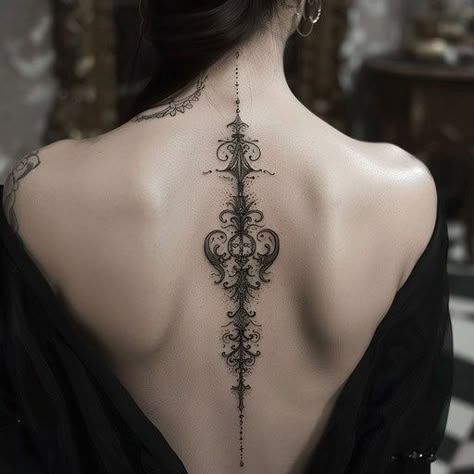
Lace patterns rely almost entirely on negative space, using thin connecting lines and small filled sections to mimic the openwork of real lace fabric. This is a technically demanding style — the negative space has to be planned as carefully as the inked areas, or the pattern reads as messy rather than delicate. It suits a narrower placement, typically 4 to 6 inches, positioned along the upper or mid-spine. Skin tone matters more here than with solid blackwork, since very fine negative-space detail can be harder to see clearly on deeper skin tones under certain lighting; a knowledgeable artist can adjust line density to compensate. Healing takes the standard two weeks. Ask specifically for a “lace sample stencil” before your session so you can see the pattern density on paper first. Pain is moderate. This design works well for anyone wanting something ornate but not overtly dark in subject matter.
13. Raven Feather Spine Tattoo

A trail of raven feathers, transitioning from a solid blackwork base near the neck to more broken, sketch-style linework toward the tailbone, is a design that plays with contrast in both technique and meaning. The top feathers use heavier saturation, while the lower ones fade into thin, single-needle lines, suggesting movement or scattering. This gradient in technique needs a skilled hand, so ask to see healed examples of gradient or fading linework in an artist’s portfolio, not just fresh photos. Size-wise, this works well as a full spine piece, 10 to 16 inches. Healing runs two to three weeks depending on total coverage. Pain increases toward the lower spine as usual. This design is particularly good for people who want a large piece that still feels light and airy rather than dense and heavy, thanks to the negative space between feathers.
14. Small Pentagram Spine Tattoo
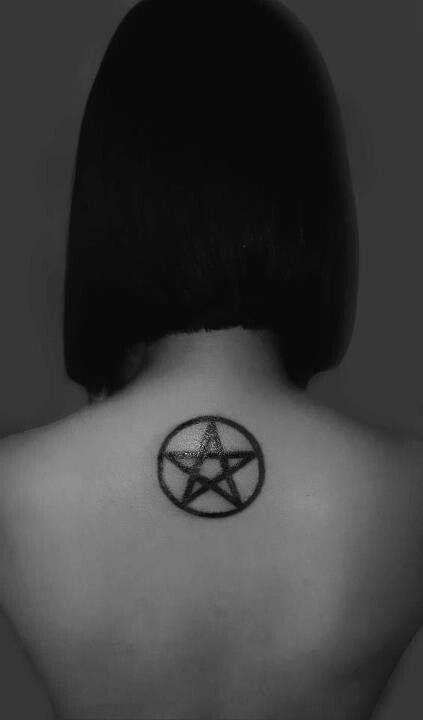
For something far more minimal, a small pentagram in clean fine-line work sits well just below the nape of the neck or between the shoulder blades. This design uses thin, even lines with no shading, keeping the symbol simple and geometric. Because of its small size — usually under 3 inches — it heals quickly, often within 10 days, and holds its shape well over time since there’s minimal fine detail to blur. This is a great low-commitment option for a first spine tattoo or for testing how you feel about visible ink before going larger. Ask your artist about line symmetry; a slightly uneven pentagram is a common rookie mistake worth double-checking on the stencil before tattooing begins. Pain is brief given the small size. This design works well hidden under most clothing and is a common choice for subtle symbolic ink rather than a bold visual statement.
15. Melting Candle Spine Tattoo

A candle with dripping wax, positioned vertically along the spine, combines solid blackwork for the candle body with fine-line detailing for the wax drips trailing downward. The dripping wax naturally follows the spine’s vertical line, which is part of why this composition works so well in this specific placement. Shading around the flame is often done with light dotwork to suggest a soft glow without adding color. This design suits a mid-size range, 6 to 10 inches, placed centrally on the upper back. Healing takes about two weeks. A helpful tip: ask your artist to vary drip length and thickness rather than making them uniform, since uneven drips look more natural and less like a printed graphic. Pain is moderate. This design carries symbolism around time, mortality, or passage, and works well as a standalone piece rather than part of a larger composition.
16. Gothic Rose and Dagger Spine Tattoo
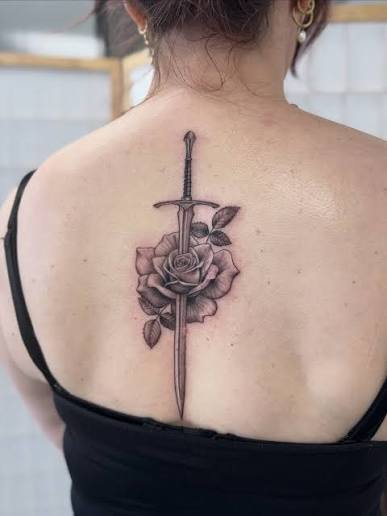
Pairing a rose with a dagger running through it is a traditional tattoo motif reimagined here in blackwork with minimal shading, oriented vertically down the spine instead of the usual forearm placement. The dagger provides the straight vertical line the spine placement calls for, while the rose adds organic curves and small linework detail in the petals. This works well sized between 6 and 9 inches, centered on the upper-to-mid spine. Bold, saturated blackwork like this tends to hold its color better long-term than lightly shaded gray-wash versions. Healing runs the usual two weeks. Ask your artist about petal count and dagger angle before the stencil stage, since small adjustments here change the whole composition’s balance. Pain is moderate to firm depending on exact placement. This design suits people wanting classic tattoo symbolism — love and pain intertwined — delivered through a modern blackwork lens.
17. Spider Web Spine Tattoo

A web spanning the base of the neck or upper shoulders, with a single connecting thread running down the spine, uses fine, precise linework to keep the web’s geometry sharp. Symmetry is everything here, so this design benefits from a carefully drawn stencil rather than freehand application. Size typically stays smaller, around 4 to 6 inches for the web itself, with the spine thread extending further if desired. This design ages fairly well since the linework is simple, though very fine web strands can soften slightly over many years, which is worth discussing with your artist regarding future touch-up needs. Healing takes about two weeks. Pain is manageable given the placement near the neck and shoulders rather than the lower spine. This is a good pick for someone wanting a recognizable goth symbol without heavy black saturation or large-scale coverage.
18. Shattered Mirror Spine Tattoo
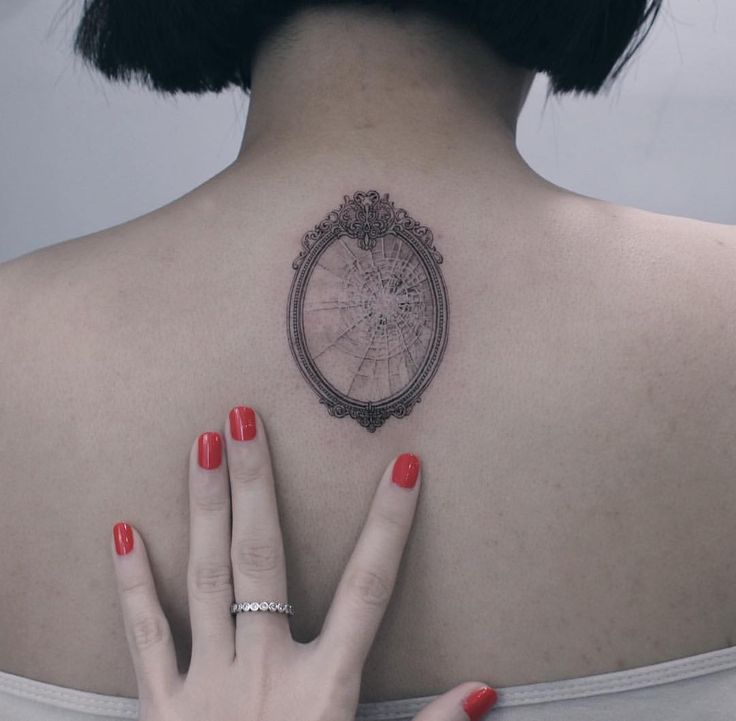
Cracked or shattered glass shapes running down the spine, rendered in sharp geometric linework with small blackwork triangles filling some of the “broken” segments, create a visually striking effect that plays with negative space between the fragments. This design requires careful planning since the crack pattern needs to look intentional rather than random. It suits a longer placement, 10 to 14 inches, running most of the spine’s length. Healing takes the standard two weeks, though larger blackwork sections may take slightly longer to fully settle. Ask your artist to sketch a few crack pattern variations before committing, since this design lives or dies on the composition. Pain builds as you move down the spine, as with most designs on this list. This piece works well symbolically for themes of change, reflection, or breaking from the past, and reads as a modern, striking alternative to more traditional goth imagery.
19. Ornamental Filigree Spine Tattoo
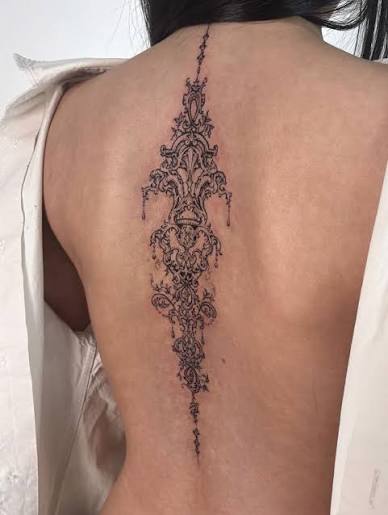
Filigree patterns — intricate, swirling linework inspired by metalwork engraving — create one of the most detailed options on this list, using thin, consistent fine-line work throughout with almost no solid black fill. The swirls naturally follow the spine’s curve, making this one of the better full-length options for people who want intricate detail rather than bold symbolism. This design suits a longer canvas, typically 10 to 16 inches, and benefits from smoother skin since fine, closely spaced lines can blur slightly on more textured areas over time. Healing takes about two weeks, with some extra care needed given the density of linework. Ask your artist about “line spacing consistency” to avoid areas that look cramped compared to others. Pain is steady throughout, increasing near the lower spine. This design is a strong finishing piece for anyone who has read this whole list and wants something ornate, timeless, and distinctly goth without relying on obvious dark imagery.
Best Placement Ideas
- Upper spine (nape to shoulder blades): Lower pain, higher visibility if wearing open-back tops, easiest to hide under most work clothing.
- Mid-spine (between shoulder blades): Moderate pain, good for larger focal designs like moths or cathedral windows, easy to keep private.
- Lower spine (toward tailbone): Higher pain due to nerve density and less padding, best for smaller accent pieces rather than large detailed work, more prone to fading if skin stretches over time.
- Full spine (neck to tailbone): Longest healing time, usually split across multiple sessions, best suited to designs with simple, repeatable geometry like chains or serpents.
Tips for Success
Start by looking at three to five studios, not just one. A qualified artist should have a portfolio full of healed photos, not just fresh ink — healed work tells you how their linework actually holds up. Bring reference images that show the specific technique you want, whether that’s fine line, dotwork, or solid blackwork, and be ready to explain sizing in inches, not vague terms like “medium.” Ask directly about their experience with spine placement specifically, since the curve and skin movement here differ from flatter areas like the forearm. A good consultation should include a conversation about long-term fading, not just how the design looks on day one.
Common Mistakes and How to Avoid Them
- Going too small for detailed work: Fine detail like filigree or lace needs enough room to breathe, or it blurs together within a few years.
- Ignoring placement geometry: A design meant to flow vertically will look off if forced into a horizontal or curved space it wasn’t drawn for.
- Skipping aftercare instructions: Following your artist’s specific aftercare sheet matters more than general internet advice.
- Copying a design exactly without personalizing it: Small tweaks — spacing, proportions, added symbols — keep your tattoo from looking identical to a stock reference photo.
- Not asking about healed results: Fresh tattoo photos always look sharp; healed photos show the truth.
Similar Variations
Almost every design on this list can be resized down for a subtler statement or scaled up into a full spine piece. Blackwork elements can be swapped for dotwork shading to soften the look, and fine-line pieces can incorporate small blackwork accents for contrast. Combining two smaller ideas — say, a small pentagram near the neck with a chain running below it — is a common way to build a custom, layered composition instead of choosing just one motif.
Aftercare Basics
General dermatological consensus supports keeping a new tattoo clean, moisturized with a fragrance-free product, and protected from direct sun exposure while it heals. Avoid soaking the area in pools, baths, or open water for at least two weeks. Loose clothing over the spine area helps prevent friction irritation during the healing period. Always follow the specific aftercare sheet your artist provides, since products and timelines can vary by studio, and consult a licensed dermatologist if you notice anything that concerns you.
Quick FAQ
How much does a goth spine tattoo cost?
Cost varies widely by size, detail, and studio location, but small designs often start around $100–$200, while full spine pieces with heavy detail can run well into the $600–$1,500 range or higher depending on session count.
How painful is a spine tattoo?
Pain tolerance varies person to person, but the spine is generally considered a more sensitive area because of thin skin over bone, with the lower spine typically feeling more intense than the upper back.
How long does a spine tattoo take to heal?
Most spine tattoos take about two to three weeks for surface healing, with full settling under the skin taking a few weeks beyond that.
Do spine tattoos fade faster than other placements?
Fine detail can soften over many years on any placement, but simple, high-contrast blackwork tends to hold up better long-term than very fine, closely spaced linework.
Final Thoughts
Choosing the right goth spine tattoo really comes down to matching the technique to the placement — bold blackwork for statement pieces, fine line for subtle symbolism, dotwork for texture, and clear sizing decisions based on how much detail you actually want to hold up over the next ten years. Take your time picking an artist whose healed work backs up their fresh photos, ask specific technical questions during your consultation, and remember that pain, healing, and long-term fading all vary from person to person. Get that groundwork right, and a goth spine tattoo can be one of the most striking, personal pieces you’ll ever wear.