24 Leg Tattoo Ideas for Men That Actually Hold Up Over Time
Nervous about committing to a leg tattoo you’ll regret in five years? Fair worry, and honestly, the leg is one of the more forgiving spots on the body to get this right, if you go in with a real plan instead of just a vague idea. I’ve spent enough time around studios watching leg piece consultations happen to know that the guys who end up happiest with the result are the ones who thought through technique and placement before they thought about anything else.
So what are the best leg tattoo ideas for men? Bold blackwork sleeves, fine-line geometric pieces, and realistic shaded portraits or animals all work well on the leg, since the large, mostly flat surface area holds detail, shading, and bigger compositions better than almost anywhere else on the body. Placement within the leg, calf versus thigh versus shin, changes both the pain level and how the design ages.
Keep reading, because I’m covering 24 specific designs, plus honest pain breakdowns by placement, real cost ranges, how to brief an artist for a bigger leg piece, and the mistakes that trip up a lot of first-timers going bigger than a small wrist or forearm tattoo.
Why the Leg Works So Well for Bigger, Bolder Designs
The leg gives you more usable surface area than almost any other placement on the body, which matters a lot once you’re thinking beyond a small, single design. The thigh in particular is flat, wide, and low-movement, which means it holds detailed shading, large-scale blackwork, and multi-element compositions without the distortion you’d get on a joint like the elbow or wrist. The calf adds its own advantage since its natural curve gives wraparound designs, like a sleeve-style piece or a design that continues around the leg, a shape to follow. The tradeoff is that bigger designs generally mean bigger commitment, more session time, and a higher cost, so it’s worth going in with realistic expectations about all three before you sit down for a consultation.
1. Blackwork Japanese Dragon Leg Sleeve

A dragon rendered in blackwork, meaning the artist fills large sections of the body and scales with solid, saturated black ink rather than just outlining them, is one of the most requested large-scale leg pieces for a reason. It gives real visual weight and holds up well over decades. Best suited to the outer thigh wrapping toward the calf, sized as a partial or full sleeve depending on your commitment level. Pain runs higher for a piece this size given the number of sessions and the saturation involved, especially over the shin if the design extends that far. Tip: ask your artist to plan the whole composition on paper first, including how it’ll wrap around the leg’s natural muscle definition, before any needlework starts. This is a serious, high-commitment piece best suited to someone who already has ink experience, not typically a first tattoo. Let’s look at a more contained version of a similar aesthetic next.
2. Fine-Line Geometric Wolf Thigh Tattoo
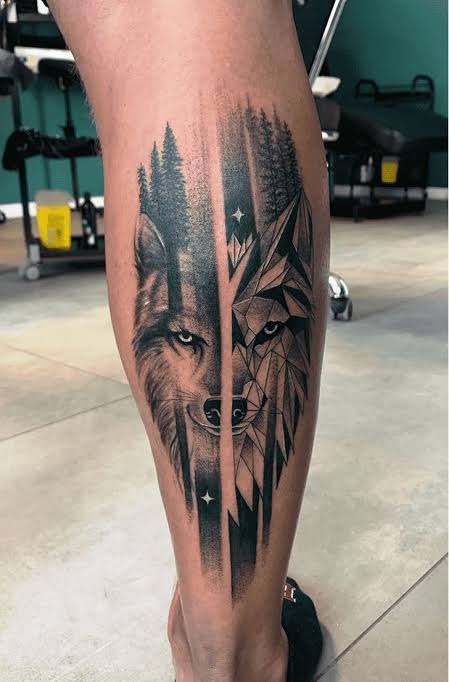
Fine line work uses a single, thin, consistent needle line with no shading, which pairs well with a geometric wolf design where straight panel lines and triangular shapes overlay or replace parts of the wolf’s natural form. This gives the piece a more architectural, intentional feel compared to a fully realistic animal illustration. Best sized 6 to 9 inches on the front or outer thigh where the flat surface keeps the geometric panels proportional. Pain is moderate for fine line work at this size. Tip: ask if your artist uses a straightedge or ruler-guided stencil for the geometric sections, precision genuinely matters since a slightly crooked panel line stands out more than an imperfect organic curve. This design ages well since there’s no shading to soften over time. It’s a strong second-tattoo pick given the size, though not usually a first-tattoo choice.
3. Dotwork Compass and Map Calf Tattoo
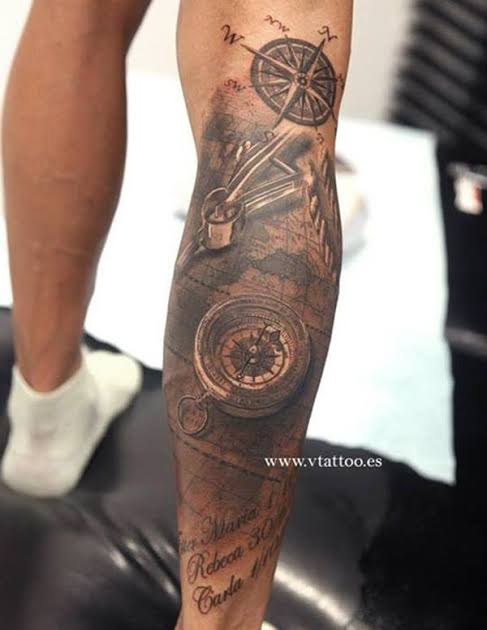
Dotwork builds an image out of thousands of individual dots rather than solid lines or fills, creating a soft, textured gradient that suits a compass paired with a partial map outline particularly well. The calf’s natural curve gives this composition a shape to follow, with the compass often centered and map lines trailing around the side. Best sized 5 to 7 inches. Dotwork tends to take longer in the chair given the individual dot placement, and pain here runs moderate given the calf’s mix of muscle and closer-to-bone areas near the shin. Tip: ask to see healed dotwork specifically in your artist’s portfolio, since dot spacing that looks great fresh can blur together if it’s packed too tightly. This design carries travel or direction symbolism for a lot of guys and works well as a visible piece in shorts. Now let’s look at a bolder traditional-style option.
4. Bold Traditional Eagle and Snake Tattoo
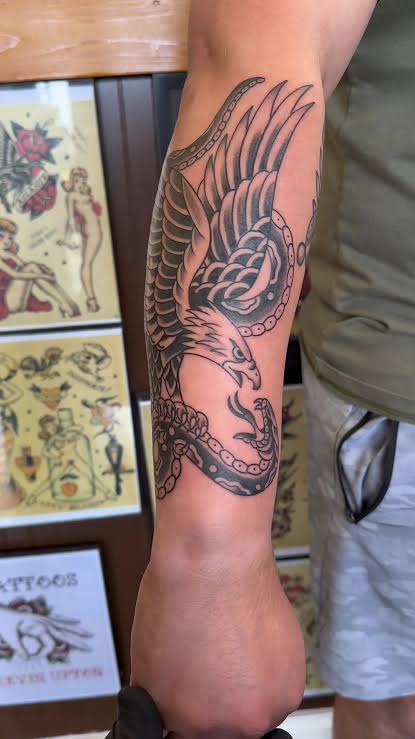
American traditional style uses thick outlines and a limited, saturated color palette, black, red, maybe deep green, prioritizing longevity over fine detail. An eagle gripping or facing off with a snake is a classic composition in this style, trading photorealism for graphic punch and strong contrast. Best sized 6 to 8 inches on the outer thigh where the bold lines have room to stay distinct from each other. Pain runs moderate to higher given the outline weight and color fill involved. Tip: trust your traditional artist’s proportion suggestions over your own reference photo, thick linework needs specific spacing to avoid muddying together as it heals. This design holds up notably well over decades and reads as a strong, intentional statement piece once healed. Let’s contrast that with a much more delicate design next.
5. Single-Needle Mountain Range Shin Tattoo
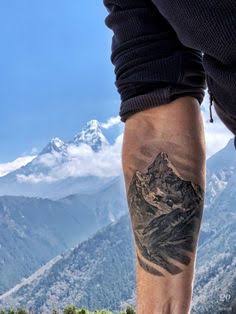
Single-needle work uses the finest needle configuration available, producing thin, delicate lines suited to smaller, more minimal designs. A simple mountain range silhouette, just a few peaks with a thin horizon line, works well on the shin for guys who want something understated rather than a large-scale piece. Best kept to 3 to 5 inches. The shin tends to run more sensitive than the thigh or calf given how close the bone sits to the surface, so expect a bit more discomfort here regardless of technique. Tip: ask your artist to vary the peak heights and angles rather than making them symmetrical, uneven peaks read as more natural. This is a solid first-tattoo option for someone leaning minimal, and it’s easy to keep low-visibility under longer pants for work. Now, a bigger, bolder piece for contrast.
6. Blackwork Skull and Roses Thigh Piece
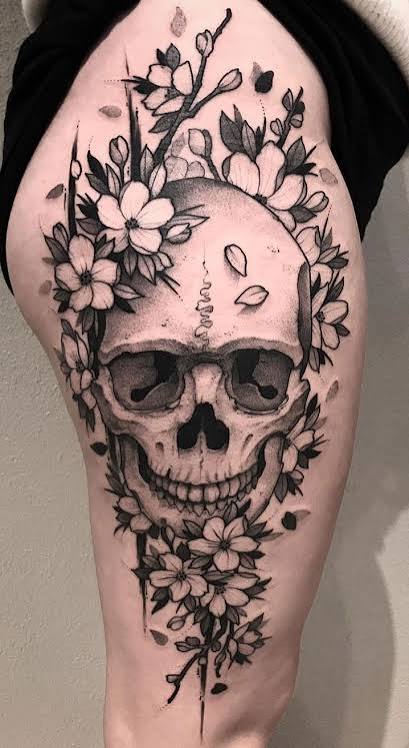
Combining a skull with a wrap of roses, done in blackwork with the petals shaded solid and the skull’s structure kept crisp, is a classic large-scale leg design that balances a heavier symbolic image with a softer floral element. Best sized 7 to 9 inches on the front or outer thigh for a flat, wide canvas. Pain runs higher here given the size and black saturation across the piece. Tip: be specific with your artist about proportion, some guys want the skull dominant with roses as an accent, others want the reverse, and that decision changes the whole composition. This is a bold, high-commitment piece, not typically a first tattoo, and worth thinking through for workplace visibility depending on your dress code. Let’s move to something built almost entirely from negative space next.
7. Negative Space Tiger Calf Tattoo

Negative space tattooing uses untouched skin as part of the actual image, typically a solid black background with the tiger’s stripes and facial features left bare rather than inked. It’s a striking, modern technique but genuinely one of the harder ones to execute cleanly, so portfolio checking matters more here than most other styles on this list. Best on the outer calf at 6 to 8 inches, where the muscle’s curve gives the design some natural shape to wrap around. Pain runs moderate to higher given the solid black fill involved. Tip: ask specifically how your artist plans to keep the negative space lines crisp through the swelling of the first week, since thin untouched channels are the most likely to blur during healing. This is a bold, visible piece best suited to someone ready for the commitment. Next, a much smaller, more private option.
8. Tiny Single-Needle Symbol Ankle Tattoo

A tiny, simple symbol, an anchor, a small triangle, an arrow, done entirely in single-needle linework with no shading, is one of the lowest-commitment options on this entire list. Best kept under 2 inches, positioned on the outer or inner ankle. The ankle tends to run more sensitive given the bone’s proximity to the surface, similar to the wrist. Tip: keep the design simple by intention, cramming detail into a design this small tends to blur into a smudge within a few years. This is an excellent first-tattoo option given the low pain, low cost, and quick healing time, and it’s an easy design to keep hidden under socks or pants for work. Now, let’s look at a much bigger, more detailed piece.
9. Realistic Lion Portrait Thigh Tattoo
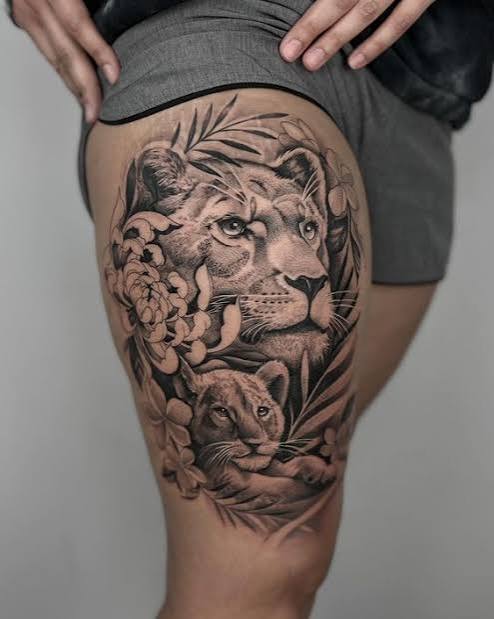
Realism style aims to replicate an actual photograph, down to the texture of individual fur strands and the gradient shading across the lion’s mane. This is one of the more technically demanding styles on this list and requires real shading skill, not just outline work, so artist selection matters enormously here. Best placed on the front or outer thigh at 7 to 10 inches, giving enough surface area for the shading gradients to render properly. This style tends to run longer in the chair given the shading detail involved, and pain runs moderate to higher across a piece this size. Tip: look specifically for portfolio photos of healed realism work, not just fresh ink, since shading is the element most likely to soften unevenly if it’s not applied correctly the first time. This isn’t a first-tattoo choice given the cost and skill level required, but it’s one of the most visually striking options on this list. Let’s contrast that with a much more graphic, simplified style.
10. Minimalist Line Art Deer Tattoo
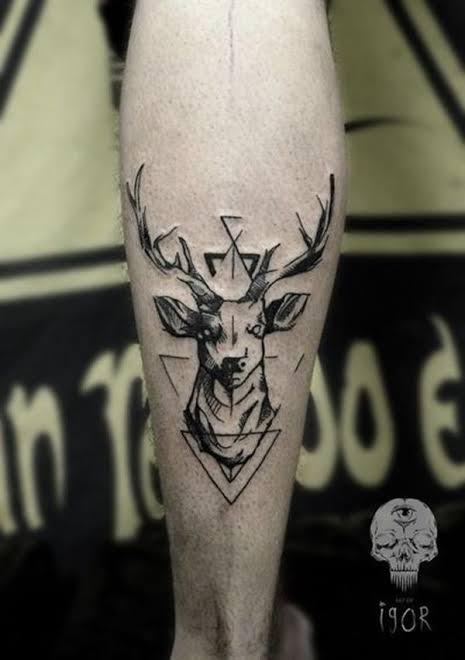
Sometimes the strongest design is also the simplest: a deer illustrated in a single continuous fine line, with no shading and minimal interior detail, relying entirely on the accuracy of the outline to read clearly. Best sized 4 to 6 inches on the outer calf or thigh. This is a comfortable placement pain-wise given the light, linework-only technique. Tip: ask your artist to slightly exaggerate the antler shape when sketching, since a stiff, overly geometric outline can start to look like clip art rather than an intentional design. This is a strong first-tattoo pick given its manageable size and simple technique, and it ages well since there’s no fine detail or shading to blur over time. Now, let’s look at a design built around a specific cultural or heritage motif.
11. Blackwork Tribal-Inspired Band Tattoo
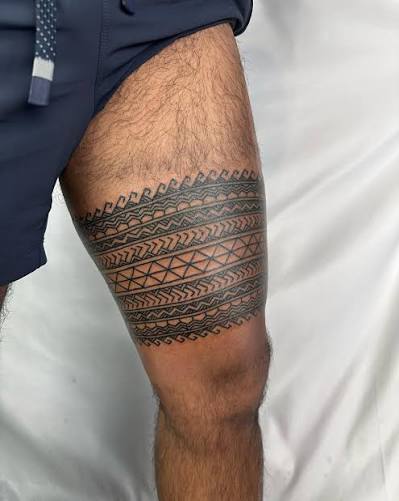
A bold, solid black band wrapping partway or fully around the calf or upper thigh, built from thick geometric shapes rather than fine detail, gives a graphic, high-contrast look that holds up exceptionally well over decades. This differs from ambiguous “tribal flash” designs by working with your specific heritage or a custom geometric composition your artist develops with you, rather than a generic stock pattern. Best sized to wrap meaningfully, 6 to 10 inches depending on placement. Pain runs higher given the solid black saturation across a larger area. Tip: talk through the composition’s meaning and origin directly with your artist so the final piece reflects something specific to you rather than a generic template. This is a bold, high-commitment piece suited to someone who already has ink experience. Let’s shift to a nature scene next.
12. Fine-Line Forest Scene Calf Tattoo
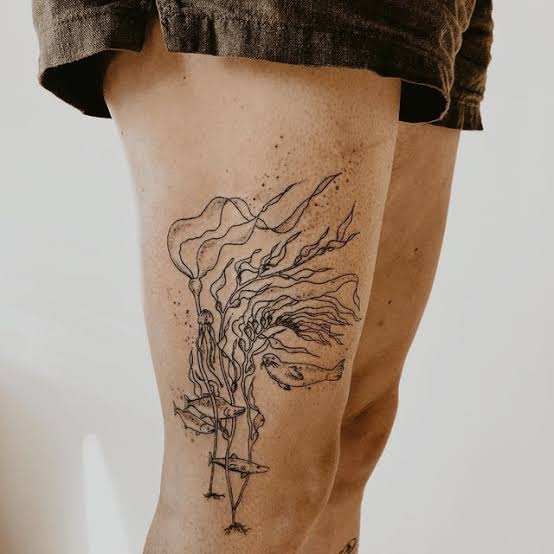
A small forest scene, a few simplified pine trees and a thin horizon line, done in fine line with no shading, works well wrapping around the outer calf where the natural curve gives the trees a sense of depth and distance. Best sized 4 to 6 inches. Pain is standard for fine line work in this area. Tip: bring a reference photo of a specific landscape that means something to you, a place you’ve hiked or grew up near, rather than a generic tree illustration, since that specificity helps your artist capture the right proportions and mood. This design is workplace-friendly under most pants and works well as a first tattoo given the manageable size and simple technique. Let’s look at a bolder animal design next.
13. Bold Traditional Wolf Head Tattoo
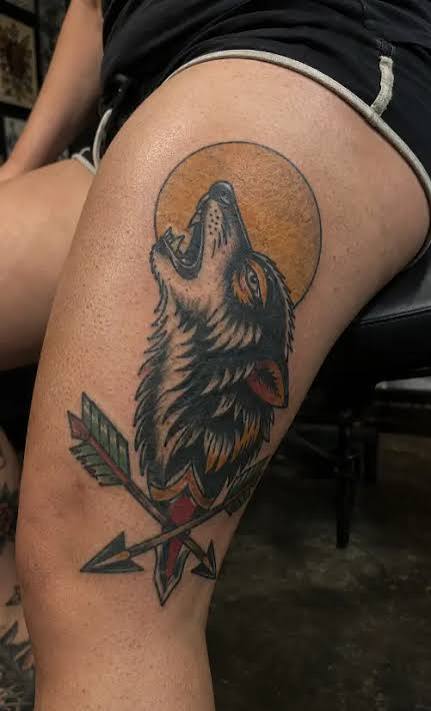
A wolf head in bold traditional style, thick outlines, flat color or black fill, and simplified but expressive detail around the eyes and fur, is a strong standalone piece or an anchor for a larger future leg sleeve. Best sized 5 to 7 inches on the outer thigh or calf. Pain runs moderate to higher given the outline weight and shading involved. Tip: ask your artist how they plan to handle fur texture in this style, some use short directional line strokes, others rely more on solid shading blocks, and that choice changes the final look significantly. This design holds up well over decades and works as either a standalone piece or the first section of a bigger project down the line. Now, a much more delicate, symbolic option.
14. Single-Needle Constellation Tattoo
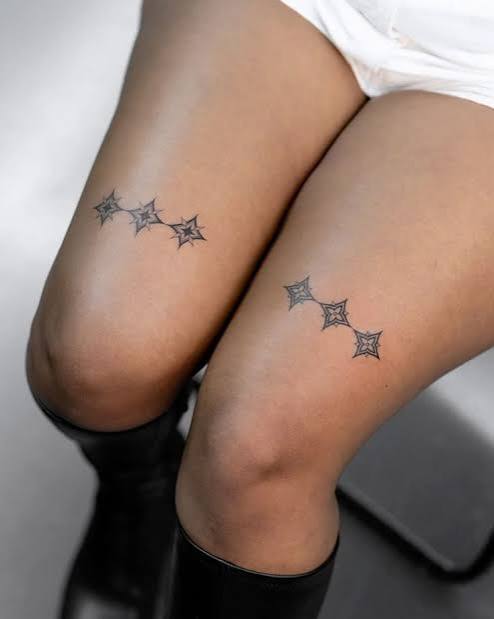
A specific constellation, connected with thin, precise single-needle lines and small dots marking each star, is a quiet, personal design that works well on the outer thigh or calf where there’s enough flat space to keep the star pattern accurate. Best kept to 3 to 5 inches. Pain is on the lower end for this placement given the light needlework involved. Tip: double-check the actual star pattern with your artist beforehand rather than relying on a generic stock reference, constellation accuracy matters to a lot of guys who choose this design for personal reasons tied to a birth month or specific date. This is a solid first-tattoo option and a meaningful, private piece that’s easy to keep visible or hidden depending on your outfit. Let’s move to a design pulling from mythology next.
15. Blackwork Norse Mythology Tattoo
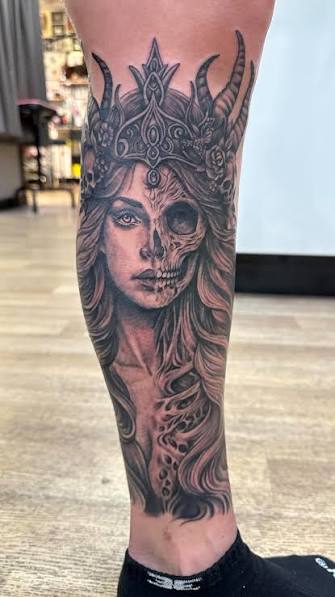
Drawing from Norse symbols and mythology, a design combining elements like a raven, a rune, or Yggdrasil’s branches, rendered in solid blackwork, is a popular choice for guys wanting something with historical and symbolic depth rather than a purely decorative piece. Best sized 6 to 8 inches on the outer thigh or calf. Pain runs moderate to higher given the black saturation involved. Tip: research the specific symbols you want included and confirm their meaning and correct visual representation with your artist, since a lot of stock “Norse” flash designs mix up details from different sources inaccurately. This is a bold, meaningful piece best suited to someone ready for a bigger session and the visibility that comes with it. Let’s contrast with a much simpler geometric option.
16. Minimalist Geometric Mountain Tattoo
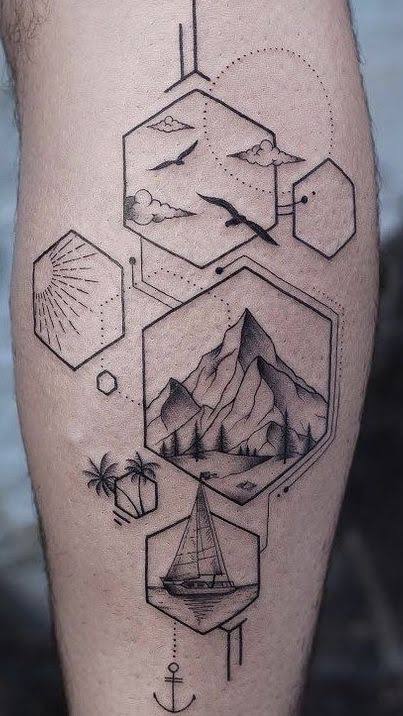
A simplified mountain shape built from clean, straight geometric lines rather than a realistic landscape illustration, done in fine line, gives a modern, understated look that still carries outdoor or adventure symbolism. Best sized 3 to 5 inches on the calf or shin. Pain on the shin tends to run higher given the bone’s proximity to the surface, while the calf is generally more tolerable. Tip: ask your artist to keep the geometric angles consistent across the whole design, small inconsistencies in a minimal piece like this are more noticeable than in a busier composition. This is a strong first-tattoo pick and works well as a matching or coordinated design with a hiking or outdoor-focused friend group. Now let’s look at a more elaborate blackwork wildlife scene.
17. Blackwork Stag and Antlers Thigh Tattoo

A stag rendered with heavy, deliberate blackwork on the antlers contrasted against lighter linework on the body, creates strong visual hierarchy within a single design. Best sized 6 to 8 inches on the front or outer thigh where there’s room for the full antler spread. Pain runs moderate to higher given the black saturation in the antler sections specifically. Tip: ask your artist how they plan to balance the antler detail against the rest of the body so the piece doesn’t end up top-heavy visually, this is a common proportion issue with antler-heavy designs. This is a strong standalone piece or an anchor point for a future larger leg composition, and it’s not typically a first-tattoo pick given its size and detail level. Let’s shift to something built for two people instead of one.
18. Matching Fine-Line Symbol Tattoos for Brothers or Friends
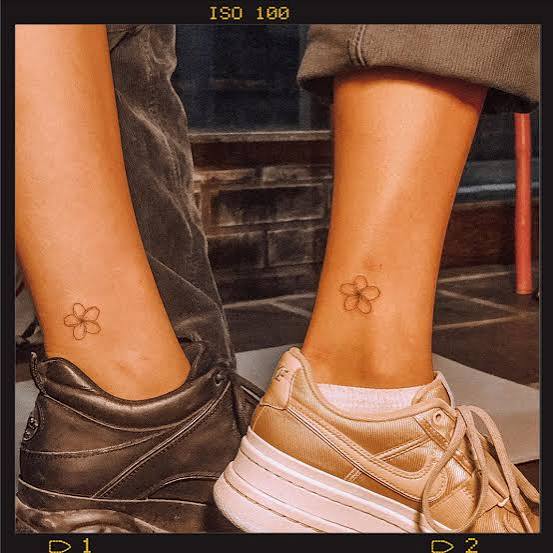
Matching tattoos work best when they’re simple enough to survive two different bodies, healing processes, and pain tolerances without looking mismatched over time. A small, shared symbol, done in fine line, placed on the same spot on each person’s calf or ankle, is a low-risk, meaningful option. Keep the linework identical between both tattoos, but placement side can vary based on personal preference. Pain depends on exact placement, generally lower on the calf, higher on the ankle. Tip: get both tattoos done in the same session with the same artist if possible, so line weight actually matches instead of drifting between two different hands. This is a solid first-tattoo option for both people involved given the low cost and low commitment. Now let’s look at a bolder abstract piece.
19. Blackwork Abstract Wave Thigh Tattoo
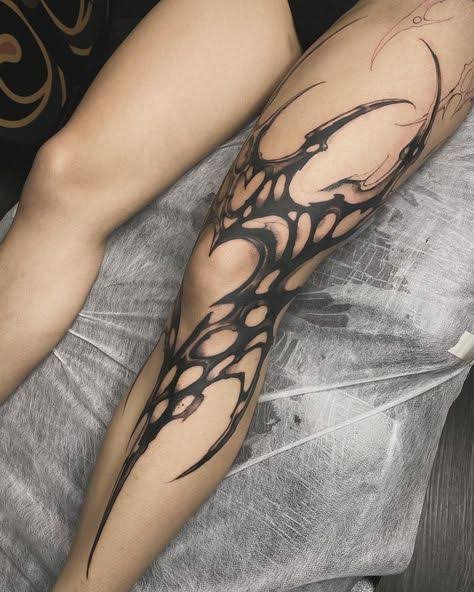
An abstract, flowing wave pattern, rendered in bold blackwork with sharp negative-space highlights carved through the design, gives a modern, artistic look without relying on a literal image. Best sized 6 to 9 inches on the outer thigh where the flat surface keeps the flowing lines from distorting. Pain runs moderate to higher given the black saturation and negative space precision required. Tip: ask your artist for a stencil preview viewed from directly above your leg before starting, checking the flow and symmetry on a flat photo is much easier than judging it once the needle starts. This is a striking, artistic statement piece rather than a subtle one, better suited to someone with some ink experience already. Let’s look at a much more literal nature design next.
20. Dotwork Owl Perched on Branch Tattoo
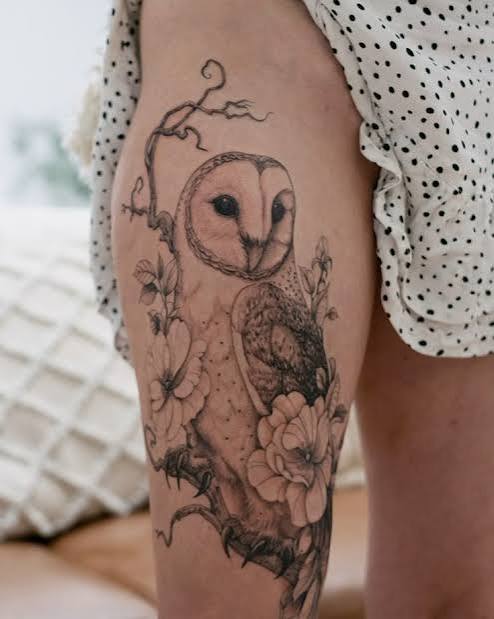
An owl perched on a simplified branch, rendered in dotwork for a soft, stippled gradient across the feathers, works well on the outer calf or thigh where there’s room for both the bird and branch detail. Best sized 5 to 7 inches. Dotwork here takes longer in the chair given the individual dot placement, and pain runs moderate for this placement. Tip: ask to see healed dotwork specifically in your artist’s portfolio, dot spacing that looks great fresh can blur together within a few years if it’s packed too tightly. This design carries wisdom or watchfulness symbolism for a lot of guys and works well as a mid-sized standalone piece. Now, let’s close in on a heritage-inspired script option.
21. Bold Script with Coordinates Calf Tattoo
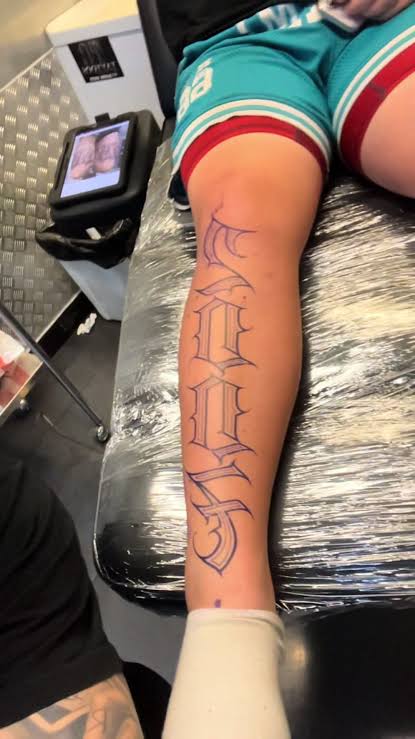
Pairing a short, meaningful word or name in bold script with a set of coordinates in smaller fine line beneath it is a popular way to mark a specific place, a hometown, a birthplace, a meaningful trip, with real specificity. Best sized 4 to 6 inches on the outer calf. Pain is standard for this placement and technique combination. Tip: ask your artist to increase line thickness slightly on both the script and the numbers, thin lettering and numerals fade and blur faster than thin illustration work does over the years. This design is workplace-friendly under most pants and a solid first-tattoo option for someone who wants something specific and personal rather than purely decorative. Let’s look at a bolder chest-to-thigh continuation idea next, scaled down to just the leg portion.
22. Blackwork Snake Wrapped Around the Calf
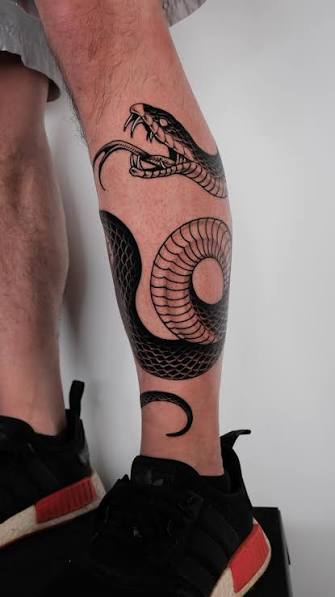
A snake illustrated in bold blackwork, its body wrapping fully around the calf’s natural curve rather than sitting flat, uses the leg’s shape as part of the composition itself. Best sized 7 to 9 inches to wrap meaningfully around the muscle. Pain runs higher given both the size and the black saturation involved. Tip: ask your artist to plan the wrap using your actual calf’s muscle definition as a guide rather than a flat reference photo, snake designs that ignore the leg’s natural contour tend to look flat and stiff once healed. This is a bold, high-commitment piece, not typically a first tattoo, best suited to someone ready for the visibility and session length involved. Let’s move toward a quieter, more symbolic closing design.
23. Fine-Line Anchor and Rope Ankle Tattoo
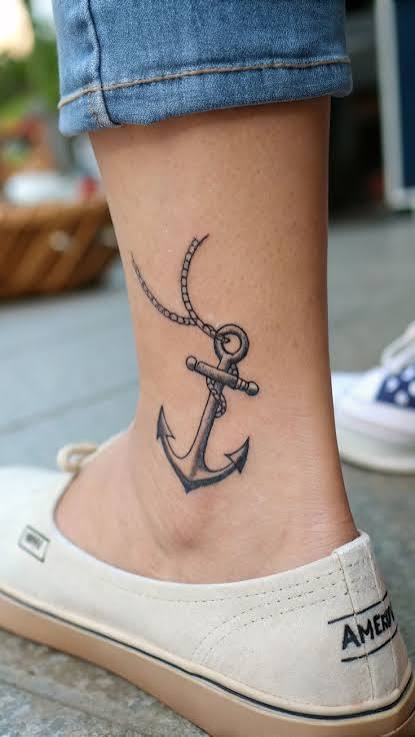
A small anchor with a simple length of rope, done in fine line with just a touch of shading to suggest the rope’s texture, is a classic, understated design that suits the ankle’s smaller canvas well. Best kept to 2 to 4 inches. The ankle runs more sensitive given its proximity to bone. Tip: ask your artist to keep the rope detail simple rather than trying to show every twist and fiber, overly detailed rope texture at small scale tends to blur together within a few years. This design carries stability or grounding symbolism for a lot of guys and works well as a low-visibility piece that’s easy to cover for work if needed. Last on the list, let’s close with the boldest option here.
24. Bold Blackwork Full Leg Sleeve Composition

Closing out the list with the biggest commitment on it: a full leg sleeve combining multiple elements, an animal, geometric paneling, maybe a nature scene, into one cohesive composition that wraps from thigh to calf. This isn’t a single session or a single sitting, it’s a multi-session project that needs real planning between you and your artist before any needlework starts. Pain runs on the higher end given the total surface area and multiple sessions required over time. Tip: start with one anchor piece, like the wolf head or skull design mentioned earlier in this list, and build outward from there rather than trying to finalize the entire sleeve’s composition in one sitting, this approach gives you room to adjust the plan as the first sections heal. This isn’t a first-tattoo pick, it’s a long-term project for someone confident in both the design direction and the artist relationship, and done well, it’s one of the most striking things you can put on skin.
Best Placement Ideas
- Outer thigh — the most versatile spot for larger leg pieces; flat, low-movement, and works well for both bold blackwork and detailed realism.
- Calf — good for wraparound designs given its natural curve; moderate pain, moderate visibility depending on pants or shorts.
- Shin — more sensitive given the bone’s proximity to the surface; better suited to smaller, simpler designs rather than heavy shading.
- Ankle — one of the more sensitive spots on the leg; best for small, low-commitment pieces rather than large compositions.
- Front thigh — wide, flat surface ideal for large-scale, symmetrical, or heavily detailed pieces like portraits or full compositions.
Tips for Success
Choosing the right artist matters even more for a leg piece than for a small, simple tattoo, especially once you’re talking about anything approaching sleeve-size. Start by looking through portfolios for work in the specific technique you want, blackwork, fine line, dotwork, or realism, since these require genuinely different skill sets. Look for healed photos of larger pieces specifically, not just fresh ink, since that’s the real test of how detail and shading hold up over years rather than weeks. Bring reference photos that separate what you like about the subject from what you like about the composition style, and for anything sleeve-sized, ask about their process for planning a multi-session project before committing. Direct consultation questions matter here: how many sessions do they expect, what’s the total estimated cost, and how do they handle touch-ups if shading or color softens over the following year.
Common Mistakes and How to Avoid Them
- Going too small for the detail level. A design with fine shading or realistic texture needs enough size to hold that detail through healing, cramming detail into too small a space almost always blurs within a few years.
- Choosing a placement that fights the design’s shape. A wraparound piece like a snake or band design generally needs the calf’s natural curve, while flat geometric or portrait work needs a flatter surface like the thigh.
- Skipping the aftercare instructions your specific artist gives you. Larger leg pieces especially need consistent aftercare over a longer healing window than a small tattoo does.
- Copying a reference design exactly without personalizing it. Small adjustments, a specific landscape, a personal symbol, a resized element, make the piece genuinely yours instead of a direct copy of someone else’s tattoo.
Similar Variations
Nearly every design on this list can be scaled up or down depending on your commitment level. A large blackwork sleeve concept can start as a single anchor piece, like the wolf head or skull design, and expand later once you know you want more. A black-and-grey realistic piece can be simplified into a fine-line outline version for a lower-cost, lower-pain alternative. Smaller designs from this list, a constellation, a small symbol, a mountain range, can be combined into a cluster across the calf or thigh for a more layered look without committing to a full sleeve right away.
Aftercare Basics
Aftercare depends on your specific ink type, technique, and individual skin, so always follow the exact sheet your artist provides rather than generic internet advice. In general, expect to keep the area clean and moisturized, avoid direct sun exposure and swimming during the initial healing period, and avoid tight pants or repeated friction against the area while it heals, which matters more for leg pieces than most other placements given how much the leg moves day to day. Healing timelines and reactions vary from person to person, so if anything seems unusual, it’s worth checking in with your artist or a licensed dermatologist rather than guessing.
Quick FAQ
How much does a leg tattoo cost for men? Cost depends heavily on size, technique, and your artist’s experience level, but expect a wide range, roughly $100 for a small ankle piece up to $2,000 or more for a full multi-session leg sleeve. Always get a direct quote during your consultation.
Does a leg tattoo hurt a lot? Pain tolerance varies a lot by individual, but generally the thigh and calf are more tolerable than bony areas like the shin or ankle, since there’s more muscle and fat padding over bone in those spots.
How long does a leg tattoo take to heal? Surface healing typically takes a couple of weeks, though full healing underneath the skin can take longer, and larger pieces or multi-session sleeves extend that timeline further. Follow your artist’s specific aftercare guidance closely.
Do bigger leg pieces need more touch-ups over time than small tattoos? Larger pieces with heavy shading or color generally need more maintenance over the years than simple linework does, since shading and color pigment tend to soften faster than solid black or fine outline work.
Final Thoughts
Whether you go bold with a full blackwork sleeve or keep it simple with a small fine-line symbol, a leg tattoo for men works because the placement gives you room to actually plan a design instead of squeezing an idea into a spot that can’t hold it.
Take your time picking both the design and the artist, ask the questions covered here, and don’t be afraid to personalize any of these 24 leg tattoo ideas until it actually feels like yours. This kind of piece is meant to last for decades, so it’s worth getting the plan right before you ever sit down in the chair.
This article is for inspiration and general informational purposes only. Pain tolerance, healing time, and individual results vary. Always consult a licensed, professional tattoo artist, and a dermatologist if you have any skin concerns, before booking.