24 Gothic Flash Tattoo Ideas That Actually Hold Up on Skin
Nervous about picking a gothic flash tattoo design you’ll regret once the shine wears off? You’re not alone, and honestly, that hesitation is a good sign — it means you’re thinking past the Pinterest board.
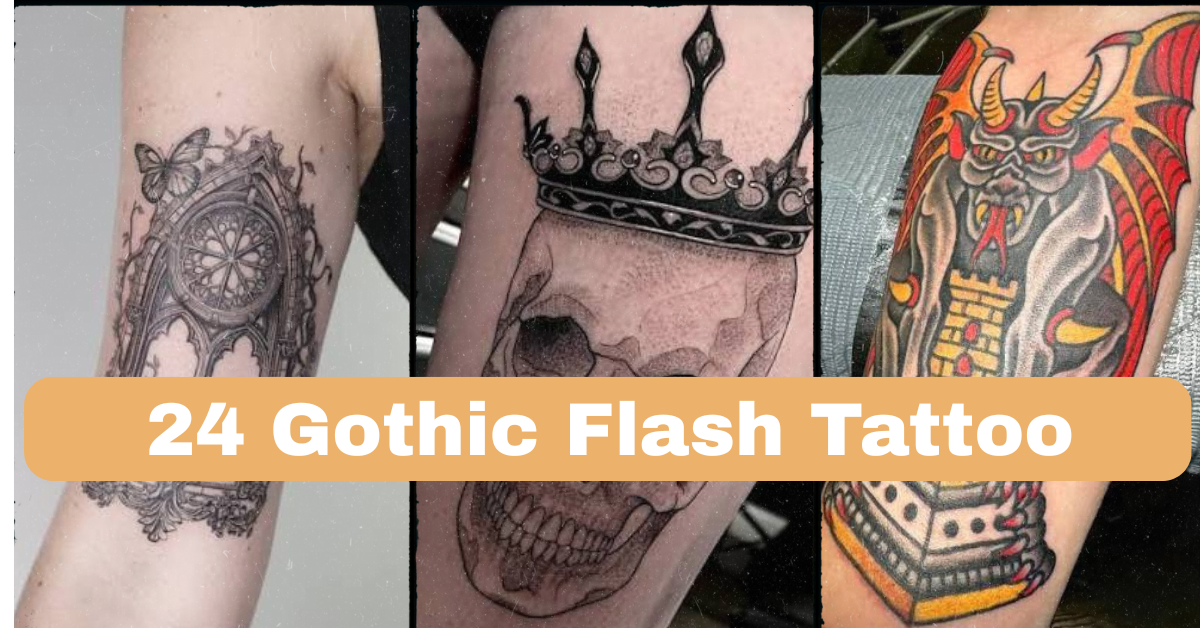
So what’s the best gothic flash tattoo idea? Blackwork crosses, dotwork skulls, and fine-line cathedral windows tend to work best because flash designs (pre-drawn artwork artists keep ready to tattoo) heal predictably, book faster than custom pieces, and hold their linework well even on smaller placements.
Stick around, because I’m also going to walk through placement tradeoffs, realistic pain levels, healing timelines, and exactly how to brief an artist so your gothic piece looks intentional — not like it was picked off a wall five minutes before you sat down.
Why Gothic Flash Tattoos Work So Well as a Category
Gothic imagery — crosses, gargoyles, roses, skulls, cathedral motifs — was basically made for flash tattooing. Flash sheets favor bold outlines, symmetrical shapes, and high-contrast shading because those elements translate cleanly onto skin without needing hours of custom consultation. Gothic art already leans on strong symmetry (think stained glass windows, ornate crosses) and deep blacks, which is exactly what heals crisp and stays legible for decades. That’s the practical reason gothic flash has stuck around tattoo shop walls for so long — it’s not just aesthetic, it’s technically efficient. Below are 24 designs pulled from that tradition, each explained with the technical detail most articles skip over.
Blackwork Gothic Cross
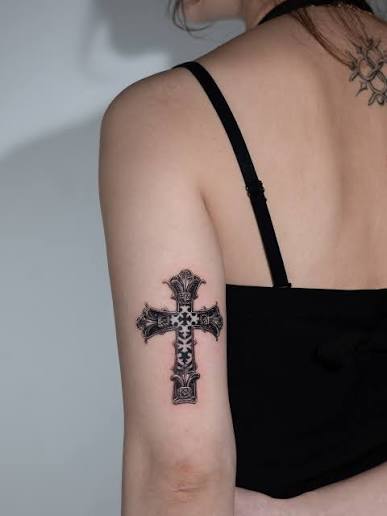
This is heavy black ink filled solid, with a bold outline (usually 3–5 round liner needles) and minimal negative space left inside the shape. The appeal is contrast — a solid black cross against skin reads clearly from across a room, which matters if you want something visible but simple. Best placed on the forearm, calf, or upper chest where the shape has room to sit flat; anything smaller than two inches starts losing its clean edges. Healing typically runs 2–3 weeks. Bony placements like the wrist or sternum tend to feel more intense during the session, while fleshier spots like the outer arm are more tolerable. Bring a reference image showing the exact proportions you want — cross arm length versus width changes the whole silhouette. This design works for first-timers wanting something bold but simple, and it ages well since there’s little fine detail to blur over time.
Fine-Line Gothic Rose
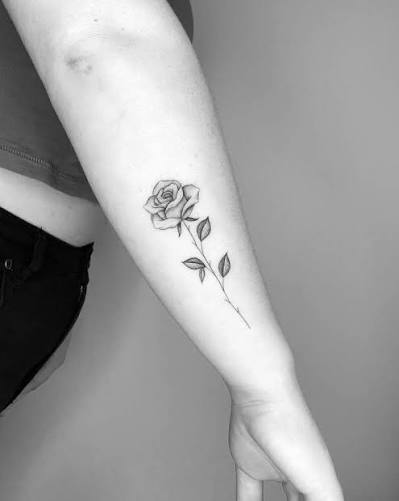
Fine line work uses a single needle or very thin needle grouping to create delicate outlines with little to no solid shading — here, that means a rose rendered in soft, almost sketch-like strokes instead of the bold traditional style most people picture. The thorned stem and layered petals give it gothic weight without heavy black saturation. It suits the forearm, ribs, or behind the ear, staying under two to three inches so the linework doesn’t spread and blur. Skin with a lot of natural texture or stretch marks can distort fine lines over time, so ask your artist during consultation whether your chosen spot will hold detail long-term. Healing runs about two weeks. Pain is moderate on fleshy areas, sharper on ribs or behind the ear. This design suits workplace-visible placement and pairs nicely as a matching tattoo with a friend who wants a smaller, quieter version of gothic imagery.
Dotwork Skull with Crown
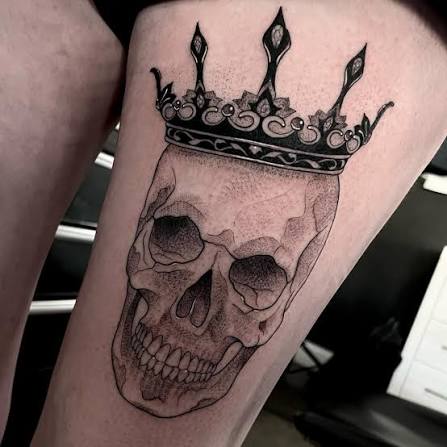
Dotwork builds shading and texture from thousands of tiny dots instead of solid fill or line shading — it creates a soft, almost stippled gradient that gives skulls a weathered, engraved look rather than a flat cartoon one. Adding a crown on top plays with gothic royalty symbolism without needing color. This design needs real space to read properly, so the upper arm, thigh, or back are better choices than the wrist. Anything under three inches loses the dot gradient’s subtlety. Healing takes 2–4 weeks since dotwork can scab slightly more than straight linework. Ask your artist what needle grouping they use for dotwork shading — it affects how smooth the gradient looks after healing. Pain is moderate to high depending on session length, since dotwork pieces often take longer to complete than simple line pieces.
Bold Traditional Gargoyle
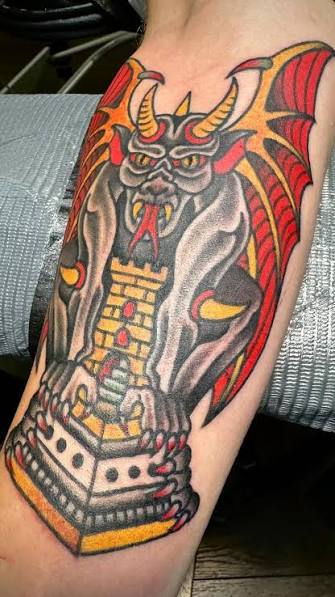
Bold traditional style means thick, confident outlines (often 5–7 needles) filled with heavy black or deep gray shading and almost no fine detail — it’s built to age well, not to impress up close. A gargoyle rendered this way reads as a strong silhouette even from a distance, which is the point. Best on the upper arm, shoulder, or calf where the whole creature has room to sit without cramping. Sizes under three inches tend to muddy the wings and facial detail. Healing runs about two to three weeks. This placement tends to be moderately painful, less intense than bony spots like the shin or collarbone. Bring a full front and side reference if you want wing detail included, since gargoyles read differently depending on angle. It’s a strong choice for someone who wants a statement piece rather than something subtle for work settings.
Gothic Blackletter Script
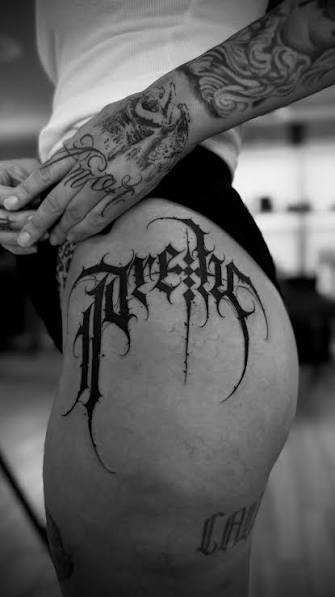
Blackletter (sometimes called Old English lettering) uses sharp, angular strokes with thick-to-thin contrast built right into the letterforms — no extra shading needed, since the letter weight itself does the visual work. A short phrase or single word in blackletter reads as classically gothic without needing imagery at all. Forearm, ribs, and collarbone are common spots; keep it under four inches wide so individual letters don’t blur together as the tattoo ages. Healing takes about two weeks. Ribs and collarbone rank higher on the pain scale than forearms. Practical tip: ask your artist to draw the stencil at the actual size you’ll wear it, not a scaled mockup — lettering that looks fine blown up on paper can crowd badly at real scale. This works well for meaningful single words and holds up better long-term than delicate script fonts, which fade faster.
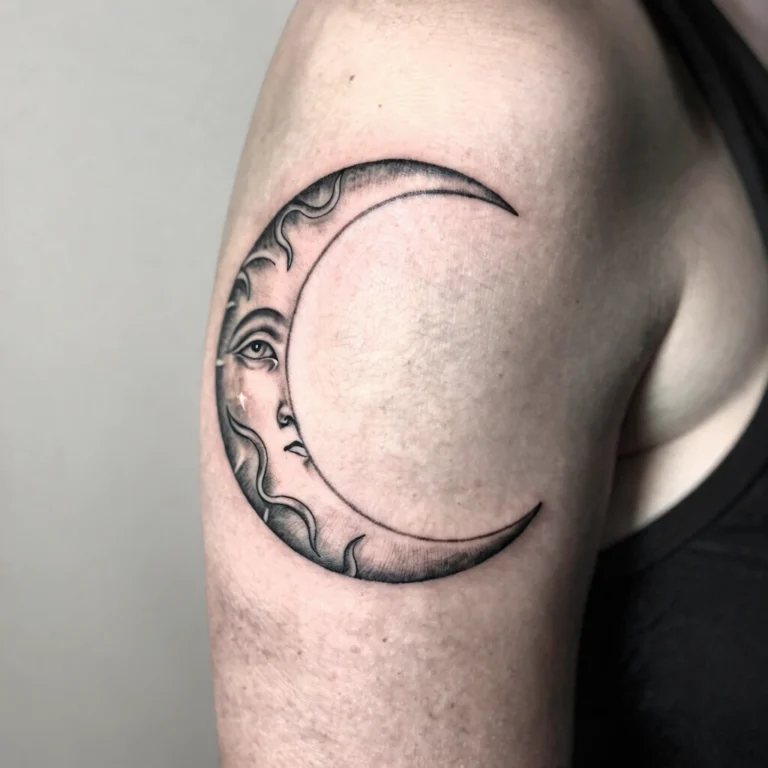
Bat and Crescent Moon
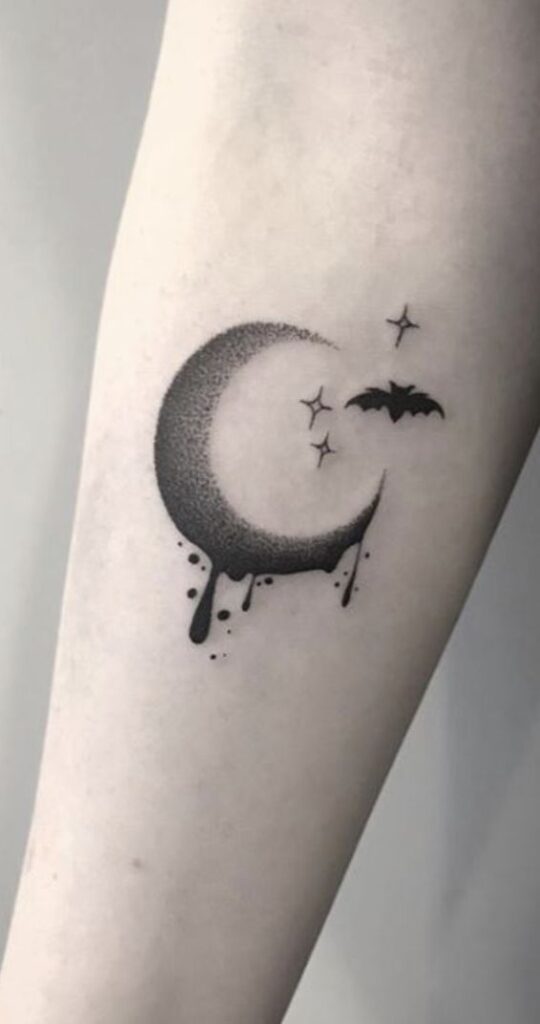
This pairing usually combines a solid black bat silhouette with a thin-outlined crescent moon, creating contrast between heavy fill and open linework in one small composition. It’s a popular flash choice because it’s compact and symmetrical, translating well to smaller placements like the wrist, ankle, or behind the ear. Keep it under two inches if going small, since the bat’s wing detail needs a bit of space to stay legible. Healing takes roughly two weeks. Wrist and ankle placements tend to be more sensitive due to thin skin over bone. This is a solid first-tattoo option because it’s quick to complete in a single sitting and doesn’t demand heavy aftercare commitment. It also works well as a matching design between friends who want gothic themes without committing to something large or highly visible at work.
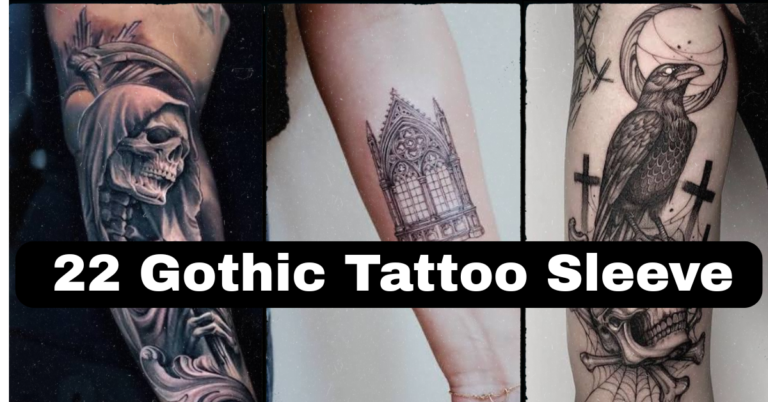
Gothic Cathedral Window
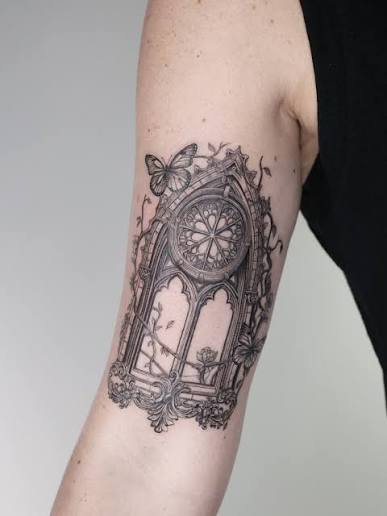
Cathedral window designs lean on architectural symmetry — pointed arches, radiating linework, sometimes small dotwork shading to suggest stained glass segments without using color. The structure itself creates natural negative space (the untattooed skin left visible within the design), which keeps the piece from looking too dense. This one needs real real estate: forearm, thigh, or upper back work best, ideally three inches or larger so the architectural lines don’t collapse into each other. Healing runs two to three weeks. Because of the detail level, expect a longer sitting, which can increase overall discomfort even in less sensitive areas. Bring reference photos of actual gothic architecture, not just other tattoos, so your artist can adapt real proportions. This design is better suited to less visible placements if your workplace has strict tattoo policies, given its size requirements.
Raven with Dagger
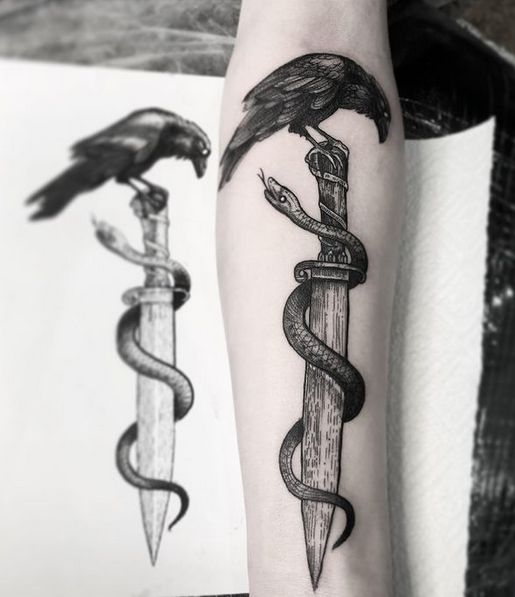
Combining a raven and dagger is classic gothic flash pairing — the bird usually rendered in bold blackwork with a smooth gradient shading the wing, dagger kept as clean linework beside it for contrast. The mix of solid fill and open line gives the piece visual depth without needing color. Upper arm or shoulder blade placement gives both elements enough room; under two and a half inches, the wing feathers tend to blur together during healing. Expect two to three weeks of healing time. Shoulder blade tends to be moderately painful due to thinner skin over the bone. Ask your artist whether they’ll shade the raven with solid black or a smoother gray gradient — that choice affects how the piece looks in five years. This design suits someone wanting symbolic imagery (death, mystery, protection) without going fully into skull or skeleton territory.
Weeping Angel Statue
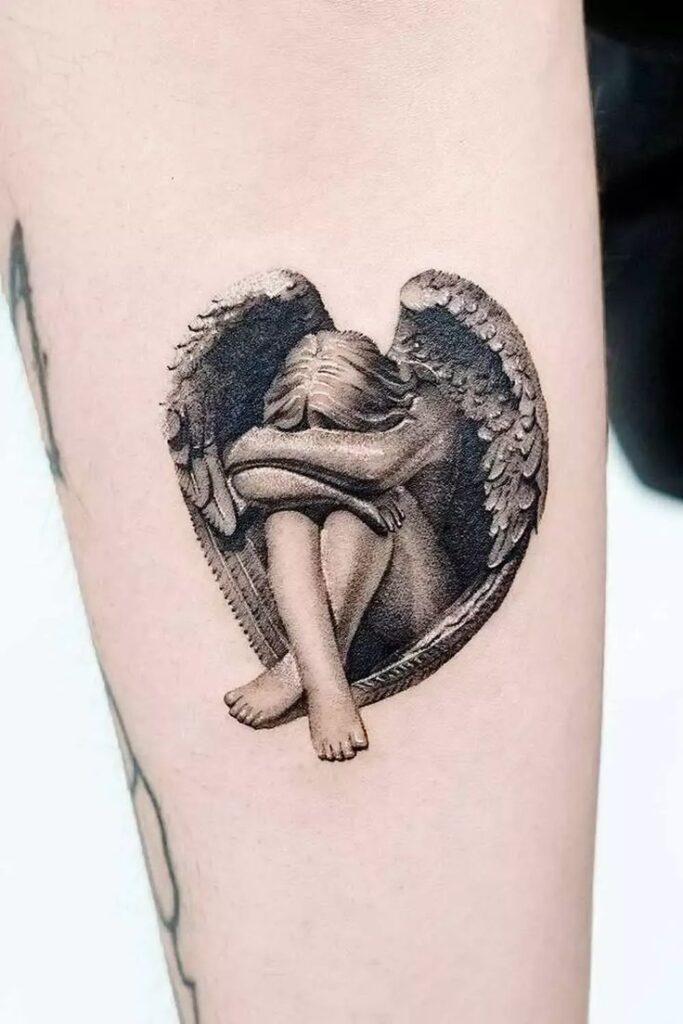
This design mimics stone statuary — angel figures rendered with fine cross-hatching or dotwork shading to suggest a carved, textured surface rather than smooth skin. It’s one of the more technically demanding gothic flash pieces because the shading needs to convincingly read as “stone,” not just gray ink. Best on the thigh, upper arm, or back where there’s enough space for the figure’s proportions to stay believable. Anything under four inches risks losing the statue-like texture. Healing takes about three weeks given the shading density. This is a longer sitting, so expect more cumulative discomfort even on lower-pain areas. Look through an artist’s portfolio specifically for shaded figure work, not just line tattoos, before booking this one. It suits someone comfortable with a longer healing commitment and a piece meant to be a focal point rather than a subtle addition.
Snake Wrapped Dagger
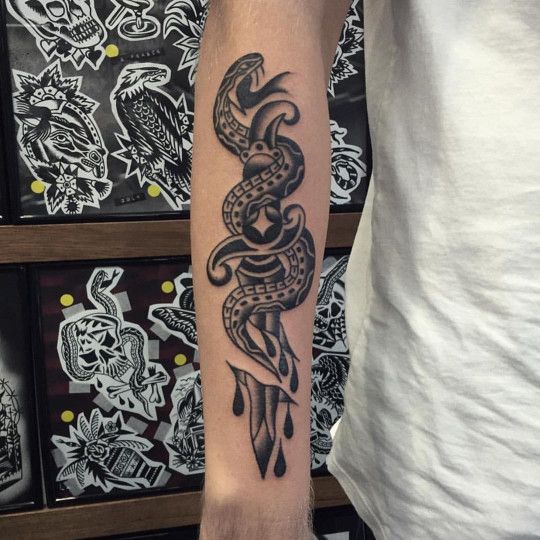
A snake coiling around a dagger blends organic curved linework with the sharp geometry of the blade — the contrast between the two shapes is what makes this flash classic hold up visually. Snake scales are usually suggested with light dotwork or small linework rather than heavy shading, keeping the piece from looking too busy. Forearm and calf are ideal since the elongated shape fits naturally along the limb. Two to three inches minimum keeps the scale detail readable. Healing runs two weeks. Calf placement is generally lower on the pain scale compared to forearm’s thinner skin near the wrist. Practical tip: specify how many times the snake wraps the blade in your reference — one wrap versus three completely changes the composition’s length. This piece works well for a second or third tattoo once you’re comfortable with a slightly longer sitting.
Gothic Heart with Thorns
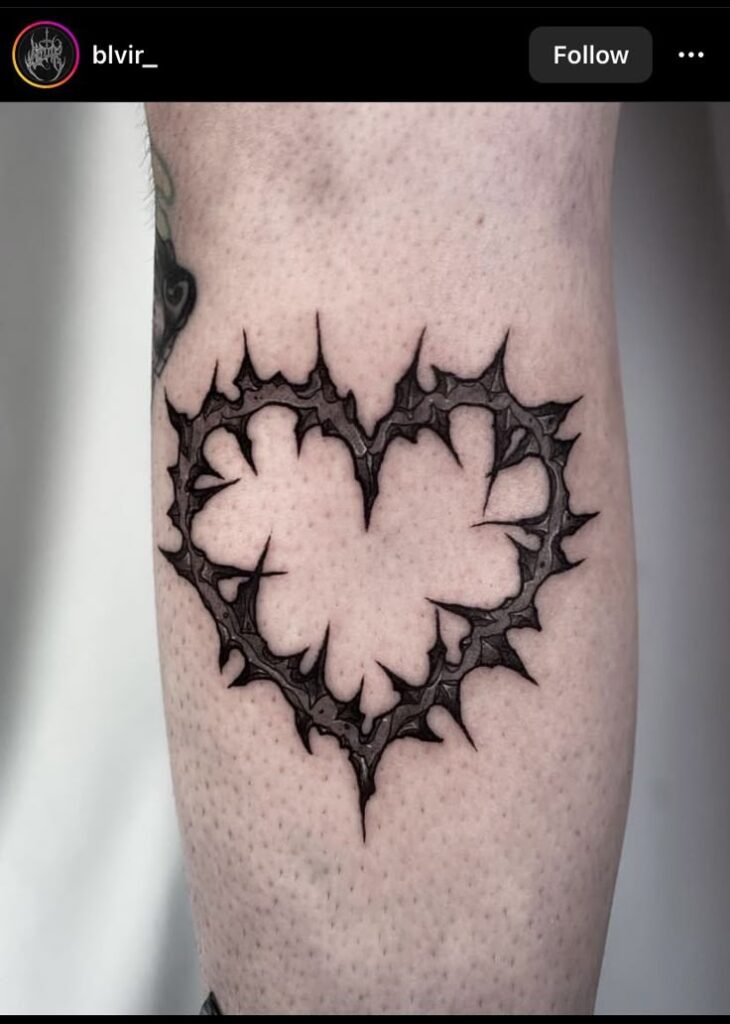
A solid or lightly shaded heart wrapped in a thorned vine gives you gothic symbolism (love mixed with pain, endurance) without needing large-scale imagery. Outlines are typically medium weight, with thorns kept as sharp, thin extensions off a simple curved vine. Wrist, ankle, or ribs all work at a small scale — around one and a half to two inches keeps the thorn detail from disappearing. Healing takes about two weeks. Ribs rank higher for discomfort than wrist or ankle for most people. This is a popular choice for matching tattoos between partners or close friends since the symbolism reads personally without requiring a shared exact meaning. It also works as a subtle first tattoo, especially in a placement that’s easy to cover for work.
Spider and Web Blackwork
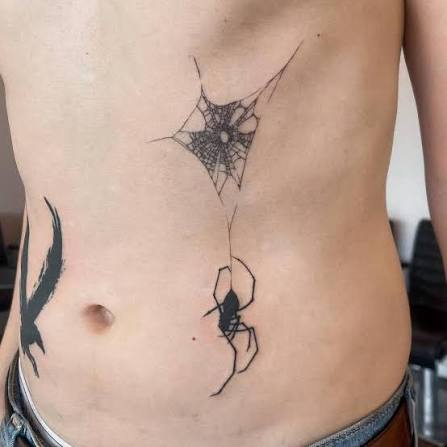
Spiders rendered in blackwork use solid black bodies with fine linework legs, often set against a web made of thin, evenly spaced lines radiating from a center point. The geometric web contrasts nicely with the organic curve of the spider’s body. Best on the hand, forearm, or behind the ear for a compact version; scale up to shoulder or back if you want the full web included. Healing runs two to three weeks, slightly longer on hands due to more friction during daily use. Hands and fingers are notably more painful and prone to faster fading, something worth discussing honestly with your artist before booking. This design suits someone wanting something a little edgier and less workplace-friendly, and it photographs well as a smaller matching design between friends who like darker themes.
Coffin with Roses
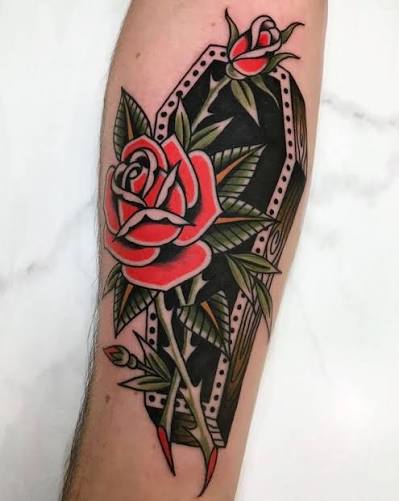
A coffin softened by roses draped across it balances heavy gothic symbolism (mortality) with a softer, more decorative element. The coffin is usually rendered in bold blackwork or gray-wash shading, while the roses use lighter linework and small gradient shading for petal depth. This composition needs width, so forearm, thigh, or upper back work better than narrow placements like the wrist. Three inches or more keeps both elements legible. Healing takes about two to three weeks. Thigh tends to be more tolerable than bonier spots like the collarbone. Ask your artist whether they’ll use solid black or a lighter gray wash for the coffin’s shading, since gray wash tends to soften slightly more as the tattoo ages over the years. This piece suits someone comfortable with a bold, less subtle placement.
Gothic Chalice or Goblet
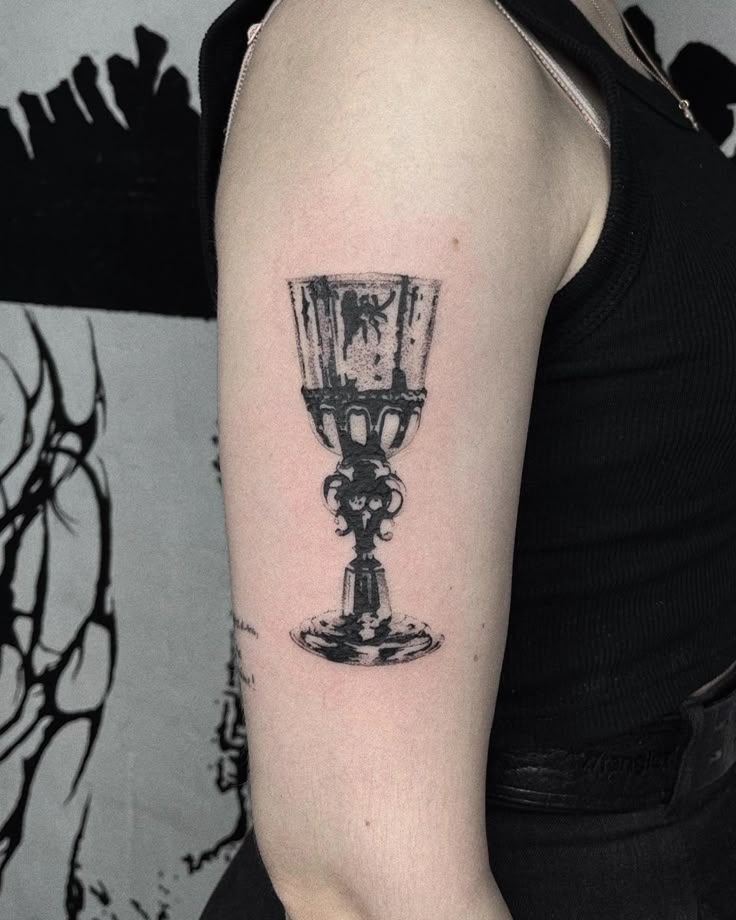
A detailed chalice or goblet, sometimes rendered with small dotwork gems or filigree linework along the base, brings in a slightly more ornate, almost medieval feel to gothic flash. The design relies on symmetry, so even small linework mistakes in the stencil show up clearly once healed. Forearm or upper arm placement gives the artist room to keep the proportions balanced. Two to three inches is a safe minimum. Healing takes about two weeks. Pain is moderate on fleshy upper arm placement. Bring a reference that shows the chalice from a straight-on angle, since side angles distort the symmetry your artist needs to trace accurately. This design works well for someone wanting gothic imagery that feels a bit more decorative and less overtly dark than skulls or coffins.
Skeletal Hand Holding a Rose
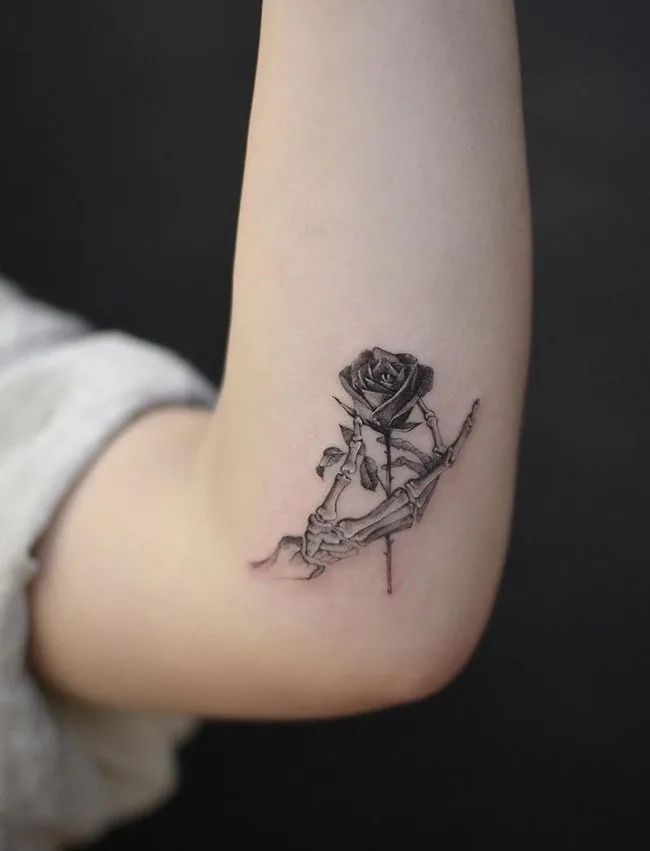
This pairs a bone-white or lightly shaded skeletal hand with a softly shaded rose, mixing something stark with something delicate. Shading here often uses a soft gray wash technique — diluted black ink layered to create gradient without harsh lines — which gives the bones a more realistic, rounded look instead of flat cartoon shading. Best on the forearm or upper arm where the hand’s finger detail has room to stay crisp. Two and a half inches minimum keeps individual finger bones distinct. Healing runs two to three weeks. Discomfort is moderate on fleshy areas, more intense if placed near the wrist joint. This design suits someone who wants something visually striking but still holds a softer, romantic edge thanks to the rose — a nice middle ground between purely dark and purely decorative gothic themes.
Medieval Gargoyle Face
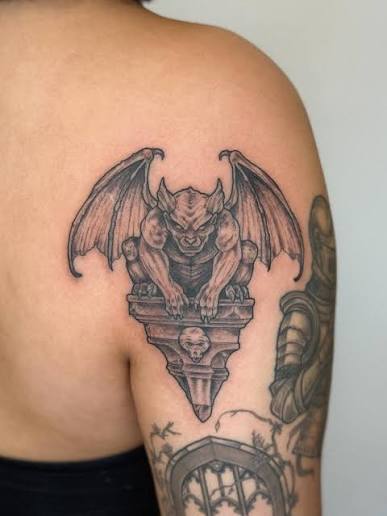
A close-up gargoyle face, rather than a full-body creature, lets an artist focus entirely on expression and texture. This usually means heavier cross-hatch shading around the eyes and mouth to suggest weathered stone, similar to the technique used in the weeping angel design. Best suited to the upper arm, chest, or calf, where there’s enough flat space for the face to sit without distortion. Keep it above three inches so the shading gradient doesn’t collapse into solid black. Healing takes about three weeks given the shading density. Chest placement tends to rank higher on the pain scale than calf or upper arm. This is a strong option for someone who wants a single bold gothic image rather than a themed composition, and it works well as a centerpiece tattoo you build future pieces around.
Gothic Ouija Planchette
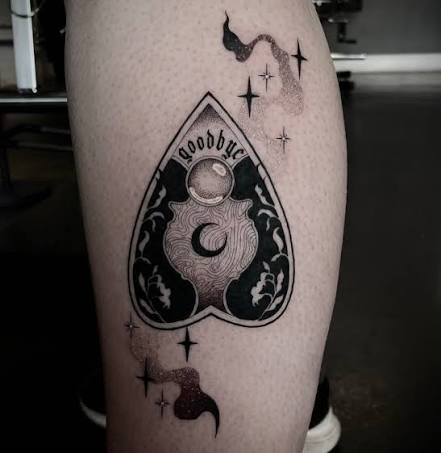
The planchette (the pointer piece from a Ouija board) is a favorite in gothic and occult flash because its shape is naturally geometric — a teardrop with a small circular window — making it easy to render cleanly in bold linework with minimal shading. This one works well small, even under two inches, since there’s little fine detail to lose. Wrist, forearm, or ankle are all solid choices. Healing takes about two weeks. Wrist and ankle tend to be more sensitive than forearm. Practical tip: decide upfront whether you want the circular window left as open negative space (bare skin) or filled with a small symbol, since that changes the stencil significantly. This design suits someone wanting a smaller, conversation-starting piece without a large time or cost commitment.
Tombstone with Ivy
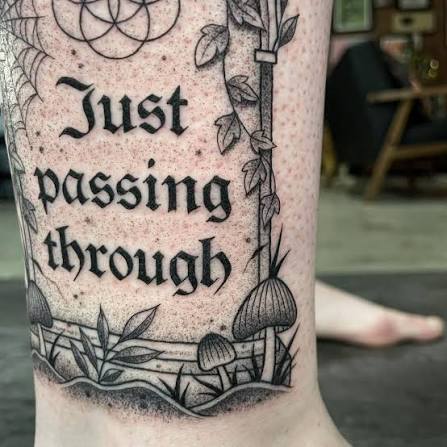
A tombstone wrapped in creeping ivy softens an otherwise heavy symbol with organic, curling linework. The tombstone itself is usually bold outline with light gray shading, while the ivy uses thinner, more fluid lines to contrast the rigid stone shape. Forearm, calf, or upper arm placement gives enough width for both elements to stay balanced. Two and a half to three inches is a safe minimum. Healing runs about two weeks. Calf tends to be more tolerable than forearm for most people. Ask your artist to personalize the tombstone slightly — a date, initial, or symbol — rather than copying a flash sheet design exactly, since personal touches help the piece feel less like a template and more like yours. This works well as a memorial piece when kept simple and uncluttered.
Vampire Bat Wings
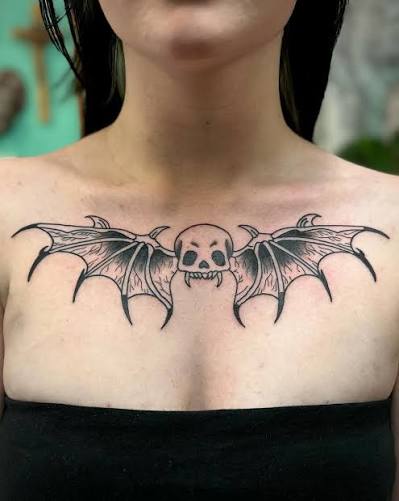
Extended bat wings, either as a standalone design or framing another gothic symbol, rely on sharp, angular linework with minimal shading — the wing’s jagged edges do most of the visual work. This design scales well from small (wrist, two inches) to large (back piece, eight-plus inches), depending on your commitment level. Healing time scales with size: about two weeks for smaller versions, three to four weeks for larger back or chest placements. Chest and rib placements are notably more sensitive due to thin skin and less padding. This is a good design to discuss walk-in versus custom booking, since a simple small version is often available as-is on a flash sheet, while a larger wingspan usually requires a custom consultation to fit your body’s shape properly.
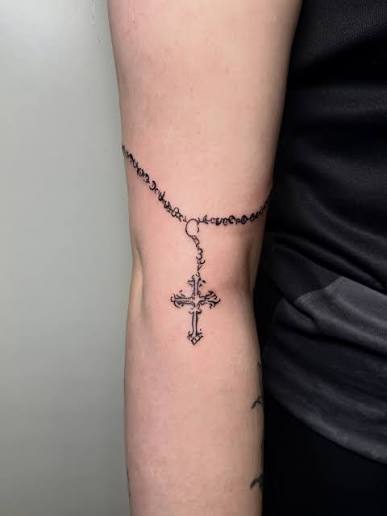
Gothic Rosary Beads
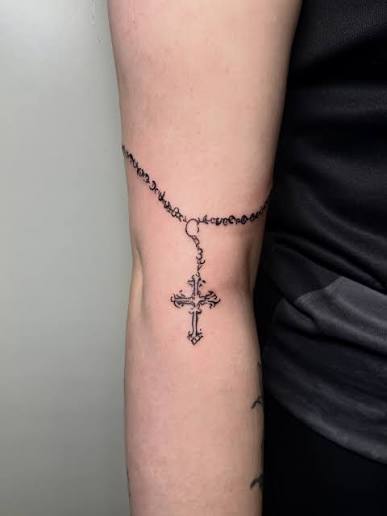
A rosary rendered in flash style typically uses a repeating bead pattern in simple round linework, connecting to a cross or small pendant at the end. The repetition of beads means consistency matters — uneven spacing looks noticeably off once healed. This design works well wrapped around the wrist or ankle, following the natural curve of the limb, usually staying under three inches in total length. Healing takes about two weeks. Wrist and ankle rank moderate to high on the pain scale due to thinner skin. Practical tip: ask your artist to sketch the bead spacing directly on your skin with a marking pen before tattooing, so you can check the fit around the curve before the needle starts. This suits people wanting a subtle religious or symbolic piece that reads clearly even at a small size.
Occult All-Seeing Eye in Blackwork
The all-seeing eye combines geometric precision (a triangle or diamond frame) with a detailed central eye, usually shaded using solid blackwork for the iris and fine linework for the lashes or rays extending outward. This design demands a bit more space to keep the eye’s detail from blurring, so upper arm, chest, or thigh work better than smaller joints like the wrist. Three inches minimum is a safe bet. Healing runs about two to three weeks. Chest tends to be more sensitive than thigh or upper arm. Bring a reference that clearly shows whether you want a realistic eye or a more geometric, stylized one, since those require very different linework approaches. This piece suits someone wanting bold symbolism with a slightly mystical, less overtly “dark” gothic feel.
Gothic Candle and Skull
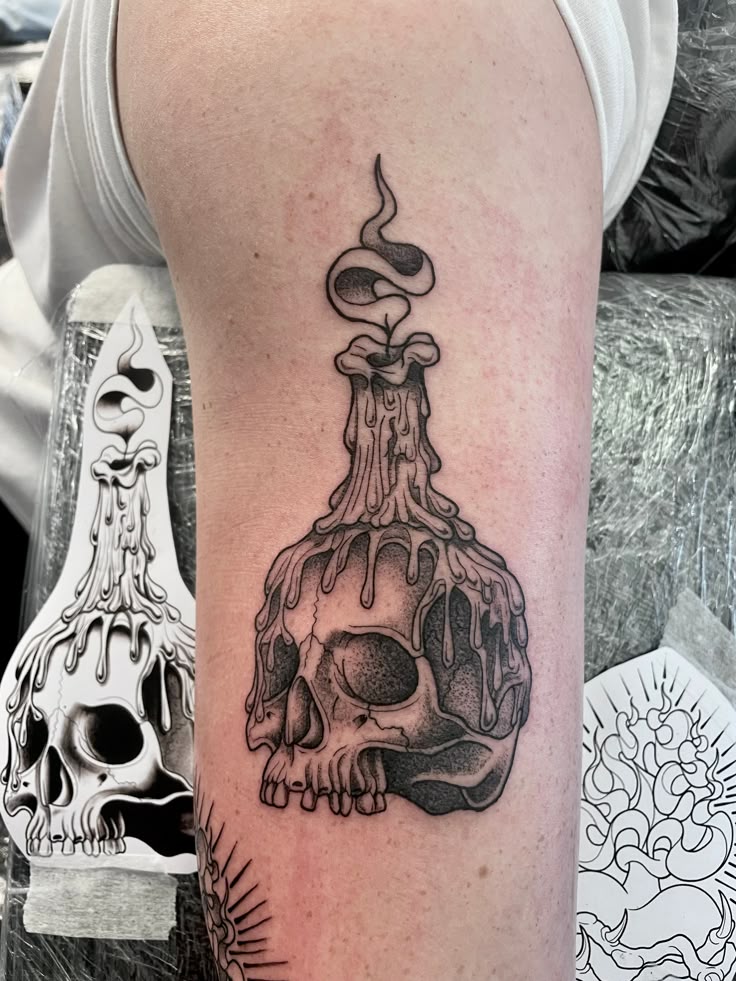
Pairing a lit candle with a skull is a classic memento mori composition (a reminder of mortality), usually rendered with the skull in bold blackwork and the candle flame left as soft, minimal shading or even fine linework to suggest movement. Forearm or upper arm placement gives enough room for both elements without crowding. Two and a half inches minimum keeps the flame detail from disappearing. Healing takes about two weeks. Forearm pain is generally moderate. Ask your artist whether the flame will be shaded or left as simple outline — a shaded flame adds visual softness against the skull’s harder edges. This design works for someone wanting a message about mortality or time without over-the-top imagery, and it ages well since the blackwork skull holds its shape for years.
Thorned Sword
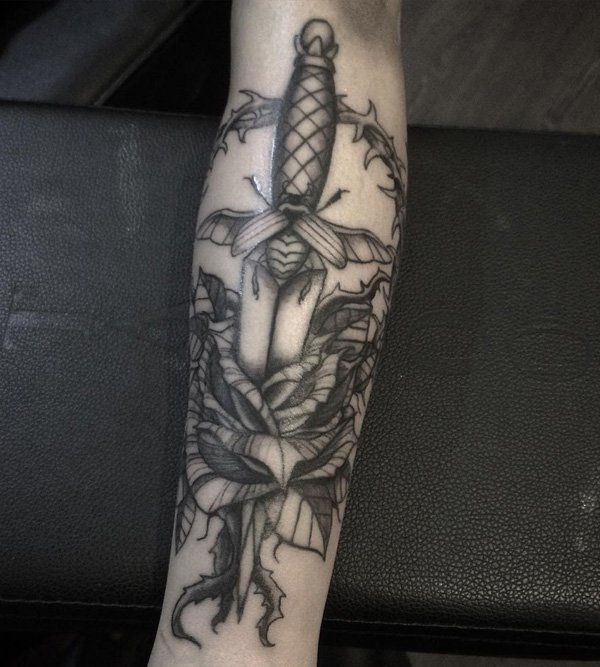
A sword wrapped in thorny vines merges two gothic staples — weaponry and nature — into one vertical composition that fits naturally along the spine, forearm, or shin. The blade is usually kept as clean, bold linework while the thorns use thinner strokes for contrast. This design needs length more than width, so it suits elongated placements best. Keep it at three inches or longer to preserve the thorn detail along the vine. Healing takes about two to three weeks. Shin and spine placements tend to rank higher on the pain scale due to less cushioning over bone. This is a good option for someone wanting a larger single-session piece with a clear vertical flow, and it holds up particularly well on the forearm where the design can be viewed easily by the wearer.
Negative Space Gothic Moth
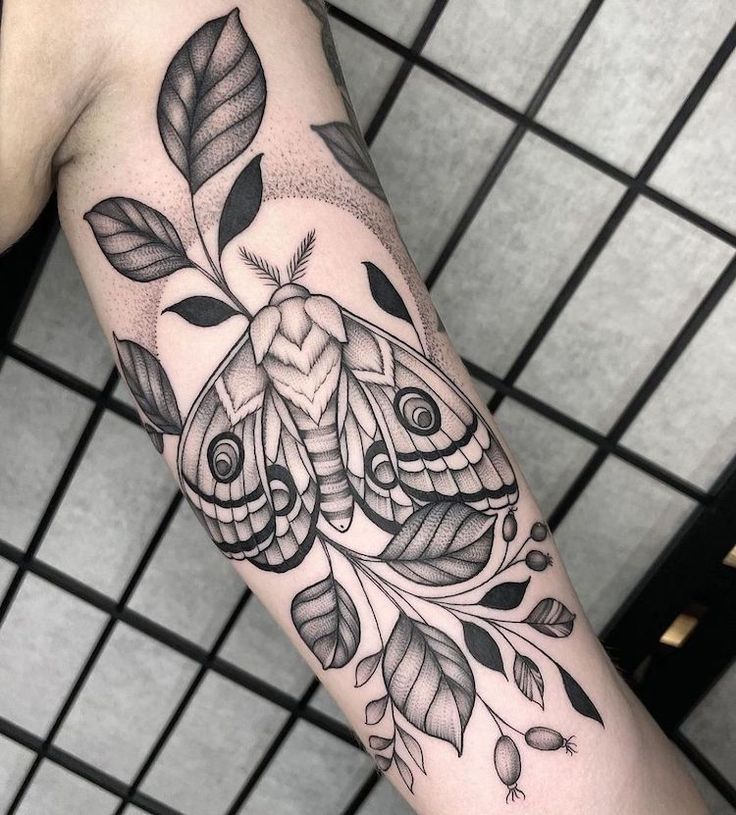
This design flips the usual approach — instead of solid blackwork, most of the moth’s body is left as bare, untattooed skin (the negative space), while the wing edges and details are outlined in fine, precise linework. It’s a more advanced technique, so ask specifically about an artist’s negative space portfolio before booking, since not every studio handles this well. Best on the upper arm, back, or shoulder where there’s enough contrast between skin and surrounding art to make the negative space read clearly. Three inches minimum is recommended. Healing takes about two weeks. Pain is moderate on upper arm and shoulder. This design suits someone who wants a subtler, more artistic take on gothic imagery — it reads as sophisticated rather than heavy, and ages gracefully since there’s less solid black to potentially soften over decades.
Technique Definitions You Should Know Before Booking
Gothic flash sheets mix several distinct tattooing techniques, and knowing the difference helps you brief your artist accurately.
- Fine line / single needle — Thin, delicate outlines made with a single needle or small needle grouping, with little to no shading. Best for subtle, detailed pieces but fades faster than bold work over decades.
- Bold traditional — Thick outlines (5–7 needles) filled with heavy solid color or black. Built to age well and stay legible from a distance, at the cost of fine detail.
- Blackwork — Solid black fill covering most or all of the design, creating strong silhouette contrast. Very durable but commits you to a heavier, darker aesthetic.
- Dotwork — Shading built from small individual dots rather than solid fill or line hatching, creating soft gradients and texture. Takes longer to tattoo and heals with slightly more scabbing.
- Negative space — Using bare, untattooed skin as part of the design itself, with only outlines or edges inked. Requires a skilled hand, since mistakes are harder to fix later.
Best Placement Ideas
- Forearm — Highly visible, moderate pain, easy to photograph and easy for the artist to work on directly.
- Ribs — More painful due to thin skin over bone, but great for larger pieces you can easily keep private.
- Wrist/Ankle — Good for small designs, but higher pain and faster fading due to constant movement and friction.
- Upper arm/Shoulder — Lower pain, plenty of space, easy to cover for work if needed.
- Behind the ear — Great for tiny, delicate designs, but more sensitive and trickier to keep still during the session.
- Back/Thigh — Best for large, detailed pieces since there’s ample flat space and generally more tolerable pain levels.
Tips for Success
Look for an artist whose portfolio shows consistent line weight and clean shading across multiple healed photos, not just fresh ink. Fresh tattoos always look sharp; healed ones tell you the truth about an artist’s skill. If you’re drawn to blackwork or dotwork, specifically search