19 Butterfly Tattoo Thigh Ideas: A Real Guide Before You Book
Nervous about picking a butterfly tattoo thigh design you’ll still love ten years from now? You’re not alone, and honestly, that hesitation is a good sign. It means you’re taking this seriously instead of just screenshotting the first pretty wing you see on Pinterest.
So what are the best butterfly tattoo thigh ideas? Fine-line and blackwork butterflies placed on the outer or front thigh work best for most people, since the thigh’s flat, stable skin holds detail well and hides easily under clothing when needed. Larger, shaded pieces suit the outer thigh, while smaller single-needle designs fit nicely near the hip or inner leg.
Below, I’ll walk you through 19 specific butterfly designs, plus the stuff most articles skip entirely — placement tradeoffs, pain levels, realistic healing timelines, what to actually say to your artist, and the mistakes that turn a good idea into a blurry regret five years down the road.
Why the Thigh Works So Well for Butterfly Tattoos
The thigh gets overlooked a lot, but it’s actually one of the smartest canvases for butterfly designs. You’ve got a large, mostly flat surface with minimal bone interference, which means less discomfort during the session and a cleaner line for the artist to follow. Because the thigh has more fat and muscle padding than areas like the ribs, ankle, or hands, the tattoo needle glides more consistently, which helps keep fine lines crisp and shading even. It’s also a placement you control — cover it with pants for work, show it off in shorts on the weekend. That flexibility is a big reason butterfly thigh pieces have stayed popular across so many different tattoo styles, from delicate single-needle work to bold traditional color.
Butterfly Tattoo Styles at a Glance
Before you pick a design, it helps to know what these style names actually mean. Artists use them constantly, and knowing the difference will make your consultation ten times smoother.
Fine line
Thin, delicate strokes made with a single needle or small needle grouping. Minimal shading, often no color. Ages softly but can blur faster than bold work if the artist isn’t experienced.
Blackwork
Solid black ink, bold outlines, and filled-in sections. High contrast, holds up well over time, and reads clearly even from a distance.
Dotwork
Shading and texture built from thousands of tiny dots instead of solid fill or lines. Creates a soft, almost airbrushed gradient effect, commonly used for wing texture.
Watercolor
Ink applied to mimic paint bleeds and soft color transitions, usually without heavy black outlines. Looks striking fresh but tends to soften and fade unevenly faster than linework-based styles.
1. Fine-Line Single Butterfly on the Outer Thigh
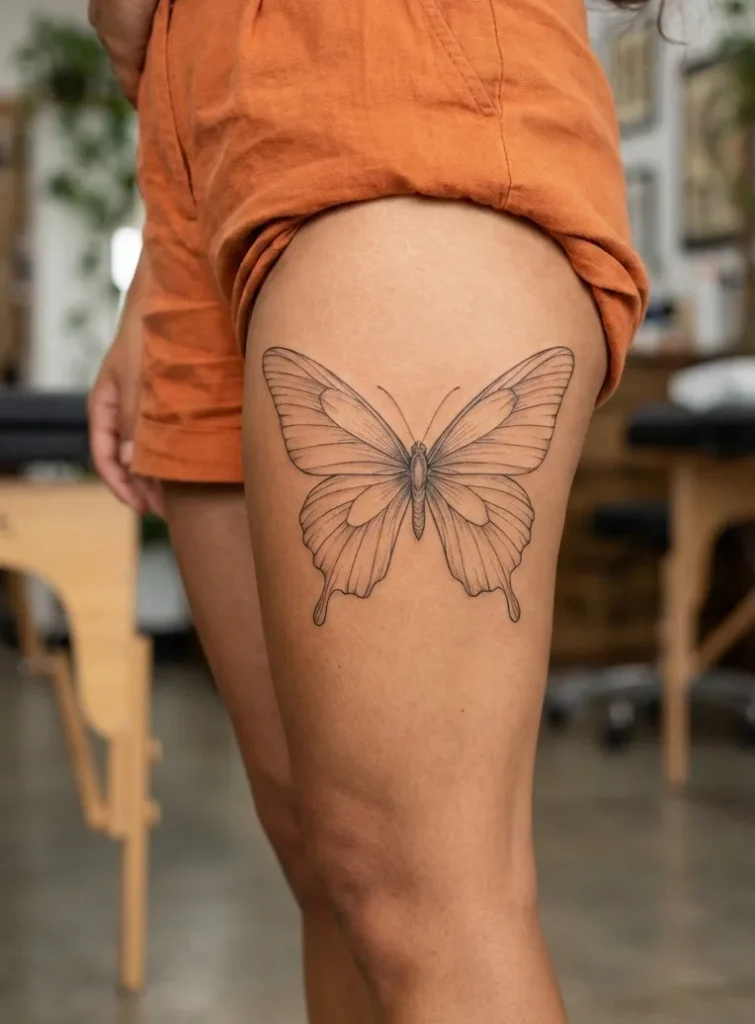
A single, medium-sized butterfly rendered in fine line is one of the most requested thigh designs, and for good reason. The technique uses a single needle to create thin, consistent lines with little to no shading, so the wings stay light and airy rather than heavy. Placed on the outer thigh, roughly palm-sized, it reads clean on both light and deep skin tones since there’s no color saturation to worry about fading unevenly. Healing typically runs 10 to 14 days for surface peeling, though full settling under the skin takes closer to a month. This spot sits on softer tissue, so most people describe the pain as manageable, more of a scratchy annoyance than sharp pain. It’s a solid first-tattoo choice and stays workplace-friendly under most pants or longer shorts.
Quick tip: Bring a reference photo with visible line thickness, not just a shape — this helps the artist size the stencil so the lines don’t fade into nothing after a few years.
2. Blackwork Bold Butterfly Silhouette
If you want something that reads instantly from across a room, blackwork is the move. This design fills the entire wing shape with solid black ink, leaving only a thin outline or a few negative space slits for detail. There’s no shading gradient here — it’s high contrast, all or nothing. On the front or outer thigh, a piece around 4 to 6 inches wide holds its shape well over decades because solid black ink resists the kind of fading that affects fine gray-wash shading. Healing takes about two weeks on the surface. Because larger areas get saturated in one sitting, expect more consistent, dull soreness rather than sharp pinches. This style suits people who want a bold statement piece rather than something subtle, and it photographs well for group or matching tattoo sessions.
3. Dotwork Shaded Butterfly
Dotwork swaps flat shading for texture built entirely out of small dots, layered to create gradients that look almost like fabric or soft shadow. On a butterfly, this technique is often used inside the wings to mimic natural vein patterns without hard lines. It takes longer to tattoo than blackwork because of the density of dots needed for smooth gradients, so budget extra chair time. The outer thigh or upper thigh near the hip works well here since the skin is stretched taut and even, letting the dot spacing stay consistent. Healing runs about two weeks, similar to other black ink work. Pain tends to feel more like a buzzing vibration than sharp pressure. This design ages gracefully because dotwork doesn’t rely on solid fill that can patch or fade unevenly.
4. Watercolor Splash Butterfly
Watercolor-style butterflies use soft color blending — pinks, blues, purples — layered without the heavy black outline typical of traditional tattoos. The effect mimics a paint bleed, giving the wings a soft, almost dreamy edge. This one deserves an honest heads-up: watercolor pieces tend to soften and lose vibrancy faster than blackwork or fine line, especially on areas exposed to a lot of friction or sun. The outer thigh, which sees less rubbing than the inner thigh or knee, is the better home for this style. Expect a touch-up conversation with your artist around the three-to-five-year mark to refresh saturation. Pain-wise, color work with multiple passes can feel more repetitive than single-line work, but still falls in the moderate range for this placement.
5. Negative Space Butterfly Wing
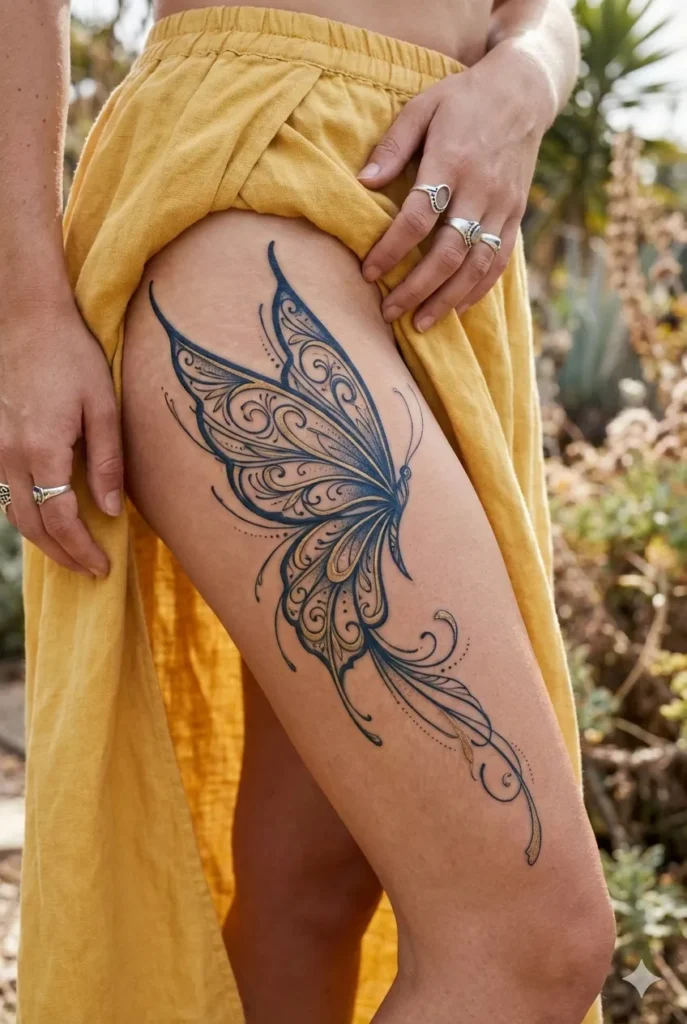
Negative space tattoos use the untouched skin itself as part of the design, rather than filling every section with ink. A common version here is a solid black wing shape with a butterfly outline cut out of the middle, so the natural skin tone shows through as the “wing details.” This creates a striking, modern look that plays with contrast instead of color. It works best on medium skin tones with even texture, since the visual impact depends on a clean line between inked and bare skin. Placed on the thigh at 3 to 5 inches, healing takes the usual two weeks. Because much of the area still gets outlined and filled around the edges, pain sits in the moderate range. This is a great option if you want something that looks custom without being overly busy.
6. Butterfly and Floral Combo Thigh Piece
Pairing a butterfly with small botanical elements — leaves, vines, or a few blossoms — turns a single motif into a fuller composition. The linework connecting the flowers to the wings should stay consistent in weight so the whole piece reads as one design instead of two separate stickers slapped together. This combo suits a longer, vertical placement running along the outer or front thigh, anywhere from 6 to 10 inches. Because it covers more surface area and involves more detailed passes, sessions run longer and healing can extend slightly past two weeks in the busier sections. Pain stays moderate throughout since it’s spread across padded tissue. This design is popular for people wanting symbolic depth — growth, transformation, femininity — without going oversized.
7. Butterfly Migration Trail Up the Thigh

Instead of one static butterfly, this design uses three to five smaller butterflies in varying sizes, trailing diagonally from the knee toward the hip. Each one is usually rendered in matching fine-line or dotwork style so the trail feels cohesive rather than scattered. This placement takes advantage of the thigh’s length, and it’s genuinely one of the more visually dynamic butterfly layouts because it creates movement across the leg instead of a single fixed point. Sizing each butterfly between 1 and 3 inches keeps the trail readable without crowding. Healing is straightforward since the smaller sections aren’t heavily saturated. Pain level stays low to moderate. This is an easy design to add onto later if you want more butterflies down the line.
8. Realistic 3D Shaded Butterfly

Realism-style butterflies use fine gradients, soft shadow work, and sometimes subtle color to mimic an actual photograph of a butterfly landing on the skin. This requires significant shading skill — expect your artist to blend gray or muted color washes to create depth in the wings rather than flat fill. Because the detail is so fine, sizing matters a lot here; anything smaller than 4 inches risks the shading turning muddy over time. The outer thigh gives enough flat space for the artist to work these gradients evenly. Healing takes the standard two weeks, though shaded areas may flake slightly more during peeling. Pain is moderate, mostly from repeated shading passes. This style ages best when touched up every several years to keep gradients sharp.
9. Geometric Butterfly with Linework
This design overlays a butterfly silhouette with straight geometric lines, triangles, or a symmetrical grid pattern across the wings, blending nature with structure. Line weight needs to stay sharp and even for the geometric shapes to read cleanly, which makes this a good test of an artist’s steady hand. A flatter section of the thigh works best so the straight lines don’t warp around muscle curves. Sizing around 4 to 6 inches keeps the geometry legible. Healing runs the usual two weeks. Pain sits in the low-to-moderate range since it’s primarily linework without heavy shading. This design appeals to people who like symbolic meaning but want a more modern, structured aesthetic than a traditional wing shape offers.
10. Mandala Butterfly Fusion

Here, the butterfly’s wings are replaced or overlaid with mandala-style patterns — symmetrical dotwork and fine linework radiating outward like a decorative wheel. This is one of the more intricate options on this list, often combining fine line, dotwork, and sometimes light blackwork accents in a single piece. Because of the symmetry required, the outer or front thigh (flatter and more stable) is far easier for an artist to work with than a curved area like the hip. Size typically runs 5 to 8 inches to keep the pattern from cramping. Healing takes about two weeks, though intricate dotwork sections may need gentle care during peeling. Pain is moderate due to the extended time in one area. It’s a strong pick for anyone wanting spiritual or symbolic meaning layered into the design.
11. Small Minimalist Butterfly Cluster

Minimalist doesn’t mean boring — it means restraint. This design uses two or three tiny butterflies, usually under an inch each, done in fine line with zero shading. It’s one of the most forgiving designs for first-timers because the sessions are short and the healing is fast. Placement near the hip crease or lower thigh works well since the small scale doesn’t need a lot of flat space. Skin texture matters less here since there’s minimal shading to distort. Healing wraps up in about a week to ten days. Pain is generally low given the short session time. This is an easy, low-commitment option, and it’s also a popular matching-tattoo choice for friends who want something small and simple.
12. Traditional American Bold Butterfly
Classic American traditional style uses thick black outlines, limited but saturated color (usually red, yellow, or green), and minimal shading — the kind of tattoo that’s been around for decades and still holds up visually. On the thigh, this design benefits from a slightly larger scale, around 5 to 7 inches, so the bold linework has room to breathe. This style is famous for aging well because the thick outlines and solid color blocks resist the blurring that finer designs sometimes experience. Healing takes the standard two weeks. Pain is moderate due to the heavier ink saturation. This is a great option if you want something with vintage tattoo history behind it rather than a purely modern aesthetic.
13. Fine-Line Butterfly with Script Text

Combining a small butterfly with a short word or phrase in fine-line script adds a personal, symbolic layer — a name, date, or single word tucked beside or beneath the wings. Line weight needs to stay thin and consistent for both the butterfly and the lettering, or the text can blur into illegibility within a few years. This works well on the upper thigh near the hip, sized around 2 to 4 inches total. Healing takes about two weeks. Pain is low to moderate. This is a meaningful option for a first tattoo, though it’s worth asking your artist about font spacing during the consultation, since cramped script is one of the most common fine-line regrets.
14. Butterfly Thigh Wrap (Side to Front)

Instead of sitting flat on one plane, this design wraps a single large butterfly or a cluster of wings from the side of the thigh onto the front, following the natural curve of the leg. This requires an artist experienced in working around body contours, since the stencil has to be adjusted so the wings don’t look distorted from certain angles. Sizing runs larger, often 6 to 10 inches. Healing takes two to three weeks given the larger surface area. Pain is moderate to higher toward the side of the thigh, which has thinner padding than the front. This design makes a strong statement piece and suits people who already have some tattoo experience.
15. Symmetrical Butterfly Pair (Matching Thighs)

This is exactly what it sounds like — a mirrored butterfly design placed on both thighs, meant to be seen together rather than individually. It’s commonly done in fine line or light blackwork so both sides stay crisp and easy to match precisely. Because symmetry is the whole point, it’s worth asking your artist to create one stencil and flip it digitally rather than freehanding a “close enough” match. Sizing between 3 and 5 inches per side keeps both wings proportional. Healing runs concurrently on both legs, about two weeks. Pain is comparable to a single design since both sides use the same technique. This is a fun option for a personal milestone tattoo or as a coordinated design with a partner or friend.
16. Butterfly Morphing into Flowers
This design shows a butterfly gradually transforming into flowers or leaves along one wing, symbolizing growth or change. It usually blends two techniques — fine line for the floral side and light shading or dotwork for the butterfly side — which means the artist needs a steady hand to keep the transition looking intentional rather than messy. The front or outer thigh, sized 4 to 6 inches, gives enough room for the transformation to read clearly. Healing takes the standard two weeks. Pain is moderate given the mixed shading. This design solves a specific desire: symbolic storytelling in a single image, rather than needing two separate unrelated tattoos to represent the same idea.
17. Ornamental Butterfly with Filigree Details

Filigree adds delicate swirling line accents around the butterfly, similar to lace or metalwork patterns. This is almost always done in fine line, and it requires patience since the swirling details are thin and time-consuming to tattoo cleanly. A flatter section of the thigh helps keep the symmetry of the filigree from warping. Sizing around 4 to 6 inches balances detail with legibility. Healing takes about two weeks, and because the lines are so thin, some fading is normal within the first several years — a touch-up around year four or five is common. Pain stays low to moderate. This design appeals to anyone who wants an elegant, almost jewelry-like aesthetic instead of a purely natural butterfly shape.
18. Negative Space Butterfly on the Inner Thigh

A variation on design five, this places a negative space butterfly on the more sensitive inner thigh. It’s worth calling out separately because the inner thigh has thinner skin, more friction from clothing, and tends to be more sensitive during tattooing. Artists generally recommend keeping this design smaller, around 2 to 3 inches, both for comfort and because this area tends to experience more fading from constant fabric contact. Healing can run slightly longer, up to three weeks, since the area rubs against clothing more. Pain is higher here than most other thigh placements. This is a design for someone who’s had ink before and wants a more private, less visible placement.
19. Large Statement Butterfly Thigh Piece

This is the big one — a full-thigh butterfly design, often spanning 10 inches or more, combining fine line, shading, and sometimes color into one cohesive statement piece. Because of the scale, this is rarely a single-session tattoo; expect two or three sittings depending on your artist’s pace and your pain tolerance. The outer or front thigh is the only realistic placement given the size. Healing takes closer to three weeks due to the amount of skin involved. Pain builds up more from session length than sharpness. This design works best for someone who already has smaller tattoos and knows how their body handles longer sessions, rather than as a first-tattoo choice.
Best Placement Ideas
- Outer thigh — most visibility control, flattest surface, best for detailed linework and larger pieces
- Front thigh — good for symmetry and longer vertical designs like the migration trail
- Upper thigh near hip — easy to conceal, good for smaller or script-paired designs
- Inner thigh — most private placement, but more sensitive and prone to friction fading
- Side of thigh — best for wrap-style designs, though thinner padding means more discomfort
Tips for Success
Look through an artist’s actual healed work, not just fresh photos taken right after the session — fresh tattoos always look sharp, healed ones tell you the truth about their linework consistency. Ask specifically about their experience with the style you want; a blackwork specialist and a fine-line specialist often have very different skill sets even within the same studio. Bring reference images that show line thickness and shading style, not just a general butterfly shape. And don’t be afraid to ask what needle configuration they plan to use — it’s a completely normal question, and a good artist will explain their reasoning without hesitation.
Common Mistakes and How to Avoid Them
- Going too small for detailed work — fine shading and intricate linework need enough space to hold up over the years; shrink a design too much and it turns into a blurry smudge within a decade
- Choosing a placement that fights the design’s shape — a long vertical trail crammed into a short horizontal space distorts proportions
- Skipping the aftercare instructions — every artist’s routine varies slightly, and ignoring it increases the odds of patchy healing
- Copying a design exactly from a photo — small personal tweaks make it yours and avoid the awkward moment of matching a stranger’s tattoo
Similar Variations
Nearly every design above can be resized up or down, recolored, or combined with other elements. A fine-line single butterfly can shrink into a minimalist cluster. A bold traditional piece can add filigree accents for more detail. A negative space design can be flipped into solid blackwork by filling in what was previously bare skin. Mixing two techniques — say, dotwork shading with fine-line outlines — is one of the easiest ways to make a common design feel more custom without starting from scratch.
Aftercare Basics
Keep the tattoo clean and follow whatever specific aftercare sheet your artist gives you — instructions can vary slightly between studios. Generally, this means gentle washing, avoiding direct sun exposure, staying away from tight clothing that rubs the area, and skipping swimming pools or soaking baths until it’s fully healed. Everyone’s skin responds a little differently, so if you notice anything that seems off, it’s best to reach out to your artist or a licensed dermatologist rather than guessing.
Quick FAQ
How much does a butterfly thigh tattoo cost?
Prices vary widely by region, artist experience, and size, but small fine-line pieces often start in the $80–$150 range, while larger detailed or multi-session pieces can run several hundred dollars or more. Always ask for a quote during consultation rather than assuming a flat rate.
How painful is a thigh tattoo?
Pain tolerance is individual, but the thigh is generally considered one of the more comfortable placements due to its padded, muscular tissue, compared to bony areas like the ankle or ribs. Inner thigh and side placements tend to feel more sensitive.
How long does healing take?
Surface healing typically takes around two weeks, with full settling under the skin taking closer to a month. Larger or heavily shaded pieces may take slightly longer.
Do butterfly tattoos fade or need touch-ups?
Watercolor and heavily saturated color work tend to fade faster than fine line or blackwork. Many people schedule touch-ups every few years to keep detailed areas crisp, especially in pieces exposed to sun or friction.
Picking the right butterfly tattoo thigh design really comes down to matching the technique to your lifestyle, pain comfort, and how much detail you actually want to maintain over the years. Whether you land on a tiny fine-line wing or a full statement piece, the real work happens in the consultation — asking questions, checking healed portfolio photos, and being honest about size and placement tradeoffs. Take your time, find an artist whose style matches what you’re picturing, and that butterfly tattoo thigh design will feel just as right in ten years as it does the day you walk out of the studio.