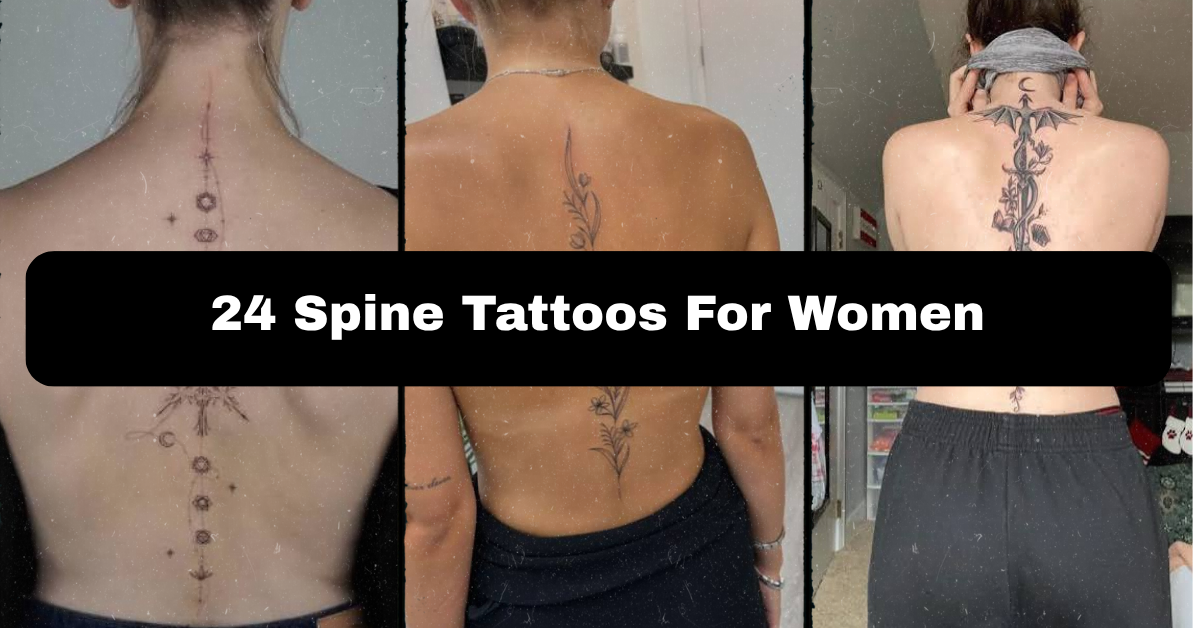
24 Spine Tattoos For Women
Spine tattoos are having a real moment right now, and if you’re researching this placement, you deserve more than a scroll of pretty pictures with no context. I’ve spent enough time around tattoo studios watching consultations happen to know that the questions people actually have — does it hurt more than other spots, how long until it heals, will this stencil even work on my back — rarely get answered in the typical roundup post.
So what are the best spine tattoos for women? Fine-line florals, dotwork chains, blackwork vines, and vertical script work best on the spine because the shape follows the body’s natural centerline, creating a flowing, symmetrical effect. Smaller, simpler linework also tends to age better on this stretchy, curved area than large shaded pieces.
Below, you’ll find 24 design ideas broken down by actual technique, plus placement tradeoffs, pain honesty, healing timelines, and the exact things to say to your artist so you walk out with something you’re happy with in ten years, not just ten days.
Why the Spine Works So Well as a Tattoo Canvas
The spine is one of the few places on the body where a tattoo can run vertically along a natural line without fighting the body’s shape. That’s the whole appeal. Designs that trail down the back — vines, script, a chain of small flowers — use the spine as a built-in guide, so the composition looks intentional instead of randomly placed. It’s also a flexible canvas: you can go tiny and subtle between the shoulder blades, or extend a piece from the neck all the way to the lower back for something much more dramatic. The tradeoff is that skin over the spine is thin and sits close to bone, so pain and healing need honest consideration before you book anything. We’ll cover that placement-by-placement below.
1. Fine-Line Floral Spine Trail
This design uses a single continuous line, usually 0.3mm or thinner, to sketch small flowers — think baby’s breath, daisies, or wildflowers — stacked in a vertical row down the spine. There’s no shading involved; the appeal is entirely in the delicate, almost hand-drawn linework. It works best as a narrow column, about half an inch wide, running from the nape to mid-back. Fair to medium skin tones show the fine lines most crisply, though a skilled fine-line artist can adjust needle depth for darker skin too. Bring a reference photo of real wildflowers, not just other tattoos, so your artist can build a custom stencil instead of copying someone else’s flash design. Expect moderate discomfort since the spine sits over bone with little cushioning. This one reads as professional and low-key, making it a solid pick for a first tattoo.
2. Blackwork Vine Spine Tattoo
Blackwork means solid black ink with no shading gradient — bold, saturated, and high contrast. A vine spine tattoo in this style typically features thicker lines (1mm or more) twisting down the spine with small leaves branching off. Because the ink is fully saturated rather than diluted, this style holds up better over decades than fine line does, though it demands more real estate — usually two to three inches wide once the leaves are factored in. It suits medium to lower back placement well, since there’s more room to let the vine curve naturally. Ask your artist about line consistency in their portfolio; wobbly saturation is the biggest sign of inexperienced blackwork. Pain tends to run moderate-to-high along the mid and lower spine. This is a strong choice if you want something that still reads clearly from a few feet away, unlike most fine-line work.
3. Dotwork Mandala Spine Chain
Dotwork builds an image entirely from tiny individual dots instead of continuous lines, creating a soft, textured look almost like stippled art. A chain of small mandala medallions running down the spine, each about an inch in diameter, is one of the more technically demanding spine designs because dot spacing has to stay consistent for the pattern to read cleanly. This takes a genuinely experienced dotwork artist — ask to see close-up healed photos, not just fresh ink, since dotwork can blur if the dots are placed too close together. Best suited to the upper-to-mid spine where skin is flatter. Healing typically runs two to three weeks. Pain is comparable to fine line but sessions often run longer due to the density of dots. This design ages gracefully because the pattern is symmetrical and forgiving of minor ink settling.
4. Single-Needle Script Down the Spine
Single needle is a specific technique using one very fine needle point to create ultra-thin, almost thread-like lines — it’s what gives quotes and names that whisper-soft look. A short phrase or a single word running vertically down the upper spine, in a script font, is one of the most requested spine tattoo styles because it’s personal without being loud. Keep it under four inches to avoid letters blurring together as skin ages. Bring a printed mock-up of the exact wording and font; spacing errors are the most common single-needle mistake. This placement sits directly over the spine’s bony ridge, so expect it to sting more than fleshier spots. It’s workplace-friendly when covered by a shirt collar, which makes it popular for a first tattoo among women in office settings.
5. Minimalist Dot Path Spine Tattoo
This is about as understated as spine tattoos get — a simple line of small, evenly spaced dots running from the base of the neck to the mid-back, sometimes decreasing in size as they descend. No shading, no color, just clean single-needle dots. It works on literally any skin tone since there’s no gradient to worry about. The appeal here is commitment level: it’s a tattoo you can get in under thirty minutes and barely notice once healed. Ask your artist to mark dot placement with a stencil first so the spacing stays even — freehand dot spacing is where inexperienced artists slip up. Pain is mild since each dot is a quick touch rather than sustained linework. This is an easy entry point if you’re tattoo-curious but not ready for anything elaborate.
6. Butterfly Spine Trail
A row of small butterflies, each rendered in fine-line or light blackwork, ascending or descending the spine mimics motion and works surprisingly well with the body’s vertical line. Wing detail can be kept simple — just an outline and a couple of interior lines — or filled with light dotwork shading for texture. Three to five butterflies spaced about an inch apart is a common composition. Mid-back placement gives the best visual flow since the spine’s natural curve there echoes a flight path. Bring reference images of butterfly species you actually like, not generic tattoo flash, so the proportions look intentional rather than copied. Pain runs moderate. This design suits matching tattoos well too, since friends or sisters can each take one butterfly from the same trail rather than duplicating the whole piece.
7. Celestial Star Map Spine Tattoo
Small dots and short fine lines are combined here to sketch out a simplified constellation pattern along the spine — think a handful of stars connected by thin lines, sometimes marking a specific date’s night sky. This is a custom design almost by necessity, since a generic star map won’t mean anything specific to you; bring your birth date and location so your artist can pull the actual astronomical positioning. Upper spine placement works well because it keeps the star cluster compact. Healing takes about two weeks for the fine lines to settle fully. Pain is moderate given the bony placement. Because the design is so personal and rarely duplicated exactly, it holds meaning well over the years and rarely feels dated the way trend-based flash designs sometimes do.
8. Geometric Line Spine Tattoo
Straight lines, triangles, and sharp angles built with consistent line weight create a modern, almost architectural look running down the spine. Unlike florals, this style depends entirely on precision — a wobbly line ruins the effect immediately, so portfolio review matters more here than almost any other design on this list. Look specifically for ruler-straight linework in an artist’s healed photos. Mid-back placement with a two-to-three-inch width gives geometric shapes enough room to stay crisp. Pain is moderate to high since geometric work often involves longer continuous passes with the needle. This design reads as bold and intentional even at small scale, making it a good option for someone who wants a statement piece without curves or shading.
9. Watercolor-Style Floral Spine Piece
This technique uses diluted ink and soft color blending to mimic a painted, brushstroke look rather than sharp outlines. A floral spine piece done this way skips traditional black outlines almost entirely, relying on color saturation gradients instead. Because color fades faster than black ink under general dermatological consensus on skin aging and sun exposure, this style needs more touch-ups over time than blackwork or fine line. Mid-to-lower back gives enough space for the soft color blooms to breathe. Ask your artist directly about their pigment brands and fading track record on past clients. Pain is comparable to standard shading work. This is a striking option if you specifically want color, but go in knowing the maintenance commitment upfront.
10. Negative Space Spine Tattoo
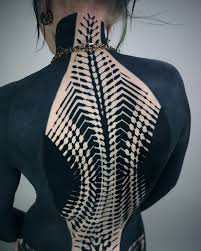
Negative space means using the untattooed skin itself as part of the design — instead of ink filling in a shape, the shape is defined by what’s left blank around solid black areas. A spine design using this technique might show a vine made of solid black sections with thin unmarked gaps forming the leaf veins. This requires an artist experienced specifically in negative space work, since spacing errors are unforgiving and hard to fix later. Mid-spine placement with two inches of width works well. Pain runs moderate to high due to solid black saturation. This style stands out because it plays with light and shadow rather than just line and color, giving a spine tattoo a more sculptural, three-dimensional feel.
11. Feather Spine Tattoo
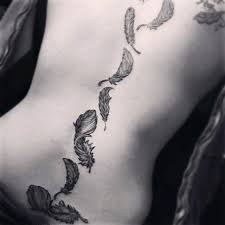
A single elongated feather running down the spine, rendered in fine-line detail with light shading along the quill, is one of the more classic spine tattoo shapes because the feather’s natural taper matches the spine’s vertical line almost perfectly. Detail in the barbs can be done with thin parallel lines or light dotwork for texture. Best kept to four or five inches long, placed centrally on the upper-to-mid back. Bring a real feather photo rather than a cartoon reference, since realistic barb texture depends on accurate shading direction. Pain is moderate. This design ages well because the linework is simple enough to stay legible even as skin naturally changes over the decades — something worth discussing honestly with your artist before booking.
12. Snake Spine Tattoo
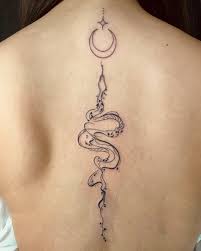
A snake coiling down the spine in blackwork or dotwork style is a bolder statement piece, often stretching six inches or more with scale texture built from small repeated line strokes or stippled dots. Symmetry matters enormously here — ask to see how your artist handles curved anatomy in past work, since an uneven snake body is the most common complaint with this design. Lower-to-mid spine gives the snake’s curve the most natural-looking path. Expect higher pain levels given the size and continuous linework required. Healing runs closer to three weeks due to the ink density. This design carries symbolic weight around transformation and resilience, which makes it a meaningful choice for anyone marking a personal milestone.
13. Roman Numeral Spine Tattoo

A short string of Roman numerals — marking a birthday, anniversary, or meaningful date — placed vertically along the upper spine in single-needle or fine-line script is a compact, deeply personal option. Keep it to one line, no more than three inches, so the numerals stay legible instead of blurring together as the tattoo ages. Double-check the numeral conversion before your appointment; this is the single most common tattoo regret in this category. Pain is mild to moderate. This placement is easy to keep hidden under clothing for workplace settings, and it’s a popular pick for a first tattoo since the design itself is small and quick to complete in a single sitting.
14. Wildflower Bouquet Spine Trail
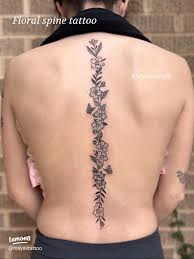
Rather than a single flower type, this design clusters several different wildflower species into a loose bouquet shape at the base of the spine, sometimes with a thin ribbon or string wrapping the stems. Fine-line technique keeps the botanical detail delicate, while light dotwork shading can add subtle depth to petals. This works especially well as a lower spine piece since the bouquet shape naturally tapers toward the tailbone. Ask your artist about custom arranging real flower references rather than a pre-made flash bouquet, so the piece feels personal. Pain in the lower spine area tends to run moderate. This is a popular choice for marking a specific person, place, or memory tied to particular flowers.
15. Zodiac Constellation Spine Tattoo

Similar to the star map idea but built specifically around your zodiac sign’s constellation shape, this design uses connected dots and thin lines to trace the actual star pattern down the upper spine. It’s compact — usually under three inches — and works in fine-line or single-needle technique. Ask your artist to reference verified constellation charts rather than a generic zodiac flash sheet, since accuracy matters to a lot of clients requesting this specific design. Pain is moderate given the placement. This is a solid matching-tattoo option for twins or close friends sharing a birth month, and it ages well thanks to its simple geometry.
16. Arrow Spine Tattoo

A single arrow running the length of the spine, sometimes broken into two pieces with a small gap at the center back, is one of the simplest and most requested spine designs. Clean, bold linework (around 1mm) with no shading keeps it graphic and legible from a distance. This suits nearly any length of spine and works for both petite and larger frames. Ask your artist to adjust arrow proportions to your torso length during the stencil fitting rather than using a fixed-size flash design. Pain runs low to moderate since the linework is straightforward and quick. This is a dependable first-tattoo option precisely because it’s simple, fast to complete, and hard to get visually wrong.
17. Lotus Flower Chain Spine Tattoo
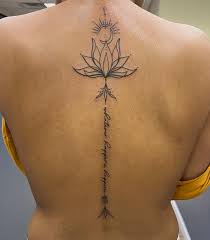
A series of small lotus blossoms, rendered in fine-line or light blackwork, spaced evenly down the spine creates a rhythmic, almost architectural pattern. Each lotus is typically kept under an inch to maintain consistent spacing along the full trail. Symmetry in petal shape across each repeated flower is the technical detail to check in an artist’s portfolio — inconsistent lotus shapes across a chain is a common tell of rushed work. Mid-to-lower spine placement lets the chain follow the body’s natural taper. Pain is moderate. Lotus imagery carries symbolic meaning around growth and renewal in many cultures, which makes this a popular choice for tattoos marking personal change.
18. Abstract Linework Spine Tattoo
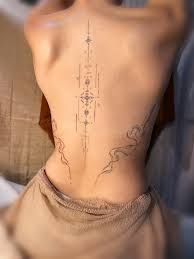
This design skips recognizable imagery entirely in favor of flowing abstract curves and swirls, built with consistent fine-line or medium-weight blackwork technique. It’s essentially a custom composition — there’s no real flash version of this that translates well person to person, so expect a genuine collaborative design session with your artist. Full spine length, tapering narrower toward the lower back, tends to look most balanced. Bring mood-board references (shapes, movement, even nature photography) rather than other tattoos, since the goal is originality. Pain runs moderate to high depending on total surface area covered. This suits someone who wants a spine tattoo but isn’t drawn to florals, script, or symbolism — just clean, artistic movement.
19. Meaningful Quote Spine Tattoo

A short quote or phrase, broken across two or three lines down the spine in a clean serif or script font, remains one of the most requested spine tattoo categories. Single-needle or fine-line technique keeps text legible at small sizes; anything under 10-point equivalent font size risks blurring within a few years, so ask your artist directly about minimum readable text size for this placement. Upper-to-mid spine keeps the phrase from stretching too far down. Proofread the wording obsessively before the appointment — spelling and grammar errors are unfortunately common and largely avoidable. Pain is moderate. This works well for a first tattoo when the phrase carries real personal weight rather than being chosen purely for looks.
20. Fern Leaf Spine Tattoo

A single fern frond or a small cluster of them, rendered in fine-line technique with thin parallel strokes indicating each leaflet, mirrors the spine’s natural taper especially well since ferns narrow gradually toward the tip. Botanically accurate leaflet spacing is the detail that separates a skilled fine-line artist from a rushed one — bring a real fern photo for reference. Best kept to three or four inches, placed on the upper-to-mid back. Pain is moderate. This design ages particularly well since the thin linework, if done with adequate spacing, resists the natural blurring that denser tattoos experience over decades. It’s a quiet, nature-inspired alternative to more common floral spine designs.
21. Ivy Vine Spine Tattoo

An ivy vine winding down the spine in fine-line or light blackwork, with small leaves branching at intervals, offers more visual movement than a straight floral trail because the vine can curve slightly left and right along its path. This asymmetry actually looks more natural than a perfectly straight design, so don’t be afraid to let your artist freehand slight variations into the stencil. Full spine length works well here, tapering at both ends. Pain increases toward the lower spine due to thinner skin and less muscle padding. Ivy symbolism around loyalty and connection makes this a thoughtful choice for a tattoo marking a long friendship or relationship.
22. Sun and Moon Spine Tattoo

Placing a small sun at the top of the spine and a crescent moon at the base, connected by a thin line or a subtle dotted path, creates a design with built-in narrative movement from top to bottom. Sun rays and moon craters can be done in fine-line detail or filled with light dotwork shading for texture contrast between the two elements. This works well spanning the full spine length. Ask your artist about balancing linework so the sun doesn’t visually overpower the smaller moon. Pain varies by section, generally moderate throughout. This design suits matching tattoos beautifully, since two people can split the sun and moon between them.
23. Ornamental Dagger Spine Tattoo

A vertical dagger design, rendered in bold blackwork with fine decorative filigree detail near the handle, creates a striking centerpiece along the mid-to-lower spine. This is a more traditional tattoo motif reimagined in a finer, more feminine linework style than the bold American traditional versions typically seen on other body parts. Ask specifically for a “fine-line traditional” approach if you want the dagger’s classic shape without heavy black fill. Four to six inches is typical. Pain runs moderate to high given the size and detail density. This design carries symbolic associations with protection and strength, appealing to those wanting a bolder spine piece with historical tattoo roots.
24. Fine-Line Rose Chain Spine Tattoo

Closing out the list, a chain of small roses connected by a thin stem line down the spine combines two popular elements — floral imagery and the vertical chain composition — into one cohesive piece. Each rose is kept simple, just a few curved lines suggesting petals rather than full realistic shading, which keeps the overall piece from looking too busy at small scale. Mid-back placement with three to five roses spaced evenly is the most balanced composition. Pain is moderate. This is a versatile design that works equally well as a solo statement piece or as a matching tattoo shared between family members, each choosing a different rose count to personalize their version.
Best Placement Ideas
Where exactly on the spine you place a design changes the pain level, healing process, and how easy it is to keep hidden. Here’s how the main zones stack up:
- Upper spine (nape to shoulder blades): Good visibility control since hair or collars can cover it; moderate pain; easiest area to keep still during the session, which helps line accuracy.
- Mid-back: The most popular zone for chain-style and vertical designs; moderate-to-higher pain due to thinner skin over the spine’s curve; easy to conceal under most clothing.
- Lower spine (small of the back to tailbone): Highest pain sensitivity on this list due to thin skin and bone proximity; best for smaller, simpler designs rather than dense detail work.
- Full spine (nape to tailbone): Longest session time, often requiring multiple sittings; highest overall discomfort; best suited to experienced tattoo clients rather than a first-timer.
Tips for Success
Start by reviewing an artist’s healed work, not just fresh photos — fresh tattoos always look sharp, but healed photos show you how their linework and saturation actually hold up. Ask specifically about the techniques used in this article — fine line, dotwork, blackwork, single needle — since not every artist specializes in all of them equally. Bring reference images that show the style and mood you want, not just a single photo you expect to be copied exactly; a good artist will build a custom stencil suited to your specific spine length and curve. During your consultation, ask about numbing options, session length, and their aftercare process. And always confirm the studio uses sterile, single-use needles and follows standard sanitation practices — this is non-negotiable for any reputable shop.
Common Mistakes and How to Avoid Them
- Going too small for detailed designs. Intricate florals or script need enough space to stay legible as ink settles over the years; a rushed, undersized piece often blurs early.
- Ignoring the spine’s curve. A design meant to look straight can appear skewed once your back naturally curves in a seated or standing position — discuss body positioning with your artist beforehand.
- Skipping aftercare instructions. The spine flexes constantly with movement, which can affect healing if aftercare isn’t followed closely.
- Copying a design exactly from a photo. A design built for someone else’s torso length and skin tone won’t always translate directly to yours — ask for a personalized adjustment instead.
- Choosing an artist based on price alone. A lower price often means less experience with the specific technique you want, which matters more on a visible, permanent placement like the spine.
Similar Variations
Nearly every design above can be resized or recombined. A fine-line floral trail can be condensed into a single flower for a smaller first tattoo, or extended into a full-spine piece for something bolder. Blackwork vines can be softened into fine-line versions for a more delicate look, or bulked up with dotwork shading for more texture. Script and quote designs can be paired with a small symbol — a star, flower, or line — to add visual interest without much extra size. Matching tattoos work especially well with chain-style designs like the lotus, rose, or butterfly trail, since each person can take a portion of the full pattern.
Aftercare Basics
General aftercare guidance for a spine tattoo isn’t much different from other placements, though the constant movement of your back means clothing friction is worth extra thought. Keep the area clean and follow the specific aftercare sheet your artist provides, since products and timelines can vary by studio. Avoid tight waistbands or bags with straps that rub directly over healing skin. Skip swimming, direct sun exposure, and excessive stretching or heavy lifting during the initial healing window. If you notice unusual redness, prolonged swelling, or anything that seems outside normal healing, contact a licensed dermatologist or your tattoo artist directly rather than guessing.
Fine Line vs. Blackwork vs. Dotwork vs. Single Needle
Since these terms come up constantly in spine tattoo consultations, here’s a quick reference:
Fine line — Thin, delicate outlines created with a small needle grouping, best for detailed botanical or script designs with minimal shading.
Blackwork — Solid, fully saturated black ink used for bold shapes and thick linework; holds up longer over time due to ink density.
Dotwork — An image built entirely from small dots rather than continuous lines, creating soft texture and shading without solid fill.
Single needle — A technique using one fine needle point, producing the thinnest possible lines, often used for tiny script or minimalist detail.
Quick FAQ
How much does a spine tattoo typically cost?
Pricing depends on size, detail, and your artist’s hourly rate, but small single-needle or fine-line spine pieces often start in the low hundreds, while larger full-spine custom designs can run into the four figures. Always get a written quote during your consultation.
How painful is a spine tattoo compared to other placements?
Generally, spine tattoos rank on the higher end of the pain scale because the skin is thin and close to bone with little muscle padding, especially toward the lower back. Pain tolerance varies a lot person to person, though, so what feels intense to one person may feel manageable to another.
How long does a spine tattoo take to heal?
Most spine tattoos take around two to three weeks for surface healing, with full settling under the skin taking a few months. Following your artist’s specific aftercare instructions matters more than the general timeline.
Will a spine tattoo fade or blur over time?
All tattoos change somewhat as skin ages, and simpler linework generally holds its shape better than dense shading or fine detail packed too tightly together. A touch-up session every several years can help keep lines crisp, particularly for fine-line and single-needle designs.
Final Thoughts
Spine tattoos reward a little extra planning because the placement itself — thin skin, constant movement, that natural centerline curve — shapes almost every decision from technique to size to healing time. Whether you’re drawn to a delicate fine-line floral trail or a bold blackwork vine, the same rule applies: research your artist’s specific technique experience, be honest with yourself about pain tolerance, and personalize the design rather than copying it exactly.
Pain tolerance, healing speed, and how a tattoo settles over time genuinely vary from person to person, so it’s worth having an honest conversation with a licensed, professional tattoo artist — or a dermatologist, if you have any skin concerns — before you book anything permanent. With the right prep and the right artist, spine tattoos for women can be some of the most striking, well-aged pieces you’ll ever wear.