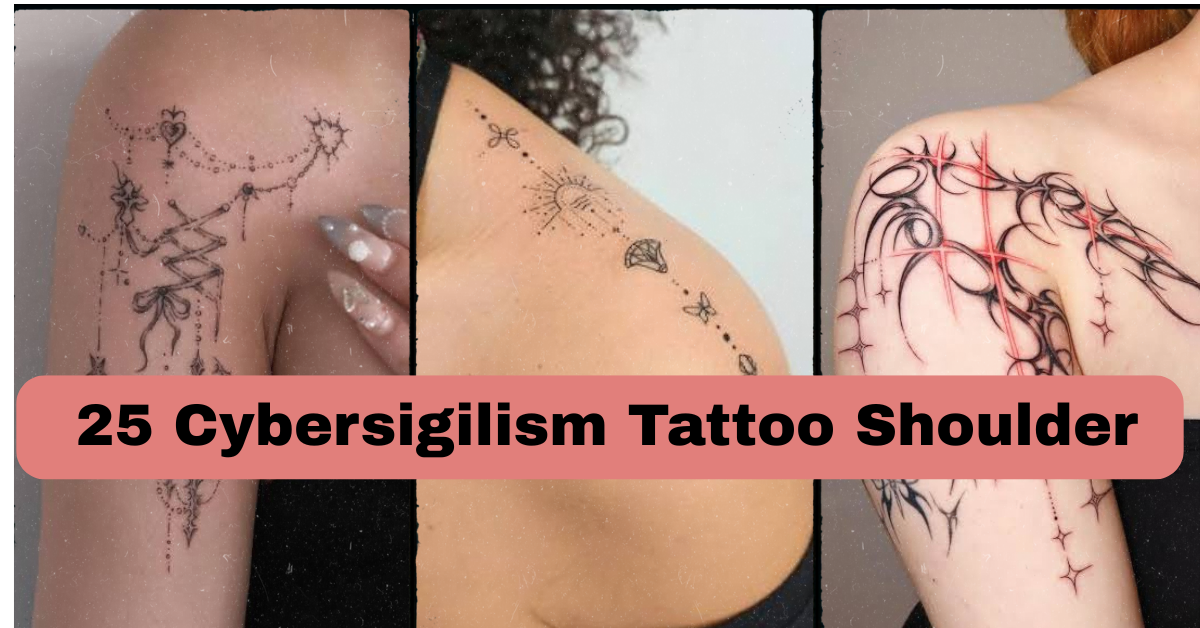
25 Cybersigilism Tattoo Shoulder Ideas That Actually Hold Up on Skin
Nervous about picking a cybersigilism tattoo shoulder design you’ll second-guess in a few years? That’s a fair worry — this style is sharp, symbol-heavy, and permanent, so it deserves more than a quick Pinterest scroll before you book a chair.
So what are the best cybersigilism tattoo shoulder designs? The strongest options combine fine-line or blackwork sigils with angular, circuit-like connectors, placed to follow the shoulder’s natural curve. Wraparound cap designs, negative space wards, and dotwork-shaded glyphs age the most consistently because their line weight and spacing were built for a rounded, moving surface.
Stick around, because I’m going to walk through 25 specific design directions, plus placement tradeoffs, pain honesty, real cost ranges, and how to brief an artist so you don’t end up with a blown-out, blobby sigil in three years.
Why Cybersigilism Works So Well on the Shoulder
Cybersigilism blends occult-style sigils — abstract symbolic marks — with tech-inspired geometry: circuit lines, angular brackets, chain links, and glyph stacks. The shoulder happens to be one of the best canvases for it. The deltoid muscle gives you a rounded cap that reads well from multiple angles, there’s enough surface area for interlocking linework without cramming, and it’s a placement you can cover for work or show off at will. Because the style leans on precise geometry rather than soft curves, the artist’s line control matters more here than almost anywhere else on the body.
Fine-Line Cybersigil Cluster on the Cap
This design groups three to five small sigils with thin, single-needle lines directly on the rounded shoulder cap, connected by hair-thin circuit-style bridges. The line weight typically sits around 0.3–0.5mm, which keeps the glyphs crisp without bleeding into each other as they heal. Best placed centered on the deltoid where the curve helps the cluster wrap naturally. Keep it under 4 inches for legibility. Pain here is moderate — fatty tissue on the cap is more forgiving than bone, though repeated passes for symmetry can add up. It’s a solid first-tattoo option and reads professionally with a t-shirt sleeve. Bring a reference sketch with exact spacing, not just individual symbols, since gap consistency is what makes this look intentional instead of scattered.
Blackwork Sigil Armor Plate
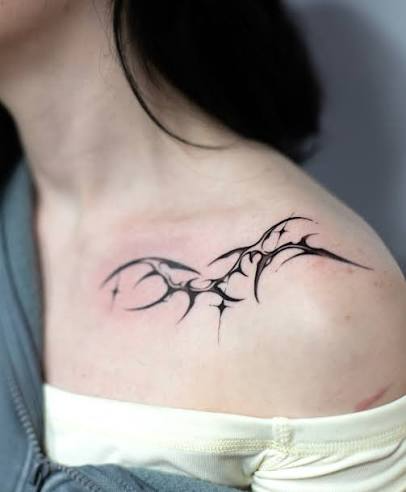
Here the sigil becomes one solid shape — thick, saturated blackwork lines forming an angular plate that hugs the top of the shoulder like armor. Saturation needs to be full and even, so ask your artist about their packing technique (how solidly they fill black) to avoid patchy healing. This works best sized at least 5 inches across; smaller versions lose the “plate” effect entirely. It’s more visible under short sleeves, so factor in workplace visibility. Expect a heavier, more sustained pain level than fine-line work since blackwork requires repeated passes over the same skin. Healing typically runs two to three weeks before the surface fully settles. This design ages exceptionally well because bold blackwork resists fading longer than thin lines.
Dotwork Circuit Sigil
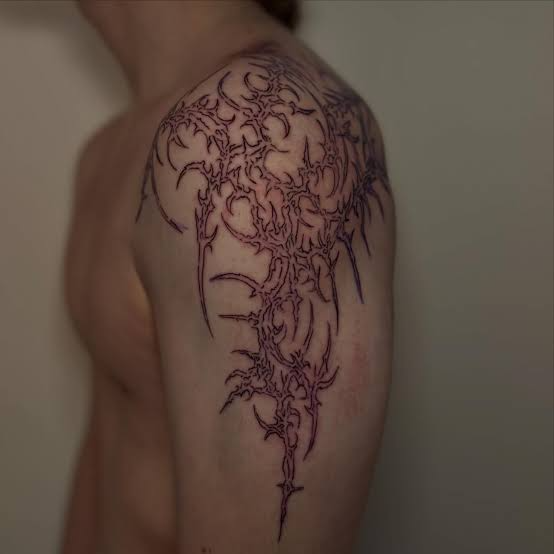
Dotwork uses tiny individual puncture dots instead of solid lines to build shading and texture — think of it as pointillism instead of pen strokes. For a cybersigilism piece, dotwork adds a static or grainy texture behind a sigil’s outline, mimicking a corrupted screen. Place it on the outer shoulder where light hits it at an angle, since dot shading reads better with dimension. Medium size (3–5 inches) keeps the dot density visible. This technique takes longer in the chair than straight linework, so pain builds gradually rather than spiking. Dotwork holds up well long-term but softens slightly faster than blackwork, so plan on a touch-up around year five to refresh contrast.
Negative Space Rune Shield
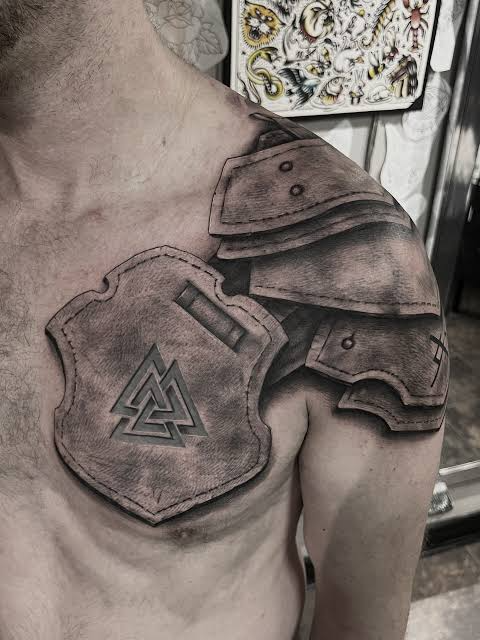
Negative space tattooing uses the untouched skin itself as part of the design — the sigil’s shape is defined by what’s left blank inside a solid black background. This creates a striking shield-like effect on the shoulder cap. It demands a steady hand and even saturation, so review the artist’s portfolio specifically for negative space work, not just blackwork in general. Size should stay generous (4+ inches) since tiny negative space details close up and disappear. Pain tends to run higher because of the surrounding solid black. This design is bold, not office-subtle, and ages best on lighter skin tones where the contrast stays sharp over time.
Chain-Link Sigil Wrap
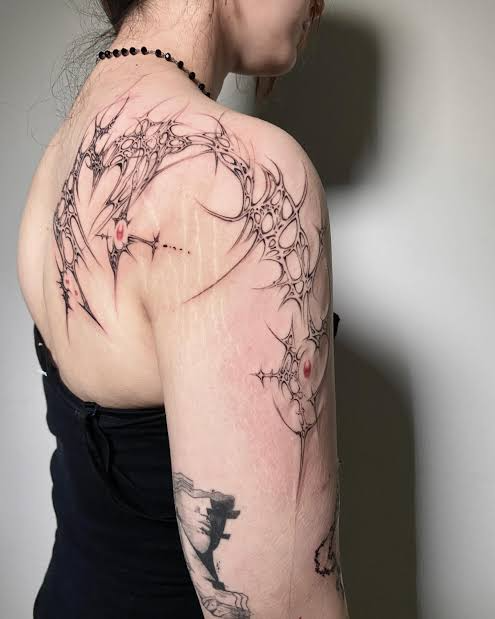
A chain-link wrap uses connected angular loops running from the top of the shoulder toward the upper arm, with small sigils inserted between links. Line weight stays consistent at 1–2mm bold to keep the “chain” reading as continuous. This placement suits people who want a design that extends naturally into a future sleeve. Healing time runs about two weeks for the linework to stop looking raised. Ask your artist to draft the wrap directly on your skin with marker before tattooing — chains need to follow your specific shoulder curve, and a flat stencil often distorts once applied.
Single-Needle Glyph Stack
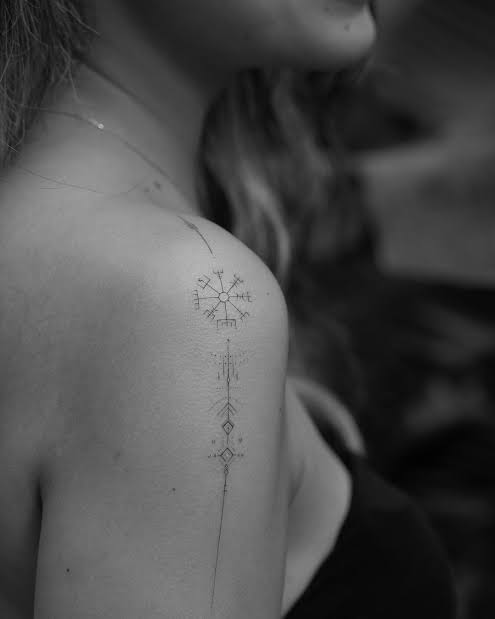
Single-needle work refers to using one fine needle for maximum thinness and detail — it’s the go-to for delicate lettering-style glyphs stacked vertically down the shoulder toward the bicep. Each glyph should be no smaller than half an inch to prevent lines from merging as skin ages. This is one of the most subtle, low-commitment cybersigilism options and works well for a first tattoo or discreet placement under sleeves. Pain is generally lower here than blackwork since less ink is deposited per pass. Longevity is the tradeoff — single-needle lines fade faster and may need touch-ups within three to five years.
Geometric Cyber Ward
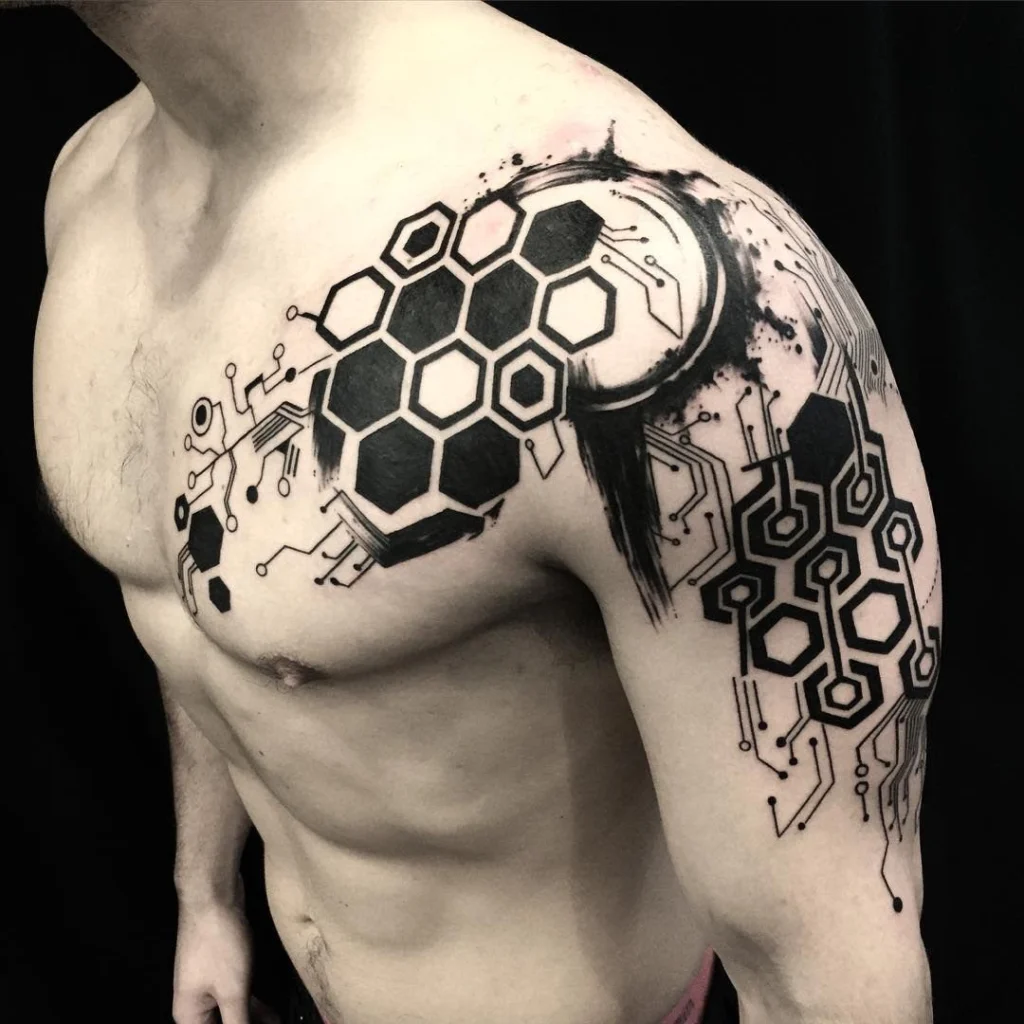
This design leans hard into sharp angles — triangles, brackets, and broken lines arranged into a symmetrical ward shape. It photographs well because the geometry catches light differently than rounded sigils. Center it on the deltoid for symmetry, sized around 4 inches. Ask your artist about stencil symmetry checks before they start; angular designs show asymmetry far more obviously than curved ones. Pain sits in the moderate range. This works nicely as a statement piece for someone who wants meaning-driven ink without going fully into occult symbolism.
Wraparound Sigil Band
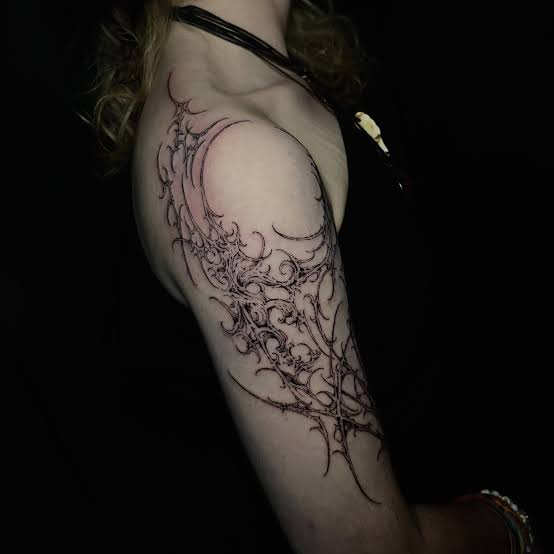
A band-style sigil circles the upper arm just below the shoulder like a cuff, blending cybersigilism glyphs into a continuous strip. Best suited for slightly larger, muscular arms since the design needs room to wrap without distortion. Expect two to three sittings for a detailed version. This placement is easy to hide with sleeves and easy to show with tanks — genuinely flexible for work environments. Pain increases slightly toward the inner arm if the band extends that far, since skin there is thinner.
Micro Sigil Cluster
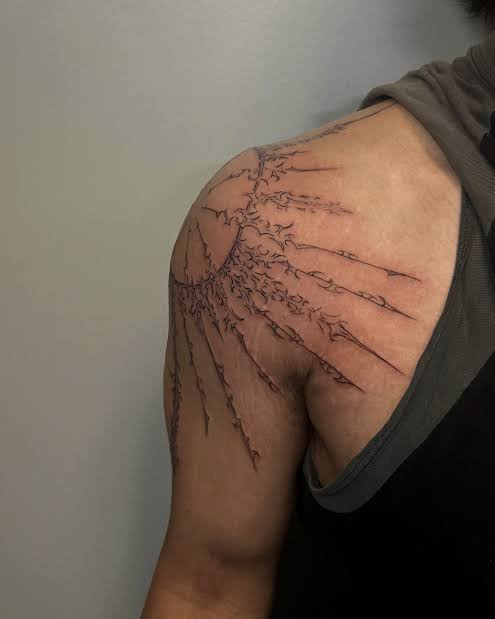
For those wanting something quiet, a micro cluster keeps each sigil under an inch, tucked near the top of the shoulder close to the collarbone. Fine-line single-needle work is essential here — thicker lines would clump at this scale. This is a strong low-commitment option and heals in about ten to fourteen days. Pain is comparatively mild given the small treated area. The tradeoff: fine detail at this size fades fastest, so budget for a touch-up sooner than with larger designs.
Bold Blackwork Cyber Talisman
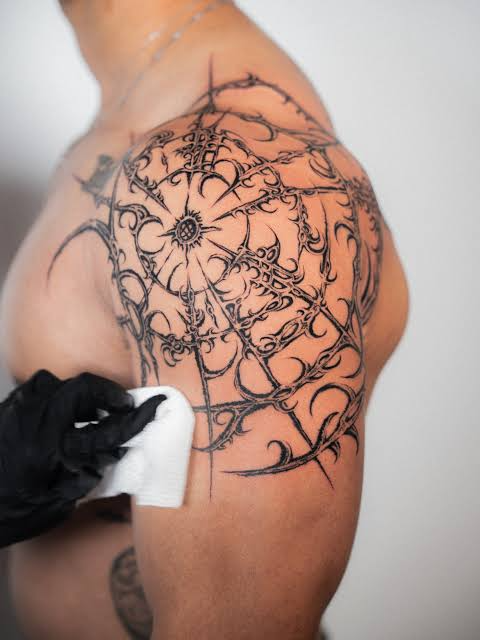
This is a single, large symbolic centerpiece rather than a cluster — think one dominant sigil rendered in thick, saturated blackwork, roughly palm-sized, dominating the shoulder cap. It reads as a talisman rather than decoration. Because of the ink volume, expect a longer session (often 2+ hours) and correspondingly more cumulative discomfort. This design suits people confident they want a bold, visible piece rather than something they might want to downplay later.
Fragmented Circuit Sigil
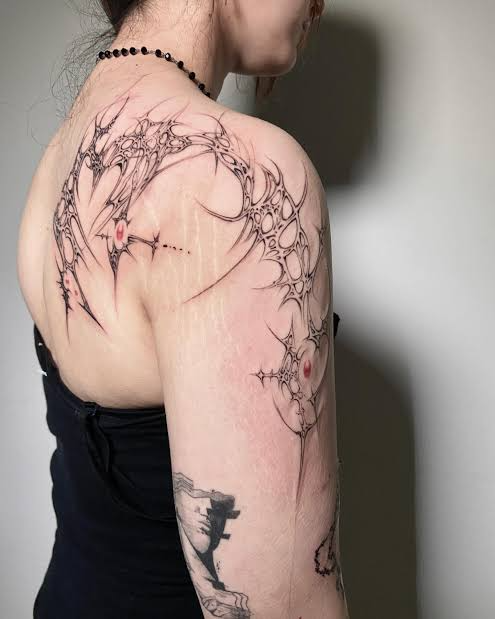
This variation breaks a sigil into disconnected segments linked by short circuit-style dashes, giving a “glitched” appearance. It relies on precise negative gaps between segments, so ask your artist how they’ll maintain consistent spacing across the curved shoulder surface — uneven gaps are the most common flaw in this style. Mid-size (3–4 inches) works best. Pain and healing mirror standard fine-line blackwork.
Symmetrical Dual Sigil (Front and Back Shoulder)
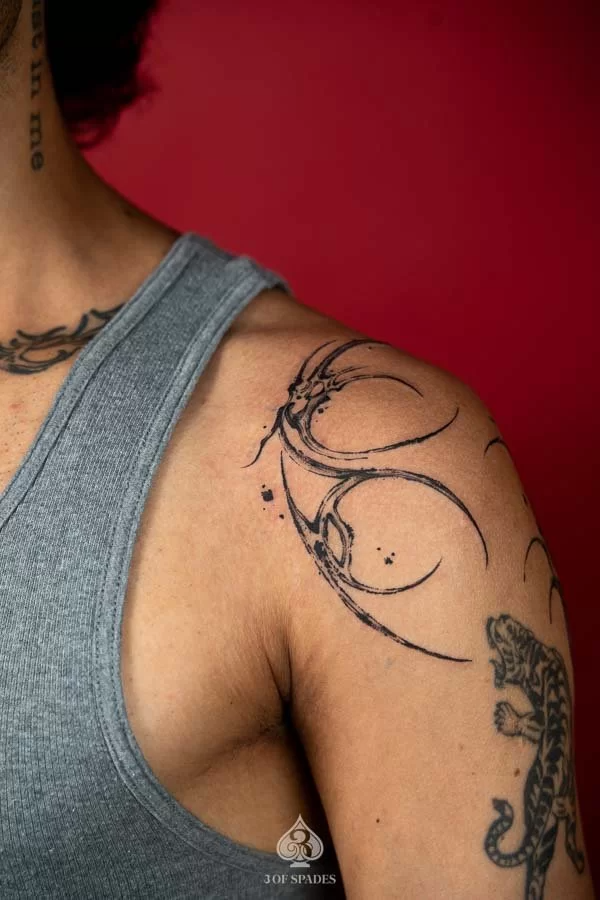
Placing a matching sigil on both the front deltoke and rear shoulder creates a wraparound symmetry you notice as the person moves. This requires careful stencil planning since the artist is essentially designing for a 3D surface, not a flat photo reference. It’s a great option for those who want their tattoo to reveal itself differently depending on the angle. Budget for a longer sitting given the added surface area.
Etched Glyph Panel
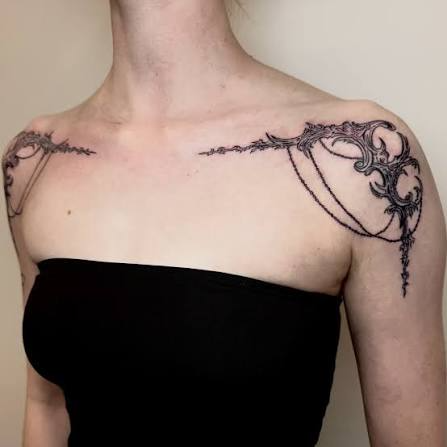
This design mimics an etched metal panel — rectangular, with fine parallel lines and a single sigil embossed in the center. It suits people who like structured, almost architectural tattoos rather than organic ones. Placement along the outer shoulder, sized 3×4 inches, keeps the panel effect intact. Line consistency is critical, so review the artist’s ruler-line or straight-edge work specifically.
Techno-Occult Barbed Sigil
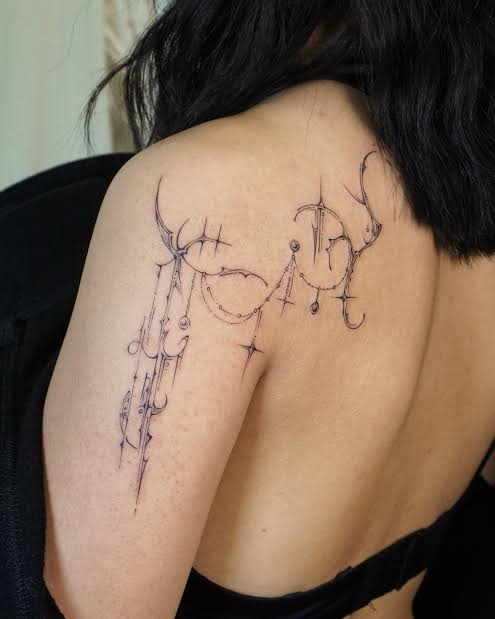
Small barb or spike shapes radiate outward from a central sigil, blending occult aggression with a mechanical edge. Works well sized moderately (3 inches) at the top of the shoulder where the spikes can follow the curve outward. This design carries strong symbolic weight for people drawn to protection or warding meanings.
Layered Sigil Grid
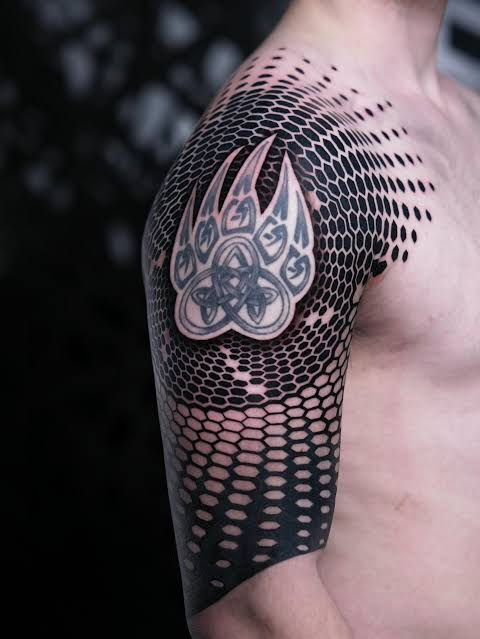
A grid of small sigils, each slightly different, arranged in rows across the shoulder. This is essentially a custom flash sheet turned into one wearable piece. Spacing consistency between rows matters more than any single glyph’s detail, so this is a good design to have custom-drafted rather than copied directly from someone else’s flash.
Cyber Ward Choker Extension
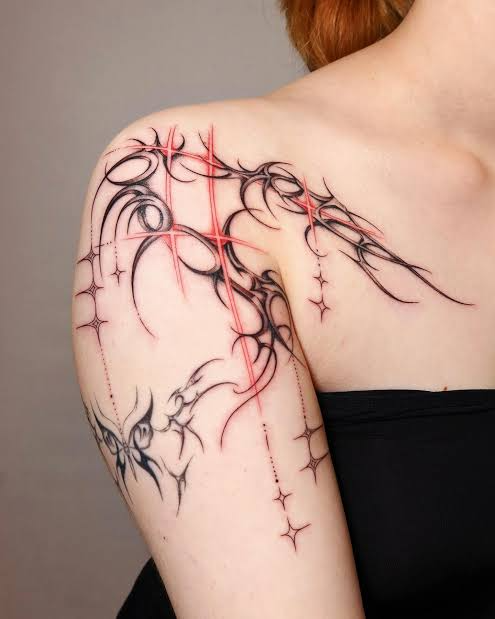
This design starts at the shoulder and extends upward toward the collarbone, mimicking a ward or protective barrier. Skin near the collarbone is thinner and closer to bone, so expect noticeably more sensitivity in that upper portion compared to the fleshier shoulder cap.
Deconstructed Binary Sigil
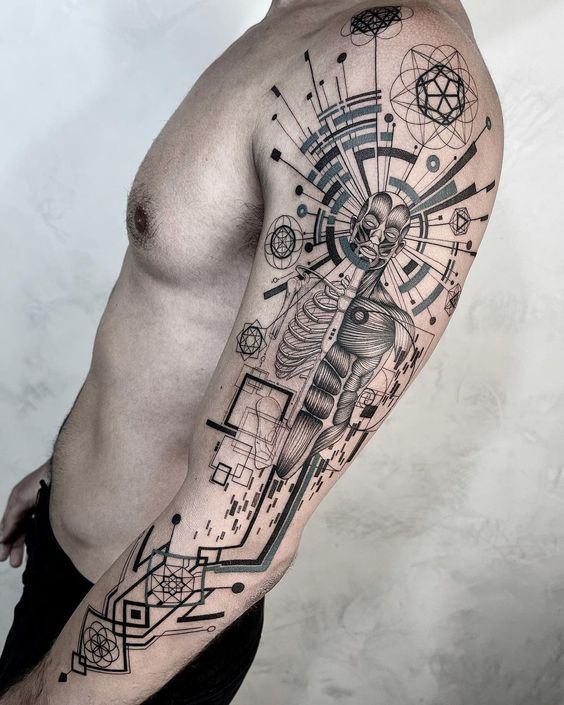
Small 1s and 0s integrated subtly into sigil linework give a literal “cyber” nod. Keep the binary elements minimal — too many small characters at this scale blur together within a few years. This works best as an accent rather than the entire design.
Fine-Line Cyber Ouroboros
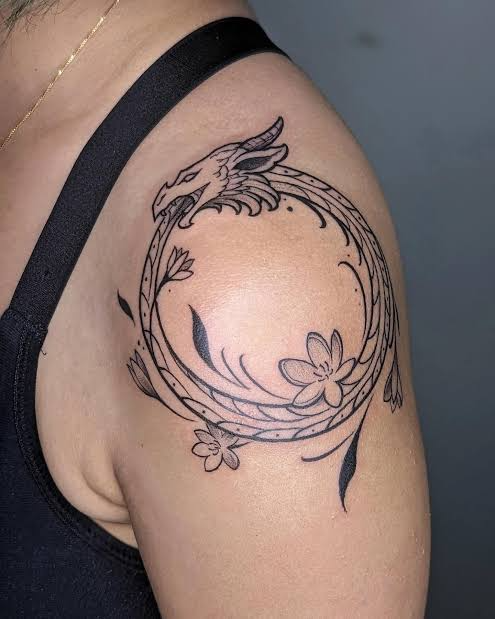
A circular, self-connecting sigil shape (echoing an ouroboros, a snake eating its tail) rendered in fine-line style around the shoulder cap’s natural curve. Circular designs actually suit the shoulder better than straight-edged ones because they follow the muscle’s roundness without distortion.
Bold Line Sigil Crest
A crest-style sigil with thicker, confident lines (2–3mm) sits centered on the shoulder like an emblem. This bolder line weight ages more predictably over decades compared to fine-line work, making it a solid choice for someone thinking long-term.
Dotwork Shaded Cyber Emblem
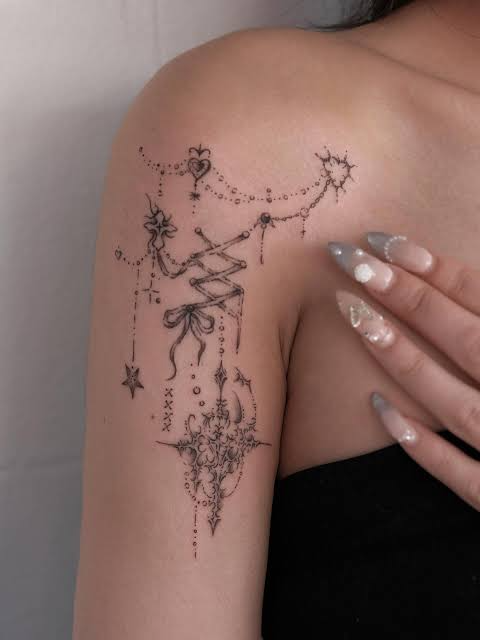
Combining bold outline work with dotwork shading inside gives an emblem real depth without full blackwork saturation. This hybrid approach takes longer to tattoo but gives more visual texture than flat linework alone.
Angular Rune Lattice
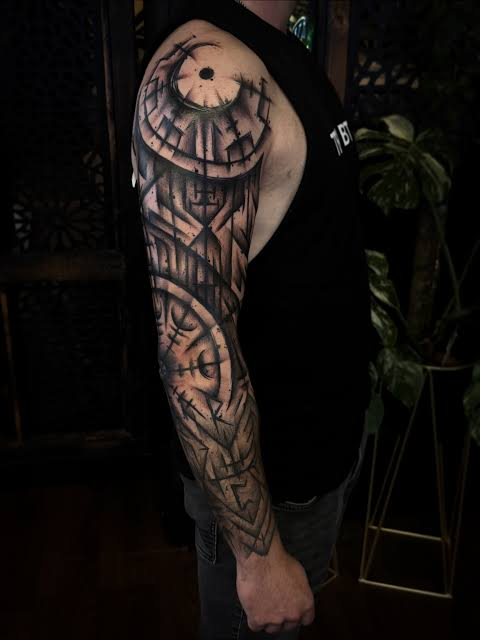
Interlocking angular shapes form a lattice pattern with small rune-like marks at each intersection. This design rewards a larger canvas (5+ inches) since the lattice needs room to breathe — cramming it small turns the lattice into a smudge over time.
Minimalist Single Sigil Dot
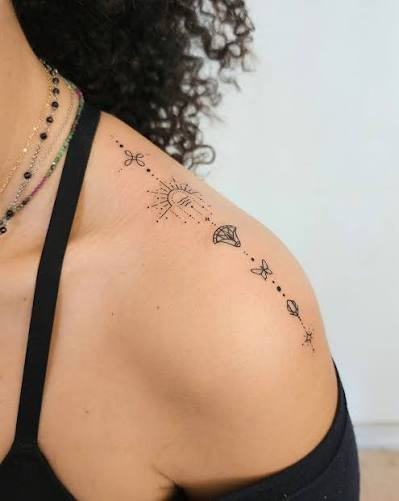
The simplest option: one small sigil, no more than an inch, placed high on the shoulder near the collarbone edge. Ideal for a genuine first tattoo or for someone testing whether they even like the cybersigilism aesthetic before committing to something larger.
Cybersigil Shoulder Blade Statement
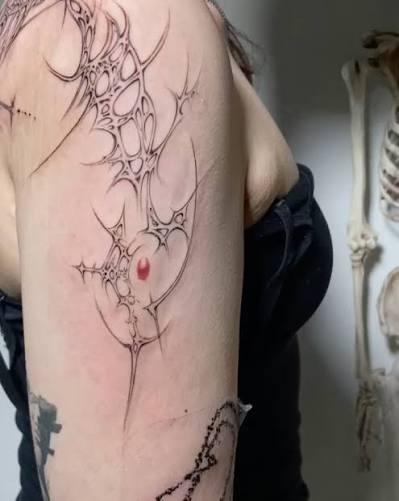
Technically extending onto the back of the shoulder toward the blade, this large-scale piece works for those wanting a design visible mainly when their back is turned — a nice option for people who want a personal, less publicly visible statement piece.
Custom Hybrid Sigil
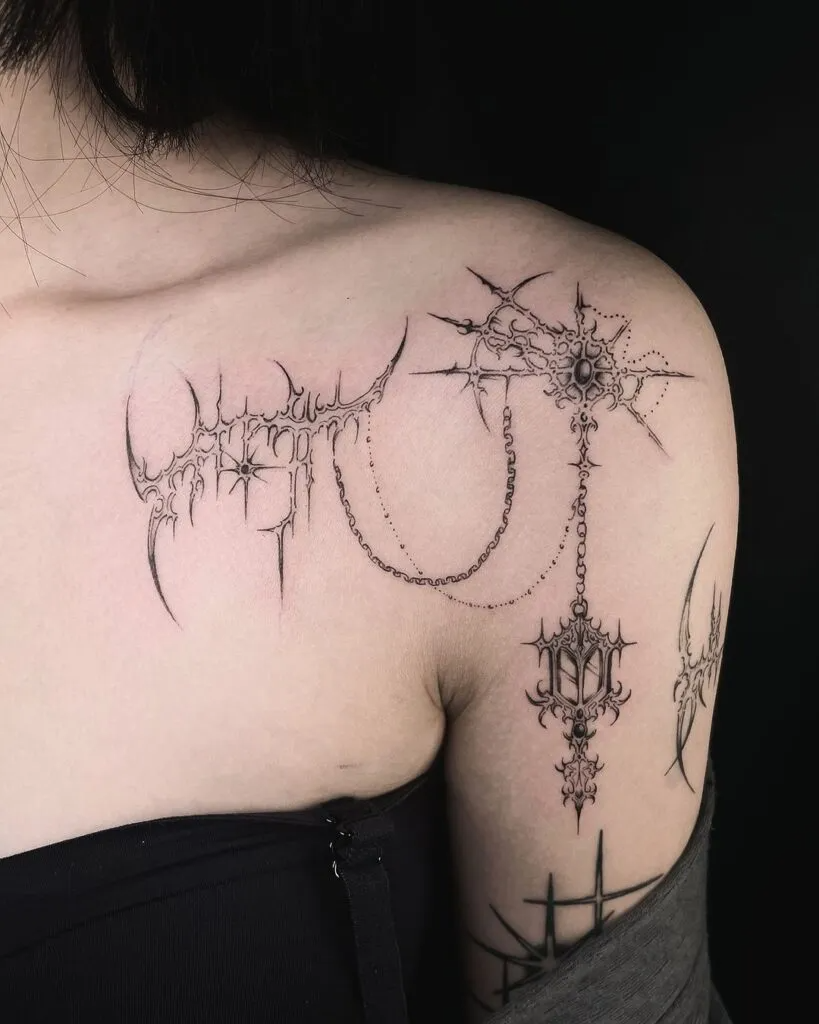
Rather than copying any single design above, many clients ask an artist to blend two or three elements — say, dotwork shading with a chain-link border — into one custom piece. This is genuinely the best long-term option, since a hybrid design personalized to your body avoids the “I’ve seen this exact tattoo on five other people” problem entirely.
Best Placement Ideas
- Shoulder cap (deltoid): High visibility, moderate pain, easiest for symmetry-based designs.
- Upper arm extension: Good for future sleeve plans, slightly more sensitive near the inner arm.
- Collarbone-adjacent shoulder: More sensitive due to thinner skin and bone proximity, but great for designs meant to peek out of collared shirts.
- Shoulder blade edge: Lower visibility, good for personal or symbolic pieces you don’t need to show off daily.
- Wraparound band: Best for larger arms, requires more sitting time, very flexible for hiding or showing.
Tips for Success
Look for an artist whose portfolio shows multiple examples of the exact technique you want — fine-line, blackwork, or dotwork — not just one lucky photo. Ask to see healed photos, not just fresh ink, since swelling hides flaws. Bring reference images that show line weight and spacing, not just the symbol itself, and be upfront about your pain tolerance and schedule so they can plan session length accordingly. A good consultation should include a conversation about sizing relative to your body, not just the design in isolation.
Common Mistakes and How to Avoid Them
- Going too small for detail: Intricate sigil clusters under 2 inches often blur together within a few years.
- Ignoring body curvature: A design drafted flat on paper can distort once wrapped around the shoulder’s natural roundness.
- Skipping aftercare instructions: Following your artist’s specific sheet matters more than generic internet advice.
- Copying a design exactly: Personalizing even one element avoids the “seen it everywhere” problem and often looks more intentional.
- Choosing an artist based on price alone: Cybersigilism relies on precise geometry — cheaper, rushed work shows every wobbly line.
Similar Variations
Nearly every design above can shift in scale — a large blackwork talisman can shrink into a fine-line accent, and a fine-line cluster can be reworked into bold dotwork for more texture. Color is rarely used in traditional cybersigilism, but some artists now add a single muted tone (deep red, cyan, or violet) for accent lines within an otherwise black design. Combining two techniques, like negative space with dotwork shading, is increasingly common for a more layered, dimensional look.
Aftercare Basics
General dermatological guidance suggests keeping a fresh tattoo clean, moisturized with a fragrance-free product, and out of direct sun or soaking water during initial healing. Avoid picking at any surface flaking, since this can pull out ink unevenly. Healing time and skin response vary by individual, so always follow the specific aftercare sheet your artist provides, and consult a licensed professional or dermatologist if you notice unusual redness, swelling, or irritation that doesn’t settle within the expected timeframe.
Quick FAQ
How much does a cybersigilism shoulder tattoo cost?
Small single-needle pieces often start around $80–$150, while larger blackwork or dotwork shoulder designs with multiple sitting hours can run $300–$800 or more, depending on the artist’s experience and region.
How painful is a shoulder tattoo compared to other spots?
The shoulder cap is generally considered more tolerable than bony areas like the ribs or collarbone, though pain tolerance varies significantly from person to person.
How long does healing take?
Surface healing typically takes about two to three weeks, though full settling under the skin can take a couple of months. Individual healing time varies.
Will the design fade or need touch-ups?
Fine-line and single-needle work tend to soften faster than bold blackwork, so a touch-up somewhere between three and seven years is common depending on sun exposure and skin type.
Choosing a cybersigilism tattoo shoulder design really comes down to matching the technique — fine-line, blackwork, dotwork, or negative space — to how bold or subtle you actually want to live day to day. The best results come from artists who understand how these angular, symbol-heavy designs behave on a curved, moving surface, not just how they look on paper.
Take your time picking a design and an artist who’s shown real skill in this specific style — a well-placed cybersigilism tattoo shoulder piece is one you’ll still feel good about looking down at ten years from now.