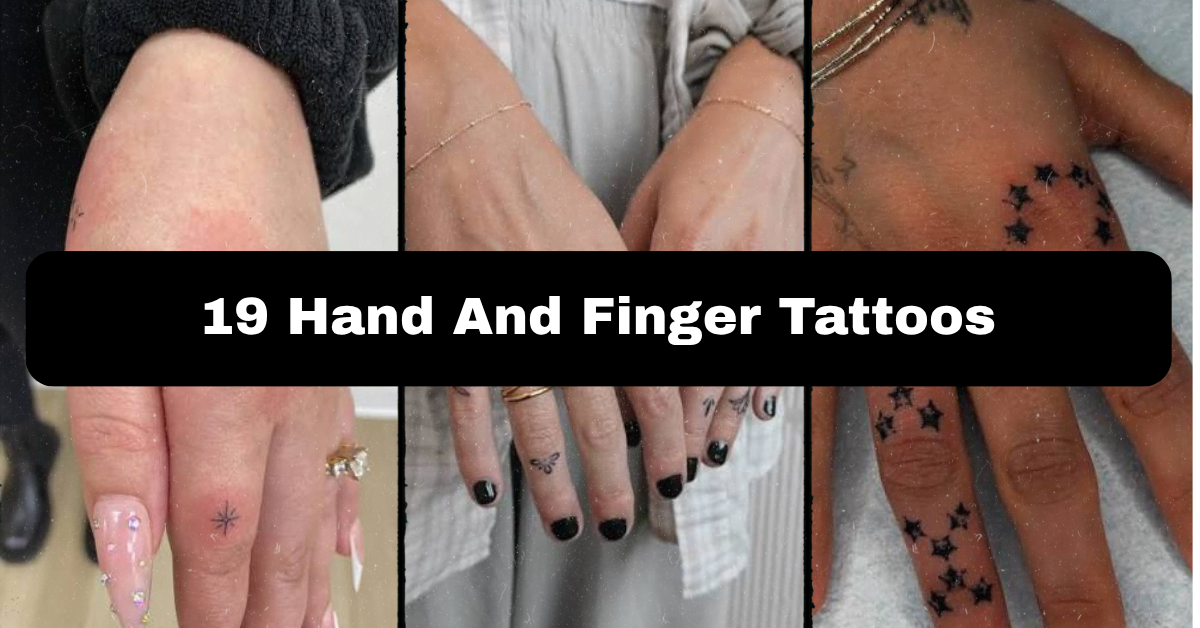
19 Hand And Finger Tattoos
Nervous about picking hand and finger tattoos you might regret down the road? You’re not alone, and honestly, that hesitation is smart. This is one of the most visible spots on your body, so getting it right matters more than almost anywhere else.
So what are the best hand and finger tattoos? Fine-line designs, small blackwork shapes (solid black imagery with no shading), and dotwork patterns (images built from tiny dots instead of solid lines) work best here because thin skin and constant movement wear down bold designs fast. Simple, low-detail linework holds up better over the years than intricate shading ever will in this spot.
Stick with me and I’ll walk you through 19 real design options, plus the stuff most articles skip — pain levels, healing time, what to actually say to your artist, and the mistakes that lead to blurry, disappointing ink five years later.
Why Hand And Finger Tattoos Are Having a Moment
Hand and finger tattoos work because they’re unapologetically visible. You can’t tuck them under a sleeve when you don’t feel like explaining them. That’s exactly why people love them — and exactly why you need to think harder before booking one. The skin on your hands and fingers is thinner, tighter, and sees more friction and sun exposure than almost any other part of your body. That means designs need to be simpler than what you’d get on your arm or back. Less detail, thicker relative line weight where possible, and realistic expectations about touch-ups. Done right, though, these tattoos age into something charmingly weathered rather than blown-out and illegible.
Fine-Line Single Needle Finger Bands
A single needle band is a thin, unbroken line wrapped around one finger, mimicking a ring. The technique uses a single needle (literally one point instead of a grouped cluster) to keep the line as delicate as possible. Best placed on the base of the finger, just below the knuckle, sized no wider than a few millimeters. Skin here folds constantly, so ask your artist about their experience with finger work specifically — not every studio takes finger bookings. Pain tends to run moderate to high since you’re right on bone with almost no fat cushion. This design is popular for matching couple tattoos and reads as low-key enough for most workplaces, though it will likely need a touch-up within the first year as the line settles.
Dotwork Star Cluster on Knuckles
This design uses dotwork, which builds an image from small individual dots rather than continuous lines, to create a soft, stippled star pattern across two or three knuckles. The stippled texture reads less harsh than solid blackwork and ages with a slightly faded, constellation-like look that a lot of people find appealing. Keep the cluster small and irregular rather than symmetrical for a more natural feel. Bring a reference photo showing dot spacing you like, since density changes the whole mood of the piece. Knuckles are bony and take a beating during healing, so expect this to sit on the higher end of the pain scale. It’s a bold, conversation-starting choice better suited to people comfortable with visible ink at work.
Negative Space Moon Phases on Side of Hand
Negative space tattoos use the untouched skin itself as part of the design instead of filling every shape with ink. Here, a row of moon phases runs along the side of the hand, with some crescents rendered as solid black shapes and others left as blank skin outlined in thin black. Place it along the pinky-side edge of the hand, from wrist toward the knuckle, keeping each moon under half an inch. This area heals a bit easier than knuckles since there’s slightly more soft tissue. Ask your artist about line spacing so the negative space doesn’t blur together over time. It’s a striking, semi-subtle option that photographs beautifully and works well as a solo statement piece or paired with a friend’s matching sun design.
Minimalist Single-Line Flower on Finger
A single continuous line forms a simple flower — one unbroken stroke, no shading, no fill. This is about as minimal as tattoo linework gets, and that simplicity is the whole point. Best placed on the side or top of a finger, sized around a quarter to half an inch. Because there’s no shading or saturation (color or ink density) to maintain, this design tends to age more gracefully than filled-in florals. Bring a botanical reference and ask your artist to simplify it down to one continuous path before they stencil it. Pain is moderate on fingers due to thin skin over bone. It’s a great first-tattoo option precisely because it’s small, forgiving, and doesn’t scream for attention in professional settings.
Matching Symbol Tattoos for Couples and Friends
Matching finger tattoos usually feature the same small icon — a heart, arrow, or simple shape — inked identically on two or more people. The technique is almost always fine line or single needle to keep things dainty and consistent across different hands. Placement typically lands on the inner finger or side of the hand where both people can glance down and see it easily. Keep the design under half an inch and avoid anything with fine gradients, since tiny shaded details rarely survive years of hand-washing and sun exposure. Ask your artist to test the design at actual size on paper first. Pain runs moderate. This is a low-commitment way to mark a friendship or relationship without a huge, permanent statement piece.
Fine-Line Script Word Across Fingers
Small lettering tattooed across the base of multiple fingers, one or two letters per finger, spelling out a short word or initials. Fine-line technique keeps letters crisp, but there’s a real technical limit here — script that’s too thin or too cursive will blur within a couple of years as skin cells turn over and ink settles slightly. Ask your artist to thicken the line weight slightly compared to what you’d use on smoother skin like the forearm. Keep letters under a third of an inch tall. Pain is on the higher side across knuckle joints. This is one of the more visible, workplace-defining choices on this list, so think through how often you’ll want to explain it before booking.
Small Blackwork Animal Silhouette on Hand
Blackwork uses solid black fill with no internal shading or gradient — just a clean, bold silhouette. A small animal shape (a bird, fox, or cat outline, for example) works well on the back of the hand where there’s a bit more flat surface area. Size around one to one and a half inches keeps detail legible without overcrowding. Because it’s solid black rather than fine detail, this design actually holds up better over time than delicate line art in the same spot. Ask to see examples of your artist’s blackwork specifically, since solid fill requires steady, even technique to avoid patchy spots. Pain is moderate to high on the back of the hand. It suits people who want something bold but still contained to one visible area.
Single Dot and Line Punctuation Tattoos
A tiny single dot, comma, or short dash inked on the side of a finger. This is about as minimal and low-commitment as tattooing gets — often just one needle pass. Best placed on the side of the finger between joints, sized at just a few millimeters. Healing is quick since there’s very little ink deposited, though “quick” still means following your artist’s aftercare instructions closely. Ask your artist whether they recommend a slightly heavier hand with the needle here, since ultra-light passes on fingers sometimes fade faster than expected. Pain is generally lower than other finger placements simply because the tattoo takes seconds. It’s a favorite for symbolic, personal-meaning pieces that don’t need to be flashy to matter.
Delicate Vine Wrap Around Finger
A thin vine, sometimes with tiny leaves, spirals around one finger from base to first knuckle. This uses fine-line technique with occasional small negative-space gaps left between leaf clusters to keep it from reading as one solid blob. Best kept to one finger only, with the spiral loose rather than tightly wound, which helps it age without the leaves merging into each other. Bring reference photos showing leaf spacing, not just the vine shape itself. Pain sits in the moderate-to-high range given the joint movement involved. This design works nicely as a nature-inspired alternative to a plain band and transitions well into a matching set if you add a second finger later.
Bold Traditional Star on Hand
Bold traditional tattooing uses thick outlines, minimal color palette (often black, red, and yellow), and solid saturation rather than fine detail. A classic five-point star on the back of the hand or side of the wrist-hand junction leans into this heavier style. Because the lines are thick and the fill is solid, this design actually resists the natural softening that happens to fine-line work over time — it stays legible longer. Keep the star around one to two inches for the linework to read cleanly. Ask your artist about color saturation if you want red or yellow accents, since color tends to fade faster than black on hands specifically. Pain is moderate to high. This is a solid choice for anyone who wants something that reads clearly from across a room.
Geometric Triangle Linework on Finger Side
Straight, deliberate lines forming a small triangle or angular shape along the side of a finger. This relies on precise linework — even small wobbles are obvious in geometric designs, so technique matters more here than in organic shapes like flowers or vines. Best placed running along the finger’s length rather than wrapping around it, sized under half an inch. Ask your artist to draw the stencil freehand versus using a straight-edge tool, since freehand often looks more natural on curved finger skin. Pain is moderate. This design suits people who like clean, mathematical-looking ink and works well doubled up across two fingers for a subtle matching effect.
Fine-Line Bird in Flight on Back of Hand
A small bird rendered in thin, continuous lines with wings mid-motion, placed on the flatter part of the back of the hand. Fine-line technique keeps the wing detail delicate, though this is one design where going too small backfires — feather detail under an inch tends to blur together within a few years. Aim for at least one and a half inches to give the linework room to breathe. Ask your artist about line spacing between feather strokes before they start. Pain is moderate to high in this spot. It’s a graceful, nature-themed option that reads as artistic rather than harsh, and it photographs well for people who like documenting their tattoo collection.
Tiny Heart Outline on Finger
A small heart outline, unfilled, inked on the side or top of a finger near the knuckle. Keeping it as an outline rather than solid fill is a deliberate choice — filled hearts this small tend to blur into a solid blob within a couple of years, while a simple outline stays legible longer. Size it around a quarter inch. Ask your artist to keep the line weight slightly thicker than standard fine-line work for better longevity in this spot. Pain is moderate given the bony placement. This is a go-to first-tattoo design for people who want something meaningful but aren’t ready for anything large or complex, and it pairs easily with a friend’s or partner’s matching piece.
Blackwork Sun and Moon Split Design
Half a sun on one hand, half a moon on the other, designed to complete a full image when hands are placed together — a popular concept for best friends or couples. Blackwork’s solid fill technique gives these shapes clean, bold edges that hold up well over time compared to shaded versions. Placement on the back of the hand or lower finger joint works best for visibility. Ask your artist for a printed mock-up of both halves side by side before tattooing, since symmetry between two separate appointments (often two different people) requires careful planning. Pain is moderate to high. It’s a striking symbolic choice, though it only “works” visually when both people are together, which is worth considering honestly before booking.
Soft Watercolor Wash Accent on Wrist-Hand Transition
Watercolor-style tattooing uses soft, blended color with little to no hard outline, mimicking a paint wash. On hands, this technique is riskier than fine-line or blackwork because color saturation fades faster in high-friction, high-sun-exposure areas. If you want this look, keep it small and paired with at least a thin black outline for structure, placed at the wrist-to-hand transition where skin is slightly less exposed than the fingers themselves. Ask your artist directly about their experience with color retention on hands before committing. Pain is moderate. This design suits people drawn to a painterly, artistic aesthetic who are also willing to accept more frequent touch-ups than other styles on this list.
Negative Space Ring Band Tattoo
Unlike the single-needle band described earlier, this version uses a thicker black band with a deliberate gap or pattern cut into it using negative space — the untouched skin becomes part of the ring’s design, like a small window or notch. This reads bolder than a simple line band while still staying contained to one finger. Keep the band under a third of an inch tall. Ask your artist to sketch a couple of negative-space pattern options before deciding, since the gap placement changes the whole look. Pain is moderate to high on finger skin over bone. It’s a solid alternative for people who want a ring-style tattoo with a bit more visual interest than a plain line.
Fine-Line Mountain Range on Side of Hand
A simple mountain silhouette, just a few peaks rendered in thin unbroken lines, placed along the side of the hand near the wrist. Fine-line technique keeps it understated, and the geometric simplicity of mountain shapes tends to age well since there’s no fine internal detail to blur. Size around one inch works for legibility without overwhelming the area. Ask your artist about peak spacing so the design doesn’t look cramped in a narrow placement. Pain is moderate in this spot, generally more comfortable than finger placements. This design works for anyone drawn to nature symbolism who wants something that still looks intentional and clean at a glance, even from a distance.
Dotwork Mandala Fragment on Back of Hand
Rather than a full mandala (a circular, symmetrical pattern), this uses just a fragment or quarter-section, built entirely from dotwork shading for a textured, intricate look without needing a huge canvas. Best placed on the back of the hand where there’s enough flat space for the pattern to read clearly, sized around one and a half to two inches. Ask to see healed photos of your artist’s dotwork specifically, since dot spacing that’s too tight can look muddy after healing, while spacing too loose loses the pattern’s detail entirely. Pain runs moderate to high given the repetitive needle work involved. This is a more advanced, detailed option best suited for someone who already has other tattoos and understands the aftercare commitment involved.
Bold Blackwork Cross on Finger
A simple cross, solid black, running vertically along one finger from the base toward the knuckle. This bold, no-shading approach means the design stays crisp for years, unlike finer linework in the same spot. Keep the cross narrow, under a quarter inch wide, so it doesn’t overwhelm the finger’s natural shape. Ask your artist about the thickness of the crossbar specifically, since too-thin horizontal lines are the first detail to blur on fingers. Pain is moderate to high. This design carries personal or spiritual meaning for a lot of people and works well as a solo piece or matching design among family members.
Best Placement Ideas
- Finger sides (between joints) — lower pain than knuckles, decent healing conditions, good for fine-line and single-needle designs.
- Back of the hand — more visible, moderate pain, best for slightly larger blackwork or dotwork pieces that need surface area.
- Knuckles — highest visibility, highest pain, and the toughest spot for healing since skin folds constantly.
- Wrist-to-hand transition — slightly less painful than fingers, good middle ground for people wanting visibility without full knuckle exposure.
- Side of the hand (pinky edge) — decent flat space, moderate pain, works well for negative space and linear designs.
Tips for Success
Look for an artist who has actual healed photos of hand and finger work in their portfolio, not just fresh ink straight off the machine. Fresh tattoos always look crisp; healed ones tell you the truth about how a style ages in this specific spot. Ask direct questions about needle type, whether they recommend custom design versus a flash tattoo (a pre-drawn design ready to book same-day), and how many touch-up sessions are typical for hand pieces. A good consultation should include an honest conversation about sizing — if an artist agrees to squeeze in more detail than the space realistically allows, that’s a red flag, not a compliment to their skill.
Common Mistakes and How to Avoid Them
- Going too small for the detail level. Intricate shading or lettering under half an inch often blurs within a couple of years.
- Picking a placement that fights the design’s shape. A wide design forced onto a narrow finger will distort as skin stretches and moves.
- Skipping aftercare instructions. Hands are used constantly, so ignoring care guidance increases fading and patchy healing.
- Copying a design exactly from a photo without personalizing it. Beyond the ethical issue of copying another artist’s flash work, an exact copy may not account for your specific hand shape or skin texture.
- Not asking about touch-ups upfront. Hand tattoos statistically need more touch-up sessions than tattoos on the arm or back — plan for that cost in advance.
Similar Variations
Nearly every design above can be resized or recombined. A single-needle band can be doubled across two fingers for a bolder statement, or a fine-line flower can be scaled up and shaded in light blackwork for more visual weight. Matching designs can swap from identical symbols to complementary ones, like the sun-and-moon split. Negative space elements can be added to almost any solid shape to lighten its visual density. If you already have one design from this list, ask your artist how it could extend onto a second finger or connect toward the back of the hand for a more cohesive, expanding piece down the line.
Aftercare Basics
Follow whatever specific aftercare sheet your artist gives you — that instruction always takes priority over general tips. Broadly speaking, hands need frequent gentle washing since they touch everything all day, followed by a thin layer of the fragrance-free moisturizer your artist recommends. Avoid soaking hands in dishwater, pools, or baths during the initial healing window, and keep the area out of direct sun. Healing time on hands and fingers often runs a bit longer than other body parts because of constant movement and washing, so don’t be surprised if full healing takes several weeks. If you notice anything that seems off beyond normal healing, check with your artist or a dermatologist rather than guessing.
Quick FAQ
How much do hand and finger tattoos usually cost?
Cost varies widely by studio, location, and design complexity, but small finger pieces often fall into a shop’s minimum-price range, while larger back-of-hand designs cost more based on time. Always get a quote during your consultation rather than assuming.
Do hand and finger tattoos hurt more than other spots?
Generally, yes. Bony areas with thin skin, like knuckles and finger sides, tend to rank higher on most people’s pain scale compared to fleshier areas like the forearm or thigh. Pain tolerance varies a lot person to person.
How long do hand tattoos take to heal?
Healing time varies by individual, but hands often take a bit longer than average because of constant washing and movement. Many people see initial healing settle within a few weeks, with full settling taking longer.
Will a hand tattoo fade faster than tattoos elsewhere?
Hands see more sun exposure and friction than most body parts, so some fading and softening over time is common, especially with fine-line or color work. Touch-ups every few years are pretty normal for this placement.
Final Thoughts
Hand and finger tattoos reward simplicity. The designs that age the best on this list all share one thing in common — clean technique suited to thin, high-movement skin, rather than trying to cram in more detail than the space can hold. Whether you land on a delicate single-needle band or a bold blackwork shape, take the time to find an artist whose healed work you actually trust, and go into your consultation asking real questions about placement, pain, and long-term upkeep. That’s the difference between hand and finger tattoos you’re proud of at year one and ones you’re still proud of at year ten.