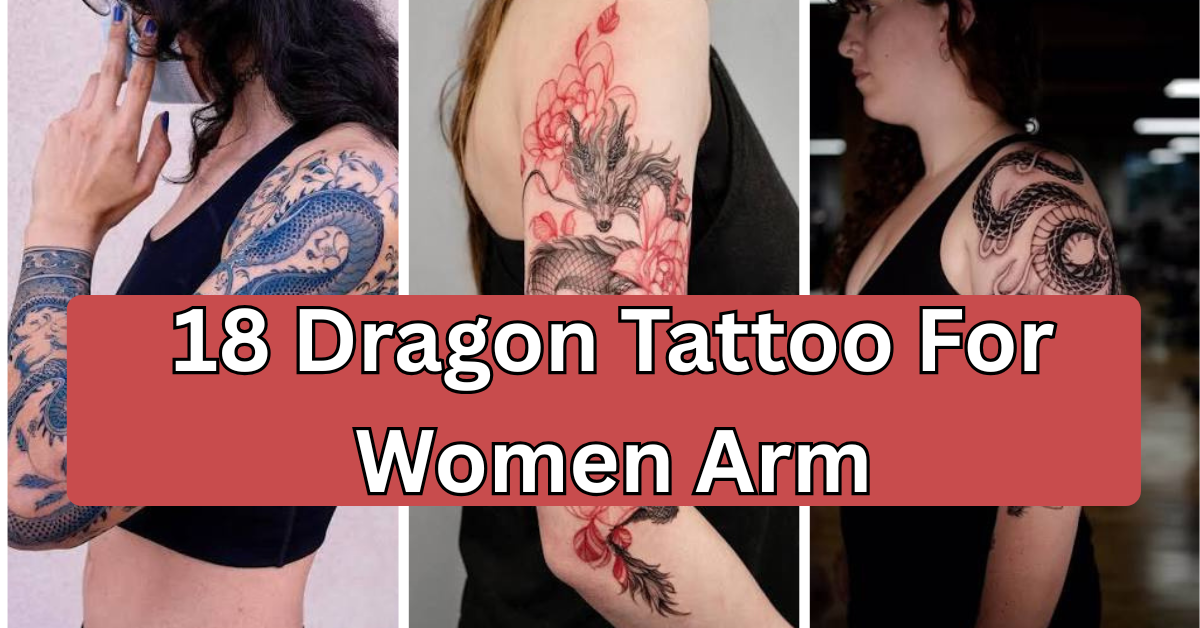
18 Dragon Tattoo Ideas For Women’s Arm: A Real Guide Before You Book
Thinking about a dragon tattoo for your arm but tired of scrolling through vague inspiration boards with zero real advice? I get it. Most “design idea” articles show you a pretty picture and call it a day, without telling you what it’ll actually feel like to sit through, how it’ll age on your skin, or what to even say to the artist. This guide is different — it’s built from real conversations with tattoo professionals and actual studio time, not just a Pinterest scroll.
So what are the best dragon tattoo ideas for a woman’s arm? Fine-line and blackwork dragons that follow the arm’s natural curve — wrapping the forearm, coiling the wrist, or trailing up the bicep — work best because they use the limb’s shape to add movement, and they hold detail well through years of healing and fading. Smaller, simplified dragon silhouettes suit first-timers, while larger panel pieces suit those ready for multiple sessions.
Below, you’ll find 18 specific dragon design directions, plus the stuff most articles skip entirely: pain level by placement, realistic healing windows, how to brief your artist so you get what you actually want, and the mistakes that turn a great idea into a regretted one.
Why Dragons Work So Well on the Arm
The arm is basically a built-in canvas for a creature that’s all about length, curve, and motion. A dragon’s body is long and serpentine, so it naturally follows the line from wrist to shoulder, wrapping around muscle and bone in a way that a symmetrical design (like a mandala) can’t replicate as convincingly. Dragons also carry serious symbolic weight — strength, transformation, protection, wisdom — which means the design choice isn’t just visual, it’s personal. And because dragons work in nearly every tattoo style, from delicate single-needle work to bold traditional linework, there’s a version that fits almost any pain tolerance, budget, and aesthetic preference.
1. Fine-Line Dragon Wrapping the Forearm
This design uses thin, consistent linework — typically done with a single needle — to trace a slender dragon coiling from the inner wrist up toward the elbow. There’s little to no shading, just clean contour lines that rely on the body’s natural shape for movement. It suits fair to medium skin tones best, since fine lines can blur slightly on textured or heavily tanned skin over time. Ideal size runs 6 to 10 inches long. Healing typically takes 10 to 14 days for the surface, though full settling takes longer. Bring a reference photo showing the exact curve you want, and ask your artist about touch-up policy since fine lines fade faster than bold ones. Forearm placement keeps pain moderate and stays easy to hide at work.
2. Minimalist Single-Needle Dragon Silhouette
This version strips the dragon down to its most recognizable shape: a simple outline with no shading and no scale detail. It’s the tattoo equivalent of a clean sketch, and it’s a smart choice if you want something meaningful without visual weight. Place it on the outer forearm or upper arm at 3 to 5 inches. Because there’s so little ink saturation, healing tends to be quick, often clearing up within 10 days. Ask your artist to keep the line weight under 0.5mm for that crisp, minimalist look. This is a strong first-tattoo option since the commitment level (time, cost, pain) is low, and it ages gracefully because there’s less linework to blur.
3. Blackwork Dragon Sleeve Panel
Blackwork uses solid black ink packed densely to create bold silhouettes and heavy shadow. A dragon done in this style often covers a large section of the arm, sometimes half a sleeve, with dramatic negative space (the untouched skin left bare to form part of the image) used for scale texture or highlights. This is a bigger commitment — expect 4 to 8 inches minimum, often larger, and multiple sessions. Healing runs 2 to 3 weeks because of the ink density. Ask your artist about their saturation technique so the black stays solid instead of patchy. This style suits people who want a striking, high-visibility piece and don’t mind covering it for certain workplaces.
4. Dotwork Dragon With Negative Space Scales
Dotwork builds shading and texture using thousands of small dots instead of solid fill or lines. Applied to a dragon design, it creates a soft, almost textured-fabric look on the scales while negative space carves out highlights along the spine and wings. It’s a slower, more time-intensive technique, so expect a higher hourly cost. Best placed on the outer bicep or shoulder cap where there’s flatter skin for even dot distribution. Size should stay above 5 inches, since tiny dotwork tends to blur into a gray smudge within a few years. Ask to see healed (not just fresh) photos in the artist’s portfolio before booking.
5. Watercolor-Style Dragon With Black Linework Base
This design pairs a solid black-line dragon outline with soft color washes meant to mimic a watercolor painting — think diffused blues, purples, or reds bleeding outside the lines. It looks striking fresh, but colored ink fades faster and less predictably than black, especially in direct sun. Place it on the upper arm or shoulder where sun exposure is easier to manage with clothing or sunscreen. Expect a touch-up within 3 to 5 years to keep the color vibrant. Ask your artist about their color saturation process, since thin, uneven color application is the most common reason this style ages poorly.
6. Traditional Bold Dragon (American Traditional Style)
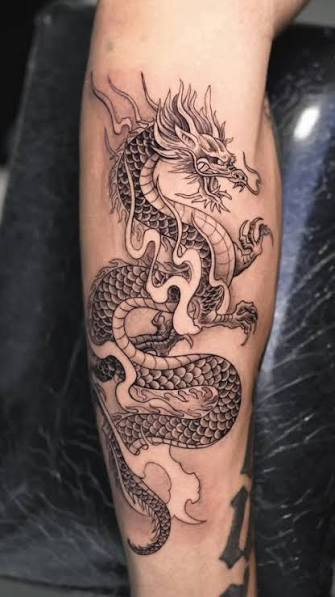
Traditional American tattooing uses thick black outlines, limited color palettes (usually red, green, yellow, black), and bold, simplified shapes. A traditional dragon here looks less “realistic” and more iconic — flash-art style, the kind you’d see displayed on a studio wall ready to book same-day. Placement works well on the outer forearm or bicep at 4 to 6 inches. The thick lines and solid color mean this style ages the best of any on this list; bold linework holds up for decades with minimal blur. It’s a great pick if you want something that reads clearly from a distance and won’t need frequent touch-ups.
7. Japanese Irezumi-Inspired Dragon
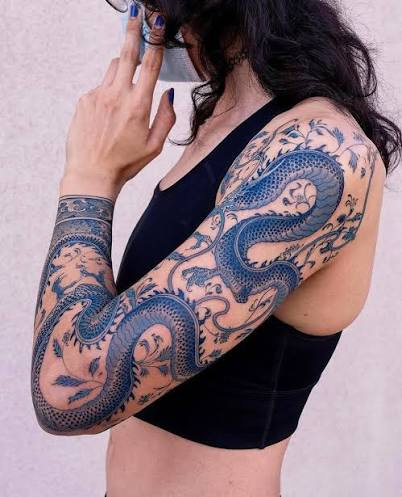
Traditional Japanese dragon tattoos are typically large, dynamic, and layered with background elements like clouds, waves, or wind bars. This style demands real specialization — you want an artist who’s studied irezumi composition specifically, not just someone who’s done a few dragons. Because of the detail level, this usually means a half-sleeve or full-sleeve commitment across multiple sessions spanning months. Skin tone doesn’t limit this style much since it relies on both bold black work and shading. Ask to see full sleeve healed work in the portfolio, not just close-up shots, so you can judge how the composition flows on a real arm.
8. Chinese Dragon With Clouds and Pearls
This design draws from classical Chinese art motifs — a long, whiskered dragon body often shown chasing or holding a pearl, surrounded by stylized cloud shapes. Linework tends to be medium-weight with selective shading to define the dragon’s mane and cloud edges. It suits an inner-to-outer forearm wrap or a bicep placement, sized 5 to 8 inches for the detail to stay legible. Healing takes about 2 weeks. If the design carries cultural or familial meaning to you, tell your artist that context upfront — it helps them make composition choices that respect the symbolism rather than just copying a stock image.
9. Small Dragon Wrapped Around the Wrist
A compact dragon curling around the wrist like a bracelet is one of the more delicate, low-commitment options on this list. It usually uses fine-line or single-needle technique to keep the design legible at a small scale, often 2 to 4 inches. The wrist is a bonier, thinner-skinned area, so expect this placement to rank higher on the discomfort scale compared to fleshier spots like the outer arm. Healing runs about 10 to 12 days, though wrist tattoos can be prone to faster fading due to constant motion and washing. This is a popular matching-tattoo choice for sisters or close friends.
10. Geometric Dragon With Linear Patterns
This design fuses a dragon’s silhouette with straight geometric lines — triangles, hexagons, or dot grids — layered over or replacing sections of the body. It’s a fusion style that requires precise linework since crooked geometric lines are far more noticeable than an organic wobble. Best placed on flatter skin like the outer forearm or shoulder for line accuracy. Size should stay at 5 inches or more since intricate geometric patterns lose clarity when shrunk too small. Ask your artist for a printed stencil preview before the session so you can check the symmetry while it’s still adjustable.
11. Dragon and Floral Combination
Pairing a dragon with botanical elements — cherry blossoms, peonies, or roses — softens the overall look and adds a feminine, decorative layer without losing the symbolism. Typically done in fine-line or lightly shaded style, this combo works well trailing from shoulder to elbow, using the flowers to fill negative space gaps along the dragon’s body. Size runs 6 to 10 inches for both elements to stay distinct. This is a strong choice if you want a design that feels personal and layered rather than a single stock image. Bring two separate reference photos — one for the dragon posture, one for the floral style — so your artist can blend them into an original custom design instead of copying either exactly.
12. Tribal-Inspired Dragon Silhouette
This style uses bold, sweeping black shapes with sharp points and curves, drawing loosely from tribal tattoo traditions, to form an abstract dragon silhouette rather than a literal, scaled creature. There’s no shading here — just solid black saturation and clean negative space. It reads well from a distance and holds up over decades because of the thick linework. Best suited to the outer bicep or shoulder where the broad shape has room to breathe. If tribal art references matter to you culturally, discuss that context with your artist so the final piece feels intentional rather than generic.
13. Dragon Eye Close-Up Detail Piece
Instead of a full dragon body, this design zooms into just the eye and surrounding scale texture, done in a semi-realistic style with soft gradient shading to mimic depth and light reflection. This is a technically demanding piece, best left to an artist experienced in realism shading, not a generalist. It suits the upper arm or shoulder cap at 3 to 5 inches, since realism needs enough space to render gradients smoothly. Skin with visible texture (like stretch marks or bumps) can slightly distort fine gradient shading, so mention this during consultation. This design is a great option if you want a bold visual reference to dragon mythology without committing to a full-body piece.
14. Chibi or Cute Baby Dragon
A rounded, cartoon-proportioned baby dragon done in simple linework with minimal or flat-color shading. This style is playful and low-pressure, often chosen by people who love the symbolism but want something less intense visually than a traditional dragon. Small size works fine here, 2 to 4 inches, on the wrist, ankle, or upper arm. Because the linework is simple, healing is quick and the design ages well even at a small scale. It’s an easy first-tattoo pick and translates nicely into a matching design for friends who want something less fierce and more fun.
15. Dragon Skeleton Line Art
An anatomical, x-ray-style take on the dragon — showing bone structure instead of scales, done in precise single-needle linework. This is a more niche, edgier option that still uses the dragon’s classic sinuous shape but flips the visual concept. Because the linework needs to stay crisp and thin for the bone detail to read clearly, this design ages best on smoother, less sun-exposed skin like the inner arm. Recommended size is 4 to 7 inches. Ask your artist about their fine-line consistency, since uneven pressure can cause certain bone lines to blur faster than others during healing.
16. Two-Tone Dragon With Red Accent
A mostly black dragon design with one deliberate pop of red — often in the eye, tongue, or a single scale row — done using controlled color saturation techniques to keep the accent from bleeding into surrounding black work. This restrained use of color tends to age better than full-color designs since there’s less colored ink overall to fade. Best on the outer forearm or bicep at 5 to 8 inches. This is a solid middle-ground choice if you want visual impact without the long-term upkeep that full watercolor or multi-color pieces require.
17. Dragon Wing Detail Extending to Shoulder
lamanigancetattootoronto
This design focuses on a single, detailed wing extending from the upper arm toward the shoulder blade, using layered shading to suggest membrane texture and feather-like scale rows. It’s a striking option for those who want a dragon-adjacent design without a literal full-body creature. Placement spans the outer shoulder and upper arm, sized 6 to 9 inches for the shading detail to hold up. Expect moderate discomfort here since shoulder skin sits over less padding than the outer bicep. This design works well as a standalone statement piece or as the starting panel of a future sleeve.
18. Matching Dragon Tattoos for Friends or Sisters
Matching designs work best when they share a consistent style (say, fine-line dragons) but differ slightly in posture, size, or a small personal detail, rather than being identical copies. This keeps the meaning personal while still visually connecting the pair. Wrist, forearm, or ankle placements at 2 to 5 inches work well for matching sets since smaller designs are easier to coordinate in a single sitting. Bring your reference images together to the consultation so the artist can adjust both designs to complement each other rather than clash.
Best Placement Ideas
- Wrist — high visibility, moderate-to-higher pain due to thin skin over bone, best for small fine-line designs
- Inner forearm — moderate visibility (easy to cover), lower pain, good for detailed linework since skin is smoother
- Outer forearm — high visibility, moderate pain, versatile for most styles and sizes
- Bicep/upper arm — easy to conceal with sleeves, lower-to-moderate pain, ideal for larger blackwork or shading pieces
- Shoulder cap — moderate pain, great for wing details or pieces that flow into a future sleeve
- Behind the elbow crease — higher pain and higher fading risk due to constant movement, generally not recommended for fine detail
Tips for Success
Start by reviewing an artist’s portfolio for consistency, not just one great photo. Look specifically for multiple healed (not just fresh) photos of the style you want, since fresh tattoos often look sharper than they will after healing. Book a consultation and bring reference images, but also be open about your pain tolerance, budget, and how much time you can realistically dedicate to multiple sessions if the design is large. Ask direct questions: What needle configuration do they use for fine-line work? How do they handle touch-ups? What’s their aftercare process? A good artist welcomes these questions instead of brushing past them.
Common Mistakes and How to Avoid Them
- Going too small for detailed work — intricate shading or dotwork needs enough surface area to stay legible after healing
- Choosing a placement that fights the design’s flow — a long, winding dragon looks awkward crammed into a short, boxy space
- Skipping the aftercare instructions — every artist’s aftercare sheet is slightly different, and skipping steps can affect how the tattoo settles
- Copying a reference photo exactly — a good artist can personalize posture, scale detail, or color to make the piece genuinely yours instead of a direct copy of someone else’s tattoo
- Booking a walk-in slot for a highly custom design — complex dragons usually need a proper consultation and stencil review, not a same-day walk-in
Similar Variations
Most of these designs can flex to fit your preferences. A bold traditional dragon can be resized down for a smaller, quicker session, or scaled up into a sleeve panel. A black-and-gray dotwork dragon can add a single color accent later as a touch-up. Matching dragon designs can be simplified into minimalist single-needle outlines for a more subtle pair. And any of the linework-heavy designs can be combined with floral or geometric elements down the line if you want to build onto the piece rather than start fresh.
Aftercare Basics
Aftercare directly affects how your finished tattoo looks months and years down the line, so treat it seriously. General guidance includes keeping the area clean, following the specific product recommendations your artist gives you, avoiding direct sun exposure and swimming while healing, and avoiding picking at any scabbing or peeling. Healing timelines vary by placement, size, and individual skin, generally spanning two to four weeks for the surface layer. Always follow the aftercare sheet provided by your specific artist over generic advice found online, and consult a licensed dermatologist if you notice unusual redness, swelling, or irritation that doesn’t improve.
Quick FAQ
How much does a dragon tattoo on the arm typically cost?
Cost varies widely by size, detail, and the artist’s hourly rate, but small designs (2–4 inches) often start in the low hundreds, while larger blackwork or sleeve panels can run into the thousands across multiple sessions. Always get a quote during consultation rather than assuming a flat rate.
Does a dragon tattoo on the arm hurt a lot?
Pain varies by individual and placement — bonier areas like the wrist tend to feel more sensitive than fleshier spots like the outer bicep. Most people describe it as manageable discomfort rather than unbearable pain, but tolerance differs person to person.
How long does healing take?
Surface healing generally takes two to three weeks, though full settling under the skin can take longer. Healing time can vary based on placement, size, and how well aftercare instructions are followed.
Will a dragon tattoo fade or blur over time?
All tattoos fade somewhat over years, especially with sun exposure, but bold linework and solid black saturation tend to hold up longer than fine, thin lines or soft color washes. Periodic touch-ups can help maintain sharpness for detailed designs.
Wrapping It Up
A dragon tattoo for your arm can be as bold or as understated as you want it to be — the style, size, and placement choices you make now are what determine how it looks in five, ten, or twenty years. Whether you’re drawn to a delicate fine-line dragon curling around your wrist or a full blackwork panel stretching up your bicep, the real key is finding an artist whose portfolio matches the technical style you’re after and being upfront about your pain tolerance, budget, and long-term care. Take your time, ask the right questions, and you’ll walk away with a dragon tattoo that still feels right on your arm years from now.