21 Feminine Shoulder Tattoos: A Real Guide Before You Book
Nervous about picking a shoulder design you’ll actually love in ten years, not just ten days? You’re not alone — the shoulder is one of the most requested spots for a reason, but it’s also one people rush into without thinking about placement geometry, pain, or how a design ages on skin that moves and stretches daily.
So what are the best feminine shoulder tattoos? Fine-line florals, delicate script, small blackwork symbols, and negative-space geometric patterns tend to work best because the shoulder’s curved, muscular surface flatters linear and clustered designs. Placement near the cap suits smaller pieces, while the back of the shoulder and upper arm blend can handle larger, more detailed work.
Stick around, because I’m going to walk you through 21 specific design ideas, plus the stuff most articles skip — pain levels by exact spot, realistic healing windows, how to actually brief your artist so you don’t get a watered-down version of what you wanted, and what these designs look like five years down the road.
Why the Shoulder Works So Well for Feminine Designs
The shoulder isn’t just popular because it looks good in a tank top. It’s genuinely one of the smarter placement choices from a technical standpoint. The skin here is relatively flat compared to ribs or ankles, which means linework holds its crispness longer. There’s also more surface area to work with than people realize — you can start small at the cap and build outward toward the collarbone or down the arm later without redesigning everything. Because the area sees less friction than hands or feet, fine detail like single-needle work (a technique using one very thin needle for hairline strokes) tends to age more gracefully here too.
Fine-Line Botanical Vine Tattoo
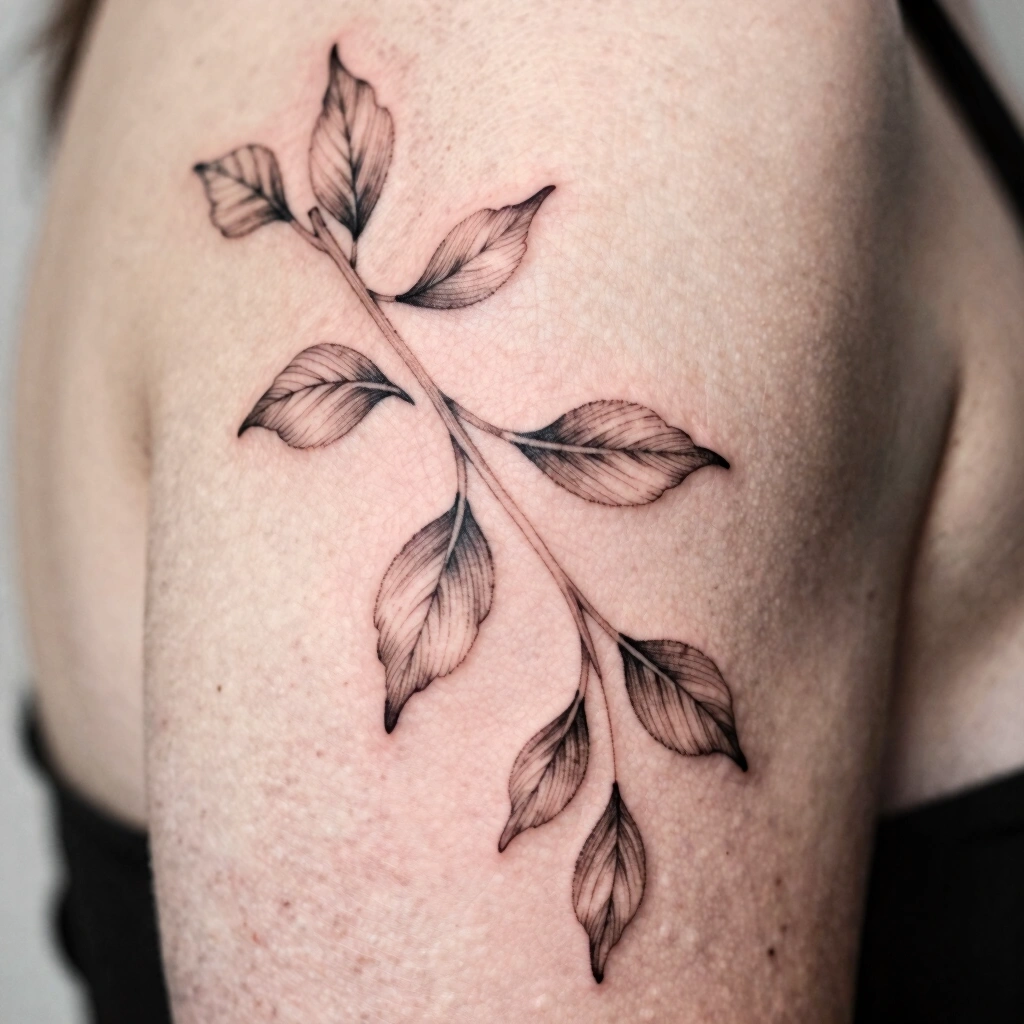
A single continuous vine, rendered in fine line work with leaves branching off at irregular intervals, wraps naturally around the curve of the shoulder cap. The line weight stays consistent — usually 0.3mm or thinner — with no shading, letting the negative space (the untattooed skin) do the visual work. This design reads as delicate without looking fragile, and it photographs well from multiple angles because it follows the body’s natural contour.
Best placement is directly over the shoulder cap, sized between 3 and 6 inches depending on how many leaf clusters you want. Skin here is fairly forgiving for fine line, though thin skin can cause slight blurring over years, so ask your artist about line spacing during the consultation.
Pain-wise, the cap has moderate sensitivity due to being close to bone. Bring a clear reference photo of vine direction, not just a generic botanical print — this helps your artist customize instead of copying.
Delicate Script Quote Tattoo
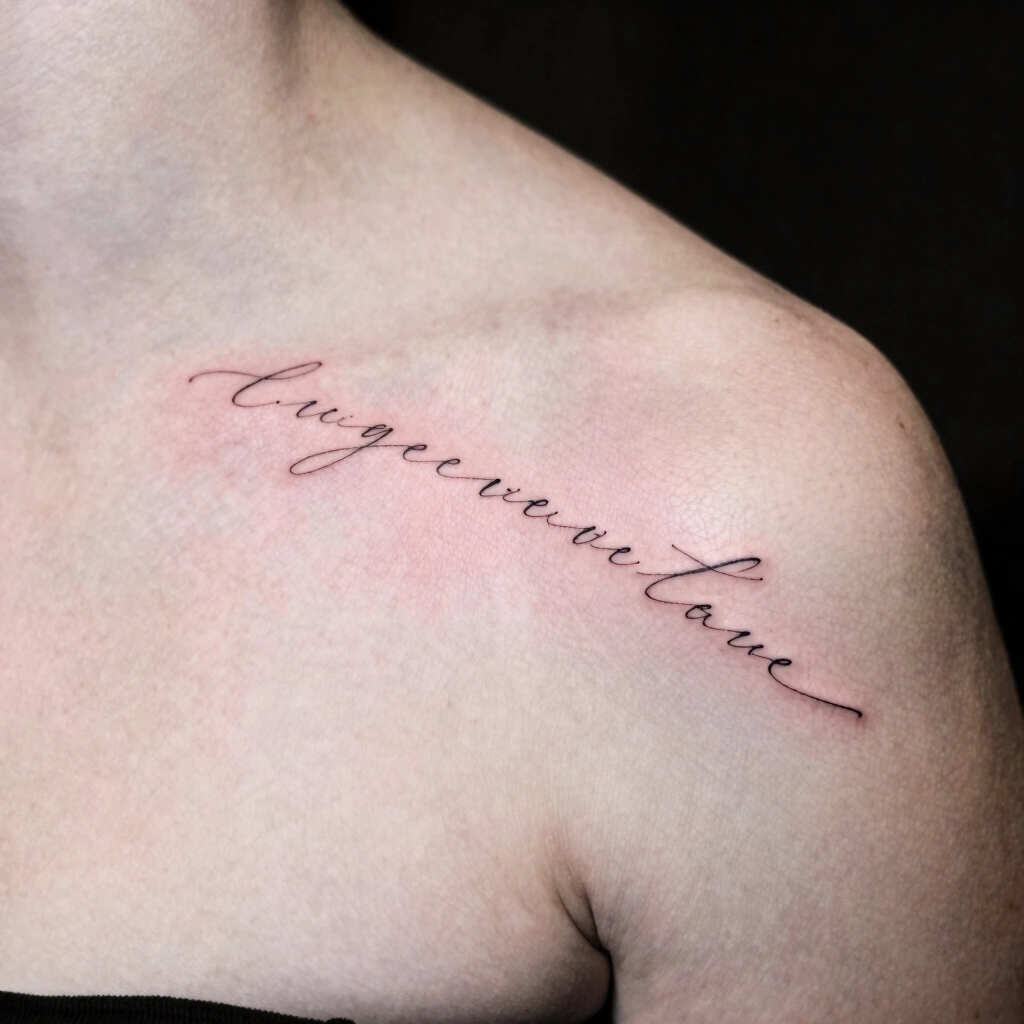
Cursive script in a thin, single-needle style running along the top of the shoulder or curving down toward the shoulder blade delivers a personal, low-key statement piece. The key technical detail here is letter spacing — script tattoos blur if letters sit too close together, so an experienced artist will widen gaps slightly to account for ink spread over time.
Keep quotes short, ideally under 30 characters, and avoid cursive fonts with extremely thin connecting strokes since those fade fastest. Placement along the collarbone-to-shoulder line offers good visibility for work settings that allow visible ink, while a script running down toward the back stays easier to hide.
Healing typically runs 10–14 days for surface peeling, with full settling around a month. This spot has mild-to-moderate discomfort. Ask your artist about a touch-up policy upfront, since script is one of the more common designs needing a follow-up session for solid line saturation.
Blackwork Sun and Moon Duo
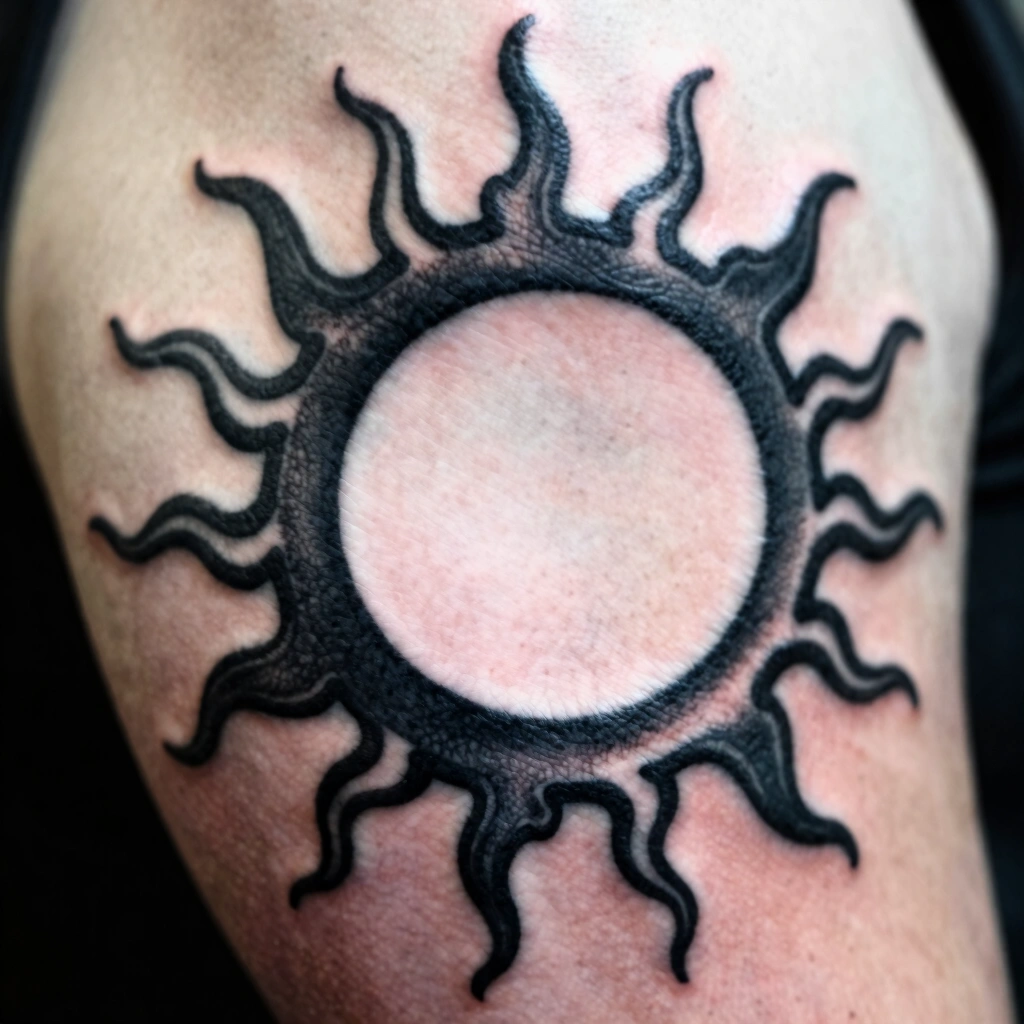
Blackwork — solid black ink fully saturating the design with no shading gradient — creates high contrast that holds up remarkably well over years. A sun and moon pairing, one on each shoulder or clustered together on one, gives a bold graphic statement without needing color.
The geometric symmetry here matters: ask your artist to sketch the design directly on your skin before tattooing so the curves match your shoulder’s actual shape rather than looking stretched. Size-wise, 2–4 inches per symbol keeps the linework clean; going smaller risks the fine details filling in and losing definition as it heals.
This placement sits on the more sensitive side because blackwork requires more passes for full saturation. Good for first-timers who want something bold but low-maintenance long-term, since solid black ages better than fine gradients.
Dotwork Mandala Fragment
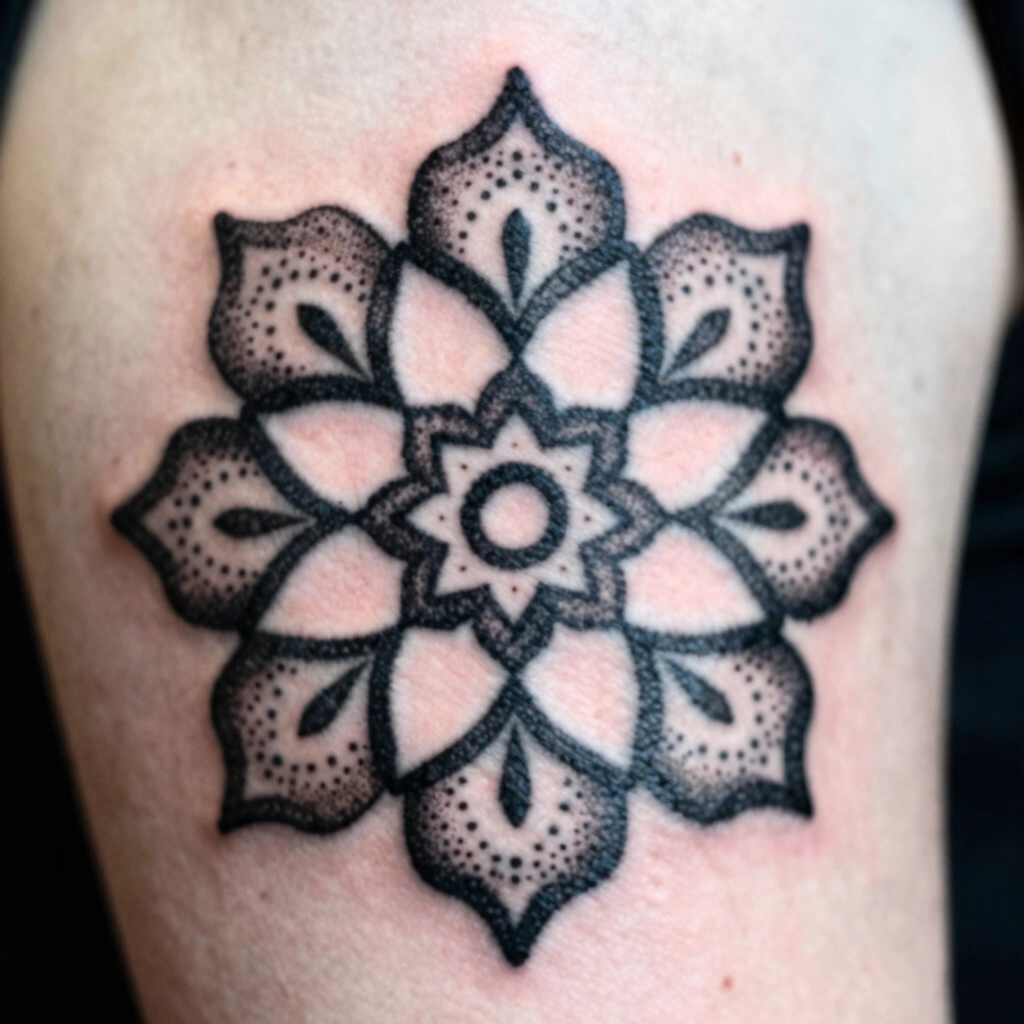
Dotwork uses thousands of tiny dots instead of solid lines or fills to build shading and texture — think of it like pointillism painting technique applied to skin. A partial mandala (a circular, symmetrical pattern) draped over the shoulder curve creates visual depth without the flat look of solid blackwork.
This is a slower, more meticulous technique, so expect longer sessions — a 4-inch dotwork piece can take noticeably longer than a linear design of the same size. Placement over the rounded part of the shoulder lets the dot density fade naturally toward the edges, mimicking shadow.
Bring reference images showing dot spacing you like, tight versus loose, since this changes the finished texture significantly. Pain level runs moderate to high due to repetitive needle contact. This design suits people who’ve had at least one tattoo before and know their pain tolerance, since sessions run longer than simple linework.
Minimalist Constellation Tattoo
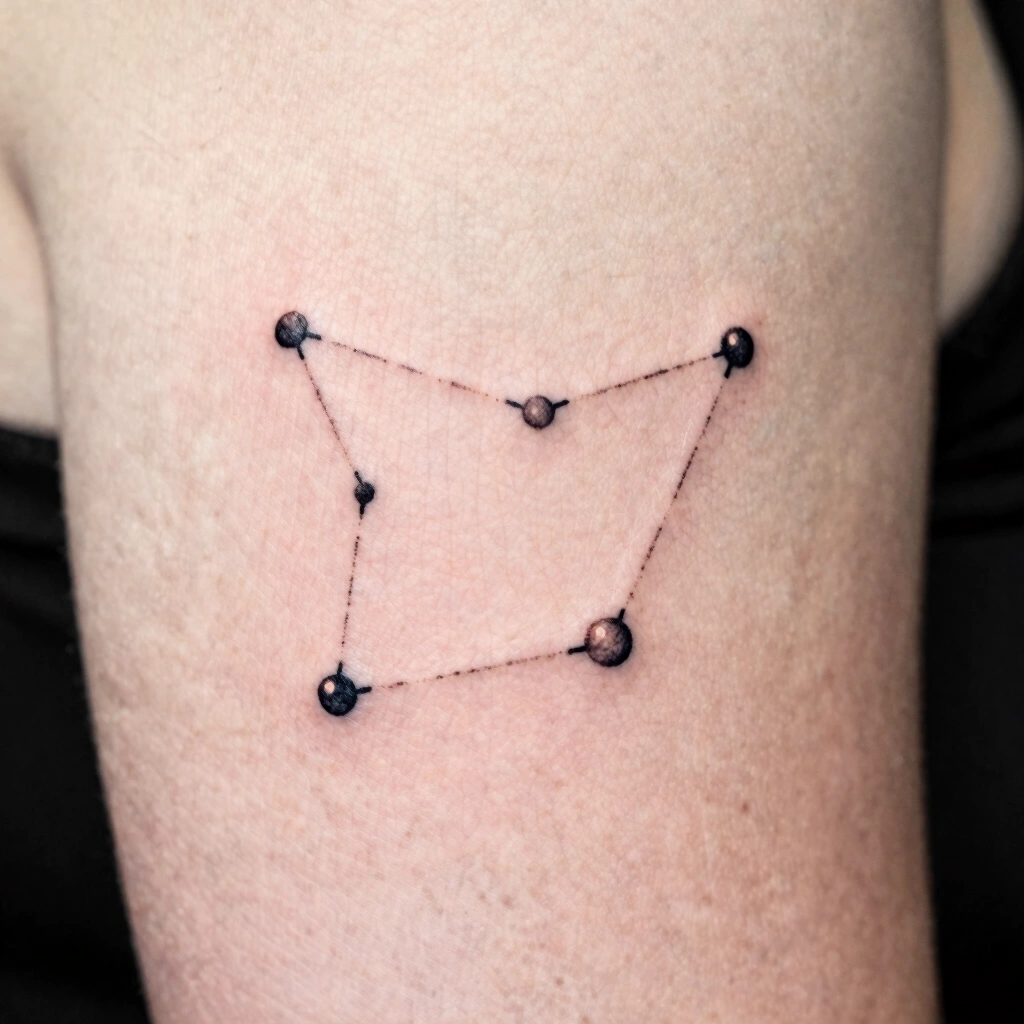
Small dots connected by thin lines represent a specific star constellation, often personalized to a birth month or meaningful date. This single-needle technique keeps everything understated — dots typically measure just a millimeter or two, lines even thinner.
Placement toward the back of the shoulder or trailing down the upper arm gives a scattered, natural look, as if the stars are simply resting on your skin. Because the design is so minimal, sizing too small is the biggest risk, anything under 2 inches total risks the dots blending into indistinct marks after a few years of natural fading.
Ask your artist about dot size consistency, since uneven dot sizing is a common amateur mistake. This is a genuinely good first-tattoo option because pain is low (short needle contact time) and healing is quick, usually within 10 days.
Watercolor-Style Floral Cluster
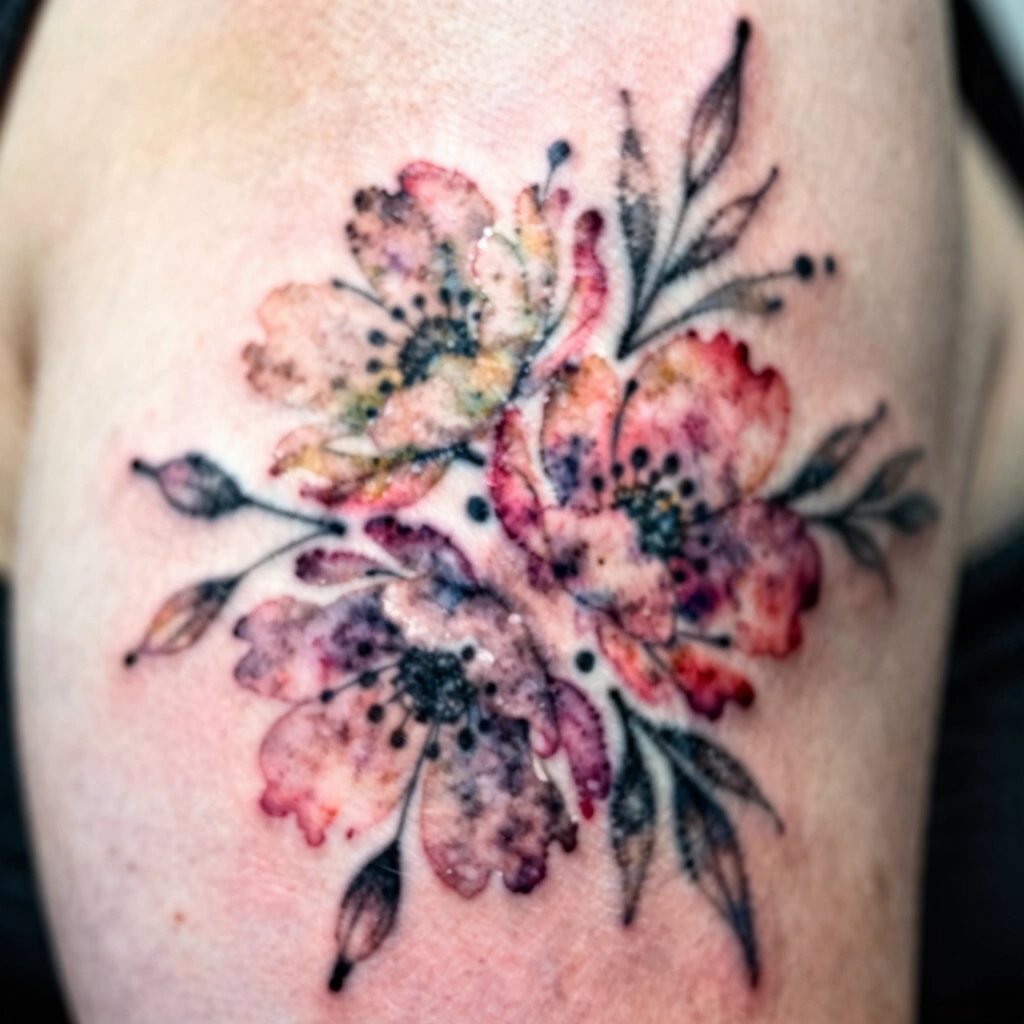
Watercolor tattoos mimic paint bleeding on paper using soft color gradients without hard black outlines. A floral cluster in this style — think blush pinks fading into lavender — brings visible color to the shoulder without looking like a solid, saturated block.
Because there’s no bold outline holding the color in place, watercolor pieces do shift more noticeably over the years compared to blackwork or fine line. This isn’t a flaw, just something to know going in — ask your artist directly about their experience with long-term watercolor client photos before booking.
Placement over the flatter part of the shoulder, away from joints, helps the gradient heal evenly. Size around 4–5 inches gives colors room to blend properly. Moderate pain level, longer healing due to color saturation,
expect closer to 3 weeks for full settling.
Negative Space Geometric Shoulder Cap
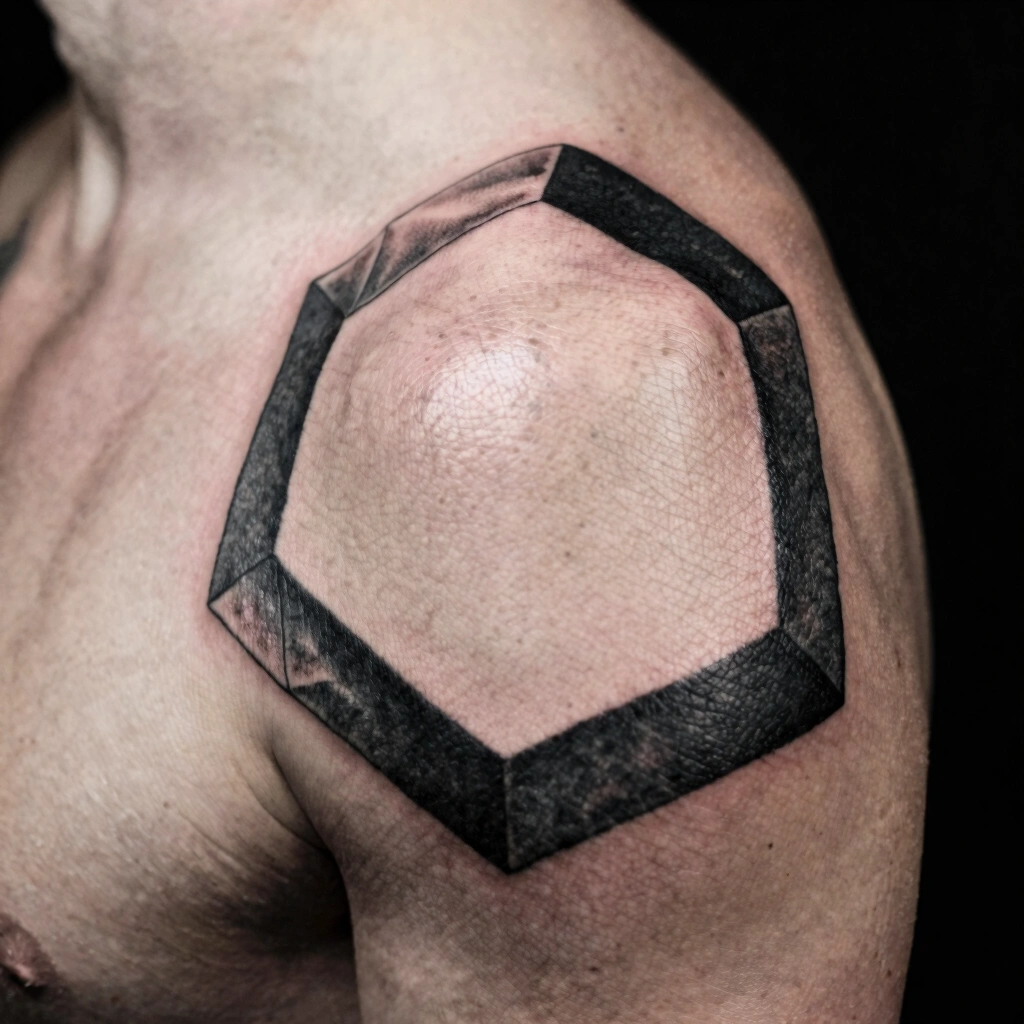
Negative space tattooing uses the untattooed skin itself as part of the design, often surrounded by solid black or fine line borders. A geometric shoulder cap piece — triangles, hexagons, or angular patterns — uses this technique to create a sense of light “cut out” from dark ink.
This requires precise linework since any wobble in the black border throws off the illusion. Ask to see your artist’s portfolio specifically for negative space work, not just general blackwork, since it’s a distinct skill.
Best placement wraps fully around the shoulder cap for maximum visual impact, sized 4–6 inches. Pain runs moderate to high given the amount of solid black needed. This design ages well because the black borders stay bold even as fine details elsewhere might soften.
Fine-Line Butterfly Trio
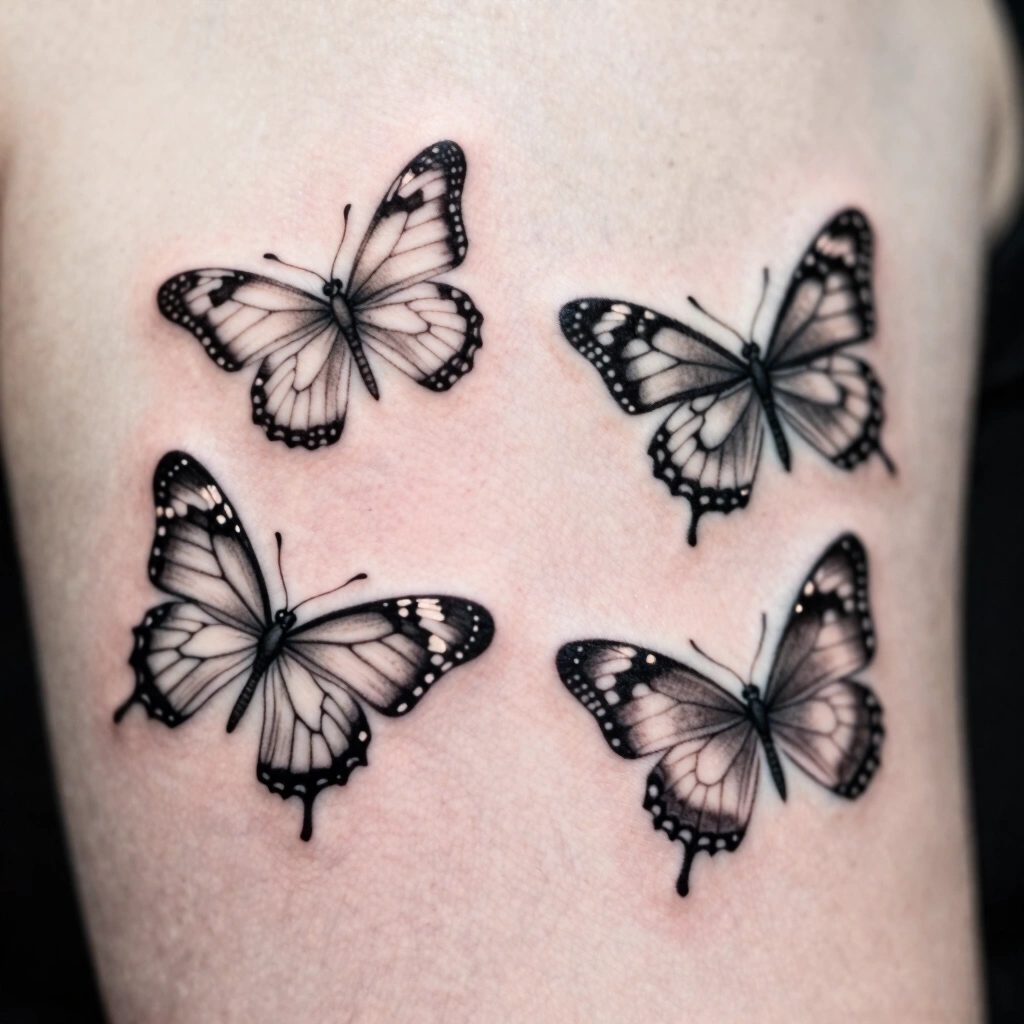
Three butterflies in varying sizes, rendered in thin single-needle linework with minimal or no shading, create a soft, migratory feel across the shoulder. Wing detail can be as simple as a few interior lines or slightly more elaborate with tiny dotwork texture inside each wing.
Placement trailing from the shoulder cap toward the collarbone gives a natural flight-path feel. Keep the largest butterfly no smaller than 1.5 inches — anything tinier loses wing detail during healing as skin cells regenerate over the ink.
This is a popular matching or sister-tattoo choice since each butterfly can be resized or angled slightly differently for each person while keeping the same theme. Healing time sits around 2 weeks. Mild discomfort makes this approachable for first timers.
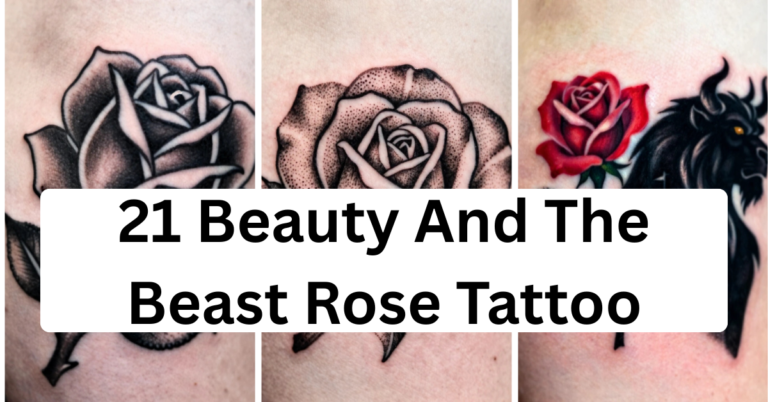
Bold Traditional Rose
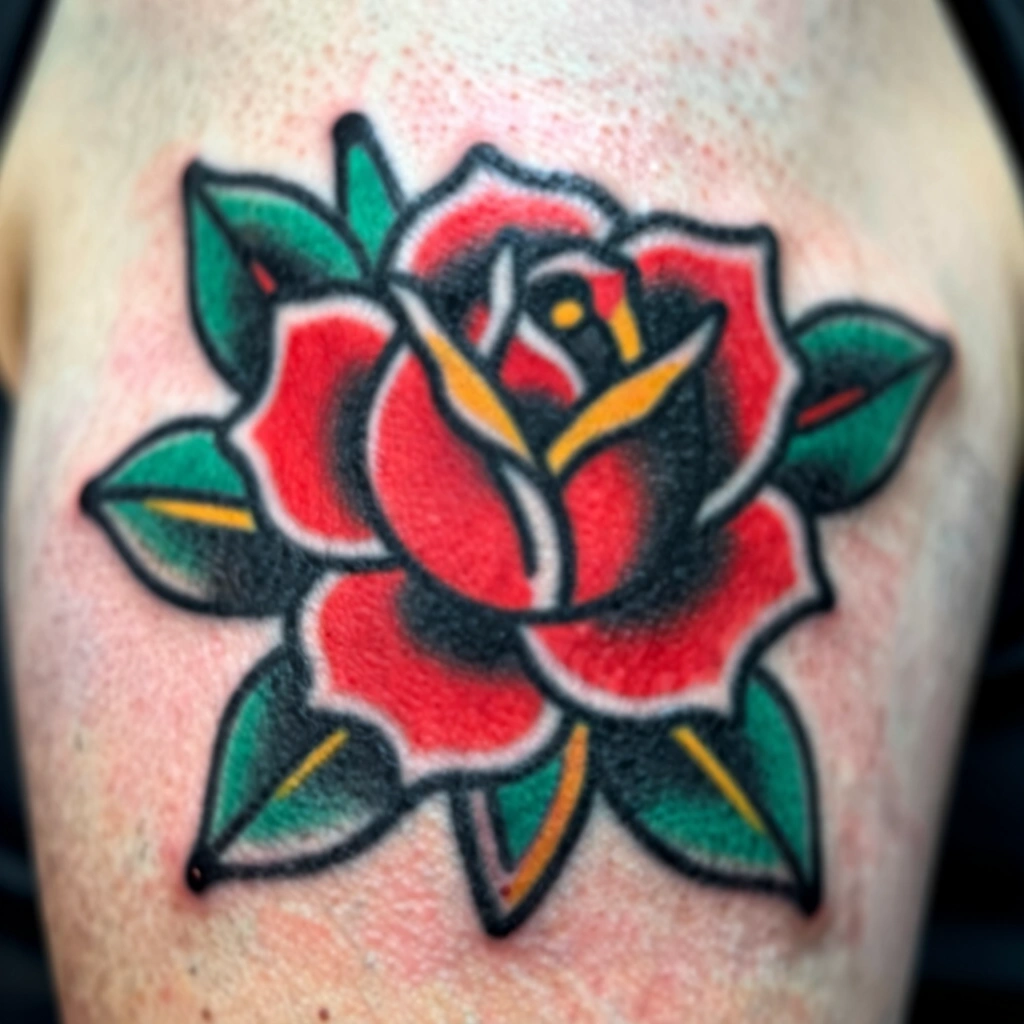
Traditional tattoo style uses thick, confident outlines with limited color palettes — usually red, green, black, and yellow — and solid shading rather than fine gradients. A rose in this style on the shoulder delivers a classic, high-contrast look that’s stood the test of time for good reason: bold lines simply hold up better over decades than delicate ones.
Size should stay generous, at least 4 inches, since traditional style relies on visible line weight and color blocks that shrink poorly. Placement over the meatier part of the shoulder, away from bone, keeps healing more comfortable.
This is a solid choice if you want something that photographs well immediately and still looks sharp in fifteen years with minimal touch-up. Moderate pain, standard 2-week healing window.
Single-Needle Portrait Silhouette
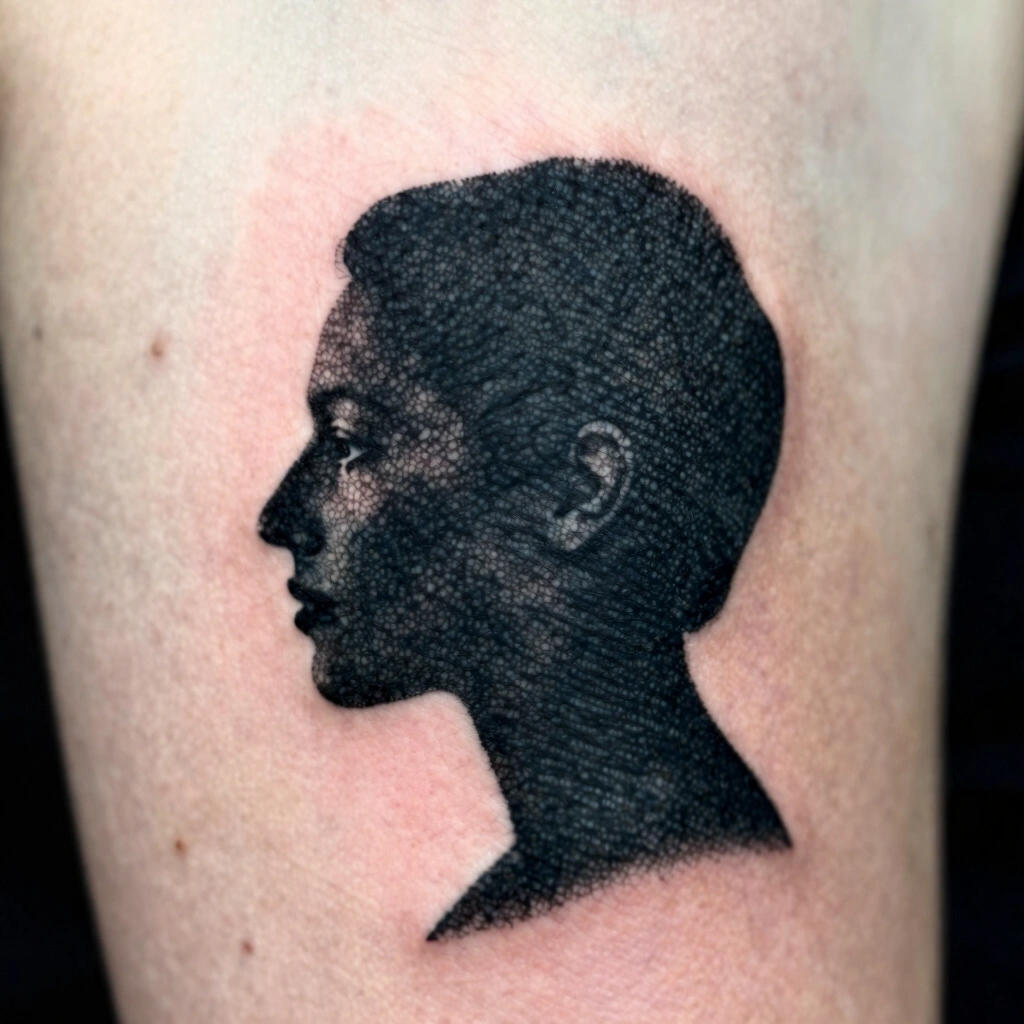
A minimalist silhouette — a face profile, a figure, or an animal outline — done in ultra-thin single-needle work creates a quiet, almost secretive design. No shading, just one continuous or lightly broken line defining the shape.
This style demands a genuinely skilled fine-line artist since there’s zero room for shaky lines to hide behind shading. Check portfolios specifically for silhouette or single-line work, not just general fine line florals, before booking.
Placement on the upper, flatter section of the shoulder near the cap works best for line clarity. Keep size between 2–4 inches. Pain is generally lower than bold blackwork since needle passes are fewer. This ages moderately well but may need a touch-up after 5+ years since thin lines are more prone to fading than thick ones.
Sacred Geometry Triangle Cluster
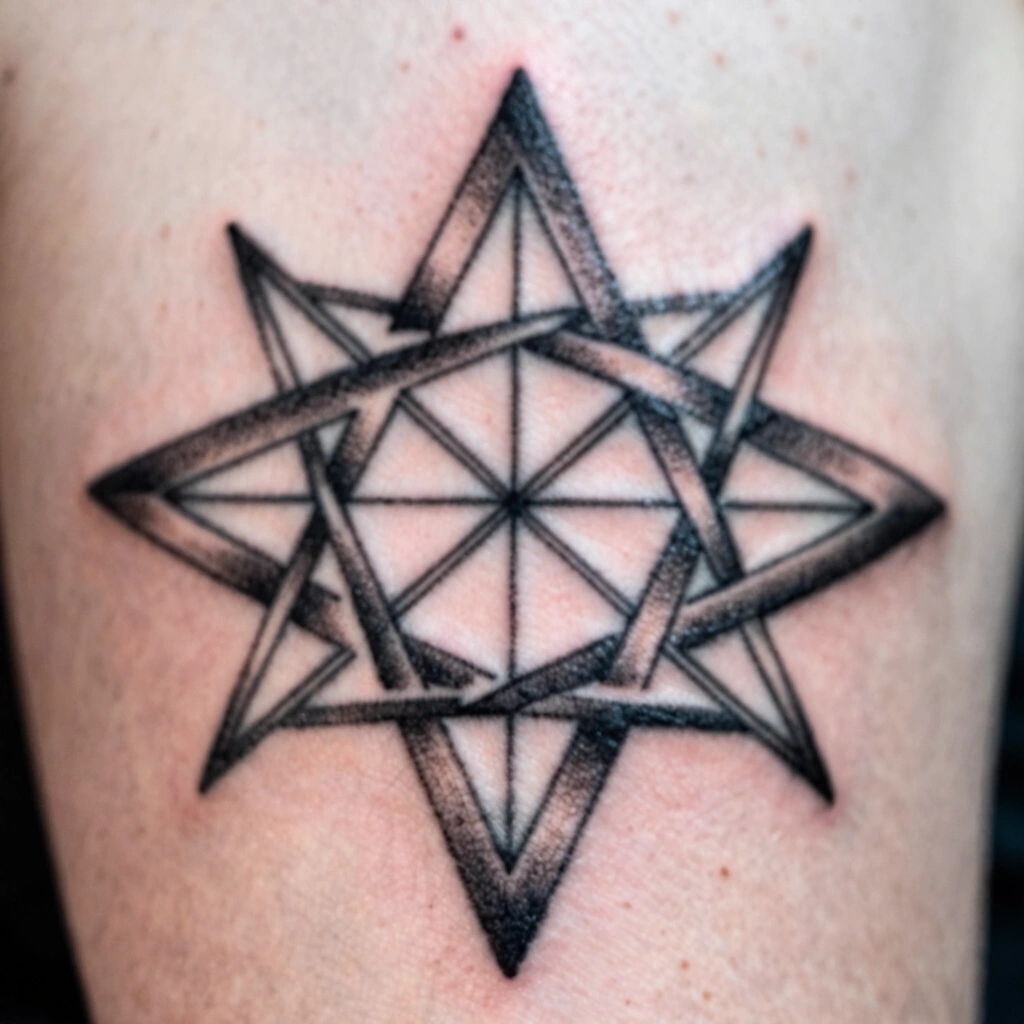
Interlocking triangles and lines forming a sacred geometry pattern (symmetrical shapes believed to hold symbolic meaning across various traditions) give a structured, intentional look. This is typically done in solid blackwork or crisp fine line, depending on desired boldness.
Precision is everything here — ask your artist whether they hand-draw stencils or use geometric tools like rulers and compasses for straight edges, since freehand geometric work often shows slight asymmetry that becomes obvious once healed.
Best placement centers the design directly on the shoulder cap for symmetry, sized 3–5 inches. Moderate pain given the amount of straight-line work required. This design suits people wanting something with personal symbolic meaning rather than purely decorative appeal.
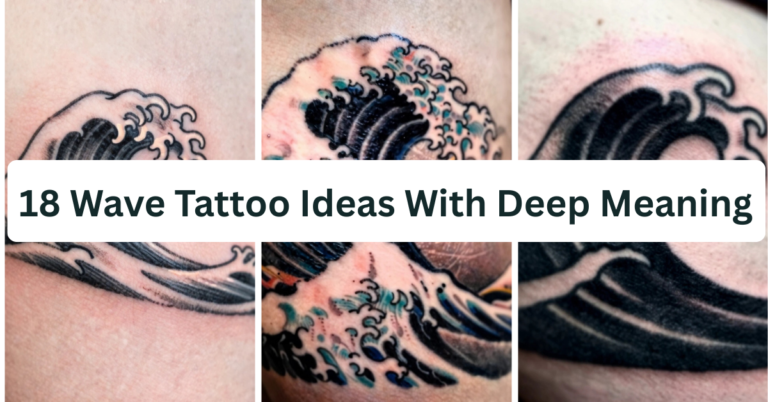
Delicate Wave or Water Line
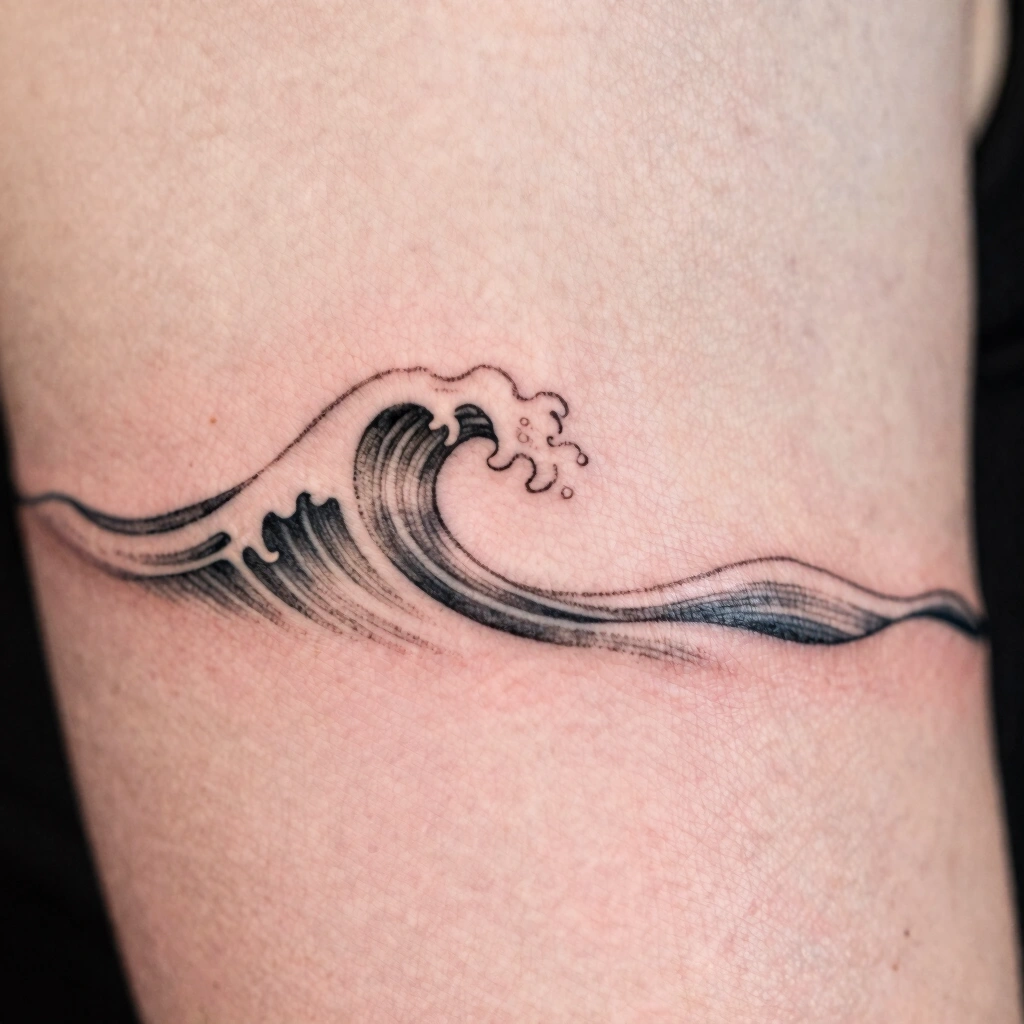
A single flowing line representing ocean waves or water movement, done in fine line with subtle variation in thickness to suggest motion, gives a calm, minimalist statement. Sometimes paired with a small sun or moon for added meaning.
The line’s fluidity is the whole point, so bring reference photos of actual wave shapes you like rather than generic clip art — this helps your artist create movement that feels natural rather than mechanical.
Placement following the shoulder’s natural curve toward the back enhances the wave illusion. Size around 3–4 inches keeps the line readable. Lower pain level due to thin, quick linework. Great subtle option for workplaces with visible-tattoo restrictions since it reads as abstract rather than obviously “tattoo-like” from a distance.
Blackwork Feather with Dotwork Shading
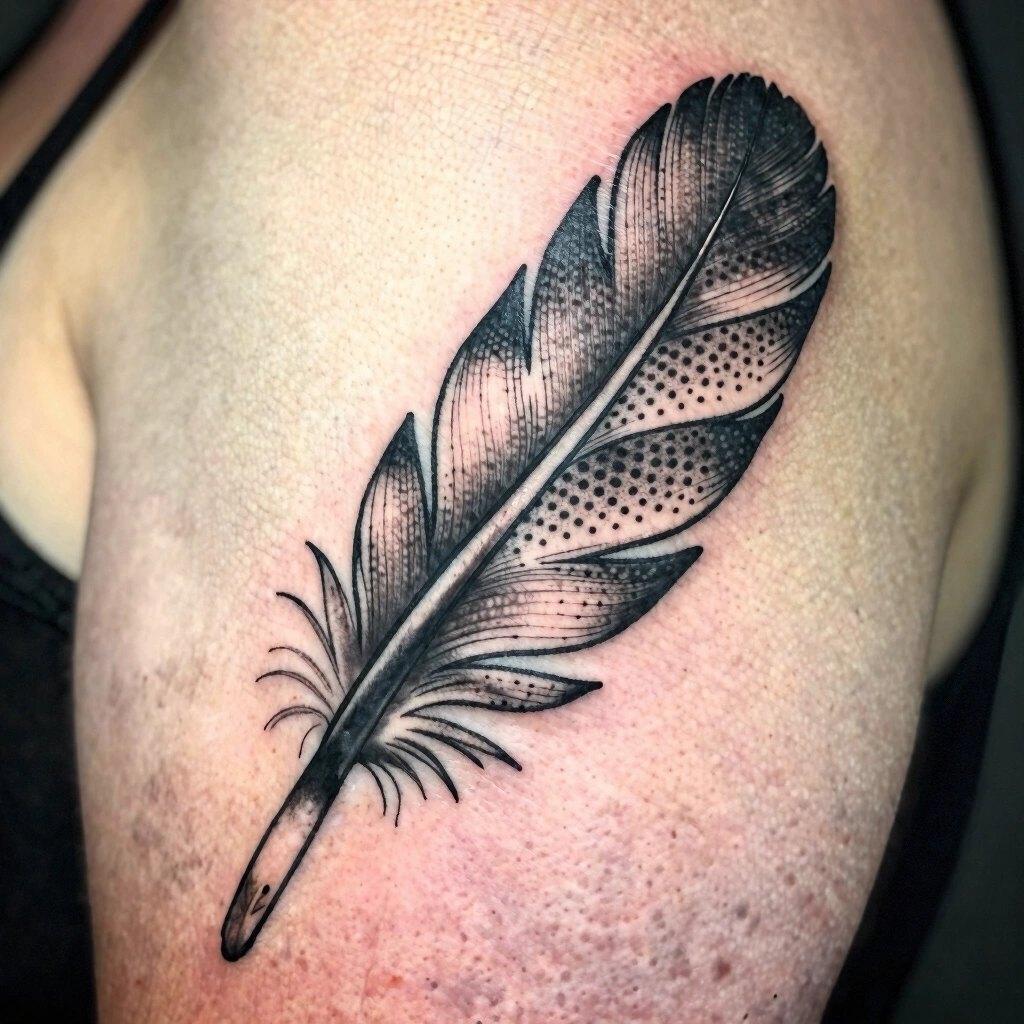
Combining two techniques — solid blackwork outlines with dotwork shading filling in the feather’s texture — creates depth and dimension that flat linework alone can’t achieve. The dots gradually decrease in density toward the feather’s edges, mimicking natural light fall-off.
This hybrid approach takes longer in the chair since it requires two distinct techniques in one session. Ask your artist upfront if they’re comfortable combining styles, since some specialize in just one.
Placement diagonally across the shoulder, following the feather’s natural length, works well at 4–6 inches. Pain runs moderate to high given the dotwork shading time. This design ages well since the solid black outline anchors the softer dot shading even as it settles.
Tiny Symbol Cluster (Stars, Hearts, Arrows)
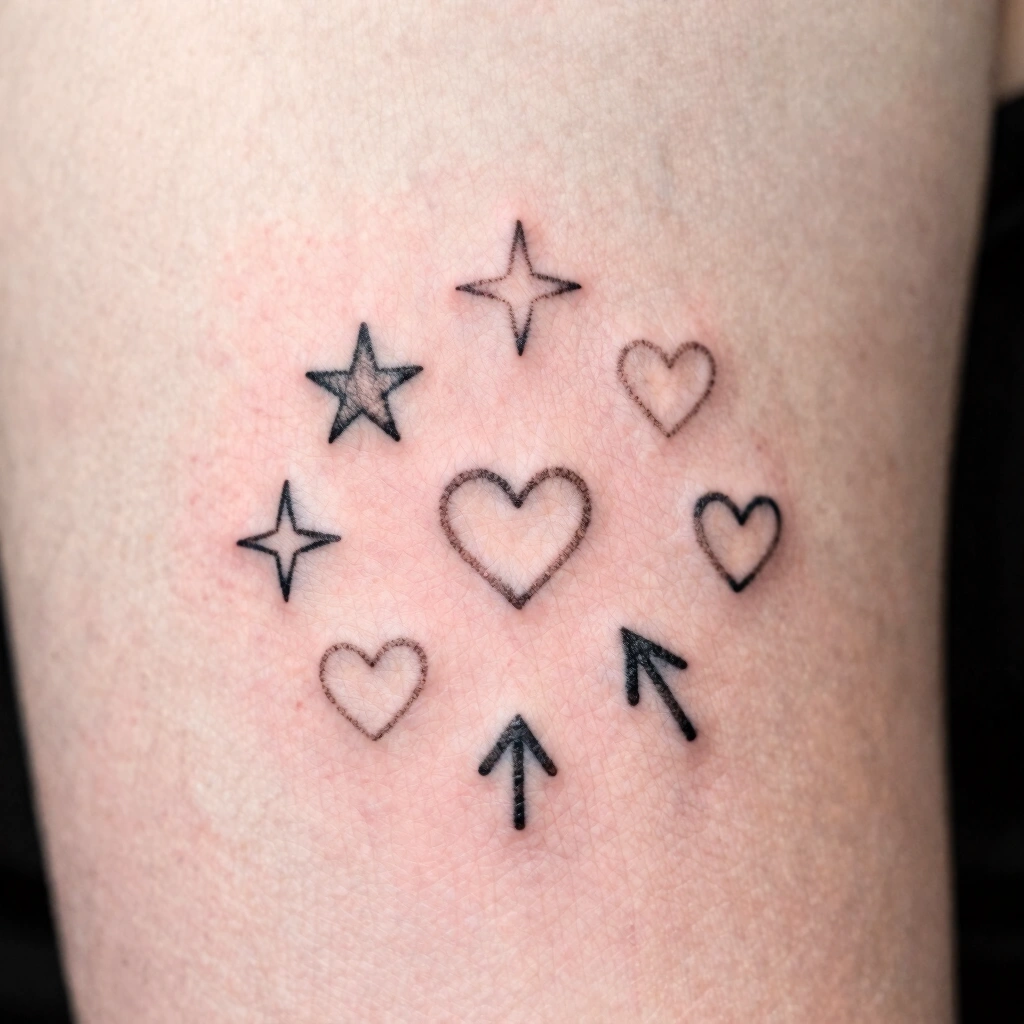
A scattered grouping of small symbols — stars, tiny hearts, a simple arrow — done in consistent single-needle linework creates a playful, low-commitment design perfect for shoulder placement. Each symbol typically stays under an inch.
The biggest technical consideration is spacing; symbols placed too close together can blur into each other as skin ages. Ask your artist to space elements at least half an inch apart even if it means adjusting your original sketch.
Placement scattered from shoulder cap down toward the upper arm gives a natural, unstructured look. This is genuinely one of the most beginner-friendly options on this list — low pain, quick 10-day healing, and easy to add to later.
Custom Name or Initial Script
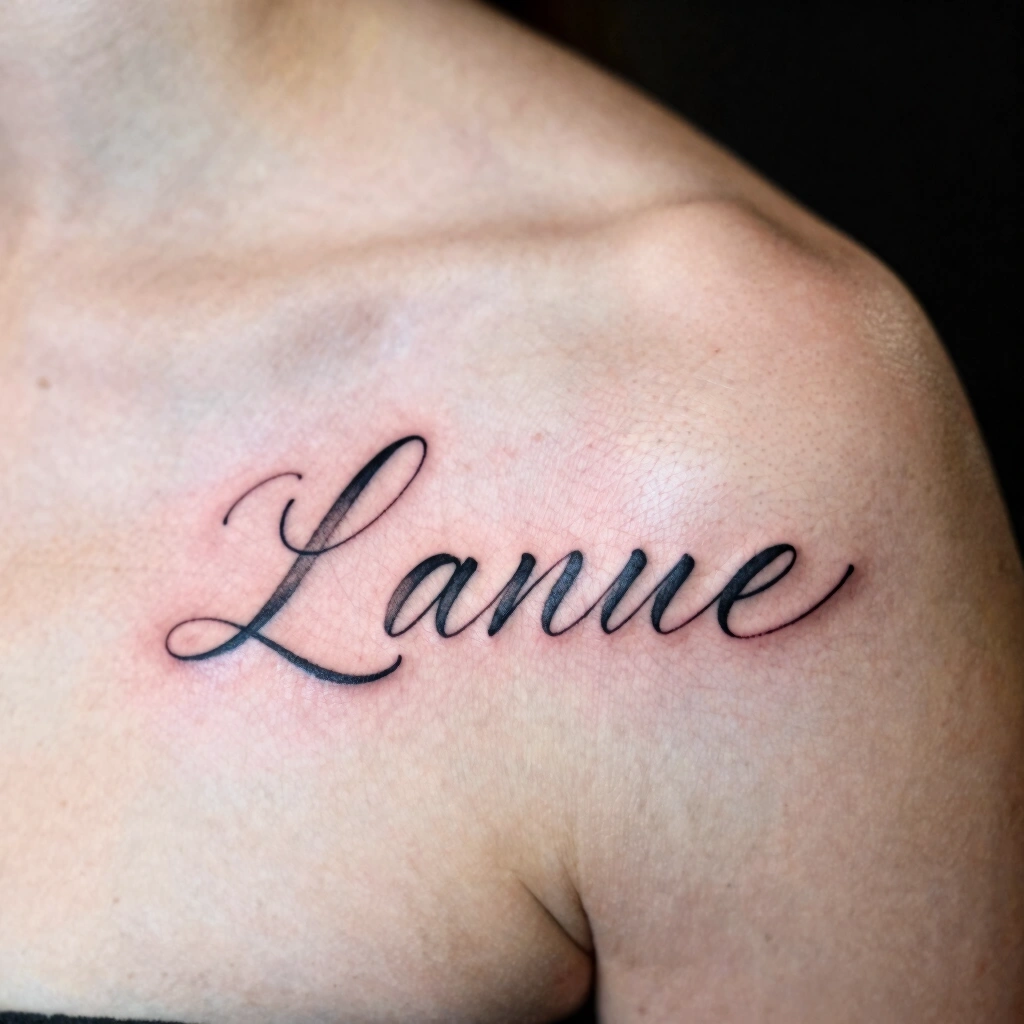
A name, initial, or short word in a personalized script font, usually kept small and centered on the shoulder cap or just below the collarbone. This works in either fine line or slightly bolder single-needle strokes depending on how visible you want it.
Font choice matters enormously here — overly decorative fonts with thin connecting flourishes fade faster than simple, rounded scripts. Discuss font durability with your artist, not just aesthetics, during your consultation.
Keep size proportional to the word length; cramming a long name into 2 inches guarantees legibility problems after healing. Pain level is low to moderate. This is a common meaningful, symbolic choice for first tattoos since it’s personal without being visually loud.
Abstract Line Art Face or Figure
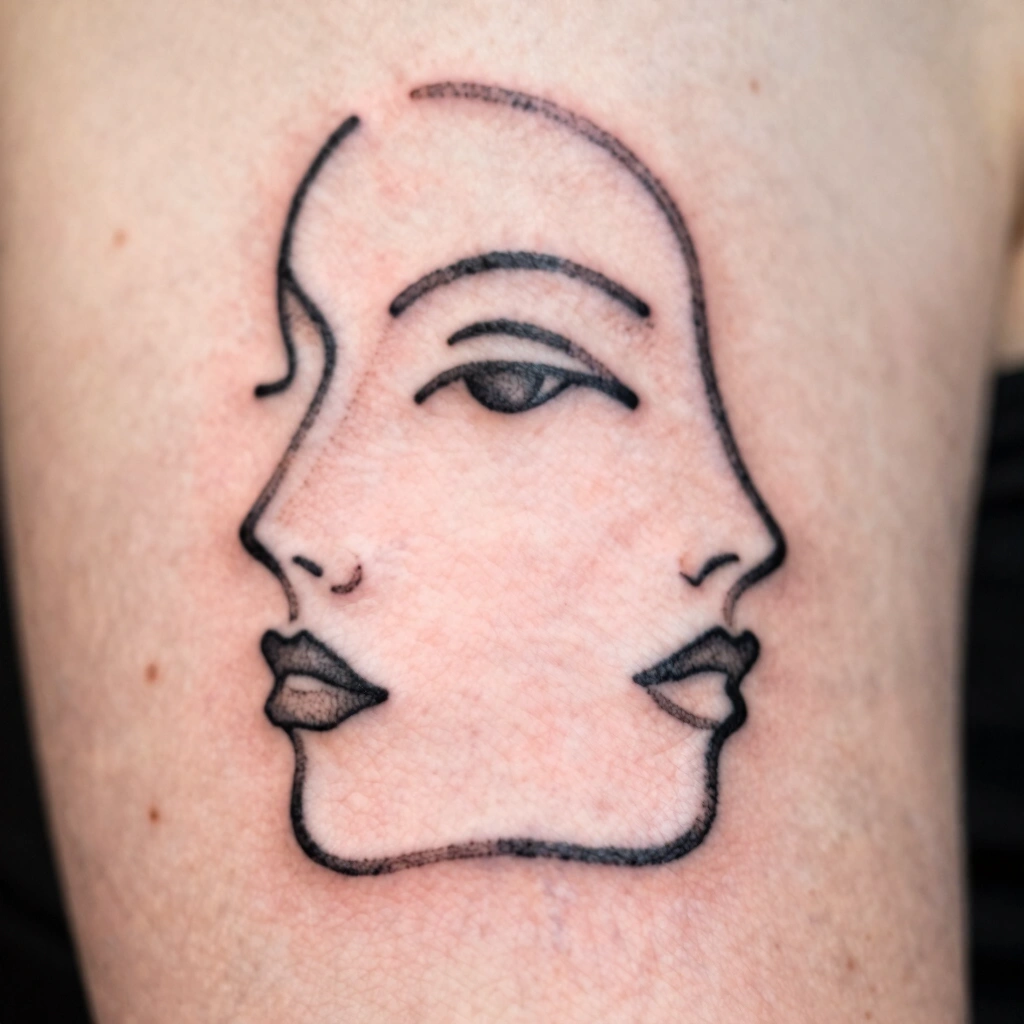
A continuous, unbroken line forming an abstract female face or figure profile, done in consistent fine-line weight with no lifting of the pen (or needle, in this case) until the design completes. This single-line technique is deceptively difficult — any hesitation shows as a wobble.
Portfolio review is critical here; ask specifically to see completed, healed examples of continuous line work, not just fresh outlines, since freshly done linework always looks crisper than it will after healing.
Placement on the flatter upper shoulder area preserves line clarity best. Size 3–5 inches. Moderate pain due to the precision required. This design suits people wanting something artistic and modern rather than symbolic.
Fine-Line Snake Wrap
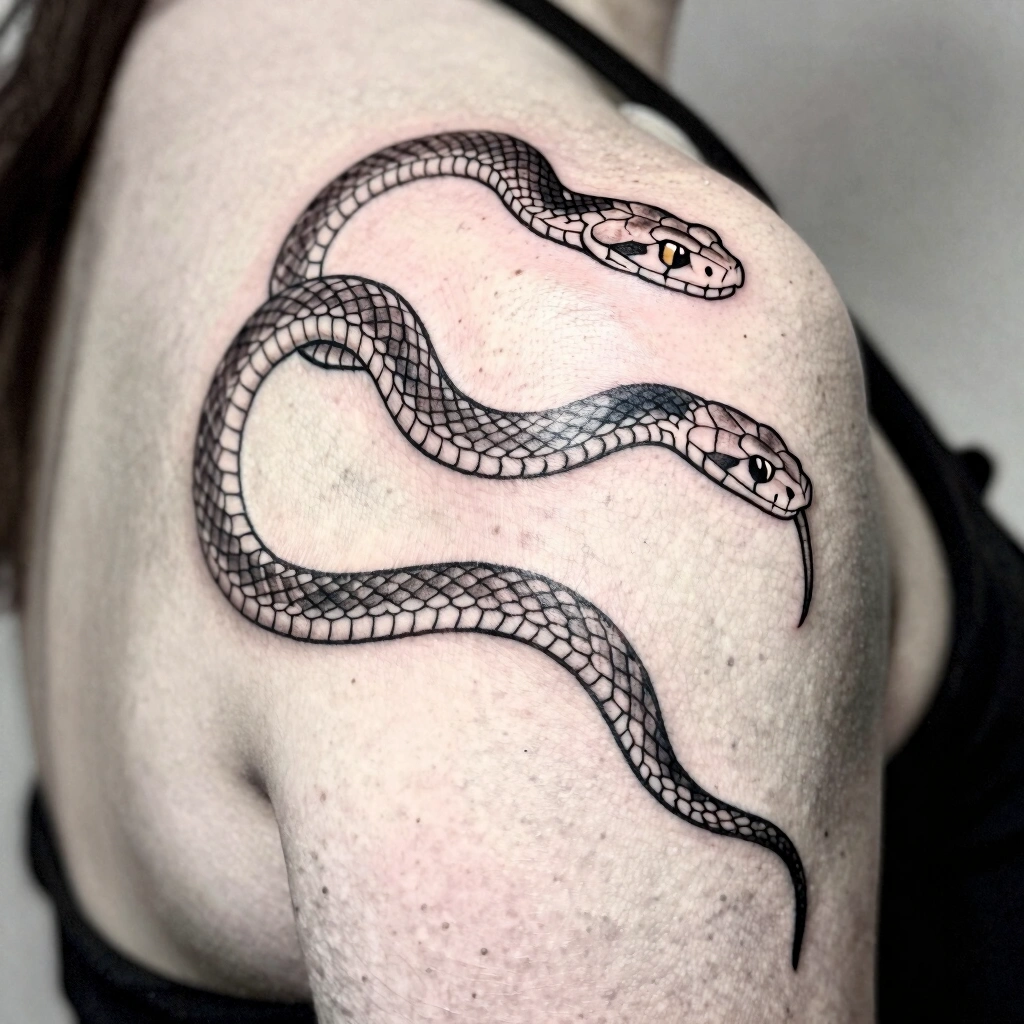
A slender snake winding around the shoulder curve, rendered in fine line with minimal scale detail (a few short interior lines suggesting texture rather than full scale-by-scale rendering) keeps this design elegant rather than heavy.
The wraparound placement uses the shoulder’s natural curve as part of the composition, so ask your artist to design the stencil directly on your body rather than transferring a flat sketch, ensuring the snake’s bends align with your actual shoulder shape.
Size 4–6 inches for the full wrap. Moderate pain given the linework length. This design has strong symbolic appeal (transformation, rebirth) and ages reasonably well since fine line on flatter shoulder skin tends to hold its shape longer than on joints.
Solid Blackwork Crescent Moon Phases
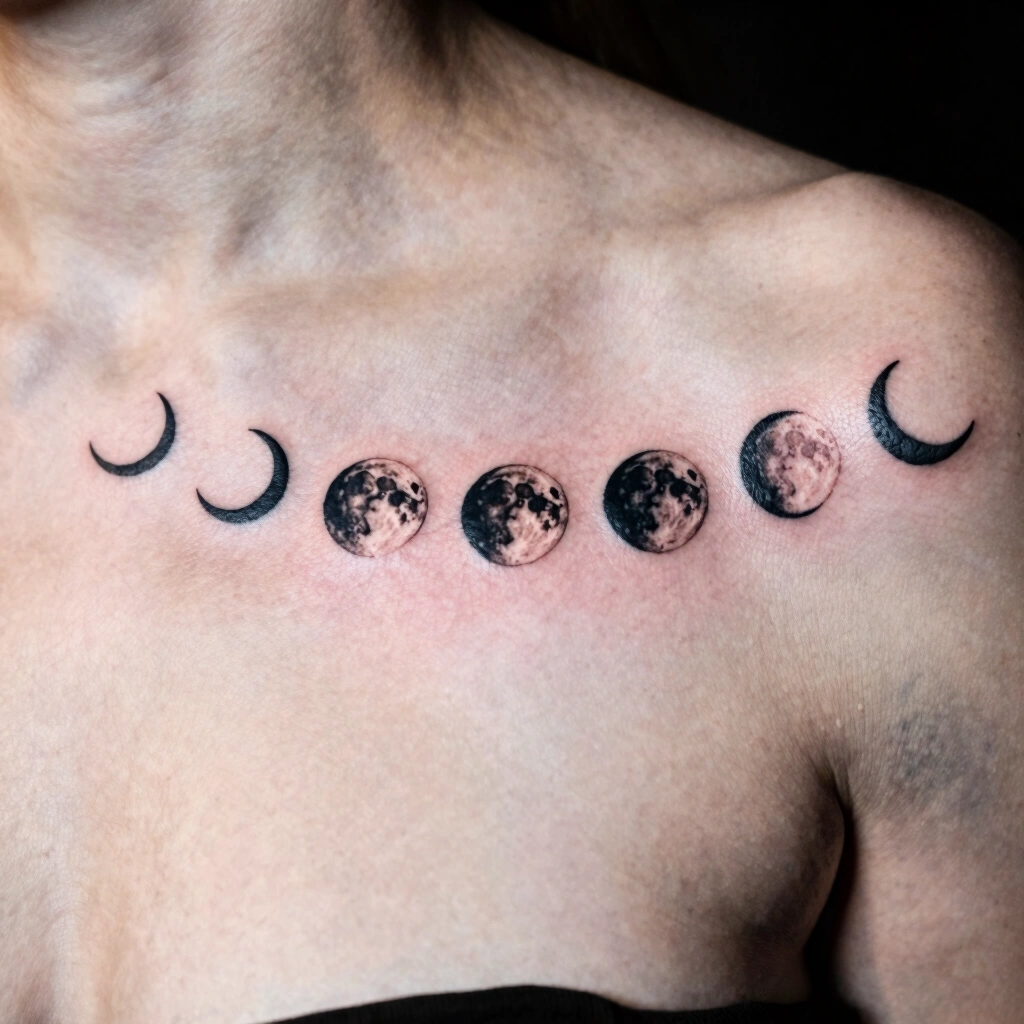
A row of small crescent moons showing different lunar phases, done in solid blackwork, arcs across the top of the shoulder or trails down toward the arm. Each moon stays simple — no interior shading, just solid black shapes of varying width.
This design’s strength is its graphic simplicity; keep each moon at least half an inch to avoid the shapes blurring into blobs after healing. Ask your artist about spacing consistency between each phase for visual rhythm.
Placement along the collarbone-to-shoulder line offers good visibility. Pain runs low to moderate. This is a popular meaningful design (representing cycles, growth, change) and works well as a matching tattoo since phases can be divided between two people.
Delicate Chain or Bracelet-Style Band
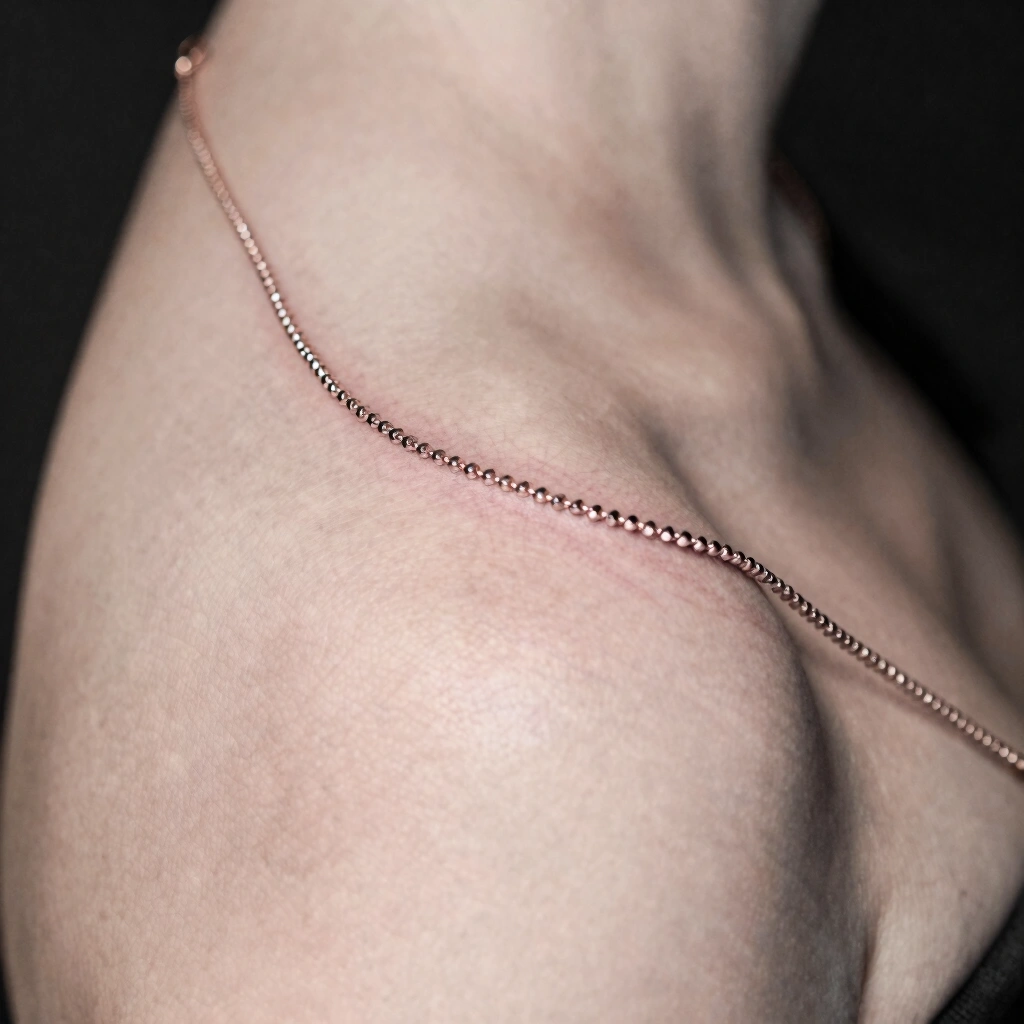
A thin linear pattern resembling a delicate chain or beaded band wraps around the upper shoulder like jewelry, done in fine line with small repeated geometric shapes. This design plays with the idea of “wearable” ink.
Consistency in shape repetition is the main technical challenge — ask your artist to use a stencil rather than freehanding repeated elements, since freehand repetition often shows size drift by the end of the wrap.
Best placement wraps fully around the upper arm/shoulder junction, sized to fit the natural circumference. Low to moderate pain. This design works especially well for people wanting something that reads as accessory-like rather than obviously symbolic or bold.
Bold Sun Rays Radiating from Shoulder Cap
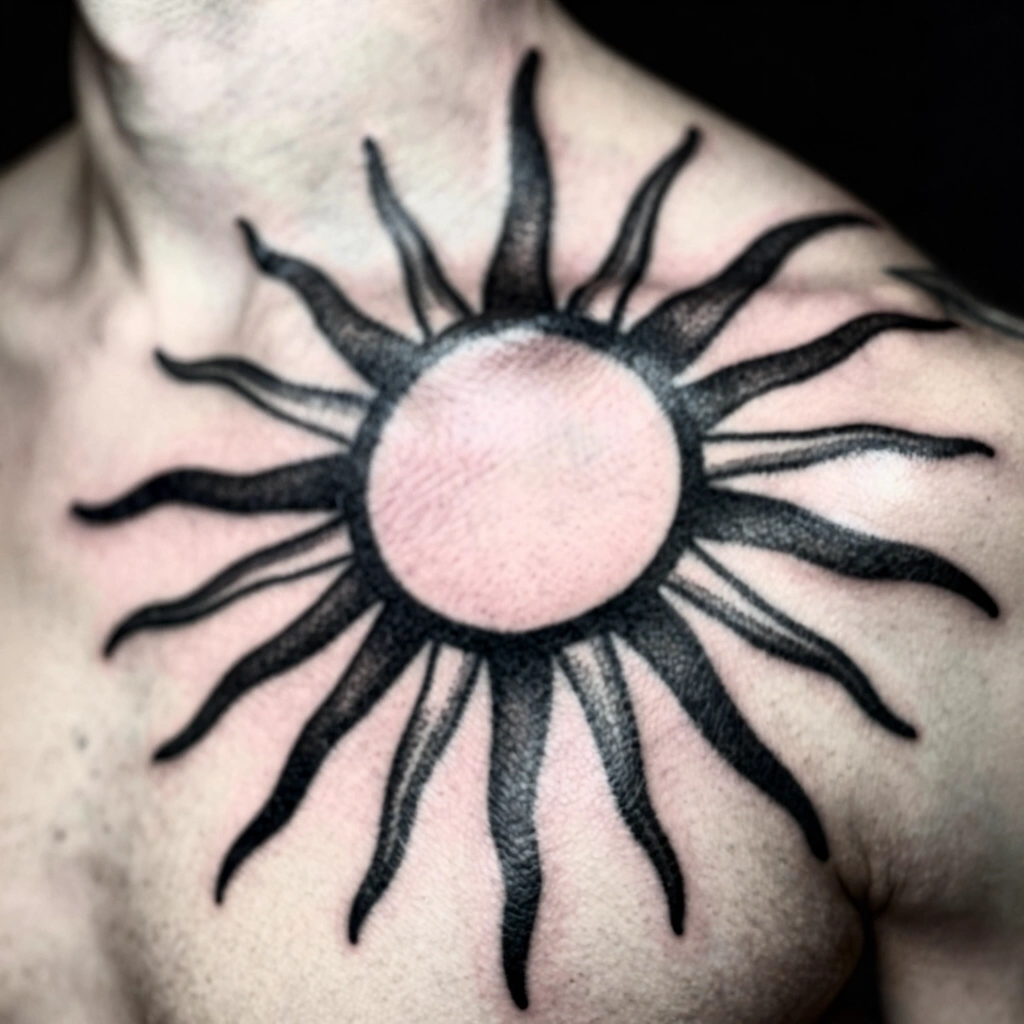
Thick, evenly spaced lines radiating outward from a central point on the shoulder cap, done in bold blackwork, create a graphic, almost architectural sun design. Unlike delicate designs, this one leans into visual weight and confidence.
Line thickness consistency across all rays is critical — uneven rays are one of the most common amateur mistakes with radial designs. Review your artist’s portfolio specifically for symmetry in radial or mandala-style work.
Placement centered on the shoulder cap, sized 4–6 inches across, gives the rays room to breathe. Moderate to high pain due to solid black saturation. This design holds up exceptionally well over time since bold blackwork resists fading better than fine detail.
Fine-Line Personal Symbol with Negative Space Accent
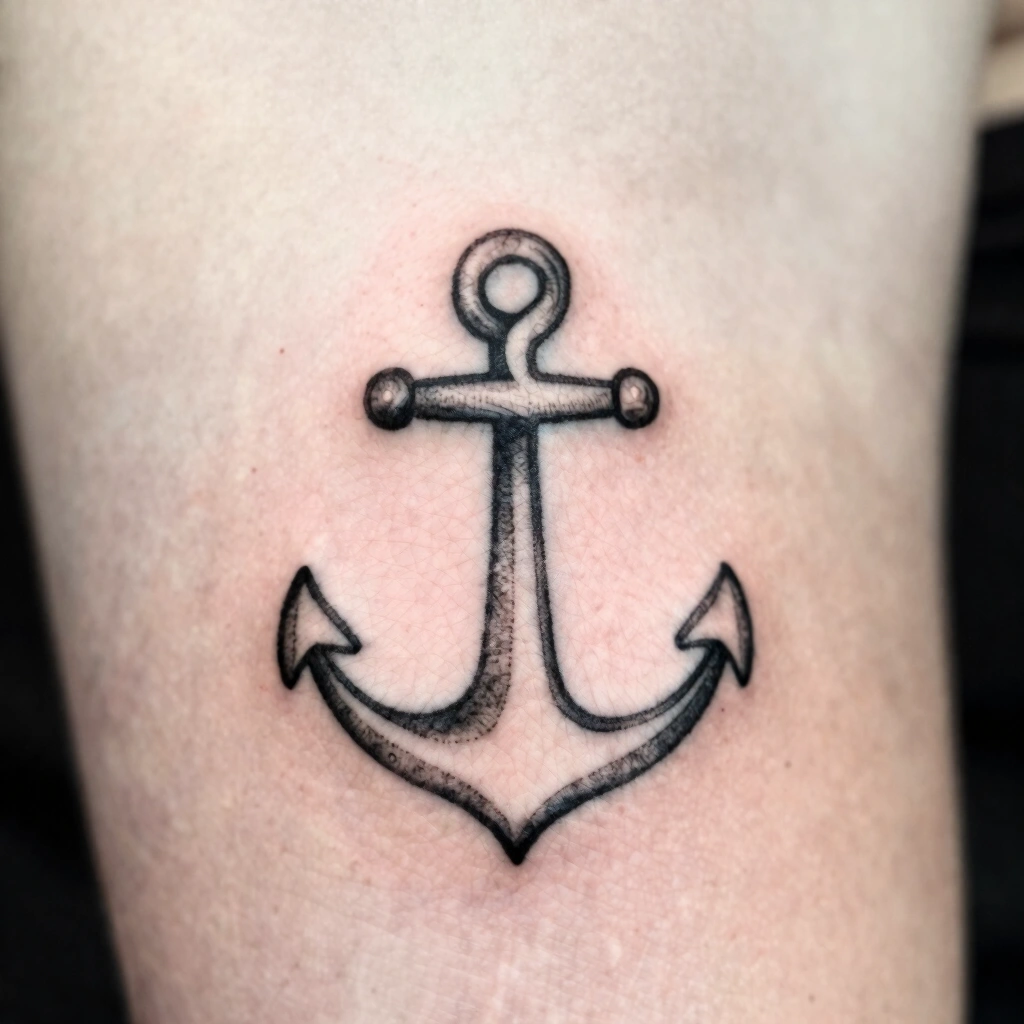
A custom symbol — could be anything meaningful, from a small anchor to an abstract shape — combining thin fine-line outlining with a small negative space cutout (an intentional gap left unlinked, using surrounding shading or linework to define it) for visual interest.
This combination technique requires an artist comfortable with both fine detail and negative space planning, so ask specifically about their experience blending these two approaches in your consultation.
Placement on the shoulder cap or just below the collarbone, sized 2–4 inches, keeps the design legible. Pain level low to moderate. This works well as a genuinely custom, one-of-a-kind piece since the negative space element makes direct copying difficult.
Best Placement Ideas
Where you put your shoulder tattoo affects visibility, pain, and how easy it is to care for afterward. Here’s how the main options stack up:
- Shoulder cap (top/outer curve): Highest visibility, moderate pain due to proximity to bone, easiest to show off in tank tops and off-shoulder tops
- Back of shoulder (toward shoulder blade): Easier to conceal at work, slightly harder for the artist to reach comfortably during longer sessions, moderate pain
- Shoulder-to-collarbone area: Good for script and delicate designs, higher visibility, generally lower pain since skin is thinner but less bony
- Shoulder-to-upper-arm blend: Best for larger, wraparound designs, more surface area for detail, moderate-to-higher pain depending on exact spot
- Front shoulder (near armpit edge): More sensitive due to nerve density, better hidden by most clothing, worth discussing directly with your artist before committing
Tips for Success
Finding the right artist matters more than finding the “perfect” design online. Start by reviewing portfolios for healed photos, not just fresh ink — fresh tattoos always look sharper than they will in six months. Look specifically for consistency in line weight if you want fine line work, or even saturation if you’re going blackwork.
Book a consultation before committing to a walk-in slot, especially for anything custom. Bring reference images, but also bring honesty about your pain tolerance and lifestyle — if you work in a formal office, say so, so your artist can suggest placement that’s easy to conceal. Ask about their stencil process, needle type, and roughly how many sessions your design might realistically take.
Common Mistakes and How to Avoid Them
- Sizing too small for the detail level: Intricate linework or shading needs enough space to stay legible after healing; ask your artist directly if your chosen size will hold the detail long-term
- Picking a placement that fights the design’s shape: A wraparound design needs a curved canvas; a straight script needs a flatter one — match the design to the body’s actual geometry
- Skipping aftercare instructions: Even minor neglect during the healing window can affect how crisp the final result looks
- Copying a design exactly from social media: Personalizing even slightly (size, angle, small added element) avoids an identical match to someone else’s tattoo and often looks more intentional
- Choosing an artist based on price alone: Cheaper isn’t always worse, but portfolio quality should always outweigh cost when it comes to permanent work
Similar Variations
Almost every design above can shift dramatically with small changes. A fine-line vine can become bolder traditional-style with thicker outlines and color fill. A blackwork symbol can shrink into a single-needle minimalist version for a more subtle look. Dotwork shading can be swapped into any linework design that currently has no shading at all, adding dimension without changing the core concept. Combining two ideas — say, the constellation dots with a fine-line wave — is also common once you’ve got one piece and want to build a cohesive shoulder collection over time.
Aftercare Basics
Healing generally follows a predictable pattern: peeling and light scabbing in the first one to two weeks, followed by a settling period where color and line clarity stabilize over the following month. Keep the area clean, avoid direct sun exposure, and skip swimming pools or soaking baths until fully healed. Always follow the specific aftercare sheet your artist provides, since products and timelines can vary slightly by studio. If you notice unusual redness, swelling, or discharge beyond what your artist described as normal, check in with a licensed dermatologist or your artist promptly.
Quick FAQ
How much does a feminine shoulder tattoo cost?
Cost varies widely by size, detail, and artist experience, but small fine-line pieces often start in the low hundreds, while larger custom blackwork or dotwork designs can run several hundred to over a thousand dollars depending on session length.
How painful is a shoulder tattoo?
Pain tolerance is individual, but generally the shoulder cap and areas closer to bone feel more intense than the fleshier back-of-shoulder area. Most people describe it as manageable discomfort rather than unbearable pain.
How long does healing take?
Surface healing typically takes 10–14 days, with full settling under the skin taking closer to a month. Healing time can vary based on aftercare consistency and individual skin.
Do these designs age well over time?
Bold blackwork and solid linework tend to hold their shape longest, while very fine, thin lines may soften or need a touch-up after several years. This varies by skin type, sun exposure, and aftercare, so ask your artist what to expect for your specific design.
Choosing from these 21 feminine shoulder tattoos really comes down to matching the technique to your skin, your pain tolerance, and how visible you want the piece to be day to day. Take your time with the research, book a real consultation instead of a rushed walk-in, and lean on a licensed professional’s advice over anything you read online, including this.
At the end of the day, the best feminine shoulder tattoos are the ones that fit your actual life, your job, your pain threshold, your long-term style, not just the ones that look good in someone else’s photo.