22 Top-of-Shoulder Tattoo Ideas for Men (With Real Placement, Pain, and Cost Guidance)
Nervous about picking a top of shoulder tattoo you’ll regret in five years? That’s a fair worry — the shoulder is one of the most visible placements you can choose, and it deserves more than a quick Pinterest scroll. I’ve spent a lot of time in tattoo studios watching consultations happen, and I can tell you the good designs and the good decisions both come from the same place: real information, not hype.
So what are the best top of shoulder tattoo ideas for men? Bold blackwork caps, fine-line geometric bands, Japanese-style dragons, and black-and-grey animal portraits work best on this spot because the shoulder’s curved muscle and flat cap area support both large bold pieces and smaller detailed ones without losing shape over time.
Stick around, because I’m also going to walk you through pain levels, healing timelines, rough cost ranges, how to brief your artist so you don’t get a watered-down version of what you wanted, and the mistakes I see guys make over and over when they book this placement.
Why the Shoulder Works So Well for Men’s Tattoos
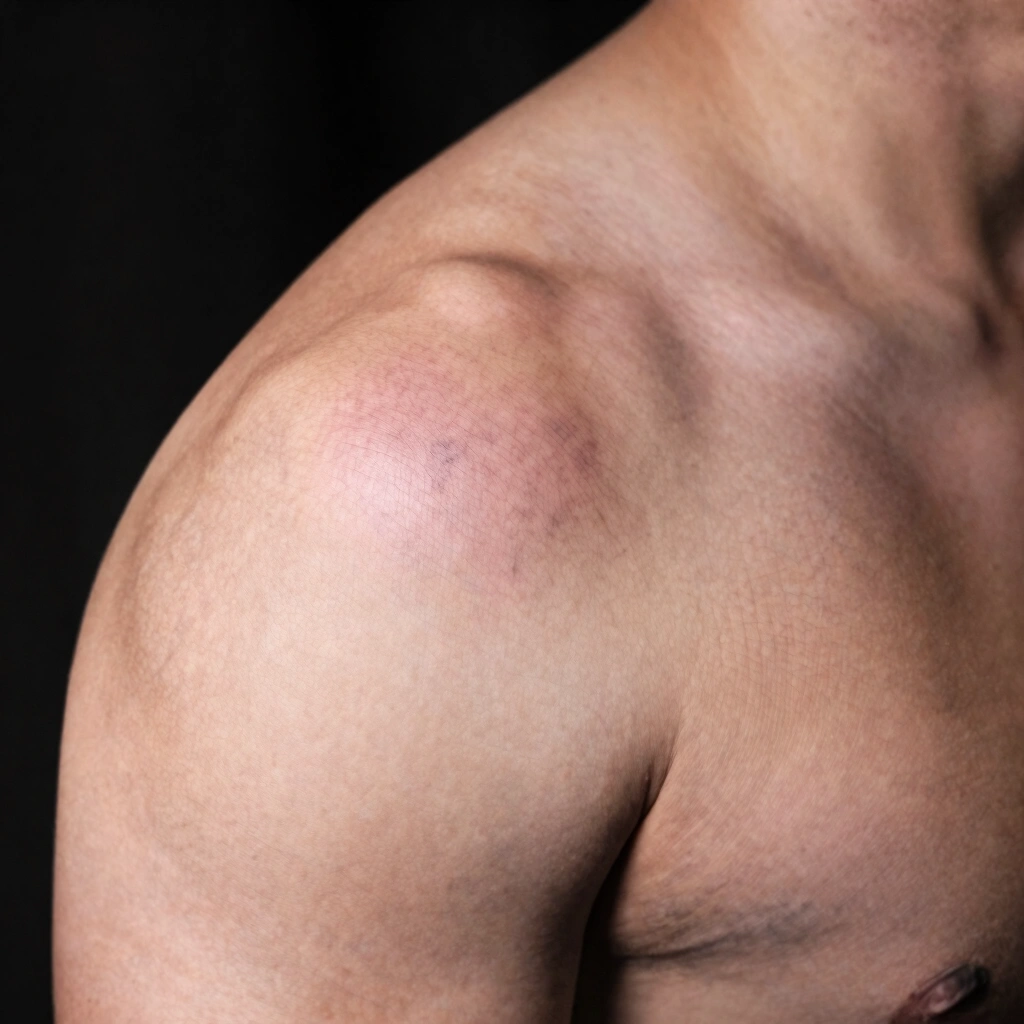
The top of the shoulder is basically a built-in canvas. It’s got a natural curve that follows the deltoid muscle, a flat cap on top, and enough surface area to support everything from a small single-needle symbol to a full shoulder-cap piece that wraps toward the arm or chest. It’s also one of the easiest spots to cover for work if you need to, and one of the easiest to show off if you don’t. Because the skin here is relatively thick and doesn’t move as much as, say, the ribs or inner arm, linework tends to hold its shape well for years. That’s a big deal — a tattoo that looks sharp on day one but blurs into a smudge by year three isn’t a good investment, no matter how good the initial photo looked.
Fine-Line Geometric Shoulder Cap
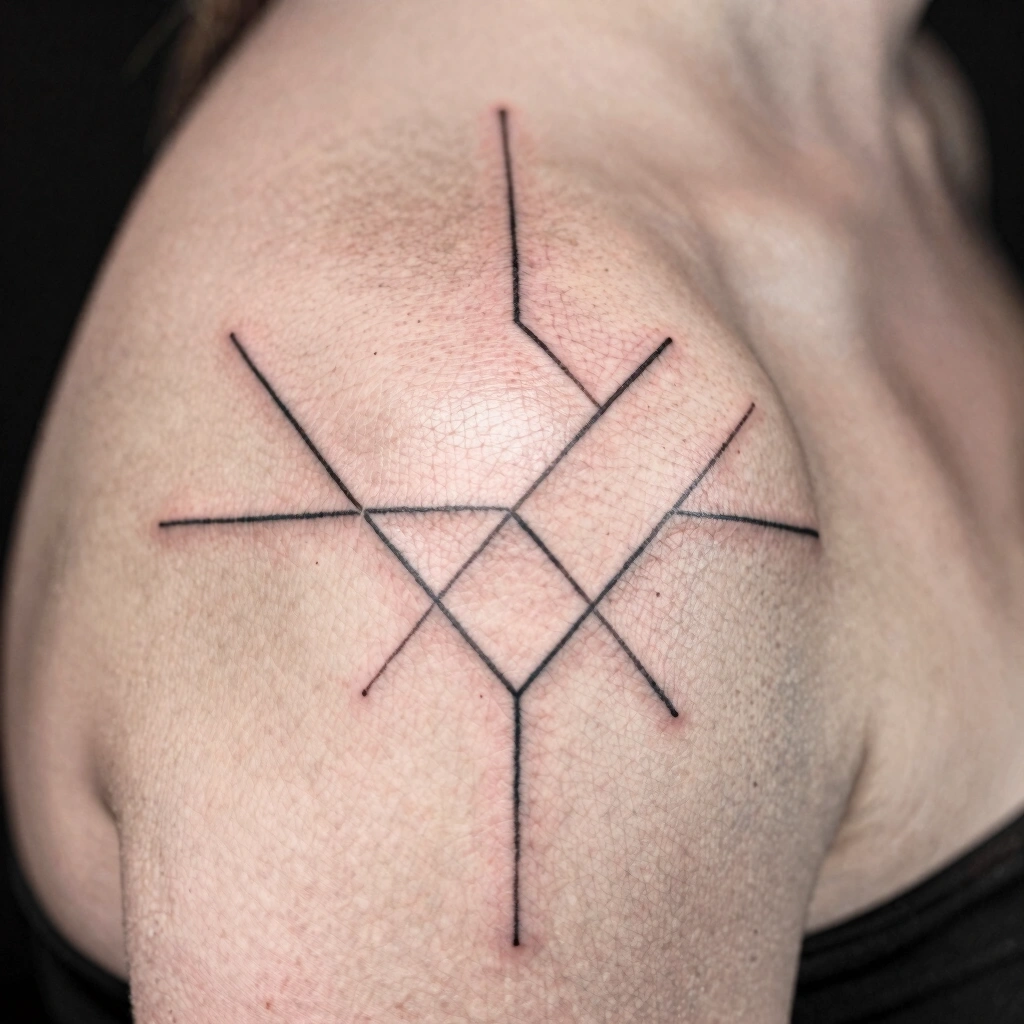
This design uses thin, consistent line weight — usually done with a single needle configuration — to build interlocking triangles, hexagons, or dot-connected patterns that sit right on the shoulder cap. There’s no shading here; the visual interest comes purely from precise geometry and negative space (the untouched skin that forms part of the pattern itself). Best size is 3–5 inches to keep the lines from crowding as they age. Bring a clean vector reference, not just a blurry photo, so your artist can trace clean angles. Pain here is moderate since the cap sits close to bone. It reads professional under a t-shirt sleeve and ages well since there’s minimal shading to blur.
Bold Traditional Eagle

Traditional American-style tattoos use thick, bold outlines with a limited, saturated color palette — usually red, yellow, black, and green — and heavy shading blocked in solid sections rather than gradients. An eagle piece on the shoulder typically spans the cap and upper arm, wings following the curve of the muscle. Go big here; traditional work under 4 inches tends to muddy within a decade. Ask your artist about their color retention experience specifically, since saturated color fades faster than black ink under UV exposure. Expect moderate-to-strong discomfort across the cap. It’s a strong first-tattoo option if you want something with obvious presence rather than subtlety.
Blackwork Tribal Band
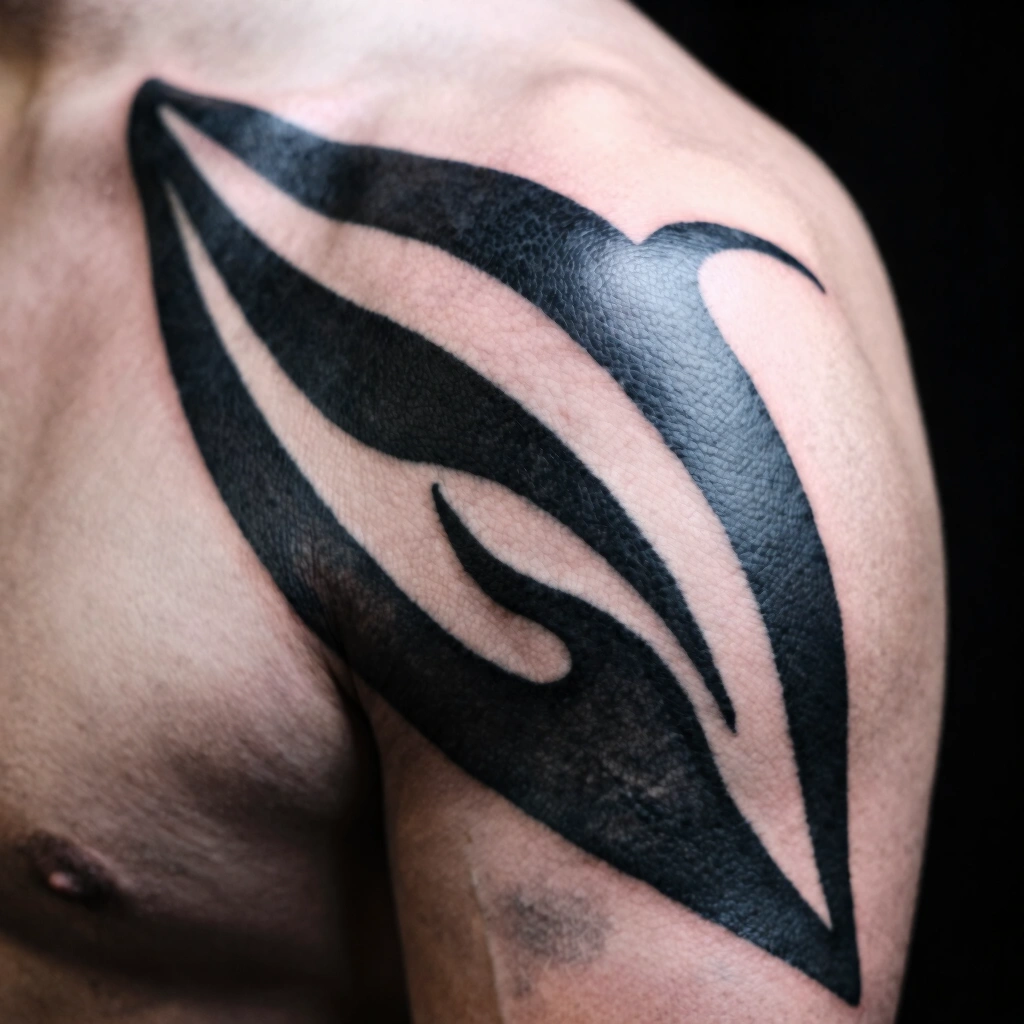
Blackwork means solid, deep black ink with no shading gradient — just flat, saturated fill and confident linework. A tribal-inspired band wraps around the upper shoulder like a cuff, using sharp points and curves rather than representational imagery. This style photographs cleanly and holds its edge sharply for years because there’s no fine detail to blur. Ideal width is 2–4 inches around the arm’s top curve. Tip: ask to see healed photos of the artist’s blackwork, not just fresh ink — solid black settles differently than color or grey. Pain is moderate. Great for guys who want a strong graphic statement without needing a “meaning” behind every line.
Dotwork Mandala Cap

Dotwork builds an image entirely from small dots instead of continuous lines, creating gradients through dot density rather than shading strokes. A mandala — a symmetrical radial pattern — on the shoulder cap creates a striking, almost textile-like look. This is slow, technical work; a quality piece can take multiple sessions. Keep the design at least 4 inches across so the dot spacing doesn’t collapse into a blur as skin ages. Bring reference images of the exact symmetry style you like, since mandalas range from tightly geometric to loosely floral. Expect the sensation to feel more like repetitive pressure than sharp pain. This one ages beautifully if the artist has genuine dotwork experience — check their portfolio specifically for this technique.
Japanese-Style Dragon (Traditional Irezumi-Inspired)

This style borrows from traditional Japanese tattooing: bold black outlines, wind bars or cloud fillers, and a color palette leaning toward deep blues, reds, and black shading with smooth gradients. A dragon piece on the shoulder usually flows down toward the bicep or across the chest, using the body’s natural lines to guide the composition. This is not a small tattoo — it typically needs 6+ inches to keep the scales and shading legible long-term. Discuss whether you want the piece to eventually extend into a half-sleeve, since planning ahead avoids awkward cropping later. Pain runs moderate to high given the sustained shading work. This design suits guys committed to multiple sessions and long-term planning rather than a single walk-in visit.
Negative Space Wave Design

Negative space tattoos use the untouched skin itself as part of the image, letting black ink define the edges of a shape rather than filling it in completely. A wave design done this way might show a solid black background with a pale, skin-toned wave cutting through it, or vice versa. It’s visually striking because it plays with contrast rather than detail. Best kept at 3–5 inches on the upper shoulder where skin is flatter. Ask your artist about saturation consistency — negative space work fails fast if the surrounding black isn’t packed solid. Pain is moderate. This is a strong choice if you want something that looks modern and a little unexpected rather than classic.
Single-Needle Compass Tattoo

Single-needle work produces extremely thin, delicate lines — thinner than standard fine-line — often used for minimalist symbols like a compass, arrow, or star chart. On the shoulder, a compass usually sits centered on the cap at 2–3 inches. Because the lines are so thin, this style is more prone to fading and blurring over the years than bold work, so go in knowing a touch-up around the 5–7 year mark is realistic. Ask specifically what needle size they’re using and whether they recommend single-needle for your skin type, since very thin lines don’t hold as crisply on all skin textures. Pain is mild to moderate. Great subtle option for a first tattoo.
Black-and-Grey Realistic Lion

Realism relies on smooth shading gradients built from grey wash — diluted black ink — layered to create depth, light, and texture, similar to a pencil portrait. A lion portrait on the shoulder needs real size to hold detail, ideally 5+ inches minimum. Bring high-resolution reference photos; realism artists work directly from image quality, so a blurry phone screenshot limits what they can achieve. This is a longer sitting, often 3–5 hours, and shading-heavy work tends to feel more intense than pure linework. It’s not a casual walk-in tattoo — book a consultation and expect a custom design rather than flash off the wall.
Script Lettering Wrap

Lettering across the top of the shoulder curves naturally with the muscle, making it a popular spot for a short phrase, date, or name. Line weight matters a lot here — thin script looks elegant but fades faster, while bold block lettering holds its shape longer. Keep it to one short line; multi-line text on a curved surface distorts over time. Always ask your artist to draw a custom stencil rather than copying a font directly off the internet — hand-adjusted lettering flows with the body instead of fighting it. Pain is mild to moderate. Good for meaningful, low-visual-complexity ink that still feels personal.
Sacred Geometry Shoulder Cap

Sacred geometry combines precise linework with symmetrical shapes — think overlapping circles, triangles inside triangles, the Flower of Life pattern. It’s technically demanding because any wobble in symmetry is immediately obvious. A 4–6 inch cap piece works best, giving the pattern room to breathe. Ask if your artist uses a stencil grid or freehand for symmetry — grid-based work tends to age more evenly. Discomfort is moderate. This design suits guys who want something that looks deliberate and mathematical rather than organic or flowing.
Fine-Line Botanical Fern

Botanical fine-line work uses thin, single-pass lines to outline leaves, ferns, or branches with little to no shading, letting the plant’s natural shape carry the design. A fern draping over the shoulder cap toward the collarbone reads elegant and understated. Size should stay around 4–6 inches so individual leaf lines don’t merge as skin ages. Bring a real photo of the plant, not just a stylized drawing, if you want botanical accuracy. Pain is mild. This is one of the more forgiving first-tattoo choices since fine botanical work generally heals with minimal scabbing compared to heavily saturated black pieces.
Traditional Skull and Rose

Classic American traditional pairing — bold black outlines, a saturated red rose, heavy shading blocks instead of gradients. This combination has been a shoulder staple for decades because the contrast between hard (skull) and soft (rose) imagery balances the composition. Keep it at least 4 inches to preserve the shading blocks. Ask your artist about their traditional-style linework specifically, since consistent bold outlines are harder to execute cleanly than they look. Pain is moderate. Reads clearly as tattoo culture; not the most subtle option for conservative workplaces.
Celtic Knotwork Band
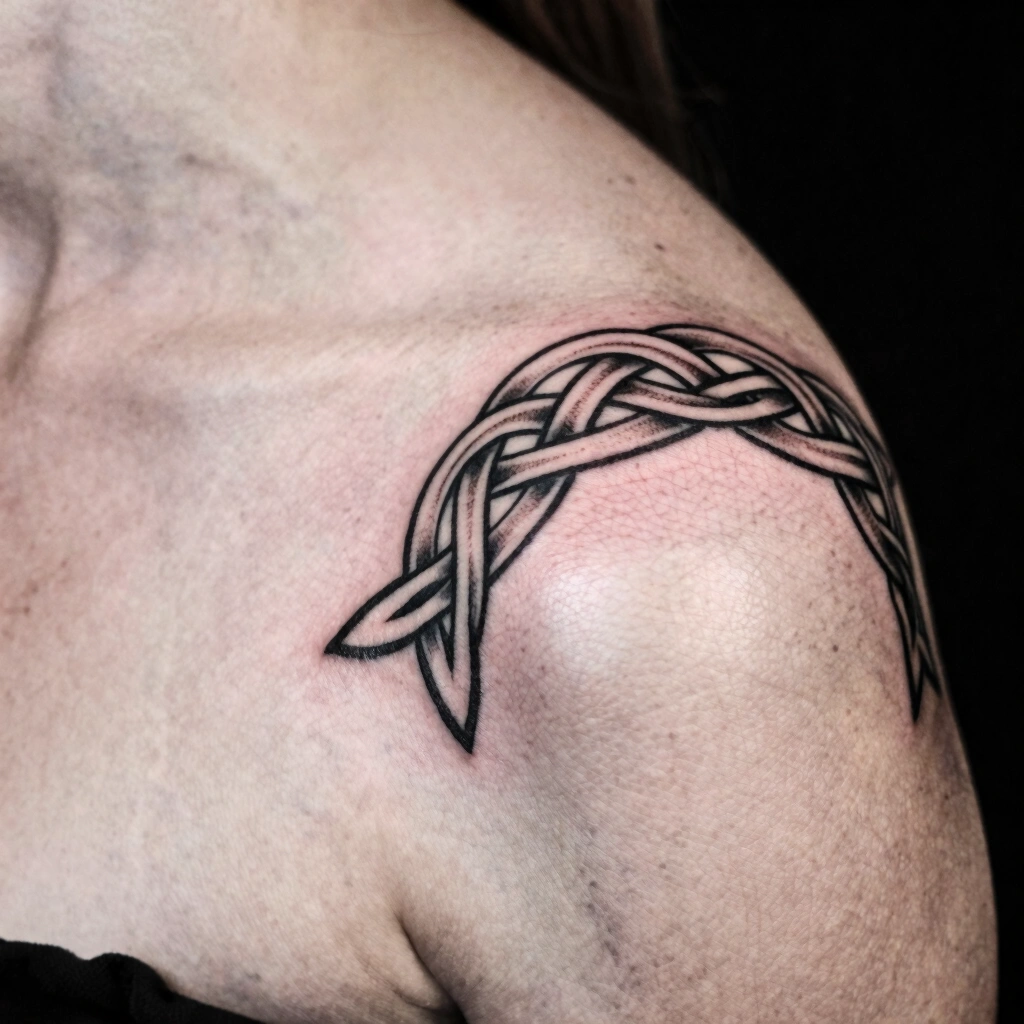
Interlocking knot patterns rendered in bold, continuous linework that wraps the upper shoulder like a woven cuff. The visual complexity comes from the weave pattern, not shading, so line consistency is everything. A 2–4 inch band works well following the arm’s natural curve. Bring reference images of the exact knot pattern you like — Celtic knotwork has many regional variations, and vague requests often get generalized. Pain is moderate. Solid option for guys wanting symbolic heritage ink without color or heavy shading.
Abstract Linework Wrap
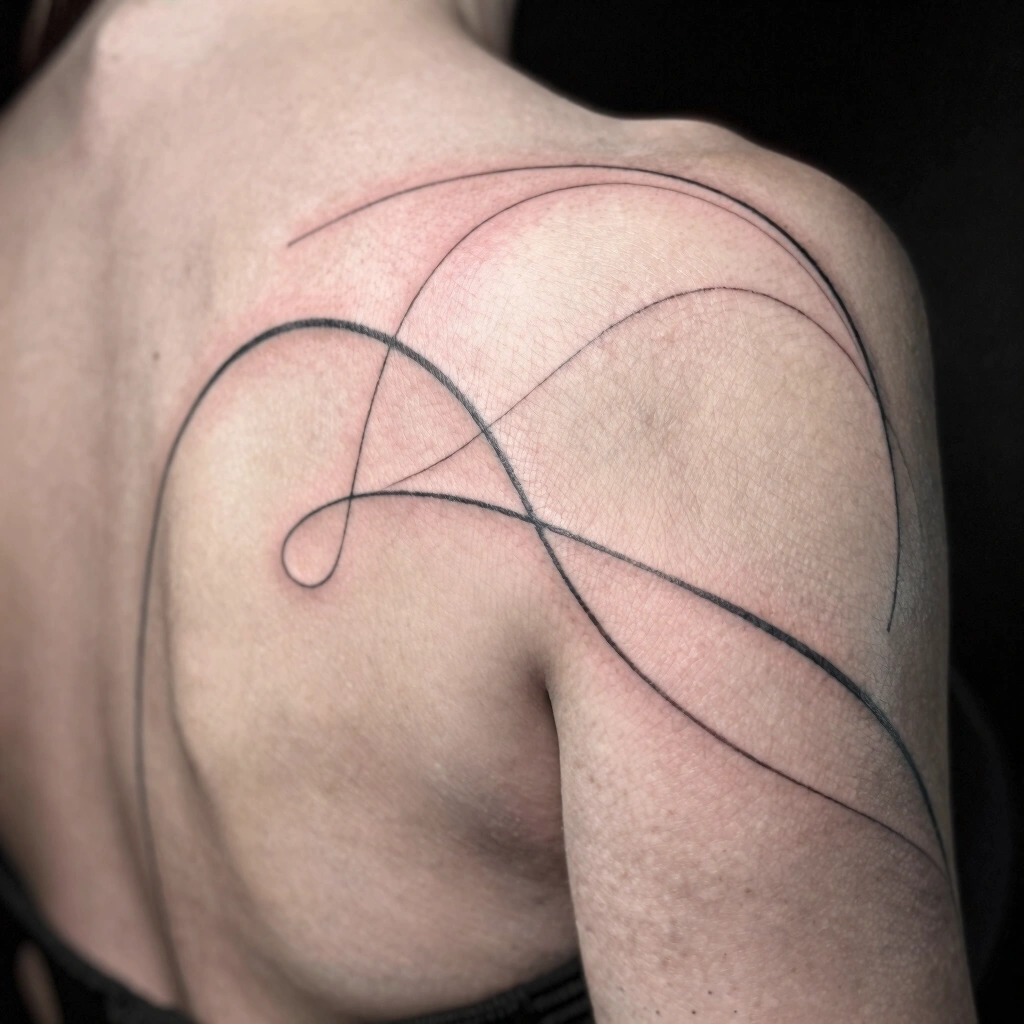
Abstract linework skips recognizable imagery entirely in favor of flowing, sometimes broken lines that follow the shoulder’s contour purely for visual rhythm. This style leans heavily on the artist’s personal linework style, so portfolio review matters more here than with almost any other design. Size flexibility is high — anywhere from 3 to 8 inches works depending on how much shoulder real estate you want covered. Pain is mild to moderate depending on line density. This is a strong choice if you want something that looks intentional and artistic without an obvious “meaning” attached.
Nautical Anchor Piece
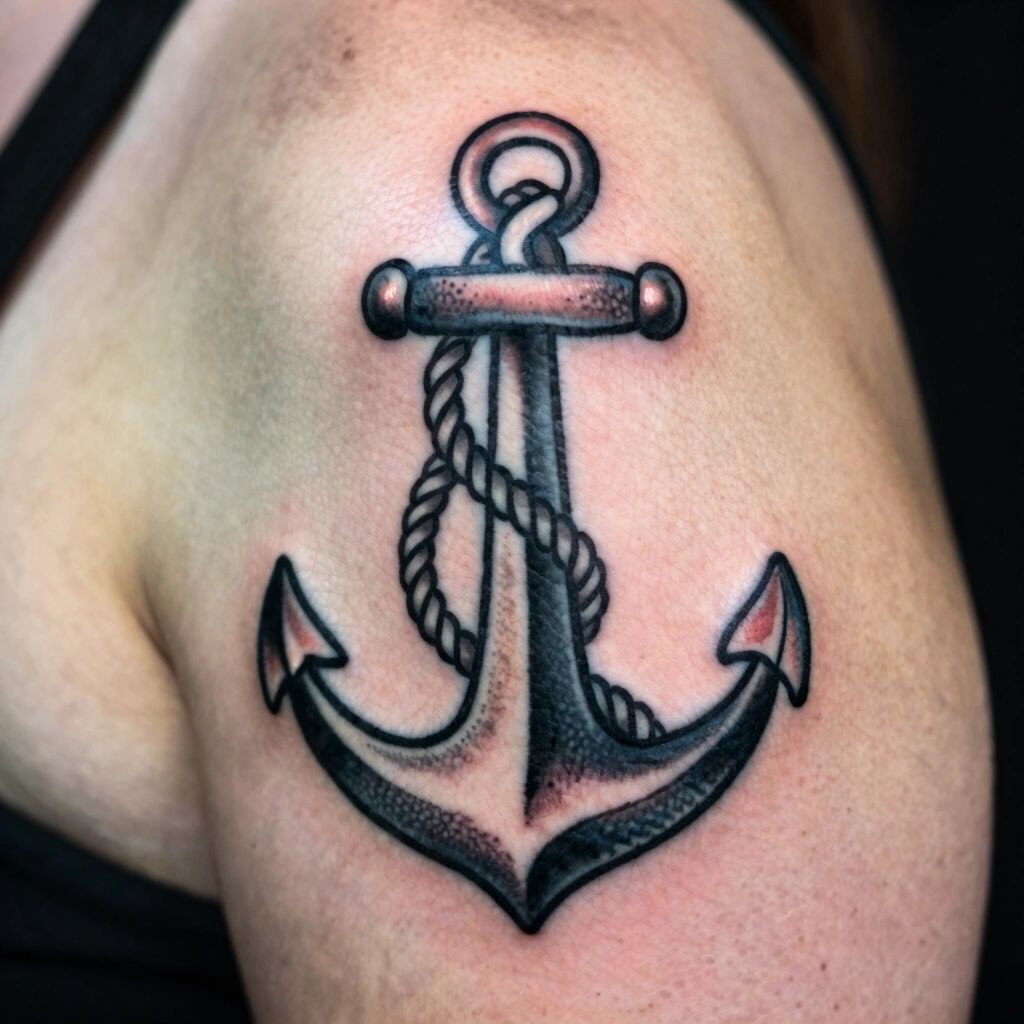
Bold traditional anchor designs, often paired with rope or banner details, sit well on the shoulder cap thanks to their compact, symmetrical shape. Thick black outlines and solid color fills (or solid black for a monochrome version) keep this piece legible from a distance. Stick to at least 3 inches to keep rope detail from blurring. Ask about outline thickness specifically — thin outlines on a bold traditional piece tend to fade unevenly faster than thick ones. Pain is moderate. A dependable choice for a classic, easily recognizable design with decades of tattoo history behind it.
Blackwork Wolf Silhouette

A solid black silhouette design relies entirely on shape recognition rather than internal detail — no shading, no linework inside the figure, just a clean, confident outline filled completely with black. A wolf profile on the shoulder cap reads bold and graphic from across a room. Keep the silhouette simple; overly detailed outlines lose clarity once reduced to solid black. Size around 3–5 inches works best. Pain is moderate. This design ages exceptionally well since there’s no internal detail to blur — it’s one of the lower-maintenance choices on this list long-term.
Phoenix Shoulder Piece

Phoenix designs typically blend bold traditional or black-and-grey realism with dynamic, flowing feather linework that follows the shoulder’s curve toward the upper arm. Color versions use warm saturated tones — orange, red, yellow — while black-and-grey versions rely on shading gradients for the flame and feather texture. This needs real size, 5+ inches minimum, to keep feather detail from collapsing. Discuss with your artist whether you want color or monochrome before finalizing the stencil, since the shading approach differs significantly between the two. Pain runs moderate to high. Popular symbolic choice for guys marking a major life transition.
Minimalist Mountain Line

A simple mountain range rendered in thin, continuous single-needle or fine-line strokes, often placed small and centered on the shoulder cap. No shading, no color — just clean peaks. This is about as low-commitment as shoulder ink gets, typically 2–3 inches. Ask your artist to adjust the peak spacing to match your shoulder width rather than using a generic stencil, so it doesn’t look squeezed or stretched. Pain is mild. Excellent first-tattoo option and easy to keep low-profile for workplace visibility concerns.
Tribal Sun Burst

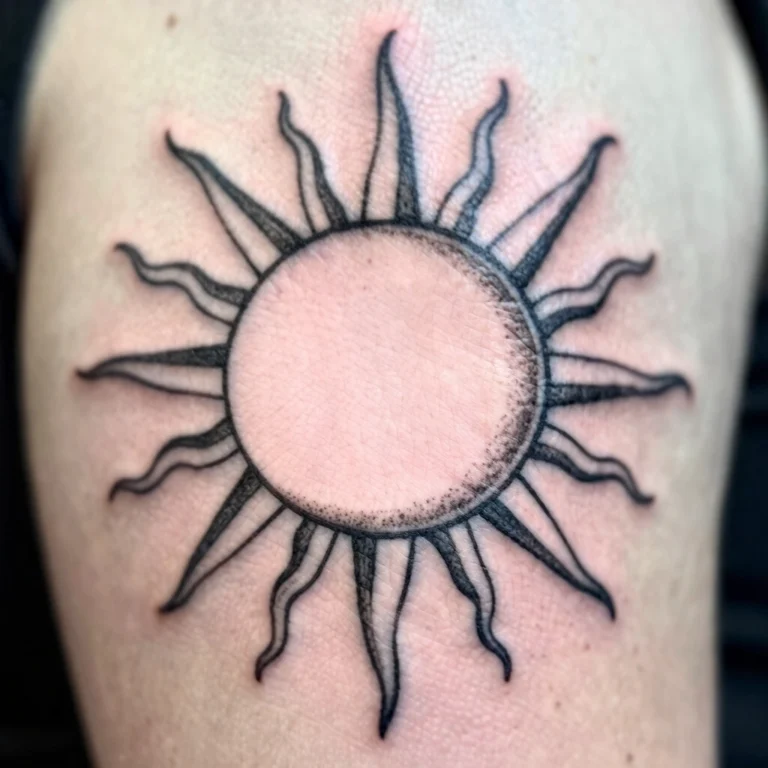
Bold blackwork rays radiating from a central point, often geometric rather than fully circular, sized to hug the shoulder’s curve. The visual weight comes from confident, evenly spaced linework rather than shading. A 4–6 inch design keeps the rays from feeling cramped. Ask about ray spacing symmetry during the stencil review — uneven spacing is one of the most common blackwork mistakes. Pain is moderate. Bold, graphic, and reads well both up close and from a distance.
Feather-to-Birds Transformation

A design where a single feather’s edge dissolves into a small flock of birds in flight, usually done in fine-line or single-needle style with minimal shading. This works particularly well following the shoulder’s slope down toward the arm, letting the “flight path” feel natural. Keep the birds small but not microscopic — under a quarter inch each, detail can vanish within a few years. Bring a reference sketch showing the exact transition point you want. Pain is mild to moderate. Popular symbolic choice tied to change, freedom, or moving on from something.
Samurai Helmet Blackwork

A samurai helmet (kabuto) rendered in bold blackwork or black-and-grey style, usually centered on the shoulder cap with sharp, structured linework reflecting the armor’s geometry. This design carries a lot of detail in a relatively contained shape, so don’t go smaller than 4 inches. Ask your artist whether they’ll use solid blackwork or shaded grey wash for the metal texture — both look great but require different session lengths. Pain is moderate to high given the detail density. Strong option for guys drawn to disciplined, structured imagery with cultural weight.
Armor Plate Blackwork Cap

This design mimics segmented armor plating directly over the shoulder muscle, using bold blackwork lines and solid fill to create a “built-in” look, almost like the tattoo is part of the body’s structure. It requires precise anatomical mapping to follow the deltoid’s natural curve. Full cap coverage typically runs 5–7 inches. Discuss whether you want it to eventually connect into a larger chest or arm piece, since armor designs are often the starting point for bigger projects. Pain is moderate to high across the cap. This wraps up our list, but the placement, pain, and planning advice below matters just as much as the design itself.
Best Placement Ideas

- Top of shoulder cap — highly visible, moderate pain, good for bold or geometric pieces that need a flat surface
- Shoulder wrapping toward bicep — great for larger pieces like dragons or phoenixes that need room to flow
- Shoulder blending into upper chest — best for guys planning a bigger connected piece down the line
- Back of shoulder near shoulder blade — slightly less visible day-to-day, good for guys balancing workplace visibility
- Front shoulder near collarbone — thinner skin, generally more sensitive, better suited to smaller fine-line designs
Tips for Success

Look for an artist whose portfolio shows multiple examples of the specific style you want — not just one strong piece surrounded by unrelated work. A blackwork specialist and a fine-line specialist are not interchangeable, even if both are talented. Bring reference images, not just single Pinterest screenshots — three or four examples showing line weight, size, and placement angle give your artist far more to work with. Ask directly about their experience with your skin tone and texture, since ink settling and healed contrast can vary. And don’t be afraid to ask for a redraw of the stencil if something feels off before the needle touches skin.
Common Mistakes and How to Avoid Them

- Sizing too small for detail — intricate shading or dense linework needs real space; shrink the design, not the detail
- Choosing a placement that fights the artwork’s shape — a flowing design needs a flowing placement, not a flat, cramped one
- Skipping the consultation — walk-in flash is fine for simple designs, but custom pieces deserve a real sit-down first
- Copying a design exactly from a photo — personalize at least one element so it’s genuinely yours, not a duplicate
- Ignoring aftercare instructions — poor aftercare affects how sharp the final healed result looks
Similar Variations

Almost every design above can be resized down for a subtler first tattoo or scaled up into a half-sleeve starting point. Bold traditional pieces can be converted to black-and-grey for a more subdued look, while blackwork silhouettes can add subtle dotwork shading for texture without going full color. Geometric and mandala designs combine well with botanical elements for guys who want structure and softness in one piece.
Aftercare Basics

Aftercare recommendations vary slightly by studio, so always follow the specific sheet your artist gives you over anything you read online. Generally, keep the area clean, avoid direct sun and swimming during initial healing, and avoid tight clothing that rubs against fresh ink. Healing timelines vary by individual, skin type, and design size — a small fine-line piece often looks settled within two to three weeks, while larger, heavily shaded work can take closer to a month to fully settle. If you notice anything that concerns you during healing, consult your artist or a licensed dermatologist rather than guessing.
Quick FAQ

How much does a top of shoulder tattoo cost?
Cost depends heavily on size, detail, and studio rates, but small single-needle or fine-line pieces often start in the low hundreds, while larger custom blackwork or realism pieces can run well into four figures across multiple sessions.
Does it hurt more than other placements?
The shoulder cap sits over muscle rather than bone in most spots, so many people find it more tolerable than wrist or rib placements, though pain tolerance genuinely varies person to person.
How long does healing take?
Surface healing generally takes two to three weeks, with full settling taking closer to a month, though this varies by design size and individual skin.
Will it fade over time?
All tattoos fade gradually with sun exposure and age; bold blackwork and solid outlines tend to hold their shape longer than thin single-needle linework, which may need a touch-up after several years.
Finding the right top of shoulder tattoo really comes down to matching the design’s technical demands — line weight, shading style, size — with a placement and artist who can actually deliver it well. Take your time, ask real questions during your consultation, and treat the healing process seriously instead of an afterthought. Do that, and your top of shoulder tattoo will still look sharp and intentional years from now, not just on the day you walked out of the chair.