19 Back Tattoos Women Are Requesting Most in 2024 (With Real Placement, Pain, and Cost Guidance)
Thinking about back tattoos women in your area are getting right now, but tired of articles that just show pretty pictures without telling you anything useful? I get it. I’ve spent enough time hanging around tattoo studios, watching consultations and healing check-ins, to know the difference between a design that photographs well and one that actually works on skin long-term.
So what are the best back tattoos for women right now? Fine-line florals, blackwork spine pieces, dotwork mandalas, and negative-space designs dominate current requests because the back offers flat, stretchable canvas that holds fine detail and larger scale work equally well. The right choice depends on your pain tolerance, how visible you want it, and how much detail you’re willing to maintain over the years.
Stick around, because I’m also going to walk you through pain levels by placement, realistic healing timelines, what a session actually costs, and exactly how to brief an artist so you don’t end up with a stencil that looked better on paper than it does on you.
Why the Back Works So Well for Serious Ink
The back has more usable, mostly flat surface area than almost anywhere else on the body. That matters because line weight (how thick or thin a tattoo line is) and shading hold up better on flat skin than on curved or bony spots like ankles or wrists. It’s also easy to cover for work, which makes it a low-stress spot for a first tattoo or a bigger custom piece you’re not ready to show everyone yet. The tradeoff? Some back placements — especially the spine and shoulder blades — sit close to bone, which tends to bump up discomfort during longer sessions.
Fine Line vs. Blackwork vs. Dotwork: Know the Difference Before You Book
You’ll see these terms throughout this list, so let’s clear them up first.
Fine line — Thin, single-needle style linework with little to no shading. Looks delicate and minimal but fades faster than bold work over 10+ years.
Blackwork — Solid black ink, often bold and graphic, using thicker lines or filled-in areas. Holds up longer on skin than fine line because there’s more ink saturation.
Dotwork — Shading and texture built entirely from small dots instead of solid fill or line shading. Creates a soft, gradient look but takes longer in the chair and costs more per hour.
Negative space — Design that uses untattooed skin as part of the image, relying on the surrounding blackwork or line art to define a shape.
1. Fine-Line Spine Script Tattoo
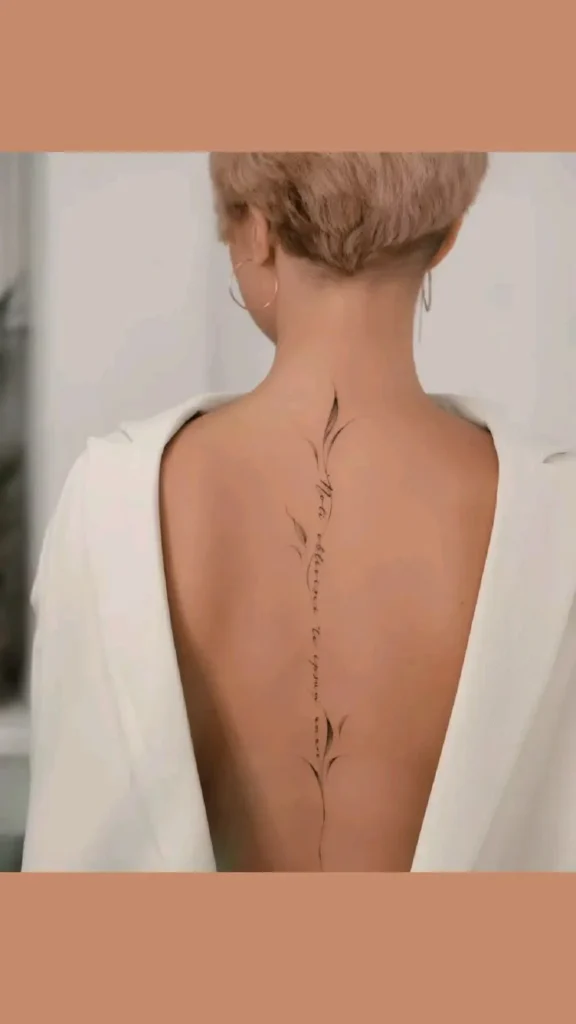
A single vertical line of small, evenly spaced lettering running down the spine is one of the most requested back tattoos women bring to consultations. The technique is single-needle work, meaning a thin needle configuration creates hairline strokes with minimal shading. Best placed centered along the upper-to-mid spine, sized around 4–8 inches long. Because it sits directly over bone, expect more sensitivity than on fleshier areas — this is one of the more uncomfortable spine placements. Healing typically runs 2–3 weeks for surface peeling, though full settling takes longer. Bring a printed font sample, not just a phrase, so your artist can adjust spacing for your torso length. Great for a first tattoo since it’s low-commitment and easy to conceal under most tops.
2. Blackwork Floral Vine Along the Spine
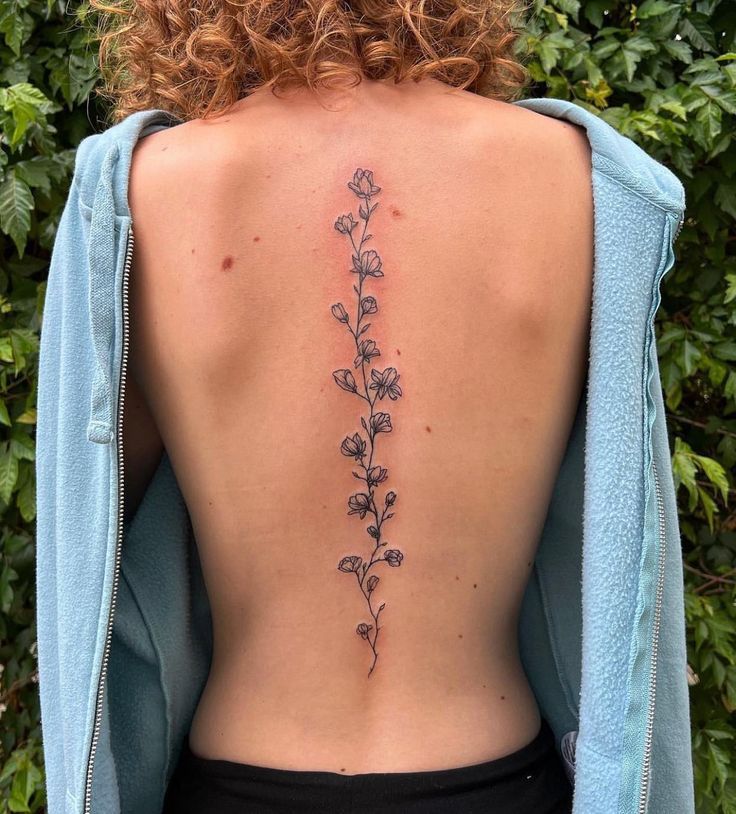
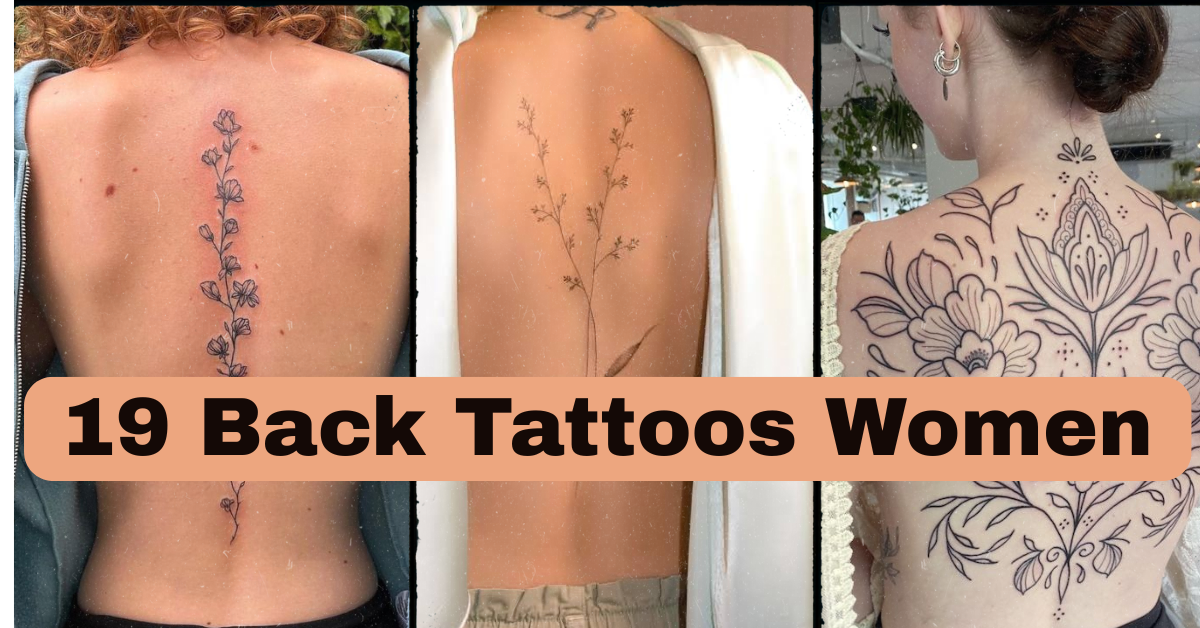
Where the script tattoo above stays minimal, this design ramps up visual weight using solid black botanical shapes — leaves, thorned stems, small blossoms — layered along the spine in a continuous vine. The linework is thicker than fine line, usually done with a slightly larger needle grouping, and shading is achieved through solid fill rather than gradients. This holds ink density better over time than fine-line equivalents, meaning less noticeable fading at the 5-year mark. Placement works well from the nape down to mid-back, sized 10–14 inches. Pain runs moderate to high due to spine proximity and session length. Ask your artist about “walk-in vs. custom booking” — a piece this size usually requires a custom consultation, not a same-day walk-in slot.
3. Dotwork Mandala Upper Back Tattoo
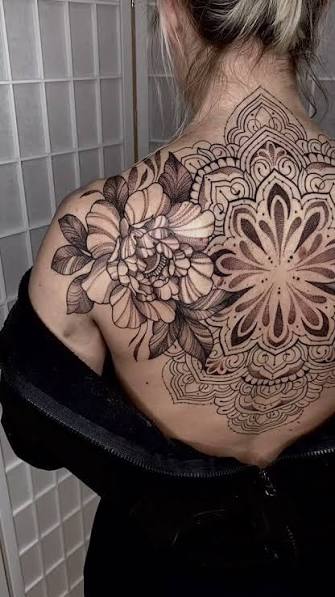
Mandalas built from dotwork rely on thousands of tiny puncture points to create shading, texture, and gradient without a single filled-in area. It’s a slower technique, so expect a longer sitting than blackwork of the same size. The visual payoff is a soft, almost embroidered look that ages gracefully because the dot density can be adjusted to hide minor fading. Best centered on one shoulder blade or symmetrically across both, sized 5–7 inches per side. Skin with visible texture (stretch marks, light scarring) can actually work in dotwork’s favor since the pattern camouflages irregularities. Discomfort is generally moderate — less intense than solid blackwork over the same area, since the needle isn’t dragging continuously.
4. Single-Needle Constellation Back Tattoo
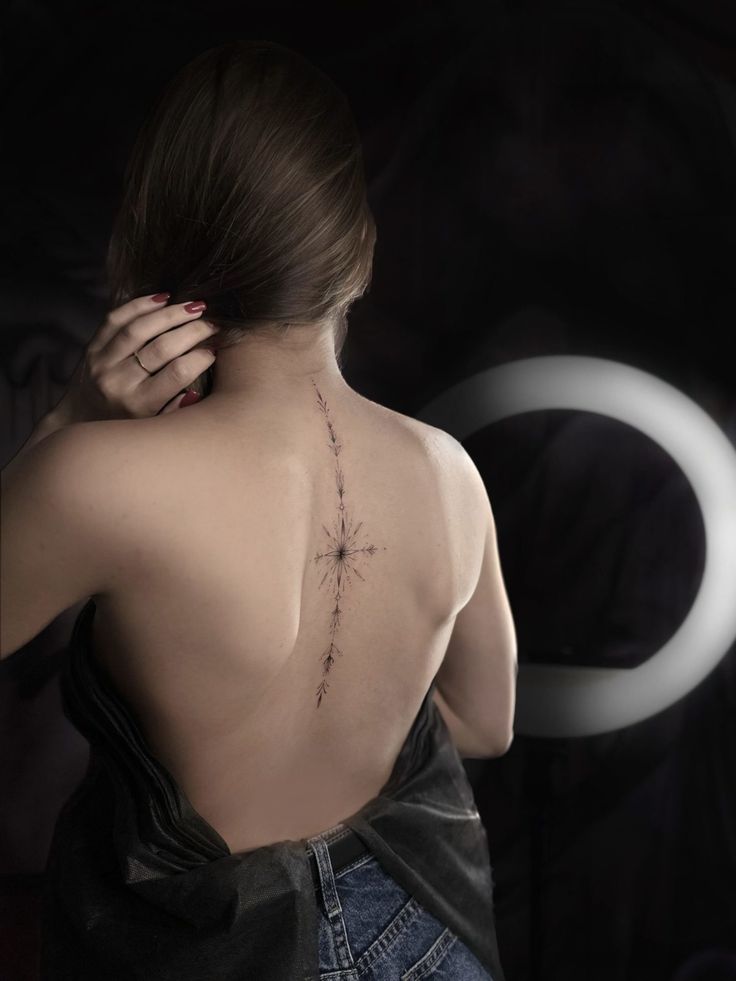
Constellation designs using single-needle technique connect small dots and thin lines to map real or invented star patterns across the upper back or between the shoulder blades. Line weight stays extremely thin throughout, with no shading at all, so the finished look reads as delicate and almost sketch-like. This is one of the most fade-prone styles on this list because single needle deposits less ink per pass — ask your artist directly about touch-up scheduling within the first 12–18 months. Ideal size ranges from 3–6 inches for subtlety. Pain is generally lower than blackwork since there’s no heavy shading pass. Great for matching tattoos between siblings or best friends using different star patterns.
5. Negative Space Butterfly Tattoo
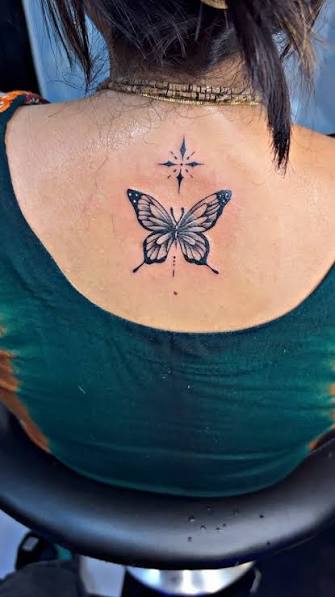
Negative space tattoos use the tattooed black areas to frame and define an untouched shape — in this case, a butterfly’s wings appear as blank skin surrounded by dark, textured background work. It’s a more advanced blackwork technique, and portfolio review matters a lot here, since poor negative space execution just looks like an unfinished tattoo. Best placed on the upper back or shoulder where skin is flatter and less likely to distort the shape over time. Size should stay above 4 inches — smaller attempts lose the negative space effect entirely. Expect moderate-to-high discomfort from the dense surrounding blackwork. This design ages best on lighter skin tones where the contrast reads clearly; ask your artist how the effect will look on your specific tone during consultation.
6. Bold Traditional Rose Back Piece
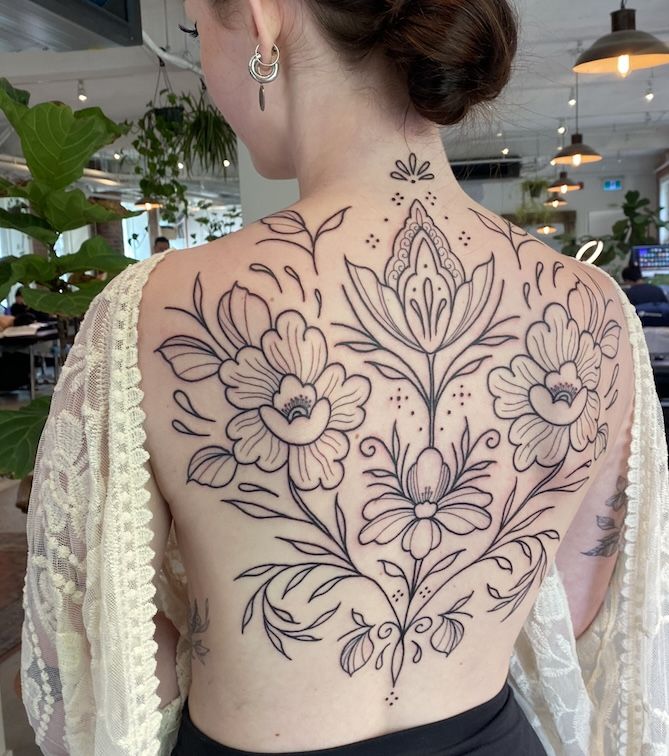
Traditional American-style roses use thick, confident outlines, limited color saturation (usually red, green, black), and simple two-tone shading rather than photorealistic gradients. This is bold, high-saturation work meant to stay legible even decades from now — traditional style was literally developed to age well on skin. Best placed on the shoulder blade or upper back where there’s enough flat space for the bold linework to sit without warping. Size of 4–6 inches keeps detail readable. Healing runs about the same as blackwork, 2–4 weeks for surface healing. Pain is moderate; thick outlining can feel more intense than thin fine-line passes but sessions are usually shorter. A dependable choice if you want something that still looks sharp at your 20-year reunion.
7. Watercolor-Style Floral Shoulder Blade Tattoo
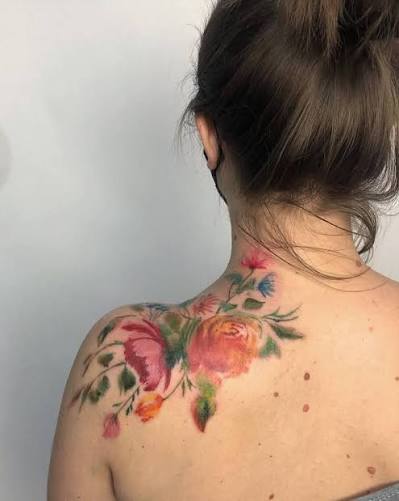
Watercolor tattoos mimic paint bleeds using soft color transitions and little to no black outline. It’s a striking look fresh out of the chair, but it’s worth knowing upfront: color ink fades faster than black ink, and watercolor pieces often need touch-ups sooner than blackwork of similar size. Best placement is the shoulder blade, where flat skin helps color gradients sit evenly. Keep size around 4–6 inches to avoid the “blurry” look larger watercolor pieces can develop over years. Pain sits in the moderate range. If you love the aesthetic but want longevity, ask your artist about adding a thin black linework outline underneath the color — it helps the shape hold its form as pigment softens.
8. Fine-Line Botanical Wing Tattoo
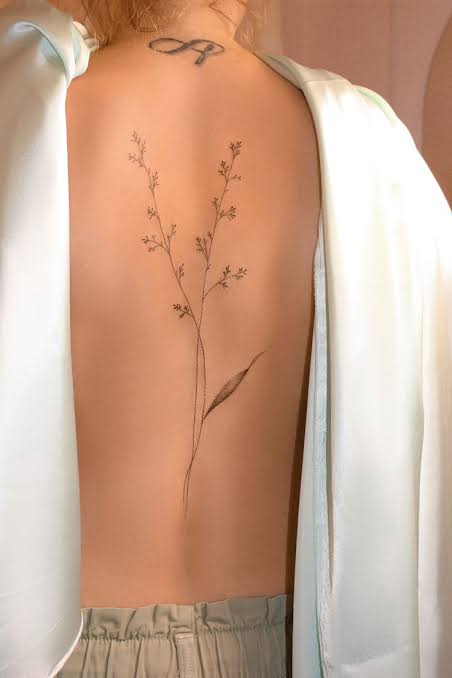
This design uses fine-line botanical elements — ferns, wildflowers, thin branches — arranged in a wing-like sweep across the upper back, from spine to shoulder. The composition principle here is asymmetry balanced by repetition: similar leaf shapes repeated at different sizes create movement without symmetry. It’s a bigger commitment size-wise, often 10–16 inches, which means multiple sessions. Bring reference photos of real botanical illustrations rather than other people’s tattoos, so your artist can build something custom instead of copying an existing piece stroke for stroke. Pain builds over longer sessions, so expect breaks. Healing takes 2–3 weeks on the surface. This one ages better if lines stay slightly thicker than pure single-needle work — ask your artist about weight-appropriate needle sizing for longevity.
9. Minimalist Line Art Mountain Range
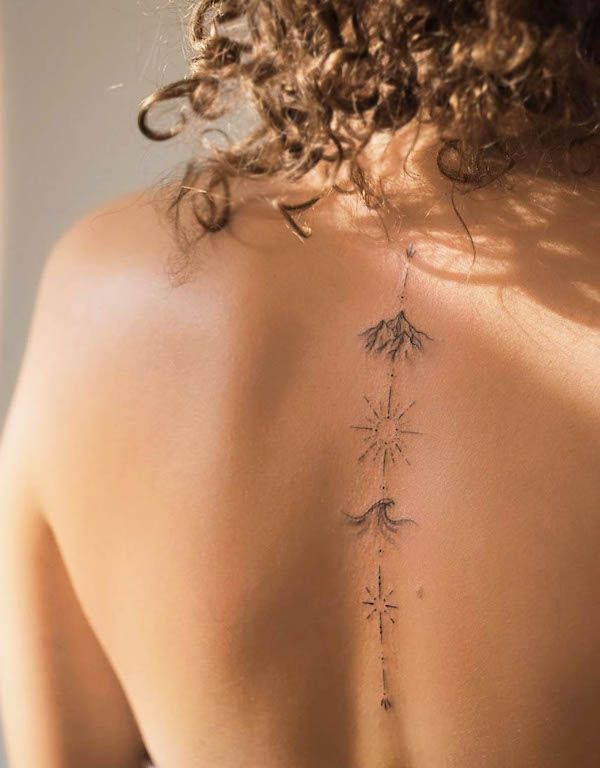
A simple horizontal mountain silhouette in thin, unbroken linework sits well across the upper back or lower back, running from one side to the other. There’s no shading, just clean geometric lines, which keeps the healing process shorter and the pain lower than shaded pieces. Size can range from 3 inches for a subtle version to 12+ inches for a statement piece spanning the shoulder blades. This design suits first-timers well because the technique is straightforward for most linework specialists to execute cleanly. Skin with a smooth, even texture shows crisp lines best. Because there’s minimal ink density, expect this design to soften noticeably by year 8–10 — plan on a touch-up appointment to keep lines crisp.
10. Geometric Blackwork Back Piece
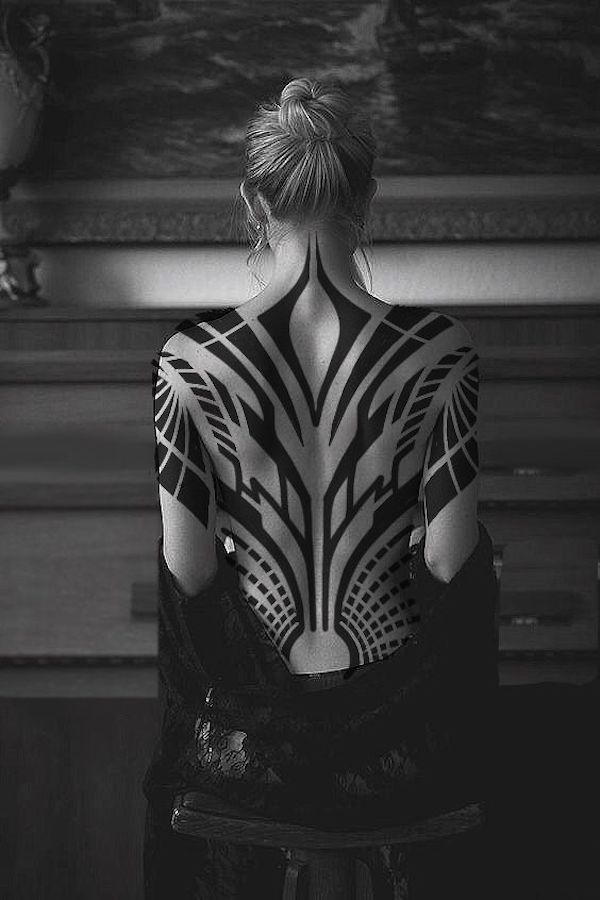
Geometric blackwork combines straight lines, triangles, and symmetrical patterns into a structured design, often centered on the spine or spanning both shoulder blades. Precision is everything here — even slight asymmetry is noticeable, so portfolio review is critical before booking. Line weight is usually consistent and moderately thick to keep angles crisp over time. Size flexibility is high, from a 3-inch shoulder accent to a full back centerpiece. Pain runs moderate to high depending on size and session length. This style holds up exceptionally well over decades because solid blackwork retains ink density better than fine, thin lines. Great option if you want something bold but still fairly conservative-looking under clothing for workplace visibility concerns.
11. Delicate Fine-Line Snake Spine Tattoo
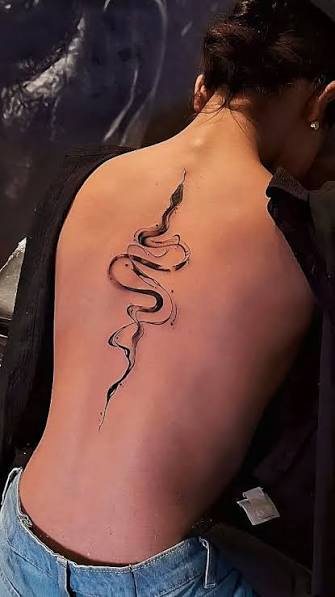
A snake winding down the spine in fine-line style uses thin, continuous outlining with minimal cross-hatching for texture. The composition follows the spine’s natural curve, which is a smart placement choice — the artist can use body geometry instead of fighting it. Best kept around 6–10 inches long. Expect notable discomfort since it tracks directly over the spine’s most sensitive stretch; many people request breaks partway through. Healing takes 2–3 weeks. This design suits people wanting something a little edgier than a floral piece but still delicate in execution. Ask your artist about scale placement — snake tattoos that taper too abruptly near the tail end can look unfinished once healed.
12. Symmetrical Mandala Shoulder Blades
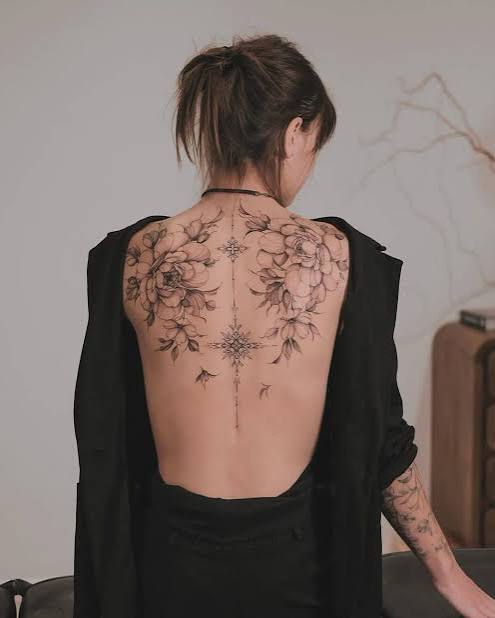
Placing a mandala on each shoulder blade instead of just one creates a mirrored, symmetrical look across the upper back. Each piece is typically done in dotwork or fine-line combination, sized 3–5 inches per side. Symmetry is technically demanding — small measurement errors become obvious once both sides are visible — so this is a design where you specifically want to see matching-set work in an artist’s portfolio. Pain is moderate on the fleshier shoulder blade area, generally more tolerable than spine placements. This is a popular choice for matching best-friend tattoos when each person gets one half of a design that only makes visual sense together.
13. Fine-Line Wildflower Bouquet Lower Back
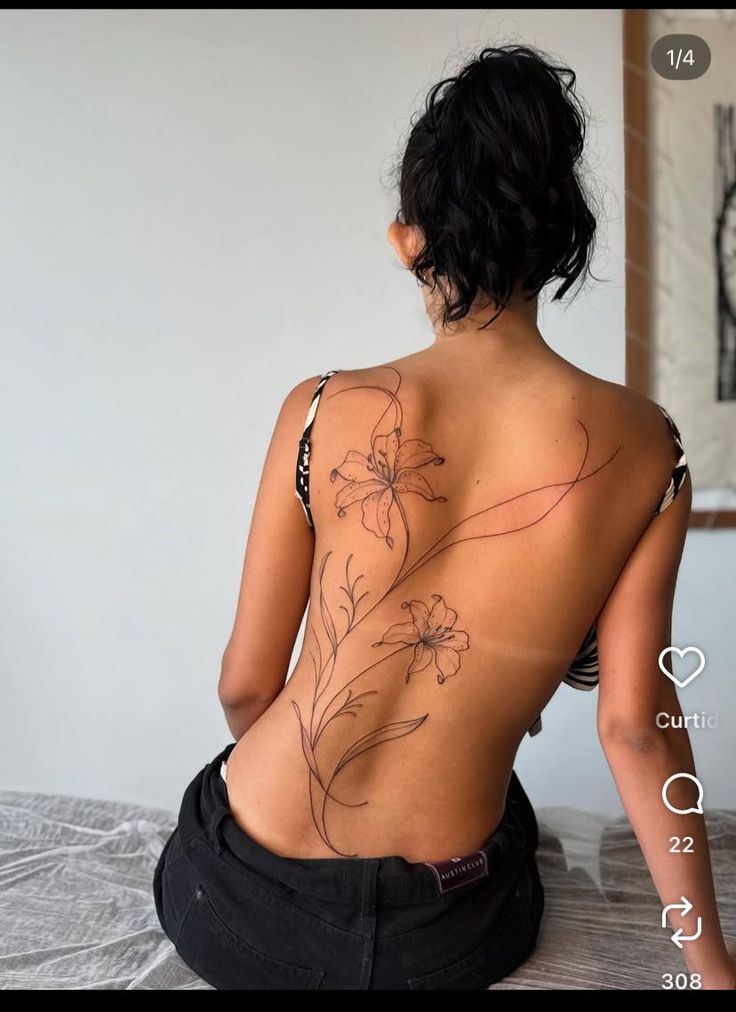
A small bouquet of wildflowers rendered in fine line sits nicely just above the lower back’s natural curve. Line weight stays thin throughout, with light stippling (small dot clusters) used sparingly for petal texture instead of full shading. Size of 3–5 inches keeps the piece proportionate and easy to conceal. Lower back skin can stretch more than upper back skin over time due to natural body changes, so slightly bolder line weight here helps the design stay legible longer — worth discussing directly with your artist. Pain tends to be lower in this area compared to the spine or shoulder blades. A solid pick if you want something personal and quiet rather than a statement piece.
14. Blackwork Sun and Moon Duo
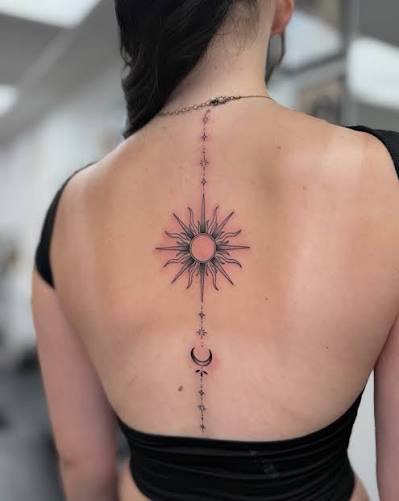
Placed on opposite shoulder blades, a sun and moon pair done in solid blackwork creates a balanced, symbolic composition without needing color. Each icon usually stays within 3–4 inches, using bold outlines and minimal internal detail to keep the shapes graphic and legible from a distance. This design reads clearly even at smaller scale, which makes it a good option if you want meaningful symbolism without a large piece. Pain is moderate on the shoulder blades. Healing typically wraps up within 2–3 weeks. Because it’s a simple, symbol-based design, it also works well as a matching tattoo between partners or family members without needing identical placement.
15. Illustrative Bird Flock Back Tattoo
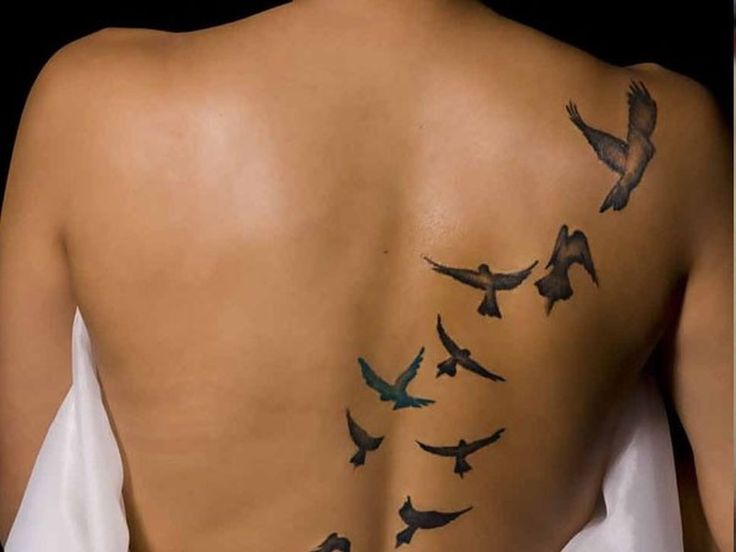
A scattered flock of small birds in flight, rendered in fine line with minimal shading, works well diagonally across the upper back or trailing down toward the spine. The composition principle is directional flow — the birds should visually lead the eye in one direction, usually up toward the shoulder or down toward the lower back. Individual birds are small, 1–2 inches each, but the full grouping can span 8–12 inches. This is a good design to personalize: ask your artist to vary bird size and spacing rather than using a stock flash template exactly as-is. Pain varies by exact placement but is generally moderate. Healing runs the standard 2–3 weeks for surface work.
16. Sacred Geometry Dotwork Back Piece
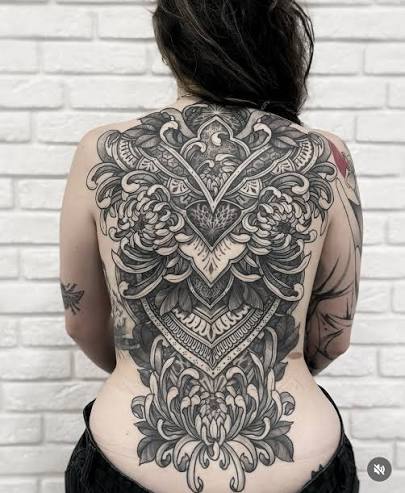
Sacred geometry designs — interlocking circles, triangles, and symmetrical patterns — done in dotwork create intricate shading without any solid black fill. This technique takes noticeably longer per square inch than blackwork, so budget for a longer session or multiple appointments on anything larger than 6 inches. Best centered on the upper back where symmetry is easiest to execute evenly. Pain is generally more tolerable than dense blackwork since the needle isn’t dragging continuously, though total session length adds fatigue. This design ages well because dot density can be planned with some fading in mind from the start. A strong option for people who want a large, detailed piece without full-color commitment.
17. Custom Lettering Quote Along Shoulder Blades
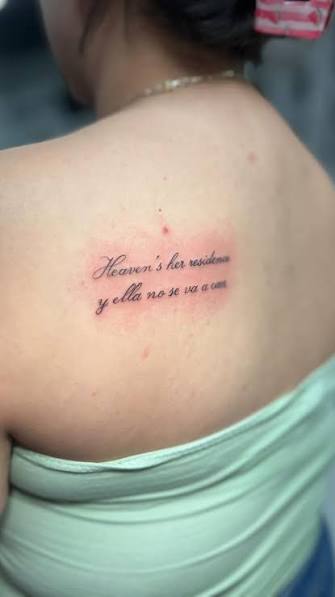
A short quote or phrase in custom script, curved to follow the natural line of one or both shoulder blades, is one of the more personal back tattoos women request. Font choice matters more than people expect — thin cursive scripts fade faster than block lettering, so ask your artist which font styles hold up best at your chosen size. Keep phrases short; longer quotes forced into a small space often blur together after a few years. Size typically runs 4–8 inches depending on word count. Pain is moderate on the shoulder blade. This is an easy design to keep private, since it sits in a spot that’s simple to cover for work environments.
18. Abstract Linework Wave Design
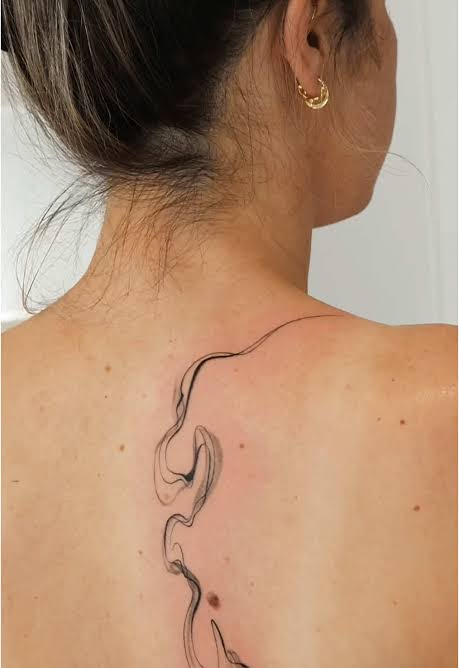
Flowing, abstract wave shapes in continuous fine line create movement across the lower back or along one side of the spine. The technique relies on smooth, unbroken curves rather than shading, so line consistency is the main thing to evaluate in an artist’s portfolio — wobbly lines are far more noticeable in abstract work than in busy, detailed pieces. Size ranges from a subtle 3-inch accent to a sweeping 10-inch design. Pain is generally lower than spine-centered pieces since it can be positioned off the bone. Healing takes the standard 2–3 weeks. This design suits people who want something modern and symbolic without literal imagery.
19. Large-Scale Floral and Vine Full Back Piece
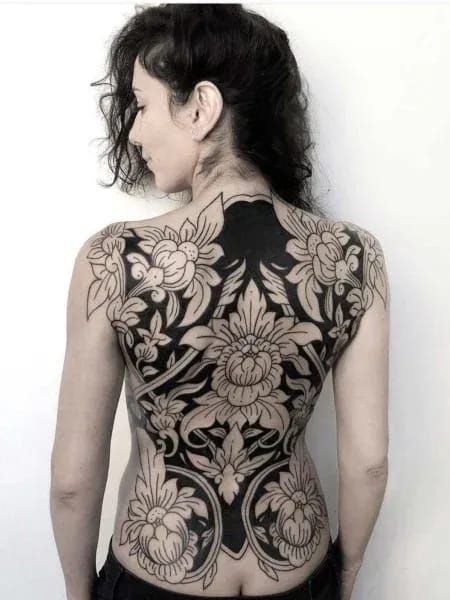
For readers ready for a serious commitment, a full-back floral and vine piece combines fine-line detail with blackwork shading across a large connected composition. This typically requires multiple sessions spaced weeks apart to allow proper healing between sittings. Expect a real cost conversation here — large custom back pieces are priced by session or by piece, not by a flat flash-tattoo rate. Pain accumulates over long sessions, especially near the spine and shoulder blades. This is not a first-tattoo-friendly choice; it’s better suited to someone who already has a few smaller pieces and understands their pain tolerance and healing patterns. Done well, though, it’s one of the most striking design categories on this list.
Best Placement Ideas
- Upper back / shoulder blades — high visibility control, moderate pain, easiest to keep covered for work
- Center spine — most symbolic placement, but highest pain due to bone proximity
- Lower back — lower pain generally, but more skin stretch over time, so bolder linework holds up better
- Full back — maximum design space, requires multiple sessions and a bigger budget
- Single shoulder blade — good beginner spot; less painful than full spine, easy to size up later
Tips for Success
Look through a potential artist’s healed work, not just fresh photos — fresh tattoos always look sharper than they will in six months. Bring 2–3 reference images and describe the feeling you want (delicate, bold, symmetrical) rather than asking for an exact copy. Ask directly about needle configuration for fine-line or dotwork pieces, since finer needles affect both pain and long-term fade rate. A licensed, experienced artist should always be willing to discuss aftercare, realistic sizing, and touch-up expectations before you book.
Common Mistakes and How to Avoid Them
- Sizing a detailed design too small, which causes fine lines to blur together as skin ages
- Choosing delicate fine-line work for a high-friction placement like the lower back if you have an active lifestyle
- Skipping the artist’s specific aftercare instructions in favor of generic internet advice
- Copying someone else’s exact tattoo instead of asking for small custom adjustments
- Booking a walk-in slot for a large custom piece that really needs a full consultation
Similar Variations
Most of these designs scale easily. A mandala can shrink from a full shoulder blade piece down to a 2-inch accent, or grow into a full-back centerpiece. Blackwork florals can be softened into fine-line versions for a more delicate look, or bulked up with dotwork shading for extra texture. Symbol pairs like the sun and moon can be recolored with subtle color washes instead of pure black, though color will need more frequent touch-ups over time.
Aftercare Basics
Aftercare recommendations vary slightly by artist and studio, so always follow the specific sheet you’re given at your appointment. In general, most professionals recommend keeping the area clean, avoiding direct sun exposure and swimming during initial healing, and avoiding tight clothing that rubs against a fresh back piece. Healing timelines and reactions vary by individual, so check in with your artist or a licensed dermatologist if anything looks unusual.
Quick FAQ
How much do back tattoos typically cost?
Cost depends on size, detail, and your artist’s hourly or piece rate, but small pieces often start in the low hundreds while large custom back pieces can run into the thousands across multiple sessions. Always ask for a quote during consultation rather than assuming a flash-tattoo price applies.
Do back tattoos hurt more than other placements?
Pain varies by individual and by exact spot — areas over the spine or shoulder blade bone tend to feel more intense than fleshier parts of the back. General dermatological consensus is that pain tolerance is personal, so ask your artist about breaks during longer sessions.
How long does a back tattoo take to heal?
Surface healing generally takes about 2–3 weeks, though full settling under the skin can take longer. Healing time varies by individual and by design size, so follow your artist’s specific aftercare guidance closely.
Will a back tattoo fade or need touch-ups?
Most tattoos fade somewhat over years, with fine-line and color work typically fading faster than dense blackwork. A touch-up every several years keeps detail and saturation looking fresh, especially for fine-line pieces.
Choosing the right one from this list of back tattoos women trust for both meaning and longevity really comes down to matching the technique to your pain tolerance, your lifestyle, and how much detail you actually want to maintain over the years. Take your time picking an artist, ask direct questions about sizing and healing, and don’t be afraid to personalize any design here instead of copying it exactly — that’s ultimately what makes back tattoos women wear for decades still feel personal the tenth year in, not just the first.