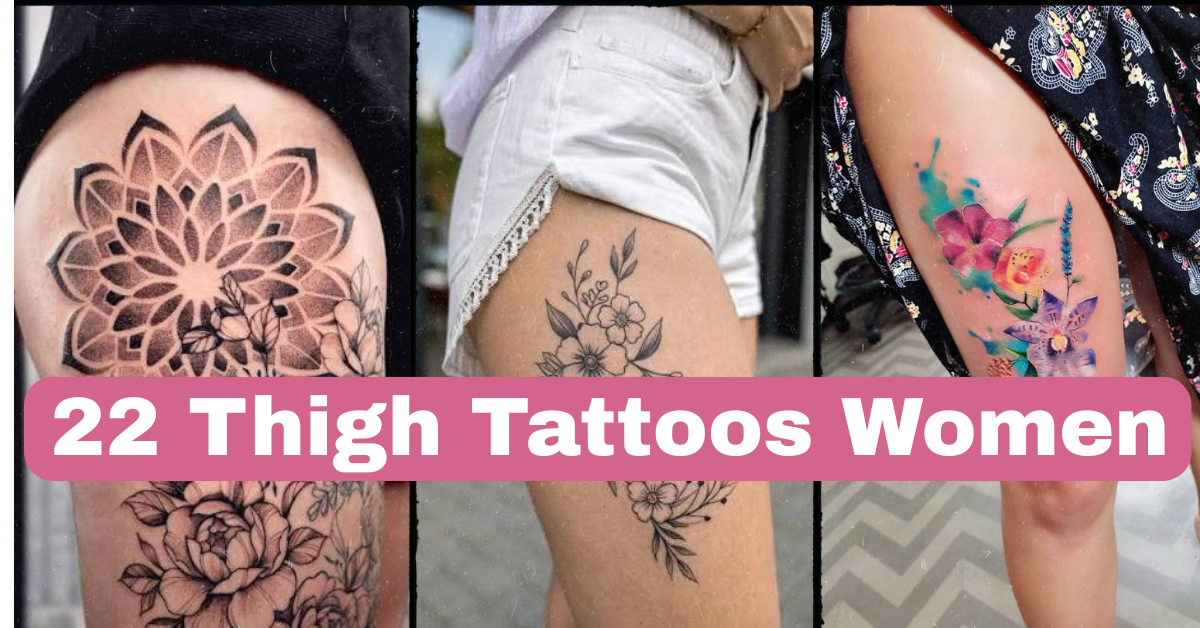
22 Thigh Tattoos Women Actually Book (Not Just Save on Pinterest)
Nervous about picking a thigh tattoo design you’ll actually still love in five years? You’re not alone, and honestly, that hesitation is a good sign — it means you’re thinking this through instead of walking into a shop on a whim. I’ve spent enough time around tattoo studios watching consultations happen to know the difference between a design that photographs well and one that actually holds up on skin.
So what are the best thigh tattoo ideas for women? Fine-line florals, blackwork mandalas, dotwork geometric patterns, and single-needle script all work exceptionally well on the thigh because the flat, generous surface area supports detail, shading gradients, and larger compositions that smaller areas like the wrist can’t hold. The outer and upper thigh also heal a bit easier than bony spots since there’s more soft tissue cushioning the needle.
Stick around, because I’m covering placement tradeoffs, real pain expectations, healing timelines, rough cost ranges, and exactly how to brief an artist so you walk out with something that ages well — not just something that looked good in a photo.
Why the Thigh Is One of the Best Canvases for Detailed Work
The thigh gets overlooked a lot in favor of forearms and wrists, but it’s actually one of the most forgiving placements for ambitious designs. You’ve got a large, relatively flat surface with minimal bone contact, which means shading techniques, gradient work, and larger linear compositions render more evenly than they would on a joint or bony ridge. It’s also easy to conceal or reveal depending on your outfit, which matters if you work somewhere with a dress code. Below are 22 design ideas broken down with the technical detail most articles skip entirely.
1. Fine-Line Botanical Vine
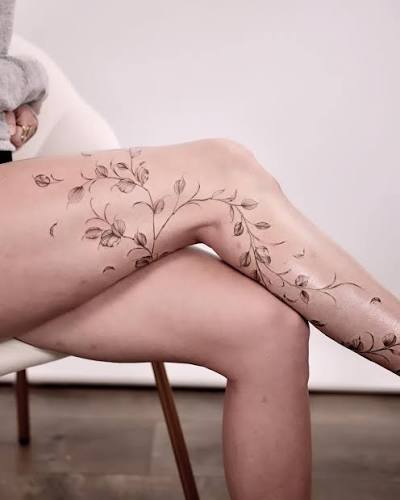
A fine-line vine running from hip to knee uses thin, consistent line weight (usually a 3RL or single needle configuration) to create a delicate, almost hand-drawn look. There’s no heavy shading here — the detail comes from varying leaf density and negative space, meaning the untouched skin between lines does visual work instead of ink. This suits the outer thigh best, where the vine can follow the natural curve of the leg. Healing typically runs 10–14 days. Pain is moderate; fine-line work on fleshier areas tends to feel like a persistent scratching sensation rather than sharp pain. Bring a photo of an actual vine or plant, not just other tattoos, so your artist can custom-map the flow to your leg. This works great as a first tattoo since it’s low-commitment and easy to extend later.
2. Blackwork Mandala Panel
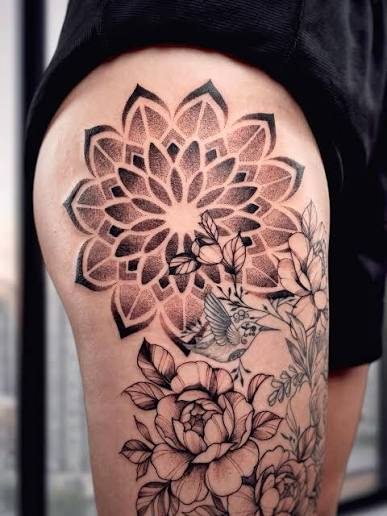
Blackwork uses solid, saturated black ink with almost no gray shading, relying on bold geometric patterns for visual weight. A mandala panel on the upper thigh takes advantage of the flat space to keep symmetry accurate — something that’s much harder to pull off on a curved or narrow limb. Expect longer sessions (2–4 hours depending on size) since the solid fill takes more time than linework alone. This placement is more visible in shorts or swimwear, so consider that if workplace coverage matters to you. Pain runs moderate to high because of the saturation passes over the same skin. Ask your artist about stencil placement before the appointment so you can approve symmetry while standing, not just lying down.
3. Dotwork Geometric Thigh Piece
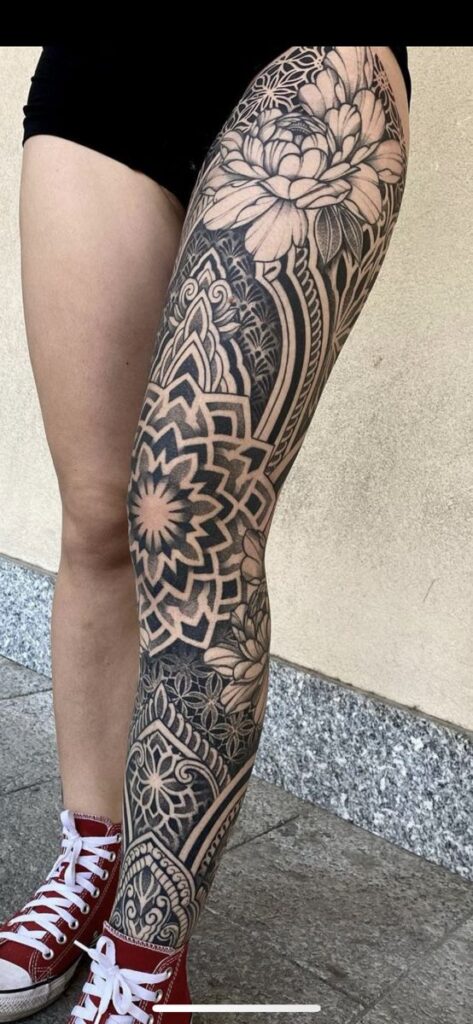
Dotwork builds shading and texture using thousands of individual dots instead of solid lines or fill, creating a stippled, almost engraved look. On the thigh, this technique shines in geometric designs — triangles, sacred geometry, or layered patterns — because the dot density can shift gradually across a wide space to suggest depth without any actual gradient blending. It’s slower to tattoo than blackwork, so budget more session time. Healing feels similar to fine-line work, though scabbing can look slightly more textured during the first week. This ages well because dotwork doesn’t rely on crisp line edges that can blur over decades.
4. Single-Needle Portrait Silhouette
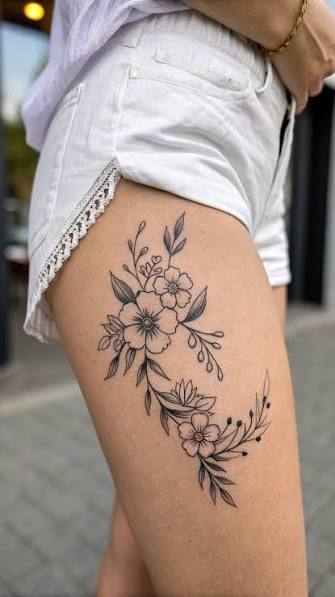
A single-needle tattoo uses one tiny needle point instead of a grouped configuration, producing extremely fine, almost hair-thin lines. A silhouette portrait — a profile, a pet outline, a small figure — done in single-needle style looks delicate on the inner or outer thigh at a 3–5 inch size. Because the lines are so thin, this technique is more prone to fading and blurring over 10+ years than bolder work, so plan for touch-ups. Pain is generally lower than blackwork since there’s less repeated passing over the same skin. This is a strong pick for meaningful, personal designs that don’t need to shout.
5. Bold Traditional Rose
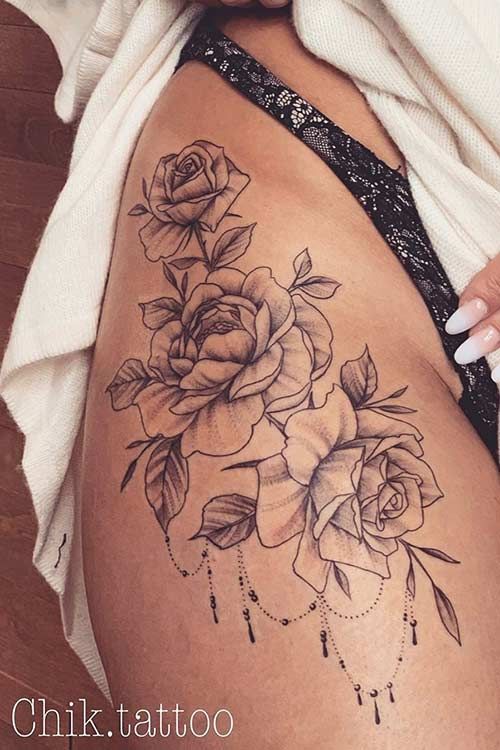
Traditional (or “American traditional”) tattooing uses thick, confident outlines, a limited but saturated color palette, and minimal fine detail — think bold reds, greens, and black rather than realistic shading gradients. A rose in this style on the thigh holds up remarkably well over time because the thick lines resist the blurring that fine-line work experiences. This is a great option if you want something that still looks sharp at your 20-year reunion. Pain level sits in the moderate range; color saturation passes add time but not necessarily more discomfort. Ask about which red pigments your artist uses, since some react differently on different skin tones.
6. Negative Space Line Art
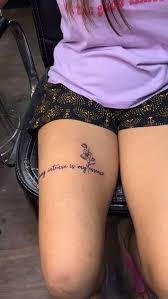
Negative space tattooing uses the untouched, natural skin tone as part of the design rather than filling every section with ink — like a moon phase design where the “light” of the moon is just bare skin surrounded by black. On the thigh, this creates a striking, minimalist look that photographs beautifully in shorts or swimwear. It requires an artist skilled specifically in negative space, since spacing errors are much harder to fix than in traditional linework. Healing is comparable to blackwork. This is an excellent choice for someone who wants something bold but not overwhelming.
7. Watercolor-Style Floral Splash
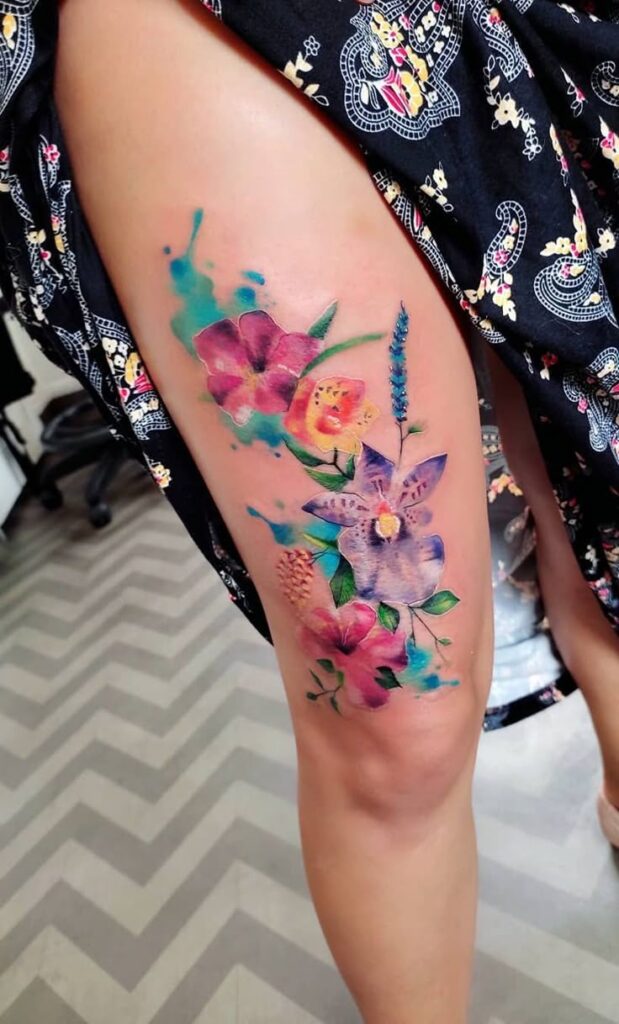
Watercolor tattoos mimic the soft bleed and color blending of actual watercolor paintings using diluted pigment saturation and soft-edged shading instead of hard outlines. On the thigh’s larger canvas, a floral watercolor splash can spread naturally without feeling cramped. Be aware this style tends to fade and blur faster than bold traditional or blackwork because there are no crisp outlines holding the color in place over the years — ask your artist honestly about longevity expectations before committing. Pain is moderate. This suits someone prioritizing a soft aesthetic over long-term crispness.
8. Minimalist Line Constellation
A constellation design connects small dots with thin, straight or slightly curved lines, usually kept under 4 inches, making it one of the more affordable and lower-commitment thigh options. It sits well on the outer thigh or just above the knee. Because the design is mostly negative space with sparse linework, healing is quick — often 7–10 days for the surface layer. Pain is on the lower end for thigh placements. Bring your actual birth chart or a specific star pattern reference, not a generic constellation, so the design carries real meaning rather than looking like clip art.
9. Bold Blackwork Thigh Band
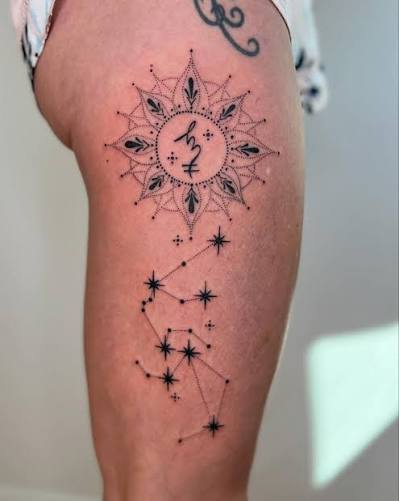
A blackwork band — a thick, continuous design wrapping partway or fully around the thigh — creates a strong visual anchor, especially in geometric or tribal-inspired patterns. This design leans on placement geometry, meaning the pattern needs to be mapped while you’re standing so it sits evenly when you move. Saturation is high, so multiple sessions may be needed for solid black fill without patchiness. This is a bolder statement piece, better suited to those comfortable with higher visibility, and less ideal for conservative workplaces.
10. Fine-Line Script Quote
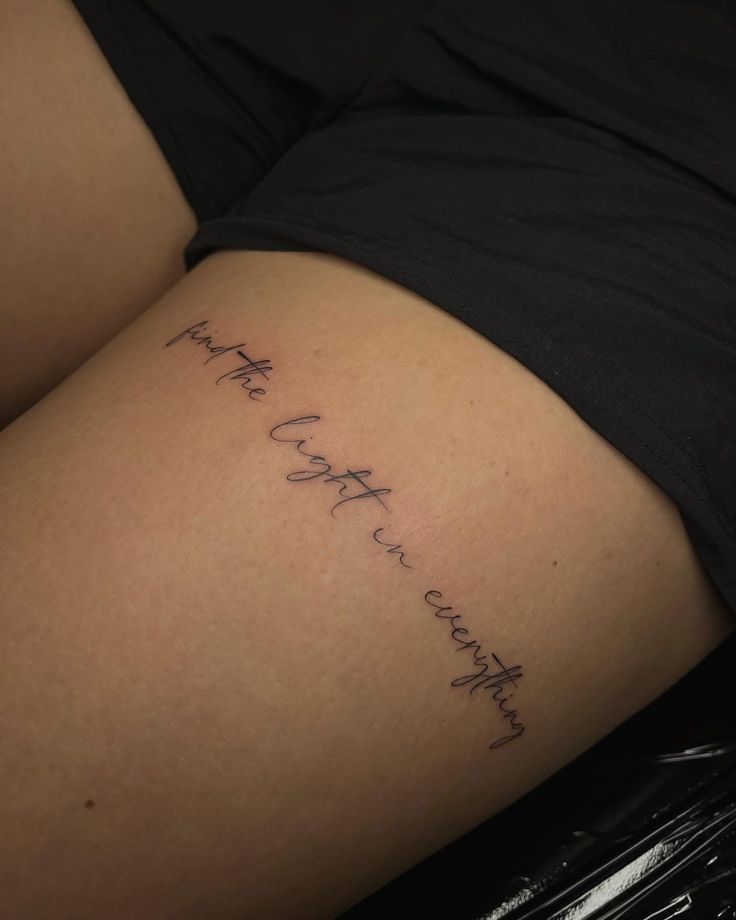
Fine-line script uses thin, consistent strokes to mimic handwriting, often personal quotes, names, or short phrases. On the thigh, script reads best running vertically along the outer leg rather than wrapping around the curve, which can distort letter spacing. Font choice matters enormously here — cursive scripts blur faster over time than block lettering. Pain is generally lower to moderate. Ask your artist to hand-letter a stencil rather than using a generic tattoo font, since custom lettering ages more predictably.
11. Dotwork Mandala with Fine-Line Border
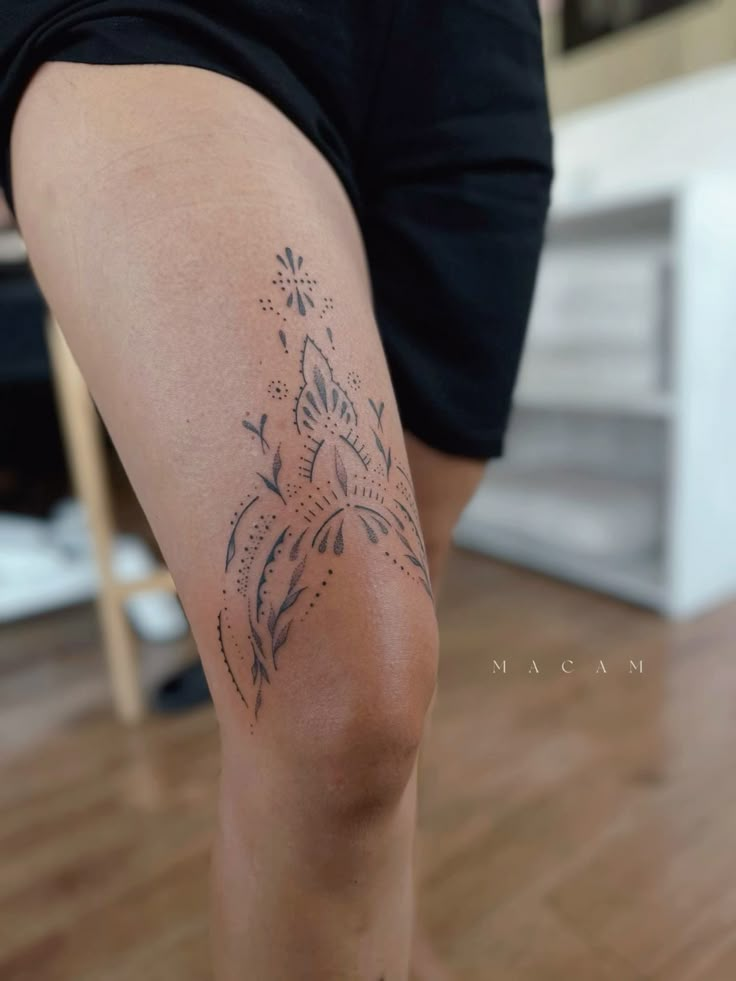
Combining dotwork shading with a fine-line outer border gives a design more depth than pure linework while staying lighter than full blackwork saturation. This hybrid style suits a mid-thigh placement where the eye can take in both the fine border and the textured center. Sessions run longer due to the dual technique. This is a strong option for someone who wants intricate detail without full black saturation covering the skin.
12. Blackwork Animal Silhouette
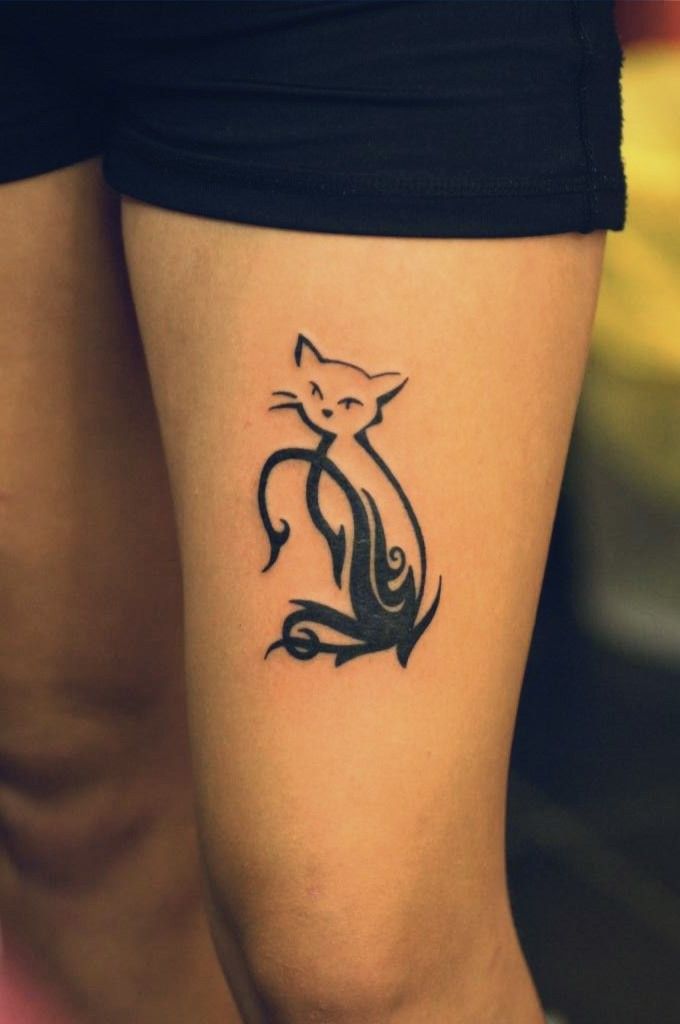
A bold animal silhouette — a wolf, an owl, a horse — rendered in solid blackwork reads clearly from a distance thanks to strong, simple shapes rather than intricate detail. This works well on the outer thigh at 4–6 inches. Because the shapes are simple, this design ages better than intricate detailed work; solid black holds its edge longer than fine gradients. This is a solid, low-risk choice for a first bold tattoo.
13. Fine-Line Butterfly Trail
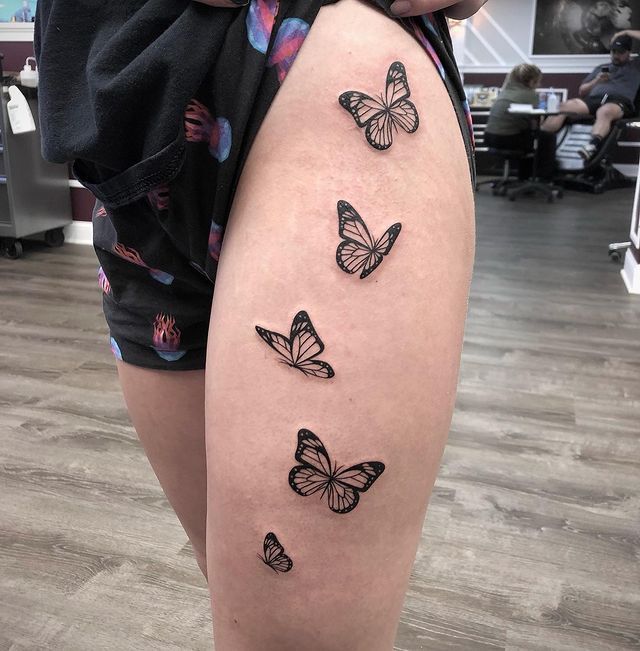
A trail of small butterflies in varying sizes, connected loosely along the thigh, uses fine-line technique with light single-needle detailing on the wings. This suits placements running from hip toward the knee. Because the design isn’t one solid piece, it’s easier to personalize by adjusting butterfly count and spacing to fit your leg length. This is a popular matching-tattoo option among friend groups, since each person can get a different number of butterflies.
14. Bold Traditional Snake Wrap
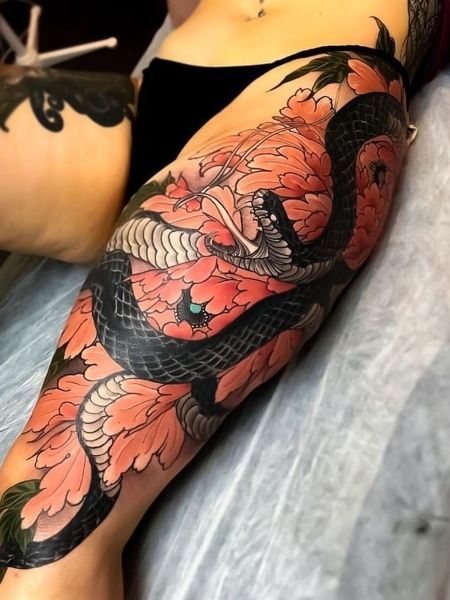
A traditional-style snake, thick-lined and boldly colored, wrapping partially around the thigh takes advantage of the leg’s natural cylindrical shape. This placement geometry makes the design feel like it’s actually moving with your body. Expect a longer session due to color saturation. This is a striking option for those wanting symbolic strength or transformation themes without leaning into small, delicate imagery.
15. Negative Space Phase-of-Life Design
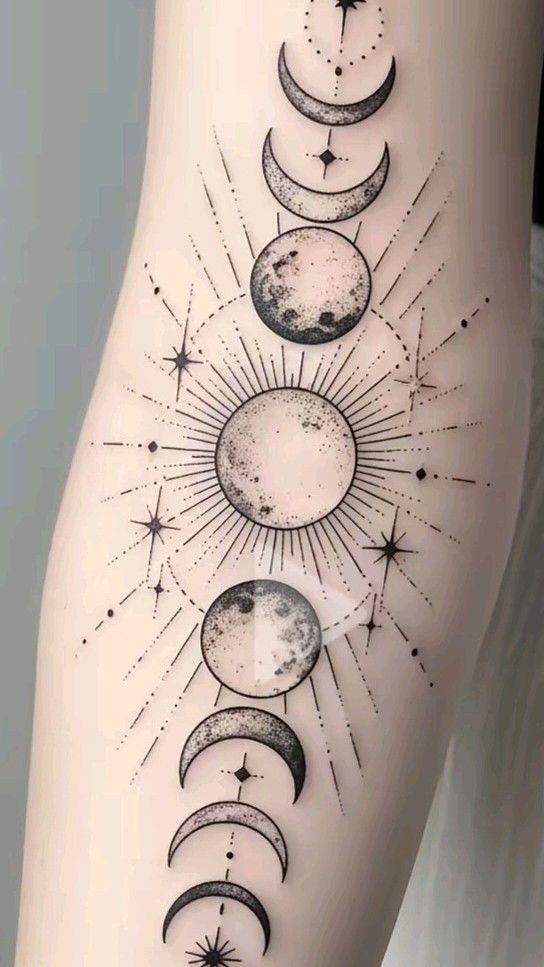
This uses negative space to represent growth or change — think a tree where branches are solid black but leaves are left as bare skin, or vice versa. On the thigh’s flat canvas, the contrast reads clearly. This requires precise stencil work, so review the design carefully before your session begins. This suits people wanting symbolic meaning conveyed through composition rather than realism.
16. Fine-Line Geometric Flower
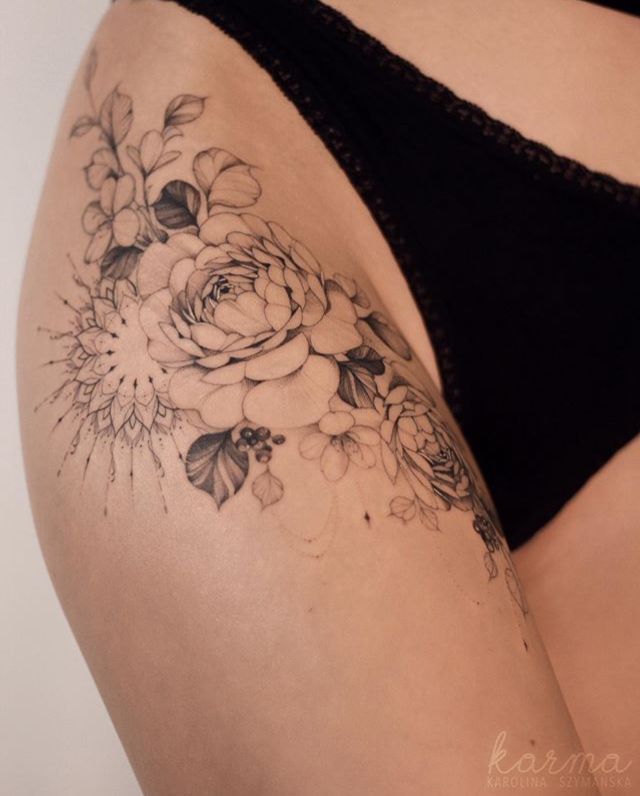
A single geometric flower — hexagonal petals, sharp angles — done in fine-line style offers a modern, structured alternative to soft floral tattoos. Best kept between 3–5 inches on the upper or outer thigh. This is a great low-commitment choice for a first tattoo, since the clean lines are simple for an artist to execute accurately.
17. Dotwork Shaded Portrait
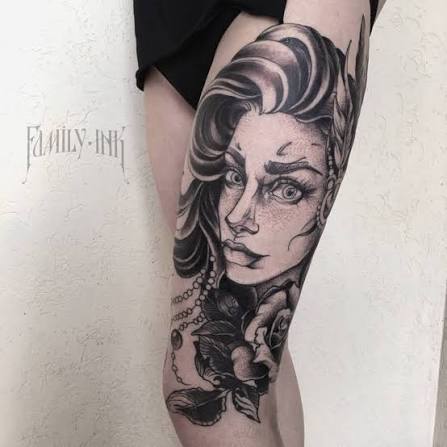
Dotwork can also be used for soft, shaded portraits (pets, loved ones, symbolic figures) instead of geometric patterns, building tone through dot density rather than solid gray fill. This requires a highly experienced dotwork artist, so scrutinize their portfolio closely for consistency in shading gradients before booking.
18. Bold Blackwork Sun and Moon
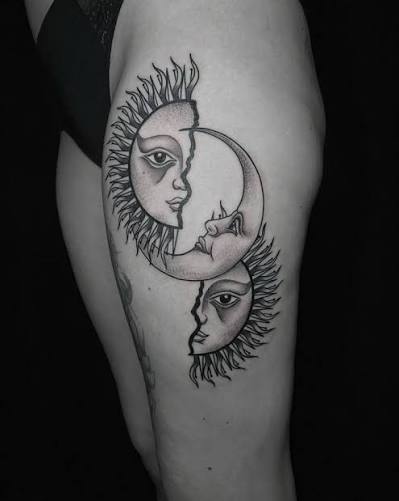
A bold sun-and-moon design split across the inner and outer thigh, connected by a thin linework thread, works well as a symbolic duality piece. Solid saturation on both elements ensures the design stays crisp for years. This is a popular pick for matching tattoos between sisters or close friends, each taking one symbol.
19. Fine-Line Insect or Nature Study
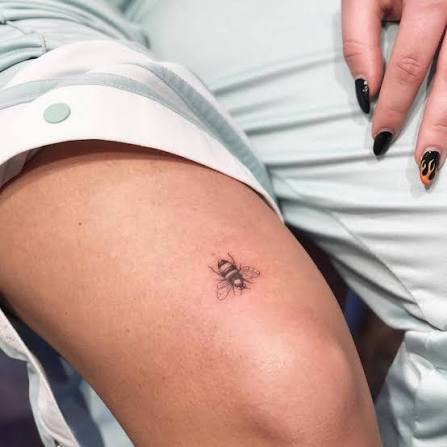
Realistic, textbook-style illustrations of insects, leaves, or small creatures done in fine-line style with light single-needle shading create a scientific-illustration aesthetic. This suits a smaller, 2–4 inch placement on the outer thigh. Because the detail is fine, expect some softening after 10+ years — factor in an eventual touch-up.
20. Blackwork Tribal-Inspired Pattern
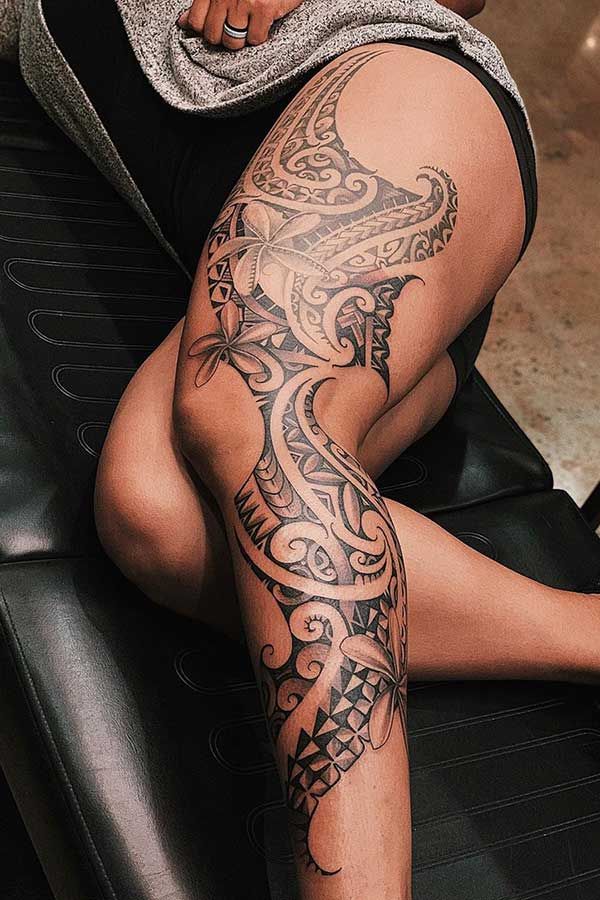
Bold, symmetrical blackwork patterns inspired by geometric tribal design traditions work exceptionally well on the thigh’s broad surface, where symmetry is easier to maintain than on narrower limbs. Always discuss cultural origin and appropriateness with your artist directly, since some traditional patterns carry specific cultural significance.
21. Fine-Line Wave or Water Motif
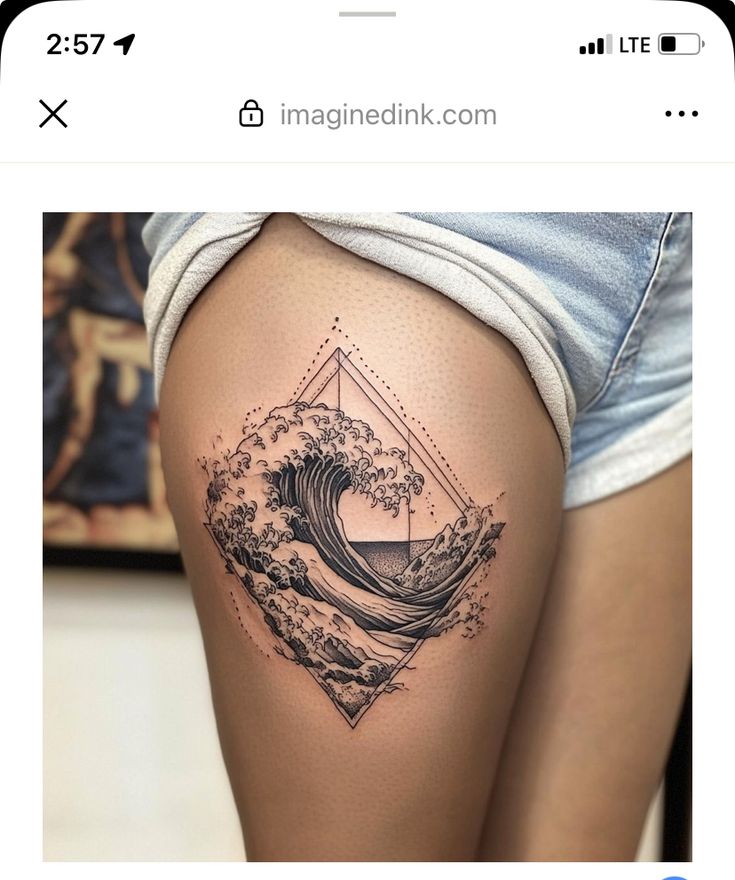
A minimalist wave, done in fine, flowing lines, suits a vertical placement along the outer thigh. The linework mimics natural water movement without needing shading, keeping the healing process simpler than shaded alternatives.
22. Custom Combination Piece
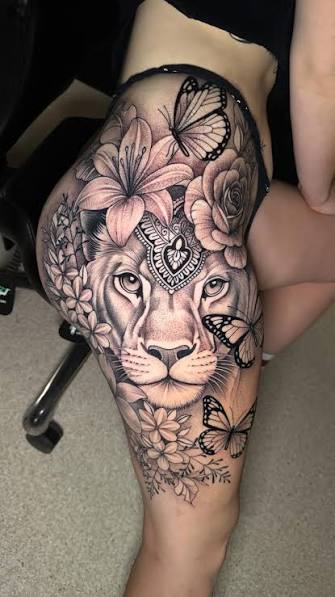
Combining two or three techniques — say, a blackwork base with fine-line detailing and small dotwork shading accents — creates a fully custom piece unique to you. This requires a longer consultation and likely multiple sessions. This is the best route if you want something that genuinely can’t be found on anyone else’s leg.
Best Placement Ideas
- Outer thigh — highly visible in shorts/swimwear, moderate pain, easy to size up large
- Inner thigh — more private, generally more sensitive skin, better for smaller or personal pieces
- Upper thigh near hip — good for large blackwork or mandala pieces, easy to conceal at work
- Just above the knee — visible with most clothing, good for smaller linear designs
- Full thigh wrap — best for bold or traditional pieces that benefit from the leg’s natural curve
Tips for Success
Look for an artist whose portfolio shows consistent line weight and clean healed photos, not just fresh ink. Fresh tattoos always look sharp — healed results tell the real story. Bring reference images that show the actual technique you want (search “fine line” or “dotwork” specifically, not just the subject matter), and be upfront about your pain tolerance and any skin sensitivities. Ask whether the piece is a walk-in flash design or a fully custom booking, since custom work usually requires a deposit and a separate consultation appointment.
Common Mistakes and How to Avoid Them
- Sizing a highly detailed design too small, causing lines to blur together as it heals and ages
- Choosing a placement that stretches or curves against the design’s natural linework
- Skipping aftercare instructions because “it’s just a small tattoo”
- Copying a design exactly from a photo instead of asking your artist to personalize proportions for your body
- Booking with an artist whose portfolio doesn’t specialize in the technique you want (a traditional specialist may not have strong dotwork examples)
Similar Variations
Nearly every design above can be resized. A blackwork mandala can shrink into a coin-sized fine-line version, or a delicate butterfly trail can scale up into a bold traditional statement piece. Color saturation can also shift a black-and-gray floral into a vibrant traditional-style piece, and combining two techniques — like fine-line outlines with dotwork shading — gives you a hybrid that’s harder to find pre-made in flash books.
Aftercare Basics
General dermatological consensus recommends keeping a fresh tattoo clean, moisturized with a fragrance-free product, and out of direct sun, pools, and tight clothing during the initial healing window. Avoid picking at scabbing skin. Always follow the specific aftercare sheet your artist provides, since products and timelines can vary by studio, and consult a licensed professional or dermatologist if you notice unusual redness or irritation.
Quick FAQ
How much does a thigh tattoo typically cost?
Cost varies widely by size, detail, and artist experience, but small fine-line pieces often start in the low hundreds while large blackwork or custom pieces can run well into four figures. Always get a quote during consultation.
How painful is a thigh tattoo?
Pain tolerance varies by individual, but the thigh is generally considered a lower-to-moderate pain zone compared to bony areas like ribs or ankles, thanks to more muscle and fat cushioning.
How long does a thigh tattoo take to heal?
Surface healing usually takes about 2–3 weeks, though full healing beneath the skin can take longer. Individual healing time varies, so follow your artist’s specific aftercare guidance.
Do thigh tattoos fade or blur over time?
Bolder techniques like blackwork and traditional tend to hold their shape longer than fine-line or watercolor styles, which can soften with age and sun exposure. Touch-ups can help maintain crispness over the years.
Choosing from these 22 thigh tattoos for women really comes down to matching the technique to your lifestyle — how visible you want it, how much detail you’re after, and how much upkeep you’re genuinely willing to commit to. There’s no universally “best” option here, just the one that fits your body, your pain tolerance, and your long-term expectations. Talk it through honestly with a licensed, experienced artist, ask to see their healed work, and you’ll walk away with a thigh tattoo you’re still proud of years from now.