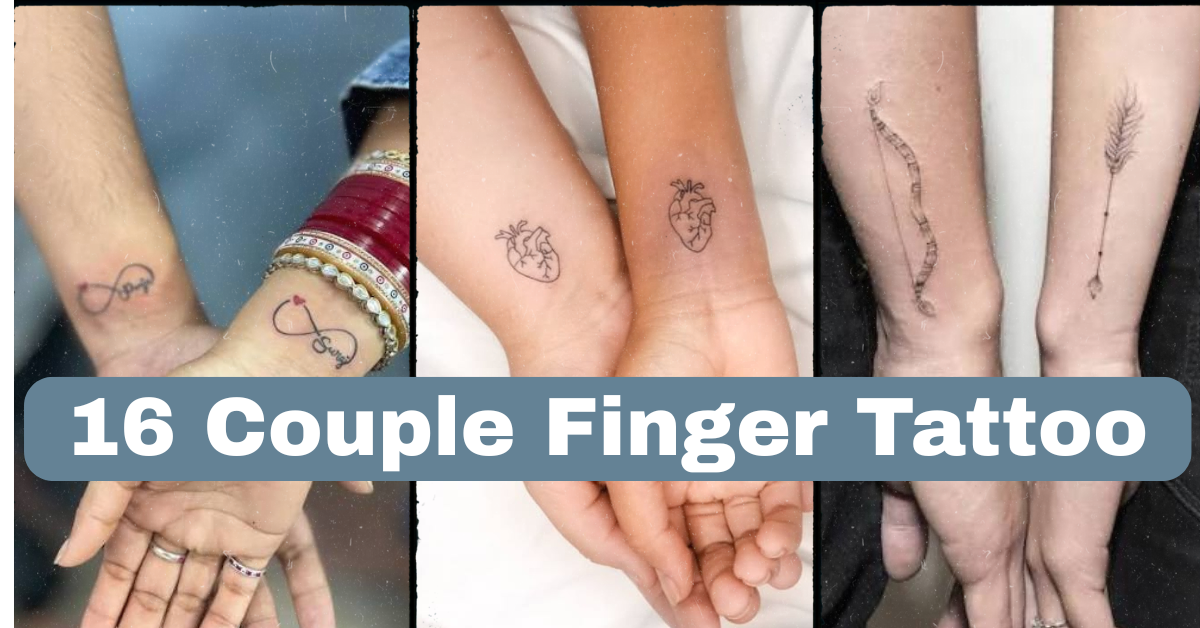
16 Couple Finger Tattoo Ideas That Actually Hold Up Over Time
Nervous about picking a couple finger tattoo you’ll regret in five years — or worse, one that fades into a blob within twelve months? You’re asking the right question at the right time, because finger tattoos have a reputation for aging unpredictably, and most articles gloss right over that.
So what are the best couple finger tattoo ideas? Fine-line symbols, single-needle icons, and small negative-space bands under half an inch tend to work best, since finger skin sheds quickly and simple designs hold their shape longer than detailed ones. Matching minimalist shapes — hearts, arrows, dots — also read clearly even after natural fading.
Stick around, because I’m also going to walk you through pain levels finger by finger, realistic healing timelines, what it actually costs, and exactly how to brief an artist so your matching tattoos don’t turn into two slightly-different tattoos six months from now.
Why Finger Tattoos Are a Different Beast
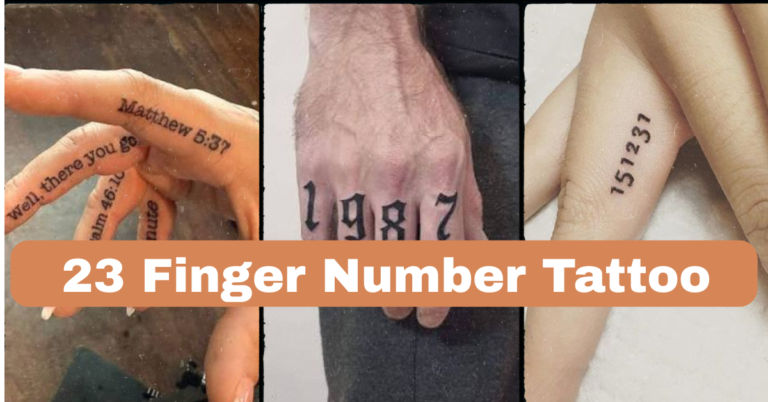
Here’s the thing nobody tells you upfront: fingers aren’t like your forearm or your ribs. The skin there is thinner, it stretches and creases constantly, and it turns over cells faster than almost anywhere else on your body. That means bold shading or intricate detail work often doesn’t survive contact with real life — dish soap, keyboards, gym chalk, all of it. This is exactly why the couple finger tattoo trend leans so heavily on fine line work, simple blackwork (solid black shapes with no shading), and clean single-needle line art. The category works because it’s built around the constraint, not against it. Below are 16 ideas that respect what finger skin can actually hold onto.
1. Fine-Line Matching Heart Outlines
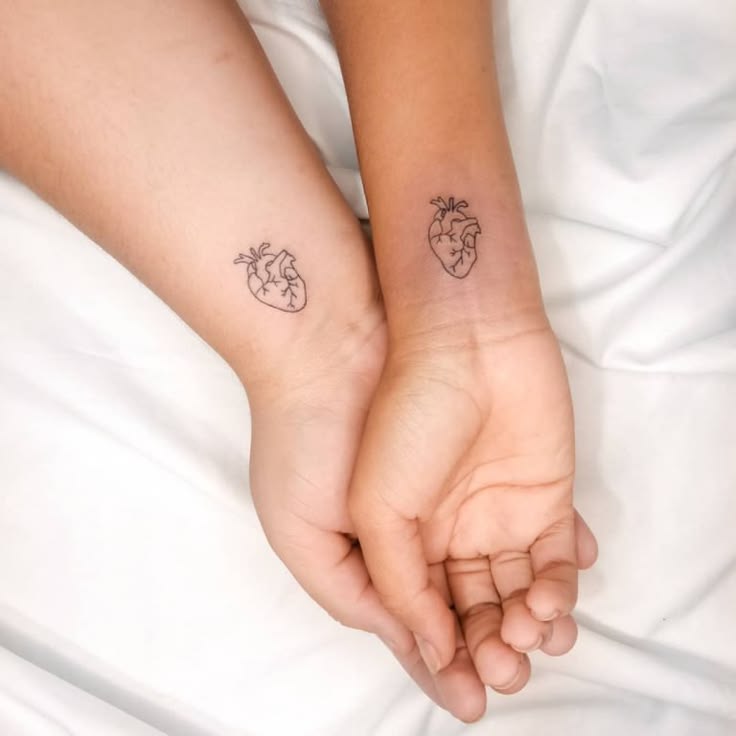
This is the classic for a reason. A thin, unshaded heart outline — usually done with a single fine-line needle — sits on the side of the index or ring finger without demanding much real estate. The line weight typically runs between 0.3mm and 0.5mm, which keeps it delicate but still visible up close. Best placement is the side of the finger rather than the top, since the top creases more with movement and blurs linework faster. Expect a size around 0.5 to 1 centimeter. Pain-wise, fingers sit on bone with little cushioning, so most people rate it moderately sharp, especially near the knuckle. Bring a simple vector reference to your artist rather than a photo of skin — it translates better to stencil. This design suits first-timers well and reads as workplace-appropriate almost anywhere.
2. Single Needle Infinity Symbols
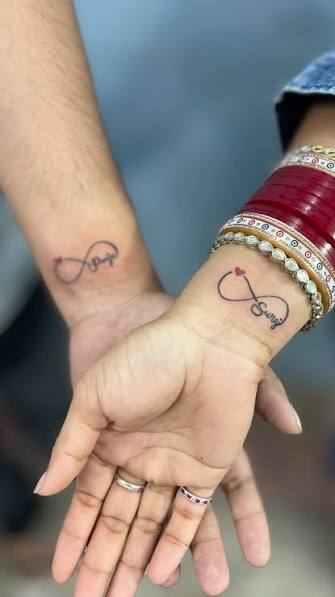
The infinity symbol done in single-needle style — meaning one fine needle creates a continuous, thread-thin line — has stayed popular because it says “connected” without literal imagery. Placement on the inner finger, between the first and second knuckle, keeps it visible when hands are relaxed but hidden in a fist. Size stays tiny, around 1 centimeter wide, since anything larger starts looking like a smudge as it heals. Healing runs about two to three weeks for surface peeling, though full settling takes longer on fingers than on flatter skin, according to general tattoo aftercare guidance. Ask your artist specifically for a “single needle” or “fine line” specialist portfolio — bold-line artists often struggle with this scale. It’s a low-commitment option for couples who want symbolism without size.
3. Tiny Dotwork Moon and Sun
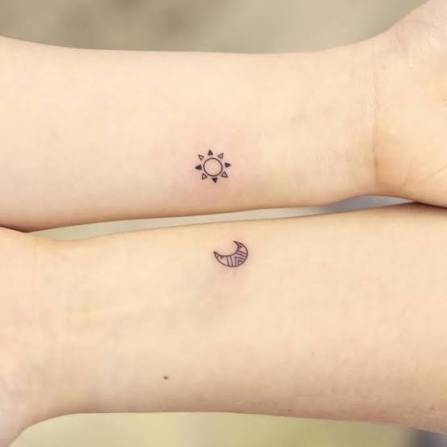
Dotwork means the entire image is built from small individual dots instead of solid lines or shading — think stippling. A sun on one partner’s finger and a moon on the other’s creates a literal day-and-night pairing that still functions as two standalone tattoos. Because dotwork relies on spacing for its shading effect, it needs a bit more surface area than plain line art — aim for 1 to 1.5 centimeters. This makes finger placement trickier than on a flatter spot like the wrist or forearm, so many artists recommend the side of the finger to avoid distortion from knuckle movement. Pain tends to feel more like a buzzing irritation than sharp stinging. Request a stencil preview before the session so you can check dot spacing at actual size, not just on paper.
4. Minimalist Arrow Tattoos
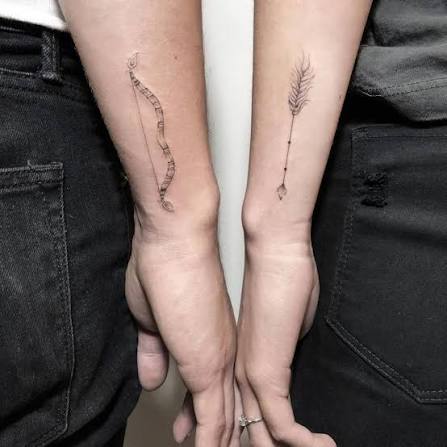
An arrow, rendered as a simple straight line with a small triangular head, works especially well running lengthwise along the finger rather than across it. This orientation follows the natural line of the finger, which helps the tattoo age more gracefully since it’s not fighting against joint creases. Keep it under 2 centimeters and stick to solid blackwork rather than fine shading, since shading on a lengthwise design tends to blur unevenly as skin cells turn over. Pain is generally moderate — the top of the finger has thinner skin than the side. This design translates well for group or friend-pair tattoos too, not just romantic couples, which makes it flexible if your matching-tattoo circle expands later.
5. Matching Roman Numeral Dates
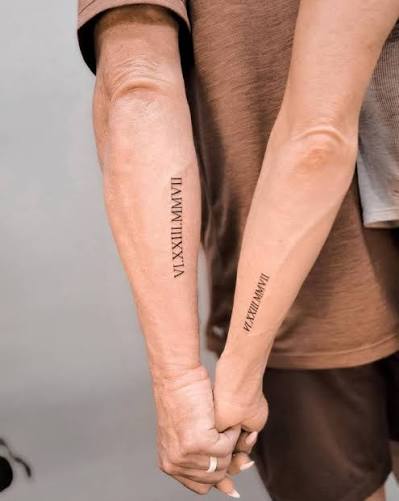
Numerals commemorating an anniversary or meeting date are a popular custom design request, and they work on fingers if kept short — three or four characters max before legibility suffers. Fine-line technique with consistent stroke width is essential here, because uneven numeral spacing becomes obvious fast at this size. Place numerals along the side of the finger, vertically, for better long-term legibility than horizontal placement across the knuckle. Healing typically takes two to four weeks on the surface. One practical tip: ask your artist to hand-draw the stencil directly on your finger before tattooing, since numeral spacing that looks right on paper often doesn’t match finger width. This idea suits couples who want a specific, private meaning rather than a generic symbol.
6. Negative Space Ring Bands
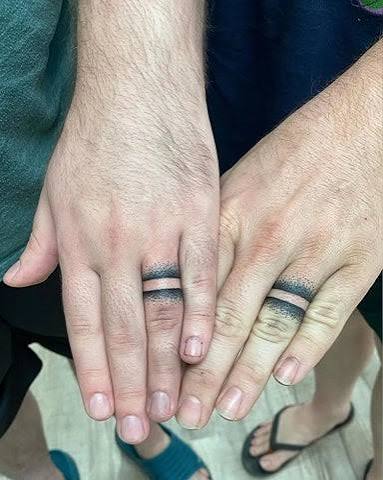
Negative space tattooing uses the untouched, natural skin tone as part of the design instead of filling everything in with ink. A ring-band tattoo built this way might tattoo a solid black band with a thin untouched line running through it, creating a “gap” that looks intentional. This works nicely on the base of the ring finger, mimicking actual jewelry. Because it needs crisp, clean edges to read correctly, this style demands a genuinely experienced blackwork artist — sloppy edges ruin the negative space effect entirely. Size sits right at finger width, roughly 1.5 to 2 centimeters wrapped around. Pain around the base of the finger, near where a ring sits, tends to rate lower than knuckle placement. This is a strong option for couples who want something ring-adjacent without a literal wedding band image.
7. Fine-Line Wave Tattoos
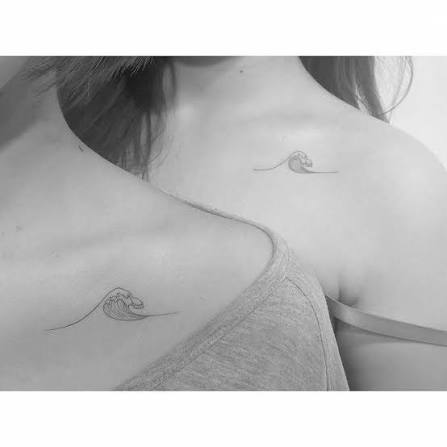
A small ocean wave, rendered in a single continuous fine line, appeals to couples who met near water or share a beach memory. The line typically curves twice to suggest motion without adding shading or color saturation, keeping the design lightweight. Placement along the side of the finger, running with the natural curve of the digit, helps the wave look intentional rather than random. Keep it under 1.5 centimeters. Skin texture matters here — if you have naturally textured or heavily creased finger skin, ask your artist during consultation whether the design might distort with movement over time. Healing runs the standard two to three weeks for outer peeling. This design works well as a solo statement too, so it’s a safe pick if you’re not fully certain about permanent matching symbolism.
8. Blackwork Puzzle Piece Tattoos
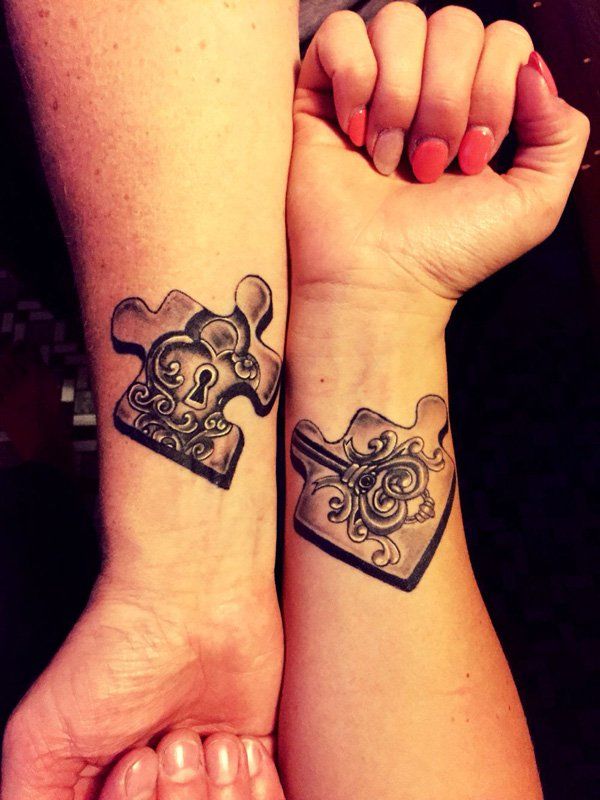
Two interlocking puzzle piece halves — one per partner — is a literal but still popular symbol of fitting together. Done in solid blackwork, meaning the piece is filled completely with saturated black ink rather than outlined, this design holds up better over time than a thin outline version would, since solid fill degrades more slowly than fine detail. Recommended placement is the side of the index or middle finger, sized around 1 to 1.5 centimeters. Because solid fill on fingers can look uneven if the artist rushes it, ask specifically about their needle configuration for small solid-fill work. Pain is moderate to high on bony sections. This design reads clearly even years later, making it a solid pick for couples who want visible, unambiguous symbolism rather than something abstract.
9. Tiny Coordinates Tattoos
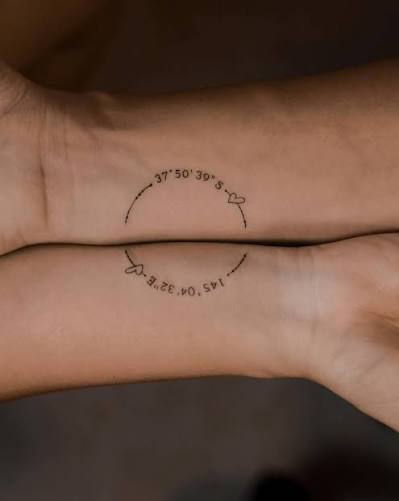
Latitude and longitude numbers marking where you met, got engaged, or had a first date are a genuinely personal alternative to generic symbols. This only works in fine line, since coordinates involve several small characters that need crisp resolution to stay legible. Realistically, this is one of the harder finger tattoo ideas to execute well — ask to see the artist’s prior lettering work specifically, not just their general portfolio, before booking. Place coordinates along the side of the finger in a single horizontal line, sized to fit without cramping, usually 2 to 2.5 centimeters. Expect noticeable fading of fine numeral detail within a few years on fingers specifically, more than on flatter areas — this is a known tradeoff, not a flaw in execution. Budget for a touch-up appointment if legibility matters long-term.
10. Matching Constellation Dots
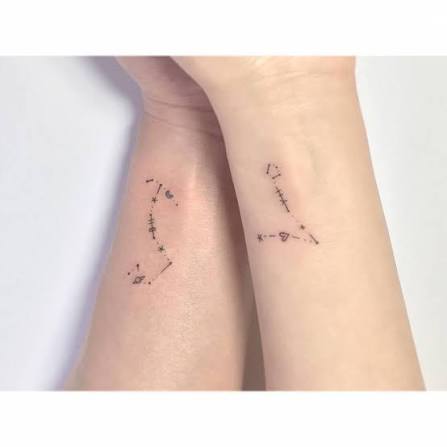
A small cluster of dots connected by thin lines, representing a specific constellation meaningful to the relationship, blends dotwork and fine line in one design. The dots anchor the shape while thin connecting lines suggest the star pattern. This works best across the top of the finger where there’s a flatter surface for dot placement, sized around 1.5 centimeters. Pain here is typically described as sharp but brief, since dotwork sessions on tiny areas move quickly. One tip: bring an actual star chart reference, not a stock illustration, so your artist can simplify it accurately rather than guessing at proportions. This design ages moderately well since dots are more forgiving of blur than fine connecting lines, which may soften first.
11. Simple Plus and Minus Symbols
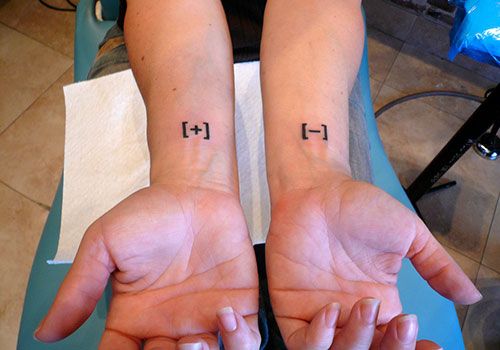
A plus sign for one partner and a minus for the other plays on the “opposites attract” idea, or simply works as a lighthearted, low-symbolism option for couples who don’t want anything heavy-handed. Rendered in bold blackwork rather than fine line, these hold their shape unusually well over time because the shapes are so simple there’s little detail to lose. Placement on the side of the finger, around 1 centimeter, keeps proportions clean. Pain is generally lower here since sessions are fast — often under ten minutes per hand. This is a genuinely good pick for a first tattoo if you’re testing whether you even like the experience before committing to something more detailed elsewhere on your body.
12. Fine-Line Key and Lock Tattoos
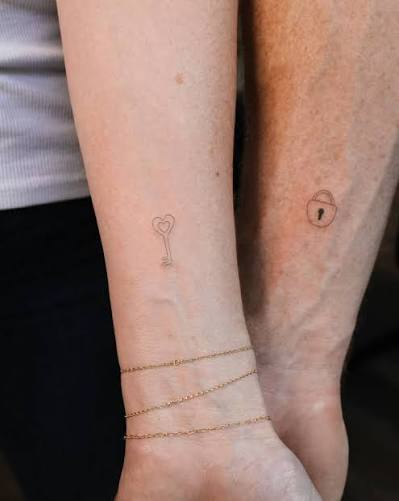
One partner gets a tiny key, the other a small lock — a classic matching-symbol pairing that still reads as personal rather than mass-produced flash (pre-drawn designs available at most studios) if the linework is custom-adjusted to each hand. Fine line technique keeps the intricate key teeth and lock keyhole legible at small scale, though this is a case where going too small backfires — under 1 centimeter, detail usually blurs together within a year or two. Aim for 1.5 centimeters minimum. Placement along the finger’s side, vertically, gives the design room to breathe. Pain is moderate. Ask your artist whether they recommend simplifying the key’s teeth for longevity — a good one will tell you the truth instead of just drawing what looks nice on paper.
13. Small Anchor and Compass Pairing
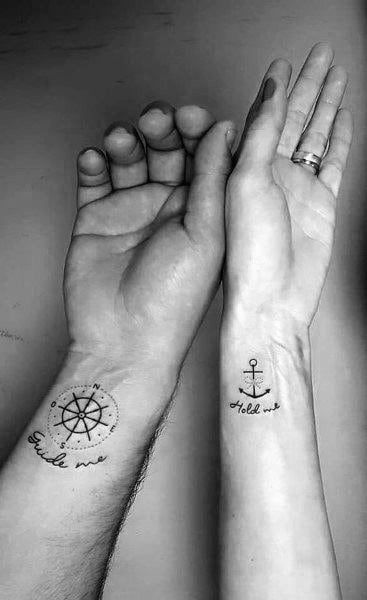
An anchor for stability, a compass for direction — this pairing suits couples who like nautical or travel symbolism. Both render well in solid blackwork with minimal fine-line detailing on the compass points. Compass tattoos with too many fine directional lines tend to lose clarity fastest on fingers, so simplify to four main points rather than eight if longevity matters to you. Placement on the top or side of the finger works, sized 1.5 to 2 centimeters. Pain runs moderate to high depending on exact knuckle proximity. This pairing works especially well for couples who travel together or relocated for each other, giving the symbol actual personal weight rather than being purely decorative.
14. Matching Initials in Script
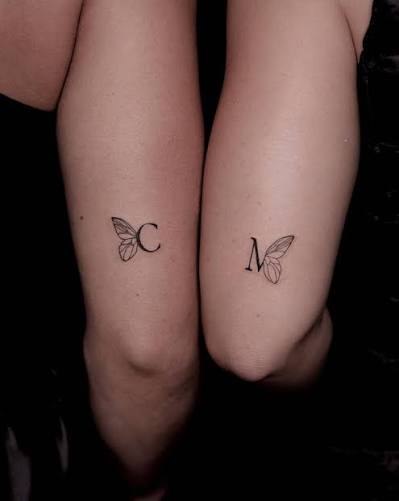
Cursive initials remain one of the most requested custom finger tattoo designs, but they’re also one of the easiest to get wrong. Thin script needs a genuinely skilled fine-line hand — thin curves that taper unevenly will look shaky rather than elegant. Place initials along the side of the finger, sized to about 1 centimeter tall, and avoid the top of the finger where knuckle bending distorts cursive curves faster than block lettering. Healing takes two to three weeks on the surface, though full ink settling can take longer. Bring a written sample of the exact font style you want — verbal descriptions like “elegant script” mean different things to different artists. This is a strong pick for couples wanting something quietly personal rather than symbolic.
15. Botanical Fine-Line Sprigs
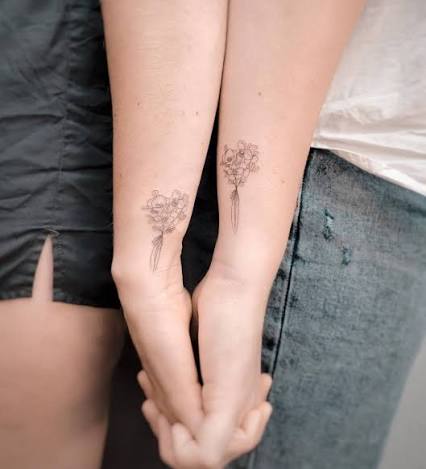
A tiny sprig of lavender, eucalyptus, or wildflower stem, rendered in fine line with minimal shading, gives couples a nature-based option that doesn’t feel as literal as a heart or ring. Each partner might get a different plant that holds shared meaning, or the same one split into two halves. Placement along the side of the finger, following its natural length, helps the stem shape read correctly. Size around 1.5 to 2 centimeters allows for a few small leaf details without overcrowding. Pain is moderate. Botanical fine-line work is one of the styles that ages least gracefully on fingers specifically, since delicate leaf veins are the first detail to soften — set that expectation before booking rather than after.
16. Abstract Line Tattoo
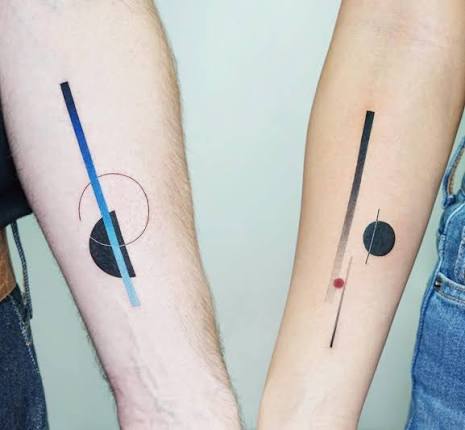
A single, unbroken abstract line — sometimes called a “one-line tattoo” — that forms a loose, organic shape is one of the more modern couple finger tattoo ideas, and it’s forgiving in a way literal symbols aren’t. Because there’s no specific image to distort, minor fading or blurring over time doesn’t break the design’s meaning the way it would with, say, a lock and key. This works nearly anywhere on the finger, sized flexibly from 1 to 3 centimeters. Pain depends entirely on total line length and placement. If you’re unsure about committing to symbolism but want something matching, this is a genuinely practical starting point — and a good one to discuss with an artist who does custom design work rather than flash sheets.
Best Placement Ideas
- Side of the finger — most visible while still somewhat easy to conceal in a closed fist; moderate pain; better long-term linework retention than top-of-finger placement
- Top of the finger (between knuckles) — highest visibility, but most exposed to friction and creasing, which speeds fading
- Base of the finger, near the knuckle closest to the hand — good for ring-style or band designs, generally lower pain
- Inner finger (palm-facing side) — more private, but skin here sheds faster, so expect quicker fading of fine detail
- Across the top knuckle — most painful due to bone proximity and thin skin, best reserved for very simple, bold shapes
Tips for Success
Look for an artist whose portfolio specifically includes small-scale or finger work — not just their broader style. A great blackwork artist isn’t automatically great at 1-centimeter blackwork; scale is its own skill. During consultation, ask direct questions: what needle size do they recommend for this design, how many sessions do they expect, and what’s their honest opinion on how the design will look in five years. A confident, experienced artist won’t dodge that last question. Bring simple, clean reference images rather than heavily stylized ones, and be open to letting them adjust proportions for your specific finger shape and skin.
Common Mistakes and How to Avoid Them
- Going too small for the detail level — intricate designs under 1 centimeter often blur together within a couple of years; simplify or size up
- Choosing top-of-finger placement for delicate linework — constant bending accelerates fading there faster than side placement
- Skipping aftercare instructions — fingers are touched constantly throughout the day, so lax aftercare habits show up in the results faster than on covered body parts
- Copying a design exactly from a photo without personalizing it — slight adjustments (size, angle, added initial) make it genuinely yours and avoid the “template” look
- Not asking about touch-ups upfront — many fine-detail finger tattoos need a touch-up within one to two years; budget for it from the start
Similar Variations
Nearly every idea above can be resized down to a “micro” version under 1 centimeter for subtlety, or scaled up slightly and combined with a second small element — a date next to an initial, or a dot added beside an arrow — for more personalization. Solid blackwork versions of outline designs (like the heart or puzzle piece) generally age better than their fine-line counterparts, so if longevity matters more to you than delicacy, ask your artist about a bolder fill. Color is technically possible but rarely recommended on fingers, since color saturation fades faster there than black ink does, according to general tattoo industry consensus.
Fine Line vs. Blackwork vs. Dotwork — What’s the Actual Difference?
- Fine line — created with a single thin needle, producing delicate, low-saturation lines with little to no shading; best for minimalist symbols but softens fastest over time
- Blackwork — solid, fully saturated black fill with defined edges and no gradient shading; holds up longer on fingers because there’s more ink density per area
- Dotwork — the image is built entirely from small individual dots rather than continuous lines, creating texture or shading through spacing; needs slightly more surface area to read clearly
- Single needle — technically a subset of fine line, using one very fine needle specifically for hairline detail and script work; the go-to for tiny lettering
Aftercare Basics
Aftercare on fingers deserves extra attention simply because hands do so much throughout the day. Keep the area clean and follow the specific written aftercare sheet your artist gives you — this always takes priority over generic advice you find online. In general, avoid soaking hands for extended periods, be mindful with soaps and sanitizers during the initial healing window, and avoid picking at any surface peeling. If you notice unusual redness, swelling, or discharge beyond what your artist described as normal, consult a licensed dermatologist rather than guessing. Everyone heals a little differently, so treat any timeline you read — including the ones in this article — as a general estimate, not a guarantee.
Quick FAQ
How much does a couple finger tattoo cost?
Most small finger tattoos fall between $50 and $150 per hand at a walk-in studio, though custom designs from an experienced artist can run higher. Cost varies by region, studio minimums, and design complexity.
Do finger tattoos hurt more than other placements?
Generally, yes — fingers have thin skin and sit close to bone, so many people describe the sensation as sharper than fleshier areas like the outer arm. Pain tolerance varies significantly from person to person.
How long do finger tattoos take to heal?
Surface healing typically takes two to three weeks, though full settling underneath can take longer than that. Fingers are used constantly, which can extend the visible healing process compared to less active body parts.
Do finger tattoos fade faster than tattoos elsewhere?
Yes, generally. Frequent hand washing, sun exposure, and fast skin cell turnover on fingers mean detail — especially fine line work — tends to soften sooner than on flatter, less exposed skin. Many finger tattoos need a touch-up within a couple of years.
Picking a couple finger tattoo really comes down to matching the design to what finger skin can realistically hold onto — simple, well-placed line work and solid blackwork consistently outperform intricate detail in the long run. Talk honestly with a licensed artist about placement, sizing, and touch-ups before you book, and you’ll end up with a couple finger tattoo you’re still glad you got years down the road.